



1 Introduction
In this article, we explore the primary result of [Reference Chase and Freitag6] (Theorem 5.3, what we call here the “Chase–Freitag Lemma”), viewing it in a purely tree-theoretic context. This viewpoint allows us to simplify some of the presentation of the result and its proof. Then, as in [Reference Chase and Freitag6], we show how this result about trees applies to the Sauer–Shelah and Bhaskar Lemmas. We also expand these lemmas, looking at arbitrary (finite, non-empty) labels instead of only binary ones. The Chase–Freitag Lemma, in this pure tree-theoretic (or, properly translated, graph-theoretic) context, may be of independent interest to combinatorialists and computer scientists.
In the groundbreaking paper on statistical learning theory, V. Vapnik and A. Chervonenkis first introduced what is now called the Vapnik–Chervonenkis (VC) dimension [Reference Vapnik and Chervonenkis13]. VC dimension appears throughout statistical learning theory. For example, having finite VC dimension is equivalent to each of the following notions of learnability: probably approximately correct (PAC) learnablility [Reference Blumer, Ehrenfeucht, Haussler and Warmuth4], the existence of a recursive teaching algorithm [Reference Chen, Cheng and Tang7], and the existence of a sequence compression scheme [Reference Moran and Yehudayoff10]. There is a connection between VC dimension and theories without the independence property (NIP theories) in model theory [Reference Laskowski8]; for more on this connection, see [Reference Chase and Freitag5].
N. Sauer and S. Shelah independently discovered what is now called the Sauer–Shelah Lemma (it is Theorem 1 of [Reference Sauer11] and Theorem 1.5 of [Reference Shelah12]). However, unknown to them at the time, the theorem first appears in [Reference Vapnik and Chervonenkis13] as Lemma 1. This theorem states that the shatter function of a concept class is either exponential or it is polynomially bounded, with nothing in between. In particular, if a concept class has finite VC dimension, then it has a polynomially bounded shatter function.
Another notion of the complexity of a concept class, which is now called Littlestone dimension, was first discovered by N. Littlestone in [Reference Littlestone9]. In the same way that VC dimension and NIP theories are connected, Littlestone dimension is connected to something in model theory called stability; for more on this connection, see [Reference Chase and Freitag5]. It turns out that having finite Littlestone dimension is equivalent to many notions of learnability, such as online learnability [Reference Ben-David, Pál and Shalev-Shwartz2] and differentially private PAC learnability [Reference Alon, Bun, Livni, Malliaris and Moran1].
An analogue to the Sauer–Shelah Lemma for Littlestone dimension was first discovered by S. Bhaskar (Theorem 4.2 of [Reference Bhaskar3], where he calls it “thicket dimension”). After defining a Littlestone shatter function, Bhaskar shows that the exact same polynomial bound occurs for this shatter function. Quickly after this discovery, H. Chase and J. Freitag discovered a connection between the two shatter function bounds in terms of something they call a “banned m-ary sequence problem” [Reference Chase and Freitag6]. Model-theoretically, the fact that both shatter functions have the same bound explains why, in both NIP theories and stable theories, local type spaces have the same polynomial bound over finite sets. Indeed, the difference between NIP and stable theories only becomes apparent when one looks at local type spaces over infinite sets.
Although stated in terms of a banned m-ary sequence problem, the Chase–Freitag Lemma (Theorem 5.3 of [Reference Chase and Freitag6]) is, in actuality, a result on pure finite trees. Phrased in terms of trees (as partial orders), it says the following (see Theorem 3.1 below for details): If one cannot embed the complete m-ary tree of height
 $d+2$
into a finite tree of height at most
 $n+1$
and branching factor at most m, then the number of leaves of the tree is bounded above by
 $$\begin{align*}\sum_{i=0}^d \binom{n}{i} (m-1)^{n-i}. \end{align*}$$
The Sauer–Shelah Lemma and Bhaskar’s Lemma both follow from this theorem (stated in the usual way, when
 $m=2$
).
Finally, in this article, we will also examine a slight generalization of VC and Littlestone shattering, allowing for arbitrarily (finitely) many labels instead of the usual binary labelings. Because the Chase–Freitag Lemma works for any (finite) branching factor, we get a more general Sauer–Shelah Lemma and Bhaskar’s Lemma as a result. This generalization may be of independent interest to learning theorists.
Note that a similar result to the one presented in this article was first discovered by R. Walker in 2022 [Reference Walker14], and further developed and published in Walker’s thesis in 2023 [Reference Walker15]. In [Reference Walker14], Walker discusses subtrees T of
 ${}^{\leq n}{[m]}$
that are downward closures of a set of leaves B, defining a “tree dimension” of B based on the embeddability of complete
 $\ell $
-ary trees into T. In particular, when
 $\ell = m$
, Theorem 2.2 of [Reference Walker14] gives the same result as Theorem 3.1 below (for that particular case of T). The presentation in this article was developed independently and we were only made aware of Walker’s work by the anonymous reviewer.
2 Preliminaries
Let
 ${\mathbb {N}}$
denote the set of natural numbers (which for us include
 $0$
) and, for any
 $n \in {\mathbb {N}}$
, let
 $[n]$
denote the first n natural numbers. That is,
 $$\begin{align*}[n] := \{ 0, 1, 2, \dots, n-1 \}. \end{align*}$$
In particular,
 $[0] = \emptyset $
. For sets X and Y, let
 ${}^{X}{Y}$
denote the set of all functions from X to Y. For
 $n \in {\mathbb {N}}$
and a non-empty set L, let
 $$\begin{align*}{}^{\leq n}{L} := \bigcup_{i=0}^n {}^{[i]}{L}. \end{align*}$$
Given
 $f \in {}^{[n]}{L}$
and
 $\ell \in L$
, let “
 $f {}^{\frown} \langle \ell \rangle $
” denote the function in
 ${}^{[n+1]}{L}$
given by
 $$\begin{align*}(f {}^{\frown} \langle \ell \rangle)(i) = \begin{cases} f(i) & \text{ if } i \in [n], \\ \ell & \text{ if } i = n. \end{cases} \end{align*}$$
If we think of elements of
 ${}^{[n]}{L}$
as strings of length n with alphabet L, then this is usual concatenation.
In this article, we work with finite trees in the partial order sense. (The results can also be suitably modified to the world of finite rooted trees in the graph-theoretic sense.) Most of this terminology listed below is standard (see, e.g., [Reference West16]). We say that a partial order
 $(T, \unlhd )$
is a tree if it has a unique
 $\unlhd $
-minimal element (called the root) and, for all
 $a \in T$
, the set
 $\{ b \in T : b \unlhd a \}$
is linearly ordered by
 $\unlhd $
. We say that
 $a \in T$
is a leaf of T if it is
 $\unlhd $
-maximal in T. Let
 $\operatorname {\mathrm {Lf}}(T)$
denote the set of leaves of T. For
 $a \in T$
, the height (or level) of a, denoted
 $\operatorname {\mathrm {ht}}(a)$
, is the number of elements that are strictly
 $\unlhd $
-below a; in particular, if
 $r \in T$
is the root, then
 $\operatorname {\mathrm {ht}}(r) = 0$
. The height of T, denoted
 $\operatorname {\mathrm {ht}}(T)$
, is the smallest integer larger than
 $\operatorname {\mathrm {ht}}(a)$
for all
 $a \in T$
. Given
 $a, b \in T$
, we say that b is a child of a (or a is the parent of b) if
 $a \lhd b$
and, for all
 $c \in T$
, if
 $a \unlhd c \unlhd b$
, then
 $c = a$
or
 $c = b$
. The branching factor (or arity) of T, denoted
 $\operatorname {\mathrm {br}}(T)$
, is the maximum number of children of an element of T. Note that, for all
 $n, m \in {\mathbb {N}}$
, if T is a tree with
 $\operatorname {\mathrm {ht}}(T) \leq n$
and
 $\operatorname {\mathrm {br}}(T) \leq m$
, then we have that
 $$\begin{align*}\left| \operatorname{\mathrm{Lf}}(T) \right| \leq m^{n-1}. \end{align*}$$
For
 $m \in {\mathbb {N}}$
, we say that T is a full m-ary tree if every element of T has either
 $0$
children or m children. Finally, we say that T is a complete m-ary tree if it is a full m-ary tree such that, for all leaves
 $a, b \in T$
,
 $\operatorname {\mathrm {ht}}(a) = \operatorname {\mathrm {ht}}(b)$
. If T is a full m-ary tree, then
 $\operatorname {\mathrm {br}}(T) = m$
(or
 $\operatorname {\mathrm {br}}(T) = 0$
if there is only one element in T).
Given a finite tree
 $(T, \unlhd )$
and
 $a, b \in T$
, the meet of a and b, denoted
 $a \wedge b$
, is the
 $\unlhd $
-largest element c such that
 $c \unlhd a$
and
 $c \unlhd b$
. One can check that this exists for any a and b. If
 $(T, \unlhd )$
and
 $(T', \unlhd )$
are trees, then an embedding of T into
 $T'$
is an injective function
 $f : T \rightarrow T'$
such that, for all
 $a, b \in T$
,
 $a \unlhd b$
if and only if
 $f(a) \unlhd f(b)$
(this is the usual notion of embedding between the structures
 $(T, \unlhd )$
and
 $(T', \unlhd )$
). We say that f is meet-preserving if, for all
 $a, b \in T$
,
 $f(a \wedge b) = f(a) \wedge f(b)$
. We say that f is level-preserving if, for all
 $a, b \in T$
,
 $\operatorname {\mathrm {ht}}(a) = \operatorname {\mathrm {ht}}(b)$
if and only if
 $\operatorname {\mathrm {ht}}(f(a)) = \operatorname {\mathrm {ht}}(f(b))$
.
Let
 $(T, \unlhd )$
be a finite tree and
 $T' \subseteq T$
. Then,
 $(T',\unlhd )$
is a tree and we clearly have that
 $\operatorname {\mathrm {ht}}(T') \leq \operatorname {\mathrm {ht}}(T)$
. We say that
 $T'$
is
 $\unlhd $
-downward closed if, for all
 $a \in T'$
and
 $b \in T$
, if
 $b \unlhd a$
, then
 $b \in T'$
. If
 $T'$
is a
 $\unlhd $
-downward closed subtree of
 $(T, \unlhd )$
, then it preserves meets and the parent–child relationship. Therefore,
 $\operatorname {\mathrm {br}}(T') \leq \operatorname {\mathrm {br}}(T)$
.
Let
 $n \in {\mathbb {N}}$
and let L be a finite, non-empty set. Then,
 ${}^{\leq n}{L}$
has a natural tree structure given by
 $f \unlhd g$
if
 $f = g |_{[i]}$
for some
 $i \leq n$
with
 $[i] \subseteq \operatorname {\mathrm {dom}}(f)$
. This makes
 ${}^{\leq n}{L}$
into a complete
 $|L|$
-ary tree of height
 $n+1$
; in fact, up to isomorphism, this is the unique such tree. In this tree, the height of f is given by
 $\operatorname {\mathrm {ht}}(f) = |\operatorname {\mathrm {dom}}(f)|$
and the meet of f and g is given by
 $f \wedge g = f |_{[i]}$
where i is largest such that
 $f |_{[i]} = g |_{[i]}$
. Note that the unique function in
 ${}^{\emptyset }{L}$
is the root of
 ${}^{\leq n}{L}$
and the set of leaves is
 $\operatorname {\mathrm {Lf}}({}^{\leq n}{L}) = {}^{[n]}{L}$
.
3 The Chase–Freitag Lemma
With this terminology, the Chase–Freitag Lemma (Theorem 5.3 of [Reference Chase and Freitag6]) can be restated as follows. See also Theorem 2.2 of [Reference Walker14].
Theorem 3.1 (Theorem 5.3 of [Reference Chase and Freitag6])
Fix
 $n, m, d \in {\mathbb {N}}$
with
 $m \geq 1$
and
 $n \geq d$
. Fix a tree
 $(T, \unlhd )$
with
 $\operatorname {\mathrm {ht}}(T) \leq n+1$
and
 $\operatorname {\mathrm {br}}(T) \leq m$
. If are no meet-preserving and level-preserving embeddings of
 ${}^{\leq d+1}{[m]}$
into T, then
 $$\begin{align*}|\operatorname{\mathrm{Lf}}(T)| \leq \sum_{i=0}^d \binom{n}{i} (m-1)^{n-i}. \end{align*}$$
As a corollary, if there are no embeddings of
 ${}^{\leq d+1}{[m]}$
into T, then the conclusion still follows (as there are certainly no meet-preserving and level-preserving embeddings).
Given
 $n, m, d \in {\mathbb {N}}$
with
 $m \geq 1$
and
 $n \geq d$
, define
 $$\begin{align*}\Phi_{d,m}(n) = \sum_{i=0}^d \binom{n}{i} (m-1)^{n-i}. \end{align*}$$
In particular, by the Binomial Theorem,
 $$\begin{align*}\Phi_{d,m}(d) = \sum_{i=0}^d \binom{d}{i} 1^i (m-1)^{d-i} = m^d. \end{align*}$$
To prove Theorem 3.1, we first need a quick lemma, which follows from Pascal’s Rule.
Lemma 3.2. Given
 $n, m, d \in {\mathbb {N}}$
with
 $m \geq 1$
and
 $n \geq d \geq 1$
,
 $$\begin{align*}(m-1) \cdot \Phi_{d,m}(n-1) + \Phi_{d-1,m}(n-1) = \Phi_{d,m}(n). \end{align*}$$
We are now ready to prove Theorem 3.1. This is essentially the same proof given in [Reference Chase and Freitag6], though suitably modified for this setting.
Proof of Theorem 3.1
We prove this by induction on d.
Suppose that
 $d = 0$
. Suppose that
 $\operatorname {\mathrm {br}}(T) \geq m$
; say that
 $a \in T$
has at least m children. Then, we can embed
 ${}^{\leq 1}{[m]}$
into T by sending the root to a and each child of the root to a different child of a; this is clearly a meet-preserving and level-preserving embedding. Therefore, if there exists no meet-preserving and level-preserving embedding of
 ${}^{\leq 1}{[m]}$
into T, then
 $\operatorname {\mathrm {br}}(T) < m$
. Therefore,
 $$\begin{align*}\left| \operatorname{\mathrm{Lf}}(T) \right| \leq (m-1)^n = \Phi_{0,m}(n). \end{align*}$$
Fix
 $d> 0$
and proceed by induction on
 $n \geq d$
. Suppose that
 $\operatorname {\mathrm {ht}}(T) \leq n+1$
and
 $\operatorname {\mathrm {br}}(T) \leq m$
and there is no meet-preserving and level-preserving embedding of
 ${}^{\leq d+1}{[m]}$
into T. If
 $n = d$
, then notice that
 $\Phi _{d,m}(n) = m^n$
. Thus, in this case,
 $$\begin{align*}\left| \operatorname{\mathrm{Lf}}(T) \right| \leq m^n = \Phi_{d,m}(n). \end{align*}$$
So we may assume
 $n> d$
. Consider the following subtree of T:
 $$\begin{align*}T^* := \{ a \in T : \operatorname{\mathrm{ht}}(a) < n \}. \end{align*}$$
Clearly
 $\operatorname {\mathrm {ht}}(T^*) \leq n$
and, since
 $T^*$
is
 $\unlhd $
-downward closed,
 $\operatorname {\mathrm {br}}(T^*) \leq m$
. Moreover, as T does not embed
 ${}^{\leq d+1}{[m]}$
preserving meets and levels, then neither does
 $T^*$
. By induction on n, we have that
 $$\begin{align*}|\operatorname{\mathrm{Lf}}(T^*)| \leq \Phi_{d,m}(n-1). \end{align*}$$
Next, let
 $A'$
denote the elements
 $a \in T$
such that
 $\operatorname {\mathrm {ht}}(a) = n-1$
and a has exactly m children in T. Let
 $T'$
be the
 $\unlhd $
-downward closure of
 $A'$
in T; that is,
 $$\begin{align*}T' := \{ b \in T : (\exists a \in A')[ b \unlhd a ] \}. \end{align*}$$
This is clearly a subtree of
 $T^*$
, so
 $\operatorname {\mathrm {ht}}(T') \leq n$
. Moreover, as
 $T'$
is
 $\unlhd $
-downward closed,
 $\operatorname {\mathrm {br}}(T') \leq m$
. Moreover, by construction,
 $A' = \operatorname {\mathrm {Lf}}(T')$
. Finally, we claim that there exists no meet-preserving and level-preserving embedding of
 ${}^{\leq d}{[m]}$
into
 $T'$
.
Towards a contradiction, suppose that
 $f : {}^{\leq d}{[m]} \rightarrow T'$
were such an embedding. From this, we will create a meet-preserving and level-preserving embedding
 $f'$
of
 ${}^{\leq d+1}{[m]}$
into T. First, for each
 $b \in {}^{<d}{[m]}$
, set
 $f'(b) = f(b)$
. For each
 $b \in {}^{[d]}{[m]}$
, choose some
 $a \in \operatorname {\mathrm {Lf}}(T')$
such that
 $f(b) \unlhd a$
and set
 $f'(b) = a$
. Since
 $a \in A'$
, it has exactly m children in T. Thus, for each
 $b'$
a child of b, we can choose a unique child of a and set
 $f'(b')$
to that child. Check that
 $f'$
is a meet-preserving and level-preserving embedding of
 ${}^{\leq d+1}{[m]}$
into T, contrary to assumption.
Therefore, by induction on d, we have that
 $$\begin{align*}|A'| = |\operatorname{\mathrm{Lf}}(T')| \leq \Phi_{d-1,m}(n-1). \end{align*}$$
For each
 $a \in \operatorname {\mathrm {Lf}}(T)$
, if
 $\operatorname {\mathrm {ht}}(a) < n$
, then
 $a \in \operatorname {\mathrm {Lf}}(T^*)$
. Otherwise, either the parent b of a has at most
 $m-1$
children, in which case
 $b \in \operatorname {\mathrm {Lf}}(T^*)$
, or b has m children, in which case
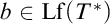 $b \in \operatorname {\mathrm {Lf}}(T^*)$
and
 $b \in A'$
. Therefore, we conclude that
 $$ \begin{align*} |\operatorname{\mathrm{Lf}}(T)| & \leq (m-1) |\operatorname{\mathrm{Lf}}(T^*)| + |A'| = \\ & (m-1) \cdot \Phi_{d,m}(n-1) + \Phi_{d-1,m}(n-1) = \Phi_{d,m}(n). \end{align*} $$
The last equality follows from Lemma 3.2.
4 Applications to Sauer–Shelah and Bhaskar
Let L be a non-empty set (of “labels”) and let X be a set (the “base set”). A concept class
 ${\mathcal {C}}$
(on X with labels in L) is a subset of
 ${}^{X}{L}$
(in other words,
 ${\mathcal {C}}$
is a set of colorings of X with colors in L). We will assume that L is finite, but we make no such assumptions on X or
 ${\mathcal {C}}$
. When
 $L = [2]$
, this gives the usual notion of a (binary) concept class.
Given a concept class
 ${\mathcal {C}}$
on X with labels in L and
 $n \in {\mathbb {N}}$
, a well-labeling of
 ${\mathcal {C}}$
of height n is a function
 $f : T \rightarrow X \cup {\mathcal {C}}$
such that
-
•
 $T \subseteq {}^{\leq n}{L}$
;
-
•
$\operatorname {\mathrm {Lf}}(T) \subseteq {}^{[n]}{L}$
; -
• T is
$\unlhd $
-downward closed; -
• for all
$a \in T$
, if
$\operatorname {\mathrm {ht}}(a) < n$
, then
$f(a) \in X$
; -
• for all
$a \in T$
, if
$\operatorname {\mathrm {ht}}(a) = n$
,
$f(a) \in {\mathcal {C}}$
; -
• for all
$a, b \in T$
with
$\operatorname {\mathrm {ht}}(a) = n$
, and for all
$\ell \in L$
, if
$b {}^{\frown} \langle \ell \rangle \unlhd a$
, then
$[f(a)](f(b)) = \ell $
.


In other words, we take T a
 $\unlhd $
-downward closed subtree of
 ${}^{\leq n}{L}$
whose leaves are of height n, we label all the nodes of T of height
 $< n$
with elements of X, and we label all the nodes of T of height n with elements of
 ${\mathcal {C}}$
. Moreover, we demand that if b is below a in the “
 $\ell $
-direction” and
 $\operatorname {\mathrm {ht}}(a) = n$
, then
 $f(a)$
labels
 $f(b)$
with
 $\ell $
. Let
 $\operatorname {\mathrm {lf}}(f) = |\operatorname {\mathrm {Lf}}(T)|$
, which is at most
 $|L|^n$
. Although the height of T is
 $n+1$
, the “X-labeled part” of T has height n, justifying the name “well-labeling of height n.” Since T is
 $\unlhd $
-downward closed, we have that
 $\operatorname {\mathrm {br}}(T) \leq |L|$
.
We say that a well-labeling f of
 ${\mathcal {C}}$
of height n is balanced if, for all
 $a, b \in \operatorname {\mathrm {dom}}(f)$
, if
 $\operatorname {\mathrm {ht}}(a) = \operatorname {\mathrm {ht}}(b) < n$
, then
 $f(a) = f(b)$
. Let
 $\text {Wl}({\mathcal {C}},n)$
denote the set of all well-labelings of
 ${\mathcal {C}}$
of height n and let
 $\text {Wl}_{\text {b}}({\mathcal {C}},n)$
denote the set of all balanced well-labelings of
 ${\mathcal {C}}$
of height n.

The above diagram depicts a well-labeling of
 ${\mathcal {C}} = {}^{X}{L}$
of height
 $2$
, where
 $X = \{ 1, 2, 3 \}$
and
 $L = \{ \mathrm {red}, \mathrm {green}, \mathrm {blue} \}$
. For example, the label “rgb” means that we color the element
 $1$
red, the element
 $2$
green, and the element
 $3$
blue. There can be no other children of the left-most
 $1$
, since we are demanding that
 $1$
be colored red. This well-labeling is clearly not balanced, as the nodes of height
 $1$
have different labels.
Definition 4.1. Let X be a set, let L be a finite, non-empty set, and let
 ${\mathcal {C}}$
be a concept class on X with labels in L.
-
1. The Littlestone shatter function of
${\mathcal {C}}$
is the function
$\rho _{{\mathcal {C}}} : {\mathbb {N}} \rightarrow {\mathbb {N}}$
given by
$$\begin{align*}\rho_{{\mathcal{C}}}(n) = \max \{ \operatorname{\mathrm{lf}}(f) : f \in \text{Wl}({\mathcal{C}}, n) \}. \end{align*}$$
-
2. The VC shatter function of
${\mathcal {C}}$
is the function
$\pi _{{\mathcal {C}}} : {\mathbb {N}} \rightarrow {\mathbb {N}}$
given by
$$\begin{align*}\pi_{{\mathcal{C}}}(n) = \max \{ \operatorname{\mathrm{lf}}(f) : f \in \text{Wl}_{\text{b}}({\mathcal{C}}, n) \}. \end{align*}$$
-
3. The Littlestone dimension of
${\mathcal {C}}$
, denoted
$\operatorname {\mathrm {Ldim}}({\mathcal {C}})$
, is the maximum
$d \in {\mathbb {N}}$
such that
$\rho _{{\mathcal {C}}}(d) = |L|^d$
. If
$\rho _{{\mathcal {C}}}(n) = |L|^n$
for all
$n \in {\mathbb {N}}$
, we say
$\operatorname {\mathrm {Ldim}}({\mathcal {C}}) = \infty $
. -
4. The VC dimension of
${\mathcal {C}}$
, denoted
$\operatorname {\mathrm {VCdim}}({\mathcal {C}})$
, is the maximum
$d \in {\mathbb {N}}$
such that
$\pi _{{\mathcal {C}}}(d) = |L|^d$
. If
$\pi _{{\mathcal {C}}}(n) = |L|^n$
for all
$n \in {\mathbb {N}}$
, we say
${\operatorname {\mathrm {VCdim}}({\mathcal {C}}) = \infty }$
.


When
 $L = [2]$
, this is the usual definition of the Littlestone and VC dimensions. Although VC dimension is typically defined in terms of the “shattering” of sets, it is easily seen to be equivalent to the above definition. From the above definition, it is clear that
 $\pi _{{\mathcal {C}}}(n) \leq \rho _{{\mathcal {C}}}(n) \leq |L|^n$
for all
 $n \in {\mathbb {N}}$
and that
 $\operatorname {\mathrm {VCdim}}({\mathcal {C}}) \leq \operatorname {\mathrm {Ldim}}({\mathcal {C}})$
.
In this terminology, we can now state the Sauer–Shelah Lemma (Theorem 1 of [Reference Sauer11], Theorem 1.5 of [Reference Shelah12], and Lemma 1 of [Reference Vapnik and Chervonenkis13]) and Bhaskar’s Lemma (Theorem 4.2 of [Reference Bhaskar3]). These reduce to the usual versions when
 $L = [2]$
.
Theorem 4.2 (Sauer–Shelah Lemma, [Reference Sauer11–Reference Vapnik and Chervonenkis13])
Let
 $d \in {\mathbb {N}}$
, X be a set, L a finite, non-empty set, and
 ${\mathcal {C}}$
a concept class on X with labels in L. If
 $\operatorname {\mathrm {VCdim}}({\mathcal {C}}) \leq d$
, then, for all
 $n \in {\mathbb {N}}$
with
 $n \geq d$
,
 $$\begin{align*}\pi_{{\mathcal{C}}}(n) \leq \sum_{i=0}^d \binom{n}{i} (|L|-1)^{n-i}. \end{align*}$$
Proof Suppose that
 $f \in \text {Wl}_{\text {b}}({\mathcal {C}},n)$
and let
 $T = \operatorname {\mathrm {dom}}(f)$
. As noted above,
 $\operatorname {\mathrm {ht}}(T) \leq n+1$
and
 $\operatorname {\mathrm {br}}(T) \leq |L|$
.
Suppose that there exists a meet-preserving and level-preserving embedding of
 ${}^{\leq d+1}{L}$
into T; call it g. Without loss of generality, we may assume that
 $g({}^{[d+1]}{L}) \subseteq \operatorname {\mathrm {Lf}}(T)$
(if
 $a \in {}^{[d+1]}{L}$
and
 $g(a) \notin \operatorname {\mathrm {Lf}}(T)$
, then replace
 $g(a)$
with anything
 $\unlhd $
-above it in
 $\operatorname {\mathrm {Lf}}(T)$
). Moreover, by precomposing with a tree automorphism of
 ${}^{\leq d+1}{L}$
, we may assume that g “preserves direction”; that is, for all
 $a \in {}^{\leq d}{L}$
and
 $\ell \in L$
,
 $g(a) {}^{\frown} \langle \ell \rangle \unlhd g(a {}^{\frown} \langle \ell \rangle )$
. Thus,
 $f \circ g$
is a well-labeling of
 ${\mathcal {C}}$
of height
 $d+1$
. Moveover, since g is level-preserving,
 $f \circ g$
is balanced. Thus,
 $f \circ g \in \text {Wl}_{\text {b}}({\mathcal {C}},d+1)$
. That is,
 $\pi _{{\mathcal {C}}}(d+1) = |L|^{d+1}$
, contrary to the fact that
 $\operatorname {\mathrm {VCdim}}({\mathcal {C}}) \leq d$
. Therefore, no such embedding exists.
By Theorem 3.1,
 $\operatorname {\mathrm {lf}}(T) \leq \Phi _{d,|L|}(n)$
. Since
 $f \in \text {Wl}_{\text {b}}({\mathcal {C}},n)$
was arbitrary, we conclude that
 $\pi _{{\mathcal {C}}}(n) \leq \Phi _{d,|L|}(n)$
.
The proof of Bhaskar’s Lemma is easier, as we don’t even need the “level-preserving” condition.
Theorem 4.3 (Bhaskar’s Lemma, [Reference Bhaskar3])
Let
 $d \in {\mathbb {N}}$
, X be a set, L a finite, non-empty set, and
 ${\mathcal {C}}$
a concept class on X with labels in L. If
 $\operatorname {\mathrm {Ldim}}({\mathcal {C}}) \leq d$
, then, for all
 $n \in {\mathbb {N}}$
with
 $n \geq d$
,
 $$\begin{align*}\rho_{{\mathcal{C}}}(n) \leq \sum_{i=0}^d \binom{n}{i} (|L|-1)^{n-i}. \end{align*}$$
Proof The proof is almost identical to the proof of Theorem 4.2 above, though we only demand that
 $f \in \text {Wl}({\mathcal {C}},n)$
and we obtain the stronger condition that there is no meet-preserving embedding of
 ${}^{\leq d+1}{L}$
into
 $\operatorname {\mathrm {dom}}(f)$
. We then conclude, using Theorem 3.1, that
 $\rho _{{\mathcal {C}}}(n) \leq \Phi _{d,|L|}(n)$
.
Note that, when
 $L = [2]$
, these two theorems give a polynomial bound on the respective shatter functions. However, when
 $|L|> 2$
, the bound is exponential. They do reduce the base of the exponent in these cases. For example, when
 ${\mathcal {C}}$
is ternary-labeled, if
 ${\mathcal {C}}$
has bounded Littlestone dimension, then any well-labeling of
 ${\mathcal {C}}$
is “essentially binary.”
Note the difference in the application of the Chase–Freitag Lemma to the Sauer–Shelah Lemma versus Bhaskar’s Lemma. For the Sauer–Shelah Lemma, we need the full strength of the non-existence of a meet-preserving and level-preserving embedding of the complete m-ary tree of height
 $d+2$
into our fixed tree. However, for Bhaskar’s Lemma, we only need the non-existence of meet-preserving embeddings.
Acknowledgments
Special thanks to A. Kolesnikov, M. Parnes, N. Piltoyan, and the anonymous reviewer.


