Introduction
Heat stress causes the generation of reactive oxygen species (ROS), possibly by disrupting the electron transport assemblies of the membrane (Ando et al., Reference ANDO, KATAGIRI, YAMAMOTO, WAKAMATSU, KAWAHARA, ASANUMA, USUDA and SASAKI1997; Mujahid et al., Reference MUJAHID, YOSHIKI, AKIBA and TOYOMIZU2005), which modulates the activities of transcription factors such as the nuclear factor-κB (NFκB) (Ali and Mann, Reference ALI and MANN2004) and nuclear factor erythroid 2-related factor 2 (Nrf-2) (Na and Surh, Reference NA and SURH2008). Heat and oxidative stresses adversely affect the structure and physiology of the cell, causing impairment of transcription, RNA processing, translation, oxidative metabolism and altered membrane structure and function (Mager and De Kruijff, Reference MAGER and DE KRUIJFF1995; Iwagami, Reference IWAGAMI1996). In animals, heat stress is commonly accompanied by an increased susceptibility to inflammation (Etches et al., Reference ETCHES, JOHN and GIBBINS2008; Hargreaves et al., Reference HARGREAVES, DILLO, ANGUS and FEBBRAIO1996; Sahin et al., Reference SAHIN, ORHAN, SMITH and SAHIN2013a), and a decrease in the level of antioxidants (Sahin and Kucuk, Reference SAHIN and KUCUK2003; Sahin et al., Reference SAHIN, SAHIN, KUCUK, HAYIRLI and PRASAD2009). These changes have been explained by an inflammatory process induced in the tissue during stress (Sahin et al., Reference SAHIN, ORHAN, SMITH and SAHIN2013a). The inflammatory process is mainly triggered by transcription factors such as NF-κB (Latchman, Reference LATCHMAN1997). Transcription factors are gene regulatory proteins that bind to specific DNA sequences, thereby controlling the flow of genetic information from DNA to mRNA via acting downstream of signalling cascades in response to biological and environmental stimuli (Latchman, Reference LATCHMAN1997). The inflammatory process is mainly triggered by the NF-κB. NF-κB is one of the transcription factors plays a major role in the development, maintenance, and progression of most chronic diseases. After activation by various inducers, including cytokines and ROS, NF-κB translocates from the cytoplasm to the nucleus and activates the expression of a wide variety of genes encoding pro-inflammatory proteins such as cytokines, chemokines, adhesion molecules or enzymes involved in the inflammatory process (Pahl, Reference PAHL1999; Gupta et al., Reference GUPTA, SUNDARAM, REUTER and AGGARWAL2010). These mediators contribute to the disruption of the epithelial barrier and favour attraction and migration of other immune cells which enhance the inflammation of the tissues in birds reared under heat stress (Sahin et al., Reference SAHIN, ORHAN, SMITH and SAHIN2013a). As a counterpart of NF-κB, Nrf2 plays an important role in cellular anti-oxidant defence (Li et al., Reference LI, ZHONG, WU and SHI2007) and a protective role against inflammation and responds to pro-inflammatory stimuli. Thus Nrf2 ‘rescues’ cells from inflammatory injuries via modulating cellular defence against oxidative and electrophilic insults by rapid induction of antioxidative and phase-II detoxifying enzymes and related stress-response proteins (Chen et al., Reference CHEN, DODD, THOMAS, ZHANG, WASSERMAN, ROVIN and KUNSCH2006; Gessner et al., Reference GESSNER, FIESEL, MOST, DINGES, WEN, RINGSEIS and EDER2013).
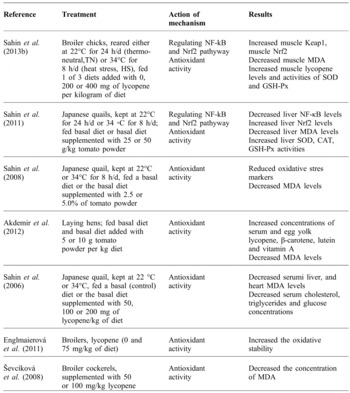
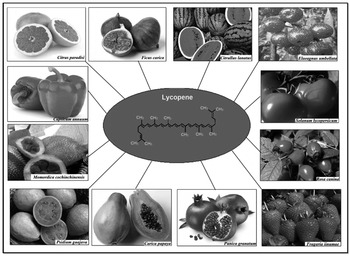
There is evidence from several studies (Orhan et al., Reference ORHAN, TUZCU, GENCOGLU, SAHIN, HAYIRLI and SAHIN2013; Liu et al., Reference LIU, HE, XIE, YANG, LI and ZOU2014) including ourselves, that in heat-stressed poultry dietary phytochemicals, such as lycopene, were able to attenuate oxidative stress and inflammation through modulation of the activities of NF-κB and Nrf2 (Table 1) (Sahin et al., Reference SAHIN, ONDERCI, SAHIN, GURSU and KUCUK2006; Reference SAHIN, ORHAN, AKDEMIR, TUZCU, ALI and SAHIN2011; Reference SAHIN, ORHAN, SMITH and SAHIN2013a). Lycopene, a carotenoid, is a natural pigment synthesised by plants and microorganisms but not by animals, and is mainly present in tomato, processed tomato products, watermelon, papaya, guava and pink grapefruit (Figure 1) (Palozza et al., Reference PALOZZA, CATALANO, SIMONE, MELE and CITTADINI2012). Lycopene suppresses oxidative stress and the inflammatory processes that lead to transformation and hyperproliferation of cells (Agarwal and Rao, Reference AGARWAL and RAO2000). The potential anti-stress role of lycopene has been ascribed mainly to its antioxidant capacity (Sahin et al., Reference SAHIN, ONDERCI, SAHIN, GURSU and KUCUK2006; Reference SAHIN, ORHAN, TUZCU, SAHIN and KUCUK2008).
A summary of studies with lycopene on heat stress-related cellular activities.

MDA, malondialdehyde; NF-κB, Nuclear factor-kappa light chain enhancer of B cells; Nrf2, The nuclear factor-2 erythroid related factor-2;
Keap, Kelch like-ECH-associated protein.
Recently, a new mechanism involving regulation of NF-κB and Nrf2 by lycopene in birds has been determined (Sahin et al., Reference SAHIN, ORHAN, AKDEMIR, TUZCU, ALI and SAHIN2011; Reference SAHIN, ORHAN, TUZCU and SAHIN2013b). In a comprehensive experimental study on the relation of lycopene and stress prevention, Sahin et al. (Reference SAHIN, ONDERCI, SAHIN, GURSU and KUCUK2006) have found an inverse association between lycopene intake or blood lycopene level and stress. The anti-stress effects of lycopene and other phytochemicals were found in diverse hepatic cells (Sahin et al., Reference SAHIN, ORHAN, TUZCU, ALI, SAHIN and HAYIRLI2010; Reference SAHIN, ORHAN, TUZCU, TUZCU and SAHIN2012a). While it has been shown that lycopene alleviates heat stress in a dose-dependent manner (Sahin et al., Reference SAHIN, ONDERCI, SAHIN, GURSU and KUCUK2006; Reference SAHIN, ORHAN, AKDEMIR, TUZCU, ALI and SAHIN2011), the biochemical processes involved in the anti-stress effects of phytochemicals are not completely understood. This paper reviews the current studies regarding dietary lycopene and tomato products for alleviation of heat stress through NF-κB and Nrf2 pathways in poultry.
Molecular structure and common sources of lycopene.

Nuclear factor-kappa B (NF-κB)
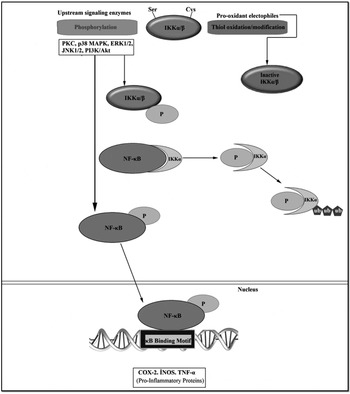
NF-κB was first identified in 1986 by Sen and Baltimore in the nucleus bound to an enhancer element of the immunoglobulin kappa light chain gene in B cells. It is one of the transcription factors responsible for controlling the DNA transcription and is involved in cellular responses to a number of stimuli including free radicals (Aggarwal, Reference AGGARWAL2004; Gilmore, Reference GILMORE2006; Gupta et al., Reference GUPTA, SUNDARAM, REUTER and AGGARWAL2010). It belongs to the family of Rel proteins that includes c-Rel, RelA (p65), RelB, NF-κB1, and NF-κB2 all of which can form hetero- or homodimers (Ghosh and Karin, Reference GHOSH and KARIN2002). NF-κB activation is tightly regulated mainly through its localisation (Figure 2).
NF-kBIn resting cells, NF-κB proteins are kept in the cytoplasm as a heterotrimer consisting of p50 and p65 in association with inhibitory IκB proteins including IκBα, IκBβ, and IκBε (Ghosh and Karin, Reference GHOSH and KARIN2002; Gupta et al., Reference GUPTA, SUNDARAM, REUTER and AGGARWAL2010) among which IκBα is the most abundant. NF-κB signalling occurs through the canonical (classical) pathway initiated by NF-κB1 (p50/p105) and a non-canonical (alternative) pathway initiated by NF-κB2 (p52/p100). NF-κB is activated by stress, diet, chemotherapeutic agents, free radicals, inflammatory stimuli, cytokines and carcinogens (Aggarwal and Shishodia, Reference AGGARWAL and SHISHODIA2006). Before the active NF-κB is translocated into the nucleus, NF-κB1 and NF-κB2 are cleaved to the active p50 and p52 subunits, respectively. While the classical pathway depends on IKK complex consisting of IKKα, IKKβ, IKKγ and the inhibitory subunit
Schematic representation of NF-κB activation pathway.

IκBs, the alternative pathway depends on IKKα homodimers and NF-κB inducing kinase (NIK) (Gupta et al., Reference GUPTA, SUNDARAM, REUTER and AGGARWAL2010; Dejardin, Reference DEJARDIN2006). During classical activation, the IKK complex specifically phosphorylates IκBs on two conserved N-terminal serine residues which target them for E2- and E3-ligase-mediated polyubiquitination and subsequent 26S proteasomal mediated degradation. This process releases and activates NF-κB which then translocates to the nucleus. The activation of the alternative pathway, which is commonly associated with RelB, results in regulated processing of the p100 precursor protein to p52 and subsequent translocation of p52-RelB heterodimers to the nucleus (Gupta et al., Reference GUPTA, SUNDARAM, REUTER and AGGARWAL2010). Although NF-κB activation occurs mainly through canonical and non-canonical pathways, during the past decade a number of pathways for NF-κB activation have been elucidated. Once in the nucleus, activated NF-κB undergoes a series of post-translational modifications, including phosphorylation, acetylation, and methylation. These modifications regulate both the strength and duration of NF-κB activity. RelA/p65 is directly phosphorylated by cAMP dependent protein kinase (PKA) at Ser276, casein kinase II (CKII) at Ser529, and IKK at Ser536 (Wang et al., Reference WANG, WESTERHEIDE, HANSON and BALDWIN2000). RelA dephosphorylation by protein phosphatase 2A (PP2A) has been reported to decrease NF-κB activity (Yang et al., Reference YANG, FAN, WADZINSKI, SAKURAI and RICHMOND2001). RelA is subject to inducible acetylation by p300/ CBP, and acetylated RelA interacts weakly, if at all, with IκBα (Chen et al., Reference CHEN, FISCHLE, VERDIN and GREENE2001), but maintains its nuclear localisation and NF-κB transcriptional response. RelA is subject to methylation by lysine methyltransferase Set9 at Lys314/315 (Yang et al., Reference YANG, HUANG, LI, LAMB, KELLEHER and CHEN2009). Activated NF-κB binds to specific DNA sequences in target genes, which are designated as κB elements, and regulates the transcription of over 500 genes involved in immunoregulation, growth regulation, inflammation, carcinogenesis and apoptosis (Sethi et al., Reference SETHI, SUNG and AGGARWAL2008).
NF-κB's ability to control multiple genes involved in human diseases makes the NF-κB signalling pathway a novel target for therapy (Karin et al., Reference KARIN, YAMAMOTO and WANG2004). Due to the various levels of regulation, NF-κB signalling pathway can be potentially targeted at various levels including kinases, phosphatases, ubiquitination, nuclear translocation, DNA binding, protein acetyl transferases and methyl transferases. NF-κB has been shown to respond to the cellular redox status since a reducing environment prevents its activation whereas oxidative/nitrosative stress promotes phosphorylation and degradation of IκB (Aggarwal, Reference AGGARWAL2004). Increased expression of NF-κB in heat-stressed quail could be related to their activation (Gilmore, Reference GILMORE2006; Nelson et al., Reference NELSON, IHEKWABA, ELLIOTT, JOHNSON, GIBNEY, FOREMAN, NELSON, SEE, HORTON, SPILLER, EDWARDS, MCDOWELL, UNITT, SULLIVAN, GRIMLEY, BENSON, BROOMHEAD, KELL and WHITE2004) and translocation (Itoh et al., Reference ITOH, WAKABAYASHI, KATOH, ISHII, IGARASHI, ENGEL and YAMAMOTO1999; Yamamoto et al., Reference YAMAMOTO, SUZUKI, KOBAYASHI, WAKABAYASHI, MAHER, MOTOHASHI and YAMAMOTO2008), respectively, to overcome oxidative stress caused by exposure to heat stress.
Studies have shown that lycopene can exert its anti-stress activity by suppressing the NF-κB signalling pathway (Sahin et al., Reference SAHIN, ORHAN, AKDEMIR, TUZCU, ALI and SAHIN2011; Reference SAHIN, ORHAN, TUZCU and SAHIN2013b). Additionally, epigallocatechin gallate (EGCG) (Orhan et al., Reference ORHAN, TUZCU, GENCOGLU, SAHIN, HAYIRLI and SAHIN2013), curcumin (Sahin et al., Reference SAHIN, ORHAN, TUZCU, TUZCU and SAHIN2012a) and resveratrol (Sahin et al., Reference SAHIN, ORHAN, AKDEMIR, TUZCU, IBEN and SAHIN2012b) also suppress NF-κB activation in cells of heat-stressed poultry. These phytocemicals may block any one or more steps in the NF-κB signalling pathway such as the signals that activate the NF-κB signalling cascade, translocation of NF-κB into the nucleus, DNA binding of the dimers, or interactions with the basal transcriptional machinery. In another study, we have also reported that hepatic malondialdehyde (MDA) level was positively correlated with expression of NF-κB and activities of antioxidant enzymes were negatively correlated with expression of NF-κB (Sahin et al., Reference SAHIN, ORHAN, TUZCU, ALI, SAHIN and HAYIRLI2010).
Nuclear factor-erythroid 2-related factor 2 (Nrf2)
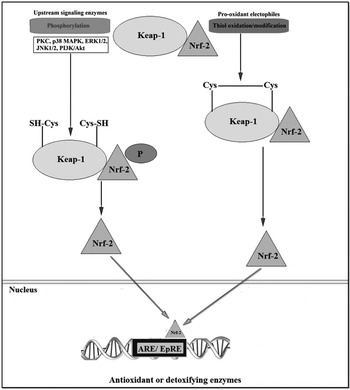
Nrf2 is a transcription factor that plays a crucial role in induction of phase II detoxifying/antioxidant defence mechanisms to cope with oxidative and electrophilic stresses through enhancing the expression of a number of enzymes, such as haem oxygenase-1 (HO-1), glutamate-cysteine ligase (GCL), glutathione S-transferase (GST), NAD (P) H quinone oxidoreductase 1 (NQO1), and UDP-glucuronosyltransferase (UGT) (Nair et al., Reference NAIR, LI and KONG2007; Na and Surh, Reference NA and SURH2008). Under normal conditions, the cytoskeleton binding protein Keap1 binds to Nrf2, thereby repressing its translocation into the nucleus, which is required for Nrf2 activation (Figure 3).
Mechanism of Nrf2 action.

The Keap1/Nrf2 systems adaptively functions to protect cells from oxidative and electrophilic damages by inducing a wide array of antioxidant enzymes. In fact, covalent modification or oxidation of critical cysteine residues in Keap1 has been hypothesised to facilitate the dissociation of Keap1/Nrf2 complex or increase the stability of Nrf2 (Kobayashi et al., Reference KOBAYASHI, KANG, WATAI, TONG, SHIBATA, UCHIDA and YAMAMOTO2006; Na and Surh, Reference NA and SURH2008). The cysteine residues serve as molecular sensor for recognising the altered intracellular redox-status triggered by electrophiles or ROS (Dinkova-Kostova et al., Reference DINKOVA-KOSTOVA, HOLTZCLAW, COLE, ITOH, WAKABAYASHI, KATOH, YAMAMOTO and TALALAY2002; Na and Surh, Reference NA and SURH2008). Beside this, post-transcriptional changes in Nrf2 directly modulate the Nrf2/Keap1 signalling. Phosphorylation of Nrf2 on its serine and threonine residues by protein kinase C (PKC), phosphoinositol 3-kinase (PI3K), and mitogen activated protein kinases (MAPKs) have been reported to activate Nrf2 (Yu et al., Reference YU, CHEN, MO, HEBBAR, OWUOR, TAN and KONG2000; Na and Surh, Reference NA and SURH2008) (Figure 3). Under stress conditions (electrophilic chemicals and oxidative stresses), Nrf2 translocates into the nucleus, binds to antioxidant response elements, and transactivates phase II detoxifying and antioxidant genes. Among the antioxidant genes that are regulated by Nrf2 are NQO1, HO-1, thioredoxin reductase 1 (TrxR1), glutamate-cysteine ligase modifier subunit (GCLM), and glutamate-cysteine ligase catalytic (GCLC) subunit (Na and Surh, Reference NA and SURH2008). Further, MAPK and protein kinase B (PKB, Akt) are associated with the modulation of ARE-driven gene expression via Nrf2 (Li et al., Reference LI, ZHONG, WU and SHI2007; Yu et al., Reference YU, CHEN, MO, HEBBAR, OWUOR, TAN and KONG2000). Nrf2 increases intracellular glutathione (GSH) levels and GSH-dependent enzymes favouring a reducing environment stimuli thereby inhibiting NF-κB. Li et al. (Reference LI, KHOR, XU, SHEN, JEONG, YU and KONG2008) demonstrated that Nrf2-deficient mice exhibit greater induction of pro-inflammatory genes regulated by NF-κB such as interleukins, tumour necrosis factor (TNF)-α and cyclooxygenase 2 (COX-2) pointing towards the fact that Nrf2 deficiency enhances NF-κB-mediated pro-inflammatory reactions. Soares et al. (Reference SOARES, SELDON, GREGOIRE, VASSILEVSKAIA, BERBERAT, YU, TSUI and BACH2004) showed that HO-1 inhibited the TNF-α dependent activation of NF-κB in endothelial cells. It has been postulated that HO-1 induced by the Nrf2-antioxidant electrophile (EpRE) interaction inhibits the NF-κB dependent transcriptional apparatus (Soares et al., Reference SOARES, SELDON, GREGOIRE, VASSILEVSKAIA, BERBERAT, YU, TSUI and BACH2004). These data further support the concept that the Nrf2 directed increase in the expression of HO-1 is one of the hubs for cross-talk between Nrf2 and NF-κB. Several studies have demonstrated that NF-κB suppresses the transcriptional activity of Nrf2. For example, it was reported that NF-κB p65 subunit repressed the beneficial effects of Nrf2 by promoting the localisation of transcription repressors, histone deacetylases with Nrf2/ARE and sequestering co-activators like cAMP response element-binding protein (CREB) (Liu et al., Reference LIU, QU and SHEN2008). Additionally, the same authors reported that cells over-expressing NF-κB showed lesser expression of HO-1 which further confirms that NF-κB activation can act as a repressor of Nrf2 transcriptional activity. In another study, Yu et al. (Reference YU, LI, LIU, LIU, TANG, LI, YUAN, ZHAN, LI, CHEN, GE, WANG and YANG2011) reported that the N-terminal region of p65 subunit of NF-κB was physically associated with Keap1, and thus provide an additional mechanism for Nrf2/ARE inhibition. Moreover, Nrf2 increases intracellular GSH levels and GSH-dependent enzymes favouring a reducing environment thereby inhibiting NF-κB (Yu et al., Reference YU, LI, LIU, LIU, TANG, LI, YUAN, ZHAN, LI, CHEN, GE, WANG and YANG2011).
Lycopene
Carotenoids are members of pigmented phytochemicals responsible for red, yellow and orange colours of fruits and vegetables (Mangels et al., Reference MANGELS, HOLDEN, BEECHER, FORMAN and LANZA1993; Rao and Agarwal, Reference RAO and AGARWAL1999). Tomato, one of the carotenoid rich vegetables, contains large quantities of lycopene (80-90% of its carotenoids), β-carotene (7-10%) and quantities of lutein, α-carotene, γ-carotene, ζ-carotene, violaxanthin, zeaxanthin, neoxanthin, α-cryptoxanthin, β-cryptoxanthin, neurosporene, phytoene, phytofluene, cyclolycopene and other beneficial molecules such as vitamin E, vitamin C and flavonoids (Khachik et al., Reference KHACHIK, BEECHER and SMITH1995). The carotenoids belong to a family of pigmented compounds that are synthesised by plants and microorganisms but not by humans and animals. Lycopene, an acyclic isomer of beta-carotene, is a carotenoid devoid of vitamin A activity. The major source by far, is tomato and its products, although a few other foods such as watermelon, pink grapefruit, apricots, guava and papaya also contain lycopene (Figure 1) (Tanaka et al., Reference TANAKA, SHINIMIZU and MORIWAKI2012). Lycopene is a tetraterpene hydrocarbon containing 40 carbon atoms and 56 hydrogen atoms (Olson and Krinsky, Reference OLSON and KRINSKY1995). It is a highly unsaturated open straight chain hydrogen compound consisting of 11 conjugated and two unconjugated double bonds, which make it highly reactive towards oxygen and free radicals (Figure 1; Van Breemen and Pajkovic, Reference VAN BREEMEN and PAJKOVIC2008). Because of the presence of double bonds in the structure of lycopene, it can exist in both the cis and trans isomeric forms. In plants, it exists predominantly in an all-trans configuration. However, induced by light, thermal energy, and chemical reactions, it can also form cis-trans isomers including 15-, 13-, 11-, 9-, 7-, 5-cis isomers (Lu et al., Reference LU, DAN, WU, MENG, LIU, JIN, ZHOU, ZENG, ZHOU and CHEN2011). The 5-cis isomer of lycopene is the most stable form followed by the all-trans, 9-cis, 13-cis, 15-cis, 7-cis, and 11-cis isomers (Giovannucci, Reference GIOVANNUCCI2002). Because of its high number of conjugated dienes, lycopene is one of the most potent antioxidants, with a single-oxygen-quenching ability twice as high as that of ß-carotene and 10 times higher than that of alpha-tocopherol (Palozza et al., Reference PALOZZA, CATALANO, SIMONE, MELE and CITTADINI2012). It protects cells and tissues from the oxidative damage caused by ROS (Di Mascio et al., Reference DI MASCIO, KAISER and SIES1989). Lycopene has been demonstrated to be the most potent antioxidant with the ranking: lycopene > α-tocopherol > β-carotene > ß-cryptoxanthin > zeaxanthin=ß-carotene > lutein (Heber and Lu, Reference HEBER and LU2002). Lycopene's oxygen-quenching ability protects against oxidative DNA damage in vitro and in vivo, thereby preventing potential mutations that may be associated with chronic diseases (Goralczyk and Siler, Reference GORALCZYK and SILER2003). Van Breemen and Pajkovic (Reference VAN BREEMEN and PAJKOVIC2008) reported that, due to its extended system of conjugated double bonds, lycopene can quench singlet oxygen and free radicals and has been reported to be the most effective singlet oxygen quencher among approximately 600 naturally occurring carotenoids. Several studies show that lycopene may mediate its effect via other mechanisms including cell growth regulation, modulation of gene expression and immune response, and modulation of phase 1 and 2 drug metabolising enzymes (Di Mascio et al., Reference DI MASCIO, KAISER and SIES1989; Palozza et al., Reference PALOZZA, CATALANO, SIMONE, MELE and CITTADINI2012). For example, lycopene can upregulate the ARE and thereby stimulate the production of cellular enzymes such as superoxide dismutase, glutathione S-transferase and quinone reductase that protect cells from reactive oxygen species and other electrophilic molecules (Van Breemen and Pajkovic, Reference VAN BREEMEN and PAJKOVIC2008). Ben-Dor et al. (Reference BEN-DOR, STEINER, GHEBER, DANILENKO, DUBI, LINNEWIEL, ZICK, SHARONI and LEVY2005) reported that lycopene can upregulate the antioxidant electrophile/antioxidant response element (EpRE/ARE) and Nrf2, thereby stimulating the production of phase II detoxifying antioxidant enzymes that protect cells from reactive oxygen species and other electrophilic molecules.
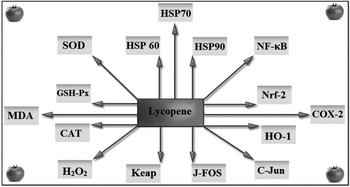
lycopene-alleviation of most factors by lycopeneSeveral studies have demonstrated that lycopene could be used to reduce the negative effects of heat stress through various mechanisms in the published literature, as depicted in Table 1. As shown in the Figure 4, lycopene may modulate multiple targets during heat stress, including transcription factors, heat shock proteins, antioxidant enzymes, lipid peroxidation (Sahin et al., Reference SAHIN, ORHAN, SMITH and SAHIN2013a; Orhan et al., Reference ORHAN, TUZCU, GENCOGLU, SAHIN, HAYIRLI and SAHIN2013). Recent evidence indicated that the preventive action of dietary agents such as lycopene, against heat stress is due to the induction of phase II detoxifying and antioxidant enzymes (Sahin et al., Reference SAHIN, ORHAN, AKDEMIR, TUZCU, ALI and SAHIN2011; Sahin et al., Reference SAHIN, ORHAN, TUZCU and SAHIN2013b). The phase II cytoprotective enzymes include detoxifying and antioxidant enzymes such as GST, NQO1, superoxidedismutase (SOD) and HO-1. The promoter regions of the inducible genes encoding phase II enzymes contain ARE, which upon binding with Nrf2, leads to increased expression of these genes. Lycopene disrupts the Nrf2/Keapl association, thereby releasing Nrf2 which then translocates to the nucleus and drives the expression of phase II enzymes in heat-stressed poultry.
Mechanism of alleviation of stress in poultry by lycopene.

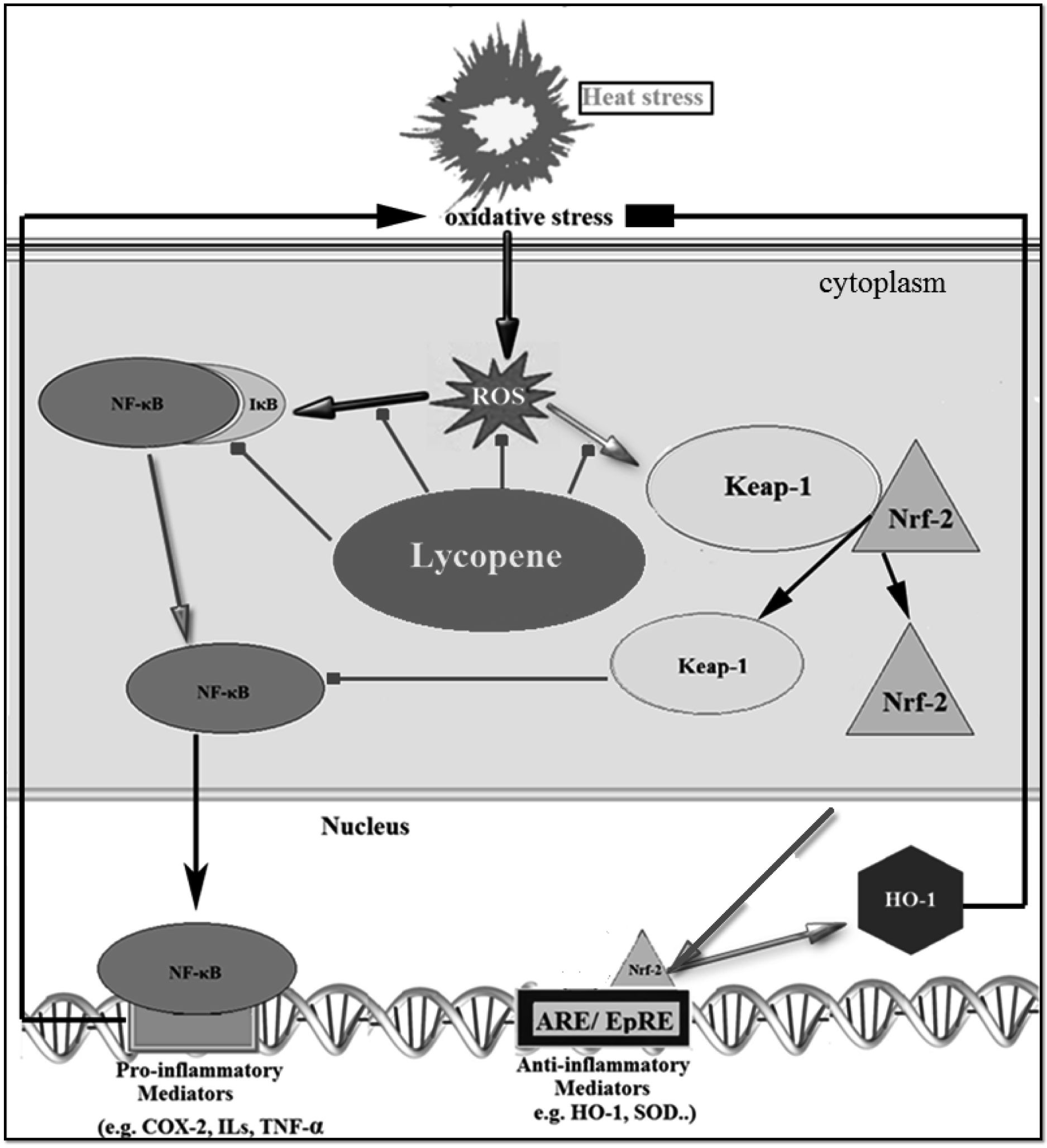
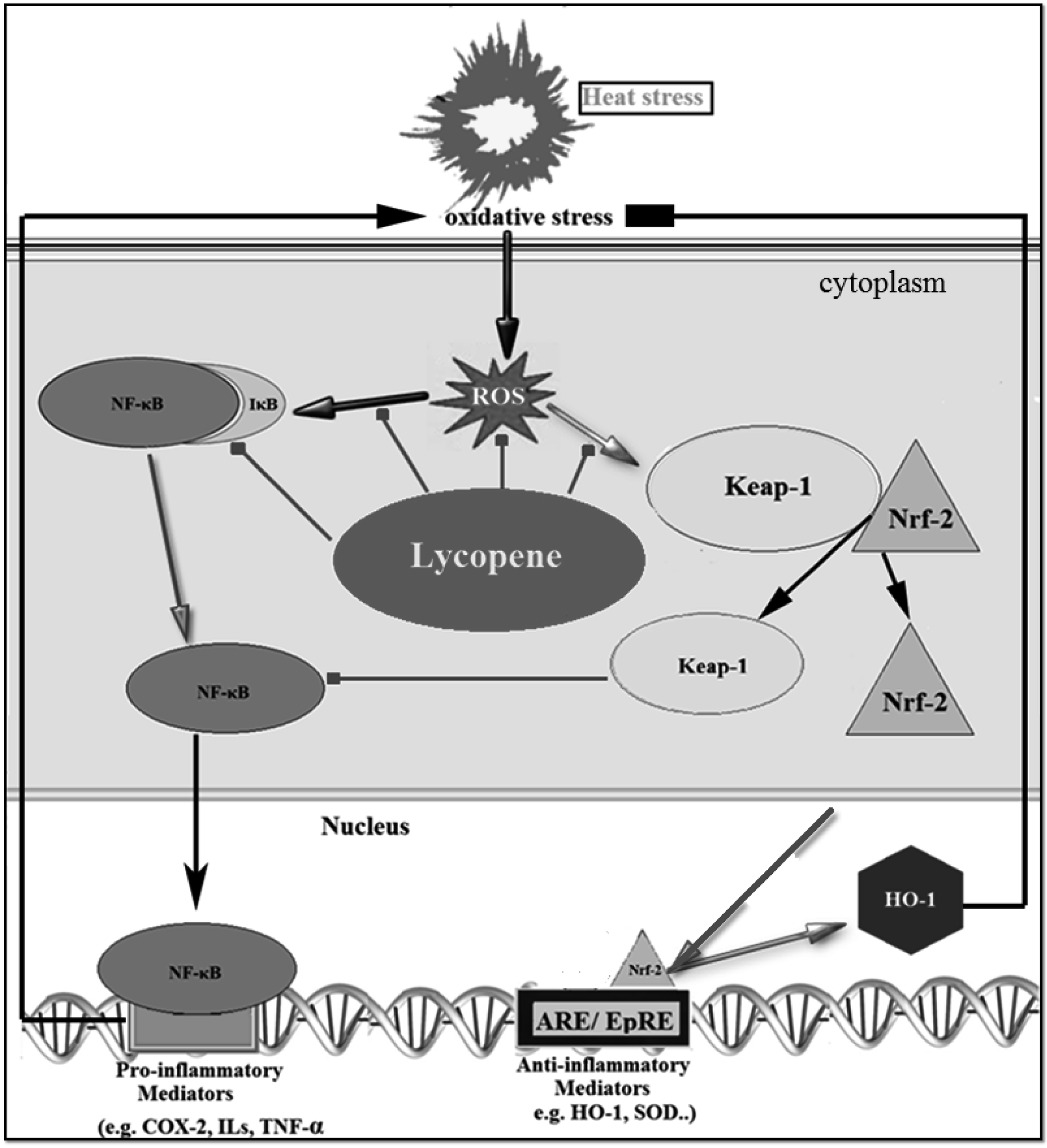
Heat stress is associated with transcription factor induction, and results in an increase in the expression of NFκB and a decrease in the expression of Nrf2 when birds were kept at high ambient temperature (Figure 5). Several studies have shown that dietary antioxidants such as lycopene may function as anti-stress agents by activating the Nrf2/ARE transcription system (Table 1 and Figure 5).
It has been reported that tomato powder used as lycopene source in feed suppressed the increased activity and levels of NF-κB and associated proteins and hence protected against inflammation in heat-stressed poultry (Sahin et al., Reference SAHIN, ORHAN, AKDEMIR, TUZCU, ALI and SAHIN2011). Treatment with tomato powder increased the levels of Nrf2/HO-1 in liver, which further modulated the redox regulation of pro-inflammatory signalling pathways. The effects of supplemental lycopene on muscle lycopene levels, antioxidant enzyme activities and expressions of Keap1 and Nrf2 in heat-distressed broiler chickens was evaluated (Sahin et al., Reference SAHIN, ORHAN, AKDEMIR, TUZCU, ALI and SAHIN2011). It was found that heat stress decreased serum and muscle lycopene concentrations and activities of SOD and glutathione peroxidase (GSH-Px), and increased serum and muscle MDA concentrations by 55.8 and 76.7% as compared with the thermoneutral groups. It was reported that muscle Keap1 concentration was higher and muscle Nrf2 concentration was lower in quail exposed to heat stress than in those kept at thermoneutral temperatures. Increasing supplemental lycopene level linearly inhibited muscle Keap1 expression from 139.0 to 99.5% and linearly enhanced muscle Nrf2 expression from 67.2 to 98.3% (Sahin et al., Reference SAHIN, ORHAN, TUZCU and SAHIN2013b). In addition, hepatic MDA level was negatively correlated with activities of antioxidant enzymes and expression of Nrf2 and activities of antioxidant enzymes were positively correlated with expression of Nrf2 (Sahin et al., Reference SAHIN, ORHAN, TUZCU and SAHIN2013b).
Lycopene has been reported to stimulate the release of Nrf2 from Keap1 by forming covalently bound adducts with Keap1 (Ben-Dor et al., Reference BEN-DOR, STEINER, GHEBER, DANILENKO, DUBI, LINNEWIEL, ZICK, SHARONI and LEVY2005). Additionally, various phytonutrients have been shown to induce the ARE system via interaction with Nrf2 (Sahin et al., Reference SAHIN, ORHAN, TUZCU, ALI, SAHIN and HAYIRLI2010; Reference SAHIN, ORHAN, TUZCU, TUZCU and SAHIN2012a). Sahin et al. (Reference SAHIN, ONDERCI, SAHIN, GURSU and KUCUK2006) reported that MDA levels in serum, liver, and heart linearly decreased in birds of both thermoneutral and heat stress groups as dietary lycopene supplementation increased. Heat stress-induced increases in serum cholesterol, triglycerides and glucose concentrations were linearly reversed by lycopene supplementation (Sahin et al., Reference SAHIN, ONDERCI, SAHIN, GURSU and KUCUK2006).
Regulation of NF-kB and Nrf2 signalling pathways by lycopene in heat-stressed poultry.
Conclusions
Several mechanisms have been suggested for the anti-stress activity of tomato lycopene, including induction of phase II enzymes and inhibition of oxidative stress. NF-κB and Nrf2 individually affect many signalling cascades to maintain a redox homeostasis; additionally they interact with each other to further modulate level of key redox modulators in heat-stressed poultry. Lycopene acts on the Nrf2/ARE signalling pathway to induce detoxification and antioxidant enzyme systems and modulates the NF-κB signalling pathways in heat-stressed poultry. Although several experimental data from in vivo models provide valuable information about the molecular and cellular mechanisms involved in the modulation of NF-κB and Nrf2 signalling pathways, the signal transduction cascades between lycopene and transcription factors are still not fully understood in in vivo models. From the data presented lycopene seem to possess anti-stress properties, however further studies are required to gain a better understanding of the role of lycopene in regulating NF-κB and Nrf2 pathway.
Acknowledgments
This work was supported by grants from Turkish Academy of Science, Ankara (TUBA).