Introduction
The modern broiler is perhaps one of the most efficient animal models in terms of converting feed nutrients into high value lean meat. Although much credit goes to genetic selection, the non-genetic factors including nutrition, husbandry and management, play an important role in realising this highly efficient genetic set-point. This review provides a synopsis of nutritional strategies used to improve the efficiency of feed utilisation (FE) of broilers at a given nutrient density. Before discussing improvements, it is useful to define the level of FE today's broiler is capable of achieving. Performance guides provided by poultry genetic suppliers are often considered a reference point for growth rate and FE. However, it is important to highlight that, under conditions of good nutrition and husbandry, it is not uncommon to see broilers outperforming these objectives by a fair margin. Figure 1 provides a comparison of the performance of broilers, as indicated by bodyweight (BW) and feed conversion rate (FCR), observed in trial work (Aftab and Creswell, Reference AFTAB and CRESWELL2015; Aftab, Reference AFTAB2017; Aftab, unpublished) during the last few years compared to breed standards (Performance objectives 2014 Male Ross 308 at 42 d of age).
Actual performance of broilers vs. breed standards (Ross 308 performance objectives, 2014) as indicated by changes in bodyweight and feed conversion rate.

This implies that, even in operations consistently achieving the ‘standards’, performance is far from realising the actual generic potential for growth and may still have room for improvement. Growth is a function of nutrient intake and this suggests that further increasing nutrient density would linearly improve FE. A good example of this was presented by recent work from Wageningen which demonstrated that broiler gain and FE continued to respond to ever increasing nutrient density - with a maximal FCR of 1.19 at 2500 g live BW being achieved at the highest density tested (Lamot, Reference LAMOT2017). This level of performance reiterates that the real genetic potential of the broiler for growth is above the published performance objectives. However, it is implicit that increasing dietary nutrient density beyond a certain point would prove counterproductive in commercial terms. This threshold would be defined by the prices of the energy and protein, which differ depending on the current market (Aftab, Reference AFTAB2012).
The focus of the following paper is to review the nutritional and feeding strategies that may help improve FE at a given nutrient density.
Feed intake
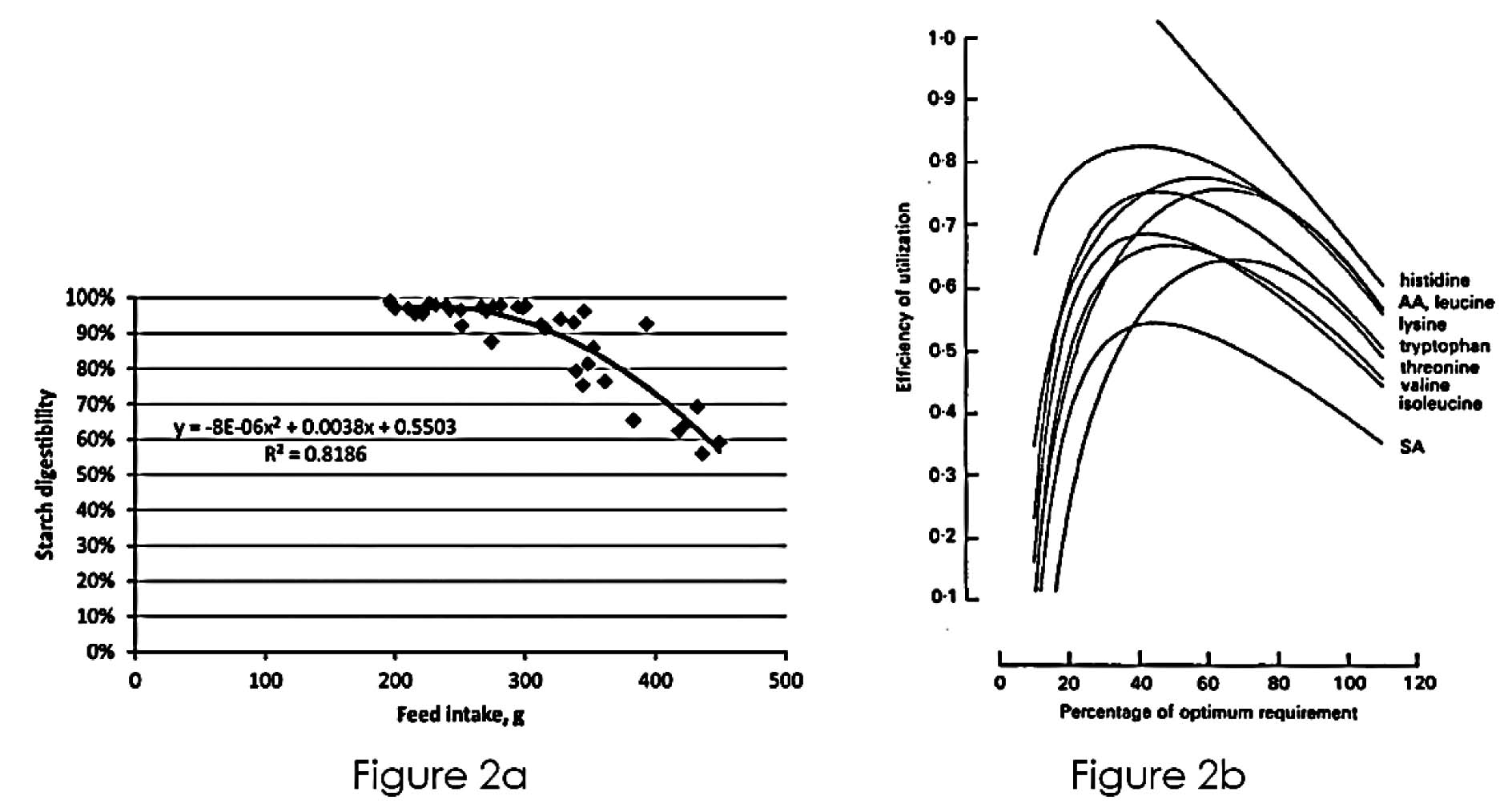
One of the key drivers of the fast growth and FE of broilers appears to be the relatively high feed intake these birds show following genetic selection. Increasing feed intake means achieving market BW in fewer days and saving maintenance (non-productive) needs for energy and nutrients. However, evidence has been presented to suggest that there is an element of inefficiency associated with the high feed intake. Part of this inefficiency can be explained in terms of compromised nutrient digestibility as a consequence of a faster rate of digesta passage, and thus less time for digestion to be completed. Experimental evidence of this phenomenon was presented by Svihus et al. (2011a), who reported a negative correlation between apparent metabolisable energy (AME) of wheat, and feed intake of individually caged broilers (Figure 2a). Work with rats suggested a linear reduction in efficiency of amino acid utilisation when the intake of specific amino acids was increased from 60 to 120% of requirement (Heger and Frydrych Reference HEGER and FRYDRYCH1985; Figure 2b). The latter observation was consistent with work in pigs that demonstrated a linear increase in lysine oxidation with increasing lysine intake, even when it was below the requirement of the animals (Mnilk et al., Reference MNILK, HARRIS and FULLER1996). Increased activity of catabolic enzymes with increased intake of protein and amino acids appears to partly explain the observed reduction in efficiency of utilisation of the absorbed amino acids (Davis and Austic, Reference DAVIS and AUSTIC1997). These observations are contrary to the generally held belief that an increased oxidation, or a decreased efficiency of utilisation, of amino acids would only commence when intake approaches or exceeds the requirement.
Effect of feed intake on starch digestibility in broilers (2a); and the efficiency of utilisation of essential amino acids as a function of intake in rats (2b).

In view of these observations, it appears reasonable to assume that improved digestibility and/or efficiency of nutrient utilisation could compensate for a slight reduction in feed intake, and if this is true, this would result in an improved FE. This hypothesis is still unproven and warrants further research. Field experience suggests that quantitative feed restriction targeting a 2 to 3% reduction of feed intake compared with the ad libitum fed counterparts, resulted in no depression in the final BW gain with a concomitant 2-3 point improvement in FCR. Physical restriction of feed may be an option to control feed intake but where this is impractical, increasing supplemental lysine above requirement may offer an alternative option to achieve a reduction in voluntary feed intake (Baker et al., Reference BAKER, BATAL, PARR, AUGSPURGER and PARSONS2002).
Compensatory growth
The exact mechanism of compensatory growth following a period of nutrient deprivation is not completely understood, or universally agreed upon. When it does occur, it appears to involve increased feed intake and/or an altered metabolism and improved efficiency of nutrient or energy utilisation during the period of reinstatement of the standard diet (Miller and Wise, Reference MILLER and WISE1976; Lippens et al., Reference LIPPENS, HUYGHEBAERT and DE GROOTE2002a; Reference LIPPENS, HUYGHEBAERT, VAN TUYL and DE GROOTE2002b; Zhang et al., Reference ZHANG, WANG, REN, ZHAO, LI and TAN2007).
Table 1 summarises the data from an earlier study demonstrating the ability of broilers to undergo compensatory growth following a period of early restriction. The data show this compensatory growth was coupled with a significant improvement in the FE (Zubair and Leeson, Reference ZUBAIR and LEESON1994). The authors attributed improved FE, at least partially, to reduced maintenance energy requirement associated with the lower BW of the restricted group during the early stages of the study. More recently, data from Wageningen demonstrated that broilers fed on restricted protein diets (~0.72% digestible lysine) between 11-26 days grew significantly faster and had better FE (~20 FCR points) during the period of re-alimentation (26-41 d) compared to the control animals which were not restricted (Eits et al., Reference EITS, KWAKKEL, VERSTEGEN and EMMANS2003).
The effect of early feed restriction on compensatory growth of broilers.

*Diet was diluted with rice-hulls from 6-11 d of age
BW=bodyweight; FCR=feed conversion ratio
Since broilers tend to increase feed intake in response to decreased nutrient density, a restriction plan based on manipulating diet nutrient density should be stringent enough to cause a significant reduction in growth rate during the restriction period. Alternatively, daily feed allowance could be quantitatively reduced. A further possibility is the use of an amino acid imbalance as a tool for reducing voluntary feed intake, and this could be achieved by removal, or excessive addition, of crystalline amino acids into the diet (Acar et al., Reference ACAR, PETTERSON and BARBATO2001; Aftab and Ahmed, Reference AFTAB and AHMED2001). Marked deficiency of any of several nutrients results in a reduced voluntary feed intake and could be considered as part of the restriction plan - e.g. the use of sodium chloride deficient diets (Lippens et al., Reference LIPPENS, HUYGHEBAERT, VAN TUYL and DE GROOTE2002b). It seems reasonable to assume that the method and the length of nutrient/energy/amino acid restriction would affect the set point for the growth of protein vs. fat during the reintroduction period, and would likely impact, in addition to the total BW, the carcass composition at slaughter.
In view of the apparently strong correlation of early growth with the overall (i.e. at slaughter) weight of broilers, it would not be advisable to apply nutrient restriction during the first 7-10 days post-hatch. The first few days post-hatch appear to be critical for the growth of the digestive organs which sets the pace for growth in subsequent days (Bigot et al., Reference BIGOT, NIGNON-GRASTEAU, PICARD and TESSERAUD2003; Velleman et al., Reference VELLEMAN, COY and EMMERSON2014). It would therefore be logical to consider a restriction period starting somewhere around 11 days of age and continuing through to 18-25 days post-hatch. The nature of the restriction would depend upon the slaughter age, in that earlier targets limit the time and severity of the treatment if compensation is to be achieved by market age. In addition to the benefit on FE, feed or nutrient restriction during an early age followed by compensatory growth has been considered as a tool for reducing the incidence of metabolic and skeletal disorders associated with the early fast growth rate of broilers (Robinson et al., Reference ROBINSON, CLASSEN, HANSON and OKANDA1992).
Rate of starch digestion
The rate of digestion of starch can interact with the utilisation of dietary proteins in two possible ways. Firstly, the gastrointestinal cells (enterocytes) consume about 20% of total energy intake and much of this is derived from catabolism of amino acids (Wu, Reference WU1998). Dietary supply serves as the primary source of amino acids for mucosal cells since their uptake of amino acids from arterial supply is low or insignificant. Catabolism of amino acids by intestinal mucosal cells represents an expensive and inefficient phenomenon since the prime function of dietary amino acids is to serve body protein synthesis. Some amino acid catabolism by enterocytes could be spared by manipulating the rate of starch digestion by provision of both rapid and slowly digested starch, so that the supply of maltose is matched with protein throughout the entire digestive tract. It has been hypothesised that feeding rapidly digested starch results in the disappearance of glucose in the proximal jejunum, leaving the enterocytes in the lower small intestine with no other choice than to catabolise amino acids as their prime energy source. Slowly digested starch provides glucose to the lower small intestine and thus can ‘spare’ amino acid catabolism to meet the energy needs of enterocytes. The second source of interaction relates to post-absorptive effects, i.e. the insulin-mediated effect of absorbed glucose on protein accretion. Insulin is an anabolic hormone which stimulates the uptake of amino acids by muscle cells and triggers protein synthesis by peptide chain initiation. This implies that synchronising the uptake of glucose (starch) with amino acids could improve protein synthesis and deposition in the body. This suggestion has been supported by work which demonstrated an increased nitrogen retention by intravenous infusion of glucose and or insulin in pigs (Fuller et al., Reference FULLER, WEEKES, CADENHEAD and BRUCE1977).
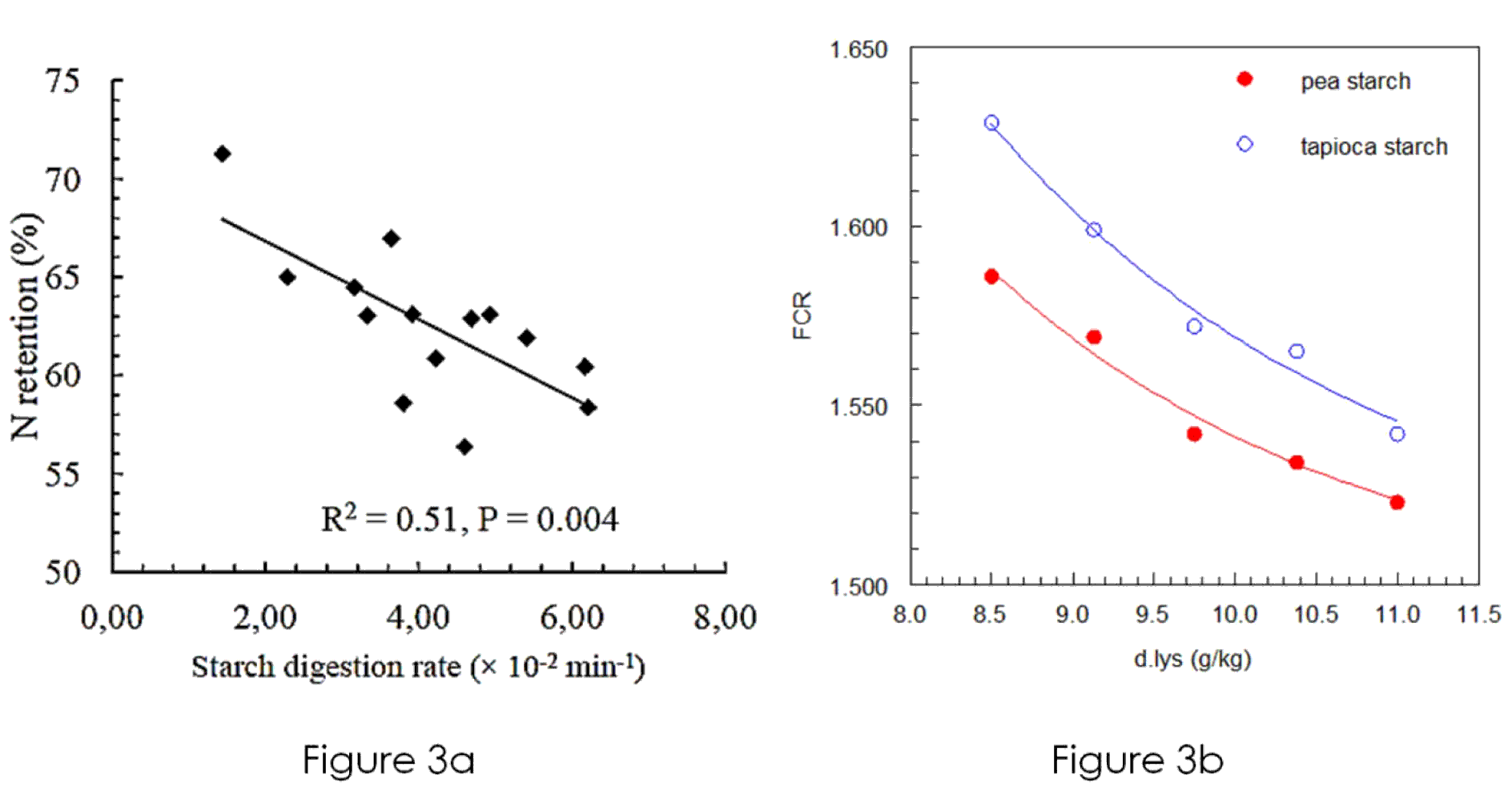
In view of the above, it was hypothesised that providing part of the dietary starch from a more slowly digested source could improve efficiency of protein utilisation. An indirect support to this hypothesis has been provided by broiler work presented in Figure 3 which demonstrated a negative correlation between nitrogen retention and the rate of starch digestion (Figure 3a; Liu et al., Reference LIU, SELLE, GILL and COWIESON2013) and the interaction between the dietary level of lysine with the source of starch (Figure 3b; Van der Klis and Fledderus, Reference VAN DER KLIS and FLEDDERUS2007). In the work of Van der Klis and Fledderus (Reference VAN DER KLIS and FLEDDERUS2007) the utilisation of dietary lysine clearly improved when rapidly digestible starch (tapioca) was replaced by slowly digestible starch (pea). In fact, switching from tapioca to pea starch reduced the lysine requirement for a given FE by 10%. These findings suggest that manipulating the rate of starch digestion could be an interesting area to investigate, although specifically designed experiments are needed to substantiate the concept.
Weurding et al. (Reference WEURDING, VELDMAN, VEEN, VAN DER AAR and VERSTEGEN2001a) were able to define three distinct groups of common feed starch sources. Using their categorisation, replacing part of group ‘A’ starches (barley, wheat, and corn) with those of ‘B’ (sorghum, brown rice, or waxy corn) or ‘C’ (pea) could be considered an option to improve FE where applicable. The same researchers suggested a high correlation between in vitro and in vivo rate of starch digestion which appeared to resolve an important constraint in the application of the concept (Weurding et al., Reference WEURDING, VELDMAN, VEEN, VAN DER AAR and VERSTEGEN2001b).
Relationship between the rate of starch digestion and nitrogen retention (3a); and the dietary supply of lysine with slowly (pea), and quickly digestible (tapioca), starch in broilers.

Functional gizzard
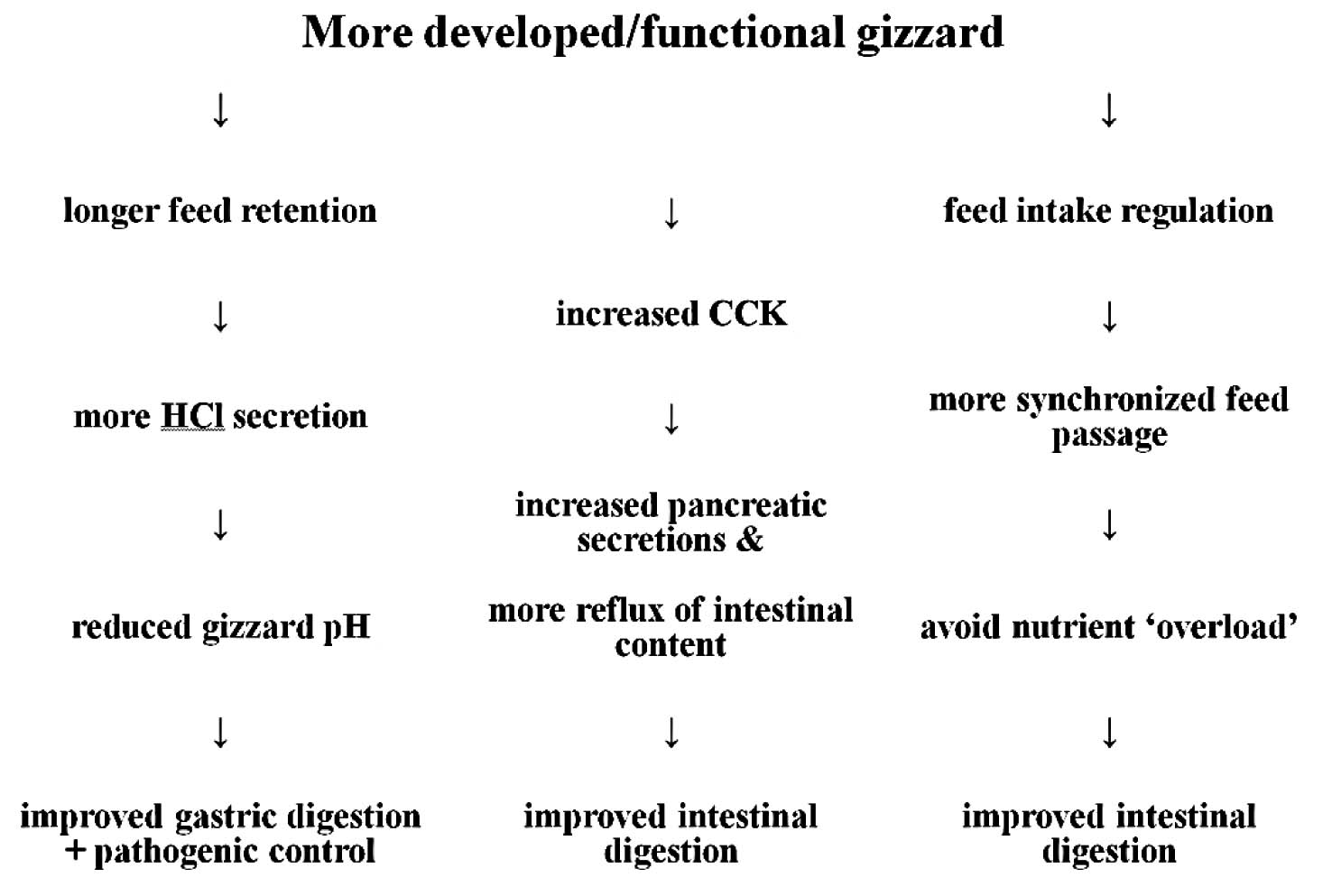
Commercial broilers are often fed a high density, low-fibre pelleted-diet. Under such a feeding regime the gizzard does not have to perform the function of particle size reduction and hence does not develop significantly and is less functional. Provision of feed with coarser particles or structural fibre stimulates the development of a larger, more functional gizzard which is thought to improve digestibility and efficiency of nutrient utilisation. Evidence supporting this concept was provided by work at the Norwegian Agriculture University which demonstrated that broilers which had a higher gizzard body to weight ratio were able to extract more AME from wheat (Svihus et al., Reference SVIHUS, SACRANIE, DENSTADLI and CHOCT2010). Similarly, supplementation of a structural fibre (oat hulls) to a low-fibre, corn- or rice-soy protein concentrate-based diet resulted in improved AME for broilers (Gonzalez-Alvarado et al., Reference GONZALEZ-ALVARADO, JIMENEZ-MORENO, LAZARO and MATEOS2007). This latter observation was contrary to expectations since being inert, oat-hulls were expected to dilute the AME of the diets. In fact, based on the improvement observed with supplementation of rice-based diet, the AME of the oat hulls was calculated to be >5000 kcal per kg (Gonzalez-Alvarado et al., Reference GONZALEZ-ALVARADO, JIMENEZ-MORENO, LAZARO and MATEOS2007). The authors attributed this effect to the stimulation of oat hulls on gizzard size and function and argued a minimal amount of dietary insoluble fibre was needed to achieve such an effect. Based on the published information on this subject, Figure 4 provides a schematic of the proposed mechanism through which a more developed or functional gizzard could possibly support better nutrient digestion (Hetland et al., Reference HETLAND, SVIHUS and KROGDAHL2003; Engberg et al., Reference ENGBERG, HEDEMANN, STEENFELDT and JENSEN2004; Svihus et al., Reference SVIHUS, JUVIK, HETLAND and KROGDAHL2004; Svihus et al., 2011b).
In summary, this effect has been thought to relate to: 1) a more developed gizzard would hold digesta for longer resulting in a more complete gastric digestion; 2) a developed gizzard could cause increased cholecystokinin (CCK) production, increased pancreatic secretions and promote reflux of the intestinal content resulting in better intestinal digestion; 3) a larger gizzard would act as a regulator of feed intake as well as controlling the rate and amount of digesta travelling down the intestine. This would reduce the likelihood for ‘starch-overload’ in the small intestine - a phenomenon thought to explain poor starch digestibility at high feed intakes (Svihus et al., 2011a); and finally, 4) reduced pH which is characteristic of a more functional gizzard and helps prevent feed borne pathogens entering the small intestine; it is this latter proposition which makes stimulation of a functional gizzard one of the key strategies as part of the so-called antibiotic-free programme.
Possible ways a more functional gizzard could improve nutrient digestibility in broilers (CCK=cholecystokinin).

Feeding coarse mash, the addition of the whole-cereal grain, and supplementation with a structural, insoluble-fibre have all been shown to stimulate gizzard size in broilers. In terms of a relative effectiveness in promoting gizzard development, a particle size of <1, >1, and >2.8 mm has been proposed as ineffective, effective, and highly-effective, respectively (Svihus et al., Reference SVIHUS, JUVIK, HETLAND and KROGDAHL2004). It is reasonable to suggest that presence of an initial stimulant would reduce the ‘effectiveness’ of the second and hence provision of two stimulants together e.g. coarse particles and insoluble fibre would not have an additive effect on the gizzard size.
Feed form
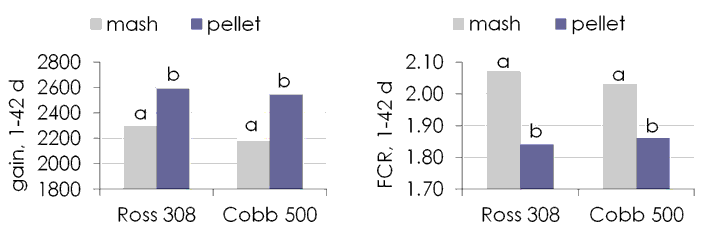
It is well established that diets offered as pellets out perform their mash counterparts by a large margin (Figure 5; Milic et al., Reference MILIC, BJEDOV, PUVAC, STANACEV and STANACEV2013). The magnitude of the pelleting effect on the rate and efficiency of BW gain more than compensates for the cost of the process. The principal reason for improved broiler performance on pelleted diets appears to relate to reduced maintenance energy needs associated with consuming a given amount of feed in much less time. This theory was established by the classical experiments of Jensen et al. (Reference JENSEN, MERRILL, REDDY and MCGINNIS1962). They observed that broilers offered pelleted diets spent six times less time consuming the same amount of feed, corresponding to 67% lower energy exertion in the process. Birds performed significantly better compared with the mash fed counterparts, and the total feed intake was not different between the pellet and mash fed groups.
More recent data provides support to the original thesis of Jensen et al. (Reference JENSEN, MERRILL, REDDY and MCGINNIS1962) in suggesting that improved efficiency of energy utilisation observed with pelleted diets was a consequence of altered partitioning of energy between maintenance and growth. This was related largely to feeding activity, while pelleting had hardly any effect on the classical estimates of digestibility or AME (Jensen et al., Reference JENSEN, MERRILL, REDDY and MCGINNIS1962; Preston et al., Reference PRESTON, MCCRACKEN and MCALLISTER2000; McKinney and Teeter, Reference MCKINNEY and TEETER2004; Skinner-Noble et al., Reference SKINNER-NOBLE, MCKINNEY and TEETER2005).
Growth performance, as measured by bodyweight gain and feed conversion rate (FCR), of broilers fed pelleted vs. mash diets from 1-42 days of age (Milic et al., Reference MILIC, BJEDOV, PUVAC, STANACEV and STANACEV2013).

Eating a given amount of feed in less time resulted in a reduced maintenance requirement because the time in growth is reduced. These findings question the generally held belief that steam-pelleting improves diet digestibility by means of cooking or starch gelatinisation. In fact, the normal pelleting process does not employ combinations of temperature, moisture and time to induce meaningful gelatinisation of starch, as demonstrated by Zimonja and Svihus, (Reference ZIMONJA and SVIHUS2009). These researchers observed little starch gelatinisation when a wheat-based diet underwent pelleting and there was no difference in the degree of gelatinisation or ileal digestibility of starch between cold- or steam-pelleted diets. In view of these observations, it seems reasonable to conclude that the beneficial effect of pelleting relates largely to the physical compaction, rather than cooking feed. In addition to consuming a given amount of feed in less time (lower activity) pelleted diets generally result in greater overall feed intake.
Particle size optimisation
Diet particle size is an important determinant of rate and extent of nutrient digestibility. Particle size is measured by sieving feed through a series of decks with variable sieve size and the results are expressed as the geometric mean diameter (GMD) on the basis of the percentage retained on each screen. There are two apparently conflicting hypotheses when considering the question of optimum feed particle size for broilers. The first, which favours fine grinding, is based on the supposition that finer grinding increases surface area, and hence exposure to digestive enzymes. The second advocates coarse grinding to stimulate development of a more functional gizzard that in turn helps improve nutrient digestibility. Data from 16 independent studies were analysed to assess the effect of feed particle size on the efficiency of feed utilisation in broilers. This was done by plotting relative FE against particle size setting the ‘worst’ treatment group within each experiment at 100%. It appeared that the best observed FE was concentrated in the region corresponding to the GMD of 0.60 to 1.40 mm (mean GMD ~ 1 mm; Figure 6) which suggested that too fine or too coarse grinding was undesirable from a nutrient utilisation view point.
Effect of grain particle size on feed efficiency of broilers fed mash (M) or pelleted (P) diets. (GMD= geometric mean diameter).

This conclusion was confounded by the fact that the vast majority of the experiments did not provide GMD on the final feeds and hence the GMD on the x-axis of Figure 6 mostly represented the cereal portion of the diet rather than finished feeds. Clearly, this would have a different meaning if the feed was offered as mash or pellets, since the act of pelleting would further modulate the particle size. The effect of pelleting appeared different on a case by case basis. Amerah et al. (Reference AMERAH, RAVINDRAN, LENTLE and THOMAS2008a) and Peron et al. (Reference PERON, BASTIANELLI, OURY, GOMEZ and CARRE2005) registered that the particle size distribution ‘persisted’ after pelleting while, conversely, Amerah et al. (Reference AMERAH, RAVINDRAN, LENTLE and THOMAS2007) noted that pelleting actually ‘evened-out’ the differences in particle size. Interestingly, Amerah et al. (Reference AMERAH, RAVINDRAN, LENTLE and THOMAS2007) and Reece et al. (Reference REECE, LOTT and DEATON1985) noted a significant effect of particle size on growth performance in mash but not in pelleted diets, supporting the notion that particle size differences disappeared with pelleting. The variable effect of pelleting in its ability to further reduce particle size appeared to relate to the differences in grain type e.g. wheat vs. corn and varieties within a grain e.g. hard vs. soft wheat (Aftab - unpublished data), the initial particle size, and the particulars of processing, including the roller design and diameter of the pelleting dye. To make it more meaningful from an applied perspective, it would be useful if future research included reporting GMD on the final feeds, especially so if the feed was offered in pelleted form. This could be performed using the ‘wet-sieving’ method described by Lentle et al. (Reference LENTLE, RAVINDRAN, RAVINDRAN and THOMAS2006).
Fine particle size (<5 mm) has been advocated for getting a more stable pellet. Published reports has generally suggested a lack of effect on pellet quality up to a mean particle size of ~ 1 mm. Increasing particle size from 0.30 to 0.96 (Peron et al., Reference PERON, BASTIANELLI, OURY, GOMEZ and CARRE2005), 0.28 to 0.89 (Amerah et al., Reference AMERAH, RAVINDRAN, LENTLE and THOMAS2008a) or 0.38 to 0.81 (Favero et al., Reference FAVERO, MAIORKA, DAHLKE, MEURER, OLIVEIRA and SENS2009) did not affect the pellet durability of corn- and wheat-based diets.
Pellet quality
As discussed above, the major benefit of pelleting appears to relate to the physical form of feed. It follows that the potential advantage of pelleting would diminish with a reduction in pellet quality i.e. reduced pellet: fine ratio in the feeding trough. One of the classical accounts highlighting the significance of pellet quality was provided by McKinney and Teeter (Reference MCKINNEY and TEETER2004). They offered diets with varying levels of pellet:fines ratio and established, based on the growth performance of broilers, an apparent 180 kcal per kg advantage of 100% pellets vs. 100% fines. In this work, a reduction in the pellet:fines from 80 to 60% resulted in the loss of three points in FCR (Figure 7). This suggested that even small, practically relevant, improvements in pellet quality could significantly improve broiler FE. Abdollahi et al. (Reference ABDOLLAHI, RAVINDRAN, WESTER, RAVINDRAN and THOMAS2013) studied the effect of pelleting diameter (die hole-size) and the length of pellets on the performance of broilers. The results suggested an equal growth performance of broilers at 3 mm vs. 4.76 mm diameter pellets and increasing the diameter of pelleting die can significantly improve pelleting throughput which is one of the common constraints in many commercial feed mills.
Effect of pellet:mash ratio on broiler feed efficiency (McKinney and Teeter, Reference MCKINNEY and TEETER2004).

Pelleting temperature
The standard process of pelleting involves pre-conditioning with moist heat (steam). The majority of the feed industry employs conditioning temperatures between 80 to 90°C and a retention time of 25-30 seconds in a typical two-pass conditioner. Higher pelleting temperatures, especially coupled with longer retention time, are often employed for the purpose of feed sterilisation and/or to achieve higher pellet durability. However, use of high temperatures and moisture has been shown to promote certain inter-molecular hydrogen bonds between starch molecules which may result in the formation of aggregates with a crystalline structure. This starch is referred to as ‘retrograded’ and is resistant to enzymatic hydrolysis (Englyst et al., Reference ENGLYST, KINGMAN, HUDSON and CUMMINGS1996). Fortunately, the conditions (temperature x moisture x time) applied during the normal pelleting process do not promote formation of retrograded starch (Carre, Reference CARRE2004; Svihus, personal communication). There is evidence to suggest that high pelleting temperature is associated with the loss of growth performance. Figure 8 summarises the results of four independent broiler studies all pointing to the loss of FE with increasing pelleting temperature (Creswell and Bedford, Reference CRESWELL and BEDFORD2006).
Effect of pelleting temperature on broiler feed conversion ratio (FCR) (Creswell and Bedford, Reference CRESWELL and BEDFORD2006).

The potential loss of heat labile nutrients, such as lysine and some vitamins are suspected as the cause of the negative effect of FCR associated with high pelleting temperatures (Pickford, Reference PICKFORD1992). Furthermore, high pelleting temperatures may be detrimental in diets based on viscous cereals simply by promoting higher intestinal viscosity by solubilising insoluble non-starch polysaccharides (Cowieson et al., Reference COWIESON, HRUBY and FAURSCHOU ISAKSEN2005). The study of Abdollahi et al. (Reference ABDOLLAHI, RAVINDRAN, WESTER, RAVINDRAN and THOMAS2010) lent further support to this hypothesis which reported a linear reduction in the apparent digestibility of starch and nitrogen in wheat-, but not corn-based diets with increasing pelleting temperature (60, 75, and 90°C). In view of these results, a practical recommendation would be to avoid high pelleting temperature (>85°C) regardless of the dietary cereal where possible.
Phytase super-dosing
Conventionally, the use of phytase is restricted to the application of an enzyme dose to release phosphorus in the range of 0.12 to 0.15% available phosphorus (Av. P). There is evidence to suggest that targeting close to a complete hydrolysis of phytate by means of using higher doses of phytase could improve FE in broilers. Figure 9 is based on the average of six independent broiler studies conducted using a similar design to explore the potential of incremental doses of an enhanced E. coli-derived phytase beyond the standard 500 FTU dosage (Walk et al., Reference WALK, BEDFORD, SANTOS, BRADLEY, WLADECKI, PAIVA and MCELROY2012; Bedford and Walk, Reference BEDFORD and WALK2013; Walk et al., Reference WALK, BEDFORD, SANTOS, PAIVA, BRADLEY, WLADECKI, HONAKER and MCELROY2013).
These trials included a control diet (PC) formulated to industry standard nutrients without phytase. In the negative control (NC), the level of Av. P and calcium were reduced according to the proposed matrix values of 500 FTU of the test phytase (-0.15% Av. P and -0.165% Ca). The results suggested that 500 FTU of phytase had a similar FE to that of PC (which is how the majority of the feed industry uses a phytase in practice) but increasing the dosage over and above 500 FTU resulted in a linear improvement in the FE, with an average 4-point improvement in weight corrected FCR at 1500 FTU (super-dose) compared with 500 FTU (conventional) phytase treatment. The super-dosing benefit appeared to relate to the release of nutrients and provision of inositol associated with an almost complete phytate hydrolysis in the gut (Walk et al., Reference WALK, SANTOS and BEDFORD2014; Cowieson et al., Reference COWIESON, WILCOCK and BEDFORD2011).
Effect of phytase super-dosing of body weight corrected feed conversion ratio(FCR) in broilers fed either positive (PC) or negative (NC) control diets supplemented with enzyme (Walk et al., Reference WALK, BEDFORD, SANTOS, BRADLEY, WLADECKI, PAIVA and MCELROY2012; Bedford and Walk, Reference BEDFORD and WALK2013; Walk et al., Reference WALK, BEDFORD, SANTOS, PAIVA, BRADLEY, WLADECKI, HONAKER and MCELROY2013).

Conclusions and recommendations
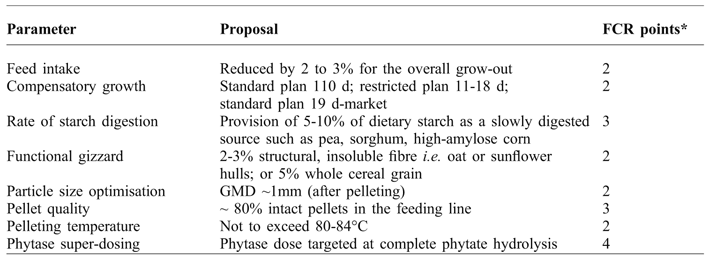
Table 2 provides a summary of different proposals and an expected response for each.
Summary recommendations.

*Expected improvement in feed conversion rate (FCR). GMD=geometric mean diameter
Although the sum of the proposed improvement in Table 2 would suggest 20 points benefit in FCR, given that the biological responses are not completely additive, a more realistic target would be an improvement of 8-10 points with a combined application of these strategies.