Protein-losing enteropathy is characterised by an excessive loss of proteins into the gastrointestinal lumen. The mortality and morbidity depends on the underlying disease and proper treatment. Restrictive cardiomyopathy is an important cause of protein-losing enteropathy. This case report presents a patient with restrictive cardiomyopathy who developed protein-losing enteropathy and was treated with budesonide before the heart transplantation. To our knowledge, it is the first report in the literature.
Case report
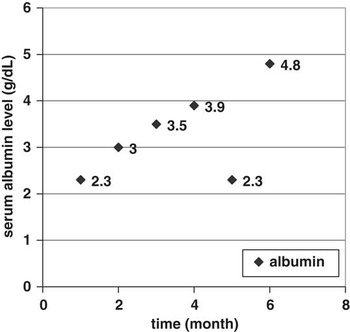
A 7-year-old male patient who had abdominal swelling and eyelid oedema was referred to our hospital. During physical examination, there were generalised oedema, ascites, and hepatomegaly. Liver function tests, metabolic examinations, and upper gastrointestinal system endoscopic examination to rule out the malabsorption syndromes were normal. We had suspected of restrictive cardiomyopathy or constrictive pericarditis by echocardiographic examination. Constrictive pericarditis was not considered in surgical exploration during pericardial biopsy; constrictive pericarditis was excluded and restrictive cardiomyopathy was diagnosed. The patient had not come for control in the following 2 years after the diagnosis. When he came after 2 years, significant increase of oedema and ascites was detected. Liver function tests, activated partial thromboplastin time, prothrombin time, and international normalized ratio were normal. The serum albumin level was 2.3 mg/dl and urinalysis showed no proteinuria. During cardiac catheterisation, the pressure recordings were as follows: pulmonary artery systolic 53, diastolic 27, mean 38, right atrium mean 22, right ventricle 55/20–26, pulmonary capillary wedge mean 24 mmHg, and pulmonary vascular resistance index was 3.35 Wood Units. Cardiac transplantation was planned. Other causes of hypoalbuminaemia were excluded. Faecal excretion of α-1-antitrypsin (2.8 mg/g, normal range was <2 mg/g) was increased. He remained on angiotensin-converting enzyme inhibitor and diuretic treatment, with diuretic dosage adjustments made as needed based on the degree of oedema and ascites present. His clinical status had not improved with this standard therapy. Protein-losing enteropathy secondary to restrictive cardiomyopathy was diagnosed and oral budesonide was started. The starting daily dose of oral budesonide was 9 mg. The level of albumin began to rise at the third week of the treatment. The albumin level increased to 3 g/dl at the end of the first month of the treatment and to 3.9 g/dl at the end of the second month. Ascites and peripheric oedema disappeared. Owing to cushingoid face and oral moniliasis, the dose was tapered to 6 mg/day and the side effects disappeared. At the third month of the management, cardiac transplantation was carried out and oral budesonide was stopped. Morphological diagnosis of the heart disease in the explanted organ was compatible with restrictive cardiomyopathy. After the transplantation, the serum albumin level was decreased to 2.3 g/dl. Therefore, on post-operative day 13, oral budesonide was restarted. When the serum albumin level increased to 4.8 g/dl, the oral budesonide dose was reduced and stopped in 1 month. On follow-up, the albumin level had not decreased (Fig 1).
Serum albumin levels according to months.

Discussion
Protein-losing enteropathy is characterised by an excessive loss of proteins into the gastrointestinal lumen. It may be caused by various disorders, for example, intestinal inflammation such as in chronic inflammatory bowel diseases, or through abnormalities of the lymphatic system, low cardiac output due to congestive heart failure or after Fontan procedure, and increase of the mesenteric venous pressure, such as in restrictive cardiomyopathy or constrictive pericarditis.Reference Marjet, Koert and Merit 1 Congestive heart failure, constrictive pericarditis, cardiomyopathy, severe tricuspid regurgitation, and Fontan circulation are the most common cardiac causes of protein-losing enteropathy.
In most patients, the diagnosis of the protein-losing enteropathy is obtained from history, physical examination, and clinical manifestations. The most common clinical findings are abdominal pain, nausea, vomiting, diarrhoea, ascites, and generalised oedema. Other causes of hypoproteinaemia, such as malnutrition, impaired protein synthesis, or protein loss from other organs such as liver, kidney, or skin, have to be excluded. The diagnosis is confirmed by increased faecal concentration of α-1-antitrypsin, dilated lymphatic veins in upper gastrointestinal tract endoscopic examination, and loss of bowel wall segments at Tc-99m scintigraphy.Reference Marjet, Koert and Merit 1 , Reference Halaby, Bakheet and Shabib 2
Treatment of protein-losing enteropathy includes the nutrition state maintenance by using a high-protein diet with supplement of fat-soluble vitamins and low fat with medium chain triglycerides, spironolactone, diuretics, angiotensin-converting enzyme inhibitors, octreotide, and unfractionated heparin, which have membrane-stabilising and anti-inflammatory effects. With the progress in the pulmonary vasoactive drugs such as phosphodiesterase inhibitors – sildenafil – and endothelin antagonists – bosentan – regulation of pulmonary vascular resistance and systemic venous pressure has been settled in the treatment of protein-losing enteropathy.Reference Sachin 3
Intestinal inflammation is a pathophysiologic component of protein-losing enteropathy. Ostrow et al. assert that high levels of inflammatory mediators can play a role in the pathophysiology of protein-losing enteropathy.Reference Ostrow, Freeze and Rychik 4 Low cardiac output and elevated mesenteric venous pressure due to chronic heart failure triggers systemic inflammation and the release of many mediators such as tumour necrosis factor α. These inflammatory mediators lead to compromise the integrity of intestinal mucosa resulting in enteric loss of protein in patients with protein-losing enteropathy. Systemic corticosteroids such as prednisone have been used for anti-inflammatory effect.Reference Rychik, Piccoli and Barber 5 Although corticosteroids are effective in the treatment, their side effects are common and may limit the usefulness of this treatment. Thus, agents with less side effects and more potent anti-inflammatory effects are studied. Budesonide, which is used in the management of chronic inflammatory bowel diseases, is considered. Oral controlled-release budesonide, which is rapidly absorbed from the intestinal tract, is 90% metabolised at first pass through the liver, and as a result its metabolites have only very weak glucocorticoid activity, but it has potent topical enteric anti-inflammatory activity and reduced systemic side effects. Thus, it may be an ideal agent for use in the management of protein-losing enteropathy, compared with other oral corticosteroid such as prednisone, which has less anti-infammatory and more side effect than budesonide.Reference Spencer and McTavish 6 – Reference Turner, Lanford and Webber 8
Standard doses for initiating treatment were not yet reported. For severe protein-losing enteropathy, the starting dose is 6–9 mg/day, and the doses can be reduced after a response is obtained. A dose >12 mg/day had not been used.Reference Turner, Lanford and Webber 8 Weaning from high initial dose to a lower dose was possible with sufficient effect. However, discontinuation of budesonide resulted in recurrence of hypoalbuminaemia, as in our patient, and adrenal suppression. Thacker et al. applied budesonide to nine patients who developed protein-losing enteropathy after the Fontan procedure.Reference Thacker, Patel, Dodds, Goldberg, Semeao and Rychik 9 The starting daily dose was 9 mg for patients 4 years of age and older, and 6 mg for patients <4 years of age.
Budesonide is a very safe and effective additional therapeutic option that has the potential to improve symptoms and show that this clinical status may be reversible and facilitate the decision of heart transplantation in patients with protein-losing enteropathy due to restrictive cardiomyopathy. In this case report, we aimed to share our experience, with budesonide, in an other indication which is not reported before.
Acknowledgement
None
Financial support
This research received no specific grant from any funding agency commercial or not-for-profit sectors.
Conflicts of Interest
None