Surgical site infections (SSIs) are the most common and costly healthcare-associated infections (HAIs). In the United States, ~160,000–300,000 SSIs occur each year, with annual healthcare costs of $3.5–$10 billion.Reference Anderson, Podgorny and Berrios-Torres 1 The prevention of SSI is increasingly important as the number of surgical procedures performed in the United States continues to rise. The Centers for Disease Control and Prevention (CDC) estimates that approximately half of SSIs are preventable using evidence-based strategies.Reference Berrios-Torres, Umscheid and Bratzler 2 In addition, SSI prevention is recognized by healthcare organizations, payers, and governmental agencies, including the Centers for Medicaid and Medicare Services, as a national patient safety priority, with hospital performance tied to reimbursement. 3
For more than 20 years, the medical literature has documented that the appropriate perioperative prophylactic use of antimicrobial agents can reduce the incidence of postoperative SSI.Reference Horan, Gaynes, Martone, Jarvis and Emori 4 – Reference Mangram, Horan, Pearson, Silver and Jarvis 6 Hysterectomies are among the most prevalent surgical procedures in United States, performed in >600,000 women each year. Among them, up to 2% are complicated by SSI,Reference Anderson, Podgorny and Berrios-Torres 1 and these are associated with longer hospital stays, higher risk of readmission,Reference Roy, Patkar, Daskiran, Levine, Hinoul and Nigam 7 and an additional $5,000 in healthcare costs for each hysterectomy-related infection.Reference Roy, Patkar, Daskiran, Levine, Hinoul and Nigam 7 According to the American College of Obstetricians and Gynecologists (ACOG) practice guidelines, women undergoing abdominal or vaginal hysterectomy should receive a preoperative, single-dose antimicrobial. 8 This recommendation is evidence-based and has been established by randomized placebo-controlled trials (RCTs) in which timely administration of preoperative antibiotics has shown significant SSI reductions in patients undergoing hysterectomy.Reference Mittendorf, Aronson and Berry 9 , Reference Duff 10
Cephalosporins are the most thoroughly studied antimicrobial prophylaxis agents. These drugs are effective against many gram-positive and gram-negative microorganisms. They also share the features of demonstrated safety, acceptable pharmacokinetics, and a reasonable cost per dose.Reference Mangram, Horan, Pearson, Silver and Jarvis 6 In particular, cefazolin is widely used and is generally viewed as the prophylactic guideline-recommended antimicrobial agent of first choice for abdominal or vaginal hysterectomy. 8 , Reference Bratzler, Dellinger and Olsen 11 Antibiotics with broader spectrum, including more extensive antianaerobic activity, such as cefotetan, cefoxitin, or ampicillin-sulbactam, are also first-line recommended options. Head-to-head comparative data between these antibiotics and cefazolin in terms of efficacy in SSI prevention for women undergoing hysterectomy are scarce, and it remains unclear whether the added antianaerobic spectrum provides a prophylactic advantage. This issue is important from the standpoint of antibiotic stewardship and the desire to use the narrowest-spectrum antibiotic indicated. Therefore, we undertook a meta-analysis to examine the efficacy of cefazolin compared with other antimicrobials for prevention of SSI in women undergoing hysterectomy, focusing specifically on agents with broad antianaerobic activity.
Methods
Search strategy
We conducted our study in accordance with the Preferred Reporting Items for Systematic Reviews and Meta-Analysis (PRISMA) guidelines.Reference Liberati, Altman and Tetzlaff 12 We searched PubMed (including MEDLINE), Scopus, Web of Science, Cochrane Central databases, EMBASE, and abstracts from relevant proceedings and conferences through January 23, 2018, without restrictions to language or date range. We manually reviewed the references of systematic reviews and meta-analyses previously published on this topic to identify additional eligible studies. A librarian (S.J.) assisted with the literature search. To identify eligible studies, we used the following medical subject headings with the “AND” function: cephalosporins, surgical wound infection, hysterectomy, clinical trials. We used the following keywords (text words) with the “OR” function: antibiotic prophylaxis, cefazolin, postoperative, postsurgical, infection, complications, and random allocation.
Inclusion criteria
We included RCTs comparing cefazolin (any dose) with other systemic antimicrobials administered as surgical prophylaxis agents in women undergoing abdominal and/or vaginal hysterectomy. To be included, studies had to provide information on the primary outcome and calculation of a risk ratio. We excluded studies of antimicrobial agents that are no longer manufactured or clinically used in the United States for surgical antimicrobial prophylaxis.
Outcome definitions
Our primary outcome of interest was SSI, as defined by CDC criteria.Reference Mangram, Horan, Pearson, Silver and Jarvis 6 As such, we included studies where the reported primary or secondary outcome was described in terms consistent with this definition, despite slight changes in terminology over time. Therefore, we considered the following reported outcomes as consistent with SSI: wound infection, vaginal cuff infection, pelvic infection, infected hematoma, deep pelvic abscess, abdominal wound infection, surgical wound infection, and postoperative skin and soft-tissue infection. Although “febrile morbidity” is a clinical outcome frequently reported in older trials of antimicrobial prophylaxis, we did not include it into our study because the relationship with SSI versus other postoperative etiologies cannot be precisely determined.
Data extraction and assessment of study quality and risk of bias
We abstracted data on study setting, sample size, indications for surgery (benign and/or malignant), type of surgery (abdominal and/or vaginal hysterectomy), prophylactic antibiotic used (dose and duration), duration of follow up, loss to follow up, and incidence of SSI.
We assessed risk of bias using the GRADE guidelines for randomized controlled trials.Reference Guyatt, Oxman and Vist 13 We assigned a rating of high risk of bias if fewer 4 of the GRADE criteria were fulfilled, an indeterminate risk of bias if information on at least 3 of the GRADE criteria were not specified, and a low risk of bias if 4 or more of the 7 GRADE criteria were fulfilled. One author (A.P.V.) abstracted the data; each report was identified by the search strategy described above and independently reviewed by a second author (N.S.). Disagreements regarding data extraction, risk of bias assessment, and study inclusion were resolved by discussion among the authors.
Statistical analysis
We performed meta-analyses to obtain pooled estimates of the risk ratio (RR) and 95% confidence interval (CI) for SSI associated with cefazolin versus other antimicrobials. We conducted subgroup analyses for abdominal versus vaginal hysterectomies and for different groups of comparison antimicrobials. We used the I2 test to assess the SSI estimates that could be attributed to study heterogeneity,Reference Higgins, Thompson, Deeks and Altman 14 and we conducted fixed-effects meta-analysis for I2 <25%, and random effects model for I2 >25%. We assessed publication bias using a funnel plot and the Eggers statistical test.Reference Sterne and Egger 15 , Reference Egger, Davey Smith, Schneider and Minder 16 We analyzed statistical data with Comprehensive Meta-Analysis (CMA) version 2.0 software (Biostat, Englewood, NJ).
Results
Study selection
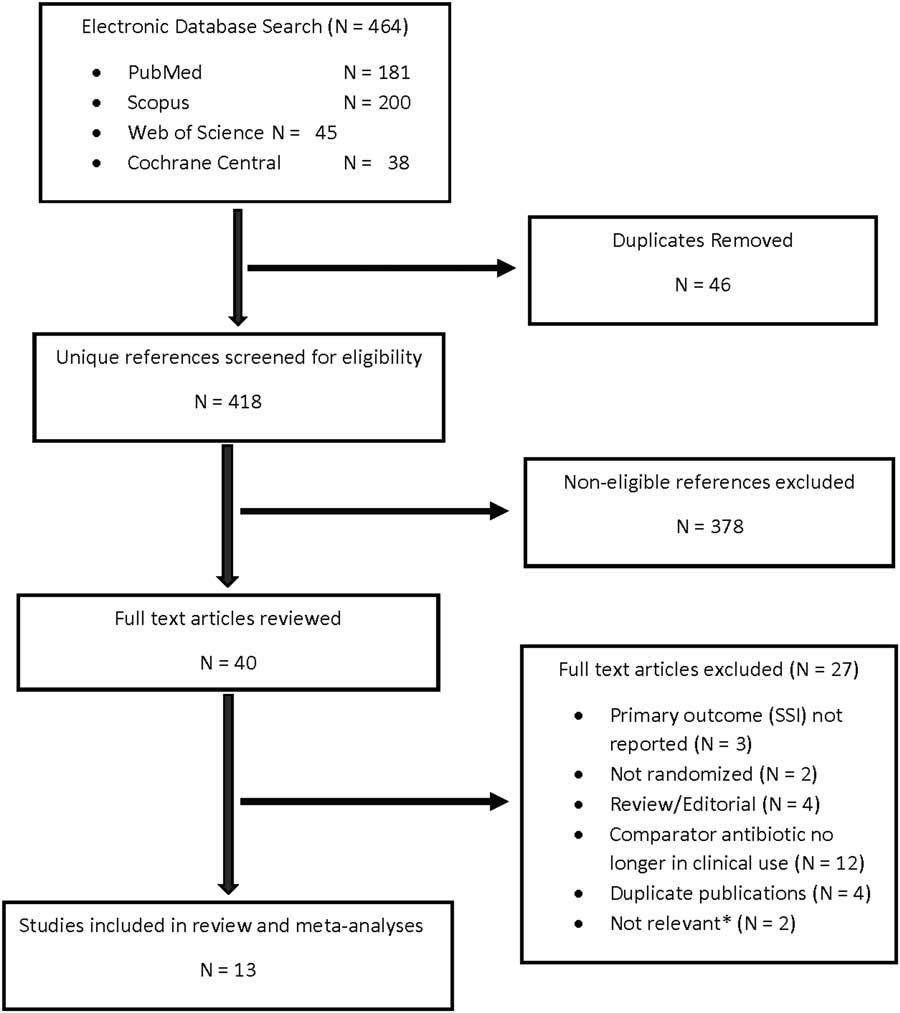
Figure 1 shows our review process for study selection. After de-duplication, we screened the titles and/or abstracts of 418 unique references for eligibility; of these, we reviewed 40 full-text articles, and ultimately included 13 studies in the review and meta-analyses. The main reasons for study exclusion were comparator antimicrobials no longer manufactured or clinically used in the United States (n = 12); primary outcome of interest (ie, SSI) not reported (n = 3); gynecological surgeries other than hysterectomies (n = 2); and other reasons (n = 10) (Fig. 1).
Flowchart of study selection from the literature review. *Studies included obstetric-gynecological surgeries other than hysterectomy. Abbreviation: SSI, surgical site infection.

Study and patient population characteristics
The characteristics of the 13 RCTs are presented in Table 1. Most studies were conducted during 1979–2003, with only 2 studies performed within the last 10 years. Publication languages included English in 12 studies and Italian in 1 study.Reference Baldoni, Cosco, Epicoco, Affronti, Giannone and Gilardi 17 Most of the studies enrolled women undergoing hysterectomies in university-affiliated hospitals within United States (5 trials), Europe (4 trials), Asia (3 trials), and Canada (1 trial). None of the trials included laparoscopic surgeries. Nine studies reported the indications for hysterectomy, which included primarily benign gynecological conditions. One study included 2 patients with endometrial carcinoma,Reference Baldoni, Cosco, Epicoco, Affronti, Giannone and Gilardi 17 and 2 other studies mentioned the inclusion of 17%–20% patients with neoplastic disease, not otherwise specified.Reference Periti, Mazzei and Periti 18 , Reference Periti, Mazzei, Orlandini and Mini 19
Characteristics of Randomized Controlled Studies Included in the Meta-analysis

Note. IV, intravenous, IM, intramuscular; CIN, cervical intraepithelial neoplasia; OR, operating room; postop, postoperatively.
a Defined as surgical site infection (SSI) in our study.
b Antimicrobial redosed for extensive blood loss (>1,500 mL) or surgery duration >3 h.
c Antimicrobial redosed for extensive blood loss (>1,000 mL) or surgery duration >3 h.
Abdominal hysterectomy, vaginal hysterectomy, or both were performed in 3, 3, and 7 studies, respectively (3,528 total patients). The overall SSI rates for abdominal and vaginal hysterectomy were 5.5% and 3%, respectively. One studyReference Cormio, Di Fazio, Cacciapuoti, Bettocchi, Borraccino and Selvaggi 20 included gynecological surgeries other than hysterectomy in 95 of 798 patients enrolled (12%). Clinical outcomes for this study were reported based on randomized antimicrobial drug arm, but they were not stratified by type of surgery performed. Meta-analyses with and outside this study showed no significant differences in results. We, therefore, chose to retain this study into our final analysis because of its relatively large sample size and because the majority (88%) of the patients underwent abdominal hysterectomy.
Antimicrobial prophylaxis characteristics
There was significant clinical heterogeneity among studies regarding antimicrobial prophylaxis choice and dosing, with antimicrobials administered in varying doses, either as a single preoperative dose in some studies, or as additional postoperative doses within first 48 hours of surgery in others (Table 1). None of the studies specified whether antimicrobial dosing was adjusted based on patient’s weight/body mass index and/or renal clearance, although 2 studies did specify antimicrobial redosing intraoperatively for extensive blood loss or surgery duration >3 hours.Reference Cormio, Di Fazio, Cacciapuoti, Bettocchi, Borraccino and Selvaggi 20 , Reference Jyothi, Vyas Neetha, Pratap and Asha 24
Clinical outcome definitions and reporting
Definitions and reporting for the clinical outcome of our interest, SSI, were generally consistent between studies. They included the following terms: surgical wound infection, vaginal cuff infection, postoperative vaginal wound infection, infected pelvic abscess or hematoma, pelvic infection requiring parenteral antimicrobial therapy, abdominal wound infection, pelvic cellulitis. We also included the following phrases: “any surgical wound which drained purulent or serous material, together with or without positive cultures” and “pelvic infection, defined as fever plus ≥1 of the following: purulent drainage from the vaginal cuff, abdominal pain with rebound tenderness and/or guarding, localized tenderness with a tender adnexal mass on bimanual palpation, or bacteremia with or without hypotension” (Table 1).
Study quality and risk of bias
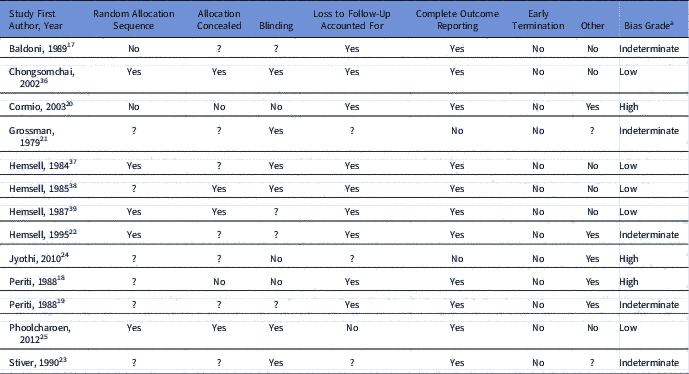
Details related to randomization, such as the randomization sequence for treatment allocation, and details related to treatment concealment and blinding were not reported in 5 studies,Reference Baldoni, Cosco, Epicoco, Affronti, Giannone and Gilardi 17 , Reference Periti, Mazzei, Orlandini and Mini 19 , Reference Grossman, Greco, Minkin, Adams, Hierholzer and Andriole 21 – Reference Stiver, Binns and Brunham 23 and were not present in 3 studies,Reference Periti, Mazzei and Periti 18 , Reference Cormio, Di Fazio, Cacciapuoti, Bettocchi, Borraccino and Selvaggi 20 , Reference Jyothi, Vyas Neetha, Pratap and Asha 24 rendering 8 studies at indeterminate and high risk of bias, respectively. An intention-to-treat analysis was performed in only 1 study.Reference Phoolcharoen, Nilgate, Rattanapuntamanee, Limpongsanurak and Chaithongwongwatthana 25 Table 3 shows details related to risk of bias for the studies included in the systematic review and meta-analysis.
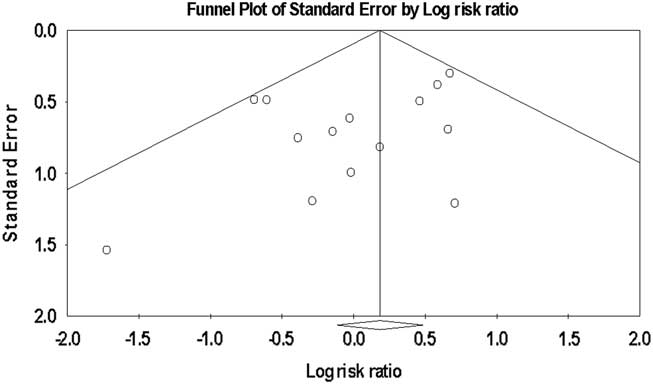
As shown by the funnel plot in Figure 2, publication bias was not present, and the Egger test of the intercept lacked statistical significance (P = .11).
Funnel plot to evaluate publication bias for randomized controlled trials of cefazolin as antimicrobial surgical prophylaxis in women undergoing abdominal or vaginal hysterectomies. Publication bias was not detected; the Egger test of the intercept was not statistically significant (2-tailed P value = .11273).

Meta-analysis of the efficacy of cefazolin compared with other antimicrobials in preventing surgical-site infection among women undergoing hysterectomy
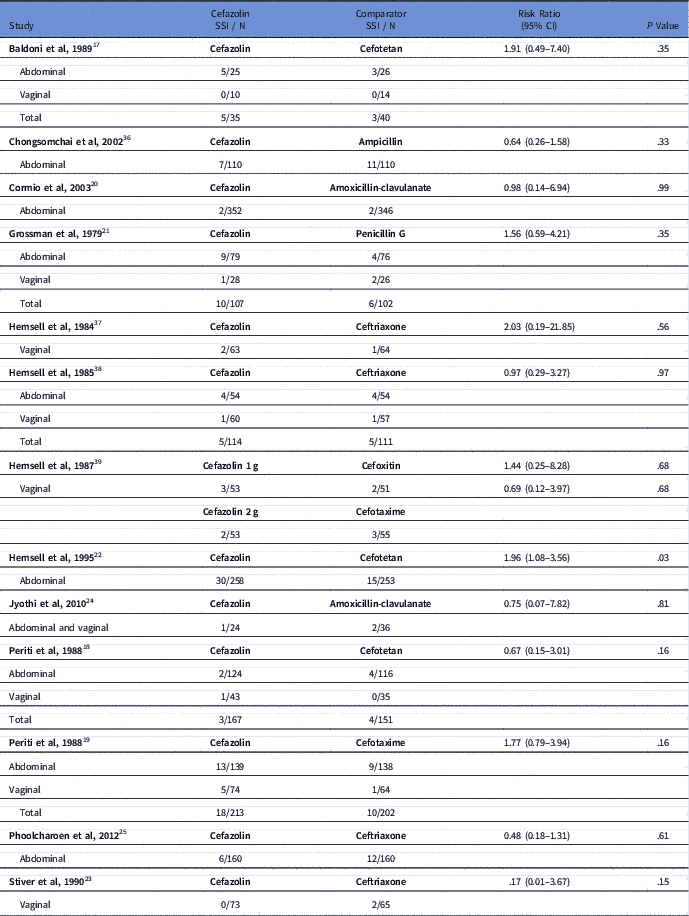
Among the 13 RCTs included in the study, 1,782 patients received cefazolin and 1,746 patients received a comparator antimicrobial for surgical prophylaxis. The SSI incidence and relative risk for cefazolin versus other antimicrobials reported in individual RCT is presented in Table 2. Only 1 study found the comparator antimicrobial (cefotetan) to be associated with significantly less SSI than cefazolin (P = .03).Reference Hemsell, Johnson, Hemsell, Nobles, Little and Heard 22 For all other studies, the difference in SSI incidence for patients receiving prophylaxis with cefazolin versus a comparator antimicrobial was not statistically significant.
Incidence of Surgical Site Infection (SSI) by Antimicrobial Prophylaxis Regimen and Randomized Controlled Trial of Women Undergoing Abdominal or Vaginal Hysterectomy

Note. CI, confidence interval.
Comparison with agents that have broad antianaerobic spectrum.
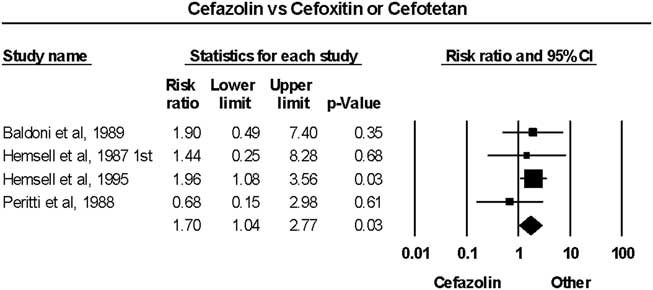
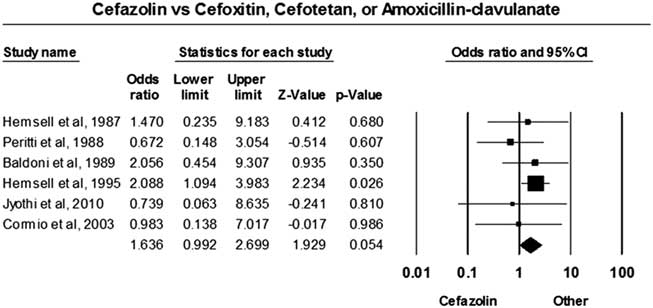
The results of the meta-analysis for the SSI risk ratio of cefazolin versus another cephalosporin agent with broad antianaerobic spectrum (cefoxitin or cefotetan) are shown in Figure 3. Among the 513 patients in the cefazolin arm, 41 SSIs (8%) were recorded, and among the 495 patients in the comparator (cefoxitin or cefotetan) arm, 24 SSIs (4.8%) were recorded. Compared with cefoxitin or cefotetan antimicrobial prophylaxis, cefazolin had a significantly higher risk of posthysterectomy SSI (relative risk [RR], 1.7; 95% confidence interval [CI], 1.04–2.77; P = .03).The addition of amoxicillin-clavulanate (a penicillin-based antibiotic with antianaerobic agent) to cefoxitin or cefotetan showed a trend for higher post-hysterectomy SSI with cefazolin (RR, 1.6; 95% CI, 0.98–2.64; P = .06) (Fig. 4).
Forest plot, meta-analysis of relative risk for SSI with cefazolin versus other cephalosporin antimicrobials with antianaerobic activity (cefotetan, cefoxitin) among women undergoing abdominal or vaginal hysterectomy. Fixed effects model. Heterogeneity I2 = 0, P value = .623.

Forest plot, meta-analysis of relative risk for surgical site infection (SSI) with cefazolin versus β-lactam with antianaerobic activity (cefoxitin, cefotetan, or amoxicillin-clavulanate) among women undergoing abdominal or vaginal hysterectomy. Fixed effects model. Heterogeneity I2 = 0; P value = .756.

Comparison with penicillin-based antibiotics.
When compared with penicillin G, ampicillin, or amoxicillin-clavulanate, cefazolin showed no statistically significant difference in the relative risk of SSI among women undergoing hysterectomy (RR, 0.96; 95% CI, 0.52–1.76; P = .89) (Supplemental Figure 1).
Comparison with other cephalosporin agents without broad antianaerobic activity.
Compared with second- or third-generation cephalosporins that have limited antianaerobic spectrum, cefazolin’s SSI relative risk was not statistically significant among women undergoing hysterectomy (RR, 0.66; 95% CI, 0.36–1.22; P = 0.18) (Supplemental Fig. 2).
Discussion
In this meta-analysis, the efficacy of cefazolin for SSI prevention in hysterectomy was significantly lower than that of other cephalosporins with broader antianaerobic activity, namely cefoxitin or cefotetan. Although not statistically significant, the trend toward lower efficacy was still present when we added amoxicillin-clavulanate, another β-lactam antibiotic with significant antianaerobic spectrum, into the meta-analysis. Our findings are plausible considering the pathophysiology and microbiology underlying SSI in gynecological surgery. Postoperative infections after gynecological surgery are primarily polymicrobial, with enterococci, aerobic-gram-negative bacilli, and anaerobic bacteria, including Bacteroides spp frequently isolated. In addition to the skin as the usual site of contamination for gram-positive pathogens, endogenous bacteria migrating from the vagina and endocervix can gain access to the operative sites. The endogenous flora of the lower reproductive tract in women includes facultative and obligate anaerobic species. Anaerobes are particularly predominant in bacterial vaginosis, long recognized as an SSI risk factor in women undergoing hysterectomy.Reference Fagotti, Costantini and Fanfani 26 – Reference Soper, Bump and Hurt 30 The recent clinical study by Till et al,Reference Till, Morgan and Bazzi 31 not included in our meta-analysis as it is an observational trial, provides further support for the consideration of agents with good antianaerobic spectrum to antimicrobial prophylaxis in hysterectomy. In a large retrospective cohort study including 18,255 hysterectomies in 73 hospitals during 2012–2015, combination prophylaxis with cefazolin plus metronidazole resulted in significantly lower SSI rates than cefazolin alone.Reference Till, Morgan and Bazzi 31 Additionally, a recent retrospective cohort study by Uppal et alReference Uppal, Harris and Al-Niaimi 32 of 21,358 patients from the Michigan Surgical Quality Collaborative undergoing hysterectomy between 2012 and 2015 reported that the rate of SSI was significantly higher in patients receiving non-β-lactam antimicrobials than in those receiving β-lactam antimicrobials.
We found no significant difference in the SSI relative risk when cefazolin was compared with penicillin-based β-lactam antibiotics (penicillin G, ampicillin, amoxicillin-clavulanate) or with second- or third-generation cephalosporins that lacked antianaerobic spectrum.
Any conclusions regarding optimal surgical antibiotic prophylaxis in hysterectomy are tempered by the significant limitations of the literature in this field. First, most cefazolin trials are old, with no representation of laparoscopic procedures and with only 1 RCT published within the last decade.Reference Phoolcharoen, Nilgate, Rattanapuntamanee, Limpongsanurak and Chaithongwongwatthana 25 Variations in antibiotic dosing and perioperative duration, lack of standardized weight-based dosing, and lack of information regarding antimicrobial redosing in relation to duration of surgery introduce significant clinical heterogeneity and make comparisons with contemporary standard of practice difficult. Second, most hysterectomies performed in these studies were due to benign surgical indications. The exclusion of patients with underlying gynecological malignancies, especially ovarian cancers that are usually clinically advanced at presentation and require complex debulking procedures, renders the choice of optimal surgical antibiotic prophylaxis uncertain in these cases. Third, the methodological rigor is low or indeterminate in many of the older studies; we identified a high potential for bias in more than half of the studies. Lastly, most studies reported “postoperative fever” as a major clinical outcome for antibiotic prophylaxis. Although some cases of postoperative fever may be due to SSI, this is a nonspecific outcome, potentially attributable to a variety of other infectious or noninfectious processes. Its exclusion from our analysis may have underestimated the true incidence of SSI.
To our knowledge, this is the first meta-analysis that frames the question of surgical antibiotic prophylaxis in terms of comparative efficacy for cefazolin versus antimicrobials with broader antianaerobic spectrum—a clinically relevant question for contemporary surgery. Previous meta-analyses in the field have focused on the preventive benefits of antibiotic prophylaxis in general and have included antimicrobials that are no longer used for this clinical purpose.Reference Mittendorf, Aronson and Berry 9 , Reference Ayeleke, Mourad, Marjoribanks, Calis and Jordan 33 – Reference Tanos and Rojansky 35 Due to the antiquated nature of the published RCT on this topic, and their inherent limitations stated above, the question cannot be answered conclusively from the evidence-based literature available at this time.
In conclusion, the question of optimal antimicrobial prophylaxis for SSI prevention in contemporary hysterectomy deserves further study, and RCTs are needed to assess the efficacy of cefazolin versus other antimicrobials with broader antianaerobic spectrum. The enrollment of patients undergoing complex surgical procedures due to underlying gynecological malignancies, and the inclusion of laparoscopic as well as open surgical approaches should be prioritized for future trials. In addition, given the known deleterious effects of broad-spectrum antimicrobials on the gut microbiome, future studies of comparative efficacy should also explore the adverse effects of broader antianaerobic spectrum on gut microbiota, in addition to the effects on SSI prevention. (Table 3)
Risk of Bias Summary for the Studies Included in the Systematic Review and Meta-analysis

a According to review author.
Financial support
None provided.
Conflicts of interest
All authors report no conflicts of interest relevant to this article.
Supplementary Materials
To view supplementary material for this article, please visit https://doi.org/10.1017/ice.2018.286