Introduction
Management is a difficult (but rewarding) procedure of overseeing many companies, enterprises, and activities (Ilic, Djukic, & Balaban, Reference Ilic, Djukic and Balaban2019). Modern businesses are becoming knowledge creators, and their personnel is becoming knowledge workers, with knowledge management becoming a fundamental organizational foundation (Ilic, Djukic, & Balaban, Reference Ilic, Djukic and Balaban2019). Because of the dynamism in the market and a great deal of rivalry across diverse companies or agencies, we have seen a major intensification of numerous management approaches in recent years. The primary goals of modern management ideas are to increase performance and simplify task execution (Gorska–Rozej & Rozej, Reference Gorska–Rozej and Rozejn.d.). The management of any company is accountable for the company's survival and growth. There is no common understanding of what management or modern management entails. Nevertheless, the most widely acknowledged emphasizes the need for organization, planning, control, and management in achieving organizational objectives efficiently and effectively. Management is a global instrument in today's industrial environment (Yaqub, Ahmad, Ahmad, & Amin, Reference Yaqub, Ahmad, Ahmad and Amin2016). To fulfill its goals, every firm has to possess the right management. Modern living and the complicated functioning method necessitate modern leadership linked to management. Management is critical to the successful operation and advancement of any social system, company, or society. The managerial method adopted for effective operation, efficiency, and growth is a fundamental aspect of modern management (Kareska, Reference Kareska2016). Generating competitive advantages in any organization's operations must become a strategic objective and a significant growth path. It is vital to evaluate all the possibilities for boosting manufacturing efficiency and economical procedures on a qualitative level. It concerns management, organizational and technical capability, energy, environmental resources, and human reserves. Energy efficiency is an important competition factor, particularly in high-energy-intensive manufacturing environments (Serdyuk, Serdyuk, & Franishyna, Reference Serdyuk, Serdyuk, Franishyna, Bezpartochnyi and Britchenko2019). For scientific institutions and labs dealing with a lot of unorganized data, competent data processing, and analysis management provides considerable labor cost savings across the incoming materials processing cycle (Wu, Zheng, Xia, & Lo, Reference Wu, Zheng, Xia and Lo2021b). To put such a system in place inside a major scientific institution that conducts a transdisciplinary study in several fields, it is important to tackle the issue of optimizing categorization procedures, abstracting incoming material flow, and undertaking fractographical analysis of that flow (Artamonov, Ionkina, Tretyakov, & Timofeev, Reference Artamonov, Ionkina, Tretyakov and Timofeev2018).
Cloud enterprise resource planning allows for real-time convergence of business procedures and aids in managing successful cross-functional activities of a company (Ban et al., Reference Ban, Liu, Wu, Yang, Liu, Yin and Zheng2022; Yu, Li, Li, Zhao, & Zhao, Reference Yu, Li, Li, Zhao and Zhao2018). Organizations are increasingly turning to cloud enterprise resource planning because it provides cost-effective features by using hardly any capital and human resources (Gupta, Kumar, Singh, Foropon, & Chandra, Reference Gupta, Kumar, Singh, Foropon and Chandra2018; Hashem, Yaqoob, Anuar, Mokhtar, Gani, & Khan, Reference Hashem, Yaqoob, Anuar, Mokhtar, Gani and Khan2015; Maestrini, Luzzini, Maccarrone, & Caniato, Reference Maestrini, Luzzini, Maccarrone and Caniato2017).
This paper aims to introduce the concept and implementation of current management concepts, which may significantly improve the quality of services delivered. The following is how the remainder of the paper is structured:
The ‘Nature-inspired optimization algorithms’ section provides a general introduction to nature-inspired algorithms. The ‘Related work review papers’ section presents several relevant works. The ‘Research methodology and quantitative section’ section describes the methodology. The ‘Bibliometric analysis’ section presents the bibliographic analysis, and the ‘Citation network’ section illustrates citation network analysis. The ‘Qualitative section’ section is the qualitative section and reviews the selected articles. Ultimately, the ‘Conclusion and future works’ section presents conclusions and orientations for future research.
Nature-inspired optimization algorithms
Optimization is crucial in many fields, including engineering, business, and industrial design. Optimization goals can be anything that will reduce energy use and costs and increase revenue, output, performance, and efficiency. Optimization is necessary everywhere, from engineering design to business planning, Internet routing to vacation planning, is not hyperbole (Zenggang et al., Reference Zenggang, Mingyang, Xuemin, Sanyuan, Fang, Xiaochao and Xiang2022; Zheng & Yin, Reference Zheng and Yin2022). Researchers must devise techniques to use resources wisely while adhering to various restrictions because they are always scarce in real-world applications. Mathematical optimization or mathematical programming studies such planning and design difficulties using mathematical techniques (Wu, Zheng, Chen, Zhao, Yu, & Mu, Reference Wu, Zheng, Chen, Zhao, Yu and Mu2021a; Yang, Reference Yang2020a). Numerous times, the optimization problems that might be stated have multimodal goal landscapes and are very nonlinear, susceptible to several intricate nonlinear constraints. Solving such difficulties is difficult. Using straightforward brute force techniques is still undesirable and unworkable, despite the ever-increasing capability of modern computers. Therefore, efficient methods should always be used in such situations. However, it's possible that most application-specific optimization issues don't have efficient techniques. Although there are many other optimization methods, the majority of them are gradient-based and local search algorithms, such as the interior-point method and the trust region approach (Boyd, Boyd, & Vandenberghe, Reference Boyd, Boyd and Vandenberghe2004), which means that the final solutions may depend on the initial starting points (Yang, Reference Yang2020b).
According to Nilsson, Bernhardsson, and Wittenmark (Reference Nilsson, Bernhardsson and Wittenmark1998), computational intelligence is a significant and constantly developing sub-field of artificial intelligence that focuses on the development of computational systems that can make decisions based on rules or models and that can also generalize successfully from the analysis of available collections of data (Liang, Luo, Hu, & Li, Reference Liang, Luo, Hu and Li2022). The term ‘computational intelligence’ refers to a number of related fields of study, including machine learning (Alazba & Aljamaan, Reference Alazba and Aljamaan2021; Yang, Wang, Deng, Azghadi, & Linares-Barranco, Reference Yang, Wang, Deng, Azghadi and Linares-Barranco2021a), evolutionary computation, hybrid and adaptive intelligence, etc. A newer ‘branch’ of those computational intelligence approaches called nature-inspired algorithms are becoming popular during the last decade, due to their ability to provide solutions of higher quality in difficult optimization tasks, contrary to classical approaches, such as mathematical programming (Zheng et al., Reference Zheng, Tian, Yang, Liu, Ding, Tian and Yin2022). The majority of intelligent algorithms that are inspired by nature are actually intelligent meta-heuristic optimization techniques. Compared to heuristic procedures, meta-heuristics have the main benefit of improving the population of potential solutions based on information gathered during the algorithmic process (Tzanetos & Dounias, Reference Tzanetos and Dounias2021). Compared to traditional optimization methods, algorithms inspired by nature are better able to avoid local optima. As a result, the nature-inspired optimization method has emerged as a key choice for resolving a number of difficult real-world issues. For millions of years, animals and plants have evolved naturally to create techniques to secure their survival when resources are limited (Li & Li, Reference Li and Li2019). It makes sense that the prevalence and effectiveness of these tactics demand consideration when creating optimization algorithms. Over the past few decades, nature-inspired optimization algorithms such as Particle Swarm Optimization (PSO) and Genetic Algorithm (GA) have provided a wealth of meta-heuristics for solving desired problems (Li et al., Reference Li, Liu, Huang, Zeng, Zou, Chu and Yi2020a). We believe it is time to investigate whether these nature-inspired optimization algorithms are powerful in solving challenging modern management problems.
The purpose of this work is to study the essence of modern management, consider the available tools for optimizing energy, resources, and data management, as well as to determine the related problems, and to introduce the optimization algorithm for performing management in a modern company or organization.
Related work review papers
This section presents a number of review articles related to the article's subject. The purpose of this section is to show the weaknesses of existing articles to date.
Dkhili, Eynard, Thil, and Grieu (Reference Dkhili, Eynard, Thil and Grieu2020) investigated the transition of power networks into ‘smart grids’ considering Distributed Generation (DG) penetration and the traits that result. Furthermore, inside this paradigm, they offered a review of noteworthy publications in the literature aimed at modeling and controlling electricity grids. The reader was given an in-depth examination of some methodologies via the prism of the applications for which they are most appropriate. They discovered that well-established methodologies like optimal power flow, used for infrastructure design for years, were still reliable instruments. However, cutting-edge studies in the multi-agent system's domain have opened the way to putting a plethora of complicated numerical algorithms in power grid surveillance and supervision. Demand-side management approaches were also given specific attention.
Besides, Paliwal, Patidar, and Nema (Reference Paliwal, Patidar and Nema2014) presented a complete grid-integrated distributed generator planning evaluation. The following is an overview of several DG technologies. Various difficulties relating to DG integration were considered. The planning objectives for DG integration were thoroughly examined and compared to traditional and renewable energy-based DG systems. Various strategies for DG location optimization were also researched and compared. According to a thorough literature review, investigators mostly focused on DG integration planning utilizing traditional DGs. Renewable energy sources-centered DGs received little attention. The stochastic behavior of renewable energy sources was not adequately accounted for while integrating them. Ultimately, an endeavor was made to highlight prospective research pathways by displaying the large spectrum of studies in planning grid-integrated DGs.
In wireless sensor networks, Khan, Qureshi, and Iqbal (Reference Khan, Qureshi and Iqbal2015) provided a high-level taxonomy of energy management. They looked at several battery-driven power utilization and energy harvesting-centered energy supply strategies. They also mentioned a new development in wireless energy transmission to a sensor node as a viable substitute for traditional batteries.
Wang, Feng, Xue, and Song (Reference Wang, Feng, Xue and Song2011) discussed the challenge of energy-efficient computing and alternative solutions to the energy managing issue in green computing. They looked at several new energy-saving data management approaches that had just been created. Finally, benchmarks and power models for evaluating energy-efficiency solutions were given.
Khattar, Sidhu, and Singh (Reference Khattar, Sidhu and Singh2019) wanted to give a thorough image of cloud computing's energy efficiency. Heuristics-based optimizing approaches and dynamic power managing strategies were also categorized. The survey revealed current trends in energy efficiency in cloud computing depending on geographies, conferences, journals, and other factors. The study came to a close with a discussion of research challenges and possible future research areas.
As can be seen, several articles have been discussed, but no bibliometric has been done in any of them. Hence, this article will present a bibliometric and systematic review (Doewes, Gharibian, Zadeh, Zaman, Vahdat, & Akhavan-Sigari, Reference Doewes, Gharibian, Zadeh, Zaman, Vahdat and Akhavan-Sigari2022; Zadeh, Bokov, Yasin, Vahdat, & Abbasalizad-Farhangi, Reference Zadeh, Bokov, Yasin, Vahdat and Abbasalizad-Farhangi2021) to fill this gap.
Research methodology and quantitative section
Although all available articles provide a literature overview, none of the studies contribute to the literature landscape structure regarding visual research clusters. This task has been performed using citation network analysis and derivative network clustering. Thus, this paper provides bibliometric analysis, including communication network analysis, for visual perception of literature, including journal articles, conference papers, book chapters (except for white papers), work papers, and student papers.
Defining the search terms used
In the first step, the search started with the phrase ‘Nature-inspired AND Algorithm AND Modern Management’. Thus, several articles have been found in the database, and accurate results were not obtained. However, keywords related to the topic discussed in the articles' titles were looked at. Consequently, the keywords were defined for search criteria. Keywords related to modern management in the research were ‘Data Management’, ‘Resource Management’, ‘Energy Management’, ‘Organization Management’, and ‘Product Management’, which indicated more relevant topics. many keywords and search terms were thought that must be considered in reading the bibliography. The final defined keywords included the general terms ‘Algorithm’, ‘Management’, and ‘Data OR Resource OR Energy OR Product’. These search scenarios were combined using titles, abstracts, and keywords.
Defining the database used
This section discusses articles from various publications on modern management in organizations, offices, and companies in the Google Scholar database from 2015 to February 2022.
Initial findings
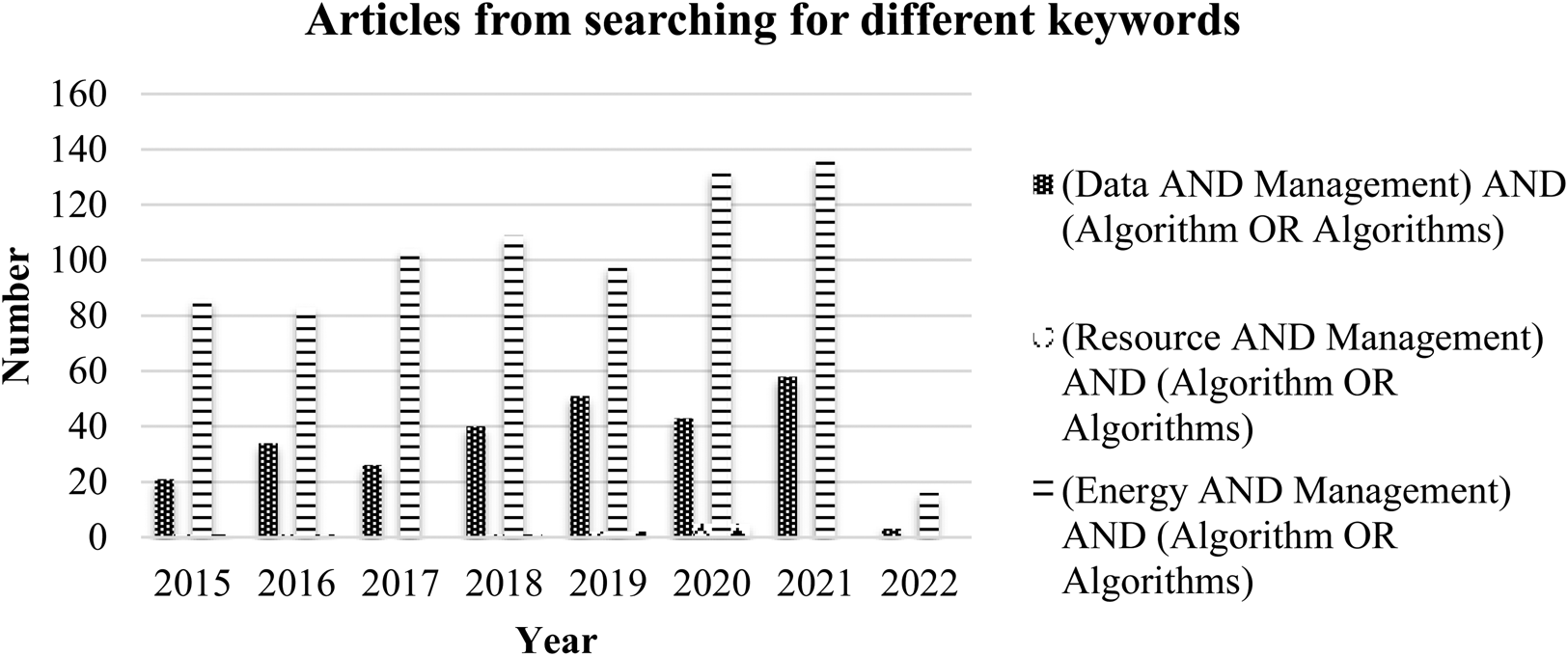
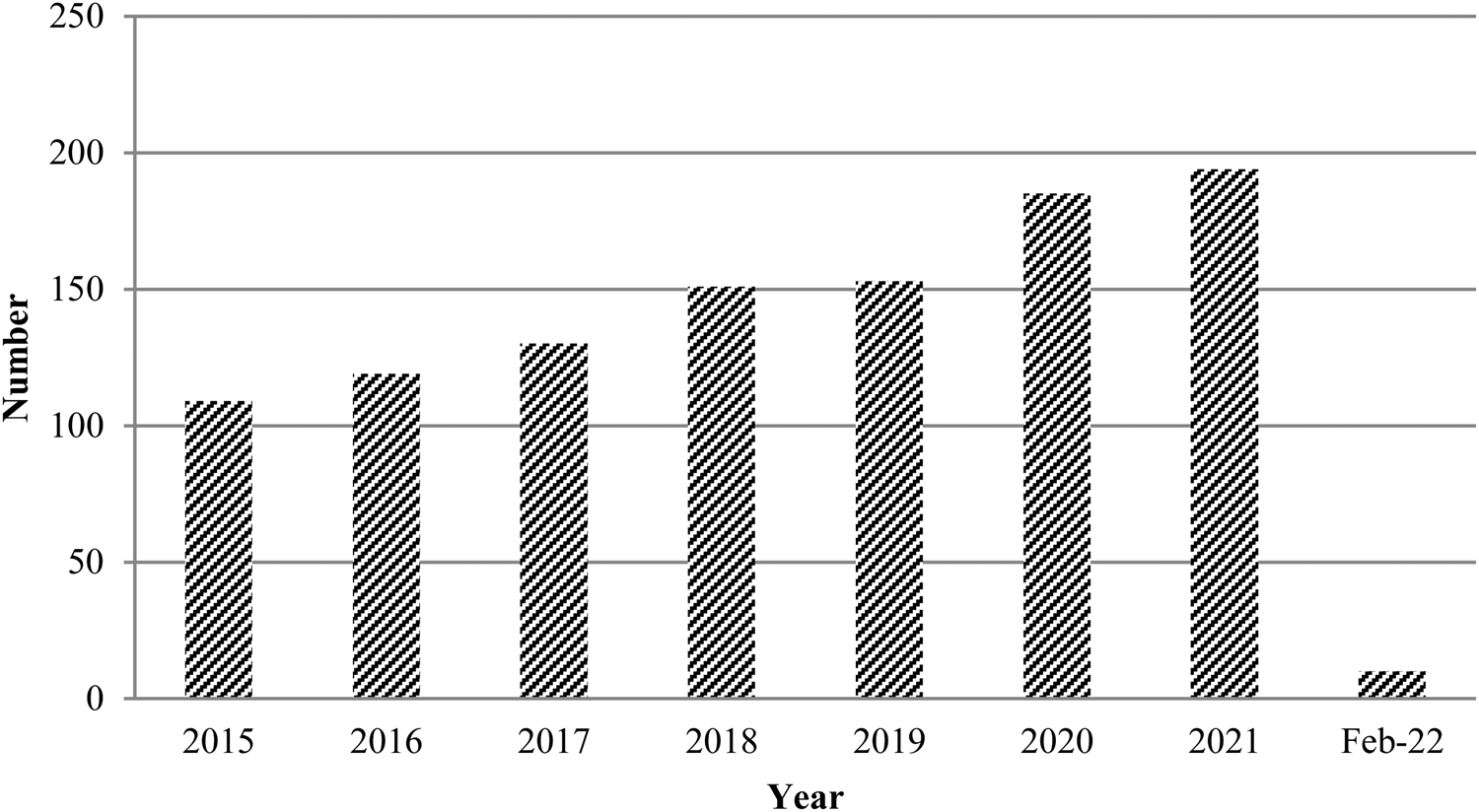
The journals, articles, book chapters, and conferences published in English were gathered. The keywords in their title, abstract, or keywords utilizing the search phrases title, abstract, and keywords in these databases were combined. The first search findings in the Google Scholar database are shown in Figure 1. A systematic technique is used to guarantee effective data gathering (Esmailiyan, Amerizadeh, Vahdat, Ghodsi, Doewes, & Sundram, Reference Esmailiyan, Amerizadeh, Vahdat, Ghodsi, Doewes and Sundram2021; Vahdat & Shahidi, Reference Vahdat and Shahidi2020).
Distribution of articles by year.

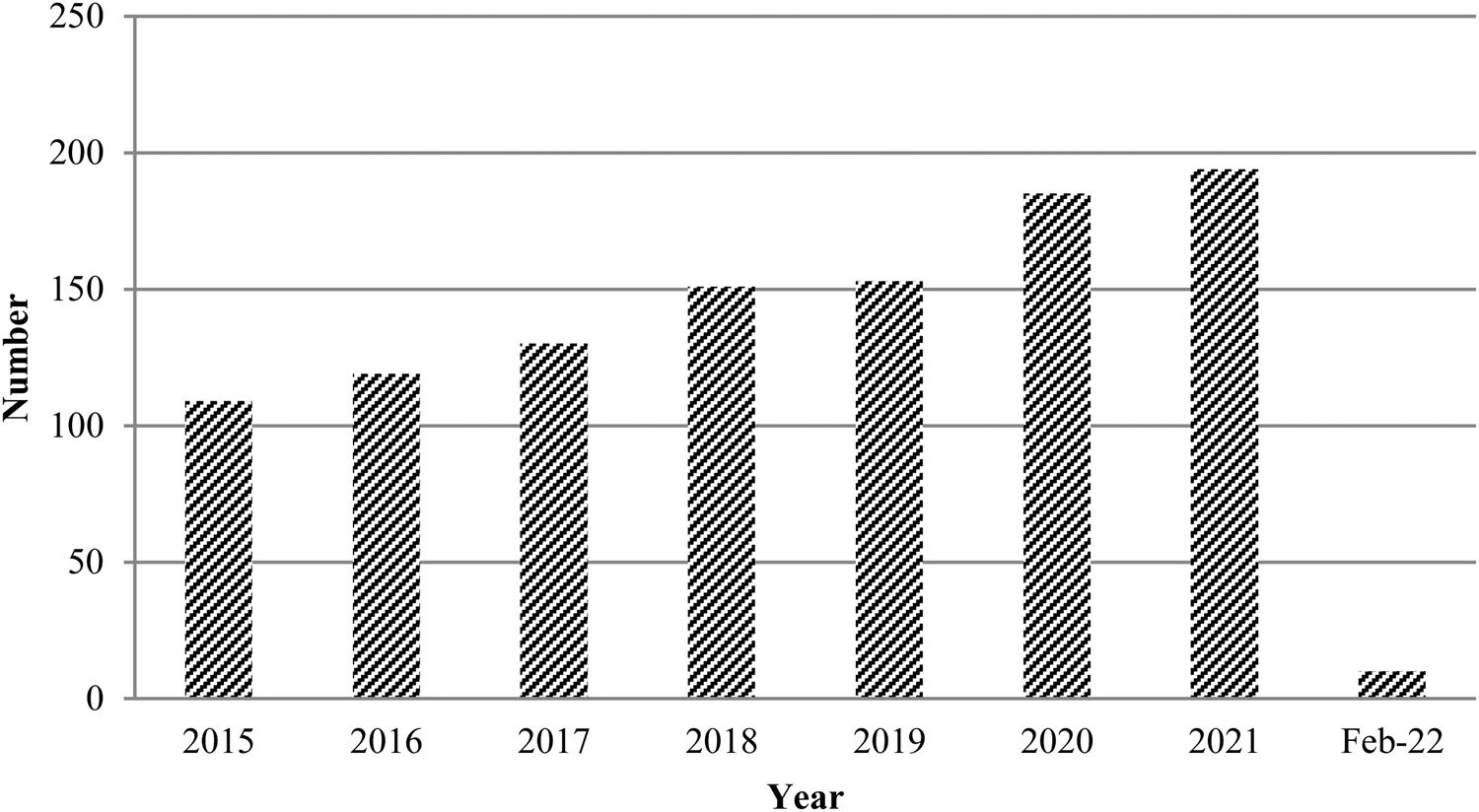
1,060 articles were found in an initial collection that met our search criteria, excluding white, work, and discussion papers. The abstracts are studied to evaluate only relevant articles. To maintain a constant emphasis on the investigation, papers that appeared to be unrelated were eliminated. All articles were published from 2015 to February 2022, while 2019 indicates the peak of research to date. In 2021, 194 articles were collected. Figure 2 illustrates the development. From the articles found in this section, 20 will be selected and analyzed in Section ‘Citation network’. Selected articles will be from 2018 to 2022 February.
The growth trend of articles in different years.
Refinement of data collection
Traditionally, data collection for bibliographic analysis is organized as follows.
This section collects raw data for bibliographic analysis with Google Scholar data. Subsequently, the data is refined using Publish or Perish software. Publish or perish is a reference management application that is used.
Initial data statistics
The articles obtained from the bibliometric search from 2015 to February 2022 are shown in bar graphs. Thus, Figure 2 demonstrates organizations' growing interest in modern energy or resource management research. As obvious, the released papers have elevated in ascending order from 2015 onwards, and the highest number of published articles is in 2021. Thus, Figure 2 depicts that researchers' interest in exploring modern management in organizations increases in abundance.
Data Analysis
The data were analyzed in two stages: ‘bibliometric analysis’ and ‘network analysis,’ as described in Sections ‘Research methodology and quantitative section’ and ‘Bibliometric analysis’. Publish or Perish was used to conduct the bibliometric study described in Section ‘Research methodology and quantitative section’. Google Scholar receives data statistics from Publish or Perish, which collects citations for all papers, irrespective of their ultimate sources. Author, citation, and keyword statistics are all examples of data statistics. The content-centered citation and clustering analysis of the available material was done using the network analysis given in Section ‘Bibliometric analysis’ of VOS viewer.
Bibliometric analysis
Publish or perish was chosen in this article because of its high flexibility in working with Google Scholar data.
Hence, a database of related study themes may be built. Publish or perish is utilized to determine which researcher is referenced the most and specify the earliest and latest year of publication for each paper. Also, for each study utilized were get a bibliometric record. The keyword ‘(Algorithm) AND (Management) AND (Data OR Resource OR Energy OR Product)’ was selected to search the database. Accordingly, 962 articles were obtained.
Citation network
In the subsequent phase of this investigation, a network analysis was performed for the chosen data sample. Various programs are available for this aim. Gephi, CiteNetExplorer, ScienceSpace, VOS viewer, Pajek, and Bibliometric are the most popular. VOS viewer was selected for our study. This choice is because VOS viewer is the most popular and widely used of researchers' articles.
The acquired data is processed so that it corresponds to the intended keywords. The data is subsequently entered into the VOS viewer program, which converts the information into an interconnected data map.
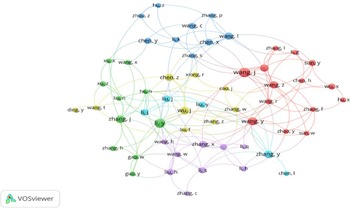
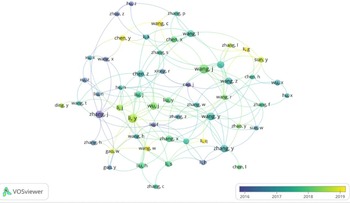
Figure 3 (co-authorship) depicts that the authors of an article shared and collaborated on several scientific works. It is basically the participation of two or more authors in producing work. If future researchers want to work on a topic related to the title in the future, they can identify prominent authors on the map. The chart below illustrates a minimum of 4 articles per person. There are authors in this network who have at least 4 related works in their list of published articles.
Co-authors network visualization, 2015- Feb2022.
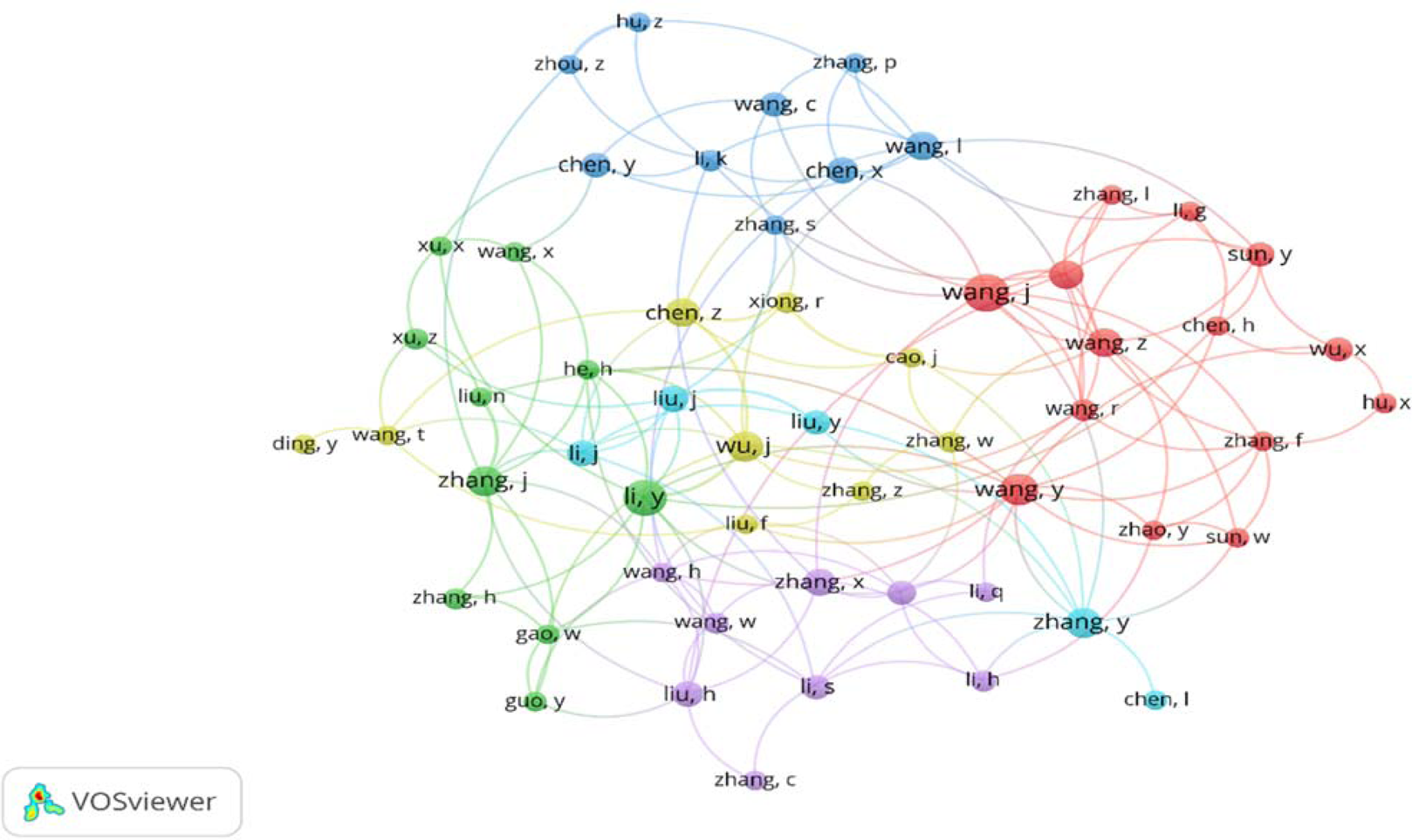
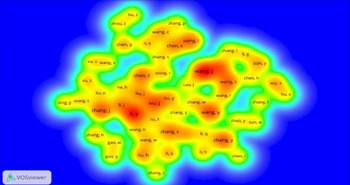
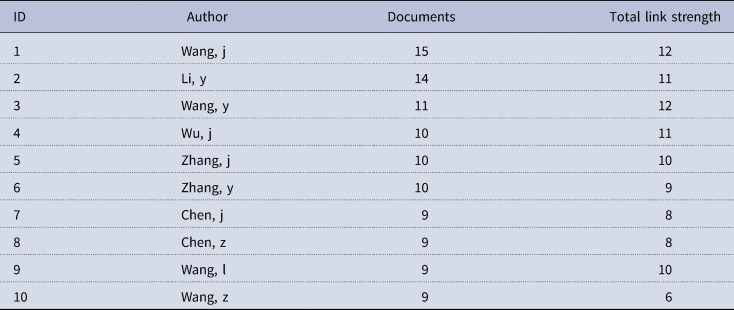
A dot indicates the authors' names, and the connecting edge indicates the commonalities between the authors. The size of the circles also indicates that the article's author has more in that area. The color of the circles also indicates the cluster in which the VOS viewer groups it. Also, if author A refers to author B in Figure 4, both articles are connected by an edge, presenting their relationship in the literature. The number of referrals can be considered an indicator of popularity. Table 1 sorts this information from the authors with the most documents to the least. This table demonstrates the top ten authors in modern management in organizations as follows.
Co-authors map density visualization.

Authors and the number of their articles
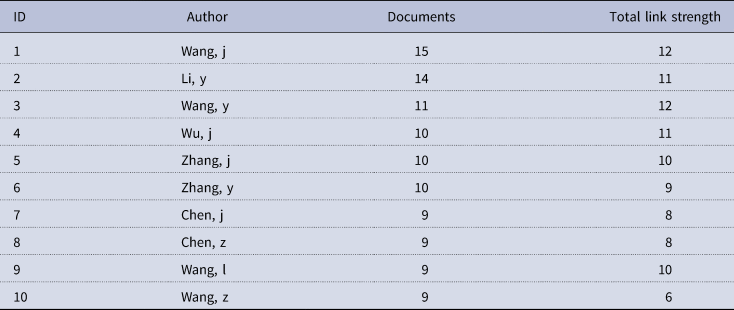
Table 1 illustrates that Wang, j with 15 articles and Li, y, are the most focused on the topic under discussion. This issue of attention can also be cited in Figure 4. This map is more beneficial for grasping the general architecture and highlighting the map's most critical features. The item density determines the color of the dots on the map. The number of surrounding objects and the weight of the items determine the item density on a map. The more items adjacent to the target point and the heavier the neighboring item, will be red. The authors are colored based on the frequency of documents and communication with other authors in this form. Authors with more red color have had the most research.
Prolific authors in this table will be considered in the article review section. And the priority will be to search and review their articles.
The authors in the redder sections have many articles on this particular topic and are also shown on the map in larger fonts. Besides, Figure 5 gives authors a different color scheme based on the year they published their articles. For example, writers who have recently published an article on the subject tend to be yellow.
Time overlay distribution of co-authors 2015-Feb2022.

According to the graphs in Figures 3, 4 and 5, the articles that are among recent authors should be selected for content analysis and also consider the authors with the most documents for the next section. In this selection, they must be fair to include both groups, but the main goal is to introduce the works of recent authors for a comprehensive and up-to-date collection.
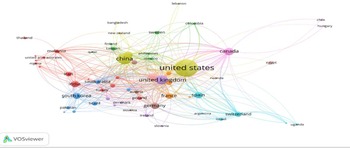
As illustrated in Figure 6, the visualization of a network of country cooperation shows the largest dot for the United States with 835 total documents, followed by China with 344 articles. The United Kingdom ranks third with 223 articles. The United States ranks among the countries regarding the number of publications in the field of advanced technology in management. Each of the countries demonstrated in Figure 6 has published at least 3 articles.
International collaboration network visualization.
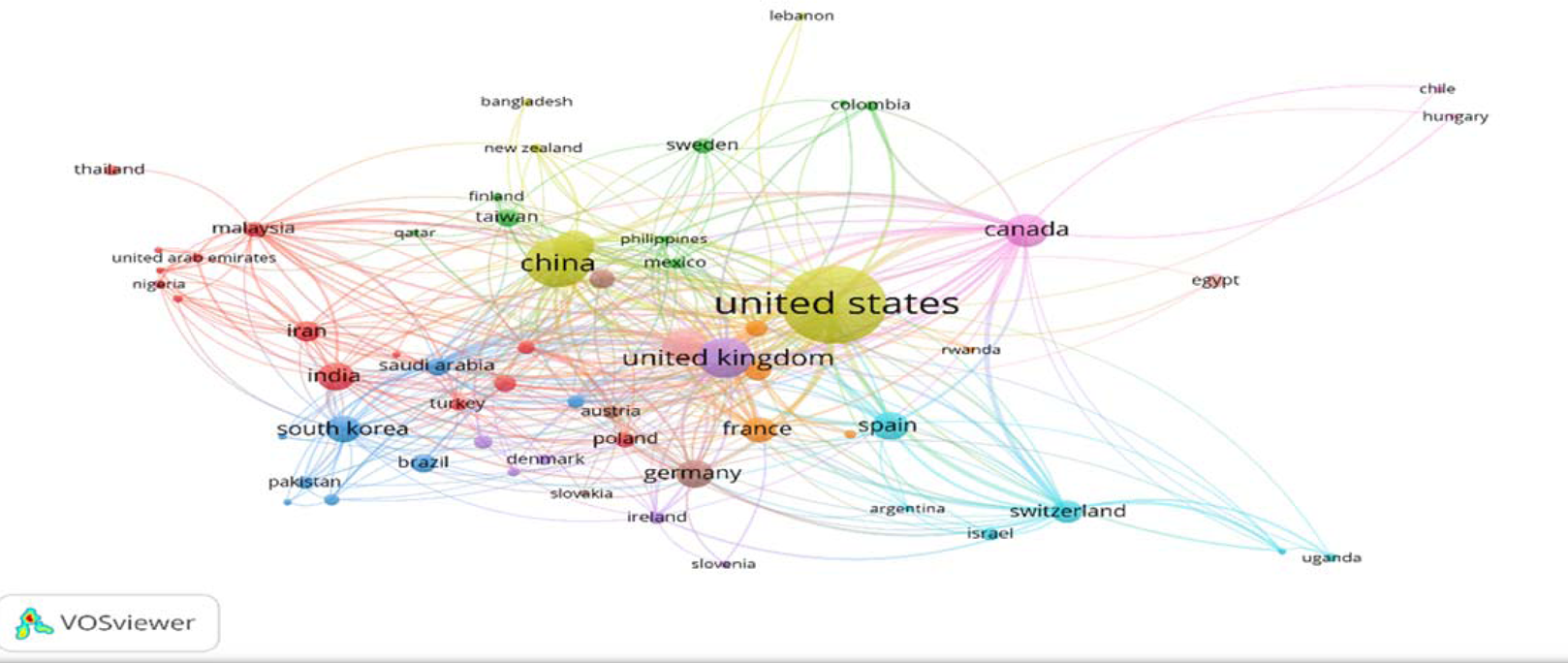
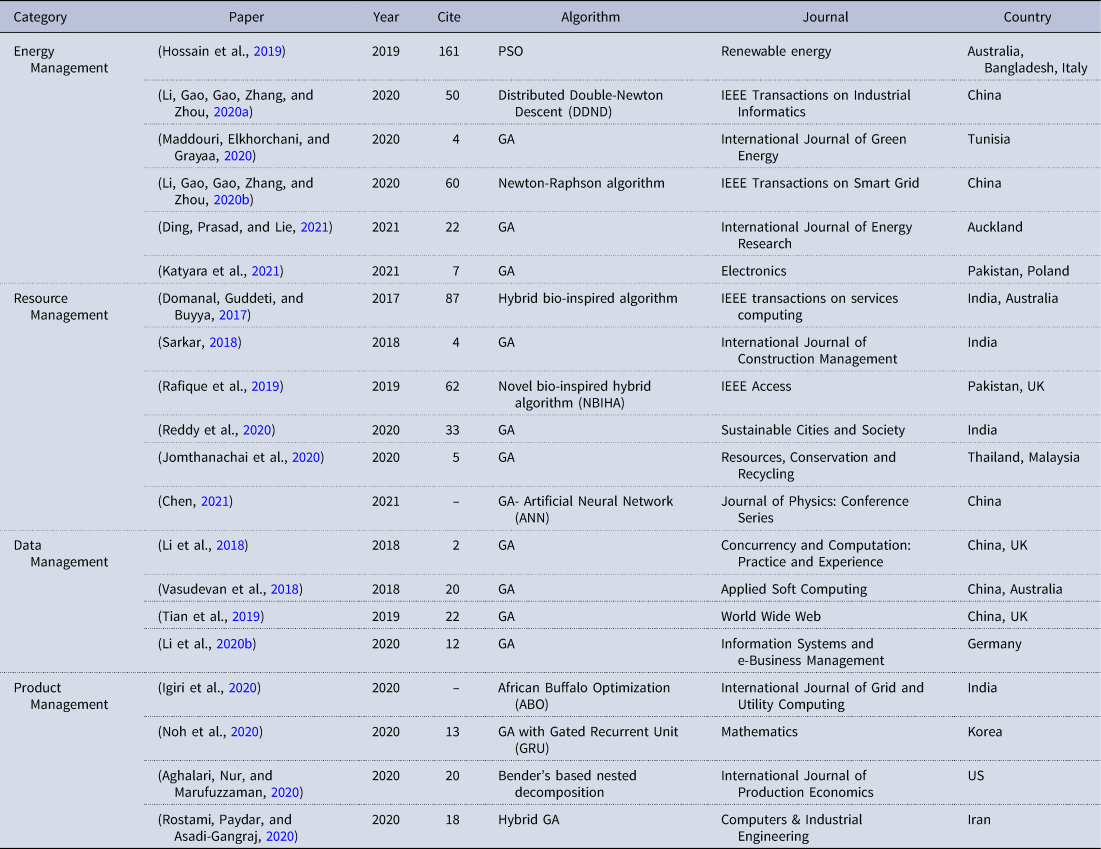
Also, what can be concluded from Figure 6 is that the articles in this field of research are mostly created by the researchers of America, China, England, India, Korea, Germany, and Iran, respectively. And certainly, as can be seen from Table 2, selected articles have been selected from these countries.
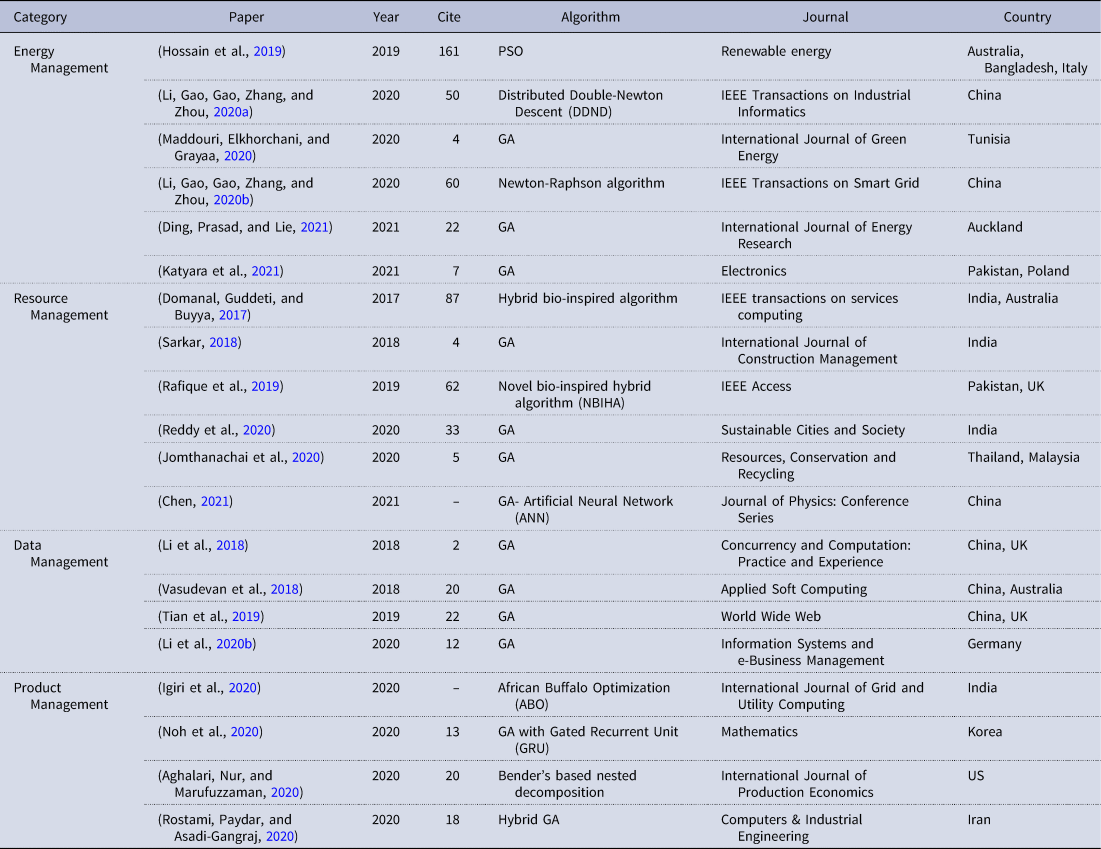
Details of selected articles
Qualitative section
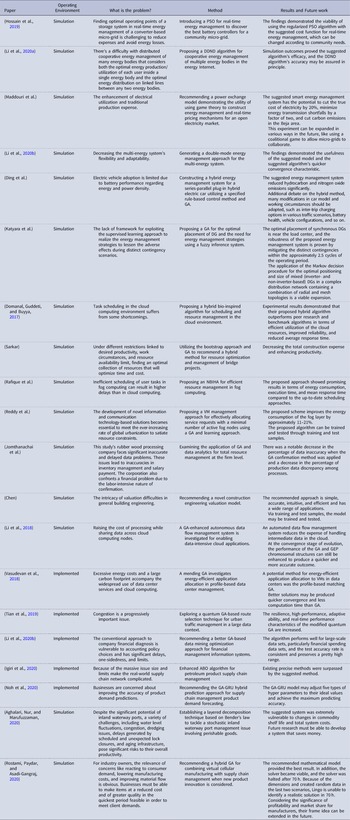
From the articles obtained from Section ‘Citation network' according to keywords, 20 articles are selected and reviewed in groups in this section. Besides, selecting the latest and most up-to-date works was available for review. Some information of the selected articles is shown in Table 2.
Energy management
For many countries, the ongoing increase in energy demand is a serious problem. Energy management is a crucial instrument among the various solutions to this issue. Research indicates that by using energy management strategies, buildings can save between 20 and 30 percent of their energy without changing their infrastructure or hardware for the electrical supply system (Ahmad, Ahmad, & Ahmad, Reference Ahmad, Ahmad and Ahmad2018; Guan, Xu, & Jia, Reference Guan, Xu and Jia2010).
In this context, GA has been used to solve a variety of NP-hard (non-deterministic polynomial-time hard), large-scale optimization issues (Cheung, Reference Cheung, Chan and Lee2005; Xie, Sheng, Qiu, & Gui, Reference Xie, Sheng, Qiu and Gui2022). Concepts and algorithm skills are what GA is all about. This technique's adaptability allows it to be used by many investigators and uses (Chen, Reference Chen2021).
Hossain, Pota, Squartini, and Abdou (Reference Hossain, Pota, Squartini and Abdou2019) demonstrated using PSO to discover the best battery controllers for a community microgrid using real-time energy management. PSO is modified by changing the cost function to properly mimic battery charging and discharging activities. Because optimum control is achieved by formulating a cost function, it is thoroughly evaluated before a dynamic penalty function is presented to acquire the best cost function. To test the efficiency of the suggested cost function, many case studies with various situations were done. Over a 96-h time horizon, the suggested cost function can lower operating costs by 12% compared to the original cost function. Simulation outcomes indicated the viability of using the regularized PSO algorithm with the suggested cost function for real-time energy management, which can be changed according to community needs.
Li et al., (Reference Li, Liu, Huang, Zeng, Zou, Chu and Yi2020a) looked at the multi-energy body distributed cooperative energy management issue. They took into account each individual's optimal energy production/utilization inside a single energy body and the best energy distribution on the interconnecting lines across any two energy bodies. They first established the system's physical and communication architecture, which comprises numerous energy bodies, each considered a multi-energy consumer. Afterward, a distributed energy management model was suggested to obtain the highest revenues from total energy production and utilization and the lowest cost of energy delivery. A DDND approach is presented to handle this problem and has two benefits. Besides, Newton descent was infused into the execution of the suggested method by using second-order information, leading to a quicker convergence speed. Additionally, the suggested approach works in a totally distributed manner. Thus, each user may achieve their ideal operation and global energy market clearing costs on a local level; simultaneously, each energy router can acquire the optimum interchanged energy with its neighbor energy routers on a regional level. They also demonstrated that the suggested DDND method might asymptotically reach the optimum global point. Thus, the DDND algorithm's accuracy may be assured in theory. Ultimately, simulation outcomes confirmed the suggested algorithm's efficacy.
Maddouri, Elkhorchani, and Grayaa (Reference Maddouri, Elkhorchani and Grayaa2020) investigated an actual instance of energy management in the Tunisian town of Beja using measured data. They created a model for the power exchange that shows how game theory may be used to construct real-time pricing and energy management mechanisms for an open electricity market. To estimate the Nash Equilibrium, they also created a hybrid GA. According to the findings, the suggested smart energy management can cut the true cost of electricity by up to 20%, lessen power transmission inefficiencies by a factor of two, and minimize carbon emissions in the Beja area.
For the multi-energy system, Li, Zhou, Ren, and Spector (Reference Li, Zhou, Ren and Spector2020b) developed a double-mode energy management model. It is made up of a lot of different energy bodies. Each user in this model can answer the shift in mode shifting in an adaptive manner. Additionally, a unique distributed dynamic event-triggered Newton-Raphson algorithm was presented to completely distribute the double-mode energy management issue solution. The concept of Newton descent, besides a dynamic event-triggered communication approach, was presented and included in the suggested algorithm's implementation in this technique. With this endeavor, each individual can use second-order knowledge to accelerate convergence effectively. The optimality of the system is unaffected. Nevertheless, the suggested approach may be executed using asynchronous communication, and no specific starting requirements are necessary. It is more adaptable and flexible, particularly when the system modes are altered. Furthermore, the suggested dynamic event-triggered technique uses discrete-time communication to drive the continuous-time algorithm. It reduces conversational interaction and eliminates the requirement for real-time data transfer. It is also demonstrated that individuals may asymptotically reach the optimum global position. Ultimately, simulation findings demonstrated the usefulness of the suggested model and demonstrated the suggested algorithm's quicker convergence characteristic.
The automobile is one of the most significant forms of mobility in contemporary civilization. The consumption of non-renewable resources like gasoline and diesel has dramatically increased along with the number of cars on the road. People have been drawn to vehicle fuel economy as a crucial sign of performance (Yang, Chen, Xiong, Xu, Liu, & Zhang, Reference Yang, Chen, Xiong, Xu, Liu and Zhang2021b). Hence, to address battery restrictions, Ding, Prasad, and Lie (Reference Ding, Prasad and Lie2021) suggested a hybrid energy management system for series-parallel plug-in hybrid electric vehicles that used a rule-centered control method and a GA-based optimizing approach. Simulation investigations were conducted utilizing the vehicle model from the ADVISOR database and the GA optimization toolkit in the MATLAB Simulink platform to construct and verify a mathematical model. According to the simulation findings, the GA optimization reached the sub-targets defined in the fitness function. The findings were compared to the simulation outcomes of a single function of the suggested rule-based control method to demonstrate the advantages of the recommended technique. The suggested energy management system reduced hydrocarbon and nitrogen oxide emissions significantly.
Katyara et al., (Reference Katyara, Shaikh, Shaikh, Khand, Staszewski, Bhan and Zbigniew2021) recommended employing a fuzzy inference method to leverage a GA for the optimal distribution generation location and energy management measures requirement. The GA made judgments based on three essential network parameters: voltage profile, power losses, and phase angle jump, along with load flow analysis. The best potential position was always selected to be close to the load center, with the optimal size, in line with the system restrictions, for all analyzed system situations (normal operation, fault, and islanding). Across all of the recommended solutions, the fuzzy inference system with the appropriate membership functions and constraints was capable of appropriately detecting, monitoring, and regulating irregularities. Hence, the network's performance was improved, and energy was saved for emergency usage. Based on network properties discovered via a load flow analysis, fuzzy controllers provided switching patterns utilized to run the four circuit breakers (main, DG, energy, and demand breakers). Ultimately, the suggested strategy was compared to other current state-of-the-art approaches to evaluate its efficacy and resilience against anomalies. They discovered that it optimally incorporated additional distributed generators and also managed energy flow based on network circumstances.
Numerous alternatives are put out in the literature to meet the demand for electricity from residential consumers. For instance, there are energy management algorithms that can shift consumers' high electricity demand into off-peak hours to lessen the overload on the distribution system (Ahmad, Alhaisoni, Naeem, Ahmad, & Altaf, Reference Ahmad, Alhaisoni, Naeem, Ahmad and Altaf2020; Malik, Gondal, Ahmad, Adil, & Qureshi, Reference Malik, Gondal, Ahmad, Adil and Qureshi2019).
Energy management is a promising solution at consumers premises to reduce this huge amount of energy consumption at the distribution level (Ghasemi, Shayeghi, Moradzadeh, & Nooshyar, Reference Ghasemi, Shayeghi, Moradzadeh and Nooshyar2016; Yaqub et al., Reference Yaqub, Ahmad, Ahmad and Amin2016). The energy management solutions are of different types, i.e., direct load reduction, demand response management, and demand side management or residential energy management (Ahmad, Naeem, & Ahmad, Reference Ahmad, Naeem and Ahmad2019; Zhang, Jiao, & Chen, Reference Zhang, Jiao and Chen2017).
It may be inferred from the foregoing discussion that the research community has made significant contributions to energy management and energy trading algorithms. Energy management or the use of an energy trading algorithm are two solutions to the short-term energy shortfall.
Resource management
Because resource management and task scheduling are critical in cloud computing, Domanal, Guddeti, and Buyya (Reference Domanal, Guddeti and Buyya2017) suggested a new hybrid bio-inspired algorithm. They used the Modified PSO algorithm to efficiently assign tasks to Virtual Machines (VMs). Afterward, the suggested hybrid bio-inspired algorithm (modified PSO [MPSO] plus modified cat swarm optimization [MCSO]) was used to assign and manage resources (CPU and Memory) as needed by the tasks. According to practical data, their suggested hybrid algorithm surpasses peer research and benchmark algorithms regarding the effective usage of cloud resources, enhanced dependability, and decreased mean response time.
Employing the bootstrap strategy and a GA, Sarkar (Reference Sarkar2018) created a hybrid solution for resource management and optimization of bridge construction. They utilized the bootstrap approach to find and analyze control variables for resource management in unclear bridge-building projects. A resource optimization framework for a bridge project was also created employing a GA. The advantage of utilizing the suggested model was that it allowed them to find the best collection of resources to maximize cost and time under various restrictions such as targeted productivity, work circumstances, and resource availability. The more efficiently project resources were used, the lower the total production cost and the higher the work productivity. The suggested hybrid approach strategy, which employs the bootstrap method and a GA, would undoubtedly aid in the resource optimization of current and prospective bridge constructions.
Rafique, Shah, Islam, Maqsood, Khan, and Maple (Reference Rafique, Shah, Islam, Maqsood, Khan and Maple2019) recommended NBIHA, a unique bio-inspired hybrid algorithm that combines MCSO and MPSO. The MPSO is utilized to schedule tasks across fog devices in the suggested method, and a hybrid of the MPSO and MCSO is employed to manage resources at the fog device level. The resources were allotted and controlled in the suggested technique based on the requirement of incoming applications. The recommended work's major goal is to lower average reaction time and optimize resource consumption by properly scheduling tasks and controlling accessible fog resources. iFogSim is used to run the simulations. Compared to up-to-date scheduling strategies, the suggested methodology (NBIHA) demonstrated encouraging improvements regarding energy usage, implementation time, and average reaction time.
Reddy, Luhach, Pradhan, Dash, and Roy (Reference Reddy, Luhach, Pradhan, Dash and Roy2020) looked at the possibilities of energy reduction at the fog layer using context-aware fog node intelligent sleep and wake-up cycles. They recommended employing a GA to develop a VM management strategy for efficiently assigning service applications with few active fog nodes. Following that, a reinforcement learning technique was used to maximize the duty cycle time of fog nodes. MATLAB simulations showed that the suggested approach reduces fog layer energy usage by 11–21% compared to available context-sharing-based approaches.
Jomthanachai, Rattanamanee, Sinthavalai, and Wong (Reference Jomthanachai, Rattanamanee, Sinthavalai and Wong2020) showed an investigation of the whole resource management in the rubber wood processing business to help it sustainably transition to Industry 4.. They employed data analytics to increase the effectiveness of the verification system and utilized the GA approach to validate acceptable materials or wood pieces. In addition, a web-based application was created for managing production data. When the GA verification technique was used, the proportion of data inaccuracy was significantly reduced, as was the proportion of production data difference between procedures. This accomplished sustainable transition may be ascribed to comprehensive resource management because the realized performance improvement improves efficacy in producing material, labor, and service resources.
Chen (Reference Chen2021) suggested a novel construction engineering valuation model in light of the difficulty of typical construction engineering valuation issues and the benefits of GA and ANN. The practicality and reliability of the GA to optimize the neural network model were evaluated using an actual residential project as an instance, and it was shown to be superior to the simple ANN model. The GA-ANN model may be employed to quickly determine the nonlinear relationship across building engineering layout and engineering costs. By training and testing samples, the model may be trained and tested. Throughout the application, just the building engineering structural parameters must be entered into the trained neural network. The associated project cost may be calculated using the model. This approach is simple, straightforward, precise, and efficient and has a wide range of applications. This model is a useful tool for estimating real project investment.
Data management
Li, Huang, Han, and Jiang (Reference Li, Huang, Han and Jiang2018) looked at a GA-enhanced autonomous data flow management solution for data-intensive cloud applications. An effective data processing architecture in cloud computing permits autonomous routing and a self-adjustable intermediary data management technique. Rather than employing a static, predetermined route as in prior works, the GA-improved autonomous data flow management solution used a bit stream similar to a chromosome to proactively preserve a data-demand application's delivery route to reach maximum efficiency. It offers an automated route discovery solution for applications with a lot of data. It may also balance the expense of changing the target processing path with the cost of deleting, preserving, and regenerating intermediate data to maximize the efficiency of data-intensive applications on the cloud computing infrastructure. Consequently, it was discovered that using an autonomous data flow management system reduces the cost of handling intermediate data in the cloud.
Vasudevan, Tian, Tang, Kozan, and Zhang (Reference Vasudevan, Tian, Tang, Kozan and Zhang2018) defined VM application allocation as a profile-driven optimization issue with limitations. Subsequently, a mending GA was suggested to answer the large-scale optimization challenge. Adding the longest cloudlet fastest processor, from which an original population is produced, and an infeasible-solution fixing technique improves the penalty-based GA. A three-layer energy management system for data centers was merged with the application allocation using mending GA. Our three-layer energy management system was executed at the top application management layer. Furthermore, first-fit reducing has been applied at the intermediate VM management layer in the three-layer energy management system for a full energy management system. Investigations are carried out to illustrate the efficacy of the proposed method. Thus, the profile-based matching GA proved to be a viable technique for assigning energy-efficient VMs to data centers. The GA's quicker convergence and lower processing time resulted in superior solutions.
Urban scene understanding has grown in popularity due to urbanization and is now heavily utilized in cutting-edge applications like traffic analysis and crowd recognition (Sheng, Cong, Yang, Chen, Wang, & Cui, Reference Sheng, Cong, Yang, Chen, Wang and Cui2022; Xu, Liu, Tong, Liu, Yin, & Zheng, Reference Xu, Liu, Tong, Liu, Yin and Zheng2022).
Consequently, Tian, Hu, Du, Hu, Nie, and Zhang (Reference Tian, Hu, Du, Hu, Nie and Zhang2019) looked at a quantum GA-based route choosing technique for urban traffic management in a large data context. This investigation used two kinds of trials: (1) artificial traffic networks of various sizes were created to perform comparison tests between the enhanced quantum GA and other algorithms. The outcomes of the experiments revealed that the upgraded quantum GA is more durable and adaptable. (2) Comparative testing on a real-world urban traffic network confirmed the upgraded quantum GA's high-performance and real-time features.
Li et al. (Reference Li, Zhou, Ren and Spector2020b) recommended a GA-enhanced-based financial management information system depending on the financial management information system, data mining, clustering analysis model approach, and financial analysis-relevant knowledge. A financial management information system model relying on data mining technologies was built using an event-driven structure. It allowed data warehousing and data mining equipment to assist with decision-making. It also allowed organizations' financial and non-financial data to be completely exploited. The national tax financial analysis system has been tested and analyzed. In addition, three public data sets and three data sets on national tax financial expenditures were chosen. The algorithm was also put to the test on the empirical platform. All of this was accomplished by: (1) deriving financial data; (2) mining data utilizing the aforementioned decision tree classification algorithm; (3) categorizing tests according to subject groupings and business procedures; (4) assessing the precision of the prognostication outcomes; and (5) deciding if the classification algorithm was chosen. According to the tests, the algorithm performed well on large-scale data sets, particularly financial spending data sets. Furthermore, the test precision ratio was consistent and remained within a reasonable range.
Product management
Any firm must produce new goods in order to thrive in a competitive market, and every business must produce its technology and goods to do so. Most businesses have learned that conventional competitive levers like quality improvement, cost decrease, and distinctiveness are no longer sufficient to supply products and services. It is, therefore, critical to pay attention to both new product entrance and early product departure (Rezaei, Paydar, & Safaei, Reference Rezaei, Paydar and Safaei2020).
As corporations compete for market share, many have shifted their attention to request prediction to respond swiftly to client requirements. Demand prediction with high accuracy may adapt well to client demands, resulting in several advantages of sales, financial, and planning (Chawla, Singh, Lamba, Gangwani, & Soni, Reference Chawla, Singh, Lamba, Gangwani, Soni and Kacprzyk2019).
The massive issue size and limits make the real-world supply chain network complicated. Effective petroleum product scheduling would impact distribution costs, but it would also lead to optimal product scheduling. The bio-inspired technique is preferable to precise algorithms since, unlike the latter, it does not necessitate previous knowledge of the original answer. For petroleum supply chain distribution, Igiri, Singh, Bhargava, and Shikaa (Reference Igiri, Singh, Bhargava and Shikaa2020) suggested an enhanced ABO algorithm. The ABO is a swarm intelligence-based bio-inspired algorithm with a proven track record of performance. It is based on African buffaloes' feeding and defense behavior on the savannah. The turbulent ABO and chaotic -Levy ABO have upgraded ABO variants that have performed exceptionally well in recent experiments. To get a near-optimal petroleum distribution scheduling solution, they use the regular ABO and its upgraded variations. The suggested method outperforms current precise algorithms, according to the comparison findings.
Noh, Park, Kim, and Hwang (Reference Noh, Park, Kim and Hwang2020) developed GA-GRU, a hybrid prediction model called GRU. They used GA to determine five GRU hyper parameters, including neuron count in the hidden state, window size, epoch size, batch size, and initial learning ratios since numerous hyper parameters impact GRU's efficiency. Their research comprised three tests to evaluate the usefulness of GA-GRU: comparing GA-GRU to other prediction models, sensitivity analysis of the GA parameters, and k-fold cross-validation. They calculated the precision of the prediction models using mean absolute error, and root mean square error throughout each operation. The outcomes revealed that GA-GRU outperforms other prediction models in terms of percent deviations, proposing that the mutation factor be adjusted to .015 and the crossover probability to .70. In brief, they discovered that GA-GRU could ideally adjust five different sorts of hyperparameters to get the best prediction precision.
Aghalari, Nur, and Marufuzzaman (Reference Aghalari, Nur and Marufuzzaman2020) created a sound and realistic model that captured a wide range of inland waterway transportation network attributes and intricate interactions between various transportation entities. They also assured that effective inventory management choices for perishable items with stochastic availability were made in changing waterway circumstances. They suggested a two-stage mixed-integer linear programming model capture the aforesaid challenges and special concerns about perishable product storage and transportation to this goal. They presented a hybrid decomposition technique combining the augmented Benders decomposition algorithm with average sample approximation to tackle this challenging issue's huge size test examples. In addition, a case study of the lower Mississippi River's inland canal transportation system was presented. The findings of the sensitivity analysis revealed that the system is extremely susceptible to the product's shelf life. With a 60% greater rate of commodity deterioration, the entire commodity storage demand rises by 12.3%, and the total system cost rises by nearly 33%.
For the simultaneous integration of virtual cellular manufacturing with the supply chain and innovative product creation, Rostami, Paydar, and Asadi-Gangraj (Reference Rostami, Paydar and Asadi-Gangraj2020) offered a multi-objective mathematical model. Because the suggested model for this investigation was multi-objective, the study issue was solved using Multi-Choice Goal Programming with a Utility function (MCGP-U). In addition, the MCGP-U was used in a novel hybrid GA that combines a GA with a variable neighborhood search to deal with large-scale cases. Ultimately, the outcomes of the MCGP-U and MCGP-GA-variable neighborhood search tests are compared. The outcomes demonstrated that the mathematical model given provided the best answer. In addition, the solver became viable, and the solver was halted after 70 h. Due to the dimensions and created random data in the last two scenarios, Lingo cannot identify a realistic solution in 70 h.
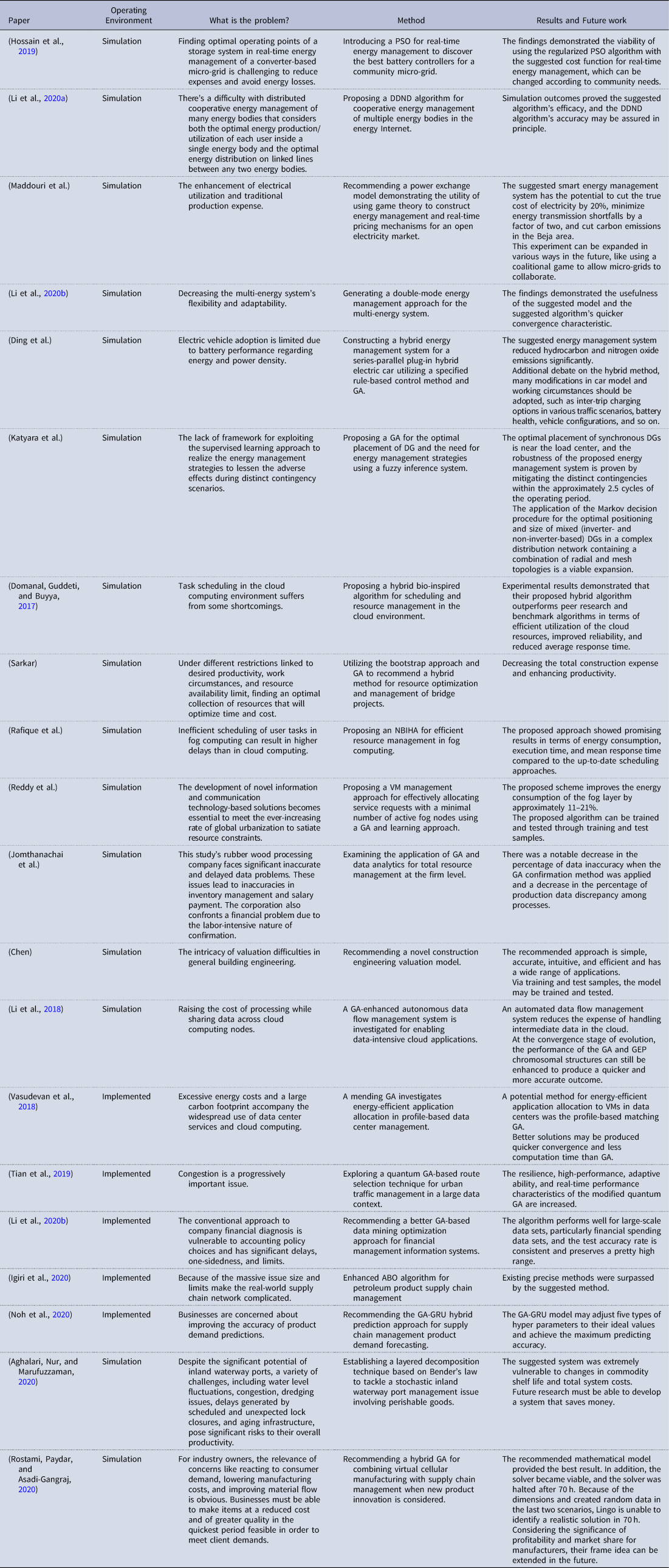
GA is a heuristic method that performs better in optimization. It may quickly choose suitable solutions that meet the optimization aims and compensate for flaws by leveraging its qualities. Because of these properties, GAs offer significant benefits in the iterative optimization of energy management strategies (Lü et al., Reference Lü, Wu, Lian, Zhang, Chen, Wang and Meng2020). At the end of reviewing the articles and expressing the existing challenges, Table 3 will be a good summary of the contents of this section.
Results of reviewing articles
Conclusion and future works
The advancement of information technology, the widespread globalization of companies and organizations, and even everyday life have created significant challenges for resource and energy management and product data management. To achieve near-optimal answers, meta-heuristic approaches should be applied (Lu, Liu, Zhang, & Yin, Reference Lu, Liu, Zhang and Yin2022). This article extensively examines the application of meta-heuristic techniques in managing resources, energy, and data in different environments.
The approach utilized for enhancing metaheuristics, task nature, optimization criteria, and the context in which the algorithm is executed is compared in a comparative study of algorithms based on each metaheuristic methodology. Various scheduling strategies are also provided in order to decrease throughput, response time, average resource utilization, and flow time. When creating energy-efficient sensor network techniques, authors advocate taking current energy provisioning developments into account with classic energy conservation measures.
Our bibliometric method focuses specifically on the history of articles and the subject of research. Eventually, this investigation demonstrated that bibliometric methods combined with sophisticated data analytics properties (e.g., text mining and network analysis) are a viable tool for determining and presenting a database's worth. Nonetheless, two constraints were discovered in the study, since the only used one database, Google scholar. More research might lead to the creation of a new database. Furthermore, this research is limited to papers that have been published in English. Future generations can also use other databases to bibliographically explore the latest topics that have become important in the field and make them the subject of their research. The findings also indicate that more valuable results will be obtained if the works of top authors in this field are used.
Conflict of interest
The authors declare no conflict of interest.
Data availability statement
All data are reported in the paper.