




No CrossRef data available.
SELF-CONCEPTION AND PERSONAL IDENTITY: REVISITING PARFIT AND LEWIS WITH AN EYE ON THE GRIP OF THE UNITY REACTION
Published online by Cambridge University Press: 15 June 2005
Abstract
Derek Parfit's “reductionist” account of personal identity (including the rejection of anything like a soul) is coupled with the rejection of a commonsensical intuition of essential self-unity, as in his defense of the counter-intuitive claim that “identity does not matter.” His argument for this claim is based on reflection on the possibility of personal fission. To the contrary, Simon Blackburn claims that the “unity reaction” to fission has an absolute grip on practical reasoning. Now David Lewis denied Parfit's claim that reductionism contravenes common sense, so I revisit the debate between Parfit and Lewis, showing why Parfit wins it. Is reductionism about persons then inherently at odds with the unity reaction? Not necessarily; David Velleman presents a reductionist theory according to which fission does not conflict with the unity reaction. Nonetheless, relying on the distinction between person level descriptions of first-person states and the first-person perspective itself, I argue that Velleman's theory does not eliminate fission-based conflict with the unity reaction.
Information
- Type
- Research Article
- Information
- Copyright
- © 2005 Social Philosophy and Policy Foundation
I. Introduction
Derek Parfit says in Reasons and Persons that he decided to study philosophy “almost entirely because [he] was enthralled” by the possibility of personal fission, that is, a person dividing in the manner of an amoeba.1
Derek Parfit, Reasons and Persons (Oxford: Clarendon Press, 1984), 518. For Parfit's description of fission, see “My Division,” in ibid., 254–55.
Derek Parfit, “Personal Identity,” Philosophical Review 80 (1971): 3–27. Reprinted in John Perry, ed., Personal Identity (Berkeley: University of California Press, 1975).
personal identity through time is constituted by (“reduced to”) relations between mental and physical states and events in the absence of anything like a necessarily determinate and indivisible soul.
A second general theme is that some of our commonsensical beliefs about rationality and morality need to be revised given the reductionist thesis (especially its rejection of a necessarily determinate entity at the center of our existence as persons). The possibility of fission plays a central role in Parfit's arguments for the practical ramifications of the reductionist thesis. For example, he argues that identity is not “what matters,” and his argument is based on his analysis of fission—in such a case, he argues, one would not survive the fission but nonetheless one would have what matters in survival (that is, one would have what one should care about insofar as one wishes to survive into the future).
This startling conclusion conflicts with our common-sense self-conceptions insofar as we would tend to assume that we can imagine having what matters in survival only by continuing to exist, no matter how far-fetched the situation may be. Roderick Chisholm said it was “clear and distinct” to him that in fission either he determinately would survive as one or the other of the post-fission people (and would have what matters in survival by virtue of being identical with one or the other), or he determinately would not survive at all (and determinately would not have what matters in survival). Chisholm simply sets aside the idea that as persons we are subject to the vagaries, including puzzles about fission, to which ordinary physical objects like ships and tables are subject.3
Roderick M. Chisholm, “Reply to Strawson's Comments,” in H. E. Kiefer and Milton K. Munitz, eds., Language, Belief, and Metaphysics (Albany, NY: SUNY Press, 1970).
As Judith Jarvis Thomson puts it. Even though she is inclined to resist the intuition of essential unity, Thomson suggests that “it has not been taken seriously enough in the contemporary literature on personal identity: people do not ask exactly why it has such a grip on us.” Judith Jarvis Thomson, “People and Their Bodies,” in Jonathan Dancy, ed., Reading Parfit (Oxford: Blackwell, 1997): 225.
As persons we are essentially unified, indivisible, even in the absence of anything like a necessarily determinate and indivisible soul.
The central issue arising out of reflection on fission—“the only specific problem in the area,” as Blackburn says—is “that of understanding and giving due weight to the unity reaction.”5
Simon Blackburn, “Has Kant Refuted Parfit?” in Dancy, ed., Reading Parfit, 181.
Parfit's own formulation (and rejection) of the unity reaction is found in his argument that “identity is not what matters” as well as in his later “Extreme claim” arguments that, given the reductionist thesis, personal existence through time does not underwrite justifiable anticipation, punishment, commitment, or intrapersonal compensation.6
Derek Parfit, “Comments,” Ethics 96, no. 4 (1986): 832–72. In Reasons and Persons, Parfit had mentioned such claims but had not tried to defend them. “Intrapersonal compensation” means benefiting a person at one time for sacrifices made by that person at a different time (as, for example, in disciplining a child for the sake of the future adult he or she will become).
David Lewis, “Survival and Identity,” in Amélie Oksenberg Rorty, ed., The Identities of Persons (Berkeley: University of California Press, 1976), 17–40.
If Lewis is right, there is no serious conflict between the reductionist thesis and the unity reaction. The debate between Parfit and Lewis on this point is worth revisiting because an examination of some details of their dispute will help clarify the relationship between the unity reaction and the reductionist thesis. There are five basic points (with the final two points to be stated shortly). I will explain (1) why Parfit wins the point with Lewis about the question of whether their shared metaphysical views entail conflict with common sense, since Lewis simply assumes that identity (that is, commonsensical self-unity) does not matter. I also will explain (2) why Parfit's own reply to Lewis fell short. Moreover, (3) if one accepts Lewis's presupposition that his own unity relation (the I-relation) need not be an equivalence relation, an alternative account that treats Lewis's I-relation as not symmetrical provides a superior treatment of fission. Yet this superior treatment just is Parfit's '71 account, and thus, bracketing a few differences, we can speak simply of the '71/Lewis account.
The '71/Lewis account has virtues that are lacking in the slightly revised version that Parfit himself offered later, in 1984, in Reasons and Persons, and upon which he bases the arguments in his “Comments” in Ethics, in 1986, for the Extreme claims. In '71, Parfit had suggested a revisionist conception of survival according to which one could survive fission (albeit without being numerically the same person), and Lewis developed this idea. The '71/Lewis account does not support Parfit's Extreme arguments in the Ethics discussion; at the same time, it need not be used in a superficial reconciliation of the reductionist thesis with the unity reaction (as in Lewis), since the revision in the concept of survival can be made perfectly explicit. It says, in a precise and coherent way, that one could survive fission but without self-unity.
Although the '71/Lewis position may sharpen the central issue pertaining to conflict between the reductionist thesis and the unity reaction, it does not settle anything. Indeed, the defender of the unity reaction has a pretty quick reply—simply setting aside the revised use of survival as glib wordplay. Thus, I believe it is important to see that we can develop forms of psychological reductionism that frame the central issue in other ways, and some of them do not conflict with the unity reaction. Thus, I will show how David Velleman's conception of reductionism can be used to give a precise account of the unity reaction. Then, however, I will argue (4) that this view by itself does not in fact show that we should think of psychological continuity in such a way as to eliminate fission-based conflict with the unity reaction. A pay-off of reflection on these matters is (5) a distinction that may help us understand the conflict itself.
II. Parfit's Psychological Criteria of Personal Identity and What Matters in Survival
Even though there is general agreement in the metaphysical accounts of persons presupposed by Lewis and Parfit, there also are some formal differences. To begin, I will try to reconstruct their accounts in an accurate way so as to be able to focus on some formal differences that turn out to be significant.
Parfit's version of the Psychological Account of personal identity through time does not change much from '71 to R&P, the main difference pertaining to the use of “survival,” as I will note. A person's identity through time consists in the occurrence of a series of interrelated mental states and events, where such states and events can be “directly connected” with each other. Relevant direct connections include memory, intention, and continuity of belief and desire.8
They also include “quasi-” forms of these states. See Parfit, Reasons and Persons, 220; and Sydney Shoemaker, “Persons and Their Pasts,” American Philosophical Quarterly 7 (1970): 269–85.
See Lewis, “Survival and Identity,” 20; and “Postscript” in David Lewis, Philosophical Papers, vol. 1 (Oxford: Oxford University Press, 1983), 76–77. Parfit does not use the term “person stage,” but his account can be reconstructed accurately enough for present purposes by borrowing it from Lewis. Grice used the term “total temporary state” for all the experiences any one person is having at any given time; see H. P. Grice, “Personal Identity,” in John Perry, ed., Personal Identity (Berkeley: University of California Press, 1975), 86. Parfit says little about the synchronic unity of a person, but he suggests it is due to “states of awareness” (Reasons and Persons, 250). Parfit's suggestion is supported by Galen Strawson's discussion of the awareness-based and short-lived “self.” Galen Strawson, “The Self,” in Shaun Gallagher and Jonathan Shear, eds., Models of the Self (Thorverton, UK: Imprint Academic, 1999), 1–24. In contrast, Shoemaker's functionalist psychological approach provides him with an account of synchronic unity of the mental states of a person that is different from Parfit's. Since the relevant states are ontologically dependent upon the existence of a person, including the various relations in which the states stand to each other over time, synchronic unity (unity at a time) is derivative from diachronic unity (unity through time). See Sydney Shoemaker, “Personal Identity: A Materialist's Account,” in Sydney Shoemaker and Richard Swinburne, Personal Identity (Oxford: Blackwell, 1984).
(1) Psychological connectedness is characterized as follows, for person stages x and y:
x is psychologically connected with y just in case there is some event e in x and some event f in y such that e is directly connected with f.
(Notice that mental events are “directly connected” whereas stages are here said to be “psychologically connected.” Parfit also speaks of persons at times being connected; we will get to that in a moment.)
Let us abbreviate x is psychologically connected with y as Ψxy. Relation Ψ (psychological connectedness) is not transitive, Parfit says, since the mental relations that constitute connectedness are not transitive.10
Parfit, “Personal Identity,” 214.
A relation Q is transitive just in case for all x,y,z, if Qxy and Qyz then Qxz. Q is symmetrical just in case for all x,y if Qxy then Qyx. Q is reflexive just in case Qxx for all x. A relation Q is an equivalence relation just in case Q is transitive, symmetrical, and reflexive.
Parfit seems to treat connectedness as a quantitative notion, but probably it is qualitative as well, with some connections counting for more than others in determining the degree of connectedness between stages, which might be understood on analogy with the varying “weight” of norms within a normative system.
(2) The idea of strong psychological connectedness between person stages is central to Parfit's account.13
As developed in Parfit, Reasons and Persons. (In “Personal Identity,” Parfit does not distinguish connectedness from strong connectedness.)
Ψ*xy if and only if x is psychologically connected with y and the degree of connectedness of x with y exceeds a certain threshold.
That is, Ψ*xy just in case there are enough direct psychological connections between the events in x and y. Any specific formula for the threshold—for what is “enough”—is going to be somewhat arbitrary, so there will be borderline cases.14
About the relevant threshold, Parfit says there is enough connectedness for strong connectedness if there are at least half of the mental connections that occur in one day for a normal adult. It is difficult to believe, however, that he would have intended this formula to be taken seriously, since it is so clearly arbitrary to treat the connections over one day as the relevant standard. Why is one day the right interval to use? Why not use two-day intervals as the right period of time? Or one hour? Or five-second intervals? As with degree of connectedness, it is difficult to think of strong connectedness as a purely quantitative notion. Could one count the connections? And aren't some more important than others? Robert Nozick argues, for example, that degree of connectedness (or “closeness”) should be determined relative to a person's values (for example, what the person values in survival). See Robert Nozick, Philosophical Explanations (Cambridge, MA: Harvard University Press, 1981), 62–71. Similarly, Korsgaard emphasizes types of connections involved in practical reasoning and agency. See Christine Korsgaard, “Personal Identity and the Unity of Agency: A Kantian Response to Parfit,” Philosophy and Public Affairs 18 (1989): 101–32. No matter what the specific formula might be, however, because “connectedness is a matter of degree, we cannot define precisely what counts as enough” (Parfit, Reasons and Persons, 206).
The claim that it can be indeterminate whether or not there is strong connectedness between stages is not the claim that Ψ* is scalar (comes in degrees). To see this, suppose it is determinate that there is enough connectedness for strong connectedness between stages x and y as well as between x* and y* in another case. But suppose as well that there is more connectedness in the first case, between x and y, than there is in the second, between x* and y*. It is important to note that this is not to say that the first case has “more” strong connectedness than the second. The two cases are equal with respect to strong connectedness insofar as the threshold is exceeded in both cases. So Ψ* is not scalar.
As for the formal properties, Ψ* is symmetrical if Ψ is; but clearly Ψ* is not transitive since obviously there can be cases in which there is enough connectedness for Ψ* between x and y, and enough between y and z, but not enough between x and z, as is represented in Figure 1.

Strong psychological connectedness
(3) Finally we come to psychological continuity, which can be defined as the ancestral of Ψ*. That is, letting Rxy abbreviate there is continuity from x to y:16
The abbreviation “R” should be used with some caution, since Parfit and Lewis together use “R” in four distinct ways: (1) In Reasons and Persons, Parfit explicitly defines the R-relation as continuity and/or connectedness (215, 262, and elsewhere), which means there is R if there is Ψ (that is, connectedness, where only one connection is sufficient for connectedness). This explicit definition is a relatively harmless mistake, since Parfit never uses “R” in a context in which it makes sense to interpret it as referring to connectedness. (2) “R” means continuity when Parfit says the Psychological Criterion treats personal identity as “non-branching R” (ibid., 216, 267). (3) “R” means continuity plus some connectedness when Parfit claims that it is R that matters (ibid., 287). I am using “R” here in conformity with Parfit's use (2), and will use “RΨ” for (3). Additionally, (4) Lewis uses “R” for yet a fourth notion, as we will see, which can be expressed as RΨxy or RΨyx. I will use “RL” for Lewis's relation. See my “Notes on Relation R,” Analysis 56, no. 1 (1996): 56–62.
Rxy if and only if there are stages i, i+1, … , i+n such that Ψ*(x,i) and Ψ*(i,i+1) and … Ψ*(i+n,y).
That is, R holds between two stages just when there is a chain of strong psychological connectedness linking them. This, I think, is what Parfit has in mind when he says there is continuity when there are “overlapping chains of strong connectedness”—although in this explication one chain will do (there may not be overlapping chains, but they are possible).
There can be continuity between two stages even if they are not strongly connected or perhaps even if there are not any direct connections at all between them. For example, consider Figure 1, presented above to illustrate that Ψ* is not transitive. In that case we supposed we do not have Ψ*xz, but we do have Rxz—by virtue of Rxy and Ryz.
R is transitive by definition. As for symmetry, R is symmetrical if Ψ* is.17
To see this, suppose Ψ* is symmetrical. Suppose there are stages x and y such that Rxy, which means there is some Ψ* chain between x and y. Since we are supposing Ψ* is symmetrical, there is a similar chain from y to x, which means Ryx. Thus, R is symmetrical if Ψ* is.
Given symmetry of R, we would have Ryx, and given transitivity, we would have Ryz (from Ryx and Rxz). Now I do not see that saying Ryz is incoherent,18
John Perry reconstructs H. P. Grice's account so that it has this consequence. See Perry, “The Problem of Personal Identity,” in John Perry, ed., Personal Identity (Berkeley: University of California Press, 1975), 3–30.
That R is nonsymmetrical is what Parfit means when he says that “the chain of continuity must run in one direction of time” (“Personal Identity,” 23 n. 29); and in Reasons and Persons when he says that continuity is transitive, but we would not treat it as transitive “if we allow it to take both directions in a single argument” (302). Because Parfit's phrasing is awkward, one can understand why critics have been confused. E.g., Anthony Brueckner argues that Parfit would be committed to R holding between stages y and z in fission (as diagramed in Figure 2). See Anthony Brueckner, “Parfit on What Matters in Survival,” Philosophical Studies 70 (1993): 1–22. In his reply to Brueckner, Parfit says “psychological continuity is only transitive when considered in one direction in time”; see Parfit, “The Indeterminacy of Identity: A Reply to Brueckner,” Philosophical Studies 70 (1993): 24. What Parfit means here, more simply put, is that continuity is not symmetrical, and since R is nonsymmetrical we cannot use the transitivity of R together with Rxy and Rxz to infer Ryz. If R were symmetrical, we could reason like this: Rxy, so by symmetry, Ryx. And given transitivity, Ryx and Rxz entail Ryz. (Notice, by the way, that nonsymmetry is not asymmetry. Asymmetry means Rxy entails ∼Ryx, whereas nonsymmetry means only that Rxy does not entail Ryx. I will assume that Parfit treats R as nonsymmetrical but not as asymmetrical—this leaves open the possibility that there could be cases in which Rxy and Ryx due, for example, to there being a causal loop. Conceivable even if outlandish, it requires not merely temporally backward causation, but such causation where, for example, an experience at t2 causes a memory at t3 which then backward-causes, say, an intention at t1 which is a cause of the experience at t2 [where t1 < t2 < t3].)

Fission
In both '71 and R&P, Parfit can be understood as treating copersonality, or (let us say) self-unity, as R-relatedness among stages in the absence of “branching”:
x is self-unified with y (Pxy) just in case Rxy or Ryx and there is no-branching on the R-path between x and y.20
See Parfit, “Personal Identity,” 208, and Reasons and Persons, 207. The details about what “no-branching” means are not very easy to spell out, a task made even more difficult in explication of Parfit since he wants to admit, along with Nozick, that some branching is consistent with self-unity.
Parfit does not use the terms “copersonal” or “self-unity,” but the notion defined here is useful in the discussion of his account. P is the “unity relation” for persons—“the relation that holds between different experiences, person stages, etc., just in case they belong to one and the same person.”21
Sydney Shoemaker, “Parfit on Identity,” in Dancy, ed., Reading Parfit, 139.
Finally, “what matters,” Parfit argues in R&P, is continuity plus connectedness, which I will abbreviate as RΨ. RΨxy says “Rxy and Ψxy.” RΨ is neither symmetrical nor transitive: it is not symmetrical because R is not symmetrical, and RΨ is not transitive because of the role of Ψ (and degrees of Ψ) in RΨ.22
For Parfit's argument that what matters includes Ψ as well as R, see Reasons and Persons, 301–2.
A. Continuity and identity of persons
The relations Ψ (psychological connectedness), Ψ* (strong psychological connectedness), R (psychological continuity), and RΨ (psychological continuity-and-connectedness) have sets of person stages as their domains and ranges. Parfit often speaks, however, as if persons also are in the domains and ranges of these relations. Indeed, his Psychological Criterion, for example, speaks this way when it speaks of a person X being continuous with Y.23
Ibid., 207.
Ibid., 211.
Parfit, “The Unimportance of Identity,” in Henry Harris, ed., Identity: Essays Based on Herbert Spencer Lectures Given in the University of Oxford (Oxford: Clarendon Press, 1995), 13–45. On the constitution of facts about personal identity, see Mark Johnston, “Human Concerns without Superlative Selves,” in Dancy, ed., Reading Parfit, 154.
This works only as a first approximation. I should say “stage or stages,” assuming the coherence of temporally overlapping (concurrent) copersonal stages (given, for example, the coherence of time travel, as is discussed later in this essay). Thus, F should pick out a set of stages, and the following uses of F should be modified accordingly. In the text, however, I assume the simpler function, since ordinarily, in the absence of temporal overlapping, F(A,t) will be a unit set.
A is constituted by x at t if and only if F(A,t)=x.
Various statements about persons can be constructed out of the descriptions of stages and their relations.27
Alternatively, the domain and range of R could be extended in an obvious way as follows (similarly for “connected” and R*):
R(〈A,t〉,〈B,t*〉) if and only if there are x,y such that F(A,t)=x and F(B,t*)=y and Rxy. R(A,B) if and only if there are t and t* such that R(〈A,t〉,〈B,t*〉).
A at time t is connected to B at t* if and only if Ψxy.
A at t is strongly connected with B at t* if and only if Ψ*xy.
A at t is continuous with B at t* if and only if Rxy.
Moreover, we also may want to talk about continuity of persons (without any mention of times):
A is continuous with B if and only if there are times t and t* such that A at t is continuous with B at t*.
The Psychological Criterion of personal identity through time28
Parfit, Reasons and Persons, 207.
A at t is the same person as B at t* if and only if Pxy.
Finally, Parfit says in Reasons and Persons that his most important claim is that “personal identity is not what matters,”29
Ibid., 241.
A at t has in B at t* what matters in survival if and only if RΨxy.
B. Parfit's argument that identity does not matter
The main argument that Parfit gives for the claim that identity does not matter depends on the possibility that R (and RΨ) branch in the fission cases.30
Ibid., 261ff.
While some do not accept this analysis of fission, the poet Frost appears to accept it: Two roads diverged in a narrow wood / And sorry I could not travel both / And be one traveler / Long I stood…. From “The Road Not Taken,” in Robert Frost, Mountain Interval (New York: Henry Holt, 1916), 9.

Frost fission
C. Survival
The argument that identity does not matter can be found in both '71 and R&P, but there is a shift in Parfit's assumption about the relation between survival and identity, which is the only important difference between Parfit's views in '71 and in R&P. The '71 position would define survival simply as RΨ, so that, letting F(A,t)=x and F(B,t*)=y:
A at t survives as B at t* just in case RΨxy.
Both continuity and connectedness are necessary for survival, and it is the inclusion of connectedness that makes survival a “matter of degree.”32
Parfit, “Personal Identity,” 211.
B at t* is a future self of A at t if and only if RΨxy.33
In which case, A at t is a past self of B at t*. Parfit also introduces the distinct notions of ancestral (descendant) selves: these notions can be reconstructed as follows directly in terms of R. Given F(A,t)=x and F(B,t*)=y:
A at t is an ancestral self of B at t* if and only if Rxy.
A at t is a descendant self of B at t* if and only if Ryx.
On this reconstruction, “survival as” and “future selfhood” are necessarily coextensive with each other, as well as with “what matters in survival”:
A at t survives as B at t* if and only if B at t* is a future self of A at t,
and
B at t* is a future self of A at t if and only if A at t has in B at t* what matters in survival.
Neither survival nor “future selfhold” entails either personal identity or self-unity; thus, as in fission, y can be a future self of x (RΨxy) even though x is not self-unified with y (∼Pxy).
Parfit suggests in '71 that the concept of “survival” should be pried apart from “identity,” so that “I will survive” does not entail “there will be someone alive who is the same person as me.” This would be a revision in our normal concept of “survival as”—since “survival as,” as normally used, entails identity. On the revisionist interpretation, one could survive fission even though afterward there would be no one alive with whom one is identical.34
Georges Rey says Parfit's '71 wedge involves a “travesty of ordinary talk” since “a person, on this account, may survive yet not continue to exist, since she may survive as [each of] two different persons.” Georges Rey, “Survival,” in Amélie Oksenberg Rorty, ed., The Identities of Persons (Berkeley: University of California Press, 1976), 42. Despite “the obvious awkwardness of this manner of speaking,” Rey nonetheless goes on to argue that given the alternatives, we should accept the wedge between survival and identity: “Identity, I submit, should never have been the primary source of our concern with survival; it is, rather, survival, and our belief that our survival depended upon our continuing identity, which was the significant source of our concern with that identity” (ibid., 43).
Parfit did not develop this idea in R&P, where he does not say much about survival. When he does talk about survival, however, he does so in such a way that it entails personal identity.35
See, for example, Parfit, Reasons and Persons, 261.
Shoemaker, “Personal Identity: A Materialist's Account” (see note 9 above).
Although Parfit shifted his position about whether we should pry survival apart from identity, in both cases Parfit argues that we can have what matters in survival without personal identity. In both cases, that is, he holds that the best interpretation of fission will establish what Penelope Maddy called a “logical wedge” between what matters in survival and personal identity.37
Penelope Maddy, “Is the Importance of Identity Derivative?” Philosophical Studies 35 (1979): 151–70.

The R&P wedge denies that
(1) A has in B what matters in survival
entails
(2) A survives as B
whereas the '71 wedge denies that (2) entails
(3) A is the same person as B.
Given the reconstruction so far, we have the logical wedges in the right place for Parfit given the two divergent conceptions of survival.38
“Survival as” is transitive in R&P but not in '71, and is symmetrical in neither. There are two basic differences between the '71 and R&P treatments of survival. The first is that R&P requires self-unity for survival whereas '71 does not. The second difference is that R&P does not require any degree of Ψ for survival (since P does not require any degree of Ψ): the bottom-line difference in the two treatments of survival, then, is that '71 links survival with continuity and connectedness (RΨ) whereas R&P links survival with self-unity (P). If we bracket the second difference (requiring some degree of connectedness in both cases), we can spell out the first difference as follows. For '71, the relation between stages that constitutes survival (“Sxy”) is simply RΨ (which means

since RΨ = R + Ψ). For R&P, on the other hand, Sxy is RΨxy plus Pxy (which means

since RΨ = R + Ψ and P entails R). Since P is just non-branching R, the difference between the two conceptions boils down to whether no-branching on R is required for survival (R&P saying yes; '71 saying no)—which of course corresponds to the question of whether or not one “survives” in a fission case.
Although the two treatments are significant for framing the conflict between the reductionist thesis and the unity reaction, as I will argue later, the differences between '71 and R&P are irrelevant to Parfit's general argument that identity does not matter, at least as he presents the argument. For in both cases, Parfit places a logical wedge between (1) what matters (RΨ) and (3) personal identity (self-unity, that is, relation P), and it is this feature that grounds his argument that identity does not matter. No matter what your form of reductionism, he holds, you should conclude that identity does not matter. Insofar as Parfit wanted his argument to convince any reductionist that identity does not matter, the argument is challenged by theories like Lewis's that claim to drive no logical wedges at all between what matters in survival and identity.
III. Lewis's Reply: The Nontransitive I-Relation
Lewis claims that the metaphysical picture of persons that he shares with Parfit is consistent with the commonsensical assumption that there is no Parfitian wedge between what matters and identity:
[T]he opposition between what matters and identity is false. We can agree with Parfit (and I think we should) that what matters in questions of personal identity is mental continuity and connectedness, and that this might be one-many or many-one, and admits of degree. At the same time we can consistently agree with common sense (and I think we should) that what matters in questions of personal identity—even in the problem cases—is identity.39
Lewis, “Survival and Identity,” 19.
The appearance of conflict is due to the fact that “we make an unequal and inept comparison”40
Mark Johnston, “Fission and the Facts,” Philosophical Perspectives 3 (1989): 385.
Lewis, “Survival and Identity,” 21.
The distinction is important, but there can be relationships between the two levels insofar as persons are constituted by stages and the relations between stages. And, of course, Lewis does not deny that relations between the two levels can be described. For example, he freely combines them in his key expression of the commonsensical position that what matters in survival is identity: “you have what matters in survival if and only if your present stage is I-related to future stages.”42
Ibid., 22, emphasis added. I discuss the I-relation in the text below.
Lewis agrees with Parfit that what matters, expressed in person-stage level terms, is “mental continuity and connectedness.” There is, however, a formal difference with Parfit about this relation, and since Lewis's “continuity and connectedness” does not correspond exactly to Parfit's RΨ, let us introduce “RL” for Lewis's version of “continuity and connectedness,” which is developed as follows.
Lewis seeks an account in which “continuity and connectedness” will be necessarily coextensive with his unity relation, which he calls the I-relation—the relation “that holds between the several stages of a single continuant person.”43
Ibid., 21.
Ibid., 23.
If a stage S2 is mentally connected to a previous stage S1, S1 is available in memory to S2 and S2 is under the intentional control of S1 to some extent—not the other way around. We can say that S1 is RΨ-related forward to S2, whereas S2 is RΨ-related backward to S1. The forward and backward RΨ-relations are converses of one another…. But although we can distinguish the forward and backward RΨ-relations, we can also merge them into a symmetrical relation. That is the RL-relation I have in mind: S1 and S2 are RL-related simpliciter if and only if S1 is RΨ-related either forward or backward to S2.45
Ibid.
Formulated in the terms I used earlier to explicate Parfit, the forward relation is simply RΨ and the backward relation is RΨ−1, the inverse of RΨ. Lewis is saying that he will guarantee that his version of “mental continuity and connectedness” is a symmetrical relation by defining it so that RL = RΨ ∪ RΨ−1 (the union of RΨ and RΨ−1), which means
RLxy if and only if RΨxy or RΨyx,
that is,
RLxy if and only if (Rxy & Ψxy) or (Ryx & Ψyx).
RL is symmetrical by definition, but RL is not transitive due to the role of Ψ in RL: as I noted earlier, there can be stages x,y,z such that Ψxy (there are connections from x to y) and Ψyz (connections from y to z) but not Ψxz (no connections from x to z). With RL defined in this way, and since Lewis posits the necessary coextension of RL and I, it turns out that the I-relation is symmetrical but not transitive.
The nontransitivity of I=RL plays a crucial role in Lewis's interpretation of fission. Something is a continuant person if and only if it is a maximal I-interrelated aggregate of person stages:46
Ibid., 22.

Fission in Lewis
In particular, we cannot reason: “RLxz, so RLzx by symmetry [for Lewis, that step is okay]. And [here is the mistake] RLzx and RLxy together entail RLzy.” This is a mistake because it assumes that RL is transitive. Lewis is committed to neither RLzy nor RLyz (which means neither Izy nor Iyz, since RL and the I-relation are necessarily coextensive, so there is no continuant person of whom z and y are stages). And Lewis consistently can hold that the I-relation is the relation between stages that matters in survival, assuming, of course, that two distinct continuant persons share the pre-fission stage x.
On this account, there is indeed no “wedge” between what matters (RL) and the I-relation, since they are defined to be necessarily coextensive. But this is not a successful reconciliation of the reductionist metaphysics with common sense, because the I-relation, not being transitive, is not an equivalence relation, whereas common sense surely presupposes that self-unity is an equivalence relation just like identity itself (both relations being reflexive, symmetrical, and transitive). One aspect of self-unity is distinctness from others, including not sharing stages. That self-unity is an equivalence relation (as we assumed earlier in defining P) is simply the stage-level correlate to the person-level assumption that personal identity is an equivalence relation.
Lewis pointed out rightly that what matters, as a relation between stages, should not be compared directly with identity as a relation between continuant persons. All the same, what matters, as a relation between stages, coherently can be compared with relation P, self-unity, since it also is a relation between stages. Parfit's revisionist claim that fission shows that identity does not matter can be expressed equally well by saying that fission shows that relation P, self-unity, does not matter. Stages x and y are not related by P in fission, but since RΨxy, the relation between x and y has what matters. Self-unity, P, is one-one, but RΨ is not one-one; therefore, P is not what matters.
Put this way, it becomes stunningly clear that rather than opposing Parfit's revisionist position, Lewis simply assumes it! That is, Lewis presupposes a logical wedge between his I-relation (= RL) and self-unity, P:

Since the I-relation is necessarily coextensive with what matters in survival on his view, Lewis presupposes a logical wedge between what matters and self-unity just as surely as did Parfit. Insofar as he uses the term “survival” so as to entail I-relatedness but not P-relatedness, the wedge that Lewis presupposes is simply Parfit's '71 wedge between survival and self-unity. The relation between stages by virtue of which there is “survival” for Lewis (the I-relation) can hold even when P fails to hold. Lewis says, for instance:
If you wonder whether you will survive the coming battle or what-not, you are wondering whether any of the stages that will exist afterward is RL-related to you-now, the stage that is doing the wondering.47
Ibid., 20, with “RL” replacing “R.”
Since RL=I, the account of survival presupposed in this statement is as follows, assuming F(A,t)=x and F(B,t*)=y:
A at t survives as B at t* if and only if Ixy and t* is later than t.48
But see below for a refinement in terms of the distinction between external and personal time.
And since the right side here does not entail Pxy, for Lewis survival does not entail self-unity.
The commonsensical platitude that what matters in survival is identity is not in fact expressed by Lewis's claim that you have what matters in survival if and only if your present stage is I-related to future stages.49
Ibid., 22.
A. Why Parfit failed to explain what was wrong with Lewis's reply
Lewis's wedge between what matters and self-unity does not reveal itself in person-level statements about fission, for the following reason. If we use terms like “Frost” or “Frost at t” intending to refer to the pre-fission person constituted by stage x, we make ambiguous reference. Two continuant persons share stage x, so there is no unique continuant person constituted by x. Thus, even though Ixy and ∼Pxy in the fission case, Lewis's theory never generates person-level conflict between competing statements like the Ixy-based “Frost is the same person as ZFrost” (where “ZFrost” refers to the person constituted by z) and the ∼Pxy-based “Frost is not the same person as ZFrost.” Why not? Because “Frost” is an improper description in this case. The name “Frost” is used ambiguously, since more than one continuant person shares the stage x. It must be granted that Lewis drives no wedge between what matters and identity—but this is only because all the relevant person-level identity statements that correspond to I-relation statements are ill-formed whenever there is failure of transitivity of I, for those are just the cases when continuant persons overlap (share stages).
It is for these reasons that Parfit failed to explain Lewis's magic. In his reply to Lewis, Parfit imagines his own forthcoming fission, and asserts the following:
The claim that the RΨ-relation is what matters in survival must involve the claim that what matters in my survival is that future stages be RΨ-related to my present stage. Only if these future stages are stages of me … can we also claim that it is identity which is what matters.50
Derek Parfit, “Lewis, Perry, and What Matters,” in Rorty, ed., The Identities of Persons, 95, with “RΨ” replacing “R.”
The problem with this objection to Lewis is that even first-personal reflexive thoughts and statements about “me” will, for Lewis, be subject to ambiguity if I, the thinker of those thoughts, am about to undergo fission. Parfit's objection sounds plausible, but pre-fission thoughts like “I am about to undergo fission” or “Sorry I could not travel both” do not succeed in referring to a unique continuant person according to Lewis's theory, since two continuant persons share “my” current stage when I think “I am about to undergo fission.”51
See Lewis, “Postscript,” in Philosophical Papers, 75: a pre-fission desire expressed by “let me survive” cannot be satisfied, since “it rests on the false presupposition that they [the two people sharing the stage] are a single person.” Of course, this “Postscript” analysis undercuts the following claim in Lewis's original article:
What matters in survival is survival. If I wonder whether I will survive, what I mostly care about is quite simple. When it's all over, will I myself—the very same person now thinking these thoughts and writing these words—still exist? Will any one of those who do exist afterward be me? (“Survival and Identity,” 18)
Since these questions rest upon the false presupposition that “I” and “me” refer to a single person (when used by the pre-fission person), Lewis is committed to saying either that the questions are meaningless or that they should be answered no (depending on how he treats questions that make false presuppositions), but either interpretation is inconsistent with the claim that because of RL-relatedness “I will survive.” Given his “Postscript” comments, Lewis would have to withdraw the comments just quoted from his original article.
I do not believe that person-level objections to Lewis's account of fission, such as Parfit's, can succeed, since Lewis suggests plausible ways to talk coherently about pre-fission stage-sharing without positing a wedge between what matters and identity. Nonetheless, as I have shown, Lewis has to posit a logical wedge at the stage-level between what matters and self-unity.52
Are there any cases in which Lewis's logical wedge between I and P could manifest at the person level, as a wedge between personal identity and identity simpliciter? I believe the answer is no, which can be seen as follows. If there were a case in which A is the same person as B, B is the same person as C, but A is not the same person as C (where the nontransitivity of I results in a failure of transitivity at the person level), it would be due to the failure of transitivity of I=RL. Suppose A is constituted by x at t1, B by y at t2, and C by z at t3. And suppose Ixy, Iyz, but ∼Ixz (as Lewis suggests might hold with long-lived people like Methuselah).
If the failure of transitivity of RL appears at the person level, it would turn out that A is the same person as B, B is the same person as C, but A is not the same person as C, where each of the terms A, B, and C are well-formed. Now since A is the same as B, A is constituted by y at t2; and since B is the same as C, C also is constituted by y at t2. But this means that “B” was not in fact well-formed—”B” is used ambiguously to refer to two distinct persons, since its reference is fixed by saying that B is constituted by y at t2 and two (or more) distinct people share stage y.

Methuselah
It is widely accepted that (if one is willing to go along with pre-fission stage-sharing) Lewis succeeded in sketching a theory in which identity and what matters in survival do not come apart in fission.53
Ray Martin classes Lewis with the “neoconservatives” who hold that “identity really is what matters primarily in survival.” Ray Martin, Self-Concern (Cambridge: Cambridge University Press, 1998), 56. See also Carol Rovane, The Bounds of Agency (Princeton, NJ: Princeton University Press, 1998), 55.
Lewis was carried so far by his own rhetoric as to claim that were he to have to choose between the platitude of common sense and his philosophy, he would have to go with common sense because otherwise “it would be difficult to believe one's own philosophy” (“Survival and Identity,” 18). By the way, I am not claiming that it is incoherent to define copersonality so that it is not an equivalence relation, as Lewis does; rather, my point is that in doing so Lewis already has departed from the platitude of common sense. I am grateful to Mark Moyer for discussion of this point.
B. Why Lewis's account of fission is unsatisfactory on its own terms
The nontransitivity of RL=I is essential for the use to which Lewis puts it in replying to Parfit about fission, as I have explained. RL fails to be a transitive relation for the same reason that RΨ is not transitive: because connectedness (Ψ) is a component of those relations. Even though Lewis for consistency must deny that RLyz holds in the fission as diagramed above (in Figure 4), he lacks an explanation why RL must fail to hold between any post-fission stages y and z. To see this, notice that we coherently can imagine a fission case in which there is some degree of connectedness between y and z, due perhaps to an implanted memory:55
See Parfit's “Venetian Memories,” in Reasons and Persons, 220.
Given the symmetry of RL, Lewis has no reason to deny RLzy in this case. After all, we have RLxz (hence by symmetry RLzx) and we have RLxy. Now we cannot simply infer RLzy, since the RL-relation generally can fail to be transitive, as noted, because of the failure of connectedness. In this imagined case, however, we do have Ψzy. So Lewis cannot appeal to the role of Ψ to explain why RLzy fails to hold in this case. In fact, in his account, there is no reason why RLzy should fail to hold here. But certainly one random implanted memory connection should not (or need not) make a difference in the analysis of this type of case, and I do not believe that Lewis would have wanted to admit that given the random connection, it turns out after all that z and y would be RL- and I-related (stages of one continuant person).
Before pressing my argument, let me consider a possible response. Even though Lewis cannot appeal to the lack of connectedness to explain why RLzy fails to hold, he might reply that RLzy fails to hold, even given the connectedness between z and y, because ∼RΨzy (there isn't “forward” continuity and connectedness between z and y); and if ∼RΨzy (and ∼RΨyz) then ∼RLzy. He can say this because continuity (R) itself is not symmetrical (talking now about R, not RΨ): from Rxz we cannot infer Rzx, so we cannot get Rzy in this case. So Lewis can say ∼RLzy because ∼Rzy even though Ψzy.
I agree that this is a coherent reply for Lewis, but it would be odd for him to appeal to the nonsymmetry of R (continuity) in this case after scrambling to guarantee that his RL (continuity and connectedness) would be symmetrical. Recall that in introducing these notions to reconstruct Parfit's views, it appeared more or less arbitrary what we said about symmetry on the relations of R continuity, R* strong connectedness, and Ψ connectedness; and yet having defined R so that it is transitive, Parfit had a conclusive reason for treating R as not symmetrical in order to avoid R-relatedness of the post-fission stages. And Parfit consistently denies symmetry on R (and consequently on RΨ) in order to prevent Rzy (and RΨzy) in the fission cases. Of course, the nonsymmetry of continuity can be motivated independently in terms of the nonsymmetry of the causal and intentional processes by virtue of which later person stages arise out of earlier ones but normally not conversely (since there normally are not causal loops involving backwards causation). In the fission example, both y and z arise out of x; but x does not arise out of either y or z. My point is that it is the nonsymmetry of RΨ, not its nontransitivity, that is relevant to the failure of Pzy (and for Lewis, Izy) in fission: just as x does not arise out of z, neither does y. Even given some degree of connectedness between z and y, and even given RΨxy and RΨxz, we need not posit RΨzy because there is not the right sort of causal or intentional relatedness between z and y.
Lewis's up-front motivation for ensuring the symmetry of RL was to have a relation that corresponded with the symmetrical I-relation, and yet he grants that
we can imagine the immediate postfission stages to be pretty much alike, wherefore they can all be strongly RL-related to the immediate prefission stages.56
Lewis, “Survival and Identity,” 40 n. 8, with “R” replaced by “RL.”
If what matters really is symmetrical, then y has it relative to x just as surely as x does to y (referring to Figure 6 again); and since x has it to z as well, it follows that z has it to y unless an inference based on transitivity can be blocked. While it is true that generally inferences based on the transitivity of RL are not valid (since the relation is not transitive), the failure of transitivity of RL, when it fails, is due to the failure of Ψ (connectedness). Therefore, in a case where there is connectedness between z and y, as in the implanted memories case discussed above, the claim that inference based on transitivity should be blocked rings false. It is more plausible to suppose that RLzy fails in fission because the relevant relations are not symmetrical57
The problem for Lewis here is made vivid by recalling H. P. Grice's worry, which (translated into the terms I am using in this essay) is that one might have experiences in stages that later were not connected to any future stages (such as in repressed memory or Alzheimer's cases). See Grice, “Personal Identity,” 87–88. Grice posits the symmetry of his version of the R-relation precisely in order to be able to make those stages copersonal despite the branching. For my informal discussion Grice's views, see http://personal.bgsu.edu/∼mbelzer/mulderscullyrepsychtheory.html. Of course, Lewis ignored this sort of problem and imposed symmetry on RL in order to establish the desired necessary coextension of RL with I; and, given symmetry, Lewis is committed to RLyz in a fission case in which there also is some degree of connectedness between the post-fission stages y and z.
Lewis, “Survival and Identity,” 29–31. See the discussion of Methuselah above in note 52.

Fission in Lewis with some Ψ from z to y
It seems to me, then, that Lewis should deny symmetry for RL and the I-relation in order to handle fission cases properly; and if he denies it for both, then he can maintain their necessary coextension.
This conclusion is supported by the fact that Lewis faces an additional related problem due to the symmetry of his RL. Lewis points out that
you have what matters in survival if, and only if, your present stage is I-related to future stages.59
Ibid., 22.
Call this “the future orientation of survival claim.” Let us use “I*” for the relation “being I-related to future stages” (where I*xy if and only if Ixy and the time of y is later than the time of x).
The future orientation of survival claim says that what matters in survival is coextensive with I*. But I* is not RL, for RL was defined so that RL=I, and I*≠I. Relation I is symmetrical for Lewis, whereas I* (being I-related to future stages) is not a symmetrical relation: if Ixy and y is future relative to x, then it is not the case that x is future relative to y. And yet, of course, what Lewis says—the future orientation of survival claim—is correct: what matters in survival, as a relation between stages, is not symmetrical. The earlier stage has it relative to the later, but not conversely. The point is that having what matters in survival is coextensive only with the forward-looking I*-relation.
This raises a problem for Lewis because “future,” as it is used in his phrase “your present stage is I-related to future stages,” needs to be interpreted relative to personal time (not external time). The orientation to the future in survival is one's “personal” future. As Lewis himself made clear in his essay on time travel, we coherently can imagine time travel scenarios in which personal time diverges from the “external” future.60
David Lewis, “Paradoxes of Time Travel,” in Fred D. Miller, Jr., and Nicholas D. Smith, eds., Thought Probes: Philosophy through Science Fiction (Englewood Cliffs, NJ: Prentice-Hall, 1981).
Can I now say, from within stage z, that I will have what matters in survival when 2020 arrives? No. My current stage z is not properly related to any stages in 2020. I in 2020 may be said to survive (now) by virtue of my current stage z in 2004; but I now will not survive by virtue of that relation since I now (speaking from within z) have only the backwards-RΨ relation to those stages: I now have already been there.61
Of course, in external time there is (as diagramed in Figure 7) a distinct stage x of me, concurrent with z, from within which I can correctly anticipate surviving by virtue of the 2020 stage. Stages x and z overlap (that is, are concurrent in external time) but nonetheless are ordered in personal time by continuity and connectedness—they are self-unified. The possibility of concurrent self-unified stages by virtue of time travel is coherent for the reductionist, and it can generate conflict with the unity reaction in a way that is different from fission. In such cases (e.g., think of the concurrent distinct stages of Marty McFly near the end of the movie Back to the Future) there is a linear order of stages according to RΨ, hence no branching, hence relation P. For the reductionist, it seems to me, there should be no deep puzzles at all about personal identity and self-unity in such cases (whereas fission is more puzzling since there is no linear ordering of stages in fission). Time-travel overlap does not undermine relation P, diachronic self-unity, yet there could be times when there are two or more centers of consciousness for a single person, as in McFly's situation. Thus, time travel can undermine synchronic self-unity. For this reason, time-travel overlap may be better than fission in exploration of Blackburn's “unity reaction,” as I discuss later in this essay. By the way, the possibility of time-travel overlap also defeats the reason Parfit gives in R&P for “no survival” being the best interpretation of fission, when he refers to the oddness of one's playing tennis with oneself, given a dual-survival interpretation of fission (R&P, 256–57). This admittedly would be pretty weird, but it is conceivable—at least for a reductionist. See Barry Dainton, “Time and Division,” Ratio 5, no. 2 (1992): 102–28.

Time travel
The problem for Lewis is that he is committed to telling me (as constituted by z): yes, you will survive; for on his account, there is a “future” I-related (that is, RL-related) stage y that is future to z in external time. The symmetrical RL as such does not order stages so as to generate personal time, and my point is that Lewis himself needs a nonsymmetrical I-relation to make the relevant distinction between personal and external time (if the I-relation is going to be necessarily coextensive with what matters in survival).
We defined the needed I-type relation I* so that
I*xy if and only if Ixy and the time of y is later than the time of x.
I have just argued that “time” here should be understood in terms of personal time, not external time, so it turns out that I* just is the forward-looking subset of RL, that is, RΨ; so

This means, however, that the requisite I*-relation is necessarily coextensive with Parfit's '71 conceptions of survival and “future selfhood” as these notions were explicated earlier when expressed as relations between stages. Recall that each of these relations in '71 were treated as necessarily coextensive and as distinct from P (self-unity) insofar as the '71 wedge is placed between survival and self-unity.
Earlier I argued that Lewis simply presupposed Parfit's '71 logical wedge between survival and commonsensical self-unity. Now I have argued that, in order to handle fission properly and to be able to account for the future orientation of survival, Lewis should adjust his account of the I-relation to I*, which turns out to correspond exactly with the “future self” (survival) relation RΨ in Parfit's '71 article. In other words, Lewis needs to fall back on exactly that allegedly counter-commonsensical account to which he was attempting to reply on behalf of common sense!
IV. The Reductionist Thesis and the Unity Reaction
As for the general question about what matters in survival—the question about which Parfit and Lewis argued—there is no foreseeable consensus on the relationship between identity and what matters to us in survival. Some not-unreasonable reductionist interpretations of fission will even refuse to place a logical wedge anywhere in this chain:
what matters in survival → survival → personal identity → identity simpliciter
For example, some say one would have none of these in fission (Ernest Sosa, Mark Johnston),62
Ernest Sosa, “Surviving Matters,” Noûs 24 (1990): 297–322; Mark Johnston, “Fission and the Facts,” Philosophical Perspectives 3 (1989): 369–97.
Perry, “The Problem of Personal Identity.”
Derek Parfit, “Comments,” Ethics 96, no. 4 (1986): 832–72. See Johnston, “Fission and the Facts.” For an informal dialogue on why the fission-based arguments are bound to fail, see my http://personal.bgsu.edu/∼mbelzer/tent1B.html. Parfit has acknowledged the failure of his original argument for the claim that “identity does not matter” (see his “The Indeterminacy of Identity: A Reply to Brueckner”). But Parfit attempts to revive the argument by replacing the premise that one would not be identical with a post-fission person with the premise that it is indeterminate whether one would have identity in fission. See Parfit, “The Unimportance of Identity.” This new argument will not work either, however, since it trades on the two types of indeterminacy that are exhibited respectively in Parfit's Combined Spectrum argument and in fission. See my “Why Fission Arguments Fail” (forthcoming).
Parfitians probably should just forget about trying to formulate fission-based person-level arguments. It seems to me, however, that reflection on fission still may be useful in exploring the more fine-grained central issue pertaining to the relation between the reductionist thesis and the unity reaction. (Recall that the unity reaction maintains that as persons we are essentially unified even given the absence of anything like an indivisible soul.) For it is plausible that reductionism might motivate changes in self-conception if both (a) the unity reaction is at the core of our self-conceptions, and (b) the reductionist thesis conflicts with the unity reaction. The '71/Lewis account countenances survival in fission, by virtue of relation RΨ, and since this use of “survival” is a conceptual revision, the departure from ordinary self-conceptions is made explicit (but without leaping to anything close to eliminativism as Parfit did with the Extreme claims). And of course, the reductionist should expect some revisions in our self-conceptions, insofar as the reductionist thesis appears to generate the puzzles associated with fission and time travel, whereas the unity reaction at the core of our self-conceptions will simply tend to set such puzzles aside.
With the '71/Lewis account, the reductionist has a position that initially seems to conflict with the unity reaction: in fission there is survival without self-unity. Minimizing the significance of fission relative to practical reasoning and action, then, the reductionist minimizes the significance of self-unity. This gives Kantian philosophers, and others like Simon Blackburn, a precise target and a challenge—to explain exactly why deliberation and intentional action must be incoherent in such a case. Of course, it is a bit too easy to reply—they can simply point to, and reject or even ridicule, the revised use of the term “survival.” The impasse suggests that it would be better to frame the issues in more precise terms.
Of course, '71/Lewis is not the only way to develop the reductionist thesis, which by itself does not require any person-level interpretations of fission at all (relative to concepts of survival, identity, and what matters in survival).65
There are sutras in the Pali canon in which the Buddha is depicted as refusing to engage in what I have called “person-level” speculation about personal identity. Asked directly whether the person who does an action is the same or different from the one who experiences the causal results of the action, he says that either answer is “extreme” and shifts attention to the specific processes (relations within what I have called RΨ) that give rise to suffering and/or happiness. See Samyutta Nikaya XII.46, Aññatra Sutta, trans. Thanissaro Bhikku (Geoffrey DeGraf), available at http://www.accesstoinsight.org/canon/sutta/samyutta/sn12-046.html.
On the other hand, a reductionist can deny that RΨ could hold across that branch point, as we will see in subsection A below. This means that the reductionist thesis does not necessarily conflict with the unity reaction. RΨ can be formulated so that fission not only undercuts personal identity and self-unity, but also undercuts RΨ as well. It is an open question, then, whether RΨ could hold across the fission branch point, and thus, it seems to me, it is an open question whether the reductionist thesis conflicts with the unity reaction.
A. A reductionist defense of the unity reaction
I will now examine a reductionist thesis from David Velleman that can be used to attempt to explicate the unity reaction, although Velleman did not formulate the thesis for that purpose.66
David Velleman, “Self to Self,” Philosophical Review 105 (1996): 39–75. While Velleman indicates (in a footnote) that he sees his work as related to Blackburn's, he does not explain the connection with Blackburn's “unity reaction.” Velleman primarily seems to see his work as extending that of Parfit, both in refining the concept of psychological connectedness and also offering a new type of “identity does not matter” argument.
Ibid., 42.
Ibid., 60.
If practical reasoning is essentially conducted from within a first-person perspective, imagining my doing something is a very different matter from imagining someone else doing something. The imagining is quite different, and … this difference is absolute, and will not succumb to indeterminacies in constitutive questions of identity of anything through time.69
Blackburn, “Has Kant Refuted Parfit?” 198.
These comments by Blackburn are quite general. Velleman offers a precise explanation of why it should be so.
Working within the general parameters of Parfit's Psychological Criterion, Velleman restricts the relevant connections for relation Ψ to those with a certain type of “reflexive” content. For the simple causal view (associated with Parfit), a stage x is connected to y insofar as events in x cause events in y but not conversely, whereas on Velleman's “reflexive content” view of connectedness, a stage y is connected to x because events in y have genuine identity-free first-person access to events in x.70
Parfit and Velleman can agree that psychological connectedness, Ψ, is not generally symmetrical. There is an important difference, however, in their reasons for the nonsymmetry of Ψ. Whereas Parfit's Ψ cannot be symmetrical if he is to make sure branching is possible, for Velleman Ψ is not symmetrical because of the direction of genuinely reflexive unselfconscious first-personal reference. Suppose stages x and y contain events e and f, respectively, where memory f makes genuine first-personal reference to the person constituted by x, by virtue of x's containing e (due to the notional subject of f and the relevant causal chain). Now it is not necessarily the case that e (or any other state in x) makes a similar genuine first-personal reference to the person constituted by y. So connectedness between stages is not necessarily symmetrical (just as “being connected” is not necessarily symmetrical between relevant states and events). So even though Parfit and Velleman agree that “connectedness” is not symmetrical, they can get different results in some cases, such as fission, as to the direction in which the relation may fail.
Velleman's view is based on the distinction between the notional subject of a thought and its actual subject. In imagining that I am Napoleon surveying a battle scene, I am the actual subject of the imagining, whereas Napoleon is the notional subject. Intention and anticipation also have “a notional subject whom they present as ‘me’,”71
Velleman, “Self to Self,” 70.
Ibid.
will turn out to occupy the position of notional subject in my intention, and so he will turn out to be the person of whom I was thinking first-personally in the context. Being accessible to unselfconscious first-personal thought on my part, he qualifies as my real future self.73
Ibid., 72.
To say that thoughts are “unselfconscious” about their reference is to say that they require “no other thought about whom they refer to”:
[G]enuinely reflexive thoughts don't rely on an antecedent specification of their target: they just point to the subject, at the center of thought.74
Ibid., 60.
This is Velleman's way of expressing the “identity freedom” of thoughts that refer to a subject even without there being any activity of picking out the subject as the thing being referred to.
Using these concepts, Velleman develops, as follows, his argument that before undergoing fission I could not make either successor person “the notional subject of my anticipations unselfconsciously”:
Suppose that I try to think ahead into some future moment at which I shall have two psychological successors. If I try to picture the moment as it will appear in an experience specified merely as forthcoming, or to follow, I won't succeed in picking out the perspective from which I'm trying to picture it, since my picture may be followed, in the relevant sense, by two different experiences of the moment in question, and I cannot be trying to draw it from both perspectives at once. Similarly, my anticipation may be remembered in two different perspectives, and so I cannot frame it from a perspective specified merely as that in which it will be remembered. In order to specify the perspective from which I'm trying to picture the future, I'll have to identify it with one of my psychological successors or the other. That is, I'll have to pick out the person whose perspective is the intended target and destination of my projective thoughts—whereupon I'll be doing exactly what I do when imagining that I am Napoleon. My anticipation of the future will be nothing more than an act of imagination. By depriving me of unique future perspectives, fission would deprive me of real future selves.75
Ibid., 74–75, emphasis added.
If this argument is successful, it would show that a reductionist thesis does not necessarily conflict with the unity reaction, since Velleman gives a reductionist account that supports the unity reaction to fission—indeed, his account is a more fine-grained explanation of the general points adduced by Blackburn. There is not self-unity in fission (in Velleman's terminology, the “self”-relation must fail) because relation Ψ (understood now in terms of reflexive content) cannot hold across the fission branch point.
B. Why Velleman's argument is not successful
Under ordinary circumstances we do not have “unique future perspectives,” and thus the fact that there would not be unique future perspectives after fission cannot be what results in there not being real future selves in such a case. Under ordinary circumstances, I am confronted with distinct future perspectives insofar as I now can anticipate and prepare for each of several different future circumstances (for example, being in San Francisco tomorrow, and in New York next week).

If at x I try to picture my perspective at y “specified merely as forthcoming” (what Velleman says I cannot do with respect to my fission successors), then it is relevant to point out that if this were an objection against being self-related to the fissionees, it also would be an objection against being Ψ-related to myself at several different points in the future. Likewise, about my anticipation of y at x in fission, Velleman says, “I cannot frame it from a perspective specified merely as that in which it will be remembered”; but again, if this is an objection against Ψ-relatedness in fission, it also appears to defeat Ψ-relatedness in ordinary circumstances as well, since of course (in either case) the anticipation of y at x might be remembered at z as well. Right now I do not have a unique future successor in the sense that there is one unique momentary perspective awaiting me (at least, so I hope)—normally there will be many such perspectives in many different places and times, including places like nice beaches in the Caribbean. My first point, then, is that indeed we do plan for and anticipate divergent future perspectives.
Naturally, Velleman does not wish to deny that. More to Velleman's point, of course, would be the case in which the two unique future perspectives are perspectives on the same spatiotemporal situation. He says, “I cannot be trying to draw it from both perspectives at once.”76
Ibid., 75.
Parfit, Reasons and Persons, 256–57.
To make it vivid, consider time travel once again—for example, the situation in which Michael J. Fox's character, Marty McFly, is observing himself in the parking lot at the end of the movie Back to the Future (see Figure 8).

Time-travel overlap
Even though stages y and z overlap in a single spatiotemporal situation, I do not see why there could not be genuinely reflexive thoughts in x that are inherited by both y and z. Suppose I am a basketball player, preparing at t for an upcoming game at t*. Anticipating the time-travel scenario and knowing the person constituted by y and the one constituted by z (me in each case) will be on different teams, and indeed will guard each other, I now practice both defense and offense. I form strategies for both offense and defense, where “strategies” make explicit the highly conditional feature of normal intentions insofar as strategies spell out what to do under various circumstances.
Now suppose I play in a basketball game and then time travel and play in it again (so to speak). In each case, I can be acting on the strategies I developed in practice. (“When the opponent fakes a shot, don't stupidly just jump”; “when planning to make a shot, give a head fake first”; and so forth.) The relevant question here is whether in practice I could make strategies that in the game are implemented by both me's in the game—and it is coherent to say so. This is not to say, of course, that I can practice both roles at the same moment. With respect to each role, however, I can practice it now just as easily as I can first go over what I need to do tomorrow when I get to San Francisco, and then next week when I get to New York (even though it would be difficult to go over both plans in my mind at once). Adding the time-travel twist introduces an unusual element: that there will be (or could be) situations in which I am implementing my strategies in two different ways in a single situation.
Imagining what I will do in such a situation, given the time-travel twist, does not require new conceptual resources. I rely on my ability to strategize (to formulate conditional plans and intentions) and on the fact that I expect to have future selves in diverse situations. The fact that, given the time-travel twist, my future selves might interact by playing basketball against each other does not necessarily undermine my ability to do anything that I normally can do. Velleman talks about a “future moment when I have two successors,” and he talks about trying to picture that moment as it will appear in an experience specified “merely as forthcoming.” The point of the time-travel discussion here is that because (a) in ordinary circumstances we do confront a whole series of divergent future perspectives and can and do routinely plan for them, and because (b) it is coherent to suppose that stages could overlap temporally, given the coherence of time travel, it follows that it is coherent to suppose that in a single situation my current strategies could be implemented simultaneously in divergent ways within two or more distinct stages. Just as I can now envision what I will be doing in San Francisco tomorrow and then in New York next week, so also I can envision interaction of my two future stages on the same basketball or tennis court.
I return now to the case of fission. When Velleman says “my anticipation may be remembered in two different perspectives, and so I cannot frame it from a perspective specified merely as that in which it will be remembered,”78
Velleman, “Self to Self,” 75.
In order to specify the perspective from which I'm trying to picture the future, I'll have to identify it with one of my psychological successors or the other. That is, I'll have to pick out the person whose perspective is the intended target and destination of my projective thoughts…. My anticipation of the future will be nothing more than an act of imagination.79
Ibid.
Reflection on the time-travel case shows, it seems to me, that one could plan for two simultaneous successors in just the way that one can plan for two successive successors under ordinary circumstances. The simultaneity of successors in itself does not introduce complications with which we are not already familiar because of the fact that we can plan for diverse nonsimultaneous future perspectives. So it cannot be the fact that, in fission, my successors may overlap in time that defeats my ability to anticipate and plan for each in a genuinely first-personal way.80
Moreover, because fission does not require temporal overlap, we can imagine stories in which there are no times at which stages from the two branches will overlap in external time (as with Parfit's philosopher and psychologist who do not overlap in external time; see Reasons and Persons, 264). In such a case, my plans for my fission successors could be much like my plans for myself at later times under ordinary circumstances—intending for each of them is much like intending for different parts of my normal future when I will be in San Francisco tomorrow and in New York next week. Of course, in such a case, I will not be able to assume that the later later-self will probably know things just because the earlier later-self learns them. In planning now for the later later-me, however, I can assume that the later later-me knows pretty much what I know now—discounting for forgetting, as we normally do, and so writing things down, and of course the earlier later-me can also write notes for the later later-me (like the thirty-minute branch in Parfit's “sleeping pill” case does; see ibid., 287). In any case, where is the conceptual difficulty here?
It seems to me that Velleman has not shown that the fission case differs in relevant ways from ordinary planning when we know that we will have more than one future perspective later. True, my planning for fission would have to distinguish successors in the sense that the plans I make are conditional upon my being in one place rather than the other: when I picture seeing the Empire State Building, this picturing will be associated with other plans and expectations, so that it is correct to say that I identify this image with only one of my successors, namely, me in New York. But this surely does not mean that I “have to pick out the person” who is the intended target, since as Velleman has argued, ordinary intentions do not require that the person be picked out as such.
In ordinary deliberation I may formulate several different courses of action, dependent upon what happens. In so doing, I may think at a certain time t* that if p then I will do A at t; but if ∼p, then I will do B at t, where p or ∼p is something that will be settled at some time just before t. Before the time when p or ∼p gets settled, I have no unconditional plan concerning A or B. At t* I do not know whether I will do A at t or B at t, but nonetheless I can anticipate doing one or the other, and moreover I can envision doing each of them. Whether I do A at t or B at t, in either case I regard the agent of the envisioned action “unselfconsciously as me” and identical with the notional subject of the thoughts at t* by virtue of which I envision each of the possible act types. If it turns out that p becomes settled as the case, and I do A at t, then in doing A I make it turn out that I am the actual subject referred to in the thought “I will do A at t, if p” when at t* I was making my plans.
I assume that these points about deliberation are not controversial. When I realize that p has been settled, and then do A at t, as a result of my earlier intending to do A at t, given p, then the agent who does A at t is (or will be) me, since I will turn out to “occupy the position of notional subject in my intention,” and I will “turn out to be the person of whom I was thinking first-personally”81
Velleman, “Self to Self,” 72.
Now in a fission case, let us suppose, there are circumstances that can be known beforehand concerning the diverse situations of each of the two successors later, and thus I now form intentions that are conditional upon those differences. For example, I believe that one of me will be in New York and the other will be in San Francisco. Let p be “I am in New York at t.” I now intend conditionally to do A at t, given p, where p or ∼p will be settled at some time shortly before t. I also conditionally intend to do B at t, given ∼p. Just as I can form the conditional intentions in a case in which I assume that I will perform A or B at t, but not both, I also can form the conditional intentions in a situation in which I believe that I will both perform A at t and perform B at t. Suppose, relative to Figure 8, that incident y contains the performance of A at t, and suppose z contains the performance of B at t, while the earlier x includes the conditional intentions. We are examining the idea that x cannot be Ψ-related to y. Again, however, it seems to me that if in ordinary deliberation of the sort described above, x can be Ψ-related to y because of the action in y based on the conditional planning in x, then x can be Ψ-related to y in this case as well.
In saying that I believe I will perform A at t and that I will perform B at t, I do not wish to imply that I believe that I will perform A&B at t. Normally, of course, if I intend to A at t and B at t, then by some principle of “composition” there is some sense in which I intend to A&B at t. The details about this composition principle are not relevant here, since I mention it only to point out that, whatever the details, there is no such intention in this case (although there is a sense in which it would be true according to interpretations of fission where I survive as each of the successors). No principle of composition like that should be presupposed in characterizing a logic of intention that will be useful in planning for fission (or time-traveling) successors—and it does not need to be presupposed.82
For logics that are applicable to intentions and that do not validate the principle of composition, see Marvin Belzer and Barry Loewer, “Deontic Logics of Defeasibility,” in Donald Nute, ed., Defeasible Deontic Logic (Dordrecht: Kluwer Academic Publishers, 1997), 45–57.
Generally, then, I deny that we have “unique future perspectives” in ordinary experience that differ in any fundamental way from the “unique future perspectives” that we would have in future time travels or fissions. There are differences, of course, but can the differences be shown to be relevant to the question of Ψ-relatedness?
It is not difficult, of course, to imagine fission situations in which beforehand I would be overwhelmed by the number of anticipated fissionees or the complexity of coordination so as to be unable to do it very well, if at all.83
See Unger about 1,000 fissionees and the difficulty of identifying with each: Peter Unger, Identity, Consciousness, and Value (Oxford: Oxford University Press, 1990), 269–75. Similarly, Ray Martin points out that “a person may be able to anticipate the experiences of two fission descendents more fully than she can anticipate the experiences of any of a thousand fission descendents.” Ray Martin, “Self-Interest and Survival,” American Philosophical Quarterly 29 (1992): 319–30, p. 324.
My primary interest here is conceivability, not dealing in any detail with the relative complexities of two- or seven- or 1,000-person fissions. Yet it seems to me that Velleman's reflexive Ψ-relatedness is conceivable even with many fission descendants. There could be genuinely reflexive first-personal thought between me now and each of many future fission successors. The main point here has been to reply to the idea that Ψ-relatedness in fission is undermined because of the impossibility of first-person anticipation and intentions across the fission branch point. I have tried to argue that the fact that we can form first-person conditional intentions for diverse future circumstances (in San Francisco tomorrow, in New York next week) allows us to see how it is possible to have genuinely first-person intentions for each post-fission successor.
It might be claimed that, even if I am right, we could not form unconditional intentions, or have unconditional anticipatory thoughts, by virtue of which we are Ψ-related to any post-fission successor. But I do not see why even this more modest point should be accepted generally. Suppose I now look forward to playing basketball, without anticipation of fission. I plan unconditionally to play and I am looking forward to it. My anticipation is in terms of a type of action, not some token action. There are infinitely many token events that later may realize my unconditional intention to play. If I also now anticipate fission, but know both fission successors will be playing in the game, it seems to me that my anticipatory thought, occurring before the fission, is such that each of the successors can become the actual subject of the thought in just the normal way. The fact that two or more of them are doing it is irrelevant. Just as Velleman grants that each can be Ψ-related back to me now, so also I now can be Ψ-related to each of them.
One might believe that unconditional intention involves straightforwardly intending individual actions. But this claim depends upon an assumption about intending and planning that is false. David Makinson has argued that individual actions are seldom obligatory, since there will be infinitely many ways to perform any obligatory act (type).84
David Makinson, “Individual Actions Are Seldom Obligatory,” Journal of Non-Classical Logic 2 (1983), 7–13.
Likewise we seldom if ever intend individual acts. Rather, we intend act types. The individual action as performed is not intended as such in all its details, but it is intended as a type of action. Since plans and intentions typically involve planned or intended types of actions, not the token actions themselves by virtue of which our plans and intentions are realized, our planning and intending is highly conditional in nature (even when implicitly so). I intend to walk across the street. This means implicitly, if there is a truck coming, to wait, then look again. Since intentions are highly conditional in this respect, it is not at all difficult to extend our normal planning to imagine a single situation in which I am at once drawing from two distinct sets of experiences of that situation as the situation unfolds. So suppose, prior to fission, I intend simply to go to the living room after the fission—this looks like an unconditional intention (or at least it can be interpreted that way if any intention can be). Each of my fissionees inherits the intention, so each thinks when he wakes up, “Oh, I should go to the living room now”—and each of me gets up and goes to the living room (except for maybe two or three of me who are struck by weakness of will and fall back asleep). Each performs an individual act due to the intention to do the act type “going to the living room.” I do not see why each of the fissionees in thinking what he thinks, as he acts so as to realize the intention, cannot thereby become an actual subject of the pre-fission thought by virtue of which I intend to go to the living room after fissioning.
Of course, there could be thoughts now that could logically have only one successor subject, such as “Tomorrow I will play basketball with only one self in the game” (what I might be thinking when I decide not to fission). If I think that way, but undergo fission anyway (due to my fission addiction) so that two of me later show up to play, then admittedly neither successfully can do what I intended to do so as to become the actual subject of that intention. But so what? Obviously fission would change many things; this particular intention could not be satisfied, but even in that case there still could be enough reflexive connectedness for Ψ-relatedness with each of the two later selves.
I conclude that it would at least be coherent, then, for one to adopt Velleman's account of Ψ and nonetheless hold that one can be Ψ-related across the fission branch point. Thus, his explication of the reductionist thesis fails to reconcile it with the unity reaction; more importantly, it fails to give us a fine-grained version of the types of considerations to which Blackburn appeals in saying that the unity reaction has an “absolute grip” on us. Even if we give a central place to a reflexive-content based conception of Ψ, it is still plausible to suppose that there can be Ψ-relatedness without diachronic self-unity. The openness of the future that is assumed in ordinary deliberation corresponds formally to what one would encounter were one to be in a situation in which one were anticipating fission. The conditional and unconditional intentions that we form in the face of an uncertain future can be employed to provide for action on each of the different strands in the fission case. The complexities of such a case would not necessarily undermine agency even across a fission process.
I conclude that Velleman's “reflexivist” account does not support Blackburn's claim that the unity reaction has an “absolute grip” on our reflections about fission. Nonetheless, the initial plausibility of Velleman's account can help us to understand why the intuition of essential self-unity is “very strong in us.”
C. The relation between the failure of the reflexivist explication of the unity reaction and Parfit's failure to explain why Lewis's account did not work
Blackburn has written that “[i]f practical reasoning is essentially conducted from within a first-person perspective, imagining my doing something is a very different matter from imagining someone else doing something.”85
Blackburn, “Has Kant Refuted Parfit?” 198.
We should distinguish, then, between (a) person-level descriptions of the first-person attitudes involved in agency, and (b) the first-person perspective that is itself involved in agency. Instead of supporting the grip of the unity reaction, Velleman's fine-grained analysis can help us see why the unity reaction does not have an absolute grip on our self-conceptions as agents. In practical reasoning from within the first-person perspective, no person-level assumptions at all about identity or unity need to be made. But of course these assumptions naturally are made when we describe first-person practical reasoning and agency—as in Blackburn's statement that imagining my doing something is different from imagining someone else doing it.
The same distinction was relevant to Parfit's failure to diagnose what was wrong with Lewis's response to the '71 account. Parfit relied on person-level statements to express his objections, but Lewis's response was immune to such objections. Nonetheless, looking into the stage-level details of Lewis's account, it became clear that he had failed to reconcile psychological reductionism with commonsensical assumptions about self-unity. Similarly, the '71/Lewis account, with its revised person-level use of “survival,” did not help us much in sharpening the central issue about the relationship between the unity reaction and reductionism.
In each case, we find that what I have called person-level judgments are misleading or superfluous, given the reductionist framework. The '71/Lewis account makes for a simple impasse with the unity reaction. Objections against Lewis formulated in terms of person-level judgments (like those of Parfit) are going to fail to explain why he does not reconcile psychological reductionism about personal identity with commonsensical assumptions about self-unity. Likewise, Blackburn's general comments about the absolute grip are plausible, but they stay at the person level; and when we look more closely into the details, we do not find that anything at all about first-person practical reasoning supports the absolute grip of the unity reaction. One could make plans and form intentions to guide the actions of post-fission successors, and one could do so from within the normal first-person perspective, but person-level descriptions like Blackburn's obscure this fact.
V. Conclusion
In a recent paper, Sydney Shoemaker attempts to explain how an RΨ-based form of reductionism about personal identity is compatible with the idea that the self is a substance.86
Sydney Shoemaker, “Self and Substance,” in James Tomberlin, ed., Philosophical Perspectives 11: Mind, Causation, and World (Oxford: Blackwell, 1997), 283–304.
[T]here are conflicting tendencies in our thinking. There are tendencies that might be summed up in the slogan that the self is a substance…. And there are tendencies that emerge when we think about certain possible situations … and put ourselves in the place of those in those situations.87
Shoemaker also discusses and sets aside the idea that we should not expect our concept of a person to be applicable in merely imaginary situations. See ibid., 301.
Shoemaker concludes his paper by saying, “[T]here is a conflict here I do not know how to resolve.”
A first step toward understanding the conflicting tendencies in our thinking is to see the distinction between person-level descriptions of first-person states and the first-person perspective itself. The view of self as substance—and the grip of the unity reaction—arise out of forms of normal reflection upon, and person-level descriptions of, our first-person states. From within the experience of the first-person perspective itself, however, we quite naturally are free of the grip.
Footnotes
* Earlier versions of this paper were presented at the philosophy departments at Rutgers University and Bowling Green State University. I am indebted to many members of these audiences, and to the other contributors to this volume, for their comments—especially Frank Arntzenius, Michael Bradie, David Copp, John Finnis, Jerry Fodor, Brian Loar, Barry Loewer, Colin McGinn, Fred Miller, Mark Moyer, David Oderberg, Marya Schechtman, David Schmidtz, David Sobel, and Sara Worley. Special thanks to David Sanford. I am also grateful to graduate students in my seminar at Bowling Green during the spring of 2003, for urging me to take seriously the grip of the unity reaction; I am especially grateful for the comments of Nico Maloberti, Jonathan Miller, John Milliken, Robyn Peabody, Jennifer Sproul, Jessica Teaman, and Sherisse Webb.
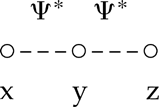
Strong psychological connectedness
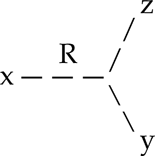
Fission
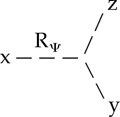
Frost fission
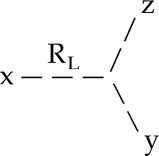
Fission in Lewis
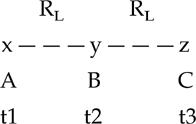
Methuselah
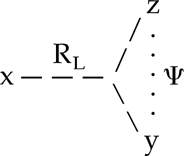
Fission in Lewis with some Ψ from z to y
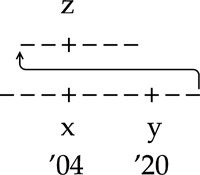
Time travel
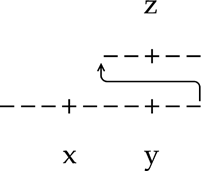
Time-travel overlap
 You have
Access
- 7
- Cited by