Introduction
The vegetation of ice-free areas in Antarctica is dominated by cryptogams and microorganisms, groups that are often dispersed in the air column, to a greater extent than almost any other region globally (Marshall & Chalmers Reference Marshall and Chalmers1997, Øvstedal & Smith Reference Øvstedal and Smith2001, Ruisi et al. Reference Ruisi, Barreca, Selbmann, Zucconi and Onofri2007, Ochyra et al. Reference Ochyra, Lewis Smith and Bednarek-Ochyra2008, Pearce et al. Reference Pearce, Alekhina, Terauds, Wilmotte, Quesada and Edwards2016, Sancho et al. Reference Sancho, Pintado, Navarro, Ramos, Angel De Pablo and Blanquer2017). Dispersal can take place in the form of whole organisms (especially in the case of unicellular species) or in the form of spores, viable fragments or specialized vegetative propagules. Together, these dispersing propagules constitute the diaspore or propagule rain (Sundberg Reference Sundberg2013), which influences not only the species composition of ecosystems but also the atmosphere and climate itself, for example by acting as condensation nuclei for clouds (Després et al. Reference Després, Huffman, Burrows, Hoose, Safatov and Buryak2012, Šantl-Temkiv et al. Reference Šantl-Temkiv, Amato, Casamayor, Lee and Pointing2022). After deposition, they can start growing or become part of the soil propagule bank (Smith Reference Smith1991, During Reference During2001), in which they can potentially remain dormant until local conditions become favourable for germination. However, the mode and selectivity of atmospheric dispersal to and within Antarctica remain poorly documented and understood (Bottos et al. Reference Bottos, Woo, Zawar-Reza, Pointing and Cary2014, Pearce et al. Reference Pearce, Alekhina, Terauds, Wilmotte, Quesada and Edwards2016, Rosa et al. Reference Rosa, Pinto, Šantl-Temkiv, Convey, Carvalho-Silva, Rosa and Câmara2020, Reference Rosa, Pinto, Convey, Carvalho-Silva, Rosa and Câmara2021).
Antarctic vegetation is sensitive to the various components of climate change (Amesbury et al. Reference Amesbury, Roland, Royles, Hodgson, Convey, Griffiths and Charman2017, Robinson et al. Reference Robinson, King, Bramley-Alves, Waterman, Ashcroft and Wasley2018, Convey & Peck Reference Convey and Peck2019). Given that Antarctic organisms, such as bryophytes, can respond quickly to environmental and climatic changes (Sancho et al. Reference Sancho, Green and Pintado2007, Tuba et al. Reference Tuba, Slack and Stark2011), one expected consequence of future climate change is that new species arriving in the airspora will be able to colonize ice-free terrestrial areas, altering community composition, species abundance and the distributions of native taxa (Frahm & Klaus Reference Frahm and Klaus2001, Sancho et al. Reference Sancho, Green and Pintado2007, Royles et al. Reference Royles, Amesbury, Convey, Griffiths, Hodgson, Leng and Charman2013). This may have consequences for the availability of microhabitats for invertebrates such as nematodes and microarthropods, as well as for microorganisms such as bacteria, microalgae and fungi (Hogg et al. Reference Hogg, Cary, Convey, Newsham, O'Donnell and Adams2006, Bokhorst et al. Reference Bokhorst, Huiskes, Convey, van Bodegom and Aerts2008, Glime Reference Glime2017, Câmara et al. Reference Câmara, Carvalho-Silva, Pinto, Amorim, Henriques and da Silva2021b, Carvalho-Silva et al. Reference Carvalho-Silva, Rosa, Pinto, Da Silva, Henriques, Convey and Câmara2021, Rosa et al. Reference Rosa, Pinto, Convey, Carvalho-Silva, Rosa and Câmara2021). The Antarctic Peninsula and the South Shetland Islands in particular experienced the fastest rates of warming in Antarctica in the second half of the twentieth century (Turner et al. Reference Turner, Bindschadler, Convey, Di Prisco, Fahrbach and Gutt2009), although this trend paused early in the twenty-first century (Turner et al. Reference Turner, Lu, White, King, Phillips and Hosking2016), with considerable effects on the lichen and bryophyte vegetation (Cannone et al. Reference Cannone, Dalle Fratte, Convey, Worland and Guglielmin2017, Reference Cannone, Malfasi, Favero-Longo, Convey and Guglielmin2022, Sancho et al. Reference Sancho, Pintado, Navarro, Ramos, Angel De Pablo and Blanquer2017, Reference Sancho, Pintado and Green2019, Câmara et al. Reference Câmara, Carvalho-Silva, Pinto, Amorim, Henriques and da Silva2021b).
The South Shetland Islands, lying north-west of the tip of the Antarctic Peninsula, are likely to receive higher numbers of diaspores of both local and remote origin due to their less extreme climatic conditions, relatively well-developed native biodiversity and proximity to southern South America. The dispersal of biological propagules from South America to sub-Antarctic and Maritime Antarctic regions in the air column has been reported or inferred from microscopic aerobiological analyses as well as studies of snow and moss samples (Kappen & Straka Reference Kappen and Straka1988, Smith Reference Smith1991, Marshall Reference Marshall1996). In addition, modelling the movement of air masses by backward trajectory analyses (Agostini et al. Reference Agostini, Rodrigues, Alencar, Mendonça and Gonçalves-Esteves2017, Biersma et al. Reference Biersma, Jackson, Bracegirdle, Griffiths, Linse and Convey2018a) suggests that this part of Antarctica is more likely to receive diaspores originating from southern South America than it is to act as a source of propagules travelling in the reverse direction.
Before the advent of modern molecular biological techniques, few attempts were made to investigate the Antarctic airborne biodiversity (Chalmers et al. Reference Chalmers, Harper and Marshall1996, Marshall Reference Marshall1996, Reference Marshall1997, Marshall & Chalmers Reference Marshall and Chalmers1997, Marshall & Convey Reference Marshall and Convey1997). To assess the potential of airborne dispersal and colonization to act in synergy with climate change processes, dispersal data on both temporal and spatial scales are required, obtained using standardized methods and analysed with modern molecular tools (Pearce et al. Reference Pearce, Alekhina, Terauds, Wilmotte, Quesada and Edwards2016). Amongst the molecular tools available for species identification, DNA metabarcoding allows for the simultaneous identification of a large number of species present in environmental samples (eDNA) via the assignment of DNA sequence identities (Taberlet et al. Reference Taberlet, Coissac, Pompanon, Brochmann and Willerslev2012). Rosa et al. (Reference Rosa, Pinto, Šantl-Temkiv, Convey, Carvalho-Silva, Rosa and Câmara2020, Reference Rosa, Pinto, Convey, Carvalho-Silva, Rosa and Câmara2021) successfully used eDNA metabarcoding tools for the first time to investigate the presence of fungi in the air column over King George Island and Livingston Island in the South Shetland Islands. In the current study, we extended the application of the metabarcoding approach by identifying DNA sequences of diaspores or propagules of non-fungal eukaryotes in the airspora over King George Island.
Materials and methods
Sampling
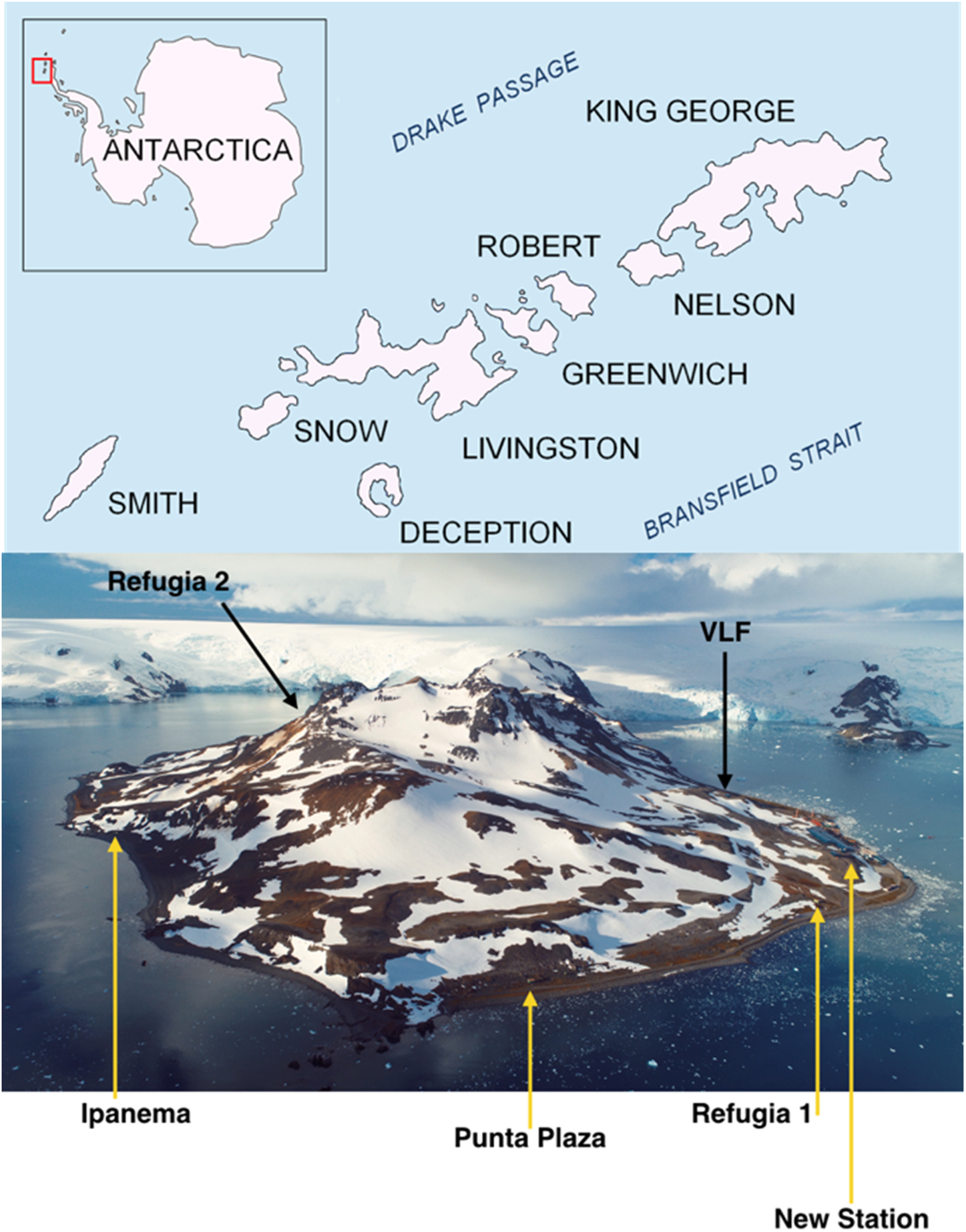
Air samples were collected at Punta Plaza, ~1 km from the Brazilian Comandante Ferraz Antarctic Station (Fig. 1). As described by Rosa et al. (Reference Rosa, Pinto, Convey, Carvalho-Silva, Rosa and Câmara2021), air was collected using a polysulphone sterilized bottle filter (Nalgene, USA) fixed at 3 m above the ground and equipped with 0.22 μm sterilized membranes (47 mm diameter; Millipore, USA) coupled with a chemical duty pump (Millipore, USA). Three units (filter, membrane and pump) were operated in parallel. The sampling was performed using three membranes simultaneously for 5 successive days within a window of 20 days. A total of 12 membranes were produced between December 2019 and January 2020. The samples were defined as Sample 1 (air obtained 11–16 December 2019), Sample 2 (17–22 December 2019), Sample 3 (25–30 December 2019) and Sample 4 (1–6 January 2020). Membranes were added to previously sterilized filters inside a sterile laminar flow hood and kept in sterile bags until placed at the sampling site. After each sampling period, filters with membranes were immediately transported in sterile bags back to a laboratory at Comandante Ferraz Station. Membranes were removed from the filters inside a laminar flow hood for DNA extraction. All equipment was sterilized before being used (forceps, tubes, blades and tubes). Air flow was measured using a wind speed meter with a rotating vane sensor (Kimo LVB, Marne-la-Vallée, France) connected to the inlet pipe.
(Top) Map of the South Shetland Islands showing King George Island (obtained from Antarctic Places Commission of Bulgaria; apcbg.org). (Bottom) Map of Keller Peninsula showing Comandante Ferraz Antarctic Station and the various facilities around it, including Punta Plaza, the site where the air was sampled. Photograph by L.H. Rosa. VLF = very low frequency laboratory.

DNA extraction and data analyses
DNA from three membranes collected as replicates during each sampling interval was extracted together during the same DNA extraction in order to increase DNA yield. Total DNA was extracted using the DNeasy PowerWater Kit (Qiagen), following the manufacturer's instructions. Extracted DNA was used as a template for generating polymerase chain reaction (PCR) amplicons. The internal transcribed spacer 2 (ITS2) of the nuclear ribosomal DNA was used as a DNA barcode for molecular species identification (Chen et al. Reference Chen, Yao, Han, Liu, Song and Shi2010, Richardson et al. Reference Richardson, Lin, Sponsler, Quijia, Goodell and Johnson2015). PCR amplicons were generated using the universal primers ITS3 and ITS4 (White et al. Reference White, Bruns, Lee, Taylor, Innis, Gelfand, Sninsky and White1990). Library construction and DNA amplification were performed using the library kit Herculase II Fusion DNA Polymerase Nextera XT Index Kit V2, following Illumina Metagenomic Sequencing Library Preparation Part #15,044,223 Rev. B protocol, and they were sequenced by Macrogen, Inc. (South Korea) using high-throughput paired-end sequencing (2 × 300 bp) on a MiSeq System (Illumina), using the MiSeq Reagent Kit v3 (600 cycles), 100K reads and following the manufacturer's protocol.
Raw fastq files were filtered using BBDuk version 38.87 (BBMap - Bushnell B.; sourceforge.net/projects/bbmap/) to remove Illumina adapters (Illumina artefacts and the PhiX Control v3 Library) and for quality read filtering (ktrim = l; k = 23; mink = 11; hdist = 1; minlen = 50; tpe; tbo; qtrim = rl; trimq = 20; ftm = 5; maq = 20). The remaining sequences were imported to QIIME2 version 2021.4 (https://qiime2.org/) for bioinformatics analyses (Bolyen et al. Reference Bolyen, Rideout, Dillon, Bokulich, Abnet and Al-Ghalith2019).
The qiime2-dada2 plugin was used for filtering, dereplication, to turn paired-end fastq files into merged files, to remove chimeras and to create amplicon sequence variants (ASVs) with default parameters (Callahan et al. Reference Callahan, McMurdie, Rosen, Han, Johnson and Holmes2016). Taxonomic assignments of ASVs were determined using the qiime2 feature classifier (Bokulich et al. Reference Bokulich, Kaehler, Rideout, Dillon, Boylern and Knight2018) classify-sklearn against 1) the PLANiTS2 database (Banchi et al. Reference Banchi, Ametrano, Greco, Stankovi, Muggia and Pallavicini2020) and 2) the UNITE eukaryote ITS database version 8.3 (Abarenkov et al. Reference Abarenkov, Zirk, Piirmann, Pöhönen, Ivanov, Nilsson and Kõljalg2020). The remaining unidentified sequences were classified against the National Center for Biotechnology Information (NCBI) non-redundant nucleotide sequences (nt) database (October 2021) using BLASTn (Camacho et al. Reference Camacho, Coulouris, Avagyan, Ma, Papadopoulos, Bealer and Madden2009); the nt database was filtered using the following keywords: ‘ITS1’, ‘ITS2’, ‘Internal transcribed spacer’ and ‘internal transcribed spacer‘. The output files from BLASTn were imported into MEGAN6 (Huson et al. Reference Huson, Beier, Flade, Górska, El-Hadidi and Mitra2016) for taxonomic assignments. The detected bryophyte sequences were compared with the sequence alignments used for phylogenetic analysis in Gama et al. (Reference Gama, Faria, Câmara and Stech2016).
Classifications and systematic ranks for kingdoms and phyla follow Ruggiero et al. (Reference Ruggiero, Gordon, Orrell, Bailly, Bourgoin and Brusca2015). Here, we focus on four of the five kingdoms of eukaryotes defined by Ruggiero et al. (Reference Ruggiero, Gordon, Orrell, Bailly, Bourgoin and Brusca2015), namely Protozoa and Chromista (protist lineages), Plantae (including blue-green, red and green algae as well as land plants) and Animalia. The kingdom Fungi was studied by Rosa et al. (Reference Rosa, Pinto, Convey, Carvalho-Silva, Rosa and Câmara2021). For lower ranks and taxonomic authorities, we checked global databases for marine species (WoRMS Editorial Board 2021), algae (Guiry & Guiry Reference Guiry and Guiry2023) and the Catalogue of Life (Roskov et al. Reference Roskov, Ower, Orrell, Nicolson, Bailly and Kirk2020). Geographical distribution follows Petz (Reference Petz, Scott and Marchant2005), Thompson et al. (Reference Thompson, Powell and Adams2019), Guiry & Guiry (Reference Guiry and Guiry2023) and tropicos (www.tropicos.org). We used the number of reads as a proxy for abundance following the approaches of Deiner et al. (Reference Deiner, Bik, Mächler, Seymour, Lacoursièreroussel and Altermatt2017), Hering et al. (Reference Hering, Borja, Jones, Pont, Boets and Bouchez2018) and Rosa et al. (Reference Rosa, Pinto, Šantl-Temkiv, Convey, Carvalho-Silva, Rosa and Câmara2020). Construction of Venn diagrams followed Bardou et al. (Reference Bardou, Mariette, Escudié, Djemiel and Klopp2014), and rarefaction curves were calculated using PAST ver. 4.09 (Hammer et al. Reference Hammer, Harper and Ryan2001).
Results
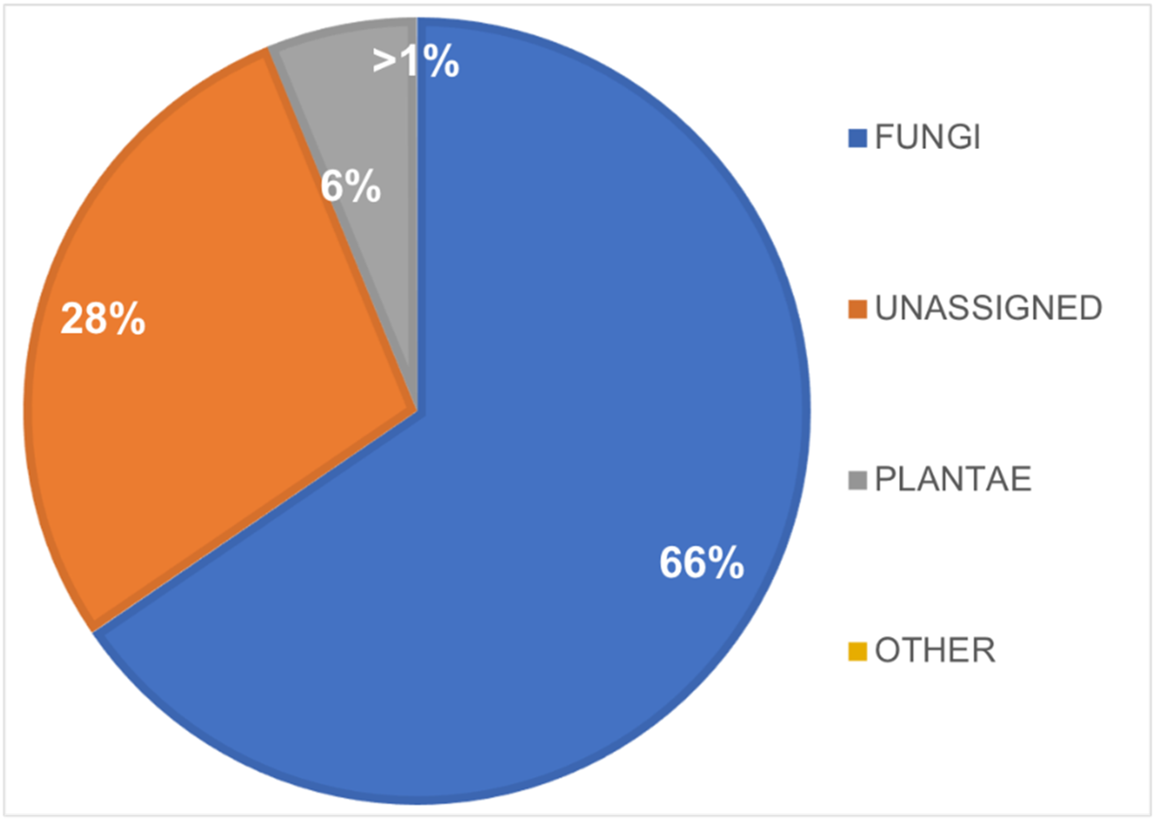
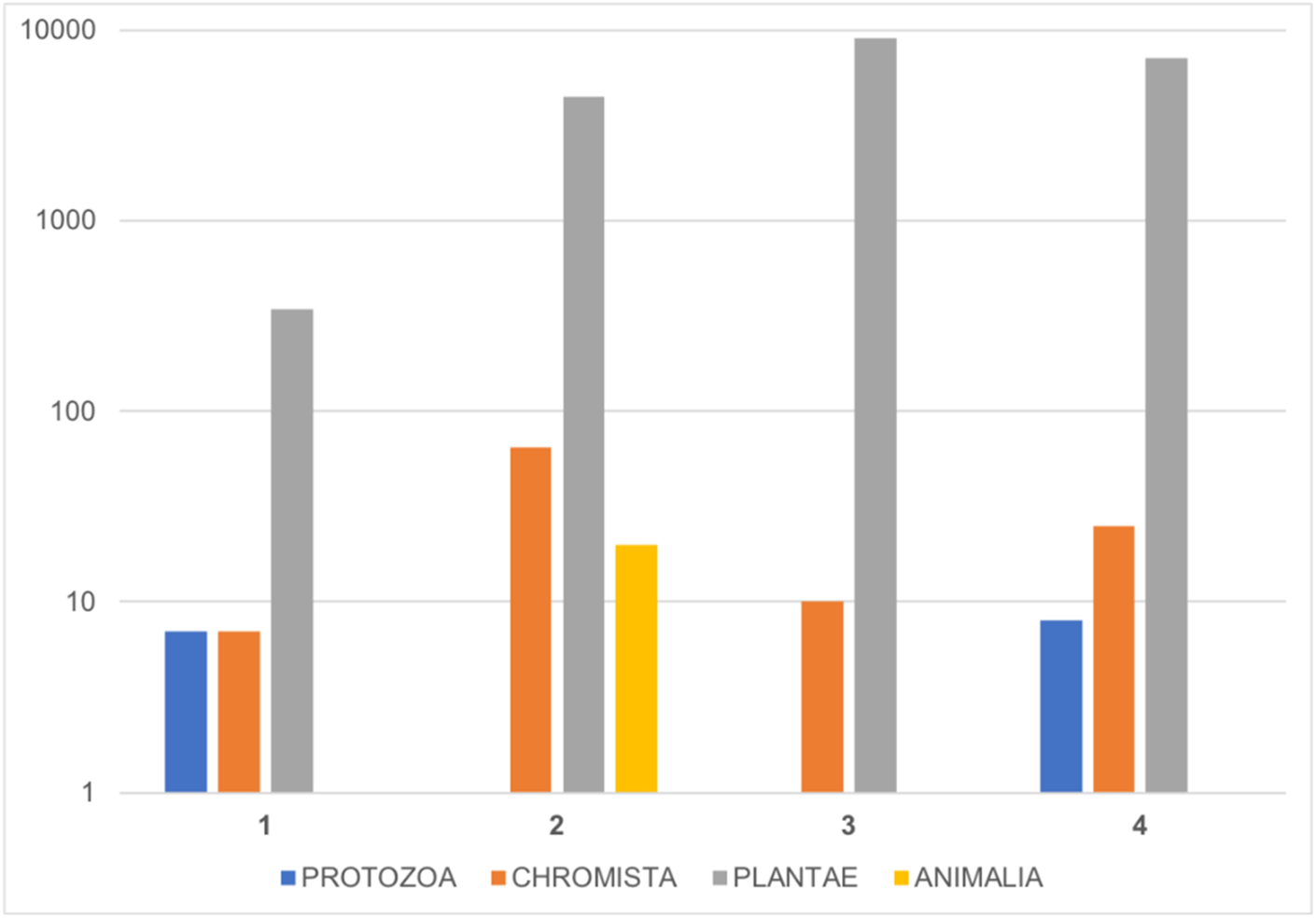
The air sampled over the 20 day study period totalled 1697.76 m3 in each continuous 5 day period. The calculated rarefaction curves for all detected taxa approached a plateau, indicating that the reads gave an accurate representation of the local sequence diversity in all four sampling intervals (Fig. S1). A total of 955 674 paired-end DNA reads were generated in the sequencing run, of which 342 174 remained after quality filtering. A total of 21 166 reads represented 35 taxa (Figs 2 & 3 & Table I) from 10 phyla within three of the four target kingdoms: Chromista (phyla Ciliophora, Cercozoa, Haptophyta and Ochrophyta), Plantae (phyla Chlorophyta, Bryophyta and Magnoliophyta) and Animalia (phyla Mollusca, Arthropoda and Chordata). Some of these assigned sequences could only be resolved at higher taxonomic levels. In addition, a small number of reads belonging to the kingdom Protozoa were found, which could not be further identified. The remaining reads were assigned as Fungi and have been reported by Rosa et al. (Reference Rosa, Pinto, Convey, Carvalho-Silva, Rosa and Câmara2021).
Distribution of DNA reads present in the four air samples analysed, including data both from our study and from Rosa et al. (Reference Rosa, Pinto, Convey, Carvalho-Silva, Rosa and Câmara2021) for Fungi. ‘Other’ includes Protozoa and Chromista.

Bar graph showing DNA reads (y-axis) per sample (x-axis). Data are in logarithmic scale.

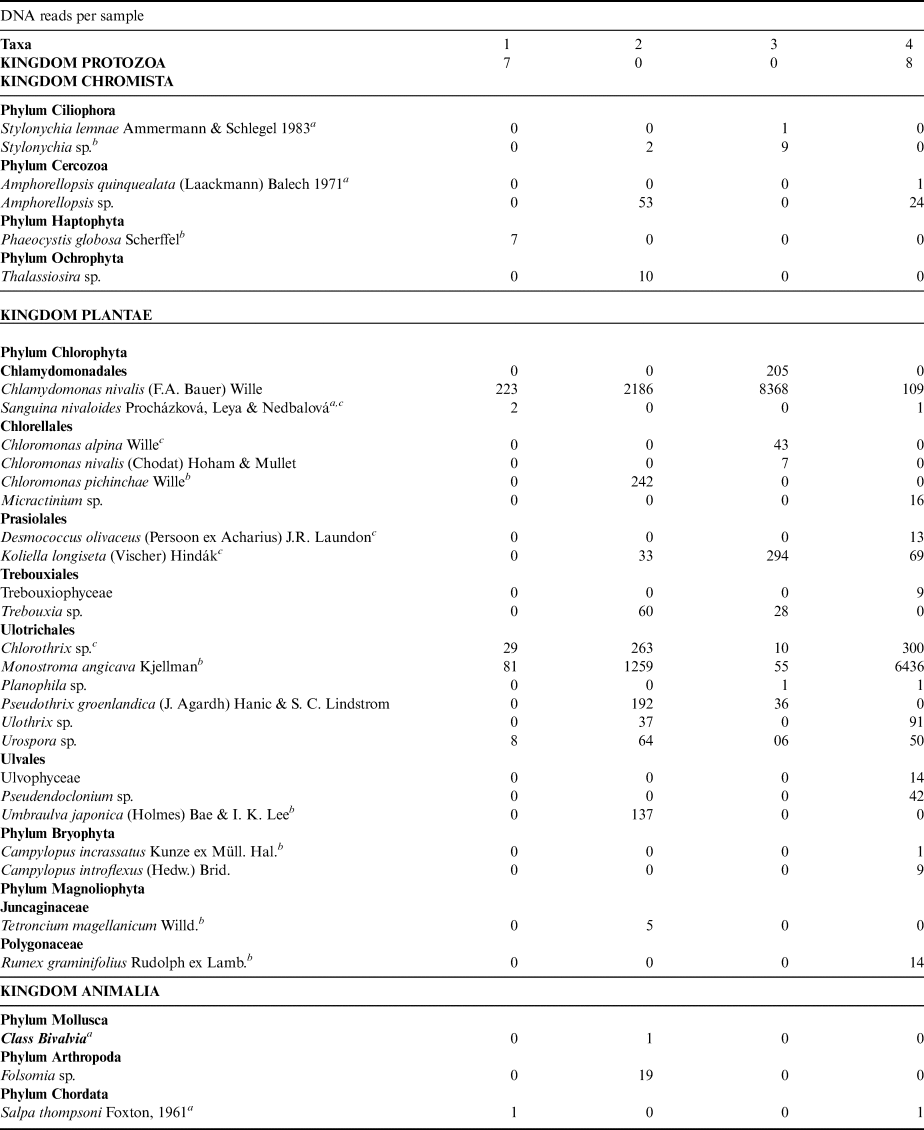
Number of DNA reads of amplicon sequence variants (ASVs) from samples obtained from Antarctic air sampled over four different periods (taxonomic classification following Ruggiero et al. Reference Ruggiero, Gordon, Orrell, Bailly, Bourgoin and Brusca2015).

aTaxa assigned from blast search against the National Center for Biotechnology Information database.
b Taxa not previously recorded from Antarctica.
cSpecies previously detected only in DNA metabarcoding studies.
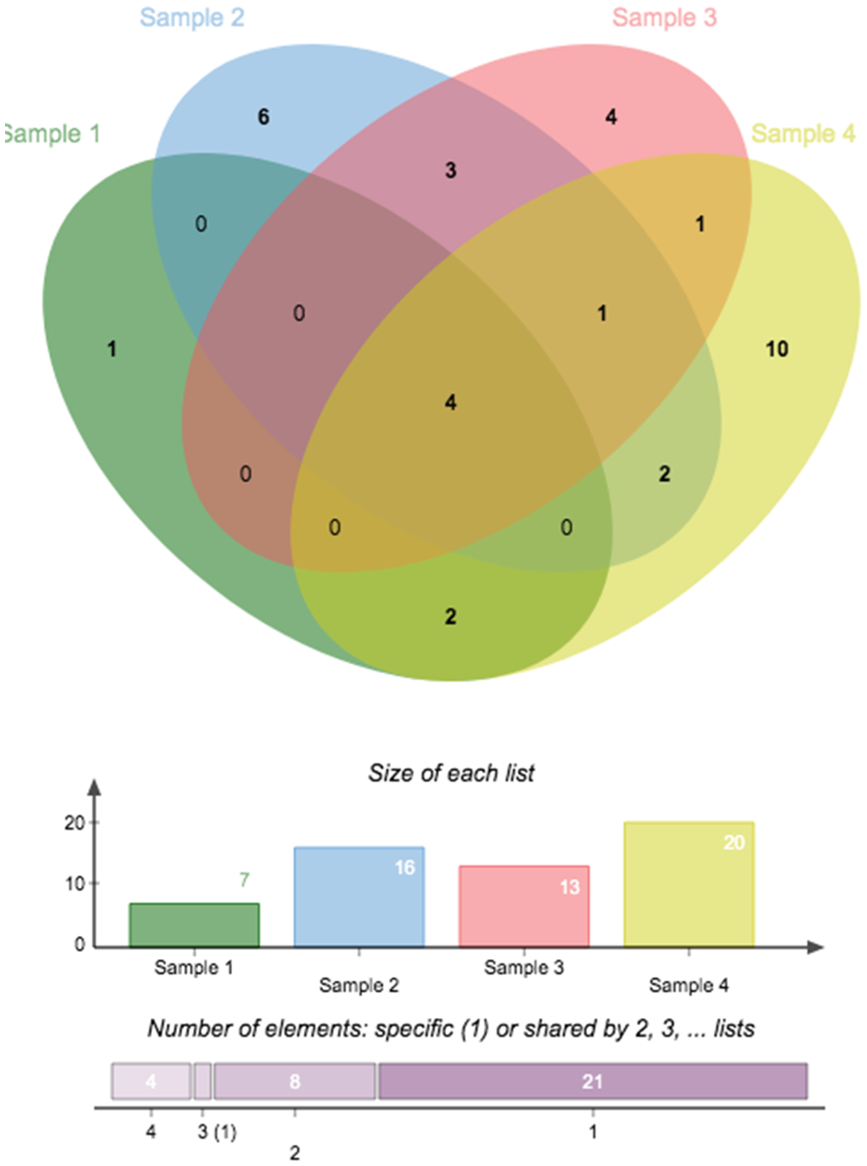
Amongst the different communities detected, the microalga Chlamydomonas nivalis was by far the most abundant taxon based on the number of sequence reads (10 886), followed by the macroalga Monostroma angicava (7831). The most diverse group was the plants, with 26 taxa, followed by Chromista, with six taxa. The numbers of taxa assigned in Samples 1–4 were 8, 16, 13 and 19, respectively. Only four taxa, the green algae C. nivalis, Chlorothrix sp., M. angicava and Urospora sp., were present in all samples across the entire sampling period (Fig. 4).
Venn diagram showing the numbers of taxa found in the four Antarctic air samples obtained over successive 5 day time periods.

Discussion
At the outset, we recognize that assigning an identity to obtained eDNA sequences does not confirm the presence of a viable organism or propagule, as the assignments themselves rely heavily on the quality and completeness of available databases. As databases become more comprehensive over time, the outcomes of this type of study should become more specific and reliable.
As it can be seen in the Venn diagram (Fig. 4) and in Table I, the taxa composition changed over time, and only four taxa were found over the whole period, all of them being commonly found green algae: C. nivalis (also the most abundant in terms of DNA reads), Chlorothrix sp., M. angicava (also highly abundant) and Urospora sp. The reasons as to why this taxa composition varied and how it varied were not subjects of this study. A larger sampling area including a longer temporal sampling period would be necessary to answer these questions.
Amongst the assigned Chromista, representatives of the genus Stylonychia, which includes both terrestrial and brackish water species, were the only Ciliophora taxa detected. Stylonychia has previously been reported in Antarctica, but only Stylonychia lanceolata Ehrenberg, 1835 is a confirmed species (Thompson Reference Thompson, Powell and Adams2019), whilst the Stylonychia mytilus complex, to which Stylonychia lemnae belongs, is considered as taxonomically incomplete (see discussion in Thompson Reference Thompson, Powell and Adams2019). The only genus recognized in our dataset belonging to the phylum Cercozoa was Amphorellopsis, previously reported from the Atlantic sector of the Southern Ocean (Amphorellopsis laackmannii) by Petz (Reference Petz, Scott and Marchant2005), and with Amphorellopsis quinquealata widely distributed in the Southern Ocean (Petz Reference Petz, Scott and Marchant2005). Amongst the Haptophyta, Phaeocystis globosa is well known for contributing to harmful algal blooms in temperate and polar regions. Despite the worldwide distribution of the genus (Guiry & Guiry Reference Guiry and Guiry2023), this is the first report of P. globosa in Antarctica. However, Phaeocystis antarctica Karsten 1905 is one of the most abundant Antarctic planktonic species (Marchant et al. Reference Marchant, Scott, Davidson, Scott and Marchant2005), possibly illustrating the database limitations mentioned above. Thalassiosira was the only representative of Ochrophyta detected. This genus of centric diatoms is widespread in both freshwater and marine environments, and Thalassiosira antarctica is widespread, being commonly reported in both the South Shetland Islands and Wilkes Land (Cremer et al. Reference Cremer, Roberts, McMinn, Gore and Melles2003, Scott & Thomas Reference Scott, Thomas, Scott and Marchant2005).
Amongst the assigned Chlorophyta, the majority of the green algal taxa detected have previously been reported in Antarctic eDNA studies (Câmara et al. Reference Câmara, De Souza, Pinto, Convey, Amorim, Carvalho-Silva and Rosa2021a,Reference Câmara, Convey, Rangel, Konrath, Barreto and Pintoc, Reference Câmara, De Menezes, Pinto, Carvalho-Silva, Convey and Rosa2022a,b, Fonseca et al. Reference Fonseca, Câmara, Ogaki, Pinto, Lirio and Coria2022). The East Asian Umbraulva japonica (Kawai et al. Reference Kawai, Hanyuda, Mine, Takaichi, Terada and Kitayama2021) is a species previously unreported in Antarctica. The presence of marine species is consistent with the proximity of the sampling site to the local shoreline. The most abundant green algal species detected was C. nivalis, a cosmopolitan species known to thrive in snow and one of several algal species responsible for the development of snow algal blooms (Davey et al. Reference Davey, Norman, Sterk, Huete-Ortega, Bunbury and Loh2019, Procházková et al. Reference Procházková, Leya, Krizková and Nedbalová2019), reducing the local albedo (Cook et al. Reference Cook, Hodson, Taggart, Mernild and Tranter2017). Sanguina nivaloides, a recently described polar-alpine species (Procházková et al. Reference Procházková, Leya, Krizková and Nedbalová2019), also causes similar blooms. Sequences assigned to this species were also reported from soils on Deception Island (Câmara et al. Reference Câmara, Valente and Sancho2020), with the current report being the third such from the Antarctic. Although the presently available data suggest so, further studies are required to confirm whether the species S. nivaloides is truly bipolar in distribution.
Amongst the assigned Bryophyta, four species of the genus Campylopus are currently recorded in Antarctica (Ochyra et al. Reference Ochyra, Lewis Smith and Bednarek-Ochyra2008). The genus is better represented on Maritime and sub-Antarctic islands, with three of the species restricted to the South Sandwich Islands and only one reported from the Antarctic continent (Convey et al. Reference Convey, Smith, Hodgson and Peat2000). Of these, we detected only Campylopus introflexus, which is recorded from the South Sandwich Islands, the Falkland (Malvinas) Islands, Tierra del Fuego and South Georgia (Ochyra et al. Reference Ochyra, Lewis Smith and Bednarek-Ochyra2008). It was also reported on Deception Island by Smith (Reference Smith1984, Reference Smith1988), but this record was later excluded by Ochyra et al. (Reference Ochyra, Lewis Smith and Bednarek-Ochyra2008) due to misidentification. We also detected Campylopus incrassatus, but the sequences from the air samples actually belong to two different haplotypes according to the comparison with the data from Gama et al. (Reference Gama, Faria, Câmara and Stech2016). Of these, one haplotype is identical to a specimen from Australia, which was earlier identified as C. incrassatus, a species reported on the South Sandwich Islands by Longton & Holdgate (Reference Longton and Holdgate1979) but excluded from Antarctica by Ochyra et al. (Reference Ochyra, Lewis Smith and Bednarek-Ochyra2008). The other sequence is closest to a haplotype so far detected in various areas of the native Southern Hemisphere distribution of C. introflexus (Chile, South Africa, Australia and New Zealand) as well as in North America and Europe, where the species was introduced (cf. analyses in Gama et al. Reference Gama, Faria, Câmara and Stech2016). Although further study is needed to infer the total distributions of each haplotype and the exact geographical origins of the detected sequences, the present data indicate two independent arrivals of diaspores of C. introflexus to Keller Peninsula.
Amongst the assigned angiosperms, the two sequences assigned represent exotic taxa for Antarctica. Tetroncium magellanicum occurs in Tierra del Fuego, the Falkland (Malvinas) Islands and Gough Island (Moore Reference Moore1974). Rumex graminifolius (grassleaf sorrel) is a (sub-)Arctic species that is also present in northern Asia. The detection of their DNA could indicate that their pollen reached Antarctica in air currents, but other means of transport cannot be ruled out. Although the establishment of non-native angiosperms in Antarctica is very limited at present, Lityńska-Zajac et al. (Reference Lityńska-Zajac, Chwedorzewska, Olech, Korczak-Abshire and Augustyniuk-Kram2012) reported diaspores and plant remains in 78 samples of the clothing, gear and equipment of scientific expeditioners, including five fruit from two different species of Rumex. Carvalho-Silva et al. (Reference Carvalho-Silva, Rosa, Pinto, Da Silva, Henriques, Convey and Câmara2021) and Câmara et al. (Reference Câmara, De Menezes, Oliveira, Souza, Amorim and Schaefer2022b) also reported a high diversity of angiosperm DNA assignments in metabarcoding studies carried out on substrates from Deception Island in the South Shetland Islands and the Ellsworth Mountains in Continental Antarctica.
Amongst the assigned Animalia, the assignment of sequences to an unidentified bivalve and Salpa thompsoni could again relate to the close proximity of the air sampling site to the seashore. S. thompsoni is one of the most commonly found tunicates in Antarctica (Meunier Reference Meunier2020), and it is common to see large numbers of salps washed ashore in Admiralty Bay. According to Greenslade (Reference Greenslade1995), 11 native species of springtails occur in Maritime Antarctica. However, the genus Folsomia is not native to the region, although the species Folsomia candida Willem, 1902 (considered to be a non-native parthenogenetic species) has been recorded previously on Deception Island (Greenslade et al. Reference Greenslade, Potapov, Russel and Convey2012). The species has not been recorded elsewhere in Antarctica, including King George Island.
Conclusions
Using a DNA metabarcoding approach, our study of air samples taken over a 20 day period revealed a previously undocumented airborne diversity. The diversity of taxa detected here suggests that the Antarctic airspora includes propagules of both intra- (local) and inter-continental (distant) origin. Some species assigned from the sequences obtained, such as the two flowering plants, are unlikely to represent viable propagules. However, mosses and algae could potentially develop from either single cells or spores into new and viable organisms. Current rapid changes in environmental conditions in this region could act in synergy with the inwards transport of propagules of currently non-native taxa. Further detailed studies are required, across all seasons annually, covering larger geographical areas and analysing patterns of intraspecific genetic variation, to better understand the airborne transport of organisms to and around Antarctica.
Acknowledgements
We thank the Brazilian Antarctic Program (PROANTAR), congresswoman Jô Moraes, the Biological Sciences Institute at University of Brasilia, the Brazilian Navy, the staff at Comandante Ferraz Station and the anonymous reviewers for their comments.
Author contributions
PEASC, TŠ-T, FLVB and LAdCR designed the study, prepared the logistics and performed the fieldwork. PEASC, FLVB and MC-S completed the laboratory work. OHBP, FLVB and FACL performed the bioinformatics assessments. MS analysed the bryophyte haplotypes. PEASC and LHR secured funds. All authors contributed to data interpretation and the development of the manuscript.
Financial support
This study received financial support from the Brazilian Conselho Nacional de Desenvolvimento Científico e Tecnológico (CNPq), Ministério da Ciência, Tecnologia e Inovação (MCTI) and Programa Antártico Brasileiro (PROANTAR). FACL is supported by Fundação de Amparo à Pesquisa do Tocantins (FAPT). PC is supported by Natural Environment Research Council (NERC) core funding to the British Antarctic Survey (BAS) ‘Biodiversity, Evolution and Adaptation’ Team. TŠ-T is supported by the Novo Nordisk Foundation (NNF19OC0056963) and the Villum Fonden (23175 and 37435). Congresswoman Jô Moraes and the Biological Sciences Institute at University of Brasilia provided extra funds.
Competing interests
The authors declare none.
Supplemental material
To view supplementary material for this article, please visit https://doi.org/10.1017/S095410202400004X.