ijtihād: a total expenditure of effort in the seeking of an opinion as to what constitutes a probable rule of divine law relative to a particular case under consideration.1
Bernard G. Weis, The Search for God's Law (Salt Lake City, Utah: University of Utah Press, 1992), 683. This is Weiss' reworking of Sayf al-Din al-Amidi's (d. 1233) definition of ijtihād.
ijtihād: Islamic interpretation.2
Charles Kurzman (ed.), Liberal Islam: A Sourcebook (New York: Oxford University Press, 1998), 329.
Few Islamic concepts have undergone as radical a semantic shift over the past couple of centuries as ijtihād. This Arabic term, confined for centuries to sophisticated works of legal theory (uṣūl al-fiqh), has been liberated and transformed into the handmaiden of modern Muslim reformists throughout the world. Numerous Western scholars have investigated either the classical legal ijtihād of the first definition above or the modern employment of ijtihād among reformists encapsulated in the second, succinct gloss of this word. Valuable studies have been published on topics ranging from the relationship between ijtihād and writing fatwas (iftāء)3
Wael Hallaq, “Iftaء and Ijtihad in Sunni Legal Theory: A Developmental Account,” in Islamic Legal Interpretation: Muftis and Their Fatwas, ed. Muhammad Masud, Brinkley Messick, and David Powers (Cambridge, MA: Harvard University Press, 1996), 33–43; idem, “Murder in Cordoba: Ijtihad, Iftaء and the Evolution of Substantive Law in Medieval Islam,” Acta Orientalia (Copenhagen) 55 (1994): 55–83.
Abdel-Magid Turki, “Aggiornamento juridique: Continuité et creativité ou fiction de la fermeture de la porte de l'Ijtihād,” Studia Islamica 94 (2002): 5–65; Shaista P. Ali-Karamali and Fiona Dunne, “The Ijtihad Controversy,” Arab Law Quarterly 9 (1994): 238–57; Wael Hallaq, “On the Origins of the Controversy about the Existence of Mujtahids and the Gate of Ijtihad,” Studia Islamica 63 (1986): 129–41; idem, “Was the Gate of Ijtihad Closed?” International Journal of Middle East Studies 16 (1984): 3–41. See also the entire issue of Islamic Law and Society 3, no. 2 (1996).
K. S. Vikør, “The Development of Ijtihad and Islamic Reform, 1750–1850,” Proceedings of the Third Nordic Conference on Middle East Studies: Ethnic encounter and culture change, Joensuu, Finland, 19– 22 June 1995, http://www.hf.uib.no/smi/paj/pajtoc.html (accessed 1 May 2007); Bernard Haykel, Revival and Reform: The Legacy of Muhammad al-Shawkani (New York: Cambridge University Press, 2003), 76–108; Robert Gleave, “Political Aspects of Modern Shiʿi Legal Discussions: Khumayni and Khuʿi on Ijtihad and Qadaء,” Mediterranean Politics 7, no. 3 (2002): 96–116; Rachel Codd, “A Critical Analysis of the Role of Ijtihad in Legal Reforms in the Muslim World,” Arab Law Quarterly 14 (1999): 112–31.
This article introduces the legal methodology of Abu Bakr Muhammad ibn Ibrahim ibn al-Mundhir al-Naysaburi (d. 930), an independent mujtahid (legal scholar) of the early 10th century, whose writings have been essentially ignored in the West. The case study of Ibn al-Mundhir's investigation of laws concerning punishment for theft sheds fresh light on the nature of ijtihād on the eve of crystallization of the four Sunni legal schools (madhāhib). Ibn al-Mundhir's writings indicate that the Qurءan and prophetic hadith played a modest role in early elaboration of Islamic law and that the bulk of his efforts were devoted to culling and evaluating legal opinions of the companions, successors, and, in particular, a small group of postsuccessor jurists. His steadfast reluctance to promote or expand the authority of Abu Hanifa, Malik, al-Shafiʿi, or Ibn Hanbal puts him at odds with major trends of 10th-century Islamic law that Wael Hallaq describes in a recent monograph. I conclude by locating Ibn al-Mundhir within the literature of juristic disagreement (ikhtilāf) and highlighting features that make his writings exceptional within this tradition.
IBN AL-MUNDHIR: A MUJTAHID AND HIS BOOKS
Virtually nothing is known about Ibn al-Mundhir's life other than that it began in Nishapur and ended in his adopted home of Mecca, probably in the year 930.6
Al-Dhahabi bemoans the fact that neither al-Hakim al-Naysaburi, nor al-Khatib al-Baghdadi, nor Ibn ‘Asakir included an entry for Ibn al-Mundhir in their respective biographical dictionaries of Nishapur, Baghdad, and Damascus; al-Dhahabi, Siyar Aʿlam al-Nubalaء, 28 vols. (Beirut: Muءassasat al-Risala, 2001), 14:490– 92.
Ibn al-Nadim, Kitab al-Fihrist li-l-Nadim, ed. Reza Tajaddod (Tehran Offprint, n.d.), 269.
Al-ʿAbbadi, Kitab Tabaqat al-Fuqahaء al-Shafiʿiyya, ed. Gösta Vitestam (Leiden: E. J. Brill, 1964), 67.
Abu Ishaq al-Shirazi, Tabaqat al-Fuqahaء, ed. Ihsan ʿAbbas (Beirut: Dar al-Raءid al-ʿArabi, 1970), 108.
Ibn al-Mundhir's fame and reputation as an independent mujtahid derive exclusively from his books, five of which have been published in fragments or in their entirety.10
The most exhaustive study of Ibn al-Mundhir's extant and lost works available to me is Abu Hammad Saghir Ahmad's introduction to his edition of the first thirty-nine chapters of Ibn al-Mundhir, al-Awsat fi al-Sunan wa-l-Ijmaʿ wa-l-Ikhtilaf, 2 vols. (Riyadh: Dar al-Tayba, 1985), 1:19–39. Much of this introduction is plagiarized in the introduction to Ibn al-Mundhir's al-Iqnaʿ, ed. Ayman Salih Shaʿban (Cairo: Dar al-Hadith, 1994).
Taj al-Din al-Subki, Tabaqat al-Shafiʿiyya al-Kubra, ed. ʿAbd al-Fattah al-Hilu and Mahmud al-Tanahi, 10 vols. (Cairo: ʿIsa al-Babi al-Halabi, 1964–76), 5:59.
Ibn Hazm, al-Ihkam fi Usul al-Ahkam, 8 vols. (Cairo: Maktaba ʿAtif, 1978), 2:880. The remaining four mujtahids are Dawud b. ʿAli, Muhammad b. Nasr al-Marwazi, al-Bukhari, and al-Tabari.
Ibn Khallikan, Wafayat al-Aʿyan wa-Anba al-Zaman, ed. Ihsan ʿAbbas (Beirut: Dar al-Thaqafa, 1968–72), 4:207 (case 580).
Al-Dhahabi, Tarikh al-Islam wa-Wafayat al-Mashahir wa-l-Aʿlam, 301–310 AH, 311–320 AH, ed. ʿUmar ʿAbd al-Salam Tadmuri (Beirut: Dar al-Kitab al-ءArabi, 1994), 568–69. Al-Dhahabi declares Ibn al-Mundhir to be a shaykh al-Islām of the same stature of al-Tabari and Ibn Surayj and praises his Qurءanic commentary in Siyar Aʿlam al-Nubalaء, 14:490–2. See also al-Dhahabi, Tadhkirat al-Huffaz, 5 vols. (Beirut: Dar al-Kutub al-ʿIlmiyya, 1998), 3:5. The three books he mentions are al-Mabsut, al-Ishraf, and al-Ijmaʿ.
Al-Subki, Tabaqat al-Shafiʿiyya al-Kubra, 3:102. The other three Muhammads are al-Marwazi, Ibn Khuzayma, and al-Tabari. Wael Hallaq has mentioned the significance of these four scholars as early as his article “Was the Gate of Ijtihad Closed?” p. 10, and more recently in Authority, Continuity, and Change in Islamic Law (New York: Cambridge University Press, 2001), 59–61.
The fifth book, Ibn al-Mundhir's Qurءanic commentary, is cited regularly in al-Suyuti's al-Durr al-Manthur. Two volumes of it have been published as Kitab Tafsir al-Qurءan, ed. Saʿd ibn Muhammad al-Saʿd (Medina: Dar al-Ma'athir, 2002).
Ibn al-Mundhir's four surviving legal works consist of abridgements of what must have been a massive source book that has perished without a trace. The editor of a portion of Ibn al-Mundhir's largest surviving abridgement, al-Awsat fi al-Sunan wa-l-Ijmaʿ wa-l-Ikhtilaf (The Intermediate Study of Laws, Consensus, and Disagreement), argues that the lost mother book from which it was based was called al-Mabsut (The Expansive Study).17
Ibn al-Mundhir, al-Awsat, 1:28–30. Nine substantial fragments of al-Awsat survive in manu- script.
The edition I am using was edited by ʿAbd Allah ʿUmar al-Barudi and published by Dar al-Fikr (1993). Fifty-two chapters (kutub), from marriage to usurpation, are covered in this published edition, and much of the unpublished first half of this important work survives in manuscript in Ankara.
The printed version of al-Iqnaʿ is based on the unique manuscript in the library of al-Qarawiyin; see Fuat Sezgin, Geschichte des arabischen Schrifttums (Leiden: E. J. Brill, 1967), 1:495–96. The opening isnād of this book states that Ibn al-Mundhir dictated it in Mecca in Muharram 315 (March 927).
Al-Ishraf has one additional chapter after the final chapter of al-Ijmaʿ; al-Iqnaʿ, which diverges several times from the topical sequence of al-Ishraf or al-Ijmaʿ, contains a few more chapters found in neither of these two books. The edition of al-Ijmaʿ that I am using was edited by Fuءad ʿAbd al-Munʿim Ahmad (Doha: Dar al-Daʿwa, 1981).
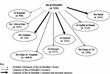
Although we have seen that Ibn al-Mundhir was regularly identified by classical Muslim biographers as an independent mujtahid, it is important to stress that his primary legacy in the Muslim scholarly tradition has been that of a diligent and honest compiler of a nearly unparalleled array of early legal opinions rather than that of a dazzling or iconoclastic jurist. There are three ways in which later jurists employed his books, especially al-Ishraf (see Figure 1). The first group of jurists drew on Ibn al-Mundhir's presentation of juristic disagreements without openly citing him or his personal opinions.21
This category is difficult to prove, but my examination of Ibn ʿAbd al-Barr's al-Istidhkar and al-Khattabi's Maʿalim al-Sunan suggests that both scholars were using Ibn al-Mundhir's al-Ishraf because they occasionally cite the same early authorities in the identical order as they are listed in al-Ishraf. Al-Khattabi actually mentions Ibn al-Mundhir by name in Kitab al-Diya; Abu Sulayman al-Khattabi, Maʿalim al-Sunan, 4 vols. (Beirut: Dar al-Kutub al-ʿIlmiyya, 1991), 2:27. (I am grateful to Dr. Jonathan Brown for this reference.) Al-Nawawi also provides an intriguing quote in which he says that al-Khattabi transmits an opinion of Abu Hanifa from one of Ibn al-Mundhir's books; al-Nawawi, al-Majmuʿ, 27 vols. (Beirut: Dar al-Kutub al-ʿIlmiyya, 2002), 10:196.
This category includes al-Qaffal al-Shashi, al-Nawawi, Ibn Daqiq al-ʿId, and Ibn Hajar al-ʿAsqalani. Al-Nawawi and Ibn Daqiq al-ʿId both inform their readers that they are using Ibn al-Mundhir's books for the early Muslims' opinions in their introductions to al-Majmuʿ and an unfinished commentary on the Mukhtasar of Ibn Hajib, respectively; see al-Nawawi, al-Majmuʿ, 1:538; for Ibn Daqiq al-ʿId's introduction, see al-Subki, Tabaqat al-Shafiʿiyya al-Kubra, 9:240. Even though the Shafiʿi al-Qaffal al-Shashi relays Ibn al-Mundhir's personal opinions in eight of his twenty-one citations of him in the long chapter on prayer, I have included him in this group rather than the next one due to the overall paucity of references to Ibn al-Mundhir; see Hilyat al-ʿUlamaء fi Maʿrifat Madhahib al-Fuqahaء, 3 vols. (Beirut/Amman: Muءassasat al-Risala and Dar al-Arqam, 1980), 2:104, 151, 159, 173, 176, 177, 179, 207.
See Ibn Battal's Sharh Sahih al-Bukhari, al-Qurtubi's al-Jamiʿ li-Ahkam al-Qurءan, and Ibn Qudama's al-Mughni. For example, Ibn Qudama cites Ibn al-Mundhir as an authority or quotes from al-Ishraf twenty-four times in just the short chapter on amputation of the thief's hand; Ibn Qudama, al-Mughni li-Ibn Qudama, 10 vols. (Cairo: Maktaba al-Qahira, 1969), 9:103–43.

A preliminary overview of Ibn al-Mundhir's influence
Even though most classical Muslim scholars appear to have paid scant attention to Ibn al-Mundhir's legal reasoning, this study takes advantage of the fact that the majority of them acknowledged that he was a genuinely independent mujtahid. Ibn al-Mundhir's lauded book, al-Ishraf, is not merely the fruit of extensive research and meticulous organization; it is also a work in which the reader can follow its author's legal reasoning on a case-by-case basis on hundreds of topics. Ibn al-Mundhir's books are late enough to have evaded the critical gaze of Western revisionist scholars, such as Norman Calder,24
Norman Calder, Studies in Early Muslim Jurisprudence (Oxford: Clarendon Press, 1993). Norman Calder does not mention Ibn al-Mundhir in his book although he does have some critical comments about his Egyptian contemporary, Abu Jaʿfar al-Tahawi; ibid., 228–32, 237–40.
A couple of scholars have risen to the challenge posed by revisionists; for example, see Jonathan Brockopp, “Early Islamic Jurisprudence in Egypt: Two Scholars and their Mukhtasars,” International Journal of Middle East Studies 30 (1998): 167–82, and virtually everything by Harald Motzki since the early 1990s; the most easily accessible of his works is an English translation of an earlier German article on al-Zuhri's fiqh, http://webdoc.ubn.kun.nl/mono/m/motzki_h/juriofibs.pdf (accessed 1 May 2007).
IBN AL-MUNDHIR AND RULES CONCERNING PUNISHMENT FOR THEFT
The punishment for theft ordained in the Qurءan may be second in notoriety only to the Sunnaic punishment of stoning the adulterer. Verse 38 of the fifth sura (al-Maءida), reads, “Cut off the hands of thieves, whether they are male or female, as punishment for what they have done—a deterrent from God: God is almighty and wise.”26
M. A. S. Abdel Haleem, trans., The Qurءan (Oxford: Oxford University Press, 2004), 71.
For a useful introduction to ḥudūd laws, see Rudolph Peters, Crime and Punishment in Islamic Law: Theory and Practice from the Sixteenth to the Twenty-first Century (New York: Cambridge University Press, 2005). Peters notes that neither the Hanafis nor Shiʿa consider apostasy to be a ḥadd crime, although they both condemn to death male apostates who refuse to return to Islam, ibid., 65. Ibn al-Mundhir's opinion concerning the role of the rulers in executing ḥadd punishments can be found in al-Ishraf, 2:316.
Ibn al-Mundhir navigates all these topics surrounding punishment for theft and ḥadd crimes in general in al-Ishraf. His investigation focuses on three sources: (1) the Qurءan, (2) prophetic hadith, and (3) his predecessors' opinions. He lays out his legal principles very clearly:
Every thief who steals something which is above the minimum value for which the hand must be amputated, according to the literal meaning (ẓāhir) of the book of God, must have his hand amputated unless the scholars (ahl al-ʿilm) agree upon something. If they agree upon something, then it is necessary to make an exception to the literal meaning of the Qurءan. Furthermore, every topic for which there is disagreement [among the scholars] must be referred back to the Qurءan because God ordered them to refer the topics which they dispute to the book of God and the Sunna of his messenger [paraphrase of sura 4:59].28
Fa-ʿalā kull sāriq saraqa mā tuqṭaʿu fīhi al-yad al-qaṭʿu ʿalā ẓāhir kitāb Allāh ʿazza wa-jalla, illā an yujmiʿa ahlu al-ʿilm ʿalā shayء fa-yajibu istithnāءu dhālika min ẓāhir al-kitāb [ibid., 2:303] wa-kull mukhtalaf fīhi fa-mardūd ilā al-kitāb li-ann Allāh ʿazza wa-jalla amarahum idhā tanāzaʿū an yaruddū mā tanāzaʿū fīhi ilā kitāb Allāh ʿazza wa-jalla wa-sunnat rasūlih; Ibn al-Mundhir, al-Ishraf, 2:302–3. This opinion is nearly identical to that of Abu Thawr (d. 854), which Ibn al-Mundhir records as follows: “The hand of every thief who steals that which necessitates amputation must be amputated, unless they [the jurists?] agree on something, in which case consensus [ijmāʿ] prevails”; ibid., 2:303.
QURءAN AND SUNNA
Neither the Qurءan nor prophetic hadiths provide much assistance for Ibn al-Mundhir's articulation of theft laws in al-Ishraf. It is true that Ibn al-Mundhir repeatedly wields the literal meaning of the sole Qurءanic verse concerning theft (5:38) against those jurists with whom he disagrees (especially Abu Hanifa), but he is reluctant to enlist any additional verses in his ijtihād on this topic. The only other Qurءanic verses he cites in this section on theft merely reaffirm the widespread consensus that Muslim boys and girls must reach maturity prior to the applicability of Islamic law to their conduct and that “maturity” means “being capable of sexual intercourse.”29
These two verses are 24:59 and 4:6; Ibn al-Mundhir, al-Ishraf, 2:313.
Ibn al-Mundhir cites a total of eleven prophetic hadiths in his treatment of theft in al-Ishraf. Five of these hadiths cover broad principles related to ḥadd crimes that are not specific to theft, and Ibn al-Mundhir considers authentic only four of the remaining six hadiths. The five general hadiths found in this section of al-Ishraf are the following:
- “The pen [recording bad deeds] has been raised in the case of a youth until he hits puberty.”30
Ibn al-Mundhir, al-Ishraf, 2:313. This report is attributed to the Prophet in the Sunans of al-Tirmidhi and Abu Dawud but to ʿAli in al-Bukhari's Sahih. Ibn al-Mundhir clearly considers this hadith to be Prophetic when he prefaces it with the words, thabata anna rasul Allāh qāl. (All references to the books in which these hadiths are found are courtesy of ʿAbd Allah al-Barudi, editor of al-Ishraf.)
- The Prophet said to Maʿiz, “Perhaps you only kissed her or winked at her?” He replied, “No.”31
Ibn al-Mundhir, al-Ishraf, 2:315. This is a fragment of the famous story, found in all six canonical Sunni books, of the fornicator Maʿiz b. Malik who confessed his act of fornication to the Prophet and was subsequently stoned. Ibn al-Mundhir mentions this hadith in this chapter because he informs us that some jurists use it as proof that the Prophet gave Maʿiz the chance to escape the terrible ḥadd punishment by suggesting that he merely say that he kissed the woman rather than confessing to having had unlawful intercourse with her.
- “Whoever covers up [a fault of] a Muslim, God will cover up [his fault] in the Hereafter.”32
Ibid. This hadith is found in the books of Muslim, al-Tirmidhi, and Abu Dawud.
- “You should exempt one another from the ḥadd penalties, since whatever ḥadd crime comes to my attention, [its penalty] must be executed.”33
Ibid. This hadith is found in the Sunans of Abu Dawud and al-Nasaءi.
- The Prophet said to Usama [b. Zayd], concerning his role in the affair of the Makhzumi woman who stole, “How dare you intercede [on behalf of someone] in a case that is among the crimes against God (ḥudūd Allāh)?”34
Ibn al-Mundhir, al-Ishraf, 2:316. This is the gist of a hadith that appears in all six canonical Sunni books.
Ibn al-Mundhir allows the following four prophetic hadiths to restrict the scope of the Qurءanic verse requiring amputation of the thief's hand:
- “The hand of the thief is not to be amputated unless the [value of the stolen property] is one quarter of a dinar or greater.”35
Ibid., 2:289–90. This hadith is found in all six canonical Sunni books.
- “There is no amputation [in the case of a stolen] camel or sheep (māshiya) unless it is taken from the fold and its value is greater that that of a round shield (mijann).”36
Ibid., 2:297. This hadith is found in the Sunan of al-Nasaءi.
- A Makhzumi woman borrowed some goods, refused to return them, and then stole [them], so the Prophet ordered that her hand be amputated.37
Ibid., 2:301. Ibn al-Mundhir acknowledges that Ibn Hanbal and Ibn Rahawayh cite an alternative version of this hadith that lacks the explicit clause, “and then she stole [them],” but he prefers this version because it agrees with the opinion of most scholars.
- “Amputation is not a valid punishment for the embezzler (khāءin) and the pilferer (mukhtalis).”38
Ibid. This hadith is found in the Sunans of al-Tirmidhi, Abu Dawud, al-Nasaءi, and Ibn Majah.
Finally, Ibn al-Mundhir declares his skepticism that the following two Prophetic hadiths are authentic, although he professes that the practice advanced by the second one is preferable to any alternatives:
- “There is no amputation [for the theft of] fruit or the edible tubers growing at the upper end of the palm trunk (kathar).”39
Ibid., 2:295–96. This hadith is found in the Sunans of al-Tirmidhi, Abu Dawud, al-Nasaءi, and Ibn Majah.
- The Prophet ordered that a man's hand be amputated and then said, “Cauterize it (iḥsimūhā).”40
Ibid., 2:306. This hadith is found only in noncanonical collections.
The three Qurءanic verses and nine hadiths that meet Ibn al-Mundhir's (unspecified) criteria for authenticity do place substantial restrictions on application of the ḥadd punishment of amputation. They prohibit amputation for prepubescent thieves, thieves who steal less that a quarter dinar worth of goods, thieves who steal a free-ranging camel, and embezzlers. These hadiths also lend support to the interesting ethical position that Muslims who are not part of the ruling administration should endeavor to keep ḥadd crimes concealed from rulers and judges in order to reduce the number of public executions, floggings, and amputations. Although these nine hadiths, along with verse 5:38, provide a firm foundation for legal and ethical discourses concerning the ḥadd punishment of amputation, it is clear that they offer limited guidance to a judge on the definition of theft and absolutely no help with procedural issues. It is little wonder that our ʿAbbasid-era mujtahid felt compelled to devote so much energy to analyzing opinions of his predecessor jurists in order to identify upon which legal topics they agreed and upon which they disagreed. The following two sections of this article demonstrate how consensus and disagreement, ijmāʿ and ikhtilāf, were Ibn al-Mundhir's primary preoccupations.
CONSENSUS
The idea that the consensus of (Sunni) Muslim scholars constitutes a solid legal proof appears regularly in every work on legal theory. We have already seen that Ibn al-Mundhir declares scholarly consensus one of the only means by which a Qurءanic injunction can be mitigated in a specific case. Our tireless mujtahid invokes consensus in fifteen cases in this section of al-Ishraf, and all but three of them pertain specifically to theft.41
The three cases of consensus that do not relate directly to theft are (1) the prohibition of wine, (2) all Islamic obligations apply only to sane males who have reached puberty, and (3) all Islamic obligations apply only to girls upon the onset of menstruation, ibid., 2:312–14. Note that all fifteen cases of consensus are found in identical order in Ibn al-Mundhir's short book, al-Ijmaʿ, 110–11 (cases 614–28).
The following twelve cases of consensus are cited by Ibn al-Mundhir in both al-Ishraf and al-Ijmaʿ. An analysis of the authorities whom he cites, when he does so, follows this list:
- The theft of a very young slave in a state of guarded custody (ḥirz) is grounds for amputation, according to Malik, Sufyan al-Thawri, al-Shafiʿi, Ibn Hanbal, Ibn Rahawayh, Abu Thawr, al-Shaʿbi, al-Hasan al-Basri, Abu Hanifa, and al-Shaybani.42
Ibn al-Mundhir, al-Ishraf, 2:294. In the interest of space, and with two exceptions, I will not be providing biographical details and references for those authorities with entries in P. J. Bearman et al., eds., Encyclopaedia of Islam, 2nd ed. (Leiden: E. J. Brill, 1960–2005).
- The theft of something greater than the minimum value for amputation that is in a state of guarded custody is grounds for amputation, according to ʿAtaء b. Abi Rabah, ʿAmr b. Dinar,43ʿUmar b. ʿAbd al-ʿAziz (ʿUmar II), al-Zuhri, Malik, Sufyan al-Thawri, al-Shafiʿi, Ibn Hanbal, Ibn Rahawayh, Abu Thawr, the “companions of raءy” (Abu Hanifa, Abu Yusuf, al-Shaybani), and possibly al-Hasan al-Basri.44
ʿAmr b. Dinar (d. 744) was a highly respected successor in Mecca who heard hadith from Jabir b. ʿAbd Allah and taught both Ibn Jurayj and Sufyan b. ʿUyayna; see Ibn Saʿd, Kitab al-Tabaqat al-Kabir, ed. ʿAli Muhammad ʿUmar, 11 vols. (Cairo: Maktabat al-Khanji, 2001), 8:40; al-Dhahabi, Siyar Aʿlam al-Nubalaء, 5:300–7.
Ibn al-Mundhir, al-Ishraf, 2:298.
- Theft of an item from a canopy (fusṭāṭ) is grounds for amputation, according to Sufyan al-Thawri, al-Shafiʿi, Ibn Hanbal, Ibn Rahawayh, Abu Thawr, and the companions of raءy.45
Ibid., 2:300.
- One who refuses to return a loaned item is not subject to amputation, according to Malik, the Medinans, Sufyan al-Thawri, Abu Hanifa, the Kufans, al-Shafiʿi and his companions, and ʿAtaء. (This consensus is opposed by Ibn Hanbal and Ibn Rahawayh on the basis of a Prophetic hadith, the implications of which Ibn al-Mundhir explains away by means of a variant version.46)
Ibid., 2:300–1.
- One who pilfers (ikhtalasa, khilsa) is not subject to amputation, according to the Prophet Muhammad, ʿUmar, ʿAli, ʿAtaء, ʿUmar II, al-Hasan al-Basri, al-Shaʿbi, ʿAmr b. Dinar, Qatada, Ibrahim al-Nakhaʿi, al-Zuhri, Malik, al-Shafiʿi, Ibn Hanbal, Ibn Rahawayh, Abu Thawr, and the companions of raءy. Only the Basran qadi Iyas b. Muʿawiya47disagreed with this position.48
Iyas b. Muʿawiya was known for his sharp intellect and died in middle age in 739; al-Dhahabi, Siyar Aʿlam al-Nubalaء, 5:155. He was a grandson of the companion Qurra b. Iyas, who was one of the original settlers of Basra and was later murdered; Ibn Saʿd, Kitab al-Tabaqat al-Kabir, 9:31 (Qurra) and 232–33 (Iyas). See also “Iyas b. Muʿawiya,” Encyclopaedia of Islam.
Ibn al-Mundhir, al-Ishraf, 2:301.
- One who embezzles (khāءin) is not subject to amputation, according to the Prophet Muhammad, Abu Bakr, Qadi Shurayh, al-Walid b. ʿAbd al-Malik, Abu Hashim,49Mansur b. Zadhan,50
Abu Hashim probably refers to the successor Abu Hashim al-Rummani, Yahya b. Dinar, a reliable transmitter, according to Ibn Saʿd, who lived in Wasit; Ibn Saʿd, Kitab al-Tabaqat al-Kabir, 9:312. His hadiths are found in all six canonical books, and al-Dhahabi reports that he died in 749–50; al-Dhahabi, Siyar aʿlam al-nubalaء, 6:152.
Qatada, ʿAtaء, al-Zuhri, Malik, Abu Thawr, and the companions of raءy.51Mansur b. Zadhan was a companion of al-Hasan al-Basri who was remembered for his reliability as a transmitter, his rapid Qurءanic recitation, and his practice of spending most of the day in prayer. He settled in the village of al-Mubarak, near Wasit, and died in 748–49; Ibn Saʿd, Kitab al-Tabaqat al-Kabir, 9:313. He is a successor whose hadiths are found in all six canonical books, and al-Dhahabi mentions that “his grave is visible in Wasit, where it is regularly visited;” Siyar Aʿlam al-Nubalaء, 5:441–42.
Ibn al-Mundhir, al-Ishraf, 2:302.
- Only one hand is to be amputated in the case of a thief who has stolen many times but is convicted only after his most recent theft, according to ʿAtaء, al-Zuhri, Malik, Ibn Rahawayh, Ibn Hanbal, Abu Thawr, Abu Hanifa, Abu Yusuf. Ibn al-Mundhir says also that this position “is similar to the position of al-Shafiʿi.”52
Ibid., 2:304.
- If two free, upright, male witnesses describe an act of theft that warrants amputation, the thief's hand must be amputated.53
Ibid., 2:304.
- If two witnesses testify against a thief whose hand is then amputated, and then additional witnesses prove that the original testimony is fallacious, the first two witnesses owe the blood-money (diya) for the hand of the thief and their testimony is no longer valid, according to ʿAli, Ibn Shubrama,54al-Shafiʿi, Abu Thawr, and the companions of raءy.55
ʿAbd Allah b. Shubrama al-Dabbi was classified by Ibn Saʿd and Ibn Hanbal as a jurist (faqīh) who was a reliable transmitter of a small number of hadiths. He was also a poet and served as qadi for Kufa during the reign of al-Mansur until he had to flee to Khurasan, where he died in 761–62. As a student of several senior companions and a teacher of Sufyan al-Thawri, Ibn Shubrama can be classified as a successor. For more on him, see Ibn Saʿd, Kitab al-Tabaqat al-Kabir, 8:469–70; al-Dhahabi, Siyar Aʿlam al-Nubalaء, 6:347–49; and “Ibn Shubrama,” Encyclopaedia of Islam.
Ibn al-Mundhir, al-Ishraf, 2:305.
- A slave who steals from his master is not subject to amputation, according to ʿUmar, Ibn Masʿud, Malik, Sufyan al-Thawri, Abu Hanifa “and those who agree with them,” al-Shafiʿi, Ibn Hanbal, and Ibn Rahawayh.56
Ibid., 2:310.
- A thief must return the stolen property to its rightful owner after his hand has been amputated.57
Ibid., 2:311.
- A Muslim who steals wine from another Muslim is not subject to amputation, according to ʿAtaء, Malik, al-Shafiʿi, Abu Thawr, and the companions of raءy.58
Ibid., 2:312.
These twelve rulings derived from consensus compensate somewhat for the limited guidance that the Prophetic Sunna provided for elucidation of rules concerning punishment for theft. The stipulation that stolen goods must be in a state of guarded custody (ḥirz) for application of amputation is not even hinted at in the Qurءan, and Ibn al-Mundhir states that there is not a single sound Prophetic hadith in its support.59
Laysa fī hādhā al-bāb khabar thābit lā maqāl fīhi li-ahl al-ʿilm; Ibn al-Mundhir, al-Ishraf, 2:298; also quoted in Ibn Qudama, al-Mughni, 9:111 and al-Qurtubi, al-Jamiʿ li-Ahkam al-Qurءan, 20 vols. (Beirut: Dar al-Kutub al-ʿIlmiyya, 1993), 10:106. It is somewhat surprising that Ibn al-Mundhir neither cites nor alludes to the hadith found in notable 9th-century fiqh books, such as al-Muwattaء, al-Umm, and al-Muzani's al-Mukhtasar, about the theft of Safwan b. Umayya's cloak from under him while he was sleeping in the mosque in Medina. Both Malik and al-Shafiʿi are reported to have used this hadith as proof against the mitigating power of intercession in ḥadd cases that have been brought to the attention of political authorities, whereas al-Muzani uses it as proof for the necessity of the stolen good to have been in a state of “guarded custody” (ḥirz) in order for the thief to be liable for amputation. That most versions of this hadith have defective isnāds may be the reason behind Ibn al-Mundhir's reluctance to cite it, and perhaps he is alluding to it in his statement at the beginning of this note. For more on this hadith, see Al-Muwattaء of Imam Malik ibn Anas: The First Formulation of Islamic Law, trans. Aisha Bewley (Inverness, Scotland: Madina Press, 1991), 350; al-Shaybani, The Muwattaء of Imam Muhammad (London: Turath Publishing, 2004), 299–300; al-Zurqani, Sharh al-Zurqani ʿala Muwattaء al-Imam Malik, 4 vols. (Beirut: Dar al-Kutub al-ʿIlmiyya, n.d.), 4:193–94; al-Shafiʿi, al-Umm, 9 vols. (Beirut: Dar al-Kutub al-ʿIlmiyya, 2002), 6:173; al-Muzani, al-Mukhtasar, found in al-Shafiʿi, al-Umm, 9:278.
Although the scope of these topics provides insight into the general utility of consensus for a mujtahid in the early classical period, it also sheds valuable light on whose legal opinions count in determining consensus on any given topic. Because the work under analysis, al-Ishraf, is an abridgement of an abridgement of a massive, long-lost original book, it is impossible to state with certainty that the names that Ibn al-Mundhir cites in support of many of these rulings are the only authorities whose views he considered. Despite this uncertainty, I think that the names do indicate his methodology and preferences. Although our mujtahid draws on authorities from the three broad post-Prophetic classes of companions (ṣaḥāba), successors (tābiʿūn), and what I call “postsuccessor jurists” (fuqahāء),60
The “successors of the successors” (atbāʿ al-tābiʿīn) also fall in this group, like Abu Hanifa (whom some consider a successor), al-Awzaʿi, and Sufyan al-Thawri.
It is rather striking that only four different companions are invoked once or twice in a mere 25 percent of cases, although Ibn al-Mundhir does report opinions of fourteen successors at least once in this small section of al-Ishraf. The Meccan ʿAtaء b. Abi Rabah is cited in half of these consensus cases, followed by the Medinan Ibn Shihab al-Zuhri in four of them, and al-Hasan al-Basri in three. The Kufan ʿAmir b. Sharahil al-Shaʿbi, Medinan (and caliph) ʿUmar b. ʿAbd al-ʿAziz, Meccan ʿAmr b. Dinar, and Basran Qatada b. Diʿama all make two appearances. Among the solitary successors, we find two men from Wasit,61
Abu Hashim al-Rummani and Mansur b. Zadhan.
Ibrahim al-Nakhaʿi, Shurayh, and Ibn Shubrama.
Iyas b. Muʿawiya.
Al-Walid b. ʿAbd al-Malik, r. 705–15.
In nearly every case of consensus for which he provides names, Ibn al-Mundhir endeavors to enlist the support of nine key postsuccessor jurists. Three of these jurists, Abu Hanifa, Qadi Abu Yusuf, and Muhammad b. al-Hasan al-Shaybani, are identified throughout al-Ishraf by the shorthand expression “companions of raءy” when they agree on an opinion and by their personal names when they disagree.65
It is interesting that Ibn al-Mundhir usually refers to Abu Hanifa and Abu Yusuf by their isms, al-Nuʿman and Yaʿqub, respectively.
The Hanafis and al-Tabari are notorious for ignoring Ibn Hanbal's legal opinions in their fiqh books.
For more on Sufyan al-Thawri, see “Sufyan al-Thawri,” Encyclopaedia of Islam; Scott C. Lucas, Constructive Critics, Hadith Literature, and the Articulation of Sunni Islam (Leiden: E. J. Brill, 2004), 140–43; and al-Dhahabi, Siyar Aʿlam al-Nubalaء, 7:229–79.
See “Ibn Rahwayh,” Encyclopaedia of Islam, and Susan Spectorsky, Chapters on Marriage and Divorce: Responses of Ibn Hanbal and Ibn Rahwayh (Austin, Tex.: University of Texas Press, 1993).
Abu Thawr is counted among the Shafiʿiyya by al-Nadim (al-Fihrist, 265), al-ʿAbbadi (Kitab Tabaqat al-Fuqahaء al-Shafiʿiyya, 22–23), Abu Ishaq al-Shirazi (Tabaqat al-Fuqahaء, 101–2), and al-Subki (Tabaqat al-Shafiʿiyya al-Kubra, 2:74–80).
It is clear from my findings that Ibn al-Mundhir's collection of consensus-based rulings pertaining to punishment for theft was much more useful to his ijtihād efforts than either the Qurءan or Prophetic hadiths. Major concepts and topics—such as “the state of guarded custody,” the number of witnesses, and the right of a slave to steal from his master without fear of amputation—are supported solely by consensus. Even the Prophetic hadith protecting pilferers and embezzlers from Qurءanic punishment is strongly reinforced by the agreement of impressive lists of companions, successors, and postsuccessor jurists. It is also evident that Ibn al-Mundhir felt perfectly comfortable labeling the agreed-upon position of the majority of an elite group of nine jurists as “consensus,” whereas his infrequent citation of companions and successors served largely as frosting on the cake of ijmāʿ. The conspicuous significance of these nine jurists in Ibn al-Mundhir's analysis of consensus becomes even more pronounced in his corollary task as a mujtahid of adjudicating the multitude of cases in which they disagree, as the following case study shall demonstrate.
DISAGREEMENT
Ibn al-Mundhir devotes the bulk of his attention in al-Ishraf to sorting out cases of dis- agreement (ikhtilāf) among his predecessor jurists and piety-minded authorities. Several chapters in his section on theft concern a single issue, such as whether theft of a bird, a copy of the Qurءan, or goods from the public treasury (bayt al-māl) can result in the ḥadd punishment of amputation.70
Ibn al-Mundhir, al-Ishraf, 2:296 (bird); 2:297 (copy of the Qurءan); 2:294 (public treasury). In all three cases, Ibn al-Mundhir and Abu Thawr consider amputation a valid punishment, whereas Abu Hanifa considers them mitigating circumstances. It is interesting that Ibn al-Mundhir breaks with al-Shafiʿi, who agrees with the “companions of raءy” and three Kufan successors that one cannot receive the ḥadd punishment in the case of theft from the public treasury.
Ibn al-Mundhir, al-Ishraf, 2:302–3.
Ibn al-Mundhir begins his discussion of ḥirz with the previously mentioned hadith, “There is no amputation [in the case of a stolen] camel or sheep, unless it is taken from the fold and its value is greater that that of a round shield,” and the declaration of consensus of his predecessors upon the stipulation of “a state of guarded custody” for the application of the ḥadd punishment of amputation. Our mujtahid then proceeds to scrutinize the following twelve cases that relate to theft of something that is in a state of guarded custody72
Ibid., 2:298–300.
- If a thief enters a house, throws the stolen goods into a side street, leaves the house, and makes off with the goods, his hand is to be amputated, according to al-Shafiʿi, Abu Thawr, and the companions of raءy.
- If one thief enters a house and passes stolen goods to someone outside the house, neither person is subject to amputation, according to the companions of raءy. The jurists Malik, al-Shafiʿi, Abu Thawr, and Ibn al-Mundhir hold the individual who entered the house liable to amputation.
- If a thief bores a hole in the wall of a house, reaches in from the outside, and steals a garment, he is not subject to amputation, according to Abu Hanifa. The jurists Malik, Abu Thawr, al-Shafiʿi, Abu Yusuf, and Ibn al-Mundhir consider him liable for amputation.
- If two thieves pierce a hole in the wall of a house, but only one of them enters and takes something, and both of them carry it outside the house, only the thief who entered the house is liable for amputation according to al-Shafiʿi, Abu Thawr, and the companions of raءy.
- If a group of thieves enters a house and only one of them carries stolen property out of it, only the carrier is liable for amputation, according to al-Shafiʿi and Abu Thawr. The companions of raءy hold all of the thieves liable, on the basis of juristic preference (istiḥsān). Ibn al-Mundhir reports that both opinions are attributed to Malik.
- If someone steals a locked door or the door of a mosque, he is not subject to amputation, according to the companions of raءy. The jurists Ibn al-Qasim,73Malik, Abu Thawr, al-Shafiʿi, and Ibn al-Mundhir consider amputation appropriate in this case “because this is how people protect their doors.”74
For more on the Egyptian pupil of Malik and jurist ʿAbd al-Rahman b. al-Qasim (d. 806), see Brockopp, “Early Islamic Jurisprudence in Egypt.”
Ibn al-Mundhir, al-Ishraf, 2:299. This is the only case in this section in which Ibn al-Mundhir appeals to something resembling “custom.”
- If someone steals something from a bathhouse (ḥammām), the thief cannot be subject to amputation, according to the companions of raءy. The jurists Malik, Ibn Rahawayh, Abu Thawr, and Ibn al-Mundhir consider amputation valid in this case. Both opinions are attributed to Ibn Hanbal.
- If a grave robber (nabbāsh) steals the burial shroud from the grave, he cannot have his hand amputated as punishment, according to Abu Hanifa, al-Shaybani, and Sufyan al-Thawri. The companion Ibn al-Zubayr; successors ʿUmar II, al-Hasan al-Basri, al-Shaʿbi, Qatada, Ibrahim al-Nakhaʿi, and Hammad b. Abi Sulayman75; and postsuccessor jurists Malik, Ibn al-Majishun,76
Hammad b. Abi Sulayman (d. 738) of Kufa was a student of Ibrahim al-Nakhaʿi and the primary teacher of Abu Hanifa; al-Dhahabi, Siyar Aʿlam al-Nubalaء, 5:231–9.
al-Shafiʿi, Ibn Rahawayh, Abu Thawr, Abu Yusuf, Ibn Hanbal, and Ibn al-Mundhir all consider punishment of amputation valid for the grave robber.ʿAbd al-Malik b. ʿAbd al-ʿAziz Ibn al-Majishun (d. 828) was a mufti of Medina and pupil of Malik; al-Dhahabi, Siyar Aʿlam al-Nubalaء, 10:359–60.
- There is consensus77that theft from a canopy is punishable by amputation, according to Sufyan al-Thawri, al-Shafiʿi, Ibn Hanbal, Ibn Rahawayh, Abu Thawr, the companions of raءy, and Ibn al-Mundhir.
The printed text oddly has “they disagree” (ikhtalafū) instead of “they agree.” Ibn al-Mundhir concludes the topic with the observation, “I have not memorized anything that differs with this position;” al-Ishraf, 2:300.
- The theft of the actual canopy or saddlebags (jawālīq) from their place cannot be punished by amputation, according to the companions of raءy. Jurists al-Shafiʿi and Abu Thawr hold the thief subject to amputation if a man is lying on the stolen goods under the canopy.
- If someone steals a garment from saddlebags that are on a camel or another beast, and the owner is resting with or protecting them, then the thief faces punishment of amputation according to the companions of raءy. However, if he steals the actual saddlebags, there is no risk of amputation, according to the companions of raءy. Ibn al-Mundhir states that the thief in both cases should receive the ḥadd punishment of amputation.
- If someone steals something from an apartment inside a building with multiple apartments, each of which has a lock, without leaving the building, only Abu Yusuf considers him immune from amputation. Malik, al-Shafiʿi, Abu Thawr, Abu Hanifa, and al-Shaybani all consider amputation appropriate in this case.
These twelve cases enhance our understanding of Ibn al-Mundhir's legal reasoning and debates surrounding the invented condition of “guarded custody” as a prerequisite for amputation. Eight of them contain disagreements among elite postsuccessor jurists, three of them appear to be actual cases of consensus, and only one of them involves authorities from among the companions or successors. Disagreement even exists between the companions of raءy in three cases78
Cases three, eight, and twelve.
Malik in case five and Ibn Hanbal in case seven.
Ibn al-Mundhir's presentation of ijmāʿ and ikhtilāf represents a significant step in the development of Sunni legal practice. He appears to have been one of the earliest scholars to include opinions of a large pool of companions and successors alongside positions of at least a dozen postsuccessor jurists on a substantial number of legal topics.80
In addition to the nine elite jurists mentioned above, Ibn al-Mundhir cites a least one opinion from Ibn Abi Layla, al-Awzaʿi, al-Layth b. Saʿd, Ibn al-Majishun, and lbn al-Qasim. In other places in al-Ishraf, he includes some opinions from Abu ʿUbayd (d. 839). One notable absence is the founder of the Zahiri school, Dawud al-Isbahani, although it is possible that he may surface elsewhere in this book.
LOCATING IBN AL-MUNDHIR WITHIN THE DEVELOPMENT OF ISLAMIC LAW
Wael Hallaq, in his recent monograph, Authority, Continuity and Change in Islamic Law, advances a fresh understanding of the development of Islamic law in the early classical period.81
This paragraph summarizes the second chapter of Hallaq, Authority, Continuity and Change, 24–56. This development appears to have started early in the 9th century in North Africa among the nascent Maliki school; see Jonathan Brockopp, “Competing Theories of Authority in Early Maliki Texts,” in Studies in Islamic Legal Theory, ed. Bernard Weiss (Leiden: E. J. Brill, 2002), 3–22.
Hallaq, Authority, 25.
Hallaq, Authority, 49–50.
Ibn al-Mundhir, through his legal writings, either ignores or is oblivious to contemporaries' efforts to construct archetypical founder-imams out of the historical figures Abu Hanifa, Malik, al-Shafiʿi, and Ibn Hanbal. His frequent citation in al-Ishraf of companion and successor opinions alongside opinions of these and other postsuccessor jurists demonstrates that the founder-imams were hardly the first jurists to voice many of the opinions attributed to them in their emerging school textbooks and suggests that they may even have borrowed some of their predecessors' positions. Ibn al-Mundhir displays no trace of promoting any single authority (other than himself), and, although he agrees consistently with Abu Thawr on topics pertaining to theft, he freely disagrees with him in cases of punishment for adultery, rights of the triply-divorced woman, and definition of the “Sunna divorce.”84
Ibn al-Mundhir, al-Ishraf, 1:141 (Sunna divorce), 1:253 (waiting period), and 3:7 (adultery).
An excellent vantage point for the dramatic growth and increased sophistication of substantive Islamic law in the 10th century is al-Mawardi's (d. 1050) massive commentary al-Hawi al-kabir.
Because Ibn al-Mundhir was swimming against the strong current of mainstream Sunni legal tradition, it is necessary that his work be placed in the minority literary tradition of juristic disagreement (ikhtilāf). Two foundational texts of this genre that have survived are the Musannafs of ʿAbd al-Razzaq al-Sanʿani and the Kufan Abu Bakr Ibn Abi Shayba. These massive books consist almost exclusively of legal opinions of companions and successors, along with Prophetic hadiths, all of which are documented with isnāds. Two significantly shorter works of this genre are al-Tirmidhi's (d. 892) al-Jamiʿ (or Sunan) and Muhammad b. Nasr al-Marwazi's (d. 907) Ikhtilaf al-Fuqahaء, both of which focus primarily on disagreements of postsuccessor jurists (including Ibn Hanbal and Ibn Rahawayh), along with opinions of a modest array of companions and successors.86
Al-Tirmidhi's overall primary focus is, of course, Prophetic hadiths, but he does devote substantial space to ikhtilāf in his canonical book.
More will be said about al-Tabari and al-Tahawi in the following section. Al-Qaffal al-Shashi's Hilyat al-ʿUlamaء fi Maʿrifat Madhahib al-Fuqahaء appears to be more concerned with intra-madhhab juristic disagreements than that of companions and successors, but its author does cite Ibn al-Mundhir and al-Tahawi occasionally. Al-Baghawi's Sharh al-Sunna routinely incorporates ikhtilāf and, according to a recent study, much of this information comes from al-Khattabi's Maʿalim al-Sunan; see ʿAli b. ʿUmar Badahdah, al-Madkhal ila Sharh al-Sunna li-l-Imam al-Baghawi, 2 vols. (Jedda: Dar al-Andalus al-Khadraء, 1994), 2:690–96.
Commentaries also assumed an important place in the ikhtilāf literature, starting with the Shafiʿi scholar Abu Sulayman al-Khattabi's (d. 998) Maʿalim al-Sunan and reaching new heights with the Andalusians Ibn Hazm (d. 1064) and Ibn ʿAbd al-Barr (d. 1071). They both drew heavily from the Musannafs of ʿAbd al-Razzaq and Ibn Abi Shayba in their voluminous commentaries al-Muhalla and al-Istidhkar, respectively. A third Andalusian, Ibn Battal (d. 1057), brings us full circle with Ibn al-Mundhir by openly citing al-Ishraf in numerous places throughout his commentary on al-Bukhari's Sahih. This practice was repeated in 13th-century commentaries within the ikhtilāf genre by Ibn Qudama, al-Qurtubi, and, to a lesser degree, al-Nawawi.
CONCLUSION
Ibn al-Mundhir's analysis of the thirty-one topics pertaining to theft in al-Ishraf marks a significant advance in clarity and depth over legal books that most Western scholars believe were compiled during the 9th and early 10th centuries. Topics of theft are buried deep in Kitab al-ʿUqul in the Musannaf of ʿAbd al-Razzaq and strewn throughout the 167 chapters of Kitab al-Hudud in Ibn Abi Shayba's Musannaf.88
ʿAbd al-Razzaq, al-Musannaf, 12 vols. (Beirut: Dar al-Kutub al-ʿIlmiyya, 2000), 9:481–530; Ibn Abi Shayba, al-Kitab al-Musannaf fi al-Ahadith wa-l-Athar, 9 vols. (Beirut: Dar al-Kutub al-ʿIlmiyya, 1995), 5:470–559.
See chapters 16–20 of Kitab al-Hudud in al-Tirmidhi's al-Jamiʿ. The topics covered are (1) the minimal value of the stolen good; (2) hanging the thief's severed hand around his neck; (3) the cases of the embezzler, pilferer, and looter (muntahib); (4) theft of fruits and edible tubers growing at the upper end of the palm trunk; and (5) amputation while campaigning; al-Tirmidhi, al-Jamiʿ al-Sahih wa Huwa Sunan al-Tirmidhi, ed. Ahmad Shakir et al., 5 vols. (Beirut: Dar Ihyaء al-Turath al-ʿArabi, n.d.), 4:50–54.
The five topics covered are (1) the minimal value of the stolen good, (2) replacing or returning stolen property after amputation, (3) theft from blood relatives, (4) theft of perishable foodstuffs, and (5) women's testimony in ḥadd cases; Muhammad al-Marwazi, Ikhtilaf al-Fuqahaء, ed. Muhammad Tahir Hakim (Riyadh: Adwaء al-Salaf, 2000), 493–99.
Tabari's ikhtilāf, book, of which only two small fragments survive, consists almost exclusively of transmissions from earlier works containing opinions of Malik, al-Awzaʿi, al-Thawri, al-Shafiʿi, Abu Hanifa and his companions, and Abu Thawr, in this sequence. See al-Tabari, Ikhtilaf al-Fuqahaء, ed. Joseph Schacht (Leiden: E. J. Brill, 1933).
The published edition of al-Tahawi/al-Jassas, Mukhtasar Ikhtilaf al-ʿUlamaء, ed. ʿAbd Allah Nadhir Ahmad, 5 vols. (Beirut: Dar Bashaءir al-Islamiyya, 1996), unfortunately appears to be missing the chapter on amputating the thief's hand, although the ḥadd crimes of fornication and qadhf are discussed in 3:277– 330.
Despite his status as an atypical 10th-century mujtahid, Ibn al-Mundhir's legal methodology remains valuable for our general understanding of early Sunni jurisprudence. Later Sunni jurists awarded Ibn al-Mundhir the title of “independent mujtahid” because he investigates each topic of Islamic law in a systematic manner and refuses either to restrict himself to or adumbrate the accumulated corpus juris of any single one of his predecessors. Ibn al-Mundhir begins each section of al-Ishraf with a discussion of the pertinent Qurءanic verses and evinces a critical approach to hadith. He then turns to the laborious task of analyzing a large volume of legal opinions attributed to a host of companions, successors, and postsuccessor jurists, a practice which the 12th-century al-Qaffal al-Shashi identifies as a critical component of the ijtihād endeavor.93
Wa-min shaءn al-mujtahid an yakūn ʿārifan bi-madhāhib al-ʿulamāء; al-Qaffal al-Shashi, Hilyat al-ʿUlamaء, 1:53.
One of the central purposes of this project was to discover where the most important authorities agree, because, according to Ibn al-Mundhir, only consensus can restrict the literal meanings of the Qurءan and Prophetic hadiths. Despite his fidelity to textual literalism, Ibn al-Mundhir not only respects the legal authority of the companions of raءy sufficiently to reproduce their opinions in countless cases of ikhtilāf, but he even grants them veto power over any declaration of consensus. Even though Ibn al-Mundhir's personal legal opinions in myriad cases of juristic disagreement were largely ignored by later Muslim jurists, they do serve as eloquent testimony that the four Sunni madhāhib had not achieved a total monopoly on legal discourse in the first quarter of the 10th century and that al-Tabari was not alone in constructing an independent school during this time. Given his clear unwillingness to play by the new rules of the 10th-century madhhab makers, I think that Ibn al-Mundhir would be satisfied knowing that his reputation rests squarely upon his personal scholarly books rather than on a constructed superhuman founder-imam paradigm that has been in vogue in most of the Islamic world for over a millennium.