Introduction
Wild animals in captivity harbour a wide variety of gastrointestinal parasites (Fagiolini et al., Reference Fagiolini, Lia, Laricchiuta, Cavicchio, Mannella, Cafarchia, Otranto, Finotello and Perrucci2010) and, although they may or may not show overt signs of parasitic disease, their presence inevitably has a cost for the host (Colditz, Reference Colditz2008). Gastrointestinal parasite burdens in wild animals are influenced by a number of factors, including season, climate, age of host, breeding status, immune status and stocking density (Ocaido et al., Reference Ocaido, Siefert and Baranga1999; Apio & Wronski, Reference Apio and Wronski2004; Apio et al., Reference Apio, Plath and Wronski2006; Turner & Getz, Reference Turner and Getz2010). In the wild, parasite burdens tend to be moderate with no untoward clinical signs, but captivity may change this balance in favour of increased parasite burdens to the detriment of the host (Ezenwa, Reference Ezenwa2004b). Ungulates in the wild carry out selective grazing and defecation as natural antiparasitic behaviour (Ezenwa, Reference Ezenwa2004c), but in limited spaces this is inhibited and may increase their burdens of internal and external parasites (Mikolon et al., Reference Mikolon, Boyce, Allen, Gardner and Elliott1994; Ezenwa, Reference Ezenwa2004b).
The impala (Aepyceros melampus) is a medium-sized, sexually segregated ungulate of the antelope family and is closely related to domestic Bovidae. There are two subspecies, based on genetic and morphological differences. These are Aepyceros melampus petersi (A. m. petersi) and Aepyceros melampus melampus (A. m. melampus). Zambia has A. m. melampus in the wild. These are the most commonly kept antelope species in captivity. The impala is both a browser and a grazer, and often switches between grazing and browsing depending on the season and habitat (van Eeden, Reference van Eeden2006; Cordon et al., Reference Cordon, Cordon, Lee-Thorp, Sponheimer, de Ruiter, Sealy, Grant and Fourie2007). These animals are hardy and very prolific. For this reason, game ranches keep impala at high stocking densities. Furthermore, in Zambia captive impala are also kept under intensive management around private residences and lodges (Anonymous 2010).
Gastrointestinal parasites that have been reported in antelopes include protozoan species (Flach et al., Reference Flach, Blewett and Angus1991) and helminths (Andrew-Thompson, Reference Andrew-Thompson2001). Of the helminths, strongyle nematodes and Strongyloides are reported as problematic in wild ungulates in captivity (Mikolon et al., Reference Mikolon, Boyce, Allen, Gardner and Elliott1994; Goossens et al., Reference Goossens, Dorny, Boomker, Vercammen and Vercruysse2005; Ortiz et al., Reference Ortiz, Ruiz de Ybanez, Abaigar, Goyena, Garijo, Espeso and Cano2006) and in the wild (Ezenwa, Reference Ezenwa2004b; Apio et al., Reference Apio, Plath and Wronski2006; Turner & Getz, Reference Turner and Getz2010).
Nematode transmission dynamics are affected by climatic conditions. Warm, moist conditions favour nematode transmission, while a hot, dry climate is detrimental to larval survival and transmission (Turner & Getz, Reference Turner and Getz2010). In Uganda, Spain and Namibia, seasonal patterns in helminth faecal egg output have been reported in wild ungulates (Apio et al., Reference Apio, Plath and Wronski2006; Ortiz et al., Reference Ortiz, Ruiz de Ybanez, Abaigar, Goyena, Garijo, Espeso and Cano2006; Turner & Getz, Reference Turner and Getz2010). Different wildlife species have also been shown to have a different seasonal faecal egg output within the same environment (Ortiz et al., Reference Ortiz, Ruiz de Ybanez, Abaigar, Goyena, Garijo, Espeso and Cano2006).
Quantitative faecal worm egg counts (FECs) have been shown to correlate positively with actual worm burdens (Bryan & Kerr, Reference Bryan and Kerr1989). They are therefore important in monitoring parasitic infestations and are useful in herd health programmes (Goossens et al., Reference Goossens, Dorny, Boomker, Vercammen and Vercruysse2005).
Very little work has been done to investigate parasites of captive wild animals in Zambia and the sub-region in general. This longitudinal study was therefore conducted to determine seasonal patterns of faecal egg and oocyst outputs in captive wild impala in Zambia. Elucidation of patterns of seasonal parasite-burden will contribute valuable information that can be used to design effective parasite control programmes in captive wild ungulates.
Materials and methods
Study area and meteorological data
The longitudinal study was carried out on a privately owned game facility (15°32.876′S, 028°16.423′E, altitude 1216 m) located south of Lusaka, the capital city of Zambia. The game facility covers an area of 43 acres. Approximately two-thirds of the game facility is covered by natural organic turf, while the other third is a typical miombo grassland with scattered trees.
Zambia has a tropical climate with three distinct seasons. These are the warm, wet rainy season (November to April), the cool dry season (May to July) and the hot dry season (August to October). The total annual rainfall ranges from 900 to 1350 mm, while temperatures range from a mean monthly minimum of 8°C to a mean monthly maximum of 35°C. Meteorological data, including monthly rainfall and temperature, were obtained from the Zambia Meteorological Department.
Study animals
In January 2010, the herd size of free-range captive wild impala (A. m. melampus) at the game facility was 112, comprising 19 males, 48 females and 45 juveniles. Between November 2010 and January 2011, 38 young were born, 9 animals were captured and relocated while 9 deaths were recorded over the entire study period, resulting in a net increase in the herd size to 132. The herd composition at the end of the study in February 2011 was 17 males, 54 females and 61 juveniles. Regular dung removal was not practised on the facility and in-feed anthelmintics were not administered during the study period.
Sampling
A total of 1947 faecal samples were collected between January 2010 and February 2011. Faecal samples were collected once every fortnight over a period of 14 months. To facilitate faecal sample collection, groups of impala were followed around the facility between 09.00 hours and 11.00 hours, when it was still cool. During that time, body conditions for the herd were also visually assessed. Upon observing an animal defecating, a faecal sample was collected from the freshly deposited pile, avoiding the collection of faecal pellets that were contaminated with soil. Each faecal sample was placed in an individually labelled latex examination glove. In order to increase the chances of sampling all animals, at each sampling an attempt was made to collect samples from more than half of the animals in the herd. Once a sample had been collected from an animal, that individual would be isolated from the group to avoid repeated sampling from the same animal. Faecal samples were then transported to the University of Zambia, School of Veterinary Medicine laboratory, in a cooler box with ice packs, and either immediately processed or stored in a refrigerator at 4°C for no more than 2 days before being processed. Faecal samples were classified based on consistency, as unpelleted or pelleted, and on pellet size as small, medium or large pellets.
Animals that died during the study period were subjected to thorough post-mortem examination and worm recovery. Helminths were collected as described by Boomker et al. (Reference Boomker, Horak and De Vos1989) with slight modifications as follows: abomasal contents were examined in toto and no abomasal digests were performed. Aliquots of washings of individually ligated gastrointestinal tract segments were preserved in 70% ethyl alcohol and transported to the laboratory for examination.
Laboratory procedures
The modified McMaster egg counting technique (MAFF, 1980) with a sensitivity of 50 eggs per gram (EPG) was used to quantify nematode egg burdens in the faecal samples using saturated sodium chloride solution as a floatation agent. The FECs were reported as eggs per gram of faeces. The sedimentation technique (MAFF, 1980) was used for identification of trematode eggs. Identification of nematode eggs and protozoan oocysts was done according to Soulsby (Reference Soulsby1968) and the laboratory key (Investigato coprologica animalium domesticorum magnorum/bos et ovis. Janssen Pharmaceutica ex Scientia Progressus, InterVet®, 1997). The nematode eggs were classified as those of strongyle or Strongyloides spp., and the protozoa that resembled cattle Eimeria bovis were classified as coccidian species.
For lungworm detection, fresh faecal samples were pooled and subjected to overnight Baermannization. Furthermore, the strongyle nematode positive fresh faecal samples were pooled in a pestle and made crumbly by addition of some water (if too dry) or vermiculite (if too moist) until a desired consistency was achieved. The samples were placed in large plastic containers and cultured at 27°C for 10–14 days while stirring the contents every day. The larvae were recovered using a standard Baermann technique and the third-stage larvae were identified as described by Hansen & Perry (Reference Hansen and Perry1990) with adaptations as recommended by van Wyk et al. (Reference van Wyk, Cabaret and Michael2004).
Preserved aliquots of worm samples collected from post-mortem examinations were cleared in lactophenol, identified according to Soulsby (Reference Soulsby1968) and quantified.
Data analysis
Minitab® version 14 statistical package (Minitab Inc., Pennsylvania, USA) was used for statistical analysis and graphing. Statistically significant differences were defined as those with P ≤ 0.05. Proportions of coccidian- and helminth-positive samples were compared using chi-square analysis to determine the association between season and parasite burden. Correlations were determined using linear regression. Faecal egg counts were classified using a criterion adapted for sheep (McKenna, Reference McKenna1987) as low ( < 500 EPG), moderate (500–1500 EPG) and high (>1500 EPG). Log10(1+ EPG count)-transformed seasonal faecal egg counts were compared using one-way analysis of variance (ANOVA). Tukey's multiple comparison post hoc test was used for pairwise comparisons.
Results
Herd health and meteorological data
During the entire study period all animals visually examined in the herd were of good physical condition with no animal exhibiting any overt clinical signs of helminth infections, such as poor body condition, rough lustreless coat or lethargy.
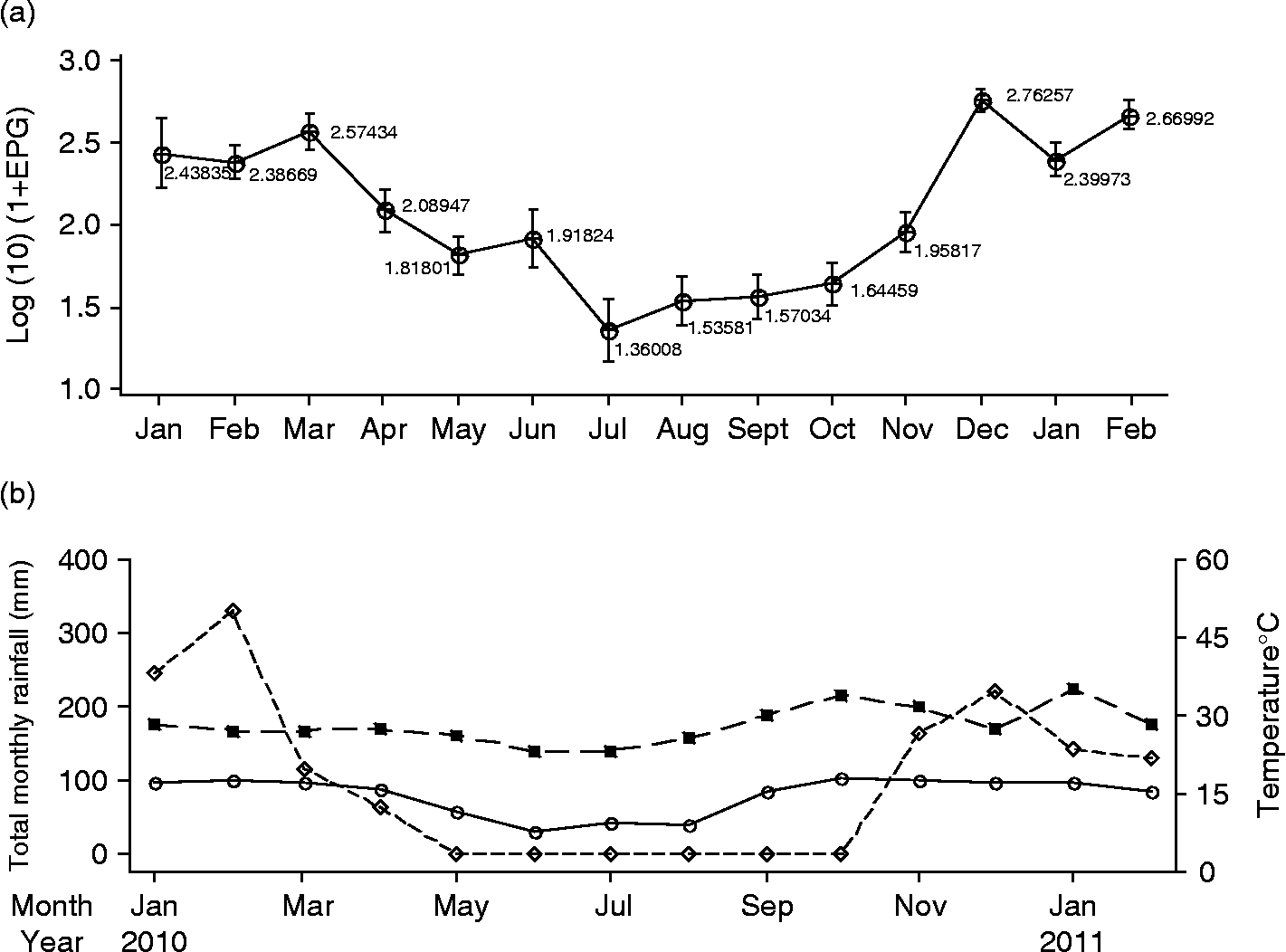
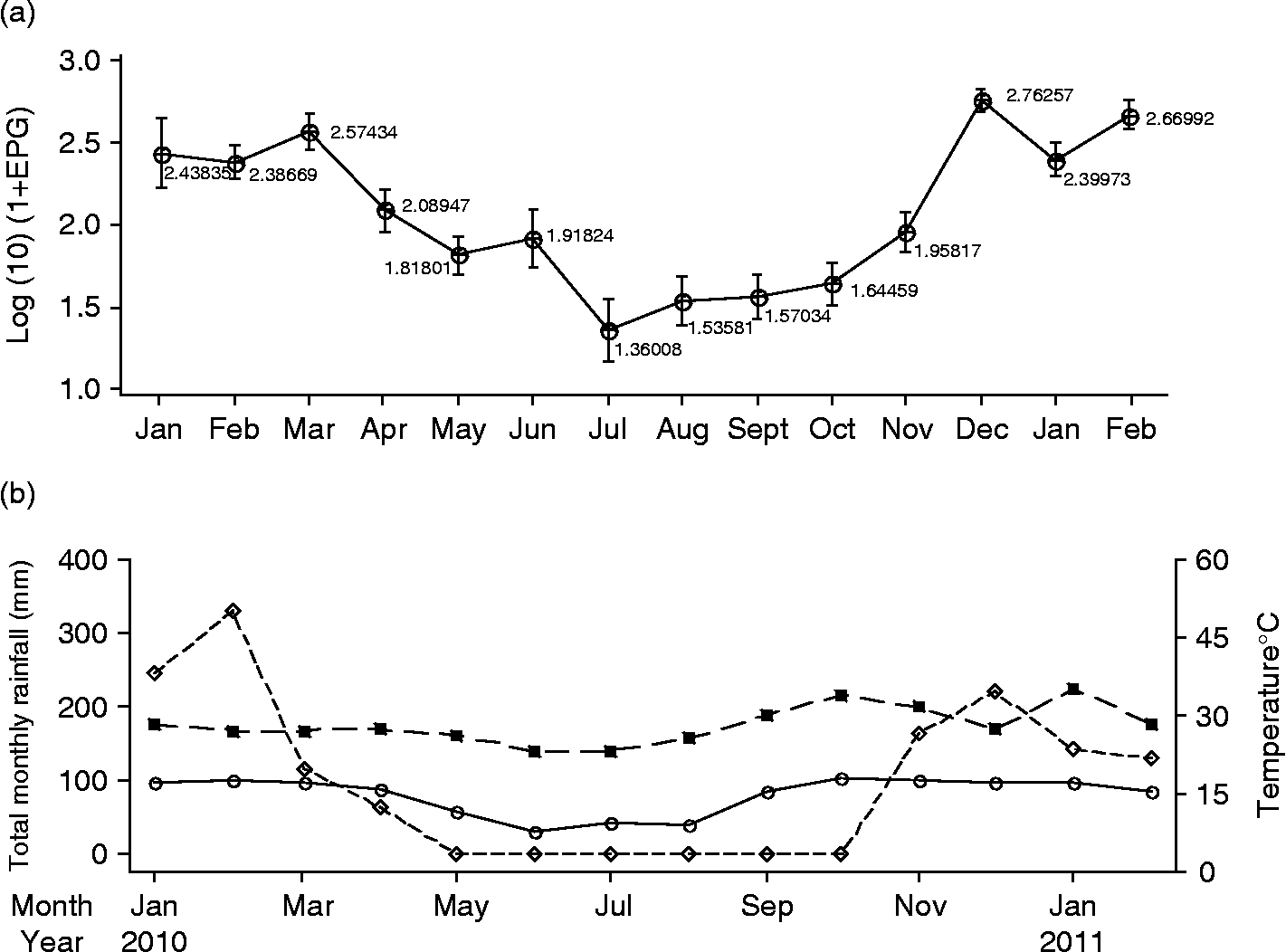
Total monthly rainfall ranged from a high of 331.7 mm in February 2010 to no rainfall during the dry months from May to October 2010 (fig. 1b). Mean monthly maximum temperatures ranged from 23.4°C in June in the cool dry season to 34.3°C in October in the hot dry season. Mean monthly minimum temperatures ranged from 7.9°C in June to 18.3°C in October (fig. 1b).
(a) Interval plot of the mean monthly Log10 (1+EPG) transformed faecal egg counts from captive wild impala from a private game facility in Lusaka. (b) Meteorological data: monthly rainfall (⋄), monthly maximum temperature (■), and mean monthly minimum temperature (○) from January 2010 to February 2011 inclusive.
Prevalence of helminths in faecal samples and seasonality of infection
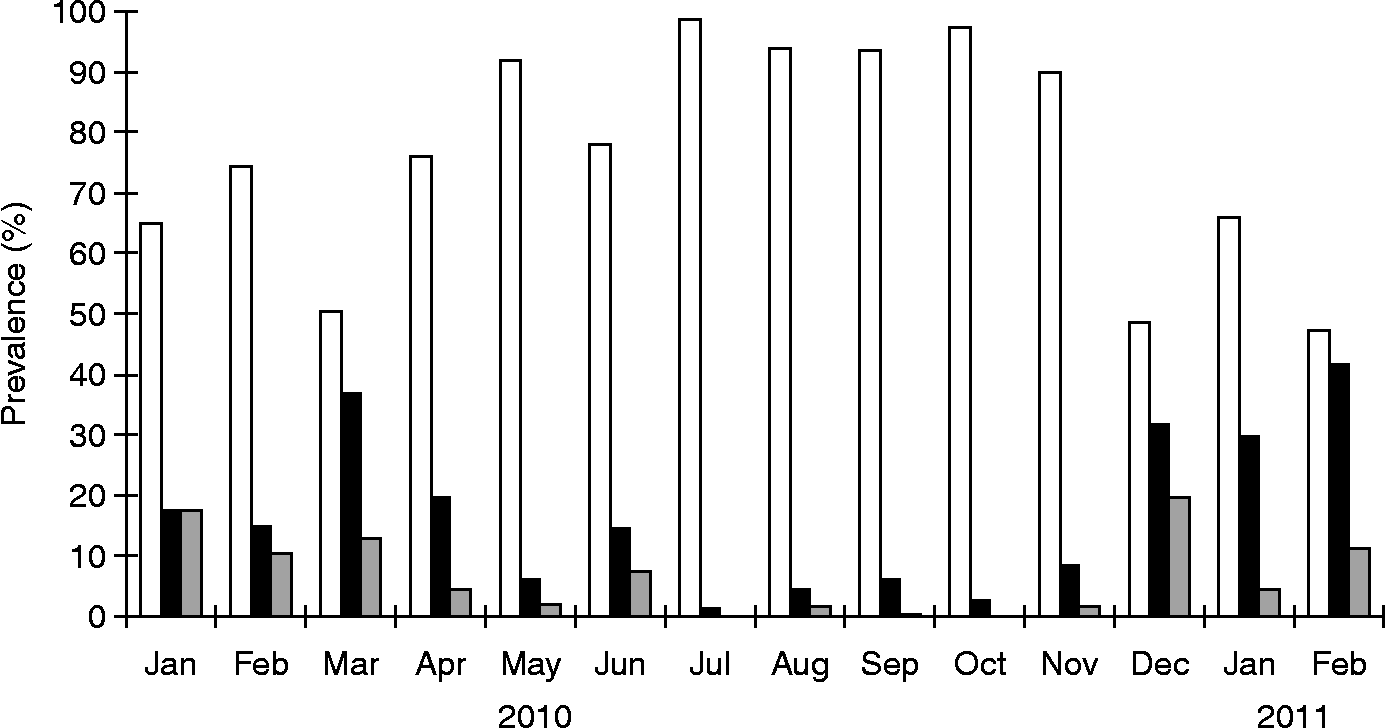
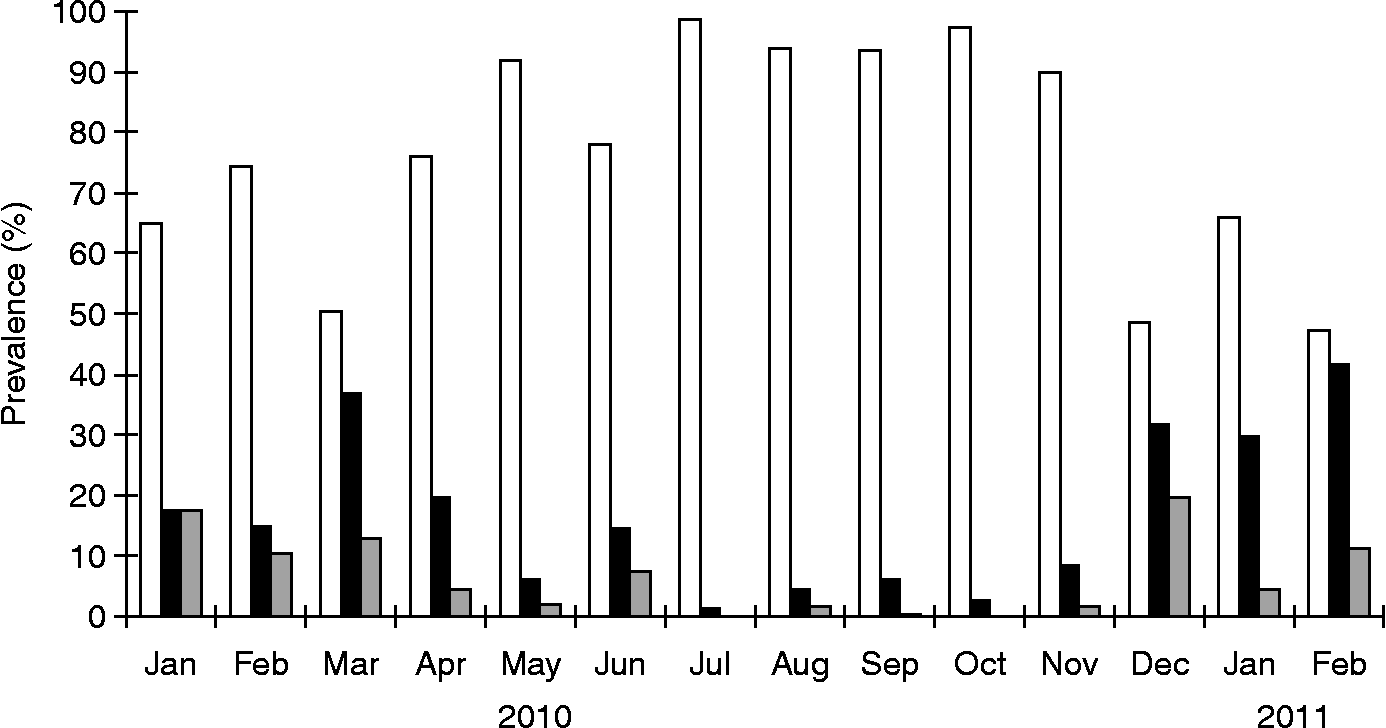
The overall prevalence of faecal nematode eggs ranged from 72.4% (63/87) during the month of July to 100% during the rainy season months of December (169/169) to February (150/150) (see fig. 4). Faecal samples with FEC lower than 500 were found to have a prevalence that ranged between 48.52% and 98.87% in December and July respectively. However, lower prevalence of FECs higher than 1500 ranging from 0% (July and October; 0/87 and 0/145 respectively) to 19.53% (December; 33/169) were recorded (fig. 2). The chi-square test performed to determine whether there were seasonal variations in the prevalence of output of faecal nematode eggs showed significant seasonal differences (χ2 = 112.4, df = 2, P < 0.01). Significant differences were observed between the rainy season and both the hot dry season (χ2 = 105.9, df = 1, P < 0.01) and the cool dry season (χ2 = 81.0, df = 1, P < 0.01). There were, however, no significant differences between the hot dry season and the cool dry season (χ2 = 0.835, df = 1, P = 0.36).
Monthly prevalances of the three categories of faecal egg counts (FECs) in captive wild impala in a private game facility in Lusaka, Zambia: %FEC < 500 (□), %FEC 500–1500 (■), %FEC >1500 ( ) from January 2010 to February 2011 inclusive.
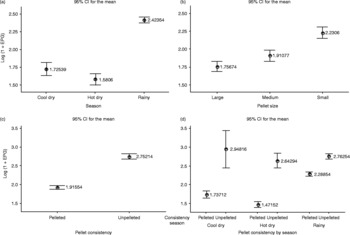
Analysis of variance of mean monthly Log10(EPG +1) transformed nematode FECs showed distinct seasonal variations, with significant differences being observed between the rainy season and both the cool dry and the hot dry seasons, but no significant difference was found between the cool dry and the hot dry season (F 2,1945 = 226.1, P < 0.01; cool dry season mean ± SD 1.73 ± 0.95, hot dry season mean ± SD 1.58 ± 0.90, rainy season mean ± SD 2.42 ± 0.70) (fig. 3a). The highest and the lowest geometric mean monthly FECs were 575 and 20, recorded in the months of December 2010 and July 2010 respectively. The highest EPG from an individual animal was 15,850 recorded in the month of February 2011.
Interval plots of the 95% confidence interval of the mean of Log10(1+ EPG) transformed faecal egg counts (FECs) according to (a) season, (b) faecal pellet size, (c) overall faecal consistency and (d) faecal pellet consistency by season.

The percentage of faecal samples that were unpelleted ranged from 0% (0/87) in the month of July 2010 to 49.7 (84/169) in the month of December 2010. No faecal samples were frankly diarrhoeic during the entire study period. There were significant differences in the percentage of unpelleted faecal samples among seasons (χ2 = 117.2, df = 2, P < 0.01) with the rainy season having the highest percentage (23.7%) followed by the hot dry season (9.6%), and the cool dry season having the lowest (3.8%).
There was an association between faecal consistency and faecal egg counts, with unpelleted faeces having significantly higher FECs than the pelleted ones (F 1,1811 = 244.2, P < 0.01, pelleted mean ± SD 1.91 ± 0.88, unpelleted mean ± SD 2.75 ± 0.60) (fig. 3c). FECs for unpelleted faecal samples showed no significant seasonal difference (F 2,292 = 3.60, P = 0.08, cool dry season mean ± SD 2.95 ± 0.66, hot dry season mean ± SD 2.64 ± 0.30, rainy season mean ± SD 2.76 ± 0.57) (fig. 3d). However, pelleted faecal samples showed significant seasonal differences in FECs, with the rainy season having higher mean FECs than both the cool dry and the hot dry seasons, and the hot dry season having lower mean FEC than the cool dry season (F 2,1514 = 152.1, P < 0.01, cool dry season mean ± SD 1.74 ± 0.90, hot dry season mean ± SD 1.47 ± 0.84, rainy season mean ± SD 2.29 ± 0.73) (fig. 3d). Overall seasonal variation in FECs existed due to the seasonal differences in FECs of the pelleted faecal samples (figs 3a and 3d).
Tukey's HSD test showed significant differences in FECs among the three sizes of pellets, with pellet size being inversely associated with FEC (F 2,1445 = 27.3, P < 0.01, small pellets mean ± SD 2.23 ± 0.63, medium pellets mean ± SD 1.91 ± 0.91, large pellets mean ± SD 1.76 ± 0.93) (fig. 3b).
The study demonstrated a significant correlation between monthly precipitation and mean monthly faecal egg counts (r = 0.77; P = 0.002, n = 14). There was also a strong correlation between prevalence (proportion positive) of gastrointestinal helminth eggs and mean monthly Log10 transformed FECs (r = 0.937; P < 0.01, n = 14).
Eggs of Strongyloides spp. were present only during the rainy season, with FECs ranging from 200 to 13,100 EPG. The highest prevalence was 5.3% (6/113) during the month of January 2011. Monezia eggs were only detected twice, in the months of March and June in a single faecal sample in each of these months. Thus the data for these two helminth species were not analysed further. No trematode eggs were seen in the faecal samples examined during this study nor were any lungworms identified from Baermannization of fresh faeces.
Examination and measurement of third-stage larvae from coproculture revealed three parasite genera, namely Trichostrongylus, Haemonchus and Strongyloides. Some third-stage larvae were indistinguishable.
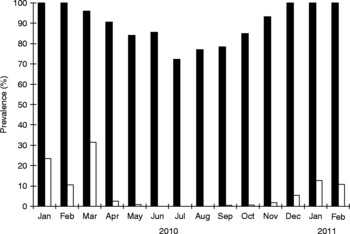
Coccidian parasites were detected infrequently in faecal samples, with low monthly prevalences ranging from 0% during the dry season to 31.6% (56/177) predominantly in the rainy season (fig. 4). The chi-square test showed significant seasonal effect on the prevalence of coccidian parasites in the faeces of captive impala (χ2 = 102.7, df = 1, P < 0.01).
Monthly prevalences of gastrointestinal helminth eggs (■) and coccidian oocysts (□) in captive wild impala in a private game facility in Lusaka, Zambia from January 2010 to February 2011 inclusive.

Post-mortem results
During the study period, nine impalas died but only four necropsies were performed. The animals that were necropsied died during the months of June, July, November and December 2010. Of the four necropsies performed, only one revealed adult worms in the gastrointestinal tract and the other necropsies did not reveal any adult worms. The species of worms recovered from the single impala were Haemonchus (n = 36) and Trichostrongylus spp. (n = 87). Three of the impala that were necropsied (including the one found with helminths) were diagnosed with pneumonic pasteurellosis. The necropsy of the other impala did not reach any conclusive diagnosis.
Discussion
Nematode faecal egg counts in this study showed strong seasonal trends related to precipitation, with peak helminth egg counts observed during and soon after peak rainfall. This study documents, for the first time, these seasonal trends and shows that seasonal differences in EPGs are largely due to differences in the FECs of the pelleted faeces since there are no seasonal differences in FECs of high-EPG unpelleted faeces. This seasonal relationship between FEC and rainfall is similar to findings in captive wild gazelle (Gazella cuvieri) in a semi-arid region of Spain (Ortiz et al., Reference Ortiz, Ruiz de Ybanez, Abaigar, Goyena, Garijo, Espeso and Cano2006), wild bushbuck (Tragelaphus scriptus) in Uganda (Apio et al., Reference Apio, Plath and Wronski2006) and other ungulates in Namibia (Turner & Getz, Reference Turner and Getz2010). The seasonal pattern of FECs observed in the study could be attributed to the dry season limiting the survival and development of the free-living stages of the helminths and thus resulting in reduced parasite uptake by the captive impala. The increased ultraviolet radiation due to longer daytime hours during the hot dry months could also limit the development of the extra-host stages, as has been shown by van Dijk et al. (Reference van Dijk, Louw, Kalis and Morgan2009). During harsh environmental conditions, hosts also shed less infective material into the environment due to arrested larval development and reduced fecundity of worms (Turner & Getz, Reference Turner and Getz2010). The warm wet season would lead to a resumption of increased parasite transmission due to favourable environmental conditions for larval survival.
The month of December in this study also demonstrated a typical ‘rain rise’ in FEC as described in impala in Uganda by Ocaido et al. (Reference Ocaido, Siefert and Baranga1999). This may be attributed to early rains rehydrating adverse environment-resistant infective larvae and the favourable environment reactivating hypobiotic larvae, thus increasing infection pressure. There would also be a higher number of parasitically naïve young impala that would shed more worm eggs (Colditz et al., Reference Colditz, Gray and Eady1996) and the subsequent drop in FEC would be attributed to increased immunity, ‘self-cure’ in these naïve impala. This may be seen in this study where 38 neonates were born during the rainy season thereby increasing the proportion of naïve impala.
The mean monthly FECs from this study are higher than findings by Apio et al. (Reference Apio, Plath and Wronski2006) in Uganda, but comparable to findings by Ocaido et al. (Reference Ocaido, Siefert and Baranga1999) in impalas in Uganda. The difference between the mean monthly FECs of impala from this study and those from bushbuck in Uganda may be attributable to the fact that the bushbuck were not in captivity and they preferentially browse rather than graze, whereas the converse is true for the impala in this study. This may increase the uptake of infective larvae by the impala compared to bushbuck and therefore result in higher worm burdens. Impala are both grazers and browsers in the wild but captivity in environments with limited browse makes them graze more and thus increases their potential risk for infective larval uptake.
The finding of very low prevalence of eggs of the Strongyloides spp. and predominantly in the rainy season by this study is similar to findings by Apio et al. (Reference Apio, Plath and Wronski2006) in bushbucks in Uganda and Ortiz et al. (Reference Ortiz, Ruiz de Ybanez, Abaigar, Goyena, Garijo, Espeso and Cano2006) in gazelle (Gazella dama mhorr) in Spain. The higher prevalence of Strongyloides in the rainy season could be due to the fact that the rainy season may also favour trans-mammary transmission to the parasitically naïve neonates as well as enhancing transcutaneous transmission due to the moist skin of the impala resulting from the damp environmental conditions. Following the infection during the rainy season, the infective burdens would be reduced drastically due to the strong host protective immunity that is known to occur in response to Strongyloides infestation (Turner & Getz, Reference Turner and Getz2010).
The dry season FEC values and proportion of positives from this study are higher than findings by other similar studies in Africa (Ocaido et al., Reference Ocaido, Siefert and Baranga1999). A number of possible reasons for this include higher stocking densities, inbreeding, change in feeding habits and low dietary quality and crude protein. Animals that are territorial are known to have higher strongyle burdens (Ezenwa, Reference Ezenwa2004c) and impala in captivity often live in limited spaces that may mimic extreme territorial behaviour and may account for the high nematode FECs observed throughout the year in this study. The impala is equivalent to 0.15 livestock units (LSU) (Rowe-Rowe, Reference Rowe-Rowe1999) thus the stocking density of the study area was higher than the recommended ecological capacity of the park of 80–100 impala, and high stocking densities due to captivity have been shown to increase parasite transmission in captive wild ungulates in Kenya (Ezenwa, Reference Ezenwa2004b). Although overall, the FECs in this study were high, there was no obvious adverse effect on the impala in terms of morbidity or mortality.
Inbreeding has been associated with increased nematode burdens (Anderson, 1983 and Cassinello et al., 2001, cited by Goossens et al., Reference Goossens, Dorny, Boomker, Vercammen and Vercruysse2005) by increasing susceptibility to gastrointestinal nematodes. The impala in this study were heavily inbred, with no new genetic material being introduced into the herd for the past 21 years. This could also have contributed to the high FECs observed even during the dry hot season. Low dietary crude protein during dry seasons has also been shown to increase host susceptibility to helminths and result in increased nematode faecal egg output (Ezenwa, Reference Ezenwa2004a; Louvandini et al., Reference Louvandini, Veloso, Paludo, Dell'Porto, Gennari and McManus2006). Thus, the depreciating quality of graze and forage during the dry season in this study could have resulted in the higher than expected faecal egg output observed. Further, in the wild, during the dry season impala tend to shift their feeding habit away from grazing towards browsing (Cordon et al., Reference Cordon, Cordon, Lee-Thorp, Sponheimer, de Ruiter, Sealy, Grant and Fourie2007) and this may have an indirect effect of reducing their infective larval uptake. However, the impala in thus study predominantly graze throughout the year and this may account for the high FECs seen during the dry season in this study. This could have been further exacerbated by the low sward height that prevails during the dry seasons, which could have perpetuated helminth re-infestation, as has been shown by some researchers (Judge et al., Reference Judge, Greig, Kyriazakis and Hutchings2005).
Our study shows that the pelleted faeces are the ones that contribute most significantly to seasonal variation in mean FEC output, with the unpelleted faeces having statistically similar mean FECs in the different seasons. It would have been expected that during the rainy season, the unpelleted faeces would have a significantly higher EPG than the unpelleted faeces from the dry season – this was, however, not the case. No logical explanation could be ascribed for this paradoxical ‘ceiling’ in the mean monthly/seasonal EPG for unpelleted faeces throughout the study. It is likely that the softening of the faeces was due to an increase in nematode burden as FECs for unpelleted faecal samples were consistently higher than those of pelleted faecal samples, regardless of the season of the year. Though the dry matter content of faeces is influenced by diet, all the impalas in this study were kept under the same conditions and therefore differences in the consistency of the faeces could not be attributed to the type of feed.
The lack of adult worms in the gastrointestinal tracts of the impala that were necropsied could have been attributed to the autolysis of worms that occurs within a few hours after death in hot tropical climates, since most animals were only reported as having died in the mornings but could have died the previous evening. Post-mortems would subsequently only be done, at the earliest, 1 h after receiving such a report.
This study was not able to assess risk factors such as age and sex, since the animals are not penned and individual faecal samples that were collected could not be ascribed to a particular animal. However, with the caveat that young animals excrete smaller pellets, this study showed that the FECs in small pellets are significantly higher than medium and large-sized ones and this would therefore imply that younger impala have higher FECs than older ones.
Unlike findings in bushbuck by Apio et al. (Reference Apio, Plath and Wronski2006) in Uganda, this study demonstrated very low levels of Eimeria and Moniezia species in the faeces of impala. Coccidian parasites were seen predominantly during the rainy season and no coccidian parasite eggs were demonstrated during the dry seasons of the year. The high prevalence of coccidian gastrointestinal parasites could also be attributed to a peri-parturient rise, as shown by Apio & Wronski (Reference Apio and Wronski2004) in bushbuck in Uganda. These authors attributed this rise to lowered host immunity due to peri-parturient endocrine changes in the presence of stress factors. In Zambia the rainy season coincides with the period when impala drop their young; these parasitically naïve young would thus be born into an environment with high infective larval and oocyst burdens, resulting in high parasitic burdens in these neonates until they develop immunity and self-cure. Pasture larval quantification would have been a useful adjunct to this study and would have yielded useful information on seasonal pasture larval burdens and the risk these pasture burdens pose to the captive impala.
It is proposed that anthelmintic treatment in these captive wild impala should be limited to situations where clinical disease occurs and is confirmed by high EPGs. In such instances effective control of gastrointestinal helminths would require a minimum of three anthelmintic treatments per annum. It is proposed that, in order to break the nematode transmission cycle, anthelmintic treatments be done in November during the pre-parturient period, then when calving is completed at the beginning of the year in February and then midway through the dry season to eliminate hypobiotic larvae. A strategic deworming of the impalas just prior to the calving season would reduce peri-parturient EPG rises and the subsequent infective pressure on the parasitically naïve young impala. A reduction in stocking density to 90 impala would also reduce infective helminth pressure. The studied game facility also has too many males for the number of breeding females and this may put undue stress on the herd during the breeding season, due to excessive fighting during competition for females. This may lead to lowered immunity of herd members and increased susceptibility to infections of the herd. A reduction in the number of males would reduce such stress. The introduction of new genetic material via new breeding males will reduce the possibility of the herd developing increased susceptibility to gastrointestinal nematodes due to inbreeding.
Acknowledgements
The authors are grateful for the diligent technical assistance of Mr M. Masuku and to Michelle Nalubamba for data entry. The authors are also grateful to the Zambia Wildlife Authority (ZAWA) and Lafarge management for granting permission to carry out the sampling and to Mr Bwalya for facilitating the sampling.