Introduction
Stigma and discrimination against people with mental illness is a global problem with considerable public health significance. Low levels of knowledge, stigmatizing attitudes and discriminatory behaviour are associated with lower rates of help-seeking, undertreatment and social exclusion of people with mental health problems (Rusch et al. Reference Rusch, Angermeyer and Corrigan2005; Thornicroft, Reference Thornicroft2008; Patel et al. Reference Patel, Maj, Flisher, DE Silva, Koschorke and Prince2010). At the societal level, stigma contributes to general social and economic burden through lost productivity and lower rates of employment and income (Sharac et al. Reference Sharac, McCrone, Clement and Thornicroft2010). At the individual level, people with mental health problems are affected by both public stigma and self-stigma. Self-stigma, a process in which a person with a mental illness applies and internalizes stigmatizing attitudes and beliefs held by the public, is linked to lower self-efficacy (Link et al. Reference Link, Struening, Neese-Todd, Asmussen and Phelan2001; Corrigan et al. Reference Corrigan, Watson and Barr2006), worse functioning (Alonso et al. Reference Alonso, Buron, Rojas-Farreras, de Graaf, Haro, de Girolamo, Bruffaerts, Kovess, Matschinger and Vilagut2009), less treatment seeking (Conner et al. Reference Conner, Copeland, Grote, Koeske, Rosen, Reynolds and Brown2010) and higher rates of hospitalizations (Rusch et al. Reference Rusch, Corrigan, Wassel, Michaels, Larson, Olschewski, Wilkniss and Batia2009).
The many levels at which stigma operates make efforts at reducing stigma a challenging and multifaceted endeavour. In response, several countries are planning (e.g. Wales, Denmark and The Netherlands) or have already launched (Australia, England, Ireland, New Zealand, Scotland and the USA) large anti-stigma programmes aimed at the general public (Vaughan & Hansen, Reference Vaughan and Hansen2004; Dunion & Gordon, Reference Dunion and Gordon2005; Henderson & Thornicroft, Reference Henderson and Thornicroft2009; Mental Health Commission of Canada, 2009; Bring Change 2 Mind, 2010). The expectation is that improving mental health knowledge, attitudes and behaviour among the general public could disrupt the negative cycle of stigma and improve conditions for people with mental health problems both directly and indirectly. Improved behaviours toward, and support for, people with mental health problems should reduce individual experiences of discrimination and indirectly facilitate reductions in self-stigma. The results of such mass interventions may also increase support at the political or legislative level, thus leading to subsequent improvements in the quality of life of people with mental illness through a variety of avenues.
There is, however, little research on how public stigma directly impacts the stigma, perceived and internalized by people with a mental health problems. Nevertheless, some population survey data suggest that public attitudes may be an important target for anti-stigma interventions. Mojtabai (Reference Mojtabai2010) suggests that living in a region with high levels of stigmatizing or non-stigmatizing attitudes may influence the individual's attitude towards people with mental health problems. Importantly, Mojtabai also suggested that there is a distinction between types of stigmatizing attitudes. For instance, whereas perceiving people with mental illness as dangerous or the belief that people with mental illness will never recover was associated with a higher likelihood of intended help-seeking, the belief that people with mental illness were blameworthy or unpredictable was associated with a lower likelihood of intended help-seeking among the general public. Jorm and colleagues have also developed a large body of literature around mental health literacy that suggests that knowledge about treatments or ability to identify early signs of mental health problems may be especially useful for improving access to and help-seeking of evidence-based treatments (Jorm et al. Reference Jorm, Korten, Jacomb, Christensen, Rodgers and Pollitt1997, Reference Jorm, Christensen and Griffiths2006; Kelly et al. Reference Kelly, Jorm and Wright2007). Moreover, Pescosolido et al. (Reference Pescosolido, Martin, Long, Medina, Phelan and Link2010) have elegantly described the complexity of specific types of public knowledge and attitudes suggesting that increases in public support for medical treatment of mental illness and attributing mental illness to neurobiological causes were not associated with reductions in stigma. Angermeyer & Matschinger (Reference Angermeyer and Matschinger2005) have described similar population trends in Germany. In their study, correctly labelling a case vignette with major depression or schizophrenia was associated with more stigmatizing attitudes about perceived responsibility for people with mental illness and increased desire for social distance. These population surveys provide initial indications of the association between certain types of mental health knowledge and attitudes and reductions in stigma; however, they do not reflect direct experiences of consumers/service users.
Evidence for specific programme elements that contribute definitively to reductions in stigma among consumers/service users is crucial for the planning of mass anti-stigma interventions; however, information about what leads to meaningful reductions in stigma is lacking. A combined approach focusing on knowledge, attitude and behaviour change has been highlighted by the National Institute for Health and Clinical Excellence (NICE), a UK-based institution (NICE, 2007); however, few data are available to guide the messages used for population interventions. A recent study by Clement et al. (Reference Clement, Jarrett, Henderson and Thornicroft2010) supports ‘recovery-oriented’ messages and ‘see the person’ messages for anti-stigma campaigns; yet, due to lack of research evidence, recommended messages were determined by expert consensus. Other research increasingly supports facilitation of social contact between people with and without mental health problems at the population level (London & Evans-Lacko, Reference London and Evans-Lacko2010; West et al. Reference West, Hewstone and Holmes2010). Experimental studies show that social contact may reduce anxiety or increase identity complexity associated with people with mental illness (Paolini et al. Reference Paolini, Hewstone, Cairns and Voci2004; Page-Gould et al. Reference Page-Gould, Mendoza-Denton and Tropp2008; Schmid et al. Reference Schmid, Hewstone, Tausch, Cairns and Hughes2009), but most data are derived from experimental settings or based on retrospective self-report. Identity complexity is defined by Schmid et al. (Reference Schmid, Hewstone, Tausch, Cairns and Hughes2009) as ‘more complex, inclusive and differentiated cognitive representations of one's multiple ingroups’ and has been associated with more openness and social tolerance and less intergroup bias.
Building on previous research, the aim of this study was to investigate specific factors among the general public and their association with perceived and internalized stigma among individuals with mental health problems. Using two large international datasets, we assessed population-level factors, discussed previously, that have been postulated as relevant for reducing stigma and their association with self-stigma among consumers/service users. Among the general public, we explored the impact of factors related to specific knowledge (perceived access to information about mental health), attitudes (specifically around dangerousness, unpredictability, blame and recovery) and behaviours (comfort when talking to someone with a mental health problem, help-seeking and use of antidepressants) and the relationship of these factors with individual reports of self-stigma, perceived discrimination and empowerment among individuals with a mental illness.
Method
Data sources
Two sets of data were combined to investigate the relationship between public stigma at the country level (Eurobarometer; European Commission, 2006, 2010) and experiences of discrimination among people with mental illness at the individual level [the Global Alliance of Mental Illness Advocacy Networks (GAMIAN-Europe) survey; Brohan et al. Reference Brohan, Elgie, Sartorius and Thornicroft2010a , Reference Brohan, Gauci, Sartorius and Thornicroft2011). Data at both the individual and population levels were available for 14 countries: Belgium, Czech Republic, Estonia, Greece, Spain, France, Italy, Lithuania, Malta, Poland, Romania, Slovenia, Finland and Sweden.
Eurobarometer (Eurobarometer Mental Health 2010 and Eurobarometer Mental Well-Being 2006)
Survey design and sampling details for the Eurobarometer surveys are described in detail elsewhere (European Commission, 2006, 2010). In brief, face-to-face interviews were performed among European Union (EU) citizens (29 248 in 2006 and 26 800 in 2010) residing in the 27 member states (approximately 1000 individuals/country). The initial mental health Eurobarometer survey was conducted in 2006 (fieldwork carried out between 7 December 2005 and 11 January 2006). It was developed in response to a framework for comprehensive action established by the World Health Organization (WHO) European Ministerial Conference in 2005. A second survey assessing attitudes towards mental illness and mental health treatment seeking was administered in 2010 (between 26 February and 17 March 2010). All participants were recruited through multistage random probability sampling. Participants were representative of residents aged ⩾15 years in the country and the EU.
GAMIAN-Europe dataset
Individual-level data came from a cross-sectional survey disseminated through member organizations of GAMIAN-Europe. GAMIAN-Europe is a consumer-led organization representing the interests of individuals with mental illness in 37 countries and 80 national associations. Surveys were collected from consumers/service users in 20 countries in January and July 2007 (see Acknowledgements section for information about participating organizations) among individuals with a self-reported diagnosis of depression, bipolar disorder or schizophrenia/other psychotic disorder.
Measures
Population/country-level variables (Eurobarometer survey)
We used data from the Eurobarometer surveys to describe overall population prevalence of: help-seeking for mental health problems (2006), attitudes towards mental illness (2006), access to mental health-related information (2006), use of antidepressants (2010) and comfort when talking to someone with a mental health problem (2010).
Help-seeking for mental health problems
Actual help-seeking was assessed in 2006 using the following question: ‘In the last 12 months, did you seek help from a professional because of a psychological or emotional problem?’
Attitudes
Attitudes towards people with mental illness were assessed from the Eurobarometer 2006 data using the following items: (1) people with psychological or emotional health problems constitute a danger to others; (2) people with psychological or emotional health problems are unpredictable; (3) people with psychological or emotional health problems have themselves to blame; and (4) people with psychological or emotional health problems never recover. Participants were asked how much they agreed with each statement. Response options were on a four-point Likert scale from ‘totally disagree’ to ‘totally agree’. The percentage agreeing to the item was determined by assessing the proportion endorsing ‘totally agree’ or ‘tend to agree’. Responses were coded so that agreeing with the statement indicated a more stigmatizing attitude.
Access to information
Perceived access to mental health-related information was assessed by asking participants: ‘How easy or difficult do you find it is to find information on psychological or emotional health problems and how to deal with them?’ Response options included: very easy, fairly easy, fairly difficult, very difficult and don't know. Participants who endorsed ‘very’ or ‘fairly easy’ were categorized as having access to information.
Antidepressant use
Respondents were also asked about antidepressant use, specifically: ‘Have you taken any antidepressants in the last 12 months?’
Comfort when talking to someone with a mental health problem
The Eurobarometer 2010 data were used to assess comfort among the general public in talking to someone with a mental health problem. Specifically, respondents were asked: ‘Which of the following two statements best describe how you feel: (1) You would find it difficult talking to someone with a significant mental health problem? or (2) You would have no problem talking to someone with a significant mental health problem?’ Those who endorsed the second statement were categorized as feeling comfortable when talking to someone with a mental health problem.
Individual-level variables collected from people with mental illness (GAMIAN-Europe survey)
In addition to collecting sociodemographic information (i.e. age, gender, education), the GAMIAN-Europe survey asked participants about their experiences of stigma and discrimination using the following three measures.
-
(1) Self-stigma was measured using the Internalized Stigma of Mental Illness Scale (ISMI). The ISMI is a 29-item scale that assesses mental health consumers/service users' experiences of self-stigma. A higher score indicates higher levels of self-stigma. High levels of internal consistency (0.90) and test–retest reliability (r=0.92) have been demonstrated for the ISMI (Ritsher & Phelan, Reference Ritsher and Phelan2004). Total self-stigma score refers to a summary of four of the five ISMI subscales (i.e. alienation, stereotype endorsement, perceived discrimination and social withdrawal). The fifth subscale, ‘stigma resistance’ (comprising five items) was excluded based on recent research that suggests that ‘stigma resistance’ represents a distinct concept (Lysaker et al. Reference Lysaker, Roe and Yanos2007; Sibitz et al. Reference Sibitz, Unger, Woppmann, Zidek and Amering2011). This approach was also taken by Brohan et al. (Reference Brohan, Elgie, Sartorius and Thornicroft2010a , Reference Brohan, Gauci, Sartorius and Thornicroft2011). Each ISMI item is rated on a four-point scale ranging from ‘strongly disagree’ to ‘strongly agree’. Total ISMI scores (based on a summed average of the four subscale scores) can range from 1 to 4.
-
(2) Perceived discrimination was measured on the Perceived Devaluation and Discrimination Scale (PDD). The PDD is a 12-item, unidimensional, scale that measures the extent to which a person believes that most people will devalue or discriminate against someone with a mental (Link, Reference Link1987). This scale has been very widely used in the measurement of perceived stigma (Brohan et al. Reference Brohan, Slade, Clement and Thornicroft2010b ). Similar to the ISMI, each item is rated on a four-point scale. A higher score indicates higher levels of perceived discrimination (range of scores: 1 to 4).
-
(3) Empowerment was measured using a shortened version of the Boston University Empowerment Scale (BUES). This 17-item, shortened BUES was designed to operationalize ‘personal empowerment’ from the perspective of mental health consumers. It consists of the self-esteem/self-efficacy (SESE) and power/powerlessness (PP) subscales of the original 28-item BUES scale (Rogers et al. Reference Rogers, Chamberlin, Ellison and Crean1997). In this paper, total BUES score refers to a total score generated from the these two subscales. Cronbach's α for the shortened BUES indicates high internal consistency (α=0.86, n=261) (Ritsher & Phelan, Reference Zeger, Liang and Albert2004). A higher score on this measure indicates higher levels of empowerment (range of scores: 1–4).
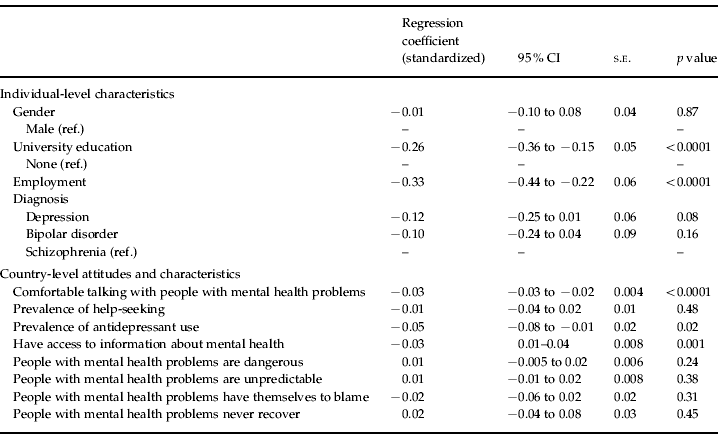
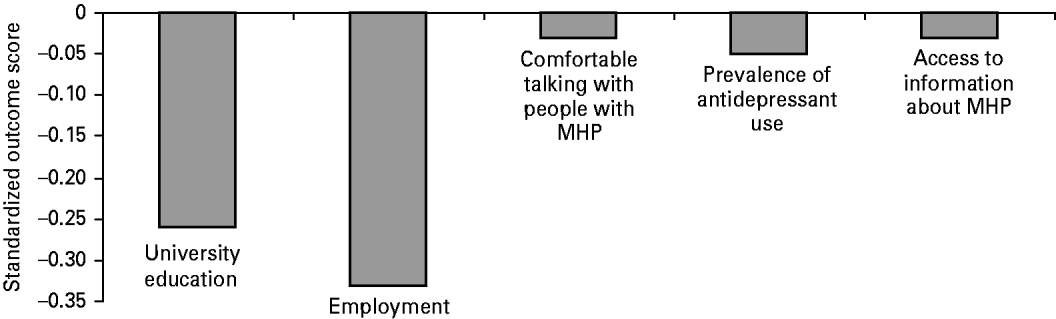
Significant individual- and country-level predictors of self-stigma as measured by the total standardized Internalized Stigma of Mental Illness Scale (ISMI) score (multivariable linear regression) (n=1811). MHP, Mental health problems.
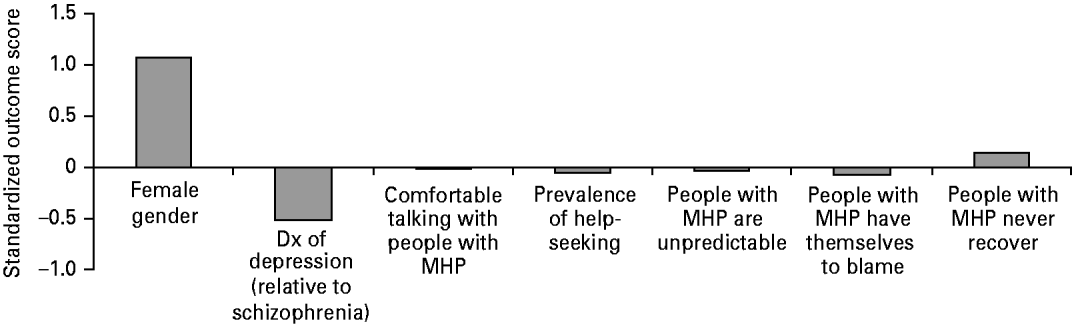
Signficant individual- and country-level predictors of perceived discrimination as measured by the total standardized Perceived Devaluation and Discrimination Scale (PDD) score [multivariable linear regression generalized estimating equations (GEE) parameter estimates] (n=1812). MHP, Mental health problems.

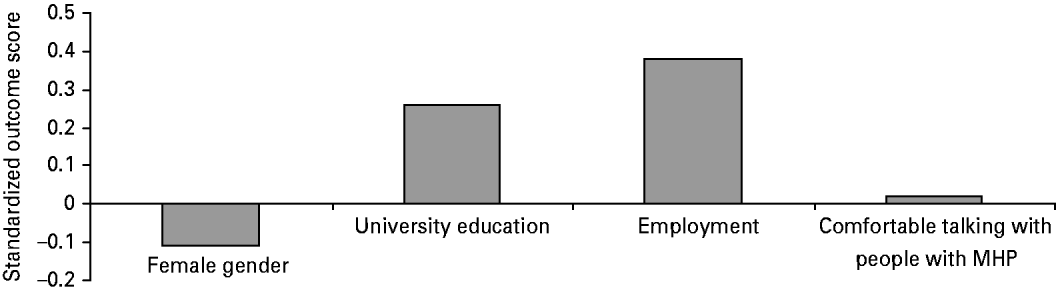
Significant individual- and country-level predictors of empowerment as measured by the total standardized Boston University Empowerment Scale (BUES) score [multivariable linear regression generalized estimating equations (GEE) parameter estimates] (n=1805). MHP, Mental health problems.

Statistical analysis
We calculated basic descriptive statistics for all the variables included in the statistical model. Four countries (Finland, Sweden, Poland and Croatia) participating in the GAMIAN study did not collect data on age. As these data were not ‘missing at random’, age is only included in the descriptive statistics and not in the multivariate models.
Three separate multivariable linear regression models examined the effect of individual and population variables on self-stigma (as measured by the total standardized ISMI score), perceived discrimination (as measured by the total standardized PDD score) and empowerment (as measured by the total standardized BUES score). Independent variables at the individual level included: gender, education, employment and age. Independent variables at the population level included: help-seeking, antidepressant use, endorsement of attitudes regarding dangerousness, recovery, blameworthiness and unpredictability of people with mental illness, and comfort in talking to someone with a mental health problem. Population-level variables were computed as an average rating for each country. Eurobarometer sampling weights were used to estimate the country-level averages. We used generalized estimating equations (GEE) with the robust variance estimates to model within-country dependent-group correlations (e.g. individuals residing in a country are probably correlated due to homogeneity in social/political context, legislation and policies, access to mental health care and other cultural beliefs). In the absence of theoretical reasons for specifying a correlation matrix structure, we used an unstructured correlation matrix. The use of GEE provides robust parameter estimates under an unstructured correlation matrix (Zeger et al. Reference Zeger, Liang and Albert1988). Analyses were carried out using Stata version 10 (Stata Corporation, USA) and SAS version 9.1 (SAS Institute Inc., USA).
Results
Participant characteristics
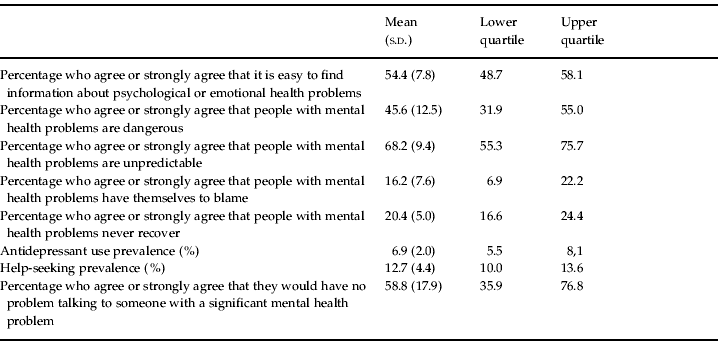
The 1835 participants who participated in the GAMIAN survey had a mean age of 43.3 years and the majority of the participants were female. A total of 43% of the participants had some college or university education and 43% of the respondents were considered to have some form of employment, that is either working full time (17%), part-time (11%), enrolled as a student (3%) or volunteering (2%). Overall mean self-stigma (ISMI), perceived discrimination (PDD) and empowerment (BUES) scores were 2.2, 2.8 and 2.6 respectively. The overall response rate in these 14 countries was 58%, with the highest response rate in Lithuania (86%) and the lowest response rate in France (26%). Of note, we examined whether response rate was associated with any of the stigma outcomes and found a small but statistically significant correlation between country response rate and self-stigma (r=0.15, p<0.001), perceived discrimination (r=0.06, p=0.01) and empowerment (r=−0.12, p<0.001). A summary of the country-level characteristics is presented in Table 1.
Summary of country-level (Eurobarometer) variables

s.d., Standard deviation.
Predictors of self-stigma (ISMI)
Individual-level factors among consumers/service users that were associated with less self-stigma included being employed and having a university education. On average, individuals who were employed scored about 0.33 standard deviation (s.d.) units lower and those who had a university education scored about 0.26 s.d. units lower on the ISMI self-stigma scale, suggesting that these characteristics were associated with a lower likelihood of self-stigmatization among individuals with mental illness (Table 2).
Individual- and country-level predictors of self-stigma as measured by the total standardized ISMI score (multivariable linear regression) (n=1811)Footnote a

ISMI, Internalized Stigma of Mental Illness Scale; CI, confidence interval; s.e., standard error.
a When age was included in the model, at the individual level, age was not associated with self-stigma.
Individuals living in a country with a higher prevalence of people feeling comfortable talking to someone with a mental health problem, a higher prevalence of antidepressant use and more access to information about dealing with mental health problems reported lower levels of self-stigma (Table 2). Specifically, for each percentage increase in the proportion of people feeling comfortable talking to someone with a mental health problem, individual self-stigma scores dropped, on average, by 0.03 s.d. units. A 1% increase in the prevalence of antidepressant use was associated with a decrease in self-stigma of 0.05 s.d. units and a 1% increase in perceived access to information about mental health was associated with a decrease in total self-stigma score of 0.03 s.d. units.
Predictors of perceived discrimination (PDD)
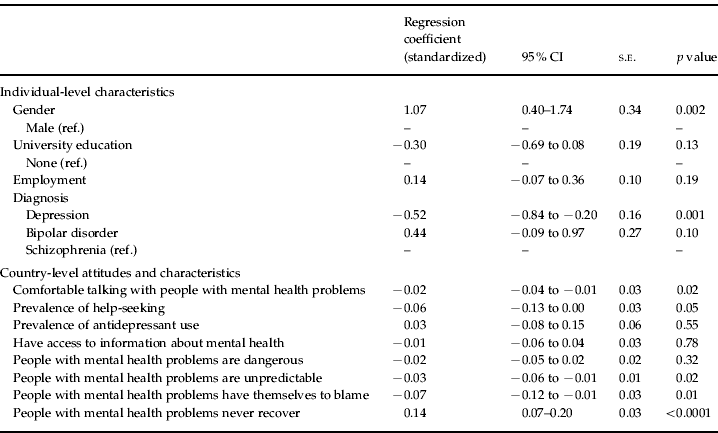
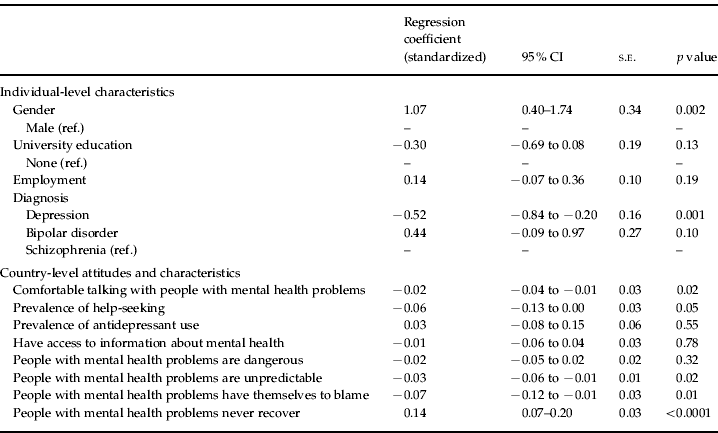
Having a diagnosis of depression was associated with less perceived discrimination, specifically 0.52 s.d. units lower than individuals with a diagnosis of schizophrenia, whereas female gender was associated with higher levels of perceived discrimination by 1.07 s.d. units (Table 3).
Individual- and country-level predictors of perceived discrimination as measured by the total standardized PDD score (multivariable linear regression GEE parameter estimates) (n=1812)Footnote a
PDD, Perceived Devaluation and Discrimination Scale; GEE, generalized estimating equations; CI, confidence interval; s.e., standard error.
a When age was included in the model, at the individual level, service users of an older age had significantly lower perceived discrimination (−0.014, p<0.001).
At the country level, a higher prevalence of the population feeling comfortable talking to people with mental health problems or seeking help from a health-care professional was associated with lower levels of perceived discrimination among consumers/service users (0.02 and 0.06 s.d. units respectively). Surprisingly, a higher prevalence of public attitudes endorsing blameworthiness or unpredictability of individuals with mental illness was associated with a lower level of perceived discrimination (0.03 and 0.07 s.d. units respectively), whereas a higher prevalence of public attitudes endorsing pessimism about recovery was associated with a higher level of perceived discrimination (0.14 s.d. units) among consumers/service users.
Predictors of empowerment (BUES)
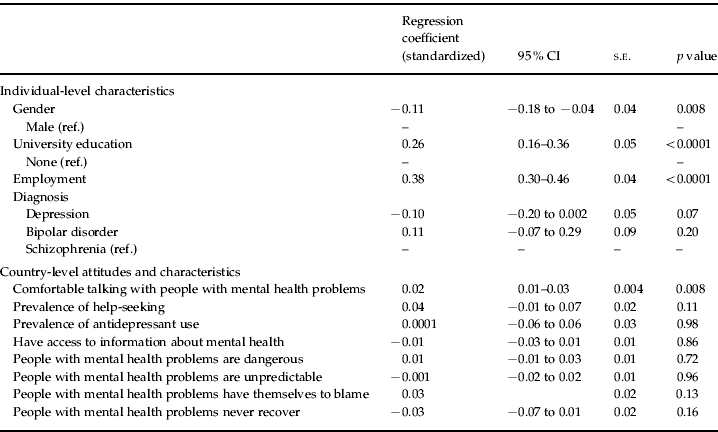
Individual-level factors among consumers/service users that were associated with higher empowerment scores include: having a university education or being employed. Individuals with a university education scored 0.26 s.d. units higher compared to those without university education and individuals who were employed scored 0.38 s.d. units higher on the empowerment scale. Female gender, however, was associated with lower empowerment scores. Females scored 0.11 s.d. units lower on the empowerment scale compared to males (Table 4). Among country-level variables, only comfort in talking about mental health problems was associated with greater empowerment. For each additional 1% increase in the prevalence of people feeling comfortable talking about mental health problems, individuals scored 0.02 s.d. units higher on the empowerment scale.
Individual- and country-level predictors of empowerment as measured by the total standardized BUES score (multivariable linear regression GEE parameter estimates) (n=1805)

BUES, Boston University Empowerment Scale; GEE, generalized estimating equations; CI, confidence interval; s.e., standard error.
a When age was included in the model, at the individual level, service users of an older age had significantly higher empowerment scores (0.025, p=0.0007).
Discussion
We investigated public knowledge, attitudes and behaviour using two large European datasets including data from both the general public and reports from individuals with mental illness in 14 countries. To our knowledge, this is the first study to directly link public knowledge, attitudes and help-seeking behaviours at the country/population-level with individual-level variables among people with mental illness residing in those countries, including individual ratings of self-stigma, perceived discrimination and empowerment. Importantly, our findings suggest that public attitudes and behaviour do have a clear association with the views of people with mental illness regarding their illness, expectations of discrimination and self-efficacy.
Overall, less stigmatizing attitudes, higher rates of help-seeking and treatment utilization at the country level and better perceived access to information about how to deal with mental health problems were associated with lower rates of self-stigma and perceived discrimination, but not higher levels of empowerment. The most consistent country/population predictor of lower stigma and higher empowerment among people with mental illness, however, was country-level comfort in talking to people with mental health problems. Persons with mental illness living in countries where the general public felt more comfortable talking to people with mental health problems reported lower levels of self-stigma and perceived discrimination and higher levels of empowerment. This suggests that anti-stigma programmes or interventions might be most effective by promoting social inclusion or implementing interventions focused on promoting social contact (Corrigan et al. Reference Corrigan, River, Lundin, Penn, Uphoff-Wasowski, Campion, Mathisen, Gagnon, Bergman, Goldstein and Kubiak2001; Pinfold et al. Reference Pinfold, Huxley, Thornicroft, Farmer, Toulmin and Graham2003a , Reference Pinfold, Toulmin, Thornicroft, Huxley, Farmer and Graham b ; London & Evans-Lacko, Reference London and Evans-Lacko2010) in addition to providing access to information and dispelling myths or stigmatizing attitudes about people with mental health problems. The relationship between population attitudes and individual reports related to stigma presented a somewhat mixed picture. Although a higher prevalence of the public endorsing pessimism about recovery was associated with higher levels of perceived discrimination, endorsing blame and unpredictability was associated with lower perceived discrimination. Attitudes assessed in the Eurobarometer survey were not associated with internal stigma or empowerment. Therefore, interventions aimed at changing attitudes should consider carefully their message in relation to the outcome of interest. This study supports a combined approach (focusing on knowledge, attitude and behaviour change) and suggests that improving mental health literacy and promoting attitude change may not be sufficient approaches to reducing stigma when done in isolation. These data also support previous population survey findings that improvements in public knowledge about or endorsing medical treatment of mental illness is not necessarily associated with an overall reduction in stigma (Angermeyer & Matschinger, Reference Angermeyer and Matschinger2005; Blumner & Marcus, Reference Blumner and Marcus2009; Pescosolido et al. Reference Pescosolido, Martin, Long, Medina, Phelan and Link2010). Importantly, in our study a higher prevalence of antidepressant use (medical behaviour) was associated with lower rates of self-stigma, but there was no association with perceived discrimination or empowerment. This indicates that some benefits may be associated with this approach; however, a medical message in isolation might not be sufficient. Additionally, this finding may partly reflect an association with better access to mental health treatments and lower self-stigma, and therefore it is not only indicative of the individual's choice in seeking a medical approach.
This study also highlights the relative impact of specific knowledge, attitudes and behaviours in relation to various stigma-related outcomes and is in line with the conclusions of Mojtabai (Reference Mojtabai2010). Similarly, Rusch et al. (Reference Rusch, Evans-Lacko, Henderson, Flach and Thornicroft2011) showed that, among English adults, greater mental health knowledge and more tolerance and support for community care were associated with higher rates of intended help-seeking; however, attitudes related to prejudice and exclusion were not significantly associated with intended help-seeking. Our findings also support the specificity of various predictors and suggest that careful consideration should be given when designing and implementing anti-stigma interventions. Although stigmatizing beliefs are often correlated, population interventions aimed at behaviour change require delivery of targeted messages that are sensitive to the needs of the community context or target audience. Prioritization of anti-stigma messages and of target audiences has been suggested in other studies (Clement et al. Reference Clement, Jarrett, Henderson and Thornicroft2010), but actual evidence in support of a direct link between message and outcomes is weak.
There were also factors at the individual level that were associated with lower levels of stigma and higher levels of empowerment. Having a university education and being employed seem to be protective, in that they were associated with lower levels of self-stigma and higher levels of empowerment. Female gender, however, predicted lower levels of empowerment and higher levels of perceived discrimination, possibly due to effects of multiple discrimination (i.e. gender and mental illness). These findings are supported by other studies and highlight the importance of skill building and employment programmes to improve the lives of people with mental health problems (Bond et al. Reference Bond, Drake and Becker2008; Corrigan et al. Reference Corrigan, Larson and Rusch2009; Glied & Frank, Reference Glied and Frank2009). The findings also suggest that particular efforts focused on reducing self-stigma and improving empowerment among women may be warranted.
A strength of this study is that it combines public views about people with mental illness and the views that people with mental illness have about themselves using two independent sources of data with large sample sizes and including a range of countries. Nevertheless, the causal inferences from these data are limited as both sources of data were cross-sectional and the study did not assess changes in country-level views over time or the impact of such change on individual outcomes. It is possible that countries that have more active service user/consumer movements and higher levels of empowerment among consumers/service users may have more effective anti-stigma interventions among the public as well. Therefore, it is difficult to establish the direction of causality based on these data. There may be additional local policies or events that might help to explain the outcomes that are not accounted for in these analyses. However, it is unlikely that these would account for the entire effect. Moreover, evidence suggests that public attitudes can also shape legislation and funding for services (Corrigan & Watson, Reference Corrigan and Watson2003; Corrigan et al. Reference Corrigan, Watson, Warpinski and Gracia2004; Schmid et al. Reference Schmid, Hewstone, Tausch, Cairns and Hughes2009; Evans-Lacko et al. Reference Evans-Lacko, Baum, Danis, Biddle and Goold2011). Another limitation of the study is that the consumers/service users who were surveyed as part of the GAMIAN study were not necessarily representative of people with mental illness in each country. Similarly, there was some variation in response rate by country that was associated slightly, but significantly, with the stigma outcome responses. The variability in response rate for the GAMIAN study has been discussed previously (Brohan et al. Reference Brohan, Elgie, Sartorius and Thornicroft2010a , Reference Brohan, Gauci, Sartorius and Thornicroft2011). Each organization was asked to reflect on reasons for the response rate at their site. Sites with higher response rates typically had less involvement with research and few requests for participation were made to their members; it may be the case that the low response rates in certain countries reflects a level of fatigue with requests for participation in research. The fact that the participants were associated with various consumer-led non-governmental organizations (NGOs) suggests that they may have had higher levels of empowerment and more access to resources and social support. Thus, it is even more remarkable that the views of these individuals were associated with public views in the country in which they resided.
Conclusions
This study provides novel findings demonstrating an association between reports of stigma at the level of individuals with mental illness with public stigma at the population level. This is potentially significant as it suggests that a virtuous cycle could be established in which reduction in public stigma may lead directly and indirectly to more favourable self-appraisals by individuals with mental health problems. Ongoing efforts through large nationally and locally based anti-stigma programmes will further inform the malleability of service user-level reports in response to improvement in attitudes among the general public. Ongoing evaluation and measurement of specific outcomes among both the public and individuals with mental illness will be crucial for understanding the impact of anti-stigma interventions more fully on the lives of consumers/service users.
Acknowledgements
We are grateful to all the GAMIAN-Europe members who participated in this study.
The GAMIAN-Europe study principal investigators are Prof. G. Thornicroft, R. Elgie and Prof. N. Sartorius. The GAMIAN-Europe Study Group includes the following organizations and individuals: Belgium: Flemish Mental Health Association (VVGG), P. Arteel; Bulgaria: National Centre for Health and Social Studies, M. Sarbinov; Croatia: Happy Families Association, Dr E. Gruber and Dr S. Biocina; Czech Republic: Czech Association for Mental Health (CAPZ), L. Laichter; Estonia: The Estonian Mental Health Association, U. Randmaa; Finland: Mieli Maastary, H. Karkkainen; France: Phobies Action, C. Paul; Greece: Panhellenic Families Association for Mental Health (SOPSI), Dr C. Gramandani; Italy: Arete Onlus, F. Prata; Lithuania: CLUB 13 & Co, Dr D. Survilaite and Dr V. Damjanovska; Malta: The Richmond Foundation, D. Gauci; Poland: Association FENIKS, M. Majewska; Romania: The Romanian League for Mental Health, R. Nica; Russia: Public Initiatives on Psychiatry, Prof. V. Rotstein; Slovenia: OZARA, Dr M. Dernovsek; Spain: Mundo Bipolar Foundation, G. Morales Cano; Sweden: Foreningen Balans, T. Kindstrom; Turkey: K. Alptekin; and The Ukraine: SoRec (Social Recreation), O. Kornyeyeva, The Ukrainian Psychiatric Association, J. Pievskaya. We also thank J. Scheftlein, P. Hougron and F. Lefebvre from DG SANCO for kindly sharing the Eurobarometer data.
Declaration of Interest
Professor G. Thornicroft has received grants for research purposes for stigma-related research in the past 5 years from Lundbeck UK and from the National Institute for Health Research (NIHR), and has acted as a consultant to the UK Office of the Chief Scientist. He is supported by an NIHR Applied Programme grant awarded to the South London and Maudsley National Health Service (NHS) Foundation Trust and is affiliated with the NIHR Specialist Mental Health Biomedical Research Centre at the Institute of Psychiatry, King's College London and the South London and Maudsley NHS Foundation Trust. He also has an honorary appointment at the University of KwaZulu Natal. Professor R. Mojtabai has received grant support and consultant fees in the past 5 years from Bristol-Myers Squibb, USA.