INTRODUCTION
Significant increases in demand for fish, shellfish and other seafood have led to a rapid growth in the aquaculture industry worldwide (Naylor et al., Reference Naylor, Goldburg, Primavera, Kautsky, Beveridge, Clay, Folke, Lubchenco, Mooney and Troell2000; Song et al., Reference Song, Xu, Liu, Li, Ma, Wang, Sun, Shao, Sun, Gill, Jiang and Wang2016). China has a long history in aquaculture dating back at least 2000 years, and there has recently been a rapid development of the aquaculture industry both in fresh and marine waters (Cao et al., Reference Cao, Wang, Yang, Yang, Yuan, Xiong and Diana2007). While this development is profitable it also has negative environmental impacts, such as water pollution, landscape modification and biodiversity change (Tovar et al., Reference Tovar, Moreno, Mánuel-Vez and García-Vargas2000). Intensive aquaculture involves the addition of food, fertilizers and (often) chemicals to stabilize the earthen pond bottoms, all of which compromise water quality. It is therefore essential to continuously monitor the aquaculture environment. The use of physicochemical variables alone, however, is thought to be inadequate so biological methods are increasingly used to supplement traditional methods of monitoring water quality (Casé et al., Reference Casé, Leça, Leitão, Sant, Schwamborn and de Moraes Junior2008). Nevertheless, there is a lack of information on the use of biological communities as indicators of water quality in aquaculture systems, especially in marine environments (Casé et al., Reference Casé, Leça, Leitão, Sant, Schwamborn and de Moraes Junior2008).
Ciliated protozoa are important components of the microbial community (Finlay et al., Reference Finlay, Bannister and Stewart1979, Reference Finlay, Berninger, Clarke, Cowling, Hindle and Rogerson1988; Sherr & Sherr, Reference Sherr and Sherr1987; Caron & Goldmann, Reference Caron, Goldmann and Capriulo1990; Yang et al., Reference Yang, Choi and Hyun2004; Jiang et al., Reference Jiang, Xu, Hu, Zhu, Al-Rasheid and Warren2011a, Reference Jiang, Yang, Min, Kang and Lee2013; Zhu et al., Reference Zhu, Jiang, Zhang, Al-Rasheid and Xu2012). Previous research has indicated that ciliates can consume 30–50%, sometimes 100%, of primary production (Pierce & Turner, Reference Pierce and Turner1992). Martin et al. (Reference Martin, Coale, Johnson, Fitzwater, Gordon, Tanner, Hunter, Elord, Nowicki, Coley, Barber, Lindly, Watson, Van Scoy, Law, Liddicoat, Ling, Ondrusek, Latasa, Millero, Lee, Yao, Zhang, Friedrich, Sakamoto, Anderson, Bidigare, Ondrusek, Latasa, Millero, Lee, Yao, Zhang, Friederich, Sakamoto, Chavez, Buck, Kolber, Greene, Falkowski, Chishohn, Hoge, Swift, Yungel, Turner, Nightingale, Hatton, Liss and Tindale1994), for example, found that ciliates comprised over 80% of the microzooplankton abundance and consumed 40–60% of annual net primary production in the northern Pacific Ocean in 1993. Endo et al. (Reference Endo, Hasumoto and Taniguchi1983) obtained similar results from their research in the subtropical Pacific Ocean in 1980. So, ciliated protozoa, which are often a dominant component of the microbial food web, have important roles in the biogeochemical cycles and energy transfer in marine ecosystems.
With their rapid growth and delicate external membranes, ciliates react more quickly to environmental change than most other eukaryotic organisms (Gong et al., Reference Gong, Song and Warren2005; Jiang et al., Reference Jiang, Xu, Hu, Zhu, Al-Rasheid and Warren2011a, Reference Jiang, Yang, Kim, Kim and Lee2014). Stoecker et al. (Reference Stoecker, Sieracki, Verity, Michaels, Haugen, Burkill and Edwards1994) hypothesized that the taxonomic composition of ciliates follows the environmental status of the water mass rather than a traditional zoogeographic distribution pattern. Subsequently, numerous studies found strong relationships between ciliates and environmental conditions (e.g. Elloumi et al., Reference Elloumi, Carrias, Ayadi, Sime-Ngando, Boukhris and Bouain2006; Kchaou et al., Reference Kchaou, Elloumi, Drira, Hamza, Ayadi, Bouain and Aleya2009; Jiang et al., Reference Jiang, Xu, Hu, Zhu, Al-Rasheid and Warren2011a, Reference Jiang, Yang, Kim, Kim and Lee2014; Wickham et al., Reference Wickham, Steinmair and Kamennaya2011; Xu et al., Reference Xu, Jiang, Zhang, Zhu and Al-Rasheid2011a, Reference Xu, Zhang, Jiang, Zhu, Al-Rasheid, Warren and Songb). However, there remain few studies on the relationship between ciliated protozoa and water quality in aquaculture environments.
The main aim of the present study is to investigate the temporal dynamics of ciliated protozoa communities, and their response to temporal variations of environmental conditions, at various developmental stages of the shrimp-farming cycle in an aquaculture pond in southern China.
MATERIALS AND METHODS
Sampling strategy
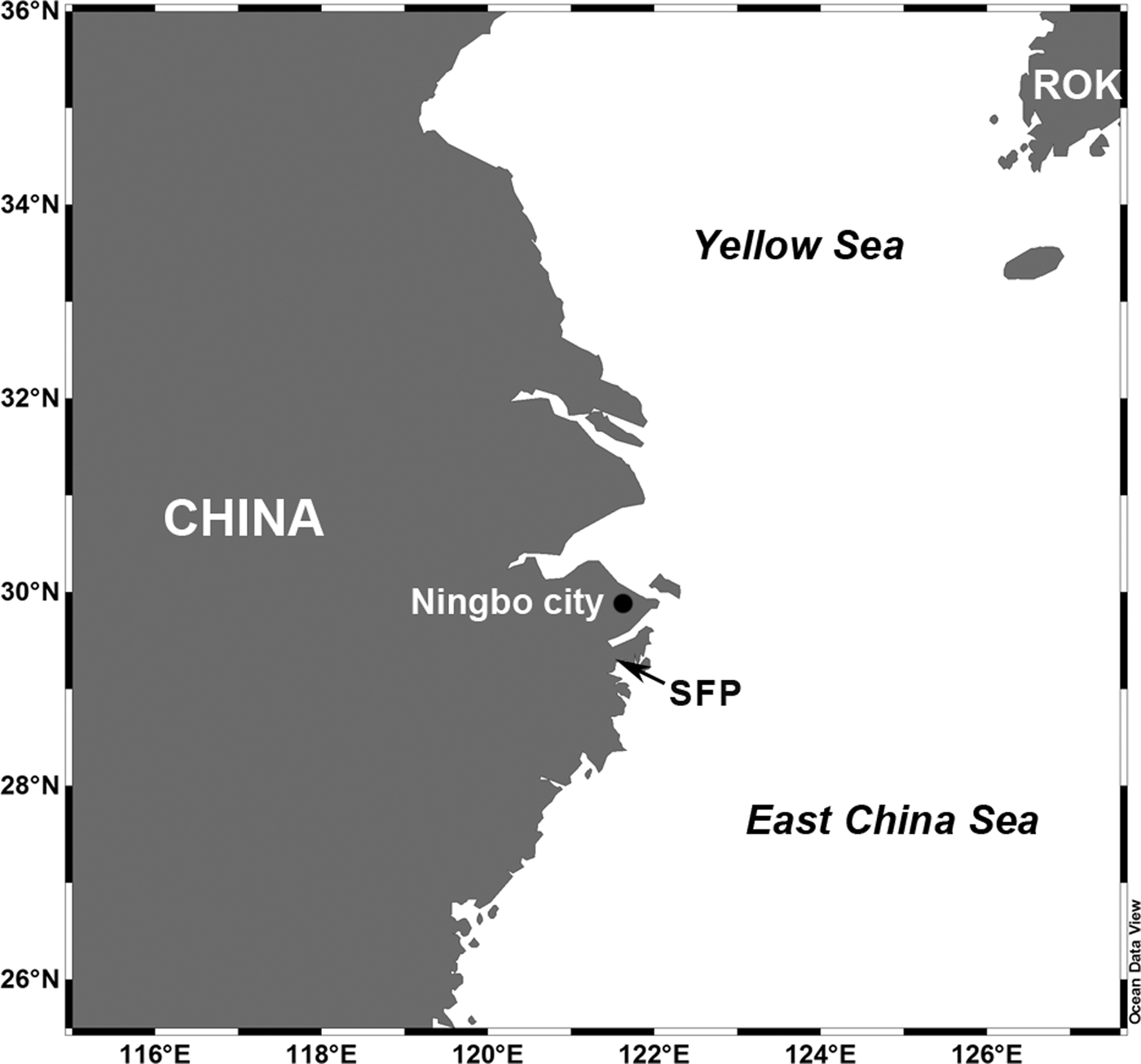
Sampling sites were selected in a shrimp aquaculture pond near Ningbo city, China (Figure 1). Eight samples were collected at depth of about 1 m biweekly from June to September 2012. The eight samples were chosen from five aquaculture stages, which were: preparation stage, before inoculation with shrimp larvae (sample collected 7 June); larvae stage (samples collected 26 June and 10 July); production stage (samples collected 25 July, 16 August and 28 August); harvest stage (sample collected 14 September); and final stage, after harvesting (sample collected 25 September). On each occasion, 1000 ml of aquaculture water was fixed with acid Lugol's iodine solution (2% final concentration, volume:volume) and was used both for enumeration and identification of ciliates (Pitta et al., Reference Pitta, Giannakourou and Christaki2001; Kchaou et al., Reference Kchaou, Elloumi, Drira, Hamza, Ayadi, Bouain and Aleya2009; Jiang et al., Reference Jiang, Xu, Hu, Song, Alrasheid and Warren2011b). Water temperature (T), pH, salinity (S) and dissolved oxygen concentration (DO) were measured in situ. Samples for nutrient analyses were preserved immediately upon collection (Xu et al., Reference Xu, Song, Warren, Al-Rasheid, Al-Farraj, Gong and Hu2008). Total phosphate (TP), ammonium nitrogen (NH4-N), nitrate nitrogen (NO3-N), nitrite nitrogen (NO2-N) and total nitrogen (TN) were determined using a UV-visible spectrophotometer (DR-5000, HACH) according to APHA (1992).
Map showing the location of the shrimp-farming pond in Ningbo, China. SFP, shrimp-farming pond.

Identification and enumeration
For the purpose of ciliate identification and enumeration, 1000 ml Lugol's-fixed seawater was settled for 48 h resulting in 50 ml concentrated sediment (Utermöhl, Reference Utermöhl1958). For enumeration, a 0.1 ml aliquot of concentrated sample was placed in a Perspex chamber and the ciliates were counted under a light microscope at a magnification 400×. A total of 0.5 ml concentrated sample was counted and yielded a standard error (SE) of <8% of the mean values. Species identification was done following the published references and guides such as Song et al. (Reference Song, Zhao, Xu, Hu and Gong2003, Reference Song, Warren and Hu2009) and Kofoid & Campbell (Reference Kofoid and Campbell1929, Reference Kofoid and Campbell1939). Those individuals whose identity could not be ascertained following examination with Lugol's-fixed specimens were picked out with a micropipette and identified using protargol staining after re-fixing with Bouin's solution (Montagnes & Humphrey, Reference Montagnes and Humphrey1998). The taxonomic scheme used was mainly according to Lynn (Reference Lynn2008).
Data analyses
Species diversity (Shannon diversity H′), evenness (Pielou's evenness J′) and richness (Marglef's richness D) of samples were calculated as follows:
 $$\eqalign{H^{\prime} &= - \sum\limits_{i = {\rm 1}}^S {Pi{\rm (ln}Pi{\rm )}} \cr J^{\prime} &= H^{\prime}/{\rm ln}(S) \cr D &= (S - 1)/{\rm ln}(N)} $$
where Pi = proportion of the total count arising from the ith species; S = total number of species; and N = total number of individuals (Xu et al., Reference Xu, Song, Warren, Al-Rasheid, Al-Farraj, Gong and Hu2008; Jiang et al., Reference Jiang, Xu, Hu, Song, Alrasheid and Warren2011b).
Multivariate analyses of temporal variation in ciliate communities were conducted by using PRIMER v6.1 package (Clarke & Gorley, Reference Clarke and Gorley2006; Kim et al., Reference Kim, Chae, Hong and Jang2007; Jiang et al., Reference Jiang, Xu, Hu, Song, Alrasheid and Warren2011b) and PERMANOVA + for PRIMER (Anderson et al., Reference Anderson, Gorley and Clarke2008; Jiang et al., Reference Jiang, Xu, Hu, Song, Alrasheid and Warren2011b). Bray–Curtis similarity matrices were computed on log-transformed species abundance data. Temporal patterns of ciliate community structure were summarized by Canonical Analysis of Principal coordinates (CAP) (Anderson et al., Reference Anderson, Gorley and Clarke2008). Differences between groups of samples were tested by the submodule PERMANOVA (Anderson et al., Reference Anderson, Gorley and Clarke2008; Jiang et al., Reference Jiang, Xu, Hu, Song, Alrasheid and Warren2011b). The contribution of each species to the average Bray–Curtis similarity among samples, or to the average Bray–Curtis dissimilarity between groups, was analysed using the SIMPER program (Clarke & Gorley, Reference Clarke and Gorley2006; Jiang et al., Reference Jiang, Xu, Hu, Song, Alrasheid and Warren2011b). The submodule BIOENV was used to explore potential relationships between environmental parameters and biotic data. The significance of biota–environment correlations was tested using Mantel test (RELATE analysis) (Clarke & Gorley, Reference Clarke and Gorley2006; Jiang et al., Reference Jiang, Xu, Hu, Song, Alrasheid and Warren2011b).
RESULTS
Environmental parameters
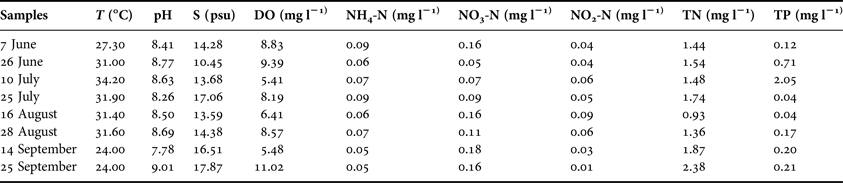
The measurements of nine environmental variables for the eight samples are summarized in Table 1. The water temperature ranged from 24.0 to 34.2°C, and the pH from 7.78 to 9.01. The salinity values showed that the water was brackish, ranging from 10.45 to 17.87 psu over the sampling period. The concentrations of NH4-N and NO3-N peaked in early June and mid-September whereas concentrations of NO2-N remained low throughout. Total nitrogen ranged from 0.93 to 2.38 mg l−1 (mean 1.59 mg l−1) with a peak in late September. Total phosphorus ranged from 0.04 to 2.05 mg l−1 (mean 0.44 mg l−1) with a peak in early July.
Environmental variables in shrimp-farming pond in Ningbo from June to September 2012.

T, Water temperature; S, salinity; DO, dissolved oxygen concentration; NH4-N, ammonium nitrogen; NO3-N, nitrate nitrogen; NO2-N, nitrite nitrogen; TN, total nitrogen; TP, Total phosphate.
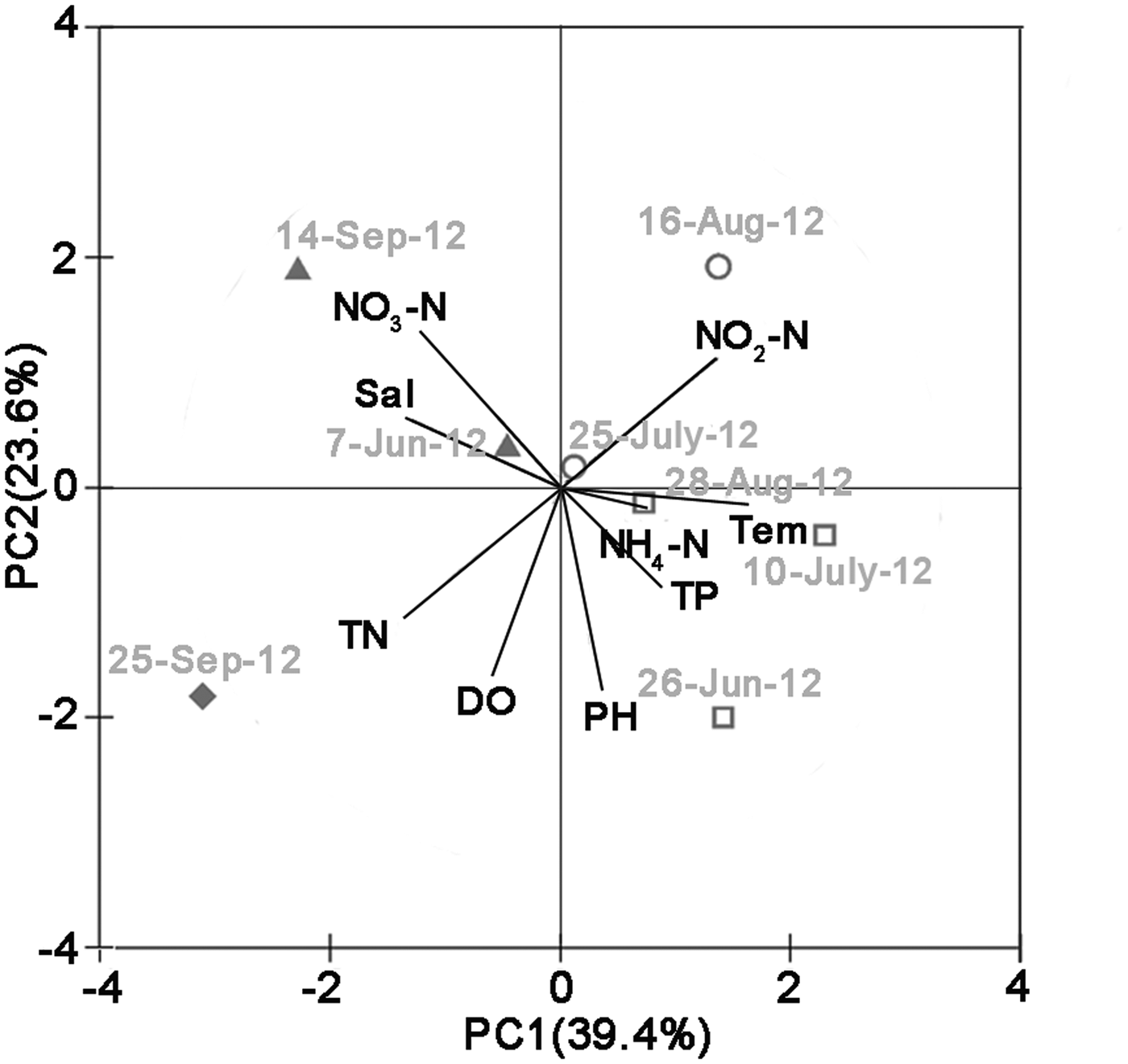
Principal Component Analysis (PCA) ordination with vectors for physicochemical variables is shown in Figure 2. The two principal components, explaining 63.0% of the total environmental variability, partitioned the eight samples into four groups based on a temporal pattern (Figure 2). PERMANOVA test revealed that there were significant differences among the four groups (F = 1.806, P = 0.026). The vectors for salinity and NO3-N pointed toward samples collected on 7 June and 14 September (upper left), whereas TN and DO pointed toward the sample collected on 25 September (lower left). Temperature, pH, NH4-N, and TP all pointed toward samples collected on 10 June and 26 July (lower right), whereas only NO2-N pointed toward the samples collected on 25 July, 16 August and 28 August (upper right) (Figure 2).
Principal Component Analysis (PCA) plot based on log-transformed abiotic data of eight samples. Axes 1 and 2 accounted for 39.4 and 23.6% respectively of the total variation present.

Taxonomic composition and species distribution
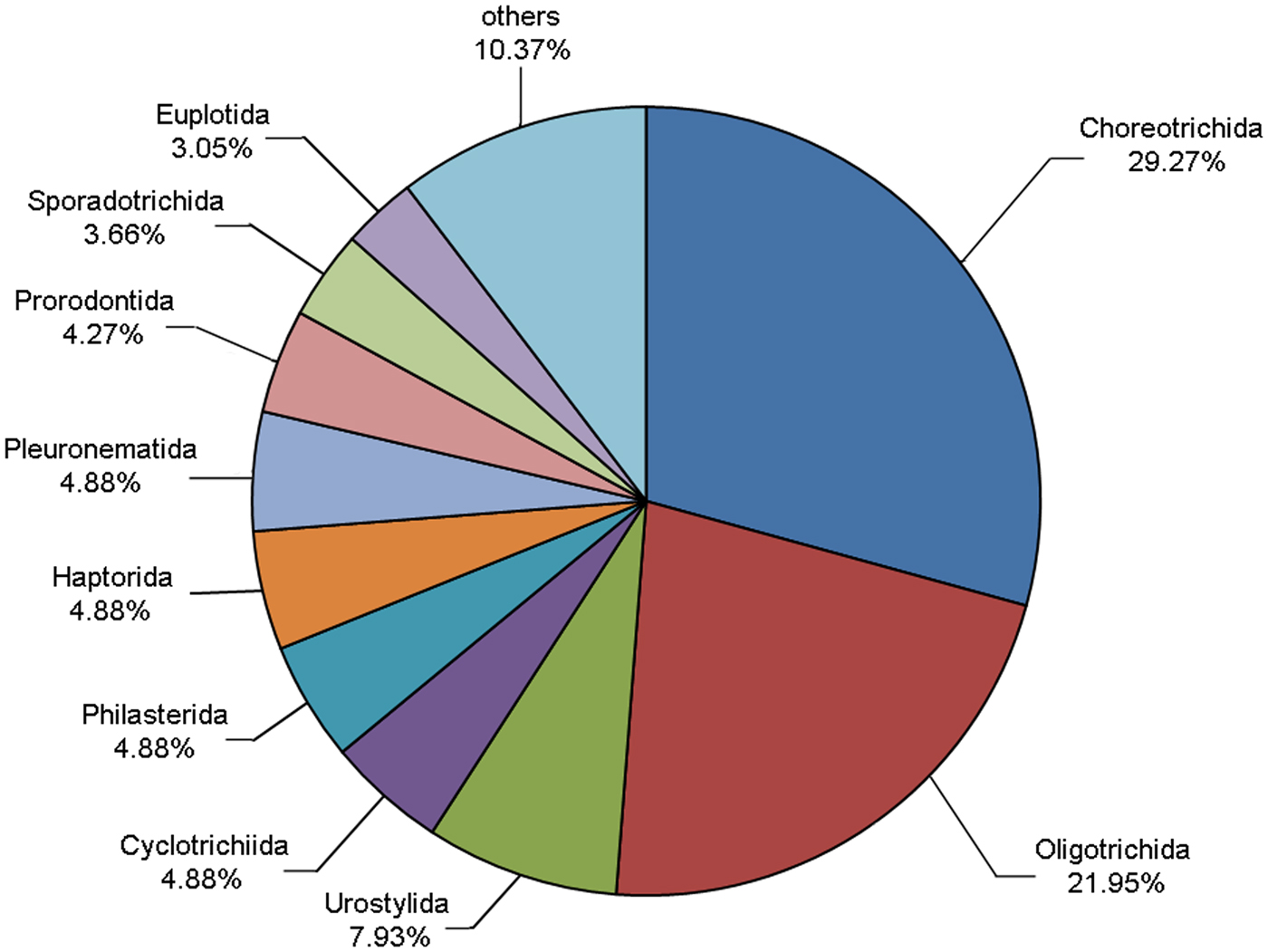
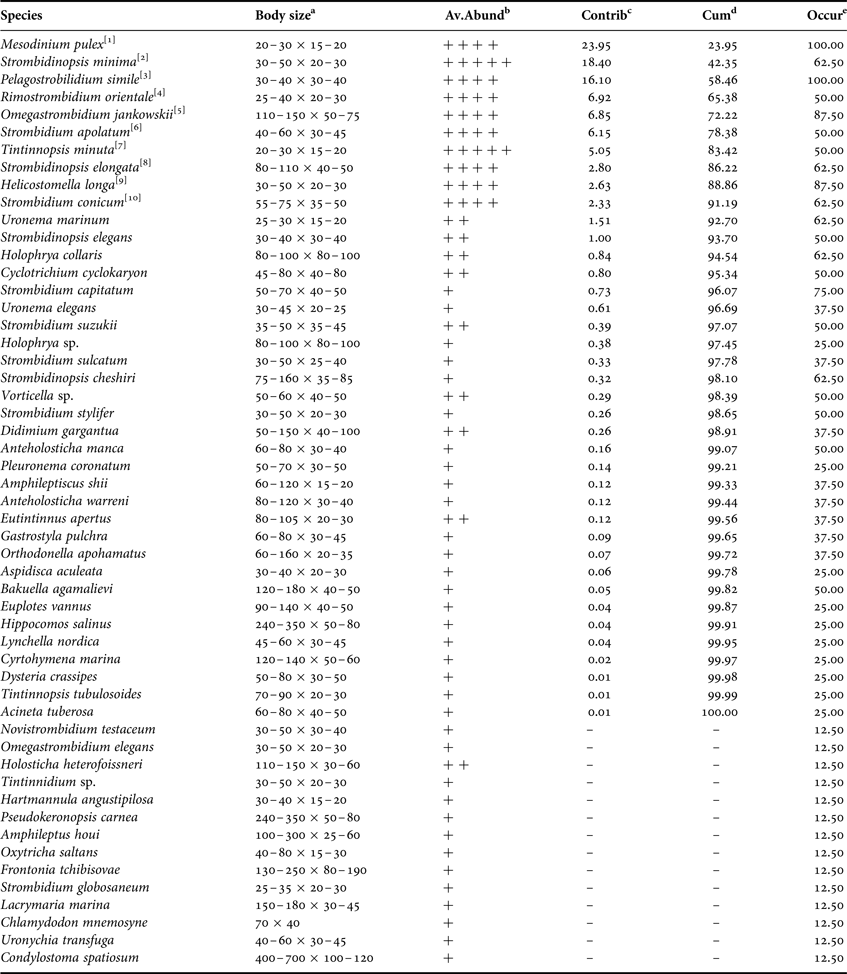
The taxonomic composition of the ciliate communities observed during the shrimp-farming cycle is summarized in Table 2 and Figure 3. A total of 53 ciliate species, representing 37 genera and 17 orders (Choreotrichida, Cyclotrichiida, Oligotrichida, Prorodontida, Sessilida, Philasterida, Haptorida, Urostylida, Endogenida, Euplotida, Dysteriida, Pleuronematida, Sporadotrichida, Synhymeniida, Peniculida, Chlamydodontida, Heterotrichida), were recorded. Choreotrichids and oligotrichids represented the highest number of species, accounting for 29.27 and 21.95% respectively of the total (Table 2; Figure 3).
Taxonomic composition of ciliated protozoa communities and the percentage of cumulative number of species recorded throughout the period of sampling.

Species list of ciliates recorded in eight samples from shellfish farming pond in Ningbo from June to September 2012, including body size, average abundance (Av.Abund), contribution (Contrib), cumulative contribution (Cum) and occurrence (Occur).

a Body size (μ m) (length × width).
b Average abundances (ind. l−1) (+, 0–100; + +, 100–500; + + +, 500–1000; + + + +, 1000–5000; + + + + +, 5000–10,000;).
c Contribution (%).
d Cumulative contribution (%).
e Occurrence (%); numbers in the superscript square brackets – ranks of the top 10 contributing species to the average Bray–Curtis similarity (91.19%) within 96 samples.
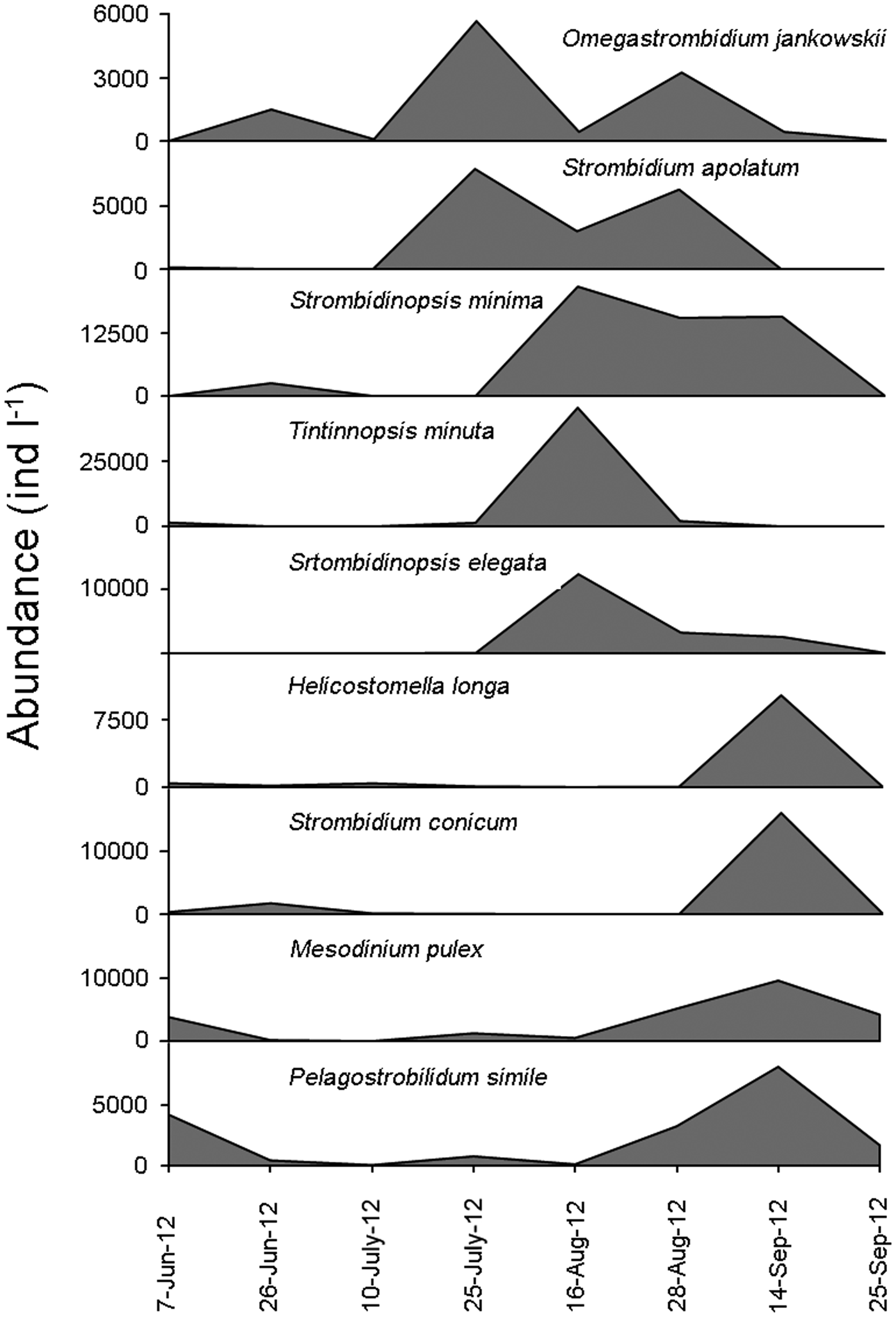
The contribution of the top 10 species to the average Bray–Curtis similarity (91.19%) within samples was summarized using similarity percentage analysis (SIMPER), the numbers in the square brackets showing the rank (Table 2). These 10 dominant species, each of which contributed more than 2% of the total abundance at some time during the sampling period, made significant contributions to the temporal dynamics of the ciliate communities (Table 2; Figure 4). Omegastrombidium jankowskii and Strombidium apolatum both peaked in the 25 July sample. When the abundance of Omegastrombidium jankowskii and Strombidium apolatum began to decline, the abundances of three other dominant species (Strombidinopsis minima, S. elongata and Tintinnopsis minuta) gradually increased and peaked in the 16 August sample. Then, the abundances of Rimostrombidium orientale, Pelagostrobilidium simile and Mesodinium pulex, each of which was recorded at the beginning of the sampling programme, peaked in the 14 September sample. Abundances of Helicostomella longa and Strombidium conicum had very low values in the previous samples, but increased from the 28 August sample, peaking in the 14 September sample (Figure 4).
Abundance (ind. l−1) and temporal succession of the 10 dominant ciliate species.

Variation in species number and abundance
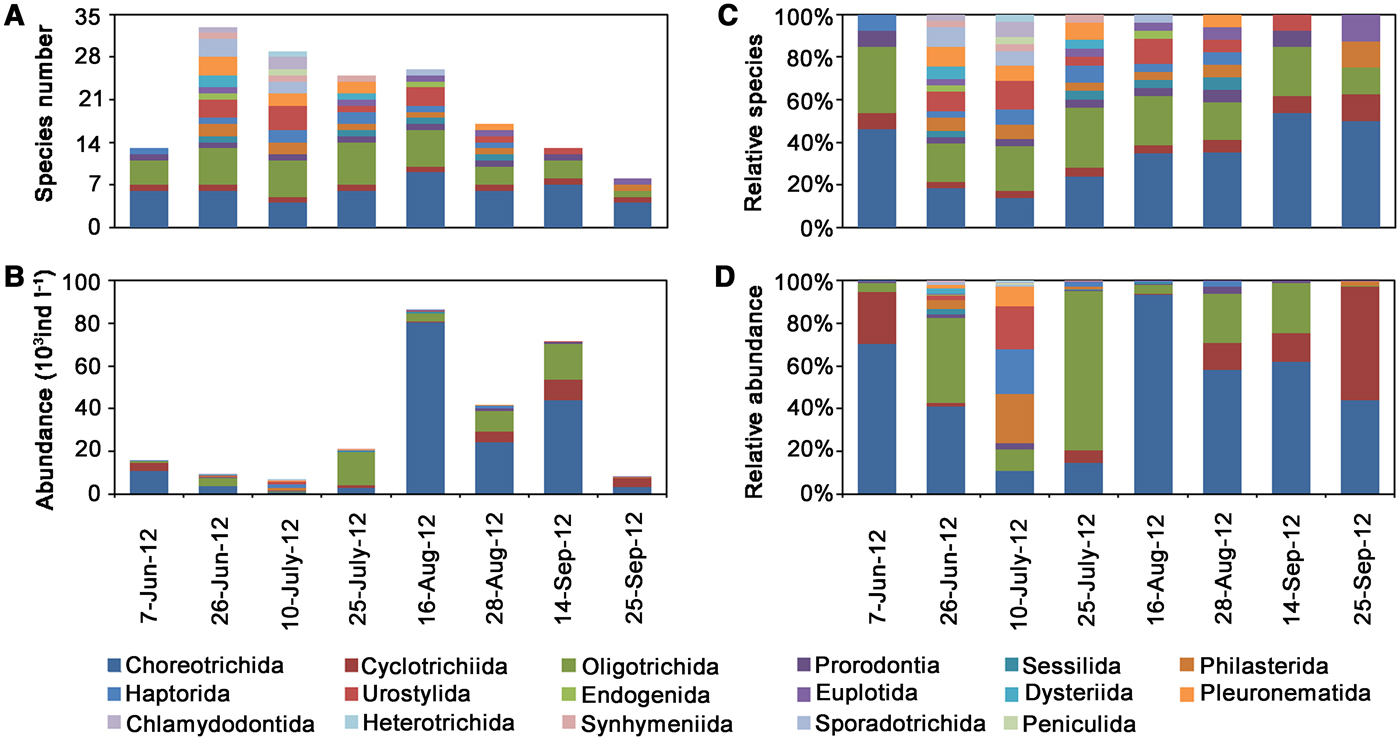
The temporal variation in species count showed a unimodal distribution peaking in late June with 33 species (Figure 5A). Choreotrichids and oligotrichids were primarily responsible for this peak. The species number declined steadily throughout the remaining period of sampling with the lowest species number (eight species) recorded in late September (Figure 5A).
Variations in species number (A), abundance (B), relative species number (C) and relative abundance (D) of ciliated protozoa in the shrimp-farming pond at Ningbo, China, from June to September 2012.

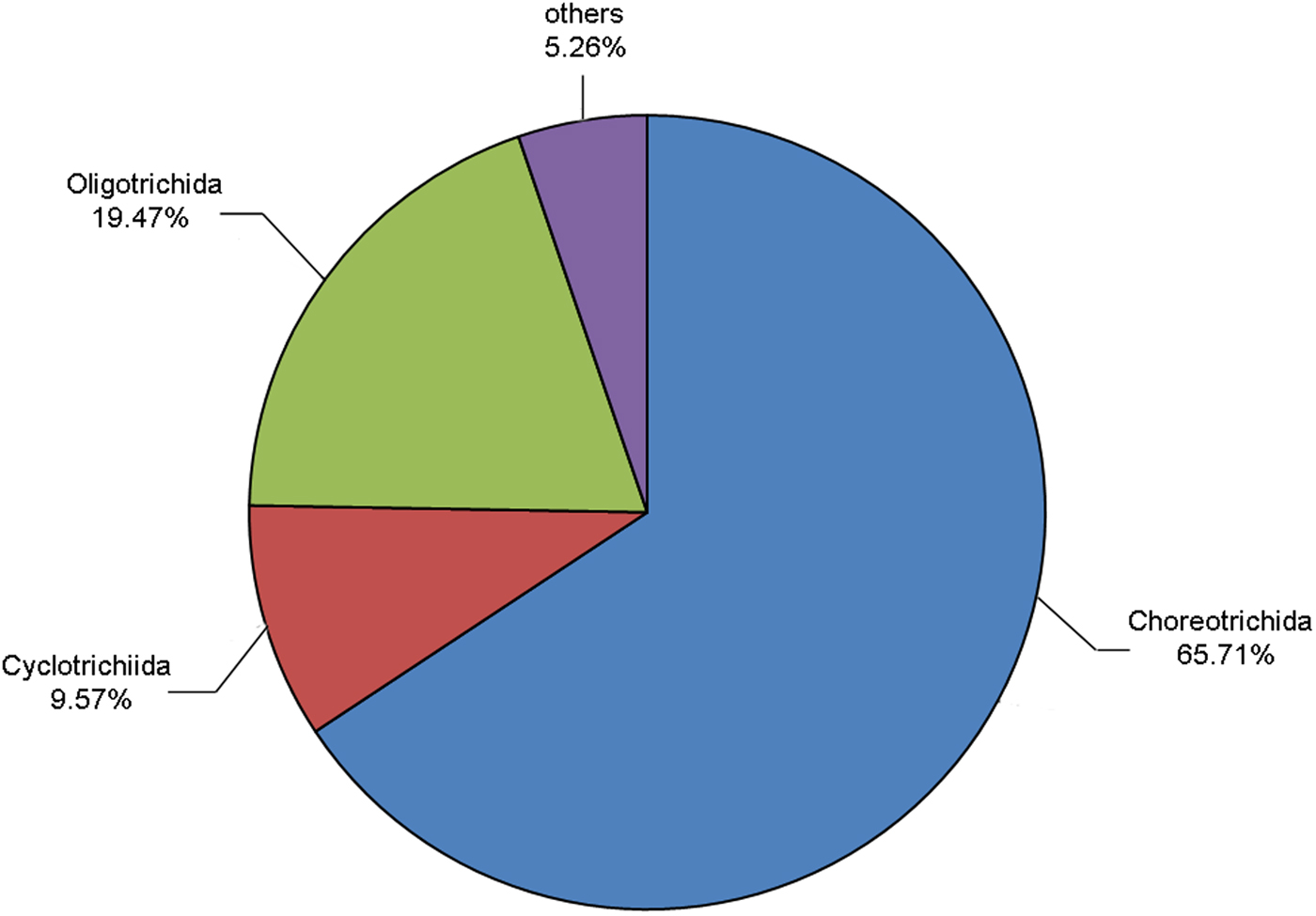
Ciliate abundances exhibited a bimodal variation, generally with low values before and after the two distinct peaks in mid-August (8.61 × 10⁴ ind. l−1) and mid-September (7.11 × 10⁴ ind. l−1) (Figure 5B). Choreotrichids were primarily responsible for the first peak, reaching an abundance of 8.02 × 10⁴ ind. l−1 whereas a combination of choreotrichids and oligotrichids was primarily responsible for the second peak, reaching abundances of 4.39 × 10⁴ and 1.66 × 10⁴ ind. l−1, respectively (Figure 5B). Of the total ciliate abundance, choreotrichids accounted for 65.71, oligotrichids 19.47, cyclotrichiids 9.57 and others 5.26% (Figure 6).
Proportions of average abundances of ciliated protozoa from June to September 2012.

Temporal patterns of community structure
The ciliate community structure in the eight samples demonstrated a clear temporal succession in both species composition and abundance (Figure 5C, D). Choreotrichids, cyclotrichiids and oligotrichids appeared in all samples and contributed the highest number of species (Figure 5C). In terms of relative abundance, the ciliate communities could be distinguished as four structural types, each of which dominated at different times during the period of study: (1) choreotrichids dominated the communities of 7 June, 16 August, 28 August and 14 September samples; (2) oligotrichids dominated the 26 June and 25 July communities; (3) the 25 September sample was mainly composed of cyclotrichiids and choreotrichids; (4) the main contributors to the 10 July community were philasterids, haptorids and urostylids (Figure 5D).
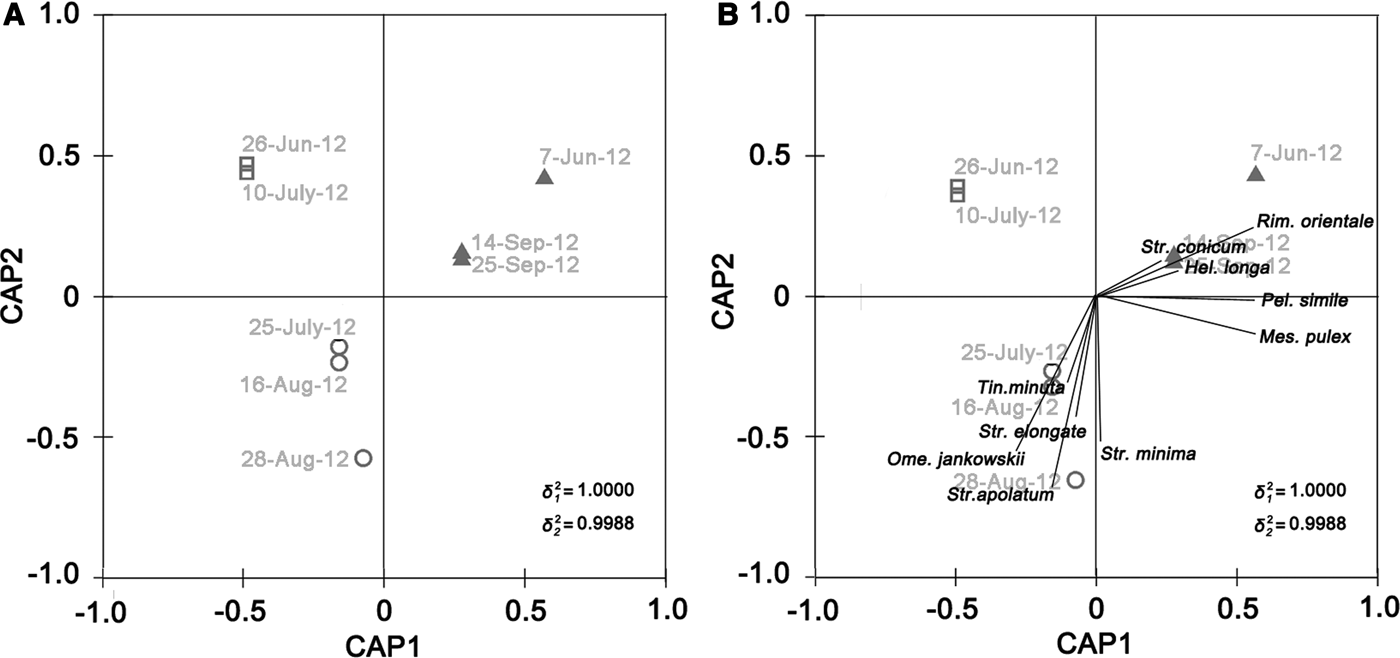
Discrimination of eight samples was plotted by CAP on Bray–Curtis similarities from log-transformed species-abundance data and showed a clear temporal pattern of ciliate communities (Figure7A). The first canonical axis separated the ciliate communities sampled on 7 June, 14 September and 25 September (on the right) from those of the other five samples (on the left), while the second canonical axis discriminated the samples of 7 June, 14 September, 25 September, 26 June and 10 July (upper) from the other four (lower) (Figure 7A). PERMANOVA test revealed that there were significant differences among the three groups (F = 3.000, P = 0.007).
Canonical analysis of principal coordinates on Bray–Curtis similarities from log-transformed species-abundance data of eight samples in the shrimp-farming pond at Ningbo, China, from June to September 2012 (A), and correlations of 10 dominant species with the two CAP axes (B). Mes. pulex, Mesodinium pulex; Str. minima, Strombidinopsis minima; Pel. simile, Pelagostrobilidium simile; Rim. orientale, Rimostrombidium orientale; Ome. jankowskii, Omegastrombidium jankowskii; Str. apolatum, Strombidium apolatum; Tin. minuta, Tintinnopsis minuta; Str. elongata, Strombidinopsis elongata; Hel. longa, Helicostomella longa; Str. conicum, Strombidium conicum.

Vector overlay of 10 dominant species with the CAP axes is shown in Figure 7B. Vectors of Rimostrombidium orientale, Strombidium conicum, Mesodinium pulex, Helicostomella longa and Pelagostrobilidium simile pointed toward samples of 7 June, 14 September and 25 September, whereas Tintinnopsis minuta, Strombidinopsis elongata, Strombidinopsis minima, Omegastrombidium jankowskii and Strombidium apolatum pointed toward samples of 25 July, 16 August and 28 August (Figure 7B).
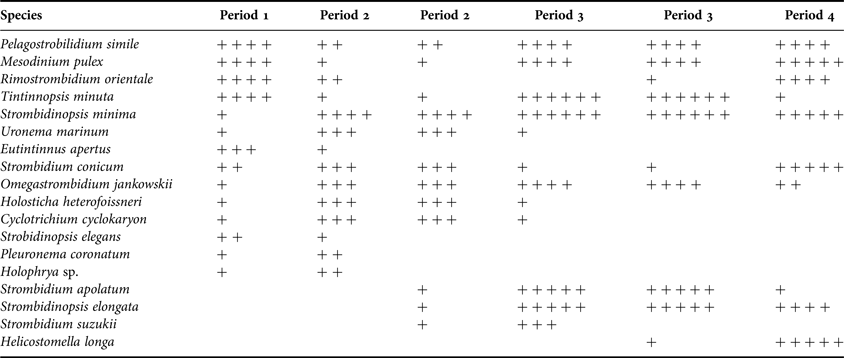
Although the CAP plot divided the ciliate communities into three groups, four periods could be recognized by separating the first sample (7 June) from the last two (14 September and 25 September). In Table 3, the average abundance of ciliates giving rise to the difference between these two periods was determined by SIMPER analyses. The cumulative contributions of the species to the average Bray–Curtis dissimilarity between the two periods were all greater than 90%.
The average abundance of top contributing species to the average Bray–Curtis dissimilarity (>90%) between each two periods.

+, 0–100 ind. l−1; + +, 100–500 ind. l−1; + + +, 500–1000 ind. l−1; + + + +, 1000–5000 ind. l−1; + + + + +, 5000–10,000 ind. l−1; + + + + + +, over 10,000 ind. l−1; Period 1, sample 7 June 2012; Period 2, sample 26 June and 10 July 2012; Period 3, samples from 25 July to 28 August 2012; Period 4, 25 September 2012.
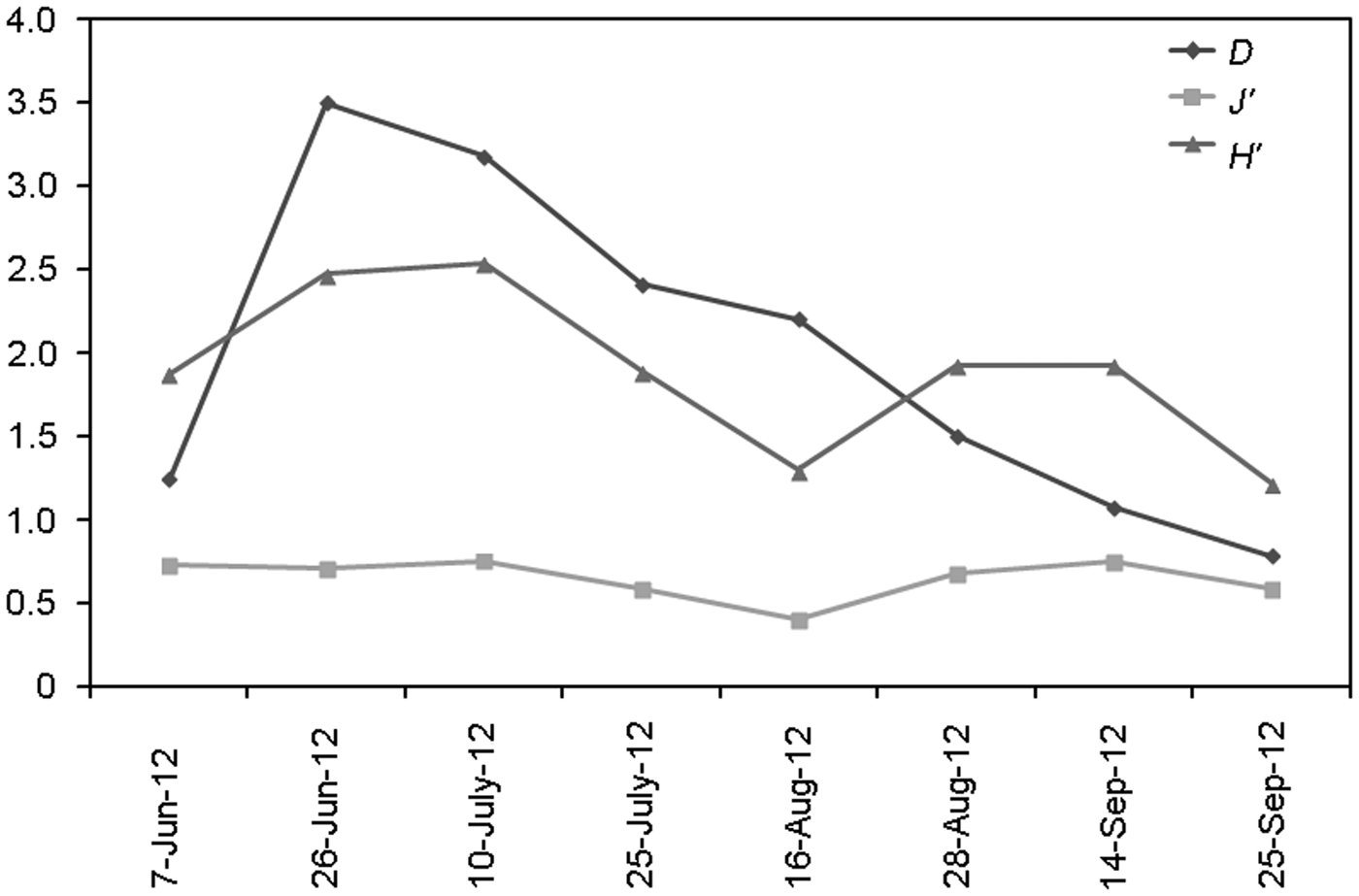
The temporal variations in species diversity (H′), evenness (J′) and richness (D) indices in the eight samples collected during the shrimp cultivation period are shown in Figure 8. There was no significant change of J′ throughout this period with the minimum being recorded on 16 August. H′ index reached its maximum value on 10 July and its minimum value on 16 August. The value of D attained its maximum value on 26 June and then declined until the end of the cultivation period (Figure 8).
Species diversity (H′), evenness (J′) and richness (D) of ciliated protozoa communities in the shrimp-farming pond at Ningbo, China, from June to September 2012.

Linkage between ciliate biodiversity and abiotic parameters
Mantel test (RELATE analysis) revealed that there was a significant correlation between temporal variations in ciliate abundances and changes in environmental variables (R = 0.500, P = 0.013). To investigate the factors that most affected the temporal variation of ciliate community structure, a multivariate biota–environment (BIOENV) analysis was conducted based on ciliate abundance data and environmental data. The factors that best matched the ciliate data were temperature, NO3-N, NH4-N, TN and TP in combination (ρ = 0.697, P = 0.002).
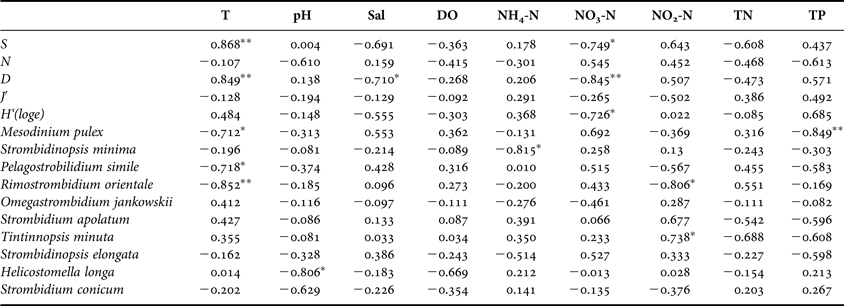
Pearson correlations between environmental variables and measurements of diversity indices and abundances of the 10 dominant ciliates are summarized in Table 4. Species number (S) and richness (D) were positively correlated with temperature but negatively correlated with nitrate (P < 0.05). The Shannon Index (H′) was negatively correlated only with nitrate (P < 0.05). Notably, no significant relationship was found between abundance (N) or evenness (J′) and environmental variables (Table 4). In terms of dominant species, there were significant relationships between some species and environmental variables (e.g. temperature, nutrients) (P < 0.05). For example, Mesodinium pulex was negatively correlated with temperature and TP whereas Strombidinopsis minima was negatively correlated with NH4-N (Table 4).
Correlations (Spearman analysis) between environmental variables and ciliate species number (S), abundance (N), species richness (D), species evenness (J′), species diversity (H′) and abundances of 10 dominant ciliates at eight samples in Ningbo city, China from June to September 2012.

*P < 0.05; **P < 0.01; T, Water temperature; S, salinity; DO, dissolved oxygen concentration; NH4-N, ammonium nitrogen; NO3-N, nitrate nitrogen; NO2-N, nitrite nitrogen; TN, total nitrogen; TP, Total phosphate.
DISCUSSION
In our study, a total of 53 ciliate species, representing 37 genera and 17 orders, were recorded during one shrimp-farming cycle. This is consistent with previous research conducted in marine coastal waters. For example, Jiang et al. (Reference Jiang, Xu, Hu, Song, Alrasheid and Warren2011b) found 64 ciliate species in Jiaozhou Bay, China, and Rekik et al. (Reference Rekik, Denis, Dugenne, Maalej and Ayadi2015) found 65 ciliate species in the north coast of Sfax, Tunisia. With respect to marine aquaculture environments, Xu et al. (Reference Xu, Song, Warren, Al-Rasheid, Al-Farraj, Gong and Hu2008) found 54 ciliate species in a shrimp-farming pond near Qingdao, China. However, the changes of ciliate community structure in response to the environmental differences in shrimp-farming ponds have rarely been reported. The present study shows that the abundance of ciliates in shrimp-aquaculture water was significantly higher than that in open coastal waters. For example, Jiang et al. (Reference Jiang, Xu, Hu, Zhu, Al-Rasheid and Warren2011a, Reference Jiang, Xu, Hu, Song, Alrasheid and Warrenb) reported the average abundance of open water is 5.03 × 10³ ind. l−1 with a maximum value of 2.954 × 10⁴ ind. l−1. In the present study, the average ciliate abundance in shrimp-aquaculture water was 1.524 × 10⁴ ind. l−1, with a maximum of 8.610 × 10⁴ ind. l−1. A possible reason for this difference might be eutrophication caused by accumulation of nutrients in the aquaculture environment supporting the growth of prey organisms such as bacteria and algae on which many ciliates feed. Aquaculture water would thus support more ciliated predators than would open water.
Recent studies have revealed that ciliates exhibited a clear temporal variation in terms of species composition and abundance. In late June, the larvae stage, shrimp larvae start feeding on live planktonic prey including phytoplankton and ciliates (Cardozo et al., Reference Cardozo, Britto and Odebrecht2011; Rahman, Reference Rahman Al Muftah2015). The decrease in ciliate abundance, and the change in ciliate community structure at this stage in the shrimp-farming cycle, might thus be explained by predation of ciliates by shrimp larvae. At the same time, the accumulation of shrimp faeces in the pond fertilizes the water causing it to become eutrophic, thus supporting blooms of bacteria (Robertson & Phillips, Reference Robertson and Phillips1995). As a consequence, bacterivores and coprophilic taxa, such as members of the orders Urostylida, Pleuronematida, Sporadotrichida and Chlamydodontida, which were normally characterized as bacterial grazers (Kankaala & Eloranta, Reference Kankaala and Eloranta1987; Selbach & Kuhlmann, Reference Selbach and Kuhlmann1999; Lynn, Reference Lynn2008; Shao et al., Reference Shao, Gao, Hu, AL-Rasheid and Warren2011), dominated the ciliate communities in terms both of diversity and abundance. In the production stage of the shrimp-farming process, high eutrophication coincided with decreased diversity and dramatically increased abundance of ciliates. This is consistent with previous findings in shrimp-farms elsewhere (Bratvold et al., Reference Bratvold, Lu and Browdy1999; Casé et al., Reference Casé, Leça, Leitão, Sant, Schwamborn and de Moraes Junior2008). After the harvesting stage, the species number, composition and abundance changed again and were similar to those values at the beginning of the process.
The reasons for the variations in water quality during the shrimp-farming process are complicated. Intensive aquaculture involves the addition of food products and fertilizers for shrimp growth, and often the addition of chemicals to stabilize the earth bottom of the pond. Consequently, the measurement of physicochemical variables alone in order to monitor water quality in and around these systems may be inadequate (Casé et al., Reference Casé, Leça, Leitão, Sant, Schwamborn and de Moraes Junior2008). The use of biotic variables is crucial in order to help us understand the variation of water quality, especially over extended time periods. The present investigation shows that ciliate community structure can effectively reflect the changes of aquaculture water quality. PCA analysis of the environmental variables divided the eight samples into four groups and PERMANOVA tests revealed that there were significant differences among these groups. Furthermore, the temporal division of aquaculture environment was consistent with the shrimp-farming stages. By contrast, measurements of the abiotic variables provide only a snap-shot of the water quality and thus might not accurately reflect the variation in water quality over time (Jiang et al., Reference Jiang, Yang, Kim, Kim and Lee2014). CAP analysis was used to investigate the changes in the community structure of ciliates at different stages in the shrimp-farming process and the samples clearly divided into three groups. Moreover, PERMANOVA test revealed that there were significant differences among the three groups. The abiotic result shows that the environmental conditions at the beginning of the shrimp-farming process closely resembled those at the end, although it was still possible to discriminate one from the other. In response to the variations in environmental conditions, the ciliate community structure showed a similar temporal pattern and varied according to the different shrimp-farming stages. However, there was no significant difference between the ciliate community at the final stage (25 September, after harvesting) and that at the preparation stage (sample 7 June, before larvae inoculation). This suggests that the ciliate community had recovered from shrimp cultivation.
Species diversity (H′), evenness (J′) and richness (D) indices are commonly employed in community-level investigations and are amenable to simple statistical analyses (Ismael & Dorgham, Reference Ismael and Dorgham2003; Gong et al., Reference Gong, Song and Warren2005; Xu et al., Reference Xu, Song, Warren, Al-Rasheid, Al-Farraj, Gong and Hu2008; Jiang et al., Reference Jiang, Xu, Hu, Song, Alrasheid and Warren2011b). Generally, the higher these three indices are, the better the water conditions are (Ismael & Dorgham, Reference Ismael and Dorgham2003; Jiang et al., Reference Jiang, Yang, Min, Kang and Lee2013). In the present study, however, species richness (D) and diversity (H′) indices both increased initially and then decreased, the main difference between them being that the minimum values of H′ were on 16 August and 25 September (the last sample), whereas D declined in each sample following its peak on 26 June. J′ remained relatively constant with a minimum also on 16 August. These biological indices generally show significant correlations with environmental parameters; diversity (H′) and richness (D), for example, were both significantly negatively correlated with NO3-N (P < 0.05). The pattern of succession of the 10 dominant species was consistent with the results of CAP analysis, and correlation results show that they were related with the temporal changes of environmental variables. For example, Mesodinium pulex was negatively correlated with temperature and TP whereas Strombidinopsis minima was negatively correlated with NH4-N. The sensitivity of these species and of the diversity index suggest that they might be robust bioindicators of water quality, although further research is needed in order to confirm this finding.
In summary, the results of the present study demonstrate that: ciliate abundance in aquaculture water was significantly higher than that in open coastal waters; ciliate community structure had a clear temporal pattern that varied according to the different shrimp-farming stages; the ciliate communities recovered following the completion of the shrimp-farming process; ciliate species diversity, evenness and richness indices, and the patterns of succession of the 10 dominant species, were significantly correlated with environmental parameters. These findings suggest that ciliate community structure can be used as a reliable indicator of water quality, in shrimp-farming ponds.
ACKNOWLEDGEMENTS
We thank the chemistry group for chemical analyses. The authors would like to thank the editor and anonymous reviewers for their constructive comments.
FINANCIAL SUPPORT
This work was supported by the Natural Science Foundation of China (No. 31572230; 31500339), the earmarked fund for China Agriculture Research System-Mollusk, CARS-48 and China Postdoctoral Science Foundation (No. 2015M570612; 2016T90649), the Natural Science Foundation of Zhejiang Province (LY13C040005) and the Ningbo Natural Science Foundation (2015A610264).