Introduction
Grommet insertion for the treatment of otitis media with effusion (OME) is one of the most commonly performed surgical procedures in the paediatric population in England, with 20 200 procedures performed for children aged 16 years and under in 2014–15.1 It has been demonstrated that 90 per cent of all children will experience an episode of OME before the age of 10 years.Reference Berkman, Wallace, Steiner, Harrison, Greenblatt and Lohr2 In the majority of cases, the condition is self-resolving. However, persistent hearing loss can lead to developmental delays in speech and language, and can hinder a child's educational progression.3 Treatment options for persistent OME include continued watchful waiting, hearing aids or grommets (ventilation tubes).Reference Lous, Burton, Felding, Ovesen, Rovers and Williamson4
According to the National Institute for Health and Care Excellence (NICE) Clinical Guideline 60 (‘CG60’), which focuses on surgery for otitis media with effusion in children,5 in order to qualify for treatment with grommets, patients must have persistent OME on two hearing tests three months apart, and meet one of the following criteria: their hearing level in the better ear must be 25–30 dB HL or worse, confirmed over three months (averaged at 0.5, 1, 2 and 4 kHz); and/or their condition must have a significant impact on their developmental, social or educational status (no hearing threshold specified). The treatment of OME in children with cleft palate or Down's syndrome is considered under separate guidance.
In a time when the National Health Service is under ever-increasing strain, and demand for out-patient appointments is increasing without any extra time provision or funding, improving departmental efficiency is vital to keep patient care at a high level. Reducing waiting times may prevent the financial penalties imposed on institutions. At the same time, improving service efficiency can increase the number of procedures performed in a given timeframe, which can increase financial income.
Our institution is a tertiary referral centre in the South West of England, serving an immediate population of approximately 700 000; however, the tertiary catchment area increases this number to approximately 2 000 000. Our institution was noted to have long waiting times from the initial audiology appointment to the day of surgery. Delays in the time leading up to surgery could cause issues on the day of surgery because of out-of-date audiograms. This can result in on-the-day cancellations, the wasting of expensive operating theatre time and the requirement of unnecessary repeat audiograms. We hypothesised that by streamlining the existing patient pathway to grommet surgery, by adding appropriate patients to the waiting list at an earlier stage, we would reduce the total waiting time to surgery.
Materials and methods
Using AuditBase (Auditdata, Taastrup, Denmark), a clinic management system, we reviewed the notes of children (aged less than 16 years) who had undergone grommet surgery over a six-month period from June 2014 to November 2014. We collected the dates of the first audiology assessment, the second audiology assessment, the ENT out-patient appointment and the day of surgery, and calculated the time elapsed (in days) between the stages of the pathway.
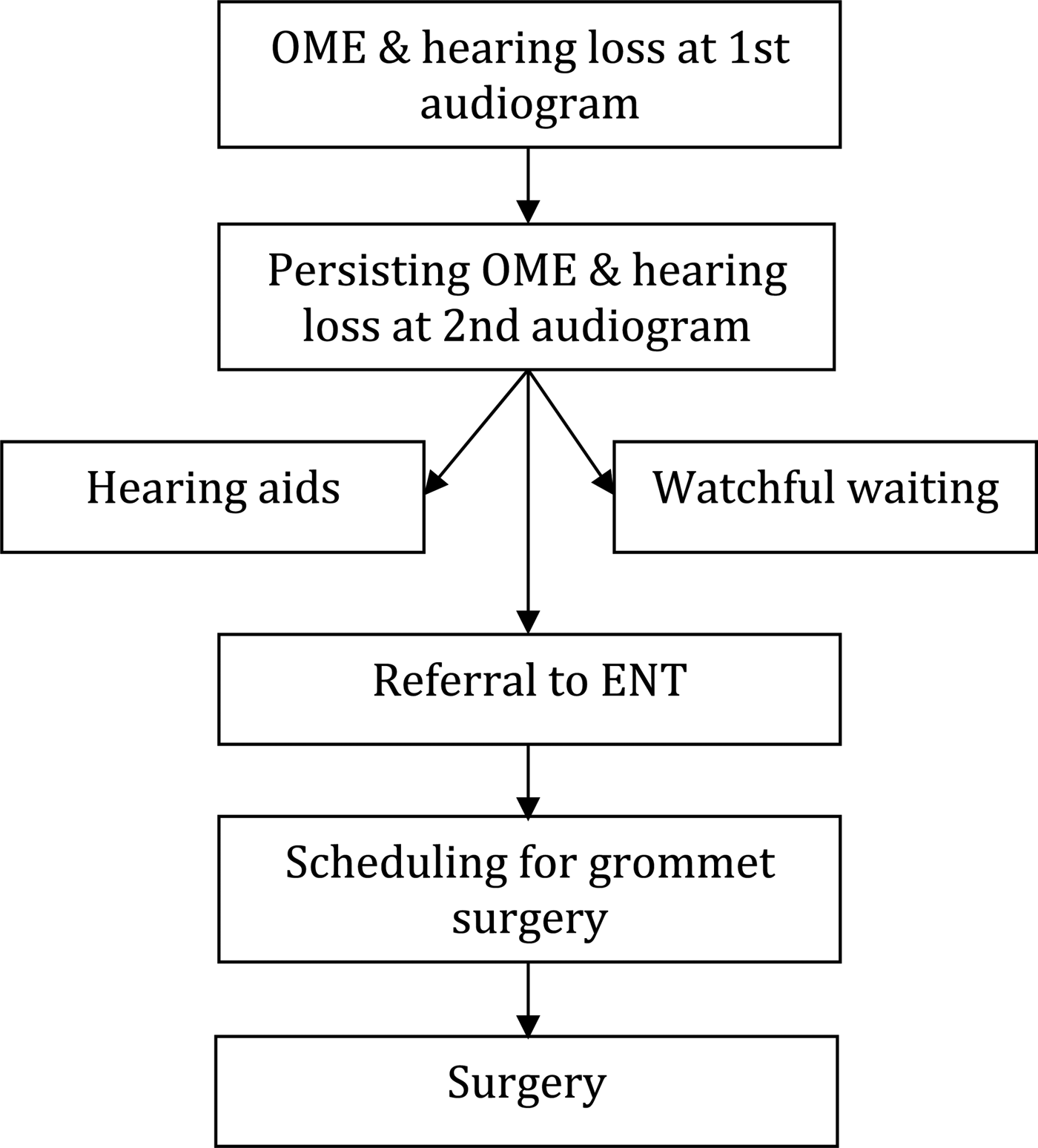
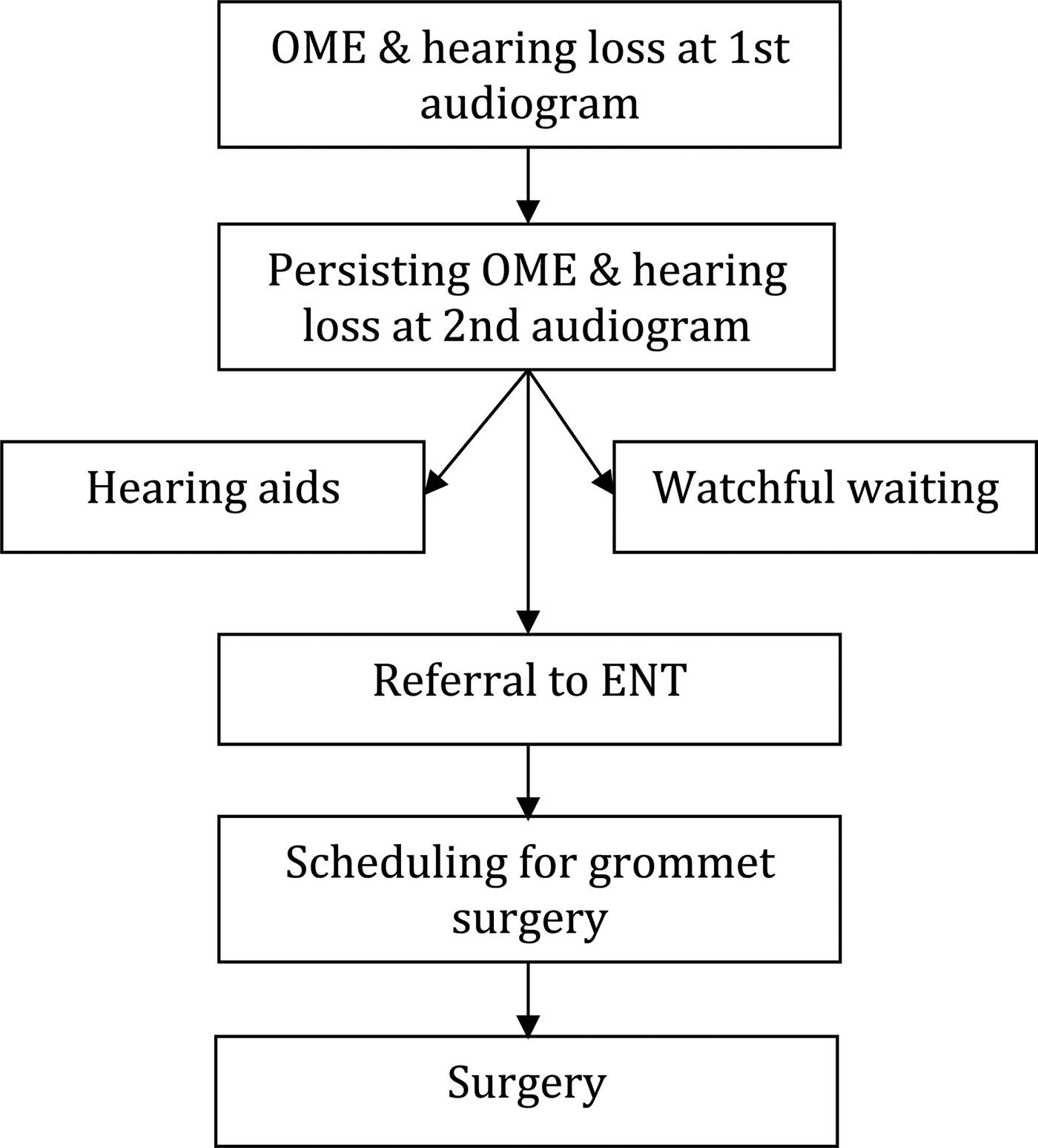
Patients were included in the study if they followed a standard pathway of: two audiology appointments followed by referral to the ENT department; an ENT department out-patient appointment, where patients can be scheduled for grommets (with or without other procedures); and ultimately surgery (Figure 1). Patients were excluded if they deviated from this standard pathway.
Traditional pathway. OME = otitis media with effusion
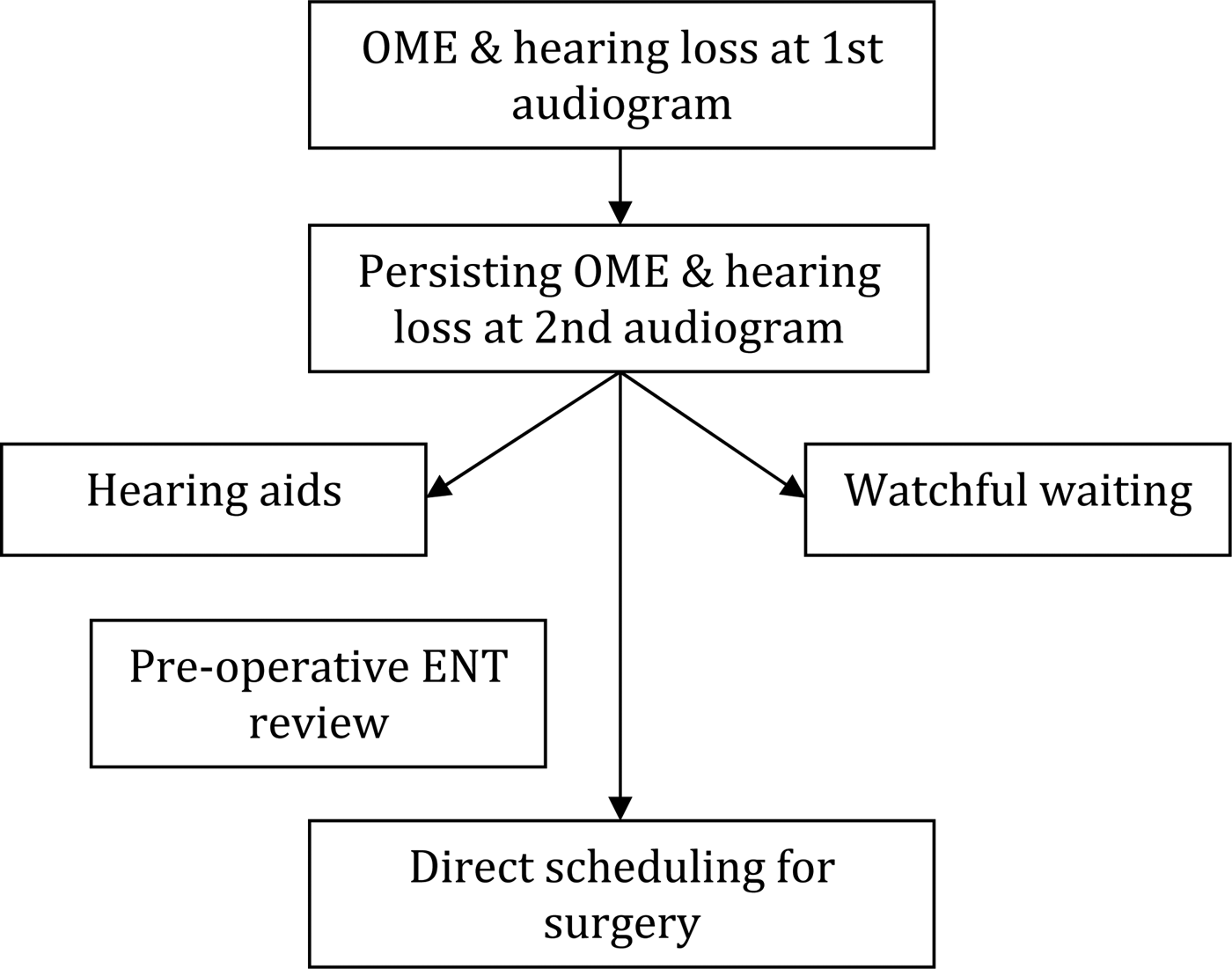
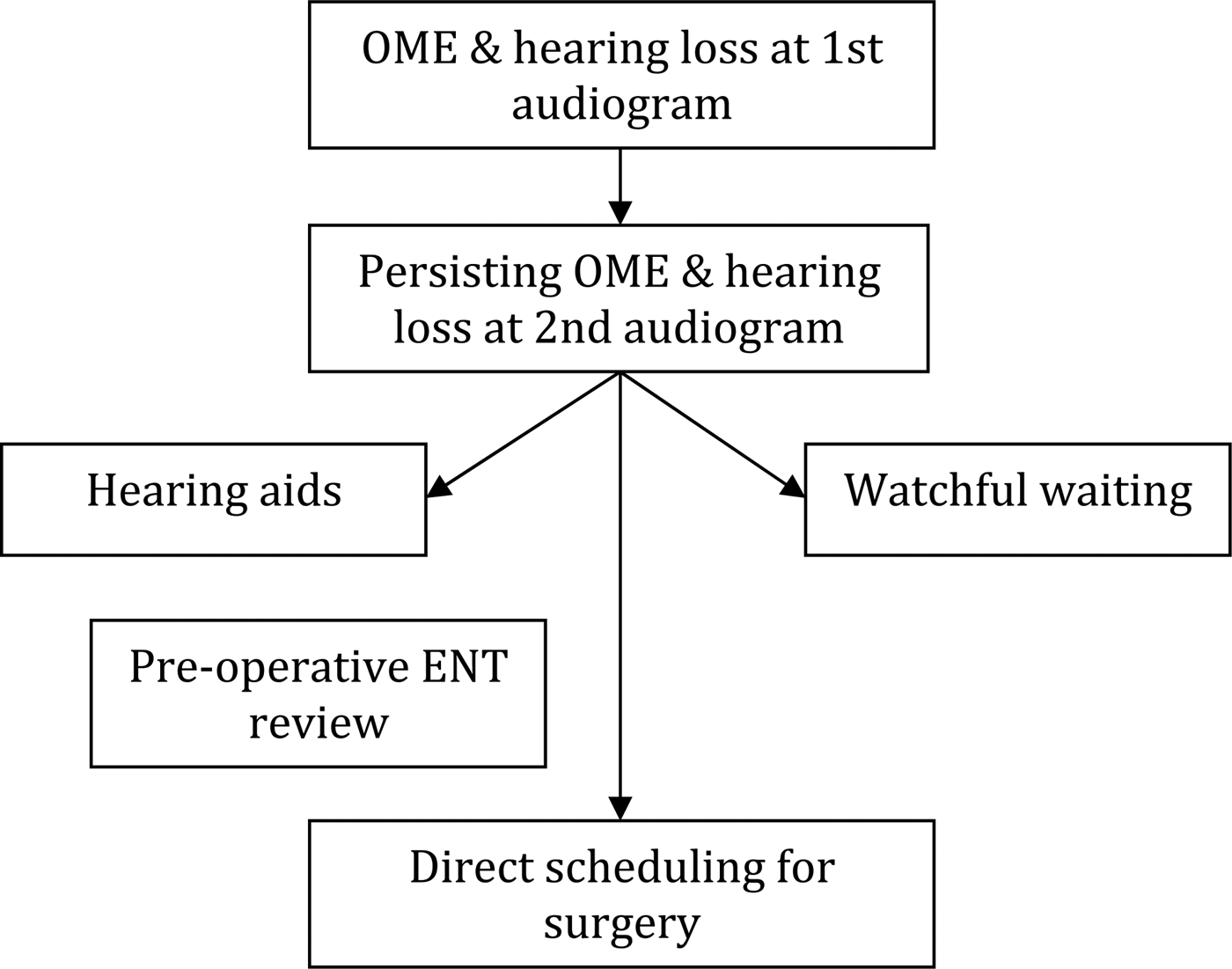
A new protocol was put in place whereby our audiology team, with the consent of the patients’ parents, could directly place patients who met the NICE Clinical Guideline 60 onto the surgical waiting list for grommets (Figure 2). This would be undertaken at the time of the second audiology assessment.
Modified pathway. OME = otitis media with effusion
Following the initial audiology assessment, patients and parents were provided with an information leaflet on otitis media with effusion (OME) and its treatment options, including watchful waiting, hearing aids, and details on the risks and benefits of grommet insertion, thereby initiating the consent process. Advice was also supplied regarding auto-inflation, according to the NICE Clinical Guideline 60.
If OME persisted at the second audiology assessment, parents were given the choice of further watchful waiting, hearing aids or grommets. If grommets were selected, the child was added to the waiting list directly by the audiologist. Audiologists were also provided with screening questions for parents regarding adenotonsillar symptoms. If these symptoms were present, extra time would be allowed on the potential operating schedule for additional adenotonsillar surgery, pending final approval by the ENT surgeon at the pre-operative ENT appointment.
At the pre-operative ENT out-patient appointment (usually around three weeks before surgery), parents would have the chance to discuss the operation further and decide if they still wanted to proceed. The ENT surgeon would make the final decision about whether the surgery was appropriate and whether any additional procedures were required whilst the patient was under anaesthetic.
In the original pathway, patients with OME were referred to ENT for a management decision if they met NICE Clinical Guideline 60 criteria. Hence, a delay existed between audiology referral and scheduling for surgery. The new pathway was designed so that following a second audiology assessment, appropriate patients could be simultaneously scheduled for grommet insertion and booked into a pre-operative ENT out-patient clinic in the intervening period. This removed the waiting time between audiology referral and entry onto the waiting list (and therefore reduced the overall length of the pathway), but still ensured that no step of the traditional pathway was missed.
Following implementation of the new pathway (in January 2015), data were collected over a six-month period from June to November 2015, whilst running the new protocol. Patients were again excluded if they deviated from the standard pathway.
Results
In the first data collection period, between June and November 2014, 63 patients followed the pathway from the first audiology appointment to the day of surgery. Forty-three of these patients underwent grommet insertion only, 16 underwent adenoidectomy and grommet insertion, and the remaining 4 underwent adenotonsillectomy and grommet insertion.
The new streamlined pathway was implemented in January 2015. In the 6-month period from June to November 2015, following implementation of the new direct-listing pathway, 22 patients followed the pathway from the first audiology appointment to the day of surgery. Fifteen patients underwent grommet insertion only, five underwent adenotonsillectomy and grommet insertion, one underwent adenoidectomy and grommet insertion, and one underwent tonsillectomy and grommet insertion.
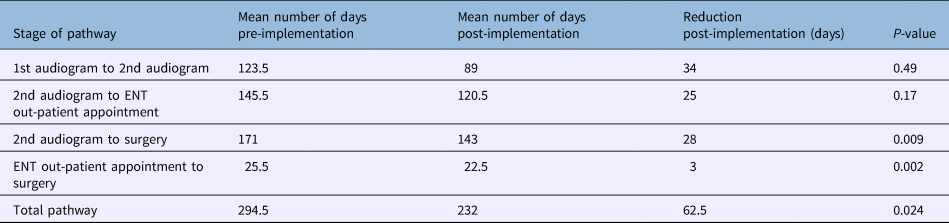
Table 1 summarises the results, and demonstrates a reduction in the number of days between appointments following the implementation of the new pathway.
Mean number of days pre- and post-implementation of pathway

An independent samples t-test revealed that the new pathway led to a significant reduction in the total number of days from the first audiology assessment to grommet surgery (total pathway) of 62.5 days (p = 0.024). The mean reduction in the time between the second audiology assessment and surgery was 28 days (p = 0.009) with the new pathway (Table 1).
Discussion
The introduction of the direct-listing pathway led to a statistically significant reduction in waiting time from the initial audiology assessment to the day of surgery. This pathway has improved efficiency, maintained a high standard of care and adhered to the NICE Clinical Guideline 60 for grommet insertion. The stage of the pathway that the intervention directly affected was the duration between the second audiology assessment and the day of surgery, which was reduced by a mean of 28 days (p = 0.009).
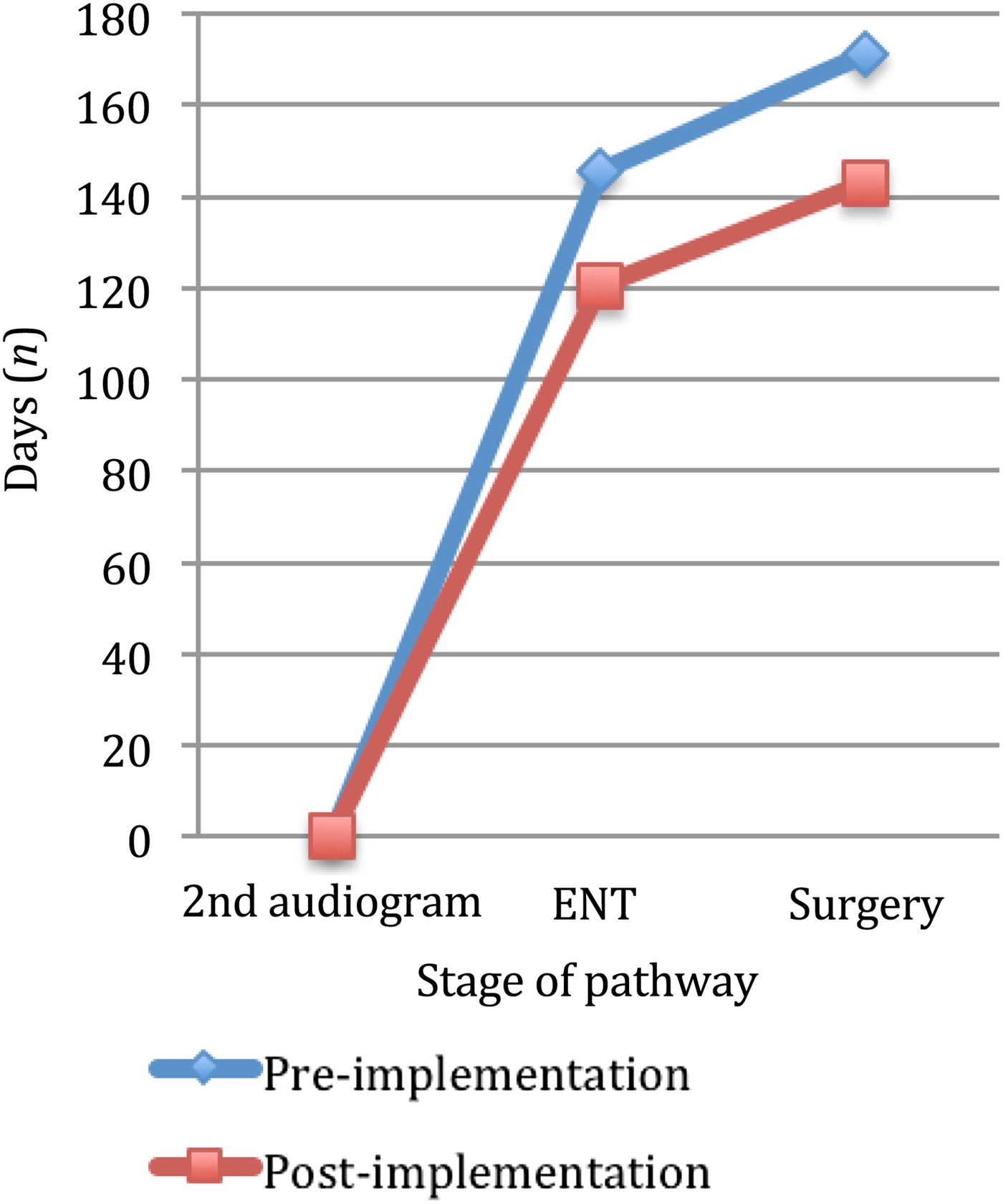
The time between the second audiology assessment and grommet surgery has been reduced by the implementation of the new system (Figure 3), with a resultant reduction in the total number of days on the pathway. Taken at face value, the mean reduction in total time for the streamlined pathway (62.5 days) is impressive. It is likely, however, that the summative effect of a non-significant, probably random variation in the first to second audiogram step contributed to this; the intervention was not designed to affect this step in the pathway, so it is the reduction in time between second audiogram and surgery that is of note. The reduction in time between the ENT appointment and surgery is purely a result of patients being booked in for clinic slots a few weeks pre-operatively, rather than an effect of the intervention.
Number of days following second audiology appointment.

The implementation of the new pathway has allowed our audiologists to initiate the consent and decision-making process for surgery. However, it is important to note that it is still the ENT surgeon who confirms the decision to proceed, in advance of the patient's surgery date (at the pre-operative out-patient appointment), and who completes the consent form with parents.
Being a new initiative, we currently have low numbers of patients who have followed the new pathway. It is a new protocol in the institution and places a greater responsibility on the audiology team regarding surgically based treatments. Additionally, the lower number of patients directly scheduled for grommets by the audiology department suggests that not all audiologists are confident in scheduling patients for surgery directly, and still refer a considerable number of patients via the traditional pathway. Alternatively, the low numbers of patients scheduled for surgery directly may reflect a tighter adherence to NICE guidelines by audiologists following a strict protocol.
• Grommet insertion is one of the commonest surgical procedures performed on children
• Given current pressures, there can be long waiting times for surgery at risk of breaching assigned targets
• Waiting for out-patient ENT appointments prior to scheduling for surgery can add an unnecessary delay
• National Institute for Health and Care Excellence guidelines allow audiologists to schedule patients for grommet surgery, speeding up referral to treatment times
In the senior author's practice, children should have an up-to-date audiogram conducted within the three months before grommet insertion. It had been hoped that by reducing the wait between the second audiogram appointment and surgery, unnecessary audiograms would be avoided. However, the median wait only fell to 126 days. This issue still needs addressing, as under a quarter of children (5 out of 22) had an audiogram that was in-date (less than 90 days old) on the day of surgery. Children should ideally proceed to surgery as soon as possible after the second audiogram appointment and decision to undergo surgery, given that the otitis media with effusion (OME) has already persisted for at least three months. Delays in care not only increase referral to treatment times, but also create unnecessary anxiety for both parents and children. Delays in improving a child's hearing could impede educational progression, and lead to speech and language delays. On the other hand, reducing the waiting time to surgery could mean that some children with OME which would have resolved, given some additional time, undergo an unnecessary surgical procedure. Whether the benefit of early grommet insertion for some children outweighs the risk of an unnecessary operation for others should be considered, but this is beyond the scope of this paper.
The ‘template’ for this pathway could be adapted for other surgical procedures. Enhancing access to services via direct booking for surgery in other specialties has shown some promise, though more research is needed.Reference Ballini, Negro, Maltoni, Vignatelli, Flodgren and Simera6 Improving waiting times for common surgical procedures is one way that departments can maximise efficiency and save valuable time for patients.
Competing interests
None declared