Introduction
Grasslands are among the most threatened biomes in the world mainly as a result of the large disparity between habitat loss and the low degree of protection (Azpiroz et al. Reference Azpiroz, Isacch, Dias, Di Giacomo, Fontana and Palarea2012, Sala et al. Reference Sala, Chapin, Armesto, Berlow, Bloomfield, Dirzo, Huber-Sanwald, Huenneke, Jackson, Kinzig, Leemans, Lodge, Mooney, Oesterheld, Poff, Sykes, Walker, Walker and Wall2000). These areas were among the first areas used for agriculture and cattle ranching due to their forage characteristics with herbaceous vegetation and shrub communities, resulting in continuing high pressure on this biome. In southern South America the grassland complex, also referred as the Rio de la Plata grasslands, is one of the most extensive ecosystems in the Neotropics with more than 70 million ha extending over four countries, with the highest proportion in Argentina (60%), followed by Uruguay (18%), Brazil (18%) and Paraguay (4%). It has been vastly transformed by the livestock industry, agriculture, and afforestation (Overbeck et al. Reference Overbeck, Muller, Fidelis, Pfadenhauer, Pillar, Blanco, Boldrini, Both and Forneck2007, Baldi and Paruelo Reference Baldi and Paruelo2008, Ramankutty et al. Reference Ramankutty, Evan, Monfreda and Foley2008). Grasslands in southern South America are considered one of the richest areas for plant biodiversity (Andrade et al. Reference Andrade, Marchesi, Burkart, Setubal, Lezama, Perelman, Schneider, Trevisan, Overbeck and Boldrini2018), and 450–550 bird species have also been recorded, of which at least 60 are considered to be grassland-dependent (Di Giacomo and Krapovickas Reference Di Giacomo and Krapovickas2005, Azpiroz and Blake Reference Azpiroz and Blake2009)
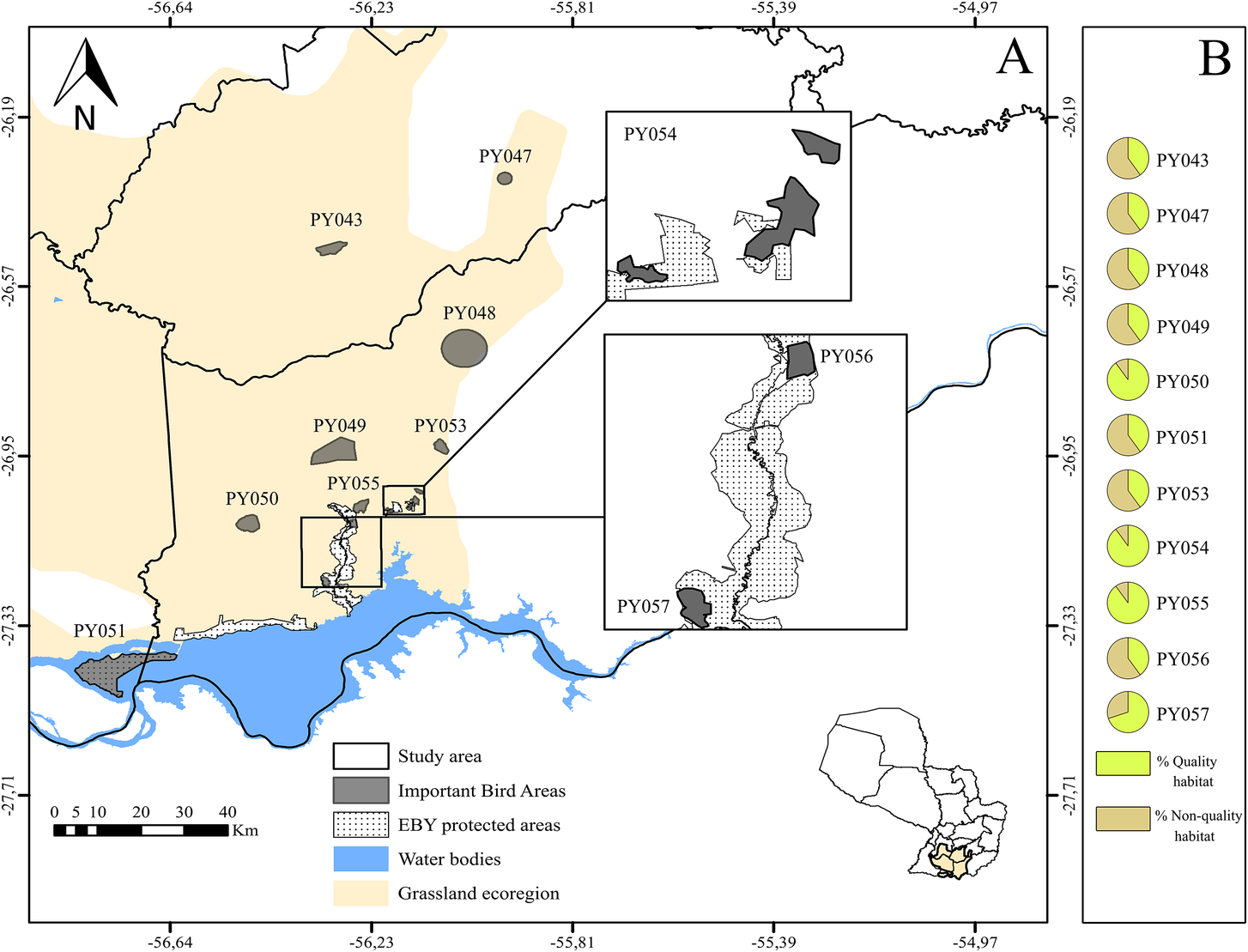
The Southern Paraguayan Grasslands (Azpiroz et al. Reference Azpiroz, Isacch, Dias, Di Giacomo, Fontana and Palarea2012), also referred to as South American Mesopotamian Savannas (Guyra Paraguay Reference Paraguay2008), have been recently considered as an extension of the Rio de la Plata grasslands (sensu Soriano et al. Reference Soriano, León, Sala, Lavado, Deregibus, Cauhepe, Scaglia, Velázquez, Lemcoff and Coupland1991) considering their vegetaion and bird assemblage affinities (Guyra Paraguay Reference Paraguay2005, Clay et al. Reference Clay, del Castillo and de Egea2008). These grasslands occupy an area of approximately 2,035,400 ha in central-southern Paraguay including the departments of Misiones, western Itapúa and Caazapá and the south of Paraguarí (Guyra Paraguay Reference Paraguay2008, Azpiroz et al. Reference Azpiroz, Isacch, Dias, Di Giacomo, Fontana and Palarea2012; Figure 1). The vegetation is characterised by extensive grasslands, dominated by herbaceous species, and wetlands on hydromorphic soils periodically flooded (“esteros”). Also, interspersed within this ecoregion, dune communities are found, where herbaceous vegetation of different heights is mixed with shrubby species. In the lowlands, which are susceptible to flooding, marsh and aquatic species are predominant (Guyra Paraguay Reference Paraguay2008).
(A) Map of the study area and 11 IBAs. Lower right, grassland ecoregion in southern Paraguay. (B) Maximun percentage of quality and non-quality habitat available for each IBA, based on the State analysis.

Despite the growing literature on the importance of grasslands for biodiversity (Kier et al. Reference Kier, Mutke, Dinerstein, Ricketts, Kuper, Kreft and Barthlott2005, Azpiroz and Blake Reference Azpiroz and Blake2009, Dengler et al. Reference Dengler, Janisova, Torok and Wellstein2014) and ecosystem services (Overbeck et al. Reference Overbeck, Muller, Fidelis, Pfadenhauer, Pillar, Blanco, Boldrini, Both and Forneck2007) worldwide, Paraguay has a forest-oriented legislation which allows grassland conversion under less demanding conditions. To date, grasslands are poorly protected within few protected areas: the south-west corner of San Rafael National Park, a small portion in south-east Lago Ypoa National Park, Macizo Acahay Natural Monument, Isla Susu Natural Monument, Yabebyry Wildlife Refuge, Ycua Bolaños Protected Landscape, Taypta Nature Reserve, Bosque Arary, Guasu Puku, Chopi Sa’yju, Isla Yacyreta and Aguapey Natural Reserves.
Grasslands in Paraguay have been historically viewed as landscapes for agriculture, afforestation (timber production) and cattle ranching, undervaluing their biodiversity and conservation value. One of the first approaches to recognize the importance of grasslands for biodiversity in the country was BirdLife International’s Important Bird Area (IBA) framework. This fine-grained prioritisation scheme started in Paraguay in 1997 when San Rafael was designated as the country´s first IBA. But it was not until the development of two national workshops in 2003 and later 2005, that this designation was completed and was published officially in 2008 (Guyra Paraguay Reference Paraguay2008).
At the global level, the IBA programme aims to identify, document and protect a network of sites critical for the long-term viability of bird populations. The selection of IBAs is achieved through the application of standardised and internationally recognized criteria, based upon accurate, up-to-date knowledge of bird species distributions and populations, allowing identification of sites that are consistent and comparable at subregional, regional and global levels. To qualify as an IBA, a site must fulfill at least one of four of the following criteria; it should hold 1) significant number of one or more species of global conservation concern, 2) significant populations of one or more restricted-range species, 3) a significant component of a group of species whose distributions are largely or wholly confined to one biome, or 4) significant number of one or more congregatory species. To the date, over 13,000 global and regional IBAs have been identified and documented in terrestrial, freshwater and marine ecosystems, making it the largest global network of sites of significance for biodiversity (Donald et al. Reference Donald, Fishpool, Ajagbe, Bennun, Bunting, Burfield, Butchart, Capellan, Crosby, Dias, Diaz, Evans, Grimmett, Heath, Jones, Lascelles, Merriman, O’Brien, Ramirez, Waliczky and Wege2019)
The use of this prioritisation scheme in Paraguay made evident, for the first time, the importance of grasslands for bird biodiversity. Paraguay then recognized 15 southern IBAs, representing 4.8% of the grassland ecoregion (Guyra Paraguay Reference Paraguay2008). However, the IBAs were not included in the national protected area system, leaving their conservation and management in the hands of private landowners. Some of these private owners in southern Paraguay include producers (soy, timber, rice), ranchers (cattle), NGOs, and independent entities, such as the Entidad Binacinal Yacyreta (EBY).
To assess the conservation status of the southern Paraguayan grasslands, we selected 11 IBAs within this ecoregion, representing 19% of all the country’s IBAs. We selected sites based on accessibility and type of protection (protected and unprotected). Our objectives were i) to assess the conservation status of the southern Paraguayan grasslands using IBAs and ii) to compare the conservation status between protected and unprotected IBAs. We expected to find better habitat conditions for the bird species for which the area was selected as an IBA (hereafter, trigger species) in areas within nature reserves. With this, we aimed to point out the urgent need to improve the national legislation system to protect grasslands and the need to strengthen alternative management options for unprotected IBAs.
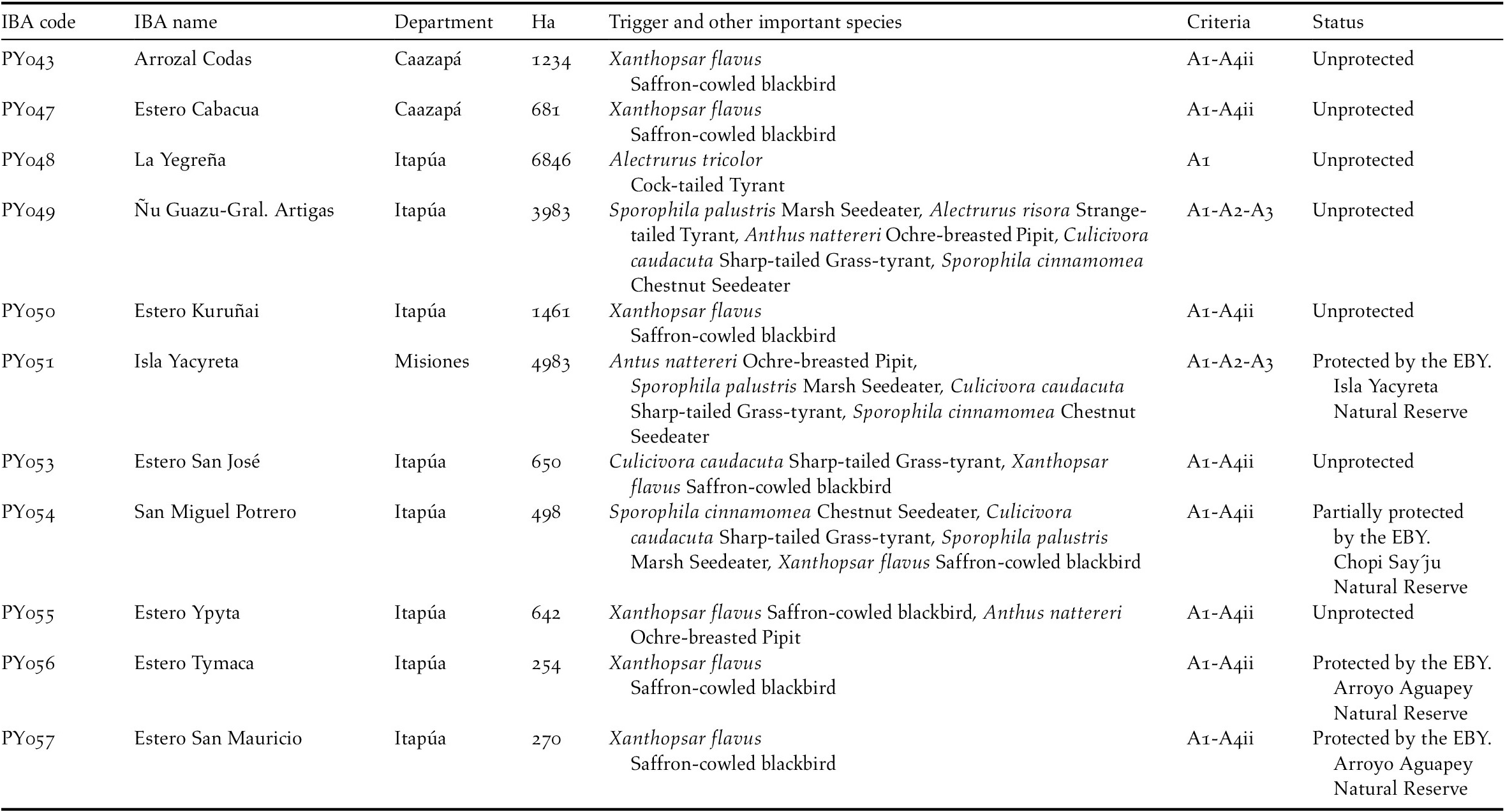
IBAs selected that are unprotected are PY043 Arrozal Codas, PY047 Estero Cabacua, PY048 La Yegreña, PY049 Ñu Guazu–Gral Artigas, PY050 Estero Kuruñai, PY053 Estero San José, PY055 Estero Ypyta; and protected within the EBY natural reserves are: PY051 Isla Yacyreta, PY054 San Miguel Potrero, PY056 Estero Tymaca and PY057 Estero San Mauricio (Table 1).
Important Bird Areas in southern Paraguay selected for the assessment. Source: Guyra Paraguay (Reference Paraguay2008).

A1: sites are defined as holding significant numbers of globally threatened species, or other species of global conservation concern
A2: sites are known or thought to hold a significant component of a restricted-range species
A3: sites are known or thought to hold a significant component of the group of species whose distributions are largely or wholly confined to one biome
A4ii: sites are known or thought to hold on a regular basis, 1% or more of the global population of a congregatory seabird or terrestrial species
Methods
Data collection
We used BirdLife International´s (2006) method that evaluates the i) State, which refers to the condition of the site, with respect of its important bird population, as the extent and quality of the habitat required by the trigger species, ii) Pressure, which refers to indicators that identify and track the major threats to important bird populations at the IBAs and iii) Response, which are indicators that identify and track conservation actions at the IBAs. For each IBA we used as trigger species the bird species by which the IBA was designated or considered a key conservation area. In this regard, we evaluated PY043, PY047, PY050, PY055, PY056 and PY057 for Saffron-cowled blackbird Xanthopsar flavus, PY048 for Cock-tailed Tyrant Alectrurus tricolor, PY049 for Marsh Seedeater Sporophila palustris, PY051 for Ochre-breasted Pipit Antus nattereri, PY053 for Sharp-tailed Grass-tyrant Culicivora caudacuta and PY054 for Chestnut Seedeater Sporophila cinnamomea (Table 1).
Data collection took place from December 2017 to December 2018. We visited each IBA and evaluated each site in the field by direct observations, and when possible using drone imagery to account for the extent of the threats and pressure. We visited the whole area of the IBAs within the EBY protected area system (PY051, PY054, PY056, PY57), however, other IBAs in private properties were evaluated from accessible public roads. In all cases, this allowed a complete evaluation of the IBA.
Conservation status assessment
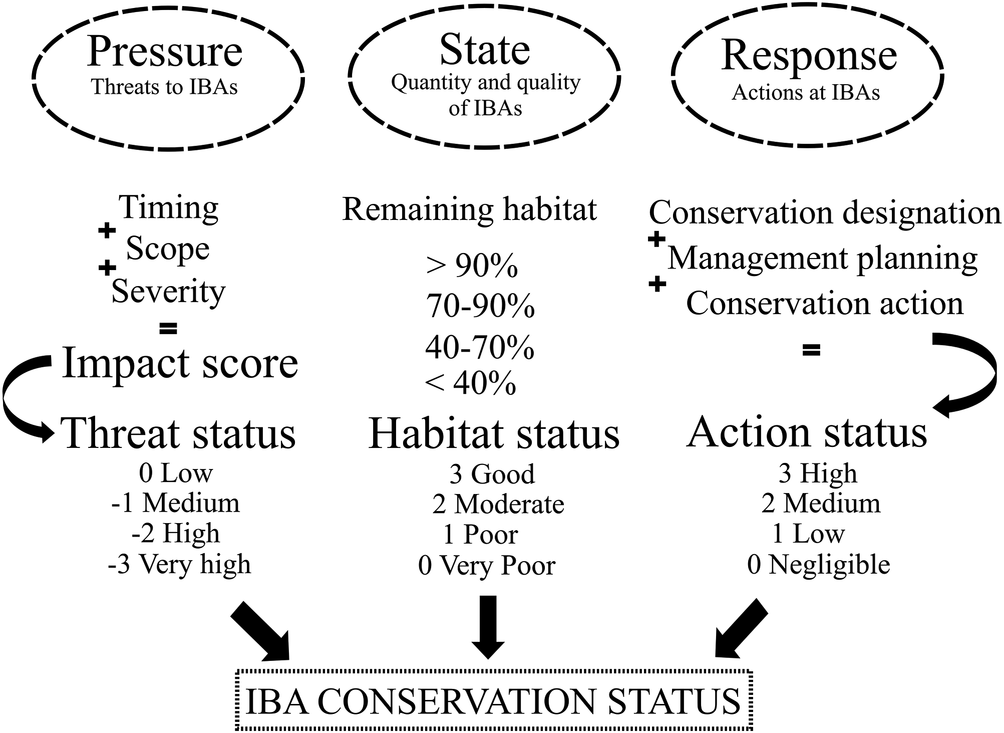
To assess the conservation status of the IBAs using the BirdLife International methodology we evaluated pressure, state and response in the field (Figure 2) as follow:
-
a) Scores for pressure
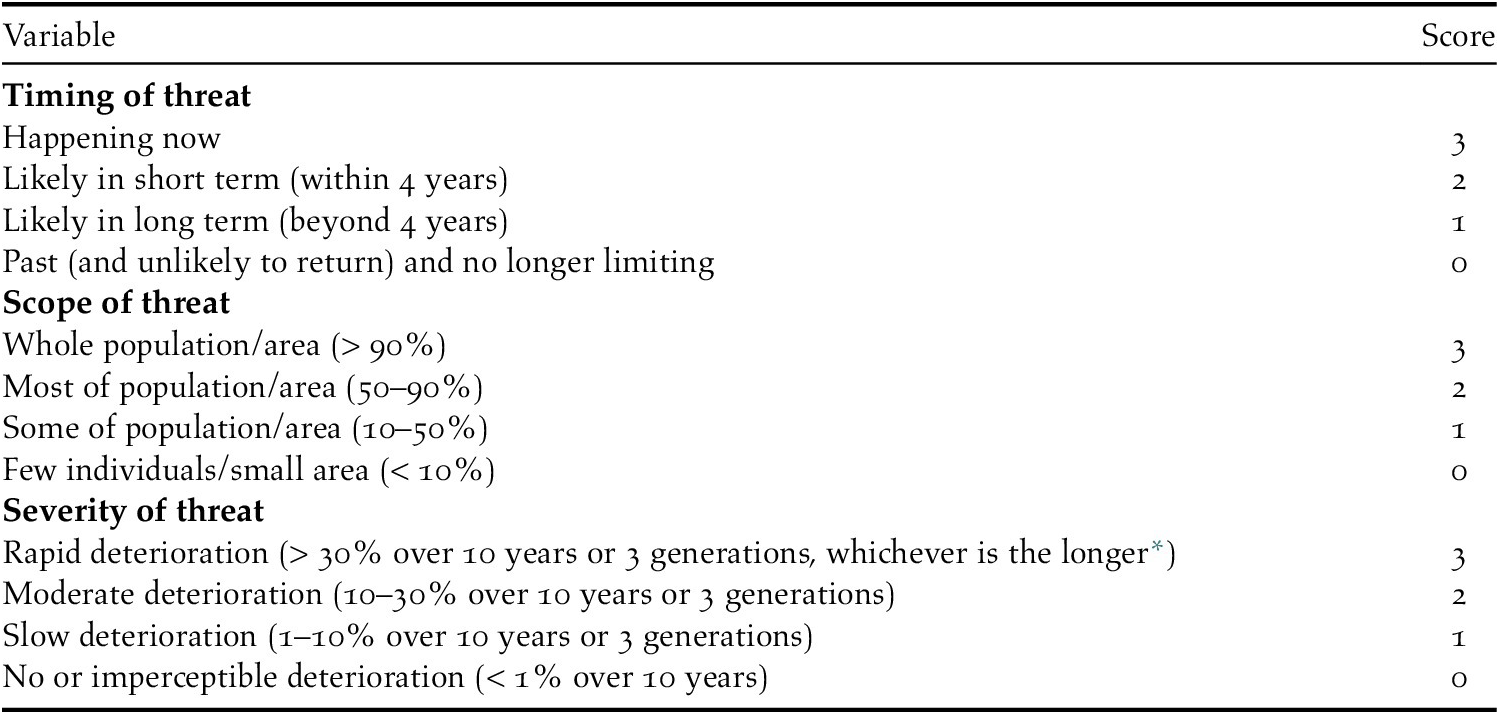
Scores for pressure were calculated by assessing threats according to three variables: timing, scope, and severity, in relation to how likely they are to affect the trigger species. Each variable was scored on a simple, four-point scale, from 0 to 3 (Table 2). For an overall impact score of each threat, scores of the three variables are added (Table 3). We used the “weakest link approach”, where the highest impact score of any threat or threats is then used to assign a threat status to the IBA.
-
b) Scores for state
Because detailed information on the population size of bird species of the IBAs was unavailable, the state of the area was scored based on the condition of the habitat considering on the trigger species. State scores are entered on a scale from 0 to 3 and were derived from the proportion of estimated optimum habitat area remaining and the estimated optimum habitat quality for the trigger species. This percentage is then adapted to a four-point scale, determining the state of the IBA (Table 4).
-
c) Calculating scores for response
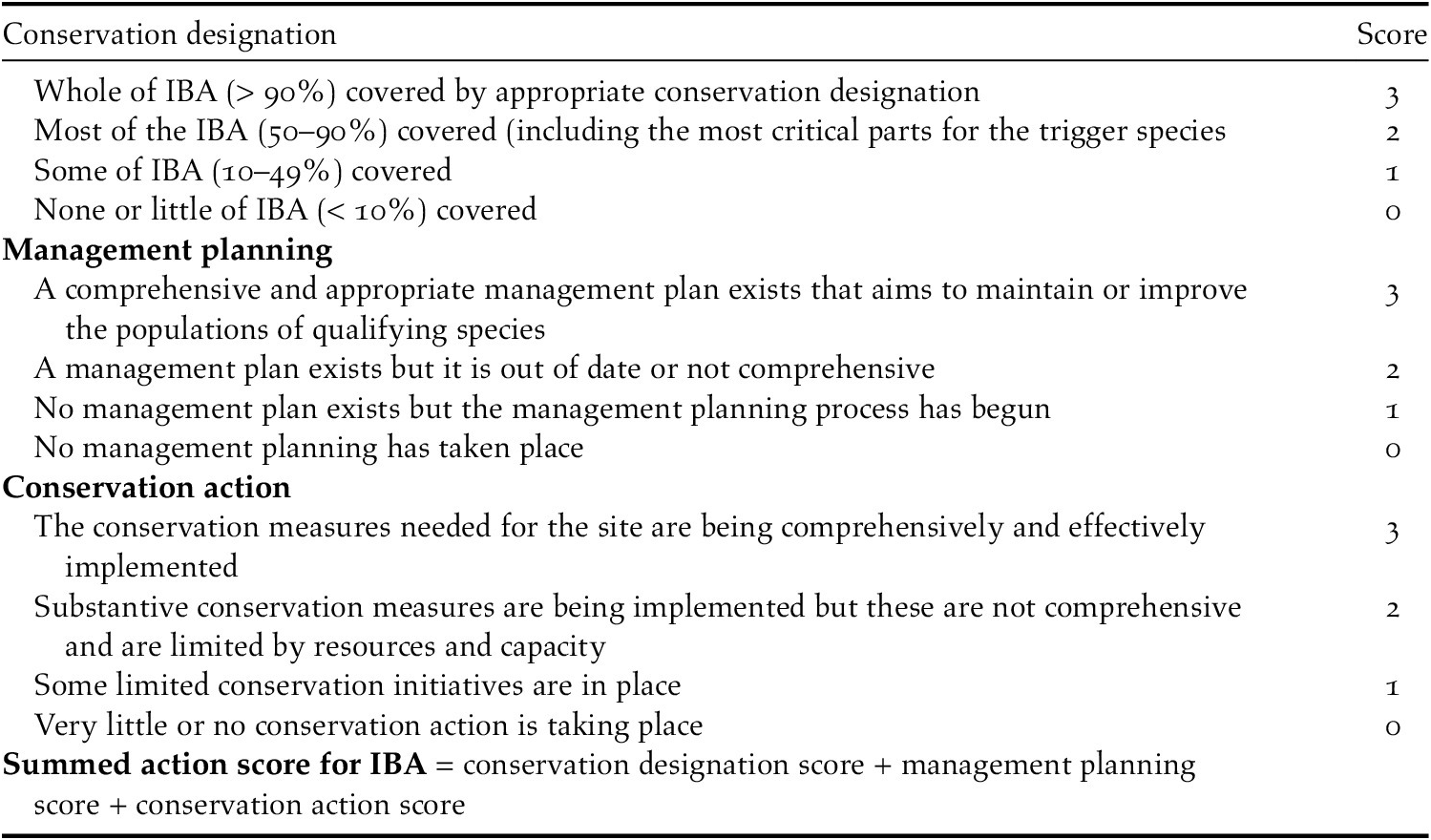
Response scores were based on the conservation actions taken at each IBA, which include the level of formal designation of the site as an area for conservation, the management planning and the implementation of conservation actions (Table 5). The overall response of the IBA derived from the sum of the scores into the three different types of action (Table 6).
The BirdLife International (2006) method used to evaluate the IBA conservation status.

System for determining timing, scope and severity scores, and overall impact, for threats to trigger species. Source: BirdLife International (2006).

* Generation length is the average age of parents of the current cohort
Impact score of threat to trigger species = timing score + scope score + severity score
Important: if the score for any of timing, scope or severity for a given threat = 0, then the impact score for that threat = 0. (This means that the impact score never has the value 1 or 2).
System for determining IBA pressure scores based on threat scores for individual trigger species. Source: BirdLife International (2006).

System for determining IBA state scores based on habitat area. Source: BirdLife International (2006).

System for determining scores for IBA response. Source: BirdLife International (2006).

System for determining IBA response scores based on summed action scores for the IBA.

Results
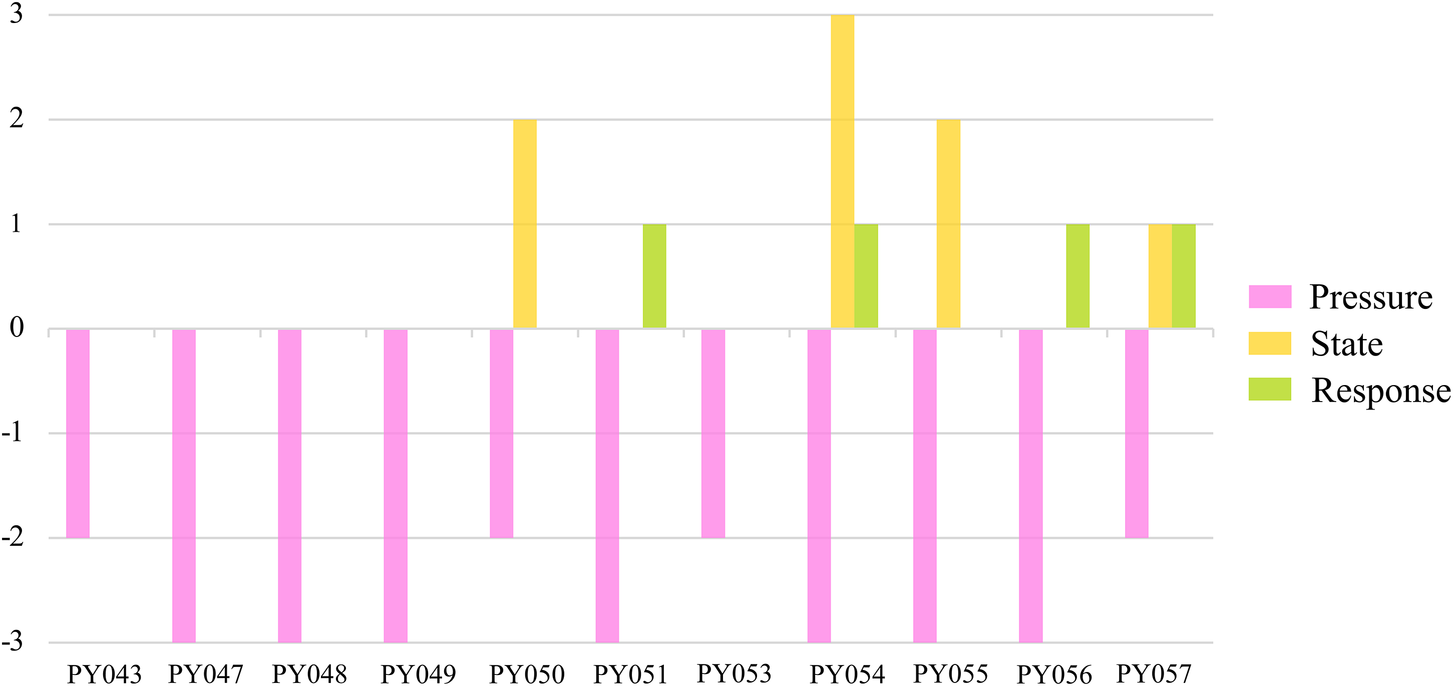
The IBAs evaluated represent 19% of all Paraguayan IBAs. Most areas presented very high levels of Pressure, indicating that the variables for each identified threat (timing, scope, and severity) contributed greatly with the overall status of the IBA. Also, the State of the areas was predominately Very poor to Poor, considering habitat quality. Similarly, the Response of the IBAs was mostly Low to Negligible, all regarding the trigger species (Figure 3).
Summary of results for Pressure, State and Response. X = IBAS: PY043 Arrozal Codas, PY047 Estero Cabacua, PY048 La Yegreña, PY049 Ñu Guazu – Gral Artigas, PY050 Estero Kuruñai, PY051 Isla Yacyreta, PY053 Estero San José, PY054 San Miguel Potrero, PY055 Estero Ypyta, PY056 Estero Tymaca and PY057 Estero San Mauricio. Y = scores for each variable. Note that some IBAs have a score of zero for State and Response, meaning very poor habitat quality (see Table 4) and a negligible response (see Table 6).

Pressure
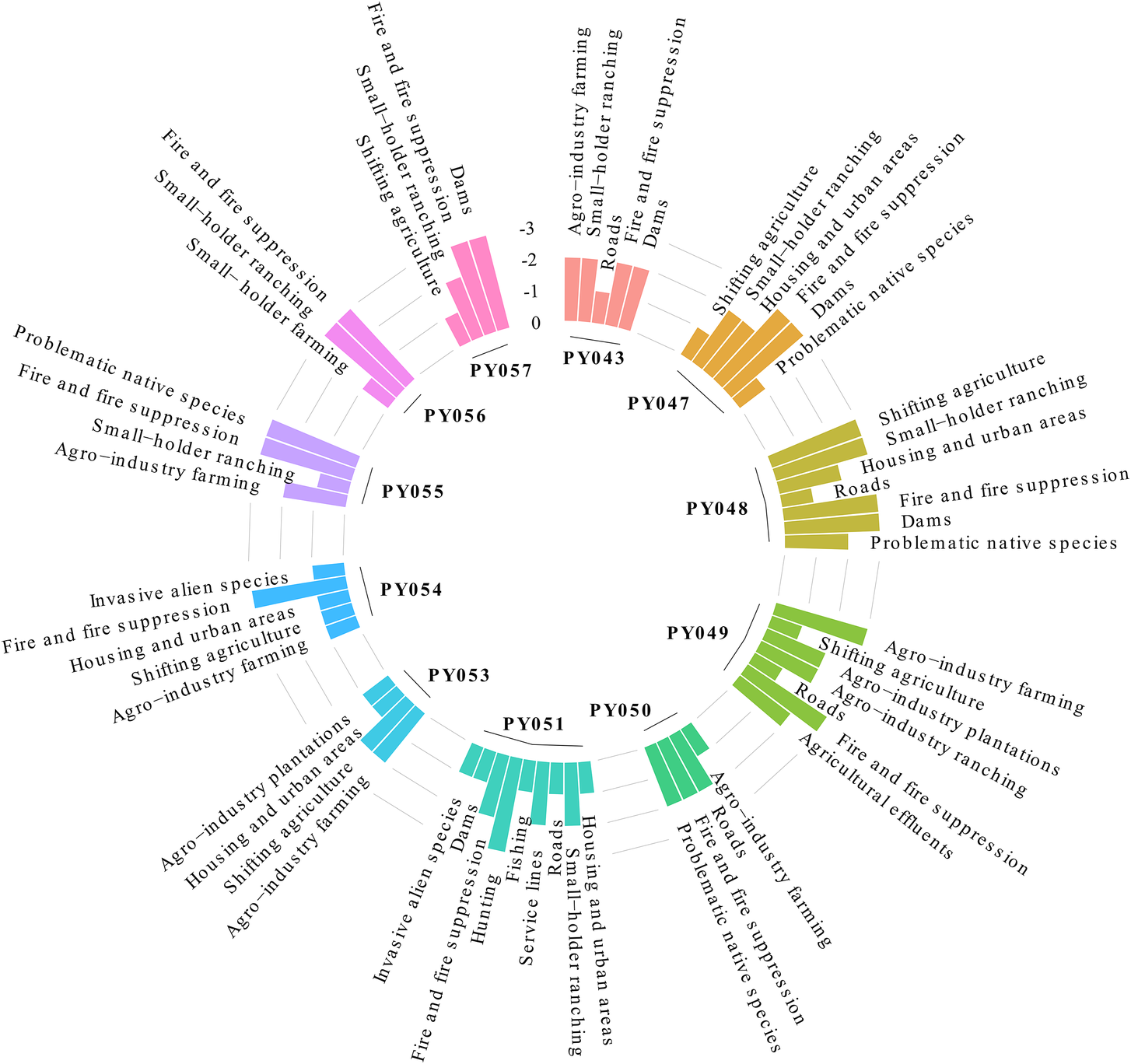
Overall, ecosystem modifications (fire and fire suppression), and agricultural expansion and intensification (farming and grazing) were identified as the major threats to the IBAs. Because all IBAs evaluated are grasslands, fire management plays a crucial role in preparing fields for crops and cattle. In addition, three types of agricultural expansion and intensification were identified for the IBAs: shifting agriculture, smallholder farming and agro-industry farming, with the predominant crop types being rice and soy. The scope of the threats varies, except when considering fire and fire suppression, in which case the scope of the threat was for the whole IBA. For agricultural expansion and intensification, timing and scope also vary, but in all IBAs it compromised greatly the state of the habitat. Rice plantations identified were old or inactive, or in some cases fields were prepared for planting. Regarding soy, when detected, there were active plantations in all IBAs. Another recurrent threat was livestock ranching and farming, both smallholder and agro-industry grazing. We noted that IBAs with smallholder grazing were overgrazed and with heavy loads of cattle, further contributing to soil degradation. Other threats identified for the IBAs were agro-industry plantations with eucalyptus, housing, and urban areas, roads, problematic native species, invasive alien species, dams, pollution, hunting, fishing and service lines (Figure 4).
Threat status scores (Pressure) for each threat identified for the 11 IBAs. IBAs names for given codes are PY043 Arrozal Codas, PY047 Estero Cabacua, PY048 La Yegreña, PY049 Ñu Guazu – Gral Artigas, PY050 Estero Kuruñai, PY051 Isla Yacyreta, PY053 Estero San José, PY054 San Miguel Potrero, PY055 Estero Ypyta, PY056 Estero Tymaca and PY057 Estero San Mauricio.

State
With respect to the trigger bird species for each IBA, the majority (64%) of the sites presented Very poor habitat (overall score of zero) with < 40% of the area qualified as optimum for its trigger species (PY043, PY047, PY048, PY049, PY051, PY053, PY056) (Figure 3). Examples are, PY053 (Estero San José) which has been severely altered, indicating that there is no remaining suitable habitat for Culicivora caudacuta ; and PY049 (Ñu Guazu-Gral. Artigas) that still holds enough habitat for seedeaters, as we had recorded few individuals of Sporophila cinnamomea, unfortunately, other insectivorous species, such as Strange-tailed Tyrant Alectrurus risora and Culicivora caudacuta were not recorded, presumably because the insect population has been affected by pesticides used in soy plantations within the IBA. On the other hand, the small proportion of grasslands protected in IBA PY051 (Isla Yacyreta) still holds enough habitat for Sporophila palustris, Culicivora caudacuta, Sporophila cinnamomea and Antus nattereri. Nonetheless, grasslands are occasionally used by local residents to feed cattle and are being increasingly occupied by invasive herbaceous species, which needs urgent management actions.
Poor habitat, with 40–70% of suitable area and good habitat with > 90% were each present on only one site (9%) (PY057 and PY054, respectively). Moderate habitat, with 70–90% of the area as optimum, was present for two sites (18%) (PY050 and PY055) (Figure 1). Overall, IBAs presented degraded habitat resulting from all threats listed above, with agriculture and overgrazing playing an important role affecting vegetation, soil, and water. IBAs with Moderate habitat quality (PY050 and PY055) have been altered but still have remaining suitable habitat for their trigger species Saffron-cowled Blackbird, as areas with a heterogeneous mosaic of shrubs and grasslands persist in between crops and livestock. However, PY055 does not hold remaining suitable habitat for other important species such as A. nattereri; there are no records of the species since 1998, despite numerous visits.
The only IBA with Good habitat quality remaining is PY 054 (San Miguel Potrero), as most of the area with natural grasslands is protected within the Chopi Sa´yju Natural Reserve (Figure 1). Good quality habitat remains for trigger species S. cinnamomea and other important species such as C. caudacuta, S. palustris and X. flavus. However, pressure of urban housing in the surrounding area further compromise the habitat quality as people might use grasslands for cattle grazing and occasionally start uncontrolled fires.
Response
Regarding the level of conservation response, the majority of the IBAs (63%) (PY043, PY047, PY048, PY049, PY050, PY053, and PY055) have a negligible response when considering conservation designation of the IBA, management planning and conservation actions, with regards to the trigger species. Four IBAs (PY051, PY054, PY056, and PY057) are currently protected as they are part of the Entidad Binacional Yacyreta (EBY) nature reserve system. IBAs PY051, PY056, and PY057 are 100% within the EBY protected area system, however these sites lack a comprehensive and appropriate management plan to maintain and/or improve the populations of the trigger species and very little to no specific conservation action has taken place, hence, their overall response was low. The case of PY054, where 15% of the IBA is protected within the Chopi Say´ju Nature Reserve shows the effectiveness of having the IBA in a protected area, as the only area with suitable habitat is inside the reserve. Nevertheless, no management plan or specific conservation action has taken place. The remaining area of the IBA, outside the reserve has been transformed into croplands.
Discussion
Our IBA reassessment using the BirdLife International methodology highlights the urgent need to establish stronger conservation actions for natural grasslands in southern Paraguay, as 10 years after their designation these areas have almost completely disappeared. The current conservation status of the southern Paraguayan grasslands within IBAs reflects the growing demand for natural resources especially for natural grasslands in forest-oriented legislation to protect biodiversity. Whereas continued attention to deforestation is of high and priority importance for Paraguay, debate on only forested ecosystems obscures the ongoing agricultural conversion of non-forested ecosystems, such as natural grasslands. To avoid losing more grassland biodiversity, sustainable and conservation land-use policies in Paraguay need to be expanded. However, we recognize that due to the ecological distinctiveness of grasslands (Overbeck et al. Reference Overbeck, Muller, Fidelis, Pfadenhauer, Pillar, Blanco, Boldrini, Both and Forneck2007, Veldman et al. Reference Veldman, Buisson, Durigan, Fernandes, Le Stradic, Mahy, Negreiros, Overbeck, Veldman, Putz and Bond2015), their conservation often requires different strategies than those for forests.
The identification of IBAs in natural grasslands was the first approach to recognize this ecosystem as important and valuable in Paraguay, but the identification of the IBA is just the first step in its conservation (Donald et al. Reference Donald, Fishpool, Ajagbe, Bennun, Bunting, Burfield, Butchart, Capellan, Crosby, Dias, Diaz, Evans, Grimmett, Heath, Jones, Lascelles, Merriman, O’Brien, Ramirez, Waliczky and Wege2019). At a global level, IBAs, particularly unprotected ones, are losing their ecological integrity and ecosystem services as they suffer from increasing pressure from human activities, degrading their natural habitat and reducing the populations of the trigger species (Waliczky et al. Reference Waliczky, Fishpool, Butchart, Thomas, Heath, Hazin, Donald, Kowalska, Dias and Allinson2019).
In Paraguay, this drastic transformation of grasslands has had an effect on other emblematic fauna, such as the pampas deer Ozotoceros bezoarticus, which has been deeply affected by habitat modification, fragmentation (Cartes et al. Reference Cartes, Cuellar, del Castillo, Neris, Saldivar, Thompson and Velilla2017) and possibly competition for forage in southern Paraguay, and similarly in Uruguay (Cosse et al. Reference Cosse, Gonzalez and Gimenez-Dixon2009) and Argentina (Demaria et al. Reference Demaria, McShea, Koy and Maceira2004). Similarly, the rich avifauna of grassland-specialist species, of which in Paraguay approximately 10 are threatened at global level and 13 at national level (SEAM 2006a, 2006b) are in danger and are possibly following neighbouring patterns where most grassland bird populations have declined significantly or are very fragmented (Develey et al. Reference Develey2008, Di Giacomo and Krapovickas Reference Di Giacomo and Krapovickas2005).
As mentioned earlier, the legal framework for the protection of grasslands in Paraguay is weak to non-existent, and IBAs are currently not part of the protected area system, despite continuous lobbying efforts with the Ministry of Environment and Sustainable Development (MADES). Adding to these challenges is the fact that most IBAs are on producers’ private properties, and most of the landowners are not aware that their properties have been selected as IBAs. On the other hand, the conservation status of IBAs within the EBY nature reserves has been more positive overall, as shown for PY 054 (San Miguel Potrero) where the only area not transformed is inside the protected area. However, the lack of proper species conservation plans and management of grasslands puts in risk the future ecological integrity of these areas. We strongly encourage the EBY to start comprehensive management plans to maintain and improve populations of grassland bird and conserve the ecological integrity of this ecosystem.
In addition, IBAs evaluated and presented here are located within low-income rural communities where poverty levels are high, and lands for ranching and farming are overused. Some areas are communal lands where small but continuous cattle ranching has resulted in very degraded soils and overgrazing. Also, old rice plantations were a common scenario in certain localities, as some areas are rented (to develop monoculture agriculture for a while), and then abandoned in worse condition. This scenario leads to invasive species (native or exotic) taking over, and significantly modifying the quality of the habitat for the trigger species. Also, afforestation with eucalyptus, developed as fuel-wood sources, is a growing threat in all southern grassland ecosystems worldwide (Neke and Du Plessis Reference Neke and Du Plessis2004). This threat was only observed in one IBA, but we observed major developments in other grasslands, which indicates that the threat is likely to become more severe in the coming years. As most grassland birds are ground-nesting and open-habitat specialists, afforestation has marked negative effects due to the change of environmental conditions and disruption of ecological processes (Dias et al. Reference Dias, Bastazini, Goncalves, Bonow and Muller2013, Dotta et al. Reference Dotta, Phalan, Silva, Green and Balmford2016). For example, plantations will offer few nest sites and increase nest predation risk at the grassland-plantation edge (Ellison et al. Reference Ellison, Ribic, Sample, Fawcett and Dadisman2013). Additionally, many grassland species have evolved with avoiding behaviour towards woody vegetation (Bakker Reference Bakker2003).
Moreover, we identified fire and fire suppression as a major threat; contributing to the threat status score in seven out of 11 of the studied IBAs. However, depending on the site and conditions of the surroundings, the reasons for considering fire a threat were different. In rural areas, it is a very common practice to burn lands to prepare them for foraging, and it is done without consideration of bird ecology, threatening nests and compromising its habitat. On the other hand, historically proper and controlled fire management is not a common practice in grasslands, even in protected areas, as some areas have a fire suppression policy which favors woody encroachment, potentially leading to the disappearance of some grasslands with high conservation values (Ratajczak et al. Reference Ratajczak, Nippert and Collins2012, Grau et al. Reference Grau, Torres, Gasparri, Blendinger, Marinaro and Macchi2015) having also a negative effect in grassland birds (Coppedge et al. Reference Coppedge, Fuhlendorf, Harrell and Engle2008). At national level, Law Nº 4014/10 "De prevención y control de incendios” regulates the practice of fire in Paraguay and prohibits the non-controlled burning of grasslands. We believe this law should be reviewed and regulated to further protect vulnerable ecosystems such as grasslands.
Our findings further show the negative effects of heavy grazing, croplands and timber production on grassland bird communities. More importantly, these results provide useful information not only to decision-makers, but to local partners for considering these areas as IBAs, as most of them no longer hold quality habitat for the trigger species and fail to fulfill the IBA requirement. However, we recommend that this decision also considers habitat restoration cost and possibilities. If the decision turns towards abandoning these sites as IBAs, we recommend estimating the cost to the proponents of these sites of removing these areas as important for bird and biodiversity conservation. On the other hand, further work should focus on proposing new important bird areas in southern Paraguay and improving the work with landowners to explore management alternatives on their land.
Our experience has shown that interest in preserving grassland habitat and bird species exists among private landowners, but income alternatives to land-use change must be developed and technical assistance must be made available to implement good management practices. The Southern Cone Grassland Alliance (formed by BirdLife International partners in Uruguay, Paraguay, Argentina, and Brazil) encourages the development of a “bird-friendly” natural grasslands beef certification scheme. Meat products bearing the Alliance’s Saffron-cowled Blackbird logo command much higher prices than feedlot beef. Furthermore, in 2013, MADES made the first steps towards the promotion of alternatives to conversion in grasslands, with a resolution that allowed grassland ecosystems to be part of the Payment for Ecosystem Services Law (Law Nº 3001/06 "De valoración y retribución de servicios ambientales"). MADES endorsed the methodology to calculate the Grassland Conservation Index (GCI) (Parera and Viglizzo Reference Parera, Viglizzo, Perera, Paullier and Weyland2014), a statistical tool to calculate the contribution of the grassland to conserving biodiversity (Resolution Nº 289/13), making this a valid incentive for landowners.
Finally, continuous IBA monitoring is crucial and urgent to detect threats and impacts, monitor trends and tackle them over time. However, field-based monitoring is expensive both in time and resources, so we encourage to explore other possibilities such as the promotion of local conservation groups to enhance in situ monitoring, this might also be strengthened by the use of citizen science tools such as eBird (Donald et al. Reference Donald, Fishpool, Ajagbe, Bennun, Bunting, Burfield, Butchart, Capellan, Crosby, Dias, Diaz, Evans, Grimmett, Heath, Jones, Lascelles, Merriman, O’Brien, Ramirez, Waliczky and Wege2019, Sullivan et al. Reference Sullivan, Aycrigg, Barry, Bonney, Bruns, Cooper, Damoulas, Dhondt, Dietterich, Farnsworth, Fink, Fitzpatrick, Fredericks, Gerbracht, Gomes, Hochachka, Iliff, Lagoze, La Sorte, Merrifield, Morris, Phillips, Reynolds, Rodewald, Rosenberg, Trautmann, Wiggins, Winkler, Wong, Wood, Yu and Kelling2014).
In conclusion, the integrity and the future of grasslands remain questionable until strict measures are taken, such as, i) the inclusion of grassland ecosystems into the protected area system, ii) development policies of fire management to landowners, iii) better engage the private sector and other stakeholders in biodiversity monitoring and management.
Acknowledgements
We thank the Entidad Binacional Yacyreta (EBY) who provided funding for the developing of this project. The publication of results has been properly authorized by the EBY on August 22nd, 2019 (Nota D/D Nº93052). Also, VRB, HCB, and HdC thank the National Science Council (CONACYT) and the PRONII program. We thank Lic. José Luis Cartes for guidance and constant support as the current CEO of Guyra Paraguay. We would like to dedicate this article to Dr. Vicente Ramirez Imas, who passed away during this research, as he actively supported this work and impulse research in the EBYs protected areas, hoping his legacy will persist.