Introduction
Cannabis sativa L. is an ancient plant well known for pharmacological and psychotropic properties. It is rich in phytocannabinoids, a class of terpenophenolic compounds, including the delta-9-tetrahydrocannabinol (THC) and cannabidiol (CBD) (Landa et al., Reference Landa, Sulcova and Gbelec2016). THC is more related to the psychotropic effects of the plant, while CBD is more related to the therapeutic effects (Greb and Puschner, Reference Greb and Puschner2018). More than 100 cannabinoids have been isolated from leaves and flowers (Thomas and ElSohly, Reference Thomas and ElSohly2016).
Cannabinoids exert their actions by binding with cannabinoid receptors (mainly CB1 and CB2) widely distributed in the peripheral and central nervous systems of human beings and other animals (Greb and Puschner, Reference Greb and Puschner2018). These receptors play important roles in many physiological processes such as pain, inflammation, immune function, and anxiety (Hartsel et al., Reference Hartsel, Boyar, Pham, Silver, Makriyannis, Gupta, Srivastava and Lall2019; Repetti et al., Reference Repetti, Girio, Friolani and Barbalho2019). Moreover, the anticonvulsant effects of CBD appear to be due to the binding of specific transient receptor potential channels, which leads to decreased release of glutamate, activation of 5-hydroxytryptophan 1A receptors, and inhibition of adenosine reuptake (Carrier et al., Reference Carrier, Auchampach and Hillard2006; De Petrocellis et al., Reference De Petrocellis, Ligresti, Moriello, Allarà, Bisogno, Petrosino, Stott and Di Marzo2011; Campos et al., Reference Campos, Ferreira and Guimarães2012; Sylantyev et al., Reference Sylantyev, Jensen, Ross and Rusakov2013).
Cannabis is used in the treatment of several illnesses and conditions in people, such as pain relief, epilepsy, nausea and vomiting, anorexia, anxiety, among others (Pratt et al., Reference Pratt, Stevens, Thuku, Butler, Skidmore, Wieland, Clemons, Kanji and Hutton2019). However, its use is illegal in some countries due to psychoactive effects and addictive potential (Landa et al., Reference Landa, Sulcova and Gbelec2016). At the same time, in other countries, the use of cannabis-based products is already legal (Hall et al., Reference Hall, Stjepanović, Caulkins, Lynskey, Leung, Campbell and Degenhardt2019).
The legislation for the use of cannabis is different in several parts of the world. In Brazil, its use for animals is not authorized, not even as an isolated compound. The US Food and Drug Administration (FDA) does not recommend the use of cannabis in animals, but prescription of dosage forms containing CBD or THC is a reality. Similarly, the European Union does not yet approve any use of these compounds by their regulatory agency (De Briyne et al., Reference De Briyne, Holmes, Sandler, Stiles, Szymanski, Moody, Neumann and Anadón2021; FDA, 2021).
Several studies involving cannabis have been explored in human beings, although the quality of evidence is still uncertain (Mücke et al., Reference Mücke, Phillips, Radbruch, Petzke and Häuser2018; Fisher et al., Reference Fisher, Moore, Fogarty, Finn, Finnerup, Gilron, Haroutounian, Krane, Rice, Rowbotham, Wallace and Eccleston2021; McKee et al., Reference McKee, Hmidan, Crocker, Lam, Meyer, Crockford, Trépanier, Aitchison and Tibbo2021). On the other hand, it is little explored as a source of nutrients, raw material for manufacturing, and textiles (Citti et al., Reference Citti, Linciano, Russo, Luongo, Lannotta, Maione, Laganà, Capriotti, Vandelli, Gigli and Cannazza2019), as well as in veterinary medicine (Kogan et al., Reference Kogan, Schoenfeld-Tacher, Hellyer and Rishniw2019). Because cannabis-derived products have become more available, veterinarians are seeing an increased interest among animal owners in the therapeutic use of these products for their pets (De Briyne et al., Reference De Briyne, Holmes, Sandler, Stiles, Szymanski, Moody, Neumann and Anadón2021). Although these products may have promise for therapeutic use, veterinarians face a major challenge in the medicinal use of cannabis in animals due to the lack of sufficient evidence-based studies (Ritter et al., Reference Ritter, Zadik-Weiss, Almogi-Hazan and Or2020; De Briyne et al., Reference De Briyne, Holmes, Sandler, Stiles, Szymanski, Moody, Neumann and Anadón2021). Therefore, this systematic review was performed to summarize and evaluate the evidence regarding the efficacy or safety of cannabis in the treatment of animal disease in order to assist veterinarians, veterinary researchers, and veterinary pharmacists.
Method
The protocol of this systematic review was registered on the Open Science Framework (https://doi.org/10.17605/OSF.IO/4UGFE). This review followed the Preferred Reporting Items for Systematic reviews and Meta-Analyses statement (PRISMA) 2020 checklist and reporting guideline (Page et al., Reference Page, McKenzie, Bossuyt, Boutron, Hoffmann, Mulrow, Shamseer, Tetzlaff, Akl, Brennan, Chou, Glanville, Grimshaw, Hróbjartsson, Lalu, Li, Loder, Mayo-Wilson, McDonald, McGuinness, Stewart, Thomas, Tricco, Welch, Whiting and Moher2021).
Search strategy
A comprehensive literature search was conducted to identify relevant studies published until 16 March 2021, in the MEDLINE (PubMed), Embase, Scopus, Web of Science, and LILACS (Latin American and Caribbean Health Sciences Literature) databases. The search strategy included combinations of terms relating to cannabis and veterinary medicine. The full strategies search for all databases can be found in the S1 Appendix. In addition, a grey literature search in Google Scholar up to the third page of results was performed, excluding patents and citations, to identify studies not indexed in the aforementioned databases. References found in included studies were evaluated, to include any previously unidentified studies. No language restriction was applied. Duplicated studies were eliminated.
Study selection
Randomized clinical trials (RCTs) that described the efficacy or safety of cannabis in monotherapy or as an adjuvant in the treatment of animal disease were eligible for inclusion. Studies that were excluded were those that did not describe the use of cannabis in the treatment of animal disease, used cannabis in healthy or disease-induced animals, used cannabis in human beings, were pharmacokinetics studies, pre-clinical studies, observational studies, editorials, letters, comments, conference proceedings or abstracts, reviews, and qualitative studies.
Two authors (NRS and ECRA) independently screened the titles and abstracts of citations to identify potentially relevant studies. Full-text articles were obtained and reviewed according to the inclusion criteria. When the full texts of the articles in the databases could not be obtained, the corresponding authors were contacted by email or through ResearchGate (http://www.researchgate.net). Third (TML) and fourth (MBV) authors resolved any disagreements or doubts.
This process was performed using Rayyan QCRI (Ouzzani et al., Reference Ouzzani, Hammady, Fedorowicz and Elmagarmid2016), a free web application designed to help researchers working on systematic reviews.
Data extraction
For each included study, characteristics of the study, such as author, year, type of RCT, disease, animals involved and breed, sample size (control and intervention group), formulation of the cannabis-based product, dosage, route of administration, comparator, outcome measures, and the main results of efficacy and/or safety were extracted. Two authors (NRS and ECRA) independently completed the data extraction, using a preformatted spreadsheet in Microsoft Excel. Disagreements were resolved by discussion with the third (TML) and fourth (MBV) authors.
Risk-of-bias assessment
The Revised Cochrane Risk of Bias Tool for Randomized Trials (RoB 2) was used to assess the risk of bias of each included RCT (Sterne et al., Reference Sterne, Savović, Page, Elbers, Blencowe, Boutron, Cates, Cheng, Corbett, Eldridge, Emberson, Hernán, Hopewell, Hróbjartsson, Junqueira, Jüni, Kirkham, Lasserson, Li, McAleenan, Reeves, Shepperd, Shrier, Stewart, Tilling, White, Whiting and Higgins2019). Bias is assessed in five domains, including the randomization process, deviations from the intended interventions, missing outcome data, measurement of the outcome, and selection of the reported result. Responders answer one or more questions in each domain (Sterne et al., Reference Sterne, Savović, Page, Elbers, Blencowe, Boutron, Cates, Cheng, Corbett, Eldridge, Emberson, Hernán, Hopewell, Hróbjartsson, Junqueira, Jüni, Kirkham, Lasserson, Li, McAleenan, Reeves, Shepperd, Shrier, Stewart, Tilling, White, Whiting and Higgins2019). Each item was classified as low, some concerns, or as high risk of bias, and the overall risk of bias was obtained by algorithm results of judgment available in excel tool (http://www.riskofbias.info). Two investigators independently (TML and MBV) conducted the evaluation of the studies and any disagreements were resolved by consensus.
Data synthesis
The characteristics of the studies were descriptively summarized as a narrative synthesis, using structured tables, once the data were too heterogeneous to be pooled. Included studies were grouped by disorder (osteoarthritis, epilepsy, and behavioral disorder) and the clinical heterogeneity was assessed by indication, CBD, and outcome. The outcome measures of each study were expressed depending on what the authors had reported.
Results
Search results
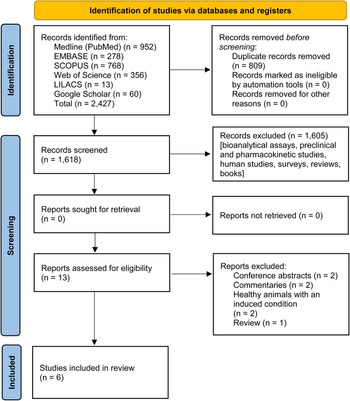
The electronic search identified 2427 potentially relevant records. After removing duplicates and reviewing the titles and abstracts, 13 articles were selected for full-text examination. No relevant studies were identified in the reference lists of the included studies. Of these, six studies met the inclusion criteria for review. Figure 1 shows a flowchart of the literature search. The excluded studies and the reasons for their exclusion are detailed in the S2 Appendix.
Study selection flowchart through literature search.

Characteristics of the included studies
The characteristics of the six RCTs included in this systematic review are summarized in Table 1. Studies were conducted in the USA (n = 4) (Gamble et al., Reference Gamble, Boesch, Frye, Schwark, Mann, Wolfe, Brown, Berthelsen and Wakshlag2018; McGrath et al., Reference McGrath, Bartner, Rao, Packer and Gustafson2019; Verrico et al., Reference Verrico, Wesson, Konduri, Hofferek, Vazquez-Perez, Blair, Dunner, Salimpour, Decker and Halpert2020; Mejia et al., Reference Mejia, Duerr, Griffenhagen and McGrath2021) and Italy (n = 2) (Brioschi et al., Reference Brioschi, Di Cesare, Gioeni, Rabbogliatti, Ferrari, D'Urso, Amari and Ravasio2020; Corsetti et al., Reference Corsetti, Borruso, Malandrucco, Spallucci, Maragliano, Perino, D'Agostino and Natoli2021). All studies were published in English and reported between 2018 and 2021. RCTs had parallel (n = 4) (McGrath et al., Reference McGrath, Bartner, Rao, Packer and Gustafson2019; Brioschi et al., Reference Brioschi, Di Cesare, Gioeni, Rabbogliatti, Ferrari, D'Urso, Amari and Ravasio2020; Verrico et al., Reference Verrico, Wesson, Konduri, Hofferek, Vazquez-Perez, Blair, Dunner, Salimpour, Decker and Halpert2020; Corsetti et al., Reference Corsetti, Borruso, Malandrucco, Spallucci, Maragliano, Perino, D'Agostino and Natoli2021) or cross-over design (n = 2) (Gamble et al., Reference Gamble, Boesch, Frye, Schwark, Mann, Wolfe, Brown, Berthelsen and Wakshlag2018; Mejia et al., Reference Mejia, Duerr, Griffenhagen and McGrath2021). All RCTs were conducted in different breeds of dogs (e.g. Labrador Retriever, Golden Retriever, English Bulldog, Boxer, Australian Shepherd, German Shepherd, Rottweiler, mixed-breed dogs, among others); four of them studied dogs with osteoarthritis (Gamble et al., Reference Gamble, Boesch, Frye, Schwark, Mann, Wolfe, Brown, Berthelsen and Wakshlag2018; Brioschi et al., Reference Brioschi, Di Cesare, Gioeni, Rabbogliatti, Ferrari, D'Urso, Amari and Ravasio2020; Verrico et al., Reference Verrico, Wesson, Konduri, Hofferek, Vazquez-Perez, Blair, Dunner, Salimpour, Decker and Halpert2020; Mejia et al., Reference Mejia, Duerr, Griffenhagen and McGrath2021), one studied dogs with epilepsy (McGrath et al., Reference McGrath, Bartner, Rao, Packer and Gustafson2019), and one studied dogs with behavioral disorders (e.g. aggressiveness, fear, obsessive jumping, coprophagy) (Corsetti et al., Reference Corsetti, Borruso, Malandrucco, Spallucci, Maragliano, Perino, D'Agostino and Natoli2021). The total number of dogs in the studies was variable but generally small, ranging from 16 (Gamble et al., Reference Gamble, Boesch, Frye, Schwark, Mann, Wolfe, Brown, Berthelsen and Wakshlag2018; McGrath et al., Reference McGrath, Bartner, Rao, Packer and Gustafson2019) to 24 dogs (Corsetti et al., Reference Corsetti, Borruso, Malandrucco, Spallucci, Maragliano, Perino, D'Agostino and Natoli2021). The sample size of the intervention groups ranged from five (Verrico et al., Reference Verrico, Wesson, Konduri, Hofferek, Vazquez-Perez, Blair, Dunner, Salimpour, Decker and Halpert2020) to 23 (Mejia et al., Reference Mejia, Duerr, Griffenhagen and McGrath2021); Verrico et al. (Reference Verrico, Wesson, Konduri, Hofferek, Vazquez-Perez, Blair, Dunner, Salimpour, Decker and Halpert2020) tested different doses or formulations of CBD in three groups of five animals each.
Use of cannabis in studies included in this systematic review

C-BARQ, Canine Behavioral Assessment & Research Questionnaire; CBC, cannabichromene; CBD, cannabidiol; CBDa, carboxylic acid of cannabidiol; CBG, cannabigerol; CBPI, Canine Brief Pain Inventory; CG, control group; IG, intervention group; HCPI, Helsinki Chronic Pain Index; MAP, multimodal analgesic protocol – gabapentin, amitriptyline, prednisone, firocoxib; THC, tetrahydrocannabinol.
a Samples included in final analysis.
b Three groups of five animals each testing different doses or formulations of CBD.
Regarding cannabis use, all of the included studies tested CBD oil, either as in monotherapy (n = 2) (Verrico et al., Reference Verrico, Wesson, Konduri, Hofferek, Vazquez-Perez, Blair, Dunner, Salimpour, Decker and Halpert2020; Corsetti et al., Reference Corsetti, Borruso, Malandrucco, Spallucci, Maragliano, Perino, D'Agostino and Natoli2021) or in combination with other drugs (such as non-steroidal anti-inflammatory drugs, glucocorticoids, analgesics, antiepileptic drugs) (n = 4) (Gamble et al., Reference Gamble, Boesch, Frye, Schwark, Mann, Wolfe, Brown, Berthelsen and Wakshlag2018; McGrath et al., Reference McGrath, Bartner, Rao, Packer and Gustafson2019; Brioschi et al., Reference Brioschi, Di Cesare, Gioeni, Rabbogliatti, Ferrari, D'Urso, Amari and Ravasio2020; Mejia et al., Reference Mejia, Duerr, Griffenhagen and McGrath2021). Trace amounts of the other cannabinoids (like THC) were present in the oil, except for one study (Verrico et al., Reference Verrico, Wesson, Konduri, Hofferek, Vazquez-Perez, Blair, Dunner, Salimpour, Decker and Halpert2020). One study also tested liposomal CBD (Verrico et al., Reference Verrico, Wesson, Konduri, Hofferek, Vazquez-Perez, Blair, Dunner, Salimpour, Decker and Halpert2020). The included studies used CBD at 20 and 50 mg day−1 (0.5 and 1.2 mg kg−1 day−1) (n = 1) (Verrico et al., Reference Verrico, Wesson, Konduri, Hofferek, Vazquez-Perez, Blair, Dunner, Salimpour, Decker and Halpert2020), 2 mg kg−1 every 12 h (n = 2) (Gamble et al., Reference Gamble, Boesch, Frye, Schwark, Mann, Wolfe, Brown, Berthelsen and Wakshlag2018; Brioschi et al., Reference Brioschi, Di Cesare, Gioeni, Rabbogliatti, Ferrari, D'Urso, Amari and Ravasio2020), 2.5 mg kg−1 twice daily (n = 2) (McGrath et al., Reference McGrath, Bartner, Rao, Packer and Gustafson2019; Mejia et al., Reference Mejia, Duerr, Griffenhagen and McGrath2021), or 1 drop of oil per 2 kg of weight every 24 h (n = 1) (Corsetti et al., Reference Corsetti, Borruso, Malandrucco, Spallucci, Maragliano, Perino, D'Agostino and Natoli2021), during 4 weeks (n = 2) (Gamble et al., Reference Gamble, Boesch, Frye, Schwark, Mann, Wolfe, Brown, Berthelsen and Wakshlag2018; Verrico et al., Reference Verrico, Wesson, Konduri, Hofferek, Vazquez-Perez, Blair, Dunner, Salimpour, Decker and Halpert2020), 6 weeks (n = 2) (Corsetti et al., Reference Corsetti, Borruso, Malandrucco, Spallucci, Maragliano, Perino, D'Agostino and Natoli2021; Mejia et al., Reference Mejia, Duerr, Griffenhagen and McGrath2021), or 12 weeks (n = 2) (McGrath et al., Reference McGrath, Bartner, Rao, Packer and Gustafson2019; Brioschi et al., Reference Brioschi, Di Cesare, Gioeni, Rabbogliatti, Ferrari, D'Urso, Amari and Ravasio2020). CBD was given orally (n = 5) (Gamble et al., Reference Gamble, Boesch, Frye, Schwark, Mann, Wolfe, Brown, Berthelsen and Wakshlag2018; McGrath et al., Reference McGrath, Bartner, Rao, Packer and Gustafson2019; Verrico et al., Reference Verrico, Wesson, Konduri, Hofferek, Vazquez-Perez, Blair, Dunner, Salimpour, Decker and Halpert2020; Corsetti et al., Reference Corsetti, Borruso, Malandrucco, Spallucci, Maragliano, Perino, D'Agostino and Natoli2021; Mejia et al., Reference Mejia, Duerr, Griffenhagen and McGrath2021) or via oral transmucosal (n = 1) (Brioschi et al., Reference Brioschi, Di Cesare, Gioeni, Rabbogliatti, Ferrari, D'Urso, Amari and Ravasio2020). Most of these studies compared CBD with placebo (n = 5) (Gamble et al., Reference Gamble, Boesch, Frye, Schwark, Mann, Wolfe, Brown, Berthelsen and Wakshlag2018; McGrath et al., Reference McGrath, Bartner, Rao, Packer and Gustafson2019; Verrico et al., Reference Verrico, Wesson, Konduri, Hofferek, Vazquez-Perez, Blair, Dunner, Salimpour, Decker and Halpert2020; Corsetti et al., Reference Corsetti, Borruso, Malandrucco, Spallucci, Maragliano, Perino, D'Agostino and Natoli2021; Mejia et al., Reference Mejia, Duerr, Griffenhagen and McGrath2021), but one study compared dogs taking CBD in combination with a multimodal analgesic protocol with dogs receiving only the multimodal analgesic protocol (Brioschi et al., Reference Brioschi, Di Cesare, Gioeni, Rabbogliatti, Ferrari, D'Urso, Amari and Ravasio2020) (Table 1).
All RCTs evaluated efficacy and safety. Several outcome measures of treatment efficacy were used, such as Canine Brief Pain Inventory (CBPI) (n = 3) (Gamble et al., Reference Gamble, Boesch, Frye, Schwark, Mann, Wolfe, Brown, Berthelsen and Wakshlag2018; Brioschi et al., Reference Brioschi, Di Cesare, Gioeni, Rabbogliatti, Ferrari, D'Urso, Amari and Ravasio2020; Mejia et al., Reference Mejia, Duerr, Griffenhagen and McGrath2021) and veterinary assessment (n = 2) (Gamble et al., Reference Gamble, Boesch, Frye, Schwark, Mann, Wolfe, Brown, Berthelsen and Wakshlag2018; Verrico et al., Reference Verrico, Wesson, Konduri, Hofferek, Vazquez-Perez, Blair, Dunner, Salimpour, Decker and Halpert2020) for osteoarthritis; seizure frequency and response to treatment for epilepsy treatment efficacy (McGrath et al., Reference McGrath, Bartner, Rao, Packer and Gustafson2019); and observations for behavioral disorders (Corsetti et al., Reference Corsetti, Borruso, Malandrucco, Spallucci, Maragliano, Perino, D'Agostino and Natoli2021). Safety outcomes included blood counts and/or serum biochemistry analysis (n = 5) (Gamble et al., Reference Gamble, Boesch, Frye, Schwark, Mann, Wolfe, Brown, Berthelsen and Wakshlag2018; McGrath et al., Reference McGrath, Bartner, Rao, Packer and Gustafson2019; Brioschi et al., Reference Brioschi, Di Cesare, Gioeni, Rabbogliatti, Ferrari, D'Urso, Amari and Ravasio2020; Verrico et al., Reference Verrico, Wesson, Konduri, Hofferek, Vazquez-Perez, Blair, Dunner, Salimpour, Decker and Halpert2020; Mejia et al., Reference Mejia, Duerr, Griffenhagen and McGrath2021) and adverse events observed (n = 4) (McGrath et al., Reference McGrath, Bartner, Rao, Packer and Gustafson2019; Brioschi et al., Reference Brioschi, Di Cesare, Gioeni, Rabbogliatti, Ferrari, D'Urso, Amari and Ravasio2020; Corsetti et al., Reference Corsetti, Borruso, Malandrucco, Spallucci, Maragliano, Perino, D'Agostino and Natoli2021; Mejia et al., Reference Mejia, Duerr, Griffenhagen and McGrath2021) (Table 1).
Results with osteoarthritis
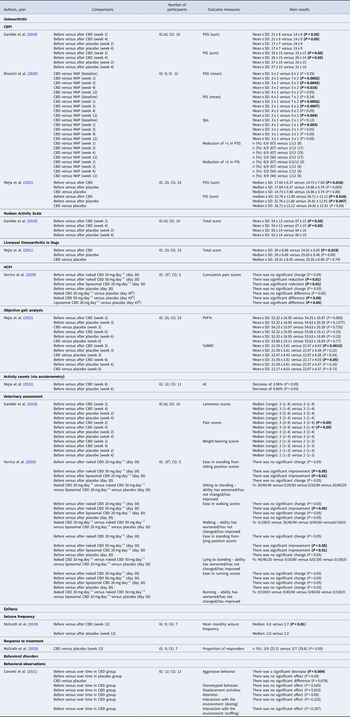
Three studies in dogs with osteoarthritis indicated that CBD (2 mg kg−1 every 12 h, 50 mg day−1, and liposomal 20 mg day−1) significantly reduced pain and increased the activity of dogs, thus improving their quality of life (Gamble et al., Reference Gamble, Boesch, Frye, Schwark, Mann, Wolfe, Brown, Berthelsen and Wakshlag2018; Brioschi et al., Reference Brioschi, Di Cesare, Gioeni, Rabbogliatti, Ferrari, D'Urso, Amari and Ravasio2020; Verrico et al., Reference Verrico, Wesson, Konduri, Hofferek, Vazquez-Perez, Blair, Dunner, Salimpour, Decker and Halpert2020); however, in one RCT, no differences were noted between groups for any of the recorded outcome measures (Mejia et al., Reference Mejia, Duerr, Griffenhagen and McGrath2021).
In the Gamble et al. (Reference Gamble, Boesch, Frye, Schwark, Mann, Wolfe, Brown, Berthelsen and Wakshlag2018) study, CBPI and Hudson Activity Scale change from baseline scores showed a significant decrease in pain and increase in activity during CBD treatment. Moreover, veterinary assessment showed decreased pain during CBD treatment; however, there was no significant difference in lameness score and weight-bearing capacity throughout the study. In another RCT, dogs that received oral transmucosal CBD, in combination with an anti-inflammatory drug, gabapentin, and amitriptyline for chronic osteoarthritis-related pain in dogs, showed improvement in CBPI scores, i.e. Pain Severity Score (PSS), Pain Interference Score (PIS), and Quality of Life Index (QoL), in comparison with dogs that did not receive CBD (Brioschi et al., Reference Brioschi, Di Cesare, Gioeni, Rabbogliatti, Ferrari, D'Urso, Amari and Ravasio2020). When considering individual results, treatment success (reduction of >1 in PSS and >2 in PIS) was obtained in more dogs in the CBD group compared with the comparator group (Brioschi et al., Reference Brioschi, Di Cesare, Gioeni, Rabbogliatti, Ferrari, D'Urso, Amari and Ravasio2020). Verrico et al. (Reference Verrico, Wesson, Konduri, Hofferek, Vazquez-Perez, Blair, Dunner, Salimpour, Decker and Halpert2020) reported that owner assessment of animal symptomatology by Helsinki Chronic Pain Index (HCPI) was not significantly altered by administration of placebo or 20 mg day−1 naked CBD; however, administration of 50 mg day−1 naked CBD or 20 mg day−1 liposomal CBD generated statistically significant reductions in pain symptomatology (P < 0.01), an effect that remained statistically significant for at least 15 days after cessation of therapy (P < 0.05). In addition, veterinarian clinical examination did not show improvement among animals administered placebo or 20 mg day−1 of naked CBD, and showed improvement in all assessment categories (sitting to standing, lying to standing, walking, and running) among dogs who received 50 mg day−1 of naked CBD and 20 mg day−1 liposomal CBD. On the other hand, Mejia et al. (Reference Mejia, Duerr, Griffenhagen and McGrath2021) did not find differences between CBD and placebo groups for objective gait analysis, activity counts (via accelerometry), Liverpool Osteoarthritis in Dogs, and CBPI.
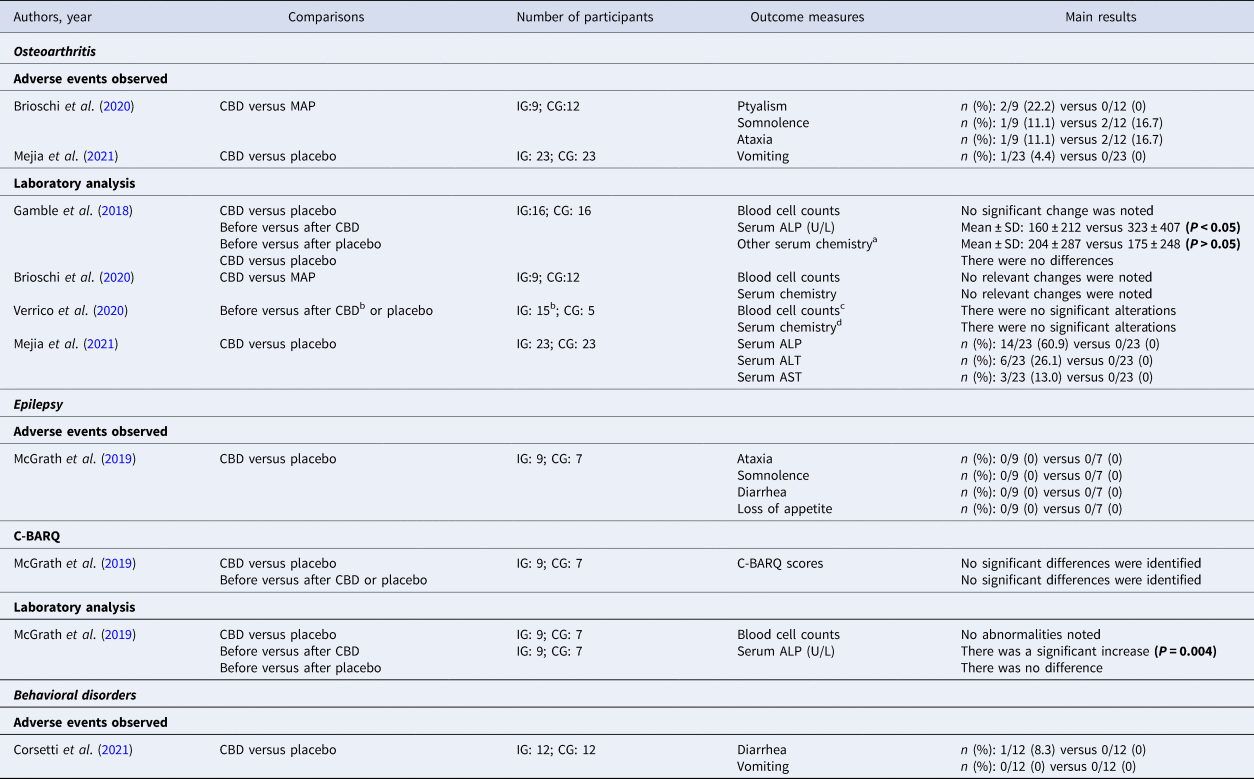
Regarding safety, few mild adverse events to CBD were found in three studies. Gamble et al. (Reference Gamble, Boesch, Frye, Schwark, Mann, Wolfe, Brown, Berthelsen and Wakshlag2018) reported a significant increase in alkaline phosphatase (ALP) in the dogs after CBD treatment (160 ± 212 versus 323 ± 407; P < 0.05) which was not observed in the placebo group; however, no adverse effects were reported by owners, and no other serum chemistry value or blood cell count was significantly altered compared with placebo. In the study by Mejia et al. (Reference Mejia, Duerr, Griffenhagen and McGrath2021), 14 dogs displayed mild elevations in liver enzymes, such as aspartate aminotransferase (AST), alanine aminotransferase (ALT), and ALP, after initiating treatment with CBD oil (13.0, 21.6, and 60.9% versus 0, 0 and 0%, respectively). Brioschi et al. (Reference Brioschi, Di Cesare, Gioeni, Rabbogliatti, Ferrari, D'Urso, Amari and Ravasio2020) did not observe relevant changes during the blood cell count and serum biochemical analysis in the CBD or control groups. Ataxia and somnolence may be adverse events related to the use of CBD oil, although these events occurred in three dogs (one in the CBD group and two in the placebo group) and were resolved after gabapentin dosage reduction (Brioschi et al., Reference Brioschi, Di Cesare, Gioeni, Rabbogliatti, Ferrari, D'Urso, Amari and Ravasio2020). Moreover, vomiting was reported in the Mejia et al. (Reference Mejia, Duerr, Griffenhagen and McGrath2021) study in two dogs, one of which was not included in the data analysis because of intolerance of the CBD oil treatment and the other had mild vomiting during the first few days of CBD treatment, which resolved without any modification to the treatment regimen. Brioschi et al. (Reference Brioschi, Di Cesare, Gioeni, Rabbogliatti, Ferrari, D'Urso, Amari and Ravasio2020) reported that overall, CBD administration was well tolerated, only mild gastrointestinal adverse effects were noted in some cases. In addition, minimal ptyalism appeared to be related to the use of CBD when administered by oral transmucosal (Brioschi et al., Reference Brioschi, Di Cesare, Gioeni, Rabbogliatti, Ferrari, D'Urso, Amari and Ravasio2020). Finally, one study did not find significant alteration to blood cell count or serum chemistry values in the dogs studied (Verrico et al., Reference Verrico, Wesson, Konduri, Hofferek, Vazquez-Perez, Blair, Dunner, Salimpour, Decker and Halpert2020).
The main results of efficacy and safety of cannabis in these studies are summarized in Tables 2 and 3, respectively.
Main results of the efficacy of cannabis in studies included in this systematic review

AC, activity counts; %BWD, percentage of body weight distribution; CBD, cannabidiol; CBPI, Canine Brief Pain Inventory; CG, control group; HCPI, Helsinki Chronic Pain Index; IG, intervention group; MAP, multimodal analgesic protocol; P, P value; PIS, Pain Interference Score; PSS, Pain Severity Score; PVF%, peak vertical force normalized by body weight; QoL, Quality of Life Index; SD, standard deviation.
a Three groups of five animals each testing different doses or formulations of CBD.
b 2 weeks after CBD/placebo cessation.
Main results of the safety of cannabis in studies included in the systematic review

ALP, alkaline phosphatase; ALT, alanine aminotransferase; AST, aspartate aminotransferase; C-BARQ, Canine Behavioral Assessment & Research Questionnaire; CBD, cannabidiol; CG, control group; IG, intervention group; MAP, multimodal analgesic protocol; P, P value; SD, standard deviation.
a Sodium, potassium, chloride, creatinine, serum urea nitrogen, calcium, phosphorus, magnesium, glucose, alanine aminotransferase, aspartate aminotransferase, gamma glutamyl transferase, bilirubin, total protein, albumin, globulin, creatine kinase, and cholesterol.
b Regardless of dose and formulation (three groups of five animals each testing different doses or formulations of CBD).
c Red blood cells, hematocrit, hemoglobin, platelets, white blood cells, lymphocytes, neutrophils, basophils, and eosinophils.
d ALP, alanine aminotransferase, glucose, creatinine, blood urea nitrogen, albumin, globulin.
Results with epilepsy
McGrath et al. (Reference McGrath, Bartner, Rao, Packer and Gustafson2019) investigated CBD efficacy in dogs with epilepsy and showed that CBD significantly reduced the frequency of seizures. The median for mean monthly seizure frequency in the CBD group reduced from 4.0 (before treatment) to 2.7 (after treatment) (P = 0.01), in contrast to the placebo group that showed no reduction (from 2.0 to 2.0). However, the proportion of dogs with a response to treatment (a ≥ 50% reduction in mean monthly seizure frequency from before the study began to when the study concluded) was statistically similar between groups (two dogs in the CBD group were classified as responders, compared with two dogs in the placebo group).
It is important to note that two dogs were withdrawn from the CBD group because they developed ataxia, although none of the other dogs that completed the study reportedly had ataxia (McGrath et al., Reference McGrath, Bartner, Rao, Packer and Gustafson2019). Moreover, no adverse behavioral effects (Canine Behavioral Assessment and Research Questionnaire scores for aggression, rivalry, fear, anxiety, trainability, excitability, and energy level) were reported by owners. None of the dogs had somnolence, loss of appetite, and diarrhea. Finally, there was a significant increase in serum ALP activity in the CBD group.
The main results of efficacy and safety of cannabis in this study are summarized in Tables 2 and 3, respectively.
Results with behavioral disorders
Results of the study by Corsetti et al. (Reference Corsetti, Borruso, Malandrucco, Spallucci, Maragliano, Perino, D'Agostino and Natoli2021) reported that aggressive behavior toward human beings decreased significantly over time in the CBD group (P = 0.004), unlike the control group in which there was no significant reduction over time (P = 0.09). However, the difference between these groups was not significant (P = 0.078). Moreover, stereotyped behavior and displacement activity events did not decrease (P = 0.545 and P = 0.923, respectively). CBD treatment also did not change the dogs' attention (P = 0.09) and interaction with the environment (dozing, P = 0.225; sniffing, P = 0.287).
Overall, both placebo and CBD oil were well tolerated. Diarrhea was found in only one dog during CBD treatment (a single episode) (Corsetti et al., Reference Corsetti, Borruso, Malandrucco, Spallucci, Maragliano, Perino, D'Agostino and Natoli2021).
The main results of efficacy and safety of cannabis in this study are summarized in Tables 2 and 3, respectively.
Risk-of-bias assessment
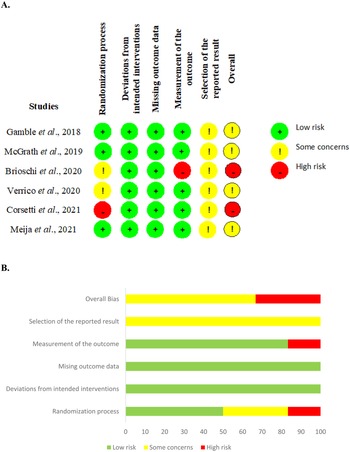
Four of the six studies were classified as having some concerns in the overall bias assessment using the RoB 2 Tool (Gamble et al., Reference Gamble, Boesch, Frye, Schwark, Mann, Wolfe, Brown, Berthelsen and Wakshlag2018; McGrath et al., Reference McGrath, Bartner, Rao, Packer and Gustafson2019; Verrico et al., Reference Verrico, Wesson, Konduri, Hofferek, Vazquez-Perez, Blair, Dunner, Salimpour, Decker and Halpert2020; Mejia et al., Reference Mejia, Duerr, Griffenhagen and McGrath2021). All of the studies were judged to have a low risk of bias from the ‘deviations from intended interventions’ and ‘missing outcome data’. Moreover, most of these studies were judged to have a low risk of bias from ‘measurement of the outcome’ (Gamble et al., Reference Gamble, Boesch, Frye, Schwark, Mann, Wolfe, Brown, Berthelsen and Wakshlag2018; McGrath et al., Reference McGrath, Bartner, Rao, Packer and Gustafson2019; Verrico et al., Reference Verrico, Wesson, Konduri, Hofferek, Vazquez-Perez, Blair, Dunner, Salimpour, Decker and Halpert2020; Corsetti et al., Reference Corsetti, Borruso, Malandrucco, Spallucci, Maragliano, Perino, D'Agostino and Natoli2021; Mejia et al., Reference Mejia, Duerr, Griffenhagen and McGrath2021).
All of the studies were judged to have some concerns of bias from the ‘selection of the reported result’, as they did not report whether the data that produced the results were analyzed in accordance with a pre-specified analysis plan. In addition, two studies were judged to have some concerns of bias from the ‘randomization process’ because they did not report whether the allocation sequence was concealed until participants were enrolled and assigned to interventions (Brioschi et al., Reference Brioschi, Di Cesare, Gioeni, Rabbogliatti, Ferrari, D'Urso, Amari and Ravasio2020) or whether the allocation sequence was random (Verrico et al., Reference Verrico, Wesson, Konduri, Hofferek, Vazquez-Perez, Blair, Dunner, Salimpour, Decker and Halpert2020). Moreover, one study was judged to have a high risk of bias in the same domain because it used a sequence predictable for the randomization (Corsetti et al., Reference Corsetti, Borruso, Malandrucco, Spallucci, Maragliano, Perino, D'Agostino and Natoli2021). One study was judged to have a high risk of bias from ‘measurement of the outcome’ and considered with a high overall risk of bias (Brioschi et al., Reference Brioschi, Di Cesare, Gioeni, Rabbogliatti, Ferrari, D'Urso, Amari and Ravasio2020). The risk-of-bias assessment for the RCTs included in this systematic review is shown in Fig. 2.
(A) Bias assessment for the randomized trials included in this systematic review. (B) Risk-of-bias graph for all included studies.

Discussion
Summary of the evidence
To the best of our knowledge, this is the first systematic review regarding this topic. This review identified six relevant studies that assessed the efficacy and safety of cannabis in the treatment of animal diseases. In summary, three studies reported significant positive effects of CBD to reduce pain and increase activity in dogs with osteoarthritis, one study reported a significant positive effect to reduce seizure frequency in dogs with epilepsy and one study reported a significant positive effect to reduce aggressive behavior of dogs. Regarding safety issues, the included studies reported the absence of or minimal adverse events occurred in dogs treated with CBD. However, it is important to note that there were some concerns in the methodological quality of the included studies and high heterogeneity between them such as the number of animals, differences of breed, sex and age of animals, regimens and doses of CBD, formulations, use in monotherapy or in combination, and differences in the outcomes and tools of measurement. Moreover, the outcomes evaluated in the studies were not described satisfactorily. In light of these findings, more RCTs are urgently needed to strengthen the evidence regarding the benefits of the therapeutic use of cannabis for animals.
General view of the studies
In this systematic review, only six RCTs were reported (Gamble et al., Reference Gamble, Boesch, Frye, Schwark, Mann, Wolfe, Brown, Berthelsen and Wakshlag2018; McGrath et al., Reference McGrath, Bartner, Rao, Packer and Gustafson2019; Brioschi et al., Reference Brioschi, Di Cesare, Gioeni, Rabbogliatti, Ferrari, D'Urso, Amari and Ravasio2020; Verrico et al., Reference Verrico, Wesson, Konduri, Hofferek, Vazquez-Perez, Blair, Dunner, Salimpour, Decker and Halpert2020; Corsetti et al., Reference Corsetti, Borruso, Malandrucco, Spallucci, Maragliano, Perino, D'Agostino and Natoli2021; Mejia et al., Reference Mejia, Duerr, Griffenhagen and McGrath2021), all published between 2018 and 2021, indicating that this is a new subject in the literature. So far, there are only studies in dogs, and studies with other animal species need to be conducted, especially cats and horses. New research is also expected to include greater numbers of animals used in each study.
All of the included RCTs used CBD oil, with trace amounts of the other cannabinoids (Gamble et al., Reference Gamble, Boesch, Frye, Schwark, Mann, Wolfe, Brown, Berthelsen and Wakshlag2018; McGrath et al., Reference McGrath, Bartner, Rao, Packer and Gustafson2019; Brioschi et al., Reference Brioschi, Di Cesare, Gioeni, Rabbogliatti, Ferrari, D'Urso, Amari and Ravasio2020; Mejia et al., Reference Mejia, Duerr, Griffenhagen and McGrath2021), or a highly purified CBD oil (Verrico et al., Reference Verrico, Wesson, Konduri, Hofferek, Vazquez-Perez, Blair, Dunner, Salimpour, Decker and Halpert2020). The study by Corsetti et al. (Reference Corsetti, Borruso, Malandrucco, Spallucci, Maragliano, Perino, D'Agostino and Natoli2021) did not report whether other cannabinoids were present (such as cannabichromene, cannabigerol, and cannabinol), only reporting that the oil contained 5% CBD and that THC was absent. It is important to recognize that the entourage effect can occur when the total profile of the oil is not known. Thus, other chemical components, such as terpenes, triterpenes, and flavonoids, may be present and act synergistically. Because the purity of CBD oil can influence the effectiveness and safety of the cannabis-based product (Pavlovic et al., Reference Pavlovic, Nenna, Calvi, Panseri, Borgonovo, Giupponi, Cannazza and Giorgi2018), differences in CBD formulation observed among the included studies can influence the positive effects and should be interpreted with caution.
These RCTs used several CBD doses, ranging from 0.5 mg kg−1 day−1 (Verrico et al., Reference Verrico, Wesson, Konduri, Hofferek, Vazquez-Perez, Blair, Dunner, Salimpour, Decker and Halpert2020) to 5 mg kg−1 day−1 (McGrath et al., Reference McGrath, Bartner, Rao, Packer and Gustafson2019; Mejia et al., Reference Mejia, Duerr, Griffenhagen and McGrath2021). The study by Corsetti et al. (Reference Corsetti, Borruso, Malandrucco, Spallucci, Maragliano, Perino, D'Agostino and Natoli2021) reported the administration of 1 drop of oil per 2 kg of weight every 24 h. Because the oil contained 5% (50 mg ml−1) CBD, and considering that 1 ml equals 20 drops, it can be inferred that the dogs received 1.25 mg kg day−1 (50 mg day−1). Two RCTs were long-term dosing studies, using CBD for 12 weeks in dogs (McGrath et al., Reference McGrath, Bartner, Rao, Packer and Gustafson2019; Brioschi et al., Reference Brioschi, Di Cesare, Gioeni, Rabbogliatti, Ferrari, D'Urso, Amari and Ravasio2020). Long-term studies are important to evaluate mainly the safety issues as well as to better evaluate future benefits and harm.
The main symptom of osteoarthritis in dogs is chronic pain, and the current therapeutic goals are to control the pain and to improve function (Cimino Brown, Reference Cimino Brown2017). Several drugs can be used for this purpose, such as corticosteroids, non-steroidal anti-inflammatory drugs, gabapentin, and amitriptyline (Brioschi et al., Reference Brioschi, Di Cesare, Gioeni, Rabbogliatti, Ferrari, D'Urso, Amari and Ravasio2020). However, chronic use of these drugs can cause potential side effects. Four studies included in our review were performed to determine the effect of CBD oil in dogs affected by osteoarthritis (Gamble et al., Reference Gamble, Boesch, Frye, Schwark, Mann, Wolfe, Brown, Berthelsen and Wakshlag2018; Brioschi et al., Reference Brioschi, Di Cesare, Gioeni, Rabbogliatti, Ferrari, D'Urso, Amari and Ravasio2020; Verrico et al., Reference Verrico, Wesson, Konduri, Hofferek, Vazquez-Perez, Blair, Dunner, Salimpour, Decker and Halpert2020; Mejia et al., Reference Mejia, Duerr, Griffenhagen and McGrath2021). Three of four studies indicated that CBD (2 mg kg−1 every 12 h for 4 or 12 weeks, 50 mg day−1 for 4 weeks, and liposomal CBD 20 mg day−1 for 4 weeks) significantly reduced pain and increased comfort and activity in dogs (Gamble et al., Reference Gamble, Boesch, Frye, Schwark, Mann, Wolfe, Brown, Berthelsen and Wakshlag2018; Brioschi et al., Reference Brioschi, Di Cesare, Gioeni, Rabbogliatti, Ferrari, D'Urso, Amari and Ravasio2020; Verrico et al., Reference Verrico, Wesson, Konduri, Hofferek, Vazquez-Perez, Blair, Dunner, Salimpour, Decker and Halpert2020). A low dose of non-liposomal CBD (20 mg day−1 for 4 weeks) was reportedly not effective in improving clinical outcomes (Verrico et al., Reference Verrico, Wesson, Konduri, Hofferek, Vazquez-Perez, Blair, Dunner, Salimpour, Decker and Halpert2020). Moreover, Mejia et al. (Reference Mejia, Duerr, Griffenhagen and McGrath2021) found no effect of CBD on osteoarthritis. However, it is important to note the large heterogeneity across studies, mainly CBD treatment (dose, formulation, duration, and use as monotherapy or in combination) and outcome measures. There is a need for more homogeneous study designs to confirm these findings through meta-analysis.
The treatment of canine idiopathic epilepsy with antiepileptic drugs has been the focus of several studies (Charalambous et al., Reference Charalambous, Brodbelt and Volk2014). In this review, only one RCT evaluated the effect of oral CBD administration (2.5 mg kg−1 twice daily for 12 weeks) in combination with conventional antiepileptic treatment on seizure in dogs with idiopathic epilepsy (McGrath et al., Reference McGrath, Bartner, Rao, Packer and Gustafson2019). Results of this RCT indicated that a significant reduction in seizure frequency was achieved in dogs treated with CBD compared to placebo; however, the proportion of dogs with a response to treatment (i.e. ≥50% decrease in seizure activity) was statistically similar between groups (McGrath et al., Reference McGrath, Bartner, Rao, Packer and Gustafson2019).
Previous RCTs had been conducted on interventions to manage behavioral disorders in dogs (Virga et al., Reference Virga, Houpt and Scarlett2001; Sechi et al., Reference Sechi, Di Cerbo, Canello, Guidetti, Chiavolelli, Fiore and Cocco2017). In this review, just like epilepsy above discussed, only one study on behavioral disorders in dogs was identified and it concluded that administration of CBD every 24 h did not result in any effects on behavioral categories related to stress, but seemed to significantly reduce aggressive behavior (Corsetti et al., Reference Corsetti, Borruso, Malandrucco, Spallucci, Maragliano, Perino, D'Agostino and Natoli2021). Therefore, the evidence on the effectiveness of CBD in dogs with epilepsy and aggressive behavior is weak, and additional research is necessary to determine the effect of CBD use on seizures and aggressiveness in dogs.
A significant increase in ALP was observed in three studies (Gamble et al., Reference Gamble, Boesch, Frye, Schwark, Mann, Wolfe, Brown, Berthelsen and Wakshlag2018; McGrath et al., Reference McGrath, Bartner, Rao, Packer and Gustafson2019; Mejia et al., Reference Mejia, Duerr, Griffenhagen and McGrath2021). This event may occur due to cytochrome p450-mediated oxidative metabolism of the liver induced by CBD (Bornheim and Correia, Reference Bornheim and Correia1989), as well as the use of CBD in combination with other drugs. Therefore, it is recommended to monitor ALP and other liver enzymes in dogs treated with CBD (Gamble et al., Reference Gamble, Boesch, Frye, Schwark, Mann, Wolfe, Brown, Berthelsen and Wakshlag2018). Ataxia and somnolence also may be the adverse events of CBD oil, despite not having a very well-established causal relationship with CBD (McGrath et al., Reference McGrath, Bartner, Rao, Packer and Gustafson2019; Brioschi et al., Reference Brioschi, Di Cesare, Gioeni, Rabbogliatti, Ferrari, D'Urso, Amari and Ravasio2020). Although adverse events were reportedly absent or mild in dogs receiving CBD, animals may also be monitored for gastrointestinal and behavioral adverse effects, as well as for changes in complete blood count and serum chemistry. In general, CBD oil appears to cause minimal adverse events in dogs, which corroborates the findings of Deabold et al. (Reference Deabold, Schwark, Wolf and Wakshlag2019) that assessed the pharmacokinetics and safety of CBD-rich hemp nutraceutical use in healthy dogs. However, more data are needed to confirm this issue.
Some of the included studies had biases that may interfere with the interpretation of their findings. For example, Brioschi et al. (Reference Brioschi, Di Cesare, Gioeni, Rabbogliatti, Ferrari, D'Urso, Amari and Ravasio2020) used the Italian version of the CBPI questionnaire that was not previously validated. Moreover, it was not a double-blind placebo-controlled study. Another example, Verrico et al. (Reference Verrico, Wesson, Konduri, Hofferek, Vazquez-Perez, Blair, Dunner, Salimpour, Decker and Halpert2020), did not describe how randomization was performed. In addition, they did not perform statistical analysis for baseline data and some variables seemed slightly different between groups at the beginning of the study. The findings of Corsetti et al. (Reference Corsetti, Borruso, Malandrucco, Spallucci, Maragliano, Perino, D'Agostino and Natoli2021) must also be interpreted with caution because they performed a predictable randomization sequence. Furthermore, half of the included studies had pharmaceutical industry funding or involvement (Gamble et al., Reference Gamble, Boesch, Frye, Schwark, Mann, Wolfe, Brown, Berthelsen and Wakshlag2018; McGrath et al., Reference McGrath, Bartner, Rao, Packer and Gustafson2019; Verrico et al., Reference Verrico, Wesson, Konduri, Hofferek, Vazquez-Perez, Blair, Dunner, Salimpour, Decker and Halpert2020). A systematic review reported a greater likelihood of positive results for industry-funded trials, which can be a problem when interpreting the results of these RCTs (Lundh et al., Reference Lundh, Lexchin, Mintzes, Schroll and Bero2017). Moreover, Wareham et al. (Reference Wareham, Hyde, Grindlay, Brennan and Dean2017) identified a sponsorship bias in veterinary RCTs, taking advantage of positive outcomes.
The risk-of-bias assessment of the primary studies included in a systematic review allows consideration of the bias in the interpretation of the results (Sargeant and O'Connor, Reference Sargeant and O'Connor2020). Regarding assessing the risk of bias by the RoB 2 tool used in this review, a low risk of bias was observed in only two of five domains in all studies, requiring caution in the interpretation of findings. Rufiange et al. (Reference Rufiange, Rousseau-Blass and Pang2019) found that incomplete reporting of experimental studies remains prevalent in the veterinary literature, irrespective of journal type, research subject, or species. A lack of quality of report and scientific rigor was evident in the domains ‘selection of the reported results’ in all studies, ‘randomization process’ in three studies, and ‘measurement of the outcome’ in one study. Complete and transparent reporting is important to minimize concerns about interpretation and experimental reproducibility of the studies (Landis et al., Reference Landis, Amara, Asadullah, Austin, Blumenstein, Bradley, Crystal, Darnell, Ferrante, Fillit, Finkelstein, Fisher, Gendelman, Golub, Goudreau, Gross, Gubitz, Hesterlee, Howells, Huguenard, Kelner, Koroshetz, Krainc, Lazic, Levine, Macleod, McCall, Moxley, Narasimhan, Noble, Perrin, Porter, Steward, Unger, Utz and Silberberg2012; Page et al., Reference Page, McKenzie, Bossuyt, Boutron, Hoffmann, Mulrow, Shamseer, Tetzlaff, Akl, Brennan, Chou, Glanville, Grimshaw, Hróbjartsson, Lalu, Li, Loder, Mayo-Wilson, McDonald, McGuinness, Stewart, Thomas, Tricco, Welch, Whiting and Moher2021).
Opportunities for future research
This review showed that there is room to improve future studies of the use of cannabis in the treatment of animals. First, new research should include larger sample sizes and longer follow-up periods. Moreover, different dog breeds, animal species, dosages, administration routes, and animal diseases should be tested. Second, new RCTs must use clearer and more objective outcome measures, such as laboratory and imaging diagnostic tests. Third, future RCTs should be conducted and reported to provide more adequate information on population, intervention, and outcomes, following the CONSORT checklist (http://www.consort-statement.org/). Finally, new investigations need to be documented through RCTs of high methodological quality and reduced risk of bias.
Limitations
This study has some limitations. It is possible that some studies were missed because we did not perform searches for unpublished studies from thesis repositories and conference proceedings. Moreover, studies with negative results may not have been identified in the databases used. These aspects may have resulted in a lower number of included studies. Furthermore, this review did not analyze the estimate of the effect because a meta-analysis could not be performed. Finally, it is important to highlight the factors inherent in the studies included, such as small sample size, high heterogeneity, problems with risk of bias, and the reliance on only what is reported, which must be taken into consideration to evaluate the use of CBD for animal health.
Conclusion
Only six RCTs on the use of cannabis for the treatment of animal disease were reported, four of them on the use of CBD oil in dogs with osteoarthritis. Although there were concerns about the methodological quality and heterogeneity between studies to support the efficacy and safety of cannabis, its use appeared to reduce pain and increase the activity of dogs with osteoarthritis and cause minimal adverse events. Insufficient data on epilepsy and behavioral problems were provided. More RCTs with high quality of evidence are urgently needed, including a greater number of animals and other species as well as clear outcome measures to confirm these findings.
Supplementary material
The supplementary material for this article can be found at https://doi.org/10.1017/S1466252321000189.