Like other elected officials at the dawn of the twentieth century, Senator Orville Platt (R-CT) fielded many inquiries from his constituents about Cuba. U.S. entrepreneurs had been interested in the island dating back to the eighteenth century. Now that Cuba was an independent state under the watchful eye of the United States, opportunities for commercial prosperity seemed ripe for enterprising Americans. Eager to take advantage of the situation, W.H. Putnam of Bridgeport, Connecticut, wrote his senator for advice about living and investing in the island. Platt was familiar with Cuban affairs. As chairman of the Senate Committee on Relations with Cuba, he was the namesake of the so-called Platt Amendment that had made Cuba a U.S. protectorate. Although Platt favored close commercial ties between the United States and Cuba, he was tepid about middle-class entrepreneurs' prospects for success; he surmised that only financiers with large amounts of cash could prosper. However, Platt recognized that U.S. businessmen already engaged there were working to persuade other Americans to follow their lead. “This new phase of business which is called ‘promotion’ seems to be the popular one with regard to Cuba just now,” he acknowledged.Footnote 2
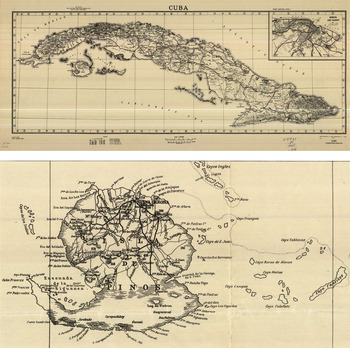
U.S. Army maps of Cuba and the Isle of Pines, 1943. The Isle of Pines—later renamed the Isle of Youth—lies sixty miles off the southwest coast of Cuba proper, virtually due south of Havana. Roughly the size of Rhode Island, it was home to an estimated 2,000 U.S. citizens during the early twentieth century. Courtesy of the Map and Geographic Information Center, University of Connecticut Library.

That “promotion” was especially evident on Cuba's Isle of Pines (now known as the Isle of Youth). Roughly the size of Rhode Island and located sixty miles off the coast of Cuba proper, the Isle had been a colonial possession of Spain for nearly 400 years until the War of 1898. By the close of the nineteenth century, the Isle was home to little more than 3,000 people, mostly cattle ranchers and subsistence farmers. Cubans, particularly in Havana, viewed the Isle as a backwater.Footnote 3 But U.S. entrepreneurs saw something else: an opportunity. Shortly after 1898, U.S. businessmen began buying tens of thousands of acres from Spanish and Cuban landowners. These entrepreneurs formed landholding companies that subdivided their new land into smaller parcels with the aim of reselling it to farmers and middle-class Americans. As described by one descendant of a landholding company executive, these “lyrical ads” that appeared in newspapers across the United States made a visceral appeal to Americans. After all, he wrote, “Who of us is wholly immune to the siren voice; what snowbound, crabbed grocer cannot be lured to the land of the lotus-eater? And a profit to be made, on top!”Footnote 4
As with any good sales pitch, these enterprises accentuated the Isle's attractive features while minimizing, or altogether ignoring, factors that complicated the picture. As later experiences would bear out, companies often exaggerated physical, political, commercial, and social conditions to enhance the Isle's appeal. These businesses, however, insisted that their depictions were not too good to be true. “Mindful of the fact that exaggerations and misleading statements are all too frequent in the average prospectus,” the Cleveland-based San Juan Heights Land Company wrote, “it is the purpose here to be conservative.” This from a company that referred to the Isle as “a Veritable Garden of Eden.”Footnote 5
This article examines the discourse in these promotions that framed U.S. perceptions of the Isle of Pines and spurred Americans to settle and invest there. Entrepreneurs' appeal to farmers and middle-class Americans shrewdly exploited frontier anxieties, class divisions, and economic concerns at home, promising a better way of life in an idyllic setting. Settlers' experiences, however, revealed that life on the Isle was not quite the picture of tropical bliss that landholding companies had painted. Their message nevertheless inspired as many as 10,000 Americans to buy property there—some 2,000 of whom may have owned a residence—and ushered in a U.S. presence on the Isle that endured for more than sixty years.Footnote 6
U.S. interest in the Isle of Pines sheds light on a number of trends in the early twentieth-century United States. It reveals that U.S. territorial ambitions did not end in the nineteenth century as notable historians such as Walter LaFeber, David M. Pletcher, and Louis A. Pérez Jr. have argued.Footnote 7 Rather, this impulse—driven by private U.S. citizens with landed interests abroad—continued well into the twentieth century. Inspired by profit and patriotism, entrepreneurs and settlers perpetuated calls for territorial expansion at a time when policymakers were far more concerned about maintaining an open door to trade and investment abroad.Footnote 8 Moreover, the efforts of landholding companies illustrate the power of advertising in its ability to shape perceptions and discourse, as many of the first U.S. settlers echoed key tenets of the companies' sales pitches. Settlers' interest also suggests middle-class Americans' discontent with life in the United States, considering their willingness to go elsewhere in order to improve their standard of living—albeit under Yankee auspices. In fact, whereas large, well-financed enterprises—the United Fruit Company is the most notable example—carried out much of the U.S. investment in the Caribbean and Central America, many Isle settlers were small-scale entrepreneurs who invested not only their own money but also of themselves by moving there. By virtue of its proximity to the United States, availability of land, favorable climate, and low population density, private U.S. interests saw the Isle as the perfect next frontier.
Although U.S. perspectives and experiences are the focus of this article, Cubans from all walks reacted to the U.S. presence with ambivalence. Policymakers in Havana generally tolerated if not tacitly encouraged U.S. settlement if it meant Americans would help develop the Isle's economy, which had been largely ignored during the Spanish colonial era. Pineros, meanwhile, mostly seemed to accept the U.S. presence. They worked on the farms and houses of U.S. landowners and enjoyed cordial relations with settlers. However, politicians and pineros drew the line at settlers' calls for U.S. annexation, which sparked protests both in Havana and on the Isle. They accepted American capital, customs, and institutions but made clear their belief that the Isle of Pines was sovereign Cuban territory.
First Reports
While U.S. interest in Cuba had existed for years, the Isle of Pines had not attracted much attention. During the U.S. war against Spain, the Isle was only a minor theater of operations. One colonel suggested using it to hold Spanish prisoners of war because it would only require a minimum of resources to guard and maintain them.Footnote 9 The military ultimately did not pursue such a policy, but the Isle was a source of concern as a base for blockade runners. Newspapers noted that the Isle served as a station from which runners could evade the U.S. naval perimeter around Cuba because U.S. ships were too big to patrol the shallow waters between it and Cuba proper.Footnote 10 This anxiety did not last long, however, as Marines captured the Isle in August 1898, when Spanish forces on site surrendered after light resistance.Footnote 11
With control of the Isle—indeed, all of Cuba—secure by the end of summer, the U.S. military began producing on-site reports about political, economic, and social conditions. Although these studies informed U.S. officials, such as Secretary of War Elihu Root, that the Isle had little strategic utility, they also suggested potential commercial benefits. The first of these reports came in November 1898, when a three-man delegation spent four days on the Isle. The report offered few demographic details but rather focused on resources and military utility. The delegation noted the Isle's limited potential for agriculture— “The soil is not rich, being sandy and arid, the country resembling somewhat the scrub-oak country of the Indian Territory or Wyoming”—but also its abundance of timber, marble quarries, and medicinal springs.Footnote 12 It also suggested that the Isle might be a good way station for U.S. troops to acclimatize them to tropical conditions.
In February 1899, Captain Frederick Foltz made a three-week visit to the Isle. His subsequent report offered the most detailed description of the Isle during the three-and-a-half-year U.S. occupation of Cuba. Foltz found the island disorganized with a poor infrastructure, owing to a Spanish-era tax structure in which only about one-fourth of the money collected had been reinvested into the Isle. “As a consequence,” Foltz wrote, “the bridges are in need of repair, the schools are closed, the clerks living from hand to mouth without any remuneration.”Footnote 13 In terms of business and economics, Foltz suggested that the Isle held some promise for its agricultural commodities. He saw another industry as having even more potential: “The exploitation of the island as a sanitary resort is, however, the enterprise which seems to promise the greatest return to the capitalist, as well as the greatest benefit to the island itself.”Footnote 14 In the months that followed, U.S. entrepreneurs took up Foltz's suggestion, indicating that businessmen were closely attuned to these reports.
The following year, Capt. H.J. Slocum reported substantial progress in civil society and the local economy but with still more room for improvement. He stated that health and order in Nueva Gerona, the Isle's largest town, were “excellent,” with clean streets and neat schools, “much better than any I have seen on the island of Cuba.”Footnote 15 Still, infrastructure remained poor, particularly roads and bridges that were in disrepair. Nevertheless, Slocum concluded with a positive reflection about the Isle and its economic potential: “From all I saw on the island I am satisfied that it is capable of being quite productive, there being immense mountains of marble and fine timberland, and the warm springs and abundance of excellent cold water make it attractive as a health resort.”Footnote 16 Such optimism foreshadowed the promotional literature that landholding companies developed in the ensuing years.
The Annexation Question
These reports coincided with lingering questions about the Isle's sovereignty after the War of 1898. Although past U.S. policy makers including Thomas Jefferson, John Quincy Adams, and William Seward had long advocated acquiring Cuba, the U.S. Naval War College in 1895 may have been the first body to suggest annexing the Isle of Pines. In preliminary plans it sent to the Navy Department in the event of a war with Spain, the Naval War College proposed that the United States acquire the Isle as compensation for securing Cuban independence. As war came closer to reality, however, refined plans made no mention of annexing the Isle.Footnote 17
However, some Americans in 1899 revived the idea. Entrepreneurs interested in commercial opportunities in land newly acquired from Spain argued to include the Isle, as well. To them, the Isle was separate from Cuba and by virtue of Article II of the Treaty of Paris—which stated, in part, that “Spain cedes to the United States the island of Porto Rico and other islands now under Spanish sovereignty in the West Indies”—it rightfully belonged to the United States. Confusion persisted, both publicly and privately, which led Americans to pose the question to U.S. officials.Footnote 18 Initially, individuals independently wrote these letters. However, as more Americans were settling on the Isle, letter-writing campaigns became coordinated efforts, looking less for information about the Isle and more to express arguments on behalf of annexation. For example, in April 1901 Charles Raynard, who had bought land on the Isle and who later formed an American Club there, wrote to Root lobbying for the United States to maintain possession. He noted that he and some associates already had invested $25,000 with the understanding it was to be U.S. territory and that others were doing likewise “believing there would be no question but that our beloved Stars and Stripes would ever float over this most healthful and beautiful little Tropical Island.”Footnote 19 Over the next month, at least four other men submitted letters offering virtually the same points, suggesting a coordinated effort. Such letter-writing campaigns began at roughly the same time that U.S. entrepreneurs started pooling their resources to form landholding companies, which were becoming the dominant real estate brokers on the Isle.
Settlers and entrepreneurs welcomed the Isle's annexation for two reasons. The first was that it relieved hesitancy about moving to an alien land and submitting to the authority of a foreign government. As one landholding company executive told the U.S. Senate, “If it was United States territory there would be more than 5,000 [Americans] in no time, but no one wants to go down there under the Cuban Government. It is uncertain.”Footnote 20 More importantly, an Isle of Pines, U.S.A., would remedy the tariff issue. Most entrepreneurs who went to the Isle to start citrus groves for export sold their produce to U.S. markets. If the Isle were deemed a part of Cuba, it would have been subject to tariffs that would undermine their profit margin. However, if the Isle were part of the United States, their produce would be exempt. Most U.S. citizens who bought property at the turn of the century did so under the assumption that the Isle was or would soon become U.S. territory, a crucial factor in their decision.Footnote 21
Most inquiries from U.S. citizens were directed to the Department of War, which administered the occupation of Cuba during 1899–1902. The status of the Isle, however, remained unclear even to officials, particularly Assistant Secretary George D. Meiklejohn and Assistant Adjutant General John J. Pershing, who signed most of the responses to private citizens. Their initial correspondence hedged on a definitive answer to sovereignty, usually stating that the matter awaited congressional action. In August 1899, however, Pershing wrote that the Isle did indeed belong to the United States: “I am directed by the Assistant Secretary of War to advise you that this Island was ceded by Spain to the United States and is, therefore, a part of our territory, although it is attached at present to the Division of Cuba for governmental purposes.”Footnote 22 Meiklejohn echoed this assertion the following year. In a response to another citizen inquiry, he wrote: “In reply I beg to advise you that the Isle of Pines was ceded to the United States by Spain, and is therefore a part of our territory, although it is at present attached to the Division of Cuba for governmental purposes. The homestead laws of the United States have not as yet been applied thereto, and this question must await Congressional action.”Footnote 23
The Platt Amendment, passed by the U.S. Senate in 1901 and appended to the Cuban constitution, further bolstered annexationists. Article VI stated, “The Isle of Pines shall be omitted from the proposed constitutional boundaries of Cuba, the title thereto being left to future adjustment by treaty.” This clause made the Isle's sovereignty an open question. Although Root is often credited as the brainchild of the Platt Amendment, Platt himself privately took credit for Article VI. Although he believed that the Isle was part of Cuba and not among the islands ceded to the United States from Spain, in 1902 Platt argued that it held great geostrategic value for the United States as a potential naval base and should be purchased. “I inserted a clause to the effect that the title should be subject of treaty negotiations. I feel that it is of the utmost importance that it shall be ours. It will give us the most advantageous point from which to defend the entrance of the isthmian canal.”Footnote 24
However, other U.S. officials, notably Root, disagreed. A renowned corporate lawyer before he joined William McKinley's cabinet, Root believed that the United States had no legal basis to claim the Isle. Root cited the Isle's proximity to Cuba proper as well as its long history of colonial administration from Havana while it was a Spanish colony.Footnote 25 More importantly, the Isle of Pines did not appear to have any strategic utility for the United States. The military had determined that the Isle could not sustain a naval base; the waters around it were too shallow and there was no suitable port. General Leonard Wood, military governor of Cuba during the U.S. occupation, declared: “The Isle of Pines I think we can afford to drop if necessary. There is no good harbor on the island except on the west coast and this has only eighteen feet of water on the bar and it would be immensely expensive to improve.”Footnote 26 It ultimately led to a treaty in July 1903 that ceded U.S. claims to the Isle in recognition of a separate agreement in which Cuba leased Guantánamo Bay to the United States. Although the U.S. Senate's failure to consider the Isle agreement within the stipulated seven-month time frame nullified the treaty, U.S. Secretary of State John Hay and Cuba's minister to the United States, Gonzalo de Quesada, signed another accord in March 1904, this time with no time limit for ratification. Annexationists, however, had enough allies in the U.S. Senate—including expansionist senators John T. Morgan (D-AL) and Boies Penrose (R-PA)—to keep the treaty in committee. It remained there until March 1925, when it was finally ratified.Footnote 27 In the meantime, the Cuban government maintained authority.
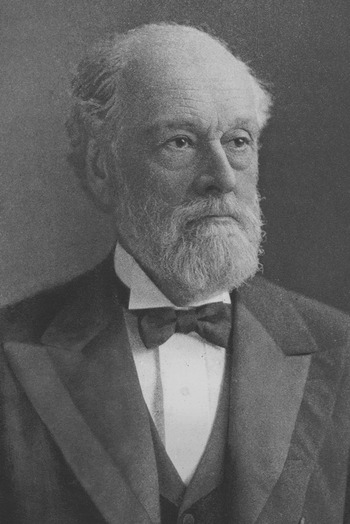
Senator Orville Platt (R-CT) was the namesake of the infamous Platt Amendment that made Cuba a protectorate of the United States. Article VI made sovereignty over the Isle of Pines an open question and convinced many U.S. settlers and entrepreneurs that it would eventually be annexed to the United States. From Louis A. Coolidge, An Old-Fashioned Senator: Orville H. Platt of Connecticut (1910).

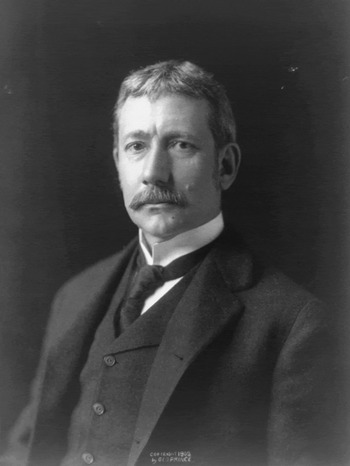
Elihu Root, a corporate lawyer who served as secretary of war in the McKinley and Roosevelt administrations, argued that the United States had no legal basis in which to claim sovereignty over the Isle of Pines. More importantly, however, military advisors noted that the shallow waters around the Isle meant that it was not sustainable as a naval base. As a result, Root encouraged the U.S. government to cede claims to the Isle in exchange for a lease to Guantánamo Bay. Courtesy of the Prints and Photographs Division, Library of Congress, LC-USZ62-92819.

Enter the Landholding Companies
The first U.S. citizens to buy land on the Isle of Pines were individuals, acquiring property by the tens or hundreds of acres. The first American on record to have bought land was Henry Haener, who purchased 133 acres for $250 in July 1900.Footnote 28 U.S. records indicate that no other Americans bought land until after the U.S. Senate passed the Platt Amendment. To interested Americans, the amendment was a sign that the Isle would one day formally become U.S. territory. Between March 1901 and March 1903, Americans spent more than $265,000 to acquire land.Footnote 29 Landholding companies made a great majority of the purchases. Entrepreneurs in the U.S. Northeast and Midwest formed these businesses and bought land by the tens-of-thousands of acres. They then subdivided the land into ten-, twenty-, or forty-acre plots, for resale at up to $50 an acre for undeveloped land. These companies became the predominant marketer of real estate on the Isle during the early twentieth century.Footnote 30
This activity was not unique to the Isle of Pines. Similar transactions among U.S. entrepreneurs occurred all across Cuba during the first years of the twentieth century as settlers and entrepreneurs took advantage of depressed land values in the wake of Cuba's devastating War of Independence.Footnote 31 On the Isle, however, where hardly any fighting had occurred, the appearance of U.S. investors created a real-estate market for the first time. Hacendados owned most of the land in large estates that had been passed down or divided over generations since the seventeenth century. U.S. entrepreneurs' post-1898 interest in Isle real estate prompted Spanish and Cuban landowners to sell. Although undeveloped land only sold for about $2 an acre, hacendados earned a tidy sum by selling in large quantities, often by the thousands or tens-of-thousands of acres.Footnote 32
Landholding companies took great pains not to appear as speculators. Such a stigma carried a pejorative association.Footnote 33 In their promotional literature, companies claimed their activities had higher aims than simply to turn a profit. For example, the Cañada Land and Fruit Company, based in Marinette, Wisconsin, claimed that its work benefited middle-class Americans interested in the Isle. “American syndicates have purchased large tracts of land, surveyed and platted the same, thereby making it possible for the man of moderate means to buy and own a piece of land commensurate with his means.”Footnote 34 The Cleveland-based Isle of Pines Investment Company justified its purchase of so many acres ostensibly to avoid the appearance of speculation. According to its prospectus, hacendados “refused to sell part of their lands unless the purchaser was willing and able to take the whole tract; consequently a large capital was required before one could buy land in the Isle of Pines.”Footnote 35 Company executives also denied to U.S. officials that they were mere profiteers. One official told Senator Morgan that his enterprise was not involved in speculation. “This howl by some of the papers that the island was bought up and held by speculators is the worst kind of rot.”Footnote 36
Companies also cited the rather undeveloped state of the Isle to justify their activity. They suggested that Spanish mismanagement during the colonial era had prevented the island from reaching its full agricultural and commercial potential. As a result, the Buffalo, New York-based Tropical Development Company asserted, “Thousands of acres of virgin soil now await the thrifty and energetic American to make it the most productive spot in the world.”Footnote 37 Another company stated, “It is doubtful if the indolent Spaniards appreciated [the Isle's] possibilities as a field for citrus culture.”Footnote 38 U.S.-based landholding companies implied they would not make the same mistake.
Landholding companies invoked their activities within a larger continuum in U.S. history: pioneering work in the nineteenth century. The timing of this rhetoric was important. By the turn of the century, the notion of a “closing” continental frontier was widely accepted. Contemporaries expressed a great deal of anxiety about what the United States would do now that the frontier experience apparently would no longer shape American character.Footnote 39 With land in their possession in abundance on the Isle, landholding companies alluded to the closing domestic frontier to steer land buyers in their direction. “The era of golden opportunities in Southern California, for instance, is a thing of the past,” the Tropical Development Company proclaimed.Footnote 40 If the average American were to continue to look to the frontier for opportunity, they would now have to look beyond U.S. shores to find it. U.S. businessmen argued that the Isle could supply this extended frontier through its cheap, plentiful land, prospects for growth and wealth, and a pliant native population that would provide no interference on American designs.
Landholding companies' tactics mimicked similar practices elsewhere, which underscored the power of advertising and the appeal of frontier land. As historian John Mason Hart has shown, U.S.-based landholding companies that bought vast tracts across Mexico advertised available land to American audiences. Their work contributed to a flood of U.S. migration that reached an estimated 40,000 settlers in 1910.Footnote 41 In Florida, which experienced a land boom around the same time as the Isle's, developers published brochures and travel books promoting the state's virtues to entice potential settlers.Footnote 42 One account noted that Florida developers made an “extravagant use of advertising” that touted its climate and prospects for prosperity while portraying it “at once [as] the last frontier and the source of eternal growth.”Footnote 43 Similarly, agents for the burgeoning citrus industry in California issued advertisements that promoted the warm climate, available land, and potential for profits to attract new growers from cold-weather locales.Footnote 44 One observer recognized the similarities between real-estate advertisements on the Isle and in Florida: “In fact, selling methods by persons owning land in the Isle of Pines and in the Everglades have been nearly identical.”Footnote 45 However, no evidence suggests there were any direct business ties. Although the Isle's land boom was relatively short-lived—about a decade—it did not collapse as infamously as in Florida. Whereas Isle settlers usually retained the land they bought even if they did not develop it, the Florida real estate market suffered from overspeculation and outright fraud before it suddenly crashed in the mid-1920s.
The Isle of Pines Company proved to be largest and longest-lasting of the landholding companies. Samuel H. Pearcy was the driving force behind the enterprise. A Confederate army veteran from Tennessee, Pearcy had shipping and manufacturing interests in Havana before he turned his attention to the Isle in 1899. Within two years, Pearcy and a group of New York investors bought more than 106,000 acres from Spanish landowners for roughly $174,000. The company's holdings spread across five former Spanish estates. U.S. Minister to Cuba Herbert G. Squiers in 1903 referred to the company as “purely speculative,” as it had yet to resell any of its land, waiting for prices to increase.Footnote 46 In its prospectus, however, the company claimed greater ambitions, asserting that it had “the foundation for the largest plantation business in the West Indies, if not the largest in the Western hemisphere.”Footnote 47 By the end of the decade, though, when land values increased, the Isle of Pines Company became the prime seller of Isle real estate to Americans. It sold tracts for up to $50 an acre and advertised in newspapers across the country.Footnote 48 At the same time, Pearcy emerged as one of the most vocal and visible members of the budding American community. Although Pearcy died in 1913, his son, Edward, continued to serve as the company's manager on the Isle until he closed the business in 1950.
In an example of cooperation among enterprises, the Tropical Development Company was born out of the Isle of Pines Company, from which it had purchased 5,200 acres on the north end of the Isle. James A. Hill, a New York-based publisher, served as treasurer of the Isle of Pines Company as well as vice president of the Tropical Development Company. The Tropical Development Company was best known for founding the town of McKinley, named for the slain U.S. president. As described in its literature, the company founded the town to help support and sustain the U.S. presence on the Isle. McKinley was one of nearly a dozen communities that landholding companies created specifically for American settlement.
Landholding company executives came from a variety of business backgrounds. The Isle of Pines Company featured publishers and shippers; the Tropical Development Company had a politician (former Buffalo mayor Erastus Knight), a bookseller, and a wholesaler among its directors. By contrast, the Isle of Pines Investment Company was largely a family affair. Real estate mogul Truman Swetland started the company in 1908, when for $55,000 he bought nearly 10,000 acres at San Francisco de las Piedras, the largest undivided tract left on the island. Among the company's directors were three of Swetland's sons, who were integral to the tract's development. Frederick Swetland Jr. wrote, “After my grandfather signed the contract, the rest of the family finally dug up the purchase money to bail him out (‘after all, how can you go wrong on land at $5 an acre’?).”Footnote 49
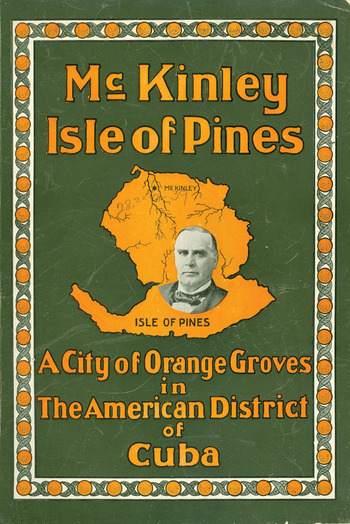
Cover to the prospectus of the Buffalo-based Tropical Development Company, circa 1906. Landholding company prospectuses were typically published on high-quality paper and filled with pictures and promotions to entice potential buyers. The company founded the town of McKinley on the northwest side of the Isle in name of the slain president. The patriotic gesture enabled the company to blunt criticism that it was merely engaged in real-estate speculation. Courtesy of the Yates County Genealogical and Historical Society.

The younger Swetland's comment underscored landholding companies' incentive to resell their real estate. His family's company, for example, had borrowed against itself to make its initial purchase, a risky and costly proposition. Not only did members of the Swetland family have to pitch in to raise the capital to buy San Francisco de las Piedras, but Truman Swetland also sold stock in one of his prime holdings, the Park Building in downtown Cleveland. “This I fought tooth and nail and bitterly, but to no avail,” Truman's son, Raymond, recalled. “I was voted down.”Footnote 50 Another company was unable fully to develop its tract because it had spent so much money to acquire the land. The Andorra Realty Company wanted to create a town called La Siguanea on the Isle's southwest coast to attract wealthy settlers. However, the company was so cash-strapped from buying its land that it struggled with the costs of planning and developing its proposed town, an estimated $275,000 project. Desperate for capital, the company tried to sell plots before planning was complete. Those efforts fell well short, leaving Andorra in debt to its design company, Olmsted Brothers. “It was the greatest error in my career that I allowed the company to go into this expenditure, when our finances were so limited,” Andorra president William Warner Harper lamented.Footnote 51 Although other landholding companies' finances are unclear, the cases of the Isle of Pines Investment Company and Andorra Realty Company suggest these enterprises were stretched thin and thus highly motivated to resell their tracts.Footnote 52
Selling the Isle
In addition to word-of-mouth, advertisements were the most effective way to spread news about the Isle of Pines and its available land. Companies produced notices not only in newspapers and magazines, but also through prospectuses that touted the benefits of living on the Isle and the abundance of opportunity. At the turn of the century, advertisements increasingly were a feature of American business.Footnote 53 Landholding companies found them indispensible. For example, the Isle of Pines Company produced a glossy, picture-filled, easy-to-read prospectus, a feature that surely reflected the fact that two of its directors, Hill and J.C. Tichenor, were prominent figures in the publishing industry. In general, companies portrayed the Isle as an untapped commodity, ripe for exploitation by savvy and industrious Americans who, through ingenuity, industriousness and know-how, could maximize its latent potential.
Most conspicuously, landholding companies looked to draw interest in the Isle by citing the prospects for wealth. The Cañada Land & Fruit Company, for example, was rather blunt in its assessment. In a section of its prospectus titled “What Could I Do in the Isle of Pines?” the company stated: “Among other things you could get rich. . . . You do the work properly, and fortune will follow as certainly as day follows night. And no beggarly pittance either, but wealth ample even for these days, and it can be vast wealth, if you have sufficient energy and push.”Footnote 54 Companies presented the Isle as a place for achieving independence and self-sufficiency. The Isle of Pines Company implored potential settlers, “Stop working for other people. Join us and become an independent citizen of this sturdy American Colony in the Isle of Pines. You can take possession of your property at once and be working for yourself instead of toiling for a mere existence day in and day out.”Footnote 55 At the same time, companies claimed to be targeting “high class Americans” and “America's most progressive citizens” as potential customers.Footnote 56 The Tropical Development Company listed the names of notable men who invested on the Isle, including prominent politicians, bankers, financiers, and railroad magnates. Not only did such an association give the Isle an image of exclusivity, but it also was meant to assure skeptical investors of average means that their money would be in good company.
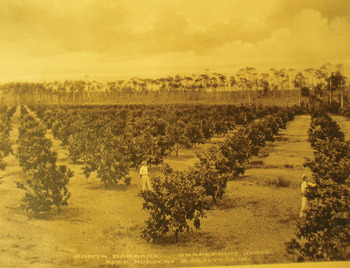
Landholding companies most often cited the development of citrus fruit for export as the way to wealth. This fruit included grapefruit and oranges, which because of the favorable climate and soil could grow in abundance. Companies claimed that the Isle produced high-quality fruit, better than that from Florida and California. “The Isle of Pines grapefruit has been tested by fruit experts in New York and European markets and has been pronounced absolutely the finest that has ever reached these markets,” one company boasted.Footnote 57 Moreover, citrus production on the Isle had a competitive advantage over rivals in the domestic United States because of the climate. With daily temperatures hovering between seventy and ninety degrees Fahrenheit year-round, citrus trees could escape the early-season frosts that occasionally blighted production in Florida. This also meant that Isle producers could get their fruit to market earlier than domestic U.S. growers and thus receive a better price. Fruit from the Isle had another advantage over similar products from California: because Isle growers shipped by steamship rather than by railroad, they could get their products to eastern markets more quickly and less expensively.Footnote 58
Although citrus fruit was the most heavily promoted export commodity, landholding companies cited other products that promised to bring settlers and investors a handsome profit. Befitting its name, the Isle of Pines boasted a significant timber industry. One estimate suggested the Isle had up to sixty varieties of wood with high export potential, including pine, cedar, and mahogany, constituting “the most valuable tract of timber to be found in the West Indies.”Footnote 59 Saw mills did, in fact, emerge throughout the Isle over the years, but mostly to make crates in which to ship citrus.
Grapefruit groves such as this one owned by August C. Kopf, one of the largest American citrus producers on the Isle, proliferated in the early twentieth century. Landholding companies suggested to potential settlers that citrus for export to U.S. markets would be a lucrative industry that could finance their ventures on the Isle. Courtesy of the Library of Congress.

In Cuba proper, tobacco and sugar were the two biggest export commodities that had long attracted substantial U.S. investment. Landholding companies promoted both products as sustainable industries on the Isle, as well. “The Isle of Pines will produce better tobacco than any known section on the globe, except for a few favored localities in Cuba,” the Cañada Land & Fruit Company declared.Footnote 60 The Isle of Pines Company made a bolder claim, suggesting that “the tobacco raised on the Isle of Pines was as good as the Cuban stock.” It also claimed, “Sugar cane . . . grows luxuriantly on the Isle of Pines and will be extensively cultivated and constitute a profitable crop.”Footnote 61 Despite such assertions, sugar never developed as an export industry on the Isle. Settlers quickly found that the conditions on the Isle—particularly the sandy soil, smaller plantations, and lack of refineries—were not suitable to sustain sugar cane on the same scale as in Cuba proper.
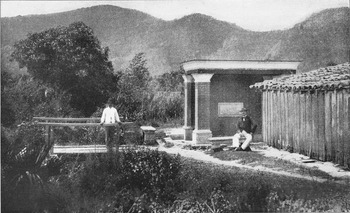
Commercial incentives were not the only enticement landholding companies offered. They also pitched the Isle as a resort location. This discourse powerfully suggested that the Isle could be a place for a man—and these prospectuses and advertisements were almost universally geared toward men—to reinvigorate himself physically and mentally. “[The Isle] has been a health resort for more than a century and is one of the oldest known,” the Cañada Land & Fruit Company stated. “The sea air, pure water, the mineral springs and equitable temperature are all conducive of long life.”Footnote 62 Company literature cited the mineral waters, in particular, as having healing properties for a variety of ailments, including stomach and kidney disease, rheumatism, and asthma. The Tropical Development Company claimed that one settler, T.J. Keenan, so highly regarded the healing powers of the mineral springs that he spent $3,000 to build a private bath house around one.Footnote 63 Company literature also noted that the mineral springs in the interior of the Isle “are constantly visited by many invalids, who find speedy relief.”Footnote 64
In addition to appealing to the desire for self-improvement, landholding companies also piqued the imaginations of settlers and entrepreneurs. Prospectuses portrayed the Isle in exotic terms, as a land more alien and mysterious than any found in the familiar Northeast or Midwest. Images commonly depicted the island as precious and pristine. The Isle of Pines, the Tropical Development Company stated, “has been compared to ‘a jewel pendant from the throat of Cuba, blazing in the tropic sun.’”Footnote 65 A sense of adventurism and excitement—even a subtle hint of danger—seemed to pervade the place. Prospectuses cited the Isle's mythical heritage as a pirate hideout during the colonial era as well as its status as a destination for political prisoners during the nineteenth century, including, most famously, Jose Martí in 1870.Footnote 66
Mineral springs were one of the Isle's main attractions. Landholding companies claimed that these waters, as well as the Isle's warm, tropical climate, could help restore one's health and cure a variety of illnesses. Courtesy of the Yates County Genealogical and Historical Society.

While evoking a sense of mystery, excitement, and adventure, companies also sought to reassure potential customers that the Isle was not too far away, literally or figuratively. One of the key selling points was relative proximity to the United States, suggesting that such an alien tropical paradise was actually close to home. The Isle of Pines Company claimed that the Isle was within four days travel from any major city in the United States.Footnote 67 The Tropical Development Company put it another way: The Isle of Pines was as far from New York City as St. Paul, Minnesota—although in the distinctly opposite climatic condition.Footnote 68 To get there, of course, one needed to have sufficient financial means. As of 1911, the round-trip cost of first-class travel from New York was $100.70; an “intermediate” class ticket cost $58.60.Footnote 69 To the farming and middle-class settlers, however, these costs likely prohibited frequent returns to the United States.
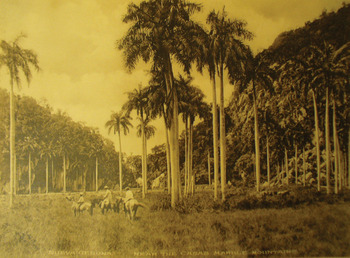
The lush, tropical landscape on the Isle was another selling point for landholding companies. The climate was said to be warm, but not too hot. Moreover, companies claimed that the Isle was free from diseases such as yellow fever and malaria that plagued other areas in the tropics, including Cuba proper. These points supported the argument that the Isle was safe for Anglo-Americans to settle. Courtesy of the Library of Congress.

Based on the glowing descriptions of the climate, the trip was worth it for the weather alone. The Isle was warm during the winter, but not too uncomfortably hot in the summer, as was said to be typically the case in the tropics. “The Isle of Pines enjoys one continuous summer,” the Isle of Pines Company hyped. “No heavy overcoats or expensive clothing [are necessary].”Footnote 70 Considering that landholding companies advertised mainly in the Northeast and Midwest, with their cold winters, depictions of the warmer climate surely had an appeal. Frederick Swetland Jr. believed that was the case for his grandfather. Envisioning what Truman Swetland thought upon his first visit in 1908, Frederick wrote, “How fragrant, warm, clear and quiet it must have seemed to him, straight from the snows and grime and huddled cold of Cleveland, with the wind off the crumpled ice floes of the lake. Of course he fell in love with it as all Northerners coming down into winter sun and color must do.”Footnote 71 The Isle of Pines Company starkly described the difference between the climate on the Isle and what was typically found in the Northeast and Midwest: “When Snows, sleet and blizzards hold this country in their icy grip, McKinley with its orange blossoms, birds, flowers, sunshine and blue sky is a picture of summer, a paradise for those seeking to escape coughs, colds, bronchitis, pneumonia, catarrh, consumption and rheumatism which are so prevalent [in the United States].”Footnote 72
There was one important caveat to the Isle's ideal climate: hurricanes. Every prospectus either ignored or overlooked tropical storms; some companies made unsubstantiated claims that such storms did not affect the Isle. According to the Cañada Land & Fruit Company, “Hurricanes, cyclones and tornadoes have never visited the island. No crops are ever injured by storms, overflows or frosts.”Footnote 73 The Isle of Pines Investment Company made a similar prevarication. “Natives claim that there has never been a single visit of either a hurricane or cyclone to the Island. . . . No other place in the West Indies is so free from storms.”Footnote 74 This was certainly not the case during the period of U.S. involvement on the Isle. Over the next half-century, the Isle experienced devastating hurricanes that significantly damaged crops, property, and infrastructure. The storms of 1917 and 1926, in particular, hastened the decline of the American community.
Nevertheless, at the turn of the century, landholding companies promoted the notion that the Isle of Pines was safe for American settlement—specifically, for white American settlement. The Tropical Development Company declared, “The thousands of American colonists and settlers now residing in the Republic [of Cuba] have proved beyond question that it is ‘a white man's country,’ and are spreading the gospel of the new promised land among their friends at home.”Footnote 75 The Isle of Pines Investment Company echoed that sentiment, suggesting the racial balance was quite favorable to white Americans. “The Isle of Pines may be regarded as strictly a white man's country, a condition almost impossible to find in the Southern States and unknown in any other part of the West Indies.”Footnote 76 Landholding companies sought to reassure Americans who considered moving that they would not meet a hostile reception in a foreign land from uncivilized tropical peoples. To that end, prospectuses emphasized pineros' whiteness and sophistication, suggesting that they wholeheartedly welcomed U.S. settlers. “The natives are of Spanish descent … and they are now almost to a man gratified that the island is United States territory,” the Isle of Pines Company stated. “The natives are an intelligent, hospitable people and welcome emigration from the States.”Footnote 77 Likewise, the Cañada Land & Fruit Company claimed, “The native of the Isle of Pines is not lazy. He is very much of a gentleman and prefers not to do much manual labor, but enjoys riding around on horseback to look after his stock, and they are for the most part from their own standards well fixed, having simple tastes easily satisfied.”Footnote 78
This depiction ignored deep divisions within pinero society, particularly between the minority hacendados and the vast majority that made a living as wage laborers or subsistence farmers. In 1899, the U.S. military government conducted a census that found the Isle had 3,199 residents, a 63 percent increase from the previous census in 1887. Although one of the smallest population densities in the country, the increase was exceptional in light of the fact that Cuba as a whole had experienced negative population growth during the twelve years between censuses, mainly because of the toll of war that had plagued Cuba proper but largely spared the Isle. More than 80 percent of the Isle's population in 1899 was considered “white,” the precise definition of which was undefined but presumably referred to people of Spanish descent. On this count, landholding companies were mostly on the mark. Economically, however, pineros were not quite as well off as landholding companies suggested. Indicators show that 1,916 people were “without gainful occupation,” including all but thirty-seven of the enumerated women living on the Isle. Of those employed, the most popular occupations were in “domestic or personal service” (647 people) and “agriculture, fisheries, mining” (403 people). Only twenty-two pineros were considered to have “superior education,” and less than one-third of the population (954 people) was said to be literate.Footnote 79
Some companies suggested pineros would make good employees, eager to work for U.S. landowners. The San Juan Heights Land Company stated that pineros “constitute the laboring element and are available for those Americans who are cultivating and improving their places on a large scale.”Footnote 80 The Isle of Pines Investment Company echoed that contention, describing pineros as “full-blooded Spanish people—hard-working, law abiding, peaceable, hospitable, and honest—who invariably command the respect, after acquaintance, of all Americans. . . . In fact, the native population on the Isle of Pines is distinctly different in character and disposition from the average native of Cuba.”Footnote 81 By emphasizing pineros' European heritage, landholding companies made a clear distinction that the natives were not Afro-Cuban, as was more common in Cuba proper. Therefore, settlers would not have to worry about consorting with non-whites, a fear prevalent in the United States during the era of Jim Crow segregation.
Companies also looked to alleviate another issue often associated with tropical regions: disease. This was a long-held concern among Anglo-Americans anxious about traveling to the tropics for fear of contracting ailments such as yellow fever or malaria. During the War of 1898, some U.S. soldiers stationed in Cuba were uneasy about staying on the island longer than necessary. Most notably, Theodore Roosevelt appealed to get his Rough Riders out of Cuba soon after hostilities ended out of fear that his soldiers would contract tropical diseases.Footnote 82 Landholding company executives were alert to this concern. Citing U.S. government reports, the Isle of Pines Company asserted that the Isle had no record of yellow fever or cholera.Footnote 83 Moreover, the Isle allegedly lacked the slithery and dangerous creatures so frequently associated with tropical climates. “There is no place in the tropics so free from reptiles as the Isle of Pines and Cuba,” the Cañada Land & Fruit Company stated. “There are very few snakes, and they are small and not poisonous, about the same varieties that are found in the older Northern states.”Footnote 84
Landholding companies also typically obfuscated the sovereignty question. Whereas U.S. and Cuban officials deliberated about claims, landholding companies and settlers rarely, if ever, recognized Cuban interests or authority, even though the Cuban government had been administering the Isle since independence in May 1902. Instead, settlers and entrepreneurs often referred to the Isle in prospectuses, company stationery, and personal correspondence as “Isle of Pines, W.I.”—West Indies. This designation not only denied Cuban sovereignty but also implied that it was among the islands Spain had ceded to the United States under the Treaty of Paris. Some companies went further by declaring that the Isle of Pines unconditionally belonged to the United States. The Tropical Development Company referred to the Isle as the “American District of Cuba”; the Isle of Pines Company stated, “The Isle of Pines is the very latest of Uncle Sam's territorial acquisitions.”Footnote 85 Even after the Hay-Quesada treaty was signed (but before the U.S. Senate ratified it), landholding companies continued to suggest that the U.S. government was an active player in the Isle's affairs and that it would guarantee the physical and financial protection of settlers and entrepreneurs. In 1911, the Isle of Pines Company claimed, “The United States government has absolutely pledged itself to see that an orderly government is maintained and there is to-day in the Isle of Pines as perfect security of life and property as in any part of the United States.”Footnote 86
The promise of security and prosperity was an integral part of the landholding companies' sales pitch. Companies promised significant returns-on-investment to the settler who bought land sooner rather than later so they could reap the benefit of the inevitable increase in land values. As the Isle of Pines Investment Company put it, “Buy Land Now, It's Like Taking Out an Insurance Policy[—]the Longer You Put It Off the More Expensive It Gets.”Footnote 87 In the first years of the twentieth century, landholding companies generally sold undeveloped land for up to $50 an acre. They promised that once developed, the value of land would increase exponentially. The Isle of Pines Company asserted, “Every available acre of tillable land in the Isle of Pines is, in our opinion, worth $100, uncultivated, to-day. Cultivated (in grapefruit or oranges, for instance) it should be worth $1,000 in full bearing.”Footnote 88 Advertisements attributed this increase in value to the efforts of settlers, whose industry and efficiency made the Isle more productive and valuable than it ever was under Spanish rule. According to the Isle of Pines Company, “The activity of the Yankee settler [brought] an era of prosperity—and of increase in land values vastly greater in five years than in the five centuries preceding.”Footnote 89 As the ensuing decade bore out, however, settlers had mixed results in terms of experiencing prosperity.
Settler Testimonials
Landholding companies' alluring portrayal of the Isle of Pines compelled many Americans to move there. However, what those settlers found and how it compared to their expectations often depended on their status. One group, consisting mostly of farmers and the middle class, stayed year-round with the intention of making it their permanent home. They were not necessarily expatriates because they presumed the Isle would one day become part of the United States, if it was not already. Those who eventually returned to the United States disillusioned by what they found—or did not find—tended to come from this group. They blamed the landholding companies for exaggerating the Isle's promise, raising unrealistic expectations, and duping settlers. Moreover, they found pineros to be less agreeable than they had been led to believe and the living conditions to be more primitive than they were willing to tolerate. In contrast, a second group of settlers generally only stayed part of the year, returning to their homes in the United States during the summer months when temperatures on the Isle became appreciably warmer. These settlers tended to be better off financially and could afford traveling to and from the Isle multiple times a year. This group often claimed that the Isle was just as it had been described to them; their perspectives echoed landholding companies' promotions. Apart from varnishing tales of frontier adventures to their townsfolk, these reports also served a tangible purpose. Settlers and entrepreneurs widely presumed that as more Americans took a financial interest, either as residents, tourists, or entrepreneurs, their property values would increase. This interest might also compel U.S. officials to annex the Isle, which would be a further boon to their property values and business ventures.
Among settlers who gave the Isle glowing reviews, testimonials generally addressed at least one of five points. The first was about the favorable climate. Returning settlers suggested the Isle was the perfect location for a second home, an expense that could be met by exploiting natural resources. “For those desiring to spend their winters in a warmer climate, the Isle of Pines cannot be excelled as a winter home,” J.H. Worst of North Dakota reported. “Many families are purchasing a few acres with a view to their improvement as a winter residence, anticipating sufficient revenue from their citrus fruit groves to pay for their transportation and living expenses.”Footnote 90 E.T. Wheelock, who was part of a landholding company that controlled a tract called La Esperanza on the west coast of the Isle, wrote, “The Time is coming I firmly believe, when the Isle of Pines will be the most popular winter resort for citizens of the United States.”Footnote 91 A newspaper in Trenton, New Jersey, noted that George A. Cole, a local man who managed a citrus grove on the Isle, was back in town briefly but anxious to go back. “He declares he will not remain north longer than is absolutely necessary for him to complete his business, for he prefers life in the balmy air and sunshine of the south.”Footnote 92
A second general point referenced the Isle's soil, which was favorable to citrus fruit, vegetables, and tobacco. Such news surely resonated with farmers, who were the most common settlers. Worst, a professor at an agricultural college in Fargo, North Dakota, echoed such sentiments, noting the Isle's “fertility.”Footnote 93 Worst's description conjured a feminized image, a “Mother Earth” that would give birth to the seeds planted by settlers. Such a portrayal supported the image of the Isle as nurturing and familiar, rather than harsh and alien.
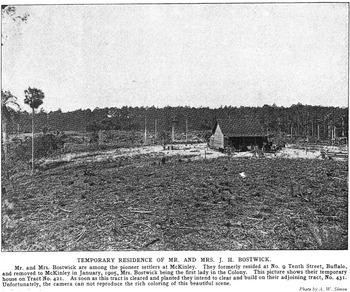
The first generation of U.S. settlers had to clear the land, plant groves, and build new homes, a costly and time-consuming process. Those who were well-financed withstood the first few years. However, many other settlers underestimated the financial and physical toll it took to start a grove on the Isle of Pines and went back to the United States sorely disappointed. From Tropical Development Company, McKinley in the Making (1906), brochure courtesy of the Stanford University Library.

That the Isle yielded good produce was a third common refrain. “Isle of Pines is a Fruit Paradise,” one Duluth headline read.Footnote 94 Citrus was said to be larger and more flavorful and to grow more abundantly than any produced in Florida and California. Settlers returned to the United States with samples for their neighbors. Equally important, crops were said to grow abundantly, suggesting a good return-on-investment. One newspaper reported about an Oshkosh, Wisconsin, man who estimated that he could earn between $500 and $600 an acre from his fruit trees.Footnote 95 Wheelock offered a more generous estimate: He said full-bearing groves could earn up to $1,000 an acre for their produce.Footnote 96 Despite the varying estimates, these reports had the same message: the Isle of Pines was a place of impending commercial prosperity.
Settlers' testimonials offered a fourth common point, that anyone interested in exploiting the Isle's commercial potential should act soon because property values were rapidly increasing. During the first decade of the twentieth century, settlers reported that undeveloped land sold for up to $50 an acre; cleared land with planted fruit trees sold for as much as $200 an acre. Settlers willing to put the time and effort to improve their plots would surely reap a financial windfall. Walter Neville of Oshkosh insisted that farming was a sound investment. “All things considered, I think like all who have visited the Isle of Pines that it is just the place for a young man with a little capital to come to and get a good start in life.”Footnote 97 Frank S. Kleinkauf apparently enjoyed such a benefit. According to his hometown newspaper, he went to the Isle in 1908, bought twenty acres with his wife, Dora, to start a grapefruit grove, and “fell completely in love with the country.” Six years later, the fruits of their labor were evident. “Since they started their farm, the land has doubled in value and is still increasing. The island is everywhere being cultivated and everyone there is enthusiastic about his work.”Footnote 98
To quell concerns about going to a foreign land, settlers commonly raised a fifth point: the Isle had many fellow Americans already there with surely more to come. “Americans are going to the island rapidly and will soon greatly outnumber the natives,” Ludwig Sudlack reported to his hometown of Duluth.Footnote 99 William Schultz wrote that when he arrived from Fond du Lac in 1902, he was just one of fifteen Americans and the only one from Wisconsin. Five years later, he reported that more than 2,000 Americans were living there.Footnote 100 Schultz's report typified the varied estimates settlers offered of the U.S. population, little of it supported by the Cuban census. In May 1906, for example, Sudlack claimed that 1,200 Americans lived on the Isle.Footnote 101 That same month, Neville wrote that 5,000 Americans lived there, vastly outnumbering the native population of only 1,000.Footnote 102 According to the 1907 Cuban census, the Isle had 3,276 inhabitants, including 438 people born in the United States.Footnote 103 To annexationists, inflating the number of settlers supported their case that the Isle should be made a part of the United States. Nevertheless, the estimates offered by settlers to their hometown newspapers suggested that more Americans were coming to the Isle—if not precisely in those exaggerated numbers—and that their arrivals registered a distinct impression on those already there.
However, not all settlers were satisfied with what they found. Indeed, many returning U.S. citizens offered a contrasting portrait, one that featured a harsh landscape, poor conditions, and little governance. For example, months after Cuba assumed independence, some settlers complained about its ineffective government that put U.S. investments and communities at risk. T.J. Keenan said Cubans had done little to ensure order and stability, as it had been under U.S. military occupation. “The Isle of Pines is on the verge of anarchy, having no governor, no courts, no magistrates, no schools and no revenue,” he said.Footnote 104
Other issues soon emerged. After a few days on the Isle in 1904, Charles Greve returned to his home in West Duluth, Minnesota, and declared, “Whatever others may say the Isle of Pines is the biggest swindle on earth.” Although conceding the attractive climate, he lamented that the landholding companies had already bought the best property; the only available land remaining for small farmers had poor soil and was unlikely to yield much produce. He continued that even if a farmer had an abundant crop for sale, the problem of transportation and infrastructure meant selling crops back to the United States would be cost prohibitive. The problems of commercially developing the Isle, he said, were well known in Cuba proper. “At Havana they laugh at you if you say that you intend to buy land in the Isle of Pines. . . . I do not hesitate to say that the Isle of Pines is a fraud.”Footnote 105
William Murray of North Fond du Lac echoed those sentiments. He pointed out a host of inadequacies that contrasted with the prevailing narrative. Murray cited a high cost of living, dearth of accommodations such as hotels and material goods, and a land covered in brush that was not worth the time and effort to clear. Moreover, unlike many other settlers' accounts, Murray said he rarely saw Americans. One exception was his encounter with R.M. Jacks, a fellow Wisconsinite. Although Jacks did not offer Murray his impression of the Isle, “Mrs. Jacks thought it no place for Americans.”Footnote 106
Julius Kuehn agreed, at least as far as Americans of modest means were concerned. He argued that the cost of clearing land, most of which was “barren,” was prohibitive to the small farmer. Kuehn maintained that the Isle was perfectly fine as a winter resort “but [was] a mighty bad place for a poor man to go and try to raise anything.” Upon returning to his home in Wisconsin, he relayed to his hometown newspaper that a settler had told him “that it was a crime to get Americans to locate on the island with a promise that they could get good returns from the raising of fruit.”Footnote 107
Even after U.S. citizens had spent more than a decade on the Isle, views contrary to the popular depiction continued to emerge. Oregon native A.J. Craig offered one of the most impassioned refutations. “The land is nearly all a sand bed, with streaks of course gravel,” he wrote in June 1914. “There is hardly any soil worthy of the name.” He continued that many American families had abandoned their homes after failing to turn a profit on their small groves. Craig complained that potable water was in short supply, as were basic foodstuffs such as meat and dairy products. “The land is covered with a wild sour wire grass that stock can't eat; a goat turned loose on the isle would starve to death.” He also disputed the image of the Isle as a safe tropical paradise. He cited fifteen-foot snakes that attack livestock, swarms of insects, tropical storms, a dearth of good schools, and a high cost of living nearly double that of the United States. Not only was the Isle cost-prohibitive to the small farmer, he argued, but “it is not a fit place for white people to live.”Footnote 108
Craig's account did not go unchallenged. Robert Dunning, another Oregonian who had spent six years on the Isle of Pines, rebutted Craig's portrayal. Dunning suggested that Craig was “spiteful” because his physician's practice failed to get off the ground and argued that conditions were not as bleak as Craig described. He wrote that citrus indeed grew abundantly and was in demand in eastern U.S. markets. Homes may have appeared abandoned because many settlers returned to the United States during the summer months. Potable water was widely abundant in the various mineral springs around the island. Furthermore, anyone who had seen fifteen-foot-long snakes “must have imbibed freely on ‘aguardiente’ (Cuban whisky).” Dunning also cited the variety of hotels, shops, social clubs, schools, and roads as proof that the Isle was far more developed and Americanized than Craig had given it credit. “The doctor has probably listened to the Havana hotel men and real estate ‘sharks’ who knock the Isle of Pines in order to keep tourists and investors from going there; they want them to remain in Cuba.”Footnote 109
By 1910, U.S. interests had acquired more than 90 percent of available land on the Isle of Pines. It was a startling figure considering that ten years earlier only one American with a little more than 100 acres was on record as a property owner. Private interests largely facilitated this development with little support from the U.S. government. Indeed, in a January 1904 report Elihu Root flatly stated, “The executive department of the Government does not deem the isle of value to the United States.”Footnote 110 Nevertheless, private U.S. citizens continued to buy and sell land. Landholding companies' promotional campaigns greatly spurred this activity. These efforts successfully appealed to Americans who continued to look to the frontier for adventure and opportunity. They established an image of pineros—as simple yet friendly and welcoming—as well as a set of assumptions that many settlers carried with them. Depictions of the Isle as an exotic tropical paradise, a place for rejuvenation, and an area ripe for American development not only resonated in the early 1900s, but would continue to be used to refer to the Isle for the next half-century.
For many settlers, however, the Isle they found was not the picture of paradise that the landholding companies had portrayed. By the early 1920s, only about 700 settlers remained from an estimated peak of 2,000 a decade earlier. Property values declined because of hurricane damage, failing groves, and prohibitive tariffs on export industries. As a result, many settlers returned to the United States after selling their land at a loss or abandoning it altogether. Millie Giltner, a longtime resident of the Isle, recalled, “I bet no more than five or six people ever made any money.”Footnote 111 Most critically, however, the U.S. Senate's March 1925 ratification of the Hay-Quesada treaty ended annexationists' dream of an Isle of Pines, U.S.A. By that time, all but a few hundred settlers had returned to the United States, and most of the landholding companies had shuttered. This development probably would not have surprised Senator Orville Platt, who had warned about the potential for failure in Cuba. In his letter to W.H. Putnam, Platt was pessimistic about Americans seeking fortune there. “I think it is a natural characteristic of mankind to look for business opportunities far away from home, feeling that they may do better in another state or country than where they reside—the usual result is disappointment.”Footnote 112