Introduction
The majority of people will be exposed to one or more potentially traumatic events (PTE) in their lifetime (Kessler et al., Reference Kessler, Aguilar-Gaxiola, Alonso, Benjet, Bromet, Cardoso and Ferry2017; Kessler, Sonnega, Bromet, Hughes, & Nelson, Reference Kessler, Sonnega, Bromet, Hughes and Nelson1995; Nickerson, Aderka, Bryant, & Hofmann, Reference Nickerson, Aderka, Bryant and Hofmann2012). It is now well known that there is substantial heterogeneity in psychological responses to such events. This variability is reflected in the lifetime prevalence of posttraumatic stress disorder (PTSD), which has been consistently estimated at less than 10% across studies worldwide [for a review, see (Lowe, Blachman-Forshay, & Koenen, Reference Lowe, Blachman-Forshay and Koenen2015)].
From a longitudinal perspective, it has been theorized that there exists a range of patterns of PTSD symptom progression, including persisting low symptoms, initially high symptoms that either quickly or gradually remit, delayed-onset symptoms, and chronically moderate or high symptoms (Bonanno & Diminich, Reference Bonanno and Diminich2013; Norris, Tracy, & Galea, Reference Norris, Tracy and Galea2009). The existence of such subpopulations aligns with the results of longitudinal studies that used person-centered statistical methods, such as latent class growth analysis (LCGA), to search for classes of growth and decline in PTSD symptoms (Andruff, Carraro, Thompson, Gaudreau, & Louvet, Reference Andruff, Carraro, Thompson, Gaudreau and Louvet2009; Jung & Wickrama, Reference Jung and Wickrama2008; Van de Schoot, Reference Van de Schoot2015). In the past decade, there has been a proliferation of such studies in the aftermath of traumatic events, including sexual assault, military deployment, and traumatic injury (Berntsen et al., Reference Berntsen, Johannessen, Thomsen, Bertelsen, Hoyle and Rubin2012; Bonanno, Kennedy, Galatzer-Levy, Lude, & Elfström, Reference Bonanno, Kennedy, Galatzer-Levy, Lude and Elfström2012; Galatzer-Levy et al., Reference Galatzer-Levy, Ankri, Freedman, Israeli-Shalev, Roitman, Gilad and Shalev2013; Norris et al., Reference Norris, Tracy and Galea2009; Steenkamp, Dickstein, Salters-Pedneault, Hofmann, & Litz, Reference Steenkamp, Dickstein, Salters-Pedneault, Hofmann and Litz2012).
A recent review of 67 studies of mental health (not exclusively PTSD symptoms) in the aftermath of PTEs provided evidence for four prototypical trajectories in relatively consistent proportions (Galatzer-Levy, Huang, & Bonanno, Reference Galatzer-Levy, Huang and Bonanno2018). The modal trajectory in this review was characterized by consistently low post-trauma symptoms, which the authors termed Resilience, with an average of 65.7% of participants exhibiting this pattern across studies. The other three trajectories were characterized by initially high symptoms that remitted over time (Recovery; 20.8%), consistently high symptoms (Chronic; 10.6%), and initially low symptoms that increased over time (Delayed Onset; 8.9%). Despite this consistency, the authors observed marked heterogeneity in the proportion of participants in each of the prototypical trajectories across studies.
Several factors could underlie the heterogeneity in trajectories across studies. First, as noted by Galatzer-Levy et al. (Reference Galatzer-Levy, Huang and Bonanno2018), sample characteristics likely influence the proportion of participants in each trajectory. One important characteristic appears to be the type of PTE to which participants were exposed, such that a consistently low trajectory is more common following less severe PTEs (e.g. Fink et al., Reference Fink, Lowe, Cohen, Sampson, Ursano, Gifford and Galea2017). A second source of heterogeneity could be timing of assessment, with the length of follow-up across trajectory studies ranging from months to several years post-trauma. Few studies have concluded within the first year following trauma exposure [for exceptions, see, e.g. (Berntsen et al., Reference Berntsen, Johannessen, Thomsen, Bertelsen, Hoyle and Rubin2012; deRoon-Cassini, Mancini, Rusch, & Bonanno, Reference deRoon-Cassini, Mancini, Rusch and Bonanno2010; Dickstein, Suvak, Litz, & Adler, Reference Dickstein, Suvak, Litz and Adler2010; Steenkamp et al., Reference Steenkamp, Dickstein, Salters-Pedneault, Hofmann and Litz2012)], which is arguably the time during which survivors might most readily have access to mental health services and interventions are most optimal, thereby reducing long-term costs associated with chronic symptoms. Finally, a range of assessment instruments has been utilized and, although this source of heterogeneity remains empirically unexplored, it remains possible that it could influence patterns of results. Few studies have used the gold-standard assessment of PTSD symptoms, the clinician-administered PTSD scale [CAPS; (Blake et al., Reference Blake, Weathers, Nagy, Kaloupek, Gusman, Charney and Keane1995)]; for exceptions, see (Boasso, Steenkamp, Nash, Larson, & Litz, Reference Boasso, Steenkamp, Nash, Larson and Litz2015; Nash et al., Reference Nash, Boasso, Steenkamp, Larson, Lubin and Litz2015).
Addressing these three key sources of heterogeneity – type of PTE, timing of assessment, and assessment instrument – could yield more definitive information about the proportion of survivors likely to exhibit the four prototypical trajectories in the first post-trauma year. One context in which such information would be useful would be emergency departments (EDs), wherein survivors of traumatic injuries frequently present for immediate care. For example, in the United States in 2016, nearly 39 million injury survivors were treated in EDs, representing over 20% of primary diagnoses (Rui, Kang, & Ashman, Reference Rui, Kang and Ashman2016). Insight into what percentage of potentially traumatic injury survivors might be in need of services at different times during the first trauma year would help allocate scarce resources to prevent and treat PTSD symptoms.
Addressing the heterogeneity in trajectory studies could also provide clinically useful information into the factors that predict trajectory membership. In an ED context, knowledge of such factors could inform targeted outreach efforts. Several factors have been identified that decrease the likelihood of a consistently low symptom trajectory, including demographic characteristics (e.g. female gender, low socioeconomic status), greater event severity, and prior trauma exposure (Bonanno et al., Reference Bonanno, Kennedy, Galatzer-Levy, Lude and Elfström2012; Bryant et al., Reference Bryant, Nickerson, Creamer, O'donnell, Forbes, Galatzer-Levy and Silove2015; Lowe, Galea, Uddin, & Koenen, Reference Lowe, Galea, Uddin and Koenen2014; Pietrzak, Van Ness, Fried, Galea, & Norris, Reference Pietrzak, Van Ness, Fried, Galea and Norris2013).
However, the literature has generally not explored predictors of trajectory membership with explicit attention to the two key elements that differentiate trajectories, that is, their starting points (i.e. intercepts) and how they change over time (i.e. slopes). Predicting intercept and slope terms are the goal of conventional latent growth curve models; however, these models are not appropriate for contexts in which subpopulations of growth are hypothesized, such as mental health in the aftermath of trauma (Jung & Wickrama, Reference Jung and Wickrama2008). Strategically developing models predicting trajectory membership could provide similar information in the aftermath of trauma. For example, identifying predictors of trajectories that start with high, v. low, PTSD symptoms could shed light upon which survivors are likely to need immediate care after discharge. In contrast, analyses that focus on changes in symptoms over time – for example, membership in a consistently high trajectory v. a symptom recovery trajectory, or membership in a delayed-onset trajectory v. a consistently low trajectory – would help identify characteristics of survivors who might be in need of longer-term services.
The current study aimed to advance the literature on PTSD symptom trajectories by pooling data from six studies that each included survivors of civilian-related injuries severe enough to warrant ED admission, and that each had at least three post-trauma assessments of PTSD within the first year of trauma exposure using the CAPS. We first documented the proportion of participants in each trajectory both within and across the six datasets, and then developed predictive models to elucidate the factors associated with both initial PTSD reactions and the course of PTSD symptoms over time, including demographic characteristics, type of event leading to the injury, and history of trauma exposure. By documenting the prevalence and predictors of PTSD symptom trajectories in the pooled sample, we sought to provide more generalizable information about the short-term mental health needs of potentially traumatic injury survivors reporting to EDs. To our knowledge, this is the first study to analyze PTSD symptom trajectories using pooled data.
Method
Data from this study came from the International Consortium to Predict PTSD (ICPP), a collaboration to pool longitudinal studies of hospital admissions for civilian trauma-related incidents around the world. Articles published between 1997 and 2015 were screened for eligibility, including assessment of all 17 DSM-IV PTSD symptoms at two or more time points, starting early after trauma exposure. Lead authors of identified studies were invited to join the consortium and provide itemized data. Additional information on the identification of studies and efforts to pool data can be found elsewhere (Qi et al., Reference Qi, Ratanatharathorn, Gevonden, Bryant, Delahanty, Matsuoka and Seedat2018). The current analysis included studies with least three assessments of PTSD symptoms using the CAPS (Blake et al., Reference Blake, Weathers, Nagy, Kaloupek, Gusman, Charney and Keane1995) within the first post-trauma year. Six studies met these criteria: the Multisite acute stress disorder study [Multisite ASD; (Bryant, Creamer, O'Donnell, Silove, & McFarlane, Reference Bryant, Creamer, O'Donnell, Silove and McFarlane2008)], Jerusalem trauma outreach and prevent Study [JTOPS; (Shalev et al., Reference Shalev, Ankri, Israeli-Shalev, Peleg, Adessky and Freedman2012)], Tachikawa cohort of motor vehicle accidents [TCOM; (Matsuoka et al., Reference Matsuoka, Nishi, Nakajima, Yonemoto, Hashimoto, Noguchi and Kim2009)], Ohio motor vehicle accident study [Ohio-MVA; (Delahanty, Raimonde, Spoonster, & Cullado, Reference Delahanty, Raimonde, Spoonster and Cullado2003)], Zurich intensive care unit study [Zurich ICU; (Hepp et al., Reference Hepp, Moergeli, Buchi, Bruchhaus-Steinert, Kraemer, Sensky and Schnyder2008)], and the Amsterdam cortisol study (Mouthaan et al., Reference Mouthaan, Sijbrandij, Luitse, Goslings, Gersons and Olff2014), each representing a different country (Australia, Israel, Japan, USA, Switzerland, and the Netherlands, respectively). Investigators of the six studies obtained informed consent from participants using procedures approved by their local institutional review boards. The pooled sample consisted of 3083 participants.
Measures
PTSD symptoms
PTSD symptoms were measured in each study with the CAPS (Blake et al., Reference Blake, Weathers, Nagy, Kaloupek, Gusman, Charney and Keane1995), which is considered the ‘gold standard’ assessment tool for PTSD. Participants reported on symptoms specifically in reference to the civilian-related injury leading to their hospital admission. The CAPS uses structured interviews to assess DSM-IV PTSD Criteria B (intrusive symptoms, e.g. unwanted memories and unpleasant dreams about the event), C (avoidance and numbing symptoms, e.g. avoidance of thoughts and feelings related to the event, feelings of detachment or estrangement from others) and D (hyperarousal symptoms, e.g. difficulty falling or staying asleep, difficulty concentrating). Each symptom is rated on frequency and intensity from 0 to 4, and symptom severity scores are calculated as the sum of all frequency and intensity ratings, ranging from 0 to 136 (Weathers, Ruscio, & Keane, Reference Weathers, Ruscio and Keane1999). The CAPS has been found to have good psychometric properties across a range of clinical and research settings (Weathers et al., Reference Weathers, Keane and Davidson2001), including high inter-rater reliability, test-retest reliability, and internal consistency (Blake et al., Reference Blake, Weathers, Nagy, Kaloupek, Gusman, Charney and Keane1995; Hovens et al., Reference Hovens, Van der Ploeg, Klaarenbeek, Bramsen, Schreuder and Rivero1994).
Predictors
Two categories of predictors were included in the analysis. First, demographics that were assessed across all six studies were included: age quartiles (reference = <27 years of age), gender (reference = male), race (reference = white), level of education (reference = secondary education or more), and marital status (reference = married/living with a partner at baseline). Second, we included dummy variables indicating the type of incident leading to the injury, including MVA, other accidents, and assaults. MVA was used as the reference category as it was the most common precipitating incident in the pooled sample. We also included a variable for prior trauma severity including a history of non-interpersonal trauma or interpersonal trauma (reference = no prior trauma). In addition to these categories of predictors, we also controlled for the data source using dummy variables, with the source contributing the most participants to the pooled sample (Multisite ASD) as the reference group. For variables missing responses (race, education, marital status, prior trauma), an indicator for missingness was included.
Data analysis
Data analysis consisted of four steps. First, descriptive analyses were conducted in R version 3.5 (Team, Reference Team2013). Means and standard deviations of the CAPS for each time point, and frequencies of covariates were computed. One-way analysis of variance tests were conducted to examine whether CAPS severity varied significantly across studies at each time point. Chi-square tests were conducted to assess for significant variation across studies on all covariates.
Second, LCGA were conducted in Mplus 8.0 (Muthén & Muthén, Reference Muthén and Muthén1998) for each dataset. Based on prior research (Galatzer-Levy et al., Reference Galatzer-Levy, Huang and Bonanno2018), we decided a priori to utilize the four-class solution from each dataset. However, models with classes ranging from 1 to 6 were conducted for descriptive purposes, and various statistical criteria (e.g. Bayesian information criteria, entropy, average posterior probabilities, Lo-Mendel-Rubin likelihood ratio test) were recorded, as per recommended guidelines (e.g. Andruff et al., Reference Andruff, Carraro, Thompson, Gaudreau and Louvet2009; Berlin et al., Reference Berlin, Williams and Parra2014; Jung & Wickrama, Reference Jung and Wickrama2008). All models included both linear and quadratic growth terms. Given that five of the six datasets only had three data points for PTSS, the variance of intercept and growth terms for all models were constrained to facilitate convergence (Andruff et al., Reference Andruff, Carraro, Thompson, Gaudreau and Louvet2009; Berlin et al., Reference Berlin, Williams and Parra2014). Data points were anchored at the number of months since ED admission for each wave of the given study; assessments at <1 month were anchored at 0.5 months. Trajectories from the four-class model for each dataset were labeled based on intercept and slope terms with the following terms: (1) Low, (2) Moderate-Low, (3) Moderate, (4) Remitting, (5) Fast Remitting, (6) High, and (7) Delayed. The six datasets were then pooled, with trajectory membership included as a categorical variable, and the frequencies of predictor variables were computed.
Third, a series of predictive models was conducted using R version 3.5 (Team, Reference Team2013). Univariate differences in frequency of risk predictors between participants across studies and trajectories were assessed using likelihood-ratio χ2 tests. Multivariable binary logistic regression models including all predictors simultaneously were then fit to estimate factors affecting initial PTSD reactions and course. Initial PTSD reactions were assessed from models predicting a Low trajectory v. any other trajectory, and a Low trajectory v. a High trajectory. Factors affecting PTSD course were assessed from models of a Low trajectory v. a Delayed trajectory, and a High trajectory v. a Remitting trajectory. Model fit was evaluated using Efron's R 2, the Brier Score, and the Area Under the Receiver of the Receiver Operating Characteristic (AUC).
Fourth, a series of supplementary analyses was conducted. Multivariable logistic regressions were repeated leaving one study out at a time to assess whether individual studies influenced the relationships between predictors and trajectories. Subsequently, two multivariable multinomial logistic regressions compared predictors' effects on initial PTSD reactions and course. First, a model predicting the Delayed and High trajectories v. the Low trajectory was fit to compare predictors of consistently high symptoms v. symptoms that onset later. A second model was fit predicting Low and Remitting trajectories v. the High trajectory comparing the predictors of consistently low symptoms with those that remitted over time. For both models, two multivariable multinomial logistic regressions were fit for each predictor to test the consistency of effect across outcomes. Predictors were first constrained to be equal across both outcomes and in the second regression predictors could vary by the outcome. A likelihood ratio test was then used to compare model fits and indicate whether predictors' effects varied by the outcome.
Results
Descriptive statistics
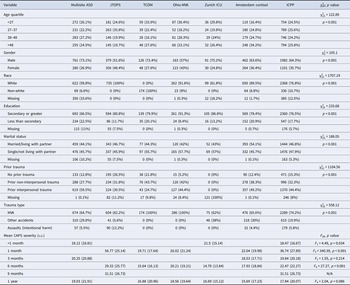
Table 1 shows descriptive statistics for predictor variables. Significant variation was found across age quartiles ( ${\rm \chi }_2^{15} $ = 122.89, p < 0.001), gender (
 ${\rm \chi }_2^5 $ = 105.10, p < 0.001), education (
 ${\rm \chi }_2^{10} $ = 233.68, p < 0.001), and marital status (
 ${\rm \chi }_2^{10} $ = 188.05, p < 0.001). Rates of prior non-interpersonal (27.7–43.7%) and interpersonal trauma (24.7–59.5%) ranged across studies with prior trauma not assessed in the Zurich ICU study (
 ${\rm \chi }_2^{15} $ = 1104.56, p < 0.001). White participants made up a majority of five studies except for TCOM where 100% of the participants were non-white (
 ${\rm \chi }_2^{10} $ = 1707.19, p < 0.001). Significant differences in index trauma type were reported across studies as two studies (TCOM and Ohio-MVA) recruited MVA (
 ${\rm \chi }_2^{15} $ = 122.89, p < 0.001). Significant differences in mean CAPS severity across studies were found for three-time points: <1 month (F 1 = 4.49, p = 0.034), 1 month (F 3 = 340.39, p < 0.001), and 6 months (F 4 = 27.27, p < 0.001).
Descriptive data for included studies and the pooled ICPP dataset
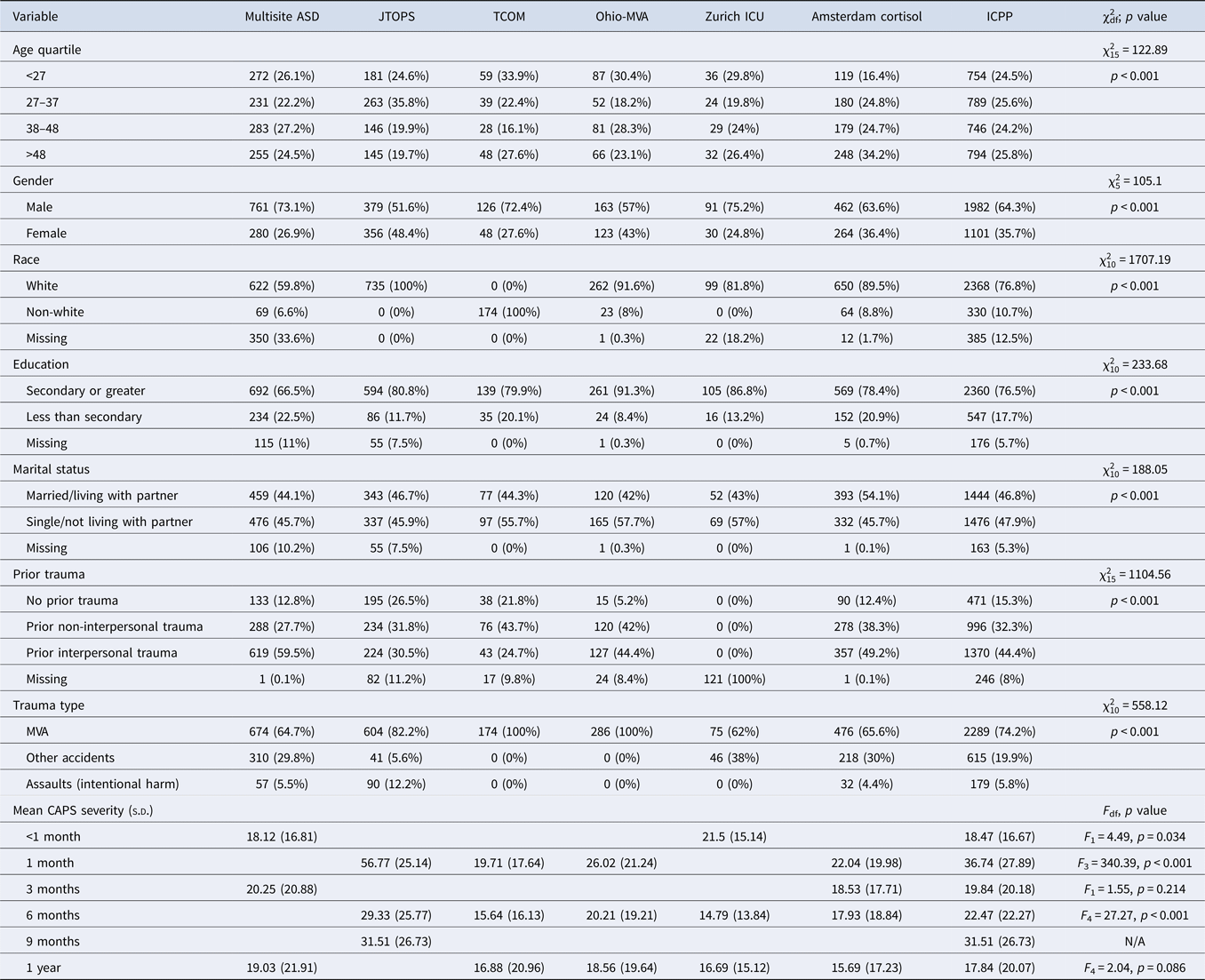
df, degrees of freedom; CAPS, clinician-administered PTSD scale; s.d., standard deviation.
Latent class growth analysis
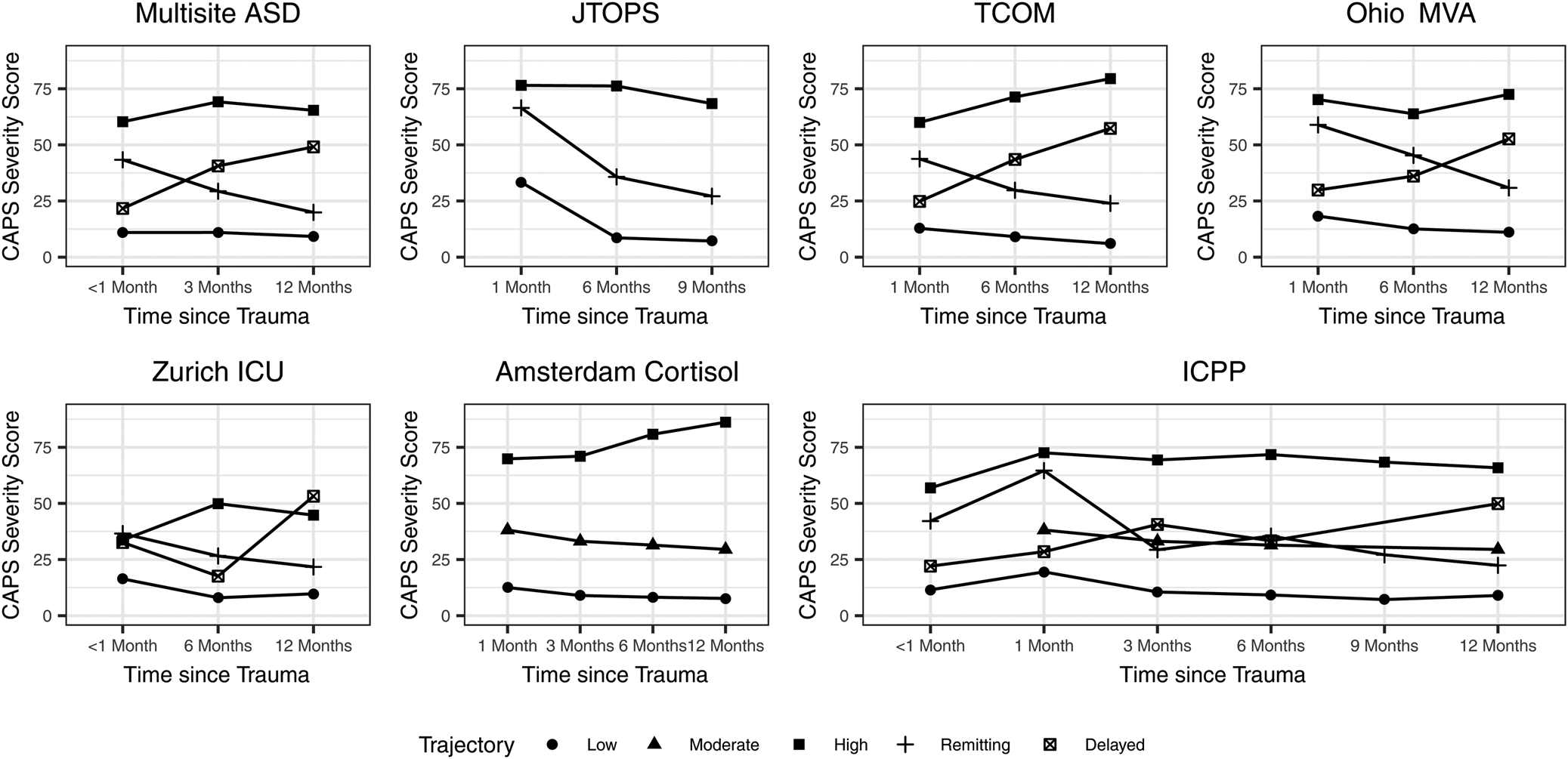
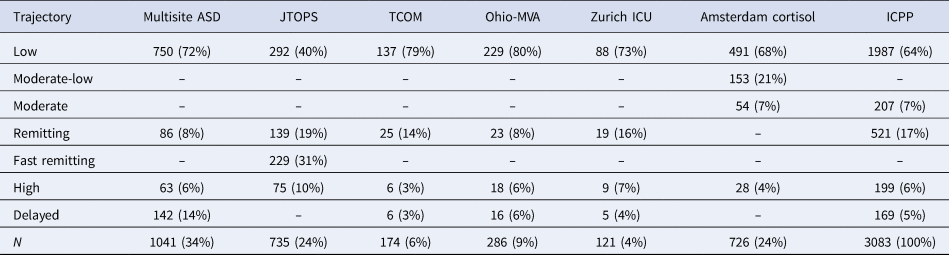
Statistical information on all of the LCGA models examined for each dataset are provided in Supplementary Tables 1–6. The number and percentage in each trajectory across studies from the four-class solution are presented in Table 2. A Low trajectory and High trajectory were common to all six studies. Moderate-low and Fast Remitting trajectories were only found in one study each. Participants in these trajectories were combined with those in the Moderate and Remitting categories, respectively, resulting in five unique trajectories. Supplementary Table 7 provides growth terms and descriptive data for participants with most likely membership in each trajectory from each dataset. Observed means for each dataset and the pooled sample are plotted in Fig. 1.
Plot of estimated mean values at each time point for trajectories from the four-class latent growth analysis. In JTOPS, the fast-remitting and remitting categories were combined and in the Amsterdam cortisol study the moderate-low and moderate categories were combined. CAPS, clinician-administered PTSD Scale.

Number of participants in each trajectory and the percentage each trajectory encompasses in each individual study and the pooled ICPP dataset

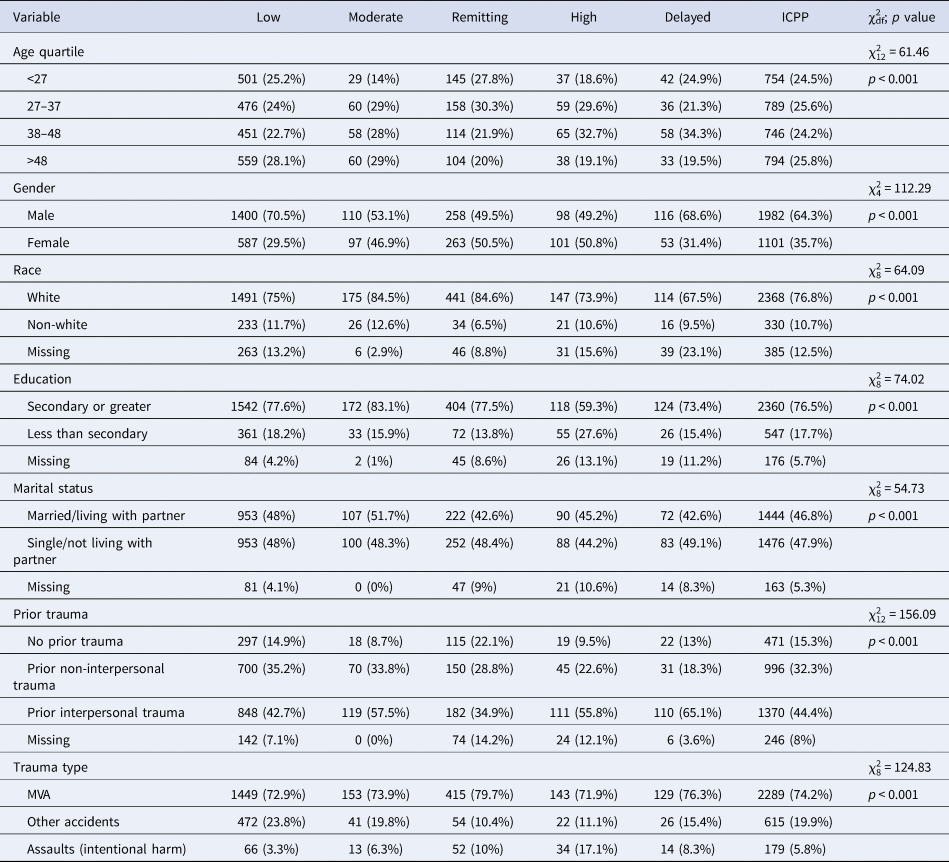
Table 3 shows the descriptive data for participants in each of the five trajectories for the pooled dataset. Significant differences were found across age quartiles ( ${\rm \chi }_2^{12} $ = 61.46, p < 0.001), gender (
 ${\rm \chi }_2^4 $ = 112.29, p < 0.001), race (
 ${\rm \chi }_2^8 $ = 64.09, p < 0.001), education (
 ${\rm \chi }_2^8 $ = 74.02, p < 0.001), marital status (
 ${\rm \chi }_2^8 $ = 54.73, p < 0.001), prior interpersonal trauma (
 ${\rm \chi }_2^{12} $ = 156.09, p < 0.001), and index trauma (
 ${\rm \chi }_2^8 $ = 124.83, p < 0.001).
Number of participants and the percentage encompassed in each predictor category across trajectories and in the pooled ICPP dataset

df, degrees of freedom.
Predicting trajectory membership
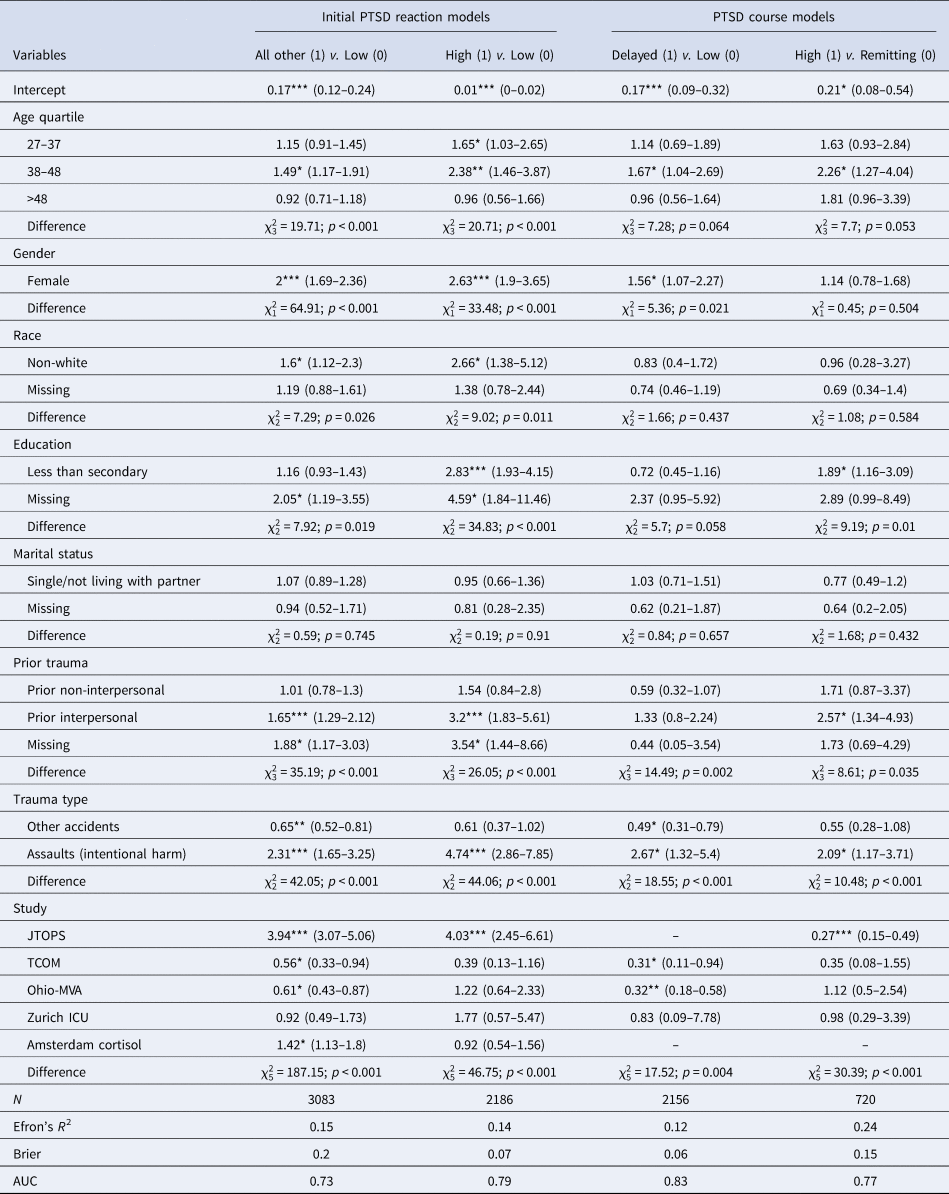
Table 4 summarizes the results of the initial PTSD reactions and course prediction models.
Results of models predicting trajectory membership for initial PTSD reaction models and PTSD course models [OR (95% CI)]

AUC, Area under the curve of the receiver operator characteristic.
*p < 0.05, **p < 0.01, ***p < 0.001.
Initial PTSD reaction models
Logistic regression predicting Any Other trajectory v. the Low trajectory found that third quartile of age (OR = 1.49, 95% CI 1.17–1.91), female gender (OR = 2.00, 95% CI 1.69–2.36), non-white race (OR = 1.6, 95% CI 1.12–2.30), prior interpersonal trauma (OR = 1.65, 95% CI 1.29–2.12), and experiencing an assault as the index trauma (OR = 2.31, 95% CI 1.65–3.25) increased the risk for being in Any other trajectory while experiencing a non-MVA decreased risk (OR = 0.65, 95% CI 0.52–0.81). Descriptive statistics for the All Other trajectories v. Low trajectory are available in Supplementary Table 8.
For the PTSD onset model of High v. Low trajectories a similar pattern was found with second (OR = 1.65, 95% CI 1.03–2.65) and third quartile of age (OR = 2.38, 95% CI 1.46–3.87), female gender (OR = 2.63, 95% CI 1.90–3.65), non-white race (OR = 2.66, 95% CI 1.38–5.12), having less than a secondary education (OR = 2.83, 95% CI 1.93–4.15), prior interpersonal trauma (OR = 3.20, 95% CI 1.83–5.61), and experiencing an assault as the index trauma (OR = 4.74, 95% CI 2.86–7.85) increasing the risk for being in the High trajectory.
PTSD course models
Female gender increased risk for being in the Delayed v. the Low trajectory (OR = 1.56, 95% CI 1.07–2.27), as did experience an assault (OR = 2.67, 95% CI 1.32–5.40) while experiencing a non-MVA decreased risk (OR = 0.49, 95% CI 0.31–0.79). Prior trauma experience was overall statistically significant (p = 0.002), although no specific trauma type was individually predictive. Descriptive statistics for the Low v. Delayed trajectories are available in Supplementary Table 9.
In the High v. Remitting model, having less than a secondary education (1.89, 95% CI 1.16–3.09), prior interpersonal trauma (OR = 2.57, 95% CI 1.34–4.93), and experiencing an assault (OR = 2.09, 95% CI 1.17–3.71) increased risk for being in the High trajectory. Descriptive statistics for the High v. Remitting analysis are available in Supplementary Table 10.
Supplementary analyses
Across all models, study dummy variables were significant indicating differences existed in the prevalence of the outcome trajectories. Logistic regressions without each study were concordant with the pooled results (see Supplementary Figures 1–3).
Results from the multinomial regression found all predictors were significantly stronger predictors of initial PTSD onset compared to the course of PTSD symptoms (p < 0.001; see Supplementary Tables 11 and 12).
Discussion
The current study included data from six studies of hospital admissions for civilian-related injuries, evaluating initial PTSD reactions and the course of PTSD symptoms over the first post-trauma year. Based on previous research, we first examined four-class trajectory models for the six studies. Consistently low and consistently high symptom trajectories were found across all studies, whereas other trajectories (e.g. recovery, moderate, delayed) were not. When we pooled data from the six studies, initial PTSD reaction models showed that female gender, non-white race, prior interpersonal trauma, and assaultive injuries were robust risk factors for initial PTSD reactions. In PTSD course models, female gender and assaultive injuries increased the risk of membership in the Delayed v. Low trajectory group. Among those with initially high symptoms, lower education, prior interpersonal trauma, and assaultive injuries increased risk of membership in the High v. Remitting trajectory group.
Our examination of prototypical patterns of trajectories revealed that consistently low and consistently high PTSD symptoms are robust post-trauma trajectories. These findings align with a large body of literature documenting the presence of these trajectories among people who have been exposed to PTEs (Galatzer-Levy et al., Reference Galatzer-Levy, Huang and Bonanno2018). Results suggest that practitioners working with injury survivors can expect that a majority of survivors will report consistently low symptoms over the first year, while a minority of survivors will report consistently high symptoms over the first year.
On the other hand, other trajectories, including a Remitting trajectory, were not apparent across studies. This is in contrast to findings from the recent review of PTSD trajectories by Galatzer-Levy et al. (Reference Galatzer-Levy, Huang and Bonanno2018), which found Recovery to be the second most commonly observed trajectory across 54 studies. Galatzer-Levy and colleagues noted that substantive differences in populations (e.g. police force workers v. civilians) were associated with heterogeneity in their estimates. However, for the current study it is less likely, although not impossible, that substantive population differences are the reason we observed heterogeneity in estimates. This is because a major strength of this study is the inclusion of data from similar populations (i.e. those presenting at hospitals for civilian-related injuries). Instead, it seems more likely that inconsistent findings in this study may be due to contextual factors such as comorbid symptoms, developmental stage, social network characteristics, physical health, or coping styles (Bonanno, Romero, & Klein, Reference Bonanno, Romero and Klein2015; Fan, Long, Zhou, Zheng, & Liu, Reference Fan, Long, Zhou, Zheng and Liu2015; Galatzer-Levy et al., Reference Galatzer-Levy, Huang and Bonanno2018; Lai, La Greca, Auslander, & Short, Reference Lai, La Greca, Auslander and Short2013).
One notable caveat when interpreting the pooled results is that one of the studies (JTOPS) had markedly different proportions of participants with most likely membership in each trajectory than the other five studies. For example, the percentage of participants in the Low trajectory for JTOPS was 40%, compared to 68–80% across the other studies. This is likely due to JTOPS having distinctive inclusion criteria – namely, the eligible participants were required to meet DSM-IV PTSD Criterion A and have acute stress symptoms upon enrollment. This discrepancy illuminates how systematic differences in sampling even within the same trauma context can influence the nature and proportion of PTSS trajectories. The pooled proportion for the Low trajectory is therefore likely an underestimate for the population of adult survivors of civilian-related injuries admitted to EDs, whereas the pooled proportions for the trajectories in JTOPS characterized by temporary or chronic symptom elevations (Remitting, Fast remitting, and High) are likely overestimated.
When we evaluated risk factors for initial PTSD reactions, the risk factors we identified (i.e. female gender, non-white race, prior interpersonal trauma, and assault) were consistent with prior research (Bryant et al., Reference Bryant, Nickerson, Creamer, O'donnell, Forbes, Galatzer-Levy and Silove2015; Fink et al., Reference Fink, Lowe, Cohen, Sampson, Ursano, Gifford and Galea2017; Sripada et al., Reference Sripada, Pfeiffer, Rampton, Ganoczy, Rauch, Polusny and Bohnert2017). These findings suggest that these risk factors should be included in prediction tools to identify survivors at risk for initially high levels of PTSD symptoms as part of routine post-injury psychiatric evaluations.
PTSD course models provided initial evidence that female gender and assaultive injury differentiated between those who were more likely to report delayed symptoms, v. consistently low symptoms. This again provides suggestions for survivors that should be targeted for follow-up. It is unclear why these particular risk factors are important. It is possible female gender may represent other factors, such as women's greater use of alcohol to cope with PTSD symptoms and gender-related psychobiological stress responses (Olff, Langeland, Draijer, & Gersons, Reference Olff, Langeland, Draijer and Gersons2007), that confer risk for delayed reactions. These findings may also represent gender differences in exposure to intervening trauma. For example, female participants might have been more likely to experience interpersonal violence over the course of the studies, thereby heightening their risk for delayed PTSD symptoms (Benjet et al., Reference Benjet, Bromet, Karam, Kessler, McLaughlin, Ruscio and Alonso2016; McLaughlin et al., Reference McLaughlin, Koenen, Hill, Petukhova, Sampson, Zaslavsky and Kessler2013). In a similar vein, injuries due to assaultive violence might have been more likely than those due to motor vehicle or other accidents to yield secondary stressors, such as difficulties in social relationships, legal problems, and economic strain, thereby increasing the risk for delayed PTSD (Lowe et al., Reference Lowe, Joshi, Galea, Aiello, Uddin, Koenen and Cerdá2017). These are issues that warrant further study.
Finally, several risk factors distinguished between with consistently high v. recovering symptoms. In particular, lower education, prior interpersonal trauma, and assault were predictors of chronic responses. These findings are consistent with prior findings identifying low education and prior interpersonal trauma as risk factors for more symptomatic trajectories (Muzik et al., Reference Muzik, McGinnis, Bocknek, Morelen, Rosenblum, Liberzon and Abelson2016; Pietrzak et al., Reference Pietrzak, Feder, Singh, Schechter, Bromet, Katz and Crane2014). Perhaps most notable were the findings related to assault. Although this finding is consistent with prior research showing assaultive violence to be associated with increased risk for PTSD, relative to other types of trauma (McLaughlin et al., Reference McLaughlin, Koenen, Hill, Petukhova, Sampson, Zaslavsky and Kessler2013), only one trajectory study to our knowledge has explored whether assaultive trauma is associated with membership in chronically symptomatic trajectories (Lowe et al., Reference Lowe, Galea, Uddin and Koenen2014). This study, however, did not look at PTSD symptom trajectories in the context of civilian-related injuries in EDs, but rather examined them among urban residents who each reported on symptoms in reference to their self-identified worst trauma from an inventory of PTEs.
Our findings, in contrast, suggest that, within the context of civilian-related injuries, the nature of the exposure is predictive of trajectory membership, and reflect the importance of identifying trauma-related characteristics that confer risk for distressed trajectories. More generally, the results regarding risk and protective factors are particularly important given their relevance for tiered intervention strategies. As this study focused on civilian trauma, results suggest that providers of psychological services in EDs should be mindful of these risk factors, especially in the presence of moderate-to-high levels of initial PTSD symptom presentation. The findings suggest that people in these groups may be particularly vulnerable to persistent symptoms and thus should be targets of outreach efforts.
Several limitations should be considered in interpreting these results. First, although pooling data was a strength of our analysis, variability across the individual studies, including in the timing of assessments and number of cases, could have influenced patterns of results. We accounted for these differences by controlling the source of the data in predictive analyses and replicating analyses excluding one dataset at a time. Second, there was systematically missing data in our predictive analyses, limiting the extent to which our results generalize to the full population of injury survivors. Third, we were only able to study predictors that were assessed across studies. Researchers should work toward developing common batteries for post-trauma research, which would facilitate pooled analyses in the future. Studies should, in particular, include assessments of pre-trauma psychopathology, which prior work has shown to be a robust predictor of PTSD symptoms (DiGangi et al., Reference DiGangi, Gomez, Mendoza, Jason, Keys and Koenen2013). Fourth, the studies in the pooled analyses included multiple cultural contexts. Although this increases the generalizability of the study, this approach assumes that PTSD symptom trajectories are a cross-cultural phenomenon. Fifth, this study focused on the first year after traumatic events. Although we consider this first year particularly important in planning intervention and assessment, this decision may have prevented us from capturing patterns that only emerge over a longer period of time. Finally, we included all participants in the analysis, regardless of their initial symptom severity. Although this maximized statistical power and made our findings more generalizable to the population of civilians who present to EDs with injuries, it is likely that some participants would not consider their injuries to be traumatic and that a different pattern of results would have emerged had we focused on only those participants who surpassed a certain threshold of baseline distress. Further analyses of these data will explore the latter possibility, providing insight into PTSD symptom trajectories among the population of initially symptomatic injury survivors.
Despite these limitations, the results provide important information about the form and course of PTSD trajectories, and the factors that are associated with both initial PTSD reactions and the course of symptoms over the first post-trauma year. The findings highlight the diversity of responses to PTEs and the need for researchers and clinicians to approach assessment and treatment with this heterogeneity in mind. Yet, important questions remain. Future research is needed that examines injury across the lifespan to understand the degree to which trajectories may differ by stage of development. In addition, studies with longer follow-up periods and various types of trauma exposure will enable us to understand whether trajectories may change across the post-trauma period or across types of trauma.
Supplementary material
The supplementary material for this article can be found at https://doi.org/10.1017/S0033291719004008.
Acknowledgements
This work was supported by the National Institute of Mental Health (award number R01MH101227) to A. Shalev, R. Kessler and K. Koenen.
Conflicts of interest
None.