Introduction
Depressive disorders are a leading cause of burden among all diseases globally, accounting for 9.6% of all years lived with disability (YLDs) (Vos et al. Reference Vos, Flaxman, Naghavi, Lozano, Michaud, Ezzati, Shibuya, Salomon, Abdalla, Aboyans, Abraham, Ackerman, Aggarwal, Ahn, Ali, Alvarado, Anderson, Anderson, Andrews, Atkinson, Baddour, Bahalim, Barker-Collo, Barrero, Bartels, Basáñez, Baxter, Bell, Benjamin, Bennett, Bernabé, Bhalla, Bhandari, Bikbov, Bin Abdulhak, Birbeck, Black, Blencowe, Blore, Blyth, Bolliger, Bonaventure, Boufous, Bourne, Boussinesq, Braithwaite, Brayne, Bridgett, Brooker, Brooks, Brugha, Bryan-Hancock, Bucello, Buchbinder, Buckle, Budke, Burch, Burney, Burstein, Calabria, Campbell, Canter, Carabin, Carapetis, Carmona, Cella, Charlson, Chen, Cheng, Chou, Chugh, Coffeng, Colan, Colquhoun, Colson, Condon, Connor, Cooper, Corriere, Cortinovis, de Vaccaro, Couser, Cowie, Criqui, Cross, Dabhadkar, Dahiya, Dahodwala, Damsere-Derry, Danaei, Davis, De Leo, Degenhardt, Dellavalle, Delossantos, Denenberg, Derrett, Des Jarlais, Dharmaratne, Dherani, Diaz-Torne, Dolk, Dorsey, Driscoll, Duber, Ebel, Edmond, Elbaz, Ali, Erskine, Erwin, Espindola, Ewoigbokhan, Farzadfar, Feigin, Felson, Ferrari, Ferri, Fèvre, Finucane, Flaxman, Flood, Foreman, Forouzanfar, Fowkes, Franklin, Fransen, Freeman, Gabbe, Gabriel, Gakidou, Ganatra, Garcia, Gaspari, Gillum, Gmel, Gosselin, Grainger, Groeger, Guillemin, Gunnell, Gupta, Haagsma, Hagan, Halasa, Hall, Haring, Haro, Harrison, Havmoeller, Hay, Higashi, Hill, Hoen, Hoffman, Hotez, Hoy, Huang, Ibeanusi, Jacobsen, James, Jarvis, Jasrasaria, Jayaraman, Johns, Jonas, Karthikeyan, Kassebaum, Kawakami, Keren, Khoo, King, Knowlton, Kobusingye, Koranteng, Krishnamurthi, Lalloo, Laslett, Lathlean, Leasher, Lee, Leigh, Lim, Limb, Lin, Lipnick, Lipshultz, Liu, Loane, Ohno, Lyons, Ma, Mabweijano, MacIntyre, Malekzadeh, Mallinger, Manivannan, Marcenes, March, Margolis, Marks, Marks, Matsumori, Matzopoulos, Mayosi, McAnulty, McDermott, McGill, McGrath, Medina-Mora, Meltzer, Mensah, Merriman, Meyer, Miglioli, Miller, Miller, Mitchell, Mocumbi, Moffitt, Mokdad, Monasta, Montico, Moradi-Lakeh, Moran, Morawska, Mori, Murdoch, Mwaniki, Naidoo, Nair, Naldi, Narayan, Nelson, Nelson, Nevitt, Newton, Nolte, Norman, Norman, O'Donnell, O'Hanlon, Olives, Omer, Ortblad, Osborne, Ozgediz, Page, Pahari, Pandian, Rivero, Patten, Pearce, Padilla, Perez-Ruiz, Perico, Pesudovs, Phillips, Phillips, Pierce, Pion, Polanczyk, Polinder, Pope, Popova, Porrini, Pourmalek, Prince, Pullan, Ramaiah, Ranganathan, Razavi, Regan, Rehm, Rein, Remuzzi, Richardson, Rivara, Roberts, Robinson, De Leòn, Ronfani, Room, Rosenfeld, Rushton, Sacco, Saha, Sampson, Sanchez-Riera, Sanman, Schwebel, Scott, Segui-Gomez, Shahraz, Shepard, Shin, Shivakoti, Singh, Singh, Singh, Singleton, Sleet, Sliwa, Smith, Smith, Stapelberg, Steer, Steiner, Stolk, Stovner, Sudfeld, Syed, Tamburlini, Tavakkoli, Taylor, Taylor, Taylor, Thomas, Thomson, Thurston, Tleyjeh, Tonelli, Towbin, Truelsen, Tsilimbaris, Ubeda, Undurraga, van der Werf, van Os, Vavilala, Venketasubramanian, Wang, Wang, Watt, Weatherall, Weinstock, Weintraub, Weisskopf, Weissman, White, Whiteford, Wiersma, Wilkinson, Williams, Williams, Witt, Wolfe, Woolf, Wulf, Yeh, Zaidi, Zheng, Zonies, Lopez, Murray, AlMazroa and Memish2012). To promote individual and population health and to reduce YLDs, it is crucial to improve patients' treatment outcomes and health states during and after treatment for depression. Moreover, given the high prevalence and chronic/relapsing course of depression, healthcare costs can pose a great barrier to its treatment. An association between depression and increased levels of health-service use and costs has been demonstrated (Simon et al. Reference Simon, VonKorff and Barlow1995; Katon, Reference Katon2003), but much less is known about how this relationship is influenced by treatment outcomes. Data from longitudinal studies suggest that costs are significantly lower for patients who experience remission after the acute treatment phase than for those with less favorable outcomes (Simon et al. Reference Simon, Khandker, Ichikawa and Operskalski2006; Sobocki et al. Reference Sobocki, Ekman, Agren, Runeson and Jonsson2006; Sicras-Mainar et al. Reference Sicras-Mainar, Blanca-Tamayo, Gutierrez-Nicuesa, Salvatella-Pasant and Navarro-Artieda2010a ). However, the existing literature is limited in several ways. First, findings were based on relatively small samples (Simon et al. Reference Simon, Khandker, Ichikawa and Operskalski2006; Sobocki et al. Reference Sobocki, Ekman, Agren, Runeson and Jonsson2006). Second, the duration over which study subjects were followed up was limited to 6 to 12 months, and so the impact of initial treatment outcome on service use and costs beyond this point is unknown. Third, many of the studies tested for outcome (e.g. remission) at a point when a large proportion of participants would still be receiving antidepressants, thus leaving the impacts after cessation of antidepressant treatments largely undetermined.
In this study, we aimed to assess the longer-term economic impacts of outcome status following initial treatment for depression using claims data from a large national cohort of patients with depression from the National Health Insurance Research Database (NHIRD) in Taiwan. Type of depression, past treatment history, co-morbid mental/physical illnesses, painful physical symptoms (PPS) and choice of initial antidepressants have been found to be associated with healthcare costs and service use for patients treated for depression in Taiwan (Pan et al. Reference Pan, Knapp, Yeh, Chen and McCrone2013a ), hence the cost analysis conducted in the current study has taken these factors into account. Specific objectives of this study were to explore factors associated with initial outcome status and to examine healthcare costs over the following 3 years relative to this status.
Method
Data
Data were extracted from the NHIRD in Taiwan. On 1 March 1995, Taiwan launched the compulsory single-payer NHI program to centralize the disbursement of healthcare funds and guarantee equal access to health care for all citizens; since 2000, the NHI coverage rate has exceeded 96%. Patients can enjoy free choice of providers and have direct access to specialist care without going through a gatekeeper or referral system. There is also no limit to the number of visits a patient can have (Chen et al. Reference Chen, Yip, Chang, Lin, Lee, Chiu and Lin2007). The NHI program uses the NHIRD, which consists of data files characterizing healthcare utilization of insured residents in Taiwan, including expenditures, medical procedures/treatments and basic characteristics of patients, providers and physicians. The NHIRD uses the ICD, 9th revision, clinical modification (ICD-9-CM) diagnoses. The index date for our study was defined as the date on which the subject was first prescribed an antidepressant for a diagnosis of depressive disorders in 2003. Data regarding service use and costs for the 3 years following the index date were extracted.
Participants
All insured subjects of the NHI system in Taiwan meeting the following criteria were included: (a) age ⩾18 years on the index date; (b) at least one prescription for an antidepressant for treatment of major depressive disorder (MDD: ICD-9-CM codes 296.2x and 296.3x) or other depressive disorders (ICD-9-CM codes 300.4x and 311.xx) in 2003; (c) at least three antidepressant prescriptions within the first 3 months of the index date; and (d) data available for a minimum of 12 months before and a minimum of 36 months after the index date.
Definition of initial outcome status
In this study, proxy criteria of treatment outcomes were operationally defined, which focused on the cessation of antidepressant treatment. This proxy measure has been validated by evaluating the concordance between remission as defined by antidepressant cessation for at least 6 months and remission determined by clinical criteria; the level of concordance between the two approaches was considered acceptable [Cronbach's α = 90.6%, 95% confidence interval (CI) 85.6–95.6] (Sicras-Mainar et al. Reference Sicras-Mainar, Blanca-Tamayo, Gutierrez-Nicuesa, Salvatella-Pasant and Navarro-Artieda2010b ). This proxy measure of remission was also used in a recent economic evaluation for patients with depression (Byford et al. Reference Byford, Barrett, Despiegel and Wade2011).
However, to prevent confusion from actual remission defined by clinical rating scales, in this study we adopted the more descriptive term ‘treatment-free status’ instead of ‘remission’. Additionally, in our recent study addressing attrition and treatment outcomes, ‘sustained treatment-free status’ was defined as further requiring no restart of antidepressant treatments (late recontacts) during the 18-month follow-up period (Pan et al. Reference Pan, Liu and Yeh2013b ). We also specified that only participants who had at least three antidepressant prescriptions in the first 3 months were included to ensure that we were identifying a group of depressed patients with initial presentation that justified antidepressant treatment.
Study participants were therefore grouped according to three treatment outcomes:
-
(1) Sustained treatment-free status: patients who had antidepressant cessation for at least 6 months and had not restarted antidepressant use by the end of the 18-month observation period.
-
(2) Continuous treatment: patients who had not had cessation of antidepressant use for at least 6 months by the end of the 18-month observation period.
-
(3) Late recontacts: patients who had achieved antidepressant cessation for at least 6 months but later restarted antidepressant use during the 18-month period of observation.
Observation period for treatment outcome status
For each individual, the observation period started on the index date and continued for 18 months after this index date. The additional 6 months after the first 12 months was included to ensure there was adequate time to assess whether treatment-free status had been achieved, given the definition described earlier. The treatment-free period (i.e. cessation of antidepressant treatment) could start at any point during the 12 months after the index date, but a participant needed to remain off antidepressants for a minimum of 6 months to meet the definition. Hence, an observation period of 18 months was required.
Demographic and clinical information
Demographic and clinical data, including age, gender, index diagnosis of depressive disorders and initial choice of antidepressants, were extracted. Provider information and clinical setting at the initial visit were also extracted. Participants were grouped according to past treatment history: newly diagnosed depression (defined as people who had not received antidepressant treatment or a depression diagnosis in the 12 months before the index date) and non-newly diagnosed depression.
Baseline characteristics were collected regarding co-morbid mental disorders, physical illnesses (cardiovascular disease, diabetes mellitus, chronic obstructive pulmonary disease, renal diseases and cancer), PPS (headache, backache, musculoskeletal and gastrointestinal pain and others) and also healthcare utilization/expenditure during the 12 months prior to the index visit.
Service use and costs
Service use data extracted from the NHIRD included contacts with out-patient services, emergency attendances and in-patient stays (for all reasons). The percentage of patients with at least one unit of service use and the mean number of service contacts were reported in this study. Annual service costs were calculated from the actual claims data, were converted by purchasing power parity (PPP) conversion rates (IMF, 2013) and are expressed in international dollars.
Statistical analyses
Sociodemographic data, clinical characteristics, baseline co-morbidities and initial choice of antidepressants were described and compared between groups by initial outcome status. Service use and costs of groups based on outcome status were also described by service categories and compared for the next 3 years after the index date.
To identify characteristics predictive of initial outcome status, a multinomial logistic regression analysis was performed, with outcome status as the dependent variable. The independent variables included age, sex, depression type, past treatment history, physician specialty, clinical settings at index visit, initial choice of antidepressants, baseline co-morbid mental/physical disorders and baseline PPS.
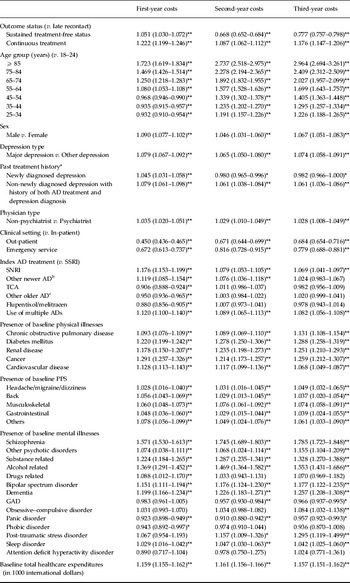
A multivariate generalized linear model regression with a log link and gamma variance function was used (McCullagh & Nelder, Reference McCullagh and Nelder1989) to examine the effects of outcome status on total healthcare costs while adjusting for other independent factors. Besides the regression model for the first year, separate models were run for the second-year and third-year total healthcare costs respectively, to further explore impacts of initial outcome status on future healthcare costs over the longer-term follow-up. Considering potential issues of multiple comparisons, a stringent significance criterion of p < 0.01 was adopted for all statistical analyses, which were performed using Stata version 11.1 (StataCorp LP, USA).
Results
A total of 126 471 adult individuals met the inclusion criteria. Of these, 34.1% (n = 43 065) were classified as achieving sustained treatment-free status after initial treatment, 56.6% (n = 71 543) were continuously on antidepressant treatment, and another 9.4% (n = 11 863) had cessation of antidepressants for 6 months and later recontacts during the 18-month observation period.
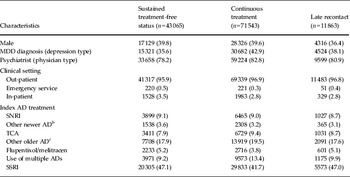
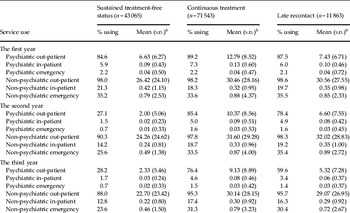
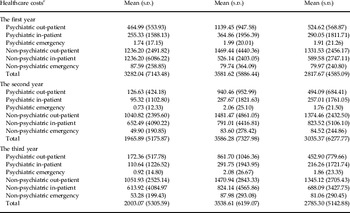
Table 1(for a full version of this table see Table S1 in the online supplementary material) reveals notable differences between groups by initial outcome status, with the largest difference noted for past treatment history. Table 2 shows that there were significant differences in the use services and costs between the three groups; these differences remained robust until the end of the 3-year follow-up. Although service use and costs in the first year were comparable between the groups, these measures for patients initially achieving sustained treatment-free status decreased sharply in the second and third years and were much lower than the other groups. Those initially not achieving sustained treatment-free status contributed to 67.2% of the total costs for the whole study cohort, and to 77.6% and 76.8% in the second and third years respectively.
Demographic and clinical characteristics at index visit a

MDD, Major depressive disorder; AD, antidepressant; SNRI, serotonin norepinephrine reuptake inhibitor; TCA, tricyclic antidepressant; SSRI, selective serotonin reuptake inhibitor.
a The χ 2 test was used: all comparisons between groups by initial outcome statuses were statistically significant at a p < 0.001.
b Bupropion and mirtazapine.
c Maprotiline, moclobemide and trazodone.
Values given as n (%).
Service use and costs over the 3-year period
a
s.d., Standard deviation.
a
The χ
2 test was used for categorical variables and ANOVA for continuous variables: all comparisons between groups by initial outcome status were statistically significant at p < 0.001 with the exceptions being percentage using, mean number of use, and costs for the first-year psychiatric emergency services.
b
Number of contacts.
c
Healthcare costs are expressed in international dollars: the first year in 2003–2004 international dollars; the second year in 2004–2005 international dollars; and the third year in 2005–2006 international dollars.

Factors associated with initial outcome status
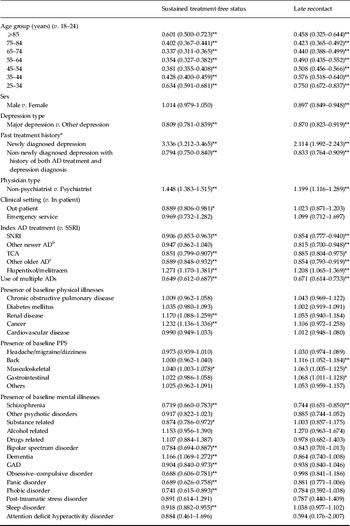
Table 3 shows that patients who had MDD were more likely to be continuously on antidepressant treatment whereas newly diagnosed depression was associated with the other outcomes. Patients with a history of both antidepressant treatment and a diagnosis of depression were the most likely to be on continuous treatment. Being diagnosed with MDD and being prescribed antidepressant treatment by a psychiatrist (compared to other physicians) were also associated with higher odds of being continuously on antidepressant treatment.
Multinomial logistic analysis for sustained treatment-free status and late recontact (versus continuous treatment)

AD, Antidepressant; SNRI, serotonin norepinephrine reuptake inhibitor; TCA, tricyclic antidepressant; SSRI, selective serotonin reuptake inhibitor; PPS, painful physical symptoms; GAD, generalized anxiety disorder.
a Reference group is non-newly diagnosed depression with history of either AD treatment or depression diagnosis.
b Bupropion and mirtazapine.
c Maprotiline, moclobemide and trazodone.
Values given as odds ratio (99% confidence interval).
*p < 0.01, ** p < 0.001.
Having certain kinds of PPS (i.e. backache, musculoskeletal or gastrointestinal pain) were each associated with higher odds of having late recontacts. The presence of co-morbid mental illnesses tended to be associated with higher odds of being on continuous treatment, with dementia being the only exception (associated with higher odds of sustained cessation of antidepressant treatment).
Factors associated with total costs in the subsequent years
Models for total healthcare costs over the subsequent 3 years (Table 4) revealed that patients who experienced sustained treatment-free status after initial treatment had 33% lower costs in the second year and 22% lower costs in the third year compared to patients who experienced late recontacts.
Multivariate analysis of total healthcare costs for the consecutive 3 years

AD, Antidepressant; SNRI, serotonin norepinephrine reuptake inhibitor; TCA, tricyclic antidepressant; SSRI, selective serotonin reuptake inhibitor; PPS, painful physical symptoms; GAD, generalized anxiety disorder.
a Reference group is non-newly diagnosed depression with history of either AD treatment or depression diagnosis.
b Bupropion and mirtazapine.
c Maprotiline, moclobemide and trazodone.
Values given as relative risk (99% confidence interval).
*p < 0.01, ** p < 0.001.
In these models, patients who were diagnosed by non-psychiatrists on the index date had higher total costs for the subsequent 3 years, as were those diagnosed when they were in-patients. It is notable that, in the second and third years, total healthcare costs did not differ between patients prescribed selective serotonin reuptake inhibitors (SSRIs) and older-generation antidepressants. The presence of physical co-morbidities and PPS were associated with higher costs for all 3 years. Having co-morbid mental illnesses was generally associated with higher total costs, with exceptions being generalized anxiety disorder (GAD), panic disorder and phobic disorder, which were associated with lower costs.
Discussion
This study has added to the evidence base that initial treatment outcomes can impact total healthcare costs over the longer term. Specifically, patients who experienced sustained treatment-free status from initial treatment were found to have lower costs in the second and third years, compared to those with less favorable outcomes. In addition, treatment outcomes and total costs over time differed by initial choice of antidepressants in addition to the presence of co-morbid mental disorders and PPS.
The impact of initial outcome status
The focus in this study on sustained treatment-free status is relevant in assessing the impacts of initial outcome status over a longer-term follow-up given a high relapse/recurrence rate within the first 6 to 12 months of follow-up (Shapiro & Keller, Reference Shapiro and Keller1981; Lin et al. Reference Lin, Katon, VonKorff, Russo, Simon, Bush, Rutter, Walker and Ludman1998; Paykel, Reference Paykel1998). Only 30% of recovered patients were reported to remain in recovery during a previous 1-year follow-up (Keller & Shapiro, Reference Keller and Shapiro1981). Rather than having a sustained recovery, a recent study also emphasized that 85% of out-patients with MDD have a chronic and/or recurrent course (Rush et al. Reference Rush, Wisniewski, Zisook, Fava, Sung, Haley, Chan, Gilmer, Warden, Nierenberg, Balasubramani, Gaynes, Trivedi and Hollon2012). It is thus important to evaluate the effect of sustained treatment-free status while taking into account both early relapses/recurrences and chronic depression under continuous treatment.
Based on the same proxy measure of outcomes, previous studies have shown that 12-month costs were significantly lower for remitters than non-remitters (Sicras-Mainar et al. Reference Sicras-Mainar, Blanca-Tamayo, Gutierrez-Nicuesa, Salvatella-Pasant and Navarro-Artieda2010a ; Byford et al. Reference Byford, Barrett, Despiegel and Wade2011), but beyond this point, the impact of outcome status on healthcare costs has remained less clear. In the current study, patients who achieved sustained treatment-free status had lower total costs in the second and third years compared to those with other initial outcomes, indicating an effect of initial outcome on total healthcare costs over a prolonged period of time. In addition, the evidence from previous studies has been limited to examining service use and costs in the first 6 or 12 months following initial treatment, and these are likely to be linked to the treatment that may have led to the outcomes. We found that first-year costs were higher for those patients achieving sustained treatment-free status than for those who experienced late recontacts (Table 2). An interpretation of this result could be that the higher total first-year costs for those achieving sustained treatment-free status may be due to the treatment required to achieve the outcome status, which then reduces costs in subsequent years. On the contrary, patients with insufficient treatment in the first year may then have higher costs subsequently as a result of not experiencing sustained treatment-free status. As shown in Table 2, those not achieving sustained treatment-free status contributed to 67.2% of the total costs for the whole study cohort in the first year, and this increased to 77.6% and 76.8% in the second and third years respectively.
Depression type, choice of initial antidepressants and other clinical characteristics
Our results suggest that the nature of depressive disorders is important for determining treatment outcomes (Sobocki et al. Reference Sobocki, Ekman, Agren, Runeson and Jonsson2006). For instance, a diagnosis of MDD, being diagnosed by a psychiatrist, or the presence of a prior history of treatment/or a diagnosis can be indicators of greater disease severity or chronic/relapsing course and thus poorer outcome. However, non-psychiatric medical conditions constitute an important driver of total healthcare costs. Patients initially diagnosed in in-patient settings or diagnosed by a non-psychiatrist, possibly implying the presence of medical conditions, had higher total healthcare costs for each of the 3 years during the follow-up, along with increased age and co-morbidities.
Among initial antidepressants, flupentixol/melitracen was shown to be associated with higher odds of achieving sustained treatment-free status than SSRIs; this can be better understood in the context that only 15.9% of the patients initially prescribed flupentixol/melitracen in this study were cases with MDD. The finding that patients with depressive disorders not fulfilling the criteria for MDD were more likely to be prescribed flupentixol/melitracen is particularly relevant because a substantial proportion of out-patients in real-world settings were reported not to meet the criteria of minimum baseline severity for antidepressant efficacy trials and those with less severe depressive symptoms were associated with better outcomes (van der Lem et al. Reference van der Lem, van der Wee, van Veen and Zitman2011).
Compared to patients prescribed SSRIs, those prescribed tricyclic antidepressants (TCAs) or other older-generation antidepressants had costs that did not differ significantly in the second and third years whereas initial prescription of multiple antidepressants was associated with higher total costs in each of the 3 years. This is consistent with a previous systematic review that patients using TCAs generally had healthcare costs comparable to those using SSRIs in database studies (Pan et al. Reference Pan, Knapp and McCrone2012). Our findings add to the evidence base by showing that, after taking into account initial outcome status, total healthcare costs do not differ between patients prescribed SSRIs and older-generation antidepressants over a longer-term follow-up but initial prescription of multiple antidepressants is associated with higher costs.
PPS
Patients with PPS have been shown to be less likely to achieve remission following acute treatment for depression (Fava et al. Reference Fava, Mallinckrodt, Detke, Watkin and Wohlreich2004), and our study concurs with these studies in finding that having certain PPS is associated with late recontacts even after a 6-month treatment-free status. Moreover, we previously found that the presence of baseline PPS consistently predicts higher 12-month healthcare costs of patients with depression (Pan et al. Reference Pan, Knapp, Yeh, Chen and McCrone2013a ), consistent with prior studies that patients with PPS and depression had higher service utilization and costs (Gameroff & Olfson, Reference Gameroff and Olfson2006). The current findings also showed that the presence of each kind of PPS at baseline is associated with an increase in total healthcare costs, not only in the first year but also in the second and third years.
Co-morbid mental disorders
The presence of most co-morbid mental disorders was associated with decreased odds of having sustained treatment-free status and increased odds of staying on continuous treatment, with dementia being the only exception. Depressive symptoms in dementia rarely persist over a longer-term follow-up, for example 2 years (Aalten et al. Reference Aalten, de Vugt, Jaspers, Jolles and Verhey2005; Savva et al. Reference Savva, Zaccai, Matthews, Davidson, McKeith and Brayne2009; Wetzels et al. Reference Wetzels, Zuidema, de Jonghe, Verhey and Koopmans2010). Over time, depression has tended to decrease with a high resolution rate (Bergh et al. Reference Bergh, Engedal, Roen and Selbaek2011) whereas apathy has increased in these patients (Aalten et al. Reference Aalten, de Vugt, Jaspers, Jolles and Verhey2005; Wetzels et al. Reference Wetzels, Zuidema, de Jonghe, Verhey and Koopmans2010). Therefore, one possible interpretation of our results could be that depression occurs over certain stages in the course of dementia and disappears later when the illness progresses.
The presence of co-morbid mental disorders increased costs in the following years with the exceptions of GAD, panic and phobic disorder. Patients with anxiety disorders have been shown to be less likely to use services compared to those with mood disorders, and also to have reduced perceived need for help (Mojtabai et al. Reference Mojtabai, Olfson and Mechanic2002; Alonso et al. Reference Alonso, Angermeyer, Bernert, Bruffaerts, Brugha, Bryson, de Girolamo, Graaf, Demyttenaere, Gasquet, Haro, Katz, Kessler, Kovess, Lepine, Ormel, Polidori, Russo, Vilagut, Almansa, Arbabzadeh-Bouchez, Autonell, Bernal, Buist-Bouwman, Codony, Domingo-Salvany, Ferrer, Joo, Martinez-Alonso, Matschinger, Mazzi, Morgan, Morosini, Palacin, Romera, Taub and Vollebergh2004). Despite potential confounding from differences in coding systems, it seems probable that the lower service use and costs of these patients as seen in our study may be influenced by the nature of their co-morbid anxiety disorders. The extent to which the co-morbid anxiety disorders influences health-service use and costs of patients with depression warrants further research.
Implications and policy recommendations
Choice of index antidepressants between SSRIs and older-generation antidepressants did not show any significant differences in healthcare costs in the second and third years whereas prescription of multiple antidepressants at the index visit, although possibly influenced by physician preferences and the nature of the depressive disorders, was associated with higher total healthcare costs in the following years, implying that initial prescription of a single antidepressant may be preferable to constrain costs.
Patients not achieving sustained treatment-free status were found to have higher healthcare costs in the subsequent years in this study. As shown in a recent study (Pan et al. Reference Pan, Liu and Yeh2013b ), patients remaining engaged with antidepressant treatment within the first 3 months after the index visit have higher odds of achieving sustained treatment-free status and lower odds of having late recontacts over the 18-month period. It seems that endeavors to reduce early attrition, probably through shared decision making and good patient–physician communication, and to improve initial treatment outcome of depression should be emphasized so to reduce total healthcare costs in the subsequent years.
Limitations
There are limitations to this study. As service-use data contained in the NHIRD include only information from health services provided by the NHI system in Taiwan, the perspective of the current analysis was limited, and we were not able to analyze wider economic impacts outside the health system. The lack of information on clinical symptoms and the use of a proxy definition are also limitations. We are aware that stopping a psychopharmacological therapy may have complex reasons other than achieving good clinical response, for example experiences of side-effects of medications. However, with the 18-month observation period in this study, the sustained treatment-free status seems likely to indicate initial treatment effectiveness without later clinical fluctuations sufficient to trigger a medical contact when simultaneously specifying another subgroup of subjects who have later recontacts, which may reflect changes in clinical conditions in which help-seeking is considered beneficial (Pan et al. Reference Pan, Liu and Yeh2013b ).
Moreover, as this was a secondary analysis of a large healthcare database, we are aware that the analysis of the pattern of care and related costs of individual outcomes over time may require combining further information from other sources, such as bottom-up longitudinal studies of treated prevalence and prior expert knowledge, to give firmer conclusions. A replication study with a more recent cohort in Taiwan may also be warranted to reflect changes in healthcare systems over time, along with its associated impacts on subjects' service use and healthcare costs. Additionally, future research adopting a cost–incidence design may help to enhance our understanding of the impact of course of depression on service use and costs.
Factors that may further limit generalizability of the current findings include differences in the insurance system and the role of private health insurance between countries. In this study most patients with depression received specialized treatment from psychiatrists, and this is very different from countries in which the referral system is emphasized. Within the NHI system in Taiwan, patients can easily have access to specialists without referrals from general practitioners and with affordable co-payments. Therefore, this unique medical environment of Taiwan should be borne in mind when interpreting the current results.
Conclusions
This study, based on a large national cohort, indicates that the outcome status of initial treatment exerts an impact on total healthcare costs in the second and third years after the index date. Furthermore, the presence of co-morbid anxiety disorders and PPS had an impact on the total healthcare costs of patients with depression over the longer-term follow-up. It is important to both physicians and policy makers to further improve initial treatment outcomes of depression through effective strategies. Future endeavors to explore the impacts of co-morbid anxiety disorders and PPS on health service use and treatment of depression are warranted.
Supplementary material
For supplementary material accompanying this paper visit http://dx.doi.org/10.1017/S0033291713001700.
Acknowledgments
This study is based in part on data from the NHIRD provided by the Bureau of National Health Insurance, Department of Health, Taiwan, and managed by the National Health Research Institutes, Taiwan. The interpretation and conclusions contained herein do not represent those of either institution. This study was supported by a grant from the Far Eastern Memorial Hospital, Taiwan (FEMH-97-C-022). This funding body played no role in the study design, analysis or interpretation of data in this paper.
Declaration of Interest
M.K. has acted as consultant and speaker for Lundbeck and Bristol Myers Squibb, and has had research funding from Janssen. P.M. has received speaker and consultancy fees from Lundbeck, Bristol Myers Squibb, Lilly and Janssen-Cilag.