

Given the transformative potential of digital technologies currently being applied in archaeology, biology, museum studies, and related fields, the creation of permanent digital repositories of human skeletal remains would aid in efforts related to curation and analysis. In the first section, we identify specific concerns over preservation and access that can be addressed through the creation of digital repositories. In the second section, we describe the sources of data that can be collected from digital models, advocating for the increased use of photogrammetry by highlighting several advantages over other capture methods more commonly utilized by bioanthropologists. Finally, we conclude by noting the conflict that naturally arises between efforts to facilitate data sharing for the purposes of research and ethical concerns over the display of human remains.
ISSUES OF PRESERVATION AND ACCESS FOR SKELETAL COLLECTIONS
Ideally, researchers construct thoughtful, theoretically informed questions about the nature of human variability and then identify appropriate samples that can best provide the data to address these questions. However, such appropriate samples can be elusive, forcing researchers to modify their questions to fit the limitations of available datasets (Roberts and Mays Reference Roberts and Mays2011; Wrobel Reference Wrobel and Wrobel2014). The sources of many of these biases can be attributed generally to issues of preservation and access, which often dictate what is available to study.
Preservation presents a major problem for excavated human remains, and a number of factors contribute to degradation and destruction of archaeological materials in storage contexts. While long-term storage plans are usually required in applications for an excavation permit, solutions are typically inadequate, utilizing rented local houses or simple bodegas constructed at the sites to keep most excavated artifacts. Heat and humidity are greatly intensified within these storage spaces, which are most often without air conditioning and poorly ventilated. Furthermore, after research has been completed, many of these collections are often no longer consistently maintained and can fall into disrepair. Most adversely affected are organic materials, including bones. Additionally, plastic bags and labels with contextual information begin to disintegrate after 10 to 15 years, after which materials become mixed and thus useless for analysis. These buildings also inevitably attract insects and rodents, which further act to destroy archaeological materials (especially organic material like bone) and the bags in which they are stored.
Other potential problems facing archaeological collections include vandalism and theft, as well as the constant threat of large-scale damage from natural and man-made disasters such as hurricanes, floods, fires, and wars. While collections in museums are generally better curated, they suffer damage from repeated handling, inadequate storage, theft, and occasional disasters. A tragic recent example of the latter is the burning of the National Museum of Brazil. Among the losses were Andean mummies and entire skeletal series (Colwell Reference Colwell2018). Even under the best of circumstances, organic materials are not stable, and curatorial interventions only slow the rate of decomposition. Data collection by researchers is greatly dependent on curation, as deterioration of bones over time obliterates the tissues and structures forming the basis of our observations.
Access to collections is a significant factor considered by researchers when determining whether to include specific series in data collection efforts. Large sample sizes are particularly important for researchers hoping to carry out any sort of statistical analysis. Thus, researchers tend to focus their attention on collections that are large and well preserved, often ignoring collections that contain less data. However, issues of access, though not often acknowledged, also play a key role in a researcher's decision to include data from particular contexts. In some cases, centralized laboratory facilities hold multiple well-organized skeletal series allowing researchers to work efficiently to quickly gather a large amount of data. In contrast, some skeletal series are housed in on-site storage units that are considerably more difficult to access, requiring coordination between the bioarchaeologist and project director and/or lab staff. Consistent with our own observations working in Central America, Roberts and Mays (Reference Roberts and Mays2011:629) demonstrate how researchers in the United Kingdom have focused on larger, better-preserved collections that are more easily accessible, thus often ignoring other potential datasets that may be smaller and require more effort, time, and money to access. While we advocate the creation of large, well-maintained central repositories for addressing these issues of preservation and access, the costs associated with year-round maintenance of secure, climate-controlled storage facilities are exorbitant in most cases.
Digital archives are taking an increasingly visible role in the curation and dispersal of data related to ancient cultures (e.g., Berggren et al. Reference Berggren, Dell'Unto, Forte, Haddow, Hodder, Issavi, Lercari, Mazzucato, Mickel and Taylor2015; Evans and Daly Reference Evans and Daly2006; Olson and Caraher Reference Olson and Caraher2015). Digital repositories present a less expensive and novel solution to at least some aspects of the problems related to preservation and access by creating a centralized online resource that can include skeletal data from large, well-studied collections, as well as from smaller collections that are often overlooked but still important for enhancing and diversifying regional analyses. Most of these resources currently comprise artifacts and archaeological features; however, physical anthropology has also benefited from a growing digital presence, with online repositories of raw data and images made available for teaching and research purposes. These independent repositories are often hosted by museums and academic institutions, and the size and scale of the databases vary—some focus on specific collections, while others focus on broad regions or are worldwide in scope (see Hassett Reference Hassett2018a for a recent compilation and review). In some cases, these data include various formats (photographs, radiographs, and 3-D images) or combinations of formats aimed at documenting skeletons from a particular archaeological context or research collection. Other online digital databases are collections of specific types of skeletal data assembled from different collections. Examples include Digitised Diseases (www.digitiseddiseases.org), which contains 3-D models of bones representing a wide range of pathological type specimens derived from archaeological and medical collections; an open access cranial dataset provided by Lynn Copes (https://www.lynncopes.com/human-ct-scans.html), which contains download links to CT scans of human crania from four museum collections; and the repository of 3-D models of the Homo naledi bone assemblage from Rising Star Cave (https://www.morphosource.org/Detail/ProjectDetail/Show/project_id/124).
3-D MODELS AND BIOARCHAEOLOGICAL ANALYSIS
Digital archiving of archaeological skeletons has incorporated a variety of approaches. In most cases, archives contain raw data in the form of field and lab observations, which can be incorporated into or form the basis of analyses. These may include descriptions of archaeological contexts, inventories of elements, or raw data scores from studies by previous researchers. Some of these archives also include photographs of skeletons or of specific skeletal features (i.e., pathologies, cutmarks, etc.) taken during excavation or in the lab. Several digital archives have also begun to include 3-D images of bones using a variety of different formats. These models not only serve to create a faithful permanent record of skeletons, addressing persistent problems associated with preservation and access, but also allow a variety of analyses of shape and size, as well as of surface features, including pathologies, trauma, nonmetric morphological traits, and taphonomic alterations. In this section, we briefly review some of the ways in which 3-D models of bones may be used by physical anthropologists to collect quantitative and qualitative data, describe the various types of 3-D models commonly used, and discuss the advantages and disadvantages of these digital models in relation to one another.
The Analytical Potential of 3-D Models
A primary benefit of scaled digital models is that they reproduce an object's geometric structure, allowing for a variety of digital measurements to be taken and used in morphometric analyses. Morphometrics encompasses a variety of methods for quantifying and comparing size and shape of structures utilizing a series of standardized landmarks, defined by visible anatomical features, curvature maxima associated with local structures, or extreme endpoints of length measurements (Bookstein Reference Bookstein1991). Traditional morphometrics (TM) utilizes distances, ratios, and angles between these landmarks, typically measured directly on bones using specialized calipers. The recent introduction of new methodologies in which landmark points are recorded as Cartesian coordinates (x, y, z) in 3-D space has expanded such studies with “geometric morphometric” (GM) approaches (Slice Reference Slice2005). GM analysis focuses comparison on the relative location of these points in 3-D space and is more powerful in part because the influence of size can be removed by using a Generalized Procrustes Analysis to align and rescale all objects to a standard, equal size prior to comparison.
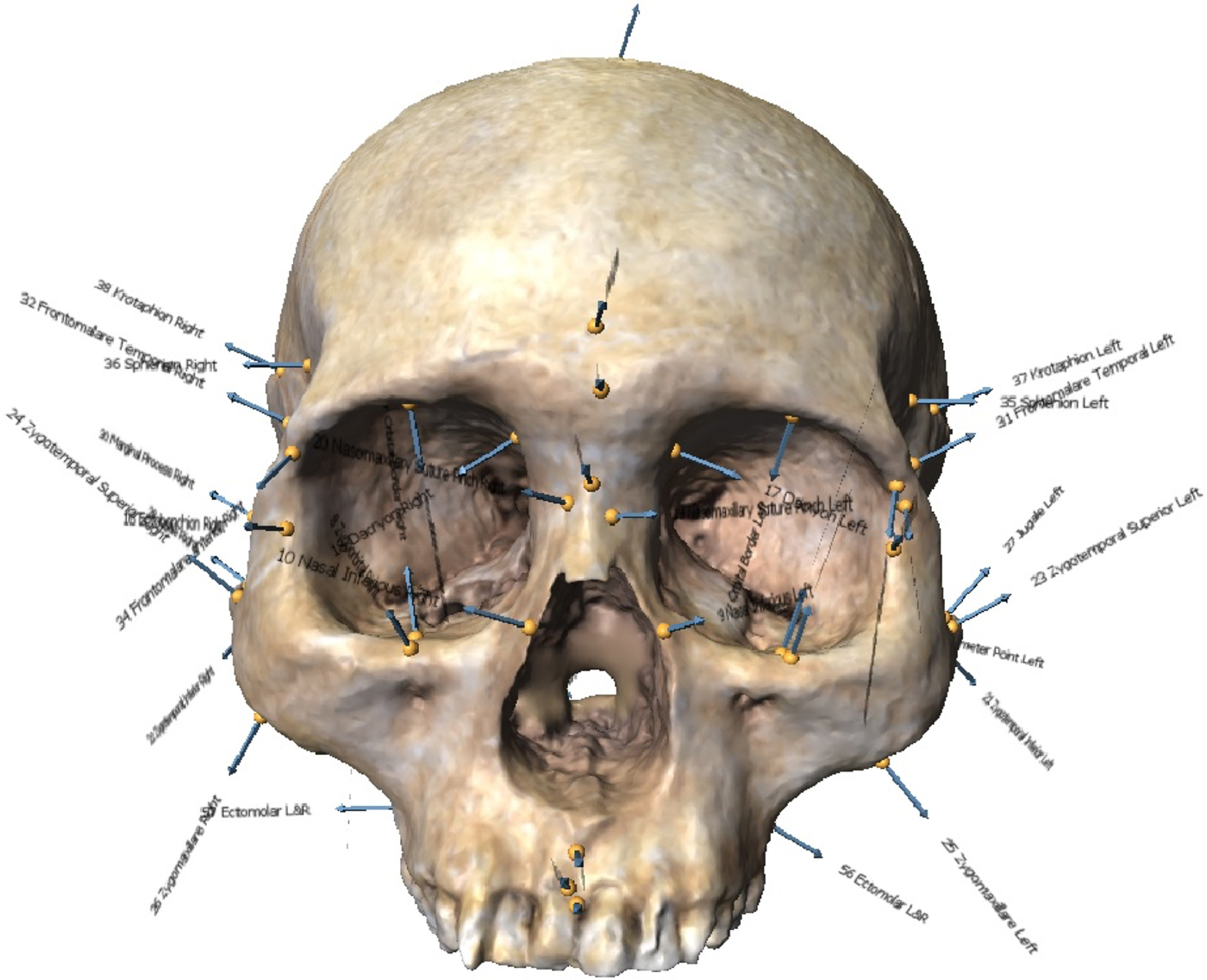
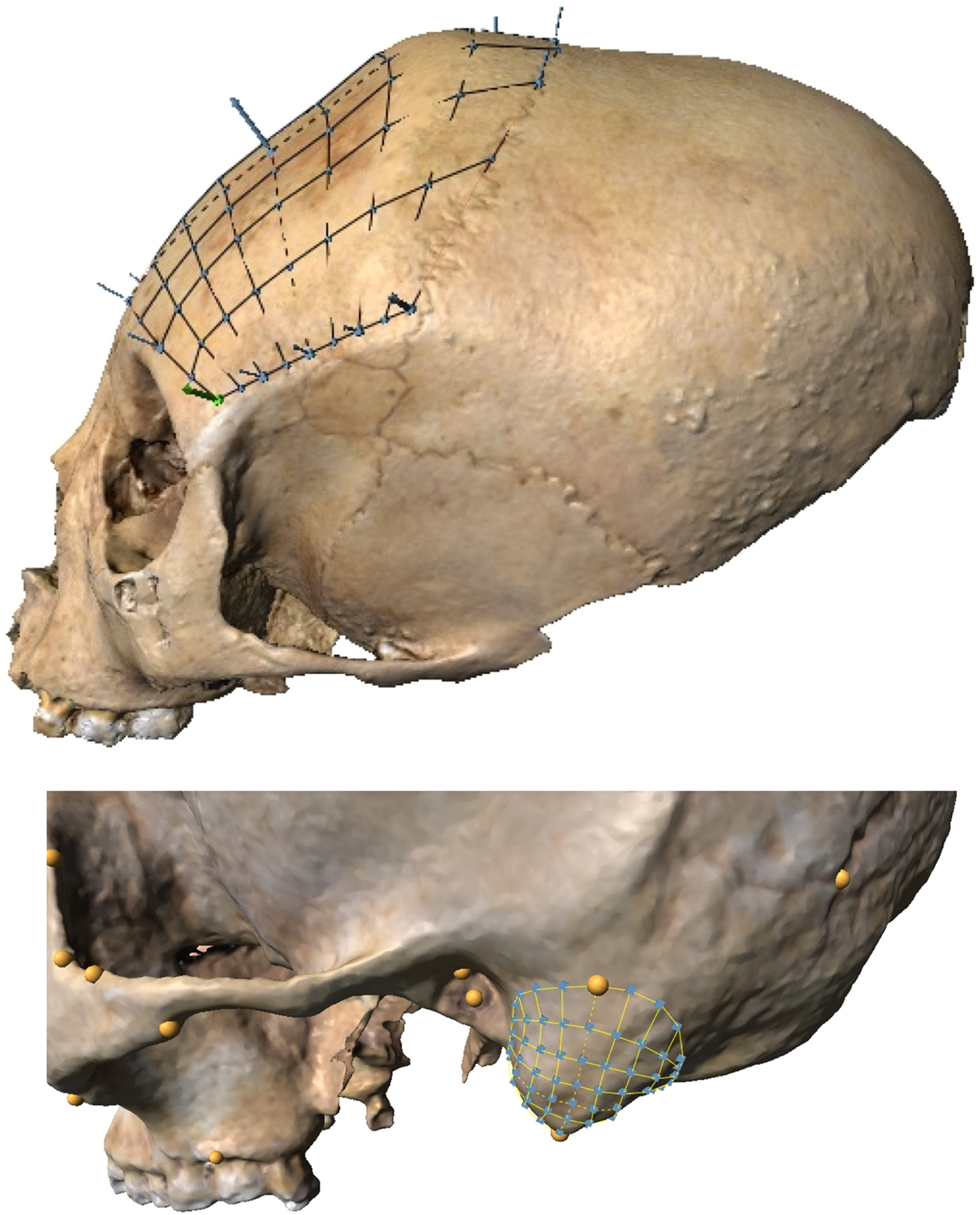
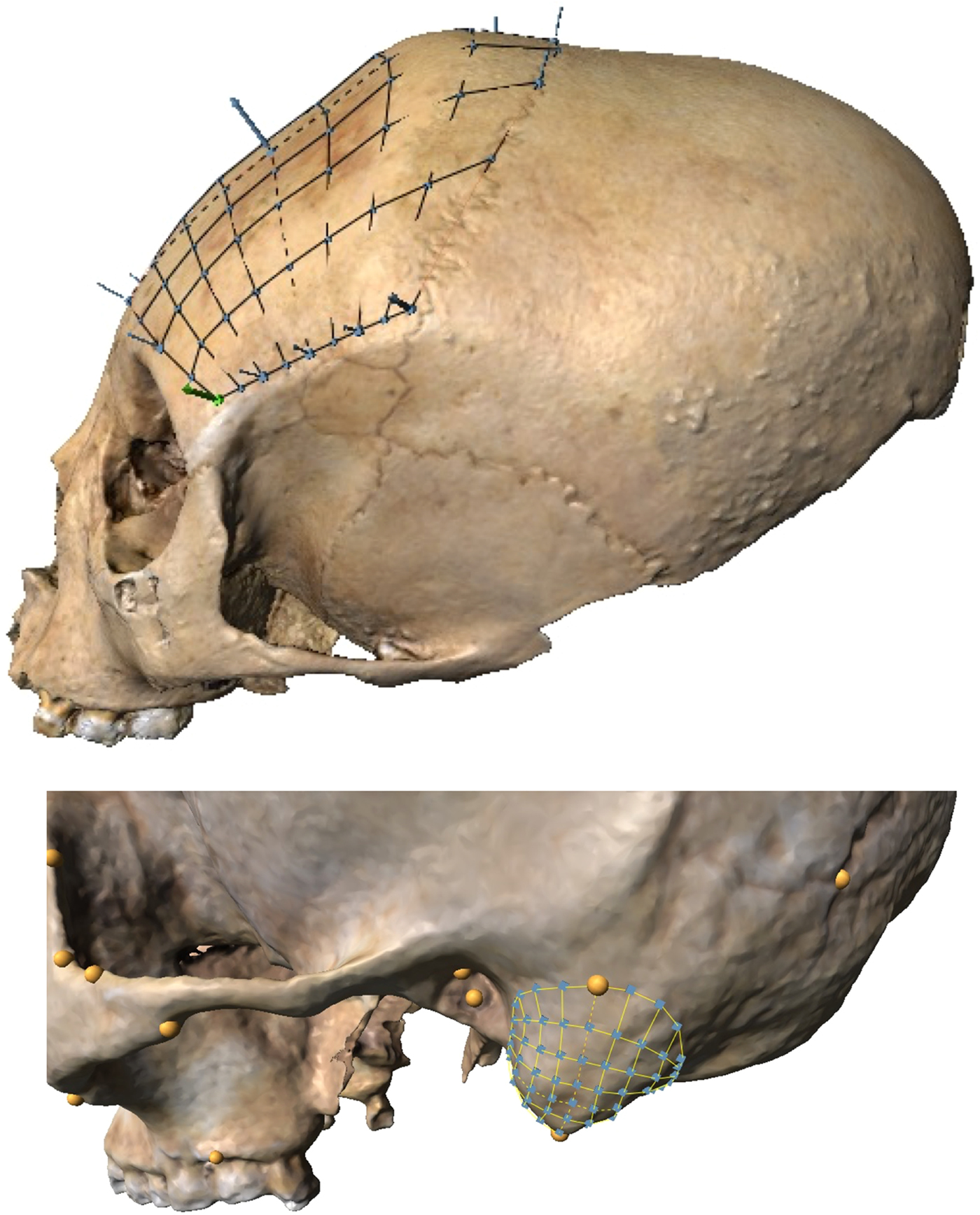
Landmark data has traditionally relied on direct access to physical specimens, whether using handheld calipers or plotting the location of landmarks in 3-D space using a MicroScribe digitizer. However, landmark points can be placed on scaled digital models using one of several software programs (Figure 1), after which raw data in the form of inter-landmark measurements or Cartesian coordinates are extracted for use in TM or GM analyses (see, for instance, Kuzminsky et al. Reference Kuzminsky, Tung, Hubbe and Villaseñor-Marchal2016). The use of 3-D models for morphometric analysis also provides further benefits because, unlike MicroScribe digitizers and handheld calipers that collect data from specific locations on the skull (typically landmark points), digital models provide points covering the entire surface. This allows investigation of shape related to curvature by using an algorithm to arbitrarily superimpose points between landmarks (Figure 2). Coordinates of these “semilandmark” points can be analyzed just as those of landmark points, greatly expanding the summary of shape and, especially important in archaeological contexts, facilitating algorithms that can be used to estimate missing data in incomplete specimens (Gunz and Mitteroecker Reference Gunz and Mitteroecker2013; Pomidor et al. Reference Pomidor, Makedonska and Slice2016). Finally, recent applications allow shape analysis using an automated method that does not require landmarks, thus reducing the potential for interobserver error when placing landmarks (Fruciano et al. Reference Fruciano, Celik, Butler, Dooley, Weisbecker and Phillips2017).
Landmark coordinates superimposed on the digital model with Stratovan Checkpoint for use in morphometric analysis (image by Amy L. Hair).

Semilandmarks allow mapping of contours (image by Amy L. Hair).
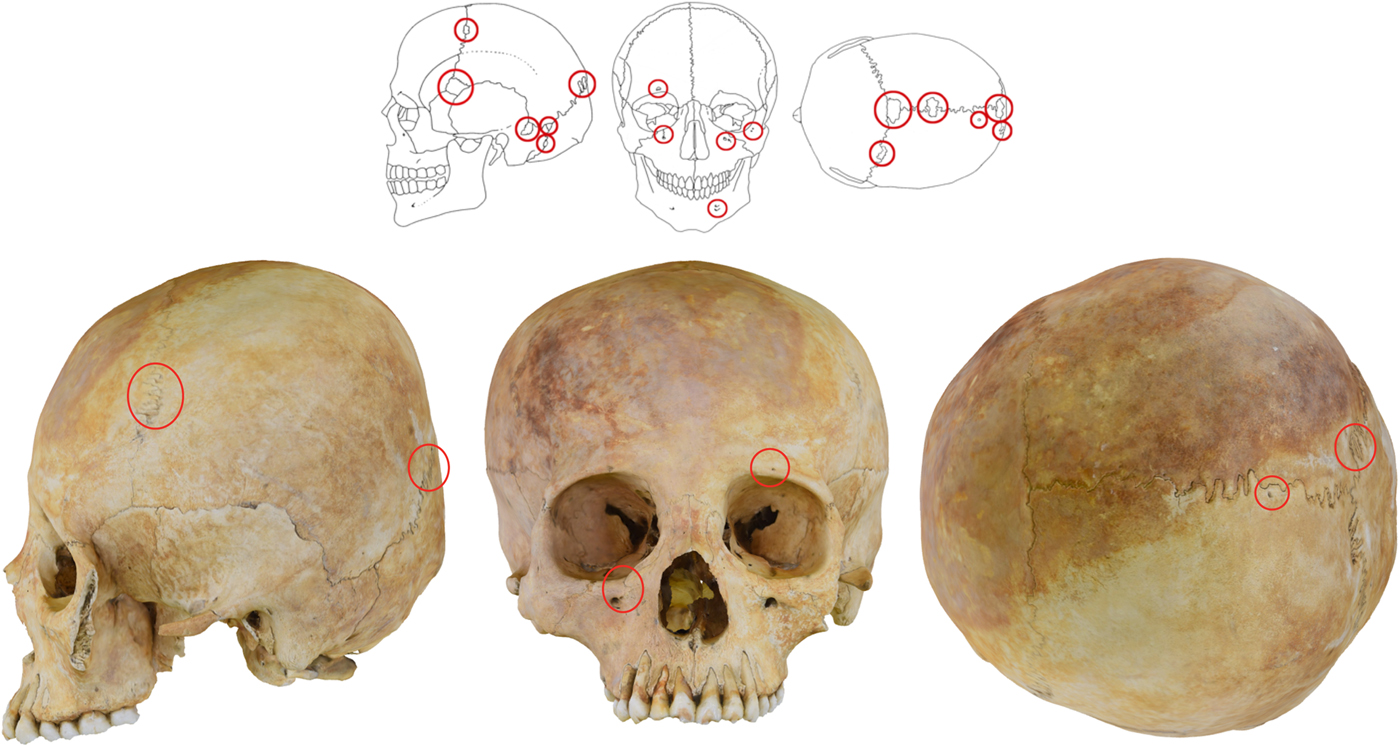
Digital models also have the ability to capture subtle surface features allowing researchers to visually identify markers of pathologies, trauma, taphonomic alterations, and genetics. For instance, like craniometrics, another means of examining genetic variability is through the use of “cranial nonmetric traits”; these include discrete traits (Figure 3), which are typically used by bioanthropologists to explore population histories and relatedness through biological distance analyses, and macromorphoscopic traits, used by forensic anthropologists to assess ancestry in forensic settings for the purpose of identification (Hefner Reference Hefner2018; Pink et al. Reference Pink, Maier, Pilloud, Hefner, Pilloud and Hefner2016). Both sets of morphological variants are scored as present or absent or as a point on a morphological gradient (for example, small to large; Buikstra and Ubelaker Reference Buikstra and Ubelaker1994:85).
View of cranial model showing presence of nonmetric traits from Osteoware (https://osteoware.si.edu/guide/cranial-nonmetric-traits; image by Gabriel Wrobel).

Evaluating Different Methods of Building 3-D Models
The primary types of 3-D models currently employed by physical anthropologists are derived from computed tomography (CT) scans, laser scans, and photogrammetry. Each of these has benefits and drawbacks related to image capture and analysis, which researchers must keep in mind when planning their projects. CT combines multiple X-rays taken from different angles to produce 3-D models of a scanned object. It is unique among the three methods in that, in addition to mapping the external surfaces, it also provides views of internal structures, including trabecular bone. CTs produce very accurate scaled models, while microCTs provide increased resolution though on a smaller scale. Objects placed in the scanner require only a single scan, and multiple objects can be scanned simultaneously, making data capture relatively efficient. The major drawbacks specific to CT scanning are related to cost and access. CT scanners are not portable and they require specialized technicians to operate. Thus, researchers not only must arrange access to a CT scanner but must also be able to transport the object(s) from the storage space to the CT facility, which is not always feasible. An example of a project utilizing CT scanning is the Open Research Scan Archive (ORSA) at the University of Pennsylvania Museum, which houses a repository of CT scans of over 3,000 skeletal elements, mostly from the Samuel Morton collection. Because of their large size, the scans are not available online and instead are burned to CD/DVD and sent to researchers requesting access (Monge et al. Reference Monge, Schoenemann, Lewis and Daniel Glotzer2004).
Laser scanning is currently the most common method utilized by physical anthropologists to create 3-D models, and at present most skeletal models found in online repositories are laser scans (Hassett Reference Hassett2018a). Unlike CT, the specialized equipment is relatively affordable and easy to learn, and thus researchers can build high-resolution, high-quality, scaled models of the external surfaces of an object. Kuzminsky and Gardiner (Reference Kuzminsky and Gardiner2012) provide an excellent and thorough description and discussion of the use of laser scanning for bioarchaeologists. While laser scanning is a reliable, well-tested, and relatively affordable mechanism for generating 3-D models, its primary drawback is logistical in nature. The most cost-effective scanning equipment is a fixed laser attached to a laptop and turntable. The laser scans the object as it is automatically rotated on the turntable. However, in the case of objects with complex surfaces, such as crania, multiple scans must be made with the object repositioned in each so that the lasers can reach each surface. For instance, Kuzminsky and colleagues (Reference Kuzminsky, Tung, Hubbe and Villaseñor-Marchal2016) combined 18 individual scans to create a single cranial model. This is a fairly time-consuming process (>1 hour) to carry out when visiting collections in the field or a museum, where time is often limited. The significantly more expensive (>$10,000) handheld laser scanners allow the user to capture all surfaces by moving the mobile scanner while viewing the model on the computer screen as it is being scanned. However, in both cases, the equipment can be somewhat bulky, it must be connected to a laptop during scanning, and it requires an electrical outlet, which is not always available in lab and storage facilities in the field.
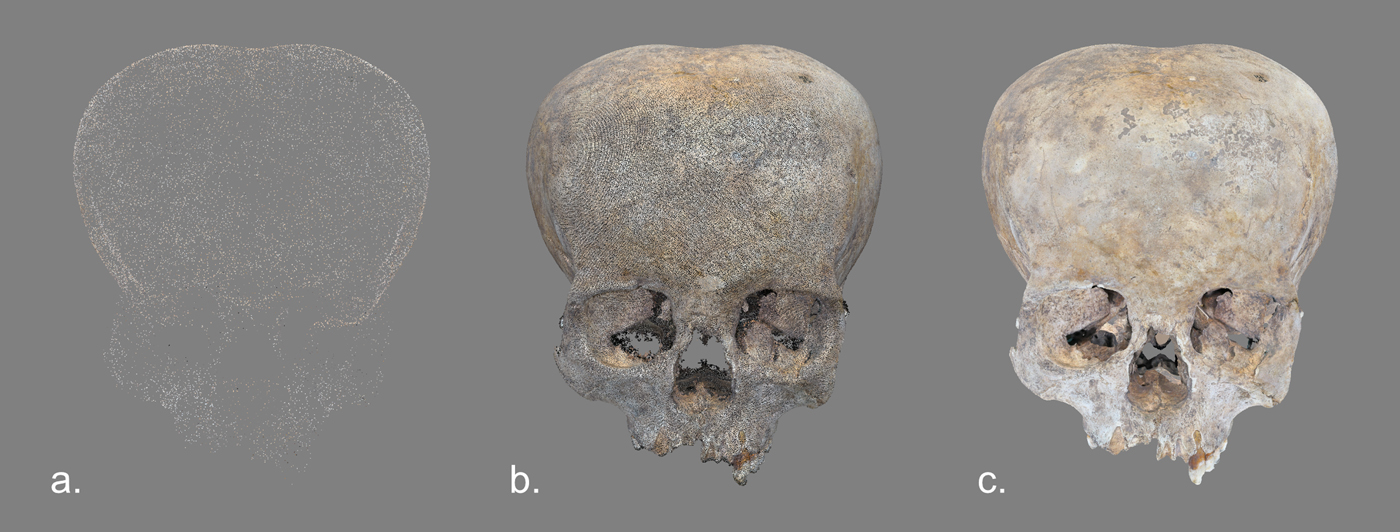
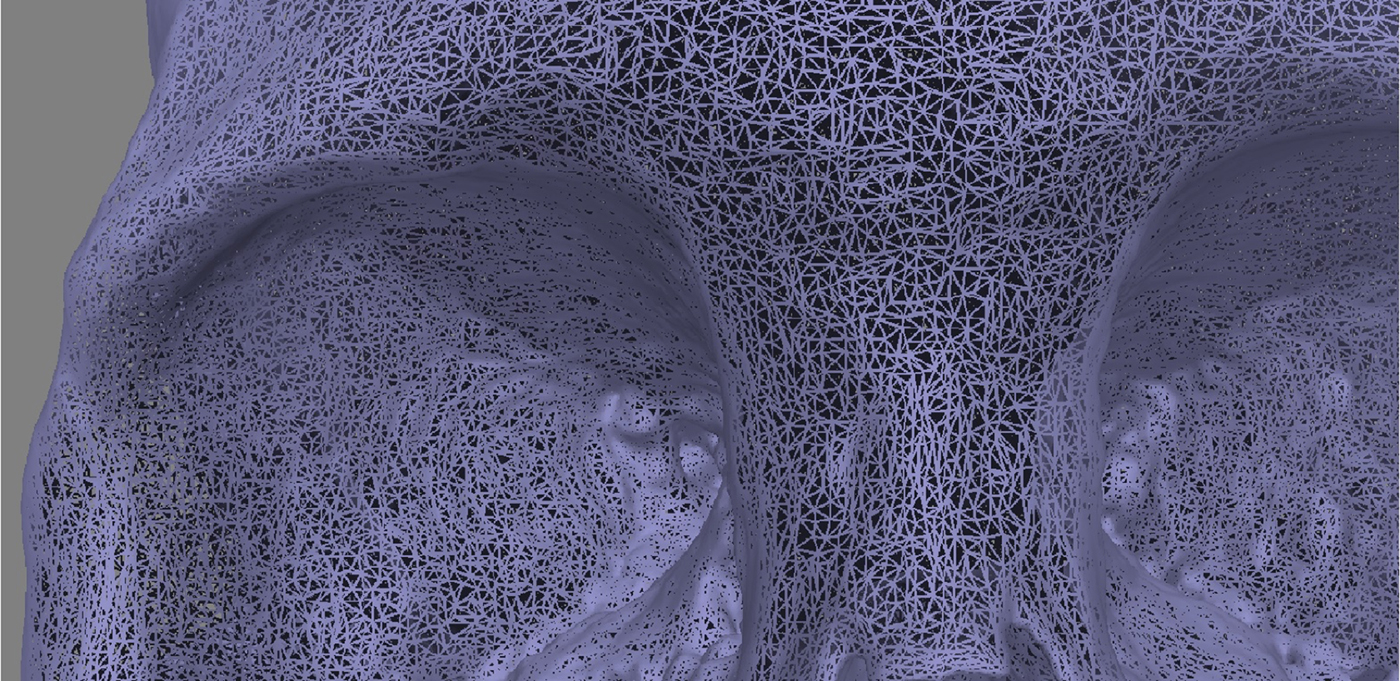
Finally, photogrammetry, while quite commonly used by archaeologists to create 3-D models of objects, features, and landscapes, has thus far rarely been used for 3-D modeling of bone. Like CT, laser scan, and MicroScribe, photogrammetry accurately reproduces an object's geometric structure, allowing for a variety of digital measurements to be taken and used in comparative statistical analyses of shape and size. While photogrammetric models have slightly less resolution (i.e., more points closer together), using scale bars, a good technician can maintain submillimeter accuracy with more than enough points to carry out shape analysis (Figures 4 and 5; Evin et al. Reference Evin, Souter, Hulme-Beaman, Ameen, Allen, Viacava, Larson, Cucchi and Dobney2016; Katz and Friess Reference Katz and Friess2014). Cultural Heritage Imaging (http://culturalheritageimaging.org/What_We_Offer/Gear/Scale_Bars/) offers a popular set of scale bars that were specially developed for photogrammetry. After initially experimenting with modeling using a NextEngine 3-D laser surface scanner and CT and with landmark digitizing using a MicroScribe, we have settled instead on photogrammetry because in our work it offers a number of practical advantages to these other more common methods of 3-D capture.
Steps of model building: (a) sparse cloud, (b) dense cloud, and (c) addition of mesh and texture (images by Gabriel Wrobel).

Surface contours are visible as triangular meshes (image by Amy L. Hair).

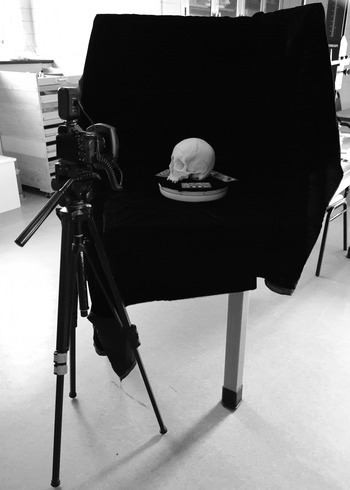
First, a primary advantage of photogrammetry over other methods relates to cost, portability, and convenience in that it requires only a conventional camera and minimal accompanying equipment (Figure 6). Our field kit includes a camera, tripod, remote shutter release, turntable, black velvet backdrop, ring light, and scale bars, all of which can fit easily into a backpack or suitcase and can be set up in less than five minutes. While having electrical outlets for lighting is ideal, the use of a camera with a full-frame sensor helps to even out directional lighting and shadows when studio lighting is not possible. The small ring light, which also minimizes shadows, can be powered with batteries, though these drain quickly, so this is not a good option for larger projects.
Studio setup for taking photographs is simple and materials are compact (image by Gabriel Wrobel).

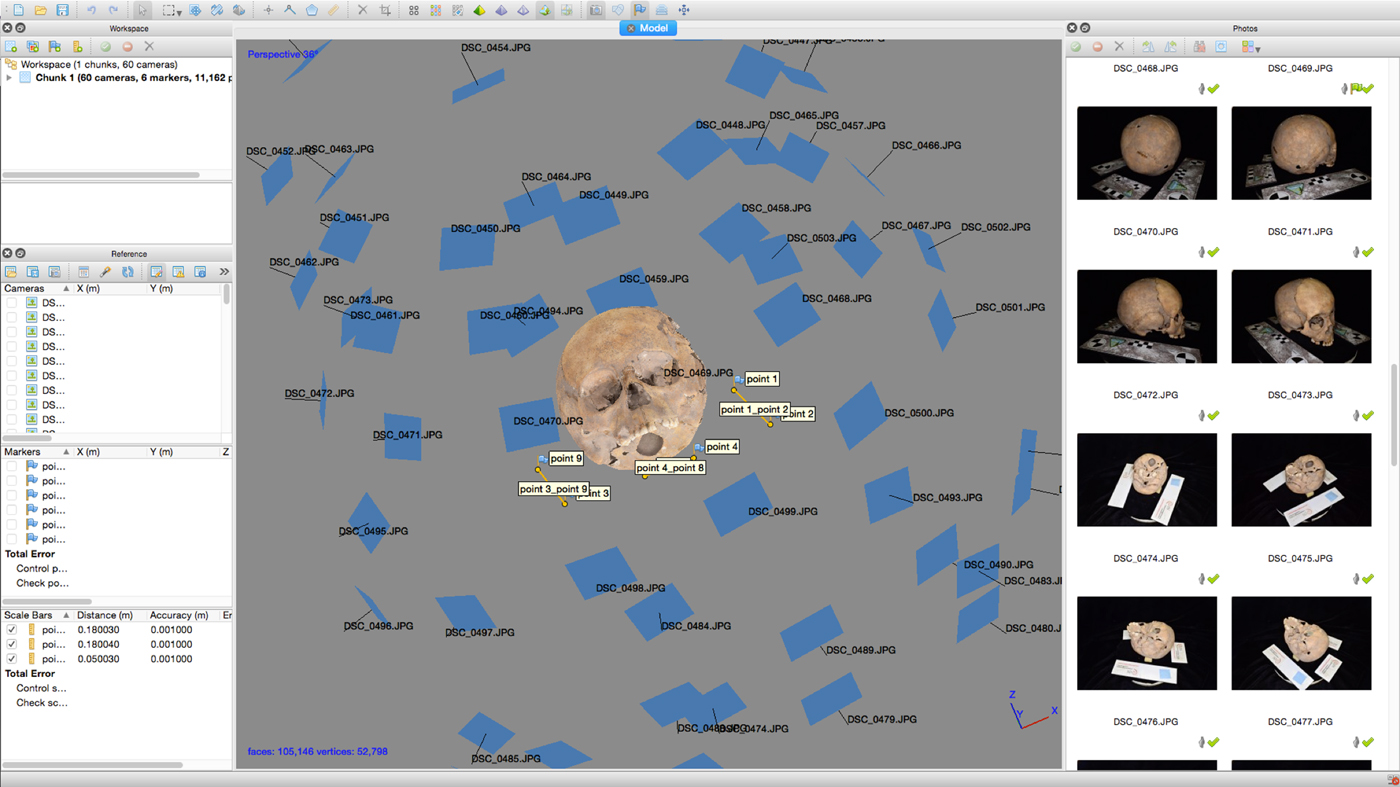
Second, the workflow for photogrammetry helps maximize efficiency when working with skeletal collections in field or museum settings for initial data capture (i.e., photography and scanning), where time is often limited. It takes less than 10 minutes to take approximately 60 photographs of each cranium from six different angles (Figure 7), as compared to using a fixed laser scanner, which takes at least an hour and 15 minutes and up to several hours (Kuzminsky and Gardiner Reference Kuzminsky and Gardiner2012:2750). Thus, researchers can work through skeletal series relatively quickly (depending on the state of curation) and then carry out the more time-consuming steps of merging the photographs and building the model at a later date.Footnote 1 This reduces the amount of time researchers must spend in field or museum settings (as compared to laser scanning using the standard static laser system), thus reducing costs associated with data collection.
Screenshot of the Agisoft Photoscan desktop. The blue squares represent the location of the camera in relationship to the cranium for each picture used in building the model as the skull is rotated and flipped and the camera is moved up and down. Some of the photographs are visible on the right side of the screen (image by Jack A. Biggs).

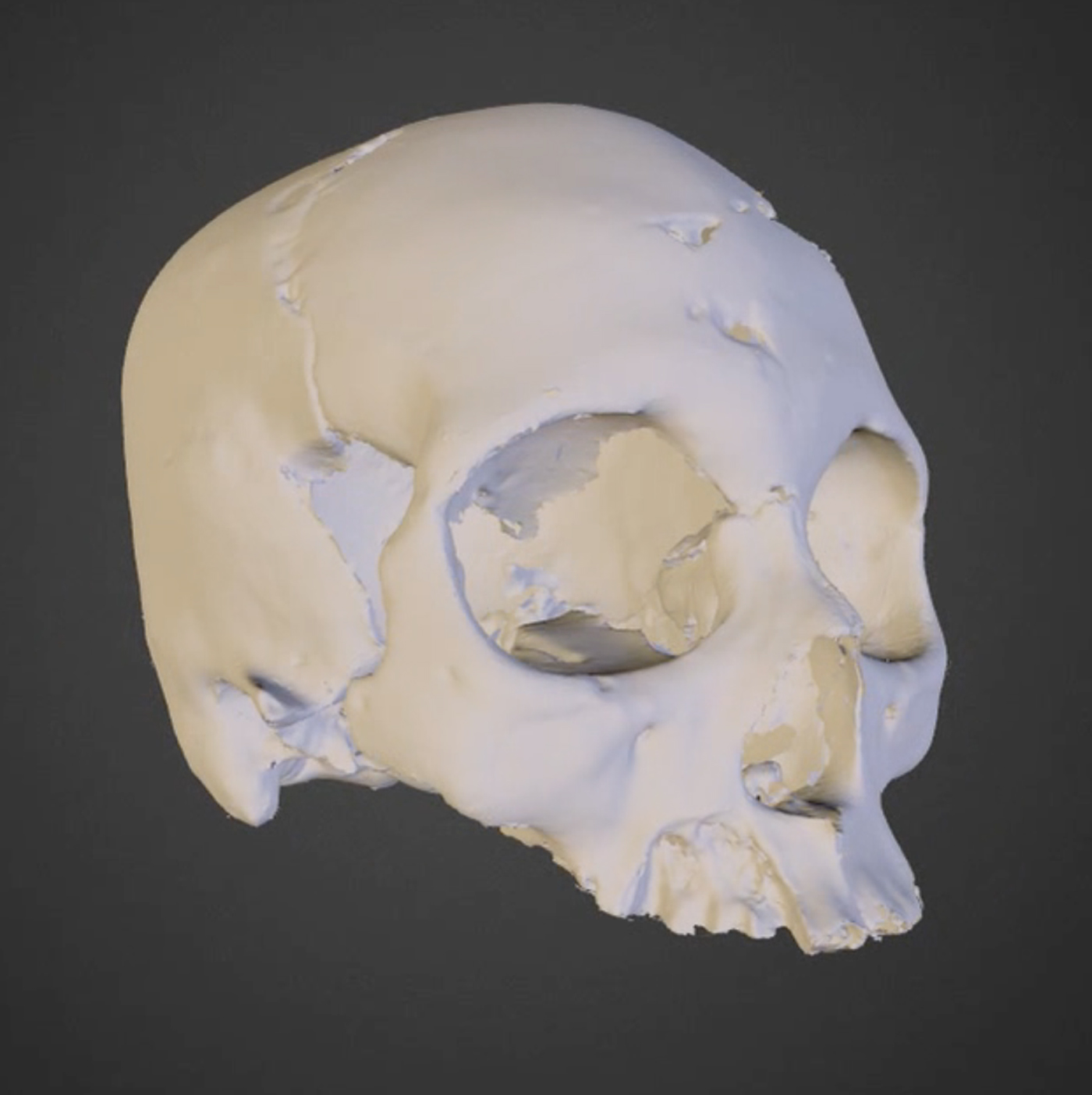
Another distinct advantage of photogrammetry over laser scanning and CT is that photogrammetric models reproduce the subtle surface variations in coloration and texture that allow visualization and qualitative scoring of nonmetric genetic traits as well as indicators of pathology, trauma, and taphonomic alteration (Figure 8). Structured light scanning (SLS), which incorporates cameras rather than lasers, also boasts efficient data capture that includes rendered surfaces, thus offering many of the advantages of photogrammetry (Niven et al. Reference Niven, Steele, Finke, Gernat and Hublin2009). While fixed structured light scanners require repositioning of complex objects to take multiple scans that need to be merged, there are handheld versions that can quickly create complete models in single scans, though this equipment is still quite expensive (>$20,000). SLS also necessitates an electrical outlet, which may not be easily available in many field settings.
Model created using laser scanning lacks details and texture visible in photographs (image by Joshua Schnell).

CONCLUSIONS
Digital repositories offer practical solutions for a number of pressing issues related to preservation of and access to archaeological collections. The creation of 3-D digital repositories also has practical analytical benefits, facilitating a number of morphometric analyses that are not possible using actual specimens, as well as allowing researchers to easily revisit the source (on the digital repository) to collect new data or verify old data, to conduct tests for intra- and inter-observer error, and to minimize measurement error resulting from rushing and the use of handheld calipers. In addition to the extensive analytical uses of the repository, the digital models also provide valuable visualization features. Most major journals allow supplementary images online, and 3-D models are particularly well suited for this format. For print, the 3-D models may also be used to quickly create 2-D snapshots from any perspective and without distortion. Models can be exported as a variety of accessible formats, including PDF, and thus also can be easily and quickly shared.
Archaeological projects focusing on digitizing artifacts are now ubiquitous, based on the need to document features prior to and during excavation (see Novotny, Reference Novotny2019), preserve archaeological resources, and carry out the mission of public museums to increase access. The millions of cultural items suddenly lost in the burning of the National Museum of Brazil puts this necessity in perspective, and efforts are now underway to create a digital record of some of these by crowdsourcing photographs by the public of the objects that were on display to build 3-D models (Killgrove Reference Killgrove2018). Unfortunately, there are significantly fewer such efforts focused on skeletal remains. Most digital repositories of skeletons comprise anatomical, forensic, and paleoanthropological collections, rather than archaeological ones. A primary reason for this seeming lack of attention relates to ethical considerations of the display of human remains. A thoughtful discussion comparing and contrasting the different positions on this issue taken by various stakeholders is well beyond the scope of this paper (though see Hassett Reference Hassett2018a, Reference Hassett2018b; Ulguim Reference Ulguim2018). However, bioarchaeologists working in different areas of the world and in various institutions should make an effort to familiarize themselves with local cultural and political issues that they need to consider when trying to balance the often-conflicting perspectives related to research, access, and the wishes of descendant communities.
In our current work, we are building a repository of crania, focusing primarily on collections from throughout the Maya area and from Papua New Guinea. These digital resources have the potential to greatly enhance bioarchaeological research in these areas by providing a range of cranial data and visualization options for researchers hoping to expand the geographic and temporal scope of their investigations. However, this project has involved collecting data from a wide variety of sources, involving communication and coordination with site directors, museum curators, local community members, other bioarchaeologists, and government officials, all of whom have varying positions on access to the models built from each collection (see also discussions by Davies et al. Reference Davies, Rahman, Lautenschlager, Cunningham, Asher, Barrett, Bates Stefan Bengtson, Benson, Boyer, Braga, Bright, Claessens, Cox, Dong, Evans, Falkingham, Friedman, Garwood, Goswami, Hutchinson, Jeffery, Johanson, Lebrun, Martínez-Pérez, Marugán-Lobón, O'Higgins, Metscher, Orliac, Rowe, Rücklin, Sánchez-Villagra, Shubin, Smith, Matthias Starck, Stringer, Summers, Sutton, Walsh, Weisbecker, Witmer, Wroe, Yin, Rayfield and Donoghue2017; Thompson Reference Thompson2017).
This project is still in the early stages of creation, and issues continue to arise in both the creation of models and analysis. Digital technologies related to 3-D modeling are evolving quickly, and we have benefited greatly from conversations with like-minded archaeologists and bioarchaeologists, as well as from engineers, biologists, and computer scientists. In these discussions, we often are presented with new problems to solve or, better, the answers to questions we hadn't yet thought of. We have also come to understand that, ultimately, the utility of this resource will depend on its accessibility.
Acknowledgments
Funding for the digital repository projects has come from the Alphawood Foundation, Rust Family Foundation, and Michigan State University (MSU). This project has benefited greatly from contributions by the MSU LEADR Lab, the MSU Digital Scholarship Lab, the MSU Department of Anthropology, Joe Hefner, Brett Houk, Bruce Minkin, Giselle Garcia, and to the many student researchers in the MSU Bioarchaeology Laboratory—especially Rachel Kilgroe, Peter Mercier, Josh Schnell, Megan Kempa, Jacob Gantz, Leanne Chambers, Amy Michael, and Jordi Rivera Prince. In particular, thanks to the Belize Institute of Archaeology, especially John Morris, Melissa Badillo, and Antonio Beardall. Thanks to the journal editor and to two anonymous reviewers for their very insightful comments and helpful suggestions.
Data Availability Statement
This article does not contain original data.