


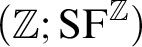
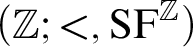
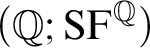
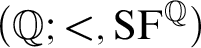





1 Introduction
In [Reference Kaplan and Shelah9], Kaplan and Shelah showed under the assumption of Dickson’s conjecture that if
 $\mathbb {Z}$
is the additive group of integers implicitly assumed to contain
 $1$
as a distinguished constant and
 $a \mapsto \,-a$
as a distinguished function, and if
 $\text {Pr}$
is the set of
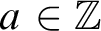
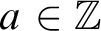 $ a \in \mathbb {Z}$
such that either
 $ a$
or
 $-a$
is prime, then the theory of
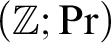 $(\mathbb {Z}; \text {Pr})$
is model complete, decidable, and super-simple of U-rank
 $1$
. From our current point of view, the above result can be seen as an example of a more general phenomenon where we can often capture aspects of randomness inside a structure using first-order logic and deduce in consequence several model-theoretic properties of that structure. In
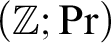 $(\mathbb {Z}; \text {Pr})$
, the conjectural randomness is that of the set of primes with respect to addition. Dickson’s conjecture is useful here as it reflects this randomness in a fashion which can be made first-order. The second author’s work in [Reference Tran14] provides another example with similar themes.
Our viewpoint in particular predicts that there are analogues of Kaplan and Shelah’s results with
 $\textrm {Pr}$
replaced by other random subsets of
 $\mathbb {Z}$
. We confirm the above prediction in this paper without the assumption of any conjecture when
 $\textrm {Pr}$
is replaced with the set
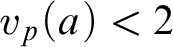
 $$ \begin{align*}\mathrm{SF}^{\mathbb{Z}} = \{ a \in \mathbb{Z} : \text{ for all } p \text{ primes, } v_p(a) < 2 \},\end{align*} $$
where
 $v_p$
is the p-adic valuation associated with the prime p. We have that
 $\mathbb {Z}$
is a structure in the language L of additive groups augmented by a constant symbol for
 $1$
and a function symbol for
 $a \mapsto \,-a$
. Then
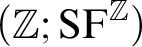 $(\mathbb {Z};\mathrm {SF}^{\mathbb {Z}})$
is a structure in the language
 $L_{\mathrm {u}}$
extending L by a unary predicate symbol for
 $\mathrm {SF}^{\mathbb {Z}}$
(as indicated by the additional subscript “u”). We will introduce a first-order notion of genericity which captures the partial randomness in the interaction between
 $\mathrm {SF}^{\mathbb {Z}}$
and the additive structure on
 $\mathbb {Z}$
. Using a similar idea as in [Reference Kaplan and Shelah9], we obtain:
Theorem 1.1. The theory of
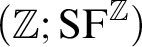 $(\mathbb {Z}; \mathrm {SF}^{\mathbb {Z}})$
is model complete, decidable, supersimple of U-rank
 $1$
, and is k-independent for all
 $k \in \mathbb {N}^{\geq 1}$
.
The above theorem gives us without assuming any conjecture the first natural example of a simple unstable expansion of
 $\mathbb {Z}$
. From the same notion of genericity, we deduce entirely different consequences for the structure
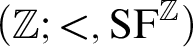 $(\mathbb {Z}; <, \mathrm {SF}^{\mathbb {Z}})$
in the language
 $L_{\mathrm {ou}}$
extending
 $L_{\mathrm {u}}$
by a binary predicate symbol for the natural ordering
 $<$
(as indicated by the additional subscript “o”):
Theorem 1.2. The theory of
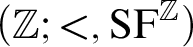 $(\mathbb {Z}; <, \mathrm {SF}^{\mathbb {Z}})$
interprets arithmetic.
The proof here is an adaption of the strategy used in [Reference Bateman, Jockusch and Woods2] to show that the theory of
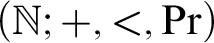 $(\mathbb {N}; +, <, \Pr )$
with
 $\Pr $
the set of primes interprets arithmetic. The above two theorems are in stark contrast with one another in view of the fact that
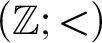 $(\mathbb {Z};<)$
is a minimal proper expansion of
 $\mathbb {Z}$
; indeed, it is proven in [Reference Conant6] that adding any new definable set from
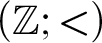 $(\mathbb {Z};<)$
to
 $\mathbb {Z}$
results in defining
 $<$
. On the other hand, it is shown in [Reference Dolich and Goodrick7] that there is no strong expansion of the theory of Presburger arithmetic, so Theorem 1.2 is perhaps not entirely unexpected.
It is also natural to consider the structures
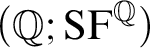 $(\mathbb {Q}; \mathrm {SF}^{\mathbb {Q}})$
and
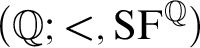 $(\mathbb {Q};<, \mathrm {SF}^{\mathbb {Q}})$
where
 $\mathbb {Q}$
is the additive group of rational numbers, also implicitly assumed to contain
 $1$
as a distinguished constant and
 $a\mapsto \,-a$
as a distinguished function,
 $$ \begin{align*}\mathrm{SF}^{\mathbb{Q}} =\{ a \in \mathbb{Q} : v_p(a) < 2 \text{ for all } \text{ primes } p \},\end{align*} $$
and the relation
 $<$
on
 $\mathbb {Q}$
is the natural ordering. The reader might wonder why chose
 $\mathrm {SF}^{\mathbb {Q}}$
instead of
 $\mathrm {SF}^{\mathbb {Z}}$
or
 $\text {ASF}^{\mathbb {Q}} =\{ a \in \mathbb {Q} : |v_p(a)| < 2 \text { for all } \text { primes } p \}.$
From Lemma 2.2 in the next section, we get
 $\mathrm {SF}^{\mathbb {Q}}+\mathrm {SF}^{\mathbb {Q}}= \mathbb {Q}$
,
 $\mathrm {SF}^{\mathbb {Z}}+\mathrm {SF}^{\mathbb {Z}} = \mathbb {Z}$
, and
 $\text {ASF}^{\mathbb {Q}} + \text {ASF}^{\mathbb {Q}}=\{ a : v_p(a)>\,-2 \text { for all } \text { primes } p\}$
. Hence, equipping
 $\mathbb {Q}$
and
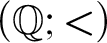 $(\mathbb {Q};<)$
with either
 $\mathrm {SF}^{\mathbb {Z}}$
or
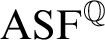 $\text {ASF}^{\mathbb {Q}}$
will result in structures expanding an infinite-index pair of infinite abelian groups with a unary predicate on the smaller group, and therefore, having rather different flavors from
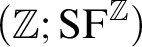 $(\mathbb {Z};\mathrm {SF}^{\mathbb {Z}})$
and
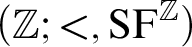 $(\mathbb {Z};<, \mathrm {SF}^{\mathbb {Z}})$
.
Viewing
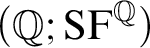 $(\mathbb {Q}; \mathrm {SF}^{\mathbb {Q}})$
and
 $(\mathbb {Q};<, \mathrm {SF}^{\mathbb {Q}})$
in the obvious way as an
 $L_{\mathrm {u}}$
-structure and an
 $L_{\mathrm {ou}}$
-structure, the main new technical aspect is in showing that these two structures satisfy suitable notions of genericity and leveraging on them to prove:
Theorem 1.3. The theory of
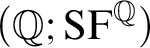 $(\mathbb {Q}; \mathrm {SF}^{\mathbb {Q}})$
is model complete, decidable, simple but not supersimple, and is k-independent for all
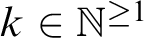 $k \in \mathbb {N}^{\geq 1}$
.
From above,
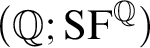 $(\mathbb {Q}; \mathrm {SF}^{\mathbb {Q}})$
is “less tame” than
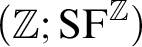 $(\mathbb {Z}; \mathrm {SF}^{\mathbb {Z}})$
. The reader might therefore expect that
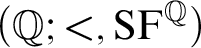 $(\mathbb {Q};<, \mathrm {SF}^{\mathbb {Q}})$
is wild. However, this is not the case:
Theorem 1.4. The theory
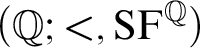 $(\mathbb {Q}; <, \mathrm {SF}^{\mathbb {Q}})$
is model complete, decidable, is
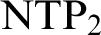 $\mathrm {NTP}_2$
but is not strong, and is k-independent for all
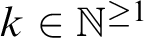 $k \in \mathbb {N}^{\geq 1}$
.
The paper is arranged as follows. In Section 2, we define the appropriate notions of genericity for the structures under consideration. The model completeness and decidability results are proven in Section 3 and the combinatorial tameness results are proven in Section 4.
1.1 Notation and conventions
Let
 $h, k$
, and l range over the set of integers and let m, n, and
 $n'$
range over the set of natural numbers (which include zero). We let p range over the set of prime numbers, and denote by
 $v_p$
the p-adic valuation on
 $\mathbb {Q}$
. Let x be a single variable, y a tuple of variables of unspecified length, z the tuple
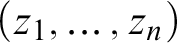 $(z_1, \ldots , z_n)$
of variables, and
 $z'$
the tuple
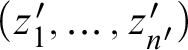 $(z^{\prime }_1, \ldots , z^{\prime }_{n'})$
of variables. For an n-tuple a of elements from a certain set, we let
 $a_i$
denote the i-th component of a for
 $i \in \{1, \ldots , n\}$
. Suppose G is an additive abelian group. We equip
 $G^m$
with a group structure by structure by setting
 $+$
on
 $G^m$
to be the coordinate-wise addition. Viewing G and
 $G^m$
as
 $\mathbb {Z}$
-module, we define
 $ka$
with
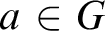 $a \in G$
and
 $kb$
with
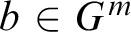 $b\in G^m$
accordingly. Suppose, G is moreover an L-structure with
 $1_G$
the distinguished constant. We write k for
 $k1_G$
. For
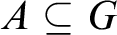 $A \subseteq G$
, we let
 $L(A)$
denote the language extending L by adding constant symbols for elements of A and view G as an
 $L(A)$
structure in the obvious way.
2 Genericity of the examples
We study the structure
 $(\mathbb {Z}; \mathrm {SF}^{\mathbb {Z}})$
indirectly by looking at its definable expansion to a richer language. For given p and l, set
 $$ \begin{align*}U^{\mathbb{Z}}_{p, l} = \{ a \in \mathbb{Z} : v_p(a) \geq l\}.\end{align*} $$
Let
 $\mathscr {U}^{\mathbb {Z}} = ( U^{\mathbb {Z}}_{p, l})$
. The definition for
 $l \leq 0$
is not too useful as
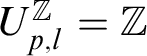 $U^{\mathbb {Z}}_{p, l} =\mathbb {Z}$
in this case. However, we still keep this for the sake of uniformity as we treat
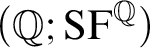 $(\mathbb {Q}; \mathrm {SF}^{\mathbb {Q}})$
later. For
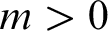
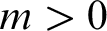 $m>0$
, set
 $$ \begin{align*}P^{\mathbb{Z}}_m = \{ a \in \mathbb{Z} : v_p(a) < 2 + v_p(m) \text{ for all } p\}.\end{align*} $$
In particular,
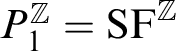 $ P^{\mathbb {Z}}_1 = \mathrm {SF}^{\mathbb {Z}}$
. Let
 $\mathscr {P}^{\mathbb {Z}} = (P^{\mathbb {Z}}_m)_{m>0}$
. We have that
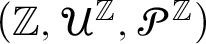 $(\mathbb {Z}, \mathscr {U}^{\mathbb {Z}}, \mathscr {P}^{\mathbb {Z}})$
is a structure in the language
 $L_{\mathrm {u}}^*$
extending
 $L_{\mathrm {u}}$
by families of unary predicate symbols for
 $\mathscr {U}^{\mathbb {Z}}$
and
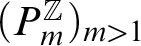 $( P^{\mathbb {Z}}_m)_{m>1}$
. Note that
 $$ \begin{align*}U^{\mathbb{Z}}_{p,l}= \mathbb{Z} \text{ for } l\leq 0,\quad U^{\mathbb{Z}}_{p,l}= p^l\mathbb{Z} \text{ for } l>0, \text{ and} \quad P^{\mathbb{Z}}_m =\bigcup_{d \mid m} d\mathrm{SF}^{\mathbb{Z}} \text{ for } m>0.\end{align*} $$
Hence,
 $U^{\mathbb {Z}}_{p, l}$
and
 $P^{\mathbb {Z}}_m$
are definable in
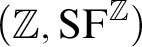 $( \mathbb {Z}, \mathrm {SF}^{\mathbb {Z}})$
, and so a subset of
 $\mathbb {Z}$
is definable in
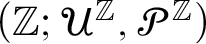 $(\mathbb {Z}; \mathscr {U}^{\mathbb {Z}}, \mathscr {P}^{\mathbb {Z}})$
if and only if it is definable in
 $( \mathbb {Z}, \mathrm {SF}^{\mathbb {Z}})$
.
Let
 $(G; \mathscr {P}^G, \mathscr {U}^G)$
be an
 $L_{\mathrm {u}}^*$
-structure. Then
 $\mathscr {U}^G$
is a family indexed by pairs
 $(p, l)$
, and
 $\mathscr {P}^{G}$
is a family indexed by m. For p, l, and m, define
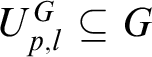 $U^G_{p, l} \subseteq G$
to be the member of
 $\mathscr {U}^G$
with index
 $(p, l)$
and
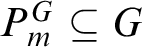 $P^G_m \subseteq G$
to be the member of the family
 $\mathscr {P}^G$
with index m. In particular, we have
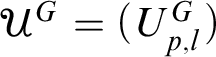 $\mathscr {U}^G = (U^G_{p, l})$
and
 $P^G = (P^G_m)_{m>0}$
. Clearly, this generalizes the previous definition for
 $\mathbb {Z}$
.
We isolate the basic first-order properties of
 $(\mathbb {Z}; \mathscr {U}^{\mathbb {Z}}, \mathscr {P}^{\mathbb {Z}})$
. Let
 $\mathrm {Sf}^*_{\mathbb {Z}}$
be a recursive set of
 $L_{\mathrm {u}}^*$
-sentences such that an
 $L_{\mathrm {u}}^*$
-structure
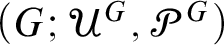 $(G; \mathscr {U}^G, \mathscr {P}^G)$
is a model of
 $\mathrm {Sf}^*_{\mathbb {Z}}$
if and only if
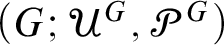 $(G; \mathscr {U}^G, \mathscr {P}^G)$
satisfies the following properties:
-
(Z1)
 $(G;+,-,0,1)$
is elementarily equivalent to
$(\mathbb {Z};+,-,0,1)$
;
-
(Z2)
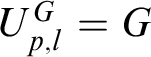
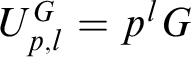
$U^G_{p,l}= G$
for
$l\leq 0$
, and
$U^G_{p,l}= p^lG$
for
$l>0$
; -
(Z3)
$1$
is in
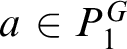
$P^G_1$
; -
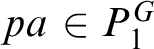
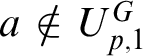
(Z4) for any given p, we have that
$pa \in P^G_1$
if and only if
$a\in P^G_1$
and
$a \notin U^G_{p,1}$
; -
(Z5)
$P^G_m =\bigcup _{d \mid m} dP^G_1 $
for all
$m>0$
.






The fact that we could choose
 $\mathrm {Sf}^*_{\mathbb {Z}}$
to be recursive follows from the well-known decidability of
 $\mathbb {Z}$
. Clearly,
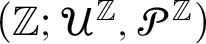 $(\mathbb {Z}; \mathscr {U}^{\mathbb {Z}}, \mathscr {P}^{\mathbb {Z}})$
is a model of
 $\mathrm {Sf}^*_{\mathbb {Z}}$
. Several properties which hold in
 $(\mathbb {Z}; \mathscr {U}^{\mathbb {Z}}, \mathscr {P}^{\mathbb {Z}})$
also hold in an arbitrary model of
 $\mathrm {Sf}^*_{\mathbb {Z}}$
:
Lemma 2.1. Let
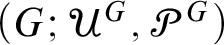 $(G; \mathscr {U}^G, \mathscr {P}^G)$
be a model of
 $\mathrm {Sf}^*_{\mathbb {Z}}$
. Then we have the following:
-
(i)
$(G; \mathscr {U}^G)$
is elementarily equivalent to
$(\mathbb {Z}; \mathscr {U}^{\mathbb {Z}});$
-
(ii) for all k, p, l, and
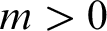
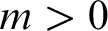
$m>0$
, we have that
$$ \begin{align*}k \in U^G_{p,l} \text{ if and only if } k \in U^{\mathbb{Z}}_{p,l} \ \text{ and }\ k \in P^G_m \text{ if and only if } k \in P^{\mathbb{Z}}_m;\end{align*} $$
-
(iii) for all
$h\neq 0 $
, p, and l, we have that
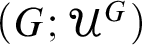
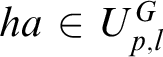
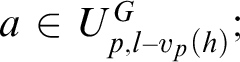
$ha \in U^G_{p,l}$
if and only if
$ a \in U^G_{p,l-v_p(h)}; $
-
(iv) if
$a\in G$
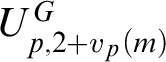
is in
$U^G_{p, 2+v_p(m)}$
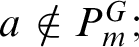
for some p, then
$a \notin P^G_m;$
-
(v) for all
$h\neq 0$
and
$m>0$
,
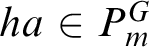
$ha \in P^G_{m}$
if and only if we have
$$ \begin{align*}a \in P^G_{m} \ \text{ and } \ a \notin U^G_{p,2+ v_p(m) -v_p(h)} \text{ for all } p \text{ which divides } h;\end{align*} $$
-
(vi) for all
$h>0$
and
$m>0$
,
$a \in P^G_{m}$
if and only if
$ha \in P^G_{mh}$
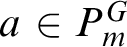
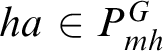
.








Proof Fix a model
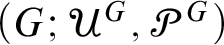 $(G; \mathscr {U}^G, \mathscr {P}^G)$
of
 $\mathrm {Sf}^*_{\mathbb {Z}}$
. It follows from (Z2) that the same first-order formula defines both
 $U^G_{p,l}$
in G and
 $U^{\mathbb {Z}}_{p,l}$
in
 $\mathbb {Z}$
. Then using (Z1), we get
 $\mathrm {(i)}$
. The first assertion of
 $\mathrm {(ii)}$
is immediate from
 $\mathrm {(i)}$
. Using this, (Z3), and (Z4), we get the second assertion of
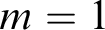
 $\mathrm {(ii)}$
for the case
 $m=1$
. For
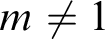 $m \neq 1$
, we reduce to the case
 $m=1$
using property (Z5). Statement
 $\mathrm {(iii)}$
is an immediate consequence of
 $\mathrm {(i)}$
. We only prove below the cases
 $m = 1$
of
 $\textrm{(iv--vi)}$
as the remaining cases of the corresponding statements can be reduced to these using (Z5). Statement
 $\mathrm {(iv)}$
is immediate for the case
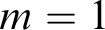 $m=1$
using (Z2) and (Z4). The case
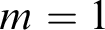 $m=1$
of
 $\mathrm {(v)}$
is precisely the statement of (Z4) when h is prime, and then the proof proceeds by induction. For the case
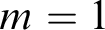 $m=1$
of
 $\mathrm {(vi)}$
, (
 $\rightarrow $
) follows from (Z5), and (
 $\leftarrow $
) follows through a combination of Z5,
 $\mathrm {(v)}$
, and induction on the number of prime divisors of h.⊣
We next consider the structures
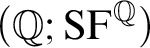 $(\mathbb {Q}; \mathrm {SF}^{\mathbb {Q}})$
and
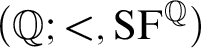 $(\mathbb {Q}; <, \mathrm {SF}^{\mathbb {Q}})$
. For given p, l, and
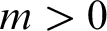 $m>0$
, in the same fashion as above, we set
 $$ \begin{align*}U^{\mathbb{Q}}_{p, l} = \{ a \in \mathbb{Q} : v_p(a) \geq l\}\quad \text{ and } \quad \ P^{\mathbb{Q}}_m = \{ a \in \mathbb{Q} : v_p(a) < 2 + v_p(m) \text{ for all } p\},\end{align*} $$
and let
 $$ \begin{align*}\mathscr{U}^{\mathbb{Q}} = ( U^{\mathbb{Q}}_{p, l})\quad \text{ and } \quad \mathscr{P}^{\mathbb{Q}} = (P^{\mathbb{Q}}_m)_{m>0}.\end{align*} $$
Then
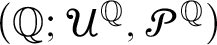 $(\mathbb {Q}; \mathscr {U}^{\mathbb {Q}}, \mathscr {P}^{\mathbb {Q}})$
is a structure in the language
 $L_{\mathrm {u}}^*$
. Clearly, every subset of
 $\mathbb {Q}^n$
definable in
 $(\mathbb {Q}; \mathrm {SF}^{\mathbb {Q}})$
is also definable in
 $(\mathbb {Q}; \mathscr {U}^{\mathbb {Q}}, \mathscr {P}^{\mathbb {Q}})$
. A similar statement holds for
 $(\mathbb {Q}; <, \mathrm {SF}^{\mathbb {Q}})$
and
 $(\mathbb {Q}; <, \mathscr {U}^{\mathbb {Q}}, \mathscr {P}^{\mathbb {Q}})$
. We will show that the reverse implications are also true.
The next lemma backs up the discussion on
 $\mathrm {SF}^{\mathbb {Q}}$
and
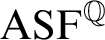 $\mathrm {ASF}^{\mathbb {Q}}$
preceding Theorem 1.3 in the introduction.
Lemma 2.2.
 $\mathrm {SF}^{\mathbb {Z}}+\mathrm {SF}^{\mathbb {Z}} = \mathbb {Z}$
,
 $\mathrm {SF}^{\mathbb {Q}}+\mathrm {SF}^{\mathbb {Q}}= \mathbb {Q}$
, and
 $\mathrm {ASF}^{\mathbb {Q}} + \mathrm {ASF}^{\mathbb {Q}}=\{ a : v_p(a)>\kern3pt {-}2 \text { for all } p\}$
.
Proof We first prove that any integer k is a sum of two elements from
 $\mathrm {SF}^{\mathbb {Z}}$
. As
 $\mathrm {SF}^{\mathbb {Z}} =\kern3pt {-}\mathrm {SF}^{\mathbb {Z}}$
and the cases where
 $k=0$
or
 $k=1$
are immediate, we assume that
 $k>1$
. It follows from [Reference Rogers13] that the number of square-free positive integers less than k is at least
 $\frac {53k}{88}$
. Since
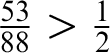 $\frac {53}{88}> \frac {1}{2}$
, this implies k can be written as a sum of two positive square-free integers which gives us
 $\mathrm {SF}^{\mathbb {Z}}+\mathrm {SF}^{\mathbb {Z}} = \mathbb {Z}$
. Using this, the other two equalities follow immediately.⊣
Lemma 2.3. For all p and l,
 $U^{\mathbb {Q}}_{p,l}$
is existentially
 $0$
-definable in
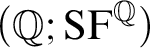 $( \mathbb {Q}; \mathrm {SF}^{\mathbb {Q}})$
.
Proof As
 $U^{\mathbb {Q}}_{p, l+n} = p^nU^{\mathbb {Q}}_{p, l}$
for all l and n, it suffices to show the statement for
 $l=0$
. Fix a prime p. We have for all
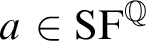 $a \in \mathrm {SF}^{\mathbb {Q}}$
that
 $$ \begin{align*}v_p(a) \geq 0 \ \text { if and only if } p^2 a \notin \mathrm{SF}^{\mathbb{Q}}.\end{align*} $$
Using Lemma 2.2, for all
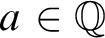 $a \in \mathbb {Q}$
, we have that
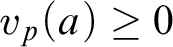 $v_p(a) \geq 0$
if and only if there are
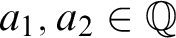 $a_1, a_2 \in \mathbb {Q}$
such that
 $$ \begin{align*}\big(a_1\in \mathrm{SF}^{\mathbb{Q}} \wedge v_p(a_1) \geq 0\big) \wedge \big(a_2\in \mathrm{SF}^{\mathbb{Q}} \wedge v_p(a_2) \geq 0\big) \ \text{ and } \ a =a_1+a_2.\end{align*} $$
Hence, the set
 $U^{\mathbb {Q}}_{p, 0} = \{a \in \mathbb {Q} : v_p(a) \geq 0 \} $
is existentially definable in
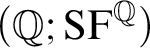 $(\mathbb {Q}; \mathrm {SF}^{\mathbb {Q}})$
. The desired conclusion follows.⊣
It is also easy to see that for all m,
 $P_m^{\mathbb {Q}} = m \mathrm {SF}^{\mathbb {Q}}$
for all
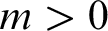 $m>0$
, and so
 $P_m^{\mathbb {Q}}$
is existentially
 $0$
-definable in
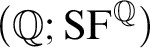 $(\mathbb {Q}; \mathrm {SF}^{\mathbb {Q}})$
. Combining with Lemma 2.3, we get:
Proposition 2.4. Every subset of
 $\mathbb {Q}^n$
definable in
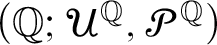 $(\mathbb {Q}; \mathscr {U}^{\mathbb {Q}}, \mathscr {P}^{\mathbb {Q}})$
is also definable in
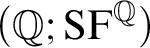 $( \mathbb {Q}; \mathrm {SF}^{\mathbb {Q}})$
. The corresponding statement for the structures
 $(\mathbb {Q}; <, \mathscr {U}^{\mathbb {Q}}, \mathscr {P}^{\mathbb {Q}})$
and
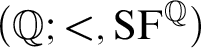 $(\mathbb {Q}; <, \mathrm {SF}^{\mathbb {Q}})$
holds.
In view of the first part of Proposition 2.4, we can analyze
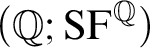 $(\mathbb {Q}; \mathrm {SF}^{\mathbb {Q}})$
via
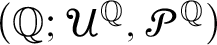 $(\mathbb {Q}; \mathscr {U}^{\mathbb {Q}}, \mathscr {P}^{\mathbb {Q}})$
in the same way we analyze
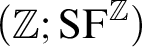 $(\mathbb {Z}; \mathrm {SF}^{\mathbb {Z}})$
via
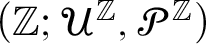 $(\mathbb {Z}; \mathscr {U}^{\mathbb {Z}}, \mathscr {P}^{\mathbb {Z}})$
. Let
 $\mathrm {Sf}^*_{\mathbb {Q}}$
be a recursive set of
 $L_{\mathrm {u}}^*$
-sentences such that an
 $L_{\mathrm {u}}^*$
-structure
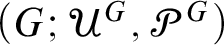 $(G; \mathscr {U}^G, \mathscr {P}^G)$
is a model of
 $\mathrm {Sf}^*_{\mathbb {Q}}$
if and only if
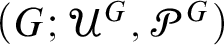 $(G; \mathscr {U}^G, \mathscr {P}^G)$
satisfies the following properties:
-
(Q1)
$(G;+,-,0,1)$
is elementarily equivalent to
$(\mathbb {Q};+,-,0,1)$
; -
(Q2) for any given p,
$U_{p,0}^G$
is an n-divisible subgroup of G for all n coprime with p; -
(Q3)
$1\in U_{p,0}^G$
and
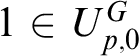
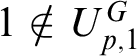
$1 \notin U_{p,1}^G$
; -
(Q4) for any given p,
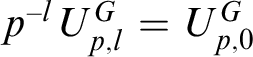
$p^{-l}U_{p,l}^G = U_{p, 0}^G$
if
$l<0$
and
$U_{p,l} = p^l U_{p, 0}$
if
$l>0$
; -
(Q5)
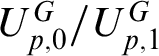
$ U_{p, 0}^G / U_{p, 1}^G$
is isomorphic as a group to
$\mathbb {Z} / p\mathbb {Z}$
; -
(Q6)
$1 \in P_1^G$
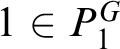
; -
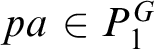
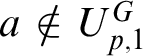
(Q7) for any given p, we have that
$pa \in P_1^G$
if and only if
$a\in P_1^G$
and
$a \notin U_{p,1}^G$
; -
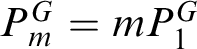
(Q8)
$P_m^G = m P_1^G$
for
$m>0$
;








The fact that we could choose
 $\mathrm {Sf}^*_{\mathbb {Q}}$
to be recursive follows from the well-known decidability of
 $\mathbb {Q}$
. Obviously,
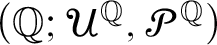 $(\mathbb {Q}; \mathscr {U}^{\mathbb {Q}}, \mathscr {P}^{\mathbb {Q}})$
is a model of
 $\mathrm {Sf}^*_{\mathbb {Q}}$
. Several properties which hold in
 $(\mathbb {Q}; \mathscr {U}^{\mathbb {Q}}, \mathscr {P}^{\mathbb {Q}})$
also hold in an arbitrary model of
 $\mathrm {Sf}^*_{\mathbb {Q}}$
:
Lemma 2.5. Let
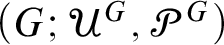 $(G; \mathscr {U}^G, \mathscr {P}^G)$
be a model of
 $\mathrm {Sf}^*_{\mathbb {Q}}$
. Then we have the following:
-
(i) For all p and all
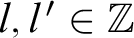
$l, l' \in \mathbb {Z}$
with
$l\leq l'$
, we have
$U_{p,l}^G$
is a subgroup of G,
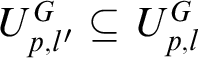
$U_{p,l'}^G \subseteq U^G_{p,l}$
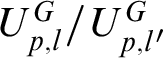
. Further, we can interpret
$U^G_{p, l} / U^G_{p, l'}$
as an L-structure with 1 being
$p^l+U^G_{p, l'}$
, and
$$ \begin{align*}U^G_{p, l} / U^G_{p, l'} \cong_{L} \mathbb{Z}/ (p^{l'-l}\mathbb{Z});\end{align*} $$
-
(ii) for all h,
$k\neq 0$
, p, l, and
$m>0$
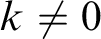
, we have that where
$$ \begin{align*}\frac{h}{k} \in U^G_{p,l} \text{ if and only if } \frac{h}{k} \in U^{\mathbb{Q}}_{p,l} \ \text{ and }\ \frac{h}{k} \in P^G_m \text{ if and only if } \frac{h}{k} \in P^{\mathbb{Q}}_m, \end{align*} $$
$hk^{-1}$
is the obvious element in
$\mathbb {Q}$
and in
$G;$
-
(iii) the replica of (
$\mathrm{iii}$
–
$\mathrm{vi}$
) of Lemma 2.1 holds.






Proof Fix a model
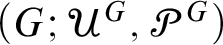 $(G; \mathscr {U}^G, \mathscr {P}^G)$
of
 $\mathrm {Sf}^*_{\mathbb {Q}}$
. From (Q2) we have that
 $U_{p,0}^G$
is a subgroup of G for all p. It follows from (Q4) that
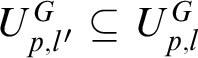 $U^G_{p,l'} \subseteq U^G_{p,l} $
are subgroups of G for all p and
 $l\leq l'$
. With
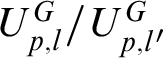 $U^G_{p, l} / U^G_{p, l'}$
being interpreted as an L-structure with 1 being
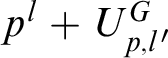 $p^l+U^G_{p, l'}$
, we get an L-embedding of
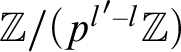 $ \mathbb {Z}/ (p^{l'-l}\mathbb {Z})$
into
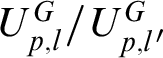 $U^G_{p, l} / U^G_{p, l'}$
using (Q3) and (Q4). Further, we see that
 $|U^G_{p, l} / U^G_{p, l'}|=p^{(l'-l)}$
using (Q2)–(Q5) and induction on
 $l'-l$
together with the third isomorphism theorem; and so the aforementioned embedding must be an isomorphism, finishing the proof for
 $\mathrm {(i)}$
. The first assertion of
 $\mathrm {(ii)}$
follows easily from (Q2)–Q(4). The second assertion for the case
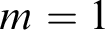 $m=1$
follows from the first assertion, (Q6), and (Q7). Finally, the case with
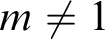 $m\not =1$
follows from the case
 $m=1$
using (Q8). The proof for the replica of
 $\mathrm {(iii)}$
from Lemma 2.1 is a consequence of
 $\mathrm {(i)}$
and (Q4). The proofs for replicas of
 $\textrm{(iv--vi)}$
from Lemma 2.1 are similar to the proofs for
 $\textrm{(iv--vi)}$
of Lemma 2.1.⊣
As the reader may expect by now, we will study
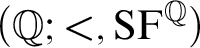 $(\mathbb {Q}; <, \mathrm {SF}^{\mathbb {Q}})$
via
 $(\mathbb {Q}; <, \mathscr {U}^{\mathbb {Q}}, \mathscr {P}^{\mathbb {Q}})$
. Let
 $L_{\mathrm {ou}}^*$
be
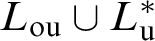 $L_{\mathrm {ou}} \cup L_{\mathrm {u}}^*$
. Then
 $(\mathbb {Q}; <, \mathscr {U}^{\mathbb {Q}}, \mathscr {P}^{\mathbb {Q}})$
can be construed as an
 $L_{\mathrm {ou}}^*$
-structure in the obvious way. Let
 $\mathrm {OSf}^*_{\mathbb {Q}}$
be a recursive set of
 $L_{\mathrm {ou}}^*$
-sentences such that an
 $L_{\mathrm {ou}}^*$
-structure
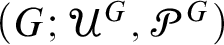 $(G; \mathscr {U}^G, \mathscr {P}^G)$
is a model of
 $\mathrm {OSf}^*_{\mathbb {Q}}$
if and only if
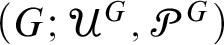 $(G; \mathscr {U}^G, \mathscr {P}^G)$
satisfies the following properties:
-
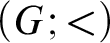
(1)
$(G; <)$
is elementarily equivalent to
$(\mathbb {Q};<)$
; -
(2)
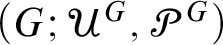
$(G; \mathscr {U}^G, \mathscr {P}^G)$
is a model of
$\mathrm {Sf}^*_{\mathbb {Q}}$
.


As
 $\text {Th}(\mathbb {Q};<)$
is decidable, we could choose
 $\mathrm {OSf}^*_{\mathbb {Q}}$
to be recursive.
Returning to the theory
 $\mathrm {Sf}^*_{\mathbb {Z}}$
, we see that it does not fully capture all the first-order properties of
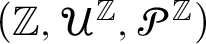 $(\mathbb {Z}, \mathscr {U}^{\mathbb {Z}}, \mathscr {P}^{\mathbb {Z}})$
. For instance, we will show later in Corollary 2.12 that for all
 $c \in \mathbb {Z}$
, there is
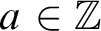 $a \in \mathbb {Z}$
such that
 $$ \begin{align*}a+c \in \mathrm{SF}^{\mathbb{Z}}\ \text{ and }\ a+c+1 \in \mathrm{SF}^{\mathbb{Z}},\end{align*} $$
while the interested reader can construct models of
 $\mathrm {Sf}^*_{\mathbb {Z}}$
where the corresponding statement is not true. Likewise, the theories
 $\mathrm {Sf}^*_{\mathbb {Q}}$
and
 $\mathrm {OSf}^*_{\mathbb {Q}}$
do not fully capture all the first-order properties of
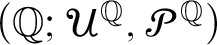 $(\mathbb {Q}; \mathscr {U}^{\mathbb {Q}}, \mathscr {P}^{\mathbb {Q}})$
and
 $(\mathbb {Q}; <, \mathscr {U}^{\mathbb {Q}}, \mathscr {P}^{\mathbb {Q}})$
.
To give a precise formulation of the missing first-order properties of
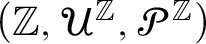 $(\mathbb {Z}, \mathscr {U}^{\mathbb {Z}}, \mathscr {P}^{\mathbb {Z}})$
,
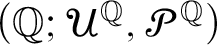 $(\mathbb {Q}; \mathscr {U}^{\mathbb {Q}}, \mathscr {P}^{\mathbb {Q}})$
, and
 $(\mathbb {Q}; < \mathscr {U}^{\mathbb {Q}}, \mathscr {P}^{\mathbb {Q}})$
, we need more terminologies. Let
 $t(z)$
be an
 $L_{\mathrm {u}}^*$
-term (or equivalently an
 $L_{\mathrm {ou}}^*$
-term) with variables in z. An
 $L_{\mathrm {u}}^*$
-formula (or an
 $L_{\mathrm {ou}}^*$
-formula) which is a Boolean combination of formulas having the form
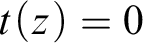 $t(z) =0$
where we allow t to vary is called an equational condition. Similarly, an
 $L_{\mathrm {ou}}^*$
-formula which is a Boolean combination of formulas having the form
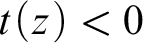 $t(z) < 0$
where t is allowed to vary is called an order-condition. For any given p, l define
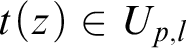 $t(z) \in U_{p,l}$
to be the obvious formula in
 $L_{\mathrm {u}}^*(z)$
which defines in an arbitrary
 $L_{\mathrm {u}}^*$
-structure
 $(G; \mathscr {U}^G, \mathscr {P}^G)$
the set
 $$ \begin{align*}\{ c \in G^n : t^G(c) \in U^G_{p,l} \}.\end{align*} $$
Define the quantifier-free formulas
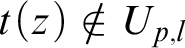 $t(z) \notin U_{p,l}$
,
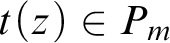 $t(z) \in P_m$
, and
 $t(z) \notin P_m$
in
 $L_{\mathrm {u}}^*(z)$
for p, l, and for
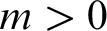 $m>0$
likewise. For each prime p, an
 $L_{\mathrm {u}}^*$
-formula (or an
 $L_{\mathrm {ou}}^*$
-formula) which is a Boolean combination of formulas of the form
 $t(z) \notin U_{p,l}$
where t and l are allowed to vary is called a p-condition. We call a p-condition as in the previous statement trivial if the Boolean combination is the empty conjunction.
A parameter choice of variable type
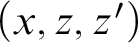 $(x, z, z')$
is a triple
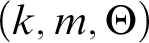 $(k,m,\Theta )$
such that k is in
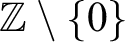 $\mathbb {Z}\setminus \{0 \}$
, m is in
 $\mathbb {N}^{\geq 1}$
, and
 $\Theta = \big ( \theta _p(x,z,z')\big )$
where
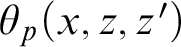 $\theta _p(x, z, z')$
is a p-condition for each prime p and is trivial for all but finitely many p. We say that an
 $L_{\mathrm {u}}^*$
-formula
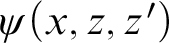 $\psi (x, z, z')$
is special if it has the form
 $$ \begin{align*}\bigwedge_{p} \theta_p(x, z, z') \wedge \bigwedge_{i=1}^n (kx+z_i\in P_{m}) \wedge \bigwedge_{i'=1}^{n'} (kx+z^{\prime}_i \notin P_{m}),\end{align*} $$
where
 $k, m$
, and
 $\theta _p(x, z, z')$
are taken from a parameter choice of variable type
 $(x, z, z')$
. Every special formula corresponds to a unique parameter choice and vice versa. Special formulas are special enough that we have a “local to global” phenomenon in the structures of interest but general enough to represent quantifier free formulas. We will explain the former point in the remaining part of the section and make the latter point precise with Theorem 3.1.
Let
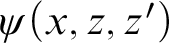 $\psi (x, z, z')$
be a special formula with parameter choice
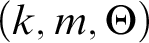 $(k,m,\Theta )$
and
 $\theta _p(x, z, z')$
is the p-condition in
 $\Theta $
for each p. We define the associated equational condition of
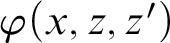 $\varphi (x, z, z' )$
to be the formula
 $$ \begin{align*}\bigwedge_{i =1}^n \bigwedge_{i'=1}^{n'} (z_i\neq z^{\prime}_{i'})\end{align*} $$
and the associated p-condition of
 $\varphi (x, z, z' )$
to be the formula
 $$ \begin{align*}\theta_p(x, z , z') \wedge \bigwedge_{i=1}^n (kx+z_i\notin U_{p, 2+v_p(m)}).\end{align*} $$
It is easy to see that modulo
 $\mathrm {Sf}^*_{\mathbb {Z}}$
or
 $\mathrm {Sf}^*_{\mathbb {Q}}$
, an arbitrary special formula implies its associated equational condition and its associated p-condition for any prime p.
Suppose
 $(G; \mathscr {U}^G, \mathscr {P}^G)$
and
 $(H; \mathscr {U}^H, \mathscr {P}^H)$
are
 $L_{\mathrm {u}}^*$
-structures such that the former is an
 $L_{\mathrm {u}}^*$
-substructure of the latter. Let
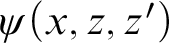 $\psi (x, z, z')$
be a special formula,
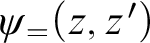 $\psi _{=}(z,z')$
the associated equational condition, and
 $\psi _{p}(x,z,z')$
the associated p-condition for any given prime p. For
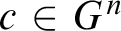 $c \in G^n$
and
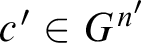 $c' \in G^{n'}$
, we call the quantifier-free
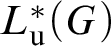 $L_{\mathrm {u}}^*(G)$
-formula
 $\psi (x, c, c')$
a G-system. An element
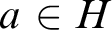 $a\in H$
such that
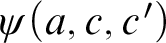 $\psi (a, c, c')$
holds is called a solution of
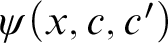 $\psi (x, c, c')$
in H. We say that
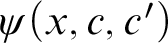 $\psi (x, c, c')$
is satisfiable in H if it has a solution in H and infinitely satisfiable in H if it has infinitely many solutions in H. We say that
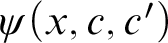 $\psi (x, c, c')$
is nontrivial if
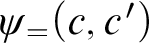 $ \psi _=(c, c')$
holds or more explicitly if c and
 $c'$
have no common components. For a given p, we say that
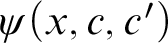 $\psi (x, c, c')$
is p-satisfiable in H if there is
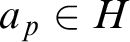 $a_p\in H$
such that
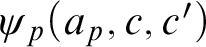 $\psi _p(a_p, c, c')$
holds. A G-system is locally satisfiable in H if it is p-satisfiable in H for all p.
Suppose
 $(G; <, \mathscr {U}^G, \mathscr {P}^G)$
and
 $(H; <, \mathscr {U}^H, \mathscr {P}^H)$
are
 $L_{\mathrm {ou}}^*$
-structures such that the former is an
 $L_{\mathrm {ou}}^*$
-substructure of the latter. All the definitions in the previous paragraph have obvious adaptations to this new setting as
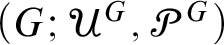 $(G; \mathscr {U}^G, \mathscr {P}^G)$
and
 $(H;\mathscr {U}^H, \mathscr {P}^H)$
are
 $L_{\mathrm {u}}^*$
-structures. For b and
 $b'$
in H such that
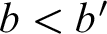 $b<b'$
, define
 $$ \begin{align*}(b, b')^H = \{ a \in H: b<a<b'\}.\end{align*} $$
A G-system
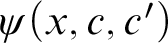 $\psi (x, c, c')$
is satisfiable in every H-interval if it has a solution in the interval
 $(b, b')^H$
for all b and
 $b'$
in H such that
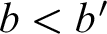 $b<b'$
. The following observation is immediate:
Lemma 2.6. Suppose
 $(G; \mathscr {U}^G, \mathscr {P}^G)$
is a model of either
 $\mathrm {Sf}^*_{\mathbb {Z}}$
or
 $\mathrm {Sf}^*_{\mathbb {Q}}$
. Then every G-system which is satisfiable in G is nontrivial and locally satisfiable in G.
It turns out that the converse and more are also true for the structures of interest. We say that a model
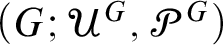 $(G; \mathscr {U}^G, \mathscr {P}^G)$
of either
 $\mathrm {Sf}^*_{\mathbb {Z}}$
or
 $\mathrm {Sf}^*_{\mathbb {Q}}$
is generic if every nontrivial locally satisfiable G-system is infinitely satisfiable in G. An
 $\mathrm {OSf}^*_{\mathbb {Q}}$
model
 $(G;<, \mathscr {U}^G, \mathscr {P}^G)$
is generic if every nontrivial locally satisfiable G-system is satisfiable in every G-interval. We will later show that
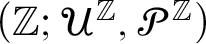 $( \mathbb {Z}; \mathscr {U}^{\mathbb {Z}}, \mathscr {P}^{\mathbb {Z}})$
,
 $(\mathbb {Q}; \mathscr {U}^{\mathbb {Q}}, \mathscr {P}^{\mathbb {Q}})$
, and
 $(\mathbb {Q}; <, \mathscr {U}^{\mathbb {Q}}, \mathscr {P}^{\mathbb {Q}})$
are generic.
Before that we will show that the above notions of genericity are first-order. Let
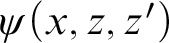 $\psi (x, z, z')$
be the special formula corresponding to a parameter choice
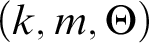 $(k,m,\Theta )$
with
 $\Theta = \big ( \theta _p(x,z,z')\big )$
. A boundary of
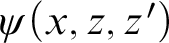 $\psi (x,z,z')$
is a number
 $B \in \mathbb {N}^{>0}$
such that
 $B>\max \{|k|,n\}$
and
 $\theta _p(x,z,z')$
is trivial for all
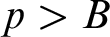 $p>B$
.
Lemma 2.7. Let
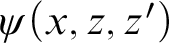 $\psi (x, z, z')$
be a special formula, B a boundary of
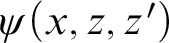 $\psi (x,z,z')$
, and
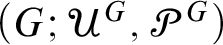 $(G; \mathscr {U}^G, \mathscr {P}^G)$
a model of either
 $\mathrm {Sf}^*_{\mathbb {Z}}$
or
 $\mathrm {Sf}^*_{\mathbb {Q}}$
. Then every G-system
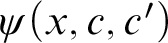 $\psi (x, c, c')$
is p-satisfiable for
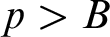 $p>B$
.
Proof Let
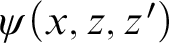 $\psi (x, z, z')$
be the special formula corresponding to a parameter choice
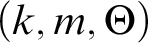 $(k,m,\Theta )$
, and B,
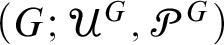 $(G; \mathscr {U}^G, \mathscr {P}^G)$
as in the statement of the lemma. Suppose
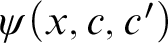 $\psi (x, c, c')$
is a G-system,
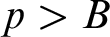 $p>B$
, and
 $\psi _p(x,z,z')$
is the associated p-condition of
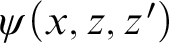 $\psi (x,z,z')$
. Then
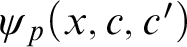 $\psi _p(x, c, c')$
is equivalent to
 $$ \begin{align*}\bigwedge_{i=1}^n (kx+c_i \notin U_{p, 2+v_p(m)})\ \text{ in } (G; \mathscr{U}^G, \mathscr{P}^G).\end{align*} $$
We will show a stronger statement that there is a
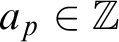 $a_p\in \mathbb {Z}$
satisfying the latter. Note that for all
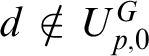 $d\notin U_{p,0}^G$
, we have that
 $(ka+d \notin U_{p, 0})$
for all
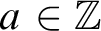 $a\in \mathbb {Z}$
. From Lemma 2.5, we have that
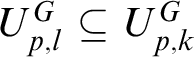 $U_{p,l}^G \subseteq U_{p,k}^G$
whenever
 $k<l$
, so we can assume that
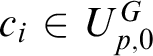 $c_i \in U_{p,0}^G$
for
 $i \in \{1, \ldots , n\}$
. In light of Lemmas 2.1
 $\mathrm {(i)}$
and 2.5
 $\mathrm {(i)}$
, we have that
 $$ \begin{align*}U^G_{p, 0}/ U^G_{p, 2+v_p(m)} \cong_{L} \mathbb{Z} / (p^{2+v_p(m)}\mathbb{Z}).\end{align*} $$
It is easy to see that k is invertible
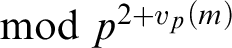 $\mathrm {mod}\ p^{2+v_p(m)}$
and that
 $p^{2+v_p(m)}>n$
. Choose
 $a_p$
in
 $\{0, \ldots , p^{2+v_{p}(m)}-1\}$
such that the images of
 $ka_p+c_1, \ldots , ka_p+c_n$
in
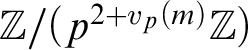 $\mathbb {Z} / (p^{2+v_p(m)}\mathbb {Z})$
are not
 $0$
. We check that
 $a_p$
is as desired.⊣
Corollary 2.8. There is an
 $L_{\mathrm {u}}^*$
-theory
 $\mathrm {SF}^*_{\mathbb {Z}}$
such that the models of
 $\mathrm {SF}^*_{\mathbb {Z}}$
are the generic models of
 $\mathrm {Sf}^*_{\mathbb {Z}}$
. Similarly, there is an
 $L_{\mathrm {u}}^*$
-theory
 $\mathrm {SF}^*_{\mathbb {Q}}$
and an
 $L_{\mathrm {ou}}^*$
-theory
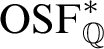 $\mathrm {OSF}^*_{\mathbb {Q}}$
satisfying the corresponding condition for
 $\mathrm {Sf}^*_{\mathbb {Q}}$
and
 $\mathrm {OSf}^*_{\mathbb {Q}}$
.
In the rest of the paper, we fix
 $\mathrm {SF}^*_{\mathbb {Z}}$
,
 $\mathrm {SF}^*_{\mathbb {Q}}$
, and
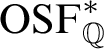 $\mathrm {OSF}^*_{\mathbb {Q}}$
to be as in the previous lemma. We can moreover arrange them to be recursive. In the remaining part of this section, we will show that
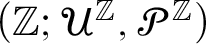 $(\mathbb {Z}; \mathscr {U}^{\mathbb {Z}}, \mathscr {P}^{\mathbb {Z}})$
,
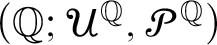 $(\mathbb {Q}; \mathscr {U}^{\mathbb {Q}}, \mathscr {P}^{\mathbb {Q}})$
, and
 $(\mathbb {Q}; <, \mathscr {U}^{\mathbb {Q}}, \mathscr {P}^{\mathbb {Z}})$
are models of
 $\mathrm {SF}^*_{\mathbb {Z}}$
,
 $\mathrm {SF}^*_{\mathbb {Q}}$
, and
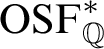 $\mathrm {OSF}^*_{\mathbb {Q}}$
respectively. The proof that the latter are in fact the full axiomatizations of the theories of the former needs to wait until next section. Further we fix
 $\mathrm {SF}_{\mathbb {Z}}$
and
 $\mathrm {SF}_{\mathbb {Q}}$
to be the theories whose models are precisely the
 $L_{\mathrm {u}}$
-reducts of models of
 $\mathrm {SF}^*_{\mathbb {Z}}$
and
 $\mathrm {SF}^*_{\mathbb {Q}}$
respectively, and
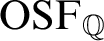 $\mathrm {OSF}_{\mathbb {Q}}$
to be the theory whose models are precisely
 $L_{\mathrm {ou}}$
reducts of models of
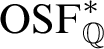 $\mathrm {OSF}^*_{\mathbb {Q}}$
. For the reader’s reference, the following table lists all the languages, the corresponding theories, and primary structures under consideration:

Suppose
 $h\neq 0$
. For a term
 $t(z) = k_1 z_1+ \cdots +k_n z_n +e$
, let
 $t^h(z)$
be the term
 $k_1z_1+ \cdots +k_nz_n+ he$
. If
 $\varphi (z)$
is a Boolean combination of atomic formulas of the form
 $t(z) \in U_{p,l}$
or
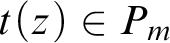 $t(z) \in P_{m}$
where
 $t(z)$
is an
 $L_{\mathrm {u}}^*$
-term, define
 $\varphi ^h(z)$
to be the formula obtained by replacing
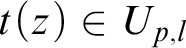 $t(z) \in U_{p,l}$
and
 $t(z) \in P_{m}$
in
 $\varphi (z)$
with
 $t^h(z) \in U_{p,l+v_p(h)}$
and
 $t^h(z) \in P_{mh}$
for every choice of p, l, m, and
 $L_{\mathrm {u}}^*$
-term t. It follows from Lemmas 2.1
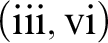 $\mathrm {(iii,vi)}$
and 2.5
 $\mathrm {(iii)}$
that across models of
 $\mathrm {Sf}^*_{\mathbb {Z}}$
and
 $\mathrm {Sf}^*_{\mathbb {Q}}$
,
 $$ \begin{align*}\varphi^h(hz) \text{ is equivalent to } \varphi(z).\end{align*} $$
Moreover, if
 $\theta (z)$
is a p-condition, then
 $\theta ^h(z)$
is also p-condition. If
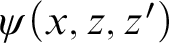 $\psi (x,z, z')$
is the special formula corresponding to a parameter choice
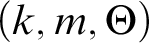 $(k, m, \Theta )$
with
 $\Theta = \big (\theta _p(x,z,z')\big )$
, then
 $\psi ^h(x,z, z')$
is the special formula corresponding to the parameter choice
 $(k, hm, \Theta ^h)$
with
 $\Theta ^h = \big (\theta _p^h(x,z,z')\big )$
. It is easy to see from here that:
Lemma 2.9. For
 $h \neq 0$
, any boundary of a special formula
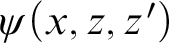 $\psi (x,z,z')$
is also a boundary of
 $\psi ^h(x,z,z')$
and vice versa.
Let
 $\psi (x, z, z')$
be a special formula,
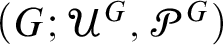 $(G; \mathscr {U}^G,\mathscr {P}^G)$
a model of either
 $\mathrm {Sf}^*_{\mathbb {Z}}$
or
 $\mathrm {Sf}^*_{\mathbb {Q}}$
, and
 $\psi (x, c, c')$
a G-system. Then
 $\psi ^h(x, hc, hc')$
is also a G-system which we refer to as the h-conjugate of
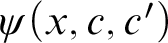 $\psi (x, c, c')$
. This has the property that
 $\psi ^h(ha,hc,hc')$
if and only if
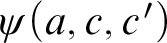 $\psi (a,c,c')$
for all
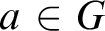 $a \in G$
.
For a and b in
 $\mathbb {Z}$
, we write
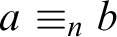 $a\equiv _{n}b$
if a and b have the same remainder when divided by n. We need the following version of Chinese remainder theorem:
Lemma 2.10. Suppose B is in
 $\mathbb {N}^{>0}$
,
 $\Theta $
is a family
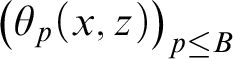 $\big (\theta _p(x,z)\big )_{p \leq B}$
of
 $L^*_{\mathrm {u}}$
-formulas with
 $\theta _p (x,z)$
being a p-condition for each
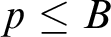 $p\leq B$
, and
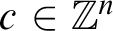 $c \in \mathbb {Z}^n$
is such that
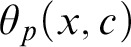 $\theta _p(x,c)$
defines a nonempty set in
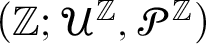 $(\mathbb {Z}; \mathscr {U}^{\mathbb {Z}}, \mathscr {P}^{\mathbb {Z}})$
for all
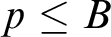 $p \leq B$
. Then we can find
 $D \in \mathbb {N}^{>0}$
and
 $r \in \{0, \ldots , D-1\} $
such that for all
 $h\neq 0$
with
 $\mathrm {gcd}(h,B!)=1$
, we have
 $$ \begin{align*}a\equiv_{D} hr \text{ implies } \bigwedge_{p \leq B} \theta^h_p(a,hc)\ \ \text{ for all } a \in \mathbb{Z}.\end{align*} $$
Proof Let B,
 $\Theta $
, and c be as stated. Fix
 $h\neq 0$
such that
 $\mathrm {gcd}(h,B!)=1$
. Hence,
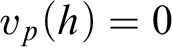 $v_p(h)=0$
for
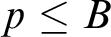 $p\leq B$
, and so the p-condition
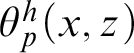 $\theta _p^h(x,z)$
is obtained from the p-condition
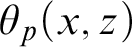 $\theta _p(x,z)$
by replacing any atomic formula
 $kx +t(z) \in U_{p, l}$
appearing in
 $\theta _p(x,z)$
with
 $kx +t^h(z) \in U_{p, l}$
. Now for
 $p\leq B$
, let
 $l_p$
be the largest value of l occurring in an atomic formula in
 $\theta _p(x,z)$
. Set
 $$ \begin{align*}D = \prod_{p \leq B} p^{l_p}.\end{align*} $$
Obtain
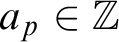 $a_p \in \mathbb {Z}$
such that
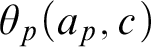 $\theta _p(a_p, c)$
holds in
 $(\mathbb {Z}; \mathscr {U}^{\mathbb {Z}}, \mathscr {P}^{\mathbb {Z}})$
. Equivalently, we have
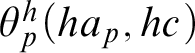 $\theta ^h_p(ha_p, hc)$
holds in
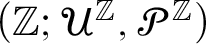 $(\mathbb {Z}; \mathscr {U}^{\mathbb {Z}}, \mathscr {P}^{\mathbb {Z}})$
. By the Chinese remainder theorem, we get r in
 $\{0, \ldots , D-1\}$
such that
 $$ \begin{align*}r\equiv_{p^{l_p}} a_p\quad \text{ for all } p \leq B.\end{align*} $$
We check that r is as desired. Suppose
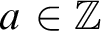 $a \in \mathbb {Z}$
is such that
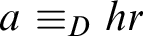 $a \equiv _D hr$
. By construction, if
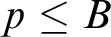 $p\leq B$
,
 $l \leq l_p$
, and
 $kx+t(z) \in U_{p,l }$
is any atomic formula, then
 $ka +t^h(hc) \in U^{\mathbb {Z}}_{p, l}$
if and only if
 $k(ha_p) +t^h(hc) \in U^{\mathbb {Z}}_{p, l}$
. It follows that
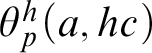 $\theta ^h_p( a, hc)$
is equivalent to
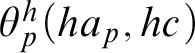 $\theta ^h_p( ha_p, hc)$
in
 $(\mathbb {Z}; \mathscr {U}^{\mathbb {Z}}, \mathscr {P}^{\mathbb {Z}})$
. Thus
 $\theta ^h_p( a, hc)$
holds for all
 $p \leq B$
.⊣
Towards showing that the structures of interest are generic, the key number-theoretic ingredient we need is the following result:
Lemma 2.11. Let
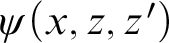 $\psi (x, z, z')$
be a special formula and
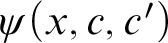 $\psi (x,c,c')$
a nontrivial
 $\mathbb {Z}$
-system which is locally satisfiable in
 $\mathbb {Z}$
. For
 $h> 0$
, and
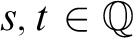 $s, t \in \mathbb {Q}$
with
 $s< t$
, set
 $$ \begin{align*}\Psi^h(hs,ht) = \{ a \in \mathbb{Z}: \psi^h(a,hc,hc') \text{ holds and } hs<a<ht\}.\end{align*} $$
Then there exist
 $N \in \mathbb {N}^{>0}$
,
 $\varepsilon \in (0,1)$
, and
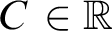 $C\in \mathbb {R}$
such that for all
 $h> 0$
with
 $\mathrm {gcd}(h,N!)=1$
and
 $s, t \in \mathbb {Q}$
with
 $s<t$
, we have that
 $$ \begin{align*}|\Psi^h(hs,ht)| \geq \varepsilon h(t-s) - \Bigg(\sum_{i=1}^{n}\sqrt{|hks+hc_i|} + \sqrt{|hkt+hc_i|}\Bigg) + C.\end{align*} $$
Proof Throughout this proof, let
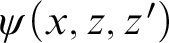 $\psi (x,z,z')$
,
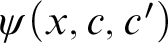 $\psi (x,c,c')$
, and
 $\Psi ^h(hs,ht)$
be as stated. We first make a number of observations. Suppose
 $\psi (x,z,z')$
corresponds to the parameter choice
 $(k,m,\Theta )$
and has a boundary B, and
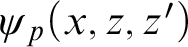 $\psi _p(x,z,z')$
is the associated p-condition of
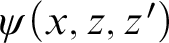 $\psi (x,z,z')$
. Then
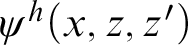 $\psi ^h(x,z,z')$
corresponds to the parameter choice
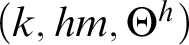 $(k,hm,\Theta ^h)$
, and B is also a boundary of
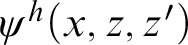 $\psi ^h(x,z,z')$
by Lemma 2.9. Moreover
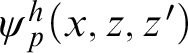 $\psi ^h_p(x,z,z')$
is the associated p-condition of
 $\psi ^h(x,z,z')$
. Since
 $\psi (x,c,c')$
is locally satisfiable in
 $\mathbb {Z}$
, we can use Lemma 2.10 to fix
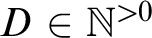 $D\in \mathbb {N}^{>0}$
and
 $r\in \{0,\ldots , D-1\}$
such that for each
 $h> 0$
with
 $\mathrm {gcd}(h,B!)=1$
, we have
 $$ \begin{align*}a\equiv_{D} hr \text{ implies } \bigwedge_{p \leq B} \psi^h_p(a,hc, hc')\ \ \text{ for all } a \in \mathbb{Z}.\end{align*} $$
We note that D here is independent of the choice of h for all h with
 $\mathrm {gcd}(h,B!)=1$
.
We introduce a variant of
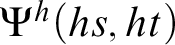 $\Psi ^h(hs,ht)$
which is needed in our estimation of
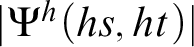 $|\Psi ^h(hs,ht)|$
. Until the end of the proof, set
 $l_p =2 + v_p(m)$
. Fix primes
 $p_1, \ldots , p_{n'}$
such that
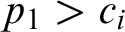 $p_1> c_i$
for all
 $i \in \{1, \ldots , n\}$
,
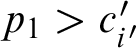 $p_1> c^{\prime }_{i'}$
for all
 $i' \in \{1, \ldots , n'\}$
, and
 $$ \begin{align*}B<p_1 < \cdots < p_{n'}.\end{align*} $$
For
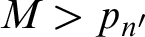 $M>p_{n'}$
,
 $h> 0$
with
 $\mathrm {gcd}(h,B!)=1$
, define
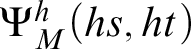 $\Psi ^h_{M}(hs,ht)$
to be the set of
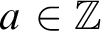 $a \in \mathbb {Z}$
such that
 $hs<a<ht$
and
 $$ \begin{align*}(a\equiv_{D} hr) \wedge\bigwedge_{B< p \leq M}\left( \bigwedge_{i=1}^{n}(ka+hc_i \not \equiv_{p^{l_{p}+v_p(h)}} 0)\right)\wedge\bigwedge_{i'=1}^{n'}(ka+hc^{\prime}_{i'} \notin P_{hm}^{\mathbb{Z}}).\end{align*} $$
It is not hard to see that
 $\Psi ^h(hs,ht)\cap \{a\in \mathbb {Z}: a\equiv _D hr\}\subseteq \Psi ^h_{M}(hs,ht)$
, and the latter is intended to be an upper approximation of the former. The desired lower bound for
 $|\Psi ^h(hs,ht)|$
will be obtained via a lower bound for
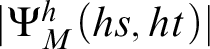 $|\Psi ^h_{M}(hs,ht)|$
and an upper bound for
 $|\Psi ^h_{M}(hs,ht)\setminus \Psi ^h(hs,ht)| $
.
Now we work towards establishing a lower bound on
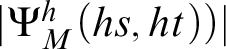 $|\Psi ^h_{M}(hs,ht))|$
in the case where
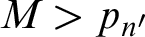 $M> p_{n'} $
,
 $h> 0$
, and
 $\text {gcd}(h, M!)=1$
. The latter assumption implies in particular that
 $p^{l_p + v_p(h)} = p^{l_p}$
for all
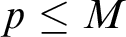 $p \leq M$
. For
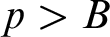 $p>B $
, we have that
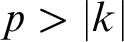 $p>|k|$
and so k is invertible
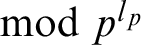 $\mathrm {mod}\ p^{l_p}$
. Set
 $$ \begin{align*}\Delta = \{p : B < p \leq M\}\setminus \{ p_{i'} : 1 \leq i' \leq n' \}.\end{align*} $$
For
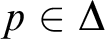 $p\in \Delta $
, as k is invertible
 $\mathrm {mod}\ p^{l_p}$
, there are at least
 $p^{l_{p}}- n$
(note we have
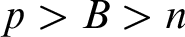 $p>B>n$
) choices of
 $r_p$
in
 $\{0, \ldots , p^{l_{p}}-1 \}$
such that if
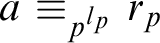 $ a \equiv _{p^{l_p}} r_{p}$
, then
 $$ \begin{align*}\bigwedge_{i=1}^n (ka+hc_i \not \equiv_{p^{l_p}} 0).\end{align*} $$
Suppose
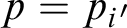 $p = p_{i'}$
for some
 $i' \in \{1, \ldots , n'\}$
. By the assumption that
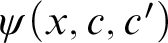 $\psi (x,c,c')$
is nontrivial, c has no common components with
 $c'$
. Since
 $\text {gcd}(h, M!)=1$
, h and p are coprime, and so the components of
 $hc$
and
 $hc'$
are pairwise distinct
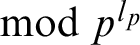 $\mathrm {mod}\ p^{l_p}$
. As k is invertible
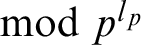 $\mathrm {mod}\ p^{l_p}$
, there is exactly one
 $r_p$
in
 $\{ 0, \ldots , p^{l_{p}}-1 \}$
such that if
 $a \equiv _{p^{l_p}} r_p$
, then
 $$ \begin{align*}\bigwedge_{i=1}^n (ka+hc_i \not \equiv_{p^{l_p}} 0) \wedge (ka+hc^{\prime}_{i'} \equiv_{p^{l_p}} 0) \ \text{ and consequently }\ ka+hc^{\prime}_{i'} \notin P_{hm}^{\mathbb{Z}} .\end{align*} $$
Now it follows by the Chinese remainder theorem that,
 $$ \begin{align*}|\Psi^h_{M}(hs,ht)|\geq \left\lfloor \frac{ht-hs}{D\prod_{B<p\leq M} p^{l_p}} \right\rfloor \prod_{p \in \Delta}\left(p^{l_p}-n\right).\end{align*} $$
Then it follows that,
 $$ \begin{align*}|\Psi^h_{M}(hs,ht)|\geq \frac{ht-hs}{D}\prod_{p \leq p_{n'}}\frac{1}{p^{l_p}}\prod_{p> p_{n'}}^{\leq M} \left(1-\frac{n}{p^{l_p}}\right) - \prod_{p\leq M} p^{l_p}.\end{align*} $$
Set
 $$ \begin{align*}\varepsilon = \frac{1}{2D}\prod_{p \leq p_{n'}}\frac{1}{p^{l_p}}\prod_{p> p_{n'}} \left(1-\frac{n}{p^{l_p}}\right).\end{align*} $$
Now as
 $l_p \geq 2$
, for
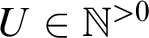 $U \in \mathbb {N}^{>0}$
with
 $U>\max \{p_{n}',n^2\}$
we have that
 $$ \begin{align*}\prod_{p> U} \left(1-\frac{n}{p^{l_p}}\right)>\prod_{p>U}\left(1-\frac{1}{p^{\frac{3}{2}}}\right).\end{align*} $$
Hence, it follows from Euler’s product formula that
 $\varepsilon>0$
. We now have
 $$ \begin{align*}|\Psi^h_{M}(hs,ht)| \geq 2\varepsilon(ht-hs) - \prod_{p\leq M} p^{l_p}.\end{align*} $$
We note that
 $\varepsilon $
is independent of the choice of M and h, and will serve as the promised
 $\varepsilon $
in the statement of the lemma.
Next we obtain an upper bound on
 $|\Psi ^h_{M}(s,t)\setminus \Psi ^h(s,t)|$
for
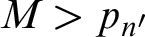 $M> p_{n'} $
,
 $h> 0$
, and
 $\text {gcd}(h, M!)=1$
. We arrange that
 $k>0$
by replacing c by
 $-c$
and
 $c'$
by
 $-c'$
if necessary. Note that an element
 $a \in \Psi ^h_{M}(s,t) \setminus \Psi ^h(s,t)$
must be such that
 $$ \begin{align*}hks+hc_i < ka+hc_i < hkt+hc_i \quad \text{for all } i \in \{1, \ldots, n\}\end{align*} $$
and
 $ka+hc_i$
is a multiple of
 $p^{l_p}$
for some
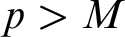 $p>M$
and
 $i \in \{1, \ldots , n\}$
. For each p and
 $i \in \{1, \ldots , n\}$
, the number of non-zero multiples of
 $p^{l_p}$
in
 $(hks+hc_i, hkt+hc_i)$
is
 $$ \begin{align*}\lfloor hk(t \kern1pt{-}\kern1pt s) p^{-l_p}\rfloor \kern1pt{-}\kern1pt 2, \ \text{or}\ \lfloor hk(t \kern1pt{-}\kern1pt s) p^{-l_p}\rfloor \kern1pt{-}\kern1pt 1, \ \text{or}\ \lfloor hk(t -s) p^{-l_p}\rfloor, \ \text{or}\ \lfloor hk(t -s) p^{-l_p} \rfloor \kern1.2pt{+}\kern1.2pt 1.\end{align*} $$
In the last case, as
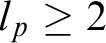 $l_p \geq 2$
we moreover have
 $$ \begin{align*}p^2\leq |hks+hc_i| \quad \text{ or }\quad p^2\leq |hkt+hc_i|,\end{align*} $$
and so
 $$ \begin{align*}p\leq \sqrt{|hks+hc_i|} + \sqrt{|hkt+hc_i|}.\end{align*} $$
As
 $l_p \geq 2$
, we have
 $ \lfloor hk(t -s) p^{-l_p}\rfloor \leq hk(t-s)p^{-2}$
. Therefore we have that
 $$ \begin{align*}|\Psi^h_{M}(s,t)\setminus \Psi^h(s,t)|\leq h(t-s)\sum_{p>M}\frac{nk}{p^2} + \left(\sum_{i=1}^{n}\sqrt{|hks+hc_i|} + \sqrt{|hkt+hc_i|}\right) +1 .\end{align*} $$
We now obtain N and C as in the statement of the lemma. Note that
 $$ \begin{align*}\sum_{p>T}p^{-2} \leq \sum_{n>T}n^{-2} = O( T^{-1}).\end{align*} $$
Using this, we obtain
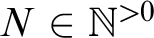 $N \in \mathbb {N}^{>0}$
such that
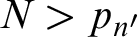 $N>p_{n'}$
and
 $ \sum _{p>N}knp^{-2}< \varepsilon $
where
 $\varepsilon $
is from the preceding paragraph. Set
 $C = - \prod _{p\leq N} p^{l_p} -1 $
. Combining the estimations from the preceding two paragraphs for
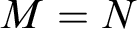 $M=N$
it is easy to see that
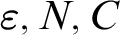 $\varepsilon , N, C$
are as desired.⊣
Remark 2.12. The above weak lower bound is all we need for our purpose. We expect that a stronger estimate can be obtained using modifications of available techniques in the literature; see for example [Reference Mirsky12].
Corollary 2.13. For all
 $c\in \mathbb {Z}$
, there is
 $a\in \mathbb {Z}$
such that
 $$ \begin{align*}a+c \in \mathrm{SF}^{\mathbb{Z}}\ \text{ and }\ a+c+1 \in \mathrm{SF}^{\mathbb{Z}}.\end{align*} $$
Proof We have that for all
 $c\in \mathbb {Z}$
,
 $\psi (x,c)=(x+c\in \mathrm {SF}^{\mathbb {Z}})\wedge (x+c+1\in \mathrm {SF}^{\mathbb {Z}})$
is a locally satisfiable
 $\mathbb {Z}$
-system. Applying Lemma 2.11 for
 $h=1$
,
 $s=0$
, and t sufficiently large we see there is a solution
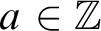 $a\in \mathbb {Z}$
for
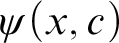 $\psi (x,c)$
.⊣
We next prove the main theorem of the section:
Theorem 2.14. The
 $\mathrm {Sf}^*_{\mathbb {Z}}$
-model
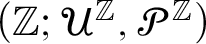 $( \mathbb {Z}; \mathscr {U}^{\mathbb {Z}}, \mathscr {P}^{\mathbb {Z}})$
, the
 $\mathrm {Sf}^*_{\mathbb {Q}}$
-model
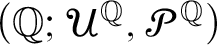 $(\mathbb {Q}; \mathscr {U}^{\mathbb {Q}}, \mathscr {P}^{\mathbb {Q}})$
, and the
 $\mathrm {OSf}^*_{\mathbb {Q}}$
-model
 $(\mathbb {Q}; <, \mathscr {U}^{\mathbb {Q}}, \mathscr {P}^{\mathbb {Q}})$
are generic.
Proof We get the first part of the theorem by applying Lemma 2.11 for
 $h =1$
,
 $s =0$
, and t sufficiently large. As the second part of the theorem follows easily from the third part, it will be enough to show that the
 $\mathrm {OSf}^*_{\mathbb {Q}}$
-model
 $(\mathbb {Q}; <, \mathscr {U}^{\mathbb {Q}}, \mathscr {P}^{\mathbb {Q}})$
is generic. Throughout this proof, suppose
 $\psi (x,z,z)$
is a special formula and
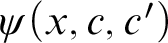 $\psi (x, c, c')$
is a
 $\mathbb {Q}$
-system which is nontrivial and locally satisfiable in
 $\mathbb {Q}$
. Our job is to show that the
 $\mathbb {Q}$
-system
 $\psi (x, c, c')$
has a solution in the
 $\mathbb {Q}$
-interval
 $(b, b')^{\mathbb {Q}}$
for an arbitrary choice of
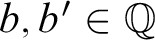 $b, b' \in \mathbb {Q}$
such that
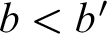 $b<b'$
.
We first reduce to the special case where
 $\psi (x, c, c')$
is also a
 $\mathbb {Z}$
-system which is nontrivial and locally satisfiable in
 $\mathbb {Z}$
. Let B be the boundary of
 $\psi (x,z,z')$
and for each p, let
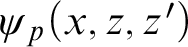 $\psi _p(x,z,z')$
be the associated p-condition of
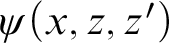 $\psi (x,z,z')$
. Using the assumption that
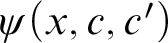 $\psi (x, c, c')$
is locally satisfiable
 $\mathbb {Q}$
-system, for each
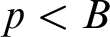 $p<B$
we obtain
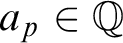 $a_p \in \mathbb {Q}$
such that
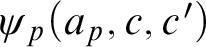 $\psi _p(a_p,c,c')$
holds. Let
 $h>0$
be such that
 $$ \begin{align*}hc \in \mathbb{Z}^n, hc' \in \mathbb{Z}^{n'}, \text{ and } ha_p \in \mathbb{Z} \text{ for all } p<B.\end{align*} $$
Then by the choice of h, and Lemmas 2.7 and 2.9, the h-conjugate
 $\psi ^h(x,hc,hc')$
of
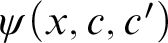 $\psi (x, c, c')$
is a
 $\mathbb {Z}$
-system which is nontrivial and locally satisfiable in
 $\mathbb {Z}$
. On the other hand,
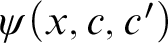 $\psi (x,c,c')$
has a solution in an interval
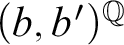 $(b,b')^{\mathbb {Q}}$
if and only if
 $$ \begin{align*}\psi^h(x,hc,hc') \text{ has a solution in } (hb,hb')^{\mathbb{Q}}.\end{align*} $$
Hence, by replacing
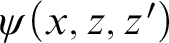 $\psi (x,z,z')$
with
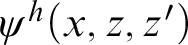 $\psi ^h(x,z,z')$
,
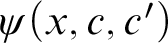 $\psi (x, c, c')$
with
 $\psi ^h(x,hc,hc')$
, and
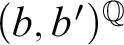 $(b, b')^{\mathbb {Q}}$
with
 $(hb, hb')^{\mathbb {Q}}$
if necessary we get the desired reduction.
We show
 $\psi (x, c, c')$
has a solution in the
 $\mathbb {Q}$
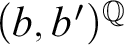
-interval
 $(b, b')^{\mathbb {Q}}$
for the special case in the preceding paragraph. By an argument similar to the preceding paragraph, it suffices to show that for some
 $h\neq 0$
,
 $\psi ^h(x, hc, hc')$
has a solution in
 $(hb, hb')^{\mathbb {Q}}$
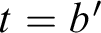
. Applying Lemma 2.11 for
 $s =b$
,
 $t=b'$
, and h sufficiently large satisfying the condition of the lemma, we get the desired conclusion.⊣
3 Logical tameness
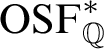
We will next prove that
 $\mathrm {SF}^*_{\mathbb {Z}}$
,
 $\mathrm {SF}^*_{\mathbb {Q}}$
, and
 $\mathrm {OSF}^*_{\mathbb {Q}}$
admit quantifier elimination. We first need a technical lemma saying that modulo
 $\mathrm {Sf}^*_{\mathbb {Z}}$
or
 $\mathrm {Sf}^*_{\mathbb {Q}}$
, an arbitrary quantifier free formula
 $\phi (x,y)$
is not much more complicated than a special formula; recall that x always denotes a single variable.
Lemma 3.1. Suppose
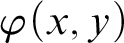 $\varphi (x,y)$
is a quantifier-free
 $L^*_{\mathrm {u}}$
-formula. Then
 $\varphi (x,y)$
is equivalent modulo
 $\mathrm {Sf}^*_{\mathbb {Z}}$
to a disjunction of quantifier-free formulas of the form
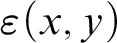
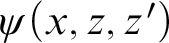
 $$ \begin{align*}\rho(y) \wedge \varepsilon(x, y) \wedge \psi(x, t(y), t'(y)),\end{align*} $$
where
-
(i)
$t(y)$
and
$t'(y)$
are tuples of
$L^*_{\mathrm {u}}$
-terms with length n and
$n'$
respectively; -
(ii)
$\rho (y)$
is a quantifier-free
$L^*_{\mathrm {u}}$
-formula,
$ \varepsilon (x, y)$
an equational condition, and
$\psi (x, z, z')$
a special formula.


The corresponding statement with
 $\mathrm {Sf}^*_{\mathbb {Z}}$
replaced by
 $\mathrm {Sf}^*_{\mathbb {Q}}$
also holds.
Proof Let
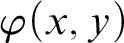 $\varphi (x, y)$
be a quantifier-free
 $L^*_{\mathrm {u}}$
-formula. We will use the following disjunction observation several times in our proof: If
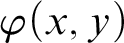 $\varphi (x,y)$
is a finite disjunction of quantifier-free
 $L^*_{\mathrm {u}}$
-formulas and we have proven the desired statement for each of those, then the desired statement for
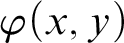 $\varphi (x,y)$
follows. In particular, it allows us to assume that
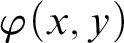 $\varphi (x, y)$
is the conjunction
 $$ \begin{align*}\rho(y) \wedge \varepsilon(x, y) \wedge \bigwedge_p \eta_p(x, y) \wedge \bigwedge_{i=1}^n (k_ix+t_i(y) \in P_{m_i}) \wedge \bigwedge_{i=1}^{n'} (k^{\prime}_ix+t^{\prime}_{i}(y) \notin P_{m^{\prime}_i}),\end{align*} $$
where
 $\rho (y)$
is a quantifier-free
 $L^*_{\mathrm {u}}$
-formula,
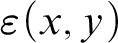 $\varepsilon (x, y)$
is an equational condition,
 $k_1, \ldots , k_n$
and
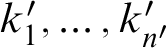 $k_1', \ldots , k^{\prime }_{n'}$
are in
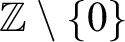 $\mathbb {Z}\setminus \{0\}$
,
 $m_1, \ldots , m_n$
and
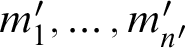 $m^{\prime }_1, \ldots , m^{\prime }_{n'}$
are in
 $\mathbb {N}^{\geq 1}$
,
 $t_1(y), \ldots , t_n(y)$
and
 $t^{\prime }_1(y), \ldots , t^{\prime }_n(y)$
are
 $L^*_{\mathrm {u}}$
-terms with variables in y,
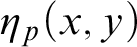 $\eta _p(x,y)$
is a p-condition for each p, and
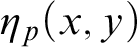 $\eta _p(x,y)$
is trivial for all but finitely many p.
We make further reductions to the form of
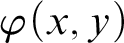 $\varphi (x,y)$
. Set
 $t(y) =(t_1(y), \ldots , t_n(y))$
and
 $t'(y)=(t^{\prime }_1(y), \ldots , t^{\prime }_{n'}(y))$
. Using the disjunction observation and the fact that
 $$ \begin{align*}(x+ y_j \in P_1) \vee (x + y_j \notin P_1)\end{align*} $$
is a tautology for every component
 $y_j$
of y, we can assume that either
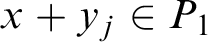 $x+ y_j \in P_1$
or
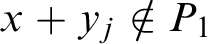 $x + y_j \notin P_1$
are among the conjuncts of
 $\varphi (x, y)$
, and so
 $y_j$
is among the components of
 $t(y)$
or
 $t'(y)$
. Then we obtain for each prime p a p-condition
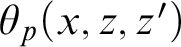 $\theta _p(x, z, z')$
such that
 $\theta _p(x, t(y), t'(y))$
is logically equivalent to
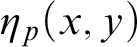 $\eta _p( x, y)$
. Let
 $\xi (x, z, z')$
be the formula
 $$ \begin{align*}\bigwedge_p \theta_p(x, z, z') \wedge \bigwedge_{i=1}^n (k_ix+z_i\in P_{m_i}) \wedge \bigwedge_{i=1}^{n'} (k^{\prime}_ix+z^{\prime}_i \notin P_{m^{\prime}_i}).\end{align*} $$
Clearly,
 $\varphi (x,y)$
is equivalent to the formula
 $\rho (y) \wedge \varepsilon (x, y) \wedge \xi (x, t(y), t'(y))$
, so we can assume that
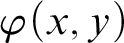 $\varphi (x,y)$
is the latter.
We need a small observation. For a p-condition
 $\theta _p(z)$
and
 $h \neq 0$
, we will show that there is another p-condition
 $\eta _p(z)$
such that modulo
 $\mathrm {Sf}^*_{\mathbb {Z}}$
and
 $\mathrm {Sf}^*_{\mathbb {Q}}$
,
 $$ \begin{align*}\eta_p(z_1, \ldots, z_{i-1}, hz_i, z_{i+1}, \ldots, z_n) \ \text{ is equivalent to } \ \theta_p(z).\end{align*} $$
For the special case where
 $\theta _p(z)$
is
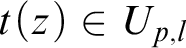 $t(z) \in U_{p, l}$
, the conclusion follows from Lemmas 2.1(iii) and 2.5(iii) and the fact that there is an
 $L^*_{\mathrm {u}}$
-term
 $t'(z)$
such that
 $t'(z, \ldots , z_{i-1}, hz_i, z_{i+1}, \ldots , z_n) = ht(z).$
The statement of the paragraph follows easily from this special case.
With
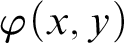 $\varphi (x,y)$
as in the end of the second paragraph, we further reduce the main statement to the special case where there is
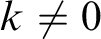 $k\neq 0$
such that
 $k_i = k^{\prime }_{i'} =k$
for all
 $i\in \{1, \ldots , n\}$
and
 $i' \in \{ 1, \ldots , n'\}$
. Choose
 $k\neq 0 $
to be a common multiple of
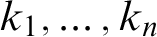 $k_1, \ldots , k_n$
and
 $k^{\prime }_1, \ldots k^{\prime }_{n'}$
. Then by Lemmas 2.1(vi) and 2.5(iii), we have for each
 $i \in \{1, \ldots , n\} $
that
 $$ \begin{align*}k_ix+z_i \in P_{m_i}\ \text{ is equivalent to }\ (kx+kk^{-1}_iz_i \in P_{kk^{-1}_im_i}) \text{ modulo either } \mathrm{Sf}^*_{\mathbb{Z}} \text{ or }\mathrm{Sf}^*_{\mathbb{Q}}.\end{align*} $$
We have a similar observation for k and
 $k^{\prime }_{i'}$
with
 $i' \in \{1, \ldots , n'\}$
. The desired reduction easily follows from these observations and the preceding paragraph.
Continuing with the reduction in the preceding paragraph, we next arrange that there is
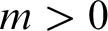 $m> 0$
such that
 $m_i = m^{\prime }_{i'} =m$
for all
 $i\in \{1, \ldots , n\}$
and
 $i' \in \{ 1, \ldots , n'\}$
. Let m be a common multiple of
 $m_1, \ldots , m_n$
and
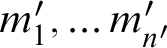 $m^{\prime }_1, \ldots m^{\prime }_{n'}$
. By Lemmas 2.1(v,vi) and 2.5(iii), we have for
 $i \in \{ 1, \ldots , n\}$
that modulo either
 $\mathrm {Sf}^*_{\mathbb {Z}}$
or
 $\mathrm {Sf}^*_{\mathbb {Z}}$
or
 $\mathrm {Sf}^*_{\mathbb {Q}}$
 $$ \begin{align*}kx+z_i \in P_{m_i} \ \text{ is equivalent to }\ kx+z_i \in P_{m} \wedge \bigwedge_{p \mid \frac{m}{m_i}} kx+z_i \notin U_{p, 2+ v_p(m_i)}\end{align*} $$
and for
 $i' \in \{ 1, \ldots , n'\}$
that modulo either
 $\mathrm {Sf}^*_{\mathbb {Z}}$
or
 $\mathrm {Sf}^*_{\mathbb {Q}}$
 $$ \begin{align*}kx+z^{\prime}_{i'} \notin P_{m^{\prime}_{i'}} \ \text{ is equivalent to }\ kx+z^{\prime}_{i'} \notin P_{m} \vee \bigvee_{p \mid \frac{m}{m^{\prime}_{i'}}} kx+z^{\prime}_{i'} \in U_{p,2+ v_p(m^{\prime}_{i'})} .\end{align*} $$
It follows that
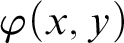 $\varphi (x, y)$
is equivalent to a disjunction of formulas of the form we are aiming for. The desired conclusion of the lemma follows from the disjunction observation.⊣
Corollary 3.2. Suppose
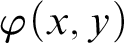 $\varphi (x,y)$
is a quantifier-free
 $L^*_{\mathrm {ou}}$
formula. Then
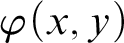 $\varphi (x,y)$
is equivalent modulo
 $\mathrm {OSf}^*_{\mathbb {Q}}$
to a disjunction of quantifier-free formulas of the form
 $$ \begin{align*}\rho(y) \wedge \lambda(x,y) \wedge \psi(x, t(y), t'(y)),\end{align*} $$
where
-
(i)
$t(y)$
and
$t'(y)$
are tuples of
$L^*_{\mathrm {ou}}$
-terms with length n and
$n'$
respectively; -
(ii)
$\rho (y)$
is a quantifier-free
$L^*_{\mathrm {ou}}$
-formula,
$ \lambda (x, y)$
an order condition, and
$\psi (x, z, z')$
a special formula.


In the next lemma, we show a “local quantifier elimination” result.
Lemma 3.3. If
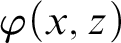 $\varphi (x,z)$
is a p-condition, then modulo either
 $\mathrm {Sf}^*_{\mathbb {Z}}$
or
 $\mathrm {Sf}^*_{\mathbb {Q}}$
, the formula
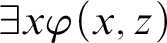 $\exists x \varphi (x,z)$
is equivalent to a p-condition
 $\psi (z)$
.
Proof If
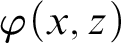 $\varphi (x,z)$
is a p-condition, then by Lemma 2.1
 $(\mathrm {i})$
, modulo
 $\mathrm {Sf}^*_{\mathbb {Z}}$
, it is a Boolean combination of atomic formulas of the form
 $kx +t(z) \in U_{p, l}$
where
 $t(z)$
is an
 $L^*_{\mathrm {u}}$
-term, and
 $l>0$
. Let
 $l_p$
be the largest value of l occurring in such atomic formulas, and set
 $$ \begin{align*}S=\{(m_1,\ldots,m_n): 0 \leq m_i < p^{l_p} \text{ for each }i, \text{ and } (\mathbb{Z}; \mathscr{U}^{\mathbb{Z}}) \models \exists x \varphi(x,m_1,\ldots,m_n)\}.\end{align*} $$
Then by Lemma 2.1
 $(\mathrm {i})$
, modulo
 $\mathrm {Sf}^*_{\mathbb {Z}}$
,
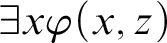 $\exists x \varphi (x,z)$
is equivalent to the p-condition
 $\bigvee _{(m_1,\ldots ,m_n)\in S} (\bigwedge _{i=1}^{n} (z_i\equiv _{p^{l_p}} m_i))$
.
Now, we proceed to prove the statement for models of
 $\mathrm {Sf}^*_{\mathbb {Q}}$
. Throughout the rest of the proof, suppose
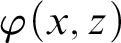 $\varphi (x,z)$
is a p-condition, k,
 $k'$
, l,
 $l'$
are in
 $\mathbb {Z}$
, and
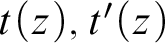 $t(z), t'(z)$
are
 $L_{\mathrm {u}}^*$
-terms. First, we consider the case where
 $\varphi (x,z)$
is a p-condition of the form
 $kx+t(z) \in U_{p,l}$
. The case
 $k=0$
is trivial. If
 $k \neq 0$
, then
 $\exists x (kx+t(z) \in U_{p,l})$
is tautological modulo
 $\mathrm {Sf}^*_{\mathbb {Q}}$
following from (Q1) in the definition of
 $\mathrm {Sf}^*_{\mathbb {Q}}$
and Lemma 2.5(i).
We next consider the case where
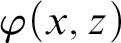 $\varphi (x,z)$
is a finite conjunction of p-conditions in
 $L^*_{\mathrm {u}}(x, z)$
such that one of the conjuncts is
 $kx+t(z) \in U_{p,l}$
with
 $k \neq 0$
and the other conjuncts are either of the form
 $k'x+t'(z) \in U_{p,l'}$
or of the form
 $k'x+t'(z) \notin U_{p,l'}$
where we do allow
 $l'$
to vary. It follows from Lemma 2.5(i) that if
 $k = k'$
,
 $l\geq l'$
, then
 $$ \begin{align*}k'x + t'(z)\in U_{p, l'} \ \text{ if and only if } \ t(z)-t'(z) \in U_{p, l'}.\end{align*} $$
So we have means to replace conjuncts of
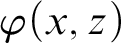 $\varphi (x,z)$
by terms independent of the variable x. However, the above will not work if
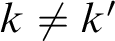 $k \neq k'$
or
 $l<l'$
. By Lemma 2.5(iii), across models of
 $\mathrm {Sf}^*_{\mathbb {Q}}$
, we have that
 $$ \begin{align*}kx+ t(z) \in U_{p, l} \text{ if and only if } hkx + ht(z) \in U_{p, l+ v_p(h)} \ \ \text{ for all } h \neq 0.\end{align*} $$
From this observation, it is easy to see that we can resolve the issue of having
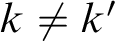 $k \neq k'$
, and moreover arrange that
 $l\geq 0$
which will be used in the next observation. By Lemma 2.5(i,ii), across models of
 $\mathrm {Sf}^*_{\mathbb {Q}}$
, we have that
 $$ \begin{align*}kx + t(z) \in U_{p, l} \ \text{ if and only if } \ \bigvee_{i=1}^{p^m} kz + t(z) + ip^{l} \in U_{p, l+m} \text{ for all } l\geq 0 \text{ and all } m.\end{align*} $$
Using the preceding two observations we resolve the issue of having
 $l<l'$
. The statement of the lemma for this case then follows from the second paragraph.
We now prove the full lemma. It suffices to consider the case where
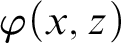 $\varphi (x,z)$
is a conjunction of atomic formulas. In view of the preceding paragraph, we reduce further to the case where
 $\varphi (x,z)$
is of the form
 $$ \begin{align*}\bigwedge_{i=1}^m kx+t_i(z) \notin U_{p,l_i}.\end{align*} $$
We now show that
 $\exists x\varphi (x,z)$
is a tautology over
 $\mathrm {Sf}^*_{\mathbb {Q}}$
and thus complete the proof. Suppose
 $(G; \mathscr {U}^G, \mathscr {P}^G) \models \mathrm {Sf}^*_{\mathbb {Q}} $
and
 $c \in G^n$
. It suffices to find
 $a \in G$
such that the p-condition
 $ka+t_i(c) \notin U^G_{p,l_i}$
holds for all
 $i \in \{1, \ldots , m\}$
. Without loss of generality, we assume that
 $t_1(c), \ldots , t_{m'}(c)$
are not in
 $U^G_{p,l}$
for all l and that
 $t_{m'+1}(c), \ldots , t_{m}(c)$
are in
 $U^G_{p,l_0}$
for some
 $l_0 $
such that
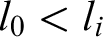 $l_0 < l_i$
for all
 $i \in \{1, \ldots , m\}$
. Using Lemma 2.5(ii), choose a such that
 $ka \in U^G_{p,l_0-1} \setminus U^G_{p,l_0}$
. It follows from Lemma 2.5(i) that a is as desired.⊣
Theorem 3.4. The theories
 $\mathrm {SF}^*_{\mathbb {Z}}$
,
 $\mathrm {SF}^*_{\mathbb {Q}}$
, and
 $\mathrm {OSF}^*_{\mathbb {Q}}$
admit quantifier elimination.
Proof As the three situations are very similar, we will only present here the proof that
 $\mathrm {OSF}^*_{\mathbb {Q}}$
admits quantifier elimination. The proof for
 $\mathrm {SF}^*_{\mathbb {Z}}$
and
 $\mathrm {SF}^*_{\mathbb {Q}}$
are simpler as there is no ordering involved. Along the way we point out the necessary modifications needed to get the proof for
 $\mathrm {SF}^*_{\mathbb {Z}}$
and
 $\mathrm {SF}^*_{\mathbb {Q}}$
. Fix
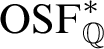 $\mathrm {OSF}^*_{\mathbb {Q}}$
-models
 $(G; <, \mathscr {U}^G, \mathscr {P}^G)$
and
 $(H; <, \mathscr {U}^H, \mathscr {P}^H)$
such that the latter is
 $|G|^+$
-saturated. Suppose
 $$ \begin{align*}f \text{ is a partial } L_{\mathrm{ou}}^*\text{-embedding from } (G; <, \mathscr{U}^G, \mathscr{P}^G) \text{ to } (H; <, \mathscr{U}^H , \mathscr{P}^H ),\end{align*} $$
in other words, f is an
 $L_{\mathrm {ou}}^*$
-embedding of an
 $L_{\mathrm {ou}}^*$
-substructure of
 $(G; <, \mathscr {U}^G, \mathscr {P}^G)$
into
 $(H; <, \mathscr {U}^H , \mathscr {P}^H)$
. By a standard test, it suffices to show that if
 $\text {Domain}(f) \neq G$
, then there is a partial
 $L_{\mathrm {ou}}^*$
-embedding from
 $(G; <, \mathscr {U}^G, \mathscr {P}^G)$
to
 $(H; <, \mathscr {U}^H, \mathscr {P}^H)$
which properly extends f. For the corresponding statements with
 $\mathrm {SF}^*_{\mathbb {Z}}$
or
 $\mathrm {SF}^*_{\mathbb {Q}}$
, we need to consider instead
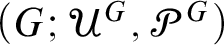 $(G; \mathscr {U}^G, \mathscr {P}^G)$
and
 $(H; \mathscr {U}^H, \mathscr {P}^H)$
depending on the situation.
We remind the reader that our choice of language includes a symbol for additive inverse, and so
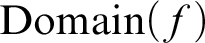 $\text {Domain}(f)$
is automatically a subgroup of G. Suppose
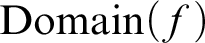 $\text {Domain}(f)$
is not a pure subgroup of G, that is, there is an element
 $\text {Domain}(f)$
which is n-divisible in G but not n-divisible in
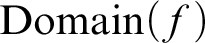 $\text {Domain}(f)$
for some
 $n>0$
. Then there is prime p and a in
 $G \setminus \text {Domain}(f)$
such that
 $pa \in \text {Domain}(f) $
. Using divisibility of H, we get
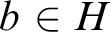 $b \in H$
such that
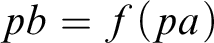 $pb = f(pa)$
. Let g be the extension of f given by
 $$ \begin{align*}ka + a' \mapsto kb + f(a') \quad \text { for } k\in \{ 1, \ldots, p-1\} \text{ and } a' \in \text{Domain}(f).\end{align*} $$
It is routine to check that g is an ordered group isomorphism from
 $\langle \text {Domain}(f), a\rangle $
to
 $\langle \text {Image}(f), b\rangle $
. It is also easy to check using Lemma 2.5(iii) that
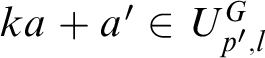 $ka + a' \in U^G_{p',l}$
if and only if
 $kb + f(a') \in U^G_{p',l}$
and
 $ka + a' \in P^G_{m}$
if and only if
 $kb + f(a') \in U^G_{m}$
for all k, l, m, primes
 $p'$
, and
 $a' \in \text {Domain}(f)$
. Hence,
 $$ \begin{align*}g \text{ is a partial } L_{\mathrm{ou}}^*\text{-embedding } \text{ from } (G; <, \mathscr{U}^G, \mathscr{P}^G) \text{ to } (H; <, \mathscr{U}^H , \mathscr{P}^H ).\end{align*} $$
Clearly, g properly extends f, so the desired conclusion follows. The proof for
 $\mathrm {SF}^*_{\mathbb {Q}}$
is the same but without the verification that the ordering is preserved. The situation for
 $\mathrm {SF}^*_{\mathbb {Z}}$
is slightly different as H is not divisible. However, for all primes
 $p'$
,
 $p'a$
is in
 $p'G = U^G_{p', 1}$
, and so
 $f(p'a)$
is in
 $ U^H_{p', 1} = p'H$
. The proof proceeds similarly using Lemma 2.1(iv–vi).
The remaining case is when
 $\text {Domain}(f) \neq G$
is a pure subgroup of G. Let a be in
 $G \setminus \text {Domain}(f)$
. We need to find b in
 $H \setminus \text {Image}(f)$
such that
 $$ \begin{align*}\text{qftp}_{L_{\mathrm{ou}}^*}(a / \text{Domain}(f)) = \text{qftp}_{L_{\mathrm{ou}}^*}(b / \text{Image}(f)).\end{align*} $$
By the fact that
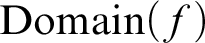 $\text {Domain}(f)$
is pure in G, and Corollary 3.2,
 $\text {qftp}_{L_{\mathrm {ou}}^*}(a \mid \text {Domain}(f))$
is isolated by formulas of the form
 $$ \begin{align*}\rho(b) \wedge \lambda(x,b) \wedge \psi(x, t(b), t'(b)),\end{align*} $$
where
 $\rho (y)$
is a quantifier-free
 $L^*_{\mathrm {ou}}$
-formula,
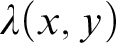 $\lambda (x,y)$
is an order condition,
 $\psi (x, z, z')$
is a special formula,
 $t(y)$
and
 $t'(y)$
are tuples of
 $L_{\mathrm {ou}}^*$
-terms of suitable length, b is a tuple of elements of
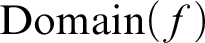 $\text {Domain}(f)$
of suitable length, and
 $\psi (x, t(b), t'(b))$
is a nontrivial
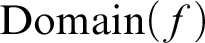 $\text {Domain}(f)$
-system. As
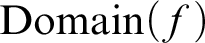 $\text {Domain}(f)$
is a pure subgroup of G, we can moreover arrange that
 $\lambda (x,b)$
is simply the formula
 $b_1 < x <b_2$
. Since f is an
 $L_{\mathrm {ou}}^*$
-embedding,
 $\rho (f(b))$
holds,
 $f(b_1) < f(b_2)$
, and
 $\psi \big (x, t(f(b)), t'(f(b))\big ) $
is a nontrivial
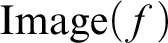 $\text {Image}(f)$
-system. Using the fact that
 $(H; <, \mathscr {U}^H , \mathscr {P}^H )$
is
 $|G|^+$
-saturated, the problem reduces to showing that
 $$ \begin{align*}\psi\Big(x, f\big(t(b)\big), f\big(t'(b)\big)\Big) \ \text{ has a solution in the interval } (f(b_1), f(b_2))^H.\end{align*} $$
As
 $\psi (x, t(b), t'(b))$
is satisfiable in G, it is locally satisfiable in G by Lemma 2.6. For each p, let
 $\psi _p(x, z, z')$
be the associated p-condition of
 $\psi (x, z, z')$
. By Lemma 3.3, for all p, the formula
 $\exists x \psi _p(x, z, z')$
is equivalent modulo
 $\mathrm {Sf}^*_{\mathbb {Q}}$
to a quantifier free formula in
 $L^*_{\mathrm {u}}(z, z')$
. Hence,
 $\exists x \psi _p\Big (x, f\big (t(b)\big ), f\big (t'(b)\big )\Big )$
holds in
 $(H;<, \mathscr {U}^H, \mathscr {P}^H)$
for all p. Thus,
 $$ \begin{align*}\text{the } \text{Image}(f)\text{-system }\psi\Big(x, f\big(t(b)\big), f\big(t'(b)\big)\Big) \text{ is locally satisfiable in } H.\end{align*} $$
The desired conclusion follows from the genericity of
 $(H; <, \mathscr {U}^H, \mathscr {P}^H)$
. The proofs for
 $\mathrm {SF}^*_{\mathbb {Z}}$
and
 $\mathrm {SF}^*_{\mathbb {Q}}$
are similar. However, we have there the formula
 $\bigwedge _{i =1}^k x \neq b_i$
with
 $k \leq |b|$
instead of the formula
 $b_1< x< b_2$
, Lemma 3.1 instead of Corollary 3.2, and the corresponding notion of genericity instead of the current one.⊣
Corollary 3.5. The theory
 $\mathrm {SF}^*_{\mathbb {Z}}$
is a recursive axiomatization of
 $\mathrm {Th}(\mathbb {Z}; \mathscr {U}^{\mathbb {Z}}, \mathscr {P}^{\mathbb {Z}})$
, and is therefore decidable. Similar statements hold for
 $\mathrm {SF}^*_{\mathbb {Q}}$
in relation to
 $\mathrm {Th}(\mathbb {Q}; \mathscr {U}^{\mathbb {Q}}, \mathscr {P}^{\mathbb {Q}})$
and
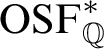 $\mathrm {OSF}^*_{\mathbb {Q}}$
in relation to
 $\mathrm {Th}(\mathbb {Q}; < \mathscr {U}^{\mathbb {Q}}, \mathscr {P}^{\mathbb {Q}})$
.
Proof By Lemma 2.1(ii), the subgroup generated by
 $1$
in an arbitrary model
 $(G; \mathscr {U}^G, \mathscr {P}^G)$
of
 $\mathrm {SF}^*_{\mathbb {Z}}$
is an isomorphic copy of
 $(\mathbb {Z}; \mathscr {U}^{\mathbb {Z}}, \mathscr {P}^{\mathbb {Z}})$
. Hence by Theorem 3.4,
 $\mathrm {SF}^*_{\mathbb {Z}}$
is complete, and on the other hand
 $(\mathbb {Z}; \mathscr {U}^{\mathbb {Z}}, \mathscr {P}^{\mathbb {Z}}) \models \mathrm {SF}^*_{\mathbb {Z}} $
by Theorem 2.14. The first statement of the corollary follows. The justification of the second statement is obtained in a similar fashion.⊣
Proof of Theorem 1.1, part 1 We show that the
 $L_{\mathrm {u}}$
-theory of
 $(\mathbb {Z}; \mathrm {SF}^{\mathbb {Z}})$
is model complete and decidable. For all p,
 $l\geq 0$
,
 $m>0$
, and all
 $a \in \mathbb {Z}$
, we have the following:
-
(1)
$a \in U^{\mathbb {Z}}_{p, l}$
if and only there is
$b\in \mathbb {Z}$
such that
$p^lb =a$
; -
(2)
$a \notin U^{\mathbb {Z}}_{p, l}$
if and only if for some
$i \in \{1, \ldots , p^l-1\}$
, there is
$b\in \mathbb {Z}$
such that
$p^lb =a+i$
; -
(3)
$a \in P^{\mathbb {Z}}_m$
if and only if for some
$d \mid m$
, there is
$b\in \mathbb {Z}$
such that
$a =bd$
and
$b\in \mathrm {SF}^{\mathbb {Z}}$
; -
(4)
$a \notin P^{\mathbb {Z}}_m$
if and only if for all
$d \mid m$
, either for some
$i \in \{1, \ldots , d-1\}$
, there is
$b\in \mathbb {Z}$
such that
$db =a+i$
or there is
$b \in \mathbb {Z}$
such that
$a =bd$
and
$b \notin \mathrm {SF}^{\mathbb {Z}}$
.


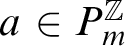


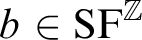


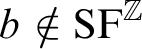
As
 $(\mathbb {Z}; \mathscr {U}^{\mathbb {Z}}, \mathscr {P}^{\mathbb {Z}}) \models \mathrm {SF}^*_{\mathbb {Z}}$
, it then follows from Theorem 3.4 and the above observation that every
 $0$
-definable set in
 $(\mathbb {Z}, \mathrm {SF}^{\mathbb {Z}})$
is existentially
 $0$
-definable. Hence, the theory of
 $(\mathbb {Z}; \mathrm {SF}^{\mathbb {Z}})$
is model complete. The decidability of
 $\text {Th}(\mathbb {Z}; \mathrm {SF}^{\mathbb {Z}})$
is immediate from the preceding corollary.⊣
Lemma 3.6. Suppose
 $a\in \mathbb {Q}$
has
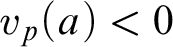 $v_p(a)<0$
. Then there is
 $\varepsilon \in \mathbb {Q}$
such that
 $v_p(\varepsilon ) \geq 0$
and
 $a+\varepsilon \in \mathrm {SF}^{\mathbb {Q}}$
.
Proof Suppose a is as stated. If
 $a \in \mathrm {SF}^{\mathbb {Q}}$
we can choose
 $\varepsilon =0$
, so suppose a is in
 $\mathbb {Q} \setminus \mathrm {SF}^{\mathbb {Q}}$
. We can also arrange that
 $a>0$
. Then there are
 $m, n, k \in \mathbb {N}^{\geq 1}$
such that
 $$ \begin{align*}a = \frac{m}{np^k},\ (m, n)=1,\ (m, p)=1, \text{ and } (n, p)=1.\end{align*} $$
It suffices to show there is
 $b \in \mathbb {Z}$
such that
 $m+ p^kb$
is a square-free integer as then
 $$ \begin{align*}a+ \frac{b}{n} = \frac{m+ p^kb}{np^k} \in \mathrm{SF}^{\mathbb{Q}}.\end{align*} $$
For all prime l,
 $p^kb_l+m \notin U^{\mathbb {Q}}_{l,2}$
for
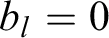 $b_l=0$
or
 $1$
. The conclusion then follows from the genericity of
 $( \mathbb {Z}; \mathscr {U}^{\mathbb {Z}}, \mathscr {P}^{\mathbb {Z}})$
as established in Theorem 2.14.⊣
Corollary 3.7. For all p and l,
 $U^{\mathbb {Q}}_{p, l}$
is universally
 $0$
-definable in
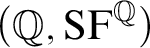 $(\mathbb {Q}, \mathrm {SF}^{\mathbb {Q}})$
.
Proof We will instead show that
 $\mathbb {Q}\setminus U^{\mathbb {Q}}_{p, l} = \{ a : v_p(a) < l \}$
is existentially
 $0$
-definable for all p and l. As
 $\mathbb {Q} \setminus U^{\mathbb {Q}}_{p, l+n} = p^n( \mathbb {Q} \setminus U^{\mathbb {Q}}_{p, l})$
for all p, l, and n, it suffices to show the statement for
 $l=0$
. Fix a prime p. By the preceding lemma we have that for all
 $ a$
,
 $v_p(a)<0$
if and only if
 $$ \begin{align*}\text{ there is } \varepsilon \text{ such that } v_p(\varepsilon) \geq 0, a+\varepsilon \in \mathrm{SF}^{\mathbb{Q}} \text{ and } v_p(a+\varepsilon) <0.\end{align*} $$
We recall that
 $\{\varepsilon : v_p(\varepsilon ) \geq 0 \}$
is existentially
 $0$
-definable by Lemma 2.3. Also, for all
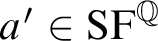 $a' \in \mathrm {SF}^{\mathbb {Q}}$
, we have that
 $v_p(a')< 0$
is equivalent to
 $p^2a' \in \mathrm {SF}^{\mathbb {Q}}$
. The conclusion hence follows.⊣
Proof of Theorems 1.3 and 1.4, part 1 We show that the
 $L_{\mathrm {u}}$
-theory of
 $(\mathbb {Q}; \mathrm {SF}^{\mathbb {Q}})$
and the
 $L_{\mathrm {ou}}$
-theory of
 $(\mathbb {Q}; <, \mathrm {SF}^{\mathbb {Q}} )$
are model complete and decidable. The proof is almost exactly the same as that of part 1 of Theorem 1.1. It follows from Lemma 2.3 and Corollary 3.7 that for all p and l, the sets
 $U^{\mathbb {Q}}_{p, l}$
are existentially and universally
 $0$
-definable in
 $(\mathbb {Q}; \mathrm {SF}^{\mathbb {Q}})$
. For all m,
 $P^{\mathbb {Q}}_m = m\mathrm {SF}^{\mathbb {Q}}$
and
 $\mathbb {Q} \setminus P^{\mathbb {Q}}_m = m( \mathbb {Q} \setminus \mathrm {SF}^{\mathbb {Q}})$
are clearly existentially
 $0$
-definable. The conclusion follows.⊣
Next, we will show that the
 $L_{\mathrm {ou}}$
-theory of
 $(\mathbb {Z}; <, \mathrm {SF}^{\mathbb {Z}})$
is bi-interpretable with arithmetic. The proof follows closely the arguments from [Reference Bateman, Jockusch and Woods2]. In fact, we can slightly modify Corollary 3.9 to use essentially the same proof at the cost of replacing
 $n^2$
with
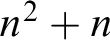 $n^2+n$
.
Lemma 3.8. Let
 $c_1, \ldots , c_n$
be an increasing sequence of natural numbers, and assume that for all primes p, there is a solution to the system of congruence inequations
 $$ \begin{align*}x + c_i \notin U^{\mathbb{Z}}_{p, 2} \text{ for all } i \in \{1, \ldots, n\}.\end{align*} $$
Then there is
 $a \in \mathbb {N}$
such that
 $a+c_1, \ldots , a+c_n$
are consecutive square-free integers.
Proof Suppose
 $c_1, \ldots , c_n$
are as given. Let
 $c^{\prime }_1, \ldots , c^{\prime }_{n'}$
be the listing in increasing order of elements in the set of
 $c \in \mathbb {N}$
such that
 $c_1 \leq c \leq c_n$
and
 $c \neq c_i$
for
 $i \in \{1, \ldots , n\}$
. The conclusion that there are infinitely many a such that
 $$ \begin{align*}\bigwedge_{i=1}^n (a+c_i \in \mathrm{SF}^{\mathbb{Z}}) \wedge \bigwedge_{i=1}^{n'} (a+c^{\prime}_i \notin \mathrm{SF}^{\mathbb{Z}})\end{align*} $$
follows from the assumptions about
 $c_1, \ldots , c_n$
and the genericity of
 $( \mathbb {Z}; \mathscr {U}^{\mathbb {Z}}, \mathscr {P}^{\mathbb {Z}})$
as established in Theorem 2.14.⊣
Corollary 3.9. For all
 $n\in \mathbb {N}^{>0}$
, there is
 $a \in \mathbb {N}$
such that
 $a+1, a+4, \ldots , a+n^2$
are consecutive square-free integers.
Proof For each p, we can obtain
 $a\in \{1,2,\ldots ,p^2-1\} $
such that
 $$ \begin{align*}a\not\equiv_{p^2}-m^2 \text{ for all } m.\end{align*} $$
Hence, for any given
 $n>0$
and p, the p-condition
 $\bigwedge _{i=1}^{n}(x+i^2\notin U^{\mathbb {Z}}_{p,2})$
has a solution. The result now follows immediately from the preceding lemma.⊣
Proof of Theorem 1.2 It suffices to show that
 $(\mathbb {Z}; <, \mathrm {SF}^{\mathbb {Z}})$
interprets multiplication on
 $\mathbb {N}$
. Let T be the set of
 $(a, b) \in \mathbb {N}^2$
such that for some
 $n \in \mathbb {N}^{\geq 1},$
 $$ \begin{align*}b= a+n^2 \text{ and } a+1, a+4, \ldots, a+n^2 \text{ are consecutive square-free integers}.\end{align*} $$
The set T is definable in
 $(\mathbb {Z}; <, \mathrm {SF}^{\mathbb {Z}})$
as
 $(a, b) \in T$
and
 $b\neq a+1$
if and only if
 $a+4\leq b$
,
 $a+1$
, and
 $a+4$
are consecutive square-free integers, b is square-free, and whenever c, d, and e are consecutive square-free integers with
 $a< c <d< e \leq b$
, we have that
 $$ \begin{align*}(e-d)-(d-c) =2.\end{align*} $$
Let S be the set
 $\{ n^2 : n \in \mathbb {N}\}$
. If
 $c=0$
or there are
 $a, b$
such that
 $(a, b) \in T$
and
 $b-a =c$
, then
 $c=n^2$
for some n. Conversely, if
 $c =n^2$
, then either
 $c=0$
or by Corollary 3.9,
 $$ \begin{align*}\text{ there is } (a,b) \in T \text{ with } b-a =c.\end{align*} $$
Therefore, S is definable in
 $(\mathbb {Z}; <, \mathrm {SF}^{\mathbb {Z}})$
. The map
 $n \mapsto n^2$
in
 $\mathbb {N}$
is definable in
 $(\mathbb {Z}; <, \mathrm {SF}^{\mathbb {Z}})$
as
 $b =a^2$
if and only if
 $b\in S$
and whenever
 $c\in S$
is such that
 $c>b$
and
 $b, c$
are consecutive in S, we have that
 $c-b = 2a+1$
. Finally,
 $c =ba$
if and only if
 $2c= (b+a)^2-b^2-a^2$
. Thus, multiplication on
 $\mathbb {N}$
is definable in
 $(\mathbb {Z}; <, \mathrm {SF}^{\mathbb {Z}})$
.⊣
4 Combinatorial tameness
As the theories
 $\mathrm {SF}^*_{\mathbb {Z}}$
,
 $\mathrm {SF}^*_{\mathbb {Q}}$
, and
 $\mathrm {OSF}^*_{\mathbb {Q}}$
are complete, it is convenient to work in the so-called monster models, that is, models which are very saturated and homogeneous. Until the end of the paper, let
 $(\mathbb {G}; \mathscr {U}^{\mathbb {G}}, \mathscr {P}^{\mathbb {G}})$
be a monster model of either
 $\mathrm {SF}^*_{\mathbb {Z}}$
or
 $\mathrm {SF}^*_{\mathbb {Q}}$
depending on the situation. In the latter case, we suppose
 $(\mathbb {G}; <, \mathscr {U}^{\mathbb {G}}, \mathscr {P}^{\mathbb {G}})$
is a monster model of
 $\mathrm {OSF}^*_{\mathbb {Q}}$
. We assume that
 $\kappa , A$
, and I have small cardinalities compared to
 $\mathbb {G}$
.
Our general strategy to prove the tameness of
 $\mathrm {SF}^*_{\mathbb {Z}}$
,
 $\mathrm {SF}^*_{\mathbb {Q}}$
, and
 $\mathrm {OSF}^*_{\mathbb {Q}}$
is to link them to the corresponding “local” facts. The next lemma says that
 $\mathrm {SF}^*_{\mathbb {Z}}$
is “locally” supersimple of U-rank
 $1$
.
Lemma 4.1. Suppose
 $(\mathbb {G}; \mathscr {U}^{\mathbb {G}}, \mathscr {P}^{\mathbb {G}}) \models \mathrm {SF}^*_{\mathbb {Z}}$
,
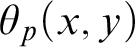 $\theta _p(x, y)$
is a consistent p-condition, and b is in
 $\mathbb {G}^{|y|}$
. Then
 $\theta _p(x, b)$
does not divide over any base set
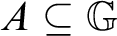 $A\subseteq \mathbb {G}$
.
Proof Recall that every p-condition is equivalent modulo
 $\mathrm {SF}^*_{\mathbb {Z}}$
to a formula in the language L of groups, and the reduct of
 $\mathrm {SF}^*_{\mathbb {Z}}$
to L is simply
 $\text {Th}(\mathbb {Z})$
. Hence, the desired conclusion is an immediate consequence of the well-known fact that
 $\text {Th}(\mathbb {Z})$
is superstable of U-rank
 $1$
; see for example [Reference Belegradek, Peterzil and Wagner3].⊣
Proof of Theorem 1.1, part 2 We first show that
 $\text {Th}(\mathbb {Z}; \mathrm {SF}^{\mathbb {Z}})$
is supersimple of U-rank
 $1$
; see [Reference Kim10, p. 36] for a definition of U-rank or SU-rank. By the fact that
 $(\mathbb {Z}; \mathrm {SF}^{\mathbb {Z}})$
has the same definable sets as
 $(\mathbb {Z}; \mathscr {U}^{\mathbb {Z}}, \mathscr {P}^{\mathbb {Z}})$
and Corollary 3.5, we can replace
 $\text {Th}(\mathbb {Z}; \mathrm {SF}^{\mathbb {Z}})$
with
 $\mathrm {SF}^*_{\mathbb {Z}}$
. Suppose
 $(\mathbb {G}; \mathscr {U}^{\mathbb {G}}, \mathscr {P}^{\mathbb {G}}) \models \mathrm {SF}^*_{\mathbb {Z}}$
. Our job is to show that every
 $L^*_{\mathrm {u}}(\mathbb {G})$
-formula
 $\varphi (x,b)$
which forks over a small subset A of
 $\mathbb {G} $
must define a finite set in
 $\mathbb {G}$
. We can easily reduce to the case that
 $\varphi (x,b)$
divides over A. Moreover, we can assume that
 $\varphi (x,b)$
is quantifier free by Theorem 3.4 which states that
 $(\mathbb {G}; \mathscr {U}^{\mathbb {G}}, \mathscr {P}^{\mathbb {G}})$
admits quantifier elimination. Using Lemma 3.1, we can also arrange that
 $\varphi (x, b)$
has the form
 $$ \begin{align*}\rho(b) \wedge \varepsilon(x, b) \wedge \psi(x, t(b), t'(b)),\end{align*} $$
where
 $\rho (y)$
is a quantifier-free formula,
 $\varepsilon (x,y)$
is an equational condition,
 $t(y)$
and
 $t'(y)$
are tuples of
 $L^*_{\mathrm {u}}$
-terms with length n and
 $n'$
respectively, and
 $\psi (x, z, z')$
is a special formula.
Suppose to the contrary that
 $\varphi (x,b)$
divides over A but
 $\varphi (x,b)$
defines an infinite set in
 $\mathbb {G}$
. From the first assumption, we get an infinite ordering I and a family
 $(\sigma _i)_{i \in I}$
of
 $L^*_{\mathrm {u}}$
-automorphisms of
 $(\mathbb {G}; \mathscr {U}^{\mathbb {G}}, \mathscr {P}^{\mathbb {G}})$
such that
 $(\sigma _i (b))_{i \in I}$
is indiscernible over A and
 $\bigwedge _{i \in I} \varphi (x, \sigma _i (b))$
is inconsistent. As
 $\varphi (x,b)$
defines an infinite set in
 $\mathbb {G}$
, we get from the second assumption that
 $\rho (b)$
holds in
 $\mathbb {G}$
,
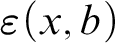 $\varepsilon (x, b)$
defines a cofinite set in
 $\mathbb {G}$
, and
 $\psi (x,t(b), t'(b))$
defines an infinite hence non-empty set in
 $\mathbb {G}$
. As
 $(\sigma _i (b))_{i \in I}$
is indiscernible, we have that
 $\rho (\sigma _i (b))$
holds in
 $\mathbb {G}$
and
 $\varepsilon (x, \sigma _i (b))$
defines a cofinite set in
 $\mathbb {G}$
for all
 $i \in I$
. Using the saturation of
 $\mathbb {G}$
, we get a finite set
 $\Delta \subseteq I$
such that
 $$ \begin{align*}\theta_{\Delta}(x):= \bigwedge_{i \in \Delta} \psi\big(x, t(\sigma_i (b)), t'(\sigma_i (b))\big) \text{ defines a finite set in } \mathbb{G}.\end{align*} $$
As
 $\theta _{\Delta }(x)$
is a conjunction of
 $\mathbb {G}$
-systems given by the same special formula, it is easy to see that
 $\theta _{\Delta }(x)$
is also a
 $\mathbb {G}$
-system.
We will show that
 $\theta _{\Delta }(x)$
defines an infinite set and thus obtain the desired contradiction. As
 $(\mathbb {G}; \mathscr {U}^{\mathbb {G}}, \mathscr {P}^{\mathbb {G}})$
is a model of
 $ \mathrm {SF}^*_{\mathbb {Z}}$
and hence generic, it suffices to show that
 $\theta _{\Delta }(x)$
is non-trivial and locally satisfiable. As
 $\varphi (x,b)$
is consistent,
 $t(b)$
has no common components with
 $t'(b)$
. The assumption that
 $(\sigma _i(b))_{i \in I}$
is indiscernible gives us that
 $t(\sigma _i(b))$
has no common components with
 $t'(\sigma _j (b))$
for all i and j in I. It follows that
 $\theta _{\Delta }(x)$
is non-trivial. For each p, let
 $\psi _p(x, z, z')$
be the associated p-condition of
 $\psi (x,z, z')$
. For all p, we have that
 $\psi _p(x, t(b), t(b'))$
defines a nonempty set and consequently by Lemma 4.1,
 $$ \begin{align*}\bigwedge_{i \in \Delta}\psi_p\big(x, t(\sigma_i(b)), t'(\sigma_i(b))\big) \text{ defines a nonempty set in } \mathbb{G}.\end{align*} $$
We easily check that the above means
 $\theta _\Delta (x)$
is p-satisfiable for all p. Thus
 $\theta _{\Delta }(x)$
is locally satisfiable which completes our proof that
 $\text {Th}(\mathbb {Z}, \mathrm {SF}^{\mathbb {Z}})$
has U-rank
 $1$
.
We will next prove that
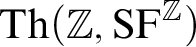 $\text {Th}(\mathbb {Z}, \mathrm {SF}^{\mathbb {Z}})$
is k-independent for all
 $k>0$
; see [Reference Chernikov, Palacin and Takeuchi5] for a definition of k-independence. The proof is almost the exact replica of the proof in [Reference Kaplan and Shelah9] except the necessary modifications taken in the current paragraph. Suppose
 $l>0$
, and S is an arbitrary subset of
 $\{ 0, \ldots , l-1\}$
. Our first step is to show that there are
 $a, d \in \mathbb {N}$
such that for
 $t \in \{0, \ldots , l-1\}$
,
 $$ \begin{align*}a +td \text{ is square-free }\ \text{ if and only if }\ t \text{ is in } S.\end{align*} $$
Let
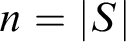 $n= |S|$
and
 $n' = l -n$
, and let
 $c \in \mathbb {Z}^n$
be the increasing listing of elements in S and
 $c' \in \mathbb {Z}^{n'}$
the increasing listing of elements in
 $\{0, \ldots , l-1\}\setminus S$
. Choose
 $d = (l!)^2$
. We need to find a such that
 $$ \begin{align*}\bigwedge_{i=1}^n (a+ c_id \in \mathrm{SF}^{\mathbb{Z}}) \wedge \bigwedge_{i=1}^{n'} (a+ c^{\prime}_id \notin \mathrm{SF}^{\mathbb{Z}}).\end{align*} $$
For
 $p\leq l$
, if
 $a_p \notin p^2\mathbb {Z} = U_{p,2}^{\mathbb {Z}}$
, then
 $a_p + c_id \notin p^2\mathbb {Z}$
for all
 $i \in \{1, \ldots , n\}$
. For
 $p>l$
, it is easy to see that
 $ 0+ c_id \notin p^2\mathbb {Z}$
for all
 $i \in \{1, \ldots , n\}$
. The desired conclusion follows from the genericity of
 $(\mathbb {Z}; \mathscr {U}^{\mathbb {Z}}, \mathscr {P}^{\mathbb {Z}})$
.
Fix
 $k>0$
. We construct an explicit
 $L_{\mathrm {u}}$
-formula which witnesses the k-independence of
 $\text {Th}(\mathbb {Z}, \mathrm {SF}^{\mathbb {Z}})$
. Let
 $y =(y_0, \ldots , y_{k-1})$
and let
 $\varphi (x, y)$
be a quantifier-free
 $L^*_{\mathrm {u}}$
-formula such that for all
 $a \in \mathbb {Z}$
and
 $b \in \mathbb {Z}^k$
,
 $$ \begin{align*}\varphi(a, b) \ \text{ if and only if }\ a+ b_0+\cdots+b_{k-1} \in \mathrm{SF}^{\mathbb{Z}} \quad\text{ where } b =(b_0, \ldots, b_{k-1}).\end{align*} $$
We will show that for any given
 $n>0$
, there are families
 $(a_\Delta )_{ \Delta \subseteq \{ 0, \ldots , n-1\}^k}$
and
 $(b_{ij})_{0\leq i < k, 0 \leq j < n }$
of integers such that
 $$ \begin{align*}\varphi(a_\Delta, b_{0,j_0}, \ldots, b_{k-1,j_{k-1}} ) \ \text{ if and only if }\ (j_0, \ldots, j_{k-1}) \in \Delta.\end{align*} $$
Let
 $f: \mathscr {P}(\{0,\ldots , n-1\}^k) \to \{0,\ldots , 2^{(n^k)}-1\}$
be an arbitrary bijection. Let g be the bijection from
 $\{ 0, \ldots , n-1\}^k$
to
 $\{ 0, \ldots , n^k-1\}$
such that if b and
 $b'$
are in
 $\{ 0, \ldots , n-1\}^k $
and
 $b<_{\text {lex}}b'$
, then
 $g(b)<g(b')$
. More explicitly, we have
 $$ \begin{align*}g(j_0, \ldots, j_{k-1}) =j_0n^{k-1} + j_1n^{k-2} + \cdots + j_{k-1} \text{ for } (j_0, \ldots, j_{k-1}) \in \{ 0, \ldots, n-1\}^k.\end{align*} $$
It follows from the preceding paragraph that we can find an arithmetic progression
 $(c_i)_{ i \in \{0, \ldots , n^k 2^{(n^k)} -1 \} }$
such that for all
 $\Delta \subseteq \{0, \ldots , n-1\}^k$
and
 $(j_0, \ldots , j_{k-1})$
in
 $\{ 0, \ldots , n-1\}^k$
, we have that
 $$ \begin{align*}c_{f(\Delta)n^k+ g(j_0, \ldots, j_{k-1})} \in \mathrm{SF}^{\mathbb{Z}}\ \text{ if and only if } \ (j_0, \ldots, j_{k-1}) \in \Delta.\end{align*} $$
Suppose
 $d = c_1-c_0$
. Set
 $b_{ij} = djn^{k-i-1} $
for
 $i \in \{0, \ldots , k-1\}$
and
 $j \in \{0, \ldots , n-1\}$
, and set
 $a_{\Delta } = c_{f(\Delta )n^k}$
for
 $\Delta \subseteq \{ 0, \ldots , n-1\}^k$
. We have
 $$ \begin{align*}c_{f(\Delta)n^k+ g(j_0, \ldots, j_{k-1})} = c_{f(\Delta)n^k} + d g(j_0, \ldots, j_{k-1}) = a_\Delta + b_{0,j_0}+ \cdots+ b_{k-1,j_{k-1}}.\end{align*} $$
The conclusion thus follows.⊣
Lemma 4.2. Every p-condition
 $\theta _p(x,y)$
is stable in
 $\mathrm {SF}^*_{\mathbb {Q}}$
.
Proof Suppose
 $\theta _p(x,y)$
is as in the statement of the lemma. It is clear that if
 $\theta _p(x,y)$
does not contain the variable x, then it is stable. As stability is preserved under taking Boolean combinations, we can reduce to the case where
 $\theta _p(x,y)$
is
 $kx+t(y) \in U_{p,l}$
with
 $k\neq 0$
. We note that for any b and
 $b'$
in
 $\mathbb {G}^{|y|}$
, the sets defined by
 $\theta _p(x, b)$
and
 $\theta _p(x, b')$
are either the same or disjoint. It follows easily that
 $\theta _p(x, y)$
does not have the order property; in other words,
 $\theta _p(x,y)$
is stable. Alternatively, the desired conclusion also follows from the fact that
 $( \mathbb {Q}; \mathscr {U}^{\mathbb {Q}})$
is an abelian structure and hence stable; see [Reference Wagner15, p. 49] for the relevant definition and result.⊣
Proof of Theorem 1.3, part 2 We first show that
 $\text {Th}(\mathbb {Q}; \mathrm {SF}^{\mathbb {Q}})$
is simple. By the fact that
 $(\mathbb {Q}; \mathrm {SF}^{\mathbb {Q}})$
has the same definable sets as
 $(\mathbb {Q}; \mathscr {U}^{\mathbb {Q}}, \mathscr {P}^{\mathbb {Q}})$
and Corollary 3.5, we can replace
 $\text {Th}(\mathbb {Q}; \mathrm {SF}^{\mathbb {Q}})$
with
 $\mathrm {SF}^*_{\mathbb {Q}}$
. Towards a contradiction, suppose that the latter is not simple. We obtain a formula
 $\varphi (x,y)$
witnessing the tree property of
 $\mathrm {SF}^*_{\mathbb {Q}}$
; see [Reference Kim10, pp. 24–25] for the definition and proof that this is one of the equivalent characterizations of simplicity. We can arrange that
 $\varphi (x,y)$
is quantifier-free by Theorem 3.4. Recall that disjunction preserves simplicity of formulas; this can be shown directly as an exercise or can be seen immediately from the equivalence between (1) and (3) in [Reference Kim10, Lemma 2.4.1]. Hence using Lemma 3.1, we can arrange that
 $\varphi (x,y)$
is of the form
 $$ \begin{align*}\rho(y) \wedge \varepsilon(x, y) \wedge \psi(x, t(y), t'(y)),\end{align*} $$
where
 $\rho (y)$
is a quantifier-free
 $L^*_{\mathrm {u}}$
-formula,
 $\varepsilon (x, y)$
is an equational condition,
 $t(y)$
and
 $t'(y)$
are tuples of
 $L^*_{\mathrm {u}}$
-terms with lengths n and
 $n'$
respectively, and
 $\psi (x, z, z')$
is a special formula. Let
 $(\mathbb {G}; \mathscr {U}^{\mathbb {G}}, \mathscr {P}^{\mathbb {G}}) \models \mathrm {SF}^*_{\mathbb {Q}}$
. Then there is
 $b \in \mathbb {G}^k$
with
 $k=|y|$
, an uncountable cardinal
 $\kappa $
, and a tree
 $(\sigma _s)_{ s \in \omega ^{<\kappa } }$
of
 $L^*_{\mathrm {u}}$
-automorphisms of
 $(\mathbb {G}; \mathscr {U}^{\mathbb {G}}, \mathscr {P}^{\mathbb {G}})$
with the following properties:
-
(1) for all
$s \in \omega ^{< \kappa }$
,
$\{ \varphi (x, \sigma _{s\frown (i)}(b)) : i \in \omega \}$
is inconsistent; -
(2) for all
$\hat {s} \in \omega ^\kappa $
,
$\{ \varphi (x, \sigma _{\hat {s} \mathord {\upharpoonright } \alpha }(b)): \alpha <\kappa \}$
is consistent; -
(3) for every
$\alpha <\kappa $
and
$s, s' \in \omega ^\alpha $
,
$ \text {tp}\big ( (\sigma _{s\frown (i)}(b))_i\big )=\text {tp}\big ( (\sigma _{s'\frown (i)}(b))_i\big )$
.


More precisely, we can get b,
 $\kappa $
, and
 $(\sigma _t)_{ t \in \omega ^{<\kappa } }$
satisfying (1) and (2) from the fact that
 $\varphi (x,y)$
witnesses the tree property of
 $\mathrm {SF}^*_{\mathbb {Q}}$
, a standard Ramsey arguments, and the monstrosity of
 $(\mathbb {G}; \mathscr {U}^{\mathbb {G}}, \mathscr {P}^{\mathbb {G}})$
. We can then arrange that (3) also holds using the results in [Reference Kim, Kim and Scow11]; a direct argument is also straightforward.
We deduce the desired contradiction by showing that there is
 $ s \in \omega ^{<\kappa }$
such that
 $\{ \varphi (x, \sigma _{s\frown (i)}(b)) : i \in \omega \}$
is consistent. From (1–3), we get for all
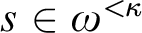 $s \in \omega ^{< \kappa }$
that
 $\rho (\sigma _{s}(b) )$
holds and
 $\varepsilon (x, \sigma _{s}(b))$
defines a cofinite set. By monstrosity of
 $\mathbb {G}$
, it suffices to find
 $s \in \omega ^{<\kappa }$
such that any finite conjunction of
 $\{ \psi \big (x, t(\sigma _{s\frown (i)}(b)),t'(\sigma _{s\frown (i)}(b))\big ) : i \in \omega \}$
defines an infinite set in
 $\mathbb {G}$
. For
 $s \in \omega ^{<\kappa }$
and a finite
 $\Delta \subseteq \omega $
, set
 $$ \begin{align*}\theta_{s, \Delta}(x) := \bigwedge_{i \in \Delta} \psi\big(x, t(\sigma_{s\frown (i)}(b)),t'(\sigma_{s\frown (i)}(b))\big).\end{align*} $$
As
 $\kappa $
is uncountable, to ensure the desired
 $s\in \omega ^{<\kappa }$
exists, it suffices to show for fixed
 $\Delta $
that for all but countably many
 $\alpha < \kappa $
and all
 $s \in \omega ^\alpha $
, the formula
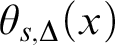 $\theta _{s, \Delta }(x)$
defines an infinite set in
 $\mathbb {G}$
.
Note that
 $\theta _{s, \Delta }(x)$
is a conjunction of
 $\mathbb {G}$
-systems given by the same special formula, so
 $\theta _{s, \Delta }(x)$
is also a
 $\mathbb {G}$
-system. By the genericity of
 $\mathrm {SF}^*_{\mathbb {Q}}$
established in Theorem 2.14, we need to check that for all but countably many
 $\alpha < \kappa $
and all
 $s \in \omega ^\alpha $
, the
 $\mathbb {G}$
-system
 $\theta _{s, \Delta }(x)$
is nontrivial and locally satisfiable. Indeed, this implies that by (2),
 $\varphi (x, b)$
is consistent, and so is
 $\psi (x, t(b),t'(b))$
. This implies in particular that
 $t(b)$
and
 $t'(b)$
have no common components. It then follows from (3) that for
 $s \in \omega ^{< \kappa }$
and
 $i, j \in \omega $
,
 $$ \begin{align*}t(\sigma_{s\frown (i)}(b)) \text{ and } t'(\sigma_{s\frown (j)} (b)) \text{ have no common elements }.\end{align*} $$
Hence,
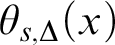 $\theta _{s, \Delta }(x)$
is nontrivial for all
 $s \in \omega ^{< \kappa }$
. Let
 $\psi _p(x,z,z')$
be the associated p-condition of
 $\psi (x,z,z')$
. We then get from (2) that
 $\{ \psi _p(x, t(\sigma _{\hat {s} \mathord {\upharpoonright } \alpha }(b)), t'(\sigma _{\hat {s} \mathord {\upharpoonright } \alpha }(b))): \alpha <\kappa \}$
is consistent for all
 $\hat {s} \in \omega ^\kappa $
. By Lemma 4.2, the formula
 $\psi _p(x, t(y),t'(y) )$
is stable and hence does not witness the tree property. It follows that for all but finitely many
 $\alpha < \kappa $
and all
 $s \in \omega ^\alpha $
, the set
 $$ \begin{align*}\{ \psi_p\big(x, t(\sigma_{s\frown (i)} (b)), t'(\sigma_{s\frown (i)} (b))\big) : i \in \omega\} \text{ is consistent}.\end{align*} $$
For such s, we have that
 $\theta _{s, \Delta }(x)$
is p-satisfiable. So for all but countably many
 $\alpha < \kappa $
and all
 $s \in \omega ^\alpha $
,
 $\theta _{s, \Delta }(x)$
is locally satisfiable which completes the proof that
 $\text {Th}(\mathbb {Q}; \mathrm {SF}^{\mathbb {Q}})$
is simple.
We next prove that
 $\text {Th}( \mathbb {Q}; \mathrm {SF}^{\mathbb {Q}})$
is not strong which implies that it is not supersimple; for the definition of strength and the relation to supersimplicity see [Reference Adler1]. Again, we can replace
 $\text {Th}( \mathbb {Q}; \mathrm {SF}^{\mathbb {Q}})$
by
 $\mathrm {SF}^*_{\mathbb {Q}}$
using Proposition 2.4 and Corollary 3.5. For each p, let
 $\varphi _p(x,y)$
with
 $|y|=1$
be the formula
 $x-y \in U_{p,0}$
. For all p and i, set
 $b_{p,i} = p^{-i}$
. We will show that
 $\big ( \varphi _p(x,y), ( b_{p,i})_{i \in \mathbb {N}} ) \big )$
forms an inp-pattern of infinite depth in
 $(\mathbb {Q}; \mathscr {U}^{\mathbb {Q}}, \mathscr {P}^{\mathbb {Q}})$
. For distinct i and j in
 $\mathbb {N}$
, we have that
 $p^{-i} - p^{-j} \notin U^{\mathbb {Q}}_{p,0}$
which implies that
 $\varphi _p(x, b_{p,i}) \wedge \varphi _p(x, b_{p,j}) $
is inconsistent. On the other hand, if S is a finite set of primes, and
 $f: S \to \mathbb {N}$
is an arbitrary function, then for
 $a=\Sigma _{p\in S}b_{p,f(p)}$
we have that
 $(\mathbb {Q}; \mathscr {U}^{\mathbb {Q}}, \mathscr {P}^{\mathbb {Q}})\models \bigwedge _{p \in S} \varphi _p(a, b_{p,f(p)})$
. The desired conclusion follows.
Finally, we note that
 $(\mathbb {Z}; \mathscr {U}^{\mathbb {Z}}, \mathscr {P}^{\mathbb {Z}})$
is a substructure of
 $(\mathbb {Q}; \mathscr {U}^{\mathbb {Q}}, \mathscr {P}^{\mathbb {Q}})$
, and the former theory admits quantifier elimination and has
 $\text {IP}_k$
for all
 $k>0$
. Therefore, the latter also has
 $\text {IP}_k$
for all
 $k>0$
. In fact, the construction in part 2 of the proof of Theorem 1.1 carries through.⊣
Lemma 4.3. Any order-condition has
 $\mathrm {NIP}$
in
 $\mathrm {OSF}^*_{\mathbb {Q}}$
.
Proof The statement immediately follows from the fact that every order condition is a formula in the language of ordered groups and the fact that the reduct of any model of
 $\mathrm {OSF}^*_{\mathbb {Q}}$
to this language is an ordered abelian group, which has
 $\text {NIP}$
; see for example [Reference Gurevich and Schmitt8].⊣
Proof of Theorem 1.4, part 2 In the proof of part 2 of Theorem 1.3, we have shown that
 $\text {Th}(\mathbb {Q}; \mathrm {SF}^{\mathbb {Q}})$
is not strong and is k-independent for all
 $k>0$
, so the corresponding conclusions for
 $\text {Th}(\mathbb {Q}; <, \mathrm {SF}^{\mathbb {Q}})$
also follow. It remains to show that
 $\text {Th}(\mathbb {Q};<, \mathrm {SF}^{\mathbb {Q}})$
has
 $\text {NTP}_2$
. The proof is essentially the same as the proof that
 $\text {Th}(\mathbb {Q}; \mathrm {SF}^{\mathbb {Q}})$
is simple, but with extra complications coming from the ordering. By Proposition 2.4 and Corollary 3.5, we can replace
 $\text {Th}(\mathbb {Q};<, \mathrm {SF}^{\mathbb {Q}})$
with
 $\mathrm {OSF}_{\mathbb {Q}}^*$
. Towards a contradiction, assume that there is a formula
 $\varphi (x,y)$
witnessing
 $\text {TP}_2$
(see [Reference Chernikov4, pp. 700–701]). We can arrange that
 $\varphi (x,y)$
is quantifier-free by Theorem 3.4. Disjunctions of formulas with
 $\text {NTP}_2$
again have
 $\text {NTP}_2$
[Reference Chernikov4, p. 701], so using Lemma 3.2 we can arrange that
 $\varphi (x,y)$
is of the form
 $$ \begin{align*}\rho(y) \wedge \lambda(x,y) \wedge \psi(x, t(y), t'(y)),\end{align*} $$
where
 $\rho (y)$
is a quantifier-free
 $L^*_{\mathrm {ou}}$
-formula
 $, \lambda (x, y)$
is an order condition,
 $\psi (x, z, z')$
is a special formula, and
 $t(y)$
and
 $t'(y)$
are tuples of
 $L^*_{\mathrm {ou}}$
-terms with lengths n and
 $n'$
respectively. Then there is
 $b \in \mathbb {G}^{k}$
with
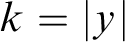 $k=|y|$
and an array
 $(\sigma _{ij})_{ i \in \omega , j \in \omega }$
of
 $L_{\mathrm {ou}}^*$
-automorphisms of
 $(\mathbb {G}; <, \mathscr {U}^{\mathbb {G}}, \mathscr {P}^{\mathbb {G}})$
with the following properties:
-
(1) for all
$i \in \omega $
,
$\{ \varphi (x, \sigma _{ij}(b)) : j \in \omega \}$
is inconsistent; -
(2) for all
$f: \omega \to \omega $
,
$\{ \varphi (x, \sigma _{if(i)}(b)): i \in \omega \}$
is consistent; -
(3) for all
$i \in \omega $
,
$(\sigma _{ij}(b))_{j \in \omega }$
is indiscernible over
$\{ \sigma _{i'j}(b) : i' \in \omega , i'\neq i, j \in \omega \}$
; -
(4) the sequence of “rows”
$( (\sigma _{ij}(b))_{j \in \omega })_{i \in \omega }$
is indiscernible.





We could get b,
 $\omega $
, and
 $(\sigma _{ij})_{ i \in \omega , j \in \omega }$
as above from the definition of
 $\text {NTP}_2$
, Ramsey arguments, and the monstrosity of
 $(\mathbb {G}; \mathscr {U}^{\mathbb {G}}, \mathscr {P}^{\mathbb {G}})$
; see also [Reference Chernikov4, p. 697] for the type of argument we need to get (3).
We deduce that the set
 $\{ \varphi (x, \sigma _{ij}b) : j \in \omega \}$
is consistent for all
 $i \in \omega $
, which is the desired contradiction. We get from (2) that
 $\rho (\sigma _{ij}b)$
holds for all
 $i \in \omega $
and
 $j \in \omega $
. Hence, it suffices to show for all
 $i \in \omega $
that
 $$ \begin{align*}\{ \lambda(x,\sigma_{ij}b) \wedge \psi(x, t( \sigma_{ij}b), t'(\sigma_{ij} b)) : j \in \omega\} \text{ is consistent}.\end{align*} $$
The order condition
 $\lambda (x, y)$
has
 $\text {NIP}$
by Lemma 4.3, and so it has
 $\text {NTP}_2$
. Using conditions (2–4), we get that
 $$ \begin{align*}\{ \lambda(x, \sigma_{ij}(b)) : j \in \omega\} \text{ is consistent} \text{ for all } i\in \omega.\end{align*} $$
Hence, any finite conjunction from
 $\{\lambda (x, \sigma _{ij}(b)): j \in \omega \}$
contains an open interval for all
 $i \in \omega $
. For
 $i \in \omega $
and a finite
 $\Delta \subseteq \omega $
, set
 $$ \begin{align*}\theta_{i, \Delta}(x) := \bigwedge_{j \in \Delta} \psi\big(x, t(\sigma_{ij}(b)),t'(\sigma_{ij}(b))\big).\end{align*} $$
It suffices to show that
 $\theta _{i, \Delta }(x)$
defines a non-empty set in every non-empty
 $\mathbb {G}$
-interval.
We have that
 $\theta _{i, \Delta }(x)$
is a conjunction of
 $\mathbb {G}$
-system given by the same special formula, and so is again a
 $\mathbb {G}$
-system. By the genericity of
 $\mathrm {OSF}^*_{\mathbb {Q}}$
, the problem reduces to showing
 $\theta _{i, \Delta }(x)$
is nontrivial and locally satisfiable. By (2),
 $\varphi (x, b)$
is consistent, and so is
 $\psi (x, t(b),t'(b))$
. This implies in particular that
 $t(b)$
and
 $t'(b)$
have no common components. It then follows from (3) that for
 $i \in \omega $
and distinct
 $j, j' \in \omega $
,
 $$ \begin{align*}t(\sigma_{ij}(b)) \text{ and } t'(\sigma_{ij'} (b)) \text{ have no common elements}.\end{align*} $$
Hence,
 $\theta _{i, \Delta }(x)$
is nontrivial for all
 $i \in \omega $
. Let
 $\psi _p(x,z,z')$
be the associated p-condition of
 $\psi (x,z,z')$
. We then get from (2) that
 $\{ \psi _p(x, \sigma _{if(i)}(b)): i \in \omega \}$
is consistent for all
 $f: \omega \to \omega $
. By Lemma 4.2, the formula
 $\psi _p(x, t(y),t'(y) )$
is stable and hence has
 $\text {NTP}_2$
. It follows that for all but finitely many
 $i \in \omega $
the set
 $$ \begin{align*}\{ \psi_p\big(x, t(\sigma_{ij} (b)), t'(\sigma_{ij} (b))\big) : j \in \omega\} \text{ is consistent}.\end{align*} $$
Combining with (4), we get that
 $\theta _{i, \Delta }(x)$
is p-satisfiable for all p which completes the proof.⊣
Corollary 4.4. The set
 $\mathbb {Z}$
is not definable in
 $(\mathbb {Q}; <, \mathrm {SF}^{\mathbb {Q}})$
.
Proof Towards a contradiction, suppose
 $\mathbb {Z}$
is definable in
 $(\mathbb {Q}; <, \mathrm {SF}^{\mathbb {Q}})$
. Then by Theorem 1.2,
 $(\mathbb {N}; +, \times , <, 0, 1)$
is interpretable in
 $(\mathbb {Q}; <, \mathrm {SF}^{\mathbb {Q}})$
. It then follows from Theorem 1.4 that
 $(\mathbb {N}; +, \times , <, 0, 1)$
has
 $\text {NTP}_2$
, but this is well-known to be false.⊣
5 Further questions
There are several further questions we can ask about
 $(\mathbb {Z}; \mathrm {SF}^{\mathbb {Z}})$
,
 $(\mathbb {Q}; \mathrm {SF}^{\mathbb {Q}})$
, and
 $(\mathbb {Q}; <, \mathrm {SF}^{\mathbb {Q}})$
. We would like to better understand dividing and forking inside these structures. Ideally, they coincide and have appropriate “local to global” behaviors. It would also be nice to understand imaginaries and definable groups in these structures.
One would like to have similar results for “sufficiently random” subsets of
 $\mathbb {Z}$
other than
 $\text {Pr}$
and
 $\mathrm {SF}^{\mathbb {Z}}$
. Another interesting candidate of such a subset is
 $\{\pm pq : p, q \text { are primes}\}$
. Most likely, it is not possible to prove the analogous results without assuming any number-theoretic conjecture. In a rather different direction, is there any sense in which we can say that most subsets of
 $\mathbb {Z}$
are “sufficiently random” and yield results similar to ours?
In [Reference Bateman, Jockusch and Woods2], it is shown under the assumption of Dickson’s Conjecture that the monadic second order theory of
 $(\mathbb {N}; S, \text {Pr})$
is decidable where S is the successor function. We hope the analogous result for
 $( \mathbb {N}; S, \mathrm {SF}^{\mathbb {Z}})$
can be shown without assuming any conjecture. On another note, suppose the field
 $\bar {\mathbb {Q}}$
is an algebraic closure of the field
 $\mathbb {Q}$
, v range over the non-archimedean valuations of
 $\bar {\mathbb {Q}}$
, and
 $$ \begin{align*}\text{Sqf}^{ \bar{\mathbb{Q}} } = \{ a \in \bar{\mathbb{Q}} : v(a) <2 \text{ for all } v \}.\end{align*} $$
Does
 $( \bar {\mathbb {Q}}; \text {Sqf}^{ \bar {\mathbb {Q}} })$
have
 $\text {NTP}_2$
? Finally, if
 $\mathbb {Z}^\times $
is the multiplicative monoid of integers, can anything be said about
 $(\mathbb {Z}^\times; \mathrm {SF}^{\mathbb {Z}})$
?
Acknowledgments
We would like to thank Utkarsh Agrawal, William Balderrama, Alexander Dunn, Lou van den Dries, Allen Gehret, Itay Kaplan, and Erik Walsberg for discussions and comments at various stages of the project. We would also like to thank the referee for the detailed and insightful reading which allowed us to simplify several arguments. Of course, any remaining errors are our responsibility.



