At the conclusion of her recent study of leftist internationalism in the Yiddish poetry of the 1930s, Amelia Glaser further enriches the analogical mode through which scholars of modernism have described Yiddish poetry about Black and African-Diasporic subjects and experience.Footnote 1 The Yiddish anti-lynching poem type, Glaser argues, “translated East European antisemitism into American racism,” and thus links Jewish to Black persecution.Footnote 2 By fusing two forms of modern alterity through the doubling of pogroms and lynching, scholarship about Yiddish literature and race has cast the Yiddish poet's desire to speak for or in the voice of a Black person as the articulation of sympathetic impulse and complex identification. According to this view, copious Yiddish depictions of American racism encode an ethical stance against such violence through their evocation of Jewish trauma, and serve as the foundational stance through which Yiddish poets engaged the violence of anti-black racism in America.Footnote 3
Nevertheless, the Jewish diasporic project from the mid 1910s to address American racism in Yiddish, I argue, was not only the product of newfound Jewish sympathy or identification with the suffering of African-Americans, but inflected by Ashkenazic Jews’ longer history, alongside their European neighbors, of exposure to Atlantic racial language, concepts, and ideology. Conditioned by this discourse, Yiddish immigrants addressed Black subjects and subjectivity.Footnote 4 Readers of Yiddish could access representations of Black subjects through European and American literature—Robinson Crusoe, Uncle Tom's Cabin, and Joachim Campe's The Discovery of America all appeared in Yiddish and Hebrew by 1868.Footnote 5 Throughout the nineteenth century, a wide proliferation of Yiddish-language material communicated knowledge about racial difference and racial politics, often in the context of travel reportage and fiction written by Europeans in the Americas and Africa. By the early 1920s, the heyday of the European avant-garde, this earlier discourse was disseminated and transformed by racialized forms of mass entertainment, including melodrama and minstrelsy.Footnote 6 In 1887, the Yiddish press advertised a live performance by “the real African Negro Tomasz Charley” on Warsaw's central thoroughfare.Footnote 7 By 1930, the Kultur-Lige in Kiev published novelist Itsik Kipnis's translation of Huckleberry Finn, and a Warsaw performance of Eugene O'Neill's expressionist drama All God's Chillun Got Wings, performed by Jewish actors in blackface, was reviewed favorably in the Yiddish press.Footnote 8 Yiddish-language engagement with anti-black violence was not solely the product of encounter, it entailed the latticelike layering of earlier European and American racial discourse onto the experience of mass Jewish migration, and a sense of European and Jewish superiority with political and intellectual interest in Black culture and identity.Footnote 9
The first attempt to directly translate Black writers and intellectuals appeared in 1926 as a small stapled insert titled Neger-Literatur tucked into the New York monthly Der Hammer under the editorship of Moisayye Olgin.Footnote 10 Drawing on the Harlem Renaissance poets, Olgin and his committee introduced inclined readers to the short fiction of Zora Neale Hurston and Rudolf Fisher, and the poetry of Bruce Nugent, James Weldon Johnson, and Langston Hughes during the insert's run between 1926 and 1928, when the editors culminated the series with poem translations and illustrations by Black women poets.Footnote 11 In his short introduction, Olgin writes:
“In the last few years in America, a unique, significant “Negro-Culture” (neger-kultur) emerged in English. The entire world is familiar with Negro-music, mostly Jazz. Fewer are familiar with Negro-literature, Negro-poetry, and Negro-painting. The stories and poems printed here are samples of Negro-Literature. Everything is produced by Negroes. The images and texts express the spirit (gayst) of the modern, cultured Negro. In all ways, the perception of life (lebns- empfindung) is so profoundly distinct from the Anglo-Saxon. They also give us a glimpse (a blik) into Negro-life of America, an area that needs first to be revealed artistically for the conscious proletarian reader. All of these texts derive from Alaine Locke's New Negro Anthology.Footnote 12
Olgin's introduction demonstrates the terms and concepts used to understand “Negro” culture. The first is the reference to the “spirit” (gayst). The use of this term derives from Yiddish receptions of Romantic nationalism, and thus connects Olgin's language to German discourse about the singularity of the national spirit, or “folkgayst,” a philosophical discourse fully intertwined with the concept of racial hierarchies. Olgin also identifies what he perceives as the distinct “life-sensibility” (lebns-empfindung) of the Negro, which contrasts with the dominant “Anglo-Saxon” character of the United States. “Life-sensibility,” a rare philosophical term, evokes the sensorium's role in shaping national and racial identity. When Olgin describes his efforts as a glimpse into “Negro life,” he is evoking “the veil” motif employed by W.E.B. Du Bois and his interlocutors.Footnote 13 Thus, Olgin's unprecedented publication of the Harlem Renaissance writers in Yiddish signals the existence of two parallel truths at the outset: His work benefitted from physical access to the Black press, and was likely the first time that these writers appear in Yiddish translation. Nevertheless, Olgin preserves an attachment to Romantic and colonial discourses from which Yiddish receptions of racial language are derived. In order to situate his discussion of race for a transatlantic Yiddish readership, he recognized the foundational meanings that these tropes gave to the emergence of Black modernism in translation, and the ways in which the essential racial character of Black modernism was rooted in the distinct traditions of the Black Church.
Soviet Yiddish Culture and Black Modernism
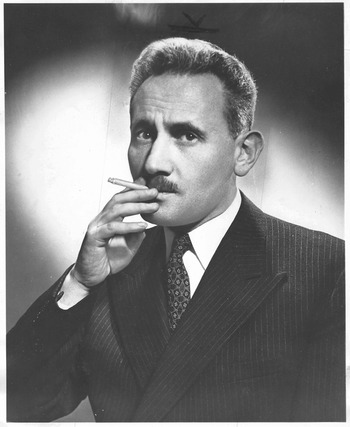
In 1936, a Kiev born, American-educated correspondent for the Associated Press and NBC in Moscow named Robert Magidoff published a dense anthology titled Neger-Diktung in Amerike (Negro-Poetry in America) under the Emes imprint.Footnote 14 Appearing as part of a translation series overseen by the Yiddish modernist poet Shmuel Halkin, Neger-Dikhtung in Amerike remains to this day the most extensive and intricately crafted corpus of African-Diasporic poetry in Yiddish translation.Footnote 15 The anthology included an extended critical introduction and translations of nearly one hundred individual poems by twenty-nine poets, both men and women, from across the United States and the Caribbean.Footnote 16
Magidoff produced his anthology in contrast to that which appeared in Der Hammer by rejecting the discourse of spirit and life-sensibility, and thus loosening his mode of translation from earlier discourses of racialized and nationalized essentialisms. Fluent in evolving conceptions of folklore studies among Soviet Yiddish intellectuals, the value of Magidoff's translation lies in its direct engagement with the writings of W.E.B. Du Bois, with whom he corresponded directly, and Ayzik Rozentsvayg's Soviet Yiddish study of social differentiation in Yiddish folklore poetry.Footnote 17 Magidoff rejected the concept of an essential Black “folk-creativity” and the existence of a uniform “Black Folk” as an essentialist category. Speaking about race when he references “the Negro folk,” Magidoff implied a subtle rejection of race as a concept without scientific bases. He also rejected Olgin's description of an essential black religious spirituality. Instead, Magidoff instrumentalized Soviet and Black American folkloristics, especially James Weldon Johnson's literary histories of poetry, to identify the folkloristic materials behind Black modernism—such as the Black preacher's sermon and the songs of peddlers, teachers, artisans, musicians, laborers, and prostitutes. For Magidoff, the emergence of the Spirituals and the Blues served as evidence of rising proletarian consciousness among these groups. Black modernist poetry culminated the synthesis of folklore materials and art, while Magidoff's translation entailed the rejection of race as a tool of literary analysis, instead focusing on the ways in which Black modernism contested racism by drawing upon universal categories of folklore. (Figure 1).
1949 Press Photo of Robert Magidoff.

In his critical introduction, Magidoff carefully explained the historical foundations of “Negro” English:
The Negroes have assimilated very fast with regards to language, thus in the course of a few generations, English has become the mother-tongue of the entire Negro Folk in the United States. The process of assimilation has expedited the fact that, with purchasing the slaves, the plantation owners always saw to trade Negroes from separate, foreign speaking tribes (shvotim,) so that they would not be able to communicate and prepare a revolt. Thus, English has become the general language of all Negroes, and later—their only language. They acquired it with an unexpected mastery, because almost none of the slaves knew how to read or write. In a great number of states there were even laws which prohibited granting any sort of education to the slaves. With assimilating the new, totally foreign language, the Negroes have modified its phonetics a bit. The modifications were passed on from generation to generation and, together with a number of idiomatic expressions, built the peculiar, juicy, and colorful Negro dialect.Footnote 18
Magidoff discusses the linguistic “assimilation” of “Negroes” to English, and attributes this assimilation to the fact that slavery eradicated Africans’ myriad native languages, forcing them to speak the language of their oppressors amongst themselves and to others. The dominance of English, according to Magidoff, lay in the plantocracy's fear of revolt, which could have been discussed covertly in a language spoken exclusively by the enslaved. He suggests that the acquisition of English literacy, as opposed to only spoken proficiency, expressed an intelligence that the plantocracy resisted, as it was acquired in an environment that denied formal education. Magidoff then concludes that though Blacks speak English, they have also modified its sounds and constructed, alongside a rich vernacular folklore; a “peculiar and juicy” (eygnartikn un zaftikn) Negro dialect,” terms that must have evoked sentiments and sensibilities associated with Yiddish, and in particular, its relationship—politically and culturally—to its German source.
Magidoff thus begins a literary history of the African Diaspora with an act of language loss and gain, beginning with the loss of pre-contact African languages, and the imposition of Christianity. He goes on to explain how the poet Phillis Wheatley, in her reception of Christian verse forms, reproduced the sense of inferiority that missionaries imposed on their enslaved audiences through a racialized reading of the Christian Bible. Paraphrasing Wheatley's own verse, Magidoff describes the way Wheatley had internalized the missionary readings of the Hebrew Bible that shaped the enslaved in the image of biblical Israelites awaiting salvation.
Magidoff's critical essay conforms to the nascent Soviet notion of Folklore, which, after overcoming the constraints and internalized sensibilities of the Christian past, liberates itself along the lines of internationalist labor.Footnote 19 Nevertheless, there is a tension between his sketch of history as secularizing, and the fidelity that his translation pays to the subversive use of Christian and biblical motifs persistently expressed in his sources. Magidoff thus animates his anthology with a dialectical tension: the history of the proletariat is based in narrative of secularization, while the folklore itself, even in modernist form, is inextricable from the semantic range and affective power of Christian language and imagery.
The poverty of the Negro poetry until the end of the Nineteenth Century is expressed together with the Negro's enslavement, with his daily struggle for survival, for freedom, and elementary human rights—a struggle which still takes place in a great measure to this very day. This exhausted struggle against race-hate, exploitation and being torn away from culture, has swallowed the entire energy, the best creative powers of the Negro nation. As soon as the external treatment has become a little bit milder, when the advancement of industrial capitalism created an urban-proletariat, and a Negro petty bourgeoisie has grown in the Negro ghettoes of the big cities, the cultural level of the oppressed nation was then elevated. Negroes began to send their children to the schools and even to the universities. They began to publish their own newspapers and journals, began to produce their own artists: dancers, singers, actors, painters, writers and poets. The entire process began in the last decade of the Nineteenth Century, and in the nineties Paul Laurence Dunbar began to appear on the poetic horizon.Footnote 20
From this passage, Magidoff's introduction continues by sketching out the development of Negro poetry first in a brief exposition of the Spirituals, which transformed Christian prayer. He then discusses the Blues as being based in the folk love song, which transforms into an expression of class-consciousness among Black agricultural workers. “The Blues” is translated into Yiddish as a neologism—“Der Bliuz” a term that evokes other, sonically linked terms. Bloyz in its adjectival form which describes something that is unadorned, plain, or naked. It can also be used as a noun—a gap between two objects or sentiments. It is probable that Magidoff is cognizant of this flexibility—Der Bliuz is a spare lament for love lost, which he associates with the klog-lid, a Yiddish dirge sung in response to tragic death.Footnote 21 The choice of the term klog-lid also places the Blues poem in the terms of Yiddish folkloristics, which differentiated the Yiddish klog-lid—often devised to lament anti-Jewish violence—from its Hebrew antecedent, the kine, or dirge recited most commonly on the holiday of Tishebov to symbolically mourn the destruction of the ancient Temple in Jerusalem and medieval persecutions.Footnote 22
In this sense, Sterling Brown's poem “Memphis Blues,” translated as “Memfis Bliuz,” neatly encapsulates Magidoff's desire to show how Modernist poetry could, in a kind of telescoping fashion, layer different Black folkloristic materials into a new poetic idiom. Spiritual, the blues form, laborer's songs, and preacher's sermons all function as different levels of dictionFootnote 23:
Sterling Brown's poem, written in dialect and translated in a lilting, sparse Yiddish, invokes the Blues. The translation emphasizes images of imperial dominance in antiquity by layering ancient plunder with Jim Crow Memphis, Tennessee. In the Yiddish version, Magidoff emphasizes the sonic swings of the Yiddish folk song and adds Rome to rhyme the couplet. While Rome suggests the Roman Empire's conquest and destruction of Jerusalem, it also serves to complete the rhythmic bumps of the rhyming couplet. This reference to Rome, which does not exist in Brown's original, indicates the extent to which Magidoff and his editors would add small nods to Jewish folklore materials into Brown's blues lament, while resisting any impulse to link essential or racial identity.
Magidoff's Yiddish translation of Countee Cullen's poem “Heritage” is another striking example of how the translator selected and translated poems that resisted a romantic or essentialist reading of Black modernism as an expression of racial identity. Cullen's poem contemplates the relevance of African culture to the Black poet in diaspora:
Magidoff changes the poem's refrain to “vos is Afrike mir itst”: What is Africa to me now? He reproduces the verse, initially removing its reference to the Garden of Eden, emphasizing images of the jungle, and deleting reference to natural metaphor.
“Heritage” is translated under the title “Yerushe,” a Yiddish term of Hebrew origin used by the Soviet critic A. Litvakov to describe the ancient, religious layer of Yiddish culture. When Cullen later describes Africa as being “a book one thumbs, listlessly” he is critiquing the primitivist images of Africa he received in his education, while Cullen's poem positions Africa as an elusive element in his poetic development—its elusiveness is brought about by the inability of the poet to undo the severing of his ancestors from their native land.Footnote 26
In this sense, Magidoff's translation accentuates the jungle—a primitivist trope that hovered over many interpretations of Black modernism. Magidoff instead used the structuralist typology of Soviet Yiddish folkloristics to give coherence to his selection of Black modernist poetry. He selected poems by Jean Toomer and Georgia Douglas Johnson that relied on arrangements of phonetic and rhythmic repetition, which centered music as its central source. The second aspect of his selection, in translations of Sterling Brown and Langston Hughes, emphasized expressionistic images of African antiquity, which grappled with the unrecoverable bond between the African diaspora and its imagined homeland. These images call to mind the ways in which Soviet Yiddish modernists engaged popular Zionist motifs. The final mode centers on the ecstatic lyric, which in its individual, contemplative level of diction evokes the preacher devising his orations, a mode that Magidoff borrowed from James Weldon Johnson's sermon-poems in his critical introduction. These three aspects of translation do not exist apart in the anthology, but continuously overlap and shift together across the breadth of the collection, which points to the editorial hand of Shmuel Halkin, a major Soviet Yiddish poet and translator, who saw in his translation projects an opportunity to present literature as a global phenomenon.
Magidoff's translations offer a different path from the well-known original Yiddish works about Black subjects because they evidence, in addition to their aim to translate into Yiddish an expansive corpus of original verse, the reception of Black literary criticism, in particular the writings of W.E.B. Du Bois and James Weldon Johnson. The work of translation does not begin with the doubling of Black and Jewish victimhood, nor with a desire to fully inhabit Black subjectivity. Rather, Robert Magidoff, being completely fluent in American English—he earned a bachelor's degree at the University of Wisconsin in 1932—attuned his translation practice to the transatlantic study of Folklore as a global system. In echoes of Soviet Yiddish writing about Jewish folklore, Magidoff cultivated a sensibility and theoretical apparatus that combined historical and textual analysis. Magidoff's translation of African diasporic poetry into Yiddish resisted Olgin's theory of Black racial or national folksgayst as the basis of a distinct Black culture and aesthetic. Rather, in order to show how Black Modernism, like other forms of the literary avant-garde, drew on universal forms of folk culture, Magidoff drew upon W.E.B. Du Bois's studies of Black music and religious expression. After reading the Yiddish modernist poet Lune Mattes's English-language poem “To The Negro” in Du Bois's journal The Crisis, he became interested in the academic studies of African-American culture.Footnote 27 Magidoff's demonstrated contact with Black intellectuals and press differentiates his legacy from his contemporaries. In much of the Yiddish poetry written to address African-Americans, there is a focus on essentialist embodiment, primitivism, and the spectacle of grotesque racial violence. Magidoff's translations function differently as direct attempts to translate Black subjectivity, rather than to inhabit or define essential Blackness according the tradition of white patronage.Footnote 28
Magidoff's project is crucial for understanding the literary-historical foundations for Yiddish receptions of racial language, in that he did not seem interested in the analogical thinking that has come to define how we appreciate Black-Jewish cultural and political contact. When placed alongside Paul Robeson, Claude McKay, and Langston Hughes's visits to the USSR in 1932, about which Hughes also published essays, the appearance of Harlem Renaissance writers in Yiddish translation shows how an ongoing transatlantic Jewish avant-garde embedded itself within Soviet-Black political contacts in the interwar years. This convergence laid bare the complex historical relationship between state-sponsored Soviet Yiddish culture, the plight of Jews in central and eastern Europe, and the internationalist struggle for racial equality in the United States.Footnote 29 Yiddish writers’ proclivity to address African-American subjects has been seen as the product of poets curiously encountering the problem of anti-black racism in the United States, and pondering the irony and meaning of his or her own newfound freedom. An assumption that the Jewish immigrant's encounter with Black people and anti-black racism was novel or unmoored from layers of reception history has constrained the ways in which the articulation of racial and racist ideas in the Yiddish text are analyzed, relegating the Yiddish poet to a space “outside the historical foundations of lynching.Footnote 30 It is crucial then that we place the work of translation squarely within the demands of literary historiography.