Introduction
Arrhythmias after paediatric cardiac surgery pose significant challenges and can occur in up to 75% of children, depending on the specific lesion and procedure. Reference Talwar, Patel, Juneja, Choudhary and Airan1–Reference Yildirim, Tokel, Saygili and Varan3 The most common postoperative arrhythmias are junctional ectopic tachycardia, atrioventricular block, sinus bradycardia, ventricular tachycardia, and supraventricular re-entrant tachycardia Reference Delaney, Moltedo, Dziura, Kopf and Snyder4,Reference Valsangiacomo, Schmid and Schüpbach5 Risk factors for arrhythmias are numerous and include younger age, lower weight, longer cardiopulmonary bypass and aortic cross-clamp time, surgical correction of septal defects or right ventricular outflow obstruction, receipt of inotropic support, postoperative acidosis, electrolyte disturbances, and hyperthermia. Reference Yildirim, Tokel, Saygili and Varan3–Reference Rekawek, Kansy and Miszczak-Knecht11 Children who experience postoperative arrhythmias have longer ICU and overall length of stay, more days on mechanical ventilation, and increased mortality. Reference Fuchs, Smith, Van Driest, Crum, Edwards and Kannankeril12 Antiarrhythmics are the mainstay of prevention and treatment and may be combined with adjunctive measures such as cooling and pacing.
Although two antiarrhythmics are United States Food and Drug Administration approved in children (sotalol for ventricular arrhythmias or atrial fibrillation/flutter and ivabradine for heart failure), Reference Li, Cohen-Wolkowiez and Pasquali13 there is limited literature assessing the safety, efficacy, pharmacokinetics, and pharmacodynamics of common antiarrhythmics administered after paediatric cardiac surgery. Population-specific studies are needed due to the heterogeneous nature of congenital cardiac anomalies and respective repairs that can affect the conduction system differently. Reference Delaney, Moltedo, Dziura, Kopf and Snyder4,Reference Valsangiacomo, Schmid and Schüpbach5 As a result, off-label use of antiarrhythmics is common after paediatric cardiac surgery.
Evidence-based guidelines and drug trials are needed to standardise treatment of arrhythmias after paediatric cardiac surgery to reduce morbidity and mortality. This systematic review provides a detailed summary of the current literature on antiarrhythmic use after paediatric cardiac surgery and identifies future areas of investigation.
Materials and methods
Search strategy
All studies of children 18 years of age or younger who underwent cardiac surgery and received a drug postoperatively for either prevention or treatment of arrhythmia were included. These drugs included traditional antiarrhythmics and adjunctive therapies (dexmedetomidine, magnesium) and are referred to as antiarrhythmics throughout. PubMed and EMBASE databases were searched for studies published between 2000 and 2024, similarly to research previously described. Reference Thompson, Foote and King14 Key words used to identify the appropriate studies were Medical Subject Headings related to “pediatric,” “postoperative care,” “cardiac surgery,” and “cardiopulmonary bypass.” This search was then further narrowed to only include studies with “anti-arrhythmia agents OR antiarrhythmic” Medical Subject Headings. Only human studies written in English were included. Case reports, letters, editorials, and comments were excluded. The search strategy is provided in Appendix 1 of the Supplementary Material and the Preferred Reporting Items for Systematic reviews and Meta-Analyses extension for Scoping Reviews checklist is provided in Appendix 2.
Study selection
Identified studies were imported into EndNote (Clarivate Analytics, Philadelphia, PA, USA). Two reviewers independently screened and reviewed study titles and abstracts. Studies were included if the antiarrhythmic was used as prophylaxis or treatment for an arrhythmia in the postoperative period. The postoperative period began at ICU admission from the operating room. Studies that described starting the medication in the operating room were also included if the medication was continued for any duration of time in the postoperative period. Studies were excluded if the medication was only given intraoperatively. The full article was then reviewed to ensure appropriateness prior to data extraction. Any disagreements about the inclusion of a study were resolved via discussion between the two reviewers. If needed, a third, independent reviewer was consulted to review the study to determine whether it would be included.
Data extraction
For each eligible study, two reviewers independently extracted data for a standardised data collection sheet. Information about the study was collected, including study characteristics (study design, year of publication, number of children) and study population characteristics (age, cardiac defect, surgical repair). Postoperative complications, interventions, medications, and outcomes were also recorded. Finally, for each antiarrhythmic given, the dose, timing, and duration of administration were noted.
Results
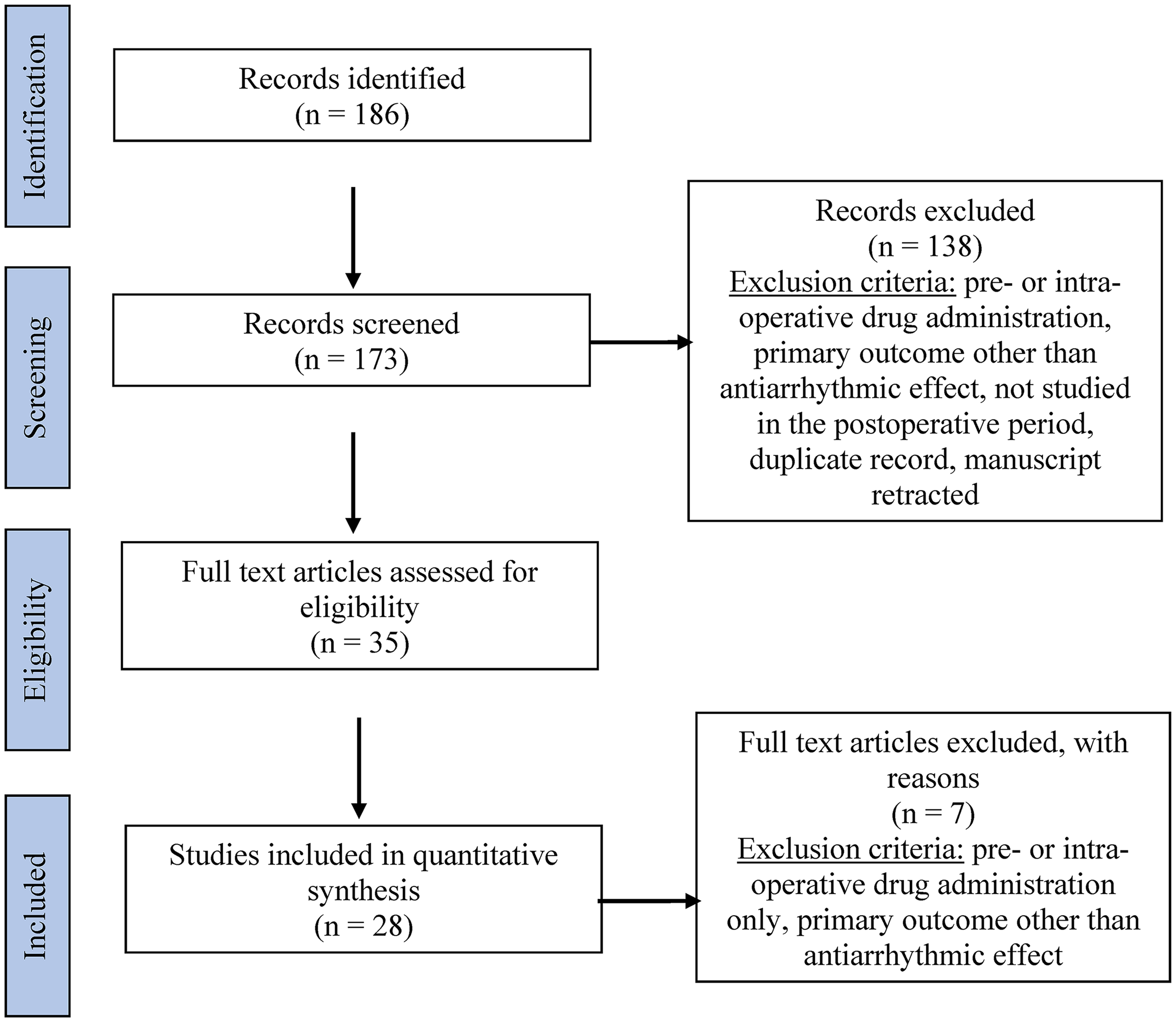
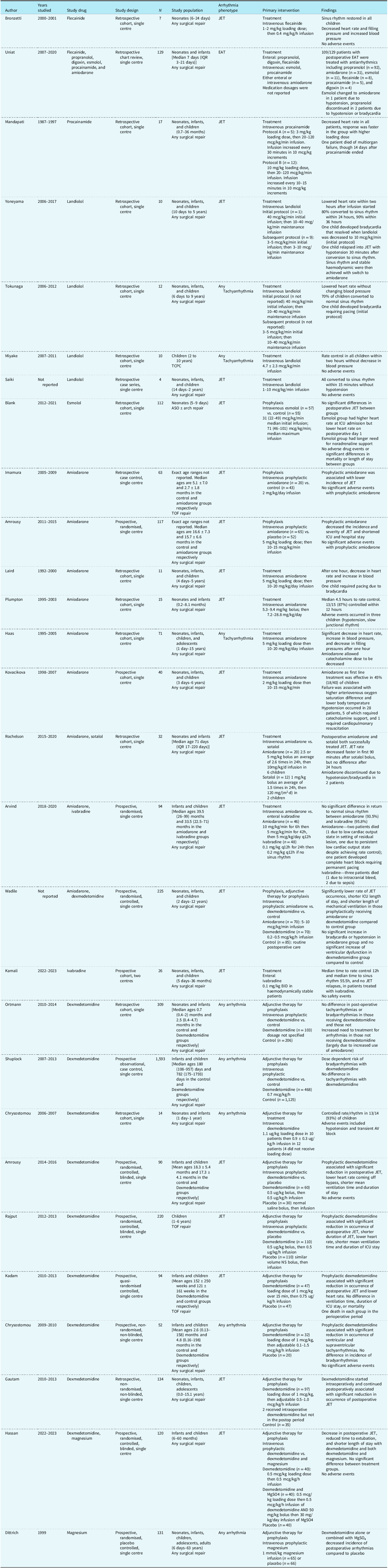
A total of 186 studies were identified using our search strategy and ultimately yielded 28 studies for inclusion (Figure 1). Study findings are summarised in Table 1. There were 16 retrospective and 12 prospective studies, and one study was multicenter. Eight studies were randomised. Collectively, the studies included 3,752 children. Two studies focused on Tetralogy of Fallot and two focused on transposition of the great arteries, while the other 24 studies evaluated multiple cardiac defects or did not specify. Medications were initiated preoperatively to several days postoperatively and included a wide range of dosing, frequency, and duration of treatment. Nine studies focused on prophylaxis, and 16 studies focused on treatment. All studies considered tachyarrhythmias.
Flow diagram of study selection.

Characteristics of post-operative antiarrhythmic studies and study populations

ASO = arterial switch operation; EAT = ectopic atrial tachycardia; IQR = interquartile range; JET = junctional ectopic tachycardia; TCPC = total cavopulmonary connection; TOF = tetralogy of Fallot.
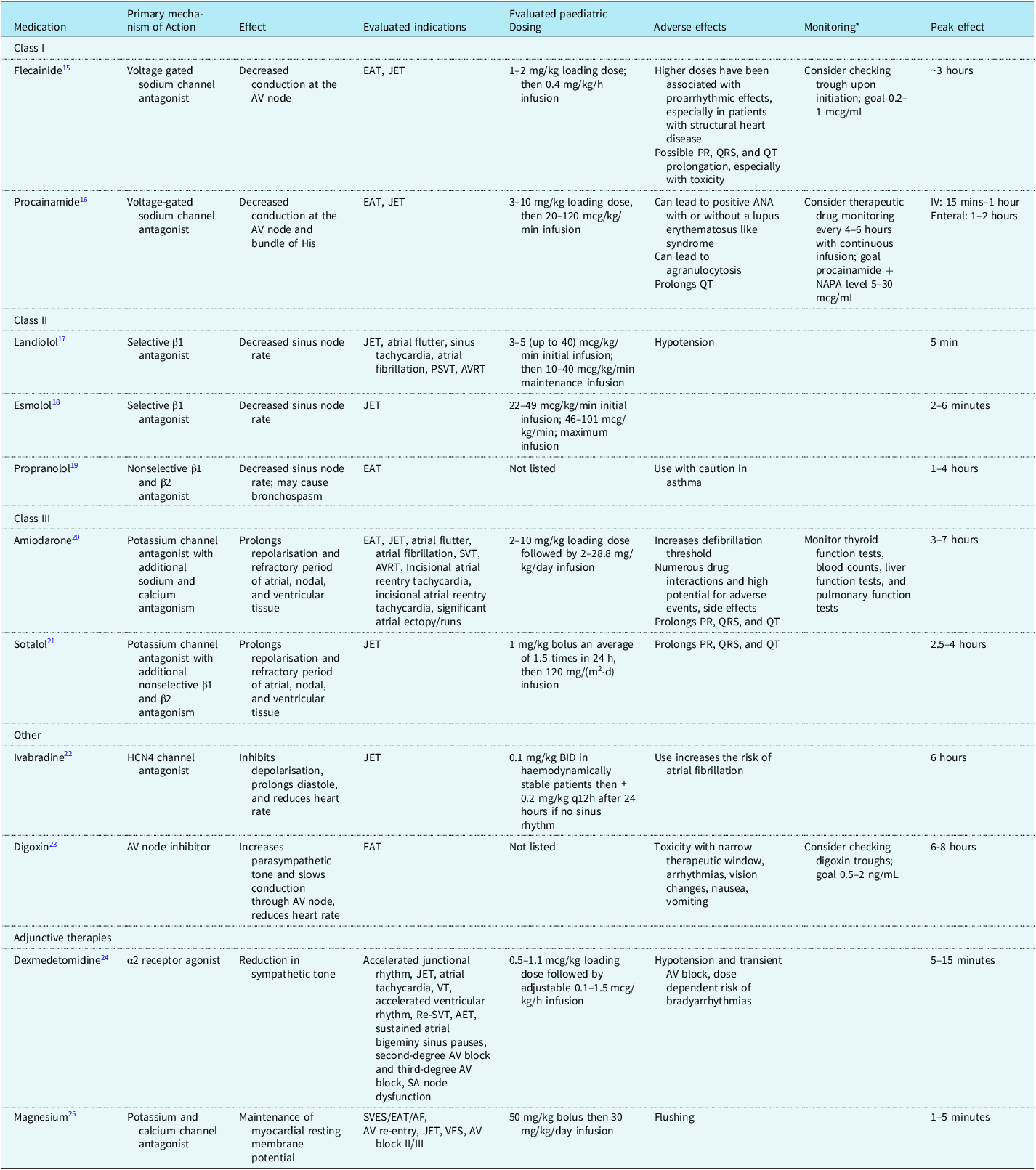
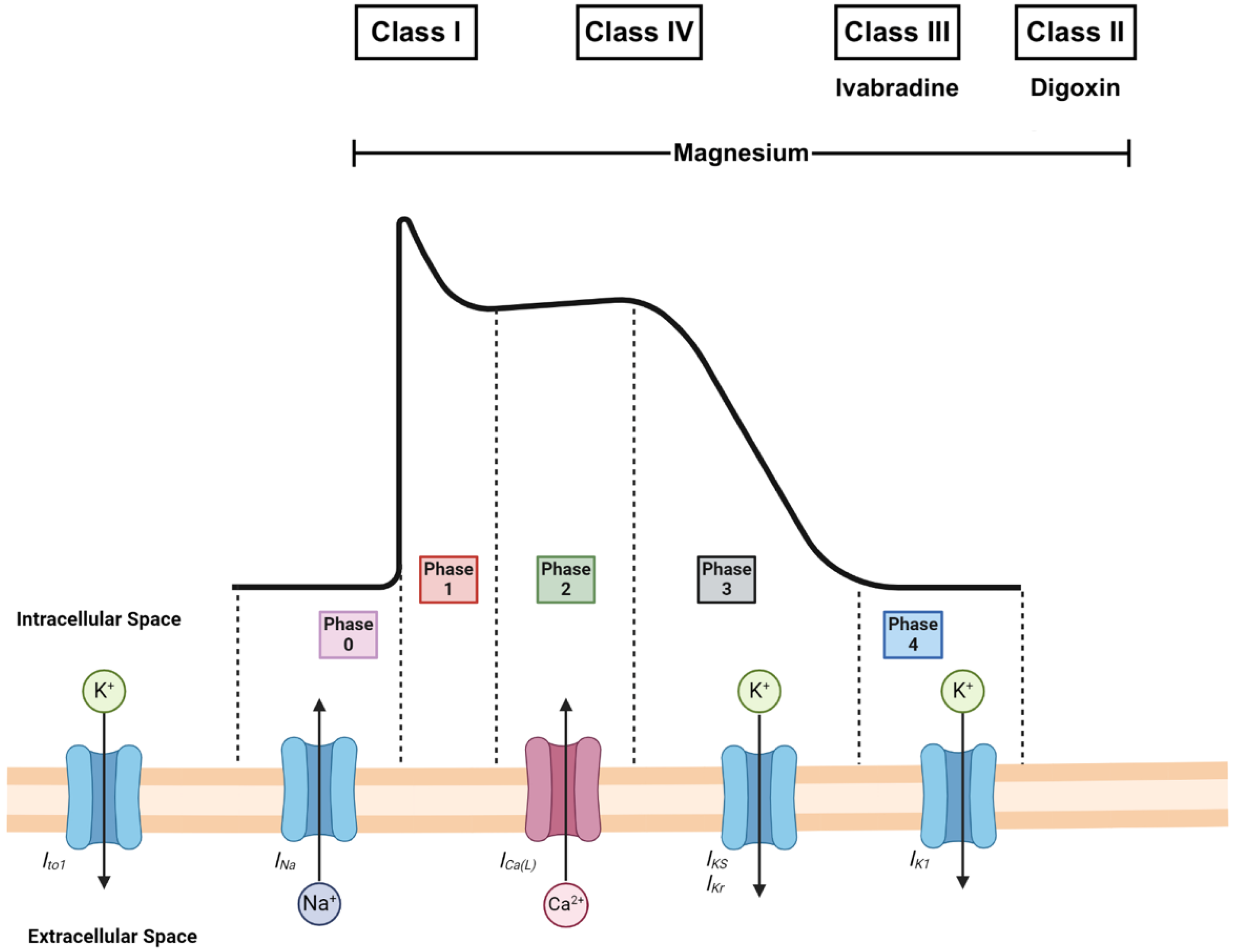
The antiarrhythmics studied included class I antiarrhythmics (flecainide [2/28 studies] and procainamide [2/28]); class II antiarrhythmics (landiolol [4/28], propranolol [1/28], and esmolol [2/28]), class III antiarrhythmics (amiodarone [10/28] and sotalol [1/28]), cardiac pacemaker current blockers (ivabradine [2/28]), alpha-2 adrenoreceptor agonists (dexmedetomidine [10/28]), atrioventricular node inhibitors (digoxin, [1/28]), and magnesium (2/28). Antiarrhythmic classes and physiologic effects are shown in Table 2, Reference Perry and Garson15–Reference Rower, Johnson and Zorc25 , and mechanisms of action are shown in Figure 2.
Antiarrhythmics included in this review and summary of their mechanism of action and net physiologic effects

* Use of all antiarrhythmics in the postoperative setting warrants cardiac rhythm and ECG monitoring.
AET = atrial ectopic tachycardia; AF = atrial fibrillation; AVRT = atrioventricular reciprocating tachycardia; DEX = dexmedetomidine; JAR = junctional accelerated rhythm; JET = junctional ectopic tachycardia; NAPA = N-acetylprocainamide; PSVT = paroxysmal supraventricular tachycardia; Re-SVT = reentry type supraventricular tachycardia; SVES = supraventricular extrasystole; SVT = supraventricular tachycardia; VES = ventricular extrasystole.
Cardiac myocyte action potential and mechanism of action of antiarrhythmic drugs.

Class I antiarrhythmics
Flecainide
Flecainide is an enteral class IC antiarrhythmic that blocks sodium channels, minimally prolonging depolarisation and refractory time in cardiac myocytes. Reference Arunachalam, Alzahrani and Preeti26 In adults, it is labelled for use in patients without structural heart disease to treat paroxysmal tachyarrhythmias, including supraventricular tachycardias, atrial fibrillation, and atrial flutter, as well as sustained ventricular tachycardia. 27 Flecainide use has previously been limited due to concerns regarding toxicities, and its use in children is off-label. Reference Vu, Hill, Summers, Vranian and Faulx28 We included one retrospective cohort of seven children who received flecainide for treatment of refractory junctional ectopic tachycardia after cardiac surgery. Infant age ranged from 6 to 24 days. Reference Bronzetti, Formigari, Giardini, Frascaroli, Gargiulo and Picchio29 All seven children achieved sinus rhythm after flecainide treatment, with a mean time of 7.2 ± 9.7 hours. Plasma flecainide concentrations did not reach the toxic range (>1,000 ng/mL), and no adverse effects from flecainide administration were observed. Reference Bronzetti, Formigari, Giardini, Frascaroli, Gargiulo and Picchio29 In a retrospective chart review describing antiarrhythmic treatment choices in children with postoperative ectopic atrial tachycardia, of 109/129 (84%) children with ectopic atrial tachycardia treated with antiarrhythmics, one child (0.8%) was initially given flecainide, and eight children (6.2%) were given flecainide at some point during their hospitalisation. No adverse events related to flecainide were identified. Reference Uniat, Hill, Shwayder, Silka and Bar-Cohen30 In these two studies, flecainide was used safely in children with junctional ectopic tachycardia and ectopic atrial tachycardia and was effective in converting junctional ectopic tachycardia to sinus rhythm, although flecainide was not commonly used as a first-line agent.
Procainamide
Similar to flecainide, procainamide blocks sodium channels in cardiac myocytes. However, as a class IA antiarrhythmic, it significantly prolongs the action potential. Reference Pritchard and Thompson31 It is labelled for the treatment of life-threatening ventricular arrhythmias in adults and is also used off-label in children. 32 Our review found two retrospective cohorts evaluating procainamide use. The first retrospective cohort of 17 children investigated the efficacy of procainamide therapy for rapid rate control of postoperative junctional ectopic tachycardia and compared two procainamide treatment protocols that differed by loading dose and time to increase the continuous infusion. Reference Mandapati, Byrum and Kavey33 All 17 children reached target junctional ectopic tachycardia rate control with procainamide; the protocol with the higher loading dose that allowed more frequent increases in the continuous infusion delivered results more quickly than those of the other protocol (3.2 ± 1.1 hours vs. 6.4 ± 3.8 hours, P < 0.02). No proarrhythmic effects, bradycardia, or significant hypotension were noted in the study population. One child died of multiorgan failure, but this was likely unrelated to procainamide as they had been off the infusion for 14 days. Reference Mandapati, Byrum and Kavey33 The second retrospective cohort evaluated procainamide to treat postoperative ectopic atrial tachycardia. Of the 109/129 (84%) children identified by retrospective chart review who were given antiarrhythmics for ectopic atrial tachycardia, one (0.8%) was initially and five (3.9%) were ultimately treated with procainamide. No adverse events were reported, and efficacy was not discussed. Reference Uniat, Hill, Shwayder, Silka and Bar-Cohen30 Overall, procainamide may be safe and effective in achieving rate control for postoperative junctional ectopic tachycardia, with time to rate control decreasing with higher loading dose and more frequent dose increases. Procainamide may also be of utility in postoperative ectopic atrial tachycardia, although it appears to be infrequently used, and efficacy remains unknown.
Class II antiarrhythmics
Landiolol
Landiolol is a short-acting, intravenous, beta-1 selective antagonist that is highly cardiac selective and shows promise for treatment of tachyarrhythmias. Reference Plosker34 It has a half-life of about four minutes and is labelled in adults for short-term treatment of supraventricular tachycardias including atrial fibrillation and flutter. Reference Oeffl, Schober and Faudon35,36 Adverse events are rare, but it is not commonly used in clinical practice, nor is it labelled in children. Reference Miyake, Fujita and Yoshizawa37–Reference Yoneyama, Tokunaga and Kato40 Three retrospective cohort studies and a case series with a total of 36 children receiving landiolol met our search criteria. The first retrospective cohort found that landiolol and atrioventricular sequential pacing converted 8/10 (80%) children with junctional ectopic tachycardia to sinus rhythm within 24 hours. No significant haemodynamic compromise was reported. Reference Yoneyama, Tokunaga and Kato40 The second cohort study reported that 12/12 (100%) children with a variety of different critical tachyarrhythmias including junctional ectopic tachycardia, atrial flutter, paroxysmal supraventricular tachycardia, atrial fibrillation, atrioventricular reciprocating tachycardia with Wolff-Parkinson-White syndrome, and excessive sinus tachycardia achieved rate control with landiolol and 70% converted to sinus rhythm. One neonate developed haemodynamically significant bradycardia requiring discontinuation of landiolol. Reference Tokunaga, Hiramatsu and Kanemoto39 The third cohort study showed that 10/10 (100%) children with refractory tachyarrhythmias after total cavopulmonary connection achieved rate control with landiolol within two hours and without a significant change in blood pressure. Reference Miyake, Fujita and Yoshizawa37 The case series reported that 4/4 (100%) children with junctional ectopic tachycardia achieved sinus conversion within 15 minutes of starting landiolol without any adverse effects. Reference Saiki, Nakagawa, Ishido, Masutani and Senzaki38 These studies indicate that landiolol may be effective in the management of tachyarrhythmias with minimal adverse events, although its efficacy has not been directly compared to that of other antiarrhythmics.
Esmolol
Esmolol is a short-acting, intravenous, selective beta-1 adrenergic receptor antagonist. Reference Pevtsov, Ahmed, Patel and Fredlund41 It has a half-life of about five minutes and is labelled for the treatment of supraventricular tachycardias including atrial fibrillation and flutter, intra- and postoperative tachycardia or hypertension, and noncompensatory sinus tachycardia in adults. Reference Oeffl, Schober and Faudon35,42 It is used off-label to treat tachyarrhythmias in the paediatric population. Reference Blank, Zajonz and Gruschwitz43 We identified one retrospective cohort study investigating the effect of esmolol on postoperative heart rate in infants <1 month old who underwent arterial switch operations for transposition of the great arteries and one retrospective chart review identifying antiarrhythmics, including esmolol, used to treat postoperative ectopic atrial tachycardia. Reference Uniat, Hill, Shwayder, Silka and Bar-Cohen30,Reference Blank, Zajonz and Gruschwitz43 In the cohort study, fifty-seven (51%) neonates received esmolol within the first 12 hours after bypass to treat sinus tachycardia. There was no significant difference in the occurrence of postoperative junctional ectopic tachycardia between neonates who received esmolol and those who did not. However, children in the esmolol group had higher heart rate at ICU admission (155 vs. 147 beats per minute, P = 0.02) and lower heart rate at the second measurement timepoint on post-operative day one, a median of 11 hours after ICU admission (135 vs. 144 beats per minute, P < 0.001). There was a longer need for noradrenaline support in the esmolol group (4 vs. 3 days, P = 0.01), but there were no adverse drug events or significant differences in mortality and duration of stay between groups. Reference Blank, Zajonz and Gruschwitz43 In the chart review, 109/129 (84%) of children with postoperative ectopic atrial tachycardia were treated with antiarrhythmics, and esmolol was chosen as the initial treatment in eight (6.2%) and ultimately used in 11 (8.5%) children. One child experienced hypotension, causing discontinuation of esmolol and initiation of amiodarone. Reference Uniat, Hill, Shwayder, Silka and Bar-Cohen30 Overall, esmolol use is associated with lower heart rates and appears safe, but robust data on efficacy are lacking.
Propranolol
Propranolol is an orally administered non-selective beta-adrenergic receptor antagonist. Reference Shahrokhi and Gupta44 Though only labelled for paediatric use to treat infantile haemangioma, it is used off-label for treatment of tachyarrhythmias. Reference Kaley, Aregullin, Samuel and Vettukattil45 In the paediatric population, propranolol’s half-life is up to 6.5 hours and has been reported to be significantly longer at over 15 hours in newborns, two orders of magnitude higher than landiolol and esmolol. Reference Filippi, Cavallaro and Fiorini46 Our search identified one retrospective chart review investigating antiarrhythmics used in 109/129 (84%) children treated for postoperative ectopic atrial tachycardia. Oral propranolol was the most common initial treatment choice and was started first in 72 (56%) children and used at all in 92 (71%). One child developed bradycardia and one developed hypotension, prompting propranolol discontinuation. Propranolol may be of utility in postoperative ectopic atrial tachycardia, though characterisation of its efficacy is needed.
Class III antiarrhythmics
Amiodarone
Amiodarone is primarily a class three antiarrhythmic that blocks potassium repolarisation in cardiac myocytes, slowing conduction rate and prolonging the refractory period of the sinoatrial and atrioventricular nodes. Reference Florek, Girzadas and Daniel47 It is labelled in adults for advanced cardiac life support for management of ventricular fibrillation, pulseless ventricular tachycardia, and wide complex tachycardia, as well as for treatment of malignant ventricular arrhythmias. Reference Florek, Girzadas and Daniel47 Due to its lipophilicity, it is rapidly distributed into fat, and its half-life can approach 70 days in adults. Reference Freedman and Somberg48 Paediatric data are more limited, with one small study finding that its half-life was between 6.9 and 11.4 days in children. Reference Saul, Scott and Brown49 It is typically administered intravenously in the postoperative period as a 1–5 mg/kg bolus followed by a 5–20 mg/kg/day infusion. Reference Florek, Girzadas and Daniel47,Reference Giardina, Passman, Link, Zimetbaum and Parikh50 It is the most frequently used medication to prevent and treat tachyarrhythmias in children after cardiac surgery, although its use is off-label. Reference Florek, Girzadas and Daniel47,Reference Soar, Perkins and Maconochie51 While generally well tolerated, amiodarone can cause hypotension and bradycardia. Reference Amrousy, Elshehaby, Feky and Elshmaa52
Our review found ten studies in which amiodarone was used in the prevention and/or treatment of tachyarrhythmias in children. Dosing in the reported studies ranged from 2–9.4 mg/kg for bolus dosing followed by a 5–28.8 ug/kg/min infusion. Endpoints of these studies varied and included occurrence of junctional ectopic tachycardia, time to rate and rhythm control, and sufficient slowing to allow for atrioventricular pacing. Two studies focused on starting amiodarone in the operating room for the prevention of junctional ectopic tachycardia, including one retrospective study of 63 children with Tetralogy of Fallot and one randomised, placebo-controlled trial of 117 children with a variety of cardiac defects. Reference Amrousy, Elshehaby, Feky and Elshmaa52,Reference Imamura, Dossey, Garcia, Shinkawa and Jaquiss53 In both studies, junctional ectopic tachycardia occurred significantly less frequently in the treatment group (10% vs. 37%, P = 0.03 and 9.2% vs. 28.9%, P = 0.01, respectively) in unadjusted analysis. In the retrospective study, hospital and ICU length of stay did not differ between the group with or without amiodarone, while in the placebo-controlled trial, those receiving amiodarone had shorter hospital and ICU length of stays. There was no increase in adverse events in the treatment group in these studies.
Five studies, including one case series of 11 children, one retrospective cohort of 15 children, one retrospective cohort of 71 children, one prospective cohort study of 40 children, and one retrospective chart review of 5372 children, focused on treatment of tachyarrhythmias in the postoperative setting. Reference Uniat, Hill, Shwayder, Silka and Bar-Cohen30,Reference Plumpton, Justo and Haas54–Reference Kovacikova, Hakacova, Dobos, Skrak and Zahorec57 Children included in these studies underwent a variety of repairs for several different cardiac defects. Arrhythmias included junctional ectopic tachycardia in three studies, ectopic atrial tachycardia in one study, and any tachyarrhythmia in one study. Most children initially received standard of care measures such as optimising sedation, reducing inotropes, avoiding hyperthermia, and correcting electrolytes and hypovolemia. The case series found that amiodarone was successful in controlling junctional ectopic tachycardia in 10/11 (91%) children. Complications of amiodarone therapy included one child (9%) with hypotension and one child (9%) with bradycardia requiring external pacing. Reference Laird, Snyder, Kertesz, Friedman, Miller and Fenrich55 The first retrospective cohort reported a median time to rate control, defined as less than 180 beats per minute, as 4.5 hours (range 1–19.5 h). Complications included 2/15 (13%) children experiencing hypotension alone and 1/15 (7%) children experiencing a slow junctional rhythm that led to hypotension. Reference Plumpton, Justo and Haas54 The second retrospective cohort study reported that the mean times to rate and rhythm control were 4.6 and 11.4 hours, respectively. Complications included hypotension in 7/71 (10%) children and slow junctional rhythm requiring atrial pacing in 14/71 (20%) children. Reference Haas and Camphausen56 The second retrospective cohort study identified 129/5372 (2.4%) children who developed postoperative ectopic atrial tachycardia. Reference Uniat, Hill, Shwayder, Silka and Bar-Cohen30 Of the 109/129 (84%) children who were treated with antiarrhythmics, amiodarone was the second most frequently administered medication, chosen as the initial treatment for ectopic atrial tachycardia in 24/129 (19%) and ultimately used in 31/129 (24%) children without any recorded safety events and no discussion of efficacy. Reference Uniat, Hill, Shwayder, Silka and Bar-Cohen30 The prospective cohort study found that amiodarone alone in 45% of children and amiodarone with hypothermia in the remaining 55% of children was effective at restoring sinus rhythm or at reducing junctional ectopic tachycardia to a rate that allowed atrioventricular pacing. Complications included 28/40 (70%) children with hypotension, of whom 23/28 (82%) responded well to calcium or fluid resuscitation, 5/28 (18%) required pressor support, and 1/28 (4%) required cardiopulmonary resuscitation with cardiac massage. Reference Kovacikova, Hakacova, Dobos, Skrak and Zahorec57
Three studies compared amiodarone to other antiarrhythmics for the treatment of junctional ectopic tachycardia and included one non-randomised trial and two randomised trials. The non-randomised trial compared intravenous amiodarone to intravenous sotalol, a class III potassium channel blocker that prolongs the action potential and effective refractory period duration at high doses, exerts beta blocking effects at both high and low doses, and is used off-label to treat tachyarrhythmias. Control of junctional ectopic tachycardia was successful in 15/20 (75%) children in the amiodarone group and 10/12 (83%) children in the sotalol group over 24 hours (P = 0.72). Children who received intravenous sotalol experienced a faster decrease in heart rate (25 beats/min per hour) compared to those who received amiodarone (8 beats/min per hour) (P < 0.01). Amiodarone infusion was discontinued prematurely in 2/10 (10%) children due to hypotension and bradycardia. No adverse haemodynamic effects were noted in children who received sotalol. Reference Rochelson, Valdés and Asadourian58 Although this review identified only one small, nonrandomised trial investigating the efficacy of sotalol for postoperative junctional ectopic tachycardia in children, the study suggests that sotalol is similarly effective, or possibly superior, to amiodarone for controlling junctional ectopic tachycardia in this population
One randomised trial compared intravenous amiodarone to oral ivabradine, a cardiac pacemaker current blocker that reduces heart rate and increases time in diastole. There was no significant difference in return to normal sinus rhythm between the amiodarone group of 43 children and the ivabradine group of 46 children (93.5% vs. 95.8%, P = 0.36). The time to reach sinus rhythm was similar for both groups. One child in the amiodarone group developed atrioventricular block after being in sinus rhythm for greater than 48 hours and subsequently required a permanent pacemaker. Amiodarone was discontinued in another child due to a rise in hepatic aminotransferases. No adverse drug events were noted in the ivabradine group. Reference Arvind, Kothari and Juneja59
The final randomised trial compared prophylactic intravenous amiodarone (70 children) to prophylactic intravenous dexmedetomidine (70 children) and to a control group that received routine postoperative care (85 children). Reference Rochelson, Valdés and Asadourian58–Reference Wadile, Sivakumar and Murmu64 Junctional ectopic tachycardia occurred in 6/70 (8.5%) children in the amiodarone group, 10/70 (14.2%) children in the dexmedetomidine group, and 21/85 (24.7%) children in the control group, with a significantly lower rate of junctional ectopic tachycardia occurrence (P = 0.022), shorter ICU length of stay (P = 0.006), and shorter length of mechanical ventilation (P = 0.008) in those prophylactically receiving amiodarone or dexmedetomidine compared to the control group. There were no significant differences in adverse effects, including bradycardia, hypotension, ventricular dysfunction or mortality, between non-control treatment groups. Reference Wadile, Sivakumar and Murmu64
Altogether, while amiodarone is the most frequently used antiarrhythmic for prophylaxis and treatment of postoperative arrhythmia following paediatric cardiac surgeries, no comparative studies have demonstrated amiodarone’s superiority over other medications and it may have a worse safety profile, with reports of hypotension being most common. Reference Saul and LaPage65
Other antiarrhythmics
Ivabradine
Ivabradine is a hyperpolarisation-activated cyclic nucleotide-gated potassium channel 4 (HCN4) blocker that inhibits cardiac depolarisation to prolong diastole and reduce heart rate. Reference Reed, Kerndt, Patel, Nicolas and Preeti61 It is labelled for the treatment of stable symptomatic heart failure with reduced ejection fraction in adults and heart failure with reduced ejection fraction due to dilated cardiomyopathy in children six months and older. In addition, its off-label use in treatment of paediatric postoperative junctional ectopic tachycardia is becoming more common. Reference Kamali, Öztürk and Çiftçi66,67 Ivabradine is only available enterally and has a half-life of approximately six hours. We identified two studies in which children received ivabradine—the previously discussed randomised trial that found no significant difference in return from junctional ectopic tachycardia to sinus rhythm between intravenous amiodarone and oral ivabradine and a two-site prospective cohort study in which 26 (2.3%) children had postoperative junctional ectopic tachycardia. Reference Kamali, Öztürk and Çiftçi66,Reference Reed, Kerndt and Nicolas68 In the prospective study, all children with postoperative junctional ectopic tachycardia received 0.1 mg/kg oral ivabradine daily, and 12 (46%) required additional treatment with either amiodarone and/or flecainide. The median time to ventricular rate control was 12 hours, and median time to sinus rhythm was 55.5 hours. There was no recurrence of junctional ectopic tachycardia after the end of treatment. No adverse drug events were reported in either study. Overall, ivabradine appears to be safe, but its efficacy as a single antiarrhythmic is unclear, as one study showed that frequent treatment with additional antiarrhythmics was required.
Digoxin
Digoxin acts as a positive inotrope by inhibiting the myocardial sodium-potassium ATPase and slows conduction through the atrioventricular node to lower heart rate. It is labelled for heart failure in children and may be used off-label in supraventricular tachycardias. Reference David and Shetty69 In the chart review of 109/129 (84%) children treated for postoperative ectopic atrial tachycardia, four (3.1%) were treated with oral digoxin, all as their initial antiarrhythmic. No adverse events were reported, and efficacy was not discussed. Reference Uniat, Hill, Shwayder, Silka and Bar-Cohen30 Data supporting efficacy of digoxin as an antiarrhythmic in children in the postoperative setting are sparse. This may partly reflect the physiologic limitations of digoxin in this context—its effects can be partially reversed by increased sympathetic tone, which is often elevated in the postoperative setting. Reference Ommen, Odell and Stanton70
Adjunctive therapies
Dexmedetomidine
Dexmedetomidine is an intravenous selective alpha-2 adrenergic receptor agonist typically used for its sedative and analgesic effects, though it also has negative chronotropic and dromotropic effects. Reference Afshani63 It is labelled in adults for sedation of intubated ICU patients on mechanical ventilation and peri-procedural sedation of patients who are not intubated. Reference Reel and Maani71 Dexmedetomidine’s cardiac effects may be useful in arrhythmia prevention and treatment, although its label does not include this indication, and any use in the paediatric population is off-label. Reference Ortmann, Keshary, Bisselou, Kutty and Affolter72,Reference Shuplock, Smith and Owen73 Evidence is conflicting regarding its efficacy for treating tachyarrhythmias, though it has shown success in some studies Reference Shuplock, Smith and Owen73,Reference Chrysostomou, Beerman, Shiderly, Berry, Morell and Munoz74 Importantly, dexmedetomidine is also known to cause bradyarrhythmias in a dose-dependent fashion. Reference Shuplock, Smith and Owen73
Ten studies met our search criteria, including five randomised, placebo-controlled trials, two prospective non-randomised studies, and three retrospective cohorts. Reference Wadile, Sivakumar and Murmu64,Reference Ortmann, Keshary, Bisselou, Kutty and Affolter72–Reference Rajput, Das, Makhija and Airan80 Endpoints varied and included incidence of postoperative tachyarrhythmias and bradyarrhythmias with the use of prophylactic dexmedetomidine, and the efficacy of dexmedetomidine in converting a variety of tachyarrhythmias to normal sinus rhythm.
The randomised, placebo-controlled studies investigated prophylactic dexmedetomidine use in the prevention of junctional ectopic tachycardia. In the first randomised, placebo-controlled study of 90 children, the incidence of junctional ectopic tachycardia was significantly reduced with dexmedetomidine treatment (3.3% vs. 16.7%, P < 0.005) and the heart rate while coming off cardiopulmonary bypass was significantly lower (130.6 ± 9 vs. 144 ± 7.1, P < 0.001). Hospital stay, ICU stay, and days of mechanical ventilation were shorter in the dexmedetomidine group than in the placebo group. Reference Amrousy, Elshmaa and El-Kashlan75 The second randomised trial was discussed above (see amiodarone section). Reference Wadile, Sivakumar and Murmu64 The third randomised, placebo-controlled study investigated prophylactic dexmedetomidine and combined dexmedetomidine and magnesium for the prevention of junctional ectopic tachycardia. Similar to the other randomised, controlled studies, junctional ectopic tachycardia incidence was significantly reduced among treatment groups (10% with dexmedetomidine only and 2.5% with dexmedetomidine and magnesium vs. 30%, P = 0.01 in the control group; odds ratio 0.26, 95% confidence interval 0.08–0.89 with dexmedetomidine only and odds ratio 0.06, 95% confidence interval 0.01–0.49 with dexmedetomidine and magnesium P = 0.03 and P = 0.01, respectively). There was no significant difference in junctional ectopic tachycardia occurrence between the treatment groups. The last two randomised-controlled trials found that prophylactic dexmedetomidine was associated with a reduction in postoperative junctional ectopic tachycardia compared to placebo following intra-cardiac repair of Tetralogy of Fallot. Reference Kadam, Tailor, Kulkarni, Mohanty, Joshi and Rao79,Reference Rajput, Das, Makhija and Airan80 Adverse events including mortality, bradycardia, and hypotension were not significantly different between groups. Reference Wadile, Sivakumar and Murmu64,Reference Amrousy, Elshmaa and El-Kashlan75,Reference Hassan and El Haddad78,Reference Rajput, Das, Makhija and Airan80
Similarly, the first prospective non-randomised study found that prophylactic dexmedetomidine was associated with a significant reduction in supraventricular and ventricular tachyarrhythmias. This study found no difference in the incidence of bradyarrhythmias between the dexmedetomidine (n = 32) and placebo groups (n = 20). Reference Chrysostomou, Beerman, Shiderly, Berry, Morell and Munoz74 Conversely, the second prospective non-randomised study did not find a significant difference in the occurrence of tachyarrhythmias between the prophylactic dexmedetomidine (n = 468) and control groups (n = 1,125) after propensity score matching. The study also reported a statistically significant, dose-dependent increase in odds of bradyarrhythmias in the dexmedetomidine group (odds ratio 1.04, 95% confidence interval 1.01–1.07). Reference Shuplock, Smith and Owen73
The first retrospective cohort study also found no difference in the occurrence of tachyarrhythmias in the first 48 hours postoperatively between the prophylactic dexmedetomidine group (n = 103) and placebo group (n = 206). However, there was no difference between incidence of bradyarrhythmias in the two groups. Reference Ortmann, Keshary, Bisselou, Kutty and Affolter72 The second retrospective cohort study looked at the safety and efficacy of postoperative dexmedetomidine in the treatment of different tachyarrhythmias in 14 children. Reference Chrysostomou, Beerman, Shiderly, Berry, Morell and Munoz74 Dexmedetomidine was used as a primary treatment in nine children and as a rescue treatment in five children. The primary outcome of rhythm and/or heart rate control was achieved in 13/14 (93%) children. The measure of success was dependent on the type of tachyarrhythmia being treated, with the strongest evidence of success in children with junctional ectopic tachycardia and reentrant supraventricular tachycardia. Three children developed mild hypotension that was easily corrected, and one child developed transient complete atrioventricular block, although it is unclear if this was caused by dexmedetomidine. Reference Chrysostomou, Beerman, Shiderly, Berry, Morell and Munoz74 The third study was limited to children following VSD closure and found that dexmedetomidine started intraoperatively and continued postoperatively decreased the incidence of junctional ectopic tachycardia in this population (97 dexmedetomidine, 20 control). Reference Gautam, Turiy and Srinivasan77
Altogether, several studies have demonstrated that dexmedetomidine is safe and effective in prevention and treatment of postoperative junctional ectopic tachycardia and may improve outcomes such as length of ICU stay and days of mechanical ventilation. In addition to junctional ectopic tachycardia, dexmedetomidine also appears to effectively treat other tachyarrhythmias including reentrant supraventricular tachycardia.
Magnesium
Magnesium is a key component of maintaining the resting membrane potential of cardiac myocytes and sinus rhythm. Reference DiNicolantonio, Liu and O’Keefe81–Reference Shechter83 Labelled indications for intravenous magnesium sulphate in adults include hypomagnesemia, eclampsia or preeclampsia with severe features, and ventricular tachycardia or fibrillation secondary to hypomagnesemia. Reference Hicks and Tyagi84 Magnesium has also been used off-label as an antiarrhythmic following cardiac procedures. Reference Dittrich, Germanakis and Dähnert85 Our review found one randomised, placebo-controlled trial that compared the efficacy of prophylactic magnesium to placebo in the prevention of arrhythmias. Reference Dittrich, Germanakis and Dähnert85 Incidence of postoperative arrhythmias was 8/65 (12.3%) in the treatment group, significantly lower than 17/66 (26%) in the placebo group (P = 0.05). Reference Dittrich, Germanakis and Dähnert85 Overall, this study provided preliminary evidence supporting the safety and efficacy of postoperative magnesium infusions in preventing postoperative arrhythmias. Multiple studies evaluated intraoperative magnesium for the prevention of postoperative arrhythmias including junctional ectopic tachycardia and supraventricular tachycardias; however, there was no ICU medication administration, therefore these studies were outside the scope of this review. Reference Verma, Chauhan, Gharde, Lakshmy and Kiran86–Reference Dorman, Sade and Burnette88 A separate study that compared the use of magnesium and dexmedetomidine to dexmedetomidine alone for the prevention of junctional ectopic tachycardia found no differences between treatment groups (see dexmedetomidine section). Reference Kamali, Öztürk and Çiftçi66 However, because magnesium was not evaluated in isolation, we cannot draw conclusions from this study about the independent effects of magnesium for the prevention of junctional ectopic tachycardia
Discussion
Despite more than 40,000 paediatric cardiac surgeries performed annually with an estimated postoperative arrhythmia incidence of ∼15%, this review of antiarrhythmic use after paediatric cardiac surgery from 2000–2024 only identified 28 studies of 11 antiarrhythmics in 3,752 children. Overall, the level of evidence was fairly poor as most studies were retrospective cohorts, which are inherently vulnerable to confounding by indication. In addition, institution-specific protocols and prescribing practices may have influenced treatment decisions and observed outcomes. As is common in paediatric trials, many studies were underpowered to detect statistically significant differences. Furthermore, only eight studies were randomised, and safety and efficacy endpoints differed widely, precluding the ability to combine data for meta-analyses. As expected, most studies (27/28, 96%) considered junctional ectopic tachycardia, the most common postoperative tachyarrhythmia. Reference Kabbani, Al Taweel, Kabbani and Al Ghamdi89 Our review included only four studies that considered bradyarrhythmias and three that considered ventricular tachycardia. This may be due to the generally low incidence of ventricular arrhythmias in the postoperative setting. Further, bradyarrhythmias are often not managed with antiarrhythmics and may be managed by temporary pacing or inotropic support. Additionally, adjunctive non-pharmacologic therapies such as cooling or overdrive pacing were not systematically studied.
Overall, studies showed variable efficacy. Flecainide and procainamide achieved goals of conversion to sinus rhythm and rate control, respectively, both without reported adverse events, although they were not frequently used first line. Of the cardioselective beta-blockers studied, landiolol converted junctional ectopic tachycardia to sinus rhythm and supported rate control for tachyarrhythmias, with few adverse events. Esmolol also decreased heart rate, though junctional ectopic tachycardia occurrence was similar in groups receiving and not receiving esmolol. Esmolol was also associated with longer need for inotropic support, though there was no difference in adverse drug events or mortality between groups. Amiodarone decreased incidence of junctional ectopic tachycardia, though some studies associated it with adverse effects including hypotension and bradycardia, and it was not significantly better than sotalol or ivabradine. Most studies found dexmedetomidine to be associated with decreased incidence of junctional ectopic tachycardia when used prophylactically. When used postoperatively to treat tachyarrhythmias, children achieved the rate or rhythm control goals specific to the arrhythmia treated. Regarding the concern for dose-dependent bradycardia with use of dexmedetomidine, only one of the ten dexmedetomidine studies included in this review supported this. Magnesium prophylaxis with intraoperative bolus and postoperative infusion was safe and generally effective in decreasing postoperative arrhythmias including junctional ectopic tachycardia, with the exception of one randomised, placebo-controlled trial. Finally, propranolol and digoxin were also used to treat arrhythmias without reported safety events, though the retrospective chart review did not include any endpoints to evaluate their clinical efficacy.
Studies included in this paper examined a wide variety of endpoints, likely due to a lack of consensus of acceptable efficacy endpoints. For example, whether rate control is sufficient to ensure adequate time for cardiac filling and preserve cardiac output or if rhythm control and atrioventricular synchrony are more important, is unknown, especially as there was not a standardised definition of rate control across studies. While there have been some endpoints put forth for adult studies, these are not applicable for children after cardiac surgery. Reference Myerburg, Mitrani, Interian and Castellanos90–Reference Euler and Friedman92 Once endpoints are defined, more standardised studies that allow for easier comparison can be completed.
Due to the mechanism of action of some direct cardiac-acting antiarrhythmics, the effect they have on the cardiac myocytes to restore sinus rhythm also may acts as a negative inotrope, which can lead to adverse events in the postoperative period. Major side effects of antiarrhythmics are associated with negative inotropy and chronotropy which may lead to hypotension and bradycardia in this haemodynamically fragile population. Further, dose-dependent side effects like QTc prolongation or QRS widening may necessitate therapeutic drug monitoring, as may be used for procainamide or flecainide, and more nefarious side effects, such as those associated with amiodarone, may warrant lifelong monitoring. While there have been some reports on target plasma levels, particularly in procainamide and flecainide, these targets are often in place to avoid toxicity, and it is unclear what plasma exposures are associated with increased efficacy. The majority of studies identified in this review found acceptable safety profiles of drugs used for arrhythmia management, but the dose-exposure-response relationship of these drugs has not been characterised in this high-risk population.
Given the lack of formal guidelines specific to antiarrhythmic therapy for prevention and treatment of postoperative arrhythmias in children following cardiac surgery, it is difficult to contextualise our findings within existing recommendations. Although antiarrhythmic therapy is discussed in the Pediatric Advanced Life Support Guidelines, these recommendations are tailored to the acutely decompensating child and not specific to children after cardiac surgery. Reference Lasa, Dhillon and Duff93 A clinical practice review addressing postoperative atrial fibrillation management exists but is limited to adult populations. This highlights the need for population-specific, evidence-based guidelines. Reference Suero, Ali, Barron, Segar, Moon and Chatterjee94
Future directions
Paediatric clinical drug trials are historically difficult to perform in critically ill populations due to low parental consent rates, the urgent nature of critical care, and relatively small numbers of heterogeneous disease. Due to the sudden onset of these arrhythmias and need for expeditious intervention to prevent cardiovascular compromise, opt-out enrolment or platform studies that target all admissions may allow for higher enrolment. Furthermore, understanding dose-exposure-response relationships through pharmacokinetics and pharmacodynamics can be limited by needing frequent blood samples. However, critically ill children are a unique population because routine care requires frequent monitoring and lab draws. Novel trial design capitalising on available literature data supplemented by standard of care clinical characteristics and biospecimen collection and pharmacokinetic/pharmacodynamic modelling and simulation can help identify factors unique to the postoperative population that may alter the dose-exposure-response relationship and provide more definitive data for antiarrhythmic use. For example, pharmacokinetic/pharmacodynamic modelling was used in the paediatric approval for both sotalol and ivabradine. Reference Saul, Ross and Schaffer21,Reference Bonnet, Berger, Jokinen, Kantor and Daubeney95 Capitalising on this methodology and adding data from the postoperative population has the potential to optimise dosing and improve outcomes while ensuring feasible trial design.
Most arrhythmias encountered in the postoperative setting are self-limited or transient but can lead to haemodynamic instability, longer ICU stays, longer hospitalisations, and increased mortality. Reference Bronzetti, Formigari, Giardini, Frascaroli, Gargiulo and Picchio29 Our review shows that most medications appear safe, but there is no clear evidence on the most efficacious antiarrhythmic for this high-risk population, although amiodarone and dexmedetomidine were the most frequently studied. Future studies should focus on identifying standardised endpoints and continue to evaluate the efficacy, optimal drug and dosing regimen, and adverse events in the paediatric post-cardiopulmonary bypass population. Novel trial designs may facilitate study of these drugs.
Limitations
The purpose of this study was to evaluate the available literature on medication use for postoperative arrhythmias in children with heart disease. With this in mind, the studies included here span a wide variety of congenital heart anomalies, operative repairs, and arrhythmias. This could limit the conclusions of our review. We chose to broadly include children with any CHD, undergoing any congenital heart operation involving cardiopulmonary bypass in order to have a large enough sample of medications to draw conclusions. Additionally, our review did not include studies focused on bradyarrhythmias or ventricular tachycardia, likely due to bradyarrhythmias not primarily being managed by drugs and the paucity of ventricular arrhythmias. The inclusion of studies in which antiarrhythmic medications were initiated intraoperatively and continued into the postoperative period limited our ability to conclude that the observed outcomes were attributable only to postoperative management. Finally, our review only included studies written in English and indexed in the PubMed or EMBASE databases; therefore, relevant studies reported in other languages or available exclusively through other databases were not captured.
Conclusions
Antiarrhythmic medication is commonly used in the postoperative setting for children after congenital heart surgery for treatment and prophylaxis. This study found that several antiarrhythmics—flecainide, procainamide, landiolol, esmolol, propranolol, sotalol? amiodarone, ivabradine, digoxin, dexmedetomidine, and magnesium—were generally well tolerated in children undergoing congenital heart surgery and effective in meeting various endpoints including decreased incidence of postoperative arrhythmia and achieving postoperative rate or rhythm control. While no antiarrhythmic definitively showed superiority, amiodarone had frequent adverse events. The level of evidence for antiarrhythmics remains poor given frequent use of retrospective cohort studies and underpowering of trials. Unfortunately, there is lack of standard dosing regimens or endpoints to assess the safety and efficacy of commonly used antiarrhythmics. Future safety and efficacy trials should be undertaken in this population to ensure optimal treatment of arrhythmias after cardiac surgery.
Supplementary material
The supplementary material for this article can be found at https://doi.org/10.1017/S1047951126113808.
Financial support
HPF is supported by the Eunice Kennedy Shriver National Institute of Child Health and Human Development under award T32HD094671. EJT receives support from the Eunice Kennedy Shriver National Institute of Child Health and Human Development (K23HD116971). KZ receives support from NICHD (HHSN275201800003I), NHLBI (Subcontract Number 27-312-0217571-66255L, 54-312-0217571-67198L), NCATS (1UM1TR005436), and FDA (FDA UG3/UH3 FD 006797). CPH receives salary support for research from National Institute for Child Health and Human Development (PL1HD105462; RL1HD107784; R01HD106588) National Heart Lung and Blood Institute (K24HL173596) NIMHD (U01MD018294), the non-profit Burroughs Research Fund, and industry for neonatal and paediatric drug development (https://scholars.duke.edu/person/christoph.hornik/research#grants).
Competing interests
Authors report no conflicts of interest.