Introduction
Depressive and anxiety disorders as well as alcohol dependence are among the most common psychiatric disorders in the general population (World Health Organization, 2001, 2003). A recent review (Wittchen et al. Reference Wittchen, Jacobi, Rehm, Gustavsson, Svensson, Jönsson, Olesen, Allgulander, Alonso, Faravelli, Fratiglioni, Jennum, Lieb, Maercker, Van Os, Preisig, Salvador-Carulla, Simon and Steinhausen2011) has estimated that every year 14.0% of the total European Union population suffers from anxiety disorders and rates for major depressive disorder and alcohol dependence are 6.9% and 3.4%, respectively. Similar prevalence rates have been observed in the USA (Hasin et al. Reference Hasin, Goodwin, Stinson and Grant2005, Reference Hasin, Stinson, Ogburn and Grant2007). As these disorders have a serious impact on an individual's physical, social and occupational functioning (Judd et al. Reference Judd, Akiskal, Zeller, Paulus, Leon, Maser, Endicott, Coryell, Kunovac, Mueller, Rice and Keller2000; Hoffman et al. Reference Hoffman, Dukes and Wittchen2008; Ormel et al. Reference Ormel, Petukhova, Chatterji, Aguilar-Gaxiola, Alonso, Angermeyer, Bromet, Burger, Demyttenaere, de Girolamo, Haro, Hwang, Karam, Kawakami, Lépine, Medina-Mora, Posada-Villa, Sampson, Scott, Ustün, Von Korff, Williams, Zhang and Kessler2008; Wittchen et al. Reference Wittchen, Jacobi, Rehm, Gustavsson, Svensson, Jönsson, Olesen, Allgulander, Alonso, Faravelli, Fratiglioni, Jennum, Lieb, Maercker, Van Os, Preisig, Salvador-Carulla, Simon and Steinhausen2011) and constitute a large economic burden to society (Cassano & Fava, Reference Cassano and Fava2002; Lopez et al. Reference Lopez, Mathers, Ezzati, Jamison and Murray2006; Hoffman et al. Reference Hoffman, Dukes and Wittchen2008; Olesen et al. Reference Olesen, Gustavsson, Svensson, Wittchen and Jönsson2012), prevention and treatment strategies offer the opportunity to greatly improve public health. For this purpose, it is crucial to unravel the aetiological pathways to the onset of depressive and anxiety disorders as well as alcohol dependence.
Previous epidemiological studies examining the underlying structure of psychopathology have provided consistent evidence that psychiatric disorders can be divided into two broad, related categories (e.g. Krueger, Reference Krueger1999; Vollebergh et al. Reference Vollebergh, Iedema, Bijl, De Graaf, Smit and Ormel2001; Kendler et al. Reference Kendler, Prescott, Myers and Neale2003; Slade & Watson, Reference Slade and Watson2006; Krueger & Markon, Reference Krueger and Markon2006, Reference Krueger and Markon2008): an internalizing dimension representing depressive and anxiety disorders and an externalizing dimension representing alcohol dependence as well as other substance-use disorders and antisocial personality disorder. This structure largely results from genetic factors, although depressive/anxiety disorders and alcohol dependence, but not other substance-use disorders and antisocial personality disorder, also share the same environmental risk factors (Kendler et al. Reference Kendler, Aggen, Knudsen, Røysamb, Neale and Reichborn-Kjennerud2011).
It has been hypothesized that personality, determined by genetics as well as (early) environmental experiences (e.g. childhood trauma or life events), plays an important role in the development of depressive/anxiety disorders and alcohol dependence (e.g. Krueger, Reference Krueger2005; Kendler & Gardner, Reference Kendler and Gardner2011; Villafuerte et al. Reference Villafuerte, Heitzeg, Foley, Wendy Yau, Majczenko, Zubieta, Zucker and Burmeister2012). For example, negative emotionality, a trait involving a tendency to experience negative emotional states, is strongly related to depressive/anxiety disorders (e.g. Kennedy et al. Reference Kennedy, Lynch and Schwab1998; Bienvenu et al. Reference Bienvenu, Browns, Samuels, Liang, Costa, Eaton and Nestadt2001; De Graaf et al. Reference De Graaf, Bijl, Ravelli, Smit and Vollebergh2002; Spinhoven et al. Reference Spinhoven, De Rooij, Heiser, Smit and Penninx2009; Kendler & Gardner, Reference Kendler and Gardner2011), whereas impulsivity, a heterogeneous construct involving traits such as disinhibition and thrill and adventure seeking, has strong links with alcohol dependence (e.g. Clark, Reference Clark2005; Krueger, Reference Krueger2005; Acton & Zodda, Reference Acton and Zodda2005; Dick et al. Reference Dick, Smith, Olausson, Mitchell, Leeman, O'Malley and Sher2010; Broos et al. Reference Broos, Schmaal, Wiskerke, Kostelijk, Lam, Stoop, Weierink, Ham, de Geus, Schoffelmeer, van den Brink, Veltman, de Vries, Pattij and Goudriaan2012; Villafuerte et al. Reference Villafuerte, Heitzeg, Foley, Wendy Yau, Majczenko, Zubieta, Zucker and Burmeister2012). However, previous studies have never tested whether depressive/anxiety disorders and alcohol dependence result from different pathways involving specific traits and/or shared mechanisms involving the same personality traits. Our study will therefore not only examine the link of negative emotionality and impulsivity with pure conditions of depressive/anxiety disorder only (i.e. depressive and/or anxiety disorder without alcohol dependence) and alcohol dependence only (i.e. alcohol dependence without depressive or anxiety disorder), but also tests whether these associations are different for each disorder.
Another interesting phenomenon is the co-occurrence of depressive/anxiety disorders and alcohol dependence, which is much higher than one would expect by chance (e.g. Ross, Reference Ross1995; Kessler et al. Reference Kessler, Crum, Warner, Nelson, Schulenberg and Anthony1997; Burns & Teesson, Reference Burns and Teesson2002; De Graaf et al. Reference De Graaf, Bijl, Smit, Vollebergh and Spijker2003; Hasin et al. Reference Hasin, Goodwin, Stinson and Grant2005, Reference Hasin, Stinson, Ogburn and Grant2007; Boschloo et al. Reference Boschloo, Vogelzangs, Smit, Van den Brink, Veltman, Beekman and Penninx2011). This study aims to determine the role of personality in the co-morbidity of these disorders by testing several hypotheses. Although specific links may be present for negative emotionality and depressive/anxiety disorders as well as impulsivity and alcohol dependence, a correlation between these traits (i.e. negative emotionality and impulsivity) may result in an artificial association between disorders (i.e. depressive/anxiety disorders and alcohol dependence). We will therefore examine the underlying structure of the various aspects of both traits. Another explanation could be that shared vulnerability factors (i.e. the same personality traits) independently cause the onset of depressive/anxiety disorders as well as alcohol dependence. We will therefore explore whether traits that are related to both pure conditions of depressive/anxiety disorder only and alcohol dependence only are also related to the co-morbidity of these disorders. Finally, co-morbidity may result from the fact that the first disorder causes the onset of the other disorder. We will therefore test whether traits related to primary depressive/anxiety disorder preceding alcohol dependence are different from traits related to primary alcohol dependence preceding the depressive/anxiety disorder.
Method
Study design
Data were derived from the Netherlands Study of Depression and Anxiety (NESDA), an ongoing cohort study among adults (18–65 years) with assessments at baseline, 2-year and 4-year follow-up. A total of 2981 participants were initially included for the baseline assessment in 2004–2007, consisting of 2329 (78%) participants with and 652 (22%) participants without depressive and/or anxiety disorders (Penninx et al. Reference Penninx, Beekman, Smit, Zitman, Nolen, Spinhoven, Cuijpers, De Jong, Van Marwijk, Assendelft, Van Der Meer, Verhaak, Wensing, De Graaf, Hoogendijk, Ormel and Van Dyck2008). Participants with and without depressive and/or anxiety disorders were recruited from the community (19%), primary care (54%) and out-patient mental health care services (27%). Within the entire sample, 459 (15.4%) participants did and 2522 (84.6%) participants did not meet criteria of a lifetime diagnosis of alcohol dependence at the baseline assessment (Boschloo et al. Reference Boschloo, Vogelzangs, Smit, Van den Brink, Veltman, Beekman and Penninx2011). Individuals with insufficient command of the Dutch language or a primary clinical diagnosis of bipolar disorder, obsessive-compulsive disorder, severe substance-use disorder, psychotic disorder or organic psychiatric disorder, as reported by them or their mental health practitioner, were initially excluded. A detailed description of the NESDA study design and sampling procedures can be found elsewhere (Penninx et al. Reference Penninx, Beekman, Smit, Zitman, Nolen, Spinhoven, Cuijpers, De Jong, Van Marwijk, Assendelft, Van Der Meer, Verhaak, Wensing, De Graaf, Hoogendijk, Ormel and Van Dyck2008). The research protocol was approved by the Ethical Committee of participating universities and all participants provided written informed consent.
Assessments, including a structured diagnostic interview as well as paper-and-pencil questionnaires, were conducted at baseline as well as 2-year and 4-year follow-up. Although Diagnostic and Statistical Manual of Mental Disorders, Fourth Edition (DSM-IV) diagnoses of psychiatric disorders were assessed at all three time points, this was not the case for aspects of negative emotionality (i.e. assessed at baseline and 2-year follow-up, except for ‘worry’ which was assessed at all three time points) and impulsivity (i.e. assessed at 4-year follow-up). As this design did not enable us to prospectively examine whether personality predicted psychopathology, we considered the cross-sectional association of lifetime psychopathology (assessed at baseline, 2-year and 4-year follow-up) with lifetime personality traits (assessed at different time points). Personality traits are stable over time (e.g. Roberts & DelVecchio, Reference Roberts and DelVecchio2000) and trait scores could therefore be considered as lifetime levels. To obtain the most reliable indicators of personality traits, we have therefore averaged scores over assessments (correlations between time points ranged from r = 0.70, p < 0.001 for worry to r = 0.78, p < 0.001 for neuroticism).
For the present study, we selected participants with valid data on diagnoses of psychiatric disorders and at least one valid score on all personality traits (excluded: n = 733), leaving a sample of 2248 participants. Excluded participants were significantly younger (p < 0.001) and less educated (p < 0.001) compared with included participants, whereas gender (p = 0.74) was not associated with in- or exclusion. Participants with lifetime depressive/anxiety disorder were similar to individuals with lifetime alcohol dependence with regard to recruitment setting (primary care: 49% v. 54%; specialized mental health organizations: 30% v. 31%; general population: 21% v. 15%), level of education [years of education: mean = 12.50 (s.d. = 3.30) v. mean = 12.59 (s.d. = 3.31)] and level of daily functioning [i.e. WHO Disability Assessment Schedule total score: mean = 22.74 (s.d. = 20.74) v. mean = 25.99 (s.d. = 22.57)].
Diagnostic assessment
DSM-IV diagnoses of psychiatric disorders were established with the Composite International Diagnostic Interview (CIDI, version 2.1). The CIDI is highly reliable and valid in assessing psychiatric disorders (Wittchen et al. Reference Wittchen, Robins, Cottler, Sartorius, Burke and Regier1991) and was administered by specially trained research staff. Lifetime diagnoses of depressive disorders (major depressive disorder and dysthymia), anxiety disorders (generalized anxiety disorder, social phobia and panic disorder) and alcohol dependence were assessed at the baseline interview. At the 2-year and 4-year follow-up assessments, diagnoses were established over the period since the last interview. This information was combined to determine whether participants had a lifetime depressive/anxiety disorder and/or lifetime alcohol dependence at one of the three waves. First, we distinguished individuals with pure conditions of lifetime depressive/anxiety disorder only and lifetime alcohol dependence only. Of those individuals with a depressive/anxiety disorder only, 62% had both a depressive and an anxiety disorder, 26% had a depressive disorder only and 12% had an anxiety disorder only. We also distinguished individuals with co-morbid conditions in which the depressive/anxiety disorder preceded the alcohol dependence (primary depressive/anxiety disorder), alcohol dependence preceded the depressive/anxiety disorder (primary alcohol dependence), and the depressive/anxiety disorder and alcohol dependence initially occurred at the same age (concurrent onset). The temporal sequencing of disorders was based on the retrospectively derived, relative age of disorder onset (in years).
Negative emotionality and impulsivity
An extensive set of aspects of negative emotionality (i.e. neuroticism, hopelessness, rumination, worry and anxiety sensitivity) and impulsivity (i.e. disinhibition, thrill and adventure seeking, experience seeking and boredom susceptibility) was assessed, as both traits are heterogeneous constructs. Reliability of scales was expressed in Cronbach's α, distinguishing virtually no (Cronbach's α: 0.00–0.10), slight (Cronbach's α: 0.11–0.40), fair (Cronbach's α: 0.41–0.60), moderate (Cronbach's α: 0.61–0.80) and substantial (0.81–1.00) internal consistency of scales (Shrout, Reference Shrout1998).
Aspects of negative emotionality
‘Neuroticism’ was assessed with the 12-item ‘neuroticism’ subscale of the NEO Five-Factor Inventory (Costa & McCrae, Reference Costa and McCrae1992, Reference Costa and McCrae1995). Items were answered on a five-point Likert scale, resulting in a scale score ranging from 12 to 60. The scale showed substantial internal consistency in the present sample (Cronbach's α = 0.90).
‘Hopelessness’ was measured with a five-item ‘hopelessness reactivity’ subscale of the revised Leiden Index of Depression Sensitivity (LEIDS-R; Van der Does, Reference Van der Does2002; Van der Does & Williams, Reference Van der Does and Williams2003) which assesses the extent to which dysfunctional cognitions are triggered during normal mood variations. Items were answered on a five-point Likert scale, resulting in a scale score ranging from 0 to 20 with substantial internal consistency (Cronbach's α = 0.93).
‘Rumination’ was measured with a six-item ‘rumination reactivity’ subscale (range 0–24) of the LEIDS-R, which showed substantial internal consistency (Cronbach's α = 0.93).
‘Worry’ was assessed with the 11-item Worry Engagement Scale (Fresco et al. Reference Fresco, Heimberg, Mennin and Turk2002) of the Penn State Worry Questionnaire (Meyer et al. Reference Meyer, Miller, Metzger and Borkovec1990), which measures the frequency and intensity of worry symptoms. Each item was rated on a five-point Likert scale, resulting in a total score ranging from 11 to 55. The instrument showed substantial internal consistency (Cronbach's α = 0.96).
‘Anxiety sensitivity’ was assessed with the Anxiety Sensitivity Index (Reiss et al. Reference Reiss, Peterson, Gursky and McNally1986; Vujanovic et al. Reference Vujanovic, Arrindell, Bernstein, Norton and Zvolensky2007), measuring the extent to which participants fear the potential negative consequences of anxiety-related symptoms and sensations. A total score (range: 0–64) was calculated by summation of all 16 items, which were answered on a five-point Likert scale. The scale showed substantial internal consistency in our sample (Cronbach's α = 0.89).
Aspects of impulsivity
‘Disinhibition’ was based on a subscale of an abbreviated version of the Sensation Seeking Scale (SSS; Zuckerman, Reference Zuckerman1994; Roberti et al. Reference Roberti, Storch and Bravata2003) and represented the desire for social and sexual disinhibition as expressed in social drinking, partying, and variety in sexual partners. This scale included eight items that were answered on a five-point Likert scale, resulting in scores ranging from 8 to 40, and showed moderate internal consistency in our sample (Cronbach's α = 0.78).
‘Thrill and adventure seeking’ was also based on a subscale of the SSS and contained items expressing a desire to engage in sports or other activities involving speed or danger. This scale included 11 items that were answered on a five-point Likert scale, resulting in scores ranging from 11 to 55, and showed substantial internal consistency (Cronbach's α = 0.86).
‘Experience seeking’ was also based on a subscale of the SSS and represented the seeking of experience through the mind and senses, travel and a non-conforming life-style. The scale included six items, resulting in scores ranging from 6 to 30, and showed fair internal consistency (Cronbach's α = 0.56).
‘Boredom susceptibility’ was also based on a subscale of the SSS and represented an aversion to repetition, routine and dull people, and restlessness when things are unchanging. The scale included seven items, resulting in scores ranging from 7 to 35, and showed moderate internal consistency in our sample (Cronbach's α = 0.70).
Statistical analyses
Analyses were conducted using SPSS version 15.0 statistical software (SPSS Inc., USA). Descriptive statistics were used to summarize the distribution of sociodemographics, personality traits (i.e. various aspects of negative emotionality and impulsivity) and type of psychopathology. First, we examined the underlying structure of all assessed traits by using correlations and principal component analysis using Oblimin rotation. Then, multinomial logistic regression analyses were performed to determine which traits were associated with specific types of lifetime psychopathology [i.e. no psychopathology (=reference), depressive/anxiety disorder only, alcohol dependence only, primary depressive/anxiety disorder preceding alcohol dependence, primary alcohol dependence preceding depressive/anxiety disorder, and depressive/anxiety disorder and alcohol dependence occurring at the same time]. To examine whether pure conditions of depressive/anxiety disorder only and alcohol dependence only have different aetiological pathways involving different traits, logistic regression analyses were performed to test differences on all trait scores across the two pure conditions. Logistic regression analyses were also performed to determine whether primary depressive/anxiety disorder versus primary alcohol dependence have specific aetiological pathways involving different traits. All odds ratios with 95% confidence intervals were expressed per standard deviation increase in order to compare the magnitude of associations across traits. To illustrate differences in personality traits across these groups based on type of lifetime psychopathology, results of analyses of covariance were plotted in a graph. In addition, we performed logistic regression analyses separately comparing groups based on type of lifetime psychopathology to no psychopathology (as outcomes), and estimated the variance that could be explained by all aspects of negative emotionality and all aspects of impulsivity, respectively, using Nagelkerke's pseudo R 2. All analyses were adjusted for sociodemographics (i.e. gender, age in years and education in years).
Results
Sample
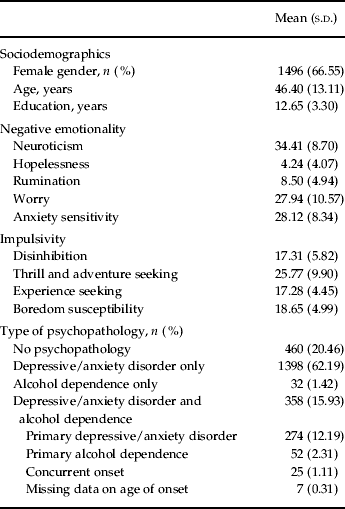
Table 1 shows the characteristics of our sample (n = 2248). Mean age was 46.40 (s.d. = 13.11) years and 66.5% were women. In the sample, 460 individuals (20.46%) had no psychiatric disorder, 1398 individuals (62.19%) had a depressive/anxiety disorder only and 32 individuals (1.42%) had alcohol dependence only. In addition, 358 individuals (15.93%) had a co-morbid depressive/anxiety disorder with alcohol dependence including 274 individuals (12.19% of the entire sample) with primary depressive/anxiety disorder, 52 individuals (2.31%) with primary alcohol dependence, 25 individuals (1.11%) with a concurrent onset of both disorders and seven individuals (0.31%) with missing data on the age of onset of disorders.
Sample characteristics

Data are given as mean (s.d.) or as number (percentage).
s.d., Standard deviation.
Underlying structure of traits
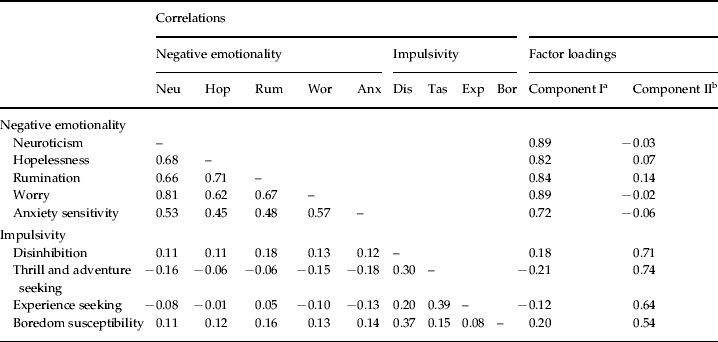
Table 2 shows the correlations across all aspects of negative emotionality and impulsivity. In general, characteristics within the domain of negative emotionality were strongly interrelated (ranging from r = 0.45 to r = 0.81), whereas their correlations with aspects of impulsivity were low (ranging from r = − 0.18 to r = 0.18). Correlations within the domain of impulsivity were relatively low and rather variable (ranging from r = 0.08 to r = 0.39). This pattern of findings was also supported by a factor analysis showing that the underlying structure of these traits included two components (see Table 2 for factor loadings, eigenvalues and percentages of explained variance): (a) a component involving all aspects of negative emotionality, and (b) a component involving all aspects of impulsivity, together explaining 59.62% of the variance. The correlation between the two components was very low (r = 0.05).
Correlations between personality traits and underlying factor structure of personality traits
Neu, Neuroticism; Hop, hopelessness; Rum, rumination; Wor, worry; Anx, anxiety sensitivity; Dis, disinhibition; Tas, thrill and adventure seeking; Exp, experience seeking; Bor, boredom susceptibility.
a Component I: Eigenvalue 3.59; 39.85% of explained variance.
b Component II: Eigenvalue 1.78; 19.77% of explained variance.
Personality traits and pure conditions of psychopathology
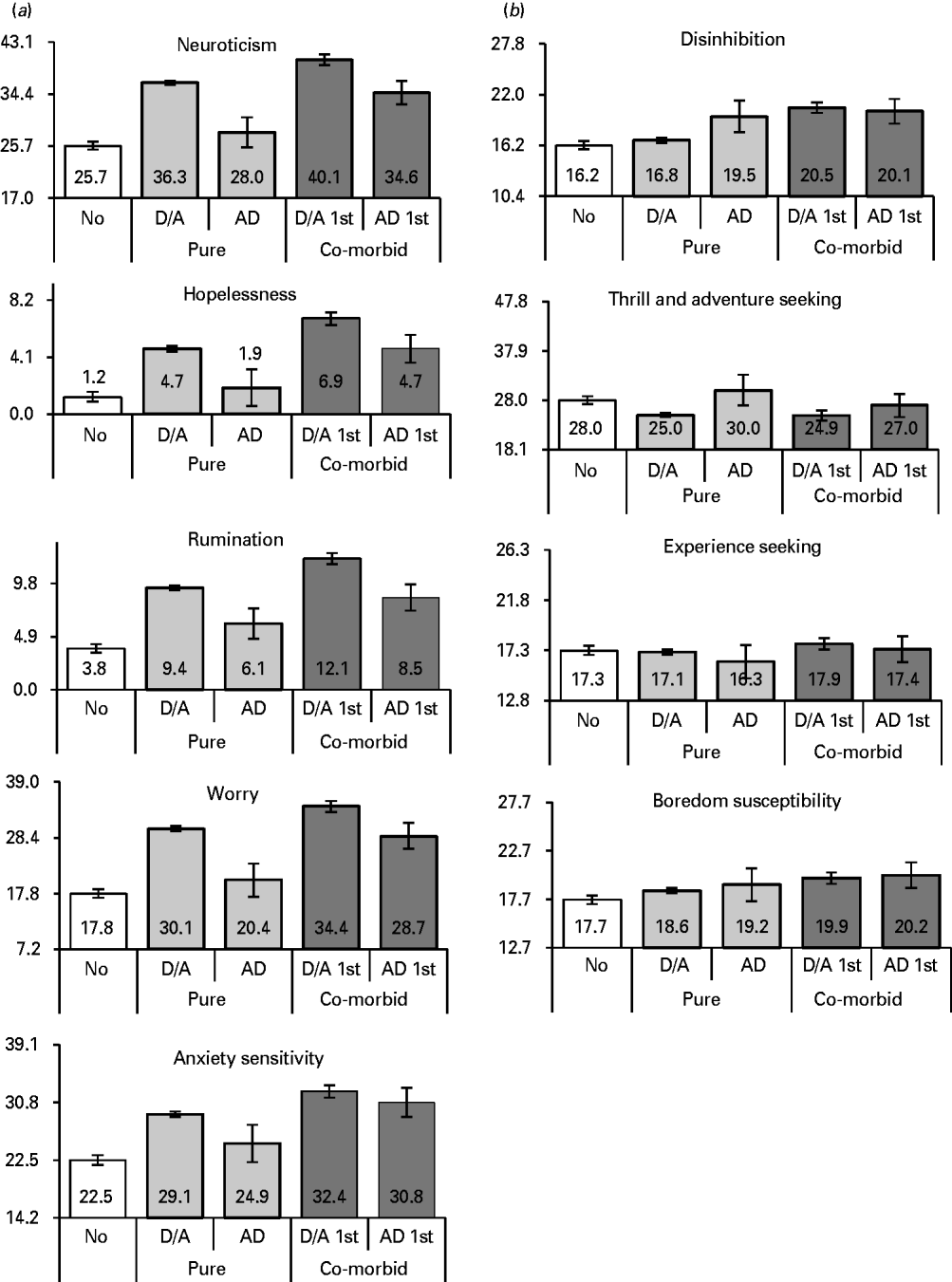
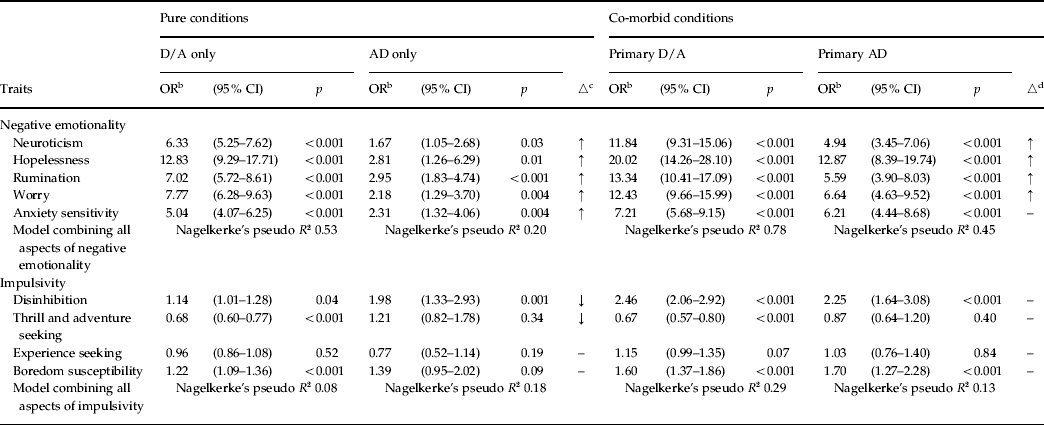
We then examined whether characteristics of negative emotionality and impulsivity were associated with pure conditions of psychopathology using multinomial regression analyses (Table 3). Compared with healthy controls, all aspects of negative emotionality were positively and significantly associated with depressive/anxiety disorder only (first column of results), but we also found positive and significant associations for alcohol dependence only (second column). However, logistic regression analyses showed that individuals with depressive/anxiety disorder only consistently showed significantly higher scores on all characteristics of negative emotionality than individuals with alcohol dependence only (third column). This pattern of findings is also illustrated by Fig. 1, showing that the adjusted mean values for all aspects of negative emotionality were higher for individuals with alcohol dependence only (third bar) than for individuals with no psychopathology (first bar), but were especially high for individuals with depressive/anxiety disorder only (second bar). In a model combining all aspects of negative emotionality, Nagelkerke's pseudo R 2 was 0.53 for depressive/anxiety disorder only and 0.20 for alcohol dependence only compared with no psychopathology.
Aspects of (a) negative emotionality and (b) impulsivity across types of psychopathology. Results are of the analyses of covariance, adjusted for sociodemographics. Data are given as mean values, with 95% confidence intervals represented by vertical bars. No, No psychopathology; D/A, depressive/anxiety disorder only; AD, alcohol dependence only; D/A 1st, primary depressive/anxiety disorder preceding secondary alcohol dependence; AD 1st, primary alcohol dependence preceding secondary depressive/anxiety disorder.
Associations of various aspects of negative emotionality and impulsivity with type of psychopathologya
D/A only, Depressive/anxiety disorder only; AD only, alcohol dependence only; primary D/A, primary depressive/anxiety disorder preceding alcohol dependence; primary AD, primary alcohol dependence preceding depressive/anxiety disorder; OR, odds ratio; CI, confidence interval; ↑, positive association (p < 0.05); –, no significant association (p ⩾ 0.05); ↓, negative association (p < 0.05); s.d., standard deviation.
a ORs are given per 1 s.d. increase. Analyses are adjusted for sociodemographics.
b Based on multinomial regression analyses, adjusted for sociodemographics, comparing individuals with depressive/anxiety disorder only (first column), alcohol dependence only (second column), primary depressive/anxiety disorder (fourth column), and primary alcohol dependence (fifth column) with individuals with no psychopathology.
c Based on logistic regression analyses, adjusted for sociodemographics, directly comparing individuals with depressive/anxiety disorder only with alcohol dependence only (reference group).
d Based on logistic regression analyses, adjusted for sociodemographics, directly comparing individuals with primary depressive/anxiety disorder with primary alcohol dependence (reference group).
The results for impulsivity characteristics were less profound and more variable than for aspects of negative emotionality (see Table 3 and Fig. 1). Although disinhibition was positively and significantly related to both pure conditions, scores were significantly higher for alcohol dependence only compared with depressive/anxiety disorder only. Thrill and adventure seeking was significantly lower for individuals with depressive/anxiety disorder only compared with individuals with no psychopathology as well as alcohol dependence only. No other significant differences were found for individuals with depressive/anxiety disorder only versus alcohol dependence only on any of the other aspects of impulsivity. Compared with healthy controls, levels of boredom susceptibility were higher for individuals with depressive/anxiety disorder only and individuals with alcohol dependence only but only the association with the first was statistically significant whereas the latter was only significant at a borderline significance level (p = 0.09). Experience seeking was not related to both pure conditions. In a model combining all aspects of impulsivity, Nagelkerke's pseudo R 2 was 0.18 for alcohol dependence only and 0.08 for depressive/anxiety disorder only compared with no psychopathology.
Personality traits and co-morbidity
In addition, we explored the role of personality traits in the co-morbidity of disorders by distinguishing conditions in which the depressive/anxiety disorder preceded alcohol dependence (i.e. ‘primary depressive/anxiety disorder’) and vice versa (i.e. ‘primary alcohol dependence’). We have restricted our analyses to these two co-morbid conditions, since the number of individuals with a concurrent onset of depressive/anxiety disorder and alcohol dependence was too small (n = 25). Compared with healthy controls, all aspects of negative emotionality were positively associated with primary depressive/anxiety disorder (Table 3, fourth column) as well as primary alcohol dependence (fifth column), but direct comparisons showed that individuals with primary depressive/anxiety disorders had higher scores on all aspects of negative emotionality, except for anxiety sensitivity, than individuals with primary alcohol dependence. This pattern of findings was also illustrated by Fig. 1 showing that individuals with primary alcohol dependence (fifth bar) had roughly the same scores as individuals with depressive/anxiety disorder only (second bar), whereas individuals with primary depressive/anxiety disorder had the highest scores on all aspects of negative emotionality (fourth bar). In a model combining all aspects of negative emotionality, Nagelkerke's pseudo R 2 was 0.78 for primary depressive/anxiety disorder and 0.45 for primary alcohol dependence compared with no psychopathology.
Less consistent findings have been observed for the associations between characteristics of impulsivity and the co-morbidity of depressive/anxiety disorder and alcohol dependence. Compared with healthy controls, disinhibition and boredom susceptibility showed positive, significant associations with primary depressive/anxiety disorder as well as primary alcohol dependence, whereas no significant differences were found between these two co-morbid conditions. Although thrill and adventure seeking was not related to primary alcohol dependence, individuals with primary depressive/anxiety disorder had lower levels of this trait compared with healthy controls. The difference between these two co-morbid conditions was borderline significant (p = 0.10; result not tabulated). Experience seeking was not related to both co-morbid conditions and no significant difference was found for primary depressive/anxiety disorder versus primary alcohol dependence. In a model combining all aspects of negative emotionality, Nagelkerke's pseudo R 2 was 0.13 for primary alcohol dependence and 0.29 for primary depressive/anxiety disorder compared with no psychopathology.
Discussion
Personality traits and depressive/anxiety disorders and alcohol dependence
This study explored the role of personality traits in pure as well as co-morbid conditions of depressive/anxiety disorder and alcohol dependence. We focused on various aspects of negative emotionality (i.e. neuroticism, hopelessness, rumination, worry and anxiety sensitivity) and impulsivity (i.e. disinhibition, thrill and adventure seeking, experience seeking and boredom susceptibility), which showed to be two unrelated dimensions. The homogeneous construct of negative emotionality was strongly related to all types of psychopathology, but especially to depressive/anxiety disorder only and co-morbid depressive/anxiety disorder and alcohol dependence. The results for the heterogeneous construct of impulsivity were less profound and more variable, as the various aspects of impulsivity showed modest and differential associations with depressive/anxiety disorder and alcohol dependence.
Personality traits and pure conditions of psychopathology
Previous studies have suggested that personality plays an important role in the development of depressive/anxiety disorders and alcohol dependence (e.g. Krueger, Reference Krueger2005; Kendler & Gardner, Reference Kendler and Gardner2011; Villafuerte et al. Reference Villafuerte, Heitzeg, Foley, Wendy Yau, Majczenko, Zubieta, Zucker and Burmeister2012). This may be supported by our study showing strong associations between various personality traits and depressive/anxiety disorder only as well as alcohol dependence only. As we found that all aspects of negative emotionality and some aspects of impulsivity (i.e. disinhibition and boredom susceptibility) were related to both pure conditions, this indicates that some of the variation in pure conditions could be explained by shared aetiological pathways involving the same personality traits. However, we also showed that individuals with depressive/anxiety disorder only had higher scores on all aspects of negative emotionality and lower scores of thrill and adventure seeking than individuals with alcohol dependence only, whereas individuals with alcohol dependence only had higher scores of disinhibition than individuals with depressive/anxiety disorder only. This implies that each disorder also has its own specific aetiology in which high levels of negative emotionality and low levels of thrill and adventure seeking are more important for depressive/anxiety disorders, whereas a high level of disinhibition may be more important in the development of alcohol dependence.
These indications about aetiological pathways are important for prevention as well as treatment strategies. For example, interventions could be optimized by especially targeting negative emotionality in the treatment of depressive/anxiety disorder versus disinhibition in the treatment of alcohol dependence. This was also indicated by others showing that interventions targeting negative emotionality effectively decrease depression symptoms (e.g. Tang et al. Reference Tang, DeRubeis, Hollon, Amsterdam, Shelton and Schalet2009), whereas interventions that enhance behavioural control, and therefore decrease disinhibition, are effective in the treatment of alcohol dependence (e.g. Crews & Boettiger, Reference Crews and Boettiger2009). As our findings indicate that depressive/anxiety disorder and alcohol dependence may also have a shared aetiology involving the same personality traits, it is also likely that interventions targeting negative emotionality are not only effective for prevention or treatment of depressive/anxiety disorders, but also of alcohol dependence. Similarly, interventions enhancing behavioural control might have an additional beneficial effect on depressive/anxiety symptoms.
Personality traits and co-morbidity
Previous studies have reported high co-morbidity rates of depressive/anxiety disorders and alcohol dependence (e.g. Ross, Reference Ross1995; Kessler et al. Reference Kessler, Crum, Warner, Nelson, Schulenberg and Anthony1997; Burns & Teesson, Reference Burns and Teesson2002; De Graaf et al. Reference De Graaf, Bijl, Smit, Vollebergh and Spijker2003; Hasin et al. Reference Hasin, Goodwin, Stinson and Grant2005, Reference Hasin, Stinson, Ogburn and Grant2007; Boschloo et al. Reference Boschloo, Vogelzangs, Smit, Van den Brink, Veltman, Beekman and Penninx2011). It has been hypothesized that this co-morbidity could result from the interrelatedness of negative emotionality and impulsivity as specific risk factors for depressive/anxiety disorder and alcohol dependence, respectively. However, this is unlikely, as we did not find strong correlations between these traits. Another explanation could be that shared vulnerability factors (i.e. the same personality traits) cause the onset of depressive/anxiety disorder as well as alcohol dependence. This was supported by our finding that traits linked to both pure conditions of depressive/anxiety disorder and alcohol dependence (i.e. all aspects of negative emotionality, disinhibition and boredom susceptibility) were also related to primary depressive/anxiety disorder and primary alcohol dependence. However, this is only part of the explanation as we found several differences between these two co-morbid conditions in specific trait scores (i.e. most aspects of negative emotionality and thrill and adventure seeking), indicating that each disorder also has a unique aetiology. This suggests that depressive/anxiety disorders predict the onset of alcohol dependence (see also Marquenie et al. Reference Marquenie, Schade, Van Balkom, Comijs, De Graaf, Vollebergh, Van Dyck and Van den Brink2007; L. Boschloo et al. unpublished observations) and vice versa (e.g. Boschloo et al. Reference Boschloo, Van den Brink, Penninx, Wall and Hasin2012). Prospective studies are needed to unravel the exact aetiological pathways, also considering genetics as well as environmental factors that may lead to co-morbidity through the mediating effects of personality.
Constructs of negative emotionality and impulsivity
This study further showed that the different aspects of negative emotionality formed a homogeneous dimension, whereas impulsivity was a more heterogeneous construct (see also Cyders & Smith, Reference Cyders and Smith2007; Cyders et al. Reference Cyders, Smith, Spillane, Fischer, Annus and Peterson2007; Broos et al. Reference Broos, Schmaal, Wiskerke, Kostelijk, Lam, Stoop, Weierink, Ham, de Geus, Schoffelmeer, van den Brink, Veltman, de Vries, Pattij and Goudriaan2012). We also showed that the various aspects of impulsivity had differential associations with the different disorders: for example, high disinhibition was strongly related to alcohol dependence only, whereas low thrill and adventure seeking was linked to depressive/anxiety disorder only. This stresses the importance of using various impulsivity-like traits in research on psychopathology (see also Dick et al. Reference Dick, Smith, Olausson, Mitchell, Leeman, O'Malley and Sher2010; Broos et al. Reference Broos, Schmaal, Wiskerke, Kostelijk, Lam, Stoop, Weierink, Ham, de Geus, Schoffelmeer, van den Brink, Veltman, de Vries, Pattij and Goudriaan2012). A limitation of our study is that we mainly focused on traits involving sensation-seeking aspects of impulsivity. Future studies should additionally consider other aspects of impulsivity such as mood-based rash actions (i.e. an impulsivity-like trait involving the tendency to act rashly while in a positive or negative mood). This trait may play a key role in the self-medication hypothesis suggesting that depressed/anxious individuals misuse alcohol to reduce their distressing symptoms (see also Cyders & Smith, Reference Cyders and Smith2007) and may therefore explain the co-morbidity of depressive/anxiety disorder and alcohol dependence. In addition, it might be interesting to examine whether specific traits are important for specific stages in the development of alcohol dependence (see also Cyders et al. Reference Cyders, Flory, Rainer and Smith2009; Dick et al. Reference Dick, Smith, Olausson, Mitchell, Leeman, O'Malley and Sher2010; Koob & Volkow, Reference Koob and Volkow2010).
Strengths and limitations
Methodological strengths of our study are that we examined the association between various aspects of negative emotionality and impulsivity with DSM-IV diagnoses of depressive/anxiety disorders and/or alcohol dependence. To our knowledge, we were the first in directly testing whether traits were different across pure and across co-morbid conditions. However, there are some limitations to be recognized. Although we included a large sample of individuals with depressive/anxiety disorder only (n = 1398), primary depressive/anxiety disorder preceding alcohol dependence (n = 274) and no psychopathology (n = 460), the numbers of individuals with alcohol dependence only (n = 32) and primary alcohol dependence preceding depressive/anxiety disorder (n = 52) were smaller. Although we also found significant results for these groups, some of the insignificant findings may, therefore, result from limited power. In addition, individuals with a severe, primary diagnosis of a substance-use disorder were initially excluded from this study. Consequently, individuals with (co-morbid) alcohol dependence may not be fully representative of all individuals with alcohol dependence. Therefore, reported associations of personality traits, and especially aspects of impulsivity, with pure or co-morbid conditions of alcohol dependence may be underestimates. Future studies including large clinical samples of patients with severe alcohol dependence are needed. Since our study was based on cross-sectional data, the causal nature of the associations between personality traits and psychopathology remains unsolved. In addition, the temporal sequencing of disorders was based on the retrospectively derived age of disorder onsets, which might have introduced recall bias. Prospective evidence is necessary to determine the aetiological pathways regarding personality and different types of psychopathology. Previous studies provide evidence that personality reflects a (genetic) predisposition as, for example, Tarter et al. (Reference Tarter, Kirisci, Habeych, Reynolds and Vanyukof2004) found increased impulsivity scores in offspring of patients with a substance-use disorder. In addition, personality traits are considered stable over time (e.g. Roberts & DelVecchio, Reference Roberts and DelVecchio2000), which was also supported by our observation that trait scores were strongly correlated across waves despite changes in psychopathology.
Conclusion
In conclusion, pure conditions of depressive/anxiety disorder and alcohol dependence are likely to partly derive from the same aetiological pathways involving negative emotionality and some aspects of impulsivity (i.e. disinhibition and boredom susceptibility). Each disorder also has its own specific aetiology in which high negative emotionality and low thrill and adventure seeking are important for depressive/anxiety disorders, whereas disinhibition plays a key role in alcohol dependence. The co-morbidity of depressive/anxiety disorder and alcohol dependence could result from shared vulnerability factors as well as specific aetiological pathways in which negative emotionality is more important in primary depressive/anxiety disorder preceding alcohol dependence than vice versa. This information about the aetiology of depressive/anxiety disorder and alcohol dependence may be important for prevention as well as treatment strategies.
Acknowledgements
The infrastructure for the NESDA study (www.nesda.nl) is funded through the Geestkracht programme of the Netherlands Organization for Health Research and Development (Zon-Mw, grant no. 10-000-1002) and is supported by participating universities and mental health care organizations (VU University Medical Center, GGZ inGeest, Arkin, Leiden University Medical Center, GGZ Rivierduinen, University Medical Center Groningen, Lentis, GGZ Friesland, GGZ Drenthe, Scientific Institute for Quality of Health Care (IQ Healthcare), Netherlands Institute for Health Services Research (NIVEL) and Netherlands Institute of Mental Health and Addiction (Trimbos). Data analyses were supported by grant no. 31160004 from the Netherlands Organization for Health Research and Development.
Declaration of Interest
None.