




No CrossRef data available.
Article contents
An experimental field approach to parasitism and immune defence in voles
Published online by Cambridge University Press: 10 June 2004
Abstract
The fox tapeworm Echinococcus multilocularis is typically perpetuated in a cycle with red foxes as definitive hosts and various rodent species as intermediate hosts. In this study, foxes were baited with a highly efficient drug against cestodes (praziquantel) in 5 blocks of 1 km2. Voles, Arvicola terrestris, the most abundant intermediate host species, were trapped in the 5 baited blocks and in 5 non-baited control blocks. Baiting the foxes reduced the prevalence of E. multilocularis in fox faecal samples in the baited blocks, but voles trapped in the two blocks did not differ in their infection rates. However, voles from the baited blocks had significantly smaller spleen masses and were more likely to be infested with mites than those from the control blocks, possibly reflecting different immunological activities. Our study suggests that the environmental contamination with E. multilocularis eggs, and perhaps those of other tapeworms, influences the immune system of the intermediate host species A. terrestris in the wild.
Information
- Type
- Research Article
- Information
- Copyright
- © 2004 Cambridge University Press
INTRODUCTION
Human Alveolar Echinococcosis, one of the most lethal helminth zoonoses, is caused by infection with the tapeworm Echinococcus multilocularis (Amman & Eckert, 1995). Red foxes (Vulpes vulpes) are the main definitive hosts of this worm and the source of human infections. Since red fox populations have increased recently in several European countries (Christensen, 1985; Møller-Nielsen, 1990; Breitenmoser et al. 2000), their growing populations, especially in urban areas, may increase health risks for urban citizens.
In Europe, E. multilocularis is typically perpetuated in a cycle including foxes and various rodent species as intermediate hosts (Eckert & Deplazes, 1999). Adult tapeworms in foxes produce eggs for 1–4 months and these eggs reach the environment in fox faeces (Nonaka et al. 1996). When ingested by an intermediate host, the oncosphere hatches in the gut. It penetrates the intestinal mucosa, enters venous or lymphatic vessels and then develops predominantly in the liver, with subsequent metastasis formation in other sites (see Schantz & Gottstein, 1986). In the intermediate host, production of protoscoleces takes place within 20–35 days, and infective protoscoleces can be found 40–60 days after infection (Eckert, 1998). A definitive host must ingest metacestodes which contain infective protoscoleces to complete the cycle.
The most important intermediate hosts of E. multilocularis in Europe are Microtus arvalis and Arvicola terrestris (Eckert et al. 2001a). Although foxes prefer small microtine rodents as prey, they switch diet when A. terrestris are highly abundant (Weber & Aubry, 1993). Recent analyses of urban foxes in Zürich found that A. terrestris was the most frequent potential intermediate host (Contesse et al. 2004). Little is known about parasite prevalences in intermediate hosts, although compared to prevalences in foxes (20–60%), they appear to be low (1–6%) (Houin et al. 1982; Pétavy & Deblock, 1983; Eckert et al. 2001b). However, a study in Zürich found prevalences of up to 20% in A. terrestris and in urban foxes during winter, rates as high as 47% in the urban and 67% in adjacent recreational areas (Hofer et al. 2000).
The prevalence of E. multilocularis in wild foxes can be reduced by regular distribution of baits containing praziquantel, a highly efficient drug against adult cestodes (Schelling & Frank, 1997; Tackman et al. 2001). Recently, we have demonstrated that the E. multilocularis egg contamination in urban areas can be reduced to very low levels by the manual distribution of anthelmintic baits at monthly intervals. This is even possible within small defined urban patches situated in a highly endemic area (Hegglin et al. 2003). However, little attention has been paid to the role of the intermediate hosts in transmission dynamics, although several studies have indicated its importance (Giradoux et al. 1997; Eckert et al. 2001a).
Studies on the natural life-cycle of the parasite E. multilocularis and its transmission dynamics are rare. In the framework of an ongoing experimental study (Hegglin et al. 2003) foxes were baited with praziquantel in 5 blocks of 1 km2 and voles from these blocks were compared with voles from 5 non-baited control blocks. If baiting successfully reduced parasite prevalence in foxes, 2 different environmental treatments were created in which the voles were exposed to different infection risks with E. multilocularis, and possibly other tapeworms. We investigated immunological activity by measuring spleen mass. The mammalian spleen is an important component of the immune system; it helps the body to resist parasites (Kopp, 1990), it induces immune responses (Steininger & Barth, 1999) and an increase in spleen mass occurs in response to infections and passive immunizations (John, 1995; Skarstein, Folstrad & Liljedal, 2001). In early E. multilocularis infections in the intermediate host, the suppression of larval growth is critical for the final outcome of the disease (Gottstein, 1992), and infected laboratory rodents show marked activation of cell-mediated immunity (e.g. Ali-Khan, 1978b; Fotiadis et al. 1999). During parasite growth, there is a decline in peritoneal lymphocyte, monocyte and eosinophil cell numbers and an increase in spleen mass (Ali-Khan, 1974, 1978a; Devouge & Ali-Khan, 1983). We also measured the prevalence of ectoparasitic mites, enabling us to examine relationships between infections with different parasites.
MATERIALS AND METHODS
Study site
The city of Zürich is surrounded by forests and agricultural land. There is a high density of 11·2 foxes per km2 and the urban transmission cycle of the parasite E. multilocularis occurs predominantly in areas adjacent to the city (Deplazes et al. 2002; Gloor, 2002; Stieger et al. 2002). We therefore selected 5 areas near Zürich and marked out within each of these areas 2 blocks of 1 km2 (Fig. 1). One was an experimental block, where baits containing praziquantel were distributed monthly, and the other was a control block. Blocks were allocated to a treatment without prior knowledge. They were arranged so that control and baited blocks alternated geographically. This ensured there was no possibility that baited or control blocks were clumped together; i.e. blocks within a treatment would not have shared a particular infection history (Fig. 1). In particular, we stress that although voles in our study may have been already infected, this would be equally likely for a vole exposed to either of our treatments. We used commercial baits (Impfstoffwerk Dessau Tornau GmbH, Rosslau, Germany), each weighed 13·5 g, and the matrix consisted of Altrofox 91 (Impfstoffwerk Dessau Tornau GmbH). This matrix is the same as in the widely used rabies vaccine bait Rabifox (Impfstoffwerk Dessau Tornau GmbH). The baits contained 50 mg of the anthelmintic praziquantel (Droncit Bayer AG, Leverkusen, Germany), a highly efficient drug against adult cestodes.

Fig. 1. Study site: City of Zurich and adjacent area.
There was a distance of at least 750 meters between an experimental block and a control block, to minimize the chance of individual foxes using 2 study blocks. The blocks all shared similar portions of urban area (1/3) and agricultural landscape and woodland (2/3) in a pattern typical for the area.
Anthelmintic treatment of foxes
Preliminary experiments confirmed the good acceptance of bait items (Hegglin et al. 2004). From April 2000, pellets were distributed monthly in the baited blocks at doses of 50 baits per km2. They were distributed where they were likely to be found by foxes, for example near compost heaps, on a path frequently used by foxes, on a vole tumulus or close to dens (for details see Hegglin et al. 2003).
Faecal samples were collected at least monthly in all blocks. A method of identifying fox faeces was established. Several criteria, such as size, shape and smell of the dung, were used to distinguish fox faeces from dog faeces (Stieger et al. 2002). Only faecal samples collected within a radius of 750 metres from the centre of the study blocks were analysed. This maximized the likelihood that only faeces of territorial foxes living within the blocks were used. E. multilocularis was detected by screening samples with a coproantigen ELISA (Em-ELISA) (Deplazes et al. 1999).
Arvicola terrestris
The A. terrestris trap sites were located mainly on grassland. In every sampling block, one or two grassland patches that showed the highest relative densities of voles were selected (see Giradoux et al. 1995). From May to October 2000, four trapping sessions were conducted on every trap site at around 6-week intervals. Between 20 and 30 traps were set inside vole galleries per trapping session. We used unbaited Topcat traps (Topcat GmbH, Wintersingen, Switzerland). A trapping session was ended if 10 voles were caught. Voles were collected after death and stored individually at −20 °C. Body weight to the nearest 0·01 g and body length to the nearest 1 mm, from the tip of the nose to the first vertebra of the tail, were recorded. The presence of ectoparasitic mites (Laelaps species) was recorded by carefully combing the coat against the grain and examining the plastic bag the vole was stored in. At necropsy, the spleen was removed, cleaned of other tissue and weighed to the nearest 1 mg. In females, the presence and number of embryos and placental scars was recorded and it was noted whether they were lactating. The liver in particular, but also other organs such as lung, kidney, spleen and reproductive and intestinal tracts, were examined for lesions or irregularities. Metacestodes of E. multilocularis were identified morphologically and by using modified PCR (Dinkel et al. 1998). Identification of lesions caused by other cestodes was based on gross morphology and by comparing hook morphology and length.
Statistics
Data were analysed using ANCOVA and logistic regression (SPSS 10 PC-Version, 1999). To evaluate the infection rate of foxes in baited and control zones, we pooled the data of faecal samples collected in the two periods from April to June 2000 and from July to October 2000. The small number of faecal samples collected in some months prevented analysis of shorter time-intervals. To evaluate parasite prevalence in voles trapped in the two treatments, we pooled the data from May to June 2000 and from July to October 2000. To reveal effects on a finer time-scale, we used 2-month intervals (May and June, July and August, September and October) to carry out further analyses with the vole data. Spleen mass was log transformed. Body length was used as a covariate. Since body length influenced spleen mass significantly, we removed the effects of body length by taking the residuals of a linear regression of transformed spleen mass on body length.
RESULTS
Prevalence of E. multilocularis in fox faecal samples
Logistic regression with the factors BAIT (treatment of the foxes), AREA (5 different areas that each included a baited and a control block) and 2 time-periods, SEASON (April to June and July to October) was used to investigate whether baiting the foxes reduced the portion of coproantigen-positive faeces. The proportion decreased during the year (April–June 28·9±5·2% vs. July–October 14·2±2·5%) and was lower in baited zones (baited 14·0±0·26% vs. control 26·3±4·5%) (AREA, Wald χ2=6·2, 4 D.F., P=0·186; BAIT, Wald χ2=4·5, 1 D.F., P=0·035; SEASON, Wald χ2=7·9, 1 D.F., P=0·005; SEASON BY BAIT, Wald χ2=3·0, 1 D.F., P=0·084). Although the interaction season by bait was not significant, it was on the borderline. However, our data only represent the early stages of the developing impact of baiting the fox population. The interaction was later strongly significant in a larger study (Hegglin et al. 2003).
Arvicola terrestris
Of 534 voles, 213 were male and 321 female. Of the females, 95 (29·6%) showed signs of reproduction. Male voles are either larger than, or the same size as, females (Heske & Ostfield, 1990). The sexually active females caught all weighed more than 60 g, and their body lengths exceeded 120 mm. Animals below both these thresholds (71, 13·1%) were considered juvenile and omitted from the analysis. Of 469 adult voles, we detected liver lesions in 157 (33·5%) and E. multilocularis infections in 41 (8·7%). In 17 of the infected animals, we found 14 to 244400 protoscoleces; this means that 3·6% of the adult voles were actually infective when captured. Most of the lesions not caused by E. multilocularis were metacestodes of Taenia taeniaeformis (Strobilocercus fascioloaris) (60, 12·8%). Only 5 (1·06%) animals were infected with both E. multilocularis and T. taeniaeformis. Metacestodes of T. crassiceps were detected in 4 (0·8%) voles, and of these 2 (0·4%) were simultaneously infected with T. taeniaeformis. Two T. crassiceps metacestodes were in subcutaneous cysts, once in the pleural cavity and once in the pericardium. Two lesions (0·4%) were caused by unidentified Taenia. In 50 (10·6%) voles, the cause of the lesions which were PCR negative for E. multilocularis could not be determined.
We found E. multilocularis infected voles in all but 1 of the 10 blocks. Prevalence varied from 3·3 to 16·2% per block. A binary logistic regression with the main factors (BAIT), (AREA), vole sex (SEX), the dichotomous variable (MITE), whether a vole was infected with mites, the three 2-month periods (TIME PERIOD) and, as covariates, body length and transformed spleen mass, revealed no significant effects on E. multilocularis prevalence in voles (all P>0·05; overall prevalence 8·74±1·31%).
ANCOVA was used to investigate the influence of the factors: treatment of the foxes (BAIT), vole sex (SEX), the dichotomous variables (INFECTION) and (MITE) and the three 2-month periods (TIME PERIOD) on spleen mass. Body length was entered as a covariate. The analysis also included (AREA), to remove the variance in spleen size due to variation amongst the areas. All 4-way and 3-way interactions were non-significant, and were therefore removed from the final model, as were all non-significant 2-way interactions. Spleen mass was positively related to body length (β=0·176) and varied between areas. Spleen mass decreased with time in the baited blocks only (Table 1; Fig. 2). Furthermore, infected voles had slightly, albeit not significantly, heavier spleens than uninfected voles (residual mass 0·069±0·040 vs. −0·007±0·010), but infection stage (whether protoscoleces were found) had no effect.

Fig. 2. Mean relative spleen mass±S.E. of voles at 3 different time-periods (n=342).

Ectoparasitic mites
For the frequency of mite infestation, there were no significant 4-way or 3-way interactions. These were therefore removed from the final model, as were all non-significant 2-way interactions. Infestation was affected significantly by the interaction of BAIT and TIME PERIOD (logistic regression, χ2=6·09, 1 D.F., P=0·048); other effects SEX (χ2=4·61, 1 D.F., P=0·032), BAIT (χ2=5·17, 1 D.F., P=0·023), TIME PERIOD (χ2=40·95, 2 D.F., P<0·001), INFECTION (χ2=2·40, 1 D.F., P=0·12), AREA (χ2=8·82, 4 D.F., P=0·066). In the later two time-periods, voles from baited blocks were more likely to be infested than those from control blocks (May–June 44·4±8·4% vs. 41·9±7·6%; July–August 40·0±9·1% vs. 14·8±4·58%; September–October 74·2±5·42% vs. 62·3±4·73% respectively). Males were more likely to be infested than females (58·3±4·2% vs. 43·8±3·5% respectively). Infection with E. multilocularis also slightly decreased the frequency of mite infestation (infected 30·3±8·1% vs. non-infected 49·1±2·7%).
DISCUSSION
The proportion of fox faecal samples infected with E. multilocularis collected in blocks baited with praziquantel was lower than in control blocks (see also Hegglin et al. 2003). As a consequence it would be expected that fewer eggs of this and presumably of other tapeworms were deposited in baited blocks than in control blocks. Since egg counts in faecal samples of foxes declined in baited blocks, it is likely that the environmental contamination with eggs in these blocks also declined and hence voles in baited zones presumably had a lower contact rate with infective eggs. Although there was no reduction in the infection rate of voles, spleen mass was significantly reduced over time in baited blocks. This was not the case in non-baited control blocks. The frequency with which voles were infested by mites was higher in baited blocks. Although we have no data from before our experiment, these results are most likely due to the treatment. Block allocation was random to prevent any geographical clumping of the blocks of a treatment. It is therefore extremely unlikely that there was any systematic difference between the voles in our treatment groups.
E. multilocularis infection rates in voles are generally low; in geographically extensive studies they are usually below 1% (Eckert, 2001b). We found prevalences of 3·3 to 16·2% in all but 1 study block, indicating that the study was performed in a highly endemic area. This confirms the existence of locally highly endemic foci (Pétavy & Deblock, 1983; Gottstein et al. 1996; Hofer et al. 2000). Since infected voles survive for several months, some of the voles trapped were probably infected before or shortly after the beginning of baiting. Parasite eggs may survive for up to 8 months in autumn and winter and for up to 3 months in summer (Veit et al. 1995). Therefore, even when final hosts are free of infection, the parasite may survive within a treated area because the voles still come into contact with infective eggs and thus represent sources of new infections.
The average spleen mass of voles in the baited blocks decreased over time, but this did not occur in the control blocks. An increase in spleen mass during infection with E. multilocularis, reflecting increased immune defence, has been reported previously (e.g. Ali-Khan, 1978a,b; Playford & Kamiya, 1992; Fotiadis et al. 1999). Not every contact with E. multilocularis leads to infection with the parasite. In early stages of infection the successful establishment of the parasite depends upon the competition between the larval development and the establishment of a protective host immune response (Gottstein, 1992). During this stage of an E. multilocularis infection, a marked activation of the cell-mediated immunity against the parasite occurs (Ali-Khan, 1978b; Playford & Kamiya, 1992; Fotiadis et al. 1999). E. multilocularis growth appears to be controlled by the host T-cell, and, at least in the early phase of the disease, T-lymphocytes probably play the most important role in the immune response to the parasite (Baron & Tanner, 1976; Kamiya et al. 1980; Playford & Kamiya, 1992). The spleen plays an important role in cell-mediated immunity as the storage organ of mature cytotoxic T-cells (Kopp, 1990). In contrast to voles in baited blocks, where the risk of infection seemed to decrease over the season, voles in control blocks had higher spleen mass probably because they were exposed to higher levels of contamination with eggs and because they would have had continuously to maintain higher levels of cell-mediated immunity to combat infection.
We found different frequencies of voles infested with mites in the two treatments. Fewer voles were infested with mites in control blocks in the second and third time-periods; there was no difference in the first period. Voles infected with E. multilocularis also tended to have fewer mites. Since cell-mediated immunity and T-cells play an important role in the immune defence against mites (O'brien et al. 1996), this supports the hypothesis that exposure to one parasite (E. multilocularis) could lead to an activated, general cell-mediated immunity, and consequently to an increased immune response to another parasite (mites). Elevated cell-mediated immunity and the resulting production of T-cells following infections with E. multilocularis (Ali-Khan, 1978b; Playford & Kamiya, 1992; Fotiadis et al. 1999) may thus simultaneously increase immune defence against several challenges. Furthermore, more males harboured mites than females. Gender differences in natural parasitic infections are frequently observed in vertebrates (reviewed by Zuk & McKean, 1996). These differences are usually attributed to ecological (i.e. different exposure to the parasites) or physiological (i.e. hormonal) differences between the sexes (Zuk & McKean, 1996; Travi et al. 2002).
This experimental study strongly suggests that the environmental contamination with eggs of E. multilocularis, and possibly other tapeworms, influences the immune system in the intermediate host Arvicola terrestris. Further studies are required to understand the longer term consequences of anthelmintic baiting in both the final and the intermediate host(s) of this cestode parasite.
We thank Wolf Blanckenhorn for his help with the statistical analysis and we thank him again and David Hosken, Oliver Martin and two anonymous referees for comments that improved the manuscript. We would also like to thank Isabelle Tanner for her assistance in the lab, Hansueli Ochs for identifying the mites and Marc Wälti for help dissecting the voles.
References
REFERENCES
ALI-KHAN, Z.
(1974).
Host–parasite relationship in echinococcosis. I. Parasite biomass and antibody response in three strains of inbred mice against graded doses of Echinococcus multilocularis cysts.
Journal of Parasitology
60, 231–235.Google Scholar
ALI-KHAN, Z.
(1978 a).
Cellular changes in lymphoreticular tissues of C57/J mice infected with Echinococcus multilocularis cysts.
Immunology
34, 831–839.Google Scholar
ALI-KHAN, Z.
(1978 b).
Echinococcus multilocularis cell mediated immune responses in early and chronic alveolar murine hydatiosis.
Experimental Parasitology
46, 157–165.Google Scholar
AMMAN, R. &
ECKERT, J.
(1995).
Clinical diagnosis and treatment of echinococcosis in humans. In
Echinococcus and Hydatid Disease
(ed. Thompson, R. C. A. &
Lymbery, A. J.
), pp. 411–463.
CAB International,
Walingford.
BARON, R. &
TANNER, C. (1976).
The effect of immunosuppression on the secondary E. multilocularis infections in mice.
International Journal for Parasitology
6, 37–42.Google Scholar
BREITENMOSER, U.,
MÜLLER, U.,
KAPPELER, A. &
ZANONI, R. G.
(2000).
The final phase of the rabies epizootic in Switzerland.
Schweizer Archiv für Tierheilkunde
142, 447–454.Google Scholar
CHRISTENSEN, H.
(1985).
Urban fox populations in Oslo.
Revue d'écologie de la terre et la vie
40, 185–186.Google Scholar
CONTESSE, P.,
HEGGLIN, D.,
GLOOR, S.,
BONTADINA, F.,
BREITENMOSER, U. &
DEPLAZES, P.
(2004).
The diet of urban foxes (Vulpes vulpes) and the availability of anthropogenic food in the city of Zurich, Switzerland.
Mammalian Biology
69, 81–95.CrossRefGoogle Scholar
DEPLAZES, P.,
ALTHER, P.,
TANNER, I.,
THOMPSON, R. C. A. &
ECKERT, J.
(1999).
Echinococcus multilocularis coproantigen detection by enzyme-linked immunosorbent assay in fox, dog and cat populations.
Journal of Parasitology
85, 115–121.CrossRefGoogle Scholar
DEPLAZES, P.,
GLOOR, S.,
STIEGER, C. &
HEGGLIN, D.
(2002).
Urban transmission of Echinococcus multilocularis. In
Cestode Zoonoses: Echinococcosis and Cysticercosis
(ed. Craig, P. &
Pawloski, Z.), pp. 287–297.
IOS Press,
Amsterdam, Netherlands.
DEVOUGE, M. &
ALI-KHAN, Z.
(1983).
Intraperitoneal murine alveolar hyaditosis: relationship between the size of larval cyst mass, immigrant inflammatory cells, splenomegaly and thymus involution.
Tropenmedizin und Parasitologie
34, 15–20.Google Scholar
DINKEL, A.,
VON NICKISCH-ROSENEGK, M.,
BILGER, B.,
MERLI, M.,
LUCIUS, R. &
ROMIG, T.
(1998).
Detection of Echinococcus multilocularis in the definitive host: Coprodiagnosis by PCR as an alternative to necropsy.
Journal of Clinical Microbiology
36, 1871–1876.Google Scholar
ECKERT, J.
(1998).
Echinococcus multilocularis, Echinococcus oligarthrus and Echinococcus vogeli. In
Zoonoses: Biology, Clinical Practice, and Public Health Control
(ed. Palmer, S. R. &
Simpson, D. I. H.), pp.
689–716. Oxford University Press, Oxford.
ECKERT, J. &
DEPLAZES, P.
(1999).
Alveolar echinococcosis in humans: the current situation in central Europe and the need for countermeasures.
Parasitology Today
15, 315–319.CrossRefGoogle Scholar
ECKERT, J.,
RAUSCH, R. L.,
GEMMELL, M. A.,
GIRADOUX, P.,
KAMIYA, M.,
LIU, F-J.,
SCHANTZ, P. M. &
ROMIG, T.
(2001 a).
Epidemology of Echinococcus multilocularis, Echinococcus vogeli and Echinococcus oligarthrus. In
WHO/OIE Manual on Echinococcus in Humans and Animals: A Public health Problem of Global Concern (ed. Eckert, J.,
Gemmell, M. A.,
Meslin, F.-X. &
Pawlowski, Z. S.), pp. 164–194.
World Organization for Animal Health,
Paris.
ECKERT, J.,
SCHANTZ, P. M.,
GASSER, R. B.,
TORGERSON, P. R.,
BRESSONOV, A. S.,
MOVSESSIAN, S. O.,
THAKUR, A.,
GRIMM, F. &
NIKOGOSSIAN, M. A.
(2001 b).
Geographic distribution and prevalence. In
WHO/OIE Manual on Echinococcus in Humans and Animals: A Public health Problem of Global Concern (ed. Eckert, J.,
Gemmell, M. A.,
Meslin, F.-X. &
Pawlowski, Z. S.
), pp. 100–142.
World Organization for Animal Health,
Paris.
FOTIADIS, C.,
SERGIOU, C.,
KIROU, J.,
TROUPIS, T. G.,
TSELENTIS, J.,
DOUSSAITOU, P.,
GORGOULIS, V. G. &
SECHAS, M. N.
(1999).
Experimental Echinococcus infection in the mouse model: pericystic cellular immunity reaction and effects on the lymphoid organs of immunocompetent and thymectomized mice.
In vivo
13, 541–546.Google Scholar
GIRADOUX, P.,
DELATTRE, P.,
HABERT, M.,
QUERE, J. P.,
DEBLAY, S.,
DEFAUT, R.,
DUHAMEL, R.,
MOISSENET, M. F.,
SALVI, D. &
DRUCHET, D.
(1997).
Population dynamics of fossorial water vole (Arvicola terrestris scherman): a land usage and landscape perspective.
Agriculture, Ecosystem and Environment
66, 47–60.CrossRefGoogle Scholar
GIRADOUX, P.,
PRADIER, B.,
DELATTRE, P.,
DEBLAY, S.,
SALVI, D. &
DEFAUT, R.
(1995).
Estimation of water vole abundance by using surface indices.
Acta Theriologica
40, 77–96.CrossRefGoogle Scholar
GLOOR, S.
(2002).
The rise of urban foxes (Vulpes vulpes) in Switzerland and ecological and parasitological aspects of afox population in the recently colonised city of Zurich. Dissertation.
University of Zurich,
Zurich, Switzerland.
GOTTSTEIN, B.
(1992).
Echinococcus multilocularis infection: immunology and immunodiagnosis.
Advances in Parasitology
31, 321–380.CrossRefGoogle Scholar
GOTTSTEIN, B.,
SAUCY, F.,
WYSS, C.,
SIEGENTHALER, M.,
JACQUIER, P.,
SCHMITT, M.,
BROSSHARD, M. &
DEMIERRE, G.
(1996).
Investigations on a Swiss area highly endemic for Echinococcus multilocularis.
Applied Parasitology
37, 129–136.Google Scholar
HEGGLIN, D.,
BONTADINA, F.,
GLOOR, S.,
MÜLLER, U.,
BREITENMOSER, U. &
DEPLAZES, P.
(2004).
Baiting red foxes in an urban area: a camera trap study.
Jouranl of wildlife management (in the Press).CrossRefGoogle Scholar
HEGGLIN, D.,
WARD, P. I. &
DEPLAZES, P.
(2003).
Small scale anthelminitc baiting of foxes reduces urban Echinococcus multilocularis egg contamination.
Emerging Infectious Diseases 9, 1266–1272.CrossRefGoogle Scholar
HESKE, E. J. &
OSTFIELD, R. S.
(1990).
Sexual dimorphism in size, relative size of testes, and mating systems in north american voles.
Journal of Mammalogy
71, 510–519.CrossRefGoogle Scholar
HOFER, S.,
GLOOR, S.,
MÜLLER, U.,
HEGGLIN, D. &
DEPLAZES, P.
(2000).
High prevalences of Echinococcus multlocularis in urban red foxes (Vulpes vulpes) and voles (Arvicola terrestris) in the city of Zurich.
Parasitology
120, 135–142.CrossRefGoogle Scholar
HOUIN, R.,
DENIEU, M.,
LIANCE, M. &
PUEL, F.
(1982).
Arvicola terrestris an intermediate host of Echinococcus multilocularis in France: epidemiological consequences.
International Journal for Parasitology
12, 593–600.CrossRefGoogle Scholar
JOHN, J. L.
(1995).
Parasites and the avian spleen.
Biological Journal of the Linnean Society
54, 87–106.CrossRefGoogle Scholar
KAMIYA, H.,
KAMIYA, M.,
OHBAYASHI, M. &
NOMURA, T.
(1980).
Studies on the host resistance to infections with Echinococcus multilocularis. 1. Difference of susceptibility of various rodents, especially of congenitally athymic nude mice.
Japanese Journal of Veterinary Research
29, 87–100.Google Scholar
KOPP, W. C.
(1990).
The immune functions of the spleen. In
The Spleen: Structure, Function and Clinical Significance (ed. Bowdler, A. J.
), pp. 261–265.
Chapman and Hall,
London.
MØLLER-NIELSEN, S. M.
(1990).
The food of rural and suburban woodland foxes Vulpes vulpes in Denmark.
Natura Jutlandica
23, 25–32.Google Scholar
NONAKA, N.,
IIDA, M.,
YAGI, K.,
ITO, T.,
OOI, H. K.,
OKU, Y. &
KAMIYA, M.
(1996).
Time course of coproantigen excretion in Echinococcus multilocularis infections in foxes and an alternative definitive host, golden hamsters.
International Journal for Parasitology
26, 1271–1278.CrossRefGoogle Scholar
O'BRIEN, R. M.,
MAY, O.,
CLARKE, A. H. &
THOMAS, W. R.
(1996).
Immunologic responses following respiratory sensitization to house dust mite allergens in mice.
Immunlogy and Cell Biology
74, 174–179.CrossRefGoogle Scholar
PÉTAVY, A. F. &
DEBLOCK, S.
(1983).
Connaissance du foyer auvergnant d'échinococcose alvéolaire.
Annales de Parasitologie Humaine et Comparée
58, 439–453.CrossRefGoogle Scholar
PLAYFORD, M. C. &
KAMIYA, M.
(1992).
Immune-response to Echinococcus multilocularis infection in the house mouse model – A review.
Japanese Journal of Veterinary Research
40, 113–130.Google Scholar
SCHANTZ, P. M. &
GOTTSTEIN, B.
(1986).
Echinococcus (hyaditosis). In
Immunodiagnosis of Parasitic Diseases
(ed. Walls, K. M. &
Schantz, P. M.), pp. 69–107.
Academic Press,
Orlando, USA.
SCHELLING, U. &
FRANK, W.
(1997).
Chemotherapy with praziquantel has the potential to reduce the prevalence of Echinococcus multilocularis in wild foxes (Vulpes vulpes).
Annals of Tropical Medicine and Parasitology
91, 179–186.CrossRefGoogle Scholar
SKARSTEIN, F.,
FOLSTRAD, I. &
LILJEDAL, S.
(2001).
Whether to reproduce or not: immune suppression and costs of parasites during reproduction in the Arctic charr.
Canadian Journal of Zoology
79, 271–278.CrossRefGoogle Scholar
STEININGER, B. &
BARTH, P.
(1999).
Microanatomy and function of the spleen.
Advances in Anatomy, Embryology and Cell Biology
151, 1–112.Google Scholar
STIEGER, C.,
HEGGLIN, D.,
SCHWARZENBACH, G.,
MATHIS, A. &
DEPLAZES, P.
(2002).
Spatial and temporal aspects of urban transmission of Echinococcus multilocularis.
Parasitology
124, 631–640.CrossRefGoogle Scholar
SPSS
Statistical Package for PC, SPSS PC-Version, 1999, Chicago.
TACKMAN, K.,
LOSCHNER, U.,
MIX, H.,
STAUBACH, C.,
THULKE, H.,
ZILLER, M. &
CONRATHS, F.
(2001).
A field study to control Echinococcus multilocularis-infections of the red fox (Vulpes vulpes) in an endemic focus.
Epidemiology and Infection
127, 577–587.CrossRefGoogle Scholar
TRAVI, B.,
OSORIO, Y.,
MELBY, P.,
CHANDRASEKAR, B.,
ARTEAGA, L. &
SARAVIA, N.
(2002).
Gender is a major determinant of the clinical evolution and immune response in hamsters infected with Leishmania spp.
Infection and Immunity
70, 2288–2296.CrossRefGoogle Scholar
VEIT, P.,
BILGER, B.,
SCHAD, V.,
SCHÄFER, J.,
FRANK, W. &
LUCIUS, R.
(1995).
Influence of environmental factors on the infectivity of Echinococcus multilocularis eggs.
Parasitology
110, 79–86.CrossRefGoogle Scholar
WEBER, J. M. &
AUBRY, S.
(1993).
Predation by foxes, Vulpes vulpes, on the fossorial form of the water vole, Arvicola terrestris Scherman, in western Switzerland.
Journal of Zoology, London
229, 553–559.CrossRefGoogle Scholar
ZUK, M. &
McKEAN, K. A.
(1996).
Sex differences in parasite infections: patterns and processes.
International Journal for Parasitology
26, 1009–1023.CrossRefGoogle Scholar

Fig. 1. Study site: City of Zurich and adjacent area.
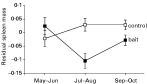
Fig. 2. Mean relative spleen mass±S.E. of voles at 3 different time-periods (n=342).

Table 1. Analysis of covariance of log(spleen mass) (overall adjusted R2=0·160)
 You have
Access
- 4
- Cited by