Introduction
Although host-plant use by the majority of aphids is specialized to some degree, little is known about the nature of a resistance of non-host plants to aphids (Goggin, Reference Goggin2007). It has been attributed to a lack of chemical stimulants or presence of chemical deterrents within non-host plants, or interplay between stimulants and deterrents within non-hosts (Fraenkel, Reference Fraenkel1958; Chew & Renwick, Reference Chew, Renwick, Carde and Bell1995). It is also known that some individual plants within populations of a host-plant species show resistance to aphids, and there is an inter-clonal variation among aphids in performance on resistant host plants (e.g., Cartier & Painter , Reference Cartier and Painter1956; Reinink et al., Reference Reinink, Dieleman, Jansen and Montenarie1989; Caillaud et al., Reference Caillaud, Du Pietro, Chaubet and Pierre1995; Bournoville et al., Reference Bournoville, Simon, Badenhausser, Girousse, Guilloux and André2000). The mechanisms governing the compatibility between particular aphid and plant genotypes are still not clear.
Plant defence mechanisms against aphids can be exerted at various stages of the aphid and plant interaction (Goggin, Reference Goggin2007). For instance, chemicals produced from glandular trichomes on the plant surface can hinder aphids from moving and settling on the plants (Lapointe & Tingey, Reference Lapointe and Tingey1986; Goffreda et al., Reference Goffreda, Mutschler, Ave, Tingey and Steffens1989). Although aphid stylet movement within a plant is considered to cause a minimal damage to tissues compared with chewing insects, aphid infestation does activate plant-induced defence mechanisms that involve signal transduction pathways linked to the plant hormones salicylic acid (SA), jasmonic acid (JA) and ethylene (ET) (Moran & Thompson, Reference Moran and Thompson2001; Moran et al., Reference Moran, Cheng, Cassell and Thompson2002). Stylet penetration into plant sieve elements induces a defensive sealing response, which may be caused by coagulation of phloem proteins and callose deposition, and prevent phloem ingestion by the aphid (Pegadaraju et al., Reference Pegadaraju, Louis, Singh, Reese, Bautor, Feys, Cook, Parker and Shah2007; Stewart et al., Reference Stewart, Hodge, Ismail, Mansfield, Feys, Prosperi, Huguet, Ben, Gentzbittel and Powell2009). In some combinations of plant and aphid genotypes, aphids can suppress these sealing mechanisms within sieve elements presumably through saliva injection that may manipulate Ca2+-regulated coagulation mechanisms (Tjallingii, Reference Tjallingii2006; Will et al., Reference Will, Tjallingii, Thönnessen and van Bel2007).
Phloem-based resistance of plants to aphids seems to be common in many aphid–plant combinations, even though the mechanisms are not clear. Monitoring aphid stylet activities on susceptible and resistant plants by using electrical penetration graph (EPG) techniques has been widely used to locate tissues within plants where resistance mechanisms to aphids operate. For instance, a single gene (Mi gene) of tomato, Solanum lycopersicum, conferred resistance to some biotypes of the potato aphid, Macrosiphum euphorbiae, and the resistance was characterized by reduced honeydew production and high mortality rate accompanied by low fecundity, which seemed to be associated with reduced feeding (Rossi et al., Reference Rossi, Goggin, Milligan, Kaloshian, Ullman and Williamson1998; Kaloshian et al., Reference Kaloshian, Kinsey, Williamson and Ullman2000). EPGs of aphid stylet activities on susceptible and resistant tomato lines showed that the time taken to first phloem sieve element contact was similar on susceptible and resistant tomato lines, but the duration of phloem ingestion by aphids was significantly greater on susceptible lines than on resistant lines (Kaloshian et al., Reference Kaloshian, Kinsey, Williamson and Ullman2000). Similarly, in other combinations of plant and aphid species where a single gene (‘R gene’) confers resistance, aphid probing behaviour was initially similar on resistant and susceptible plant lines, but phloem sap ingestion was clearly reduced on resistant lines (e.g., Nasonovia ribisnigri on lettuce, Lactuca sativa (van Helden & Tjallingii, Reference Van Helden and Tjallingii1993), Aphis gossypii on melon, Cucumis melo (Klingler et al., Reference Klingler, Powell, Thompson and Isaacs1998), Acyrthosiphon kondoi on Medicago truncatula (Klingler et al., Reference Klingler, Creasy, Gao, Nair, Calix, Jacob, Edwards and Singh2005) and Acyrthosiphon pisum on M. truncatula (Stewart et al., Reference Stewart, Hodge, Ismail, Mansfield, Feys, Prosperi, Huguet, Ben, Gentzbittel and Powell2009)).
Sustained feeding or initiation of parturition can be used as an indicator of host acceptance by insects (Schoonhoven et al., Reference Schoonhoven, Van Loon and Dicke2005; Powell et al., Reference Powell, Tosh and Hardie2006). Several studies on the reproduction of aphids (Caillaud & Via, Reference Caillaud and Via2000; Powell & Hardie, Reference Powell and Hardie2001; Tosh et al., Reference Tosh, Powell and Hardie2002, Reference Tosh, Powell, Holmes and Hardie2003; Del Campo et al., Reference Del Campo, Via and Caillaud2003) suggested that host-plant recognition and acceptance by these insects may occur before phloem contact. If R-gene-mediated resistance acts specifically to inhibit aphid activities within the phloem, then such resistance should not impact on host-acceptance behaviour of those aphids prior to phloem contact. However, contrary to long-term (5 days or longer) reproduction of aphids which has been investigated in many studies, initial host acceptance by aphids on (phloem-based) resistant plants has not been studied.
In the present study, host-acceptance behaviour of the pea aphid, A. pisum on susceptible and (phloem-based) resistant M. truncatula lines was investigated to examine the hypothesis that aphid host acceptance is independent of phloem contact. It is hypothesized that acceptance times for parturition and probing behaviour (prior to first parturition; the parthenogenetic forms used are viviparous, giving birth to live young) of A. pisum will be similar on either susceptible or (phloem-based) resistant plant lines.
Materials and methods
Insects
Two green clones, PS01 and N116, of the pea aphid, A. pisum were utilized in this study. Clone PS01 was originally collected from bean, Vicia fabae and Clone N116 from alfalfa, Medicago sativa. Both clones were maintained on tic bean, a variety of V. fabae, in the laboratory (for more details, see Stewart (Reference Stewart2010)).
One wingless, adult virginopara was placed on each of seven seedlings in a 9-cm pot, covered with a glass vial (internal diameter, 25 mm; length, 75 mm), and allowed it to reproduce for 7 days. The adults were then removed, and glass vials were replaced by a gauze-covered lamp glass (base diameter, 60 mm; opening to, 75 mm diameter; height, 160 mm). Two clones were maintained in separate cabinets (L : D 16 : 8 h) at 15±1 °C. Special care was taken to keep the clones separate.
Plants
Two near-isogenic lines (NILs), Q174_5.13 and Q174_9.10, of M. truncatula utilized in this study were developed by S. Stewart and full details are described in Stewart (Reference Stewart2010). Q174_5.13 and Q174_9.10 share a common genetic background across approximately 97% of the genome but have different genotypes at the RAP1 locus controlling resistance to clone PS01 (Stewart et al., Reference Stewart, Hodge, Ismail, Mansfield, Feys, Prosperi, Huguet, Ben, Gentzbittel and Powell2009). Line Q174_5.13 has the Jemalong genotype at RAP1 and is therefore resistant to PS01, whereas line Q174_9.10 has the DZA315.16 genotype at RAP1 and is susceptible to PS01. Both NIL lines are susceptible to the virulent aphid clone N116.
M. truncatula seeds were scarified with sandpaper, soaked in distilled water for 2–3 h, and were germinated on a wet filter paper within a Petri dish (diameter 9 cm) under dark conditions at 17±1 °C. Germinated seeds were transferred individually in compost in 7-cm white plastic cups and were grown in the glasshouse (temperature 17–35 °C, with supplementary lighting to provide a minimum day length of 16 h). Seedlings were used at 2–3 weeks old, with at least two fully expanded trifoliate leaves.
Determination of pre-reproductive period of aphids after final moult
In order to obtain reproductively mature aphids at a similar physiological stage, the time from final moult to the start of reproduction was determined. One adult apterous aphid was placed on each of six tic bean seedlings in a 9-cm pot, and allowed to reproduce for 3 h. Adult aphids and all nymphs except one were then removed, and remaining nymphs were reared in long-day conditions (L : D 16 : 8 h) at 15±1 °C. Aphids were checked every 2 days until they became 4th instar and then checked every 24 h until they became adult and initiated reproduction.
The clones PS01 and N116 on tic bean, V. fabae, required 38.2±3.0 and 46.9±2.8 h (mean±SE), respectively, to initiate reproduction from final moult (n=23 for each aphid clone). Based on this result, aphids were collected approximately 30–33 h after final moult and held over damp sand without a host plant at 17±1 °C and used after 48–51 h when they are fully reproductive but had not given birth.
Host-plant acceptance of aphid clones PS01 and N116 on M. truncatula lines Q174_5.13, Q174_9.10, barley and tic bean
Host-plant acceptance by the aphid clones PS01 and N116 was investigated on two NILs of M. truncatula, Q174_5.13 and Q174_9.10. Barley, Hordeum vulgare, and tic bean, V. fabae were used as a negative and a positive control, respectively, as barley is a non-host and bean is known as a highly susceptible and universal host of pea aphid, A. pisum (Ferrari et al., Reference Ferrari, Via and Godfray2008).
Each adult, apterous aphid (approximately 48–51 h after final moult; the time was selected according to the pre-reproductive time determined above) was placed on a fully expanded trifoliate leaf of Q174_5.13 or Q174_9.10, or the stem base of barley seedling (two-leaf stage) in a white plastic cup, which was covered with a perforated plastic bag. Aphids were individually placed on bean seedlings covered with glass vials in a 9-cm pot. A total of 20 replicates for each treatment were maintained in a CT room (L : D 16 : 8 h, at 17±1 °C , RH=50%). Aphids were checked at 2, 4, 6, 12, 24, 48, 72, 96 h from the start of the experiment and their status (on or off the plants and alive or dead) and the number of nymphs were recorded. The number of nymphs of the clone PS01 on Q174_5.13 and Q174_9.10 was counted over 72 h after the death of adult aphids to assess nymph mortality during the time.
EPG coupled with a simultaneous behavioural monitoring
EPGs were recorded from the PS01 and N116 clones on Q174_5.13 and Q174_9.10, and aphid behaviour on plants was monitored simultaneously by direct observation for time of the first birth.
For the EPG experiments, aphids were collected, held and used as in Tosh et al. (Reference Tosh, Powell and Hardie2002) with some modifications. Briefly, aphids were used between 48 and 51 h (see above) and each adult was attached to a fine gold wire electrode (4–5 cm long and 20 μm in diameter) that connected the aphid to a Giga 4, 109 Ω input impedance amplifier (EPG-Systems, Wageningen, The Netherlands). Another electrode (earth and DC voltage supply electrode) was inserted into damp sand next to roots of the intact seedling in a 7-cm white plastic cup. Aphids were checked from the beginning of the recording, and any that had fallen or walked away from the experimental seedling were immediately returned to the surface of the plants. EPGs were recorded until first parturition occurred and were analysed using the EPG analysis software ANA34 according to the electrical patterns designated by Tjallingii (Reference Tjallingii, Minks and Harrewijn1988). All EPG experiments were carried out in a Faraday cage (90×60×100 cm) at room temperature (22–26 °C).
By observing the movement of the abdomen and especially the cauda, it is possible to recognize imminent parturition. When parturition is close, the aphid abdomen moves upwards at regular intervals, and especially the tips of the cauda move from horizontal to the plant to point perpendicularly upward. The relatively large size of adult pea aphids allowed for direct observation by eye. At the beginning of the experiment, the abdomen and cauda of aphids were regularly checked and if larviposition was imminent, the aphids were monitored until larviposition was initiated. When first parturition began (the neo-natal nymphs began to emerge from the genital pore), the time was recorded, and the aphids were removed from the plants.
Data analysis
Statistical analyses were performed in R (version 2.6.1 for Windows). Generalized mixed models with binomial distribution were used for percentage mortality of adults and nymphs. Generalized mixed models with Poisson distribution were used to analyse the cumulative number of nymphs produced on plants. Student's t-tests were applied to analyse EPG patterns or time taken to first parturition. Data were transformed prior to the t-test to satisfy normality and equal variance assumption.
Results
Host-plant acceptance of the aphid clones PS01 and N116 on M. truncatula lines Q174_5.13, Q174_9.10, barley and tic bean
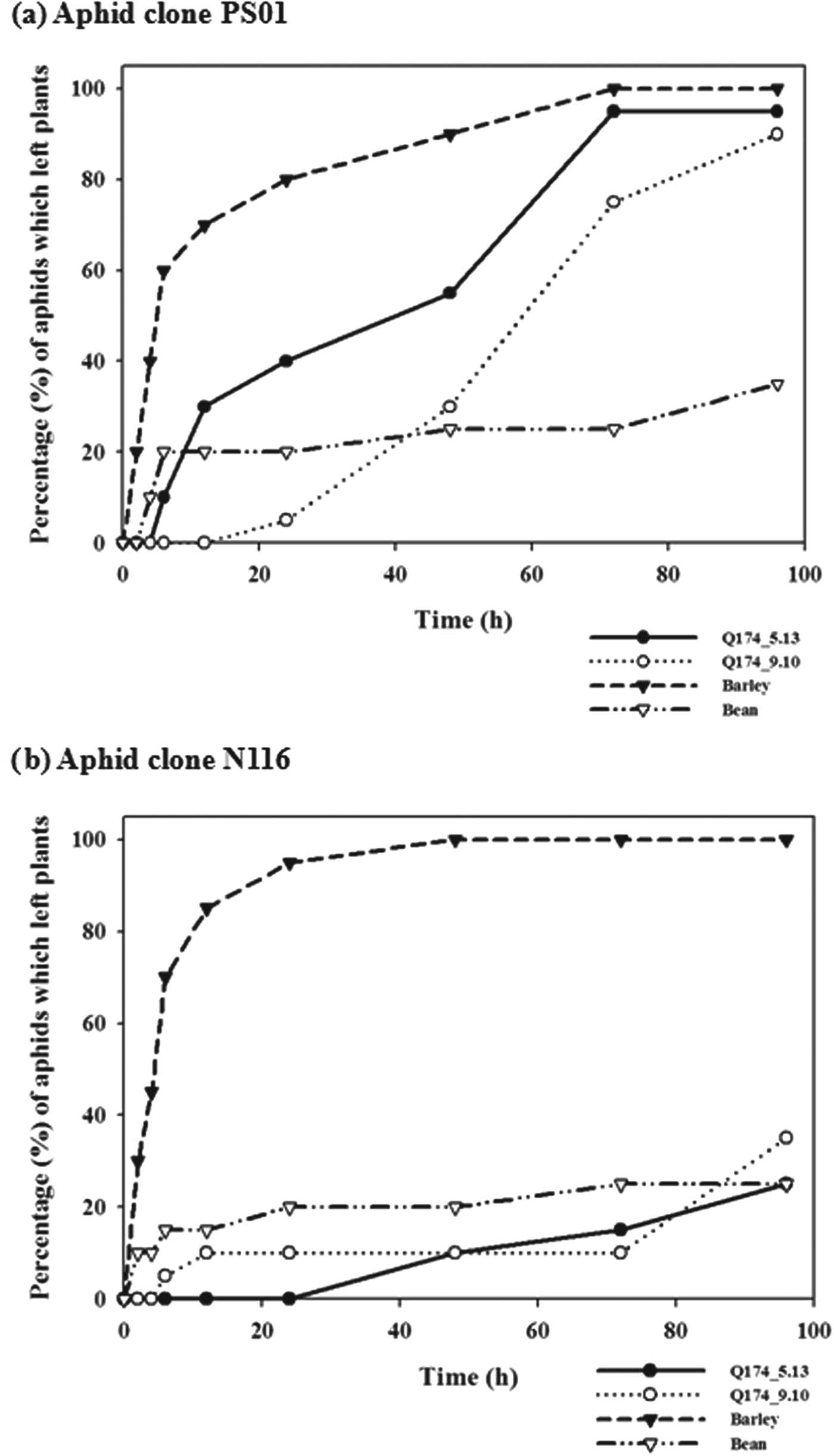
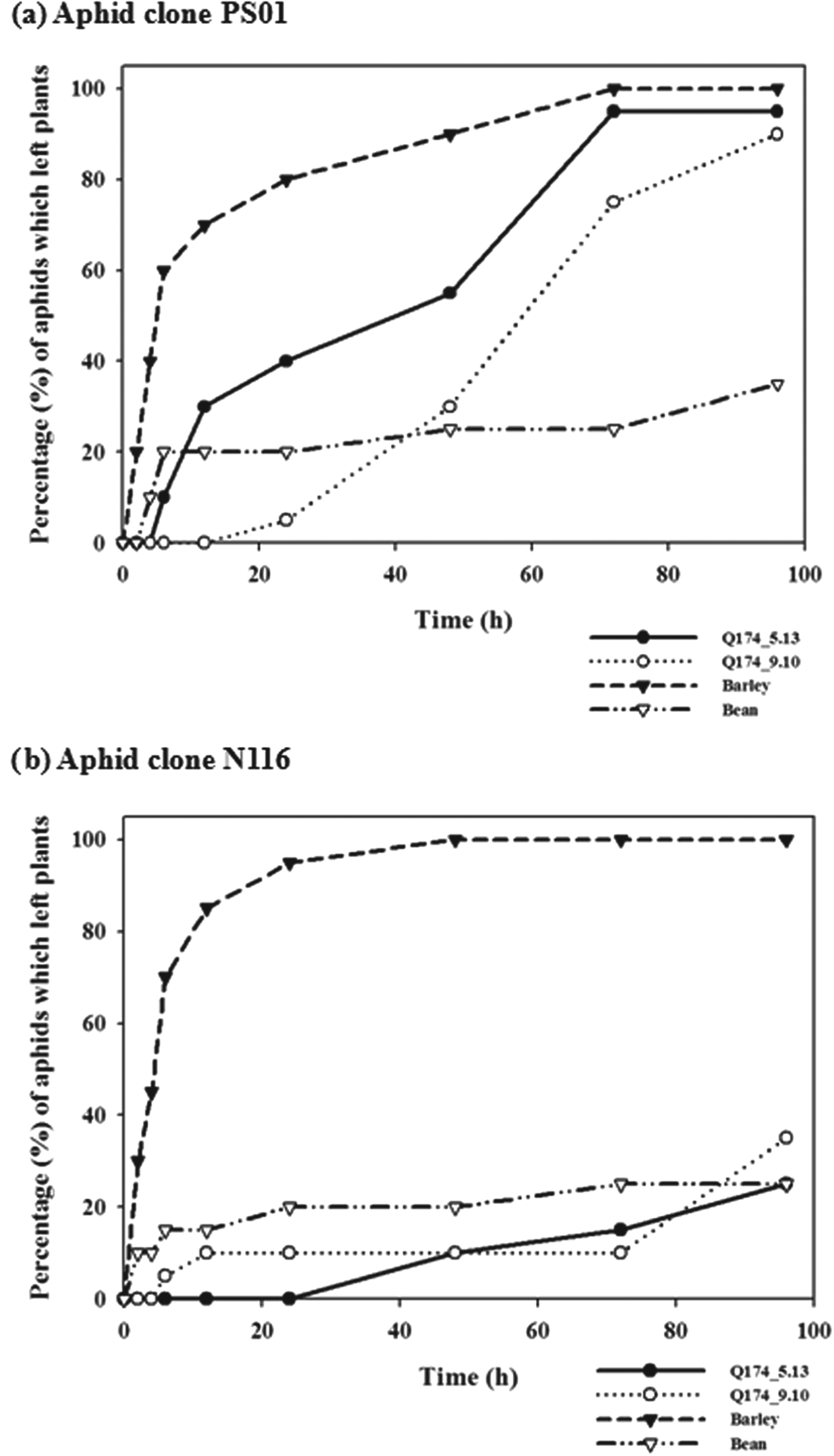
The clone PS01 stayed on the tic bean host, while rejected the barley no-host over 96 h (fig. 1a). Q174_5.13 and Q174_9.10 were rejected over 96 h, but aphids left the two plants more slowly than barley. In the case of N116, all aphids rejected barley in 48 h, but about 65–75% of aphids stayed on bean, Q174_5.13 and Q174_9.10 over the 96-h experimental period (fig. 1b).
Percentage of the aphids of A. pisum (n=20 for each group) which rejected plants (Q174_5.13, Q174_9.10, barley and bean) over the experimental period (96 h). X values of the points represent 0, 2, 4, 6, 12, 24, 48, 72, 96 h from the left: (a) the clone PS01. There is a significant difference between Q174_5.13 and Q174_9.10 at 12, 24 h (P<0.05) and no significant difference between the two at the other time points; (b) the clone N116. There is no significant difference between Q174_5.13 and Q174_9.10 at any time point.
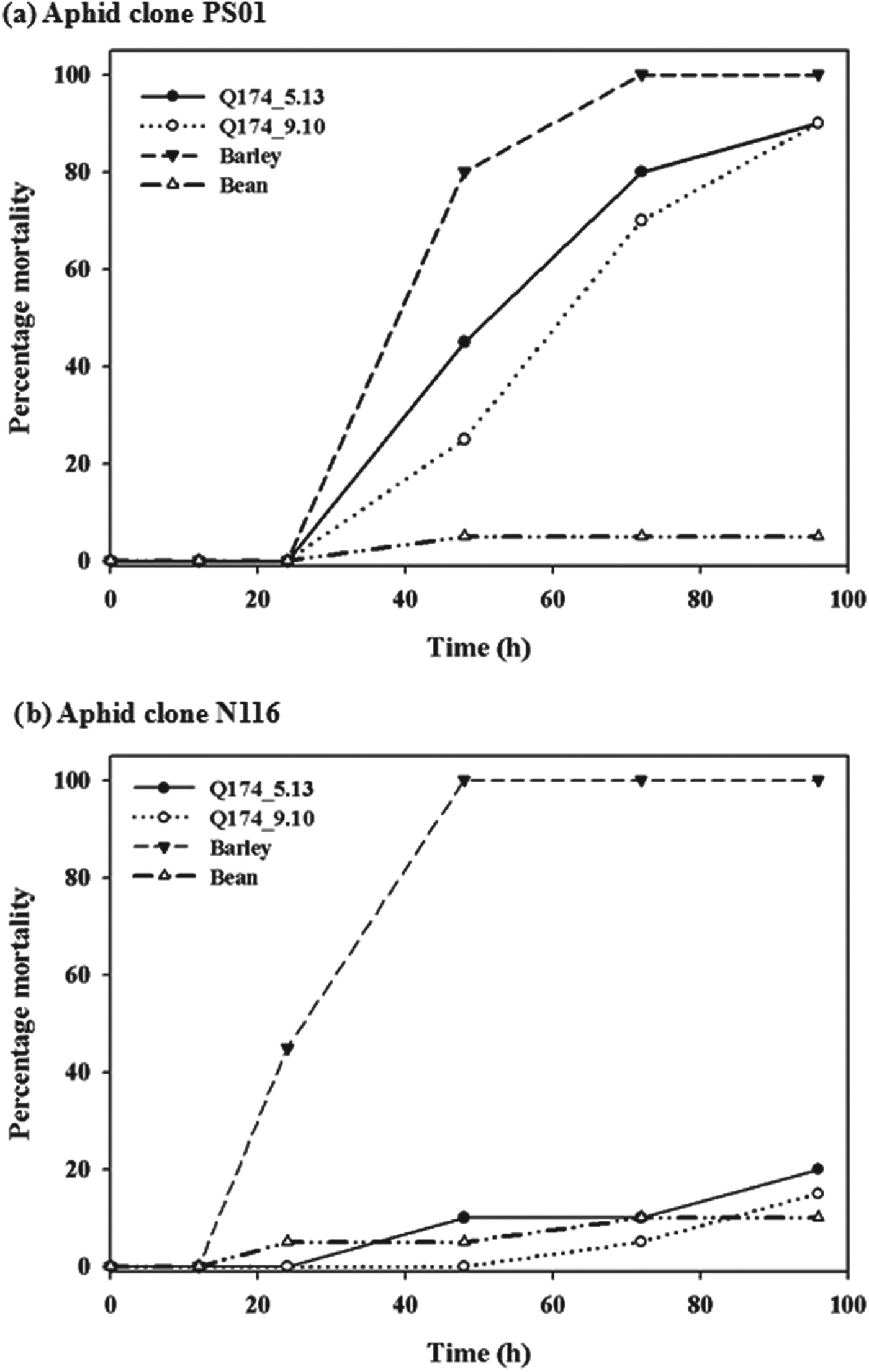
Over 96 h, almost all aphids of the clone PS01 survived on bean, whereas most aphids died on either barley, Q174_5.13 or Q174_9.10 (fig. 2a). Mortality of aphids of the clone N116 on barley increased rapidly and all died in 48 h, but more than 80% of aphids survived on bean, Q174_5.13 and Q174_9.10 over the 96-h experimental period (fig. 2b).
Percentage mortality of adults of the clones of A. pisum on the plants (Q174_5.13, Q174_9.10, barley and bean) over the experimental period (96 h): X values of points represent 12, 24, 48, 72, 96-h from the left; n=20 for each group; there is no significant difference between Q174_5.13 and Q174_9.10 at any time point.

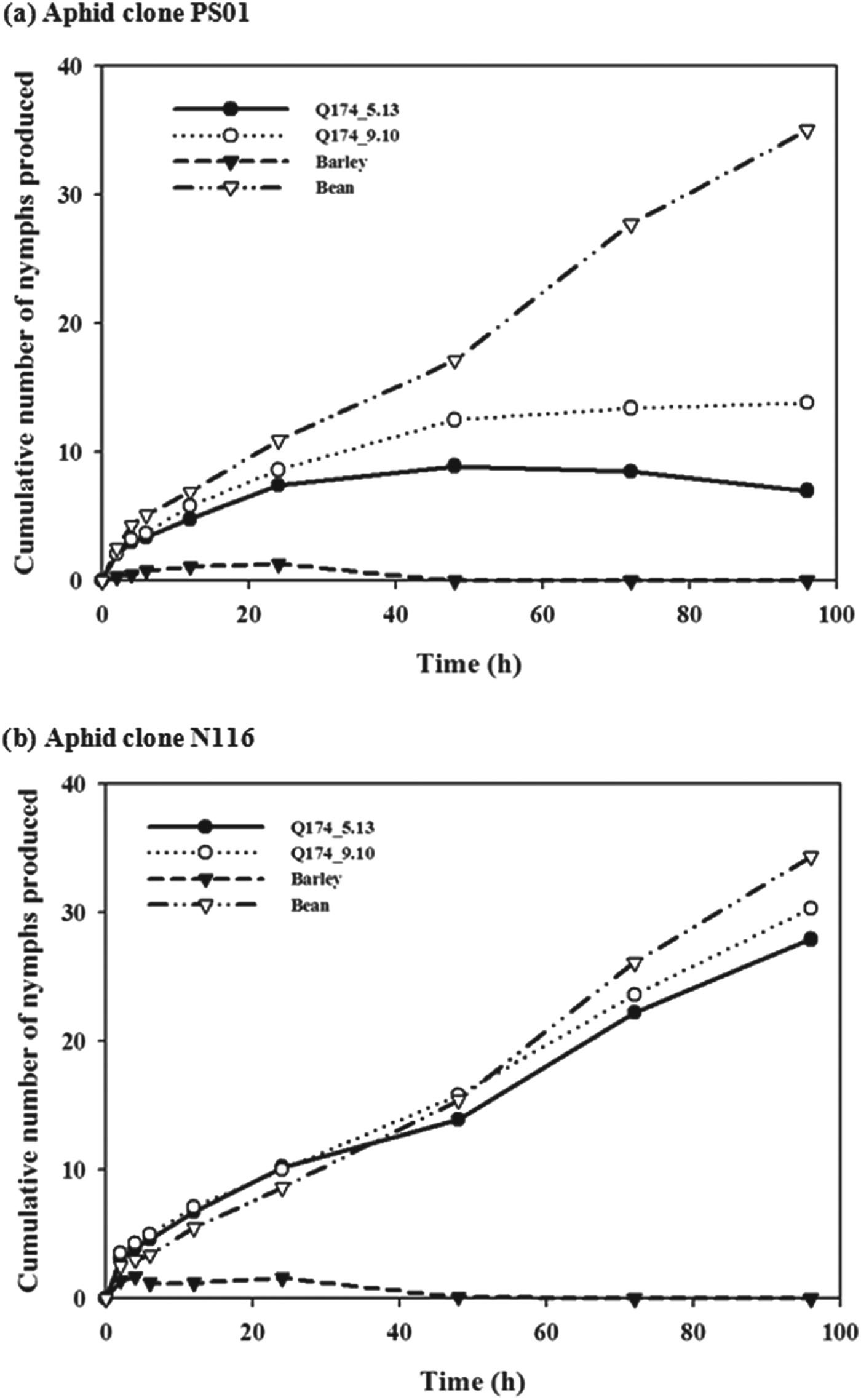
The clone PS01 produced a similar number of nymphs on bean, Q174_5.13 and Q174_9.10 for the first 12 h, but rates of increase in the number of nymphs on Q174_5.13 and Q174_9.10 gradually slowed, and after 48 h, the number of nymphs remained at similar levels. On the other hand, the number of nymphs on bean continuously increased over 96 h (fig. 3a). The number of nymphs of the clone N116 continuously increased on all of the plants tested, except for barley where a few nymphs were produced and all aphids died in 48 h (fig. 3b).
Cumulative number of nymphs of the clones of A. pisum produced on plants (Q174_5.13, Q174_9.10, barley and bean) over the experimental period (96 h) : n=20 for each group; there is no significant difference between Q174_5.13 and Q174_9.10 at any time point in (a) or (b).
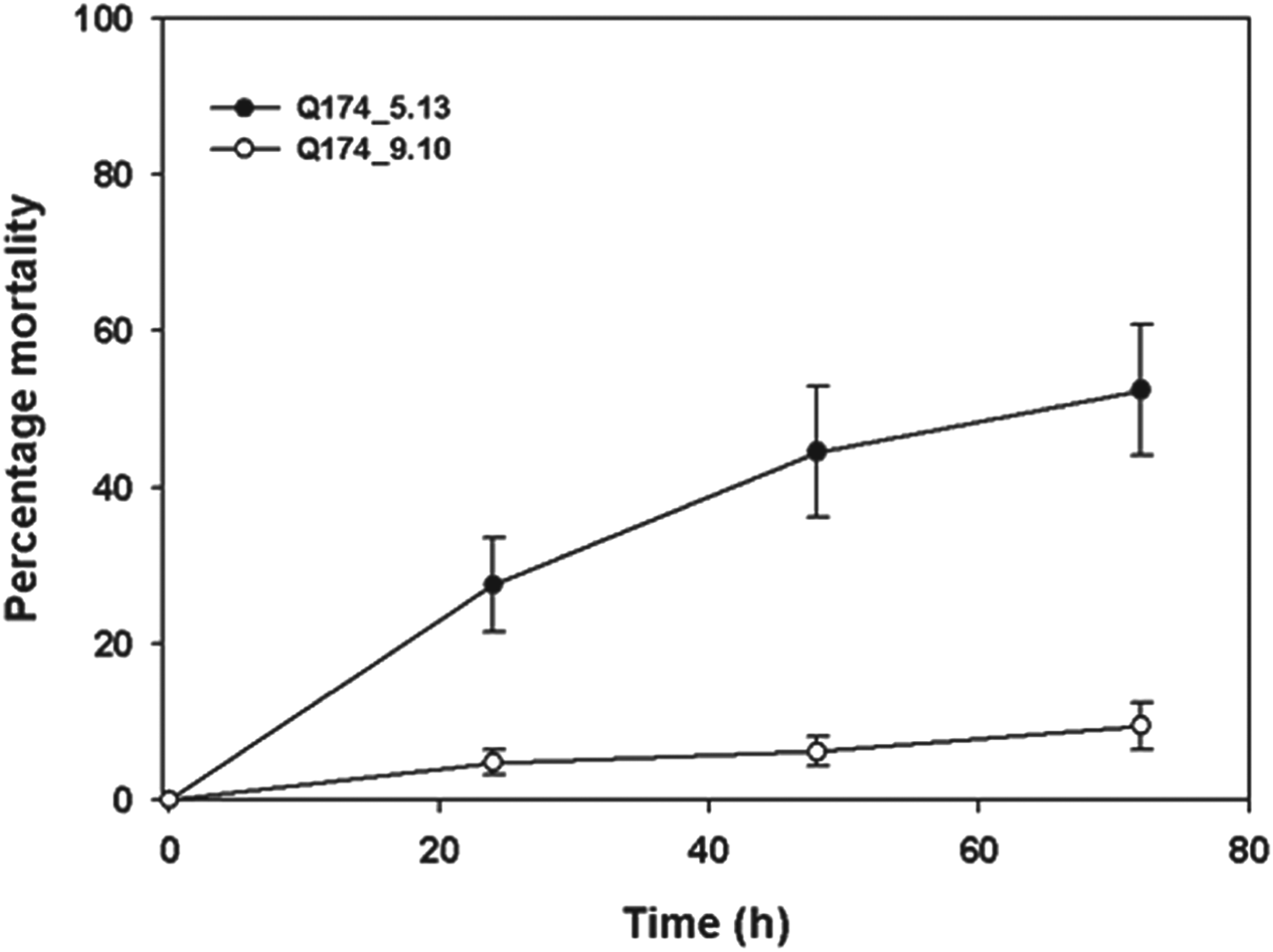
Mortality of nymphs of the clone PS01 on Q174_5.13 and Q174_9.10 was monitored over 72 h from the time when adults died (fig. 4). Approximately half of nymphs died on Q174_5.13 over 72 h, whereas only 10% of nymphs died on Q174_9.10.
Percentage mortality of nymphs of the clone PS01 of A. pisum on the two NILs (Q174_5.13 and Q174_9.10) over 72 h after adult death (n=18 for each plant line). The nymphs were mixed-aged (0–96 h old) when the monitoring was initiated.
Parturition and probing behaviour of the clone PS01 and N116 on Q174_5.13 and Q174_9.10
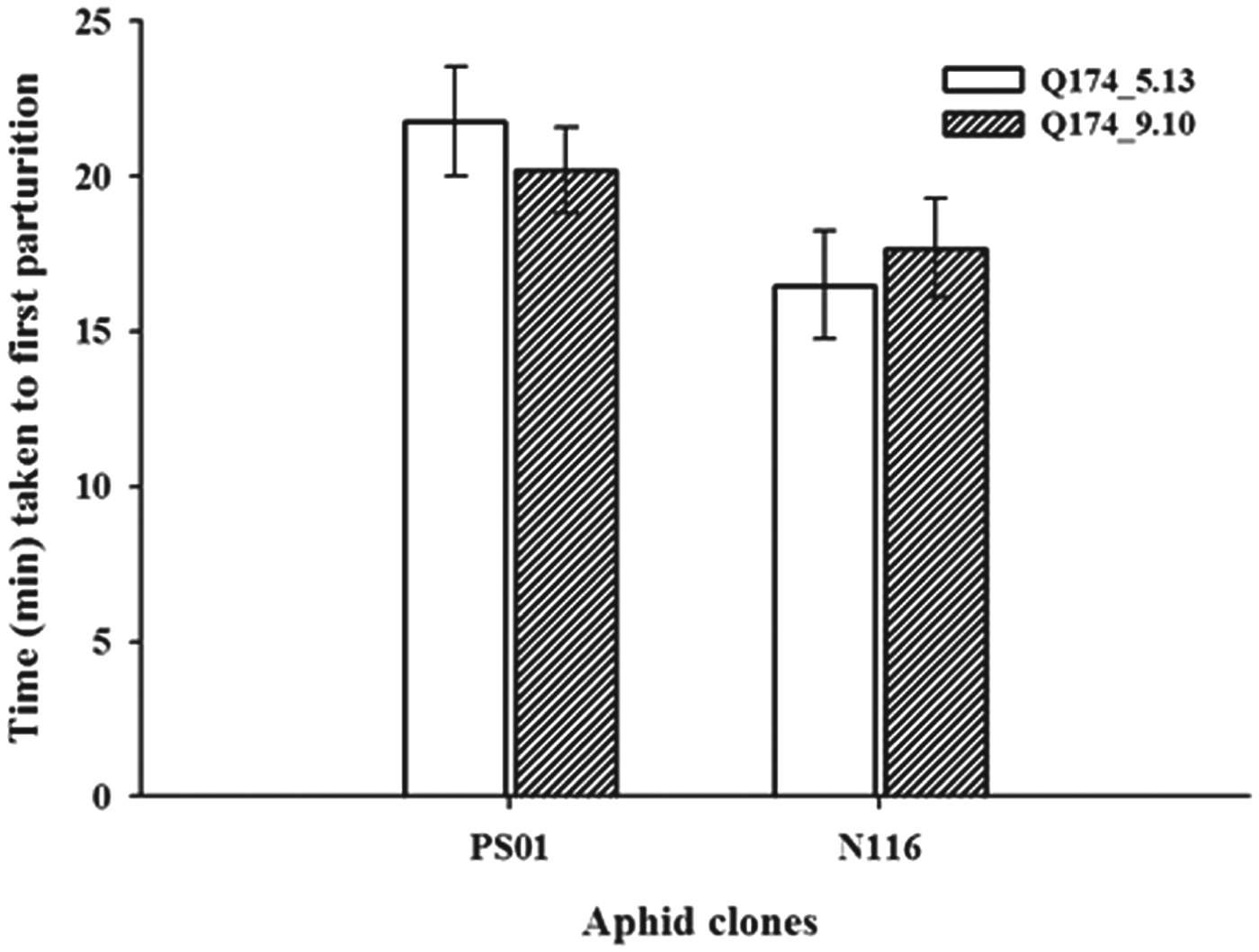
The time taken to first parturition from being placed on Q174_5.13 and Q174_9.10 was not significantly different between the clone PS01 and N116 (fig. 5).
Time (min±SE) taken for the clone PS01 and N116 to first parturition from being placed on either Q174_5.13 or Q174_9.10: ns represents non-significant difference between groups; n=20 and 19 for the clone PS01 and N116 on the two NILs, respectively.
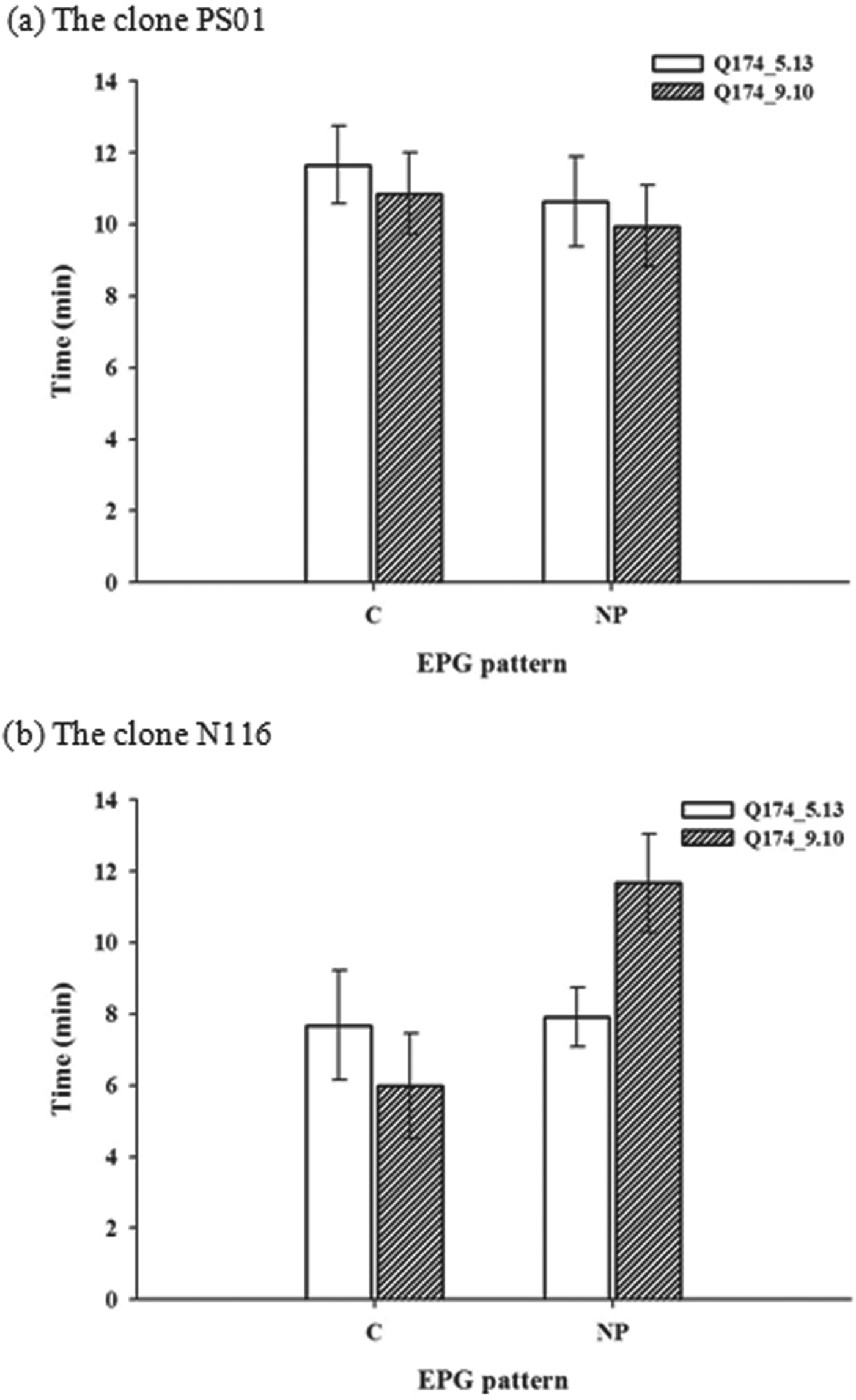
Prior to parturition, 95% of the clone PS01 showed only pathway activities (recognized by EPG C pattern) including brief intracellular punctures (recognized by EPG pd pattern), and 5% of aphids showed phloem salivation (recognized by EPG E1 pattern) as well as pathway activities. Phloem ingestion (EPG E2 pattern) and xylem ingestion (EPG G pattern) were not observed in any aphid. The clone N116 showed pathway activities only, and no xylem ingestion, phloem salivation or phloem ingestion were observed in any aphid. In the case of the clone PS01, there was no significant difference in duration of probing (pathway activities) and non-penetrating between aphids on Q174_5.13 and Q174_9.10 (fig. 6a). The clone N116 spent more time in non-penetrating on Q174_9.10 than on Q174_5.13, but the time spent in pathway activities was not significantly different between the two (fig. 6b).
Time (min±SE) spent by aphids in doing probing activities before first parturition: n=20 and 19 for the clone PS01 and N116, respectively; ns represents non-significant difference between groups and * indicates P<0.05; C, pathway activities; NP, non-penetration.
Discussion
Earlier studies indicated that M. truncatula line Q174_5.13 was resistant to feeding by A. pisum clone PS01 but was susceptible to the clone N116, whereas line Q174_9.10 was susceptible to both PS01 and N116 clones (Stewart, Reference Stewart2010). In the present study, both NILs, Q174_5.13 and Q174_9.10 were susceptible to the clone N116. However, both of two NILs also showed some resistance to the clone PS01. Most of the clone PS01 adults rejected both NILs and could not survive over 96 h (figs 1 and 2). The reasons why the susceptible line Q174_9.10 showed resistance are not clear. It may be attributed to different germinating and growing conditions. In this research, Medicago seeds were germinated in a room temperature (17±1 °C), whereas Stewart et al. (Reference Stewart, Hodge, Ismail, Mansfield, Feys, Prosperi, Huguet, Ben, Gentzbittel and Powell2009) used a low temperature (4 °C) for germinating seeds. The low-temperature germination method was originally used to synchronize radical growth before transfer to soil (Klingler et al., Reference Klingler, Creasy, Gao, Nair, Calix, Jacob, Edwards and Singh2005). However, the room temperature germination method was also utilized to investigate the resistance of Jester and A17 (Gao et al., Reference Gao, Klingler, Anderson, Edwards and Singh2008), which are the same genotypes of M. truncatula to ones used in Klingler et al. (Reference Klingler, Creasy, Gao, Nair, Calix, Jacob, Edwards and Singh2005) and Stewart et al. (Reference Stewart, Hodge, Ismail, Mansfield, Feys, Prosperi, Huguet, Ben, Gentzbittel and Powell2009). It has been reported that temperature can affect resistance of alfalfa, M. sativa to pea aphid, and the relatively low temperature seems to decrease resistance from some plants (Isaak et al., Reference Isaak, Sorensen and Painter1965). Fluctuating temperatures (17–35 °C) in a glasshouse also could generate heterogeneous micro-environments that may affect the expression of resistant traits within plants.
It is to note that Stewart (Reference Stewart2010)'s measure of resistance was made by recording the mortality of 2-day-old nymphs, rather than adults. Nymphs of the clone PS01 in the present study seem to perform better on the susceptible line Q174_9.10 than on the resistant line Q174_5.13. Cumulative numbers of nymphs produced over 96 h was similar on Q174_5.13 and Q174_9.10, and seems to reflect resistance of both M. truncatula lines to nymphs as the graphs approach horizontal asymptotes rather than a continued increase as in the graph representing aphids on beans (fig. 3). However, two factors (adult survival and nymph survival) are involved, making for difficulties in interpreting the results. The results of fig. 4 seems consistent with Stewart et al. (Reference Stewart, Hodge, Ismail, Mansfield, Feys, Prosperi, Huguet, Ben, Gentzbittel and Powell2009), in which 48-h old nymphs were individually placed on Jemalong A17 and DZA 315, two parent lines of Q174_5.13 and Q174_9.10, respectively, and monitored for 96 h. All PS01 nymphs died within 72 h on Jemalong A17, whereas most of nymphs (80%) survived on DZA 315. In the present study, although all Q174_5.13 individuals should be genetically identical (as a plant line), there was a variation among Q174_5.13 individuals in their degree of resistance to nymphs of the clone PS01. All nymphs died on some individual plants within 72 h, whereas most of the nymphs survived on other individuals.
A. pisum is one of the representative model species for research on sympatric speciation, and it is well known that host races exist among populations, utilizing different plant species as host plants. For instance, in USA, A. pisum clones are specialized on either red clover (Trifolium pratense) or alfalfa (M. sativa), and fecundity is greatly reduced when clones are offered the alternative ‘host’ (Via, Reference Via1999; Via et al., Reference Via, Bouck and Skillman2000). Detailed monitoring of host acceptance behaviour of A. pisum clones on the two plants showed that aphids rejected and left the plant, or remained and larviposited on the plant within 30 min of the plant contact, which indicated that plant attributes near the surface may be involved in host acceptance by those aphid species (Caillaud & Via, Reference Caillaud and Via2000). It was found that chemical stimulants were required to invoke parturition of A. pisum clones on their host plants (Del Campo et al., Reference Del Campo, Via and Caillaud2003).
In the present research, the clone N116 was collected from alfalfa and the PS01 from bean. Thus, the clone N116 may be specialized on alfalfa, so may accept M. truncatula (Q174_5.13 and Q174_9.10 in this research) as it is a close relative to alfalfa, M. sativa. As predicted, the clone N116 accepted both plants. On the other hand, bean is known as a universal host for the pea aphid (Ferrari et al., Reference Ferrari, Via and Godfray2008), and so the aphid individuals collected on bean may be temporary residents rather than clones specializing on bean. Thus, it is not possible to determine which plant the clone PS01 is adapted to. However, a few PS01 adults moved off Q174_5.13 or Q174_9.10 during the first 6 h (fig. 1a) and all the other aphids initiated parturition on both plants, which indicates that chemical stimulants for parturition are present within both plants and should be detected by aphids sometime during the first 6 h. Also, most aphids of the clone PS01 rejected both plants over 96 h, so it can be inferred that aphids encountered difficulty in probing/feeding on the plants for extended periods. EPGs of the clone PS01 adults on Q174_5.13 and Q174_9.10 were carried out by Stewart (Reference Stewart2010). It was shown that first phloem contact (recognized by EPG pattern E1) occurred between 2 and 6 h of the plant contact on both Q174_5.13 and Q174_9.10 (286.5±41.8 and 136.9 ±36.0 min (mean±SE), respectively). It is likely that the difficulty aphid encountered may be associated with phloem considering that reproduction stimulants may be located outside the phloem.
It is interesting to note that the clone PS01 moved off Q174_9.10 relatively slowly compared with Q174_5.13 (significant difference at 12 and 24 h in fig. 1a). PS01 nymphs also survived better on Q174_9.10 than on Q174.5.13 (fig. 4). Q174_9.10 and Q174_5.13 were considered to be susceptible and resistant to the clone PS01, respectively. Phloem ingestion (recognized by EPG pattern E2) by PS01 aphids on Q174_5.13 was greatly reduced, but was observed for extended periods on Q174_9.10 (Electrical penetration graphs in Stewart's PhD thesis, 2010), and so it is probably that phloem feeding is associated with differences shown between Q174_9.10 and Q174_5.13. However, it is still not clear why Q174_9.10 seemed somewhat resistant to the PS01 adults but susceptible to their nymphs.
Apart from the above discussion concerning resistance of Q174_5.13 and Q174_9.10 to aphid clones PS01 and N116, it is evident that the initiation of parturition does not require phloem contact in either PS01 or N116 clones. The time taken by both clones to first parturition from the placement on the plants was <30 min and it is unlikely that phloem contact by aphids occurred during that time as overall 2–6 h was required to first phloem contact (Stewart, Reference Stewart2010). In EPG recordings up to first parturition, only one aphid among all aphid–plant combinations (PS01 on Q174_9.10), contacted the phloem before first parturition.
Acknowledgement
This work was supported by a Korean Government Scholarship.