

Introduction
Neuropsychological assessment plays an essential role in the diagnosis of cognitive neurodegenerative disorders, especially Alzheimer's disease (AD). Several cognitive screening tests have been developed and validated in this setting (Velayudhan et al., Reference Velyudhan2014), such as the Mini-Mental State Examination (MMSE), which has been widely considered during many years the “standard” and is the most employed.
However, several limitations with the use of MMSE have been observed, such as an underrepresentation of tasks regarding memory, visuospatial and executive functioning, a major influence of educational background, the presence of ceiling and floor effects, the insensitivity to detect early stages of cognitive diseases, and the restriction of use because of a copyright, among other issues (Carnero-Pardo, 2015; Devenney and Hodges, Reference Devenney and Hodges2017). For this reason, several novel cognitive screening tests were subsequently developed (Velayudhan et al., Reference Velyudhan2014). In this regard, Addenbrooke's Cognitive Examination (ACE-I) was first developed as an extended form of the MMSE in 2000 (Mathuranath et al., Reference Mathuranath, Nestor, Barrios, Rakowicz and Hodges2000). Since then, two subsequent updated versions were published in 2006 and 2013: the Addenbrooke's Cognitive Examination-Revised (ACE-R) and the ACE-III (Mioshi et al., Reference Mioshi, Dawson, Mitchell, Arnold and Hodges2006; Hsieh et al., Reference Hsieh, Schubert, Hoon, Mioshi and Hodges2013). The ACE-III has already been validated in several languages (Matías-Guiu et al., Reference Matías-Guiu2015a; Wang et al., Reference Wang, Ou, Gu, Wei, Xu and Shi2017) and has proved to be useful in the diagnosis of several types of dementia (Matías-Guiu et al., Reference Matías-Guiu2015a; Elamin et al., Reference Matías-Guiu2015), AD, amnestic mild cognitive impairment (Matías-Guiu et al., Reference Matías-Guiu2017a), and cognitive impairment associated to stroke (Lees et al., Reference Lees, Hendry, Broomfield, Stott, Larner and Quinn2016). Interestingly, this test provides five cognitive domains (attention, memory, verbal fluency, language, and visuospatial), which have been correlated with standardized neuropsychological tests (Hsieh et al., Reference Hsieh, Schubert, Hoon, Mioshi and Hodges2013; Matías-Guiu et al., Reference Matías-Guiu2017a). This suggests the usefulness of the ACE-III as a cognitive screening tool, as well as to define a cognitive profile (Matías-Guiu et al., Reference Matías-Guiu, Fernández-Bobadilla and Cortés-Martínez2016b). Furthermore, we recently demonstrated the superiority of the ACE-III in the screening of AD in comparison to MMSE, Montreal Cognitive Assessment (MoCA), Memory Impairment Screen, and Rowland Universal Dementia Assessment Scale (Matías-Guiu et al., Reference Matías-Guiu, Valles-Salgado, Rognoni, Hamre-Gil, Moreno-Ramos and Matías-Guiu2017b). The ACE-III has good sensitivity and specificity in the assessment of cognitive deficits and shows a higher diagnostic and discriminatory ability than the MMSE in cognitive impairment and dementia (Matías-Guiu et al., Reference Matías-Guiu2015a; Matías-Guiu et al., Reference Matías-Guiu2017a).
In contrast to the ACE-I and ACE-R versions, which inherently comprised the MMSE score, the ACE-III was the first of the ACE versions that did not include the MMSE score. In fact, items from the MMSE were deleted in the ACE-III due to copyright issues.
Although ACE-III is a more comprehensive test, MMSE is still required in several settings, especially for administrative purposes in a clinical scenario (e.g. to request cholinesterase inhibitors for AD in some countries), and to allow a comparison between different populations included in research studies that do not use the same measure of global cognitive functioning. Thus, availability of conversion tables between cognitive tests seems relevant in clinical practice, and there have been recent studies that provided tables to convert MoCA and MMSE scores in several neurological and cognitive disorders (van Steenoven et al., Reference van Steenoven2014; Lawton et al., Reference Lawton2016; Bergeron et al., Reference Bergeron2017; Roalf et al., Reference Roalf2017). However, to our knowledge, there is no conversion method between MMSE and ACE-III.
In this study, we aimed to elaborate a conversion table between ACE-III and MMSE scores, in order to predict the MMSE score on the basis of ACE-III, thus avoiding the need to administer both tests and improve the comparability between cognitive tools. We estimated the conversion table using a large sample of patients with AD in different stages and healthy controls and, then, we validated it in additional groups of healthy controls, patients with AD, as well as behavioral variant frontotemporal dementia (bvFTD) and primary progressive aphasia (PPA).
Methods
Study population and assessments
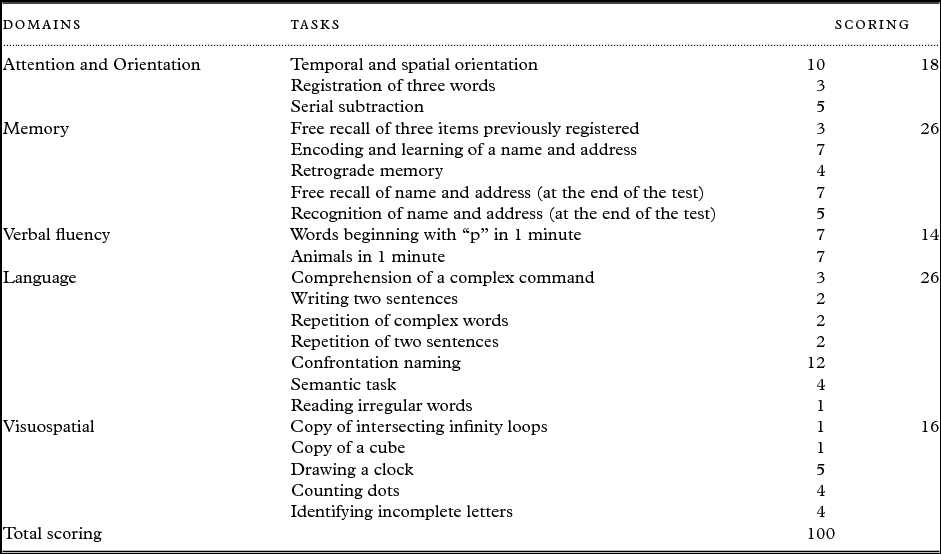
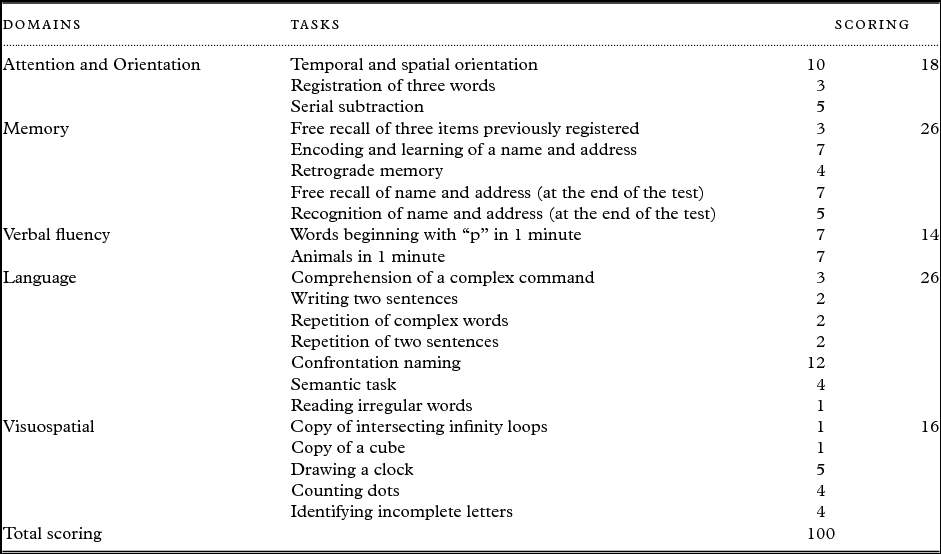
We performed a cross-sectional study of patients with AD in different stages (Global Deterioration Scale 3, 4, and 5) from the Department of Neurology of our center. All patients were followed-up, with full clinical, neurological, laboratory and neuroimaging examination, and all accomplished the current diagnostic criteria for AD (McKhann et al., Reference McKhann2011). We also included healthy participants, which were taken partly from a previous study (Matías-Guiu et al., Reference Matías-Guiu2016a), a group of 52 patients with PPA (Gorno-Tempini et al., Reference Gorno-Tempini2011) and a group of 22 patients with bvFTD (Rascovsky et al., Reference Rascovsky2011) (Figure 1). In all cases, ACE-III and MMSE were administered on the same day and by a single neuropsychologist. Main characteristics of ACE-III are shown in Table 1.
Flow chart of the study population.

Main characteristics of ACE-III
The Ethics Committee of our hospital approved the study and it was in accordance with the Declaration of Helsinki. All patients or their caregivers provided a written informed consent before being included.
Statistical analysis
Statistical analysis was performed using IBM® SPSS Statistics 20.0 and R statistical software version 3.3.2 (equate library) (Albano, Reference Albano2016). Descriptive results are shown as frequency (percentage) or mean ± standard deviation (range). Pearson coefficient was used to calculate the correlation between ACE-III and MMSE scores.
Five hundred participants comprising both healthy controls and patients with AD were randomized into two groups: a first group with n = 400, in which the conversion table was elaborated; and a second group with n = 100 (57 healthy controls and 43 patients with AD) in which the reliability of the conversion table was tested. Reliability of the conversion table was also verified in the bvFTD and PPA groups.
The equipercentile equating method was used to calculate the equivalence between ACE-III and MMSE scores (Albano, Reference Albano2016). This statistical methodology allows the scores from two different tests to be adjusted as equivalent in a single test takers group, if they represent the same relative position (Livingston, Reference Livingston2004).
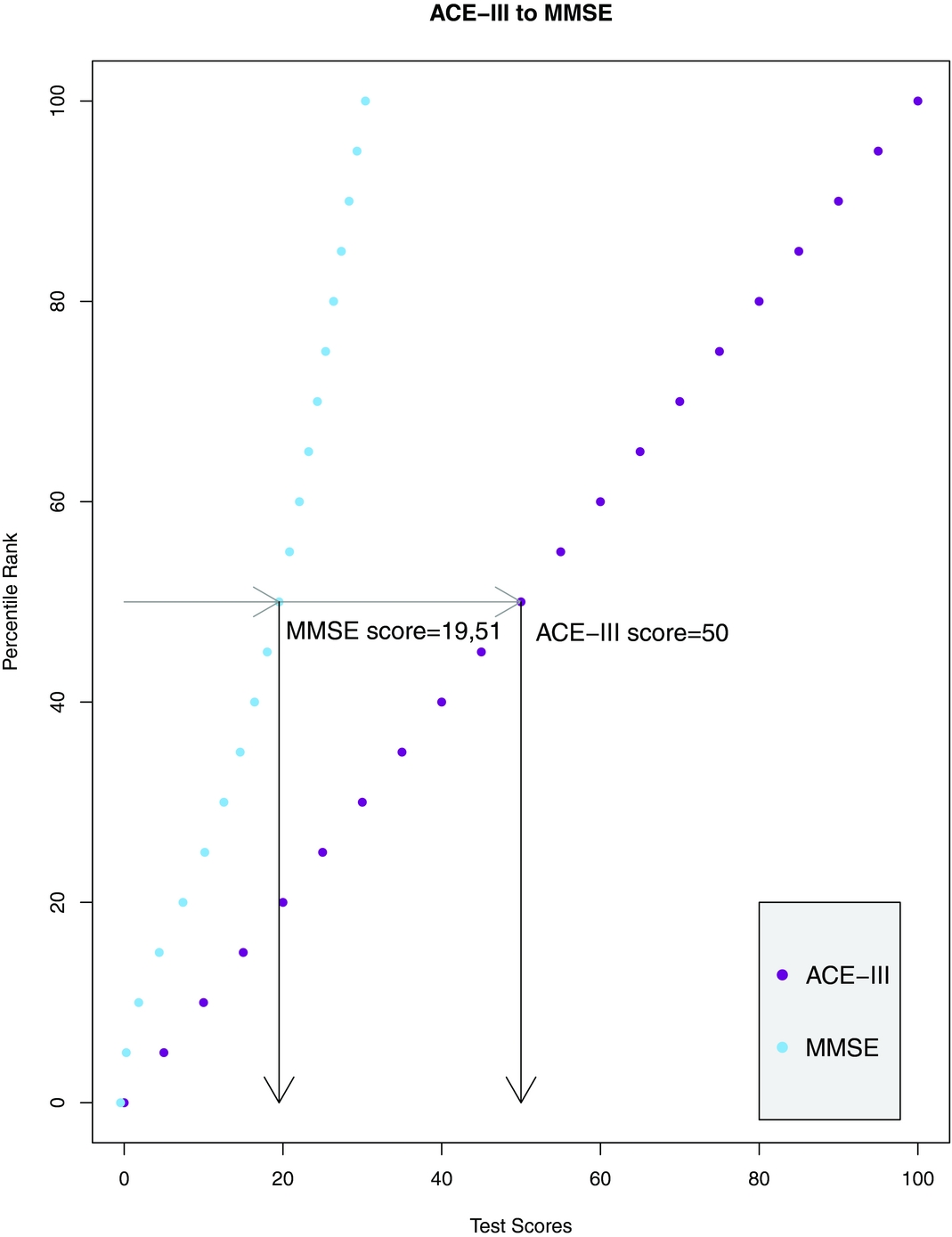
We begin the process calculating and matching the percentiles of ACE III and MMSE, creating a link between the two scales. Then, for any given score on an ACE III-based measure, we have a corresponding score (or score range) on the MMSE based measure with the same percentile range. Log-linear smoothing of the “equate” library was applied to avoid an irregular distribution of the MMSE and ACE III scores. Again, this allows adjusting scores, as well as differences in the level of difficulty. The resulting pair of scores was plotted on a graph and each of these points was connected by a smooth curve, displaying the equipercentile relationship between ACE III- and MMSE-based measures across the observed range of values on both measures. Finally, a table of equivalences between both tests was completed.
Intra-class correlation coefficient (ICC) between MMSE obtained by direct examination and by using the conversion table was estimated. Furthermore, the percentage of cases that fell within ±1 and ±2 points of the true MMSE was calculated.
Results
Sample characteristics
For the group used to create the conversion table (n = 400, 267 healthy controls and 133 AD), mean age was 72.42 ± 10.14 years (ranging from 50 to 94), and 255 (63.7%) were women. The level of education measured as years of formal schooling was 9.61 ± 5.36 (0–20). Mean MMSE score was 25.63 ± 4.51 (9–30); mean ACE-III score was 74.29 ± 18.64 (17–100). Main characteristics of validation groups are shown in Table S1 (available as supplementary material attached to the electronic version of this paper at www.journals.cambridge.org/jid_IPG).
Conversion table
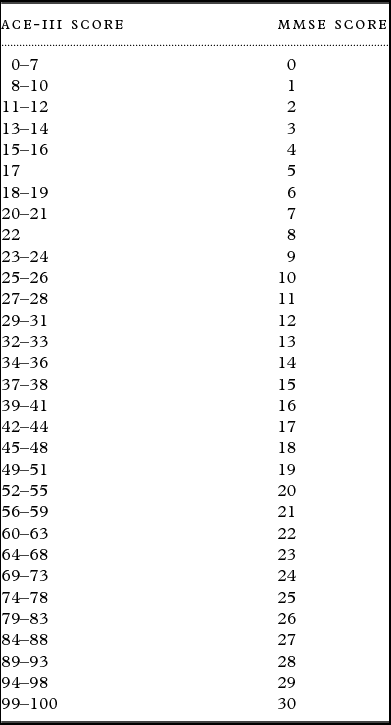
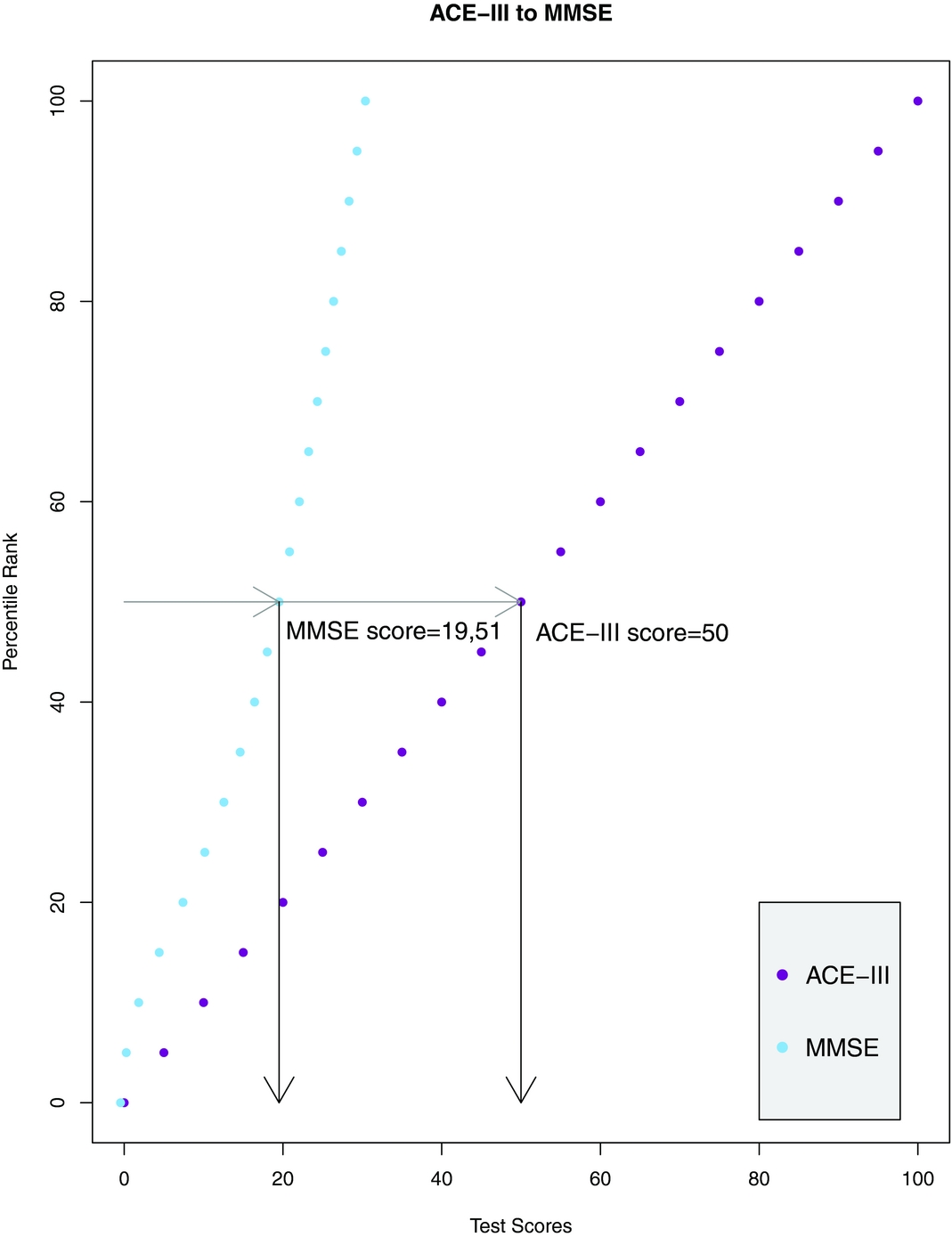
Correlation between MMSE and ACE-III score was r = 0.874 (p < 0.0001). Conversion scores, estimated using the equipercentile method, are shown in Table 2 and Figure 2. Exact equivalent scores are shown in Table S2 (available as supplementary material attached to the electronic version of this paper at www.journals.cambridge.org/jid_IPG).
Conversion table between ACE-III and MMSE

Raw scores and raw percentile ranks for ACE-III and MMSE. For instance, an ACE-III score of 50 is equivalent to a MMSE score of 19. Abbreviations: MMSE = Mini-Mental State Examination; ACE-III = Addenbrooke's Cognitive Examination III.
Reliability of the conversion procedure
ICC between true MMSE and estimated MMSE in the group with healthy controls and AD (n = 100) was 0.940 (95% confidence interval 0.901–0.962, p<0.0001). In 60% of cases the estimation fell within ±1 points and in 81% within ±2 points of the true MMSE. Specifically, regarding healthy controls, ICC was 0.878 (95% confidence interval 0.778–0.931, p<0.0001); and for AD, ICC was 0.894 (95% confidence interval 0.796–0.944).
For the group with bvFTD, ICC was 0.922 (95% confidence interval 0.752–0.971, p<0.0001). In 50% of cases the estimation fell within ±1 points and in 72.7% within ±2 points of the true MMSE. Correlation between ACE-III and MMSE in this group was 0.883 (p<0.0001).
In the PPA group, ICC was 0.902 (95% confidence interval 0.668–0.959, p<0.0001). In 42.3% of cases the estimation fell within ±1 points and in 53.8% within ±2 points of the true MMSE. Correlation between ACE-III and MMSE in this group was r = 0.861 (p<0.0001).
Discussion
In this study, we aimed to elaborate a conversion table between ACE-III and MMSE. We provided equivalent scores between both tests using the equipercentile method. Importantly, the conversion table showed an excellent reliability according to ICC in the validation group of healthy controls and AD, as well as in the group with bvFTD. Furthermore, the percentage of cases within a confidence interval between ±1 and ±2 was relatively high.
There are some previous reports of conversion scores in Parkinson's disease between MoCA, MMSE, and Dementia Rating Scale-2 (van Steenoven et al., Reference van Steenoven2014; Lawton et al., Reference Lawton2016). Also, in cognitive disorders, two recent studies have created conversion tables between short MoCA and MMSE (Roalf et al., Reference Roalf2017), and between MoCA and MMSE (Bergeron et al., Reference Bergeron2017). In these studies, participants with multiple neurological disorders (including both neurodegenerative and non-neurodegenerative diseases, depression, etc.) were included in the sample to calculate the equivalent scores. However, to our knowledge, there are no published conversion tables between ACE-III and MMSE. Moreover, we have elaborated this calculation in the specific setting of the three main types of neurodegenerative cognitive disorders and healthy patients, and we have further corroborated its usefulness by retesting its applicability.
Interestingly, Bergeron et al. (Reference Bergeron2017) tested the applicability of a conversion table between MoCA and MMSE to specific diagnoses, with different success according to the subtype of dementia. In particular, in dementias with a predominant executive functioning impairment, the estimated MMSE was lower than the true score. In our study, we preferred to calculate the conversion table in a large group of healthy controls and AD in different stages, because AD is generally a disease with a well-known and more predictable clinical course; and then, we checked the applicability in other causes of cognitive impairment. Reliability was excellent and similar in the three groups used for validation. This may be explained because correlations between ACE-III and MMSE in the three groups were of an equivalent level. In the case of PPA, reliability was also high, although the percentage of cases within ±1 and ±2 points of true MMSE was lower. This could be because ACE-III has a greater number of items based on language, and PPA is a very heterogeneous disease with different patterns of language impairment and clinical progression (Matías-Guiu et al., Reference Matías-Guiu2015b).
This study contributes to the knowledge about ACE-III, avoiding a potential limitation of the third version of ACE like the removal of the MMSE items. The possibility to equate ACE-III and MMSE scores and to predict the score of one test from the other one may be relevant in clinical practice. This could be an another strength of the ACE-III that may invite clinicians and researchers to implement it as a screening tool of general use in the setting of cognitive neurodegenerative disorders. Other known strengths of the ACE-III include that it examines five cognitive domains (Hsieh et al., Reference Hsieh, Schubert, Hoon, Mioshi and Hodges2013), it has a good convergent validity with specific and standardized neuropsychological tests (Hsieh et al., Reference Hsieh, Schubert, Hoon, Mioshi and Hodges2013; Matías-Guiu et al., Reference Matías-Guiu2017a), and it has very good psychometric properties and reliability (Hsieh et al., Reference Hsieh, Schubert, Hoon, Mioshi and Hodges2013; Matías-Guiu et al., Reference Matías-Guiu2015a). Furthermore, the ACE-III is free and available in several languages, it has alternate versions, and normative data are being published in some countries (Matías-Guiu et al., Reference Matías-Guiu2016a).
Our study has some limitations. First, no patients with MMSE and ACE-III scores less than 9 and 17, respectively, were included. Thus, conversion scores on these values are only an estimate, and are not based on real observations. However, because these tests are less used at such levels of cognitive impairment, it probably does not represent a major issue. Second, our study was performed with the Spanish version of both tests and in Spaniard population. Due to the influence of cultural and linguistic factors in cognitive assessment and, in particular, in ACE-III and MMSE, specific studies validating or creating language or country-specific conversion tables in other populations may be necessary. However, in the case of conversion tables, cross-cultural application seems to be possible, as has been suggested in a recent study by Bergeron et al. (Reference Bergeron2017) showing a good reliability using a conversion table between MoCA and MMSE calculated in French-speaking language in Canada to ADNI cohort (Bergeron et al., Reference Bergeron2017).
In conclusion, our study provides a conversion table between ACE-III and MMSE. This table was validated in healthy controls, and patients with AD, bvFTD and PPA, showing a high level of reliability. Overall, our study suggests that MMSE may be estimated from ACE-III score, which could be useful for clinical and research purposes, and contributes to improve the comparability between cognitive tests.
Conflict of interest
All authors declare that they have nothing to disclose.
Description of authors’ roles
J.A. Matías-Guiu: design of the study; data acquisition; statistical analysis; interpretation of data; writing of the manuscript; final approval of the manuscript.
V. Pytel: statistical analysis; literature review; interpretation of data; writing of the manuscript; final approval of the manuscript.
A. Cortés-Martínez: data acquisition; literature review; interpretation of data; final approval of the manuscript.
M. Valles-Salgado: data acquisition; design of the study; final approval of the manuscript.
T. Rognoni: data acquisition; literature review; final approval of the manuscript.
T. Moreno-Ramos: data acquisition; study supervision; final approval of the manuscript.
J. Matías-Guiu: design of the study; study supervision; critical revision of manuscript for important intellectual content; final approval of the manuscript.
Acknowledgments
The authors thank Irene Serrano Garcia, San Carlos Institute for Health Research, for helping us in statistical analysis.
Supplementary material
To view supplementary material for this article, please visit https://doi.org/10.1017/S104161021700268X