Introduction
Okra, Abelmoschus esculentus (L.) Moench is an important vegetable crop in many tropical countries, including India. It is a rich source of nutrients, i.e. vitamins, minerals, protein, fat, carbohydrate, and have high caloric value (Roseleen and Ramaraju, Reference Roseleen and Ramaraju2012). India accounts for 72.9% of total global okra production. It contributes substantially to the country's foreign exchange and accounts for 60% of the export of fresh vegetables. It occupies 0.50 million ha (Mha) and produces a 6.09 million mg marketable yield at the national level. However, the crop has low productivity (12 mg/ha) (HSD, 2018) probably because of severe insect-pest infestation. Okra growers globally face major challenges due to biotic stresses, which cause a significant reduction in yield (Kumar et al., Reference Kumar, Singh, Sachan, Bhatnagar and Singh2014). This crop is infested by several arthropod pests throughout its growth period from germination to harvest, which causes substantial damage to the plant and resulting in severe yield loss (Rahman et al., Reference Rahman, Uddin and Shahjahan2013). Of the various pests, whitefly [Bemisia tabaci Gennadius (Homoptera: Aleyrodidae)] and the leafhopper [Amrasca biguttula biguttula Ishida (Hemiptera: Cicadellidae)] are the major sucking insect-pests, and blister beetle [Mylabris phalerata (Coleoptera: Meloidae)] is a crucial chewing pest that causes extensive production losses to the tune of 32–56% (Dhandapani et al., Reference Dhandapani, Shelkar and Murugan2003). Apart from direct feeding damage, the whitefly also acts as a vector of okra yellow vein mosaic virus and okra enation leaf curl virus (Salim, Reference Salim1999). The leafhopper transfers toxic material into the plant, which causes damage by decreasing the photosynthetic area resulting in cupping, yellowing and bronzing of leaves (Asi et al., Reference Asi, Afzal, Anwar and Bashir2008). Whereas, the chewing pest, blister beetle causes severe yield loss as it directly feeds on reproductive parts. Thus, management of these insects is a pre-requisite for enhanced crop performance and subsequent production particularly in okra production (Desneux et al., Reference Desneux, Wajnberg, Wyckhuys, Burgio, Arpaia, Narvaez-Vasquez, Joel, Diana, Elisabeth, Jacques, Jeannine, Christine, Tomás and Alberto2010). The mitigation strategy against those pests heavily relied on conventional chemical pesticides which lead to ecosystem dysfunction (Chagnon et al., Reference Chagnon, Kreutzweiser, Mitchell, Morrissey, Noome and Van2014), environmental pollution (Stehle and Schulz, Reference Stehle and Schulz2015), non-target organisms toxication (Filomeno et al., Reference Filomeno, Barbosa, Teixeira, Pinheiro, Farias, Silva and Picanco2017) and 3R′ (resurgence, resistance and residue) in foodstuff and hampers to achieve sustainable okra production globally (Kodandaram et al., Reference Kodandaram, Rai, Halder and Manjunath2014). Hence, the unfavourable consequences of synthetic chemicals for pest management on the environment have stimulated the exploration for alternative toxicologically safe, eco-friendly pesticides such as biorationals products (products that relatively cause no harm to humans or animals, and do little or no damage to the environment). Moreover, biorational pesticides have an indispensable contribution to organic farming, and intensively developing branches of agriculture (Reddy and Chowdary, Reference Reddy and Chowdary2021). In addition, these substances are relatively cheaper, easy to access, and making these compounds available for pest management with minimal environmental impact and for resource-poor farmers of the many regions (Pavela and Benelli, Reference Pavela and Benelli2016).
Keeping these facts in view, three different plant extracts (PEs), viz. neem, garlic bulb and chilli along with cow urine, two entomopathogenic fungi (EPFs), i.e. Beauveria bassiana and Verticillium lecanii, and one formulated botanical product (neem 1500 ppm) were used in this study for their potential efficacy against whitefly, leafhopper and blister beetle. Neem, Azadirachta indica A. Juss. extract from leaf and seed kernels is a broad-spectrum insecticide effective against a wide range of pests, including sucking and chewing-type insects at appropriate dosage having low mammalian toxicity. Similarly, the product acts in the nervous system resulting in neural insensitivity, insect growth disruption, oviposition suppressant, and sterilant and antifeedant action make it promising (Gupta and Dikshit, Reference Gupta and Dikshit2010). Garlic, Allium sativum L. has a strong odour that helps in repelling and disturbing the insects searching for potential plant hosts. Besides, it contains a range of volatile sulphur-based compounds, viz. diallyl disulphide, sulphone hydroxyl ion, which acts as a poison and powerful insecticide for insects including ants, moths, beetles, ticks, sucking pests and termites in their developmental stages (Teklay et al., Reference Teklay, Prasad, Etana, Belay and Aregai2012). The bioactive principle of hot chilli, Capsicum annum is due to the capsaicin component having insecticidal activity and general medicine (Nesel et al., Reference Nesel, Charleston, Genovia, Paye and Rosales2016). Cow urine has both pesticide action (Tesfaye and Gautam, Reference Tesfaye and Gautam2003) and plant growth-promoting activity (Devakumar et al., Reference Devakumar, Rao and Khan2014) which helps in pest suppression and growth enhancement of crops (Verma et al., Reference Verma, Singh, Pradhan, Singh and Singh2017). Sucking pest suppression by EPFs, viz. B. bassiana and V. lecanii is making them promising in effective pest management strategies (Ali et al., Reference Ali, Farooqi, Sajjad, Ullah, Qureshi, Siddiqu, Waheed, Sarfraz and Ali2018). Even if a large number of studies have focused on the biological activity of biorational products with an insecticidal action on target organisms (Alarcon and Cespedes, Reference Alarcon and Cespedes2015), studies concerning toxicological studies and their effects on non-target organisms are scant (Shao and Zhang, Reference Shao and Zhang2017). Moreover, the synthesized findings lack naturally derived products with both pesticidal and growth-promoting effects with ensured environmental safety. Therefore, the present study was undertaken to test the hypothesis that the combined application may have enough toxicity to bring down pest population, a non-toxic impact on beneficial organisms besides the influence on plant health. The specific objectives of the study were to evaluate (1) the bioefficacy of naturally derived products against whitefly, leafhopper and blister beetle, (2) ecotoxicological impact of plant extracts and EPFs on natural enemies like coccinellids and spiders, and (3) provide first scientific information of biorational components having both pesticidal and plant growth-promoting activities in okra to ensure economic higher yield. This study may provide a novel solution for policymakers to design pest management strategies for organic okra farming and help in the expansions of organic okra cultivation on a global scale.
Materials and methods
Experimental site
Open field experiments were conducted at the organic research farm of the Indian Council of Agricultural Research Complex for North Eastern Hill Region, Lembucherra, Tripura, India for two consecutive cropping seasons during 2019 (April–July) and 2020 (Mar–June). The experiment was laid out in a randomized complete block design and replicated thrice. The experimental site is located at 23°90′28.42″N and 91°31′62.22″E at 31.14 m above mean sea level (Supplementary file). The location was hot and humid, with an average cropping season temperature of 28°C. Okra hybrid, OH-2324 was raised in 50 m2 plots (per treatment) at a spacing of 40 × 40 cm following standard agronomic practices except for chemical pest management. Six treatments, viz. (a) neem 1500 ppm (commercial formulation), (b) B. bassiana, (c) V. lecanii (two commercial formulations of EPFs), (d) mixture of chilli and neem leaf extract with cow urine (CNC extracts), (e) mixture of garlic and neem leaf extract with cow urine (GNC extracts), and (f) mixture of chilli, garlic and neem leaf extract with cow urine (CGNC extracts) were evaluated controlling insect-pest with least effect on the population of the natural enemy on okra. An untreated control (water) was simultaneously maintained during the study. The details of treatment are described in Table 1.
Detail of the treatments under the study

Plant extracts preparation
The plant extracts were prepared at the horticultural laboratory of ICAR Research Complex for NEH Region, Tripura Centre, Tripura. These botanical plant species were chosen due to their wide abundance in nature, ease of availability in the local market, safety and familiarity with resource-poor farmers. The plant extracts used here are based on the application of 10% w/v as this was determined to be the most effective concentration for reducing insect-pest damage and maintaining a high crop yield (Mkindi et al., Reference Mkindi, Mpumi, Tembo, Stevenson, Ndakidemi and Mtei2017). The fresh leaves of neem were collected around the institute farm, washed and soaked in clean water for 72 h. For making 10% extracts, 1 kg of leaves was chopped and ground with an electric grinder (Prestige 750 w mixer grinder, India) by adding a small quantity of water and the final volume is made to 10 litres and stored at 25 ± 5°C. Fresh garlic bulbs and dry full-grown chilly fruits were purchased from the local market. One kg of garlic bulbs (cleaned and ground) and 1 kg of hot chilly each dried in an electric oven (bsco hot air oven, Toshiba, Japan), and then ground by an electric grinder (Prestige 750-watt mixer grinder) separately. Then, that mixture was filtered through a piece of cotton cloth by squeezing properly and the final volume was made to 10 litres for preparing 10% w/v concentration. Further, 0.1% soap as an emulsifier was also added to the solution for enhancing the effect as a surfactant (Belmain et al., Reference Belmain, Amoah, Nyirenda, Kamanula and Stevenson2012). Fresh cow urine was collected from the cattle farm of the institute in a sterile container. The urine was filtered through Whatman No. 1 filter paper to eliminate debris and precipitated material and was stored in an airtight container at 4°C before use. Plant extracts were kept in 10 litres buckets with lids in the shade and, shortly before application, filtered twice through a coarse and then fine cloth to remove all plant material that may inadvertently clog the sprayer. A 15 litres capacity knapsack sprayer was used to apply the various treatments, and the sprayer was thoroughly cleaned with soap and water before being re-filled with another formulation for application.
Specifications of commercial biorational pesticides
Two entomopathogenic commercial myco-formulations, viz. V. lecanii (1.15 WP, 1 × 10⁸ CFU/g) and B. bassiana (1.15 WP, 1 × 10⁸ CFU/g) (T. Stanes & Co, Tamil Nadu, India) and azadirachtin 0.15% (Margo Biocontols Pvt. Ltd., Bengaluru, India) were used in the present study. Before proceeding to field application, their viability (i.e. EPF) check was done by culturing in potato dextrose agar media and incubation at 25 ± 1°C for 7 days and observation under light microscopy (40×) (Olympus CX21i, India) to ensure that more than 95% of spore germination had occurred.
Bioformulation application
The treatments were applied 30 days after sowing and subsequent two sprays were at 10 days intervals. Treatments were applied during the evening hours, slightly before sunset (between 4:00 and 5:00 pm), to avoid the harmful effects of sunlight and in little or no wind hindrance (Gozel and Kasap, Reference Gozel and Kasap2015). For each treatment, the spray volume was 500 litres/ha (Brusselman et al., Reference Brusselman, Beck, Pollet, Temmerman, Spanoghe, Moens and Nuyttens2012) using a knapsack sprayer fitted with a hollow cone nozzle. The dosage used was 250 g/ha for EPFs (as recommended by the manufacturer), 3 ml/l for azadirachtin 0.15%, 10% w/v for local plant extracts and cow urine at 10% concentration. The concentrations of botanicals and cow urine used in combination treatments were at the ratio 1:1:1. Agitation was done frequently during treatment application to prevent precipitation.
Monitoring and measurement of leafhoppers, whiteflies and blister beetle population
The population of leafhoppers and whiteflies (both nymphs and adults) was counted on three leaves per plant, one each from the top, middle and bottom regions from five randomly selected plants per plot, before and 3, 7 and 10 days after each spray. The plants of the border rows were excluded. Likewise, the blister beetle populations were also observed per five plants in each plot. The percentage reduction (PR) of the pest over the untreated control for each treatment following each spray was calculated using the following formulae.

Treatment-wise marketable okra fruit yields were recorded at each picking and were pooled, and expressed in mg/ha. The yield data were subjected to statistical analysis and the percentage increase over the control was determined.

Impact of biorational pesticides on plant system
The phytotoxic effects produced by plant extracts on okra leaves and fruits were also studied at applied doses. Five plants were selected at random in each plot and the plants were examined for phytotoxic symptoms, viz. leaf tip burning, necrosis, epinasty, hyponasty, chlorosis, vein clearing, wilting and resetting on 1, 3, 7 and 10 days after application. The per cent leaf injury was calculated using the following formula outlined by Karthik et al. (Reference Karthik, Venugopal, Murthy, Lokesh, Karthik, Sharmila and Kuttalam2015).

The phytotoxicity symptoms were graded based on the per cent injured leaves as per the Central Insecticides Board and Registration Committee's (CIBRC, India) 1–10 point scale (Grade I: No Phytotoxicity; Grade II: 1–10% and so on).
Measurement of toxicity against natural enemies (spiders and coccinellids)
Five randomly tagged plants in each plot were thoroughly examined for the presence of natural enemies, viz. spiders and coccinellids. The number of adult natural enemies was counted before and 10 days after each spray and their mean populations were calculated. According to the International Organisation for Biological Control (IOBC) classes of toxicity, the pesticides tested under the field conditions were classified as N, harmless or slightly harmful (0–50% reduction); M, moderately harmful (51–75% reduction); and T, harmful (>75% reduction), respectively (Boller et al., Reference Boller, Vogt, Ternes and Malavolta2006).
Plant sampling and measurements
Plant height, plant girth and leaf numbers were recorded at 15 days interval after 30 days after sowing (DAS) from five plants, and pooled mean values were calculated. Fruit weight, fruit length and fruit diameter are also observed per five plants. Leaf area is manually recorded by using graph paper (Dey et al., Reference Dey, Guha, Sharma and Meshram2019). After harvest, the stover yield is calculated by taking the dry mass of the plant from each treatment, and the value is converted to mg/ha.
Statistical analysis
The data on sucking pests, blister beetle and natural enemies were subjected to square root transformations. The analysis of variance was carried out using Microsoft Excel version 2007 and SPSS version 21.0 (SPSS, 2015). The mean values of the treatments were compared by using Least Significant Difference (LSD) at 5% level of significance. Means were separated by Tukey's post hoc Honestly Significant Difference (HSD) test at the 95% confidence interval.
Results
Bioefficacy against sucking pests (whitefly and leafhopper)
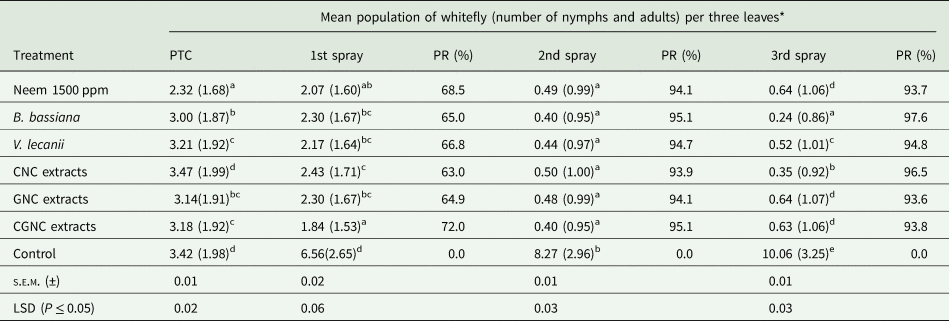
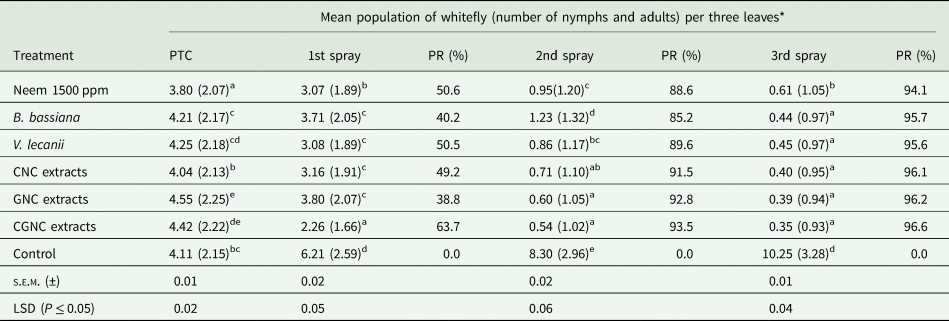
During the open field observation, the common sucking pests encountered in okra were whitefly, B. tabaci, and leafhopper, A. biguttula biguttula. The incidence of the whitefly, before and after treatment application for two seasons, is presented in Tables 2 and 3. The mean population of whitefly before the first spraying was 2.32–3.47 per three leaves. The CGNC extracts recorded the highest reduction in the whitefly population (72%) over the control after the first spray. The application of B. bassiana was the best among the treatment which reduced the whitefly population by 97.6% followed by a mixture of CNC extracts (96.6%) after three-time applications during the first season (Table 2). The mean populations of whitefly after three rounds of spray during the second season were 0.35, 0.39, 0.40, 0.44 and 0.45 numbers per three leaves in the plots treated with CGNC, GNC and CNC extract, B. bassiana and V. lecanii and that the reductions in population were 96.5, 96.2, 96.1, 95.7 and 95.6% over control, respectively, which are not statistically significant with each other (Table 3).
Effect of biorational pesticides on whitefly in okra during the first cropping season

PTC, pre-treatment count; CNC extracts, chilli, neem leaf extract with cow urine at 10% w/v; GNC extracts, garlic, neem leaf extract with cow urine at 10% w/v; CGNC extracts, chilli, garlic and neem leaf extract with cow urine at 10% w/v.
PR: Per cent reduction over control = (control count−treatment count/control count) × 100.
Figures in the parentheses indicate square root transformed values.
Different letters in the column represent significant difference (P ≤ 0.05).
* Data presented in the table are mean of three replications.
Effect of biorational pesticides on whitefly in okra during the second cropping season

PTC, pre-treatment count; CNC extracts, chilli, neem leaf extract with cow urine at 10% w/v; GNC extracts, garlic, neem leaf extract with cow urine at 10% w/v; CGNC extracts, chilli, garlic and neem leaf extract with cow urine at 10% w/v.
PR: Per cent reduction over control = (control count–treatment count/control count) × 100.
Figures in the parentheses indicate square root transformed values.
Different letters in the column represent significant difference (P ≤ 0.05).
* Data presented in the table are mean of three replications.
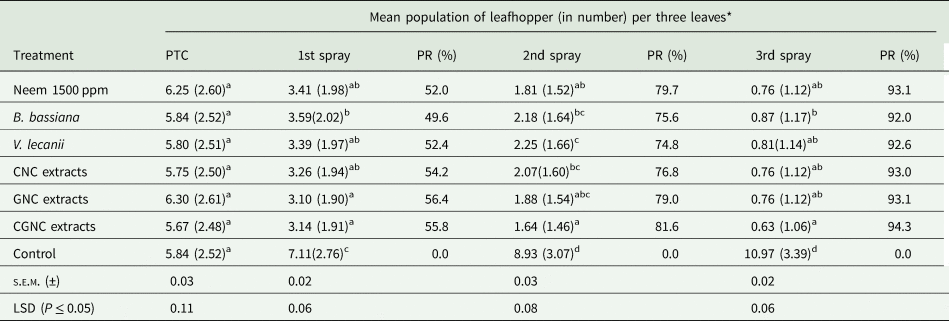
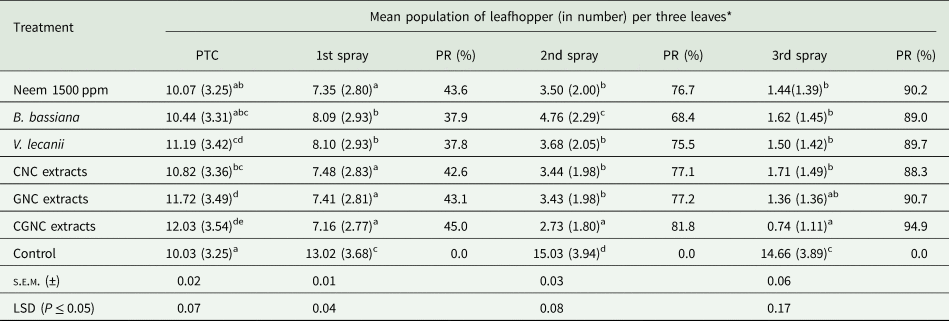
The leafhopper population prior to spraying during the first season was 5.67–6.30 per three leaves (Table 4). The CGNC extracts reduced leafhopper population significantly, i.e. 0.63 per three leaves which was a 94.3% reduction in population over control after three rounds of spray (Table 4). The remaining treatment applications reduced the leafhopper population from 92.04 to 93.1% which was significantly on par with each other. A similar trend was observed during the second season where the maximum reduction in leafhopper population over control was observed for CGNC extracts (94.9%) followed by GNC extracts (90.7%) (Table 5).
Effect of biorational pesticides on leafhopper in okra during the first cropping season

PTC, pre-treatment count; CNC extracts, chilli, neem leaf extract with cow urine at 10% w/v; GNC extracts, garlic, neem leaf extract with cow urine at 10% w/v; CGNC extracts, chilli, garlic and neem leaf extract with cow urine at 10% w/v.
PR: Per cent reduction over control = (control count–treatment count/control count) × 100.
Figures in the parentheses indicate square root transformed values.
Different letters in the column represent significant difference (P ≤ 0.05).
* Data presented in the table are mean of three replications.
Effect of biorational pesticides on leafhopper in okra during the second season

PTC, pre-treatment count; CNC extracts, chilli, neem leaf extract with cow urine at 10% w/v; GNC extracts, garlic, neem leaf extract with cow urine at 10% w/v; CGNC extracts, chilli, garlic and neem leaf extract with cow urine at 10% w/v.
PR: Per cent reduction over control = (control count–treatment count/control count) × 100.
Figures in the parentheses indicate square root transformed values.
Different letters in the column represent significant difference (P ≤ 0.05).
* Data presented in the table are mean of three replications.
Bioefficacy against blister beetle
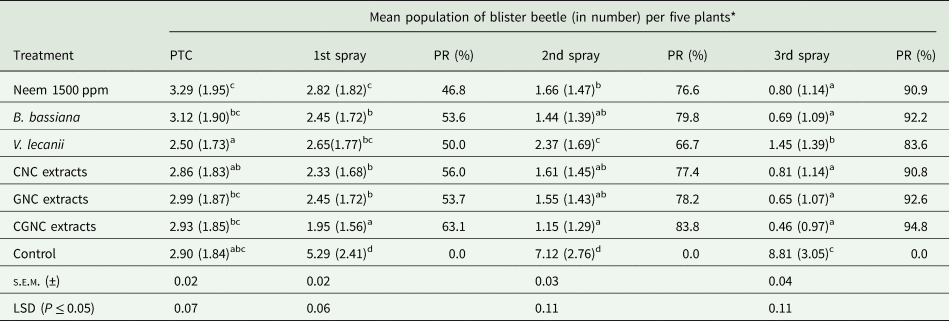
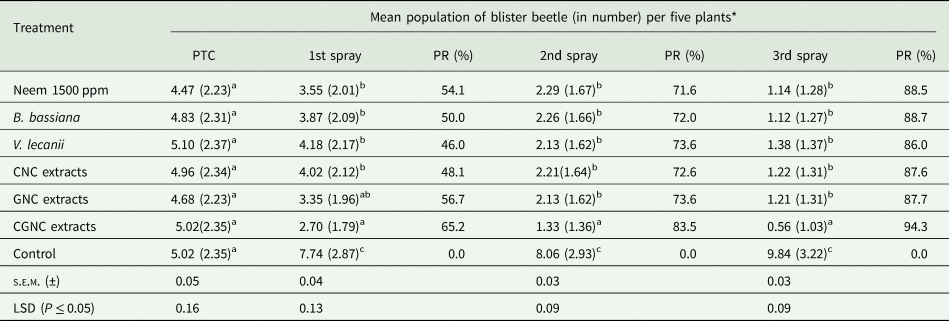
Data about the mean population of the blister beetle and PR over control for both seasons are presented in Tables 6 and 7. The incidence of blister beetle population prior to spraying during the first season was 2.50–3.29 per plant (Table 6). The combination product of CGNC extracts significantly reduced blister beetle populations (63.1%) after the first spray. The mean population of beetles after three rounds of spray during the first season was 0.46–0.81 per plant having the highest level of PR (94.8%) observed in CGNC application (Table 6). Before imposing insecticidal treatments, there was no significant difference among the blister beetle population in all the treatment plots during the second season. During this period, a similar trend in the reduction of blister beetle population was observed, based on the per cent reduction in population over the untreated control (Table 7). The quaternary combination of CGNC extracts brought down the blister beetle population to 0.56 per three leaves with the highest reduction (94.3%) in population and is statistically significant from other treatments after three rounds of spray during the second season.
Effect of biorational pesticides on blister beetle in okra during the first cropping season

PTC, pre-treatment count; CNC extracts, chilli, neem leaf extract with cow urine at 10% w/v; GNC extracts, garlic, neem leaf extract with cow urine at 10% w/v; CGNC extracts, chilli, garlic and neem leaf extract with cow urine at 10% w/v.
PR: Per cent reduction over control = (control count–treatment count/control count) × 100.
Figures in the parentheses indicate square root transformed values.
Different letters in the column represent significant difference (P ≤ 0.05).
* Data presented in the table are mean of three replications.
Effect of biorational pesticides on blister beetle in okra during the second cropping season

PTC, pre-treatment count; CNC extracts, chilli, neem leaf extract with cow urine at 10% w/v; GNC extracts, garlic, neem leaf extract with cow urine at 10% w/v; CGNC extracts, chilli, garlic and neem leaf extract with cow urine at 10% w/v.
PR: Per cent reduction over control = (control count–treatment count/control count) × 100.
Figures in the parentheses indicate square root transformed values.
Different letters in the column represent significant difference (P ≤ 0.05).
* Data presented in the table are mean of three replications.
Safety to natural enemies
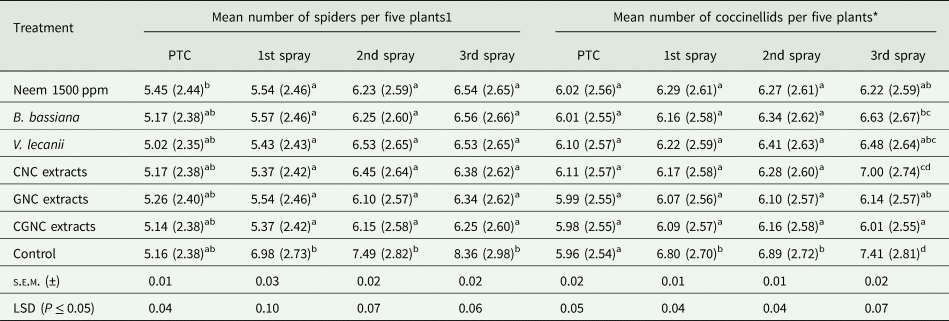
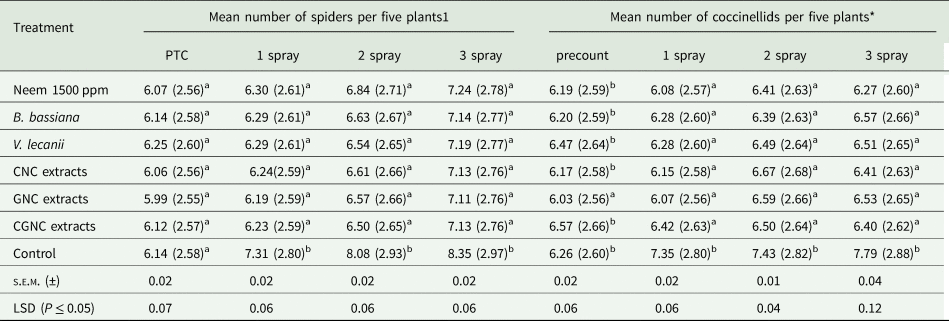
The generalist predators of an okra ecosystem, such as spiders comprising mainly Pardosa sp., Oxyopes sp., Argiope sp. and coccinellids comprising Cheilomenes sexmaculata (Fabricius), Coccinela undecimpunctata Linnaeus and Scymnus sp., were observed during two cropping seasons. The spider population prior to treatment varied between 5.02 and 5.45 per plant with no significant difference among plots during the first cropping season (Table 8). The maximum number of spider population was found in untreated plots, i.e. 6.98, 7.49 and 8.36 after the first, second and third round, respectively, during the first season whereas all other treatments are significantly on par with each other in a mean population of spider population. A similar trend was noticed in the second cropping season, which inferred that the untreated plot was the highest mean population of spiders over the treated plots (Table 9). In the untreated control, the mean population of coccinellids was significantly higher throughout the observation period in both seasons. However, the mean coccinellids populations were not significantly different in all treated plots (Tables 8 and 9). The research finding inferred that the common predators of an okra ecosystem, such as spiders and coccinellids, were observed during both the cropping period in different combination products of plant extracts or EPFs. All the treatment formulations were classified in the class N (harmless or slightly harmful) of IOBC categories for natural enemies, viz. spiders and coccinellids. Hence, it is pointed out from the observation that, although the highest populations in spider and coccinellid were seen in the control plot, they were also conserved and maintained abundantly in all treated plots.
Effect of biorational pesticides on spiders and coccinellids in okra ecosystem during the first cropping season

PTC: Pre-Treatment Count, CNC extracts- chilli, neem leaf extract with cow urine at 10% w/v; GNC extracts- garlic, neem leaf extract with cow urine at 10% w/v; CGNC extracts- chilli, garlic and neem leaf extract with cow urine at 10% w/v.
Figures in the parentheses indicate square root transformed values.
Different letters in the column represent significant difference (P ≤ 0.05).
* Data presented in the table are mean of three replications.
Effect of biorational pesticides on spiders and coccinellids in okra ecosystem during the second cropping season

PTC, pre-treatment count; CNC extracts, chilli, neem leaf extract with cow urine at 10% w/v; GNC extracts, garlic, neem leaf extract with cow urine at 10% w/v; CGNC extracts, chilli, garlic and neem leaf extract with cow urine at 10% w/v.
Figures in the parentheses indicate square root transformed values.
Different letters in the column represent significant difference (P ≤ 0.05).
* Data presented in table are mean of three replications.
Phytotoxicity of biorationals on okra
No phytotoxic symptoms could be observed on okra leaves, flowers, fruits or any other parts following the foliar application of EPFs (recommended doses) or combined products of botanicals with cow urine at 10% concentration. The observation revealed that there was no negative impact of biorational pesticides upon plant health system.
Growth and yield attributes
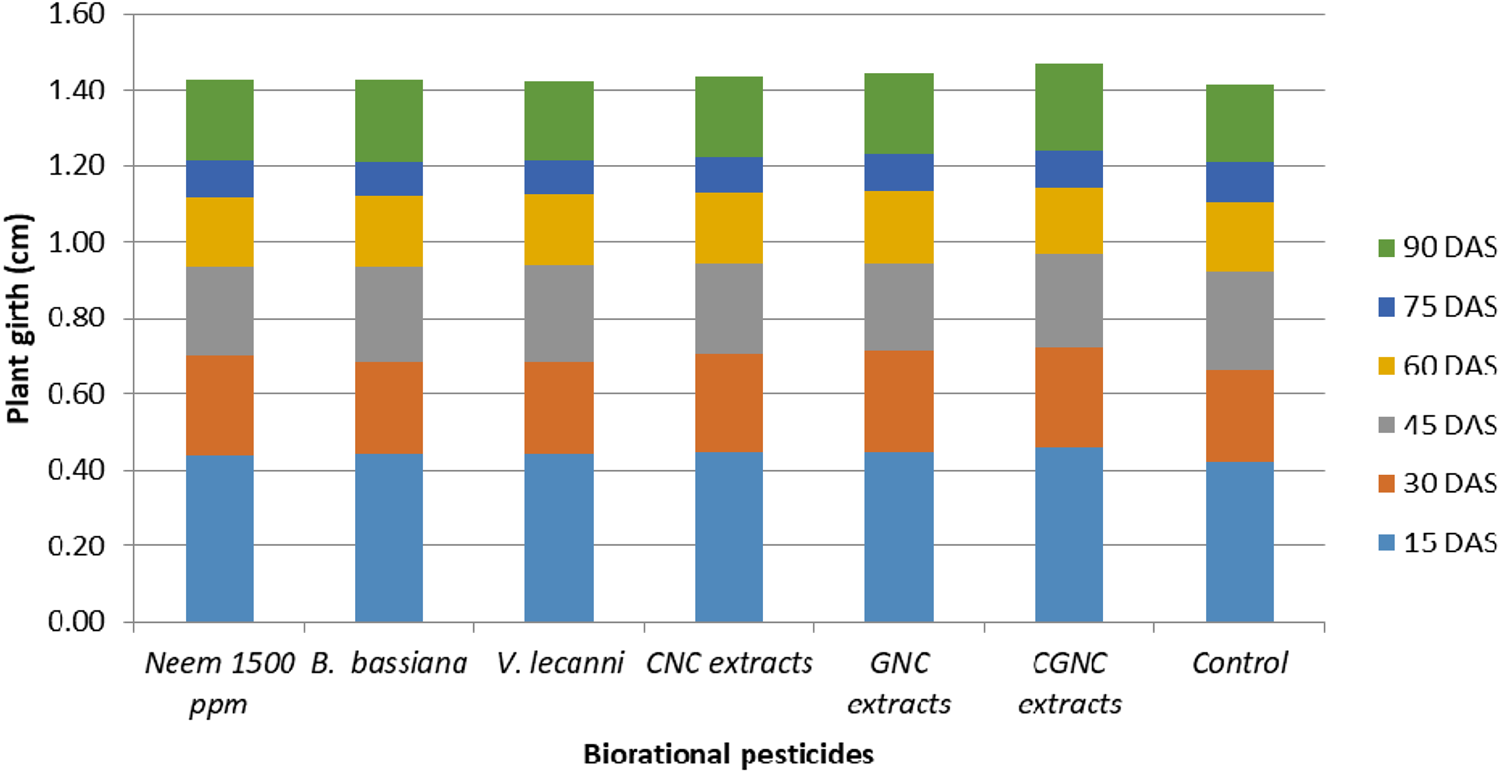
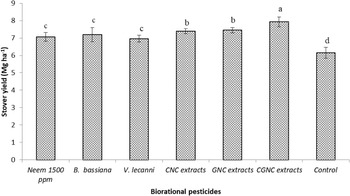
Growth parameters like plant height, plant girth and leaf number are depicted in Figs 1–3. The plant height (156.50 cm), plant girth (1.47 mm) and leaf number (14 no.) were higher under the combined application of CGNC extracts. The tertiary combinations, i.e. CNC and GNC extracts, also gave significant effect over the control for these three parameters. Leaf area at 60 DAS (Table 10) was highest (102.2 cm2) in the application of CGNC extracts. Moreover, the plant extracts with cow urine combination significantly improved the yield attributes of okra. Among the combinations, CGNC extracts resulted in the highest value of fruit weight (87.2 g), fruit diameter (18.2 mm) and fruit length (171.80 cm). However, the application of CNC extracts was statistically at par with GNC extracts for yield attributing parameters. The graphical illustration (Fig. 4) revealed that the highest stover yield was obtained from the CGNC extracts treatment.
Colour online. Effect of different biorational formulations on plant height (cm) of okra at different growth stages. DAS, days after sowing; CNC extracts, chilli, neem leaf extract with cow urine at 10% w/v; GNC extracts, garlic, neem leaf extract with cow urine at 10% w/v; CGNC extracts, chilli, garlic and neem leaf extract with cow urine at 10% w/v.

Colour online. Effect of different biorational formulations on plant girth (cm) of okra at different growth stages. DAS, days after sowing; CNC extracts, chilli, neem leaf extract with cow urine at 10% w/v; GNC extracts, garlic, neem leaf extract with cow urine at 10% w/v; CGNC extracts, chilli, garlic and neem leaf extract with cow urine at 10% w/v.

Colour online. Effect of different biorational formulations on leaf number of okra at different growth stages. DAS, days after sowing; CNC extracts, chilli, neem leaf extract with cow urine at 10% w/v; GNC extracts, garlic, neem leaf extract with cow urine at 10% w/v; CGNC extracts, chilli, garlic and neem leaf extract with cow urine at 10% w/v.

Effect of different biorational formulations on stover yield of okra. CNC extracts, chilli, neem leaf extract with cow urine at 10% w/v; GNC extracts, garlic, neem leaf extract with cow urine at 10% w/v; CGNC extracts, chilli, garlic and neem leaf extract with cow urine at 10% w/v; Different letters in the column bar represent significant difference (P ≤ 0.05)

Effect of biorational pesticides on fruit weight, fruit diameter, fruit length and leaf area

PTC, pre-treatment count; CNC extracts, chilli, neem leaf extract with cow urine at 10% w/v; GNC extracts, garlic, neem leaf extract with cow urine at 10% w/v; CGNC extracts, chilli, garlic and neem leaf extract with cow urine at 10% w/v.
Figures in the parentheses indicate square root transformed values.
Different letters in the column represent significant difference (P ≤ 0.05).
Effect on yield parameter
In the present study, the plot treated with CGNC extracts gave higher fruit yield (18.62 mg/ha) during the first and second seasons (18.26 mg/ha), respectively (Table 11). The findings also revealed that the yield was increased by 40.5 and 38% over the control during the first and second seasons, respectively.
Effect of biorational pesticides on yield of okra

PTC, pre-treatment count; CNC extracts, chilli, neem leaf extract with cow urine at 10% w/v; GNC extracts, garlic, neem leaf extract with cow urine at 10% w/v; CGNC extracts, chilli, garlic and neem leaf extract with cow urine at 10% w/v.
Figures in the parentheses indicate square root transformed values.
Different letters in the column represent significant difference (P ≤ 0.05).
Discussion
Bioefficacy of extracted plant products
Results of the present work provide the first report for the compatible use of cow urine, in combination with plant extracts for the management of insect-pests in okra, especially whitefly, leafhopper and blister beetle. The population reduction of these pests was higher in the plot having the quaternary application of biopesticides than in other treated plots. The highest PR of the population in all three pests was obtained when a combination of CGNC extracts was applied. This proved the additive effect of extract combination. The main factors of its action could be the synergistic toxic principles present in the extracted plant parts (Pandiyan et al., Reference Pandiyan, Mathew and Munusamy2019). The mechanism of neem leaf extract action is due to its broad-spectrum insecticidal property, antifeedant actions accompanied with effect on neurotransmission insensitivity and boosted by the biopesticidal activity by cow urine (Tesfaye and Gautam, Reference Tesfaye and Gautam2003). The capsaicin compound has a strong insect repellent action against sucking and chewing pests (Nesel et al., Reference Nesel, Charleston, Genovia, Paye and Rosales2016) and the sulphur-based compound present in garlic strongly suppresses and disturbs the insect behaviour to locate the host (Teklay et al., Reference Teklay, Prasad, Etana, Belay and Aregai2012). The findings emphasized that the potential of CGNC extracts provides enough toxicity to reduce these pest populations. These results highlight the potential in using CGNC extracts for pest management not only for sucking pests but also for chewing pests in open field conditions. This might be useful as a broad-spectrum natural pesticide for different pests in organic production and in general agricultural practices. On the other hand, more than 90% population reduction was exhibited in the whitefly, leafhopper and blister beetle populations over the two seasons. The combined effects of biorational pesticides on pest mitigation in okra crop, and their impact on natural enemies and yield attribute factors have not previously been studied in detail. The water extract of neem, Nicotiana tabacum L., Capsicum annuum L. or Allium cepa L. mixed with fermented cow urine brings down pest population efficiently as revealed by Tesfaye and Gautam (Reference Tesfaye and Gautam2003) supports our results. The present findings are also in agreement with Ali et al. (Reference Ali, Farooqi, Sajjad, Ullah, Qureshi, Siddiqu, Waheed, Sarfraz and Ali2018) who indicated that EPF and botanical extracts (neem or eucalyptus) caused a significant reduction in sucking pest populations like wheat aphid (Sitobione avenae). The effectiveness of the combination of botanical extracts was well documented in reducing sucking pests like the mango scale insect, Aulacaspis tubercularis (Newstead) in the two successive seasons (Siam and Othman, Reference Siam and Othman2020). Other research also supports the current results at the field scale against sucking and chewing pests of vegetable crops (Iqbal et al., Reference Iqbal, Ali, Hassan and Jamil2015; Singh and Joshi, Reference Singh and Joshi2020).
Our results in blister beetle population reduction are in line with the observations of Purwar and Yadav (Reference Purwar and Yadav2003), who stated that a mixture of cow urine and water extract of neem leaves gave excellent protection against chewing pests like tobacco caterpillar, Spodoptera litura on soybean, and were significantly superior to all other treatments. In stored product commodities, plant products used as botanical pesticides effectively manage various chewing pests (Pandi et al., Reference Pandi, Adak, Gowda, Patil, Annamalai and Jena2018).
It is evident from this study that the combined extracts of CGNC at 10% concentration were superior in reducing the incidence of pests and providing the highest PR in both sucking pests (leafhopper and whitefly) and blister beetle population. The findings are supported by Gahukar (Reference Gahukar2013), who reported that the combined application of cow urine and plant extracts could potentially manage insect problems. Using biorational options such as extracts of pesticidal plant combinations has long been argued to be more sustainable and appropriate for resource-poor farmers in developing countries (Sola et al., Reference Sola, Mvumi, Ogendo, Mponda, Kamanula and Nyirenda2014), which is consistent with our findings. It is further revealed that the mixture component of pesticidal plant extracts can effectively control pest menace which could be integrated into sustainable agricultural practices.
Ecotoxicological impact of plant extracts
Previous research activities on the pesticidal plant species used for pest management have been reported by several researchers (Feng et al., Reference Feng, Wang, Geng, Zhang, Almaz and Du2020; Kamanula et al., Reference Kamanula, Belmain, Hall, Farman, Goyder and Mvumi2017). However, none of these works have investigated the effects of their application as quaternary or tertiary combinations on a vegetable crop like okra and/or their impact on tritrophic interactions. Our evaluation revealed that all treatments conserve the natural enemies abundantly and have no negative influence on them. The experimental findings reveal that there was very little difference among the treated plots and untreated control in terms of natural enemies, viz. spiders and coccinellids predators. We expect this is partly due to the lower persistence of combined products and multispectral modes of action. Lower toxicity to predators and the least persistence of the pesticidal plant treatments is supported by their reduced effects on non-target species. We would argue that as the compatible combination keep the predator population in significant number; this would boost the natural pest control and maintain ecological balance. This continual toxicity to pests and knock-down provided by the plant extracts and cow urine allow the predators to contribute to pest regulation at a meaningful scale (Mostafiz et al., Reference Mostafiz, Hassan, Shim and Lee2019). The present findings are in consensus with the observations of Gupta (Reference Gupta2005), who also reported the positive impact of neem in combination with cow urine on coccinellid predators in the mustard ecosystem. In addition to this, Gupta's (Reference Gupta2005) finding revealed that cow urine is safer for insect predators like coccinellid beetles. The present findings were also in tune with the observation made by Kpindou et al. (Reference Kpindou, Paraïso, Djegui, Glitho, Maffon and Tamo2013) who indicated that biopesticides like M. anisopliae, B. bassiansa and neem formulations are least harmful to natural enemies in field conditions in the cotton ecosystem and also in line with Pathania et al. (Reference Pathania, Arora, Pathania and Kumar2019). Ghananand et al. (Reference Ghananand, Prasad and Lok2011) mentioned that the pesticides from the biological origin and neem-based were found relatively less harmful to the natural enemies in the brinjal ecosystem. Using water plant extracts like neem (A. indica) for the management of sucking insect-pests is safer for natural enemies in the cotton field by Arshad et al. (Reference Arshad, Ullah, Çağatay, Abdullah, Dikmen, Kaya and Khan2019) who partly supported our result. Hence, the protection and facilitation of ecosystem services provided by beneficial species like spiders and coccinellids through plant extracts and cow urine is a strong argument for adopting naturally derived materials in crop protection.
In the present investigation, different biorational formulations displayed no phytotoxic effect on physiological symptoms of the plant system. This confirms the combination products of plant extracts and EPFs have a positive influence on plant health.
Growth, yield attributes and yield enhancement impact of plant extracts
The present study exhibited that CGNC extracts have enough potential to enhance plant growth and produce the highest plant height, girth, leaf number and leaf area over control. Yield attributing factors, viz. fruit weight, fruit diameter and fruit length are also stimulated by the CGNC extracts. The positive effect on growth and yield attributing parameters could be partly augmented by cow urine which acts as a bio-fertilizer in the topical application when combined (Devakumar et al., Reference Devakumar, Rao and Khan2014). The evidence from the studies of several researchers revealed that the application of various concentrations of cow urine enhances morphological and economical output in many crops which supported our findings (Yogita et al., Reference Yogita, Deotale, Surywanshi, Neware, Pandy and Jaybhaye2017; Korade et al., Reference Korade, Deotale, Jadhav, Guddhe and Thakre2019).
Higher pod yields obtained with the application of the CGNC extracts would be explained by lower whitefly, leafhopper and blister beetle damages and sustainment of natural predators like spiders and coccinellids observed in this treatment as compared to other treatments and control. In line with this, Arshad et al. (Reference Arshad, Ullah, Çağatay, Abdullah, Dikmen, Kaya and Khan2019) reported 63.4% cotton yield was increased in comparison to the negative control (only water application) by the application of A. indica in cotton, which is augmented by natural enemies like Coccinella septempunctata L. and Menochilus sexmaculatus Fab. populations. Our experimental findings were partly confirmed in other crops like brinjal by Patel et al. (Reference Patel, Korat and Acharya2017) who reported the plots treated with cow urine 20% fortified with neem leaf extract 10% produced maximum (28.7 mg/ha) fruit yield followed by cow urine 20% fortified with jatropha leaf extract 10% (26.8 mg/ha), cow urine 20% fortified with custard apple leaf extract 10% (25.6 mg/ha). Further, the research exploration revealed cow urine combined with plant extracts enhances the economic yield that acts as a nutrient supplement (Patel et al., Reference Patel, Korat and Acharya2017).
Conclusion
This study showed that although the PR of the pest population is variable with all the treatments over control, the combination products of CGNC extracts at 10% concentration provided spectacular results by providing maximum pest reduction for the successive cropping seasons. No phytotoxic effect was seen in the experimental season which symbolizes that these biorationals are biodegradable and eco-friendly. The findings reveal that cow urine treatment enhances growth and yield attributing characters with higher yield and more pest suppression over other treatments. Comparing the overall findings, the quaternary mixture of CGNC extracts is the promising and potential source in effective pest management with plant promoting components having maximum yield and encouraging the conservation of natural enemies’ population. The present study proves that this biorational pesticide (chilli, garlic, neem leaf extract and cow urine) component can be well suited for effective pest control by the resource-poor farmer because these are readily accessed with minimal costs and help the organic growers to meet the demands of consumers to provide them healthy and climate-resilient agri-products with assured food safety.
Supplementary material
The supplementary material for this article can be found at https://doi.org/10.1017/S0021859621000654
Acknowledgements
The authors thank the Director, ICAR Research Complex for NEH Region, Umiam, Meghalaya, India, for providing necessary facilities and financial support to conduct the study.
Financial support
This research received no specific grant from any funding agency, commercial or not-for-profit sectors.
Conflict of interest
None.
Ethical standards
Not applicable.