Introduction
Chemical, biological, radiological, and nuclear (CBRN) events can occur accidentally, such as industrial chemical spills or nuclear power station accidents, or intentionally through acts of terrorism or warfare.1 Regardless of the cause, these incidents present a significant risk to the community, particularly vulnerable populations.Reference Eid, Di Giovanni and Galatas2 Children are both more vulnerable and likely to be victims of these events.Reference Chung, Baum and Nyquist3 In 1995, a chlorine gas attack threat at Disneyland, which was later confirmed as a hoax, demonstrated how children can be considered targets in high-profile public venues during potential CBRN threats.Reference Lait and Malnic4 Similarly, during the Tokyo subway sarin gas attack in 1995, 16 of the 5000 casualties were children.Reference Chung and Shannon5 While data indicate that more than one-third of disaster victims are children,Reference Gausche-Hill6 most of the research and preparedness on decontamination focuses primarily on the adult population.Reference Freyberg, Arquilla and Fertel7
The pediatric population presents distinct physiological, anatomical, and developmental characteristics that significantly influence their vulnerability to chemical exposures. Children exhibit elevated respiratory and metabolic rates, potentially resulting in greater inhalational doses of aerosolized agents and consequently increased susceptibility to toxicity.8, 9 Furthermore, children possess a larger surface area-to-body mass ratio coupled with thinner, less keratinized integumentary surfaces, rendering them more vulnerable to systemic toxicity and hypothermia, particularly following decontamination procedures.8 Their lower stature relative to adults positions them closer to ground level, enhancing exposure risk to hazardous substances with vapor densities greater than air, such as phosgene and chlorine, which tend to accumulate in lower atmospheric strata.9
The distinctive behavioral characteristics of pediatric populations also present significant challenges in chemical exposures. Inadequate communication during decontamination procedures can precipitate heightened anxiety states, diminishing cooperation and consequently complicating decontamination efficacy. Additionally, the appearance of emergency personnel in personal protective equipment (PPE) can elicit fear responses in children, exacerbating anxiety and potentially contributing to post-traumatic stress disorder (PTSD) development.Reference Braue, Boardman and Hurst10, 11 Empirical evidence supporting this vulnerability is demonstrated in post-disaster epidemiological studies; following the September 11, 2001, attacks on the World Trade Center, approximately 18% of children in New York City manifested symptoms meeting clinical thresholds for severe post-traumatic stress.Reference Chung and Shannon5 These behavioral, psychological, and developmental considerations collectively amplify risk profiles in pediatric populations during chemical emergencies, underscoring the imperative for age-appropriate emergency planning and response guidelines specifically tailored to address their unique psychosocial and developmental needs.
CBRN events result in a wide range of health effects and require specific response plans. One of the essential components is decontamination, which is the removal or neutralization of contaminants to safe levels for both health care providers and victims.12 Despite the well-documented vulnerabilities of pediatric populations in CBRN events, the currently available decontamination guidelines are modified from adult practices, raising concerns about their safety and efficacy. There is limited research on pediatric-adjusted decontamination strategies, the effectiveness of hybrid decontamination, the optimal parameters for wet decontamination, and the psychological impact of decontamination procedures on children. Additionally, there is no standardized approach for decontaminating non-ambulatory children or those with special needs.
This scoping review aims to systematically evaluate current approaches to pediatric decontamination during CBRN events, with particular emphasis on methodological frameworks, implementation challenges, and pediatric-specific considerations. The goal is to critically examine existing literature, highlight evidence gaps, and inform the development of evidence-based, standardized age-specific decontamination guidelines for mass casualty preparedness.
Methods
Study Design
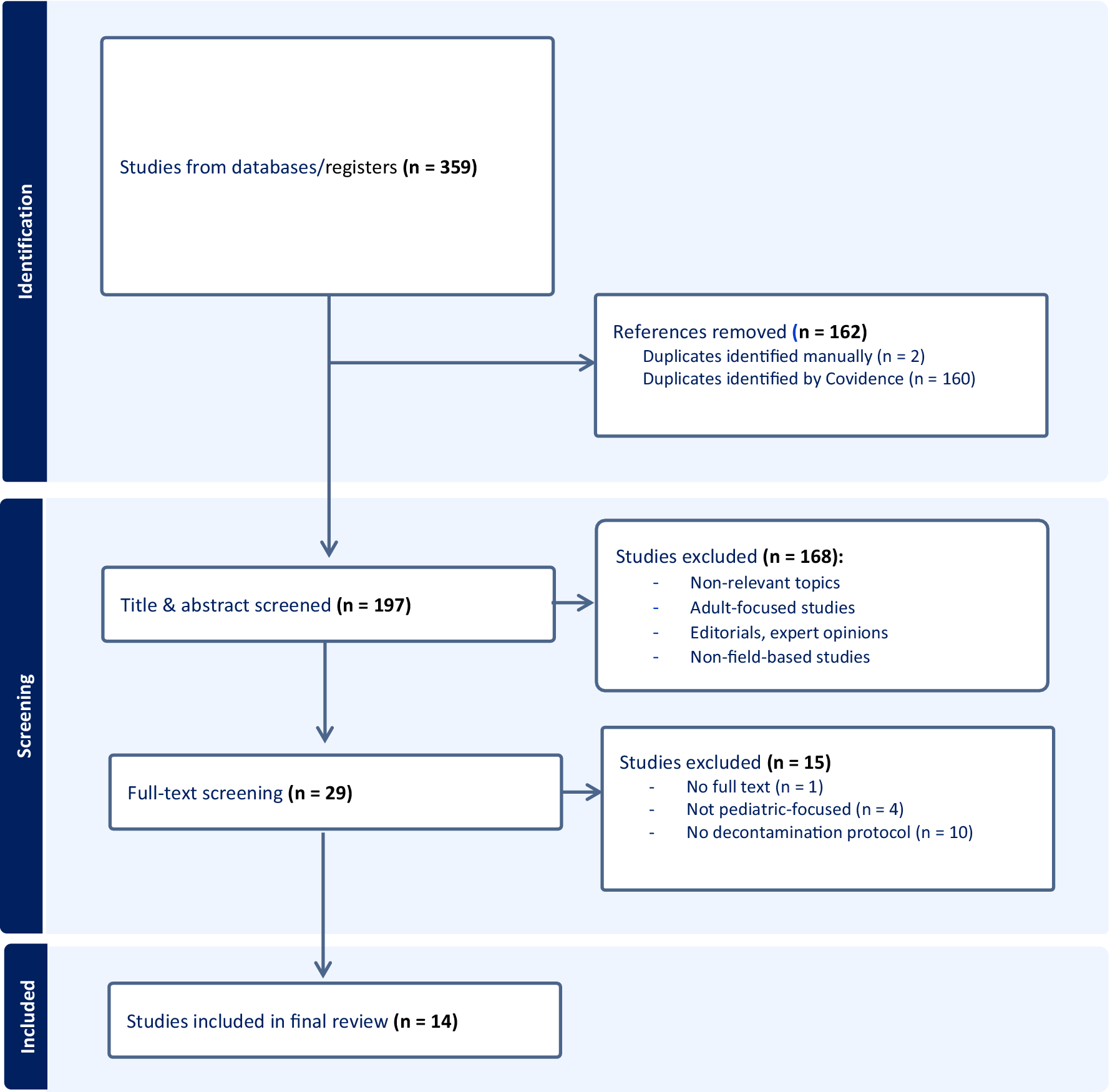
This scoping review was conducted following the Preferred Reporting Items for Systematic Reviews and Meta-Analyses extension for Scoping Reviews (PRISMA-ScR) guidelines (Figure 1).Reference Liberati, Altman and Tetzlaff13 The primary objective was to systematically review the existing literature on pediatric decontamination during CBRN events.
Study selection process following PRISMA-ScR guidelines.
Figure 1. PRISMA-ScR flow diagram illustrating the study selection process for the scoping review on pediatric decontamination in CBRN events. The process included identification, screening, eligibility, and inclusion phases. Adapted from PRISMA Extension for Scoping Reviews.12

Eligibility Criteria
Studies were considered eligible if they:
-
• Included children aged 0-18 years, exposed to CBRN hazards.
-
• Involved decontamination during real or simulated CBRN events, including drills or exercises.
-
• Evaluation of decontamination methods (dry, wet, hybrid).
-
• Published in English.
Exclusion criteria included:
-
• Non-English publications.
-
• Studies not involving pediatric populations.
-
• Guidelines and protocols not focused on decontamination.
Eligibility criteria are summarized in Table 2. Inclusion and exclusion decisions were documented at each screening stage (Figure 1).
Search Strategy
A comprehensive literature search was conducted using six databases: Ovid MEDLINE, Ovid Embase, CINAHL, Scopus, Web of Science Core Collection, and the Cochrane Library (via Wiley). The search was conducted on December 19, 2024. A combination of controlled vocabulary (e.g., Medical Subject Headings [MeSH]) and relevant keywords related to CBRN decontamination, pediatric populations, and emergency response was used (Table 1).
Search strategy across databases for the pediatric decontamination scoping review

Note: The search was conducted across six databases using controlled vocabulary (e.g., MeSH) and keyword combinations tailored to each platform. Search terms were selected based on relevance to CBRN incidents, decontamination procedures, and pediatric populations. The full search strategy is available upon request.
Inclusion and exclusion criteria

Note: Only studies in English-language involving children (0-18 years) included in this systematic review. Non-English studies were excluded due to resource limitations for translation and verification. The criteria were guided by PRISMA-ScR recommendations for transparent and reproducible review methodology.
Data Screening
All identified studies were imported into Covidence, a web-based platform for systematic review management. A total of 359 studies were identified from the database searches. After removing duplicate studies (n = 162), 197 studies remained for screening. Two independent reviewers (EA & JR) screened all study titles and abstracts based on the eligibility criteria (Table 2). If both reviewers agreed, the study proceeded to a full-text review, and disagreements were resolved by a third reviewer (FI). During title and abstract screening, 168 studies were excluded, leaving 27 full-text studies for detailed review. Of these, 13 were excluded for the following reasons: no full text available (n = 1), not focusing on pediatrics (n = 4), and absence of decontamination protocol (n = 8). Ultimately, 14 studies met all inclusion criteria and were included in the final review. The stepwise selection process is detailed in the PRISMA-ScR flowchart (Figure 1), ensuring transparency in study inclusion and exclusion.
Data Extraction and Analysis
Data extraction was performed by one reviewer (EA) and validated by a second reviewer (FI). Extracted data were organized using Microsoft Excel (2024) into a structured table summarizing study characteristics (author, year, age group), contaminant types, decontamination method (dry, wet, hybrid), decontamination protocol, special needs population, and psychological impact (Tables 3-4). This structured approach allowed for a comparison of the efficacy of decontamination across different materials and contaminants.
Pediatric decontamination considerations

Note: This table summarizes key characteristics and thematic findings extracted from each included study. Themes are organized by pre-decontamination, decontamination method, and post-decontamination practices.
Pediatric special considerations during decontamination: non-ambulatory care, special needs, and psychological impacts

Note: This table summarizes data extracted on pediatric-specific considerations, including strategies for managing non-ambulatory children, children with special needs, and psychological challenges.
Results
The included studies, published between 2003 and 2017, originated in the United States (n = 13) and Canada (n = 1). While all studies focused on pediatric populations, most did not indicate a specific age range beyond the general term “pediatric.” The studies examined a range of hazardous agents, including chemical, biological, and radiological contaminants. Seven studies addressed all three agents,Reference Chung and Shannon5, Reference Freyberg, Arquilla and Fertel7, Reference Zhao, Dughly and Simpson14–Reference Luk18 while one study focused on both chemical and radiological agents.Reference Holland and Cawthon19 Three studies focused on radiological decontamination,Reference Thornton and Veenema20–Reference Li, Hauck and Fraser22 and another three examined chemical decontamination (Table 3).8, Reference Timm and Reeves23, Reference Hilmas, Hilmas and Gupta24 The findings were categorized into four main themes: pre-decontamination considerations, decontamination considerations, post-decontamination considerations, and pediatric special considerations.
Theme 1: Pre-Decontamination Consideration
Disrobing was identified as a crucial first step in pediatric decontamination. Six studies (43%) emphasized that removing contaminated clothing can eliminate 85-95 % of surface contaminants, making it a highly effective initial intervention.Reference Chung and Shannon5, Reference Freyberg, Arquilla and Fertel7, 8, Reference Rotenberg, Burklow and Selanikio15, Reference Heon and Foltin16, Reference Li, Hauck and Fraser22 Two studies (14%) advise to use same sex responders to assist with disrobing.Reference Freyberg, Arquilla and Fertel7, Reference Holland and Cawthon19 Five studies (36%) addressing radiological decontamination recommended prioritizing life-threatening conditions before initiating decontamination procedures.Reference Zhao, Dughly and Simpson14, Reference Rotenberg, Burklow and Selanikio15, Reference Holland and Cawthon19–Reference Reynolds, Crulcich, Sullivan and Stewart21
Theme 2: Decontamination Consideration
Wet decontamination was the most frequently used method, reported in 13 out of 14 studies (93%).Reference Chung and Shannon5, Reference Freyberg, Arquilla and Fertel7, 8, Reference Zhao, Dughly and Simpson14–Reference Mueller17, Reference Holland and Cawthon19–Reference Hilmas, Hilmas and Gupta24 Three studies (21%) recommended dry decontamination using absorbent materials.Reference Rotenberg, Burklow and Selanikio15, Reference Holland and Cawthon19, Reference Li, Hauck and Fraser22 Another two studies (14%) addressed hybrid decontamination approaches.Reference Rotenberg, Burklow and Selanikio15, Reference Mueller17
Two studies (14%) recommended water temperatures above 98°F (36.7°C),Reference Freyberg, Arquilla and Fertel7, Reference Heon and Foltin16 while another two suggested using a slightly higher temperature of 100°F (37.8°C) to minimize the risk of hypothermia.Reference Chung and Shannon5, 8 Five studies (36%) did not specify an exact temperature but emphasized the use of warm water.Reference Mueller17, Reference Holland and Cawthon19–Reference Reynolds, Crulcich, Sullivan and Stewart21, Reference Hilmas, Hilmas and Gupta24 One study (7%) recommended using the first available water at a comfortable temperature.Reference Rotenberg, Burklow and Selanikio15 Low-pressure shower systems ≤60 psi (414 kPa) were preferred in four studies (29%) to reduce skin irritation and distress,Reference Chung and Shannon5, Reference Freyberg, Arquilla and Fertel7, 8, Reference Heon and Foltin16 while three studies (21%) advised using low pressure without providing specific values.Reference Holland and Cawthon19, Reference Thornton and Veenema20, Reference Hilmas, Hilmas and Gupta24 The recommended shower duration varied, with three studies (21%) advising 5-6 minutes,8, Reference Heon and Foltin16, Reference Holland and Cawthon19 and one study (7%) suggested a longer duration of 8-10 minutes for exposures involving corrosives and nerve agents.Reference Mueller17
Age-specific decontamination strategies were also addressed; three studies (21%) recommended caregiver-assisted decontamination for infants and toddlers (0-2 years) to reduce distress, and using secure plastic car seats, waterproof baskets, or stretchers to prevent slipping.Reference Freyberg, Arquilla and Fertel7, Reference Zhao, Dughly and Simpson14, Reference Heon and Foltin16 For children aged 2-8 years, three studies (21%) advised using simple explanations and visual aids to improve compliance.Reference Thornton and Veenema20, Reference Li, Hauck and Fraser22, Reference Timm and Reeves23 Three studies (21%) suggested older children (8-18 years) could self-disrobe and shower independently,Reference Freyberg, Arquilla and Fertel7, Reference Zhao, Dughly and Simpson14, Reference Heon and Foltin16 and five studies (36%) preferred to have gender-segregated decontamination areas for privacy.Reference Freyberg, Arquilla and Fertel7, Reference Zhao, Dughly and Simpson14, Reference Heon and Foltin16, Reference Li, Hauck and Fraser22, Reference Timm and Reeves23
Theme 3: Post-Decontamination Considerations
Preventing hypothermia was a major concern, with eleven studies (79%) emphasizing the importance of warming protocols.Reference Freyberg, Arquilla and Fertel7, Reference Zhao, Dughly and Simpson14–Reference Thornton and Veenema20, Reference Li, Hauck and Fraser22–Reference Hilmas, Hilmas and Gupta24 Three studies (21%) advised maintaining warmth of the decontamination and post-decontamination zone by using the air-warming system, overhead heat lamps, and radiant warmers.Reference Freyberg, Arquilla and Fertel7, Reference Zhao, Dughly and Simpson14, Reference Li, Hauck and Fraser22 Eleven studies (79%) advised immediate drying and wrapping in towel or warm blanket, such as foil-type blanket, immediately after decontamination.Reference Freyberg, Arquilla and Fertel7, Reference Zhao, Dughly and Simpson14–Reference Thornton and Veenema20, Reference Li, Hauck and Fraser22–Reference Hilmas, Hilmas and Gupta24 Six studies (43%) highlighted the importance of medical evaluation and monitoring for delayed symptoms, especially after chemical and radiological exposures.8, Reference Rotenberg, Burklow and Selanikio15, Reference Mueller17, Reference Holland and Cawthon19, Reference Timm and Reeves23, Reference Hilmas, Hilmas and Gupta24 Five studies (36%) recommended post-decontamination radiation surveys,Reference Zhao, Dughly and Simpson14, Reference Rotenberg, Burklow and Selanikio15, Reference Holland and Cawthon19, Reference Thornton and Veenema20, Reference Li, Hauck and Fraser22 while three studies (21%) advised bioassay testing (e.g., nasal swabs, whole-body counting) for suspected internal contamination.Reference Zhao, Dughly and Simpson14, Reference Rotenberg, Burklow and Selanikio15, Reference Li, Hauck and Fraser22
Theme 4: Pediatric Special Consideration
Pediatric decontamination poses unique challenges for non-ambulatory children, those with special needs, and those with psychological distress management. Two studies (14%) recommended using specialized stretchers to ensure safety during decontamination.Reference Freyberg, Arquilla and Fertel7, Reference Heon and Foltin16
Two studies (14%) addressed the special needs population and recommended the involvement of a caregiver during decontamination.Reference Freyberg, Arquilla and Fertel7, Reference Heon and Foltin16
Psychological vulnerability of children was a significant concern, reported in nine studies (64%), with eight studies (57%) highlighting that separation from caregivers increased psychological distress and non-compliance.Reference Freyberg, Arquilla and Fertel7, 8, Reference Zhao, Dughly and Simpson14, Reference Heon and Foltin16–Reference Holland and Cawthon19 Additionally, long-term psychological issues such as post-traumatic stress disorder (PTSD) were addressed in six studies (43%) and highlighted the importance of prolonged psychological follow-up.Reference Freyberg, Arquilla and Fertel7, 8, Reference Zhao, Dughly and Simpson14, Reference Heon and Foltin16, Reference Thornton and Veenema20, Reference Li, Hauck and Fraser22 The importance of having a child-friendly environment with the presence of public and mental health services was highlighted in three studies (21%).Reference Freyberg, Arquilla and Fertel7, Reference Heon and Foltin16, Reference Luk18
Discussion
To better clarify decontamination processes, it should be understood that in mass casualty incidents, self-showering for ambulatory patients can be employed for large numbers of victims. Wet decontamination units can also be deployed, which utilize soap and water by responders, including trying not to irritate the skin through aggressive wiping and avoiding contaminated fluid from entering the mouth, nose, or wounds. If possible, indoor decontamination facilities are ideal in colder temperatures to avoid hypothermia. If these facilities are unavailable, use of dry decontamination can serve as a substitute in some cases.
Pre-Decontamination Considerations
The decontamination process includes three stages: pre-decontamination, decontamination, and post-decontamination. The pre-decontamination phase includes triage, disrobing, and radiological assessment when needed. The JumpSTART pediatric triage algorithm is an effective tool in mass casualty incidents.Reference Heon and Foltin16, Reference Romig25 If life-threatening conditions are present, emergent interventions such as airway protection and hemorrhage control should precede decontamination.26, 27 Five studies (36%) addressing radiological decontamination recommended prioritizing life-threatening conditions over immediate decontamination, while stable victims should have a radiological survey and undergo triage.Reference Zhao, Dughly and Simpson14, Reference Rotenberg, Burklow and Selanikio15, Reference Holland and Cawthon19, Reference Thornton and Veenema20, Reference Kazzi, Buzzell, Bertelli and Christensen28
Disrobing, the removal of contaminated clothing, is widely known as a critical first step in the decontamination process performed in the warm zone (yellow zone).Reference Chung and Shannon5, Reference Freyberg, Arquilla and Fertel7, 8, Reference Rotenberg, Burklow and Selanikio15, Reference Heon and Foltin16, Reference Li, Hauck and Fraser22, Reference Chilcott, Larner and Matar29 While it is sometimes considered part of dry decontamination, the majority describe it as a separate intervention due to its immediate impact on reducing external contamination.27, Reference Chilcott, Larner and Matar29 Its effectiveness depends on several factors, including the amount and type of clothing worn, the nature and direction of the contaminant exposure (e.g., overhead vs. horizontal), and the timing of the disrobing. In case of liquid contaminants, early disrobing is important to decrease the absorption through fabric layers. The fabrics of the clothing are also important; heavy or layered clothing can absorb and retain contaminants, potentially increasing secondary exposure via off-gassing.Reference Chilcott, Larner and Matar29 When performed rapidly and correctly, disrobing alone can remove a significant amount of surface contaminants, reaching up to 85-95%.Reference Chung and Shannon5, Reference Freyberg, Arquilla and Fertel7, 8, Reference Rotenberg, Burklow and Selanikio15, Reference Heon and Foltin16, Reference Li, Hauck and Fraser22
The contaminated clothing should be placed in designated sealed biohazard bags to avoid spreading of contamination.Reference Chung and Shannon5, 8, Reference Rotenberg, Burklow and Selanikio15, Reference Mueller17, Reference Holland and Cawthon19, Reference Timm and Reeves23, Reference Hilmas, Hilmas and Gupta24, Reference Mettler and Voelz30 When disrobing is conducted, attention to age-appropriate requirements and individual capabilities is important. Infants require caregiver assistance or trained personnel, young children benefit from guided support, and older children should disrobe independently with privacy.Reference Freyberg, Arquilla and Fertel7, Reference Zhao, Dughly and Simpson14, Reference Heon and Foltin16, Reference Li, Hauck and Fraser22, Reference Timm and Reeves23, 31 Additionally, it’s important for older children to use same-sex responders to assist with disrobing.Reference Freyberg, Arquilla and Fertel7, Reference Holland and Cawthon19
Decontamination Considerations
Decontamination is a critical step in managing CBRN events. Different methods can be used to remove or reduce hazardous contaminants, including wet, dry, and hybrid methods. Hybrid decontamination combines wet and dry decontamination methods for maximum effectiveness. The decontamination methods used across the reviewed studies varied, highlighting a lack of standardized approaches for pediatric populations.
Wet decontamination emerged as the most frequently reported method, utilized in 93% of the studies. However, not all chemical exposures are suitable for water-based decontamination.Reference Alshaikh, Hertelendy, Issa, Davis, DiGregorio, Kung, Franc, Voskanyan and Ciottone32 Certain chemical warfare agents (CWAs), such as sulfur mustard and cyanogen chloride, can react with water, making wet decontamination unsafe.Reference Chung, Baum and Nyquist3, Reference Timm and Reeves23, Reference Chilcott, Larner and Matar29, Reference Alshaikh, Hertelendy, Issa, Davis, DiGregorio, Kung, Franc, Voskanyan and Ciottone32 Moreover, in the case of liquid contaminants, the application of water to the skin may increase the dermal absorption via a phenomenon known as the “rinse-in” or “wash-in” effect.Reference Chilcott, Larner and Matar29, Reference Filon, Boeniger, Maina, Adami, Spinelli and Damian33–Reference Moody and Maibach35
In such scenarios, dry decontamination using absorbent material (e.g., towels, gauze) is preferred, especially for liquid chemical exposures like sulfur mustard. Wet decontamination is generally preferred in case of caustic or non-liquid (e.g., powder or particulate) chemical contaminant.Reference Chung, Baum and Nyquist3, Reference Timm and Reeves23, Reference Chilcott, Larner and Matar29, Reference Alshaikh, Hertelendy, Issa, Davis, DiGregorio, Kung, Franc, Voskanyan and Ciottone32 The Primary Response Incident Scene Management (PRISM) guidelines emphasize that emergency wet decontamination should only be used when dry methods are contraindicated, and recommend careful consideration of the chemical’s properties and volatility.Reference Chilcott, Larner and Matar29
Additionally, in cold settings, dry decontamination should be considered to avoid hypothermia, a risk that is especially significant in children.Reference Alshaikh, Hertelendy, Issa, Davis, DiGregorio, Kung, Franc, Voskanyan and Ciottone32, Reference Southworth, James and Davidson36 Victims exposed to vapors or gaseous contaminants often do not require full decontamination and may be sufficiently managed by removal from the source and exposure to fresh air.Reference Rotenberg, Burklow and Selanikio15, Reference Holland and Cawthon19, Reference Burklow, Yu and Madsen37 Similarly, for individuals only exposed to ionizing radiation, decontamination is not required.27
Unlike adults, children have a higher body surface area-to-mass ratio and an immature thermoregulation system, making them more vulnerable to heat loss during decontamination.Reference Heon and Foltin16, Reference McDaniel38 They also have an increased rate of dermal absorption,Reference Burklow, Yu and Madsen37 highlighting the critical need for rapid pediatric decontamination. This urgency is further emphasized by the fact that the effectiveness of decontamination decreases with time.Reference Chilcott, Larner and Matar39 According to the PRISM guidelines, the use of the first available material is recommended for the rapid removal of contaminants.Reference Chilcott, Larner and Matar29, Reference Chilcott, Larner and Durrant40
The reviewed studies show that when wet decontamination is indicated, using water alone is usually effective in removing most contaminants. However, for oily or non-water-soluble agents, it is recommended to add mild soap and use gentle scrubbing with a soft sponge or cloth.Reference Chung, Baum and Nyquist3, Reference Zhao, Dughly and Simpson14–Reference Heon and Foltin16, Reference Holland and Cawthon19, Reference Hilmas, Hilmas and Gupta24, Reference Alshaikh, Hertelendy, Issa, Davis, DiGregorio, Kung, Franc, Voskanyan and Ciottone32 Given children’s unique physiological and psychological vulnerabilities, decontamination methods should be specifically adapted to their needs. The water pressure should be strong enough to clean the skin effectively without being painful or causing injury. Handheld sprayers that are designed for adjustable and low water pressure, not more than 60 psi (414 kPa), are recommended to ensure safety.Reference Chung and Shannon5, Reference Chung, Baum and Nyquist3, 31, 41–43 Water temperature is another critical factor to ensure both efficacy and safety of decontamination. Rotenberg et al. advised using the first available water at a comfortable temperature.Reference Rotenberg, Burklow and Selanikio15 Heon & Foltin and Freyberg et al. suggest maintaining water at or above 98°F (36.7°C) to prevent hypothermia.Reference Freyberg, Arquilla and Fertel7, Reference Heon and Foltin16 Similarly, the American Academy of Pediatrics and Chung et al. recommended using water at a temperature of 100°F (37.8°C).Reference Chung, Baum and Nyquist3, Reference Chung and Shannon5 This advice aligns with the 2007 clinical guidelines from the Association of Women’s Health, Obstetric and Neonatal Nurses and the National Association of Neonatal Nurses, recommending bath water temperature for newborns between 100°F (37.8°C) and just under 104°F (40.0°C) to avoid heat loss.Reference Reynolds, Crulcich, Sullivan and Stewart21 The risk of hypothermia increases when water temperatures are below 98°F (36.7°C).43, Reference Ann & Robert44
The act of drying the skin after any form of wet decontamination is a key step. This simple but important measure helps to remove residual contaminants from hair and skin, and reduces the risk of spreading the contamination. Additionally, drying can help in preventing post-decontamination hypothermia, especially in children,Reference Chilcott, Larner and Matar29 and the process is termed “Dry-Wet-Dry” in Advanced Hazmat Life Support (AHLS).45
Pediatric populations demonstrate heightened vulnerability to CBRN exposures due to their distinct physiological characteristics, particularly their elevated respiratory rates and smaller body mass, which necessitate time-sensitive decontamination interventions. The literature recommends optimal decontamination duration parameters ranging from 3 to 5 minutes for standard contaminants.Reference Chung, Baum and Nyquist3, Reference Heon and Foltin16, Reference Holland and Cawthon19, Reference Timm and Reeves23 Some literature suggests decontaminating corrosives and nerve agents for approximately 8-10 minutes (Mueller, 2006), while Rotenberg et al. (2003) recommend at least 20 minutes in some chemical agents, such as mustard and nerve agents, when using hypochlorite solutions.Reference Rotenberg, Burklow and Selanikio15, Reference Mueller17 There are, however, no universal agreements regarding these timeframes; extended decontamination time may be needed depending on the agent, surface, and clinical context. Although a neutral pH is a desirable endpoint in certain situations, such as eye decontamination,45 there is no universal pH target for all decontamination processes. The primary goal is to mitigate chemical injuries and ensure the effective removal of the agent. Current evidence-based guidelines stipulate that the comprehensive decontamination process, encompassing pre-decontamination preparation through post-decontamination evaluation, should be completed within ≤1-hour temporal window to effectively minimize pediatric exposure duration and associated toxicological sequelae.Reference Heon and Foltin16
Victims with localized radiological contamination can be decontaminated by washing the affected area with mild soap and water, but those with generalized contamination require a full shower.Reference Zhao, Dughly and Simpson14, Reference Reynolds, Crulcich, Sullivan and Stewart21 Contaminated wounds containing radioactive material need to be irrigated thoroughly with sterile saline.
Zhao et al. (2016) and Reynolds et al. (2013) have suggested that retained foreign bodies should be carefully removed using forceps before proceeding with medical wound closure as indicated.Reference Zhao, Dughly and Simpson14, Reference Thornton and Veenema20
However, the removal of retained foreign bodies should be guided by anatomical location, provider scope of practice, and clinical setting. In prehospital environments, visible foreign bodies located in tourniquetable extremities may be removed when permitted, ideally with hemorrhage control measures in place. On the other hand, foreign bodies located in the neck, chest, abdomen, pelvis, or junctional regions of the extremities should be removed in health care settings equipped for surgical intervention, due to the risk of uncontrolled bleeding following removal.
Thornton and Veenema (2015) and Lin et al. (2013) recommended continuing decontamination until radiation surveys show <0.5 mR/hr or until no further contamination is detectable.Reference Thornton and Veenema20, Reference Lin, Machleder, DiPoce and Brenner46 In contrast, more recent guidance, including the Joint Trauma System Clinical Practice Guideline (2024) and Radiation Emergency Medical Management (REMM), recommends a more practical target of reducing external contamination to ≤2 times the background radiation level, with decontamination typically limited to two cycles. Additional cycles with the aim of total elimination of contamination may be unjustified and may pose a risk of skin damage.27, Reference Hignett, Hancox and Otter47
Age-specific decontamination strategies are critical, as children at different developmental stages exhibit varying levels of cooperation and physiological vulnerabilities. Infants and toddlers (0-2 years) should be accompanied by a caregiver whenever possible to reduce anxiety. Assistance from decontamination personnel is essential to ensure a proper and thorough process.Reference Freyberg, Arquilla and Fertel7, Reference Zhao, Dughly and Simpson14, Reference Heon and Foltin16 Caregivers should not carry the child during decontamination, because of the possibility of injury from a fall or dropping the child due to slippery conditions.43, Reference Ann & Robert44 Holding children at this age can be challenging even for the decon team, especially while wearing chemical-resistant gloves. To reduce risk, the literature advises placing children in car seats made of plastic or other waterproof material (without the cushion), secure baskets with draining holes, or stretchers.Reference Freyberg, Arquilla and Fertel7, Reference Zhao, Dughly and Simpson14, Reference Heon and Foltin16 These tools help facilitate safe handling and transfer during the decontamination process. In case this equipment is not available, it is recommended that two responders handle any transfer of children in the shower. The child should be held tightly and securely, close to the body of the caregiver, with the head supported in one palm and the body straddling the arm.Reference Freyberg, Arquilla and Fertel7 Maintaining a patent airway is critical in pediatrics due to their large occiputs, especially in infants. Proper airway positioning must be maintained manually or through spinal motion restriction (SMR). Reference Freyberg, Arquilla and Fertel7, Reference Heon and Foltin16 Additionally, to reduce the aspiration risk, it’s advised to place the child on their side and not face up during decontamination.Reference Freyberg, Arquilla and Fertel7 Young children (2-8 years) often exhibit fear and non-compliance during decontamination, requiring reassurance and structured support. They should be accompanied through the shower by a caregiver or trained responder to ensure proper and thorough decontamination.Reference Mueller17, Reference Thornton and Veenema20 Older children and adolescents (8-18 years) are generally capable of self-decontamination but require privacy considerations to improve compliance.Reference Mueller17, Reference Thornton and Veenema20, Reference Ann & Robert44
On the other hand, the reviewed studies acknowledged that caregivers may not be able to decontaminate themselves and their children at the same time. Assistance from a trained responder to perform decontamination is indicated in these cases.Reference Freyberg, Arquilla and Fertel7, Reference Heon and Foltin16 This logistical challenge remains unresolved in current pediatric CBRN response planning and raises concerns about the feasibility of current guidelines during mass casualty events.
Non-ambulatory children of any age group will require specialized handling during decontamination due to their inability to walk or maintain airway protection. These children must be disrobed by trained decontamination personnel, placed on a stretcher, and either escorted through the shower system or hand sprayed.Reference Heon and Foltin16 Maintaining airway patency is critical, as the child cannot protect their airway during the process. For school-aged children, scoop-style stretchers may be used to maintain a lateral position, although their weight necessitates more personnel for safe handling. To improve efficiency, conveyor-like roller systems compatible with backboards or scoop stretchers can facilitate smoother patient movement through decontamination zones.Reference Freyberg, Arquilla and Fertel7
Post-Decontamination Considerations
Post-decontamination care for children should address drying and warming, medical reassessment, psychological support, identification, family reunification, and final discharge. Addressing warming protocols is essential during and post-decontamination to decrease the risk of hypothermia. This includes keeping the decontamination and post-decontamination zone warm by using an air-warming system, overhead heat lamps, radiant warmers, and heated blankets such as foil-type blankets.Reference Freyberg, Arquilla and Fertel7, Reference Zhao, Dughly and Simpson14–Reference Thornton and Veenema20, Reference Li, Hauck and Fraser22–Reference Hilmas, Hilmas and Gupta24
Medical reassessment is another important aspect of post-decontamination care, including re-triage, contamination checks, and monitoring for delayed symptoms.8, Reference Rotenberg, Burklow and Selanikio15, Reference Mueller17, Reference Holland and Cawthon19, Reference Timm and Reeves23, Reference Hilmas, Hilmas and Gupta24 Rapid identification of radioactive materials using dosimeters and spectroscopy tools ensures safety.Reference Zhao, Dughly and Simpson14, Reference Rotenberg, Burklow and Selanikio15, Reference Holland and Cawthon19, Reference Thornton and Veenema20, Reference Li, Hauck and Fraser22, Reference Scarpinato, Bradley and Kurbjun48 If internal radiological contamination is suspected, bioassay testing such as nasal swabs, urine/stool sampling, or whole-body counting is advised.Reference Zhao, Dughly and Simpson14, Reference Rotenberg, Burklow and Selanikio15, Reference Li, Hauck and Fraser22
Pediatric Special Considerations
Children with special needs, such as developmental delays, cognitive impairments, or dependence on medical equipment, require tailored approaches during decontamination. These children may need extra time, short and simplified step-by-step instructions, and non-threatening techniques to avoid sensory overload.Reference Heon and Foltin16, Reference Muskat, Burnham Riosa and Nicholas49 This is particularly important in children with autism spectrum disorder (ASD), who may show behavioral outbursts when they are overwhelmed by bright lights, loud sounds, unfamiliar surroundings, and physical contact.Reference Khan50, Reference Bonanno, Brewin, Kaniasty and La Greca51 Partnering with caregivers is essential in children with special needs, as they best understand the child’s triggers and coping strategies.Reference Freyberg, Arquilla and Fertel7, Reference Heon and Foltin16, Reference Bonanno, Brewin, Kaniasty and La Greca51 Equipment-dependent children (e.g., with ventilators, hearing aids, insulin pumps) pose unique risks; devices should be inspected and decontaminated appropriately or replaced when needed.Reference Heon and Foltin16
Decontamination can be highly stressful for children, with both immediate and long-term psychological impacts.Reference Zhao, Dughly and Simpson14, Reference Heon and Foltin16, Reference Luk18 Their heightened vulnerability is due to cognitive immaturity and limited understanding of threats, which can be exacerbated when separated from caregivers, exposed to unfamiliar personnel in PPE, and disrobing and showering in front of strangers.Reference Freyberg, Arquilla and Fertel7–9, Reference Zhao, Dughly and Simpson14, Reference Heon and Foltin16–Reference Thornton and Veenema20 Smaller children are more prone to fear and panic and may resist the decontamination process.Reference Gausche-Hill6, Reference Zhao, Dughly and Simpson14, 31
Children respond to stress differently,Reference Freyberg, Arquilla and Fertel7, 8, Reference Luk18 this can manifest as fear, stress, panic, and separation anxiety.Reference Freyberg, Arquilla and Fertel7, 8, Reference Heon and Foltin16, Reference Luk18, Reference Li, Hauck and Fraser22–Reference Hilmas, Hilmas and Gupta24 In some cases, long-term psychological trauma may develop, including PTSD,Reference Freyberg, Arquilla and Fertel7, 8, Reference Zhao, Dughly and Simpson14, Reference Heon and Foltin16, Reference Thornton and Veenema20, Reference Li, Hauck and Fraser22 or more subtle behavioral manifestations, such as regression or somatic symptoms. They may require long-term follow-up and access to mental health support.Reference Heon and Foltin16, Reference Carter and Amlôt52
Clear, age-appropriate communication and caregiver involvement with social workers and child life specialists help reduce distress and improve cooperation.Reference Zhao, Dughly and Simpson14, Reference Luk18, Reference Thornton and Veenema20 When children can’t be with their caregivers, support from trained professionals knowledgeable about pediatric issues, such as social workers or mental health specialists, can provide comfort and reassurance.Reference Freyberg, Arquilla and Fertel7, Reference Heon and Foltin16, Reference Luk18 Early family reunification, with a designated reunification zone and offering regular caregiver updates, is key to emotional recovery.Reference Hudson53 Maintaining family unity during the decontamination process significantly reduces distress and improves overall cooperation.Reference Freyberg, Arquilla and Fertel7, Reference Zhao, Dughly and Simpson14, Reference Thornton and Veenema20
Effective communication with children in high-stress environments is difficult, especially when responders are wearing their full PPE, as this can be terrifying to children and inhibit clear verbal instruction.Reference Chung, Baum and Nyquist3, Reference Heon and Foltin16, Reference Hilmas, Hilmas and Gupta24, Reference Allen, Parrillo, Will and Mohr54, 55 Short, simple instructions along with visual aids and demonstrations, such as posters or cartoon videos and hand signals, are essential to ensure compliance.Reference Heon and Foltin16, Reference Luk18, Reference Li, Hauck and Fraser22 Turning off loud monitoring alarms can further reduce anxiety.Reference Li, Hauck and Fraser22 Preschool and school-aged children benefit from seeing their friends also undergo procedures.Reference Li, Hauck and Fraser22
To integrate findings across the pre-decon, decon, and post-decon phases, a consolidated pediatric decontamination algorithm was developed based on the thematic synthesis of the included studies (Figure 2).
Pediatric decontamination algorithm for CBRN mass casualty incidents.
Figure 2. This synthesized framework algorithm outlines a stepwise approach to pediatric decontamination in CBRN events, based on thematic analysis of 14 studies included in the scoping review. It incorporates key stages in pediatric decontamination and highlights the critical pediatric considerations such as hypothermia prevention, psychological support, and caregiver involvement.

An integrated stepwise framework for pediatric decontamination during CBRN events, synthesized from the thematic analysis of the 14 included studies, is presented in Figure 2. The algorithm begins with pre-decontamination triage and initial disrobing, which can help to remove up to 85-95% of contaminants, emphasizing the prioritization of life-saving interventions when necessary. It progresses through decision points of whether decontamination is indicated, and, if indicated, what methods should be used, dry or wet decontamination, based on contaminant type, available resources, and pediatric-specific vulnerabilities like hypothermia risk.
The framework considers key age-appropriate considerations at each phase, including maintaining caregiver presence when feasible, adjusting water temperature and pressure for physiological safety. It also addresses post-decontamination priorities, such as rapid warming, reassessment for residual contamination, and psychological support. By consolidating disparate recommendations across studies, this algorithm provides a systematic, child-focused approach that can help the responders provide safer and more effective pediatric care during CBRN events. Testing the pediatric decontamination framework during simulated and real-world settings can help validate the framework and assist in the future development of standardized decontamination guidelines.
Study Limitations
This review is limited by the small number (n = 14) of pediatric-specific studies on decontamination, as most studies focus on adult populations. Variability in decontamination guidelines and study settings affects the direct comparisons and leads to limited generalizability of results. Another limitation is the large proportion of research conducted in high-resource countries, often the US and Canada, which may not accurately represent low-resource or conflict-affected settings where pediatric needs and CBRN threats differ. Furthermore, non-English studies were excluded because of resource constraints, which may potentially exclude relevant international data. Finally, grey literature and non-peer-reviewed materials, including government manuals, operational guidelines, and training documents, were excluded from the formal analysis to maintain methodological consistency.
Conclusion
This scoping review identified important gaps regarding pediatric decontamination during CBRN events. Most existing decontamination processes are adapted from adult guidelines, which may not sufficiently consider the physiological and psychological vulnerabilities of children, including hypothermia risk, decontamination of pediatrics with their caregivers, and special needs populations.
The most frequently used method in the pediatric approach is wet decontamination; however, dry and hybrid methods may offer advantages, especially in addressing hypothermia. Using child-friendly techniques, such as a low-pressure system at ≤60 psi (414 kPa) and warm water with a temperature between 98 and 100°F (36.7 and 37.8°C), is essential to ensure both safety and cooperation.
The involvement of caregivers, social workers, and child life specialists, along with the use of age-appropriate communication tools, can significantly improve compliance and emotional resilience during the decontamination process. Despite these strategies, there is a lack of standardized, pediatric-specific guidelines that address age, cognitive development, and special needs. To address these gaps, we have created a pediatric decontamination algorithm (Figure 2) that synthesizes current evidence into a structured, child-centric approach for CBRN mass casualty events. Future research should focus on testing and validating this algorithm in simulated and real-world settings to improve pediatric preparedness and response. Additionally, future research should focus on the optimization of hybrid decontamination strategies, the development of evidence-based guidelines for pediatric decontamination addressing special needs populations, and psychological impacts.
Acknowledgments
No acknowledgments.
Author contribution
-
• Eman Alshaikh (EA): Conceptualization, methodology, literature search, data extraction, writing, visualization (Algorithm Design), writing—review and editing the manuscript.
-
• Fadi Issa (FI): Supervision, writing, review, and editing the manuscript.
-
• Attila J. Hertelendy (AH): Supervision, review, and editing the manuscript.
-
• Terri Davis (TD): Screened articles and reviewed the manuscript.
-
• Jamla Rizek (JR): Screened articles and reviewed the manuscript.
-
• David DiGregorio (DD): Conceptualized the study and reviewed the manuscript.
-
• Ejemai Eboreime (EE): conceptualized the study and reviewed the manuscript.
-
• Janice Y. Kung (JK): Search strategy development and reviewed the platform setup.
-
• Amalia Voskanyan (AV): Conceptualized the study and reviewed the manuscript.
-
• Gregory Ciottone (GC): Senior supervision, edited the manuscript, final review, and approval of the manuscript.
Competing interests
The authors declare there are no potential conflicts of interest concerning the research, authorship, and/or publication of this article.
Ethical standard
No ethics approval required.