The late nineteenth century has been seen as a more visual age than its predecessors and the establishment of photography as part of the social fabric was a major contributor to this. Professional and amateur photographers alike were taking photographs in large numbers for family portraits, landscapes and as records of historic buildings and society. These were shown in photographers’ shop windows, exhibitions and lectures, as well as being circulated privately. One area in which the photograph had made limited impact before the 1880s was in publishing, because a cheap and efficient method of reproducing photographs for print, with their full range of tones, had not been found. The answer to the problem came with the half-tone process, by which the photograph was reproduced through screens that had a similar effect to etching. The blocks produced by this process were by the 1890s compatible with most presses used in printing books, newspapers and magazines.Footnote 1
The introduction of the half-tone process had a profound effect, coinciding as it did with new daily and weekly newspapers, such as Tit Bits, Strand Magazine and the Daily Mail, which were founded upon a new populist, commercial style of writing and print layout.Footnote 2 These papers embraced the new half-tone process for reproducing photographs. Magazines in the popular and technical markets followed the trend. Several new titles were published which exploited the new process, including liberal amounts of illustration. Among them were Autocar, launched in 1895, and Country Life and the Railway Magazine, both of which were first published in 1897.
The impact of photography and the half-tone has been studied principally in relation to the national news media rather than the technical or specialist press. In this article I shall look at the effect of the use of the half-tone process in the newspapers and magazines catering for a rural market. I shall start with an introductory survey of the journals available in the late nineteenth century, taking a broad range from those catering for the farmer to those of more general interest. The use of illustration before the half-tone will be considered, as well as the introduction of the process to rural magazines, old and new, from the 1890s to the 1920s. This will be followed by an analysis of the impact of the new magazine Farmers Weekly in the 1930s. I shall then look at the relationship of this specialist press photography with photojournalism in general and conclude with some reflections about the value of the press photographs for historians.
Rural newspapers and magazines of the late nineteenth century
This article will concentrate on the weekly magazines for the farmer, but the range of newspapers and journals covering rural subjects was wide, and this section offers a brief summary of these. Some were for the farmer, some for the sportsman and others were of more general interest. Farming and country matters also featured in general magazines such as the Illustrated London News. The country press was already a mature business by the 1880s, with some pedigree behind it. One of the farming newspapers, Bell's Weekly Messenger, which claimed to be ‘The Times of agriculture’, originated in 1796 and the Mark Lane Express was first published in 1832.
Publishing for the farmer was not an easy business. Alexander Macdonald, editor of Farmer and Stockbreeder, complained in 1889 that no more than ten per cent of farmers took a farming newspaper. Such information as there is about circulation supports that contention since the combined circulation of farming newspapers was about 25,000 copies. Despite the difficulty of building sales, however, there were several papers competing for the farmer's attention. In the 1880s one of the main general farming titles was the Agricultural Gazette, relaunched in 1874, and described by Nicholas Goddard as ‘the most relentlessly agricultural of the farming newspapers available at mid-century’. Others were the Mark Lane Express and Bell's Weekly Messenger, although the latter was in decline by this point. Alongside these were more specialist titles such as Livestock Journal.Footnote 3Farmer and Stockbreeder was a newcomer, a weekly launched in 1889. More strictly, it was a relaunch of a paper that had originated as Scottish Farmer and Horticulturalist in 1861. Under the editorship of James Macdonald from 1895, this became the first large-circulation agricultural newspaper: from an initial circulation of 1000 a week, it reached 78,000 by 1914, and 100,000 shortly after the war.Footnote 4
Much of the editorial space in the agricultural weeklies was devoted to agricultural reports, market reports and news from shows, with some reports taken from the research papers in the Journal of the Royal Agricultural Society and similar publications.Footnote 5 They also included some national and international news, but coverage of sports and leisure activities was limited. The needs of those who wanted more was met by The Field, first published in 1853, and other newspapers, such as Farm and Home and Field, Farm and Fireside. Bell's Weekly Messenger, which had lost its place as a leading agricultural title, tried to follow this trend, changing its title to Country Sport in 1896, but the paper folded in 1904.
Monthly farming periodicals concentrated on agricultural matters and carried little general news. Among them were the Farmer's Magazine, which ceased publication in 1881, and the Farmers’ Herald. The Implement and Machinery Review, also published monthly, was another specialist magazine. Launched in 1875, it was the Implement Manufacturers’ Review for its first three years. It was primarily a trade periodical for agricultural engineers, but also appealed to technically-minded farmers. Farmers were probably put off actually buying this journal, however, because it was more expensive. They might look at this, and other papers, in the reading rooms and libraries that many local agricultural societies maintained.Footnote 6 For more substance, farmers had the journals published by the Royal Agricultural Society of England, the Bath and West of England Society, the Farmers’ Club and other agricultural societies, all of which published articles on farming practice and science.
Use of illustrations in the newspapers and magazines
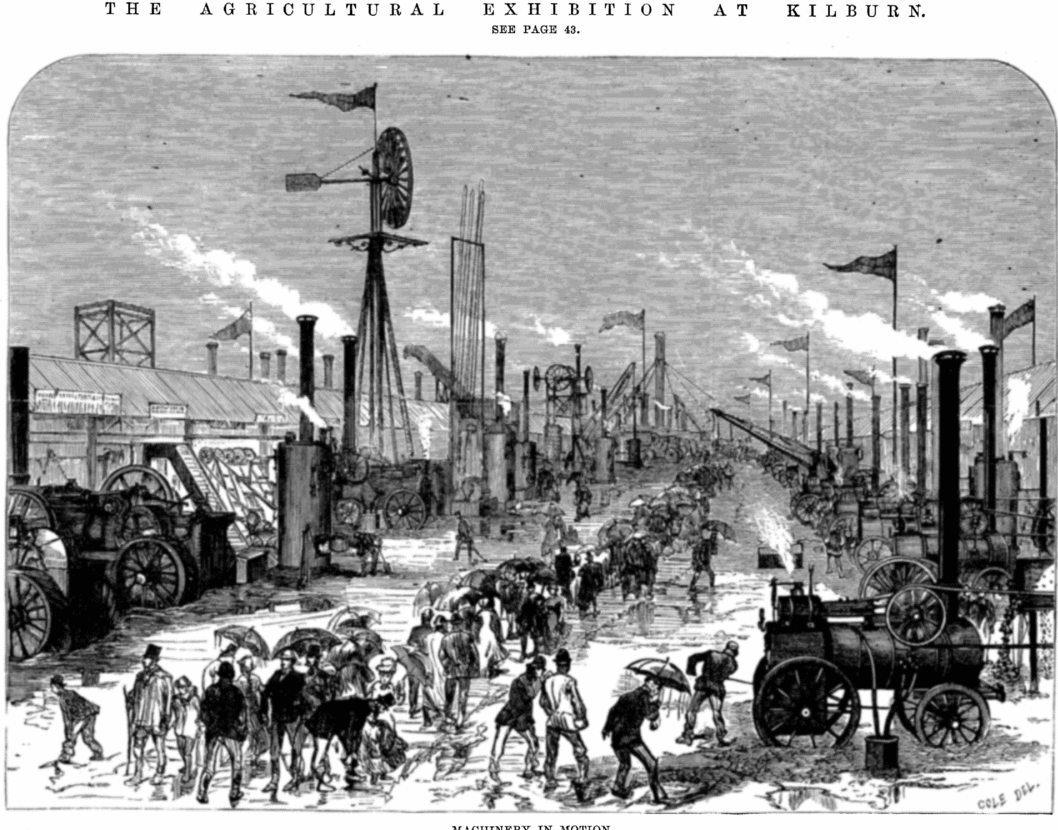
Before the introduction of the half-tone process, illustrations in publications were engravings. Steel engravings were used for books and quality journals. Engravings on wood blocks were cheaper and quicker to produce, and this was exploited by the new illustrated popular magazines, notably the Illustrated London News, launched in 1842, and The Graphic, first published in 1869. These magazines built up large circulations and covered a wide range of news stories, on topics including agriculture and the countryside. Being news magazines, engravers had to work quickly. A few notable artists, such as William Simpson, had work reproduced in the Illustrated London News, but most illustrations were the work of staff artists who produced sketches at speed. The annual show of the Royal Agricultural Society of England was at the beginning of July, and the Illustrated London News featured the show in the following few weeks. Sometimes illustrators and engravers were able to attend the event, or had photographs to guide them, but frequently they did not. They often had to sacrifice accuracy for general impression. Indeed, some of the illustrations were distinctly fanciful.Footnote 7
While the Illustrated London News was filling its pages with pictures, the specialist country press of the nineteenth century remained text-based. Before the introduction of the half-tone, the use of illustrations in the editorial matter of agricultural journals was rare. Partly this was a matter of editorial choice: if Bell's Weekly Messenger thought of itself as The Times of agriculture, then its emulation of its leader's proud adherence to words might be easily explained.Footnote 8 There was also the question of the cost of producing wood-block engravings. The Agricultural Gazette did include a number of illustrations in its first volume in 1874. There were illustrations of livestock and machinery, and a few general pictures, such as those of rural scenes in Canada and New Zealand, some inscribed ‘from a photograph’.Footnote 9 However, for a paper with limited circulation, the cost involved was no small consideration. Unlike the mass-circulation Illustrated London News (300,000 copies in the 1860s), which had in-house artists and engravers, the more specialist magazines had to buy blocks from outside agents. This, perhaps, was the explanation for the decline in the number of illustrations in the Agricultural Gazette. By the middle of the decade it was unusual for the magazine to carry any illustrations.
Advertisers were more likely to use illustrations, the first of which appeared from the middle of the century, and numbers increased in following decades. Most of the illustrated advertisements were placed by the manufacturers of farm implements, who had been quicker than many businesses to appreciate the value of illustrated catalogues from the 1840s onwards. These catalogues were illustrated with wood block engravings of the firms’ products. Most of the engravings were produced by specialist firms, such as Hare and Company, and when the implement manufacturers advertised in the farming press they used similar blocks.Footnote 10
Among the publications which included illustrations in the editorial matter, the monthly Farmer's Magazine published nicely lithographed plates mainly from steel engravings. Most were of prize-winning livestock or notable personalities. The Journal of the Royal Agricultural Society of England included illustrations in some articles on scientific subjects. The Implement and Machinery Review was copiously illustrated from its first volume in 1875 with line engravings of the machines discussed in the articles. Most of these were probably supplied by the manufacturers in the same way that press departments would later send photographs to the editorial desks.
The half-tone process and the use of photographs
The photograph was used in the production of magazine illustrations long before the introduction of the half-tone process. News illustrations, of the type published in the Illustrated London News, were mainly produced from drawings because there was no time to wait for photographs to be developed and printed. But when there was less pressure of time, blocks were often derived from photographs from the 1840s onwards. Many of the illustrations of farm implements and machines were produced in this way. The photographs themselves were the work of commercial photographers. In the 1870s a photomechanical process for the reproduction of engravings and drawings was introduced. This speeded up the production of blocks, but not the basis from which they were drawn.
The half-tone was a means of reproducing photographs directly to blocks for print. Early development of the process took place in America in the 1860s, but it was not compatible with the printing of text. Illustrations had to be printed separately, making the half-tone an expensive and uncommon process. The development of half-tone blocks of lower price and a quality that could be used in conjunction with printing text in newspapers and magazines became available in the 1880s and half-tones were in use on both sides of the Atlantic by the end of the decade. Their attraction was immediate: although technically the half-tone was a processed copy, to the reader the magazine had printed the photograph, which was ‘real’ in a way that the engravings were not.
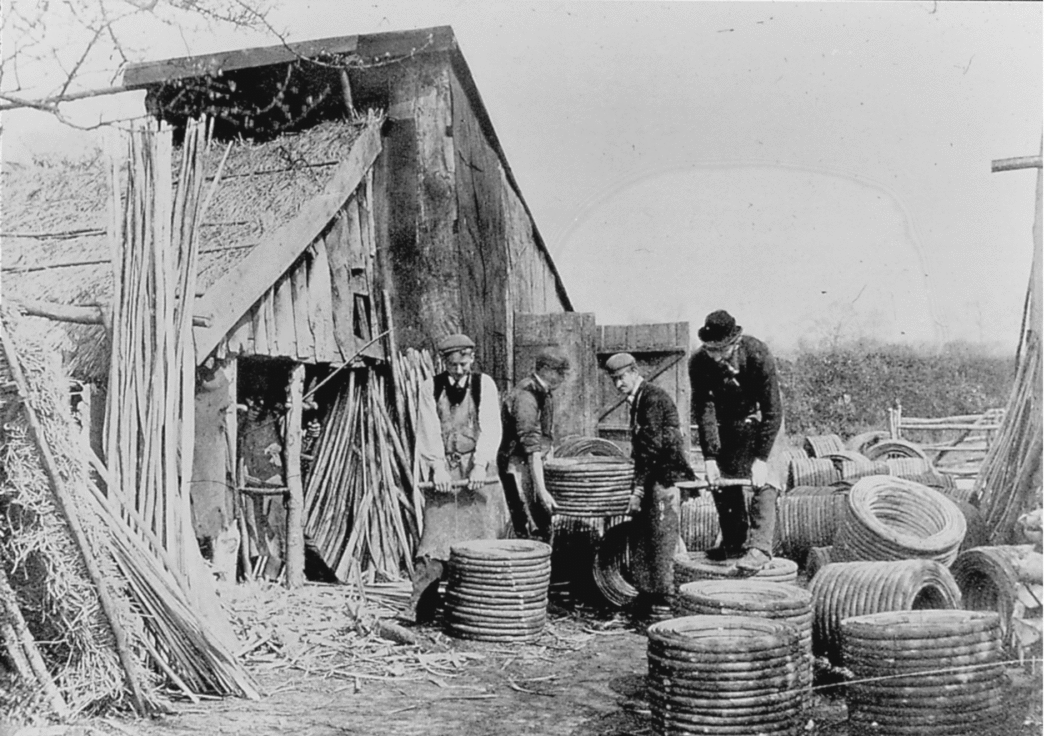
In 1897 half-tone blocks that could be used on high-speed presses were introduced. After this, half-tone illustration quickly became established in British magazine publishing. Among the new magazines taking advantage of the process was Country Life, first published in 1897, and one of the first publications that could be described as a glossy magazine. It was in large format and printed on art paper to allow full scope for the illustrations, of which there were many, most of them half-tones. On paper of this quality, a finer half-tone screen could be used to give better reproduction than on newsprint, allowing some illustrations to be printed full page.Footnote 11Country Life featured articles mainly about country sports and country houses, but almost from the outset it included photographs of farming and country scenes as general pictorial items. In 1898 a series of articles on country crafts was begun. These were illustrated essays, with four or five photographs adding to the text. Some compromises had to be made in layout at first, in that some of the photographs had to be placed outside the text on adjacent pages, as happened with the article on making hoops for barrels published in June 1898.Footnote 12 However, such articles were in effect precursors of the ‘photo-essay’ of later journalism.
Established journals made a more gradual transition to half-tone illustration. Of those catering for the rural market, the first to use them were the technical journals. The Implement and Machinery Review included a few illustrations from photographs in 1888. Most were portraits of industrialists, but there was also one of the Howe ‘Record’ light tandem tricycle in the issue for May 1888.Footnote 13 The Journal of the Royal Agricultural Society of England was another early user of half-tone reproductions, when six were included in articles on the making of Cheshire and Stilton cheese in 1889.Footnote 14 Thereafter one or two photographs appeared in the journal in most years of the 1890s.
For several years the use these journals made of photographs was limited, both in number and subject matter. An article on the firm of Blackstones of Stamford, published in the Implement and Machinery Review in 1892, included photographs of the works, of Mr E. C. Blackstone and of his house.Footnote 15 This pattern was followed for several more years: the captains of industry and their factories were given photographic treatment, while for the products line illustrations were preferred. By 1900 the range of subjects given photographic reproduction was increasing to include the machinery. This could now be shown in use and being demonstrated, as well as in the form of a simple portrait. It took some time before the photograph supplanted the line illustration, however. Even in the 1930s, when half-tone photographic reproduction was well established, some engravings were still included in Implement and Machinery Review. Some of the machinery manufacturers who supplied the line blocks were old fashioned, perhaps, sticking to tradition. Equally, some thought that an engraving was clearer and better at showing the essential features than a half-tone as it could be enhanced to clarify the features of a machine.
The weekly farming newspapers began limited use of photographs in the 1890s. The Livestock Journal introduced them in both editorial and advertising. The Agricultural Gazette reintroduced illustration with the inclusion of photographs in the middle of the decade; the Mark Lane Express and Farmer and Stockbreeder started to use photographs at the turn of the century. Numbers of photographs were modest at first, with three or four per issue at most. Cost had much to do with this. Farmer and Stockbreeder and Agricultural Gazette were both sold for one penny, and printed on cheap paper. The Mark Lane Express, although more expensive at three pence, was still at the cheaper end of the market. The cost of high-speed half-tone blocks might have fallen, but they were still an expense that magazines at the lower end of the price range with a limited circulation could not readily afford. The cheap paper used also meant that the quality of reproduction of half-tones was poor, resulting in rather muddy-looking pictures at best. Editors and publishers had to consider, therefore, the importance they gave to illustration compared with a low cover price. For the Implement and Machinery Review certainly, illustration was essential and the magazine was printed on coated paper to improve the reproduction of the line illustrations. Once the use of half-tones had become established, the quality of paper in this magazine was improved to cater for them. This came at a cost, however: when it was launched in the 1870s, the Implement and Machinery Review sold for seven pence a month, increasing to eight pence by the 1890s. Country Life also recouped the cost of its art paper and copious illustration through a high weekly cover price of six pence. It aimed for a readership of the gentry and middle classes, beyond the majority of the farming population.
The weekly farming press employed half-tones on a restricted range of subject matter during the 1890s: where the Implement and Machinery Review had depicted the captains of industry, the weekly farming magazines almost exclusively reproduced photographs of livestock. In this they were concentrating on matters of prime importance to them and their readership, and continuing a tradition of livestock portraiture established with the paintings and prints of the late eighteenth century. Gradually, the range of agricultural subjects was widened. Whereas in 1903 the Mark Lane Express had only a couple of livestock portraits and one or two portraits of ‘prominent British breeders’, two years later the occasional general agricultural picture was included as well. By 1909 the range of subjects had grown to include photographs of shows, markets and other events of interest to farmers, and by 1911 photographs of domestic interest, such as furniture and flowers, were appearing in the ‘home’ section.
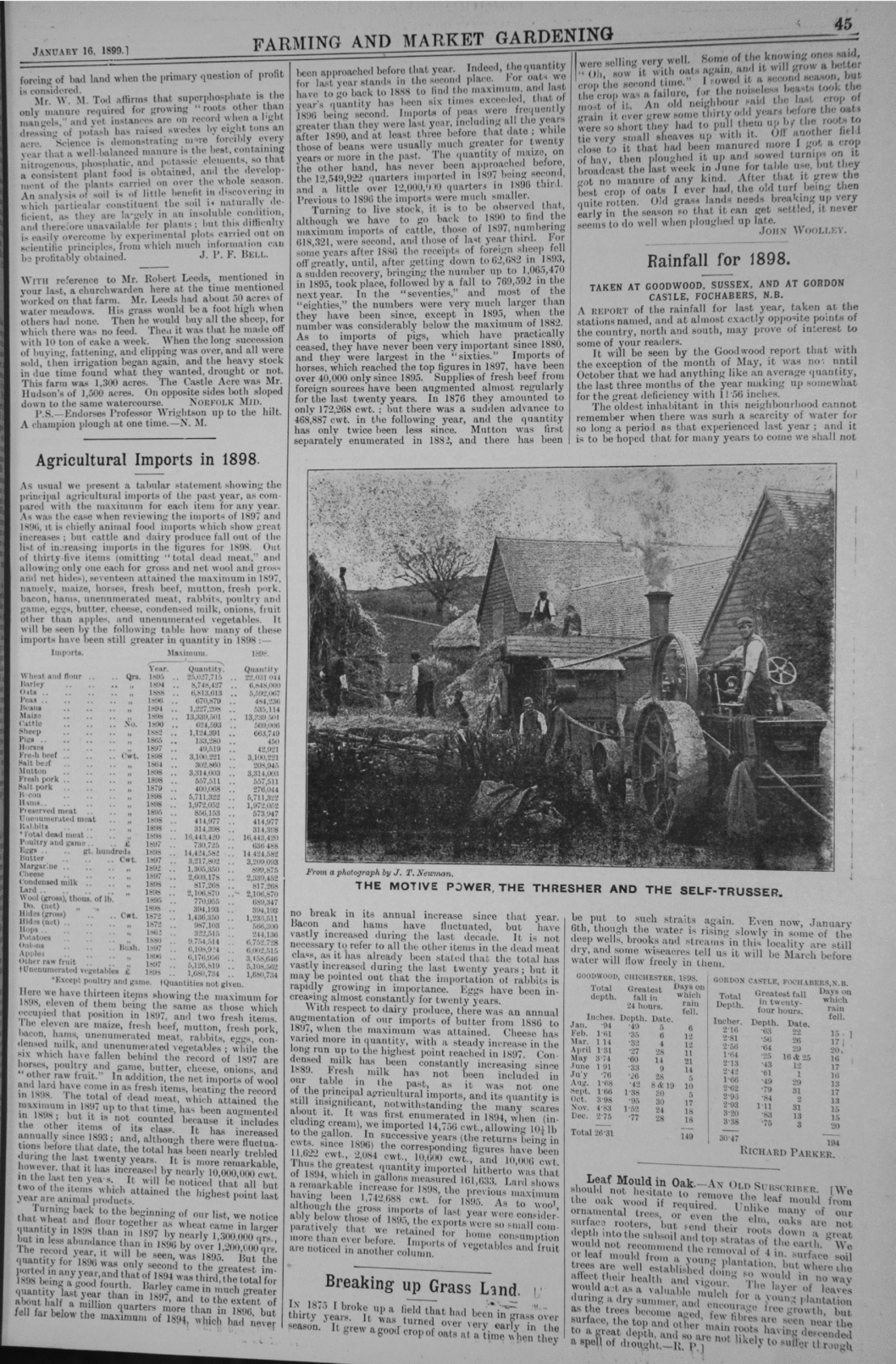
The Agricultural Gazette also showed a preference for portraits of livestock, but included a few photographs of more general agricultural subjects from relatively early on. In 1899 a photograph of a traction engine and threshing engine at work appeared in January, and one of a steam-driven chaff cutter in March.Footnote 16 Whereas the photographs of livestock were related to an adjacent article, the general scenes were inserted simply to embellish a page, and, although some were of modern machines in action, the photographs chosen tended towards the depiction of the picturesque farming idyll.
Farmer and Stockbreeder was, like the other magazines, rather slow to take up the half-tone photograph. It made very limited use of photographs at the beginning of the twentieth century, and it was not until 1912 that their inclusion was well established. By then a few of the portraits of livestock were given full-page treatment. Total numbers of photographs reproduced were still not large, and nearly all were of livestock. Little had changed by the early 1920s. Most weeks fifteen or sixteen photographs were reproduced in the body of the magazine with a couple more on the cover. Most of them were reproduced in small size, however. The full-page pictures had been abandoned during the First World War. The largest reproduction in the 1920s was one-third of a page and many were an eighth of a page or sometimes even less. In all, this meant that barely ten per cent of the content was photographic in most weeks of the early 1920s. Later in the decade the cover design was changed to require only one photograph in some weeks. From 1931, the cover space was sold for advertising.
The content of Farmer and Stockbreeder and, therefore, the selection of photographs continued to have a strong emphasis on livestock. There were photographs taken at agricultural shows, almost all of them of animals either on their own or with their owners: other aspects and context of the shows were rarely featured. Photographs of animals on occasions other than the shows were also used and the range of photographic content was only widened during slack times for livestock events.
When magazines started to print photographs in the 1890s they bought them from independent photographers. Some of these could be described as photographic artists, practitioners of a style of photography that was still heavily influenced by the fine-art styles of the mid-nineteenth-century. An example was F. Babbage, whose name appears regularly under plates in the Agricultural Gazette. He was a painter of some note, a specialist in animal portraits, and his photographs of show animals were a staple part of the magazine's content. Most suppliers of photographs were commercial photographers, whose work was mainly studio portraiture, landscapes for postcards and so on. J. T. Newman was one of these, a commercial photographer who had a shop at 176 High Street, Berkhamsted, Hertfordshire. He advertised himself as a portrait and landscape photographer, and ‘lantern slide artist’; he also published series of postcards and sold photographic equipment. The Agricultural Gazette published several of his farming and landscape scenes in the 1890s, most of which were taken close to his home area.Footnote 17 When Farmer and Stockbreeder began to use photographs regularly after 1900, it drew on the new photographic agencies that were established at the turn of the twentieth century to meet demand from the press. The agencies were also a consequence of the new technology of smaller, more portable cameras using dry plate negatives. Sport and General, one of the first British agencies, was the most commonly credited source of photographs in Farmer and Stockbreeder before the First World War. The employment of staff photographers, or freelancers on contract, was a development of the 1920s. The archives of negatives taken for Farmer and Stockbreeder do not start until 1924. From this time onwards the credit ‘Farmer and Stockbreeder photograph’ becomes the most common. These acknowledgements were dropped by the mid-1930s, possibly in emulation of Farmers Weekly, which did not print photo credits.
The impact of Farmers Weekly
The farming press underwent further changes after the First World War. The Agricultural Gazette was redesigned in 1919 in a smaller format, with copious illustrations, particularly featuring new developments in mechanisation. A few gravure plates were included at the time of the Royal Show each year. The magazine had some staff photographers now, whose work was prominently credited ‘Agricultural Gazette Photograph’. However, the magazine did not survive long as an independent title. Its owner, Iliffe Press, bought Farmer and Stockbreeder in 1925 and incorporated Agricultural Gazette within it. Farmer and Stockbreeder had changed little in format since the war, and was still somewhat dense in its type layout and general design. The Agricultural Gazette’s design changes were not brought into the merged paper, except that the number of illustrations was increasing, in line with the trend that had begun before 1925. The quality of the paper on which the magazine was printed was improved soon after the merger, which made a difference to the reproduction of photographs and a further improvement in paper quality was made in the 1930s. The Livestock Journal was also merged with Farmer and Stockbreeder in 1932. This left Farmer and Stockbreeder dominant in the farming press. A few competitor titles were left, such as Farm Field and Fireside, which was taken over in 1939. Country Life maintained an interest in farming, including, for example, a series of articles on notable farms written by H. G. Robinson and illustrated by a number of leading rural photographers.Footnote 18
Farmer and Stockbreeder’s dominance did not last long. A new farming newspaper was launched in 1934 to shake up the agricultural press. This was Farmers Weekly, published with the same cover price of two pence as Farmer and Stockbreeder. This might seem an unpropitious time to start a new farming journal, when the industry's fortunes were at a low ebb, but Farmer and Stockbreeder was beginning to look staid. The publisher of the new magazine was Lord Beaverbrook, proprietor of the Daily Express, into which he had introduced livelier reporting and feature-writing. Farmers Weekly was intended to apply similar lessons to the more specialist press and Michael Wardell, who was already managing the Evening Standard, took on the direction of the new magazine. Farmers Weekly did not achieve the financial results Beaverbrook expected, however, and he sold it in 1937 to Edward Hulton, son of the founder of the Daily Sketch. This was Hulton's first venture in publishing, but the following year he launched Picture Post, for which he was to become best known. Under the new ownership, Malcolm Messer was appointed editor. He was to make the paper the best-read farming weekly, but in 1939 there was some way to go to catch Farmer and Stockbreeder, which claimed a circulation of 120,000.Footnote 19
Michael Wardell issued a policy statement in the first issue, which said this was ‘a newspaper with immense resources and great ramifications, with unrivalled agencies for the collection of news, and wide facilities for the reproduction of pictures’.Footnote 20 As a result of these wide facilities, the magazine was markedly different in style. It was of slightly broader format: the page size was ten and three quarter inches by fourteen inches, compared with the nine by fourteen inches portrait format of Farmer and Stockbreeder. The layout of text was less dense, with a more ‘newsy’ appearance. It had more feature articles under named authors, although this was not a complete innovation since Farmer and Stockbreeder already had some signed articles from writers, such as S. J. Wright, a specialist in mechanisation. Farmers Weekly introduced the columnist into the farming magazine as well as fiction by writers including Denis Wheatley. It also had a new approach to the use of illustration.
The launch of Farmers Weekly in 1934 had an immediate impact, for its design broke with the traditions of the agricultural press, and emulated the style of the general illustrated magazines with which the publishers were experienced. Farmers Weekly was thus a more illustrated publication from the outset. It was produced on newsprint, like its predecessors, but it included a gravure supplement given over almost entirely to photographs. There were not necessarily more photographs in total, but the size in which they were reproduced and their layout gave a different impression. A greater proportion of the editorial space was devoted to photographs, with almost thirty-three per cent in the first issue, and the proportion fluctuated around thirty to thirty-three per cent in subsequent weeks.Footnote 21 The content was broader in its subject coverage. Although Farmer and Stockbreeder and the Agricultural Gazette may have been for all farmers, it was the stockbreeders who seemed to dominate, and for whom most of the illustrations were selected. Farmers Weekly was more obviously for all, with its range of feature articles on farms, people and technical subjects, written and printed in accessible style. Having A. G. Street as a columnist was a big coup, for he attracted a large readership. Farmers Weekly campaigned vigorously for the farmer's interest, as did Farmer and Stockbreeder, tending to confirm the public perception of farmers as grumblers.Footnote 22
Farmers Weekly sought to use its photographs to portray farming in a positive light. The range of illustrative material was wide, with an attempt to feature the whole spectrum of farming, and the gravure supplement included photographs of national and international news. All of the new features needed illustrations in larger numbers and covering a wider range of subjects than the single prize-winning animals and portraits of people that had hitherto dominated. Farming scenes, specific and general, were needed to embellish the feature stories. The magazines built up their files of stock prints available for reuse on any occasion.
Farmer and Stockbreeder was the main target for Farmers Weekly, the magazine with the largest circulation and aimed at most farmers. It had to respond, and respond in kind. The range of its articles was broadened. There were more feature articles on aspects of practical farming. Some were in direct competition: where Farmers Weekly ran a series called ‘Successful British Farmers’ starting in July 1934, Farmer and Stockbreeder followed with ‘Successful Women Farmers’. It was a rapid response, for the first in the series, on Lady Loder, appeared on 7th January 1935.Footnote 23Farmer and Stockbreeder, too, signed up regular contributors, and there were more photographs on a wider range of subjects. Its design was changed, albeit not radically, allowing the text to appear slightly less dense. Some changes were on their way even before the new rival had been launched. The photographic content had started to increase: in 1921 about ten per cent of the editorial space was photographic; by 1933 that proportion had reached twenty-two per cent in some weeks.Footnote 24 The way the photographs were used had also changed, with more of them cut away into the text rather than being left as rectangular boxes. From 30th September 1935, ‘The Farmer's Home’, a longstanding section of the magazine with articles of domestic and general interest, was turned into a gravure insert. It was more heavily illustrated than the main magazine and included a few photo-feature articles.Footnote 25
The demand for photographs and their sources
The demand from editors for photographs grew markedly with the increased use of illustrations. Editors wanted plenty of photographs from which to choose so the numbers taken on any shoot increased. The annual totals taken by staff photographers for Farmer and Stockbreeder doubled during the course of the 1930s. The number of negatives filed in 1931 was approximately 1500; it had risen to 3000 by 1937 and 7000 in 1953. Even so, the numbers were modest by later standards. The principal type of camera used by press photographers at this time, and until the early 1960s, took quarter-plate negatives, mostly on glass plates. They were light and portable compared with studio cameras, but boxes of glass plates added weight to the bag, and changing a plate was not as quick as winding on to the next frame on roll film. Both of these characteristics discouraged the profligacy that was common in later press photography. Instead, most assignments in the 1920s and 1930s resulted in only a handful of plates. Portrait photographs of leaders of the agricultural world required a couple of shots at most, while visits to farms and demonstrations of machinery yielded perhaps ten or a dozen photos. At the Slough ploughing match in 1929, for example, only five photographs were taken, while a visit to the Isaacs farm at Dunsfold, Surrey, in January 1931 produced eleven pictures. This type of assignment would result in three or four contact sheets by the 1970s. Caution was thrown to the wind at the major agricultural shows: at Smithfield in December 1932 more than seventy-five photographs were taken by Farmer and Stockbreeder’s photographers (there were probably several at work), as portraits were taken of each of the judges and officials, and many of the animals and implements.Footnote 26
Spontaneity, which was regarded by many as the key characteristic of photojournalism, was not a strong feature of this style of photography.Footnote 27 As experienced professionals, the photographers supplying the rural magazines could certainly compose a picture quickly. Equally, however, they prided themselves on their skills in composition. They were photographic artists according to their own lights and they preferred to spend time in composing the picture, organising the prize-winning lambs to stay behind the line of rope held in front of them. This also meant that they did not waste an exposure. Most of the photographs for the rural press were, therefore, posed.
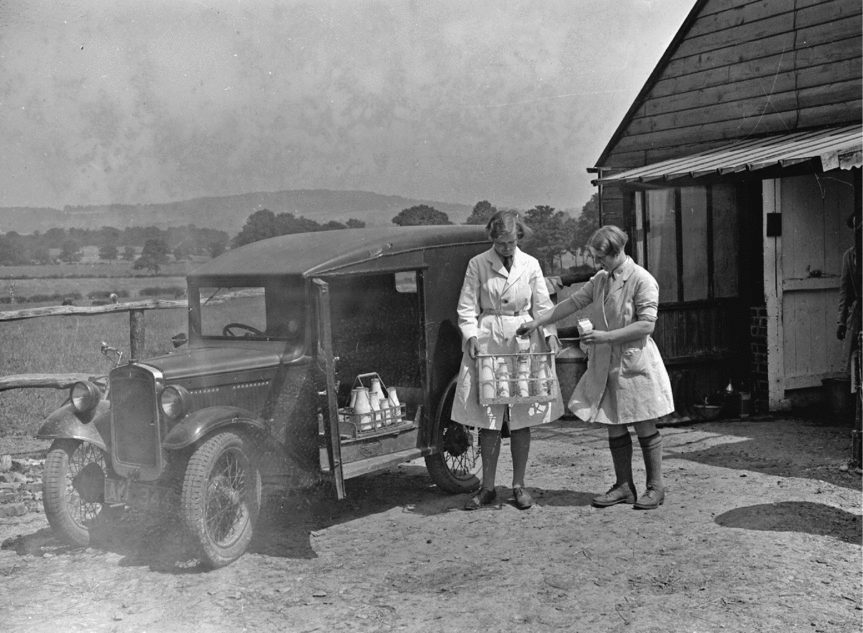
Usually only a minority of the photographs taken were published and some assignments were not selected for illustration at all. However, because the numbers of photographs taken were smaller, the proportion used was higher than was customary after the Second World War. When Miss Flindt's farm was featured in the ‘Successful Women Farmers’ series of Farmer and Stockbreeder in August 1935, four out of the nine photographs taken were printed in the magazine.Footnote 28 About half of the photographs taken at the Smithfield Show in 1932 were reproduced, mainly because each of the judges was included in a series of photomontages.Footnote 29
Photographs taken by staff were not enough, however. The journals also had to draw on agencies and freelance photographers to satisfy their needs. London-based agencies such as Sport and General and Fox Photos were the biggest suppliers of prints before 1939. Regional agencies were used relatively little. Independent freelance photographers, however, were able to gain more than a foothold in this market. Sometimes they were commissioned by the paper, otherwise they submitted prints speculatively. A number of these photographers became well known in this field of work. Eric Guy set himself up as a press photographer at the end of the 1920s, specialising in agricultural and country subjects. He started in business just as the demand from the farming magazines was beginning its steady growth. He was able to sell some of his first photographs to Farmer and Stockbreeder, and this magazine and Farmers Weekly made up a substantial part of his work. He covered central southern England from Dorset to Oxfordshire.Footnote 30 John Topham turned professional photographer in the 1930s, specialising in the farms and countryside of south-eastern England. He worked until 1968, establishing a photo agency. His brother Charles was a staff photographer for Farmers Weekly. George Garland, based at Petworth in Sussex, set up as a professional photographer in the 1920s, and farming magazines were among those to whom he supplied prints. Press and public relations departments of firms also began to send in prints of their latest products in growing numbers, helping to swell the files in the editorial offices.
Was this photojournalism?
By the 1930s photography had become established as the principal means of visual communication, largely due to its incorporation in press publishing. The farming press was no exception and used photographic illustrations in four main ways. These were: to give an illustrated record of an event, such as the prize-winning livestock; to record newsworthy events, with illustrations of people and the occasion; to aid instruction when used with articles on how to keep poultry, maintain a tractor etc. and finally to provide pictorial embellishment. Those used for general news columns, such as the ‘Editor's Diary’ in Farmers Weekly, were primarily included to be attractive pictures, although they might also have some seasonal relevance. Inserted in the columnists’ articles, they were intended to reinforce the writer's point, but to look good as well.
Stock photos of mundane subjects, such as portraits of people and livestock, items of machinery and equipment, were the bread and butter of the agricultural press photographer's output. The photographer supplying the close-up of the tractor's draw-bar linkage or line of lambs at the show might seem a world away from Cartier-Bresson, with his Leica to hand to capture the moment on the street, to fill the pictorial news magazines of the 1930s with photojournalism, but the gap was smaller than at first sight. The photographer for the farming press was recording the truth of the occasion and the place, but he was also expert in composing his photographs for pictorial effect. Many of these photographers still thought of themselves as photographic artists. In the hands of the best agricultural press photographers the camera was used to convey an image of the countryside that could be just as powerful as any taken by the news magazine photographers. The picture editors could add to the impact by cropping, retouching or making cut-outs into the text. By the late 1930s, the use of stock photos was common, so that the harvest scene reproduced might be from last year or the year before.
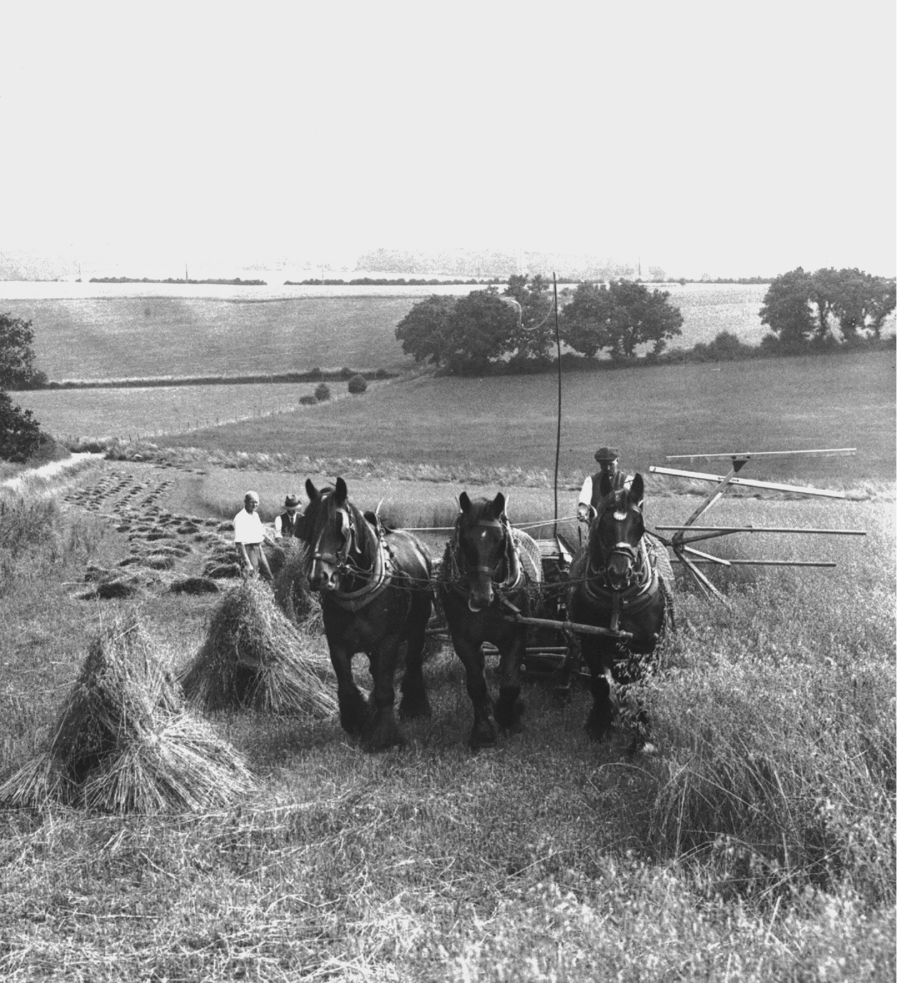
Picture Post is generally regarded as archetypical of photojournalism, with its strong editorial line and photographs carefully selected to accentuate the text. It was, wrote John Stevenson, notable for its ‘adventurous photo-journalism and documentary style’.Footnote 31 This magazine was published by Edward Hulton, who launched it a year after he bought Farmers Weekly from Lord Beaverbrook. Most of the illustrations in Farmers Weekly were workaday photographs of agricultural machines, hen houses, portraits of the farmers and their cows. They do not fit the definitive features of photojournalism, of spontaneity and being in the right place at the right time. Comparison, therefore, between features on unemployment in Wigan in Picture Post and a ‘successful farmer’ in Farmers Weekly might seem invidious, yet the editorial process was similar.Footnote 32 In the editorial in the first edition in 1934, Farmers Weekly had declared: ‘We have one single fundamental policy. We want to see more agriculture production in Britain.’Footnote 33 Photographs were chosen to reinforce that, in much the same way that they were chosen to emphasise the editorial line in Picture Post. Farmers Weekly photographs showed what was best in farming at a time when it was regarded as being in the doldrums. Eric Guy's photograph of harvesting oats suited the policy very well: good crops, evidence of a high standard of farming, a photograph expertly composed to show farming and the landscape at their best. The positive image of farming as resilient and progressive sought to boost the morale of farmers and there was documentary style to this photography.
A post-war text book on newspaper production commented of the photograph: ‘though it should be decorative, its function is not decorative; it either illustrates the news . . . or is a piece of pictorial news in its own right.’Footnote 34 By the 1930s the farming press had already moved a long way from the use of a lone photograph isolated on its page towards integrating the photographs with the text along the lines of that description. The idea that the picture tells a story was but a step away.
By 1939 the magazine copiously illustrated with half-tone photographs had become established. The Second World War confirmed that: the professional photographers were allowed sufficient supplies of photographic film and chemicals to ensure that the activities of the home front were reported. The agricultural journals thus gave full illustrated coverage to the Women's Land Army and other morale-boosting scenes from rural Britain. After 1945 the magazines continued to develop their use of photographs. Farmers Weekly was printed on coated paper giving it the feeling of higher quality. The publication was bigger, so although the proportion that was pictorial declined slightly, the number of photographs used was greater, often between eighty and one hundred a week by the mid-1950s. However, the whole effect was of a magazine that was highly illustrated. Farmer and Stockbreeder continued to be less thoroughly pictorial, but nevertheless increased its consumption of photographs. New journals were launched in this period, such as Power Farming (started as Power Farmer in 1941) and Farm Mechanization, both well-illustrated and printed on coated paper. The photographs were increasingly used as general illustrations, and were becoming more important in selling a magazine, although Farmers Weekly still kept advertisements on the front cover.
The photograph as evidence
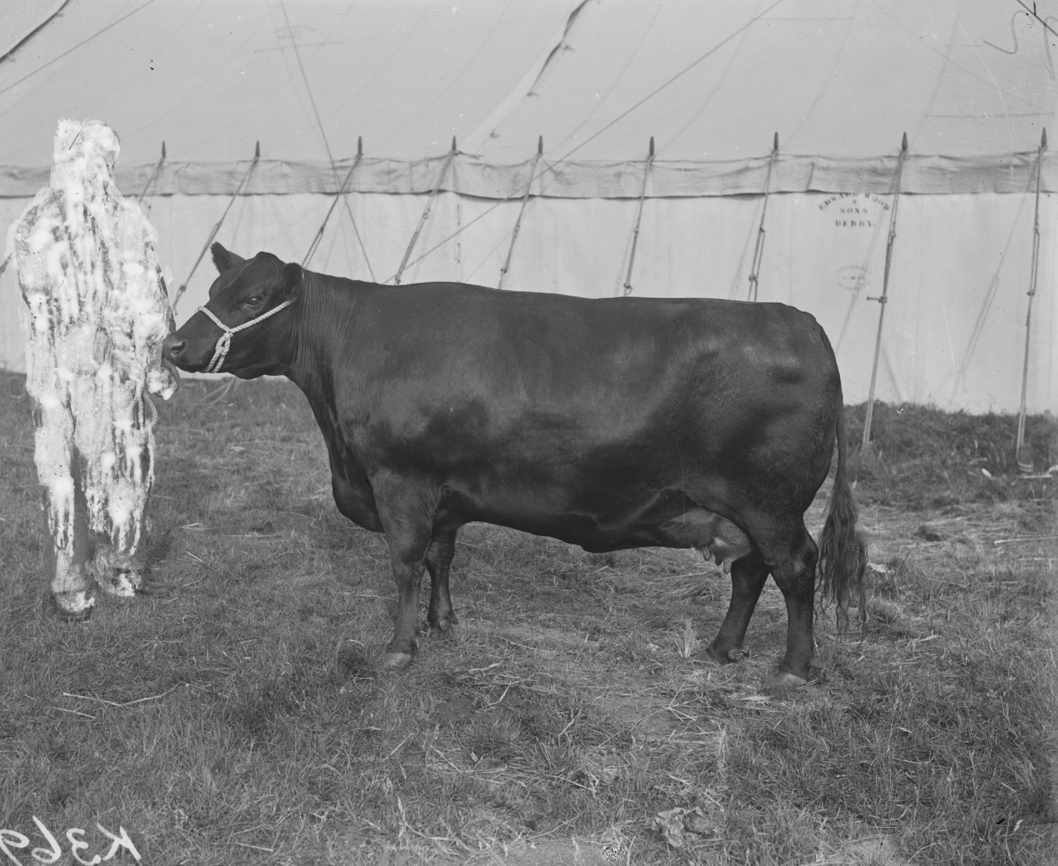
Thirty years ago Alan Everitt urged agricultural historians not to ‘reproduce pictorial evidence as stage scenery’.Footnote 35 In recent years attention has been given to the interpretation of photographs as evidence.Footnote 36 As yet the collections of the specialist press are little used, despite their scale: the archive collections of the Museum of English Rural Life contain, at a conservative estimate, more than a quarter of a million press photographs relating to agriculture and rural life. Certainly, historians are still happy to trawl the files for sources of illustration to go with text that has already been written and indeed I have done it myself.Footnote 37 In doing so, we cast, perhaps, a less critical eye over the photographs, rarely stopping to consider the purpose for which they were taken or the way the editors treated them. Cut-outs, montages and retouching were all well established practices by the 1930s. We say the photograph is a source of evidence, yet it is usually well down the pecking order in our estimation, below paintings and other art. Yet, in the visual age, which we are told the modern world is, it is sometimes good to start with the photograph.
The summer of 1879 was very wet. This is how the Illustrated London News depicted the effects of the weather on the Royal Show held at Kilburn, north London, that July.

Wiring bundles, one of the five photographs published with an article in Country Life on the craft of making barrel hoops in 1898.
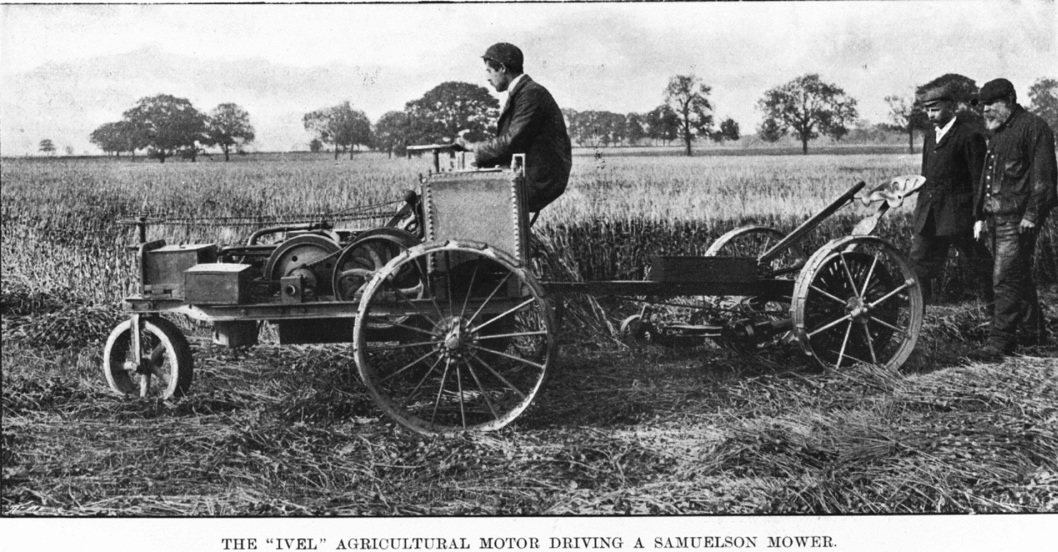
The new Ivel tractor being demonstrated, a photograph published along with a three-page report in Implement and Machinery Review in September 1902. Although the men on the right look as though they are walking behind the tractor, everything in this photograph was in a stationary pose.
A photograph supplied by the commercial photographer J. T. Newman reproduced in Agricultural Gazette in March 1899. It shows ‘the ancient chaff box, the steam chaff cutter’. The newsprint used by the magazines allowed an indifferent quality of reproduction at best.
A Farmer's Weekly page spread for one of the ‘Successful Farming’ series. This was published on 23rd July 1937 and featured Mr Richard Chambers, a farmer in County Down, a pioneer in the use of Harry Ferguson's new hydraulic-system tractor.
Miss Flindt had her own dairy and milk round. Farmer and Stockbreeder's photographer showed a delivery being prepared by two of Miss Flindt's dairy girls. This was one of the photographs selected for reproduction.
Cutting winter oats on Mr Bastow's farm, Ipsden, Oxfordshire. This photograph by Eric Guy was published as a full-page item on 30th July 1937. Guy took a series of photographs on this occasion; the two men were posed with the stooks on each one, at a slightly different place each time.
Elinka of Doonholm, owned by Colonel Norman Kennedy, was a prize-winning Aberdeen Angus cow in 1933. The retouching artist has not quite finished painting out the handler in this negative in the archives of Farmer and Stockbreeder.
Acknowledgements
This paper had its origins in work carried out while I held a Monument Fellowship awarded by the Museums Association in 2009 to 2010. I would like to thank Guy Baxter and Clare Griffiths, who read the text and pointed out a number of mistakes. Those that remain are mine. All illustrations are from the collections of the Museum of English Rural Life and are reproduced with grateful acknowledgement.