


Introduction
The animal welfare and ethical responsibilities associated with animal research do not necessarily end when a procedure finishes. Across animal research facilities, decisions must be made regarding animals’ post-study outcomes and about surplus animals, which are bred but not used for experiments because they either do not present the desired phenotype at birth or are surplus to breeding programmes (Persson et al. Reference Persson, Rodriguez Perez, Louis-Maerten, Müller and Shaw2025). The decision to kill animals who remain healthy and could have a good quality of life after experimental use is routinely made in laboratories and breeding facilities. In this article, we use “killing” as our general term for cases in which healthy animals are killed after research for scientific, logistical, economic, or other non-welfare reasons. We retain “euthanasia” only when reporting terminology used in a specific cited source. Killing is regulated as a welfare matter through requirements for approved methods and competent personnel (Lee et al. Reference Lee, G-H and Kim2024; Persson et al. Reference Persson, Rodriguez Perez, Louis-Maerten, Müller and Shaw2025). However, the fact that healthy animals are killed raises significant ethical and animal welfare questions about our ongoing responsibility to them once the research ends (Sellars & Sebo Reference Sellars and Sebo2024). One alternative to killing these animals is rehoming, which in this review is understood as the transfer of animals bred for or used in research into a living situation outside experimental use. We use “rehoming” as an umbrella term covering adoption, sanctuary placement and retirement.
Direct adoption means that the animal is transferred to a private home of either an internal (staff) or external adopter. Indirect adoption is mediated through an external institution (i.e. shelters, rescue groups, or rehoming networks). Besides adoption, there are retirement models. Sanctuary placement means taking the animals to a dedicated infrastructure, such as a sanctuary, where they remain for the rest of their lives under the care of specialised staff (Skidmore & Roe Reference Skidmore and Roe2020; Van Loo & Janssens Reference Van Loo and Janssens2023). In the retirement-in-place model, animals remain in the research institution but are no longer used in procedures (Maxwell et al. Reference Maxwell, Hutchinson, Allen, Painter and Hopper2024). Long-term or geriatric care is intended for old animals or those presenting health issues (Hänninen & Norring Reference Hänninen and Norring2020; Skidmore & Roe Reference Skidmore and Roe2020; Van Loo & Janssens Reference Van Loo and Janssens2023). For the purpose of this review and the search strategy, these pathways were grouped into two broad families: adoption-based and retirement-based pathways.
From an animal welfare perspective, rehoming should not be treated as inherently preferable in every case. Its welfare value depends on whether the individual animal can plausibly have a good quality of life after transfer or retirement. Relevant considerations include the animal’s health, behavioural suitability, social needs, previous housing and handling experience, preparation for the new environment, adopter or receiving-facility suitability, veterinary care, and the possibility of follow-up after rehoming (Carbone et al. Reference Carbone, Guanzini and McDonald2003; Hänninen & Norring Reference Hänninen and Norring2020; Skidmore & Roe Reference Skidmore and Roe2020; Moons et al. Reference Moons, Spiri, Boxall, Louwerse, Mikkelsen, Roth and Ecuer2023). Where these conditions cannot be met, killing may be considered the more appropriate welfare outcome (Directive 2010/63/EU 2010; Hänninen & Norring Reference Hänninen and Norring2020; Skidmore & Roe Reference Skidmore and Roe2020). For this reason, this review treats rehoming as a conditional welfare practice rather than as an automatically preferable alternative to killing.
A preliminary search on the legal status of rehoming revealed that existing legal frameworks address rehoming unevenly. For example, even though EU, Swiss and US law are all aligned with the 3Rs principles, the status of rehoming varies across these three jurisdictions. In the EU, rehoming has explicit legal relevance under Directive 2010/63/EU. Article 19 allows Member States to permit rehoming. If Member States allow rehoming, Article 29 requires breeders, suppliers and users to have a scheme in place that ensures socialisation of the animals that are rehomed (getting animals used to human contact and routine handling) (Directive 2010/63/EU 2010). The inclusion of rehoming in legislation driven by the 3Rs (Replacement, Reduction, Refinement), such as the EU Directive, indicates a connection between rehoming and Refinement, since it can be presented as extending welfare responsibilities beyond the procedure itself. In Switzerland, even though animal research law integrates the 3Rs, it does not establish an explicit research-specific duty to rehome animals (AniWA 2005; AniPO 2008). However, Swiss reporting requirements now make some post-research outcomes more visible: from 2026, authorised laboratory animal facilities must record animals not used in experiments that are supplied to third parties, including animals placed outside the laboratory animal facility, for example in private animal holdings, as well as animals that are killed or die; these data are to be reported for the first time by the end of February 2027 according to the Federal Food Safety and Veterinary Office (FSVO) (FSVO 2026). Despite that, several Swiss universities run rehoming programmes (for example, University of Zurich, University of Fribourg, University of Basel and the Swiss Federal Technology Institute of Lausanne EPFL) in collaboration with animal welfare associations (Swiss Animal Protection). Similarly, while the US Animal Welfare Act aligns with 3R principles, it lacks provisions on rehoming (AWA 1966). However, rehoming is practiced in some research institutions (Carbone et al. Reference Carbone, Guanzini and McDonald2003) and even mandated for dogs and cats at state level under the so-called “Beagle Laws” (https://www.animallaw.info/content/map-beagle-freedom-laws). Outside these three jurisdictions, the Australian Code for the Care and Use of Animals for Scientific Purposes (ACCUASP) explicitly lists rehousing or rehoming among possible provisions at the conclusion of animal use and states that rehoming opportunities should be considered wherever possible, especially where the impact of the project or activity on the animal’s well-being has been minimal and the animal’s physiological condition and behavioural attributes indicate that introduction to a new environment would have only a minimal and transient impact on well-being (ACCUASP 2013). In Asia, examples also show different framings of post-research responsibility. In India, the Committee for the Purpose of Control and Supervision of Experiments on Animals (CPCSEA) guidance defines rehabilitation as the “4th R” and as aftercare for animals bred for, used in, or retained for experimentation, with the aim of providing a life distinct from laboratory housing until natural death (CPCSEA 2004). In Japan, the Act on Welfare and Management of Animals (JAWMA) and the Ministry of the Environment’s Laboratory-Animal Standards (JLAS) provide a framework for animal welfare, proper handling, care, pain reduction, and record-keeping, but do not appear to create a general rehoming-specific duty (JAWMA 1973; JLAS 2006/2013). Existing rehoming-related policies and guidance are not only inconsistent across jurisdictions, but also dispersed across species and fragmented, and it is not always clear which elements are treated as core requirements vs recommended practice. This results in a lack of standardised protocols to guide practice (Laboratory Animal Science Association 2004; Directive 2010/63/EU 2010; Animals in Science Regulation Unit 2015). To our knowledge, this is the first scoping review to synthesise peer-reviewed literature specifically on policies, guidelines, and recommendations for rehoming animals bred for or used in research.
The primary research question guiding this review was: What does the peer-reviewed literature say about policies, guidelines, and recommendations for rehoming animals bred for or used in scientific research? We aimed to map and critically analyse this literature, by: (1) describing the regulatory positioning of rehoming; (2) mapping how included papers address rehoming implementation (programme models, animal selection criteria, procedural steps, actors, and resources); (3) examining how the included papers address animal welfare considerations relevant to rehoming, including eligibility criteria, preparation, transition risks, post-transfer monitoring, and whether they report evidence on welfare after rehoming; (4) identifying the ethical basis discussed (foundational principles and decision-making frameworks); (5) synthesising contextual factors reported (barriers and facilitators); (6) identifying the intended target users; and (7) examining how rehoming is positioned relative to other end-of-use options.
Materials and methods
Search strategy
This scoping review followed the Joanna Briggs Institute methodology (Aromataris et al. Reference Aromataris, Lockwood, Porritt, Pilla and Jordan2024) and was reported according to the Preferred Reporting Items for Systematic Reviews and Meta-Analyses extension for scoping reviews (PRISMA-ScR checklist) (Tricco et al. Reference Tricco, Lillie, Zarin, O’Brien, Colquhoun, Levac, Moher, Peters, Horsley, Weeks, Hempel, Akl, Chang, McGowan, Stewart, Hartling, Aldcroft, Wilson, Garritty, Lewin, Godfrey, Macdonald, Langlois, Soares-Weiser, Moriarty, Clifford, Tunçalp and Straus2018). The review was structured using the JBI Population–Concept–Context (PCC) framework: the Population included guidelines, policies and recommendations; the Concept concerned rehoming; and the Context encompassed any research setting (see Appendix 1; Supplementary material).
The search was conducted on 16 April 2025 in four electronic databases: PubMed, Ovid MEDLINE, Scopus, and Web of Science. Candidate terms were identified through the preliminary search of five key articles (Carbone et al. Reference Carbone, Guanzini and McDonald2003; Hänninen & Norring Reference Hänninen and Norring2020; Skidmore & Roe Reference Skidmore and Roe2020; Moons et al. Reference Moons, Spiri, Boxall, Louwerse, Mikkelsen, Roth and Ecuer2023; Van Loo & Janssens Reference Van Loo and Janssens2023), examination of Medical Subject Headings (MeSH) and related entry terms, and iterative testing of synonyms to ensure comprehensive coverage of the PCC elements. The initial search string was developed for PubMed, and its quality was validated against the five key articles. This step helped ensure that the search terms and combinations were sufficiently sensitive and capable of retrieving key evidence, thereby reducing the risk of overlooking relevant papers. The search was refined until all five key articles were retrieved. The initial PubMed search strategy was translated across databases using the Polyglot Search Translator to ensure consistency. The full Boolean search strings for each database are provided in Appendix 2 (Supplementary material). In addition, the reference lists of all included papers were screened to identify further potentially eligible records. Any records identified through reference screening were screened using the same process as database records.
Publications were eligible if they were peer-reviewed papers discussing policy, guidelines and recommendations for rehoming (including adoption, or retirement) of animals formerly used in scientific procedures. No restrictions were placed on the type of study design or research methodology. No time limit was applied to the search. Papers in English, French, or German were eligible. Conference abstracts, letters to the editor, dissertations, books, book chapters, and systematic or scoping literature reviews as well as grey literature were excluded. Papers focusing on companion-animal adoption, welfare assessments without a rehoming component, or papers lacking discussion of policy or guidance were also excluded.
All records were imported into Covidence for automatic and manual duplicate removal. Two reviewers (RMC and CRP) independently screened titles and abstracts against the inclusion criteria and then assessed full texts. Disagreements were resolved through discussion, with a third reviewer (EDC) acting as arbitrator when required.
Data analysis
Data extraction was carried out independently by two reviewers (RMC and CRP) using a structured Excel® form developed to ensure consistent charting across papers. The tool included the following categories and subcategories: General paper, policy and guidelines, rehoming implementation, ethical frameworks, contextual factors (barriers and facilitators) and target users of the studies.
After pilot extraction, both the extraction instructions and the charting tool were refined. The sub-categories in “policy and guidelines” and “rehoming implementation” were updated, and the subcategory “stakeholders” was added to rehoming implementation (see Appendix 3; Supplementary material).
Each paper was charted across the predefined categories. “Not reported” was entered where information was absent. When relevant to the analytical categories, key supporting passages from the included papers were extracted verbatim with page numbers. Discrepancies in extraction were resolved through consensus reconciliation.
In line with JBI recommendations, we provide a descriptive numerical summary and a narrative synthesis of our study findings. No formal quality appraisal was undertaken, consistent with scoping-review methodology, which aims to describe the breadth of available evidence rather than assess study validity (Peters et al. Reference Peters, Marnie, Tricco, Pollock, Munn, Alexander, McInerney, Godfrey and Khalil2020).
Results
Study selection
The database search conducted on 16 April 2025 identified a total of 3,232 records. After removal of 1,731 duplicates (1,667 via Covidence and 64 manually because they were not spotted by Covidence), 1,501 unique records remained for title and abstract screening.
During this stage, 1,476 records were excluded for not meeting the inclusion criteria. A total of 17 records from the database search underwent full-text assessment. An additional 14 reports were identified through cross-referencing and assessed for eligibility, bringing the total number of full-text reports examined to 31.
At the full text screening phase, 16 reports were excluded because they did not meet the inclusion criteria. Four papers were excluded from the database screening because they did not discuss rehoming or did not address policies, laws, or guidelines. A further twelve reports identified through cross-referencing were excluded; seven of these were grey literature, and the remaining reports did not discuss rehoming or relevant policy or guidance.
Following this process, 15 papers met the inclusion criteria and were included in the review (13 from databases and 2 from cross-referencing). The full study selection process is shown in the PRISMA 2020 flow diagram (Figure 1).
Selection of peer-reviewed papers on rehoming animals bred for or used in research, shown as a Preferred Reporting Items for Systematic Reviews and Meta-Analyses (PRISMA 2020) flow diagram. Records were identified through database searching (PubMed, Ovid Medline, Scopus, Web of Science) and through cross-referencing. A total of 1,501 records were screened, 31 full-text reports were assessed for eligibility, and 15 reports were included in the review. Adapted from The PRISMA (2020) statement: an updated guideline for reporting systematic reviews (Page et al. Reference Page, McKenzie, Bossuyt, Boutron, Hoffmann, Mulrow, Shamseer, Tetzlaff, Akl, Brennan, Chou, Glanville, Grimshaw, Hróbjartsson, Lalu, Li, Loder, Mayo-Wilson, McDonald, McGuinness, Stewart, Thomas, Tricco, Welch, Whiting and Moher2021).

Figure 1. Long description
The flowchart is divided into three vertical phases: Identification, Screening, and Included.
1. Identification Phase:
* Top Left: Identification of studies via databases and registers. Records identified from PubMed 638, Ovid Medline 1352, Scopus 823, and Web of Science 419, totaling 3232.
* Top Right: Records removed before screening 1731. This includes 1667 duplicates removed by Covidence and 64 duplicates removed manually.
* Far Top Right: Identification of studies via other methods. Reports retrieved and assessed from cross-referencing 14.
2. Screening Phase:
* Records screened: 1501. An arrow points right to Records excluded: 1476.
* Reports sought for retrieval: 25. An arrow points right to Reports not retrieved: 8.
* Reports assessed for eligibility: 31. This includes 17 from databases and 14 from cross-referencing. An arrow points right to Reports excluded: 16.
* Exclusion breakdown: 4 from database screening (2 did not discuss rehoming, 2 did not discuss policies, laws or guidelines) and 12 from cross-referencing (2 did not discuss rehoming, 3 did not discuss policies, laws or guidelines, 7 Grey Literature).
3. Included Phase:
* Final box at the bottom: Studies included in review: 15. This consists of 13 from databases and 2 from cross-referencing.
Characteristics of included studies
The final sample comprised fifteen publications published between 2003 and 2024. Four papers reported empirical research: two quantitative studies (Skidmore & Roe Reference Skidmore and Roe2020; Moons et al. Reference Moons, Spiri, Boxall, Louwerse, Mikkelsen, Roth and Ecuer2023), one qualitative (Palmer et al. Reference Palmer, Skidmore and Anderson2023), and one mixed-methods study (Hänninen & Norring Reference Hänninen and Norring2020). The other papers were legal analyses, ethical or conceptual discussions, professional guidance (in this review, “professional guidance” refers to guidance documents issued by professional bodies or practitioner associations [as distinct from statutory instruments]. Examples include guidance from the Laboratory Animal Veterinary Association [LAVA] and the Laboratory Animal Science Association [LASA], such as LAVA’s guidance on the discharge of animals from scientific procedures and LASA’s guidance on the rehoming of laboratory dogs), expert reports (these expert reports were issued by professional bodies/working groups, including FELASA, a pan-European professional federation representing laboratory animal science associations across Europe) or descriptive institutional accounts. Most publications originated from Europe (9), particularly the UK (3), Germany (2), Finland (1), the Netherlands (1), and European Union more broadly (2) with additional contributions from the US (3), Canada (1), Japan (1), and India (1). The papers were published primarily in laboratory animal and veterinary science journals, as well as in journals addressing ethical, legal, or interdisciplinary aspects of animal research. Several papers were written for audiences directly involved in animal care and rehoming practice, including researchers, animal care staff, veterinarians and behaviourists, and rehoming coordinators. Other publications addressed audiences involved in oversight, governance, or public and policy discussion, including animal welfare and ethical review bodies, policymakers, regulators and advisory bodies, and, in the case of non-human primates, sanctuary and zoo professionals. Additional characteristics, including stated aims, are summarised in Table 1.
Characteristics, study designs and policy or guidance sources of the 15 peer-reviewed papers included in the scoping review on rehoming animals bred for or used in research. The table summarises each paper by authors, year, country or region, journal, aim, study design, and policies or guidelines discussed. Abbreviations used in the table are explained in the table footnotes

Table 1. Long description
The table consists of seven columns: Authors, Year, Country, Journal, Aim, Study design, and Policies/Guidelines discussed.
* Carbone et al. (2003, USA, Laboratory Animals): Describes adoption programs at two U.S. institutions using a descriptive case study. Discusses F D A regulations, U.S. Animal Welfare Act, U S D A oversight, and I A C U C frameworks.
* Döhring and Erhard (2005, Germany, ALTEX): Outlines German provisions for surplus animals via legal analysis. Discusses German Animal Welfare Act and L A S A guidance.
* Ecuer et al. (2023, EU, Laboratory Animals): Provides F E L A S A consensus recommendations via expert report. Discusses Directive 2010/63/EU, N Cad opinion, and France G R A A L guide.
* Fenton (2020, Canada, ILAR Journal): Argues for rehoming as an ethical standard via normative analysis. Discusses Directive 2010/63/EU and Beagle Freedom laws.
* Fleury (2017, USA, Animal Studies Journal): Discusses primate sanctuary retirement via ethical analysis. Discusses U S D A licensing, G F A S accreditation, and the C H I M P Act.
* Hänninen and Norring (2020, Finland, ALTEX): Evaluates rehoming for laboratory beagles via mixed-method case study. Discusses Directive 2010/63/EU and Finland Animal Welfare Act.
* Ladwig-Wiegard and Maaß (2018, Germany, Berliner und Münchener Tierärztliche Wochenschrift): Explains German legal requirements via regulatory interpretation. Discusses E U Directive 2010/63/EU, P R E P A R E guidelines, and the Genetic Engineering Act.
* Maxwell et al. (2024, USA, Veterinary Sciences): Reports on retirement-in-place for N H Ps via institutional case study. Discusses A P V Lifetime Use Guidelines and U.S. Animal Welfare Act.
* Moons et al. (2023, EU, Laboratory Animals): Describes rehoming practices among F E L A S A members via quantitative survey. Discusses Directive 2010/63/EU Articles 19 and 29.
* Morimura et al. (2011, Japan, American Journal of Primatology): Describes Japan’s first chimpanzee sanctuary via case study. Discusses Japan Act on Welfare and Management of Animals and C I T E S.
* Palmer et al. (2023, UK, Social and Cultural Geography): Examines decision-making in rehoming via qualitative interviews. Discusses Animals Scientific Procedures Act and Home Office Guidance.
* Pereira and Tettamanti (2005, India, ALTEX): Explains India’s regulatory framework via policy analysis. Discusses P C A Act 1960 and C P C S E A.
* Prescott et al. (2004, UK, Laboratory Animals): Provides refinement recommendations for dog care via expert report. Discusses L A V A 2001 guidance and L A S A guidance.
* Skidmore and Roe (2020, UK, PLOS ONE): Quantifies rehoming practices in U K facilities via empirical study. Discusses A S R U and Home Office Advice Note 03/2015.
* Van Loo and Janssens (2023, Netherlands, Animals): Argues all healthy animals should be eligible for rehoming via ethical analysis. Discusses P R E P A R E guidelines and N Cad.
1 USDA: United States Department of Agriculture.
2 IACUC: Institutional Animal Care and Use Committee.
3 https://www.animallaw.info/content/map-beagle-freedom-laws? (last visited: 08.01.2026)
4 CHIMP Act: Chimpanzee Health Improvement, Maintenance, and Protection Act
5 EU Regulation (EC) No 1069/2009 (Animal By-Products); EU Regulation (EC) No 178/2002 (General Food Law); EU Regulation (EC) No 1829/2003 (GM food and feed); EU Regulation (EC) No 1831/2003 (feed additives)
6 LASA: Laboratory Animal Science Association (LASA)
7 PREPARE: Planning Research and Experimental Procedures on Animals
Seven papers referenced Directive 2010/63/EU. Two papers were directly linked to Federation of European Laboratory Animal Science Associations (FELASA) recommendations. National legal frameworks were addressed in two German papers via the Animal Welfare Act, in three UK papers via the Animals (Scientific Procedures) Act (A[SP]A 1986) and associated policies, including the Advice Note on re-homing and setting free of animals (Animals in Science Regulation Unit 2015), and in one Indian paper via the PCA/CPCSEA framework. Here, PCA refers to the Prevention of Cruelty to Animals Act, 1960 (India), and CPCSEA refers to the Committee for the Purpose of Control and Supervision of Experiments on Animals, a statutory committee established under the PCA Act; key implementing rules include the Breeding of and Experiments on Animals (Control and Supervision) Rules, 1998 (as amended). In the US, three papers discussed rehoming primarily through institutional frameworks rather than a national legal instrument. Other legal instruments and guidelines discussed in the included literature are listed in Table 1. The category-to-paper mapping underlying Figures 2–6 is provided in Appendix 4 (see Supplementary material).
Stakeholder groups mentioned in relation to rehoming animals bred for or used in research across the included papers (n = 15). The figure shows the number of papers mentioning each stakeholder group: animal care staff (13); animal welfare bodies (9); researchers; research staff; project leaders or principal investigators (8); facility leadership or management (8); sanctuaries (8); shelters or rehoming organisations (6); adopters (6); and trainers or behaviour specialists (5). Papers could mention more than one stakeholder group, so counts are not mutually exclusive, and totals exceed the number of included papers. The papers supporting each category are listed in Appendix 4 (see Supplementary material).
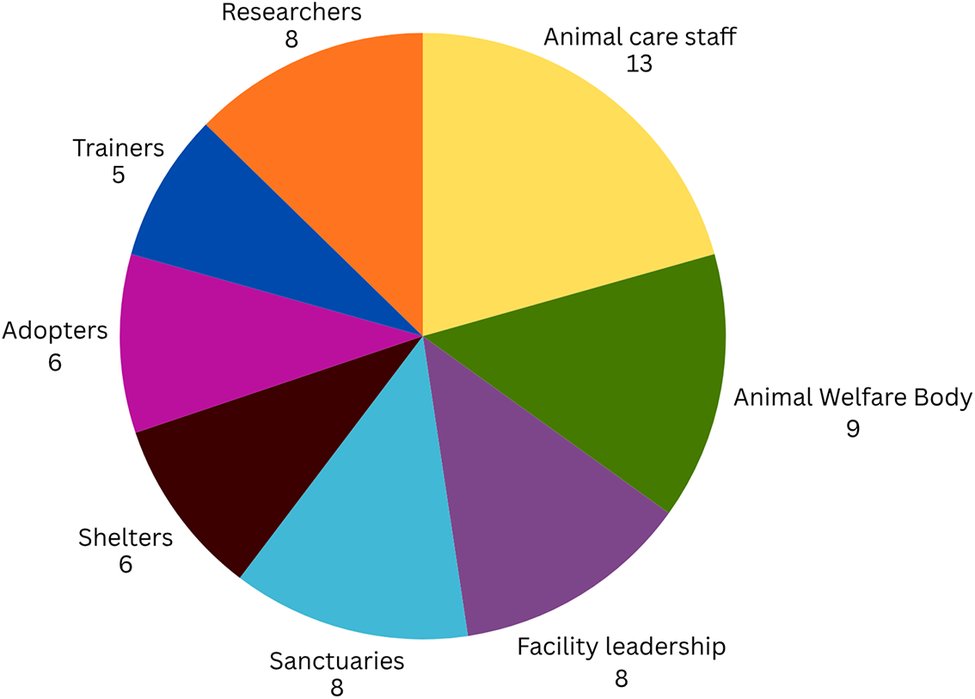
Figure 2. Long description
Pie chart showing stakeholder groups mentioned across the 15 included papers. Papers could mention more than one stakeholder group. Animal care staff were mentioned in 13 papers; Animal Welfare Bodies in 9; researchers, facility leadership and sanctuaries in 8 each; shelters and adopters in 6 each; and trainers in 5.
The included papers also described different types of rehoming, often covering more than one pathway within the same publication. Direct adoption into private homes was addressed in eight papers, while indirect adoption via intermediary organisations was described in five papers. Retirement-based rehoming models were also reported. Sanctuary placement appeared in seven papers, retirement-in-place was described in one paper, and long-term or geriatric care was described in two papers. Included papers also reported the various stakeholders involved in rehoming practices.
Thematic synthesis
This thematic synthesis is organised according to the review’s research questions. It begins by examining how the included papers position rehoming within governance and regulatory frameworks. Then, it summarises the models of rehoming practice described in the literature and the implementation conditions attached to them, including animal selection, preparation, transfer arrangements, and follow-up. Next, it considers reported barriers and facilitators that shape whether and how rehoming can be carried out, followed by species patterns and visibility across the literature, and the animal welfare considerations that shape whether rehoming is presented as appropriate. Finally, it synthesises the ethical justifications and normative framings used in the literature to argue for rehoming as a post-research outcome.
Governance and regulatory positioning of rehoming
Across the papers that address governance instruments in the European Union and the UK, rehoming was described as legally permitted under conditions rather than required, and one paper noted that there is no legal requirement to rehome (Skidmore & Roe Reference Skidmore and Roe2020). By contrast, the Indian legal framework discussed by Pereira framed rehoming, or rehabilitation, as a mandatory responsibility after procedures (Pereira & Tettamanti Reference Pereira and Tettamanti2005). Some normative papers claimed that the permissive status of rehoming is ethically insufficient and argued for stronger institutional responsibility (Carbone et al. Reference Carbone, Guanzini and McDonald2003; Van Loo & Janssens Reference Van Loo and Janssens2023), even where the law remains permissive.
The instruments shaping rehoming, including legal frameworks, professional guidance, and institutional policies were presented across the papers as originating from three levels. First, ten papers framed rehoming through regulatory authorities, for example, EU and national frameworks, UK Home Office materials under the A(SP)A, and the German Animal Welfare Act, that set the conditions under which rehoming may occur (Prescott et al. Reference Prescott, Morton, Anderson, Buckwell, Heath, Hubrecht, Jennings, Robb, Ruane, Swallow and Thompson2004; Döring & Erhard Reference Döring and Erhard2005; Ladwig-Wiegard & Maaß Reference Ladwig-Wiegard and Maaß2018; Hänninen & Norring Reference Hänninen and Norring2020; Skidmore & Roe Reference Skidmore and Roe2020; Ecuer et al. Reference Ecuer, Boxall, Louwerse, Mikkelsen, Moons, Roth and Spiri2023; Moons et al. Reference Moons, Spiri, Boxall, Louwerse, Mikkelsen, Roth and Ecuer2023; Palmer et al. Reference Palmer, Skidmore and Anderson2023; Van Loo & Janssens Reference Van Loo and Janssens2023; Maxwell et al. Reference Maxwell, Hutchinson, Allen, Painter and Hopper2024). Second, two papers developed these permissions into more operational expectations, most clearly through FELASA’s working-group process which developed recommendations in direct response to member-reported needs and difficulties (Ecuer et al. Reference Ecuer, Boxall, Louwerse, Mikkelsen, Moons, Roth and Spiri2023; Moons et al. Reference Moons, Spiri, Boxall, Louwerse, Mikkelsen, Roth and Ecuer2023). Third, four papers showed that rehoming is further governed at the establishment level, through institutional policies or programmes and collaborations with external organisations (Carbone et al. Reference Carbone, Guanzini and McDonald2003; Hänninen & Norring Reference Hänninen and Norring2020; Skidmore & Roe Reference Skidmore and Roe2020; Maxwell et al. Reference Maxwell, Hutchinson, Allen, Painter and Hopper2024).
European papers (Hänninen & Norring Reference Hänninen and Norring2020; Ecuer et al. Reference Ecuer, Boxall, Louwerse, Mikkelsen, Moons, Roth and Spiri2023; Moons et al. Reference Moons, Spiri, Boxall, Louwerse, Mikkelsen, Roth and Ecuer2023; Van Loo & Janssens Reference Van Loo and Janssens2023) frequently positioned rehoming within the framework of Directive 2010/63/EU, which permits rehoming provided that the animal’s state of health allows it, there is no danger to public health, animal health or the environment, and appropriate measures have been taken to safeguard the animal’s well-being. The FELASA guidance (Ecuer et al. Reference Ecuer, Boxall, Louwerse, Mikkelsen, Moons, Roth and Spiri2023), and the survey of FELASA members (Moons et al. Reference Moons, Spiri, Boxall, Louwerse, Mikkelsen, Roth and Ecuer2023), outlined similar procedural components aimed at regulating the conditions under which rehoming may occur. Germany-based papers grounded rehoming in the national legal framework, particularly the Animal Welfare Act and associated Ordinance, emphasising that killing a vertebrate without a “reasonable cause” is a punishable offence and that rehoming is permissible under the conditions consistent with the EU Directive (Döring & Erhard Reference Döring and Erhard2005; Ladwig-Wiegard & Maaß Reference Ladwig-Wiegard and Maaß2018). UK publications addressed rehoming through the A(SP)A and associated Home Office policies, emphasising health, welfare, and risk considerations (Prescott et al. Reference Prescott, Morton, Anderson, Buckwell, Heath, Hubrecht, Jennings, Robb, Ruane, Swallow and Thompson2004; Skidmore & Roe Reference Skidmore and Roe2020; Palmer et al. Reference Palmer, Skidmore and Anderson2023).
None of the included US-based papers identified federal statutes specific to rehoming; instead, they primarily described institutional policies and practices for rehoming rather than a federal framework establishing a duty to rehome, and focused on how institutional guidelines operate in the absence of federal law (Carbone et al. Reference Carbone, Guanzini and McDonald2003; Fleury Reference Fleury2017; Fenton Reference Fenton2020; Maxwell et al. Reference Maxwell, Hutchinson, Allen, Painter and Hopper2024). One paper noted that some US states have enacted laws requiring laboratories to create adoption policies or make reasonable efforts to place cats and dogs where “euthanasia” is not medically indicated (Fenton Reference Fenton2020), which are sometimes referred to as “Beagle laws” (Craig Reference Craig2018). The institutional approaches described ranged from retirement-in-place programmes for non-human primates, in which animals transition out of research while remaining in familiar social and environmental settings (Maxwell et al. Reference Maxwell, Hutchinson, Allen, Painter and Hopper2024), to analyses emphasising the role of sanctuary partnerships and the ethical need for long-term placement options (Fleury Reference Fleury2017).
In contrast to European and US accounts, Pereira and Tettamanti (Reference Pereira and Tettamanti2005) framed rehoming in the Indian context as an explicit post-research responsibility. The authors described “rehabilitation” as a formally recognised component of animal research governance, linked to duties to provide care where feasible, and articulated as a “Fourth R” rather than an extension of Refinement. The paper further situated rehabilitation within the CPCSEA oversight framework and noted that Institutional Animal Ethics Committees (IAECs) are established in registered institutes, thereby positioning rehoming within the formal sphere of activity of institutional ethical review.
Thirteen papers positioned rehoming as an alternative post-research outcome to killing, but one that remained conditional on welfare, health, and feasibility considerations rather than being presented as the default outcome (Carbone et al. Reference Carbone, Guanzini and McDonald2003; Prescott et al. Reference Prescott, Morton, Anderson, Buckwell, Heath, Hubrecht, Jennings, Robb, Ruane, Swallow and Thompson2004; Döring & Erhard Reference Döring and Erhard2005; Pereira & Tettamanti Reference Pereira and Tettamanti2005; Ladwig-Wiegard & Maaß Reference Ladwig-Wiegard and Maaß2018; Fenton Reference Fenton2020; Hänninen & Norring Reference Hänninen and Norring2020; Skidmore & Roe Reference Skidmore and Roe2020; Ecuer et al. Reference Ecuer, Boxall, Louwerse, Mikkelsen, Moons, Roth and Spiri2023; Moons et al. Reference Moons, Spiri, Boxall, Louwerse, Mikkelsen, Roth and Ecuer2023; Palmer et al. Reference Palmer, Skidmore and Anderson2023; Van Loo & Janssens Reference Van Loo and Janssens2023; Maxwell et al. Reference Maxwell, Hutchinson, Allen, Painter and Hopper2024). Two of those papers explicitly retained killing as a contingency where rehoming cannot meet welfare requirements or where placement fails, while also outlining animal selection criteria and procedural steps (i.e. health and behaviour screening, contractual transfers and post-transfer follow-up) as mechanisms intended to reduce negative post-transfer outcomes (Prescott et al. Reference Prescott, Morton, Anderson, Buckwell, Heath, Hubrecht, Jennings, Robb, Ruane, Swallow and Thompson2004; Ecuer et al. Reference Ecuer, Boxall, Louwerse, Mikkelsen, Moons, Roth and Spiri2023).
Two papers showed how rehoming could allow post-research continued use of animals. In the institutional retirement model described by Maxwell et al. (Reference Maxwell, Hutchinson, Allen, Painter and Hopper2024), animals are explicitly excluded from further use in invasive procedures or sale for further research, but they may continue to play companion roles within the resident colony. Skidmore and Roe (Reference Skidmore and Roe2020) highlighted that post-transfer destinations can raise concerns about animals entering the food chain (i.e. to feed mice to pet reptiles or birds of prey) and discussed restricting adoptions to exclude feeding-related outcomes.
Models of rehoming practice and implementation
The reviewed papers described distinct models of rehoming practice, each associated with different implementation approaches, stakeholders, and practical demands (See Figure 3). Two broad models could be identified: adoption-based and retirement-based pathways. These models differ not only in where animals are placed, but also in how responsibilities, preparatory work, and ongoing care are organised.
Rehoming models for animals bred for or used in research reported across the included papers (n = 15). The figure shows the number of papers mentioning each rehoming model: direct adoption into private homes (8); indirect adoption through intermediary organisations (5); sanctuary placement (7); long-term or geriatric care (2); and retirement-in-place within the research establishment (1). Papers could report more than one rehoming model, so counts are not mutually exclusive, and totals exceed the number of included papers. The papers supporting each category are listed in Appendix 4 (see Supplementary material).

Figure 3. Long description
Doughnut chart showing rehoming models reported across the 15 included papers. Papers could report more than one model. Direct adoption was reported in 8 papers, sanctuary placement in 7, indirect adoption in 5, long-term care in 2 and retirement-in-place in 1.
Within the rehoming models, health and behavioural assessments were reported as a prerequisite for rehoming, serving as an initial gate for determining whether animals are considered suitable for placement outside the research environment (Skidmore & Roe Reference Skidmore and Roe2020; Moons et al. Reference Moons, Spiri, Boxall, Louwerse, Mikkelsen, Roth and Ecuer2023). A small number of papers also identified specific decision-makers for rehoming eligibility or case-by-case review, including the designated veterinarian, the Named Veterinary Surgeon, and review structures involving the Animal Welfare Body, Designated Veterinarian, and competent authority (Hänninen & Norring Reference Hänninen and Norring2020; Ecuer et al. Reference Ecuer, Boxall, Louwerse, Mikkelsen, Moons, Roth and Spiri2023; Palmer et al. Reference Palmer, Skidmore and Anderson2023). Preparatory practices were described by Hänninen and Norring (Reference Hänninen and Norring2020) as supporting transition to private homes, including habituation, handling, and socialisation. Written agreements or contracts at the point of adoption were reported in professional guidance and empirical accounts, as a means of formalising rehoming conditions and clarifying expectations between research facilities and adopters (Skidmore & Roe Reference Skidmore and Roe2020; Ecuer et al. Reference Ecuer, Boxall, Louwerse, Mikkelsen, Moons, Roth and Spiri2023).
In three of the papers that reported indirect adoption, the intermediary organisations were described as assuming responsibility for adopter screening, placement logistics, and in some cases contact after transfer, thereby relieving research facilities of substantial administrative and practical burdens associated with rehoming (Carbone et al. Reference Carbone, Guanzini and McDonald2003; Ecuer et al. Reference Ecuer, Boxall, Louwerse, Mikkelsen, Moons, Roth and Spiri2023; Van Loo & Janssens Reference Van Loo and Janssens2023). At the same time, two papers noted that systematic monitoring after transfer can be difficult, often discretionary rather than systematically mandated, with some programmes relying on adopter questionnaires or audits of partner shelters to obtain feedback and check welfare conditions (Skidmore & Roe Reference Skidmore and Roe2020; Ecuer et al. Reference Ecuer, Boxall, Louwerse, Mikkelsen, Moons, Roth and Spiri2023). Protocol elements were described in three papers (Hänninen & Norring Reference Hänninen and Norring2020; Skidmore & Roe Reference Skidmore and Roe2020; Moons et al. Reference Moons, Spiri, Boxall, Louwerse, Mikkelsen, Roth and Ecuer2023) or proposed as recommended components in two expert reports (Prescott et al. Reference Prescott, Morton, Anderson, Buckwell, Heath, Hubrecht, Jennings, Robb, Ruane, Swallow and Thompson2004; Ecuer et al. Reference Ecuer, Boxall, Louwerse, Mikkelsen, Moons, Roth and Spiri2023). However, the included papers did not provide comparative evidence on the effectiveness of different protocol designs across establishments or rehoming programmes.
Across the included papers, animal welfare was addressed mainly through conditions and safeguards for rehoming, rather than through empirical evidence on welfare outcomes after transfer. The reported welfare-relevant elements included health and behavioural suitability, socialisation or preparation for the new environment, adopter or receiving-facility screening, veterinary care, and follow-up after transfer. Direct evidence or structured assessment of post-rehoming welfare was limited. Hänninen and Norring (Reference Hänninen and Norring2020) evaluated one Finnish beagle rehoming process using owner surveys and stakeholder interviews, while Maxwell et al. (Reference Maxwell, Hutchinson, Allen, Painter and Hopper2024) described ongoing quality-of-life assessment in a retirement-in-place programme for non-human primates. Other papers raised welfare concerns about uncertainty after transfer, especially where follow-up becomes voluntary or where institutional control ends after ownership transfer.
These protocol elements recurred as a common sequence: eligibility assessment; adopter screening; formalised transfer (including contracts); and post-transfer contact, even when specific arrangements differ. Beyond eligibility assessment, the extent and form of preparation, coordination with adopters or intermediaries, and post-transfer contact were described as varying between establishments and programmes and were linked in the empirical papers to staff time, costs, and access to partner organisations (Carbone et al. Reference Carbone, Guanzini and McDonald2003; Skidmore & Roe Reference Skidmore and Roe2020; Moons et al. Reference Moons, Spiri, Boxall, Louwerse, Mikkelsen, Roth and Ecuer2023).
Retirement-based rehoming models were discussed mainly in papers focusing on non-human primates. These papers described retirement pathways as prioritising continuity of care, either through retirement-in-place within the institution (Maxwell et al. Reference Maxwell, Hutchinson, Allen, Painter and Hopper2024) or through transfer to dedicated sanctuaries (Morimura et al. Reference Morimura, Idani and Matsuzawa2011; Fleury Reference Fleury2017). One institutional case study described retirement-in-place as allowing animals to cease participation in research while remaining in familiar social and environmental settings, supported by modified husbandry practices and long-term care arrangements provided by the research facility itself (Maxwell et al. Reference Maxwell, Hutchinson, Allen, Painter and Hopper2024).
Reported barriers and facilitators to rehoming
A series of barriers and facilitators were reported to influence whether rehoming is pursued in practice. Empirical studies reported that rehoming requires substantial staff time and coordination, including preparation of animals, communication with adopters or intermediaries, and administrative work, which can be difficult to accommodate alongside routine research and animal care activities (Skidmore & Roe Reference Skidmore and Roe2020; Moons et al. Reference Moons, Spiri, Boxall, Louwerse, Mikkelsen, Roth and Ecuer2023). In the UK survey, respondents described time demands as a primary obstacle, and they also described how preparatory veterinary steps can intensify this workload. Financial constraints were also reported, especially where additional veterinary care, neutering, transport, or extended housing were required prior to rehoming (Hänninen & Norring Reference Hänninen and Norring2020; Skidmore & Roe Reference Skidmore and Roe2020). In the survey of FELASA members, respondents described “rehoming costs” as a barrier, alongside limited support for rehoming, including low management interest and insufficient time and personnel to carry out rehoming (Moons et al. Reference Moons, Spiri, Boxall, Louwerse, Mikkelsen, Roth and Ecuer2023). The authors suggested that a lack of management interest may partly explain the reported shortages of time and personnel, as rehoming may not be prioritised or resourced at institutional level (Moons et al. Reference Moons, Spiri, Boxall, Louwerse, Mikkelsen, Roth and Ecuer2023). However, the UK survey indicated that establishments may value rehoming for demonstrating a positive ethical profile and boosting staff morale (Skidmore & Roe Reference Skidmore and Roe2020). Relatedly, seven papers linked rehoming to institutional commitment, management support or interest, staff morale or well-being, or a broader culture of care/caring, although only two papers explicitly used the language of “culture of care” or “culture of caring” (Carbone et al. Reference Carbone, Guanzini and McDonald2003; Döring & Erhard Reference Döring and Erhard2005; Hänninen & Norring Reference Hänninen and Norring2020; Skidmore & Roe Reference Skidmore and Roe2020; Ecuer et al. Reference Ecuer, Boxall, Louwerse, Mikkelsen, Moons, Roth and Spiri2023; Moons et al. Reference Moons, Spiri, Boxall, Louwerse, Mikkelsen, Roth and Ecuer2023; Maxwell et al. Reference Maxwell, Hutchinson, Allen, Painter and Hopper2024).
Beyond resource constraints, two empirical papers identified institutional concerns about liability, public scrutiny, and reputational risk as important barriers. Facilities reported hesitation to pursue rehoming due to uncertainty about whether animals would remain healthy and settle well after adoption, and how negative outcomes might reflect on the institution (Skidmore & Roe Reference Skidmore and Roe2020; Carbone et al. Reference Carbone, Guanzini and McDonald2003). In addition, difficulties in identifying suitable adopters were also described, particularly for larger animals, animals with special needs, or species less commonly kept as companions (Skidmore & Roe Reference Skidmore and Roe2020; Moons et al. Reference Moons, Spiri, Boxall, Louwerse, Mikkelsen, Roth and Ecuer2023). Contractual restrictions were also identified as a barrier. One expert report noted that supplier or breeder terms may prohibit or condition rehoming, adding legal and administrative work for institutions and rehoming coordinators (Ecuer et al. Reference Ecuer, Boxall, Louwerse, Mikkelsen, Moons, Roth and Spiri2023).
Facilitators were discussed in two main ways across the included papers. Three papers described facilitators primarily as conditions within particular establishments that enable rehoming in practice, and these conditions were not described as consistently available across establishments and programmes. Facilitators discussed in these papers include the presence of dedicated staff time and coordinators with responsibility for rehoming activities, as well as accumulated institutional experience with previous rehoming efforts (Carbone et al. Reference Carbone, Guanzini and McDonald2003; Hänninen & Norring Reference Hänninen and Norring2020; Skidmore & Roe Reference Skidmore and Roe2020). Two papers reported partnerships with shelters, rescue organisations, or sanctuaries as facilitating rehoming, particularly by enabling indirect adoption pathways and reducing the administrative burden on research facilities in adopter-facing processes (Carbone et al. Reference Carbone, Guanzini and McDonald2003; Van Loo & Janssens Reference Van Loo and Janssens2023). Furthermore, two papers explicitly propose incorporating anticipated rehoming costs into the budget when preparing funding applications for research projects (Ecuer et al. Reference Ecuer, Boxall, Louwerse, Mikkelsen, Moons, Roth and Spiri2023; Fleury Reference Fleury2017).
Species patterns and visibility
The included papers discussed rehoming across different species (Figure 5). Overall, species coverage was uneven, which we summarise as limited species-specific guidance in Figure 4. This category refers to uneven coverage in the peer-reviewed literature, not necessarily to the frequency with which different species are rehomed in practice. Dogs were the only species for which rehoming into private homes was discussed in detail across nine papers, supported by concrete pathways such as socialisation, adopter screening, and follow-up (Carbone et al. Reference Carbone, Guanzini and McDonald2003; Prescott et al. Reference Prescott, Morton, Anderson, Buckwell, Heath, Hubrecht, Jennings, Robb, Ruane, Swallow and Thompson2004; Döring & Erhard Reference Döring and Erhard2005; Ladwig-Wiegard & Maaß Reference Ladwig-Wiegard and Maaß2018; Hänninen & Norring Reference Hänninen and Norring2020; Skidmore & Roe Reference Skidmore and Roe2020; Ecuer et al. Reference Ecuer, Boxall, Louwerse, Mikkelsen, Moons, Roth and Spiri2023; Moons et al. Reference Moons, Spiri, Boxall, Louwerse, Mikkelsen, Roth and Ecuer2023; Palmer et al. Reference Palmer, Skidmore and Anderson2023). These papers framed dog rehoming as a realistic extension of animal care responsibilities and, implicitly, as compatible with adoption to private homes. Cats were mentioned in five papers and were included within similar adoption-oriented frameworks in survey and guidance literature (Carbone et al. Reference Carbone, Guanzini and McDonald2003; Ladwig-Wiegard & Maaß Reference Ladwig-Wiegard and Maaß2018; Skidmore & Roe Reference Skidmore and Roe2020; Ecuer et al. Reference Ecuer, Boxall, Louwerse, Mikkelsen, Moons, Roth and Spiri2023; Moons et al. Reference Moons, Spiri, Boxall, Louwerse, Mikkelsen, Roth and Ecuer2023). However, the survey of FELASA member institutions also indicated that rehoming is pursued for a wider range of species beyond companion animals, including birds, fish, and amphibians (Moons et al. Reference Moons, Spiri, Boxall, Louwerse, Mikkelsen, Roth and Ecuer2023).
Barriers and facilitators to rehoming animals bred for or used in research reported across the included papers (n = 15). Barriers were grouped as limited species-specific guidance (9), infrastructure constraints (8), funding limitations (7), liability or public perception concerns (6), and scarcity of adopters (5). Limited species-specific guidance refers to uneven or limited discussion of species-specific rehoming pathways, especially for animals less commonly framed as companion animals. Facilitators were grouped as dedicated staff (8), external partnerships (7), clear internal policy (5), and experienced adopters (2). Papers could report more than one barrier or facilitator, so counts are not mutually exclusive and totals exceed the number of included papers. The papers supporting each category are listed in Appendix 4 (Supplementary material).

Figure 4. Long description
The image consists of two side-by-side bar charts.
The left chart is titled Barriers and features purple bars. The Y-axis ranges from 0 to 10. The categories from highest to lowest frequency are:
* Limited species-specific guidance at 9.
* Infrastructure constraints at 8.
* Funding limitations at 7.
* Liability or public perception at 6.
* Scarcity of adopters at 5.
The right chart is titled Facilitators and features yellow bars. The Y-axis ranges from 0 to 8. The categories from highest to lowest frequency are:
* Dedicated staff at 8.
* External partnerships at 7.
* Clear internal policy at 5.
* Experienced adopters at 2.
Species discussed in relation to rehoming animals bred for or used in research across the included papers (n = 15). The figure shows the number of papers discussing each species category: dogs (9); cats (5); rodents, including mice and rats (5); non-human primates (3); and other species, including birds, fish and amphibians (1). Papers could discuss more than one species category, so counts are not mutually exclusive and totals exceed the number of included papers. The papers supporting each category are listed in Appendix 4 (Supplementary material).

Figure 5. Long description
Pie chart showing species categories discussed in relation to rehoming across the 15 included papers. Papers could discuss more than one species category. Dogs were discussed in 9 papers; cats and rodents in 5 each; non-human primates in 3; and other species—birds, fish and amphibians—in 1.
Although rodents were discussed in multiple papers as rehoming candidates (Döring & Erhard Reference Döring and Erhard2005; Skidmore & Roe Reference Skidmore and Roe2020; Ecuer et al. Reference Ecuer, Boxall, Louwerse, Mikkelsen, Moons, Roth and Spiri2023; Moons et al. Reference Moons, Spiri, Boxall, Louwerse, Mikkelsen, Roth and Ecuer2023; Van Loo & Janssens Reference Van Loo and Janssens2023), Skidmore and Roe explicitly noted that they were rarely prioritised for rehoming and, when rehomed, were most often placed informally with staff rather than through structured programmes (Skidmore & Roe Reference Skidmore and Roe2020). Non-human primates were addressed in a separate and qualitatively different way. Two of the three papers focusing on primates did not describe private adoption and instead focused on lifelong institutional care or sanctuary-based retirement as the primary post-research options, justified by their cognitive complexity and welfare needs (Fleury Reference Fleury2017; Maxwell et al. Reference Maxwell, Hutchinson, Allen, Painter and Hopper2024).
Ethical justifications and normative framings
Across the papers, ethical arguments were expressed to justify rehoming (see Figure 6). Twelve papers took what can be defined as a welfarist approach, justifying rehoming by its potential to benefit animal welfare (Carbone et al. Reference Carbone, Guanzini and McDonald2003; Prescott et al. Reference Prescott, Morton, Anderson, Buckwell, Heath, Hubrecht, Jennings, Robb, Ruane, Swallow and Thompson2004; Morimura et al. Reference Morimura, Idani and Matsuzawa2011; Fleury Reference Fleury2017; Ladwig-Wiegard & Maaß Reference Ladwig-Wiegard and Maaß2018; Hänninen & Norring Reference Hänninen and Norring2020; Skidmore & Roe Reference Skidmore and Roe2020; Ecuer et al. Reference Ecuer, Boxall, Louwerse, Mikkelsen, Moons, Roth and Spiri2023; Moons et al. Reference Moons, Spiri, Boxall, Louwerse, Mikkelsen, Roth and Ecuer2023; Palmer et al. Reference Palmer, Skidmore and Anderson2023; Van Loo & Janssens Reference Van Loo and Janssens2023; Maxwell et al. Reference Maxwell, Hutchinson, Allen, Painter and Hopper2024). Four of those additionally framed rehoming as an extension of Refinement (one of the 3Rs principles aiming to minimise harm to animals and improve their welfare), arguing that welfare commitments do not end with the conclusion of experimental procedures and that structured preparation, socialisation, and matching with suitable adopters form part of good scientific and ethical practice (Carbone et al. Reference Carbone, Guanzini and McDonald2003; Prescott et al. Reference Prescott, Morton, Anderson, Buckwell, Heath, Hubrecht, Jennings, Robb, Ruane, Swallow and Thompson2004; Skidmore & Roe Reference Skidmore and Roe2020; Van Loo & Janssens Reference Van Loo and Janssens2023). One paper additionally grounded post-research rehabilitation in the Indian principle of “Ahimsa” (non-violence and the sacredness of life), presenting rehoming as part of a proposed “fourth R” that extends researchers’ moral responsibility to animals beyond experimentation (Pereira & Tettamanti Reference Pereira and Tettamanti2005). Three other papers raised questions about whether rehoming would allow welfare to be safeguarded after transfer and, in some accounts, whether it could offer a life “worth living” (Skidmore & Roe Reference Skidmore and Roe2020; Ecuer et al. Reference Ecuer, Boxall, Louwerse, Mikkelsen, Moons, Roth and Spiri2023; Van Loo & Janssens Reference Van Loo and Janssens2023). Four papers questioned why rehoming is often concentrated on companion animals, arguing that healthy animals of other species, especially rodents (which account for the largest numbers of animals used in research), should also be considered for rehoming when appropriate conditions exist (Döring & Erhard Reference Döring and Erhard2005; Skidmore & Roe Reference Skidmore and Roe2020; Palmer et al. Reference Palmer, Skidmore and Anderson2023; Van Loo & Janssens Reference Van Loo and Janssens2023). On similar lines, four papers framed rehoming in terms of justice or reciprocity, presenting it as a way to “give back” or to recognise a “debt” to animals whose lives were used for human benefit, including the idea that they “deserve” retirement or have “done their bit” (Fleury Reference Fleury2017; Fenton Reference Fenton2020; Palmer et al. Reference Palmer, Skidmore and Anderson2023; Van Loo & Janssens Reference Van Loo and Janssens2023).
Ethical framings used to justify rehoming animals bred for or used in research across the included papers (n = 15). The figure shows the number of papers using each ethical framing: welfare (12); Refinement within the Replacement, Reduction and Refinement (3Rs) framework (4); justice or reciprocity (4); responsibility or continuity of care (4); species hierarchies or species discrimination (4); life worth living (3); and Ahimsa, understood as non-violence and the sacredness of life (1). Papers could use more than one ethical framing, so counts are not mutually exclusive and totals exceed the number of included papers. The papers supporting each category are listed in Appendix 4 (see Supplementary material).

Figure 6. Long description
Doughnut chart showing ethical framings used to justify rehoming across the 15 included papers. Papers could use more than one framing. Welfare was used in 12 papers. Refinement within the Replacement, Reduction and Refinement framework, justice or reciprocity, responsibility or continuity of care, and species hierarchies or discrimination were each used in 4 papers. Life worth living was used in 3 papers, and Ahimsa—non-violence and the sacredness of life—in 1.
Further ethical arguments focused on responsibility and continuity of care (Pereira & Tettamanti Reference Pereira and Tettamanti2005; Morimura et al. Reference Morimura, Idani and Matsuzawa2011; Fleury Reference Fleury2017; Maxwell et al. Reference Maxwell, Hutchinson, Allen, Painter and Hopper2024). The three papers primarily addressing non-human primates emphasised that the responsibility of research institutions and facilities that keep and use animals extends beyond the completion of scientific use and includes obligations related to long-term welfare, social needs, and appropriate living conditions after research (Morimura et al. Reference Morimura, Idani and Matsuzawa2011; Fleury Reference Fleury2017; Maxwell et al. Reference Maxwell, Hutchinson, Allen, Painter and Hopper2024). In this context, Maxwell et al. (Reference Maxwell, Hutchinson, Allen, Painter and Hopper2024) explicitly described “continuity of care” as preserving stability across the transition out of research, including familiar social and environmental settings and continued support after retirement, while also describing a quality-of-life process in which predefined clinical or behavioural changes could trigger discussions of “euthanasia,” with the final decision resting with the faculty veterinarian. The papers focusing on non-human primates highlighted the need to account for cognitive, social, and behavioural needs over long lifespans and to consider how prior laboratory housing and research histories can shape animals’ adjustment and longer-term care needs after transfer to retirement or sanctuary settings (Morimura et al. Reference Morimura, Idani and Matsuzawa2011; Fleury Reference Fleury2017; Maxwell et al. Reference Maxwell, Hutchinson, Allen, Painter and Hopper2024). Maxwell et al. (Reference Maxwell, Hutchinson, Allen, Painter and Hopper2024) also explicitly noted that non-human primates are generally not eligible for adoption to private homes and therefore require specialised long-term care placements.
Discussion
In this review, we identified several limitations and areas of variation in how rehoming is governed and implemented in the peer-reviewed literature. One recurring feature across twelve papers is that rehoming is described as conditional and legally permissible rather than a required post-research outcome. An area of variation is institutional infrastructure, indicated by the lack of appropriate rehoming protocols or contracts in establishments reported by the FELASA survey (Moons et al. Reference Moons, Spiri, Boxall, Louwerse, Mikkelsen, Roth and Ecuer2023). The FELASA recommendations were developed to address this lack by proposing a general protocol and template agreement (Ecuer et al. Reference Ecuer, Boxall, Louwerse, Mikkelsen, Moons, Roth and Spiri2023). One of the limitations we found relates to post-transfer responsibility, since one expert report noted that once ownership is legally transferred, follow-up and intervention opportunities are limited, making post-transfer monitoring difficult to secure in practice (Ecuer et al. Reference Ecuer, Boxall, Louwerse, Mikkelsen, Moons, Roth and Spiri2023). Finally, two papers reported that legal or biosecurity restrictions can exclude some categories of animals from rehoming, including genetically altered animals, and noted limited guidance on how such animals should be managed as post-research outcomes (Skidmore & Roe Reference Skidmore and Roe2020; Ecuer et al. Reference Ecuer, Boxall, Louwerse, Mikkelsen, Moons, Roth and Spiri2023).
Across the literature, rehoming was mostly legally positioned as a conditional and legally permissive option rather than a required post-research outcome, meaning that healthy animals may be rehomed under defined conditions but are not guaranteed a post-research pathway. Building on this central finding, the discussion addresses three linked issues: First, it examines how rehoming is positioned within animal research oversight and the consequences of its permissive legal framing for accountability and consistency in post-research outcomes. Second, it considers how responsibility for rehoming is distributed across stakeholders and constrained by resource dependencies. Third, it discusses the ethical framings that underpin rehoming decisions, highlighting the plurality of ethical approaches and the strong presence of welfare-based reasoning, as well as the role of species differentiation in shaping ethical concern.
Rehoming as a permissive governance practice
In several European jurisdictions, rehoming is situated within broader animal research legislation and professional guidance, where it is permitted under defined conditions related to animal health, behaviour, and risk, but not framed as an obligation. However, since the killing of healthy animals remains a legally available end-of-use option in many European jurisdictions, with differing national justification thresholds, it may remain a common endpoint once animals are no longer needed for scientific use (AniPO 2008; Directive 2010/63/EU 2010). Persson et al. (Reference Persson, Rodriguez Perez, Louis-Maerten, Müller and Shaw2025) argued that animal research regulation tends to neglect the idea that death can itself constitute a harm, and they call for applying the 3Rs to the broader context of experimentation, including the fate of animals after the experiment. Furthermore, the current permissive status of rehoming can also sit uneasily with domestic standards, such as the German, that prohibit killing a vertebrate without a “reasonable cause,” (German Animal Welfare Act 2006). If rehoming is expected to replace killing as the default end-of-use option where feasible, it requires dedicated capacity and accountability; otherwise, it remains dependent on local initiative.
The permissive status of rehoming contrasts with the well-established 3Rs framework. The 3Rs principles are embedded as a legal requirement in animal research governance in major regulatory frameworks and are expected to be implemented systematically within the design and conduct of research projects, and their implementation is evaluated during the licensing process (Grimm et al. Reference Grimm, Biller-Andorno, Buch, Dahlhoff, Davies, Cederroth, Maissen, Lukas, Passini, Törnqvist, Olsson and Sandström2023). Rehoming generally lacks the legal weight the 3Rs have to promote its consistent implementation. However, the Indian case (Pereira & Tettamanti Reference Pereira and Tettamanti2005) illustrates how post-research responsibility can be formally recognised within governance frameworks. Rehoming or rehabilitation does not need to be confined to permissive regulations and conditional guidance. It can also be embedded in regulatory framings as a defined responsibility and be adopted as a 4th R with the legal weight the 3Rs framework may provide. Animal welfare scholar John Webster contrasts legal approaches that focus on avoiding “unnecessary suffering” with “duty of care” approaches that also require an ongoing responsibility to promote welfare. This supports the notion that post-research responsibilities should be framed as ongoing obligations, not just optional good practice (Webster Reference Webster2014).
Webster argues that potential harms may arise not only from the procedures performed, but also from the quality of animals’ lifetime experience. In this sense, the positioning of rehoming in the retrieved literature raises broader questions about the temporal scope of responsibility of research institutions and licensing authorities, and whether protection ends with the authorised procedure or extends across the animal’s life (Webster Reference Webster2014).
Facilitators addressing reported barriers
Across the reviewed papers, a reported practical constraint was that rehoming is labour-intensive. Preparation of animals, communication with adopters or intermediaries, and the administrative steps needed to complete a transfer compete directly with routine animal care and research workloads. The facilitators identified in the reviewed papers responded to this constraint in a relatively concrete way: rehoming becomes more feasible when it is treated as planned institutional work, with designated responsibility and protected capacity. In that sense, dedicated staff time, a named coordinator, and accumulated experience function as mechanisms that address the costs and burdens of rehoming. Partnerships with external organisations were also framed as time-saving pathways because they can shift parts of adopter-facing coordination away from research facilities and make the process more workable within the constraints of daily institutional operation. This “adopter-facing” workload is well illustrated in Protopopova et al.’s (Reference Protopopova, Mehrkam, Boggess and Wynne2014) research on shelter dogs. In Protopopova’s work, the animals are showcased by staff and volunteers through multiple channels (including websites and national online databases), where independent rescue organisations may select animals to place into their own programmes, thereby alleviating much of the coordination effort that would otherwise sit with the main organisation. In the FELASA-linked papers, the survey also indicated that some establishments lacked rehoming protocols or written agreements, and the FELASA recommendations responded by proposing a general protocol and template agreement as practical tools to clarify transfer conditions and support more standardised implementation.
A second cluster of barriers concerns the practical costs of preparing animals for adoption, including the veterinary care, behavioural assessment and the risk that treating these preparatory steps as unfunded extra work may undermine rehoming efforts. Rehoming is easier to implement when its costs are planned and budgeted for in advance, as described in the PREPARE guidelines for planning animal research and testing (Smith et al. Reference Smith, Clutton, Lilley, Hansen and Brattelid2018). When papers recommend incorporating anticipated rehoming costs into funding applications, the underlying argument is that rehoming is an ethically desirable endpoint only if the resources needed for health checks, neutering, transport, and temporary housing are planned for. This may also be supported by partnerships with external organisations, for example when they take on parts of the placement process or provide infrastructure that reduces the need for prolonged housing while animals await transfer.
Finally, the difficulty in identifying suitable adopters, particularly for animals with special needs or for species less commonly kept as companions, is treated as a barrier that is not easily solved by internal effort alone. In the literature, the proposed facilitator is the creation of indirect adoption pathways through shelters, rescue organisations, or sanctuaries. This shifts rehoming from a one-off placement problem to a networked placement process where external organisations can match animals to homes using their existing expertise, channels, and credibility with adopters. The Protopopova et al. (Reference Protopopova, Mehrkam, Boggess and Wynne2014) research illustrates how shelters respond when some animals are harder to place: animals perceived as “hard-to-adopt” are identified, and adoption incentives such as reduced fees are adjusted (Protopopova et al. Reference Protopopova, Mehrkam, Boggess and Wynne2014). Framed this way, partnerships are depicted as the bridge between institutional willingness to rehome and the real-world availability of appropriate placement options.
The facilitator pattern identified here can also be interpreted through the culture-of-care literature. Ferrara et al. (Reference Ferrara, Hiebl, Kunzmann, Hutter, Afkham, LaFollette and Gruber2022) argue that a culture of care extends the 3Rs by bringing staff well-being, human-animal relationships, and institutional responsibility into laboratory animal governance. Read in that light, rehoming becomes more sustainable when post-research care is built into ordinary institutional planning, resourcing, partnerships, and follow-up, rather than left to motivated individuals working around existing constraints.
Ethical framings of rehoming
Across the reviewed literature, rehoming was justified through multiple ethical lenses, but the most frequent justification remained animal welfare (see Figure 6). Other framings were also reported, including Refinement, responsibility or continuity of care, justice or reciprocity, “life worth living”, and species-based considerations, but these appeared less often. Rehoming is often presented as ethically preferable to the killing of healthy animals once they are no longer required for scientific use, but this preference is conditional, not absolute. The included papers linked the welfare value of rehoming to expected quality of life, suitability assessment, preparation, and the conditions of the receiving environment (Hänninen & Norring Reference Hänninen and Norring2020; Skidmore & Roe Reference Skidmore and Roe2020; Palmer et al. Reference Palmer, Skidmore and Anderson2023).
This logic can be linked to the quality-of-life and positive welfare frameworks discussed by Mellor (Reference Mellor2016) and by Lawrence et al. (Reference Lawrence, Vigors and Sandøe2019) which evaluate welfare in terms of expected quality of life and the balance of positive and negative experiences. In this sense, the prominence of welfare reasoning in debates about rehoming is not surprising, as it relies on an established way of evaluating post-use options in terms of animals’ quality of life, rather than focusing only on harm avoidance or procedural compliance (Webster Reference Webster2016). This pattern also aligns with the dominant legal framing in animal protection, which has been focused on promoting welfare and preventing pain, suffering, distress, and other harms, even as some instruments increasingly reference animals’ intrinsic value and dignity as reasons to require respect for animals beyond welfare considerations (AniWA 2005; German Animal Welfare Act 2006; Directive 2010/63/EU 2010).
Our findings point to a contrast between rehoming models in how responsibility is allocated after animals leave research settings. In adoption-based rehoming, once the animal is transferred, the adopter or intermediary is often treated as the main bearer of ongoing responsibility, while in retirement-based models for non-human primates, ongoing responsibility is with the research institution. McLeod and Hartley’s (Reference McLeod and Hartley2018) distinction between role responsibilities and broader general responsibilities helps clarify why responsibility can remain unclear after transfer, because they distinguish between responsibilities attached to a professional role within knowledge production and broader responsibilities that extend beyond it. After transfer, role-based duties for research actors may appear complete, while broader responsibility for the animal’s post-transfer welfare may still be relevant but not clearly assigned, since governance frameworks often specify duties for actors within the research process while leaving wider responsibilities less clearly allocated (McLeod & Hartley Reference McLeod and Hartley2018). Although some papers identified who decides whether rehoming proceeds, this does not resolve who remains responsible for the animal’s welfare after transfer, especially in adoption-based models. These findings support the need for clearer guidance for adoption-based rehoming on who remains responsible after transfer. It also raises the question of whether elements of retirement-based models, including institution-led lifelong care and sanctuary placement, could be adapted beyond non-human primates for animals that are not suitable for private adoption.
An ethical tension found in the literature is how species are treated differently within rehoming discourse. Different rehoming pathways are described across species, and these differences often track practical questions of placement feasibility and available infrastructures. For example, private adoption is discussed most often for species already kept as companions, especially dogs (Carbone et al. Reference Carbone, Guanzini and McDonald2003; Prescott et al. Reference Prescott, Morton, Anderson, Buckwell, Heath, Hubrecht, Jennings, Robb, Ruane, Swallow and Thompson2004; Hänninen & Norring Reference Hänninen and Norring2020; Skidmore & Roe Reference Skidmore and Roe2020), whereas non-human primates are more often linked to sanctuary placement or institution-led retirement models (Morimura et al. Reference Morimura, Idani and Matsuzawa2011; Fleury Reference Fleury2017; Maxwell et al. Reference Maxwell, Hutchinson, Allen, Painter and Hopper2024). These patterns also raise a speciesism concern, because differential treatment can follow social valuation and “pet status” even when the stated justification is welfare (Singer Reference Singer1975).
The primate-focused papers in the reviewed set emphasise that non-human primates require particular attention because suitable post-research placement must provide stable conditions that respect long-term social, cognitive, and relational needs across a long lifespan, and this often points to sanctuary placement or institution-led retirement models rather than private adoption (Morimura et al. Reference Morimura, Idani and Matsuzawa2011; Fleury Reference Fleury2017; Maxwell et al. Reference Maxwell, Hutchinson, Allen, Painter and Hopper2024). This is a species-specific framing, because it is articulated most clearly for non-human primates, while similar long-term duties are less explicit for other species in the reviewed set. Singer’s (Reference Singer1975) critique of speciesism is relevant here because it rejects differences based on social valuation alone, while also allowing that differences in capacities can matter morally. In other words, species differences in rehoming should be based on welfare needs and capacities, not on social value or pet status.
Where some species face reduced probabilities for rehoming, institutions should make the justification explicit and consider developing appropriate options for different species beyond private adoption where needed (Kymlicka & Donaldson Reference Kymlicka and Donaldson2014). This is particularly important where legal or biosecurity restrictions exclude specific categories of animals from rehoming, meaning that alternative post-research outcomes require explicit justification and planning rather than being treated as a default.
Study limitations
This review was limited to peer-reviewed papers. Conference abstracts, letters to the editor, dissertations, books, book chapters, and grey literature were outside the scope of the review. As a result, the findings provide a synthesis of published academic evidence, but they do not capture all current rehoming practices. Some rehoming programmes, institutional protocols, practitioner experiences, and species-specific practices may be documented internally, in conference materials, or through practitioner networks. This is particularly relevant for interpreting the species patterns reported in this review. Uneven coverage in the peer-reviewed literature should not be read as evidence that the same species patterns necessarily occur in practice, and the findings may not fully reflect the current reality of rehoming across institutions. The small number of empirical papers in this area means that the review cannot provide a comprehensive overview of current rehoming guidelines, recommendations, and practices across countries. This constrains what can be concluded about implementation beyond the settings reported in the included papers.
Animal welfare implications
In the reviewed literature, the welfare relevance of rehoming was linked to whether animals could reasonably be expected to have a good quality of life after research. Although it may prevent the killing of healthy animals, continued life alone does not make rehoming welfare-positive in every case. The welfare case was therefore presented as depending on individual suitability, preparation, the receiving environment, veterinary oversight, and follow-up. Figure 6 shows that welfare was the most frequently identified ethical framing, while other ethical framings also justify rehoming across the reviewed literature. In this sense, rehoming functions as a welfare-oriented extension of post-procedural responsibility, and it could be framed in terms of the 3Rs as an extension of Refinement or as a 4th R: Rehabilitation.
At the same time, the welfare case for rehoming is conditional on implementation. Transition out of the facility involves risks that can undermine welfare if animals are poorly prepared for the new environment or if placement decisions rely on limited information about health, behaviour, and longer-term needs. Hence, the need for guidance and protocols such as the one provided by FELASA recommendations on rehoming (Ecuer et al. Reference Ecuer, Boxall, Louwerse, Mikkelsen, Moons, Roth and Spiri2023). In adoption-based models, institutional control, follow-up and intervention can become difficult to secure after legal transfer ends. In this case, welfare gains are not guaranteed and depend on how suitability assessment, preparation, transfer arrangements, and post-transfer support are organised. Retirement programmes, on the other hand, have the potential to ensure welfare through continuity of care involving specialised care personnel and veterinary oversight. The retirement-in-place model may avoid relocation and preserve continuity of care, but in this review, it was reported only for non-human primates.
The current discretionary governance of rehoming may limit welfare protections and may contribute to inconsistent outcomes. If rehoming depends on local initiative and uneven capacity, welfare outcomes after scientific use may remain variable and, for some species, constrained by limited placement opportunities.
Conclusion
This review shows that in the literature on policies and guidelines, rehoming is usually framed in terms of recommendations rather than enforceable duties. Responsibility for animals after research therefore largely falls on each establishment. This non-mandatory framework leaves institutions a wide scope to decide whether rehoming is pursued and, if so, under what conditions, which may contribute to variable implementation across and even within settings depending on species, cost, accessible networks of adopters, disagreement about what constitutes an acceptable quality of life versus unnecessary suffering etc. Relatedly, accountability is not always clearly specified. In the absence of binding obligations or defined oversight expectations, animal welfare officers, veterinarians, and facility staff often carry the practical and moral work of translating broad ethical aspirations into decisions that are feasible within local constraints.
In practice, rehoming is shaped by staffing capacity, funding, infrastructure, and liability or reputational concerns. Under these conditions, animal-centred outcomes may be difficult to prioritise consistently. This scoping review also highlights that some animals may remain ineligible for rehoming due to legal or biosecurity restrictions, which strengthens the need for transparent endpoint decisions and documented justifications when rehoming is not pursued. Finally, the included papers also provide only scattered information on changes in policies or guidance over time, aside from isolated references to legal amendments. As a result, this review offers a cross-sectional picture of the peer-reviewed literature and does not provide a detailed account of how rehoming governance has developed historically.
Recommendations
Our review suggests that clearer responsibility allocation may improve consistency in rehoming practice. However, a legal mandate without financial and administrative resources may increase the burden placed on staff members who already navigate rehoming with limited institutional or regulatory support. If rehoming is legally mandated, a reasonable transition period should be allowed while funding opportunities are created and a support network is built. Recent initiatives such as FELASA’s Rehoming: Sharing-Information Platform, which enables establishments to share information on rehoming processes, illustrate how such support networks could develop in practice (FELASA 2026). Whether or not responsibility allocation is addressed in law, rehoming efforts should receive meaningful incentives from research institutions that benefit scientifically and institutionally from animal research, and from the government that allows it.
Although some included papers develop a continuity of care argument, most explicitly for non-human primates, the ethical question is whether post-research responsibility should be species-specific. Whether the animals are rodents, fish, or primates, animals bred for and used in research contribute to scientific knowledge and to improvements in human, non-human animal, and environmental health. Therefore, the animal research community should offer them the possibility to live until the end under its care (Sellars & Sebo Reference Sellars and Sebo2024). However, it is often argued that providing lifetime care for all such animals is logistically and economically unfeasible and may hinder scientific progress. Therefore, we invite reflection on how post-research responsibility might be implemented in practice, building on identified facilitators such as dedicated funding streams within research projects. This is especially clear in adoption-based models, which depend on finding enough private homes. Adoption-based models also require clear procedures for adopter screening and for case-by-case assessment of whether rehoming is appropriate for individual animals in light of expected quality of life and the risk of suffering. When it comes to adoption-based rehoming, another challenge is the lack of adopters.
One possible way to respond to this challenge is to explore post-research care options that do not rely only on private adoption, such as sanctuary-type arrangements linked to facilities for the species most used in research like rodents and fish. For regulators, committees on animal experiments, and research institutions, these findings support placing rehoming more explicitly within existing oversight frameworks for animal research. To achieve consistent, transparent, and equitable implementation, rehoming should not be treated as an optional extension of good practice. It should be treated as part of governance, meaning that post-research pathways are planned, assessed, and documented. Where project applications already require information on the intended fate of animals, rehoming feasibility and alternative post-research pathways should be addressed explicitly within the existing endpoint planning and harm-benefit reasoning. Licensing authorities and institutional oversight bodies could then evaluate whether the proposed post-research pathway is feasible, sufficiently justified, and compatible with the animal’s expected welfare.
Supplementary material
The supplementary material for this article can be found at http://doi.org/10.1017/awf.2026.10109.
Acknowledgements
We thank the Basel Animal Ethics Reunions (BAER) at the University of Basel group for discussion and feedback that helped shape the manuscript. We also thank Hannah Ewald (University Medical Library, University of Basel) for support in developing the search strategy. We are grateful to the leadership and animal care personnel at the animal facility at the University of Basel for their time and feedback on preliminary results. This work was supported by the Swiss National Science Foundation (SNSF) within the National Research Programme NRP79 “Advancing 3R.” It was conducted at the Institute for Biomedical Ethics of the University of Basel within the following projects:
1) 3R-STrategies and Harm-benefIt analysis: uNderstanding decision-maKing and improving consistency and accountability in animal experiment evaluations in Switzerland [THINK-3R], grant number: 206458, and
2) Implementing 3Rs in Switzerland: an interdisciplinary in-depth exploration of barriers and facilitators [Implement-3R], grant number: 206432.
The views expressed in this publication are those of the authors and do not necessarily reflect the views of the SNSF.
The funder had no role in the design of the study; collection, analysis, or interpretation of data; writing of the manuscript; or the decision to submit the article for publication.
Competing interests
None.



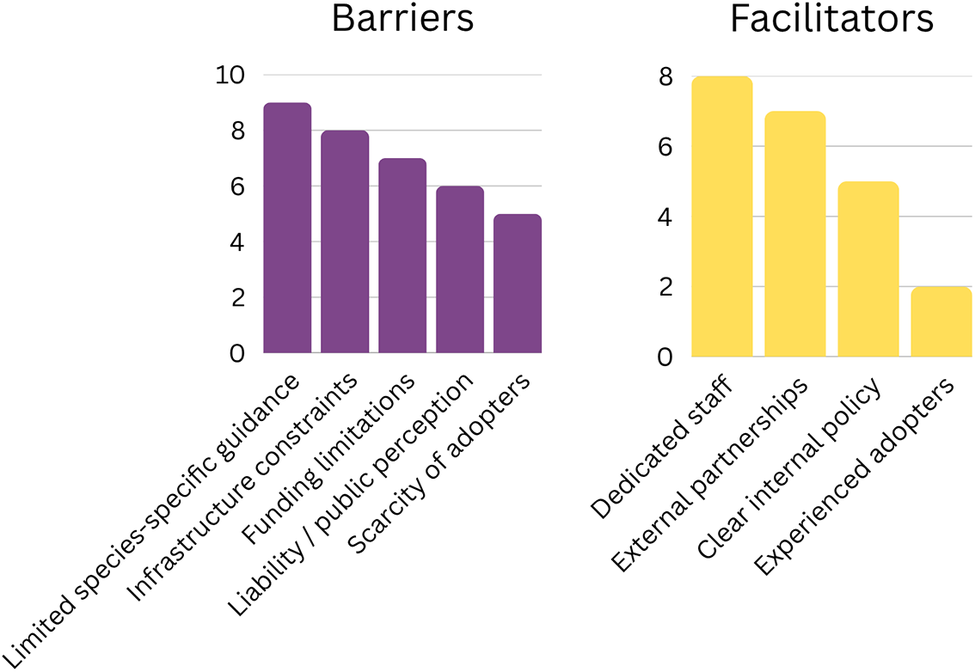


 Open access

