Introduction
Man-made and natural disasters disrupt the functioning of society and cause widespread losses that exceed the ability of the affected community or society to cope using its own resources.1
Disasters occurring in low- and middle-income countries can prove challenging due to the fact that the local capacity to address public-health-related issues (eg, shelter, water and sanitation, food, security, and health care) is often insufficient and quickly overwhelmed. The burden of disease following disasters varies depending on the type of disaster and the context within the country where the disaster occurs. This health care burden will include not only new conditions, but also the baseline health care needs of the population.
Earthquakes are the most common natural disaster requiring the delivery of trauma care. Limb trauma is the most common injury seen in survivors of earthquakes.Reference Gosselin2 – Reference Doocy, Jacquet, Cherewick and Kirsch4 No health system, no matter how well-resourced, is immune from the potential need to fall back on basic surgical principles in order to deal with a sudden influx of a massive number of injured patients. Timely management, adequate debridement, and delayed primary closure are essential components in reducing the added burden of infection following injury. When a significant earthquake occurs in a resource-scarce setting, the international community is often asked to assist in order to provide medical relief, and surgical care represents a crucial component of this response.Reference Peranteau, Havens, Harrington and Gates5
Historically, the spectrum of foreign medical teams (FMTs) has varied from well-organized government first response teams and experienced non-governmental organizations (NGOs) to solitary, unsolicited volunteers. The response to the 2010 earthquake in Haiti raised troubling questions regarding who should be involved in a disaster response: issues regarding coordination, communication, and competencies in the initial management of the wounded triggered a process of critical assessment of the performance of FMTs.Reference Sonshine, Caldwell and Gosselin6 , Reference Noguchi, Inoue and Shimanoe7
It has become clear that disaster relief needs to transition from good intentions, or a charity-based approach, to a professional, outcome-oriented response. Essentially, it is no longer sufficient for responders to simply “do good,” it is imperative that they be well-trained and prepared to “do the right thing.” The practice of medicine in disaster and conflict is a profession practiced in environments where a lack of resources, chaos, and unpredictability are the norm rather than the exception. With this consideration in mind, the World Health Organization (WHO; Geneva, Switzerland) and its partners set out to improve how the world responds to future disasters. Classifications for FMTs that defined minimum standards for FMTs deploying to disaster zones were published in 2013.Reference Norton, Von Schreeb and Aitken8 Due to the fact that a swift, effective response requires not only teams from high-income countries, but also regional teams and coordination with the health system of the affected country, the FMT title was later broadened to Emergency Medical Teams (EMTs). This new nomenclature incorporates both national and international providers. The change acknowledges that many countries at the highest risk of sudden-onset disasters, such as Southeast Asia and Latin America, are now middle-income countries with expanding emergency response capacities, national response teams, and robust health care systems. These teams, while crucial to the effective response, are often based at moderately well-resourced hospitals and must be trained to provide clinical care within the context of disaster or conflict. The EMT Secretariat is, in addition to coordinating EMTs in on-going disasters, continuously working to update standards for optimal care in resource-scarce settings. To ensure that these standards are upheld, EMTs must now register and declare their team’s capacity to provide care in compliance with the standards in order to be verified by the WHO. Governments of affected nations will likely only allow verified EMTs to enter the country and provide care in the future. This represents a shift in the response paradigm for sudden-onset disasters. It is no longer possible to board a plane with a case of surgical materials and expect to be allowed to participate in a disaster or conflict response.
The International Committee of the Red Cross (ICRC; Geneva, Switzerland) is renowned for its long commitment to the provision of surgical care in conflicts and disasters. The ICRC War Surgery books summarize the ICRC experience and are essential manuals for surgeons in the field.Reference Giannou, Baldan and Molde9 , Reference Giannou and Baldan10 Other humanitarian organizations have produced their own manuals reflecting in-house protocols. As the concept of EMTs embracing common standards became a reality, a requirement for unified clinical guidelines emerged. The ICRC, in close collaboration with WHO, and the AO Foundation (Davos, Switzerland) invited leading experts in the fields of disaster and conflict medicine to develop a state-of-the-art publication on the management of limb injuries in natural disasters and conflicts.
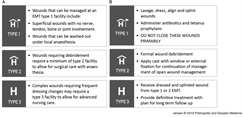
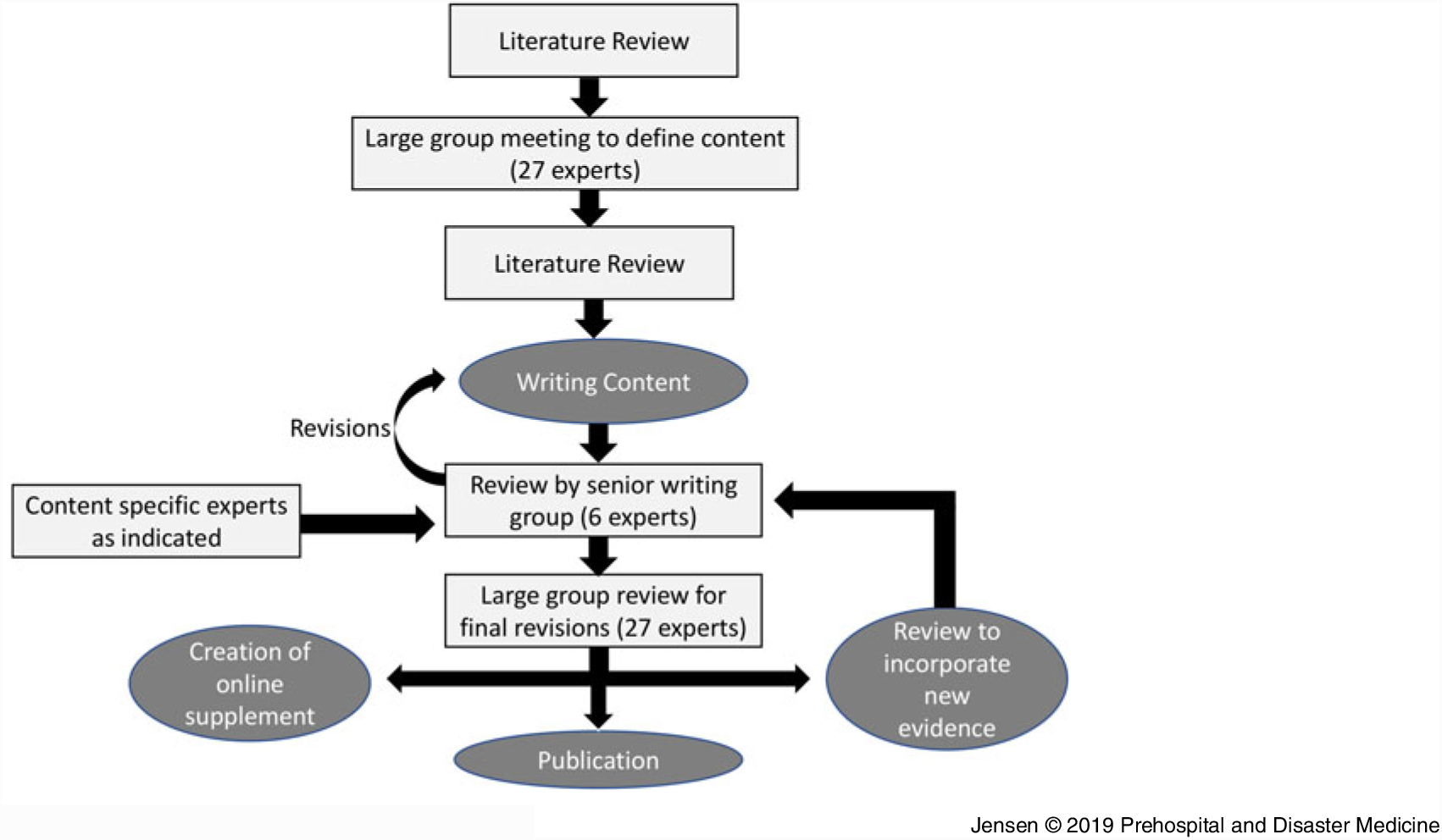
The resulting text is a free and open-access resource to provide guidance for national and international EMTs caring for patients in disasters and conflicts. In addition to the free online text and training materials, courses will be developed to ensure that the standards are well-understood and can be practiced before the need to employ them arises. The text is designed to serve as a utilitarian guide to providing simple interventions that are useful and practical in resource-constrained environments and is available to all. This document will be part of the EMT training and verification system, and surgical teams will be expected to read and understand the standards prior to WHO verification.11 The capability of a given EMT is stratified as Type 1, Type 2, or Type 3 (Figure 1). The minimum standards outlined in the publication for knowledge, skills, infrastructure, equipment, and supplies were structured to reflect these defined levels of care. As evidence accumulates, standards will be updated on a regular basis. The document itself is intended to provide recommendations on the management of common limb injuries seen in disasters, with a focus on areas of controversy. Teaching materials that target both national and international EMTs have already been released and the text distributed to ICRC teams heading to the field.
Specific Guidance is Provided for Every Content Area, Specifically Outlining the Scope of Care by EMT Type. Examples Include (A) Wound Management, and (B) Open Fractures. Abbreviation: EMT, Emergency Medical Team.

Report
Expert consensus is routinely maligned in academic circles as a poor way to guide clinical practice. However, practice patterns in the academic institutions of high-income countries, where many studies are conducted, may not reflect the realities of practice in low-resource environments, even those not embroiled in conflict or disaster. Additionally, these environments are unstable and develop rapidly, and therefore do not lend themselves to the development of randomized controlled trials. Due to the relative paucity of evidence on how to optimally treat limb injuries in the setting of disaster or conflict, a significant number of the recommendations in the text were created primarily from expert consensus.
Creation of Expert Groups
Experts from the WHO and ICRC set out to develop an approach that allowed for the best possible assimilation of the experience and evidence available to guide care in these challenging situations. The WHO, ICRC, and AO Foundation collaborated to convene a group of experts with extensive field experience in disasters and conflicts who could not only generate content, but also prioritize those factors most important for a team or individual preparing for deployment. The expert panel was assembled based on the expertise of Dr. Ian Norton, manager of the EMT Secretariat at WHO, and Dr. Harald Veen, at the time, Chief Surgeon for the ICRC. Expertise was sought in the areas of logistics, training, anesthesia and pain management, wound care, nursing, open fractures, closed fractures, burns, amputations, compartment syndrome and crush syndrome, damage control surgery, ethics, and rehabilitation.
The panel was selected based on clinical experience in zones of conflict and disaster, as well as special expertise in clinical areas determined to be of especially high value for teams following the EMT classifications and minimum standards. Experts were also selected to represent diverse practice backgrounds. The individuals were drawn from academia, the military, and NGOs, and included chief surgeons of the ICRC and Médecins Sans Frontières (MSF; Geneva, Switzerland). Lastly, past engagement and experience working within and applying the FMT minimum classification and standards was sought. This set of diverse backgrounds served to allow for a wide variety of viewpoints and focus with the goal of making the finished text be equally useful to a military surgeon and a provider deploying with an NGO.
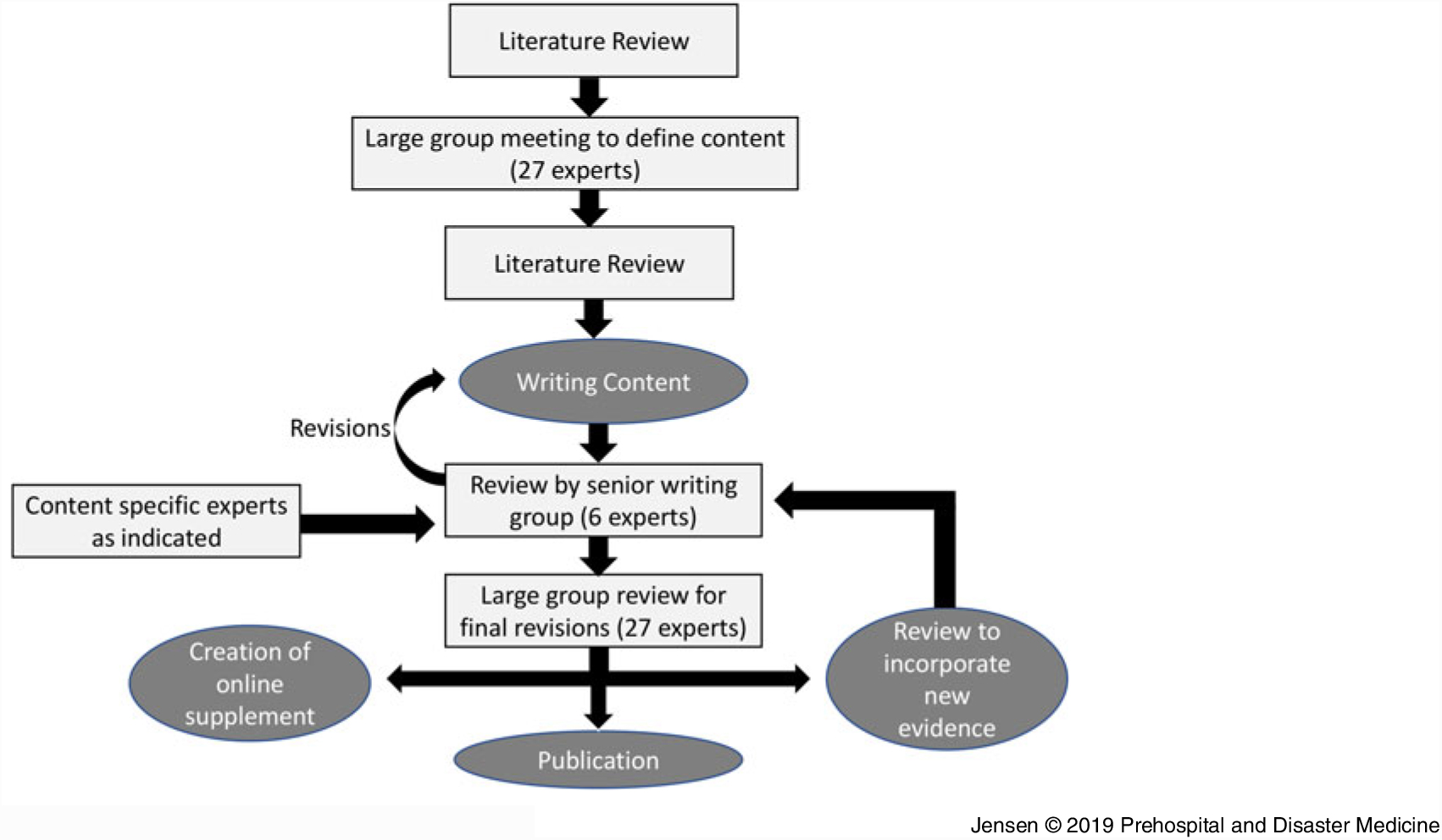
An iterative process (Figure 2) was used to assimilate expert consensus, to allow for comment, and to refine the group recommendations. There were 27 participants providing clinical expertise in trauma surgery, vascular surgery, emergency medicine, anesthesia, orthopedics, plastic surgery, burn surgery, nursing, physiotherapy, and rehabilitation. An expert on medical ethics was also included in the process. Each expert was asked to complete a presentation summarizing key points and controversies to be debated and to conduct a detailed literature review of the available published data on their topic area within disasters and conflicts. The literature review was conducted by topic area, performed using PubMed (National Center for Biotechnology Information, National Institutes of Health; Bethesda, Maryland USA) and Google Scholar (Google Inc.; Mountain View, California USA), and also utilized works specifically cited form existing ICRC and WHO guidelines. The content is the result of a two-day summit in which the experts presented recommendations regarding the most important challenges and controversies in their fields.
Outline of the Process Used to Collaboratively Produce the Field Guide with a Large Body of Experts.
Writing Process
From the original expert group, a smaller group of six senior experts was selected to facilitate continued commentary and discussion of the recommendations during the writing process.
A topic-based approach was utilized in order to provide for reiterative expert input and discussion during the process of assembling the initial consensus and writing a document appropriate for distribution. Upon completion of each subject area, the assembled recommendations were fed back to the senior writing group for review, discussion, and modifications. If controversies emerged or persisted throughout the process, these were assembled into a chapter-by-chapter list for discussion and debate via conference call. When a topic included a specific subject area in which a member of the larger group, who was not part of the senior writing group, had a particular area of expertise to offer, the individual was included in the initial review of that topic. Following assembly of the entire body of work, a review period for comment by the group at-large was provided, and any changes or suggestions were then integrated into the text at this time. Additionally, in order to guide discussion on specific points of controversy, the summary list of controversies was provided to the group at-large for comment and discussion. The outcomes of the review of this list were provided for comment and the outcomes of this discussion subsequently integrated into the text. Persistent controversies were clearly labeled and presented in the finished text. Finally, prior to publication, a conference call was held in order to discuss persistent areas of controversy, or areas requiring further review.
Presentation of Results for Use “In the Field”
The result of this work is an A5 (ie, “cargo pocket sized”) field guide that states the current recommendations for the management of limb injuries in disaster and conflict of the ICRC and WHO EMT Secretariat. The text contains advice on injury management and integrates these procedures and techniques into the EMT infrastructure put forward by the WHO. Much of the guidance is a call for adherence to basic surgical principles and the use of low-technology techniques, such as splinting over application of external fixation, when appropriate.
The text is 192 pages in length, and thus, the entire body of work cannot be discussed here. In addition to the example below, the consensus focused heavily on the importance of debridement of all wounds resulting from conflict and disaster and the avoidance of primary closure. The timing of delayed primary closure (including skin grafting), and the pros and cons of allowing wounds to heal by secondary intention, were investigated in depth. The group unanimously agreed that internal fixation of fractures should be avoided in these contexts, and never performed in any kind of temporary structure such as a field hospital, or in any setting in which the procedures are not normally performed by the local health system. However, the group highlighted that internal fixation is possibly indicated for specific types of closed fractures, but only in a Type 3 facility that is integrated with a local health system where internal fixation was performed prior to the disaster or conflict. The restriction of certain treatment modalities to specific levels of care require that EMTs must be part of a health system approach and ensure referral between different types of facilities
Example Consensus Statements
Timing of Fasciotomies
One example of a controversial topic is the timing of fasciotomy for compartment syndrome: EMTs arrive late and are rarely able to function before 24-48 hours following a disaster. Surgeons are often required to care for injuries that are several days or sometimes weeks old. This, in combination with the austere settings in which this care is practiced, means that any surgery must have a high benefit-to-risk ratio for the patient. Multiple studies have identified the need for early complete lower extremity fasciotomy in patients at-risk for compartment syndrome; however, few of these papers identify the time point at which these incisions pose greater risk than benefit to the patient.Reference Williams, Luchette and Papaconstantinou12 – Reference von Keudell, Weaver and Appelton15 This can be problematic in resource-constrained environments when fasciotomies result in large wounds that require significant wound care. The manual therefore suggests that conservative therapy should be the first choice for late compartment syndromes (after 24 hours). If the limb survives, splinting in functional position and delayed reconstruction may be of benefit. If the limb does not survive, a semi-elective amputation can be planned without having to deal with infected fasciotomy wounds. Thus, the consensus statement from the group is to recommend against fasciotomy more than 24 hours after the injury.
Amputations
Another controversial topic is that of amputations: the group states that no amputation should be done immediately, and the first procedure should be limited to debridement without the formal fashioning of flaps for skin coverage. Only after proper consent is obtained and documented, and after ensuring the rehabilitation is available, should amputation be performed.Reference Wolfson16 Guillotine amputations must be avoided.Reference Bosse, Ficke and Andersen17
Burn Care
Burns represent a persistent challenge to teams providing care in conflict and disaster situations. In the absence of specialized burn intensive care units, patients with burns over 60% Total Body Surface Area (TBSA), with extensive inhalation injury, or patients with >40% full thickness TBSA, have an extremely poor chance of survival. These patients and their loved ones are likely better served by the delivery of compassionate, palliative care than by a lengthy and resource-intensive course of treatment. Other controversies addressed by the group include resuscitation, wound management, crush syndrome, as well as closed and open fractures.
The cumulative result of this work is an example of true expert consensus regarding the management of limb injuries in disaster and conflict. Not only is clinical guidance provided, but the text aligns the delivery of care to comply with the system of quality assurance and verification set out by the Minimum Standards and Classification of Emergency Medical Teams document.Reference Norton, Von Schreeb and Aitken8 The text has already been distributed to ICRC surgeons preparing for deployment to areas of conflict and is available free of charge online along with videos and narrated presentations providing information on many of the topics.18
Discussion
The field guide represents the first step in training a new generation of practitioners to provide care in situations of disasters and conflict and integrates clinical best practices with the WHO EMT.
The way forward includes: creation of a research agenda, design and implementation of a training curriculum, the continued expansion of the WHO universal verification system for EMTs, and planning for an iterative review of the proposed guidelines with commensurate continuous education. The authors view this work as only the initial step in the evolution of the field of medicine dedicated to the provision of care in conflict and disaster surgery. They hope that this work will open the door to additional research, such as the on-going randomized controlled study to investigate the value of negative pressure wound therapy for limb injuries sustained in the conflict in Iraq and Syria.
Surgical trauma care during disasters and conflict is moving from charity to professionalism. The WHO EMT process has set the direction for this. Even in these challenging and austere settings, patients must receive the best possible care that is based on best available evidence, even in austere settings.Reference Brolin, Hawajri and von Schreeb19 , Reference Scott, Swartzentruber and Davis20 Recent publications, including the Lancet commission and the Disease Control Priorities 3 (DCP3), have moved global surgery to the forefront of the global health conversation.Reference Meara and Greenberg21 , Reference Mock, Donkor and Gawande22 However, as surgical training becomes more and more specialized, fewer and fewer providers may be prepared to truly care for patients in these environments. A recent study comparing case logs of MSF surgeons and US surgical trainees found that less than one-half of US surgical resident cases are relevant to MSF missions, and only one-third of MSF cases are taught in a standard US general surgical residency.Reference Lin, Dahm and Kushner23 Therefore, as more and more of the world’s surgical providers are trained in narrowly specialized fields, with an increased reliance on imaging and high-tech minimally invasive techniques, the role for clear guidelines and an academic focus on the preparedness and response to conflict and disaster will only become more valuable.
Limitations
The guide utilizes what is felt to be the best available practices based on “pragmatic evidence;” however, the work of delineating best practices for care in disaster and conflict is an on-going process. There are several limitations to the process used to create these recommendations. First, an attempt was made to apply an evidence-based approach as much as possible; this frequently means applying results from studies conducted in more controlled environments than those for which this text is designed. Additionally, the authors recognize that a heavy reliance on expert consensus creates opportunities for bias and introduction of anecdotal evidence. Attempts were made to mitigate this by involving a wide variety of experts from varying fields, and by diligently ensuring that even the smallest of controversies were brought to the forefront of the discussion, thereby bringing the broadest possible set of experiences and expertise to bear on any recommendation for which there was not broad consensus. Colleagues are invited to challenge the recommendations, as this area of work can only grow through the sustained engagement and input from the international community. Experience is the key to guiding future care, as it is often the context that limits what care is possible. As the body of evidence grows and the field of disaster and conflict care matures, additional evidence will be incorporated into future editions.
Conclusion
This text was designed to be of aid to those individuals caring for patients in austere environments, as well as in training for those preparing to provide care in these most challenging of situations. The field of disaster and conflict medicine is undergoing a transition with increasing maturation and professionalization. The victims of disaster and conflict will likely be well-served by this trend.
Conflicts of interest
none