Introduction
Nearly 60% of community-dwelling elderly people use analgesics, most commonly non-steroidal anti-inflammatory drugs (NSAIDs), followed by acetaminophen, and then opioids (Hanlon et al., Reference Hanlon, Fillenbaum, Studenski, Ziqubu-Page and Wall1996). While pain management is critical for maintaining quality of life, both non-opioid and opioid analgesics potentially carry substantial risks for older adults, and these risks increase with prolonged exposure. Thus, there are both clinical and public health advantages to identifying a set of shared baseline characteristics that may predict chronic opioid and non-opioid analgesic use. Such a “patient profile” may not only guide treatment planning, but also identify those patients at risk of prolonged exposure to analgesic medications. Several epidemiological studies have described increased use of opioids with age and female gender (Campbell et al., Reference Campbell2010). However, to our knowledge, there have been no community-based, epidemiological studies of the use of both opioid analgesics and non-opioid analgesics in a rural, underserved population. In addition, while opioid diversion in rural communities is well-described (Cicero et al., Reference Cicero, Surratt, Inciardi and Munoz2007), to our knowledge there have not been pharmacoepidemiological reports of the licit use of opioids and non-opioids for medical use in this population.
This descriptive, hypothesis-generating study examined a variety of clinical and demographic baseline characteristics and their associations with longitudinal patterns of opioid and non-opioid analgesic use in a population-based cohort of rural older adults. As the most common indication for chronic analgesic use is chronic pain, we examined a set of baseline variables known to be associated with chronic pain. While age, female gender (Urwin et al., Reference Urwin1998), depression (AGS Panel on Chronic Pain in Older Persons, 2002), sleep disturbances (AGS Panel on Chronic Pain in Older Persons, 2002), low level of education (Rios and Zautra, Reference Rios and Zautra2011), cigarette smoking (Brennan et al., Reference Brennan, Schutte and Moos2005), alcohol use (Brennan et al., Reference Brennan, Schutte and Moos2005), and poor self-rated health (Mantyselka et al., Reference Mantyselka, Turunen, Ahonen and Kumpusalo2003) are known to be associated with a greater risk of chronic pain, it is not known if the presence of these factors can predict sustained opioid and non-opioid analgesic use.
Methods
The Monongahela Valley Independent Elders Survey (MoVIES) was a prospective epidemiological study of older adults conducted from 1987 to 2002 in southwestern Pennsylvania (USA). Details of sampling and recruitment have been published previously (Ganguli et al., Reference Ganguli, Dodge, Chen, Belle and DeKosky2000). In brief, an original cohort of 1,681 individuals was recruited from the voter registration list. In 1987, they were aged 65 years and older and living independently in the mid-Monongahela Valley, a largely rural, postindustrial area of low socio-economic status. The study was approved by the University of Pittsburgh IRB and all participants provided written informed consent for all study procedures. Six approximately biennial waves of serial assessments were conducted. Wave 2 (1989–1991) is treated as the baseline for these analyses because analgesic medication usage was collected starting from this wave.
Assessing medication use
Use of medications, including prescription drugs taken regularly, prescription drugs taken as needed, and over-the-counter (OTC) drugs, were coded by therapeutic category in a system based on the American Hospital Formulary System (AHFS; American Society of Health-System Pharmacists, 1987). Details of medication usage were recorded in person from medication bottle labels. For the current study, non-opioid analgesics include acetaminophen, aspirin, aspirin–acetaminophen–caffeine combination (e.g. Excedrin®), and NSAIDs. Eighty-one milligrams dose of aspirin was presumed to be for use as an antiplatelet agent and was thus not categorized as an analgesic. Opioid medications include codeine, propoxyphene, hydromorphone, hydrocodone, oxycodone, morphine, meperidine, fentanyl, and tramadol.
Assessing pain
The MoVIES protocol did not include an assessment of pain, source of pain, or severity of pain. However, we did obtain self-reported history of a range of diagnoses. Given that “arthritis” (both degenerative and inflammatory joint disease) is the most common cause of pain in late-life and the only painful condition specifically surveyed, we include here the participant's yes/no response to the question “Has a doctor or nurse ever told you that you have arthritis?” As this question was asked only starting at Wave 3, analyses are restricted to participants who were assessed, at a minimum, at both Wave 2 (baseline) and Wave 3.
Assessing potential covariates
The biennial assessments included but were not limited to the following items relevant to this project: (1) a screen for global cognitive functioning using the Mini-Mental State Examination (MMSE; Folstein et al., Reference Folstein, Folstein and McHugh1975); (2) a screen for depressive symptoms using the modified Center for Epidemiologic Studies-Depression Scale (mCES-D): here, each of 20 symptoms is rated as yes or no depending on whether the participant experienced it during most of the preceding week, for a maximum possible score of 20 (Ganguli et al., Reference Ganguli, Gilby, Seaberg and Belle1995); (3) sleep complaints were assessed with the following four questions to which participants could respond “yes (including sometimes or always),” or “no” : (a) “Do you take a long time to fall asleep at night” (used to assess initial insomnia, i.e. difficulty falling asleep, DFA); (b) “Do you wake up during the night and find it takes you a long time (more than half an hour) to go back to sleep?” (used to assess intermittent insomnia, i.e. sleep continuity disturbance, SCD); (c) “Do you wake up far too early in the morning and find that you cannot go back to sleep?” (used to assess terminal insomnia, i.e. early morning awakening, EMA); and “Do you ever become uncontrollably sleepy during the day so that, even if you do not want to, you cannot help falling asleep?” (used to assess excessive daytime somnolence, DaSOM).
Thresholds used to categorize each potential covariates were chosen based on their distribution in the sample, maintaining consistency with previously published analyses of this dataset. Baseline (Wave 2) age was categorized into three groups: 65–74, 75–84, and ≥85 years. Gender was recorded, and educational level was dichotomized as (1) less than high school and (2) high school graduate or greater. The mCES-D score, representing number of depressive symptoms, was dichotomized as <5 and ≥5 (Ganguli et al., Reference Ganguli, Dodge and Mulsant2002). Cigarette smoking was dichotomized as current smoker or current non-smoker. Alcohol use frequency was characterized as current consumption of alcoholic beverages at least once a month, or less than once a month. General cognitive status was measured with the MMSE (Folstein et al., Reference Folstein, Folstein and McHugh1975) categorized into three groups: 0–23 (moderate to severe cognitive impairment), 24–27 (mild cognitive impairment), and ≥28 (normal cognition). Overall health was assessed in two ways: (1) self-rated health status, dichotomized into good or excellent versus fair or poor; and (2) total number of regularly used prescribed medications, categorized into three groups: 0, 1, and ≥2. Opioid analgesics were identified from among the prescription drugs, while non-opioids were identified from both prescription and OTC drugs.
Statistical analyses
We characterized the demographic and other clinical characteristics for the MoVIES cohort members with complete data on all assessments starting at Wave 2 (n = 1,109). We also described these characteristics for the subgroups who reported using non-opioid and opioid analgesics. Reported use of non-opioid and opioid analgesics was examined at each data collection wave (Waves 2–6). We then conducted a two-stage analysis. In the first step, we performed trajectory analysis to group participants based on their analgesic usage over time. In the second step, we fit logistic regression models to find predictors for the trajectory groups found in the first step.
Trajectory analysis is a type of latent class analysis, which identifies homogeneous groups within a heterogeneous population, which is assumed to contain multiple latent trajectories. This procedure combines two separate statistical models simultaneously using a maximum likelihood estimation approach, the first being a multinomial regression model examining the associations of the covariates with the probability of membership in each of the homogeneous groups. The second model builds trajectories (slopes) for the different latent groups. This method (SAS procedure PROC TRAJ) (Jones et al., Reference Jones, Nagin and Roeder2001) was used to examine trajectories of opioid and non-opioid analgesic use over time and characteristics associated with the trajectories. Here, analgesic frequencies reported at each of waves 2 through 6 were modeled by a binary distribution. The trajectory model categorizes all participants at baseline into groups based on analgesic use over time, even though there are some missing values over time; therefore, there are no participants excluded and no missing data at baseline. However, the SAS program PROC TRAJ makes the assumption that any missing data are missing completely at random. While this may be true for variables where a few individuals might have missing data on individual variables, it is likely not the case for attrition due to mortality. This is a limitation of the program.
Trajectories of analgesic use across all waves were generated separately for non-opioid and opioid analgesics, adjusting for age, gender, and educational level. The number of trajectory groups was decided based on the Bayesian information criterion (Jones et al., Reference Jones, Nagin and Roeder2001). Based on these patterns of use across the five waves, individuals were further classified as either chronic users or non-chronic users, for both non-opioid and opioid analgesics. Inclusion in the trajectory groups was considered independently for opioid and non-opioid medications, such that an individual who used both opioid and non-opioid medications could be included in both trajectory groups. Since we were focused on the characteristics of the chronic users, the trajectory groups of the non-chronic users also include both occasional users and non-users.
Frequencies and percentages were generated for potential covariates (i.e. demographic and clinical characteristics) at baseline for all participants as well as for the four trajectory groups (chronic and non-chronic users of non-opioid and opioid analgesics). Differences in proportions between trajectory groups for non-opioids and opioids were examined using the χ2 test or the Fisher's exact test when appropriate.
The second step in the analysis was to describe predictors of chronic use, the association of predictors with each trajectory group was then examined using univariable and multivariable logistic regression models. For these models, the latent trajectory groups (chronic and non-chronic use of opioid or non-opioid analgesics) were the dependent variables. Predictors with p values < 0.2 from the univariable model were entered into the intermediate multivariable models to examine their statistical significance after adjusting for other covariates. However, using the backward selection, only variables with p values < 0.1 were maintained in the final multivariable model; the area under the ROC curve (AUC) was presented.
To explore any effects of baseline age (i.e. aging or cohort effects) across waves on medication use, the trend test was used for each medication. Analyses were performed using SAS version 9.2 (SAS Institute Inc, Cary, NC).
Results
Baseline characteristics
The overall MoVIES cohort size at each wave was as follows: wave 1: N = 1,681, wave 2: N = 1,341, wave 3: N = 1,165, wave 4: N = 1,006, wave 5: N = 828, and wave 6: N = 651.
For these analyses, the baseline sample comprised 1,109 participants with complete data on the variables of interest at Wave 2 (baseline) and at least one subsequent wave. The mean (SD) duration of follow-up was 7.3 (2.7) years.
Across all five waves, the unduplicated frequencies (%) of users of each medication were: acetaminophen: 656 (59.2%); aspirin: 22 (2.0%); aspirin–acetaminophen: 23 (2.1%); NSAIDs: 491 (44.3%); codeine: 29 (2.6%); propoxyphene: 77 (6.9)%; hydromorphone: 3 (0.3%); hydrocodone: 31 (2.8%); oxycodone: 14 (1.3%); morphine: 3 (0.3%); meperidine: 1 (0.1%); tramadol: 11 (1.0)%, and fentanyl: 1 (0.1%). Non-opioid analgesics combined with diphenhydramine (i.e. with the “PM” suffix) were used by four (0.4%) individuals.
Examining analgesic usage at each wave, the frequencies (%) taking opioid analgesics at waves 2–6 were 46 (4.1%), 50 (4.5%), 50 (5.3%), 47 (6.0%), and 42 (6.8%). The frequencies (%) taking non-opioid analgesics at waves 2–6 were 466 (42.0%), 532 (48.0%), 489 (52.3%), 337 (43.1%), and 321 (51.9%).
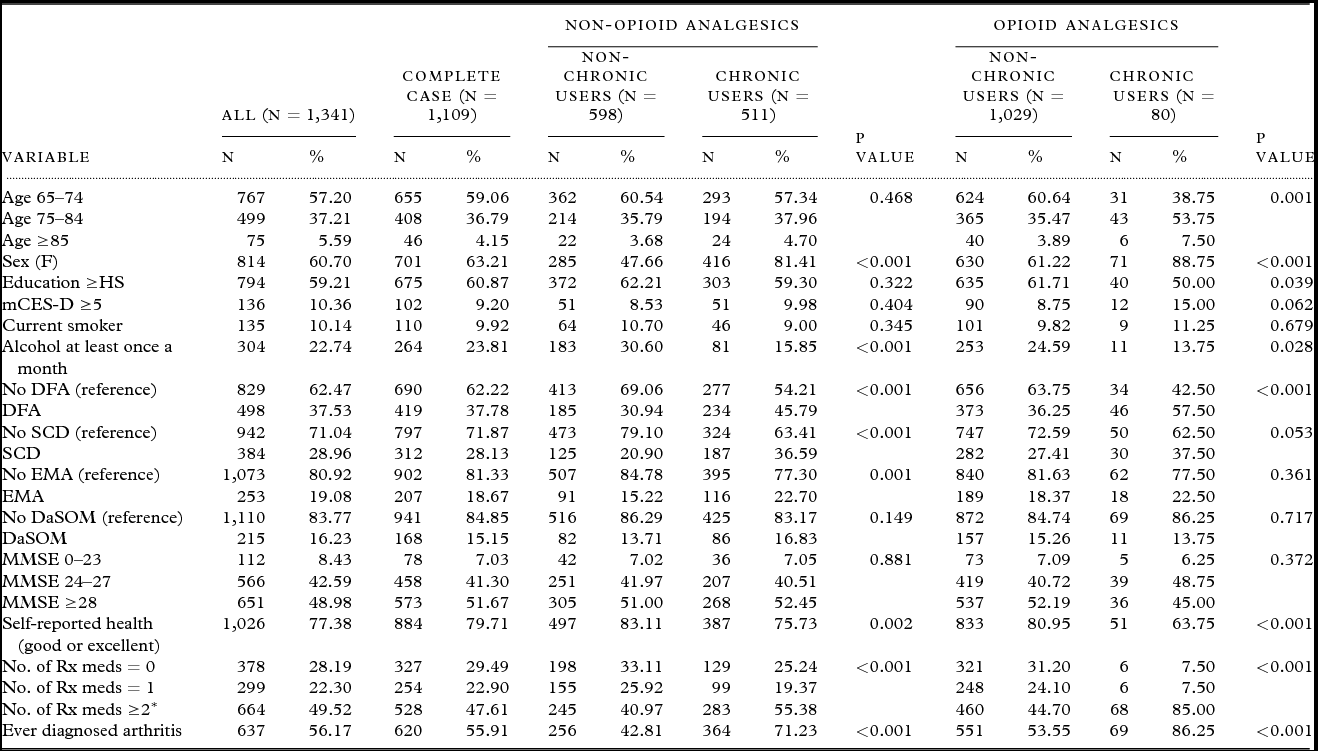
Table 1 lists the demographic and clinical characteristics for the entire group (n = 1,109). Using a latent class model approach, we plotted trajectories of use patterns for both chronic and non-chronic users (including non-users) of non-opioid analgesics and opioid analgesics from wave 2 through wave 6. For the non-opioid analgesics, 46.1% were chronic users and 53.9% were non-chronic users. For the opioid analgesics, 7.2% were chronic users and 92.8% were non-chronic users (Table 1). There was overlap between the non-opioid and opioid groups: 59 (5.3%) participants were chronic users of both non-opioid and opioid analgesics. Of note, 577 (52.0%) participants did not use, or only infrequently used, any kind of analgesic.
Demographic and clinical characteristics for entire group (N = 1,109)

mCES-D_ = modified Center for Epidemiologic Studies-Depression scale (number of depressive symptoms during the preceding week); DFA = difficulty falling asleep (initial insomnia); SCD = sleep continuity disturbance (intermittent insomnia); EMA = early morning awakening (terminal insomnia); DaSOM = excessive daytime somnolence; MMSE = Mini-Mental State Examination.
*Analysis performed with analgesics removed.
Characteristics of chronic users of non-opioids at baseline
In univariable analyses, chronic non-opioid users were significantly more likely to be women (81.4% vs. 47.7%) than occasional or non-users. There were no other demographic differences between the two groups (Table 1). Chronic users of non-opioid analgesics were also more likely to report sleep disturbance (DFA, SCD, and EMA). This group was also more likely to rate their own health as fair or poor, more likely to use at least two prescription medications, and more likely to report having been diagnosed with arthritis.
Characteristics of chronic users of opioids at baseline
In univariable analyses, chronic opioid users were significantly more likely than infrequent or non-users to be older, female, and to have less than a high school education (Table 1). They were also more likely to report DFA. Like the chronic users of non-opioid analgesics, this group was also more likely to rate their health as fair or poor, and more likely to take ≥2 prescription medications as well as to report having been diagnosed with arthritis.
Predicting analgesic use over time
We next used the latent trajectories as the outcome (dependent) variable, and tested univariable and multivariable models of predictors of analgesic use over time.
Trajectory of non-opioid analgesic use
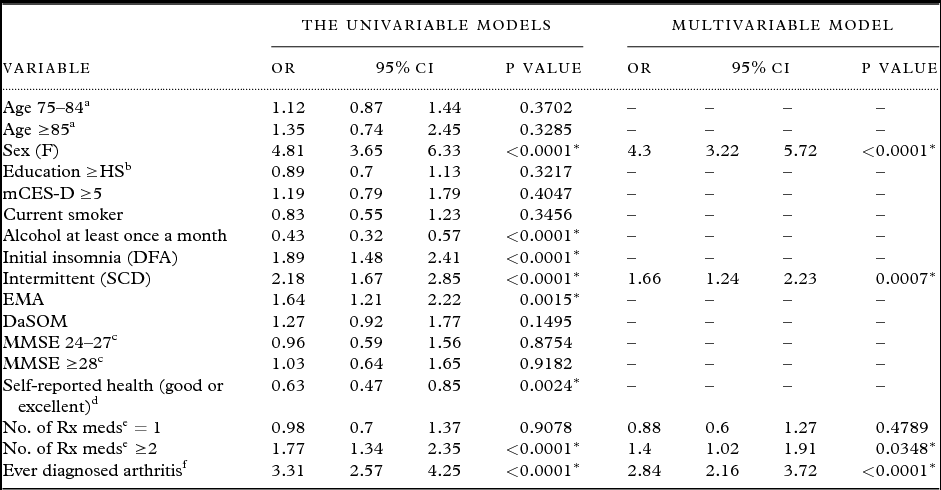
Table 2 illustrates the univariable and multivariable models for non-opioid analgesics. In the univariable model, chronic users were more likely to be women, less likely to consume alcoholic beverages at least once a month, more likely to have DFA, SCD, and EMA, less likely to report their health as good or excellent, more likely to take ≥2 prescription medications, and more likely to have been diagnosed with arthritis.
Univariable and multivariable models for sustained use of non-opioid pain medicines
Note: OR reflects the odds of that variable being in the chronic user group, compared to the odds of that variable being in the reference group.
mCES-D = modified Center for Epidemiologic Studies-Depression scale; DFA = difficulty falling asleep (initial insomnia); SCD = sleep continuity disturbance (intermittent insomnia); EMA = early morning awakening (terminal insomnia); DaSOM = excessive daytime somnolence; MMSE = Mini-Mental State Examination.
aCompared to age 65–74; bCompared to < HS; cCompared to MMSE 0–23; dCompared to self-reported health poor or fair; eIncluding analgesics, compared to No. of Rx meds; fArthritis examination started at wave 3.
*p<0.05.
The AUC for the multivariable model = 0.76, suggesting a good fit of the model. The following variables significantly predicted chronic use of non-opioid analgesics: (1) female gender, (2) SCD, (3) more likely to take ≥2 prescription medications, and (4) more likely to report having been diagnosed with arthritis.
Trajectory of opioid analgesic use:
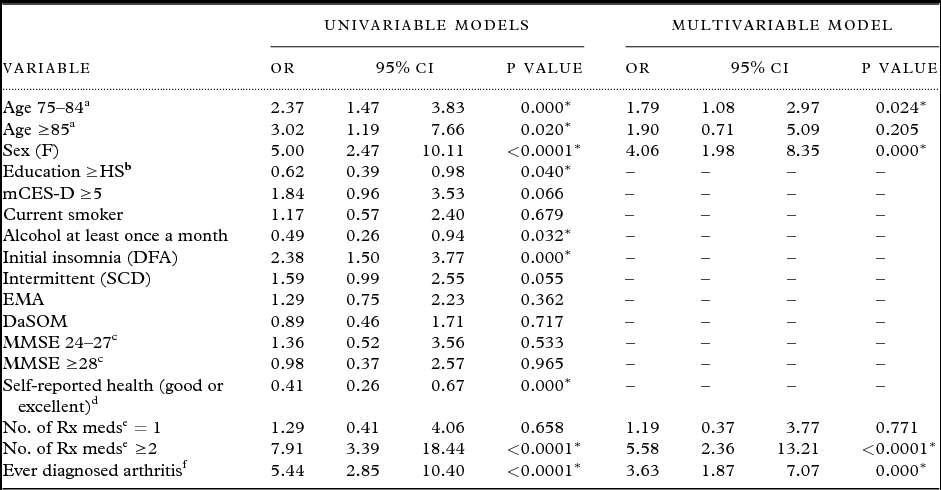
Table 3 shows the univariable and multivariable models for opioid analgesics. In univariable analyses, chronic users of opioid analgesics were more likely to be older (age 75–84 and, age ≥85, compared to age 65–74), female, have less than a high school education, use alcohol less than once per month, DFA, self-reported poor or fair health, take ≥2 prescribed medications, and carry a diagnosis of arthritis.
Univariable and multivariable models for sustained use of opioid pain medicines
Note: OR reflects the odds of that variable being in the chronic user group, compared to the odds of that variable being in the reference group.
mCES-D_ = modified Center for Epidemiologic Studies-Depression scale; DFA = difficulty falling asleep (initial insomnia); SCD = sleep continuity disturbance (intermittent insomnia); EMA = early morning awakening (terminal insomnia); DaSOM = excessive daytime somnolence; MMSE = Mini-Mental State Examination.
aCompared to age 65–74; bCompared to < HS; cCompared to MMSE 0–23;.dCompared to self-reported health poor or fair; eIncluding analgesics, compared to No. of Rx meds;.fArthritis examination started at wave 3.
*p<0.05.
The AUC for the multivariable model is 0.81, suggesting a good fit of the model. The following variables significantly predicted chronic use of opioid analgesics: age 75–84, female gender, ≥2 prescribed medications, and diagnosis of arthritis.
The effect of age on analgesic use
The use of three medications was associated with increasing age: acetaminophen (age 65–74: 29.2%, age 75–84: 30.3%, age ≥85: 36.1%, trend test p = 0.01), propoxyphene (age 65–74: 1.9%, age 75–84: 2.5%, age ≥85: 5.1%, trend test p < 0.001), and tramadol (age 65–74: 0%, age 75–84: 0.4%, age ≥85: 0.6%, trend test p = 0.01). There was no age effect at any wave for aspirin, aspirin and acetaminophen combination, NSAIDs, codeine, hydromorphone, hydrocodone, oxycodone, morphine, meperidine, or fentanyl. Trend and wave were not associated (i.e. there was no evidence of cohort effects).
Discussion
Using trajectory analyses to identify chronic analgesic use in archived population-based pharmacoepidemiological data, we have identified putative baseline characteristics that may warrant further investigation into their association with chronic analgesic use. Variables, which are associated with greater use of analgesics in older adults, have relevance for both individual health and public welfare. For example, we observed that poor self-rated health, diagnoses of arthritis, and use of at least two prescription medications are associated with chronic use of opioid and non-opioid analgesics in addition to female gender and SCD (intermittent insomnia). Not unexpectedly, we observed that chronic analgesic use, for both opioids and non-opioids, was associated with female gender (Lassila et al., Reference Lassila1996) and diagnosis of arthritis. Those with less education and who took at least two prescription medications were more chronic users of opioid analgesics. Although we interpreted prescription medication use as reflecting overall greater morbidity and poorer health, we considered the possibility that additional medication might be taken to counteract adverse effects of the analgesics themselves. Of the 283 individuals taking non-opioid analgesics, 52 (18.4%) were taking a gastro-intestinal drug (proton pump inhibitor, histamine-2 blocker, sucralfate, metoclopramide, etc). Laxatives and antacids are typically purchased over the counter and would not increase the number of prescription drugs.
Those who reported SCD (intermittent insomnia) were more likely to be chronic users of non-opioid analgesics. Potential explanations include (1) non-opioid analgesics may interfere with sleep; (2) individuals with sleep problems use more non-opioid analgesics (i.e. as a hypnotic or because of night-time pain); and (3) pain interferes with sleep and non-opioids are the most frequently used analgesics. We were surprised to find that depression, often comorbid with pain (Lin et al., Reference Lin2003; Karp and Reynolds, Reference Karp and Reynolds2009) and a frequent covariate of sleep disturbance (Lustberg and Reynolds, Reference Lustberg and Reynolds2000), was not significantly associated with an increased chronicity of analgesic use. Although DFA was not retained in the multivariable model for chronic use of opioid analgesics, DFA was a univariable predictor of chronic use of opioid analgesics. This is consistent with earlier observations describing how improved analgesia with opioids may improve sleep quality (Brennan and Lieberman, Reference Brennan and Lieberman2009).
A fourth possibility is that participants were using non-opioid analgesics as sleep aids in the absence of pain, invoking not the analgesic effect but the thermoregulatory effect of these medications. Anecdotally, clinicians have observed patients who report that a dose of aspirin or acetaminophen induces sleep, and it has been suggested that lowering body temperature is conducive to sleep. While hypothetical, the literature includes intriguing reports of the relationship between sleep and thermoregulation, which are beyond the scope of this paper (Horne, Reference Horne1989; Bergmann et al., Reference Bergmann, Landis, Zenko and Rechtschaffen1993; Heller et al., Reference Heller, Edgar, Grahn and Glotzbach2011).
More chronic opioid users than non-chronic users reported initial insomnia (DFA). While participants were not specifically asked about why or when they took their analgesics (other than on a standing vs. as needed schedule), it is possible that individuals used the opioid either as a sleep aid or to help with pain experienced at sleep onset (Paturi et al., Reference Paturi, Surani and Ramar2011). Since opioid analgesics interrupt sleep architecture and may interfere with restorative deep sleep (Lydic and Baghdoyan, Reference Lydic, Baghdoyan, Lavigne, Sessle, Choiniere and Soja2007), individuals who experience intermittent insomnia (SCD) and terminal insomnia (EMA) may find opioid analgesics less useful as sleep aids than those with DFA; despite an initial analgesic and hypnotic effect, opioids in these individuals may do more harm than good to sleep continuity.
We also observed that SCD predicted greater use of non-opioids. Depression was not significant even in the univariable model, and therefore unlikely to be a cause of the insomnia. There are several other ways to interpret this observation. Pain and insomnia can generate a vicious cycle (Paturi et al., Reference Paturi, Surani and Ramar2011). SCD is the most common form of sleep disturbance in late-life (Fetveit, Reference Fetveit2009) and is associated with disordered sleep architecture and non-restorative sleep. Non-restorative sleep is associated with a lower threshold for pain (Smith et al., Reference Smith2009). Pain, in turn, is thought to physiologically disrupt sleep continuity throughout all sleep stages, impairing sleep quality (Fishbain et al., Reference Fishbain, Cole, Lewis and Gao2009). Potentially, this vicious cycle may explain the multivariable model in which SCD predicted greater use of non-opioid analgesics. It is possible that this finding was not observed for the opioid analgesics because if opioids – which have been observed to interfere with deep sleep and may contribute to insomnia – interfered with sleep continuity, older adults may be less likely to use them.
The observation that a less than high school education predicted chronic opioid use is consistent with reports linking lower socio-economic status with greater use of opioids (Parsells Kelly et al., Reference Parsells Kelly2008). Being older also predicted more chronic use of opioids. We theorize that the association between older age and more chronic use of opioids may be due to safety concerns about the use of non-opioids in later life, the use of which is associated with an elevated risk of gastro-intestinal symptoms, bleeding, renal, and cardiovascular side effects (Murray et al., Reference Murray1995, Page and Henry, Reference Page and Henry2000). In addition, advanced age may be associated with more advanced joint disease and more severe pain, supporting the use of more potent analgesics such as opioids. It is notable that we did not observe a cohort effect for the use of any of the medications (i.e. there was not a trend x wave interaction) in that earlier generations were not more likely to follow different analgesic use patterns than subsequent ones
We did observe an effect of age for acetaminophen, propoxyphene, and tramadol use. Acetaminophen use increased with age during wave 4 and wave 5, but was not observed for wave 6. The decrease in propoxyphene use as a function of increased age at wave 6 may reflect the knowledge in the first decade of the 21st century that propoxyphene was not a safe medication for use in late-life (Kamal-Bahl et al., Reference Kamal-Bahl, Doshi, Stuart and Briesacher2003). Although the numbers are small, and not statistically significant, there was an increase in the percent of individuals prescribed hydrocodone at wave 3 and wave 5 (description not included in the results). This may reflect the better safety and efficacy data of hydrocodone compared to other opioids for older adults (Solomon et al., Reference Solomon2010). Tramadol use was first observed at wave 4 (starting in 1993), the period during which it was first marketed in the USA.
These analyses are limited by how pain was assessed. Although arthritis (both degenerative and inflammatory) is the most common cause of pain in late-life, there are other causes of pain in older adults (e.g. myofascial pain, neuropathic disorders, fibromyalgia) that would have been missed. In addition, the MoVIES study was not designed to capture information about pain severity or pain interference, so these data were not available for the analyses. It should also be noted that these data were collected over 20 years ago. While prescribing patterns may have changed, the risks of both NSAIDs and opioids in older adults were well known at the time these data were collected (Fick et al., Reference Fick2003), lending support for the current relevance of these analyses. Finally, the sample is primarily Caucasian and from a rural area; thus, our findings should be replicated in more urban and multicultural samples as well as in more recent cohorts.
These observations about patterns of both opioid and non-opioid analgesic use in a large and well-characterized older rural sample suggest that difficulty falling asleep is more common among chronic users of both non-opioid and opioid analgesics than among non-users or infrequent users. However, in the multivariable models, SCD was only a significant predictor for chronic use of non-opioid analgesics. While causality should not be inferred, these observations lend further support for links between pain and sleep continuity (Lamberg, Reference Lamberg1999). Potentially, paying greater clinical attention to improving sleep quality among older adults taking analgesics (presumably for pain and especially use of non-opioid analgesics) may lead to better pain control and reduced use of analgesics.
Conflict of interest
Dr. Karp has received research support in the form of medication supplies for investigator-initiated research from Pfizer and Reckitt Benckiser. He owns stock in Corcept. The other authors do not have any potential conflicts of interest to declare.
Description of authors’ roles
JFK, C-WL, JM, C-CC, and MG were involved in concept and design, analysis and interpretation of data, and preparation of the paper. MG is responsible for acquisition of participants and data. GS is responsible for interpretation of data and preparation of the paper.
Sponsor's role
Not applicable.
Acknowledgments
The work reported here was supported in part by grants R01 AG07562 and K24 AG022035 (Ganguli); AG033575 (Karp).