




No CrossRef data available.
Article contents
In vitro and in vivo effects of progesterone on Trichinella spiralis newborn larvae
Published online by Cambridge University Press: 21 April 2005
Abstract
We have previously demonstrated that during pregnancy there exists an increased parasiticide activity against Trichinella spiralis newborn larvae (NBL) in infected rats. In this work we analysed the contribution of peritoneal cells from non-infected pregnant rats to the mortality of the NBL in cytotoxicity assays, and evaluated the role of progesterone in this effector mechanism. Our findings suggest that progesterone can induce activation of effector peritoneal cells to destroy the NBL in a rapid and antibody-independent manner. The administration of progesterone to ovariectomized rats also led to a significant decrease in the parasite load of the animals, thus demonstrating that progesterone induces the increase of the parasiticide activity of the leukocytes involved in the mechanisms of NBL death.
Information
- Type
- Research Article
- Information
- Copyright
- 2005 Cambridge University Press
INTRODUCTION
The relative susceptibility of males and females to the many health-threatening microorganisms has long been studied. Studies concerning the role of gonadal steroids in the increase or decrease of such susceptibility have been carried out for several infections (Charniga et al. 1981; Terrazas et al. 1994; Roberts, Satoskar & Alexander, 1996; Kaushic et al. 2000).
Granulocytes as well as the immune cells present in the bloodstream and tissues participate in the defence mechanisms against these pathogens in both innate and acquired effector mechanisms, including phagocytosis, complement-mediated lysis and direct and antibody-dependent cytotoxicity (ADCC) (Roitt & Delves, 2003).
The sex-dependent behaviour of the immune system has led researchers to investigate and indeed to discover that testosterone, oestrogens (mainly 17-β-estradiol) and progesterone can act upon the host's cells and somehow modulate the synthesis and/or secretion of antibodies, cytokines or other soluble mediators (Ahmed, Dauphinee & Talal, 1985; Chao et al. 1994, 2000; Piccini et al. 1995).
Changes in the levels of steroid hormones during the menstrual/oestral cycle have been shown to be closely related to changes in the phenotype of cells of the immune system, mainly regarding the pattern of cytokines they secrete (Verthelyi & Klinman, 2000). Pregnancy is a special immunoendocrine status where high levels of progesterone are found. Although the success of pregnancy has been explained in terms of a deviation of the immune response towards a Th2 phenotype, this concept is currently being revised (Arck, 2001; Chaouat et al. 2002).
Trichinella spiralis is a nematode parasite affecting many people around the world. There are many countries where this parasitic disease is endemic, having several outbreaks per year and where fertile and pregnant women are likely to be involved. In order to investigate the behaviour of the immune system following Trichinella infection during pregnancy, a study was previously undertaken in which we demonstrated that enhanced parasiticide activity against T. spiralis newborn larvae (NBL) resulted in a lower degree of infection in pregnant rats. In addition, we found that NBL could be killed in the presence of peritoneal cells from virgin rats and non-infected pregnant rat serum (Nuñez et al. 2002). The aim of this work was to assess the contribution of peritoneal cells from non-infected pregnant rats to the mortality of the NBL in cytotoxicity assays, and to evaluate the role of progesterone in this effector mechanism. The role of progesterone was also studied in vivo.
MATERIALS AND METHODS
Animals
Virgin and pregnant 3-month-old Wistar rats were used in this work. Groups of at least 5 animals for each experiment were employed. The presence of a vaginal plug was taken as day 1 of pregnancy. Animals were kept in the Biotery of the Faculty of Pharmacy and Biochemistry, University of Buenos Aires under a regular lighting schedule of 12 h light/dark cycle (08.00–20.00 h) and standard conditions of temperature (23±3 °C) and humidity (65±1%).
Sera
Animals belonging to each group were bled by retro-orbital puncture, sera were aliquoted and kept at −20 °C until used. A cytotoxic serum (CS) from a rat orally infected 45 days previously was used as a positive control in cytotoxicity assays.
Digestion method and determination of muscle parasite load
Muscle larvae (ML) were recovered from the carcasses of infected animals by the digestion method using 1% pepsin (Sigma, St Louis, MO, USA) – 1% HCl (Larsh & Kent, 1949). Collected ML were washed and suspensions suitably diluted in 0·15 M NaCl and mixed 1[ratio ]1 with 1·5% agar. Larval suspensions were then placed in grooved Petri dishes and allowed to solidify. Larvae were then counted twice by two independent observers using a light microscope. Parasite burdens were expressed as number of larvae per gram of carcass digested (ML/g).
Collection of newborn larvae
The method described by Dennis, Despommier & David (1970) was used. Briefly, adult worms were recovered from the intestine of rats orally infected with 7000 ML 6 days previously. Worms were cultured at 37 °C in an atmosphere containing 5% CO2 in Eagle's minimum essential medium with Earle's salts (MEM, Gibco, Grand Island, NY, USA) supplemented with antibiotics (penicillin 50 IU/ml, streptomycin 50 μg/ml; Sigma) plus 5% fetal calf serum (Gibco). NBL were collected after 2 h and used immediately. All larvae were alive and in good condition as judged by their motility.
Cells
Peritoneal leukocytes from virgin and pregnant rats were obtained by peritoneal washings using cold MEM supplemented with antibiotics (penicillin 50 IU/ml, streptomycin 50 μg/ml). Leukocyte suspensions were collected and washed twice in MEM by centrifugation at 200 g for 10 min. Cells were counted using Turk's solution in an haemocytometer. Cell viability was invariably greater then 95% as judged by Trypan blue dye exclusion. Relative percentages of cell types in peritoneum were determined by preparation of cell smears stained with May-Grünwald-Giemsa.
Cytotoxicity assays
The test was performed in flat-bottomed microwell modules (Nunc, Roskilde, Denmark). A 30 μl volume of a larval suspension in MEM containing approximately 50 NBL was placed in each well and the exact number of larvae was counted. Ten μl of each serum from virgin or pregnant rats or CS and 100 μl of peritoneal leukocyte suspension from virgin or pregnant rats containing 5×10⁶ cells/ml were added to each well. Sera were used undiluted. Normally, reactions were kept for 20 h at 37 °C in an atmosphere of 5% CO2 in air. In those experiments evaluating the role of virgin and pregnant rat leukocytes in the NBL death, mortality in one set of reactions was assessed after 4 h and another after 20 h of incubation.
In experiments evaluating the role of progesterone in the effector mechanism, larvae were incubated with pregnant rat serum and virgin rat leukocytes which had been previously resuspended in MEM with or without the antagonist of progesterone receptors mefipristone (RU486, 200 ng/ml; Sigma). In another set of experiments the pregnant rat serum was replaced by 10 μl of different concentrations (10, 100 and 200 ng/ml) of soluble progesterone (Sigma) in MEM. The levels of progesterone of 100 and 200 ng/ml fall within the range found in rat pregnancy (González et al. 1997). NBL death was measured by direct microscopy by two independent observers and the mortality percentage calculated according to the following formula:

where NBLi and NBLf are the numbers of NBL counted at the beginning and at the end of the reaction respectively. Control reactions are specified in each case. Experiments were done in duplicate.
Administration of progesterone and determination of parasite load
In order to evaluate in vivo the role of progesterone in the protection of the host against T. spiralis 2 groups of animals were ovariectomized under veterinary supervision. After surgery, rats were allowed to recover for 5 days. This period also served for the complete clearance of the endogenous progesterone. After that, an injection protocol was started. Progesterone (Sigma) was dissolved in a mixture of olive oil–ethanol (3[ratio ]1) and rats were injected subcutaneously every 12 h during 21 days with 0·1 ml of the emulsion containing increasing doses of the steroid according to the protocol of González et al. (2000). These doses are adequate to reach the serum concentrations of the hormone found during rat pregnancy (González et al. 1997). Progesterone concentrations were P1=15·2 mM, P2=22·9 mM, P3=30·5 mM, P4=68·7 mM, P5=53·5 mM, P6=76·4 mM, P7=99·3 mM. The control group was injected with vehicle alone. On day 6 of the progesterone treatment, rats were orally infected with 2000 ML per animal with the aid of a gastric canule. On day 30 p.i. rats were sacrificed and parasite loads were determined by the digestion method. Serum progesterone levels were determined by use of a commercial kit (Abbott Laboratories, Illinois, USA) and vaginal smears were prepared from each progesterone-treated rat in order to corroborate that rats had pregnancy levels of the hormone (Freeman, 1994).
Statistical analysis
Tests employed in the statistical analysis as well as significance levels are indicated in each experiment. Data were analysed with the SPSS 12.0 statistical software.
RESULTS
Cell populations in peritoneal wash
Cell populations found in virgin and pregnant rat leukocyte preparations did not differ from each other. Mean percentages found in both groups were: 19·2±11·2% neutrophils, 11·8±3·6% eosinophils, 0% basophils, 56·6±13·5% lymphocytes, 8·2±3% monocytes and 4·2±2·9% macrophages.
Cytotoxicity assays
Pregnant rat leukocytes were able to induce NBL death even in the absence of CS whereas virgin rat leukocytes used as control were not. This phenomenon was observed as early as 4 h of incubation. No differences were found in the percentage mortality of NBL between 4 h and 20 h of incubation when pregnant rat leukocytes were used in either the presence or the absence of CS. Mean NBL mortality percentages for these experiments are shown in Table 1.
Table 1. NBL mortality in cytotoxicity assays (Data are expressed as mean±S.E.M. of duplicate experiments, n represents the number of leukocyte suspensions evaluated, each suspension corresponding to an animal. a vs c: P<0·005; e vs g: P<0·01; b vs f: P<0·01; e vs f: P<0·01; b vs d: P<0·01; f vs h, a vs e, a vs b, c vs d, g vs h, c vs g and d vs h: non-significant. Three-way ANOVA with repeated measures on one factor.)

When NBL were incubated with pregnant rat sera and virgin rat leukocytes that had been previously incubated with the antagonist RU486 the NBL mortality induced by pregnant rat sera was abrogated (0·9±0·8% vs 15·9±2·4%, P<0·05, Fig. 1).

Fig. 1. Percentage NBL mortality induced by pregnant rat serum in the presence of peritoneal cells with or without treatment with mefipristone (RU486) in in vitro cytotoxicity assays. Data are expressed as mean±S.E.M. of duplicate experiments, n=7. Paired samples Student's t-test, P<0·05.
The dose-response curve constructed employing 3 different concentrations of soluble progesterone is shown in Fig. 2. Progesterone was able to induce NBL death at 100 and 200 ng/ml (44·7±5·8% and 42·2±9·8%). This cytotoxicity-inducing effect of progesterone was again abrogated by RU486 (3·7±1·8% and 10·1±3·7%).

Fig. 2. Percentage NBL mortality induced by progesterone in the presence of peritoneal cells with or without treatment with mefipristone (RU486) in in vitro cytotoxicity assays. Data are expressed as mean±S.E.M. of duplicate experiments, n=5. Control reactions: NBL+cells: 10·4±2·9%. No significant NBL death was obtained with progesterone or RU486 in the absence of cells. *P=0·078, **P< 0·05, three-way ANOVA, nested mixed effects.
Parasite load of progesterone-treated rats
Progesterone levels of ovariectomized and steroid-treated rats ranged from 46·4 ng/ml to 74·2 ng/ml, the expected range for a normal pregnancy. Progesterone levels were undetectable in the control group. Cornified cells were observed in vaginal smears of progesterone-treated animals, demonstrating that the action of progesterone on the vaginal epithelium is similar to that observed during pregnancy.
Parasite loads determined on day 30 p.i. showed significant differences between progesterone and vehicle-treated animals (986±490 ML/g vs 1679±367 ML/g, P<0·05; Fig. 3).

Fig. 3. In vivo studies on the effect of progesterone on the infectivity with Trichinella spiralis. Determination of the muscular parasite load (ML/g) in ovariectomized rats. Data are expressed as mean±S.E.M. of duplicate experiments, n=7/group. *P<0·05, Mann-Whitney U-test.
DISCUSSION
It has been demonstrated that during pregnancy the peripheral immune response is deviated towards a Th2 phenotype (Veenstra van Nieuwenhoven et al. 2002) and that there is an activation of the innate immune system (Letksy, 1980; Shibuya et al. 1987; Sacks, 1997, 1998, 1999; Veenstra van Nieuwenhoven et al. 2002).
In previous work we domonstrated that pregnancy can act synergistically together with the Th2 response elicited by T. spiralis with the results of this synergism being a high rate of NBL destruction in the pregnant rat and without the adult worms being affected. This synergism leads to a decrease in the host's muscular parasite load (Nuñez et al. 2002).
Although we had observed that during pregnancy the effector mechanism of ADCC was increased and that pregnant rat sera (devoid of specific immunoglobulins against the parasite) were also able to induce NBL death in the presence of virgin rat leukocytes, the nature of the factor/s responsible for such augmented helminthotoxicity remained to be determined. The study presented herein was designed to evaluate the role of progesterone, one of the steroids that govern pregnancy, in this augmented helminthotoxicity against NBL. In this sense we demonstrated that NBL death did not take place when virgin rat leukocytes were previously treated with the antagonist of the progesterone RU486. As it is known that RU486 can also bind the receptor for corticosteroids (Ravelli, Massobrio & Tesarik, 1998), our results obtained in vitro employing pure progesterone allowed us to confirm the role of this steroid in the mechanism of cell activation leading to parasite death.
Pregnant rat leukocytes were also able to kill the NBL even in the absence of adherence and specific antibodies to the parasite and this effect was observed shortly after the cells were placed in the reaction well containing the NBL. This rapid killing of the parasite would indicate that pregnant rat leukocytes are activated for this effector mechanism. The release of soluble toxic mediators upon the NBL is the subject of current investigation in our laboratory The differences obtained in NBL death between virgin and pregnant rat leukocytes preparations would not account for differences in the effector cell populations (neutrophils, eosinophils and monocyte/macrophages) from both groups of animals as judged by the May Grünwald-Giemsa stain. These results would reinforce the role of the progesterone in the activation of effector cell populations in vivo and in vitro.
The decrease in the susceptibility to the infection observed in ovariectomized progesterone-treated animals was similar to that observed previously by us using pregnant rats. These findings would indicate that progesterone is one of the pregnancy-associated factors responsible for a decreased parasite load, reinforcing the data obtained in the experiments performed in vitro.
It is known that progesterone has immunomodulatory effects during pregnancy by suppressing the maternal response towards paternal antigens expressed in the fetus (Piccini et al. 1995). However, there are many experimental studies which also suggest that progesterone can be either stimulatory or inhibitory of the immune response depending upon the concentration, time of exposure to the steroid and cell type under study (Beagley & Gockel, 2003).
Taking into account data from the literature and our own results, we can conclude that in our hands, progesterone is capable of inducing activation of the effector cell populations responsible for NBL death in an antibody-independent cytotoxic mechanism. This cytotoxicity should also be triggered by soluble antigens released by the parasite because constant self-aggression of tissues by these activated cells would otherwise occur in pregnant hosts. In the case of pregnant hosts infected with T. spiralis, this mechanism will lead to an increased parasiticide status, leading to a greater degree of protection of the host (Nuñez et al. 2002).
The authors wish to thank Ms Angélica Miranda for her technical help with animal handling. This work was supported by grant TB072 from the University of Buenos Aires.
References
REFERENCES
AHMED, A. S.,
DAUPHINEE, M. J. &
TALAL, N. (
1985).
Effects of short-term administration of sex hormones on normal and autoimmune mice.
Journal of Immunology 134,
204–210.Google Scholar
ARCK, P. C. (
2001).
Stress and pregnancy loss: role of immune mediators, hormones and neurotransmitters.
American Journal of Reproductive Immunology 46,
117–123.CrossRefGoogle Scholar
BEAGLEY, K. W. &
GOCKEL, C. M. (
2003).
Regulation of innate and adaptive immunity by the female sex hormones oestradiol and progesterone.
FEMS Immunology and Medical Microbiology 18,
13–22.CrossRefGoogle Scholar
CHAO, T. C.,
VAN ALTEN, P. J. &
WALTER, R. J. (
1994).
Steroid sex hormones and macrophage function: modulation of reactive oxygen intermediates and nitrite release.
American Journal of Reproductive Immunology 32,
43–52.CrossRefGoogle Scholar
CHAO, T. C.,
CHAO, H. H.,
CHEN, M. F.,
GREAGER, J. A. &
WALTER, R. J. (
2000).
Female sex hormones modulate the function of LPS-treated macrophages.
American Journal of Reproductive Immunology 44,
310–318.CrossRefGoogle Scholar
CHAOUAT, G.,
ZOURBAS, S.,
OSTOJIC, S.,
LAPPREE-DELAGE, G.,
DUBANCHET, S.,
LEDEE, N. &
MARTAL, J. (
2002).
A brief review of recent data on some cytokine expressions at the materno-foetal interface which might challenge the classical Th1/Th2 dichotomy.
Journal of Reproductive Immunology 53,
241–256.CrossRefGoogle Scholar
CHARNIGA, L.,
STEWART, G. L.,
KRAMAR, G. W. &
STANFIELD, J. A. (
1981).
The effect of host sex on enteric response to infection with Trichinella spiralis.
Journal of Parasitology 67,
917–922.CrossRefGoogle Scholar
DENNIS, D.,
DESPOMMIER, D. D. &
DAVID, N. (
1970).
Infectivity of newborn larvae of Trichinella spiralis in the rat.
Journal of Parasitology 56,
974–977.CrossRefGoogle Scholar
FREEMAN, M. E. (
1994).
The neuroendocrine control of the ovarian cycle of the rat. In
The Physiology of Reproduction
(ed. Konbil, E. & Neill, J. D.), pp.
613–749.
Raven Press,
New York.
GONZALEZ, C.,
DIAZ, F.,
FERNANDEZ, M. &
PATTERSON, A. M. (
1997).
Role of 17-β estradiol and progesterone on glucose homeostasis: effects of food restriction (50%) in pregnant and non-pregnant rats.
Journal of Endocrinological Investigations 20,
397–403.CrossRefGoogle Scholar
GONZALEZ, C.,
ALONSO, A.,
ALVAREZ, N.,
DIAZ, F.,
MARTINEZ, M.,
FERNANDEZ, M. &
PATTERSON, A. M. (
2000).
Role of 17-β estradiol and/or progesterone on insulin sensitivity in the rat: implications during pregnancy.
Journal of Endocrinology 166,
283–291.CrossRefGoogle Scholar
KAUSHIC, C.,
ZHOU, F.,
MURDIN, A. D. &
WIRA, C. R. (
2000).
Effects of estradiol and progesterone on susceptibility and early immune responses to Chlamydia trachomatis infection in the female reproductive tract.
Infection and Immunity 68,
4207–4216.CrossRefGoogle Scholar
LARSH, J. E. &
KENT, D. E. (
1949).
The effect of alcohol on natural and acquired immunity of mice infection with Trichinella spiralis.
Journal of Parasitology 35,
45–53.CrossRefGoogle Scholar
LETSKY, E. (
1980).
The haematological system. In
Clinical Physiology in Obstetrics
(ed. Hytten, F. & Chamberlain, G.), pp.
43–47.
Blackwell Science Ltd,
Oxford.
NUÑEZ, G. G.,
GENTILE, T.,
CALCAGNO, M. L. &
VENTURIELLO, S. M. (
2002).
Increased parasiticide activity against Trichinella spiralis newborn larvae during pregnancy.
Parasitology Research 88,
661–667.Google Scholar
PICCINI, M. P.,
GIUDIZI, M. G.,
BIAGIOTTI, R.,
BELONI, L.,
GIANNARINI, L.,
SAMPOGNARO, S.,
PARRONCHI, P.,
MANETTI, R.,
ANNUNZIATO, R.,
LIVI, C.,
ROMAGNANI, S. &
MAGGI, E. (
1995).
Progesterone favors the development of human T helper cells producing Th2-type cytokines and promotes both IL-4 production and membrane CD30 expression in established Th1 cell clones.
Journal of Immunology 155,
128–133.Google Scholar
RAVELLI, A.,
MASSOBRIO, M. &
TESARIK, J. (
1998).
Nongenomic actions of steroid hormones in reproductive tissues.
Endocrine Reviews 19,
3–17.CrossRefGoogle Scholar
ROBERTS, C. W.,
SATOSKAR, A. &
ALEXANDER, J. (
1996).
Sex steroids, pregnancy-associated hormones and immunity to parasitic infection.
Parasitology Today 12,
382–388.CrossRefGoogle Scholar
ROITT, I. M. &
DELVES, P. J. (
2003).
Inumnidad adquirida específica. In
Inmunología Fundamentos
(ed. Roitt, I. M. & Delves, P. J.), pp.
23–40.
Editorial Médica Panamericana,
Buenos Aires.
SACKS, G. P.,
STUDENA, K.,
SARGENT, I. L. &
REDMAN, C. W. G. (
1997).
CD11b expression on circulating neutrophils in pre-eclampsia.
Clinical Sciences 93,
187–189.CrossRefGoogle Scholar
SACKS, G. P.,
STUDENA, K.,
SARGENT, I. L. &
REDMAN, C. W. G. (
1998).
Normal pregnancy and preeclampsia both produce inflammatory changes in peripheral blood leukocytes akin to those of sepsis.
American Journal of Obstetrics and Gynecology 179,
80–86.CrossRefGoogle Scholar
SACKS, G. P.,
SARGENT, I. L. &
REDMAN, C. W. G. (
1999).
An innate view of human pregnancy.
Immunology Today 20,
114–118.CrossRefGoogle Scholar
SHIBUYA, T.,
IZUCHI, K.,
KUROIWA, A.,
OKABE, N. &
SHIRAKAWA, K. (
1987).
Study on non-specific immunity in pregnant women: increased chemiluminescence response of peripheral blood phagocytes.
American Journal of Reproductive Biology and Microbiology 15,
19–23.Google Scholar
TERRAZAS, L. I.,
BOJALIL, R.,
GOVEZENSKY, T. &
LARRALDE, C. (
1994).
A role for 17-β estradiol in immunoendocrine regulation of murine cysticercosis (Taenia crassiceps).
Journal of Parasitology 80,
563–569.CrossRefGoogle Scholar
VEENSTRA VAN NIEUWENHOVEN, A. L.,
BOUMAN, A.,
MOES, H.,
VAN DER SCHAAF, G. C. J.,
SCHUILING, G. A.,
HEINEMAN, M. J.,
DE LEIJ, F. M. L. H.,
SANTEMA, J. &
FAAS, M. M. (
2002).
Cytokine production by NK-cells as well as by lymphocytes in pregnant women as compared with women in the follicular phase of the ovarian cycle.
Fertility and Sterility 77,
1032–1037.CrossRefGoogle Scholar
VERTHELI, D. &
KLINMAN, D. M. (
2000).
Sex hormone levels correlate with the activity of cytokine-secreting cells in vivo.
Immunology 100,
384–390.CrossRefGoogle Scholar
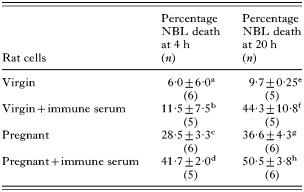
Table 1. NBL mortality in cytotoxicity assays
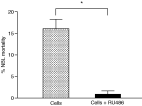
Fig. 1. Percentage NBL mortality induced by pregnant rat serum in the presence of peritoneal cells with or without treatment with mefipristone (RU486) in in vitro cytotoxicity assays. Data are expressed as mean±S.E.M. of duplicate experiments, n=7. Paired samples Student's t-test, P<0·05.
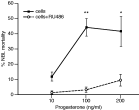
Fig. 2. Percentage NBL mortality induced by progesterone in the presence of peritoneal cells with or without treatment with mefipristone (RU486) in in vitro cytotoxicity assays. Data are expressed as mean±S.E.M. of duplicate experiments, n=5. Control reactions: NBL+cells: 10·4±2·9%. No significant NBL death was obtained with progesterone or RU486 in the absence of cells. *P=0·078, **P< 0·05, three-way ANOVA, nested mixed effects.
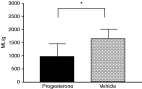
Fig. 3. In vivo studies on the effect of progesterone on the infectivity with Trichinella spiralis. Determination of the muscular parasite load (ML/g) in ovariectomized rats. Data are expressed as mean±S.E.M. of duplicate experiments, n=7/group. *P<0·05, Mann-Whitney U-test.
 You have
Access
- 26
- Cited by