


The study of ancient Maya stone tools has progressed remarkably since 1976 when the first Maya Lithic Conference (MLC) was held in Orange Walk Town, Belize (Hester and Hammond Reference Hester and Hammond1976). An important paper at that meeting described “islands of lithic knowledge amid seas of ignorance” (Sheets Reference Sheets, Hester and Hammond1976), implying that what little we knew about stone-tool production, exchange, and use in the Maya area was limited to a few broadly spaced sites. Later scholars have greatly filled in the map, and by the Second MLC (Hester and Shafer Reference Hester and J. Shafer1991), what I call the “cartographic stage” had given way to the “behavioral stage” (Braswell Reference Braswell, Hruby, Braswell and Mazariegos2011:2–5). Since the 1980s, and following Schiffer (Reference Schiffer1972), many Maya lithicists have divided the life history of stone artifacts into stages, including extraction, production, exchange, consumption, recycling, and discard. Obsidian specialists whose work involved chemical or visual sourcing naturally considered procurement and exchange (e.g., Dreiss and Brown Reference Dreiss, Brown, McAnany and Isaac1989; Nelson Reference Nelson1985). Archaeologists working in the chert-bearing zone (CBZ) of northern Belize developed the producer–consumer model, which considered how specialists at central sites manufactured stone tools and then traded them to smaller communities in rural zones where they were used principally for agricultural purposes (e.g., Hester et al. Reference Hester, Shafer, Eaton and Ligabue1983; McAnany Reference McAnany1989; Shafer and Hester Reference Shafer and Hester1991). Still other Maya lithicists employed use-wear analysis to better understand the consumption of artifacts (e.g., Aoyama Reference Aoyama1989, Reference Aoyama1995; Lewenstein Reference Lewenstein1987), and discard and site formation patterns were studied through ethnoarchaeology (e.g., Clark Reference Clark, Staski and Sutro1991; Hayden and Cannon Reference Hayden and Cannon1983). As a result of these approaches, Maya stone artifacts were interpreted in terms of the roles they played in economic and political systems. Pivotal to all studies of political economy was the organization of production and exchange, themes that still are central to Maya lithic studies.
By the Third MLC, held in Guatemala City in 2007 (Hruby et al. Reference Hruby, Braswell and Mazariegos2011), research began to include other aspects of the cultural embeddedness of chipped and ground stone artifacts, especially within ideological and social systems. The Maya built their structures—both physical and abstract—using stone tools. I call this the “technology stage” in an attempt to reconfigure and broaden the use of the word “technology” in lithic studies. By this I mean that Maya lithic specialists are now considering how the interaction of people, stone, and their environment reproduced, modified, and re-created Maya civilization.
Maya Lithic Conference 3.5: Studies of Procurement, Production, and Consumption
The field of Maya lithic studies has blossomed in the nearly 20 years since the Third MLC. More Latin American scholars are actively engaged and publish in the field, and—in an especially welcome development—many more women of a new generation now study Maya lithic artifacts. When I entered graduate school four decades ago, the adage “sticks and stones are for boys; pots and pans are for girls” was already an offensive and destructive cliché. There always have been women central to Maya lithic studies, but it is salutary to see—as shown by four of the six reports published here—that this material specialty is now much less subject to androcentric bias (see Horowitz and Brouwer Burg Reference Horowitz and Burg2024:354–355).
The reports in this special section in Latin American Antiquity could be said to come from an MLC 3.5, a much-needed stopgap until the next full meeting can be held. I chose to organize the papers loosely according to the life history of artifacts of the behavioral stage. What these reports all share is a focus on the broad diversity of Maya economy as demonstrated through lithic analysis. Earlier models of procurement, production, and exchange tended to be simple. For example, I viewed obsidian procurement in terms of distinct spheres drawn on a map (Braswell Reference Braswell, Smith and Berdan2003). This cartographic approach overemphasized homogeneity within a given sphere and differences in procurement patterns across distinct spheres (Davies et al. Reference Davies, Robinson, Estrada-Belli, Braswell, Robinson and Davies2023). A better approach is to consider networks of interaction that connect sites and regions (e.g., Feinman et al. Reference Feinman, Golitko, Nicholas, Kerig, Mader, Ragkou, Reinfeld and Zachar2019); that is, to focus on exchange itself rather than the boundaries and barriers that inhibit it. Similarly, the producer–consumer model offered insight into the flow of finished stone tools from central production locales like Colha to rural agricultural settlements. Nonetheless, it underestimated local production at the latter and use at the former. Embedded and attached workshop production garners the most archaeological attention, yet household production took place in all premodern economies and sprang from local consumption needs. Ancient production systems of utilitarian goods were rarely monopolistic and redundancy—especially at the household level—provided resilience. Moreover, we can now identify distinct levels of production skill in certain classes of stone artifacts, allowing glimpses into communities of practice. The reports included in this section highlight the complexity of the Maya economy by emphasizing different economic strategies expressed at various scales, rather than a uniformity imposed by the highest political level. Moreover, several authors also present new analytical methods that guide us to a more nuanced interpretation of production and exchange.
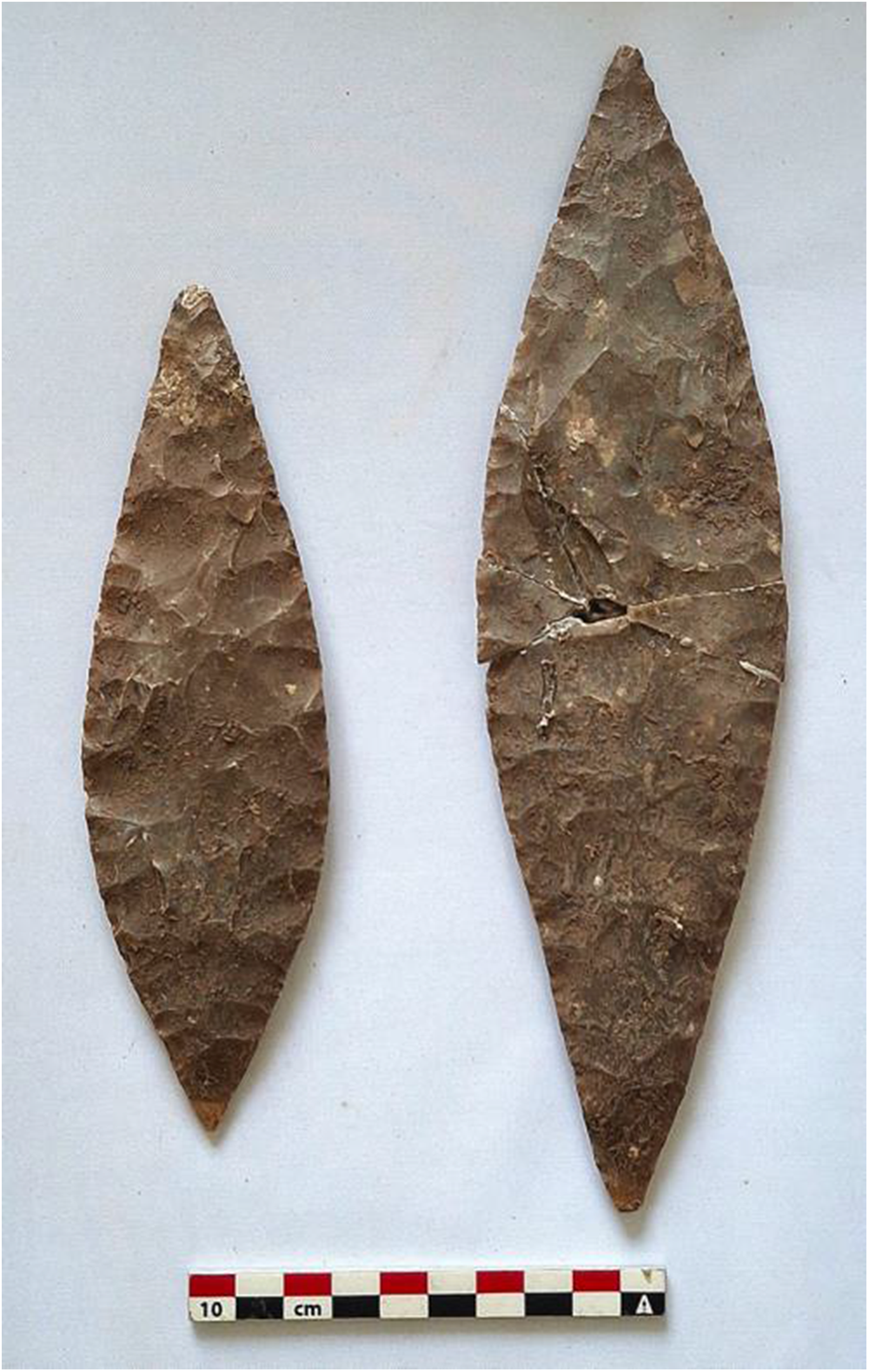
In their report, Pengilley and Valdez (Reference Pengilley and Valdez2025) return to the CBZ of northern Belize. Unlike obsidian, deposits of chert form over thousands, if not millions, of years and are not chemically homogeneous. Chert artifacts therefore can be notoriously difficult to assign to individual sources. Nonetheless, Maya archaeologists have long recognized “honey brown” and other visually distinct cherts from the CBZ (Figure 1). Using a combination of macroscopic (visual) inspection, petrographic analysis, and trace-element assay, Pengilley and Valdez demonstrate the variability of the CBZ and show that some source groupings may be distinguished from others. Their technology—the particular combination of individual techniques designed to achieve a specific goal—of visual, petrographic, and chemical analyses will allow archaeologists working in other regions of the Maya Lowlands to identify less obvious examples of artifacts from the CBZ. Moreover, it should now be possible to identify within northern Belize artifacts that were not produced at Colha. In other words, the economic contributions of local household production and exchange at rural consumer sites outside the CBZ may now be evaluated.
Thin bifaces made of chert from the northern Belize CBZ recovered in 2025 from Late Classic Tomb VII, Structure 5, Nim li Punit, Belize. (Color online)

In my own contribution (Braswell Reference Braswell2026), I consider obsidian procurement within the southern Belize region, a rugged frontier zone between Caracol to the north, Quirigua and Copan to the south, and southern Petén to the west. Using portable X-ray fluorescence (supplemented by visual inspection of the smallest artifacts), I examine diachronic patterns of procurement at Nim li Punit, a small site occupied from the Terminal Preclassic to Terminal Classic periods (around AD 150–830+) and the dynastic seat of a minor polity during the seventh through eighth centuries. I note that an important shift in procurement occurred midway through the Early Classic period, perhaps indicating shifts in economic and political alignment. Comparing Nim li Punit to other nearby sites—especially Pusilha and Lubaantun where I also have conducted research—I note differences in contemporary procurement patterns within the southern Belize region. The implication is that these closely spaced sites participated in overlapping yet different networks of interregional exchange and were not part of the same homogenizing regional market (Hirth Reference Hirth1998). The obsidian data support a growing model of independent frontier polities that negotiated their external relations with powerful yet distant states in different ways.
Whereas the first two contributions focus on the identification of procurement strategies through sourcing studies, Sullivan and Tsukamoto (Reference Sullivan and Tsukamoto2025) concentrate on production on the neighborhood level as revealed through debitage analysis. Their study of Took’ Witz, an architectural group or neighborhood on the outskirts of El Palmar, Campeche, Mexico, reveals that large-scale lithic production was conducted in a complex manner by at least three distinct households. Knappers in the East Plazuela seem to have practiced all stages of production from nodule reduction to the final retouching of bifaces. They manufactured a relatively small number of tools on a scale commensurate with their own needs. Traditional models favored either rural household-level production or centralized and elite-controlled workshop industries, especially at large site centers such as Colha. In contrast, Took’ Witz provides an example of lithic production practiced at an intermediate level and on the outskirts of a larger site adjacent to the agricultural fields where bifaces were used. Put another way, there was less distinction between producers and consumers at Took’ Witz than has been argued for northern Belize, and some producers were generalists whereas others were more specialized. Still to be determined is the degree to which this less-centralized production system provided resilience in a way that state-sponsored production and exchange could not.
Johnson and coauthors (Reference Johnson, Johnson and Campiani2025) examine Palenque, a Classic Maya city long known for its architecture, art, hieroglyphs, and dynastic history. What has received surprisingly little study is the organization of craft production in this important kingdom. Johnson and colleagues recovered significant quantities of used drills made on chert bladelets. However, the production of the drills occurred elsewhere: they were brought to the group in finished form for use in the manufacture of other artifacts. Such drills were found in association with slate production at Group D of Xunantunich, Belize (Braswell Reference Braswell, LeCount and Yaeger2010) and with shell-ornament working, but there is no evidence that either of these materials were worked at Palenque Group IV. Small amounts of greenstone debitage were recovered, suggesting the working of that material, but the scale of tool consumption implies that other perishable materials that were not recovered were worked more intensely. Most interestingly, residents of the group crafted and used obsidian blades, which appear in quite significant quantities for a site this far from the volcanic sources of highland Guatemala. They also made and used chert and limestone bifaces. In other words, the occupants engaged in multicrafting, manufactured some of their own tools that were used to work greenstone and perishable materials, and also obtained finished tools that presumably were made elsewhere at Palenque. What emerges from this study is a glimpse of the complex supply chain that brought raw materials and finished tools to Group IV from both local and distant sources, as well as a vision of the social and economic networks implied by the crafting practiced there.
This was no large-scale, state-sponsored industry of the sort observed at Colha, yet the scale and complexity were far above those typically seen in rural household production. The intensity and organization of production at Palenque Group IV, as at Xunantunich Group D, seem to mirror the intermediate or nonroyal elite status of the leading occupants of the group. After reading the contribution by Sullivan and Tsukamoto, as well as that by Johnson and colleagues, I wonder whether such intermediate scales and organizational structures of production were more the norm than what top-down and bottom-up studies of economy have traditionally emphasized. In other words, by working from either end we may have missed the important middle.
Hannold and her coauthors (Reference Hannold, Paling, Tokovinine, Belli and Vázquez2026) present the first in what I hope will be a series of articles on Maya eccentrics made of chert and obsidian. Studying more than 80 examples from the Holmul region, Hannold applies simple analytical formulae to judge the skill level of knappers. These seek to quantify the delicateness of each piece, the degree to which they have been worked, and the number of noncatastrophic errors. Their results suggest that, at Holmul, lithic producers of different skill levels ranging from “novice” to “master” contributed artifacts found in the same caches. Eccentrics from Witzna, in contrast, exhibit the highest skill overall but less diversity in skill level, whereas those from Dos Aguadas display a mixture of mastery and intermediate skill levels. Together, these data could suggest a complex and segmented training/production strategy in which novices learned from experts at Holmul and went elsewhere in the kingdom to practice their trade.
In the final report in this special section, Stemp and Simmons (Reference Stemp and Simmons2025) examine household lithic economy during the transition from the Postclassic period to colonial times, around AD 1400–1700. In terms of count but not mass, most of the lithic artifacts recovered from San Pedro, Ambergris Caye, Belize, are obsidian prismatic blades, which are not the subject of the current report (for that, see Stemp Reference Stemp2016). The chert and chalcedony artifacts of San Pedro, which are the focus here, raise several important issues. First, chipped chert and chalcedony are abundant for a site located offshore where there are no local outcrops. Second, the Postclassic to colonial inhabitants engaged in several procurement strategies, including the scavenging of older materials already on the island. We often forget that the nearest “source” of lithic material can be older deposits of discarded cultural material at or near a given site. For example, I estimate that at least half the obsidian blades recovered from Early Postclassic Ejar contexts at Copan were simply scavenged from earlier Classic contexts and reused. At San Pedro, locally scavenged material likely includes flakes and chunks used as flake cores, but most impressive are finished lenticular and lozenge-shaped bifaces from Colha that predate the occupation of San Pedro by several centuries. Postclassic to early colonial inhabitants also obtained—either directly or by trade—nodules and flake cores of CBZ chert that were used locally to produce expedient percussion flakes. Third, the people of San Pedro carefully curated the stone tools they had, consistent with a lack of local sources of raw material. The facts that the ratio of thinning flakes to bifaces is too low to indicate significant production, that most thinning flakes lack traces of cortex, that there are no preforms or rejected failures, and that most bifaces were reworked all support the argument that repairing and resharpening were the principal knapping activities of the biface industry at San Pedro.
Importantly, Stemp and Simmons also conducted use-wear analyses on bifaces and ad hoc tools. They note a variety of activities, including the processing of fish, sea mammals, terrestrial animals, and plants; the working of wood and shell; digging in the soil; and even the reuse of chert as hammerstones. The Postclassic to early colonial inhabitants of San Pedro not only carefully curated the stone tools they had but also used them for a wide variety of quotidian purposes.
Toward a Fourth Maya Lithic Conference
The reports published here came together more by accident than by plan. All but one were presented in a general session of the 2024 Annual Meeting of the Society for American Archaeology held in New Orleans. General sessions in the early morning often can be a desultory experience, with only the presenters and a few passersby in attendance. But in this case the room was often packed and enthusiasm was quite high. The excitement spontaneously created by the presentations moved me to say a few words about how excellent and innovative the talks were, to propose that we find a way to publish them, and to suggest that we soon organize a fourth MLC. The response was all that I could hope for, especially from those who recently entered the field. As the k’atun since the Guatemala MLC comes to a close, I renew that call. The reports in this section are ample evidence that many new voices in Maya lithic studies should be heard.
Acknowledgments
None.
Funding Statement
No funds were received for writing this introduction.
Data Availability Statement
See the reports in this special section.
Competing Interests
I declare none.

 Open access

