Introduction
Adolescence is a period marked by significant growth, remarkable development and changes in the life course for boys and girls, filled with vulnerabilities and risks, as well as incredible opportunities and potentials that are likely to affect behaviour and lifestyle during the life course (Morris & Rushwan, Reference Morris and Rushwan2015). The experiences of adolescents shape the direction of their lives and that of their families. Therefore, paying attention to adolescents’ health and education is a life-time investment (UNFPA & Population Council, 2006). According to Hindin and Fatusi (Reference Hindin and Fatusi2009) there are more than one billion 10- to 19-year-olds, 70% of whom live in developing nations, growing up in circumstances quite different from those of their parents, due to more exposure to new ideas through media, telecommunications and other avenues. The environment in which young people are making decisions related to sexual and reproductive health is also rapidly evolving, and the high HIV prevalence in some low- and middle-income countries (LMICs) adds to the risks associated with early unprotected sexual activity in these settings.
Many LMICs have been classified as ‘multi-burden’ in relation to adolescent health, with complications of early pregnancy/childbirth and HIV being among the leading challenges (Fatusi, Reference Fatusi2016). Homabay County in western Kenya typifies this classification. With an adult HIV prevalence of 26%, Homabay County has the highest HIV prevalence in the country – nearly 4.5 times higher than the national average (Ministry of Health, 2016). By the end of 2015, a total of 158,077 people were living with HIV in the county, with 22% being young people aged 15–24 years. Adolescents aged 10–19 years and young people aged 15–24 years contributed to 28% and 52% of all new HIV infections in the county, respectively. Besides bearing a disproportionate burden of HIV among young people, Homabay County has some of the worst adolescent health indicators in Kenya (KNBS & ICF, Macro, 2015), including a high incidence of teenage pregnancy, maternal mortality and lower than national average use of contraceptives. According to a recent national survey, 33% of 15- to 19-year-old girls in Homabay County had given birth or were pregnant, compared with the national average of 18%; and contraceptive use was 47%, compared with a national average of 58% (KNBS & ICF Macro, 2015). The maternal mortality ratio in 2014 was 583 deaths per 100,000 live births – higher than the national ratio of 495 – with HIV infection being an important contributing factor (UNFPA, 2014).
Adolescents aged 10–19 years constitute about 24% of Kenya’s total population, i.e. 9.2 of 38.6 million, according to the 2009 Kenya Population and Housing Census (KNBS, 2010). As in other parts of sub-Saharan Africa (SSA), adolescents in Kenya face severe challenges in their lives and general well-being. They are especially vulnerable to early and unintended pregnancy, unsafe abortion, sexual violence and reproductive tract infections, including sexually transmitted infections (STIs) as well as HIV and AIDS. Adolescents require priority attention from all sectors of government and development partners for the country to be able to realize Vision 2030, and the United Nations Sustainable Development Goals (SDGs), which acknowledge the unique health challenges facing young people, as well as their pivotal role alongside women and children as key drivers of change in the post-2015 era (Every Woman Every Child, 2015). Many continuing and emerging issues have come to the fore as a result of advances in information, communication and technology (ICT), and the resultant exposure to materials and practices that influence both young people’s behaviour and subsequent practices, which impact negatively on adolescent health and future well-being (Ministry of Health, 2015).
While sexual and reproductive health (SRH) knowledge is expected to be a precursor for safe sex practices, some studies have reported an obvious gap between knowledge and behaviour (Kwigizile et al., Reference Kwigizile, Shao, Mtango, Sonda, Moshi and Chilongola2013), while some have shown that contrary to what may be expected, more-knowledgeable young people tend to be more likely to engage in risky sexual behaviour, particularly for family planning (FP) knowledge among 15- to 19-year-olds (Palomino et al., Reference Palomino, Kadengye and Mayega2019). Other studies in LMICs, including SSA, support the argument that protective SRH knowledge alone does not necessarily result in young people’s safe-sex behaviour (Hulton et al., Reference Hulton, Cullen and Khalokho2000; Gallant & Maticka-Tyndale, Reference Gallant and Maticka-Tyndale2004; Kwigizile et al., Reference Kwigizile, Shao, Mtango, Sonda, Moshi and Chilongola2013). Other factors, including negative norms/fears/attitudes and challenges accessing services, are important in adolescent uptake of condoms and other contraceptives (Nalwadda et al., Reference Nalwadda, Mirembe, Byamugisha and Faxelid2010; Frost et al., Reference Frost, Lindberg and Finer2012; Haider & Sharma, Reference Haider and Sharma2012; Chandra-Mouli et al., Reference Chandra-Mouli, McCarraher, Phillips, Williamson and Hainsworth2014).
The consequences of early unprotected sexual activity are particularly grave for adolescent girls (Morris & Rushwan, Reference Morris and Rushwan2015). Unintended pregnancy among girls in Kenya is associated with termination of education (dropping out of school), child marriage and unsafe abortion. Evidence from recent national surveys shows that among adolescent girls who had started childbearing by age 18 in Kenya, 98% were out of school (KNBS & ICF Macro, 2010), indicating that early pregnancy means the end of education for almost all adolescent girls who become pregnant. It is estimated that about 13,000 girls drop out of school annually in Kenya due to early and unintended pregnancy (Muganda-Onyando & Omondi, Reference Muganda-Onyando and Omondi2008). The government of Kenya recognizes that to improve adolescent SRH, a multi-faceted approach is needed to ensure availability of adequate adolescent friendly services and skilled personnel to address the numerous adverse consequences of early unprotected sex.
The ultimate aim of this study was to improve understanding of SRH experiences of adolescents in Homabay County and similar settings in Kenya and wider SSA to inform current efforts aimed at addressing adolescent SRH. Unprotected sex is a key determinant of most adolescent health issues outlined above (i.e. HIV, teenage pregnancy, maternal mortality). This paper reports findings of a pilot survey of adolescent boys and girls aged 10–19 years regarding their SRH knowledge and behaviour to inform the development of effective SRH interventions in Homabay County. The specific objectives of the study were to: i) examine gender differences in SRH knowledge and behaviour of adolescents; ii) establish the association between SRH knowledge and behaviour among female and male adolescents; and iii) identify predictors of SRH behaviour (sexual debut, unprotected sex, HIV testing) among female and male adolescents in Homabay County.
Methods
Survey design and data collection
This study was based on a cross-sectional survey of adolescents aged 10–19 years in Homabay County, western Kenya. The study sample was drawn using a two-stage cluster sampling approach. The first stage involved random selection of four Community Health Units (CHUs) from each of the eight sub-counties in Homabay, totalling 32 CHUs. In each of the CHUs selected (each with a population of approximately 1000 households), systematic random sampling was used to select the required households, using household registers as sampling frames. An appropriate sampling interval was used to select the number of households required to yield the target number of adolescents, based on a pre-determined sample size. The target sample was 500 and a total of 523 adolescents, comprising 261 males and 262 females, completed the survey.
Data collection took place during the last week of February and the beginning of March 2020, targeting the half-term break. Research ethics requirements were strictly observed during the study. All adolescents provided written assent/consent to participate. Informed consent forms were signed by respondents and consent given by the parents or guardians in instances where the respondent was under 18 years old. A team of ten research assistants with long experience in conducting surveys from the county were trained for 3 days on data collection. To ensure data quality, the Kenya-based Principal Investigator (PI) and study co-ordinators supervised data collection, and reviewed issues arising in the field at daily evening meetings to ensure that each study team followed and complied with the study protocol.
Survey instrument
The survey questionnaire, developed in English and translated into the predominant local language (dholuo), comprised three main sections: background demographics; mobile phone ownership/access and use; and sexual reproductive health knowledge and behaviour. The main variables of interest were SRH knowledge and behaviour (focus for this paper) and phone ownership, access and use (covered in a separate paper). This paper, therefore, focuses on the last section of the questionnaire on sexual/reproductive health, while the first section provides key information on background characteristics of respondents. The background variables were age, sex, marital status, education and place of residence, while the main outcome variables were adolescent sexual/reproductive health knowledge and behaviour. Questions on SRH behaviour included: whether respondents had ever been tested for HIV; whether they had ever had sex; and if so, age of first sexual partners; when they had last sex; whether protection was used during last sex; ever use of family planning; and if so, which methods. Questions on SRH knowledge included: whether respondents had heard of family planning methods, and if so which ones; and their knowledge of different ways to avoid HIV/AIDS. Knowledge items came from the Kenya Demographic Health Survey (KNBS & ICF Macro, 2015) and the Guttmacher Survey of Adolescents Sexual Health (Awusabo-Asare et al., Reference Awusabo-Asare, Kumi-Kyereme, Biddlecom and Patterson2006). The tools were developed and uploaded into smart phones using the Commcare application (Dimagi, 2015) and used in face-to-face interviews.
Data analysis
Bivariate analysis based on cross-tabulations with chi-squared tests was used to examine gender differences in adolescent SRH knowledge and behaviour (including sexual activity, unprotected sex, age of first sexual partner, family planning (FP) knowledge/use and HIV knowledge and testing). The analysis paid particular attention to SRH knowledge versus behaviour. Measures of SRH knowledge used individual FP and HIV knowledge items before using these to derive composite awareness indices for FP and HIV knowledge separately using Principal Components Analysis (PCA). The PCA was used to derive composite knowledge indices, based on the number of FP methods reported or number of ways to avoid getting HIV/AIDS reported by respondents. The PCA was preferred to a simple additive approach in deriving the composite indices to take into account individual item weights. The composite indices were then classified into tertiles, representing low, moderate and high awareness of FP and HIV/AIDS. These were then used to establish the extent to which SRH knowledge translated into desirable SRH behaviour (i.e. sexual abstinence, use of protection during sex and HIV testing). Specific questions of interest included: (i) Are those who know that HIV/AIDS can be avoided through abstinence more likely to abstain from sex, and are there any gender differences? (ii) Are those who know that HIV/AIDS can be avoided through condoms more likely to use condoms for protection during last sex, and are there any gender differences? and (iii) Is the level of FP and HIV knowledge significantly associated with positive behaviour (sexual abstinence, protection during last sex, HIV testing)? and, Are there any significant differences by gender?
This was followed with multivariate analysis of predictors of SRH behaviour, including having had sex, having unprotected sex and having had an HIV test, with gender interactions considered to establish if there were significant gender differences. Two-level logistic regression analyses were used to examine predictors of SRH behaviour, taking individual adolescents as level-1 and CHU as level-2. The use of multilevel analysis was necessitated by the sampling design, involving multi-stage cluster sampling, which resulted in hierarchical data structure with participants nested within CHUs. Ignoring the potential correlation of outcomes among adolescents within the same CHU would have violated the underlying regression assumption on independence of observations (Goldstein, Reference Goldstein2003). Furthermore, multilevel analysis enabled an examination of CHU variations to enable a better understanding of geographic variations as well as the extent of clustering of outcomes of interest within CHUs. All outcomes considered (ever had sex, unprotected last sex and tested for HIV) were binary, so a multilevel binary logistic regression was used, of the form:
 $${\rm{Logit}}\;{\pi _{ij}} = X_{ij}'\beta + {u_j}$$
where π
ij is the probability of an outcome of interest (ever had sex, had unprotected last sex, tested for HIV) for an individual adolescent i, in the j
th
CHU;
 $X_{ij}'$
are individual-level predictors; β values are associated parameter estimates; and u
j
values are residuals at CHU level, which are assumed to have a normal distribution with mean zero and variance
 $\sigma _u^2$
(Goldstein, Reference Goldstein2003).
To examine potential clustering of outcomes of interest, estimates of CHU variances were used to derive intra-cluster correlation coefficients (ICC) using the formula:
 $${\rm{ICC}} = \sigma _u^2/(\sigma _u^2 + \sigma _e^2),$$
where
 $\sigma _u^2$
is the variance at CHU level and
 $\sigma _e^2$
is the individual-level variance. For logistic regression, the level-1 residuals, e
ij
, are assumed to have a standard logistic distribution with a mean of zero and variance of π2/3, where π is 3.1416 (see Hedeker & Gibbsons, Reference Hedeker and Gibbons1994). The CHU residuals were used to derive 95% simultaneous confidence intervals of CHU effects, used to examine significant variations in outcomes across CHUs. Any two CHUs with non-overlapping confidence intervals have significantly different levels of the outcome (Golstein & Healey, Reference Goldstein and Healey1995). The multilevel analysis was carried out using MLwiN software and parameter estimates based on second-order PQL procedure (Rasbash et al., Reference Rasbash, Steele, Browne and Goldstein2020).
Results
Profile of study participants
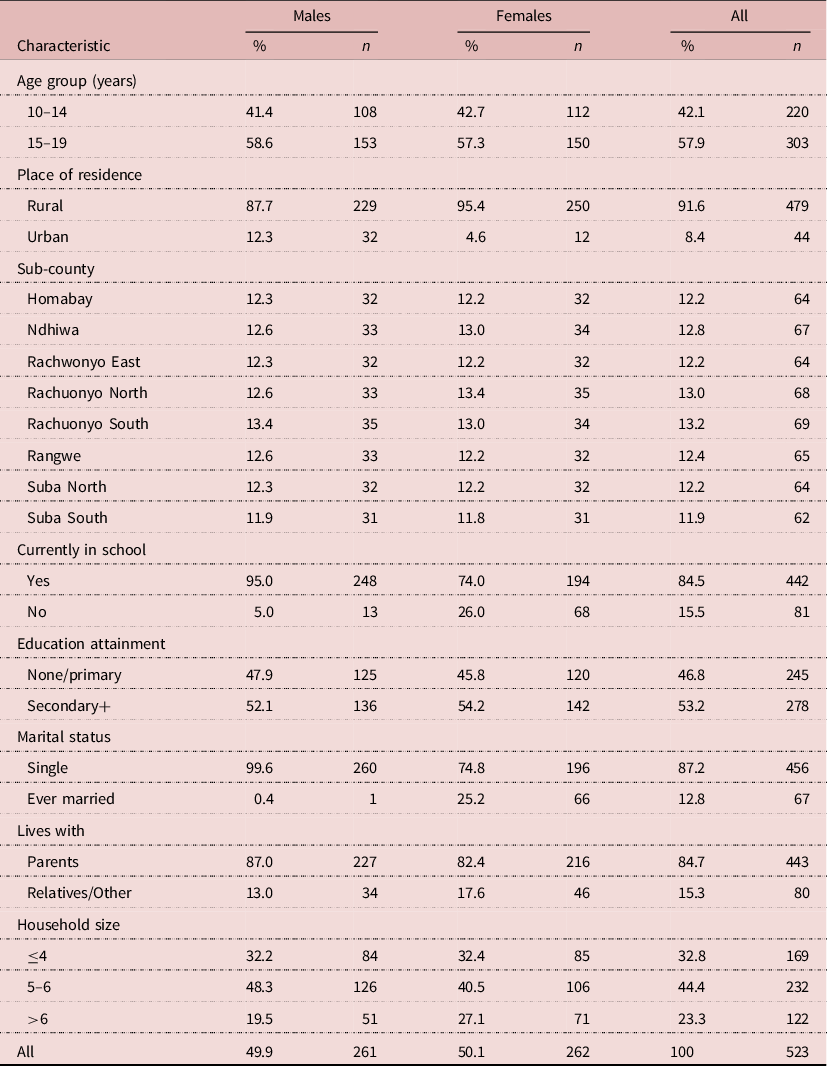
The characteristics of study participants by gender are presented in Table 1. Forty-two per cent (42%) of the respondents were aged 10–14 years, while the remaining 58% were aged 15–19 years. The sample was predominantly rural (92%), and evenly spread across the eight sub-counties. More adolescent boys (95%) than girls (74%) were still in school, but there was little gender difference in educational attainment, with just over half of both boys (52%) and girls (54%) having attained some secondary education. Most of the adolescents were never-married, and lived mainly with their parents.
Characteristics of adolescent respondents

Gender differences in adolescent SRH knowledge and behaviour
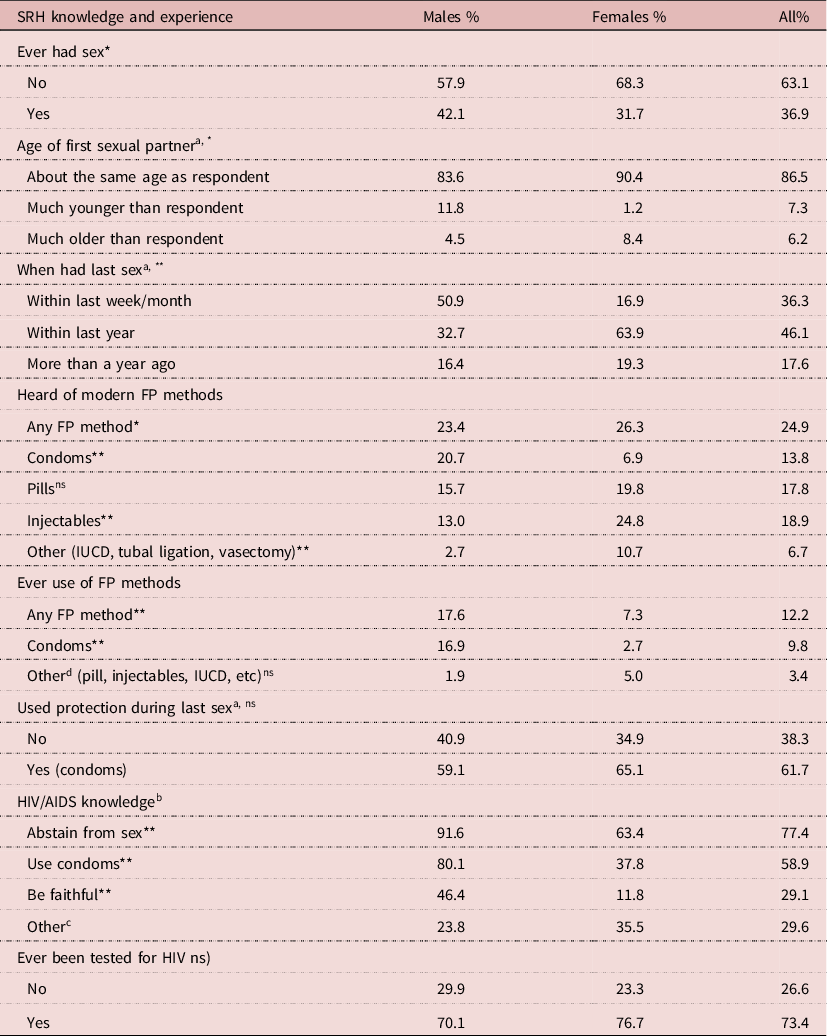
An examination of gender differences in adolescent SRH knowledge and behaviour, presented in Table 2, suggests that adolescent boys aged 10–19 years were more likely to report having engaged in sexual activity (42%) than girls (32%). This pattern is also evident in the reporting of most-recent sexual activity, with 51% of adolescent boys who ever had sex (compared with only 17% of girls) reporting having had last sex within the last week/month preceding the survey. For both adolescent boys and girls, their first sexual partner was predominantly about the same age, although boys were more likely to report a much younger sexual partner (boys 12%; girls 1%), while girls were somewhat more likely to report a much older first sexual partner (8% girls; 5% boys). Regarding family planning knowledge, a slightly higher percentage of girls (26%) than boys (23%) were aware of a family planning method, especially injectables (girls 25%; boys 13%) and other contraceptives including intrauterine contraceptive device (IUCD), tubal ligation (TL) and vasectomy (girls 11%; boys 3%). However, boys had significantly greater awareness of condoms (21%) than girls (7%). Ever use of family planning was significantly higher among boys (18%) than girls (7%). This was largely due to higher reported use of condoms by boys (17%) than girls (3%). Reported condom use among girls was mainly for protection against infection rather than family planning. Among those who ever had sex, 59% of adolescent boys versus 65% of adolescent girls reported using condoms for protection during last sex.
Adolescents’ sexual and reproductive health (SRH) knowledge and experience

a Among those who have had sex.
b HIV/AIDS knowledge on how to avoid getting HIV.
c Other includes: limit partners, avoid sharp objects, deep kissing, blood transfusion, circumcision, know HIV status.
d Pills and injectables are included in the ‘other’ category, given the low number of adolescents who have ever used these methods,
Significant gender difference, chi-squared test: *p<0.05; **p<0.01; ns: not significant.
Adolescent participants reported their knowledge about how HIV/AIDS could be avoided. Knowledge of abstinence, condom use and being faithful to avoid getting AIDS were all significantly higher among boys than girls. While almost all adolescent boys (92%) and the majority of the girls (63%) reported abstinence, only 46% of adolescent boys and 12% of adolescent girls reported being faithful to one partner as a way of avoiding HIV/AIDS. Use of condoms to avoid getting HIV/AIDS was also significantly higher among boys (80%) than girls (38%). Despite the lower knowledge levels, girls were slightly more likely to have been tested for HIV (77%) than boys (70%), although this difference was not statistically significant. Almost all adolescent boys and girls who had been tested for HIV received their results (i.e. 378/384=98%).
Adolescent SRH knowledge versus behaviour
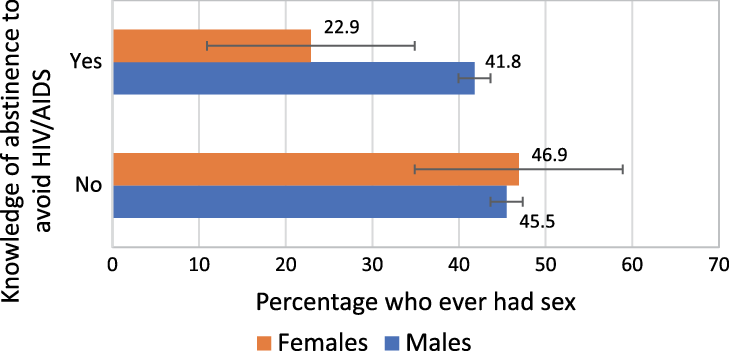
In this section, the extent to which adolescent SRH knowledge translates into desirable behaviour is examined. Overall, knowledge about abstinence as a way of avoiding HIV/AIDS is associated with sexual abstinence (p=0.017), but there are notable gender differences. Female adolescents who know that abstinence is one way of avoiding HIV/AIDS are more likely to abstain from sex (p<0.001), but there is no evidence that knowledge of abstinence as a way to avoid HIV/AIDS has any association with reported abstinence among male adolescents (p=0.743). For instance, adolescent females who have knowledge about abstinence as a way of avoiding HIV/AIDS are about half as likely to have ever had sex (23%) as those without knowledge (46%), but there was no statistically significant difference between adolescent boys who have this knowledge (42%) versus those who do not (46%) (see Figure 1).
Adolescents’ knowledge of sexual abstinence to avoid HIV/AIDS versus sexual activity by gender.

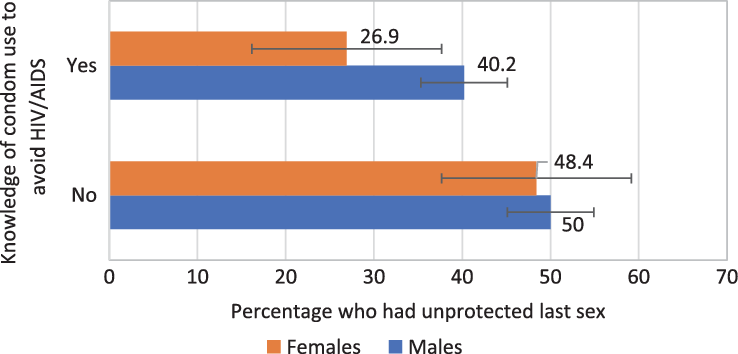
Among adolescents who have had sex, knowledge of condoms as a way of avoiding HIV/AIDS was only marginally associated with use of protection (condoms) during last sex among female adolescents (p=0.047), and not significant for males (p=0.714) (based on Fisher’s Exact test since the chi-squared test was not valid due to the limited number of male adolescents who have ever had sex and didn’t know that condoms can protect against HIV/AIDS). Almost half (48%) of sexually active adolescent females who did not know of condom use to avoid getting HIV/AIDS had unprotected last sex, compared with about quarter (27%) of those with knowledge. The difference for males was smaller (50% versus 40%) and not significant (see Figure 2).
Adolescents’knowledge of condom use to avoid HIV/AIDS versus having unprotected sex.

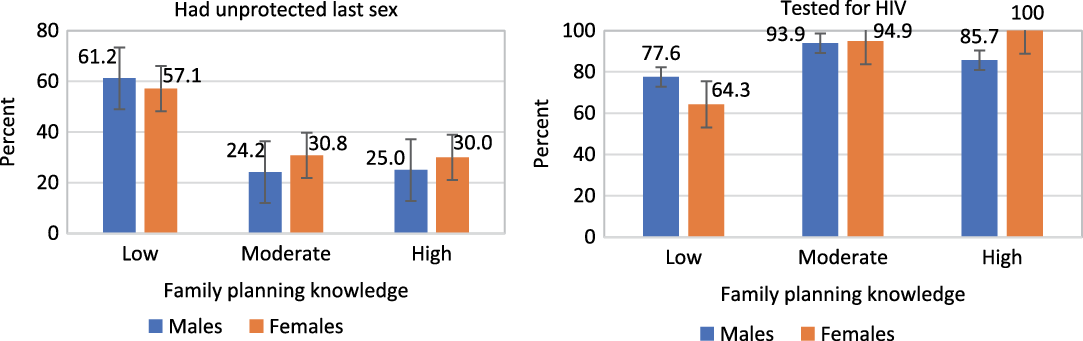
Besides using protection during sex to avoid the spread of HIV/AIDS, HIV testing is an important part of the strategy to combat the HIV epidemic, and SRH knowledge is expected to play an important role. Among those who were sexually active (i.e. ever had sex), knowledge of family planning was significantly associated with use of protection during last sex among males, and HIV testing among females (Figure 3).
Association of FP knowledge with unprotected last sex and HIV testing among sexually active adolescents by gender.

Bivariate analysis of factors associated with adolescent SRH behaviour
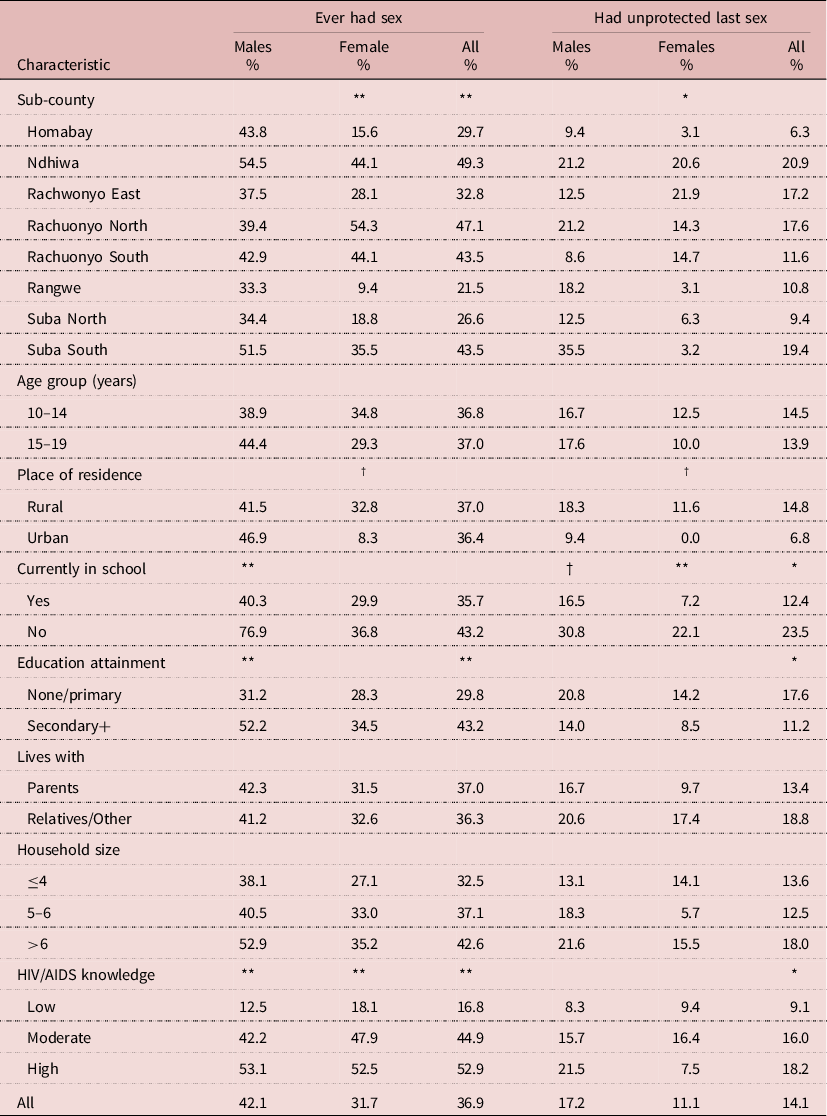
Results of bivariate analysis of the association between adolescents’ characteristics (including background socio-demographics and SRH knowledge) and sexual behaviour (ever had sex and unprotected last sex) are presented in Table 3. There were significant sub-county variations in the proportion of adolescents who have had sex or recent unprotected sex, especially for female adolescents. The proportion of female adolescent who have had sex ranges from below 10% in Rangwe to above 50% in Rachuonyo North. For unprotected last sex, these proportions range from below 5% in the socioeconomically better off sub-counties of Rangwe, Homabay and Suba South to more than 20% in the more socioeconomically deprived sub-counties of Rachuonyo East and Ndhiwa.
Bivariate analysis of factors associated with adolescent sexual activity by gender

† Significance based on Fisher’s Exact test due to insufficient cases for valid chi-squared test.
Chi-squared significance: *p<0.05; **p<0.01.
Observed patterns suggest that education is perhaps one of the most significant factors in both sexual activity and having unprotected sex. The proportion of adolescent boys who have had sex was significantly lower (p<0.01) for those in school (40%) than those not in school (77%). Similar patterns were observed for girls, but the difference was not significant (in school, 30%; out of school, –37%). For adolescent girls, being in school was particularly protective for engaging in unprotected sex. Adolescent girls in school were significantly less likely to have unprotected last sex (7%) than those out of school (22%) (p<0.01). While adolescents (especially boys) with secondary education were more likely to report having had sex than those with primary or no education, they were less likely to have unprotected last sex.
An anomaly is observed in the findings in that although HIV/AIDS knowledge may be expected to lead to safer sexual behaviour, adolescent boys and girls with higher HIV/AIDS knowledge were more likely to have initiated sexual activity, and overall, those with higher HIV/AIDS knowledge were more likely to have had unprotected sex than those with lower knowledge. For both adolescent boys and girls, less than 20% of those with low HIV/AIDS knowledge had ever had sex compared with more than 50% of those with high knowledge. The overall percentage of those who had unprotected sex was higher among those with high HIV/AIDS knowledge (18%) than those with low knowledge (9%).
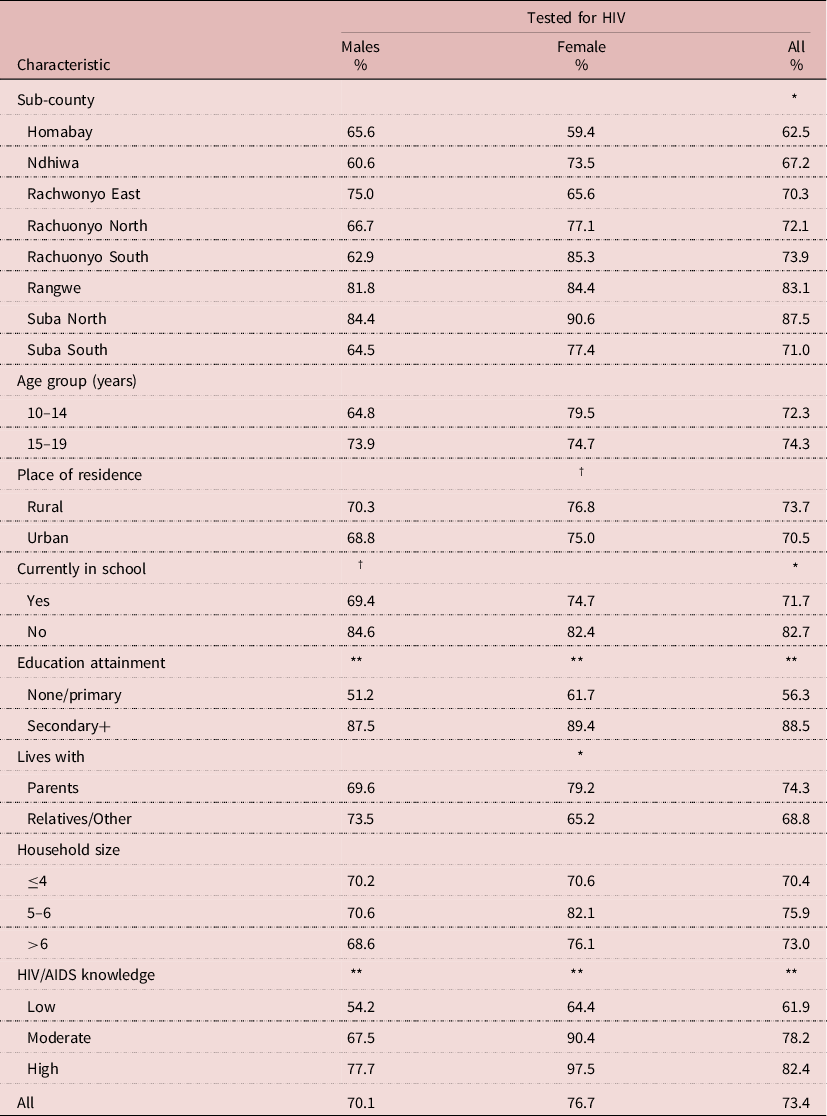
Bivariate analysis of factors associated with HIV testing among adolescent boys and girls is presented in Table 4. Similar to patterns observed above for sexual behaviour, education (attainment and school enrolment) and SRH knowledge are the most significant factors in HIV testing. While the patterns for educational attainment are consistent with expectation – adolescent boys and girls with at least secondary education are significantly more likely to have been tested for HIV (p<0.001) – it is surprising to note that school enrolment is negatively associated with HIV testing. Overall, 72% of adolescents in school, compared with 83% of adolescents out of school, had been tested for HIV (p=0.039). For both adolescent boys and girls, higher HIV knowledge is associated with higher HIV testing (p<0.01), the relationship being particularly strong for girls.
Bivariate analysis of factors associated with HIV testing by gender

† Significance based on Fisher’s Exact test due to insufficient cases for valid chi-squared test.
Chi-squared significance at: *p<0.05; **p<0.01.
Multilevel logistic regression analysis of predictors of adolescent SRH behaviour
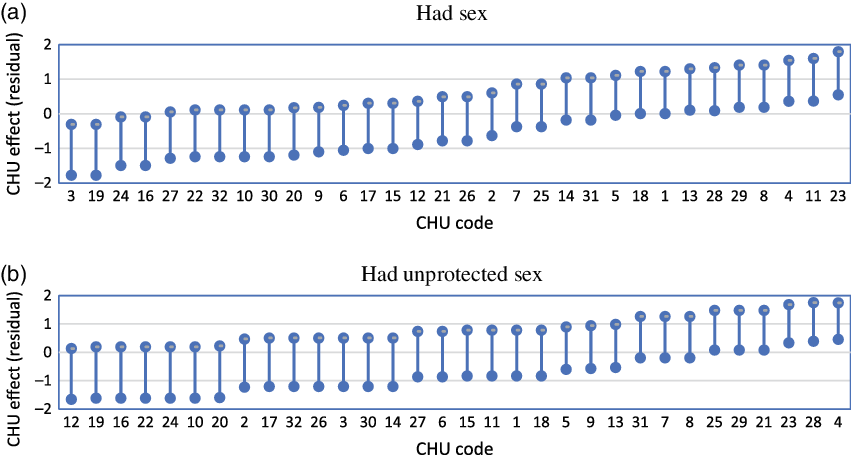
Multilevel logistic regression analysis was used first to examine the variations in the outcomes across CHUs. The results show no evidence of significant variations in HIV testing, but there are significant variations in levels of both having had sex (variance estimate=0.61, SE=0.2267) and unprotected sex (variance estimate =0.66, SE=0.3182) across CHUs in the initial variance components model without any predictors. These variance estimates suggest that about 15% (0.61/(0.61+3.29)) and 17% (0.66/(0.66+3.29)) of the total variation in having had sex and unprotected sex, respectively, are attributable to CHU factors, the remainder being attributable to individual adolescent factors. The CHUs are ordered from the lowest to the highest proportion of adolescents who ever had sex or had unprotected last sex using simultaneous confidence intervals in Figure 4a and b, respectively.
95% simultaneous confidence intervals for CHU effects on: a) having sex and b) having unprotected sex. CHU codes: 1-Asego A; 2-Boya; 3-Central Genga; 4-Kaguria; 5-Kakoko; 6-Kanam; 7-Kanyarwanda; 8-Kasewe B; 9-Kasimba; 10-Kasirime Kawanga; 11-Kawere E; 12-Kawere W; 13-Kawino; 14-Kibwer; 15-Kadumo W; 16-Kokoko; 17-Komolo; 18-Kowuor E; 19-Lower N; 20-L Tonga; 21-Miriu B; 22-Ogongo B; 23-Racher; 24-Rongo; 25-Seka; 26-Township; 27-U Kakwajok; 28-U Tonga; 29-Wagwe N; 30-Wakinga; 31-Waware; 32-Waware BN.

The proportion of adolescents who have had sex was significantly lower than average in socioeconomically relatively better off CHUs, including Central Genga (Rangwe), Lower North (Homabay), Rongo (Rachuonyo East) and Kokoko (Rangwe), but highest in the relatively deprived CHUs, including Rachar (Ndhiwa), Kawere East (Rachuonyo South) and Kaguria (Ndhiwa), which were all well above average. The proportion reporting unprotected sex was also well above average in Kaguria and Rachar, both in Ndhiwa, and Upper Tonga (Suba South) CHUs.
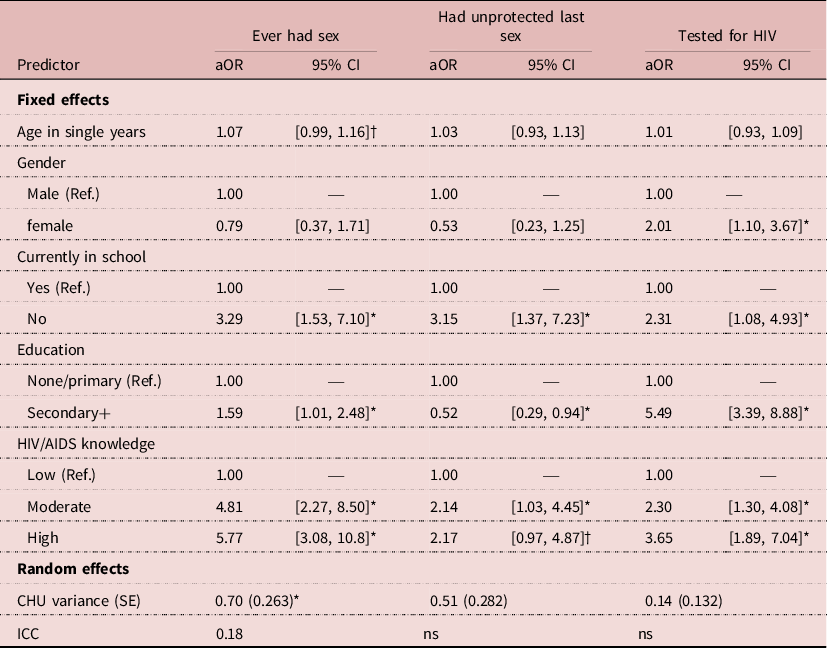
The predictors were included in the model (in successive stages) to enable an assessment of the extent to which the earlier observed patterns from bivariate analysis could be attributable to various confounding factors. For instance, to what extent are adolescents with higher educational attainment more likely to have started sexual activity due to older age or, to what extent is the association between HIV/AIDS knowledge and HIV testing attributable to educational attainment, since those with higher education also have higher knowledge? Only significant predictors were presented in the final model to minimize unnecessary noise in the models. However, all models included age in completed years (albeit not significant) to control for duration of exposure to the risk of experiencing specific outcomes (see Table 5).
Average odds ratios (aOR) for having had sex, unprotected last sex and being tested for HIV

*p<0.05; †p<0.1.
Consistent with results from the bivariate analysis, school enrolment, educational attainment and HIV/AIDS knowledge were the most important predictors of adolescent SRH behaviour outcomes considered in the analysis. Being out of school was associated with increased odds (about triple) of having had sex or having unprotected sex. The odds of having had HIV testing was also higher among out-of-school adolescents by about double, compared with those who were in school. Higher educational attainment was associated with increased odds of having had sex and HIV testing, but reduced odds of having unprotected sex. Those with at least secondary education had about 60% higher odds of having had sex, and about half odds of unprotected sex compared with counterparts of similar characteristics with primary or no education. For HIV testing, the odds for those with at least secondary education were about five times higher. HIV/AIDS knowledge was consistently positively associated with HIV testing, but also generally positively associated with both having had sex and unprotected sex.
Gender was only significant for HIV testing, and not for having had sex or unprotected sex. Adolescent girls had about double the odds of HIV testing than their male counterparts of similar characteristics (age, school enrolment, educational attainment and HIV/AIDS knowledge). Interactions of various covariates with gender were considered to assess gender differences in the predictors of adolescent SRH outcomes, but none of the interactions was significant, presumably due to sample size limitations. However, there was some indication that being enrolled in school was more protective for boys than girls in having had sex (p<0.1).
After controlling for significant predictors, there was no evidence of significant variations in unprotected sex across CHUs. A closer examination showed that the observed variations ceased to be significant once gender and school enrolment were included in the model, suggesting that apparent variations were explained by these factors. However CHU variations in sexual activity (ever had sex) remained significant even after controlling for the significant predictors. The variance estimates in the final model suggest that about 18% of the total unexplained variation in initiation of sexual activity is attributable to CHU factors while the remaining 82% is attributable to unobserved individual adolescent characteristics.
Discussion
This paper set out to examine gender differences in SRH knowledge and behaviour of adolescents; establish the association between SRH knowledge and behaviour among female and male adolescents; and identify predictors of SRH behaviour (sexual debut, unprotected sex, HIV testing) among female and male adolescents in Homabay County in western Kenya. The overall findings reveal significant gender differences in SRH knowledge and behaviour of adolescents in Homabay County. Reported sexual activity (have ever had sex, or had last sex within the past week/month) was higher among adolescent males, who were also significantly more likely to report knowledge of different ways to avoid getting HIV/AIDS (including sexual abstinence, use of condoms and being faithful) than adolescent females. Despite the relatively lower HIV/AIDS knowledge among adolescent females, there was evidence of higher HIV testing among adolescent females than males, especially once other predictors of HIV testing (including school enrolment, education attainment and HIV/AIDS knowledge) were controlled for in the multivariate analysis. Also, notable gender differences were observed in the translation of SRH knowledge into appropriate behaviour, with adolescent females displaying a stronger association between knowledge and appropriate behaviour. Adolescent females who reported knowledge of abstinence as a way of avoiding HIV/AIDS were less likely to have had sex, and those who reported knowledge of condom use as a way of avoiding HIV/AIDS were less likely to have unprotected sex, compared with those with no knowledge. There was no evidence of a significant difference for adolescent males with/without similar knowledge.
Besides HIV knowledge and gender, school enrolment and educational attainment are particularly strong predictors of adolescent SRH behaviour. Out-of-school adolescents were more likely to have had sex or have unprotected sex, but they were also more likely to have been tested for HIV, compared with their in-school counterparts with similar characteristics. While higher educational attainment was associated with higher reported sexual activity, adolescents in secondary school were significantly less likely to engage in unprotected sex and more likely to have been tested for HIV, compared with their counterparts of similar characteristics (including age and CHU of residence) with primary or no education. Also, there were significant variations in adolescent sexual activity across CHUs, with adolescents living in the more socioeconomically deprived CHUs being more likely to have had sex or engage in unprotected sex. Although age may be expected to be a strong predictor of adolescent SRH behaviour, there was no evidence of a significant difference between younger adolescents aged 10–14 and those aged 15–19 years who have had sex, had unprotected sex or had been tested for HIV.
The observed gender differences in the proportion of adolescents aged 10–19 years who have ever had sex may seem unexpected, especially since the relatively lower age of puberty for girls may be expected to lead to earlier sexual activity among adolescent girls than boys. Earlier studies on pubertal timing and sexual experiences of adolescent boys found mixed results (Halpern et al., Reference Halpern, Udry, Campbell and Suchindran1993; Bello et al., Reference Bello, Fatusi, Adepoju, Maina, Kabiru, Sommer and Mmari2017), where pubertal changes and sexual experiences were not dependent on changes in hormonal levels but were also influenced by social stimuli. Societal expectations may be a factor in the difference in behaviour between boys and girls, where girls are expected to be less active sexually than boys. A systematic qualitative meta-synthesis of adolescent sexual learning and behaviour in East Africa (Knopf et al., Reference Knopf, McNealy, Al-Khattab, Carter-Harris, Oruche, Naanyu and Draucker2017) found a significant influence of gendered cultural norms, where girls were not expected to pursue sex as much as boys. Furthermore, it has been noted that biological followed by psychological maturity differences between girls and boys may explain the differences in sexual activity; younger adolescent girls may have a higher perception of the negative consequences of sexual activity, particularly pregnancy (Sommer, Reference Sommer2011).
The higher reported sexual activity among adolescent boys than girls observed in this paper is not surprising given the tendency of adolescent boys to over-report sexual activity, while girls tend to under-report sexual activity (Mensch et al., Reference Mensch, Hewett and Erulkar2003). The patterns observed here are consistent with national findings from the most recent Kenya Demographic and Health Survey (KDHS) conducted in 2014, which display similar patterns. The median age at first sexual intercourse in Kenya was 18.0 years for girls and 17.4 years for boys. About 12% of young females and 21% of young males aged 15–24 reported having had sex by the age of 15. Similarly, 36% of girls and 41% of boys aged 15–19 years had had sex (KNBS & ICF Macro, 2015). These patterns are consistent with evidence elsewhere, which showed a higher proportion of adolescent boys than girls ever having had sex (Romero-Estudillo et al., Reference Romero-Estudillo, González-Jiménez and Mesa-Franco2014; Odimegwu & Somefun, Reference Odimegwu and Somefun2017). Besides the KDHS findings, evidence from a cross-sectional study showed that male participants were more likely to engage in sexual relationship and have a high number of sexual partners than the female participants (Romero-Estudillo et al., Reference Romero-Estudillo, González-Jiménez and Mesa-Franco2014). This pattern is supported by findings in other LMIC settings by other researchers (Khan & Mishra, Reference Khan and Mishra2008; Blanc et al., Reference Blanc, Tsui, Croft and Trevitt2009), also suggesting that young women are less likely than young men to engage in high-risk sexual behaviours.
Although correct SRH knowledge among adolescents would be expected to translate into appropriate SRH behaviour, existing studies in many LMICs suggest that protective SRH knowledge alone does not necessarily result in desired safe-sex behaviour (Hulton et al., Reference Hulton, Cullen and Khalokho2000; Gallant & Maticka-Tyndale, Reference Gallant and Maticka-Tyndale2004; Kwigizile et al., Reference Kwigizile, Shao, Mtango, Sonda, Moshi and Chilongola2013). A wide range of other factors (e.g. negative norms/fears/attitudes and service access barriers) are important in adolescent uptake of SRH services (Nalwadda et al., Reference Nalwadda, Mirembe, Byamugisha and Faxelid2010; Frost et al., Reference Frost, Lindberg and Finer2012; Haider & Sharma, Reference Haider and Sharma2012; Chandra-Mouli et al., Reference Chandra-Mouli, McCarraher, Phillips, Williamson and Hainsworth2014). A systematic review of school-based sexual health interventions in sub-Saharan Africa concluded that most interventions led to an improvement in knowledge, attitudes and intentions, but few found evidence of lasting behavioural changes (Paul-Ebhohimhen et al., Reference Paul-Ebhohimhen, Poobalan and van Teijlingen2008). In a school-based intervention in Thailand, secondary students who were exposed to a comprehensive sex education programme had greater knowledge than other students, and were more likely to intend to refuse sex and to decrease frequency of sex, but no change was seen in consistent condom use (Thato et al., Reference Thato, Jenkins and Dusitsin2008). Regarding HIV knowledge, it has long been recognized that neither the abstinence-only nor the ABC (abstinence, being faithful and condom use) focus has brought about the desired adolescent SRH outcomes (Hindin & Fatusi, Reference Hindin and Fatusi2009). Also, evidence from a qualitative study in Ghana among adolescents aged 15–19 showed that 95% of the respondents exhibited some knowledge about contraceptives, but this high knowledge did not translate into contraceptive use as the prevalence was quite low at 18% (Agyemang et al., Reference Agyemang, Newton, Nkrumah, Tsoka-Gwegweni and Cumber2019). In this paper, overall high HIV knowledge is observed to be significantly associated with higher HIV testing, but it is also associated with higher sexual activity.
The translation of SRH knowledge into appropriate behaviour being more apparent for girls than boys may reflect genuine differences or could be an artefact of data quality/reporting, given societal expectations. Similar patterns have been observed from national data in Kenya, where a lower proportion of young women (49%) compared with young men (58%) aged 15–19 had comprehensive knowledge of HIV, but a higher proportion of female adolescents (53%) than male counterparts (34%) reported condom use during their sexual debut (KNBS & ICF Macro, 2015). The gender differentials in translation of SRH knowledge to appropriate behaviour may be attributable to risk perception of infection including HIV/AIDS. Previous studies in Botswana (Ngome, Reference Ngome2016) and Cameroun (Meekers & Klein, Reference Meekers and Klein2002) have reported the low-risk perception of infection to be associated with an adolescent’s non-use of SRH service, like contraceptives. Studies have shown that a higher proportion of women than men perceive themselves as being at a high HIV risk (Sheppard et al., Reference Sheppard, Madise and Hennink2004; Wood et al., Reference Wood, Li, Miller, Hogg, Montaner, Schechter and Kerr2005). Therefore, the high perception of risk among adolescent girls could conceivably shape their behaviour. This may also partly explain why a lower proportion of girls in the current study ever had sex compared with the boys.
The observed gender differences may be explained by the difference in levels of fear for STI among boys compared with girls, who are also concerned about avoiding situations that may lead to pregnancy (Seth et al., Reference Seth, Lang, Diclemente, Braxton, Crosby, Brown, Hadley and Donenberg2012). Other possible reasons include the likelihood of boys having casual sex partners (Odimegwu & Somefun, Reference Odimegwu and Somefun2017) and their affinity for seizing opportunity, exploration of interest, physical excitement and drug consumption (Romero-Estudillo et al., Reference Romero-Estudillo, González-Jiménez and Mesa-Franco2014; Ssebunya et al., Reference Ssebunya, Matovu and Makumbi2019). These factors may account for translation of SRH knowledge into appropriate behaviour happening more for girls than boys. This implies that responsiveness in sexual behaviour due to knowledge interventions is expected more for girls than for boys, and more than just knowledge is required to impact the boys. Integrated behaviour change interventions may need to be the focus to enhance impact of SRH interventions that translate into positive target behaviours.
Education (school enrolment and educational attainment) is observed to be among the strongest predictors of adolescent SRH behaviour in Homabay County. The overall findings confirm the protective effect of education, consistent with findings elsewhere (Bukenya et al., Reference Bukenya, Nakafeero, Ssekamatte, Isabirye, Guwatudde and Fawzi2020), especially in having unprotected sex (Gupta & Mahy, Reference Gupta and Mahy2003; Mee et al., Reference Mee, Fearon, Hassan, Hensen, Acharya, Rice and Hargreaves2018). However, the observed gender differences in the impact of education (i.e. the finding indicating that being enrolled in school was more protective for boys than girls in initiation of sexual activity) contradicts finding from earlier studies (Gupta & Mahy, Reference Gupta and Mahy2003; Clark & Mathur, Reference Clark and Mathur2012), which highlighted the importance of education for adolescent girls’ SRH outcomes. In particular, the findings of Clark and Mathur (Reference Clark and Mathur2012) suggest that sexual activity and transition to family formation are incompatible with adolescent girls’ schooling, while sexual/romantic relationships have no impact on schooling for adolescent boys, unless a partner becomes pregnant.
Furthermore, the finding that being out of school was associated with higher HIV testing, even after controlling for age and other significant covariates, was unexpected. Results of an earlier quantitative study from nine countries in sub-Saharan Africa found strong evidence that being currently in school was associated with reduced odds of being HIV positive in Lesotho (aOR: 0.37; 95% CI: 0.17–0.79), Swaziland (aOR: 0.32; 95% CI: 0.17–0.59) and Uganda (aOR: 0.48: 95% CI: 0.29–0.80), but no statistically significant evidence for this was observed in Kenya, Malawi, Mozambique, Tanzania, Zambia or Zimbabwe (Mee et al., Reference Mee, Fearon, Hassan, Hensen, Acharya, Rice and Hargreaves2018). While the low prevalence of HIV among in-school adolescents could partly explain the low HIV testing in countries where being in school was associated with low HIV prevalence, the observed lower HIV testing among in-school adolescents in countries such as Kenya have clear policy/programme implications. Other researchers have reported that HIV testing rates for Kenya are lowest among adolescents aged 15–19 years, with only 23.5% reporting awareness of their status (KNBS & ICF Macro, 2015). School enrolment being associated with lower HIV testing could be due to the stigma associated with HIV testing, where communities expect no sexual activity among adolescents in school. Hence, many in-school adolescents may avoid HIV testing so as not to be suspected of engaging in sexual activity by parents and the community (Sam-Agudu et al., Reference Sam-Agudu, Folayan and Ezeanolue2016). Furthermore, school attendance, particularly in boarding institutions, may limit opportunities for HIV testing services as compared with more opportunities for out-of-school youth to reach facilities in the CHUs with youth friendly SRH services. Health facilities and school institutions need to partner in order to deliver appropriate in-school SRH services. As noted by Sommer (Reference Sommer2011), public health interventions tend to focus on children under 5 years of age and the health issues of reproductive-age adults, with those in between being given minimal attention.
Although age could be expected to be a strong predictor of sexual activity, unexpectedly there was no evidence of significant differences between the ages 10–14 and 15–19 in proportions of adolescent boys or girls who ever had sex, had unprotected last sex or tested for HIV. This is surprising since older adolescents have had a longer exposure to the risk of having sex, and previous evidence has shown that older adolescents are more knowledgeable and more likely to use SRH services than their younger counterparts (Obare et al., Reference Obare, Birungi, Undie, Wanjiru, Liambila and Askew2011). The lack of any significant differences by age has important implications in terms of adolescent subgroups to target with specific SRH interventions. Observed patterns could be due to a number of factors. Firstly, it may mean that current sources of adolescent SRH (ASRH) information and education (including social media and general community sources) could be lacking age-appropriate messages, which may be causing excitement and raised interest to experiment rather than causing the intended protective behaviour. Secondly, it is possible that sexual intercourse happens more as a result of coercion or violence, which had been linked to an increasing proportion of adolescents reporting having had sex before age 15 in SSA settings (Doyle et al., Reference Doyle, Mavedzenge, Plummer and Ross2012). The lack of clear systems in the community and in schools to cater for different age groups of adolescents may be allowing the younger adolescents to learn from their older counterparts, who in turn may be sharing their personal experiences that are adopted by the young ones and/or subject young ones to coerced sex and related behaviour. This implies policy and interventions would need to integrate strong differentiation by age categories regarding ASRH information and strategies for information delivery as a matter of urgency, especially among younger adolescents. There is need for a comprehensive approach that engages schools, health providers, peers and parents/adults, as mentioned in various SRH interventions for adolescents (Sommer, Reference Sommer2011; Bello et al., Reference Bello, Fatusi, Adepoju, Maina, Kabiru, Sommer and Mmari2017; Knopf et al., Reference Knopf, McNealy, Al-Khattab, Carter-Harris, Oruche, Naanyu and Draucker2017; Mburano et al., Reference Mburano, Djourdebbe and Ekambi2020).
This was a cross-sectional pilot survey of ASRH knowledge and behaviour, aimed at providing basic information to inform relevant ASRH interventions at the study setting. While the study largely met its primary objective – to provide useful findings to guide the development of relevant ASRH interventions – there are important methodological limitations worth bearing in mind when interpreting the findings. First, given the cross-sectional nature of the study design, it is important to recognize that causality cannot be inferred from observed relationships. For instance, it is not possible to establish whether the observed negative relationship between educational attainment and having unprotected sex was due to higher education reducing the risk of unprotected sex, or those engaged in unprotected sex being more likely to drop out of school due to adverse outcomes such as adolescent pregnancy, especially for girls. Therefore, it is important to recognize that the relationships reported in this paper refer to associations between variables rather than causal relationships.
Second, it is important to note that reported sexual activity in this paper was based on face-to-face interviews, which are prone to reporting bias, especially among adolescent girls. In a study of consistency in the reporting of sexual behaviour by adolescent girls in Kenya, based on a comparison of interviewing methods, results of audio computer assisted self-interview (ACASI) have suggested that adolescent girls in Kenya have more complex and perilous sex lives than traditional face-to-face surveys of sexual activity indicated (Hewett et al., Reference Hewett, Mensch and Erulkar2004). Thus, reporting bias may partly explain the observed gender differences in sexual activity. Future research should consider complementing face-to-face interviews with innovative self-administered forms of questionnaire completion such as online survey tools for collecting sensitive ASRH information that may be prone to reporting bias.
Finally, being a pilot survey, detailed data to enable a comprehensive understanding of patterns observed were lacking. For instance, it was not possible to establish the extent to which the observed higher HIV testing among female adolescents could be linked to antenatal HIV testing (Gazimbi & Magadi, Reference Gazimbi and Magadi2019) since reproductive information on pregnancy and childbearing was lacking. Also, although parental background characteristics are recognized as potential predictors of adolescent behaviour (Mburano et al., Reference Mburano, Djourdebbe and Ekambi2020), such information was not included as covariates in the analysis since relevant data were not collected in the pilot survey. Furthermore, while the application of multilevel models has enabled an understanding of important community variations in ASRH outcomes at the study setting, the lack of significant variations in unprotected sex across CHUs is curious, given the demographic, geographical and socioeconomic diversity across Homabay County (relatively rich Rachuonyo East to relatively poor Suba South, CHUs in urban centres and fishing beach communities). The limited number of cases per CHU limited the study’s ability to undertake a comprehensive analysis of contextual community-level factors. It is expected that follow-up future studies will collect more detailed information to enable a more comprehensive analysis of individual, familial and societal predictors of adolescent sexual behaviour.
Acknowledgments
The study reported in this paper was a collaboration between the University of Hull (UK) and the Tropical Institute of Community Health and Development for Africa (TICH), Kenya. The authors recognize the contribution of Vincent Were for designing electronic data collection mechanisms and process, spearheading the training of research assistants in data collection, as well as supervising data capture. The authors’ appreciation goes also to the adolescent girls and boys in Homabay County, who participated in the study and shared relevant information with the research team.
Funding
The research was funded by Research England through QR-GCRF pump-priming fund (EAL012) from the University of Hull, UK.
Conflicts of Interest
The authors have no conflicts of interest to declare
Ethical approval
Research ethics requirements were strictly observed during the study. The authors assert that all study procedures complied with the ethical standards of the relevant national and institutional committees on human experimentation and with the Helsinki Declaration of 1975, as revised in 2008. The study protocols were reviewed and approved by institutional ethics committees in the UK (University of Hull) and in Kenya (Masinde Muliro University Ethical Review Board).