INTRODUCTION
Introductions of non-indigenous species, resulting intentionally or accidentally from anthropogenic activities, represent a great concern because of the negative ecological, economic and health hazard impacts associated with invasions of some of these species far from their native distribution area (El Haddad et al., Reference El Haddad, Capaccioni Azzati and García-Carrascosa2007).
The anthropogenic translocation of marine species between disjunct biogeographical regions has three significant recognized vectors: the digging of canals, accidental transport on ships (as fouling or in ballast water) and introductions associated with aquaculture (Taylor et al., Reference Taylor, Williams and Strong2001; Calado & Chapman, Reference Calado and Chapman2006). From these, the accidental transport of species as hull fouling is recognized nowadays as an important, current and ongoing vector for species translocation (Gollasch, Reference Gollasch2002).
Tubicolous polychaete worms belonging to the sister families Sabellidae and Serpulidae are common and troublesome fouling organisms found on ships’ hulls. The dispersal of several species, including Hydroides elegans (Haswell), H. ezoensis Okuda, H. sanctaecrucis Krøyer in Mörch and Ficopomatus enigmaticus (Fauvel), to subtropical and warm temperate harbours in different oceans and hemispheres has been well documented and attributed to shipping, particularly as fouling (Ben Eliahu & ten Hove, Reference Ben-Eliahu and ten Hove1992; Zibrowius, Reference Zibrowius1992; Çinar, Reference Çinar2006; Lewis et al., Reference Lewis, Watson and ten Hove2006).
Some sabellids have been translocated from their native distribution in ballast water as Sabella spallanzanii (Gmelin), which is a common species in the Mediterranean Sea, living in shallow waters (<30 m depth) in harbours, over dock pilings, rocks, seagrass mats, or sand. It is a large species with a high growth rate (10 cm y−1) that has become established in Australian waters, where it competes for food with native oysters and clams (Giangrande & Petraroli, Reference Giangrande, Petraroli and Dauvin1994; Giangrande et al., Reference Giangrande, Licciano and Pagliara2000).
Other sabellimorph species have been transported due to their close association with their aquaculture host: Terebrasabella heterouncinata Fitzhugh & Rouse, a parasite of an African abalone, was introduced to farms in California, where it has caused extensive damage to native fauna and considerable economic losses (Culver et al., Reference Culver, Kuris and Beede1997). An introduction associated with shrimp aquaculture was recorded for Ficopomatus miamiensis (Treadwell), a species from Florida, detected in shrimp farms and estuaries from the south-eastern Gulf of California (Salgado-Barragán et al., Reference Salgado-Barragán, Méndez and Toledano-Granados2004) but, due to its recent detection, its effects in the colonized habitat are still unknown.
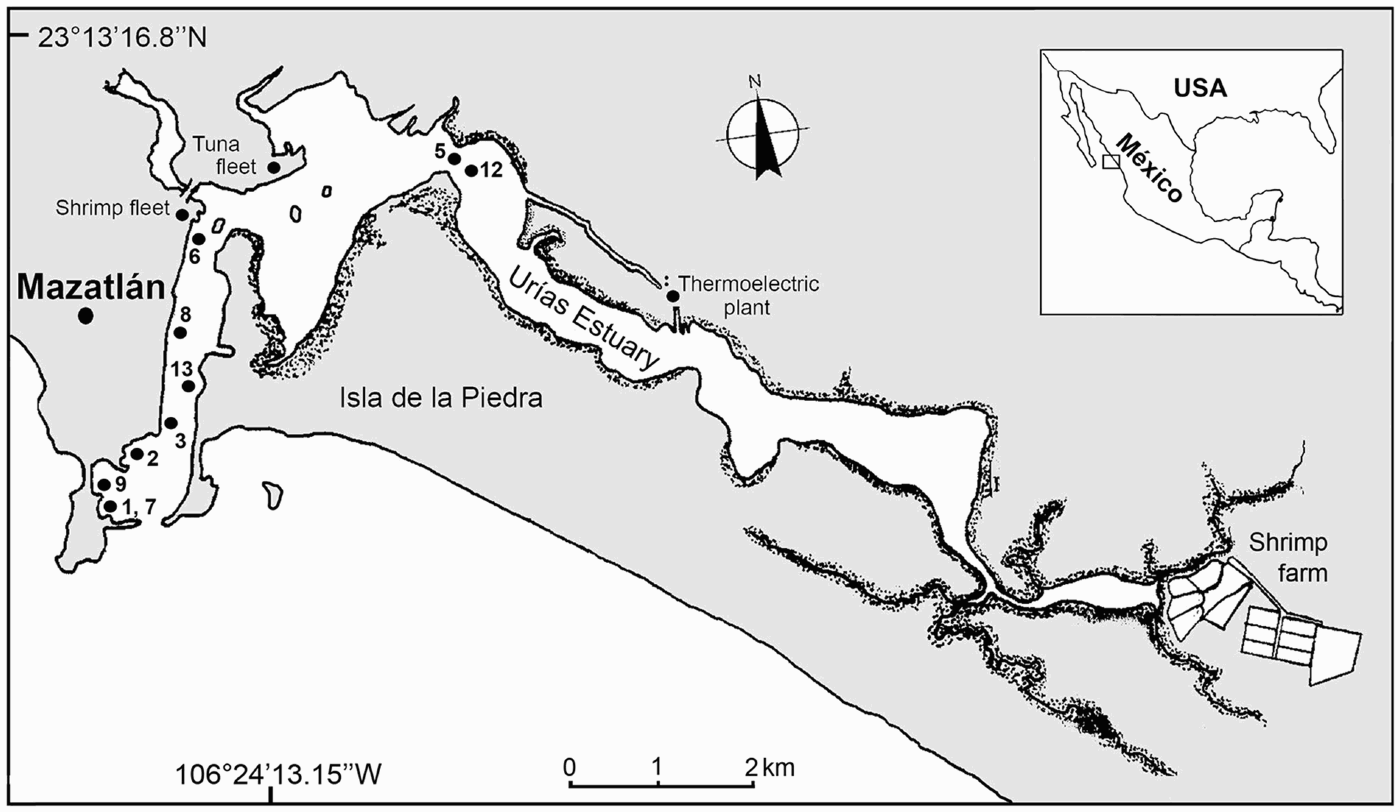
Although different international agencies are involved in the development of legislation concerning the introduction and control of non-indigenous species, Mexico does not regulate ships’ ballast water or fouling biota of ships and boats and has few regulations to aquaculture management, live seafood, pet and bait trade (Okolodkov et al., Reference Okolodkov, Bastida-Zavala, Ibáñez, Chapman, Suárez-Morales, Pedroche and Gutiérrez-Mendieta2007). The country has 11,000 km of coastal line with 47 ports in the Pacific Ocean and 43 in the Gulf of Mexico and Caribbean; from them, the Mazatlán port in the south-eastern Gulf of California (Figure 1) is one of the most important ports in the Mexican Pacific in terms of commercial traffic of agricultural, industrial, fishing, automobiles and petroleum and derived products. It has a dense connection network throughout many ports in the world: Venezuela, Colombia, Ecuador, Brazil, Peru, Chile, Spain, Portugal, France, Italy, Greece, Cyprus, Malta, Lebanon, Libya, Syria, Saudi Arabia, United Arab Emirates, Romania, Bulgaria, Turkey, Egypt, Algeria, Morocco, Tunisia, South, western and eastern Africa (Anuario Estadístico de los Puertos de México, 2006). The Mazatlán port also records important movements of touristic cruises and boats that connect it with ports from the United States. These boats could take in their hulls’ fouling biota from the coasts of California to the gulf and vice versa.
Mazatlán port showing the sampling stations.

In order to improve the management and the regulations on the incoming biota, the region requires taking into account the knowledge of the regional biodiversity and the consideration of the impacts produced by the marine non-indigenous species. The first initiatives to detect non-native fauna in the harbour and in the inner waters of the Urías Estuary are recent. At least four non-native invertebrate species have been determined: the copepod Enhydrosoma lacunae Jakubisiak (Gómez, Reference Gómez2003); the ascidia Styela canopus Savigny and the serpulid Ficopomatus miamiensis (Salgado-Barragán et al., Reference Salgado-Barragán, Méndez and Toledano-Granados2004), and the false mussel Mytiliopsis adamsi Morrison (Salgado-Barragán & Toledano-Granados, Reference Salgado-Barragán and Toledano-Granados2006).
This study deals with the occurrence of the fouling non-indigenous sabellid polychaete Branchiomma bairdi (McIntosh), originally distributed in the Caribbean Sea, in the port of Mazatlán. This is the first record of this species in the eastern tropical Pacific. In this study the gamete morphology and reproductive mode of this species are also described.
MATERIALS AND METHODS
Sampling was carried out on hard anthropogenic substrata from ten stations located in the Mazatlán port and the adjacent lagoon, Urías Estuary (Figure 1). Dock pilings, buoys and hulls of vessels were also sampled. Salinity and temperature of the water were recorded. In each station, about 20-l of fouling biota was collected manually or by scraping the hard surfaces, placed in a bucket and covered with seawater for their transportation to the laboratory. Sorting to higher groups was conducted (Algae, Mollusca, Crustacea, Echinodermata, Tunicata, Cnidaria and Polychaeta). Sabellid worms were placed in an aquarium to document live coloration and observations over two days. Worms were anaesthetized with 7.5% magnesium chloride or menthol crystals, and fixed in 10% formalin–seawater or absolute ethanol. The specimens that were fixed in formalin were washed in the laboratory with tap water and transferred to 70% ethanol for long-term preservation, while the others were preserved in absolute ethanol.
General examination for Branchiomma bairdi was made under a stereomicroscope; chaetae and uncini were observed using a compound microscope. Scanning electron microscopy (SEM) was particularly useful to count the number of teeth per row on thoracic uncinal crests, as these characters are difficult to see under the light microscope. Digital photographs were taken to illustrate general morphology. One hundred complete specimens from Station 9 were measured to record the width of the posterior thorax, the body length (from peristomium to pygidium), the branchial crown length, the number of radiolar pairs and the number of thoracic and abdominal segments. Minimum and maximum values of these measures are given in the description. Sexual maturation was assessed doing a longitudinal section throughout the entire body length. Body sections were stained with methyl green to facilitate the observation of gametes and to record their distribution along thoracic and abdominal segments; oocytes do not stain and sperm tissue stains blue. When gametes were detected, a sample of gamete tissue was taken and placed in alcohol–glycerol on a slide and examined by a compound microscope. The diameter of 20 oocytes per each individual was measured on a micrometric slide.
Longitudinal sections from two specimens were made to record spermatozoa morphology by means of SEM, following the protocol by Dr Kirk Fitzhugh from Los Angeles County Museum of Natural History, Allan Hancock Foundation (LACM-AHF). It consists of the dehydration of specimens in a series of ethanol 70%, 80%, 90% and 100% as a first step. Sections in absolute ethanol were sequentially transferred to mixtures of absolute ethanol and hexamethyldisilazane (HMDS) with the following proportions: 2:1, 1:1, 1:2, and then into pure HMDS until the HMDS has completely evaporated, leaving the specimens completely dry and ready to be mounted onto the aluminium stubs using platinum tape and coated with gold for examination at the Laboratory of Scanning Electronic Microscopy from LACM-AHF.
Additional materials from Panama and Venezuela were examined from the reference collection of El Colegio de la Frontera Sur, Unidad Chetumal (ECOSUR) and specimens collected at Mazatlán port were deposited at the Colección de Referencia de Invertebrados del Laboratorio de Invertebrados Bentónicos, Instituto de Ciencias del Mar y Limnología (ICML), Unidad Académica Mazatlán, Universidad Nacional Autónoma de México (UNAM) and representative samples at LACM-AHF and ECOSUR. The following abbreviations are used in the Material Examined section: MATH: María Ana Tovar Hernández, DMF: Daniel Moreno Flores, SISV: Sergio I. Salazar-Vallejo.
SYSTEMATICS
Branchiomma bairdi. (A) Entire body, dorsal view; (B) same, ventral view. Scale bars: 1 cm.

Branchiomma bairdi. (A) Thorax, dorsal view; (B) same, ventral view; (C) strap-like stylodes from a lateral radiole; (D) dorsal lip and ventral sac; (E) dorsal lip blood vessels and radiolar skeleton; (F) oocyte and sperm, wet mounted. Scale bars: A–D, 1 cm; E, 0.3 cm; F, 75 µm.

Gametes of Branchiomma bairdi. (A) Longitudinal section of the body, arrow points to the gametes within a mesentery; (B) close-up of gametes, arrow points to an oocyte surrounded by spermatozoids; (C) close-up of spermatozoids. Scale bars: A, 0.5 cm; B, 80 µm; C, 6 µm.

Dasychone bairdi McIntosh, Reference McIntosh1885: 495–497, pl. 30A, figures 13–15; pl. 39A, figures 2, 9.— Monro, Reference Monro1933: 267.— Rioja, Reference Rioja1951: 513–516: pl. 1, figures 1–7.— Rioja, Reference Rioja1958: 286–287.
Branchiomma cf. bairdi—Capa & López, Reference Capa and López2004: 70, figure 5A–I.
Branchiomma bairdi—Tovar-Hernández & Knight-Jones, Reference Tovar-Hernández and Knight-Jones2006: 13–17, figures 3A–D, H–K, 9C–D, 10C, 11B.
MATERIAL EXAMINED
[UNAM-ICML] Mazatlán port, Sinaloa, Mexico. Catalogue no. EMU-8501A, Station 1, Club Naútico, 23°10′55.81″N 106°25′28.26″W, on floating dock, 30 cm, coll. MATH, 25 February 2008 (1 specimen). Catalogue no. EMU-8502B, Station 2, Ferry Station, 23°11′10.9″N 106°25′12.2″W, on metal dock pilings, 18.7°C, 37‰, 70 cm, coll. DMF & MATH, 4 March 2008 (5 specimens). Catalogue no. EMU-8502C, Station 3, Petróleos Mexicanos Station, 23°11′24.6″N 106°24′56.6″W, on metal dock pilings, 21.2°C, 36‰, 70 cm, coll. DMF & MATH, 4 March 2008 (18 specimens). Catalogue nos. EMU-8503, 8504, Station 5, Instituto Tecnológico del Mar, 23°12′37.4″N 106°22′36.2″W, on floating metal buoy, 27.2°C, 38‰, 30 cm, coll. DMF & MATH, 4 March 2008 (169 specimens). Catalogue no. EMU-8505, Station 6, shrimp ships’ zone, 23°12′21.4″N 106°24′33.8″W, on wood dock pilings, 22.5°C, 37‰, 1 m, coll. DMF & MATH, 4 March 2008 (30 specimens). Catalogue no. EMU-8502D, Station 7, Club Naútico, 23°10′55.81″N 106°25′28.26″W, on floating dock, 18.4°C, 37‰, water depth 30 cm, coll. MATH, 8 March 2008 (2 specimens). Catalogue no. EMU-8502E, Station 8, Cruises’ Terminal, between guide 57 and 58, 23°11′37.78″N 106°24′52.15″W, on dock pilings, 18.6°C, 36‰, 50 cm, coll. MATH, 8 March 2008 (6 specimens). Catalogue no. EMU-8506, Station 9, Flota Star Fleet, 23°10′58.4″N 106°25′28.3″W, on hull of a small vessel ‘Fabiola’ in dry dock, 21.5°C, 36‰, coll. MATH, 11 March 2008 (852 specimens). Catalogue no. EMU-8502F, Station 12, Slaughterhouse, 23°12′38.1″N 106°22′36″W, on metal buoy, 28.4°C, 37‰, 40 cm, coll. MATH, 3 June 2008 (116 specimens). Catalogue no. EMU-8507, Station 13, navigation channel, 23°11′31.1″N 106°24′43.0″W, on metal buoy, 28.4°C, 37‰, 30 cm, coll. MATH, 3 June 2008 (8 specimens).
COMPARATIVE MATERIAL EXAMINED
[ECOSUR] Panamá, Colón, Club Naútico; coll. SISV, 3 June 2002 (4 specimens). Venezuela, Cumaná, Periférico, Puerto Mariscos; coll. SISV, 1 August 2002 (1 specimen).
DIAGNOSIS
Leathery tubes, covered by bryozoans and green algae. Thin worm alive, plump after relaxation–fixation processes (Figure 2A, B), trunk length 6–25 mm, 1–4 mm thorax width. Body dark olive-green with small brown and white spots over the whole surface. Inter-ramal dark spots present, larger on first thoracic segments and progressively smaller towards posterior region. Crown with olive-green bands alternating with white bands around radioles, each band occupying space of three pinnules and colour extends into pinnules and stylodes. Rachis with orange rhomboid spots. Crown base bearing longitudinal bands of diffuse brown spots in line with each radiole axil, red to orange radiolar eyes. Mid-rib of dorsal lips olive-green, ventrally not coloured. Branchial crown length: 2–13 mm. Radiolar crown united at base by a short web, bearing 10–24 pairs of radioles with apinnulate tips and stylodes. One or two poorly developed ventral radioles. Basal stylode small, unpaired and digitiform. Macrostylodes strap-like, up to four times as long as neighbouring pairs (Figure 3C), mostly in distal half of radiole, with remaining stylodes digitiform (Figure 3C); all stylodes about one-third width of rachis. Eyes small and compound (with subconical lenses), not present between last pair of stylodes and radiolar tip. Dorsal lips long, about one-half length of radioles and tapering supported by a longitudinal ridge or mid-rib (Figure 3D). Mid-rib is supported by an extension of branchial skeleton, and lateral lamellae have a dense net of blood vessels (Figure 3E). Ventral sacs or sand sacs prominent. Dorsal collar with free, well separated margins (Figure 3A), lateral margins above junction with crown and thorax, ventral lappets triangular or rounded (Figure 3B), well spaced at mid-line but in some cases they slightly overlapped. Thorax with 4–8 segments with inter-ramal dark spots. Ventral shields rectangular, anterior margin of first shield fairly straight. Collar chaetae slender, weakly geniculate, arranged in compact fascicles. Thoracic notochaetae arranged in irregular oblique rows of superior and inferior chaetae; each superior chaeta slender, weakly geniculate, knee region slightly wider than shaft; inferior chaetae with knee up to twice as wide as the shaft. Thoracic tori abutting ventral shields; avicular uncini with crest surmounted by two rows of teeth (side and profile views), occupying about one-third of crest, with three distinct teeth in anterior row and a few very small teeth. Abdomen with 28–72 segments, tori smaller than those in thorax. Fascicles of abdominal chaetae forming compact tufts, with outer geniculate chaetae arranged in C-shaped arcs around clusters of more slender capillary chaetae; number of chaetae per fascicle decreases gradually towards posterior end. Abdominal uncini similar to those in thorax. Faecal groove passing around right side of body from last thoracic segment to second segment of ventral abdomen and on to bilobed pygidium.
GAMETES
Of the 100 specimens collected from Station 9, 78% were sexually mature and the sex of the other specimens (22%) was not determined (no gametes were identified). Mature specimens were simultaneous hermaphrodites with sperm and oocytes occurring in the same body segments (Figure 3A). Both gametes were distributed mostly from the 7th thoracic segment (59 specimens) to the entire abdomen, although in 16 specimens, gametes were distributed from the 6th thoracic segment towards the entire abdomen and in three specimens, gametes were located from the 8th abdominal segment to the posterior abdomen. No discrete ovaries or testes were identified in the worms examined but a proliferative region was located, where the gametes were attached exteriorly to coelomic blood vessels associated to each intersegmental septum. In the posterior thorax and anterior abdomen, gametes were located at the ventral side of the mesenteries (Figure 4A) but in the posterior abdomen, the germinal products filled the entire coelom cavity.
Early and fully developed oocytes were found in dense packages with sperm tissue in the coelom (Figure 4B). Apparently, vitellogenesis progressed in the coelom (extra-ovarian oogenesis), as indicated by a change in shape from rounded, ellipsoidal to polygonal, the variability in size (N = 952, minimum diameter 7.5 µm, maximum 110 µm, median diameter 22.5 µm) and by the appearance of the cytoplasm. Oocytes on wet mounts (Figure 3F) showed a spherical, grey structure and the nucleus and nucleolus were sometimes visible.
Sperm cells on wet mounts appeared as small, blue (after staining with methyl green), circular cells, with a faint but long flagellum. The SEM showed mature spermatozoa with a diameter of 1.5 µm with a spherical nucleus, rounded cap-like acrosome, four mitochondria and a long flagellum of about 20 µm (Figure 4C).
REMARKS
The most distinctive character separating Branchiomma bairdi from other species from tropical America (B. coheni Tovar-Hernández & Knight-Jones, B. conspersum (Ehlers), B. curtum (Ehlers), B. iliffei Tovar-Hernández & Knight-Jones, B. nigromaculatum (Baird)) are the slender springy radioles bearing long, strap-like macrostylodes on the distal half of the radiole. These are up to four (or more) times the length of the smallest stylode. They may vary in size amongst themselves, but they are always much longer than other stylodes on the radiole, including their immediate neighbours.
Branchiomma bairdi and B. boholense (Grube), an alien species fairly common in the Indo-West Pacific and Mediterranean Sea, have macrostylodes. In both species, the macrostylodes vary in size amongst themselves, somewhat irregularly, but in B. boholense they differ sharply from all the other stylodes, being tongue-like (flattened), while in B. bairdi the macrostylodes are strap-like, including the immediate neighbours.
DISCUSSION
Branchiomma bairdi was originally described from Bermuda as Dasychone bairdi by McIntosh in 1885. Later, Augener (Reference Augener and Michaelsen1918) recorded some specimens of D. bairdi from the Ivory Coast. In those specimens, he described and illustrated a pair of broad stylodes each with an undulating distal border, similar to some of those found in B. conspersum (figure 230, pl. 7). After the revision of the West Indies material, Augener (Reference Augener1922) realized that his 1918 West African material was different thus naming the species Dasychone pseudoviolacea. Dasychone bairdi was also recorded from Tortugas, Saint-Thomas, Jamaica, Haiti and Veracruz (Mexico).
Johansson (Reference Johansson1927) gave the new combination of Branchiomma bairdi. Monro (Reference Monro1933) recorded the species for Dry Tortugas (Florida). Rioja (Reference Rioja1951) recorded B. bairdi from Isla Sacrificios (Veracruz, Mexico) and a few years later (1958), for Verde and Santiaguillo Islands (Veracruz, Mexico). Day (Reference Day1955) synonymized B. bairdi with B. nigromaculatum (Baird, Reference Baird1865). Hartman (Reference Hartman1951) recorded B. bairdi from the Gulf of Mexico, but later (Reference Hartman1959), probably following Day (Reference Day1955), listed the species as a possible synonym of B. nigromaculatum. Jones (Reference Jones1962) also synonymized B. bairdi (and B. conspersum) with B. nigromaculatum. Finally, Tovar-Hernández & Knight-Jones (Reference Tovar-Hernández and Knight-Jones2006) supported the validity of B. bairdi based on the examination of type material of all the species included in Branchiomma from the Caribbean Sea and designated a lectotype.
Capa & López (Reference Capa and López2004) recorded Branchiomma cf. bairdi for the Pacific coast of Panama. They found some differences between the Pacific specimens and those described from the Atlantic Ocean related to the length of the branchial crown and dorsal lips, number of radioles and shape of breast on the thoracic uncini. After that, the authors were cautious to assign this species as B. bairdi. However, based on the re-description of B. bairdi by Tovar-Hernández & Knight-Jones (Reference Tovar-Hernández and Knight-Jones2006) and taking into account the illustrations provided by Capa & López (Reference Capa and López2004) it could in fact, belong to B. bairdi although re-examinations of their specimens is needed to corroborate this hypothesis.
The Sabellidae is one of the best-understood polychaete families in terms of reproduction (Giangrande et al., Reference Giangrande, Licciano and Pagliara2000; Rouse et al., Reference Rouse, Kupriyanova, Nishi, Rouse and Pleijel2006). The sabellids are mainly gonochoric, although some Sabellidae species show simultaneous or protandric hermaphroditism. Depending on the species, simultaneous hermaphrodites can have eggs and sperm in different segments or in the same segment, as they occur in B. bairdi recorded here and in B. luctuosum (Grube), which is a lessepsian species introduced to the Mediterranean Sea from the Red Sea (Sordino & Gambi, Reference Sordino and Gambi1992; Licciano et al., Reference Licciano, Giangrande and Gambi2002).
In B. bairdi gametes are present in the posterior thoracic segments and along the entire abdomen, also as in B. luctuosum. In a population of B. luctuosum from the Tyrrhenian Sea, the body appeared swollen with pinkish to yellowish patches along the body, indicating the presence of gametes in the coelomic cavity. On the contrary, in all populations of B. bairdi from the Mazatlán port, the body is thin, slender and does not show a distinctive colour pattern associated with reproduction; only the body of mature and immature worms have an external homogeneous olive-green coloration. The spermatozoids in both species have a spherical nucleus, rounded cap-like acrosome, four mitochondria and a long flagellum. This sperm structure is common in sabellids with free spawning and external fertilization or in the ect-aquasperm category (Rouse & Fitzhugh, Reference Rouse and Fitzhugh1994; Licciano et al., Reference Licciano, Giangrande and Gambi2002).
Licciano et al. (Reference Licciano, Giangrande and Gambi2002) indicated that self-fertilization is probably avoided in B. luctuosum by some chemical mechanism, acting at the level of the egg membrane when ripe gametes are still together in the coelom, as suggested by observations on the lack of spawning in isolated individuals. Individuals of B. bairdi were found isolated or forming small aggregations of 4–12 individuals in the Mazatlán port. In the case of the gregarious distribution, it is probable that the asexual mode plays a key role for reproduction, as suggested by Tovar-Hernández & Knight-Jones (Reference Tovar-Hernández and Knight-Jones2006) in their study on B. curtum from the Mexican Caribbean, which was found in gregarious clumps, typical of a scissiparous species. The same authors found tubes from such clumps at Akaroa, New Zealand containing many developing scissiparous offsprings posterior to the parents. Although this study suggests that B. bairdi is a broadcast spawner with free swimming lecithothrophic larvae, more studies are needed to confirm if self-fertilization is also avoided as in B. luctuosum, or if the asexual mode is the reproductive mechanism for colonial individuals. Likewise, seasonal changes to document reproductive cycles and duration of larval stages are needed.
Branchiomma Kölliker is a large, widespread, sabellid genus of about 30 species, which are found in sheltered waters such as bays, lagoons and harbours, mainly on floating docks, on dock pilings (metal, wood, concrete), floating buoys (metal and PVC) and on hulls of vessels, but also on rocks, coral crevices, sponges and molluscs (Tovar-Hernández & Knight-Jones, Reference Tovar-Hernández and Knight-Jones2006). Due to their mode of life, at least four alien species of Branchiomma have potential as invaders: B. luctuosum, originally described in the Red Sea, was first recorded by Giangrande (Reference Giangrande1989) as a non-indigenous species in the Mediterranean Sea. Since then, important records of B. luctuosum are present in Italian waters (Knight-Jones et al., Reference Knight-Jones, Knight-Jones and Ergen1991; Sordino & Gambi, Reference Sordino and Gambi1992; Castelli et al., Reference Castelli, Abbiati, Badalamenti, Bianchi, Cantone, Gambi, Giangrande, Gravina, Lanera, Lardicci, Somaschini, Sordino and Minelli1995; Gambi et al., Reference Gambi, Conti and Bremec1998; Licciano et al., Reference Licciano, Giangrande and Gambi2002; Mastrodonato et al., Reference Mastrodonato, Lepore, Gherardi, Zizza, Sciscioli and Feri2005), in the Aegean Sea (Arvanitidis, Reference Arvanitidis2000; Simboura & Nicolaidou, Reference Simboura and Nicolaidou2001), on the Cypriot coasts (Çinar, Reference Çinar2005), on the Levantine coast of Turkey (Çinar et al., Reference Çinar, Bilecenoglu, Öztürk and Can2006), in the Gulf of Valencia and Balearic Islands, Spain (El Haddad et al., Reference El Haddad, Capaccioni Azzati and García-Carrascosa2007) and in Brazil, south-western Atlantic ocean (Nogueira et al., Reference Nogueira de Matos, Silva Rossi and López2006; Costa-Paiva et al., Reference Costa-Paiva, Paiva and Klautau2007).
Branchiomma boholense, described from the Philippines, is a common species in the Indo-West Pacific. According to Knight-Jones et al. (Reference Knight-Jones, Knight-Jones and Ergen1991) this species occurs elsewhere in the Mediterranean Sea, although it was not recorded in the revision of Branchiomma for that region by Licciano & Giangrande (Reference Licciano and Giangrande2008).
Branchiomma curtum, a species from Masatierra, Juan Fernández Island, Chile, was recorded as being recently introduced in the Mexican Caribbean, where it reaches high densities. The species was probably introduced by ballast water from ships, but their effects in the native fauna or in the environment are still unknown (Tovar-Hernández & Knight-Jones, Reference Tovar-Hernández and Knight-Jones2006).
As mentioned above, B. bairdi was originally described from the shore of Bermuda. Rioja (Reference Rioja1951, Reference Rioja1958) recorded it as a frequent and abundant species along the entire Gulf of Mexico littorals. Unfortunately, there are no more records of the species since then for that area. In the Mexican Caribbean, B. bairdi is common in sheltered places, on dock pilings and on seagrass beds to 1 m depth, on dock pilings in the Atlantic coasts of Panama, in mangrove roots to 1 m depth in Curaçao, Jamaica, Aruba and Saint-Thomas (Tovar-Hernández & Knight-Jones, Reference Tovar-Hernández and Knight-Jones2006). In Panama, it was found on dock pilings in marinas and ports. The first observation of this species in eastern Pacific waters was in sheltered areas from the south-eastern Gulf of California in March 2008, appearing in eutrophic zones with environmental instability.
Although sampling was not quantitative, for comparative purposes, relative abundances were estimated taking into account the sample contained in the 20-l bucket. The highest abundances of B. bairdi in the Mazatlán port were found on metal buoys (Station 5, 169 individuals; Station 12, 116 individuals) and on the metal hull of a vessel (Station 9, 852 individuals), occurring with seaweeds, sponges, ascidians and crustaceans. In contrast, few worms were found on metal pilings connected directly to the bottom and occurring with vermetids (Station 2, 5 individuals; Station 3, 18 individuals; Station 8, 6 individuals), on floating docks occurring with barnacles (Station 1, 1 individual; Station 7, 2 individuals), and on a wood dock occurring with seaweeds (Station 6, 30 individuals).
Sabellid worms, being sessile marine invertebrates, are good model organisms for investigations of how predator deterrence (chemical and structural) and avoidance (behaviourial scape and refuge use) strategies may be integrated to persist in predator-rich enviroments. Kicklighter & Hay (Reference Kicklighter and Hay2007) conducted a study using two ecologically relevant fish and a crab to examine the palatability, chemical and structural deterrence, and various behavioural and avoidance traits of some sabellids from the Caribbean (B. nigromaculatum and an unidentified species of Branchiomma). These species allocated defences to tissues that were most exposed to predation, thus both have unpalatable radioles that were chemically or structurally defended; their tubes are strong and/or retracted when disturbances were further away. For comparison, B. bairdi relied less on behavourial escapes during collecting samples and when they were placed into the aquaria. Worms retracted their crowns partially and slowly until nearly being touched (50% of their radiole length exposed). The worms and their tubes were very easily collected by plucking the intact worm and tube from the substrates to which they were attached. Thus they would have been easier to detach and eat by consumers than other species. However, it appears that B. bairdi has chemical defences to prevent them from being a desirable choice for consumers (like the other two congeneric species) and can co-habit with other chemically defended species such as seaweeds, sponges and ascideans. However, to test this hypothesis, further research is certainly needed.
As in B. luctuosum, B. bairdi can be considered as a primary colonizer due to its hermaphroditism and because it has a short pelagic phase that may produce high population densities starting from only a few individuals. Thus due to the high densities of B. bairdi on the hulls of ships and buoys in the Mazatlán port, its anti-predation strategies, and feeding mode, it can be considered a potential invader. It is not surprising that the species could be transported using shipping as a vector; however, as it happened with the non-native serpulid Ficopomatus miamiensis, probably introduced with shrimp aquaculture practices in the inner part of the lagoon (Salgado-Barragán et al., Reference Salgado-Barragán, Méndez and Toledano-Granados2004), the introduction of B. bairdi associated with aquaculture cannot be discarded.
Finally, monitoring programmes are needed to determine if this species may represent a serious threat to the native biota. Moreover, for future recognition of the species as a new record for the south-eastern Gulf of California, surveys are needed to determine whether the species has been established in other ports of the Gulf of California, and if so, how widely.
KEY TO ALIEN SPECIES OF BRANCHIOMMA
1. Microstylodes 2
—Macrostylodes 3
2. Thorax longer than wide; radiolar rachis segmented Branchiomma luctuosum (Grube)
—Thorax usually shorter than wide; radiolar rachis unsegmented Branchiomma curtum (Ehlers)
3. Macrostylodes strap-like; thoracic uncini with 2–3 rows of teeth Branchioma bairdi (McIntosh)
—Macrostylodes tongue-like; thoracic uncini with one large tooth Branchiomma boholense (Grube)
ACKNOWLEDGEMENTS
We wish to extend our special thanks to Melih Çinar and Mustapha El Haddad for their valuable suggestions. Sergio Rendón (ICML), Guadalupe Martínez (SEMAR), Alfonso Gil Díaz and José Luis Silva (API-Mazatlán) provided logistic support for sampling. Special thanks are also given to Kirk Fitzhugh (LACM-AHF) for his great help in processing SEM pictures. Photographs included in Figure 2 were taken by Humberto Bahena (ECOSUR). We thank librarian Clara Ramírez (ICML) for her help in locating literature. Emilia González and Sergio I. Salazar-Vallejo (ECOSUR) provided materials for comparison. Finally, we also thank Jennifer Dreyer (Virginia Institute of Marine Science) for the revision of the English manuscript. M.A.T.-H. would like to thank Leslie Harris and David Ocker for their kind hospitality, support and assistance during her stay in LACM-AHF. This work was supported by the Dirección General de Asuntos del Personal Académico and the Coordinación de la Investigación Científica, Universidad Nacional Autónoma de México, through a postdoctoral fellowship to the first author.