Introduction
Old-aged, and in particular, frail older adults have a greater risk of experiencing negative life events than their younger counterparts. These negative life events include increased health care use, widowhood, and other loss experiences, all of which may diminish their social relations and positive outcomes, such as life satisfaction and quality of life (Burholt et al., Reference Burholt2019; Moran et al., Reference Moran, Jolly and Mitchell2012; Singh and Misra, Reference Singh and Misra2009). Despite the greater risk of such negative experiences, older adults generally experience a relatively good quality of life and subjective well-being (Carstensen et al., Reference Carstensen2011; Gaymu and Springer, Reference Gaymu and Springer2010). This lack of age-related decline to subjective well-being, despite what may be instinctively expected due to the development of deficits and negative experiences, is seen as a paradox (Baltes and Baltes, Reference Baltes, Baltes, Baltes and Baltes1990), namely the “paradox of aging” (Mather, Reference Mather2012). Carstensen’s socio-emotional selectivity theory explains this paradox by stating that, when the time left is limited (as is the case when people get older or when people do not have much longer to live due to a serious illness), people focus on experiencing as many positive emotions as possible rather than acquiring new information (Carstensen, Reference Carstensen2016; Li et al., Reference Li, Ji and Chen2014). From this perspective, older adults, compared to younger age groups, may attach more value to emotionally rewarding social relationships than to gathering new information and expanding their circle of acquaintances (Carstensen and Turk-Charles, Reference Carstensen and Turk-Charles1994). Other studies also indicate that qualitative social relationships (e.g. Beech and Murray Reference Beech and Murray2013) and emotional support (Patrick et al., Reference Patrick, Cottrell and Barnes2001) contribute to the well-being of older adults. If older adults have good social networks with emotionally satisfying relationships, this may serve as a protective factor between the loss experiences and the occurrence of depressive feelings (Carstensen, Reference Carstensen2016). Therefore, the subjective well-being of older adults could depend on their capacity for alleviating feelings of loneliness after negative life events and those who have no or insufficient emotionally satisfying relationships or an even accessible social network are much more vulnerable to poorer well-being (Prieto-Flores et al., Reference Prieto-Flores, Fernandez-Mayoralas, Forjaz, Rojo-Perez and Martinez-Martin2011; Theeke, Reference Theeke2009).
The different conceptualizations of loneliness
Currently, the public and research attention focusing on loneliness has increased over the last two decades (Cohen-Mansfield et al., Reference Cohen-Mansfield, Hazan, Lerman and Shalom2016). Loneliness has been defined as a negative emotional state that occurs when “a person’s network of social relations is perceived as deficient in some important way, either quantitatively or qualitatively” (Perlman and Peplau, Reference Perlman, Peplau, Gilmour and Duck1981, p. 31). According to the social provisions theory stated by Weiss (Reference Weiss and Rubin1974), our psychosocial well-being depends on distinct recourses that can be provided from our social relationships, in this context, distinguishing between social and emotional loneliness. Social loneliness, which refers to the absence of a social network and emotional loneliness, is connected to the absence of a close attachment in one’s life. Although most researchers have used the unidimensional conceptualization of loneliness from the UCLA (Russell et al., Reference Russell, Peplau and Cutrona1980), during the last decades, several researchers have recaptured Weiss’s conceptualization (De Jong Gierveld and van Tilburg, Reference De Jong Gierveld and Van Tilburg2010; Dykstra and De Jong Gierveld, Reference Dykstra and de Jong Gierveld2004) and highlighted the necessity to distinguish between emotional and social loneliness.
Negative life events and well-being in later life: loneliness as a moderator or mediator
A life event is commonly understood to be a significant experience in a person’s life (Wells, Reference Wells and Pachana2015). However, later life is commonly seen as a period characterized by a range of relatively negative life events, including widowhood and other losses, such as the development of frailty (Seematter-Bagnoud et al., Reference Seematter-Bagnoud, Karmaniola and Santos-Eggimann2010). The meta-analysis by Kraaij et al. (Reference Kraaij, Arensman and Spinhoven2002) indicates the most common clusters within various studies, namely the death of significant others, severe illness in oneself, severe illness of others, negative socioeconomic circumstances, negative events within relationships, unexpected events, daily hassle and abuse. In later life, the significance of negative or stressful life events on depressive symptoms is well documented (Kraaij and de Wilde, Reference Kraaij and de Wilde2001, Reference Kraaij, Arensman and Spinhoven2002). In addition, the literature states that stressful or negative life events have an impact not only on depressive symptoms but also on older adults well-being (Rubio et al., Reference Rubio, Dumitrache and Cordón-Pozo2018). Furthermore, studies show that life events at any stage in life may have an impact on well-being in later life (Wells, Reference Wells and Pachana2015). Currently, self-reports concerning subjective well-being are increasingly a focus in current debate given that improving the well-being of older adults is also important for society (Haron et al., Reference Haron, Foong and Hamid2018; Steptoe et al., Reference Steptoe, Deaton and Stone2015). It is essential to understand the circumstances under which older people can manage negative life events and/or losses and experience positive well-being (Burholt et al., Reference Burholt2019) and the factors that may serve as protective factors or moderators between negative life events and well-being.
Recent research supports the idea of a moderating role of social network that protects older adults from experiencing negative effects, such as depression due to age-related challenges (e.g. Hatfield et al., Reference Hatfield, Hirsch and Lyness2013; Hsu, Reference Hsu2011). Dumitrache and colleagues (Reference Dumitrache, Rubio and Rubio-Herrera2017) found that perceived social support acts as a balancing factor within the link between health problems and life satisfaction in older adults. In addition, another study has shown that emotional support buffers the negative effects of traumatic life events during the course of life on the life satisfaction of older adults (Krause, Reference Krause2004). However, there is very little evidence on the potential buffering role of (perceived) social support in promoting subjective well-being when older adults experience negative life events (Dumitrache et al., Reference Dumitrache, Rubio and Rubio-Herrera2017). Moreover, current research is related to the distinction and use of different concepts and measurements related to perceived social support and social relationships (Wang et al., Reference Wang, Mann, Lloyd-Evans, Ma and Johnson2018). Existing studies have adapted different measurements and conceptualizations according to perceived social support. For example, the widely used subjective measurement of the Duke Social Support Index has an overlap with loneliness measurements, with items including ‘I have friends with whom I have joys and sorrows’ (Koenig et al., Reference Koenig, Westlund, George, Hughes, Blazer and Hybels1993). To the best of our knowledge, no studies to date have investigated the moderating or mediating role of loneliness on the association of different negative life events and subjective well-being. A study by Burhult and Sharf (Reference Burholt and Scharf2014) focused on the role of social resources as a mediation factor between health and loneliness as an outcome. Our study, however, focused on loneliness as a mediator. Consequently, the aim of this study was to focus on the role of loneliness as a moderation factor or mediating mechanism between several negative life events and subjective well-being, and their complex interplay in terms of moderated mediation.
Study objectives
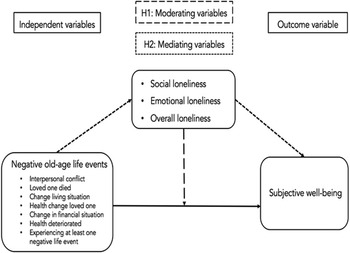
The present study was based on the assumption that social, emotional, and overall loneliness have a distinct role in the association between negative life events and subjective well-being, as they reflect the lack of different social provisions (Weis, Reference Weiss and Rubin1974). Moderation is used when one is interested in testing whether the magnitude of a variable’s effect on a dependent variable is dependent on a third set of variables (Hayes and Rockwood, Reference Hayes and Rockwood2017). In this respect, we first hypothesized that the absence of loneliness acts as a protective factor to counteract the negative effect of negative life events on subjective well-being. As based on the socio-emotional selectivity (Carstensen, Reference Carstensen2016), it might be that emotionally satisfying relationships or less feelings of loneliness may serve as a protective factor between the experiences of certain negative life events and subjective well-being. Within these moderation analyses, we focus not only on overall loneliness but also on the possible differences between social and emotional loneliness (Figure 1).
H1 moderation and H2 mediation.

Since we are also interested in the extent to which the relationship between the independent variables (negative old-age life events) and the outcome variable, subjective well-being, is actually “explained” by the relationship with a third variable, being the mediator, we also tested loneliness as a mediator. The analyses are not looking only at overall loneliness but also specifically at the processes of emotional and social loneliness. Mediation is undertaken when one is interested in explaining the mechanism by which an independent variable influences a dependent variable (Hayes and Rockwood Reference Hayes and Rockwood2017). Second, we hypothesized that negative life events would have a negative influence on loneliness and thus negatively influence the subjective well-being of older adults. That is, we predicted that loneliness would mediate between the experience of negative life events and subjective well-being (Figure 1).
Methods
Sample
Data collected as part of the Detection, Support and Care for older people – Prevention and Empowerment (D-SCOPE) research project (2015–2018) were used in the current study. Quantitative surveys were conducted across three municipalities in Flanders (Belgium): Knokke-Heist, Ghent, and Tienen [see Lambotte et al. (Reference Lambotte2018) for a full description]. The first-wave interview survey was administered in 2017 and randomly selected participants from the records in each municipality. The inclusion criteria were designed to select frail older people living independently at home, through risk profiles based on age, gender, marital situation, migration background, and having moved in the past 10 years [see Dury et al. (Reference Dury2017) for a full description]. The D-SCOPE protocol was reviewed and approved by the medical ethics committee of the Vrije Universiteit Brussel, Brussels, Belgium (reference number: B.U.N. 143,201,630,458).
In this cross-sectional survey, the sample composed of 770 community-dwelling older adults (48.2% women). The participants had a relatively low educational status (36.2% had no formal education or primary education or lower secondary education [until the age of 14 years]), 37.6% had higher secondary education [until the age of 18 years], and 26% had a higher university or non-university education). Furthermore, 32.9% of the participants were married, while 33.4% were widowed, 20.1% were divorced or separated, and 6.6% were single. Finally, 6.6% of the participants were cohabiting. Overall, participants were aged between 60 and 95 years old (Mage 74.74, SD = 7.89). During the past 6 months, 8.7% of the participants experienced a negative change in financial situation, 26.1% health deteriorated, 4.7% experienced an interpersonal conflict, 16.9% loved one died, 2.5% experienced a negative change in their living situation, and 2.7% experienced a health change of a loved one. 44.7% of the participants experienced at least one of these negative life events during the past 6 months.
Measures
Negative life events
Participants were asked to indicate if certain negative life events had occurred within their lives for the past 6 months. The questions concerning these negative life events are based on the GALES (Geriatric Adverse Life Events Scale) (Devanand et al., Reference Devanand, Kim, Paykina and Sackeim2002). The original GALES consists of 26 different adverse life events, whereby 6 main themes are expressed: (1) change in financial situation, (2) health deterioration, (3) interpersonal conflict, (4) loved one died, (5) change living situation, and (6) the possibility to express other life events. We used these main themes as questions for our study. As many respondents mentioned “health change loved one” as “another life event”, we also added this negative life event. For all variables, respondents have to indicate if they experienced these life events or not, resulting in dummy variables. Furthermore, we created a variable (7) experienced at least one negative event, based on the previous negative life events. If an older person experienced at least one of the above-mentioned life events, this variable indicates 1, meaning that at least one negative life event occurred. As a consequence, all the variables are dichotomous variables, 0 = not experienced, 1 = negative event experienced.
Short well-being instrument for older adults (SWIO)
The SWIO is a short instrument that identifies positive outcomes, namely, the level of subjective well-being in older adults at risk of frailty, with sub-dimensions including a sense of mastery, meaning in life, and life satisfaction (Duppen et al., Reference Duppen, Rossi, Dierckx, Hoeyberghs and De Donder2019). Higher subjective well-being scores represent better feelings of subjective well-being, and this scale is scored from 0 to 100.
Emotional and social loneliness
The six-item scale for loneliness developed by De Jong Gierveld was used. Items include emotional experience (“I experience a general sense of emptiness”, “I miss having people around”, and “I often feel rejected”) and social loneliness (“There are plenty of people I can rely on when I have problems”, “There are many people I can trust completely”, and “There are enough people I feel close to”). Participants rated these items on a five-point Likert scale (1 = completely disagree and 5 = completely agree). We recoded the variables in the same direction with an answer category of 0–4, and we computed the variables to enhance the comparability of the scale scores. The ranges were transformed to 0–100, with higher scores representing higher levels of loneliness. A variable representing social, emotional, and overall loneliness was created; overall loneliness was calculated by summing the scores for social and emotional loneliness.
Demographic variables
Sex (male vs. female) and age were used as covariates within the analyses. Other demographic variables, such as income, marital status, and health-related variables, were not included in the models because of the content overlap with negative life events.
Procedure
Data analysis procedure
Analyses were conducted using the Statistical Package for the Social Sciences software (IBM SPSS Statistics 26). We calculated correlations (Supplement 1), means, and standard deviations for all study variables. Additional analyses were done to determine the effect sizes between experiencing negative life events or not experiencing these negative life events on subjective well-being. Cohen’s d was calculated to obtain the effect size in the case of t-tests. For the interpretation of Cohen’s d rule of thumb was used, thus an effect size of 0.20 is considered small, an effect size of 0.50 is considered moderate, and an effect size of 0.80 is considered large (Cohen, Reference Cohen1988). To test whether social or emotional or overall loneliness moderated and mediated the effect that negative life events have on well-being, the bias-corrected bootstrapping approach from Hayes was used (Hayes, Reference Hayes2013). The moderation method allows for the introduction of both the main effects (Supplement 2) and the interaction between variables simultaneously and analyzing the effect of the predictor at different levels of the moderator (in this case low, middle, and high feelings of loneliness) which correspond to the 16th, 50th, and 84th percentiles, respectively. For emotional loneliness, the scores corresponding to the 16th, 50th, and 84th percentiles were 0, 16.67, and 50, respectively. For social loneliness, scores were 0, 16.67, and 58.33, respectively and for overall loneliness, 0, 20.83, and 48.5, respectively. Furthermore, we measured the effect sizes of the moderation analyses when interaction effects were significant with Cohen’s f2 (Aiken and West, Reference Aiken and West1991). Cohen (Reference Cohen1988) has suggested that f2 effect sizes of 0.02, are small, 0.15 are medium, and 0.35 are large.
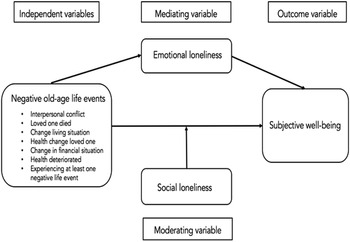
Bootstrapping was used to test the full mediation models as described by Hayes Indirect Macro PROCESS (Preacher and Hayes, Reference Preacher and Hayes2008). When the 95% confidence intervals (CIs) of the random sampling bootstrapping results did not include zero, it was concluded that the indirect effect was significant (Preacher and Hayes, Reference Preacher and Hayes2008). CIs (95%) were computed from 5000 bootstrap samples. Due to the results of the first two models, we decided to test a third hypothesis. We also wanted to know whether social loneliness has an effect on the indirect effect of negative life events, through emotional loneliness, which could be interpreted from the index of moderated mediation. Hypothesis 3 stated that social loneliness would moderate the strength of the mediated relationships between negative life events and subjective well-being via emotional loneliness, such that the mediated relationship would be weaker under low levels of social loneliness than under high levels of social loneliness (Figure 2). This was a test of equality of the conditional indirect effects within social loneliness, such that when the confidence interval included zero, social loneliness had no significant effect, and the indirect effects were the same within the levels of social loneliness. The moderated mediation analyses were tested by model 59 of the Hayes indirect Macro. See supplement 3 for the direct effects concerning mediation and moderated mediation analyses.
H3 moderated mediation model.

Results
We examined means and standard deviations within our study variables, mean overall loneliness was 24.42 (SD = 27.25), mean social loneliness was 25.15 (SD = 27.07), mean emotional loneliness was 22.73 (SD = 26.75), and mean subjective well-being was 76.9 (SD = 18.62).
Furthermore, we examined the correlations and found that negative life events were significantly related to lower levels of well-being except for “loved one died” and “change living situation”. All correlations show a weak or moderate relationship, as they are all between 0.09 and 0.32 (Ratner, Reference Ratner2009).
Moderate significant effect sizes were also found between experiencing or not experiencing these negative life events on subjective well-being. Results indicated the exception of change in financial situation, in which case the effect size was large. Participants who experienced a negative event concerning their financial situation (t(770) = 6.823, p < 0.05, d = 0.88), health deteriorated (t(770) = 9.241, p < 0.05, d = 0.76), interpersonal conflict (t(770) = 3.714, p < 0.05, d = 0.63), the health change loved one (t(770) = 2.497, p < 0.05, d = 0.55), or experiencing at least one negative life event (t(770) = 6.033, p < 0.05, d = 0.44) obtained statistically significantly lower scores in subjective well-being than those who did not.
Moderation effect
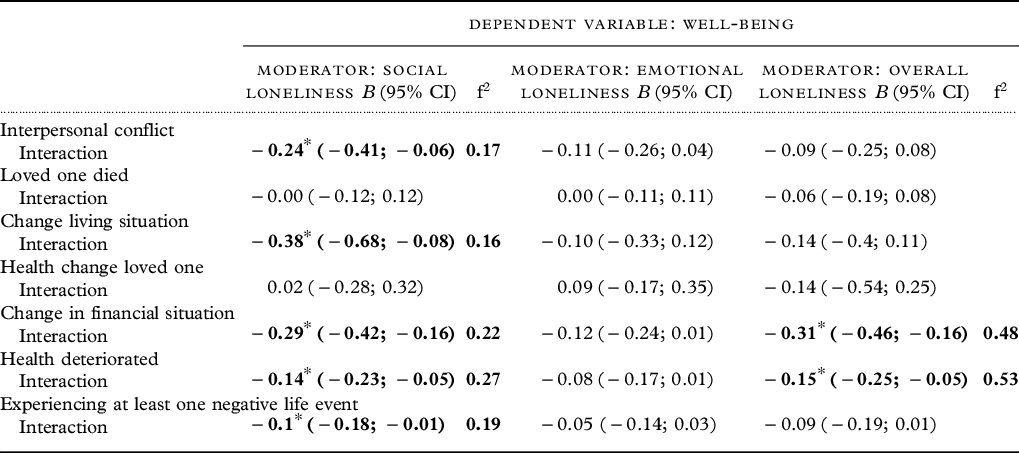
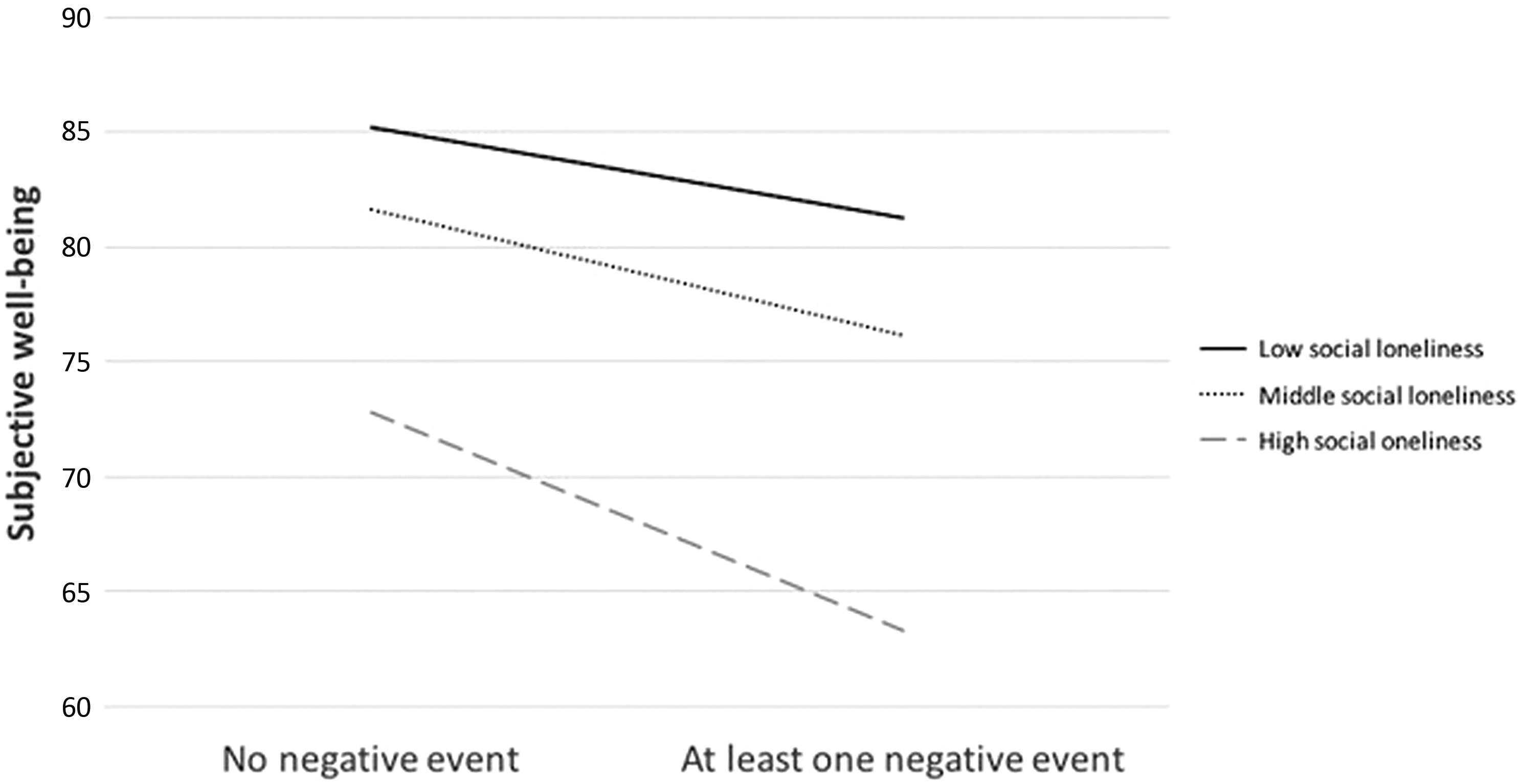
A series of moderation models were tested for each negative life event and each moderation variable (social, emotional, and overall loneliness) on subjective well-being. Results are summarized in Table 1. The interaction between social loneliness (classified as low, middle, and high based on percentiles) and “experiencing at least one negative life event” in the past 6 months was significant (B = −0.95; SE = 0.05; t(770) = −2.13, p < 0.05) (Figure 3). Experiencing at least one negative life event was associated with lower subjective well-being scores when the social loneliness score was high (84th percentile). Meanwhile, when the social loneliness score was moderate (50th percentile) or low (16th percentile), subjective well-being scores were higher. When analyzing the moderating role of social loneliness and the impact of negative life events, the interaction between social loneliness and experiencing an interpersonal conflict was significant (B = −0.24; SE = 0.09; t(770) = −2.7, p < 0.01). Experiencing an interpersonal conflict was associated with lower well-being scores when the social loneliness score was high (84th percentile). No significant effect was found when the social loneliness score was moderate (50th percentile) or low (16th percentile). The interaction between social loneliness and experiencing a change in living situation was significant (B = −0.38; SE = 0.15; t(770) = −2.5, p < 0.02). Experiencing a negative change in living situation was associated with lower well-being scores when the social loneliness score was high (84th percentile), and no significant effect was found when the social loneliness score was moderate (50th percentile) or low (16th percentile). Likewise, the interaction between social loneliness and experiencing a change in one’s financial situation was found to be significant (B = −0.29; SE = 0.07; t(770) = −4.28, p < 0.001). Experiencing a change in financial situation was associated with lower well-being scores when the social loneliness score was high (84th percentile); meanwhile, when the social loneliness score was moderate (50th percentile), well-being scores were higher. No significant effect was found when the social loneliness score was low (16th percentile). Finally, the interaction between social loneliness and health deteriorated was significant (B = −0.14; SE = 0.05; t(770) = −3, p < 0.005). Experiencing a negative health change was associated with lower well-being scores when the social loneliness score was high (84th percentile) but meanwhile, when the social loneliness score was moderate (50th percentile) or low (16th percentile), well-being scores were higher.
Interaction effects between social, emotional, overall loneliness, and negative life events on well-being (N = 770)

B = unstandardized regression coefficients, CI = confidence interval.
*p < 0.05; Bold are significant (moderating) effects. All models controlled for age and gender.
Moderating effect of social loneliness on experiencing at least one negative life event and well-being.

The interaction between overall loneliness and change in financial situation was significant (B = −0.44; SE = 0.08; t(770) = −3.98, p < 0.01). Experiencing a change in financial situation was associated with lower well-being scores when the loneliness score was high (84th percentile), although no significant effect was found when the loneliness score was moderate (50th percentile) or low (16th percentile). Likewise, the interaction between overall loneliness and health deterioration was significant (B = −0.15; SE = 0.05; t(770) = −2.83, p < 0.005). Health deterioration was associated with lower well-being scores when the overall loneliness score was high (84th percentile) and moderate (50th percentile), but no significant effect was found when the loneliness score was low (16th percentile). No significant interaction effects were found concerning emotional loneliness. The effect sizes of the moderation analyses concerning the significant interaction effects of social loneliness as a moderator are all moderate. The effect sizes concerning overall loneliness as a moderator between change in financial situation and health deterioration both indicate large effect sizes.
Mediation effect
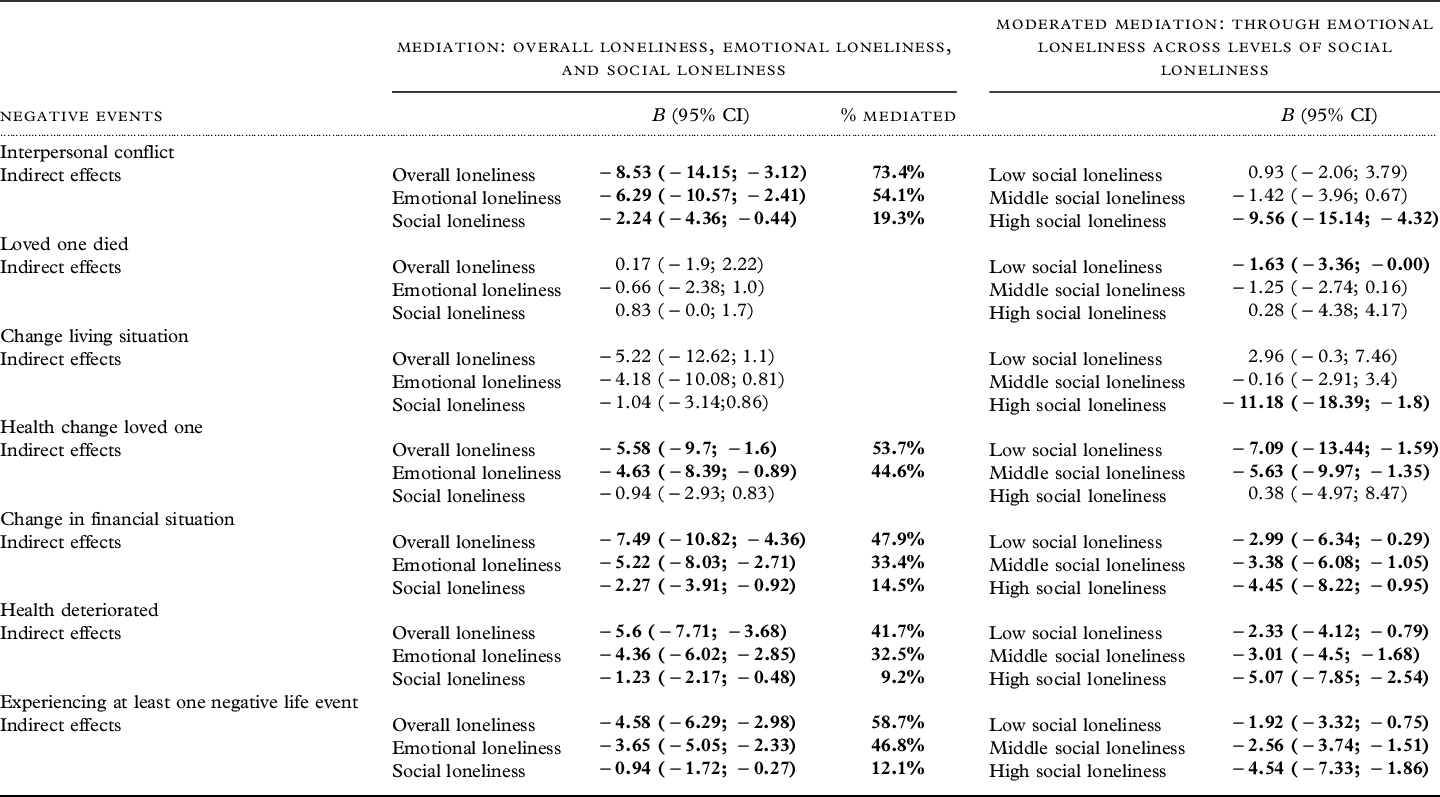
A series of mediation models were tested for each negative life event and each mediation variable (social, emotional, and overall loneliness) on well-being. Results are summarized in Table 2. All mediated percentages were considered significant apart from the death of a loved one and change in living situation. Emotional loneliness was a mediator in the association between a change in financial situation 33.4%, health deterioration 32.5%, interpersonal conflict 54.1%, health change of a loved one 44.6%, experiencing at least one negative life event 46.8%, and well-being. Social loneliness had a less high mediation function within these associations. The percentages of social loneliness as a mediator in the association between experiencing an interpersonal conflict, a change in financial situation, health deterioration, and experiencing at least one negative life event and well-being were 19.3%, 14.5%, 9.2%, and 12.1%, respectively.
Analyses of mediation and moderated mediation of loneliness between negative life events and well-being (N = 770)

B = unstandardized regression coefficients, CI = confidence interval.
Results in bold are statistically significant (p < 0.05). All models were adjusted for age and sex. The percentage mediated information was only performed when the overall effect was significant.
Moderated mediation analyses: through emotional loneliness across levels of social loneliness
To test the moderated mediation, we tested the following hypothesis: social loneliness would moderate the strength of the mediated relationships between negative life events and subjective well-being via emotional loneliness, such that the mediated relationship would be weaker under low levels of social loneliness than under high levels of social loneliness. The hypothesis was supported for the following negative life events, namely, experiencing an interpersonal conflict, change in living situation, change in financial situation, health deterioration, and experiencing at least one negative life event. The hypothesis was not supported by negative life events that included the death of a loved one and health change of a loved one. Results are summarized in Table 2.
Discussion
The aim of this study was to examine the moderating effect of the different dimensions of loneliness in the link between negative life events and subjective well-being in a sample of community-dwelling older adults at risk of frailty from Flanders, Belgium. We also analyzed the mediation effect of the different dimensions of loneliness on the link between negative life events and well-being. Based on previous results, we conducted a moderated mediation analysis with social loneliness as a moderator and emotional loneliness as a mediator.
This study showed that the absence of overall loneliness appears to be a protective factor concerning the impact of two negative life events, namely, change in financial situations and health deterioration. A low degree of social loneliness acts as a protective, moderating factor concerning experiencing at least one negative life event, experiencing an interpersonal conflict, change in living situation, change in financial situation, and health deterioration. No significant effects were found for the moderating role of emotional loneliness within these associations. Research by Dumitrache and colleagues (Reference Dumitrache, Rubio and Rubio-Herrera2017) is consistent with our results, namely, by suggesting that perceived social support acts as a balance in the link between health problems and life satisfaction within older adults. Furthermore, a few studies have focused on the moderating role of positive social networks on negative life events and depression. For example, Katsumata and colleagues (Reference Katsumata, Arai, Ishida, Tomimori, Lee and Tamashiro2012) revealed that “having frequent contact with family or friends” acts as a moderator between negative life events and depressive symptoms and highlights the importance of a strong social network. Chou and Chi (Reference Chou and Chi2001) found that social support as measured by the Lubben Social Network Scale moderated the influence of experiencing negative life events on depression. These results are consistent with our research concerning the moderating role of (social) loneliness.
Our results demonstrate that overall loneliness partially acts as a mediating factor and that emotional loneliness is a greater mediator compared to social loneliness concerning the experience of an interpersonal conflict, health change loved one, change in financial situation, and health deteriorated and at least one negative life event. The moderated mediated analyses show different results according to the level of social loneliness on the impact of emotional loneliness as a mediator between certain negative life events and subjective well-being. This means that the mediated relationship is weaker under low levels of social loneliness than under high levels of social loneliness. This is also the case for experiencing at least one negative life event, change in living situation, change in financial situation, health change or interpersonal conflict. It could be plausible that, based on the socio-emotional selectivity theory, emotional loneliness might have a more significant role compared to social loneliness but that someone’s network in later life is important in experiencing positive subjective well-being when negative life events occur, regardless of the way the network is conceptualized [see for example, the conceptualization of social support (Dumitrache et al., Reference Dumitrache, Rubio and Rubio-Herrera2017)]. An approach based on the importance of a positive and supportive social network and therefore the absence of (social and emotional) loneliness seems to be critical. The findings that (social) loneliness acts as a moderator between different negative life events and subjective well-being and (emotional) loneliness acts as a mediator supports the socio-emotional selectivity theory.
Despite the advantages of this study, there are some limitations that need to be acknowledged. First, this study was cross-sectional. We assumed that loneliness would predict subjective well-being. However, satisfactory and supportive social interactions can also be caused by happiness or positive affectivity (Lyubomirsky et al., Reference Lyubomirsky, King and Diener2005). We, therefore, cannot be sure of the direction of causality. Future studies should use longitudinal designs to test the associations between negative life events, social and emotional loneliness, and well-being and analyze the moderating and mediation effect of loneliness in the link between several negative life events and well-being. A fundamental limitation of regression-based models is the inability to take into account dynamic and reciprocal relations between factors, and discontinuities or changes over time that have been incorporated into the conceptual model of exclusion from social relations (Burholt et al., Reference Burholt2019). Second, the variable “death of a loved one”’ had limited significant effects, while “death of a loved one”, and in particular “the death of a spouse” was expected to be more disruptive than other adverse events (Yu et al., 2018). One explanation for our findings might be that the question concerning this event was too broad, meaning that they could indicate, for example, the death of a neighbor, or pet. The results might be different if we questioned only “the death of a spouse”. Third, another limitation is that there are many statistical tests done at 0.05 with no correction for the Type I error rate. Fourth, in this study, no distinction was made on the basis of future prospects for older adults. In order to test the application of the socio-emotional selectivity theory, it would be interesting in future research to add information concerning the perceived time which is left and age differences. Fifth, the external validity of the findings is threatened by the study population resembling a selected share of the Flemish older adult’s population. Finally, a recommendation for future research would be to gain more insight in this complex interplay of different types of loneliness concerning negative life events and well-being, with a focus on existential loneliness, as this type of loneliness is described in the current literature (Sjöberg et al., Reference Sjöberg, Beck, Rasmussen and Edberg2018).
Despite these limitations, this study contributes to a better understanding of the processes that promote subjective well-being maintenance in old age and emphasizes the moderating and mediating role of (the absence) of loneliness as a relevant factor, when older adults deal with negative life events. This is particularly relevant given that the literature until recent focused on the moderating role of social support and positive social networks (e.g. Dumitrache et al., Reference Dumitrache, Rubio and Rubio-Herrera2017; Katsumate et al., Reference Katsumata, Arai, Ishida, Tomimori, Lee and Tamashiro2012). Limited research has until now focused on studying how this resource mitigates the negative effect of different negative life events and prevents older adults from experiencing depression (e.g. Chou and Chi, Reference Chou and Chi2001; Katsumata et al., Reference Katsumata, Arai, Ishida, Tomimori, Lee and Tamashiro2012) or suicidal ideation (e.g. Lutzman et al., Reference Lutzman, Sommerfeld and Ben-David2020). Consequently, there remains very little evidence regarding the moderating role of the absence of loneliness could play in promoting subjective well-being when older adults are confronted with negative life events. Moreover, there has been less attention in recent research to the distinction between social and emotional loneliness and their potential differential roles in well-being when older adults experiencing negative old-age life events. Our results show that a low degree of (social) loneliness is a protective; moderating factor and (emotional) loneliness acts as a relevant mediation factor. Therefore, this study highlights the role of emotionally and socially satisfying social contacts in order to maintain positive subjective well-being in later life when negative life events may occur. This study emphasizes the importance of low levels of loneliness and specific low levels of social and emotional loneliness in order to maintain positive well-being when older adults face negative life events.
Conflict of interest
None.
Description of authors’ roles
Lise Switsers performed the statistical analysis, analyzed the data, and wrote the manuscript. Eva Dierckx, Joan Domènech-Abella, Liesbeth De Donder, and Sarah Dury helped with the study design, the statistical analysis, analyzing the data, and writing the manuscript. The D-SCOPE consortium collected the data.
Acknowledgements
The present study was made possible through funding of the Research Foundation Flanders (FWO) and the Flemish Agency for Innovation by Science and Technology (Grant number IWT-140027-SBO, D-SCOPE Project). The D-SCOPE consortium is an international research consortium of researchers from Vrije Universiteit Brussel, Belgium (Dr. An-Sofie Smetcoren, Prof. Dr. Sarah Dury, Prof. Dr. Liesbeth De Donder, Prof. Dr. Eva Dierckx, Dr. Deborah Lambotte, Dr. Bram Fret, Dr. Daan Duppen, Prof. Dr. Martinus Kardol, Prof. Dr. Dominique Verté and Sylvia Hoens); College University Ghent, Belgium (Dr. Lieve Hoeyberghs, Prof. Dr. Nico De Witte); Universiteit Antwerpen, Belgium (Dr. Ellen De Roeck, Prof. Dr. Sebastiaan Engelborghs, Prof. Dr. Peter Paul De Deyn); Katholieke Universiteit Leuven, Belgium (Dr. Michaël Van der Elst, Prof. Dr. Jan De Lepeleire, Prof. Dr. Birgitte Schoenmakers) and Maastricht University, The Netherlands (Dr. Anne van der Vorst, Prof. Dr. Rixt Zijlstra, Prof. Dr. Gertrudis Kempen, Prof. Dr. Jos Schols).
Supplementary material
To view supplementary material for this article, please visit https://doi.org/10.1017/S1041610220004196