Introduction
Depression is one of the most frequent mental disorders in older adults and is a serious public health problem. The prevalence of depression after 75 years of age is estimated to be 7.2% (95% CI 4.4–10.6%) for major depression and 17.1% (95% CI 9.7–26.1%) for depressive disorders (Luppa et al., Reference Luppa2012). Late-life depression is associated with disability and risk of death, independently of lifestyle and socioeconomic factors (Diniz et al., Reference Diniz2014).
Antidepressants (ADs) may effectively treat this invalidating illness in older people, with a range of therapeutic options including second generation ADs such as selective serotonin reuptake inhibitors (SSRIs) and serotonin–norepinephrine reuptake inhibitors (SNRIs) (Girardi et al., Reference Girardi2009; Kok and Reynolds, Reference Kok and Reynolds2017). Their use has substantially increased during the last decades, especially SSRIs (Noordam et al., Reference Noordam, Aarts, Verhamme, Sturkenboom, Stricker and Visser2015). An American study reported that percentage of community-dwelling people aged ≥ 65 years receiving ADs increased from 9.8% in 1996 (n = 2,349) to 13.7% in 2005 (n = 3,474) (Olfson and Marcus, Reference Olfson and Marcus2009). A population-based study conducted in Australia estimated that the use of ADs increased by 41% between 2002 and 2007 and that people aged 90–94 years were the largest consumers (Hollingworth et al., Reference Hollingworth, Lie, Siskind, Byrne, Hall and Whiteford2011). In Europe, the use of ADs doubled between 1993 and 2002 (Knapp et al., Reference Knapp, McDaid, Mossialos and Thornicroft2006), especially in nursing homes (Ruths et al., Reference Ruths2013).
The increasing use of ADs can be explained by new indications (e.g. for SSRIs: generalized anxiety disorder, panic, obsessive compulsive disorder, and post-traumatic stress disorder) (Raymond et al., Reference Raymond, Morgan and Caetano2007), increasing duration of treatment (Moore et al., Reference Moore, Yuen, Dunn, Mullee, Maskell and Kendrick2009) and increased prescription of ADs by non-psychiatrist physicians (Mojtabai and Olfson, Reference Mojtabai and Olfson2011).
Extensive use of ADs in old people has raised concerns about misuse and a subsequent increase in the risk of drug interactions and adverse events, such as osteoporosis and osteopenia, bleeding, hypertension or orthostatic hypotension, arrhythmia, and falls (Diniz and Reynolds, Reference Diniz and Reynolds2014). Older adults are likely to have altered drug metabolism and clearance, co-existing physical disorders, sensory deficits or other disabilities that call for caution when prescribing ADs (Kennedy and Marcus, Reference Kennedy and Marcus2005). An American study (Wang et al., Reference Wang2005) revealed that among 12,130 new AD users aged ≥ 65 years, 43% received suboptimal treatment, because of the use of anticholinergic drugs, excessively high or low daily dosages, short duration therapy, or inadequate follow-up. A cross-sectional study in France showed that ADs represented 28.4% of the potentially inappropriate use of psychotropic drugs according to the 2003 Beers list (Prudent et al., Reference Prudent2008).
Potentially inappropriate prescribing (PIP) in old people has become a major healthcare concern because of its association with adverse drug events, hospitalizations, and use of healthcare resources (Mort and Aparasu, Reference Mort and Aparasu2000). Specific studies concerning PIP of ADs are currently limited to nursing-home residents (Hanlon et al., Reference Hanlon2011; Bourgeois et al., Reference Bourgeois, Elseviers, Van Bortel, Petrovic and Vander Stichele2012).
The main objective of this study was to describe the prevalence of and factors associated with PIP of ADs in a sample of people aged ≥ 70 years in France. The secondary objective was to assess the impact of PIP of ADs on mortality.
Methods
Study population
This is a secondary analysis of the data from the SIPAF study, a cross-sectional study carried out to characterize health and functional independence among people ≥70 years. The study population was composed of the 318 AD users included in the SIPAF study (13.5%). Participants in the SIPAF study were selected at random among recipients of a supplementary pension fund (AG2R La Mondiale, Paris, France), with over-representation of the oldest-old. Recruitment took place from 2008 to 2010 in all regions of mainland France. The participation rate was 18.9% (details about participation are given elsewhere) (Herr et al., Reference Herr, Arvieu, Aegerter, Robine and Ankri2014). Information was collected at home by trained nurses. In 16.6% of cases, a close relative attended the interview to confirm or complete the answers of the participants. The information concerning deaths among the study population was provided by AG2R La Mondiale, with follow-up ending June 5, 2012 (median follow-up 2.8 years). Participants gave their written informed consent and the research protocol was approved by an independent ethics committee (permission n_060316).
Data collection and geriatric assessment
The following information about socio-demographic characteristics and general health was collected: age, gender, marital status, level of education, higher level of occupation between husband and wife, drinking and smoking habits, self-rating of health relative to people of the same age, and hospitalizations in the prior six months. Participants reporting chronic diseases were asked to identify their problem(s) among the list of 14 chronic diseases used to monitor population health by the European Commission (Robine et al., Reference Robine and Jagger2003), including chronic anxiety/depression. The number of years with depressive and/or anxiety symptoms was assessed by asking people who reported chronic anxiety and/or depression: “How long have you been suffering from this condition?” (variable expressed in tertiles). In addition to self-reported chronic diseases, we identified cardiovascular fragility by the prescription of at least one of the following drugs: antiarrhythmic or digitalic or coronary vasodilator drugs.
Geriatric problems were specifically investigated. Nutritional impairment was defined by a body mass index of 21 kg/m2 or lower and/or unintentional weight loss of 10% of body weight during the prior six months. Questions about physical and sensory limitations dealt with the ability to see newspaper print clearly and to see the face of someone 4 m away, and to distinctly hear what is said in a conversation with another person. Impaired mobility was defined as difficulty walking more than 500 m and/or difficulty walking up and down one floor of stairs. Social isolation was defined by lack of support with practical features (when bedridden or when needing to be accompanied to a medical appointment or when needing help to prepare meals) and/or emotional features (when needing to talk or when needing advice or affection). Assessment of activity restrictions examined six activities of daily living according to Katz et al. (Reference Katz, Ford, Moskowitz, Jackson and Jaffe1963), i.e. “bathing, dressing, toileting, transferring, continence, and feeding,” as well as instrumental activities of daily living (IADL) (Lawton and Brody, Reference Lawton and Brody1969) such as food preparation, the ability to use a phone, housekeeping, shopping, and the ability to manage one's finances. Homebound status was defined as the incapacity to leave home without help. Depression was suspected in participants with a score >5 on the 15-item Geriatric Depression Scale (Yesavage et al., Reference Yesavage1982). Cognitive impairment was defined as a score ≤ 26 on the Mini-Mental State Examination (Folstein and McHugh, Reference Folstein, Folstein and McHugh1975) and/or prescription of an anti-Alzheimer drug (Folstein et al., Reference Folstein, Folstein and McHugh1975).
Medications
Medications taken by the participants were assessed by asking the participants about their treatments and information was completed by reviewing the prescriptions participants had at home. The question was formulated as follows: “What medications are you currently taking? Could you show me your last prescriptions please?” Participants were invited to indicate whether they did not take some of the drugs prescribed to reduce the gap between drugs prescribed and those actually taken. Drugs were coded using the Anatomical Therapeutic Chemical Classification (ATC) System. Polypharmacy was defined as five drugs or more and excessive polypharmacy as ten drugs or more. ADs were identified by the codes N06AA (tricyclic antidepressants - TCAs), N06AB (SSRIs), N06AG (monoamine oxidase inhibitors - MAOIs), and N06AX (SNRIs and other ADs, namely mianserin, tianeptine, and mirtazapine).
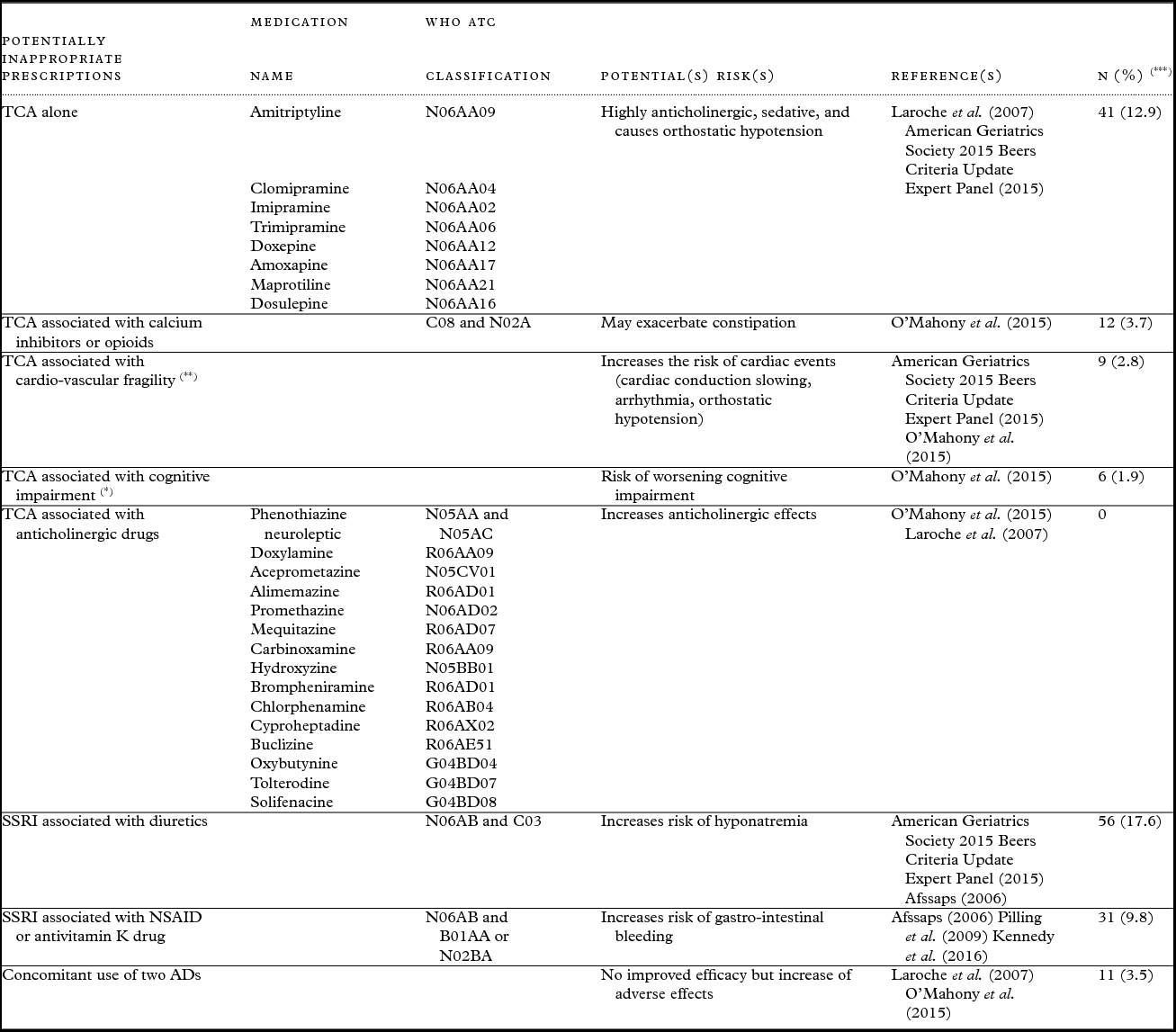
PIP of ADs was defined according to the 2015 Beers list (American Geriatrics Society 2015 Beers Criteria Update Expert Panel, 2015), Laroche list (Laroche et al., Reference Laroche, Charmes and Merle2007), and STOPP criteria v2 (O'Mahony et al., Reference O'Mahony, O'Sullivan, Byrne, O'Connor, Ryan and Gallagher2015). We also took into account French guidelines (Afssaps, Agence Française de Sécurité Sanitaire des Produits de Santé; Afssaps, 2006) published in 2006, Canadian guidelines from “Canadian Network for Mood and Anxiety Treatments” (CANMAT) published in 2016 (Kennedy et al., Reference Kennedy2016), and English guidelines from the “National Institute for Health and Clinical Excellence” (NICE), published in 2009 (Pilling et al., Reference Pilling, Anderson, Goldberg, Meader and Taylor2009). The entire set of PIP of ADs retrieved from these sources is shown in Table 1.
Prevalence of PIP of ADs according to national and international criteria (Beers, Laroche, STOPP/START, and prescription guidelines)

Abbreviations; ADs = antidepressants; Afssaps = Agence Française de Sécurité Sanitaire des Produits de Santé; NSAIDs = non-steroidal anti-inflammatory drugs; PIP of ADs = Potentially Inappropriate Prescribing of Antidepressants; SNRIs = serotonin–norepinephrine reuptake inhibitors; SSRIs = selective serotonin reuptake inhibitors; TCAs = tricyclic antidepressants.
(*) Cognitive impairment defined as a score lower than 26 to the Mini-Mental State Examination and/or prescription of an anti-Alzheimer drug.
(**) Cardiovascular fragility defined as prescription of at least one of the following drugs: antiarrhythmic or digitalic or coronary vasodilator drugs.
(***) The total number of PIP is greater than 117 because some participants had multiple PIPs.
Statistical analysis
Descriptive statistics present the characteristics of the study population and AD treatments. Categorical variables are described with percentages and continuous variables with the mean +/− standard deviation (SD). Bivariate and multivariate analyses were performed to identify the factors related to PIP of ADs among AD users. Variables associated with a p < 0.20 in bivariate analysis as well as age and gender were introduced into the multivariate analysis. The multivariate analysis used a logistic regression model. The final model was obtained using backward stepwise analysis (p value for removal > 0.10). The results are presented with odds ratios (OR) and 95% confidence intervals (CI). The effect of PIP of ADs on mortality was assessed using a Cox proportional hazard model. The Schoenfeld test showed that there was no evidence against the proportional Hazard assumption (p = 0.142). Results are presented using Hazard Ratios (HR) and 95% CI. Statistical analyses were performed using STATA® software, version 13.0 (Stata Corp., College Station, TX).
Results
Study population
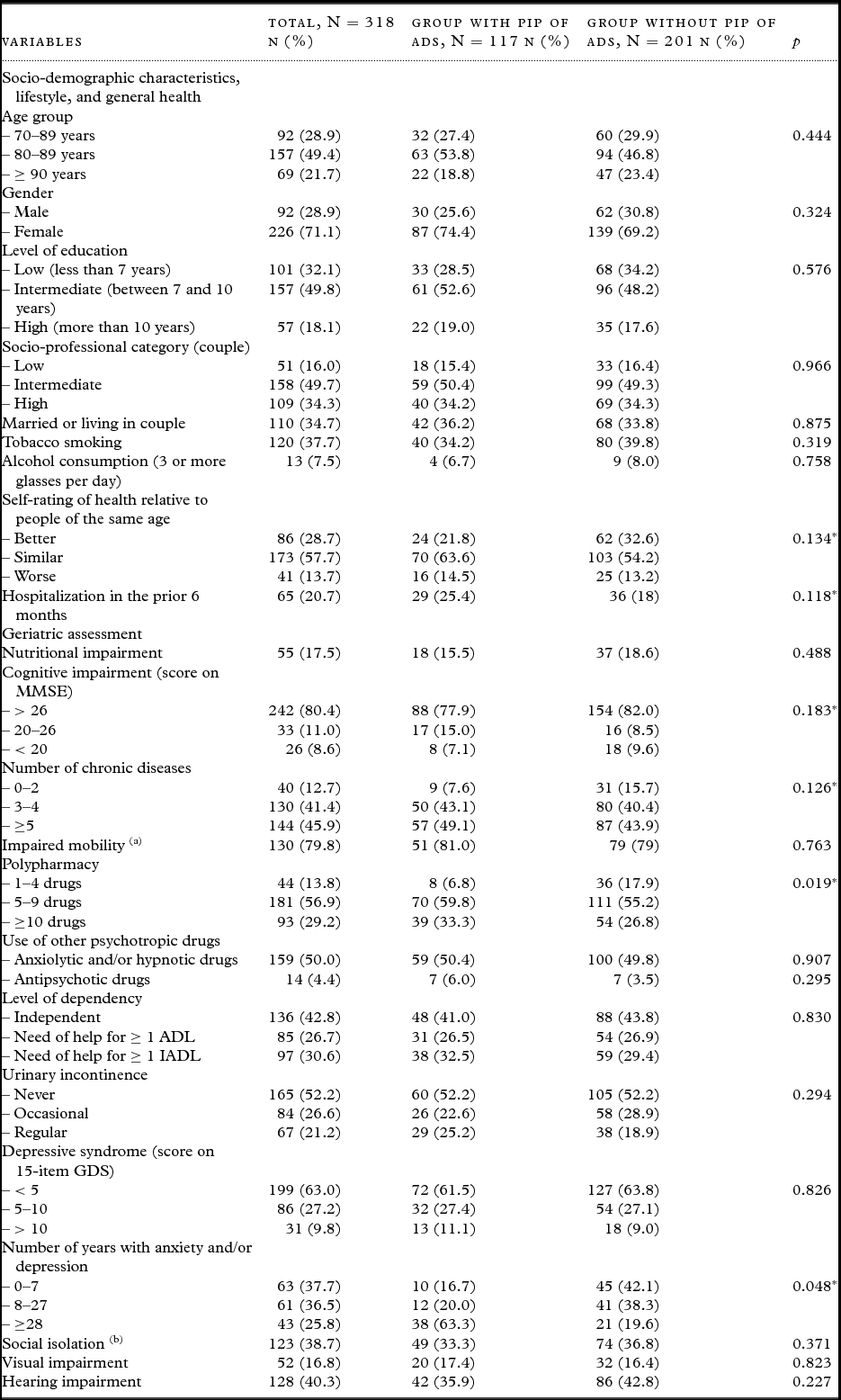
Among the 318 AD users included in this study, 71% were female and mean age was 84 ± 7 years. We observed excessive polypharmacy (10 drugs or more) in 29.2% of the study population (n = 93). Socio-demographic and health characteristics of the study population are described in Table 2.
Characteristics of the study sample

Abbreviations: ADL = Activities of daily living; GDS = Geriatric Depression Scale; IADL = Instrumental Activities of Daily Living; MMSE = Mini-Mental State Evaluation; PIP of ADs = Potentially Inappropriate Prescription of Antidepressants.
(a) Impaired mobility was defined by difficulty walking more than 500 m and/or difficulty walking up and down one floor of stairs.
(b) Social isolation was defined by lack of support with practical features (when bedridden or when needing to be accompanied to a medical appointment or when needing help to prepare meals) and/or emotional features (when needing to talk or when needing advice or affection).
*p < 0.20.
AD use
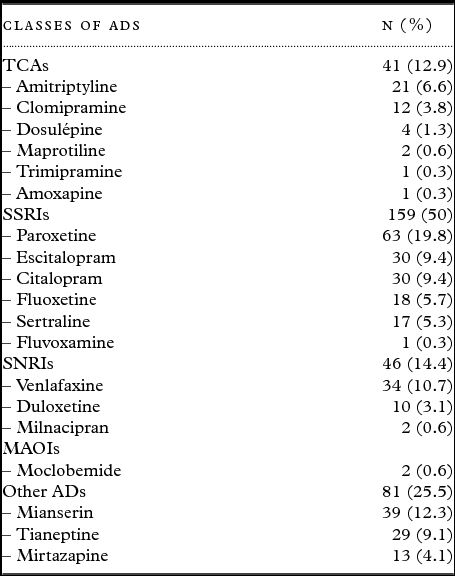
AD use is described in Table 3. SSRIs were the most prescribed ADs, especially paroxetine (19.8%), followed by escitalopram (9.4%) and citalopram (9.4%). Venlafaxine was the most prescribed SNRIs (10.7%). TCAs were prescribed in 12.9% of the study population, amitriptyline in most cases. “Other ADs,” such as mianserin were prescribed in 25.5% of the study population.
Use of ADs in the study population (n = 318)

Abbreviations: ADs: antidepressants; MAOIs = monoamine oxidase inhibitors; SNRIs = serotonin–norepinephrine reuptake inhibitors; SSRIs = selective serotonin reuptake inhibitors; TCAs = tricyclic antidepressants.
PIP of ADs was identified among 117 AD users (36.8%). The prevalence of the different PIPs of ADs is shown in Table 1. Concomitant prescription of SSRIs and diuretics was the most frequent PIP of ADs (17.6%), followed by the prescription of TCAs (12.9%), and concomitant prescription of SSRIs and non-steroidal anti-inflammatory drugs (NSAIDs) or anti vitamin K drugs, in 6.0% and 3.8% of the study population respectively.
Factors associated with PIP of AD
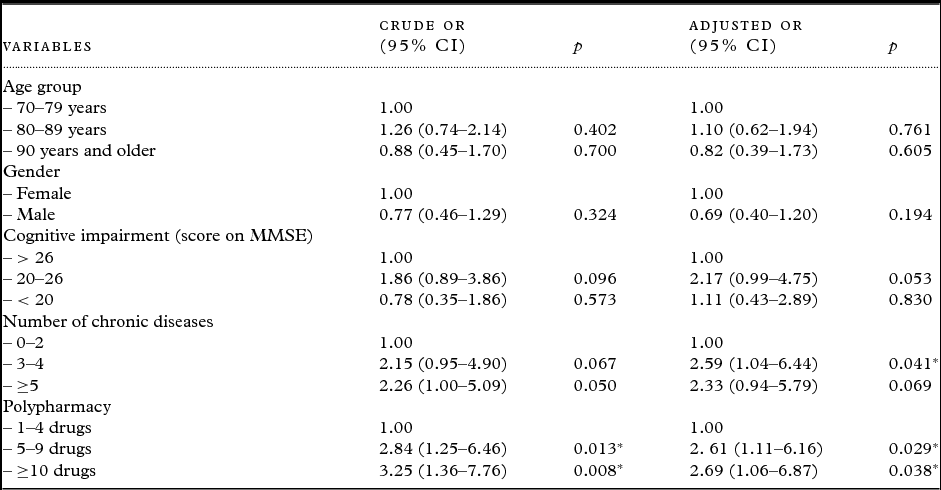
Bivariate analysis showed that PIP of ADs was associated with low self-perceived health, hospitalization in the prior six months, polypharmacy, number of chronic diseases, and cognitive impairment. Conversely, PIP of ADs was not associated with the level of education, tobacco smoking, alcohol consumption, nutritional impairment, impaired mobility, the use of other psychotropic drugs, level of dependency, or sensory impairment (Table 2). Polypharmacy and comorbidity were the only factors that remained significantly associated with PIP of ADs in multivariate analysis. Polypharmacy was associated with PIP of ADs with adjusted OR5-9 drugs 2.61 (95% CI 1.11–6.16) and OR≥10 drugs 2.69 (95% CI 1.06–6.87), independently of the number of chronic diseases and cognitive impairment (Table 4).
Factors associated with PIP of ADs: results of the unadjusted and adjusted analysis

Abbreviations: OR = Odds Ratio; MMSE = Mini-Mental State Evaluation; PIP of ADs = Potentially Inappropriate Prescription of Antidepressants.
*p < 0.05.
Subgroup analysis among people who reported the duration of their depressive and/or anxiety symptoms (n = 160) showed that the longer the duration of symptoms, the higher the risk of PIP of ADs, with an adjusted OR 2.82 (95% CI 1.42–6.99) for people suffering from depressive and/or anxiety symptoms for ≥28 years relative to those who reported symptoms for ≤7 years.
PIP of AD and mortality
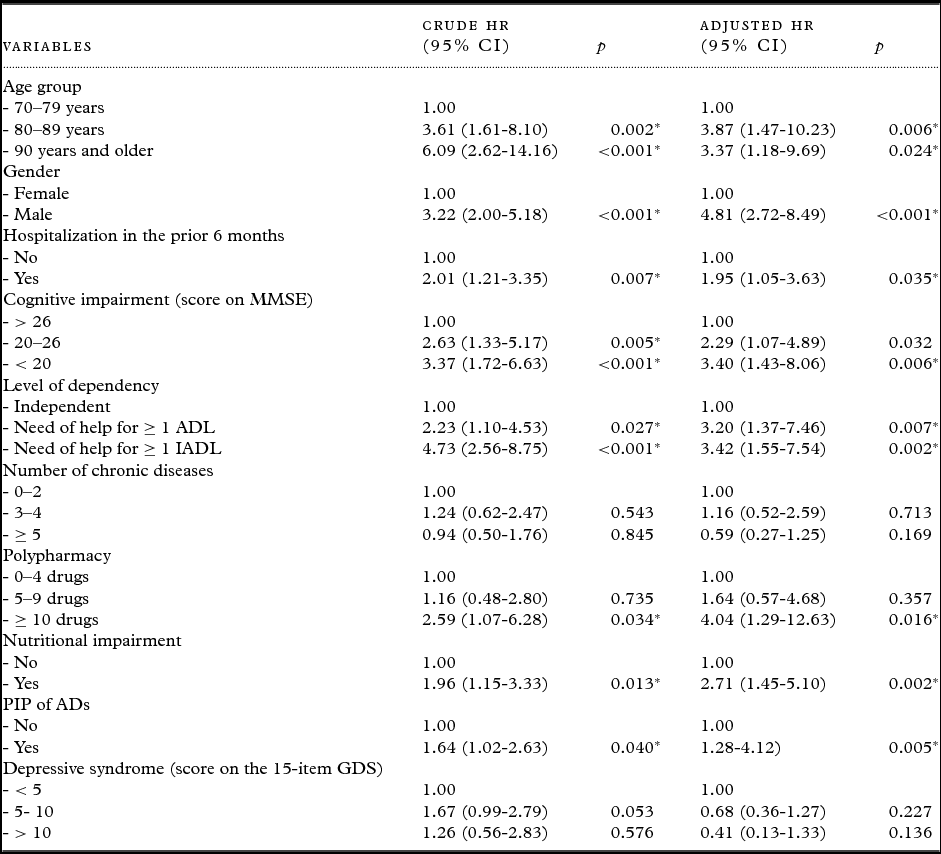
During follow-up, 29.5% of people with PIP of ADs died, versus 18.4% of those without PIP of ADs (p = 0.025). PIP of AD was associated with increased mortality (HR 2.30, 95% CI 1.28–4.12) after adjustment for age, gender, polypharmacy, number of chronic diseases, nutritional impairment, cognitive impairment, dependency, hospitalization in the prior six months, and GDS score (Table 5, survival curves available in Appendix 1).
Influence of PIP of ADs on survival (median follow-up of 2.8 years): results of the unadjusted and adjusted survival analysis

Abbreviations: ADL = Activities of daily living; GDS = Geriatric Depression Scale; HR = Hazard Ratio; IADL = Instrumental Activities of Daily Living; MMSE = Mini-Mental State Evaluation; PIP of ADs = Potentially Inappropriate Prescription of Antidepressants.
*p < 0.05.
Discussion
Main findings
Based on international and national guidelines, we found that 36.8% of people ≥70 years received a priori suboptimal AD treatment in a French observational study. Drug–drug interactions between SSRIs and diuretics and prescription of TCAs were the most frequent PIPs. In multivariate analysis, the only factors associated with PIP of ADs were polypharmacy and comorbidity. Survival analysis (median follow-up of 2.8 years) suggests that PIP of ADs is associated with increased mortality among AD users.
Drug-drug interactions with SSRIs
The most frequently reported PIP of ADs was the association of SSRIs and diuretics (17.6%). This association increases the risk of hyponatremia caused by SSRIs, especially when thiazide diuretics are involved (Mannesse et al., Reference Mannesse2013). Hyponatremia is associated with cognitive impairment (Gunathilake et al., Reference Gunathilake2013) and increases the risk of osteoporosis and bone fractures (Usala et al., Reference Usala2015). The biological mechanisms of this interaction may involve syndrome of inappropriate secretion of antidiuretic hormone (SIADH) or nephrogenic syndrome of inappropriate antidiuresis (NSIAD) by increasing sensitivity of the kidneys to ADH via aquaporine-2 expression (Mannesse et al., Reference Mannesse2013).
Here, concomitant use of SSRIs with NSAIDs or antivitamin K drugs represented 6.0% and 3.8% of the PIP of ADs respectively. There is evidence that SSRIs increase the risk of upper gastrointestinal bleeding, particularly when they are associated with NSAIDs (de Abajo and García-Rodríguez, Reference de Abajo and García-Rodríguez2008). The role of serotonin in the ability of platelets to aggregate may explain this effect. Indeed, the use of SSRIs has been shown to increase the risk of major haemorrhage events in patients taking warfarin (Quinn et al., Reference Quinn2014). Antivitamin K drugs are biotransformed by the P450 system and SSRIs potentially inhibit various isoenzymes (Sansone and Sansone, Reference Sansone and Sansone2009). Thus, it is recommended that people treated with warfarin and starting treatment with an SSRI have their International Normalized Ratio (INR) regularly monitored to detect interactions (Afssaps, 2006; Pilling et al., Reference Pilling, Anderson, Goldberg, Meader and Taylor2009).
TCAs
In our study, TCAs represented the second most frequent PIP of ADs, with a prevalence of 12.9% among AD users. This is similar to the results of a cross-sectional study among 1,306 inpatients aged ≥ 75 years in France (Prudent et al., Reference Prudent2008). Among the 263 inpatients treated by ADs, 29 (11%) received TCAs. Amitriptyline has been identified as the most inappropriately prescribed AD among people ≥ 65 years in community settings (Opondo et al., Reference Opondo2012) and nursing homes (Bourgeois et al., Reference Bourgeois, Elseviers, Van Bortel, Petrovic and Vander Stichele2012). Reasons for the use of TCAs, and amitriptyline in particular, may involve the management of treatment-resistant depression, indications for conditions other than depression itself (such as neuropathic pain) and off-label use (e.g. for pain, insomnia, and migraine) (Wong et al., Reference Wong, Motulsky, Abrahamowicz, Eguale, Buckeridge and Tamblyn2017). TCAs may have notable side effects resulting from their strong anticholinergic activity (i.e. dry mouth, blurred vision, urinary retention, and constipation) and cardiovascular adverse effects (i.e. orthostatic hypotension and arrhythmia) (Gareri et al., Reference Gareri, Falconi, De Fazio and De Sarro2000; Mintzer and Burns, Reference Mintzer and Burns2000). Thus, TCA are not recommended as a first-line treatment (Afssaps, 2006; O'Mahony et al., Reference O'Mahony, O'Sullivan, Byrne, O'Connor, Ryan and Gallagher2015). An Australian study (Caughey et al., Reference Caughey, Roughead, Shakib, McDermott, Vitry and Gilbert2010) showed that approximately one third of patients receiving TCAs had arrhythmia, ischemic heart disease, or chronic heart failure. The prevalence of concomitant cardiovascular fragility and TCA prescription in our study was very low (3%) but this may be an under-estimation, as information concerning cardiovascular diseases was not extensively detailed in the SIPAF study.
Factors associated with PIP of ADs
The main factors associated with PIP of ADs were polypharmacy and comorbidity. This finding was expected because polypharmacy, related to comorbidity, is a well-known determinant of PIP in general (Projovic et al., Reference Projovic2016) and of PIP of psychotropic drugs in particular (Carey et al., Reference Carey2008). Although expected, this result is worrisome because of the very large proportion of our sample of AD users exposed to polypharmacy (86.1% received at least five medications, vs. 67.4% in the entire population of the SIPAF study). This study highlights the need for review of drug therapy among elderly AD users, by considering the appropriateness of each drug, both individually and in the context of the other drugs being prescribed (Wise, Reference Wise2013).
In a subgroup analysis, the duration of depression and/or anxiety symptoms was also associated with PIP of ADs. This association has not been reported elsewhere and suggests that prolonged AD treatment increases the risk of PIP, probably because the prescription is not reassessed. Furthermore, long-term prescription of AD treatment may be contraindicated because of the risks of osteoporosis and fractures (Diniz and Reynolds, Reference Diniz and Reynolds2014).
Association between PIP of ADs and mortality
This study suggests that PIP of ADs is significantly associated with mortality. Previous findings regarding the association between inappropriate prescribing, not restricted to ADs, and mortality are contradictory. Both positive (Sköldunger et al., Reference Sköldunger, Fastbom, Wimo, Fratiglioni and Johnell2015) and negative associations (Onder et al., Reference Onder, Landi, Liperoti, Fialova, Gambassi and Bernabei2005; Page and Ruscin, Reference Page and Ruscin2006) have been reported. Methodological issues may explain these discrepancies, such as the lack of adjustment for important confounders (e.g. number of chronic diseases, polypharmacy), short follow-up or small and selected samples. Concerning inappropriate prescribing of ADs or other psychotropic drugs, previous observational studies suggested an association with mortality, although they encountered difficulty distinguishing the effect of AD drugs from those of depression itself. The results of our study were adjusted for the intensity of depressive symptoms according to the GDS 15, but we cannot exclude residual confounding.
Strength and limitations of the study
The main strength of the SIPAF study was the collection of diverse health data among a sample of elderly recruited from throughout mainland France, including a large proportion of oldest-old. Concerning medication data, the examination of participants’ prescriptions at home minimized recall bias.
We performed a comprehensive assessment of PIP of ADs, using validated and updated explicit criteria (2015 Beers, Laroche and STOPP version 2), as well as recommendations. Explicit tools have many advantages, as they are highly reproducible and applicable to large scale studies of patients at a limited cost, and have demonstrated their utility in assessing the quality of drug therapy at the population level (Morin et al., Reference Morin, Fastbom, Laroche and Johnell2015). However, they artificially simplify complex situations by excluding the individuals’ health history and preferences (Spinewine et al., Reference Spinewine2007).
The SIPAF study was not specifically designed to answer the questions of the present study. Thus, we lack useful information regarding AD prescriptions, notably the indication, dosage, and duration of treatment. Consequently, we could not analyze underuse or overuse, nor misuse of ADs taking into account the symptoms that led to the prescription of ADs, which may be depressive and/or anxiety disorders but also neuropathic pain (TCAs). Furthermore, the association between the duration of depressive and/or anxiety symptoms and PIP of ADs should be interpreted with caution because data may suffer from recall bias.
Concerning the association between PIP of ADs and mortality, we cannot exclude residual confounding by morbidity because we used a standard list of 14 chronic diseases that does not take into account their severity. Finally, mortality is not the ultimate arbiter of risk and benefit for medications but we were unable to measure the impact of PIP of ADs on adverse drug events or quality of life, nor could we assess the potential clinical benefits of AD use.
Conclusion
PIP of ADs was observed among more than one third of our study population aged ≥ 70 years and mainly involved interactions between SSRIs and diuretics and the prescription of TCAs. PIP of ADs was associated with polypharmacy and comorbidity and increased the risk of mortality among AD users. These findings highlight the need for greater caution in the use of ADs in the elderly. Areas for improvement may include specific training of General Practitioners, facilitating access to geriatric or psychiatric consultations, and reinforcement of the role of the community pharmacist in medication review. Both observational and interventional studies are needed to assess the long-term consequences of PIP of ADs and evaluate the effects of de-prescription of ADs in old people.
Conflicts of interest
None.
Description of author's roles
Anne Hiance-Delahaye carried out the statistical analysis and wrote the paper. Marie Herr supervised the statistical analysis and helped to write the paper. Joël Ankri, Jean-Marie Robine, and Jean-Jacques Arvieu designed the SIPAF study, supervised data collection, and critically reviewed the paper. Florence Muller de Schongor, Laurent Lechowski, and Laurent Teillet critically reviewed the paper.
Acknowledgments
Thanks to Alex Edelman & Associates for English editing.