Diabetes is characterised by chronic hyperglycaemia resulting from impairments in insulin secretion, action or both(1). Currently, one in ten individuals worldwide is living with diabetes, and its global prevalence is projected to reach 643 million (11·3 % of the population) by 2030(2). The management of diabetes encompasses self-management education and support, medical nutrition therapy, physical activity, smoking and vaping cessation, health behaviour counselling and psychosocial care. The primary objectives of nutrition therapy in diabetes care are to promote healthful eating patterns that support body weight management, achieve individualised glycaemic, blood pressure and lipid targets, delay or prevent diabetes-related complications, address individual nutritional needs, preserve the enjoyment of eating and provide practical tools for sustaining healthy dietary habits(3).
Nutritional recommendations emphasise the adoption of healthy eating patterns that incorporate a variety of nutrient-dense foods, aiming to promote overall health and quality of life(Reference Evert, Dennison and Gardner4). Additionally, lifestyle modifications are essential to support sustainable behavioural changes. Effective lifestyle interventions should adopt a person-centred approach, incorporating active listening, assessing readiness for change, fostering autonomy, addressing barriers and motivations, demonstrating empathy and optimising outcomes(3). As a result, there has been increasing interest in research on lifestyle modifications and behaviour change. The American Diabetes Association recommends engaging in at least 10 h of self-care activities over a 6- to 12-month period to achieve significant reductions in glycated Hb (HbA1c)(3). Moreover, beyond dietary modifications, behavioural changes appear to contribute to even greater reductions in HbA1c(Reference Cradock, ÓLaighin and Finucane5).
Group-based interventions have demonstrated promising outcomes(Reference Mannucci, Giaccari and Gallo6–Reference Chrvala, Sherr and Lipman8), indicating that at least 3 months of nutritional education can support reductions in HbA1c levels in both individual and group settings, with greater benefits observed among individuals actively engaged in their treatment(Reference Almutairi, Hosseinzadeh and Gopaldasani9). Additionally, various health education strategies, including alternative group-based approaches, have been proposed, particularly those related to promoting lifestyle behaviour changes(10). A systematic review with meta-analysis of randomised controlled trials showed that both individual and group nutritional education contribute to improved glycaemic control in patients with type 2 diabetes (T2DM). The greatest benefit was observed with individual education. However, the potential effects of combining individual and group education were not explored(Reference Kim and Hur11). Integrating both approaches within the context of nutritional education for patients with T2DM may yield promising outcomes; however, this hypothesis needs to be tested.
Furthermore, adherence to dietary recommendations plays a critical role in achieving optimal glycaemic control(Reference Bekele, Asefa and Getachew12). However, research on dietary adherence remains limited and yields heterogeneous findings, with reported adherence rates varying widely from 29·9 % to 91·7 %(Reference Mogre, Johnson and Tzelepis13). Evidence suggests that adherence among individuals with T2DM is generally low and influenced by multiple factors, including diet accessibility, self-regulation in dietary choices, physical activity and medication adherence(Reference Baral, Karki and Thapa14). Given these challenges, further research is warranted to explore effective strategies for enhancing adherence to nutritional recommendations.
Given the limited evidence on the effectiveness of group approaches in the nutritional management of patients with T2DM, as well as the challenges associated with patient adherence to nutritional recommendations, this study hypothesises that integrating group-based nutritional education with individual nutritional counselling in a specialised nutrition outpatient setting may enhance adherence to dietary recommendations among individuals with T2DM.
Subjects and methods
Study design
This study is a parallel-group, randomised, superiority-controlled trial. The study protocol, detailing participant characteristics, interventions and procedures, has been comprehensively described elsewhere(Reference Busanello, Menezes and Koller15). The study was conducted in accordance with the guidelines of the Declaration of Helsinki, and all procedures involving human participants were approved by the Human Research Ethics Committee of the Hospital de Clínicas de Porto Alegre (ID 2022-0238). Written informed consent was obtained from all participants. The study was carried out at the Hospital de Clínicas de Porto Alegre, Brazil. The trial registration was carried in the ClinicalTrials.gov identifier, NCT05598203.
Participants
Individuals of both sexes with a prior diagnosis of T2DM were included if their HbA1c values exceeded the recommended therapeutic targets based on age and comorbidities(3). Participants were considered outside the therapeutic target if they had HbA1c > 7·0 % (adults and older adults with one associated comorbidity), HbA1c > 7·5 % (older adults with two comorbidities) or HbA1c > 8 % (older adults with three or more comorbidities). The considered comorbidities included diabetes-related complications (diabetic neuropathy, retinopathy and nephropathy), a history of cardiovascular disease or myocardial infarction, hypertension, obstructive sleep apnea-hypopnea syndrome, urinary incontinence and depression(3). The presence of these comorbidities was identified through a review of electronic medical records during the medical appointment closest to the patient’s baseline visit.
The exclusion criteria included: (1) severe neuropathy; (2) cancer; (3) stage 4 or 5 chronic kidney disease; (4) chemical dependence or alcoholism; (5) consumptive disease; (6) chronic steroid use; (7) chronic obstructive pulmonary disease; (8) severe gastroparesis; (9) pregnancy and/or lactation; (10) diagnosis of eating disorders; (11) BMI > 50 kg/m2; (12) tube feeding; (13) an acute coronary syndrome episode in the past 60 d and (14) cognitive, neurological or psychiatric conditions that hinder comprehension of the study questions, as determined by the researcher.
Participants underwent a research screening process using data extracted from medical records, including name, age and the most recent HbA1c test result. These records were obtained from patients treated in the Internal Medicine, Cardiology, and Endocrinology outpatient clinics within the past 6 months. Direct access to electronic medical records was conducted using assigned patient numbers, in compliance with the General Data Protection Law. Eligible patients were invited to participate in the study via telephone after agreeing to the terms outlined in the informed consent form.
After agreeing to participate in the research and completing questionnaires about their lifestyle, participants were scheduled for a baseline appointment, during which blood tests, body composition assessments and nutritional counselling were conducted. All patients received baseline nutritional counselling. Following this session, participants were randomly assigned to either the intervention or control group.
Randomisation and blinding
Individuals with type 2 diabetes were randomly assigned in a 1:1 ratio to one of two treatment arms: (1) Group-based nutritional education or (2) Usual care (individual nutritional counselling in a specialised nutrition outpatient clinic). The allocation was performed using a paired block process, with a maximum imbalance of 2, facilitated by the Clinical Trial Randomization Tool (https://ctrandomization.cancer.gov/tool/). Randomisation was stratified by gender and HbA1c (strata < 9 % or > 9 %). A blinded researcher (A.V.A) carried out the randomisation using an Excel spreadsheet and she was responsible for enrolling and assigning participants to the respective interventions.
Usual care
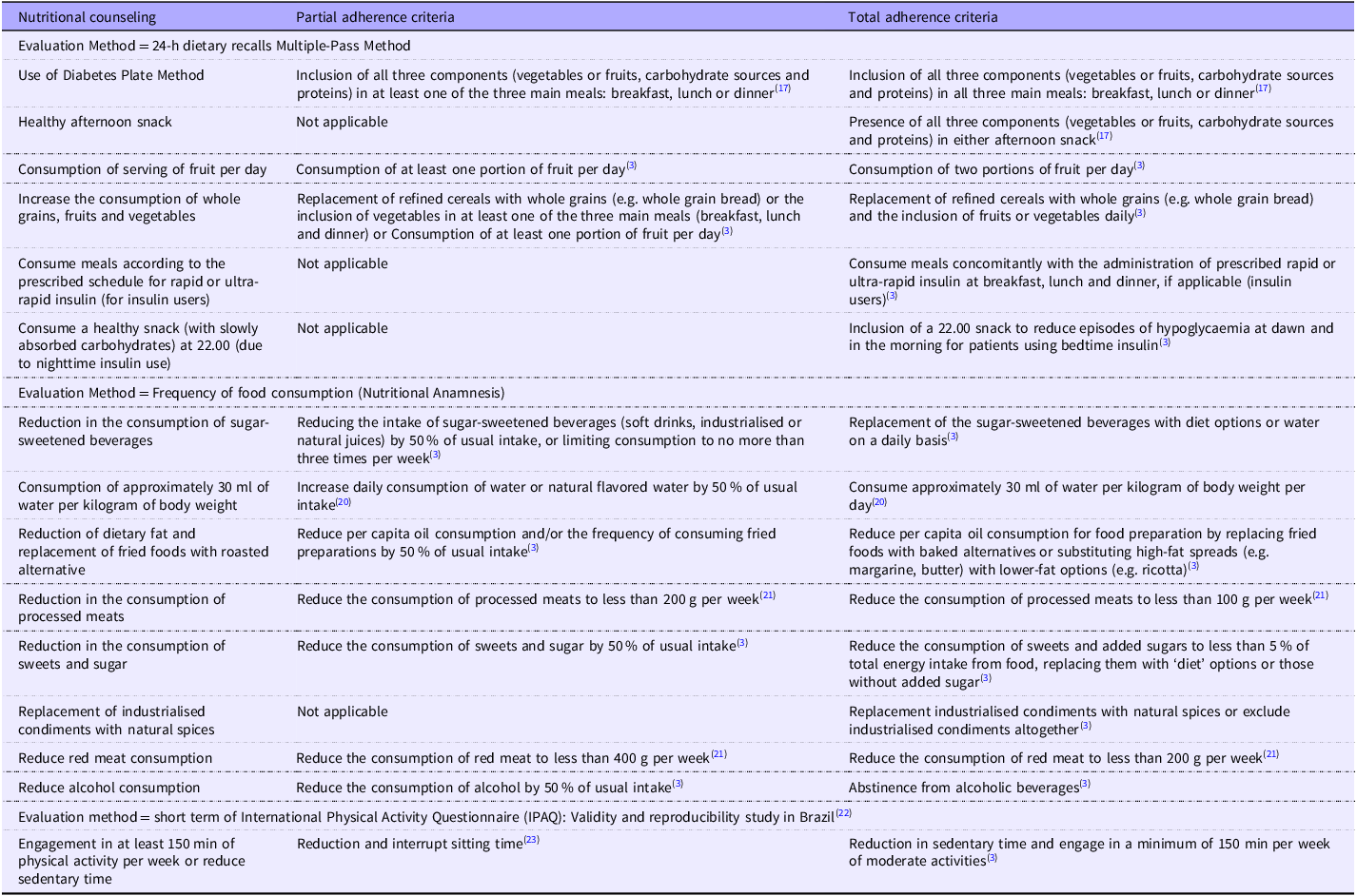
The control group received usual care, consisting of scheduled appointments with a nutritionist. This care was delivered as nutritional counselling without a structured meal plan or prescribed diet. Instead, combinations (i.e., small behavioural goals) were collaboratively established with each participant, taking into account therapeutic targets(3) and individual readiness to change. Appointments were conducted in two sessions, spaced 4 months apart. In each session, up to five combinations were defined in agreement with the participant. All combinations are detailed in Table 1. To support understanding and implementation of the agreed combinations, illustrative materials were provided as needed, including a culturally adapted version of the diabetes plate method and recipes suggestions aimed at improving diet quality (e.g. herb salt, whole grain bread, ricotta pâté, beans and infused water). These resources were tailored to the specific combinations established and to each participant’s individual needs. Dietary and lifestyle recommendations were personalised and jointly defined with the participant. These combinations were aligned with diabetes management guidelines(3), emphasising the increased consumption of in nature or minimally processed foods(16), appropriate plate composition based on the diabetes plate method(17) and reduction of sedentary behaviour(Reference Colberg, Sigal and Yardley18). At the second visit (4 months into the intervention), adherence to the agreed lifestyle changes was assessed. Although participants were not encouraged to follow caloric restriction, they were supported in adopting healthy eating patterns consistent with both Brazilian(19) and American Guidelines(3).
Nutritional counseling for health behaviour improvement in individual appointments and the criteria for adherence

Intervention
The intervention group received three sessions of group-based nutritional education in addition to the standard care. These sessions took place after the baseline appointment and continued until the second visit (4 months into the intervention). The duration of the intervention and follow-up in the present study corresponds to the initial 4 months of a larger, ongoing trial, which includes a planned one-year follow-up period(Reference Busanello, Menezes and Koller15). This preliminary analysis aimed to assess short-term changes following the intervention. The 4-month interval between visits was established based on evidence suggesting that meaningful changes in HbA1c levels typically require a minimum of 3 months to become detectable(Reference Almutairi, Hosseinzadeh and Gopaldasani9). In this context, usual care at our institution is typically scheduled at this interval to accommodate the high patient demand. Moreover, to align with the American Diabetes Association’s recommendation of at least ten hours of contact with the care team over the course of a year, which includes three group sessions and four individual appointments, the intervention was structured around the most frequently addressed topics during routine individual consultations, as well as the current follow-up schedule of the nutrition outpatient clinic (one appointment every 4 months).
The group sessions, each lasting one hour, were scheduled weekly, biweekly or monthly, depending on participant availability. However, each participant attended only one session for each topic. Approximately twenty participants were invited to each group session. Briefly, the sessions covered the following topics: 1) Titled ‘Let’s go shopping’, this session focused on the practical acquisition of food. It includes an educational activity where participants identified foods based on the NOVA classification, which categorised foods according to their degree of processing(Reference Monteiro, Levy and Claro24). The session also incorporated recommendations from the Food Guide for the Brazilian Population(16). At the end of the meeting, participants were encouraged to replace processed or ultra-processed foods in their daily consumption with natural or minimally processed alternatives. 2) Titled ‘Healthy Plate’, this session focused on the Diabetes Plate method proposed by the American Diabetes Association(17). This method emphasises the inclusion of three food groups: non-starchy vegetables, carbohydrates sources (including starchy vegetables) and protein sources (both animal and plant-based). The session explained the significance of each group for diabetes management and provides guidance on creating balanced meals according to this method. Participants were encouraged to apply the concept of a healthy plate when serving meals at home and were invited to share a photo of their meal in a WhatsApp group for further support and motivation. 3) Titled ‘Hunger and Satiety’, this session encouraged participants to reflect on recognising and understanding hunger and satiety cues. It covered the concept of hunger, how to identify it and the different types of hunger – physiological, hedonic and emotional eating – along with strategies for managing each type(Reference Alvarenga, Figueiredo and Timerman25). The session also emphasised the importance of mindful eating practices, such as eating slowly, focusing on the meal, observing the food and minimising distractions(Reference Antonaccio and Figueiredo26). Participants were encouraged to practice mindful eating during at least one meal per day.
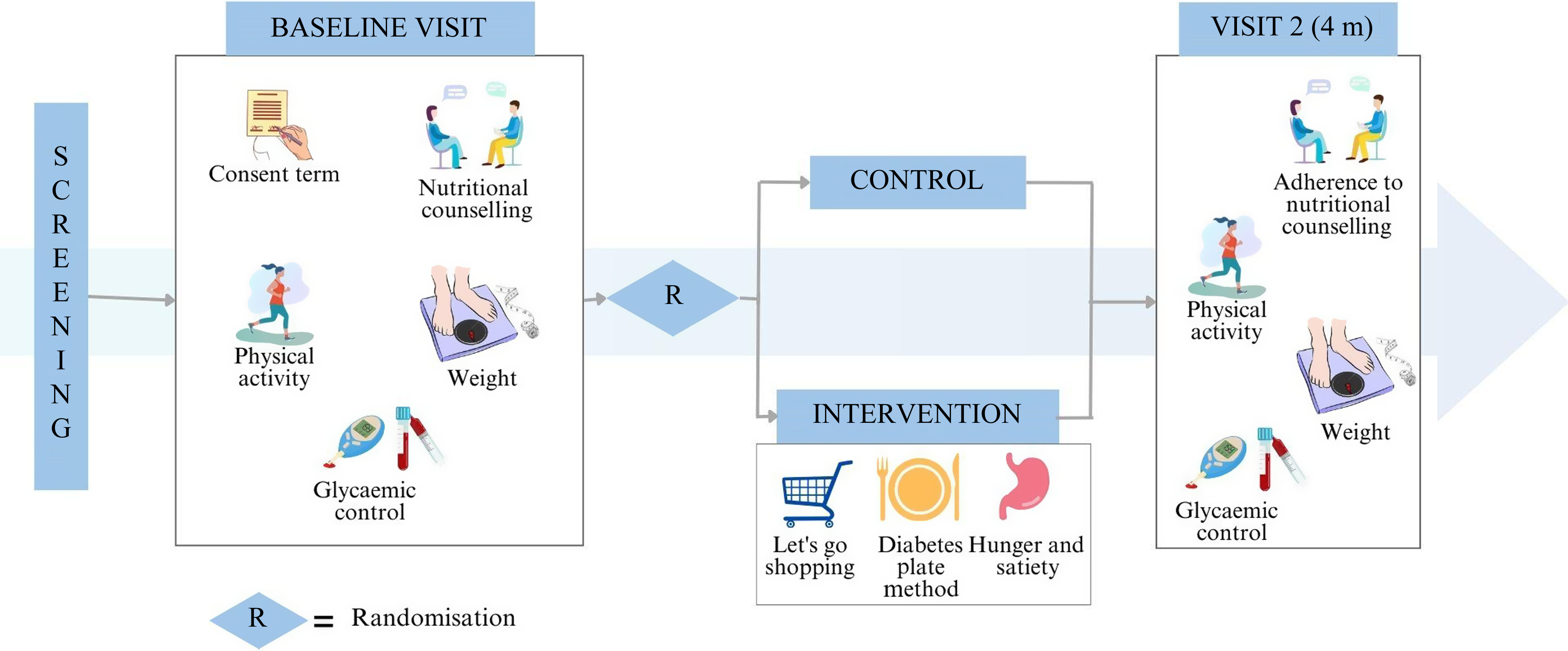
After 4 weeks, participants in both the control and intervention groups were contacted via telephone to schedule their second visit for outcome assessment and a reinforcement of nutritional counselling. Figure 1 illustrates the study’s logistics.
Study logistics flow chart. Source: Prepared by the authors.

Outcomes measurements
All participants underwent assessments at baseline and after 4 months. The primary outcome measure was adherence to nutritional counselling, while secondary outcomes included glycaemic control indicators (fasting glucose and glycated Hb, body weight and physical activity levels.
Adherence to nutritional counselling at baseline was evaluated during the second visit. Specifically, we assessed whether participants had implemented each of the combinations (small goals) established during the initial appointment, based on self-reported data. This assessment was conducted using a dietary history collected by a trained nutritionist through the 24-h dietary recall Multiple-Pass Method(Reference Steinfeldt, Anand and Murayi27) combined with questions on the type, frequency and quantity of consumption of the following food groups: water, sweets, sugar-sweetened beverages, alcoholic beverages, fried foods, fats, processed meats, canned foods, pickled foods, ultra-processed seasonings and meats. Participants who achieved the proposed combinations, either partially or fully, were classified as adherent. The specific criteria and cut-off points used to define partial and full adherence for each combination are detailed in Table 1.
Clinical assessment
Clinical data, including diabetes duration, associated comorbidities, diabetes complications and medication use, were extracted from the patients’ electronic medical records during the medical visit closest to the nutritional assessment date. The Medication Effect Score was calculated based on the use of diabetes treatment medications, considering dosage and potency to evaluate the overall impact of hypoglycaemic agents on HbA1c reduction(Reference Alexopoulos, Yancy and Edelman28). Additionally, the use of psychotropic drugs, antihypertensive agents and lipid-lowering medications was assessed through medical record review and corroborated with the patients.
Information regarding diabetes-related complications was obtained from electronic medical records, prioritising the date closest to the baseline assessment. Diabetic retinopathy was identified based on the presence of mild, moderate, severe non-proliferative or proliferative retinopathy, as determined by funduscopic examination at the time of diagnosis by a specialist(Reference Das, Takkar and Sivaprasad29). Diabetic neuropathy, documented in clinical history, was confirmed using a 10 g monofilament examination by an endocrinologist(3). CVD was defined by a current or previous history of conditions such as coronary heart disease, peripheral arterial disease, heart failure, myocardial infarction and/or stroke. Diabetic kidney disease was characterised by an estimated glomerular filtration rate < 60 ml/min/1·73 m2 and/or persistently elevated urinary albumin excretion, defined as albuminuria ≥14 mg/dl in at least two measurements taken 3–6 months apart(Reference Viana, Gross and Camargo30).
A diagnosis of hypertension was established when the mean systolic blood pressure exceeded 130 mmHg or diastolic pressure exceeded 80 mmHg on at least two separate occasions. Alternatively, a history of systemic arterial hypertension under pharmacological treatment, regardless of current blood pressure values, also qualified for the diagnosis(Reference Carey and Whelton31).
Patients were categorised based on self-reported smoking status as current, former or non-smokers and by race as white or non-white. Education levels were also self-reported. Social class was determined using the Brazilian Economic Classification Criteria, which employs a standardised questionnaire assessing the presence and quantity of household appliances(32). Individuals classified within classes C1, C2 or D/E were considered to belong to a low social class. Physical activity levels were assessed using the short version of the International Physical Activity Questionnaire, which quantifies activity in minutes per typical week. A sedentary lifestyle was defined as engaging in < 600 MET-minutes/week of continuous physical activity(33).
Anthropometric measurements included weight (measured with light clothing and without shoes), height and waist circumference. Waist circumference was measured in duplicate at the midpoint between the lowest rib and the iliac crest using an anthropometric scale and an inelastic fibreglass measuring tape(Reference Gibson34). BMI was calculated using the formula: weight (kg)/height (m)2. High waist circumferences were defined when it was ≥ 86 cm for women and ≥ 92 cm for men(Reference Cardinal, Vigo and Duncan35).
Blood samples were collected after a 12-h fast, and all analyses were performed at the Laboratory Diagnostic Service of Hospital de Clínicas de Porto Alegre, Brazil. The following measurements were obtained: Fasting plasma glucose, determined using the glucose-peroxidase colorimetric enzymatic method (Biodiagnostica Kit)(Reference Trindler36); glycated Hb, measured by high-performance LC using a Turbo variant II system(Reference Davis, McDonald and Jarett37) (reference range 4·0 % to 6·0 %); serum creatinine, assessed via the colorimetric method(Reference Heinegård and Tiderström38) and the estimated glomerular filtration rate, calculated using the Chronic Kidney Disease Epidemiology Collaboration equation(Reference Levey, Stevens and Schmid39). Urinary albumin was measured using the immunoturbidimetry method(Reference Teppo40).
Statistical analysis
A sample size of 176 participants (eighty-eight per group) was calculated to ensure 80 % power, with a 5 % type I error and a 20 % type II error, to detect a mean difference of 0·59 in HbA1c levels between patients randomised to the intervention group (patient-centred group) and the control group (traditional education intervention)(Reference Naik, Palmer and Petersen41). This calculation was based on a standard deviation of 1·39 %.
The normality of variable distribution was assessed using the Shapiro–Wilk test. Continuous variables were described as either the mean with CI or the median with interquartile ranges, depending on their distribution. Categorical variables were presented as absolute and relative frequencies. Baseline characteristics of patients randomised to the control and intervention groups were compared using the Mann–Whitney U test for continuous variables and the χ 2e or Fisher’s exact test for categorical variables, as appropriate. The proportion of nutritional counselling between randomised groups was compared, and adherence to these recommendations was evaluated using the χ 2 or Fisher’s exact test.
A potential interaction between groups (control and intervention) and time was assessed using a generalised linear model. This model included time and randomisation as fixed effects, with adjustments for sex, age, Medication Effect Score and BMI as covariates (Bonferroni post hoc correction). Additionally, physical activity was analysed using the Wilcoxon test to assess within-group changes over time, while between-group differences in these changes were evaluated using the Mann–Whitney U test. In addition, the difference in the proportion of adherence to the number of combinations between groups was accessed using the Mann–Whitney U test.
To assess the dose–response effect of group sessions on outcomes such as adherence to a healthy diet, physical activity and HbA1c, a test for linear trend was applied to categorical variables, while linear regression was used for continuous variables. Changes (deltas) in continuous variables over time were calculated, and for skewed distributions, a natural logarithmic transformation was performed to normalise the data.
In this study, we conducted an intention-to-treat analysis, retaining all participants in their originally randomised groups. Missing data were imputed using the last observation carried forward method. All analyses were performed using IBM SPSS Statistics version 20.0 (PAWS Inc.), with a two-tailed significance level set at 5 %.
Results
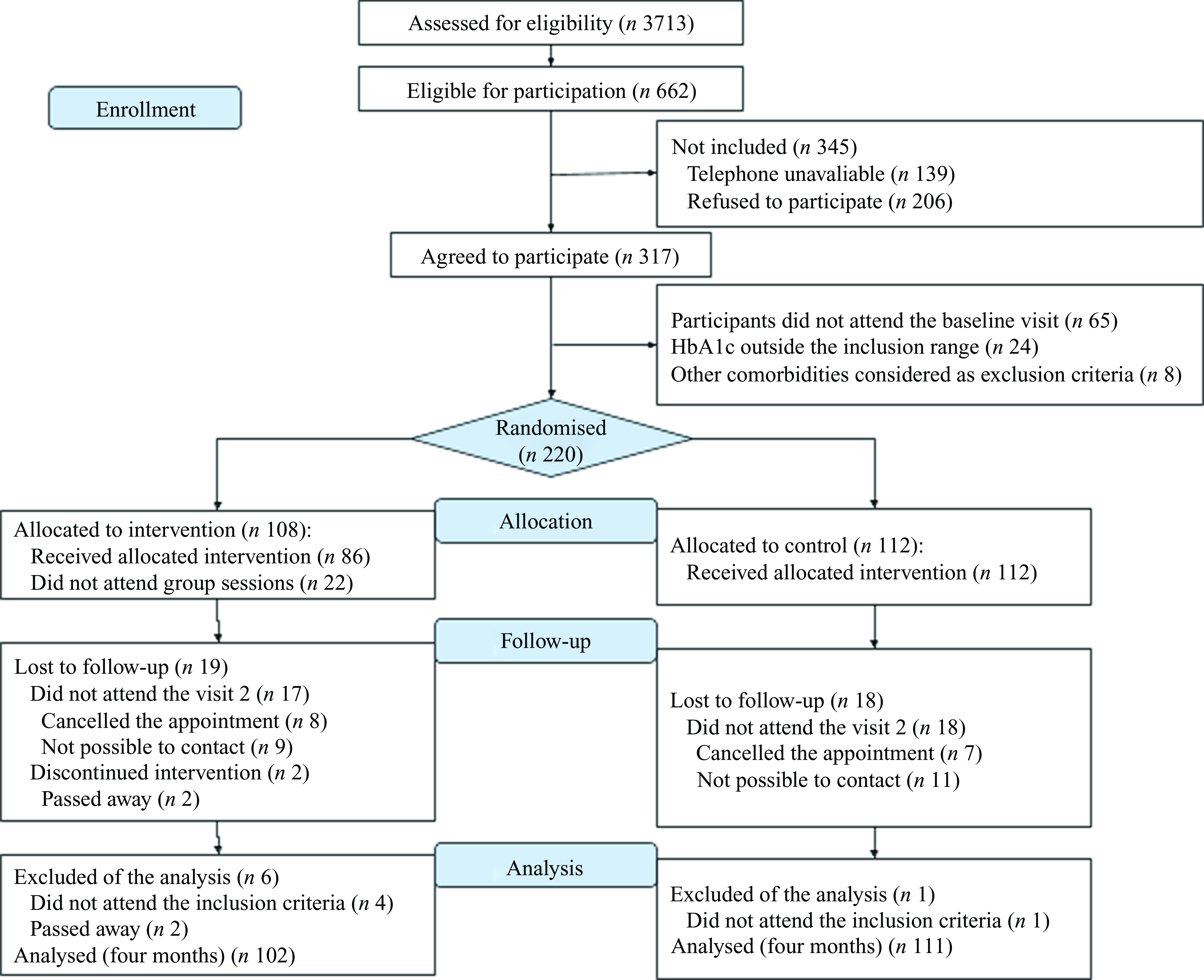
A total of 3713 electronic outpatient records were reviewed at the hospital between September 2022 and January 2024. Among these, 662 patients were deemed eligible for participation; however, 139 individuals could not be contacted (telephone number unavailable), and 206 declined to participate. Consequently, 317 provided informed consent. Nonetheless, although sixty-five participants responded to the questionnaires by phone, they did not attend the baseline visit. Additionally, thirty-two individuals were excluded due to HbA1c values outside the inclusion range (n 24) or the presence of comorbidities that met the exclusion criteria such as autoimmune diseases, binge eating disorder, major depression or chronic corticosteroid use identified during the baseline visit (n 8). Thus, a total of 220 patients were randomised, with 108 allocated to the intervention group and 112 to the control group. After randomisation, an additional seven participants were excluded: two passed away during the first 4 months of the study, and five were found to have conditions that met the exclusion criteria (gastroparesis, binge eating disorder, bariatric surgery, wheelchair user and nutritional follow-up with another healthcare professional), leading to their removal from the analyses. Consequently, 213 participants were included in the final analysis. The patients flow chart, structured according to CONSORT guidelines, is presented in Figure 2. Additionally, seventeen participants from the intervention group and eighteen from the control group did not attend the follow-up visit, and their data were imputed. Among the included participants (n 213), the majority were women (62·4 %), older adults (54·9 %), of low socio-economic status (67·9 %) and had completed primary education (59·2 %). In this sample, 65·1 % of participants had obesity, and 53·8 % reported a low level of physical activity. Regarding diabetes treatment, most patients (82·2 %) were insulin users, with a median diabetes duration of 16 years (interquartile range (IQR) = 10–23). The median HbA1c was 9·2 % (IQR = 8·3–10·2).
CONSORT flow chart of participants included in the present analysis. CONSORT, Consolidated Standards of Reporting Trials. Source: Prepared by the authors.

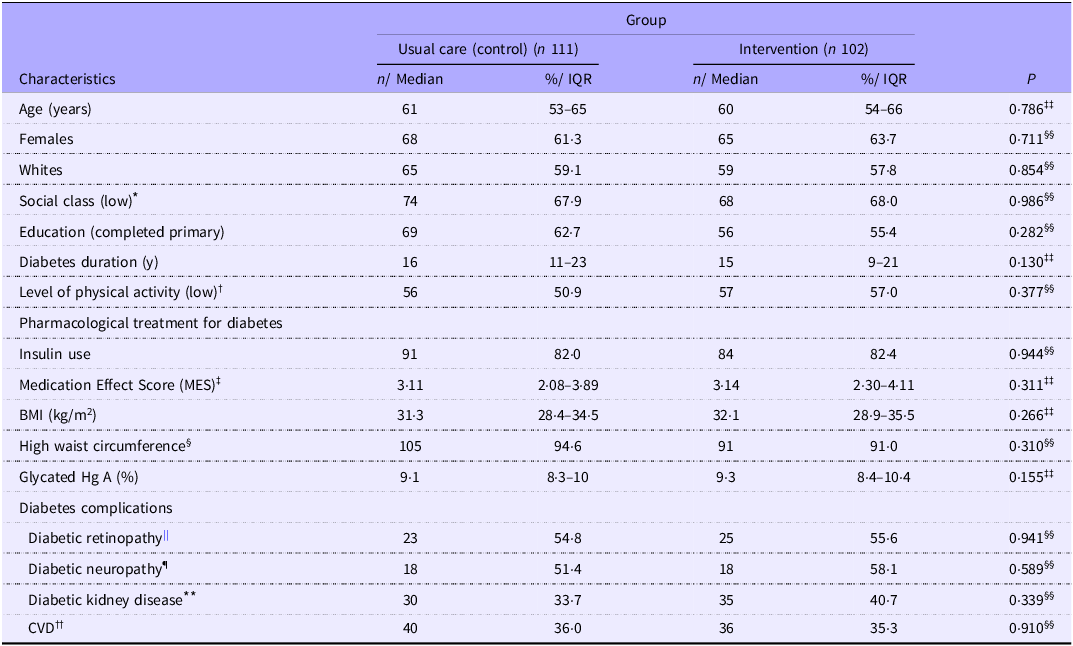
Baseline characteristics of participants randomised to the control and intervention groups were compared, with details provided in Table 2. No significant differences were observed between randomisation groups in terms of age, sex, ethnicity, diabetes duration, lifestyle factors, diabetes medication use, anthropometric measures, glycaemic control or diabetes-related complications. Similarly, when comparing participants who attended v. those who did not attend the second visit, just significant differences were found for the sex (online Supplementary Table 1).
Baseline characteristics of participants included in this study with type 2 diabetes mellitus, stratified by randomised groups (n 213)

IQR, interquartile range.
Data expressed as median (interquartile range) or number of patients for the total sample (%).
* Social class (low) was considered when C1, C2 and D-E(Reference Matsudo, Araújo and Matsudo42).
† Level of physical activity (low) is defined as when patients report ≤ 599 metabolic equivalent tasks (metabolic equivalent of task) of physical activity per week in the International Physical Activity Questionnaire(22).
‡ The Medication Effect Score (MES) was computed using the formula: (actual dose of the medication/maximum dose of the medication) × specific adjustment factor(Reference Viana, Gross and Camargo30).
§ High waist circumference was characterised by when ≥ 92 for male and ≥ 86 for female(Reference Davis, McDonald and Jarett37).
|| Diabetic retinopathy was assessed based on the presence of mild, moderate, severe non-proliferative or proliferative retinopathy through funduscopic examination(Reference Carey and Whelton31).
¶ Diabetic neuropathy was evaluated based on the clinical history and a 10 g monofilament examination(3).
** Diabetes kidney disease was characterised by an estimated glomerular filtration rate of < 60 ml/min/1·73 m2 and/or persistently elevated urinary albumin excretion, defined as albuminuria ≥ 14 mg/dl on at least two measurements within a 3–6 months period(32).
†† CVD was self-reported based on a history of stroke, acute myocardial infarction, coronary artery disease, peripheral arterial occlusive disease, ischaemic heart disease or heart failure(43).
‡‡U-Mann–Whitney test; §§Chi-square test.
Among those randomised to the intervention group, 86 out of 108 (79·6 %) attended at least one group session. At the second visit for outcome assessment, attendance rates at scheduled appointments did not differ significantly between the intervention (79·6 %) and control (83·9 %) groups (P = 0·157).
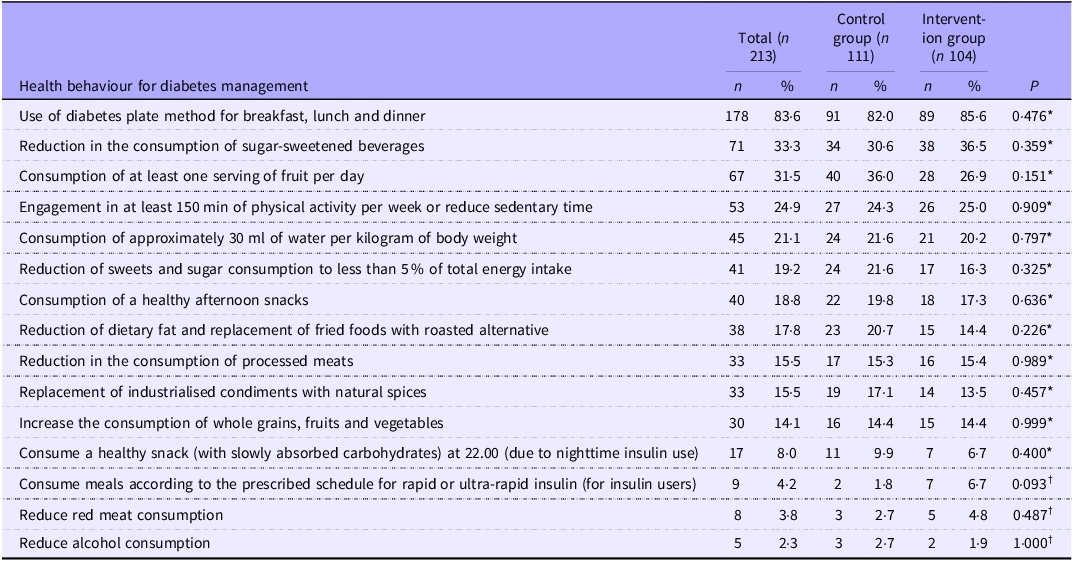
Table 3 ranks the specific nutritional counselling topics provided to participants during the baseline visit. On average, each patient implemented 3·2 ± 0·8 dietary modifications in consultation with the nutritionist, with no significant differences between groups. The most frequently emphasised recommendation was the diabetes Plate plate method, provided to 83·6 % of participants, followed by reducing sugar-sweetened beverage intake (33·5 %), consuming at least one serving of fruit per day (31·6 %), engaging in a minimum of 150 min of physical activity per week (24·7 %) and increasing water intake to approximately 30 ml per kg of body weight per day (20·9 %). Additional nutritional counselling recommendations are detailed in Table 3, with no significant differences in the proportion of each counselling type between groups. Less frequently, counselling also included recommendations on sleep hygiene (n 4), adherence to prescribed medications (n 4), reducing the intake of potassium-rich foods (n 1) and increasing dairy consumption (n 1).
Proportion of patients receiving each nutritional counseling at baseline in this clinical trial, stratified by randomised groups (n 213)

Data expressed as mean (standard deviation) or number of patients for the total sample (%).
*χ 2 or †Fisher exact test.
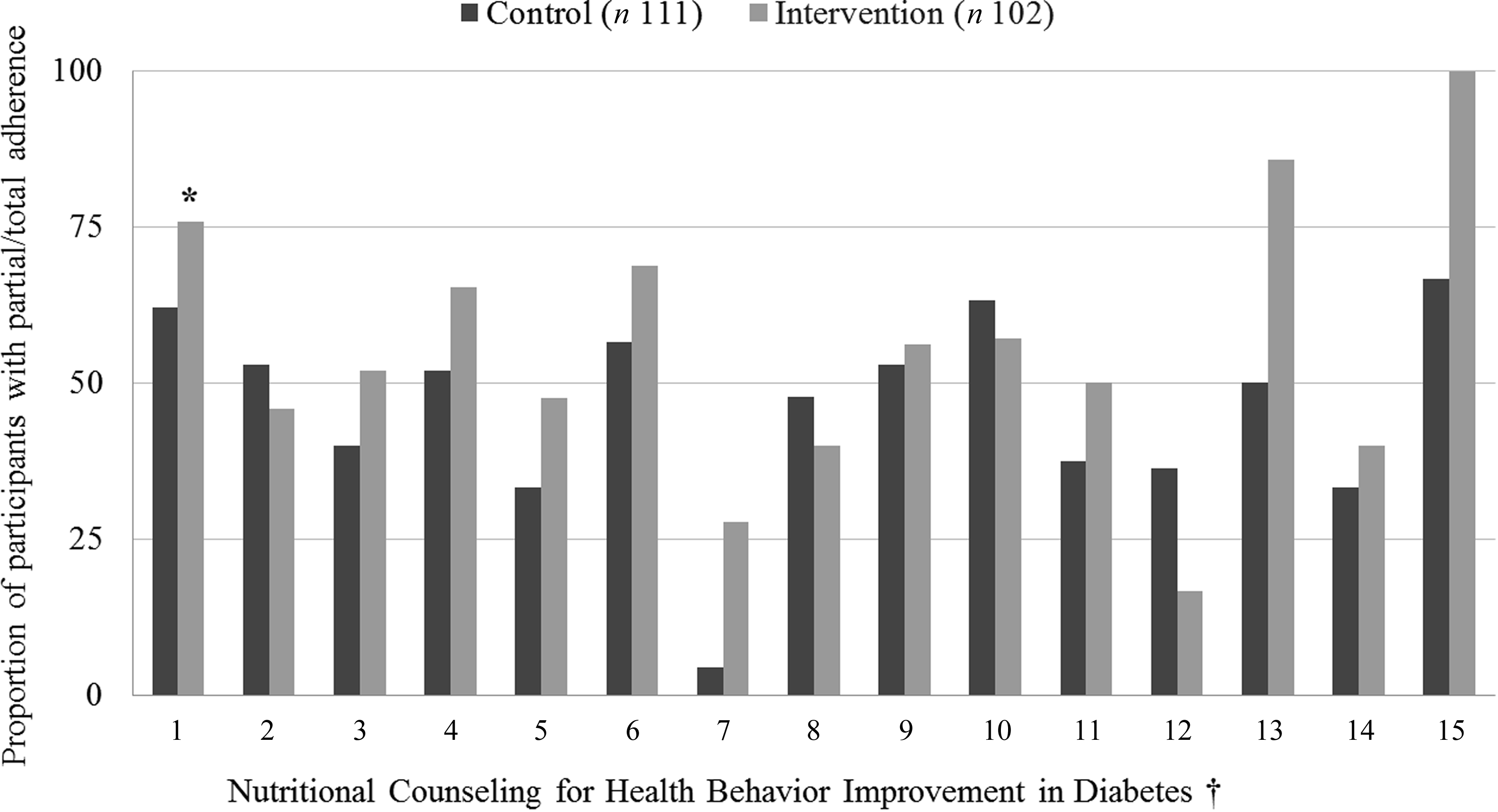
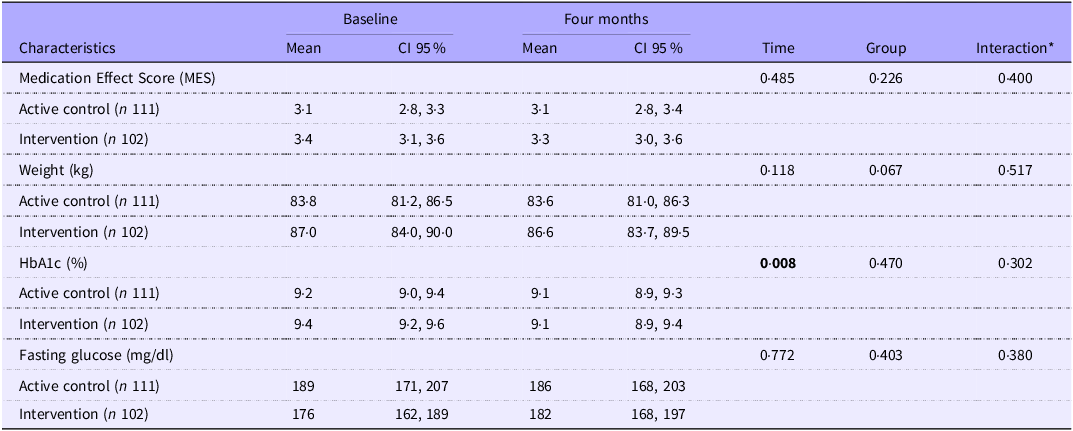
Considering the number of combinations performed, the intervention group showed higher adherence compared with the control group (67 % (IQR: 33–95) v. 50 % (IQR: 33–68); P = 0·012). Figure 3 illustrates the proportion of patients adhering to health behaviours for diabetes management. Specifically, adherence to the combination of the Diabetes Plate Method was significantly higher in the intervention group compared with the control group (75·9 % v. 62·2 %; P = 0·05). Table 4 presents the mean values at baseline and after 4 months for both the control and intervention groups, along with an analysis of the interaction between time and randomisation, adjusted for sex, age, Medication Effect Score and body max index. Although no statistically significant interaction was found between time and group allocation, both groups showed a reduction in HbA1c at 4 months compared with baseline: −0·3 % (IQR = −0·9–0·1 %) in the intervention group and −0·1 % (IQR = −0·6–0·4 %) in the control group (P = 0·008). A statistically significant increase in physical activity levels (metabolic equivalent tasks/min/week) was observed exclusively in the intervention group (Z = −2·073; P = 0·038, Wilcoxon test), with a median of 430 (IQR = 198–1200) at baseline and 692 (IQR = 297–1457) at the second visit. In contrast, no significant change was observed in the control group, where the median values were 511 (IQR = 166–1635) at baseline and 594 (IQR = 198–1440) at the second visit (P = 0·956). However, the between-group comparison of changes over time did not reach statistical significance (P = 0·159, Mann–Whitney U test).
Adherence to Nutritional Counseling for Health Behavior Improvement in Diabetes Management Evaluated at the Second Visit (4 Months) of This Clinical Trial, Stratified by Randomised Groups. The bars represent the proportion of participants with partial or total adherence. * χ 2 test: P = 0·05. † Nutritional Counseling for Health Behavior Improvement in Diabetes: 1. Use of diabetes plate method for breakfast, lunch and dinner; 2. reduction in the consumption of sugar-sweetened beverages; 3. consumption of at least one serving of fruit per day; 4.engagement in at least 150 min of physical activity per week or reduce sedentary time; 5. consumption of approximately 30 ml of water per kilogram of body weight; 6. reduction of sweets and sugar consumption to less than 5 % of total energy intake; 7. consumption of a healthy afternoon snacks; 8. reduction of dietary fat and replacement of fried foods with roasted alternative; 9. reduction in the consumption of processed meats; 10. replacement of industrialized condiments with natural spices; 11. Increase the consumption of whole grains, fruits and vegetables; 12. consume a healthy snack (with slowly absorbed carbohydrates) at 22.00 (due to nighttime insulin use); 13. consume meals according to the prescribed schedule for rapid or ultra-rapid insulin (for insulin users); 14. reduce red meat consumption and 15. reduce alcohol consumption.

Differences in medication effect score, body weight and glycaemic control among randomised participants following nutritional counseling (n 213)

HbA1c, glycated Hb. *Generalised linear model adjusted for sex, age, medication effect score and BMI to test interaction between time and randomisation groups with Bonferroni correction. Data presented as mean (95 % CI).
The boldface values in Table 4 highlight data that show statistically significant differences.
No linear association was found between adherence to the Diabetes Plate Method and the number of group sessions attended (P = 0·755). Likewise, no significant associations were observed between participation in group sessions and physical activity (measured in metabolic equivalent tasks) (P = 0·125) or HbA1c levels (P = 0·615).
Discussion
This real-life clinical trial evaluated the impact of adding group-based nutritional education to usual care on glycaemic control in patients with T2DM. Although the intervention did not result in statistically significant improvements in glycaemic control compared with usual care, favourable trends were observed. Both groups experienced reductions in HbA1c levels over 4 months, regardless of allocation. Notably, a greater proportion of participants in the intervention group adhered to combinations and to the Diabetes Plate Method following individualised nutritional counselling. Although physical activity levels (measured in metabolic equivalent tasks) increased in the intervention group, the difference between groups was not statistically significant, indicating that additional strategies may be needed to effectively promote this behaviour. While the group-based intervention did not lead to better glycaemic outcomes, it appeared to improve adherence to dietary recommendations and support engagement in physical activity among individuals with T2DM.
Regarding adherence to nutritional counselling, a higher proportion of patients in the intervention group exhibited adherence to a higher number of combinations and to counselling for the Diabetes Plate method compared with the control group, consistent with findings reported by other authors(Reference Safren, Gonzalez and Wexler44,Reference Eshete, Lambebo and Mohammed45) . Indeed, strategies that actively engage patients in the process of lifestyle modification have been associated with greater reductions in HbA1c levels(Reference Almutairi, Hosseinzadeh and Gopaldasani9). Additionally, the intervention group received more frequent contact than the control group, which may have contributed to improved adherence(Reference Steinsbekk, Rygg and Lisulo46), as recommended by American Diabetes Association(3). A clinical trial demonstrated that implementing the Diabetes Plate method in interventions resulted in lower HbA1c values at 6 months, particularly among patients whose initial HbA1c levels were off target (7–10 %), similar to the patients in our sample(Reference Bowen, Cavanaugh and Wolff47). In addition, the Diabetes Plate has the potential to improve education of those with low health literacy(Reference Eshete, Lambebo and Mohammed45). Although only one of the fifteen behaviours evaluated showed a statistically significant difference between groups, and no correction for multiple comparisons was applied, adherence to the number of combinations was higher in the intervention group, reinforcing the findings. Moreover, notably, this behaviour, adherence to the Diabetes Plate Method, was the most frequently addressed combination during individual nutrition counselling.
No statistically significant difference in HbA1c reduction was observed between the intervention and control groups after 4 months. Several factors may explain this finding. First, the short duration of the intervention may have limited its effect on glycaemic control, as meaningful changes in HbA1c typically require sustained behavioural modifications over longer periods. This is consistent with previous studies reporting significant HbA1c reductions primarily in interventions lasting 6 months or more(Reference Chrvala, Sherr and Lipman8,Reference Bowen, Cavanaugh and Wolff47) . Additionally, both groups received individualised nutritional counselling, which may have contributed to improvements across all participants, thereby reducing between-group differences. This pattern was also demonstrated in a recent meta-analysis on group-based diabetes self-management education, which found that interventions shorter than 6 months were associated with smaller HbA1c reductions(Reference Steinsbekk, Rygg and Lisulo46).
A trend towards increased physical activity was observed in the intervention group, but the lack of a statistically significant difference compared with the control group suggests that the strategies employed may not have been sufficient to promote sustained behavioural change. This finding is consistent with previous studies showing that, while behavioural interventions can positively influence physical activity-related behaviours, their impact is often limited unless specific components, such as goal setting, personalised feedback or structured exercise support, are included(Reference Hohberg, Lichtenstein and Kreppke48).
This study has several limitations. First, neither researchers nor participants were blinded, which may have introduced bias. As a real-world study, certain factors such as acute illness and the use of medications for treatment could not be controlled and may have influenced the outcome. The relatively short follow-up period may have been insufficient to capture significant changes in key clinical parameters. Furthermore, both groups received individualised nutritional counselling from the nutrition team, which may have attenuated between-group differences. Adherence to nutritional counselling was assessed using a 24-h dietary recall, a self-reported tool that depends on participants’ memory and perception, potentially introducing information and social desirability bias. Additionally, sixty-five participants agreed to participate by phone but did not attend the baseline visit; although the reasons remain unclear, barriers related to socioeconomic factors or lack of motivation are likely contributors, potentially introducing selection bias.
On the other hand, this clinical trial presents several strengths, including its randomised and pragmatic design, which enhances the scientific rigour and applicability of the findings. The trial reflects real-life scenarios in clinical practice, featuring a population-representative sample, standardised collection of clinical data and centralised biochemical measurements. Furthermore, the provision of individualised nutritional counselling to both groups strengthened the internal validity by allowing the specific effects of the group-based education component to be evaluated more precisely. Another important strength lies in the implementation of a behavioural intervention within the public healthcare context, reflecting the opportunities of promoting behaviour change in real-world, resource-constrained environments. The use of accessible and practical educational content contributed to the ecological validity of the intervention. Moreover, the approach may be particularly relevant for individuals with lower health literacy.
In clinical practice, the incorporation of group-based nutritional education as a complementary strategy to individual counselling appears effective in promoting short-term behavioural changes, likely due to increased motivation and reinforcement of key messages. The similar outcomes observed between the intervention and control groups, both of which received individualised counselling, suggest that group-based education may represent a viable and cost-effective approach to expanding access and optimising public health services. The simplicity and practicality of group-based sessions further support their potential in fostering behaviour change, self-care and self-management among individuals with T2DM. Importantly, even in the absence of immediate statistically significant clinical effects, behaviours such as adherence to nutritional counselling should be recognised as essential components of diabetes management, given their role in influencing long-term outcomes. These behaviours warrant emphasis in routine care and should be actively promoted by healthcare teams. Trained nutritionists, in particular, can act as facilitators of behaviour change through structured group interventions, especially when using accessible tools such as the Diabetes Plate Method. Collectively, the findings of this study may contribute to the integration of structured educational strategies into clinical protocols and diabetes care programs, supporting broader efforts to improve the quality and effectiveness of chronic disease management.
Future research should extend beyond short-term clinical outcomes to investigate the long-term sustainability of behavioural changes, particularly adherence to nutritional counselling. Longitudinal clinical trials with follow-up periods exceeding 12 months are warranted to assess the durability and enduring impact of group-based nutritional interventions. Stratifying participants by readiness to change may offer valuable insights into individual motivation levels and clarify whether readiness moderates intervention effectiveness. In addition, monitoring diet quality longitudinally is essential for a comprehensive understanding of dietary adherence. Future trials should also investigate potential dose–response relationships between the intensity and frequency of group sessions and behavioural or clinical outcomes. In addition, exploring potential mediators, such as social support, health literacy and perceived barriers to adherence, may elucidate the mechanisms driving intervention effectiveness and inform the development of more tailored and impactful strategies. Finally, future studies should involve larger and more diverse populations to improve generalisability and examine implementation strategies aimed at expanding the reach, scalability and sustainability of such interventions within real-world clinical settings.
Acknowledgements
The authors extend their gratitude to the patients who generously agreed to participate in the study.
This study was supported by the Financiamento e Incentivo à Pesquisa of the Hospital de Clínicas de Porto Alegre (FIPE/HCPA, ID 2022–0238) and the Coordenação de Aperfeiçoamento de Pessoal de Nível Superior – Brasil (CAPES, Finance Code 001). A. B., V. M. M. and O. G. K. received scholarships from CAPES. Sponsors had no involvement in study design; in the collection, analysis and interpretation of data; in the writing of the report and in the decision to submit the article for publication.
The authors’ contributions were as follows: A. B. contributed to the study design, data collection, analysis, interpretation and manuscript writing; V. M. M. and O. G. K. collected data; A. V. A. conducted the randomisation process and J. C. A. designed and supervised the study, analysed and interpreted the data and critically revised the manuscript. All authors read and approved the final manuscript.
The authors declare that they have no conflict of interest.
The data that support the findings of this study are available from the corresponding author upon reasonable request.
Supplementary material
For supplementary material/s referred to in this article, please visit https://doi.org/10.1017/S0007114525105485