Highlights:
-
• Deficit schizophrenia (DS) is associated with the paraoxonase (PON)1 QQ genotype.
-
• DS is also accompanied by lowered PON1 activity especially that of CMPAase.
-
• Lowered PON1 activity is associated with negative symptoms, formal thought disorders, psychomotor retardation, and excitation.
-
• The presence of the Q allele is associated with increased IgA responses to Gram-negative bacteria.
-
• Lowered PON1 activity lowers resiliency to the detrimental effects of inflammatory and oxidative responses.
Introduction
Schizophrenia (SCZ) is a chronic disabling psychiatric disorder characterized by abnormal perceptions, incoherent or illogical thoughts, and disorganized speech and behavior.Reference Wu, Yao and Luo 1 Cardinal symptoms of SCZ include positive and negative symptoms, cognitive dysfunction, and deterioration in social and occupational functioning. Deficit schizophrenia (DS) is a distinct nosological entity characterized by the presence of negative symptoms, including affective flattening, alogia, anhedonia, avolition, and social inhibition.Reference Kanchanatawan, Sriswasdi and Thika 2 , Reference Kanchanatawan, Sriswasdi and Thika 3 Negative symptoms are currently conceptualized as behaviors and thought processes which the patients partially lost due to the illness. This contrasts with positive symptoms including delusions, hallucinations, disorganized thinking, and hostile behaviors, which are considered to be new behaviors or thought processes that were not present before the onset of the illness.Reference Berrios and Luque 4
SCZ is accompanied by activation of the immune-inflammatory response system (IRS) and IRS biomarkers are significantly associated with negative and psychotic symptoms as well as cognitive impairments.Reference Maes, Meltzer and Bosmans5–Reference Maes, Sirivichayakul, Kanchanatawan and Vodjani12 The current theory is that products of immune activation, including M1 macrophage, T helper (Th)-1, and Th-2 subsets exert neurotoxic effects on neuronal cell in the brain thereby inducing neuroprogression including neurocognitive deficits and symptoms of SCZ and DS.Reference Roomruangwong, Noto and Kanchanatawan 13 For example, the cytotoxic and neurotoxic properties of increased tryptophan catabolites (TRYCATs) such as picolinic acid, xanthurenic acid, and quinolinic acid are further augmented by increased levels of eotaxin (CLL11), a Th-2-related product, that may contribute to neurocognitive deficits, negative symptoms, and the overall severity of SCZ (OSOS).Reference Sirivichayakul, Kanchanatawan, Thika, Carvalho and Maes9–Reference Maes, Sirivichayakul, Kanchanatawan and Vodjani12, Reference Maes, Kanchanatawan, Sirivichayakul and Carvalho14 Moreover, patients with DS show a breakdown of the paracellular tight and adherens junctions and vascular barriers coupled with increased translocation of gut-commensal Gram-negative bacteria.Reference Maes, Sirivichayakul, Kanchanatawan and Vodjani 11 , Reference Maes, Sirivichayakul, Kanchanatawan and Vodjani 12 , Reference Maes, Kanchanatawan, Sirivichayakul and Carvalho 14 Furthermore, this breakdown of the gut tight and adherens junctions is accompanied by increased permeability of the blood-brain barrier (BBB) allowing neurotoxic immune products including lipopolysaccharide (LPS) to access the brain.Reference Maes, Sirivichayakul, Kanchanatawan and Vodjani 11 , Reference Maes, Sirivichayakul, Kanchanatawan and Vodjani 12 , Reference Maes, Kanchanatawan, Sirivichayakul and Carvalho 14 LPS is neurotoxic and may lead to neurodegenerative processes through microglial activation thereby explaining that LPS neurotoxicity may contribute to the pathophysiology of DS.Reference Maes, Kanchanatawan, Sirivichayakul and Carvalho 14 Furthermore, DS is characterized by a deficit in natural immunoglobulin M (IgM) antibodies to oxidative-specific epitopes (OSEs), which indicates an impairment in the innate immune system that serves as a first-line defense against bacterial infections.Reference Maes, Sirivichayakul, Kanchanatawan and Vodjani 11 , Reference Maes, Sirivichayakul, Kanchanatawan and Carvalho 15
Increased production of reactive oxygen (ROS) and nitrogen (RNS) species coupled with lowered antioxidant defenses may induce damage by oxidative and nitrosative stress (O&NS), which, in turn, may cause degeneration of proteins, lipids, nucleic acids, and membrane phospholipids thereby damaging membranes, mitochondria as well as DNA.Reference Anderson and Maes16–Reference Davis, Eyre and Jacka19 Moreover, activated O&NS pathways may affect signal transduction, structural plasticity, and cellular resilience and, therefore, may be associated with neuroprogressive disorders including SCZ.Reference Brinholi, Noto and Maes 7 , Reference Anderson, Berk and Dodd 17 High density lipoprotein (HDL) is an important antioxidant and its protective role is attributed mainly to the enzyme paraoxonase 1 (PON1) that has antioxidant and anti-inflammatory activities.Reference Moreira, Boll, Correia, Soares, Rigobello and Maes 20 , Reference Moreira, Correia and Bonifacio 21 Genetic and epigenetic factors may cause significant differences among individuals in terms of PON1 levels and enzymatic activity. The most studied PON1 polymorphism is Q192R, which influences the catalytic activity of PON1 thereby modulating PON1 antioxidant properties including lipid oxidation.Reference Bayrak, Bayrak, Bodur, Kilinc and Demirpence 22 , Reference Atagun, Tunc, Alisik and Erel 23 The R allozyme is more efficient to detoxify substrates such as paraoxon, 4-(chloromethyl)phenyl acetate (CMPA), and 5-thiobutil butyrolactone.Reference Richter, Jarvik and Furlong 24 , Reference Marsillach, Camps and Ferre 25 R allozyme homozygotes (RR carriers) metabolize lipids more efficiently than QQ carriers and additionally have a stronger defense against lipid peroxidation.Reference Bayrak, Bayrak, Bodur, Kilinc and Demirpence 22 , Reference Atagun, Tunc, Alisik and Erel 23 Moreover, PON1 hydrolyzes N-(3-oxo-dodecanoyl)-homoserine lactone, a quorum-sensing molecule, which regulates virulence and biofilm formation in many bacteria, indicating that PON1 activities have antimicrobial properties.Reference Bar-Rogovsky, Hugenmatter and Tawfik 26 However, to date, there are no studies investigating PON1 status (ie, activity and Q192R polymorphism) in DS as compared with nondeficit schizophrenia (NDS) and the associations between PON1 status and bacterial translocation in SCZ.
Hence, the current study was executed to examine: (a) PON1 activity and Q192R polymorphism in DS vs non-DS (NDS) and controls; (b) PON1 status in association with specific symptom domains of SCZ including OSOS and it target subdomains; and (c) associations between PON1 status and bacterial translocation.
Methods
Participants and methods
Participants
In this study, 80 outpatients with SCZ were recruited by the Department of Psychiatry, Faculty of Medicine, Chulalongkorn University, Bangkok, Thailand and 40 healthy controls were recruited by word of mouth from the same catchment area as the patients. All participants were Thai nationals, aged 18 to 65 years, both women and men. All patients were in a stable phase of illness and complied with the Diagnostic and Statistical Manual of Mental Disorders, Fourth Edition (DSM-IV-TR) diagnostic criteria for SCZ. Forty patients reached criteria for DS, made using the SDS criteriaReference Kirkpatrick, Buchanan, McKenney, Alphs and Carpenter 27 while patients not fulfilling the deficit criteria were classified as patients with NDS (n = 40). The exclusion criteria for controls were a family history of psychotic disorders or a lifetime diagnosis of axis I DSM-IV-TR disorders. Exclusion criteria for patients were axis I disorders other than SCZ (including bipolar disorder, major depressive episode, schizoaffective disorder, autism spectrum disorders, and substance use disorders). Exclusion criteria for all subjects were any neuroinflammatory disorder (including Parkinson’s disease, stroke, and multiple sclerosis) and medical illness (including psoriasis, diabetes, chronic obstructive pulmonary disease, and rheumatoid arthritis); use of immunomodulatory drugs, antioxidant, or ω3-polyunsaturated fatty acid supplements. All participants, as well as the guardians of patients (parents or other close family members) provided written informed consent to take part in the study. Approval for the study was obtained from the Institutional Review Board of the Faculty of Medicine, Chulalongkorn University, Bangkok, Thailand (No 298/57), which is in compliance with the International Guideline for Human Research protection as required by the Declaration of Helsinki, The Belmont Report, CIOMS Guideline and International Conference on Harmonization on Good Clinical Practice (ICH-GCP).
Methods
Clinical assessments
Socio-demographic and clinical data were collected from all participants. We used a semi-structured interview to collect data on socio-demographics, family history of psychosis, duration of illness, psychiatric, and medical history. SCZ was diagnosed using the Mini-International Neuropsychiatric Interview (M.I.N.I.) in a validated Thai translation,Reference Kittirattanapaiboon and Khamwongpin 28 while the diagnosis of DS was made using the SDS criteriaReference Kirkpatrick, Buchanan, McKenney, Alphs and Carpenter 27 and, consequently, outpatients with SCZ were divided into two groups, DS and NDS. The Scale for the Assessment of Negative Symptoms (SANS) was used to measure negative symptoms in all patients.Reference Andreasen 29 In addition, we assessed the Positive and Negative Syndrome Scale (PANSS).Reference Kay, Fiszbein and Opler 30 As explained previously, based on selected items of those scales and other ratings scales including the Brief Psychiatric Rating ScaleReference Overall and Gorham 31 and the Hamilton Depression Rating Scale,Reference Hamilton 32 we computed z unit weighted composite scores refecting psychosis, hostility, mannerism, formal thought disoders (FTD), and psychomotor retardation (PMR).Reference Sirivichayakul, Kanchanatawan, Thika, Carvalho and Maes 9 , Reference Sirivichayakul, Kanchanatawan, Thika, Carvalho and Maes 10 , Reference Maes, Sirivichayakul, Kanchanatawan and Vodjani 12 , Reference Maes, Sirivichayakul, Kanchanatawan and Carvalho 15 The diagnosis of tobacco use disorder (TUD) was made using DSM-IV-TR criteria. We also measured body mass index (BMI) as body weight (kg)/length (m2).
PON1 assay
A blood sample of 10 mL was withdrawn from all individuals. Blood was immediately centrifuged, and the serum was aliquoted and stored at −80°C until thawed for PON1 assays. To stratify individuals in the functional genotypes of the PON1 Q192R polymorphism (QQ, QR, and RR), the substrates used were phenyl acetate (PA; Sigma, St. Louis, MO) under high salt condition and 4-(chloromethyl)phenyl acetate (CMPA, Sigma), which is an alternative to the use of the toxic paraoxon. PON1 activities were determined by the rate of hydrolysis of CMPA (CMPAase, which is influenced by the PON1 Q192R polymorphism) as well as by the rate hydrolysis of phenyl acetate under low salt condition (AREase, which is less influenced by the PON1 Q192R polymorphism). Analysis were conducted in a microplate reader (EnSpire, Perkin Elmer, Waltham, MA).Reference Richter, Jarvik and Furlong 24 We previously described the ELISA assay of IgA responses to Gram-negative bacteria using ELISA including Hafnia alvei, Pseudomonas aeruginosa, Morganella morganii, Pseudomonas putida, and Klebsiella pneumoniae. Reference Geffard, Bodet, Martinet and Dabadie 33 , Reference Maes, Kubera and Leunis 34 The inter-assay coefficients of variation (CV) were <10%.
Statistics
Analysis of variance (ANOVA) was employed to check differences in continuous variables between diagnostic groups. We used analysis of contingency tables (χ 2-tests) to check associations among nominal variables. P-corrections for false discovery rate (FDR) were employed to adjust for multiple comparisons.Reference Benjamini and Hochberg 35 We used multiple regression analysis to check the most significant explanatory variables (including the biomarkers, age, sex, BMI, education, and nicotine dependence) predicting symptom domains. All regression analysis was checked for multicollinearity. We employed multivariate general linear model (GLM) analysis to check the effects of diagnosis on biomarkers while controlling for sex, age, education, BMI, and nicotine dependence. We used tests for between-subject effects to examine the effects of significant independent variables on the biomarkers. Subsequently, model-generated estimated marginal mean values were computed after z transformation of the biomarkers. Protected pair-wise comparisons among treatment means were used to examine the differences in biomarkers between three study groups. We bootstrapped (5000 samples) all results and show the bootstrapped results in case they differ from the nonbootstrapped results. Principal component analysis (PCA) followed by varimax rotation was performed on the biomarkers (which show a high degree of collinearity) in order to obtain two orthogonal PCs, which explain most of the variance and subsequently we use the rotated PC scores in statistical analysis. All tests were two-tailed and a P value of 0.05 was used for statistical significance.
Partial least squares (PLS) path modeling analysisReference Ringle, Wende and Becker 36 was used to examine causal paths from the biomarkers to symptom dimensions. SmartPLS uses structural equation modeling and models pathways whereby single indicators or a set of indicator variables (reflected by latent vectors [LV]) may be entered in the analysis. In the current study, a LV extracted from different symptom domains (reflecting the latent construct OSOS) was entered as output variable (response variable) and the biomarkers, sex, and education were entered as input variables (single indicators). Consistent and complete PLS analysis (5000 bootstraps) was performed when the LV showed good reliability as indicated by composite reliability > 0.7, Cronbach’s alpha > 0.7, rho_A > 0.8, and when the average variance extracted (AVE) was >0.500. Moreover, the indicators in the LV should have factor loadings >0.500 (at P < 0.001) and the construct cross-validated redundancies should be adequate.Reference Ringle, Wende and Becker 36 Adequacy of model fit was evaluated using the SRMR which should be <0.080. Path coefficients with exact P values and factor loadings with P values were computed for the inner and outer models, respectively.
Results
Demographic and clinical data
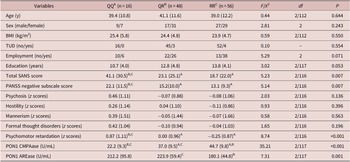
Table 1 shows the socio-demographic and clinical data in subjects divided into QQ, QR, and RR PON1 polymorphism. There were no significant differences in age, sex, BMI, tobacco use disorder, employment, and education among the study groups. Nevertheless, when comparing RR carriers with the other subjects, we found a lower rate of unemployment in RR carriers (χ 2 = 7.16, df = 1, P = 0.007). The total SANS score, PANSS negative test score, and psychomotor retardation were significantly higher in QQ carriers than in the two other groups. There were no significant differences in psychosis, hostility, mannerism, formal thought disorders between the three study groups, although there was a trend toward higher scores in QQ carriers. As expected, PON1 CMPAase activity was significantly different among the three genotypes and increased from QQ ➔ QR ➔ RR carriers. PON1 activity toward phenylacetate (ie, AREase activity) was significantly lower in RR carriers than in QR carriers.
Demographic and Clinical Data of all Participants Divided According to Their PON1 Q192R Genotype

All results are shown as mean (SD).
Abbreviations: AREase, arylesterase; BMI, body mass index, CMPAase, 4-(chloromethyl)phenyl acetate hydrolysis; PANSS, Positive and Negative Syndrome Scale; PON1, paraoxonase 1; SANS, Scale for the Assessments of Negative Symptoms; TUD, tobacco use disorder.
Associations between PON1 genotype and diagnostic classification
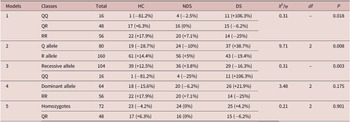
Table 2 shows the associations between diagnostic groups and different genotype models. The total study group was at Hardy-Weinberg equilibrium (χ 2 = 1.20, df = 1, P = 0.273) and also, the SCZ sample was at Hardy-Weinberg equilibrium (χ 2 = 2.55, df = 1, P = 0.110). We found a significant association between the genotypes and the diagnostic groups indicating a difference between DS vs controls and NDS. Thus, there was a significantly increased QQ frequency in DS as compared with controls and NDS. The allelic distribution was significantly different between the three diagnostic groups with increased Q allele frequency in DS vs controls, whereas those with NDS occupied an intermediate position. Table 2 also shows the outcome of dominant, codominant, and recessive models. The dominant model showed significant differences between the three diagnostic groups with a highly increased QQ frequency in patients with DS vs the other two study groups.
Associations Between PON1 Q192R Genotypes (Full Data and Different Models) and Deficit (DS) and Nondeficit (NDS) Schizophrenia (SCZ) vs Healthy Controls (HC)

Shown are the effects of different genotypic models, that is (1) full data, no model; (2) allelic model; (3) dominant model; (4) recessive model; and (5) over-dominant model.
Since there are significant associations between the genotypes and the diagnostic groups as well as PON1 AREase and CMPAase activities there could be issues with multicollinearity when examining the effects of genotypes and enzymatic activities on clinical variables including rating scale scores. Of all gene models, an additive model (0 = no Q allele; 1 = one Q allele; 2 = two Q alleles) performed best in subsequent analyses. Therefore, we have examined, using PCA, whether the data structure of the additive model, and PON1 AREase and CMPAase activities could be restructured in interpretable rotated factors that consequently could be used in regression analysis. We found that, after varimax rotation, two PCs explained 96.71% of the variance in those three PON1 data, whereby the first PC (explaining 52.13% of the variance) loaded highly on CMPAase (−0.808) and the additive genotype (0.953) and that PON1 activity did not load on this PC (0.056). The second PC (explaining another 44.57% of the variance) loaded highly on PON1 AREase activity (0.986) and CMPAase activity (0.553), whereas the additive genotype did not load significantly (0.245). As such, the first PC reflects the Q allele and associated lowered CMPAase activity (named GENZA PC, indicating gene and enzyme activity), while the second PC reflects PON1 AREase plus CMPAase activities relatively independent from the genotypes (named ENZA PC, indicating combined enzymatic activities). In addition, we used a z unit-weighted composite score reflecting total enzymatic activity computed as z score of PON1 CMPAase + z PON1 AREase activity (zCMPAase + z AREase). Subsequently, we examined the associations of the GENZA and ENZA PCs, PON1 AREase, and CMPAase activities and their composite score on the clinical variables.
Associations of the biomarkers with the clinical diagnosis
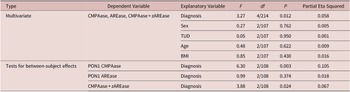
Table 3 shows the results of multivariate GLM analysis with the associations between both PON1 activity levels and diagnosis after adjusting for sex, tobacco use disorder, age, and BMI as explanatory variables. We found that there were significant associations between diagnosis and the PON1 data with an effect size of 0.058 (partial eta squared) and that the four background variables were nonsignificant. Tests for between-subject effects showed that there were significant associations between diagnosis and CMPAase (impact size: 0.105) and the composite score of both enzymes (zCMPAase + zAREase), whereas AREase was not significant.
Results of GLM Analysis with Total PON1 Status as Dependent Variable and Diagnosis (Deficit and Nondeficit Schizophrenia and Controls) as Explanatory Variable while Adjusting for Background Variables

Abbreviations: AREase, phenyl acetate under low salt condition; BMI, body mass index; Diagnosis, deficit and non-deficit schizophrenia; CMPAase, 4-(chloromethyl)phenyl acetate hydrolysis; PON1, paraoxonase 1; TUD, tobacco use disorder.
Table 4 shows the model-generated estimated marginal mean values of those biomarkers in the three study groups. We found that DS is accompanied by significantly decreased CMPAase activity as compared with healthy controls (difference of 0.73 standard deviations) and NDS (difference of 0.675 standard deviations). The sum of both activities was significantly lower in DS as compared with controls (difference of 0.63 standard deviations). Nevertheless, after covarying for PON1 genotypes the between-group differences were no longer significant.
Model-Generated Estimated Marginal Mean Values in z Scores Obtained by Multivariate GLM Analysis Shown in Table 3

The categories are: deficit (DS) and non-deficit (NDS) schizophrenia vs healthy controls (HC).
Abbreviations: AREase, phenyl acetate under low salt condition; CMPAase, 4-(chloromethyl)phenyl acetate hydrolysis; PON1, paraoxonase 1.
We have also examined the effects of the drug state of the patients on the biomarkers in this multivariate GLM analysis. We could not find any significant effects of treatment with risperidone, clozapine, olanzapine, quetiapine, haloperidol, perphenazine, chlorpromazine, antidepressants, mood stabilizers, and anxiolytics, even without P-correction for multiple testing
Associations between biomarkers and clinical scores
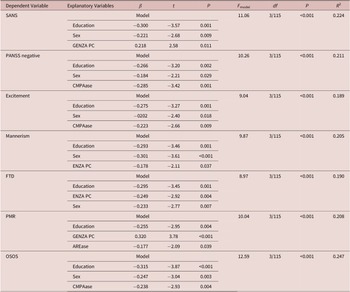
Table 5 shows the results of automatic regression analyses with symptom or rating scale scores as dependent variables and the four biomarkers, age, sex, education, BMI, and tobacco use disorder as explanatory variables. We found that 22.4% of the variance in the total SANS score was explained by the regression on the GENZA PC (positive association), education (negative association), and sex. Up to 21.1% of the variance in PANSS negative subscale score was explained by the regression on CMPAase activity and education (both negatively associated) and sex, and 18.9% of the variance in the excitement score was explained by CMPAase activity and education (both negatively) and sex. We found that a large part of the variance in mannerism (20.5%) and FTD (19.0%) was explained by the regression on ENZA PC and education (both negatively) and sex. A large part of the variance in PMR (20.8%) was explained by GENZA PC (positively), and AREase activity and education (both negatively). We found that 24.7% of the variance in the OSOS index was predicted by CMPAase activity (negatively), education (negatively) and sex.
Results of Multiple Regression Analysis with Schizophrenia Symptom Domains as Dependent Variables

Abbreviations: AREase, phenyl acetate under low salt condition; CMPAase, 4-(chloromethyl)phenyl acetate hydrolysis; ENZA PC, second PC reflecting PON1 plus CMPAAse activities relatively independent from the genotypes; FTD, formal thought disorders; GENZA PC, first PC reflecting the Q allele and associated lowered CMPAase activity; OSOS, overall severity of schizophrenia; PANSS, Positive and Negative Syndrome Scale; PMR, psychomotor retardation; PON1, paraoxonase 1; SANS, Scale for the Assessments of Negative Symptoms.
Results of PLS analysis
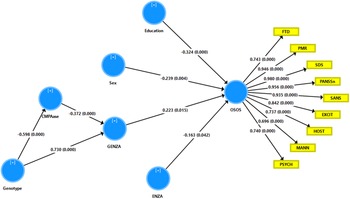
Figure 1 shows the results of a PLS analysis with the OSOS score as an output variable and both the GENZA and ENZA PCs as direct input variables and genotype (additive model) and CMPAase activity as explanatory variables for the GENZA PC. All variables were entered as single indicator variables, whereas OSOS LV was extracted from nine symptom domains (FTD, PMR, total SDS, PANSS negative subscore, total SANS score, psychosis, hostility, excitement, and mannerism) in a reflective model. The model quality data were adequate with SRMR = 0.056 and with adequate reliability data for the outer model namely Cronbach α = 0.948 (±0.008), rho_A = 0.960 (±0.009), composite reliability = 0.946 (±0.009), and average variance extracted = 0.669 (±0.035). The discriminant validity was adequate as examined using the Heterotrait-Monotrait ratio (except for the PON1 genotype and GENZA PC). The loadings on the outer model were all significant (P < 0.0001) and were more than adequate (all > 0.707). We found that 26.4% of the variance in the OSOS LV was explained by the regression on education, sex, and both the GENZA and ENZA PCs. Moreover, the GENZA PC was significantly predicted by both CMPAase activity and the PON1 genotype. There were significant total indirect effects of CMPAase activity on the OSOS LV (t = −2.14, P = 0.013) and of CMPAase activity on the OSOS LV (t = +2.42, P = 0.016). Confirmatory tetrad analysis showed that the OSOS LV fitted a reflective model. Blindfolding showed that the OSOS LV has a significant cross-validated predictive relevance with a construct cross-validated redundancy of 0.176.
Results of consistent partial least squares analysis (5000 bootstraps) with overall severity of schizophrenia (OSOS) as output variable and a combination of the additive model of paraoxonase 1 (PON1) Q192R genotype and CMPAase activity (GENZA), PON1 enzymatic activity (ENZA), education and sex as input variables. Shown are the loadings (with P values) for the outer model and path coefficients (with P values) for the inner model. Abbreviations: CMPAase, 4-(chloromethyl)phenyl acetate hydrolysis; EXCIT, excitation; FTD, formal thought disorders; HOST, hostility; MANN, mannerism; PANSSn, total score on the Negative Syndrome Scale of the PANSS; PMR, psychomotor retardation; PSYCH, psychosis; SANS, total score on the Scale for the Assessments of Negative Symptoms; SDS, total score on the Schedule of the Deficit Syndrome.

Associations between PON1 genotype and IgA responses to Gram-negative bacteria
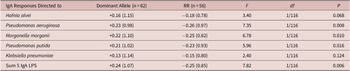
Table 6 shows the results of ANOVAs with the IgA responses to five Gram-negative bacteria as dependent variables and the PON1genotype (recessive model) as the explanatory variable. RR carriers showed significantly lower IgA responses to P. aeruginosa, M. morganii, P. putida, and the sum of the five gut commensal bacteria as compared to non-RR carriers.
Associations of PON1 Q192R Genotype (Recessive Model) with IgA Levels Directed to Gram-Negative Bacteria (in z Scores)

All results are shown as mean (SE) and in z scores. All results of GLM analyses. Sum five IgA lipopolysaccharide (LPS): z unit-weighted composite score based on the five IgA responses to Gram-negative bacteria.
Discussion
The first major finding of this study is that DS is significantly associated with the QQ genotype and the Q allele as compared with NDS patients and controls. Previously, a higher prevalence of the QQ genotype was found in SCZReference Atagun, Tunc, Alisik and Erel 23 although not all authors were able to observe this association.Reference Kucukali, Aydin and Ozkok 37 Nevertheless, the lack of differentiation of patients with SCZ into DS and NDS in previous studies could explain the contradictory results. The R allozyme is more efficient to metabolize 4-(chloromethyl) phenylacetate (CMPA) and to hydrolyze peroxide lipids and, therefore, is more protective against O&NS than the Q alloenzyme.Reference Mackness, Mackness, Arrol, Turkie and Durrington 38 In our study, RR individuals showed as expected the highest CMPAase activity, while QQ carriers had much lower CMPAase activity.
The genotypic Q192R distribution obtained in Thai nationals in the current study and in Roomruangwong et alReference Roomruangwong, Barbosa and Matsumoto 39 is quite different from that in Western countries which reported a higher PON1 192Q allele frequency.Reference Coombes, Crow and Dail 40 Nevertheless, studies performed in Asia show a similar genotypic distribution with higher frequencies of the RR genotype as detected here in Thai nationals.Reference Roomruangwong, Barbosa and Matsumoto 39 , Reference Suehiro, Nakamura and Inoue41–Reference Seow, Gao and Yap43 The predominance of the QQ genotype in Asian patients with DS may suggest that part of these patients may be prone to develop cardio-vascular disease (CVD) and certain cancers. For example, patients with SCZ show an increased mortality due to CVDReference Ringen, Engh, Birkenaes, Dieset and Andreassen 44 while the R allele decreases risk to develop coronary heart disease and myocardial infarction.Reference Hernandez-Diaz, Tovilla-Zarate and Juarez-Rojop 45 Moreover, the presence of the R allele is associated with decreased risk of breast cancerReference Saadat 46 , Reference Zhang, Xiong and Fang 47 while a recent meta-analysis shows that the incidence of breast cancer is higher in women with SCZ than in the general population.Reference Zhuo and Triplett 48 There is also a significant comorbidity between type 2 diabetes mellitus (T2DM) and SCZReference Schoepf, Potluri, Uppal, Natalwala, Narendran and Heun 49 and a significant association between PON1 Q192R genotypes and susceptibility to T2DM or gestational diabetes.Reference Wu, Yao and Luo 1 , Reference van den Berg, Jansen and Kruijshoop 50 , Reference Alharbi, Alharbi and Ghneim 51 Nevertheless, the PON1 R allele, and not the Q allele, was a susceptible factor to develop T2DM in the South or East Asian population.Reference Luo, Ren, Liu, Fang and Xiang 52
The second major finding of this study is that CMPAase PON1 activity is signficantly lowered in patients with DS and that this effect is largely determined by the QQ genotype, which is strongly associated with DS. Recently, it was reported that PON1 activity is significantly lower in drug-naïve patients with first episode psychosis (FEP)Reference Noto, Ota and Gadelha 53 and additionally that lowered PON1 levels are inversely associated with increased cytokine levels, including IL-6, IL-4, and IL-10.Reference Brinholi, Noto and Maes 7 The latter authors suggested that PON1 activity in FEP may play a role in the immune-inflammatory response that accompanies FEP through lowered anti-inflammatory effects. In patients with chronic SCZ, on the other hand, there was no significant decrease in PON1 activity, although the lack of any changes in PON1 activity could be explained by stimulatory effects of risperidone on PON1 activity.Reference Noto, Ota and Gadelha 53 A recent study suggests a possible involvement of low CMPAase in increased CVD risk in patients with SCZ.Reference Pavăl, Nemeș, Rusu and Dronca 54 Gupta et al found lower CMPAase PON1 activity in patients with CVD as compared with controls, independent of age, sex, smoking, alcohol, and HDL-C levels.Reference Gupta, Singh, Maturu, Sharma and Gill 55 Nevertheless, lowered PON1 activities are not specific for SCZ as lowered activities are also detected in affective disorders. Lowered PON1 total and CMPAase activities may play a role in the pathophysiology of mood disorders through their impact on antioxidant defenses thereby increasing the risk toward lipid peroxidation, inflammation, bacterial proliferation, and neurotoxicity (by attenuating homocysteine thiolactone catabolism).Reference Moreira, Boll, Correia, Soares, Rigobello and Maes 20 , Reference Moreira, Correia and Bonifacio 21 As discussed above, lowered PON1 activity is associated with many conditions and diseases and this may be explained by the broad pattern of substrate specificities of PONs described as PONs are like “Jacks of all trades and masters of none.”Reference Bar-Rogovsky, Hugenmatter and Tawfik 26
The third major finding of this study is that part of the variance in overall severity of SCZ (OSOS), negative symptoms, excitation, mannerism, PMR, and FTD is explained by two different aspects of PON1 total activity, namely (a) the combination of genetic load in an additive model and gene-associated CMPAase enzyme activities and (b) lowered AREase and CMPAase enzyme activities, which are largely independent from the Q192R gene. These findings indicate that SCZ phenomenology is in part explained by the combined effects of a gene-related decline in CMPAase PON1 activity and additionally that lowered activity levels of AREase and CMPAse PON1 activities not related to the PON1 gene may determine another part of the variance in OSOS. It is possible that the latter is associated with epigenetic changes in DNA methylation which frequently occur in SCZReference Kalayasiri, Kraijak, Mutirangura and Maes 56 or that the PON1 activity might be partially inactivated in the presence of increased lipid peroxidation, which occurs in patients with SCZ.Reference Anderson and Maes 16 For example, lipid peroxidation may interact with PON’s free sulphydryl group, causing inactivation of PON1.Reference Kucukali, Aydin and Ozkok 37 HDL-associated protein PON1 may be oxidatively modified and inactivated by myeloperoxidase (MPO).Reference Karlsson, Kontush and James 57 During inflammatory conditions, key residues of the formed HDL-MPO-PON1 ternary complex may be targeted and oxidatively modified and inactivated.Reference Huang, Wu and Riwanto 58 In addition, also dietary factors including high-fat diet and smoking may decrease PON1 activity and expression,Reference Kucukali, Aydin and Ozkok 37 although in our study, no significant effects of nicotine dependence were detected while Thai people do not consume high-fat-diets. All in all, our findings suggest that a primary deficit in CMPAase activity, in part associated with an increased frequency of the QQ genotype in DS, may play a role in the immune and O&NS pathophysiology of DS, and that the latter may decrease AREase and CMPAAse PON1 activities, which may further aggravate the pathophysiology of DS.
The fourth major finding of this study is that there is a significant association between the recessive Q192R model and translocation of Gram-negative bacteria whereby carriers of the Q allele have increased IgA responses to the LPS of P. aeruginosa, M. morganii, and P. putida as compared with RR carriers. PONs not only display anti-oxidant and anti-inflammatory effects (see above), but also quorum quenching properties, namely PONs may hydrolyze N-(3-oxo-dodecanoyl)-homoserine lactone, which is a quorum-sensing molecule that modulates the virulence and biofilm formation properties of many Gram-negative bacteria.Reference Aybey and Demirkan 59 , Reference Koul and Kalia 60
It is interesting to note that mammalian PONs may be related to bacterial, PON-like lactonases with quorum quenching properties.Reference Elias and Tawfik 61 However, the mammalian ancestor, unlike bacterial PON, hydrolyzes lactones other than homoserine lactones and as such preceded the detoxifying functions that diverged later.Reference Draganov, Teiber, Speelman, Osawa, Sunahara and La Du 62 The recruitment of homoserine lactonase activity obtained from endosymbiotic pathogens or bacteria became part of innate immunity due to the quorum sensing properties of PON.Reference Bar-Rogovsky, Hugenmatter and Tawfik 26 For example, the PON enzyme family has activity against biofilm formation by P. aeruginosa which utilizes N-acyl-homoserine lactonase to regulate bacterial virulence and promote biofilm formation.Reference Marsillach, Mackness and Mackness 63 , Reference Veesenmeyer, Hauser, Lisboa and Rello 64 As such, PON1 activity is part of the innate immune system offering a first line protection against Gram-negative bacteria by attenuating quorum sensing. These mechanisms may explain that patients with SCZ with the Q allele or QQ genotype and with lowered PON1 activities may be at risk to develop increased bacterial load and that genetically-determined deficits in CMPAase activity may increase risk toward DS through attenuated innate immune defenses including quorum quenching. Moreover, DS is accompanied by breakdown of the gut tight and adherens junctions with increased bacterial translocation and whereby increased load of Gram-negative bacteria is associated with increased BBB permeability and increased neurocognitive deficits.Reference Maes, Sirivichayakul, Kanchanatawan and Vodjani 11 , Reference Maes, Sirivichayakul, Kanchanatawan and Vodjani 12 As such, lowered CMPAase PON1 activities in DS may also lead to increased LPS load and its consequences.
As described in the Introduction, DS is the outcome of enhanced neurotoxic pathways including CCL11, TRYCATs, IgM levels to NO-cysteinyl and bacterial LPS and lowered anti-oxidant, anti-inflammatory and antibacterial protection through lowered natural IgM levels against OSEs, including azelaic acid and malondialdehyde, which is a key part of the innate immune system.Reference Maes, Sirivichayakul, Kanchanatawan and Vodjani 11 , Reference Maes, Sirivichayakul, Kanchanatawan and Carvalho 15 By inference, lowered PON1 activities and lowered natural IgM are two key impairments in innate immunity leading to a greater impact of those neurotoxic pathways including the effects of LPS through bacterial translocation. Therefore, it is evident that DS is associated with “different genotype-phenotype causal connections included in one singular nosological construct,”Reference Stoyanov 65 as exemplified by the endophenotype pathway from PON1 genotype ➔ PON1 enzymatic activity ➔ changes in immune and oxidative pathways and increased bacterial translocation ➔ neurotoxicity ➔ phenome features including neurocognition and different symptom domains, which ultimately shape and model DS as a distinct nosological entityReference Maes, Vojdani and Geffard 66 thereby further causing impairments in quality of lifeReference Kanchanatawan, Sriswasdi and Maes 67 and employment history (this study). As such, one causative agent (PON1 genotype) may be associated with different psychopathological outcomes while different biological pathways determine one latent construct reflecting OSOS and a singular nosological DS construct.Reference Stoyanov 65 , Reference Maes, Vojdani and Geffard 66 In fact, our findings extend the theories of Gottesman et alReference Gottesman and Gould 68 and Snezhnevsky and VartanianReference Snezhnevsky, Vartanian and Himwich 69 who proposed that different levels of mediation, namely the pathway phenotypes affected by the PON1 genotype, converge into the phenome of DS.
Conclusions
DS is significantly associated with the Q allele and the QQ genotype and with lowered CMPAase PON1 activities, while the overall severity of SCZ is associated with the Q192R gene as well as CMPAase and AREase PON1 activity. Lowered PON1 activities are additionally associated with negative symptoms, formal thought disorders, psychomotor retardation, and excitation. The Q allele is associated with increased signs of bacterial translocation namely increased IgA responses to P. aeruginosa, M. morganii, and P. putida. It is suggested that lowered PON1 activities in DS constitute a deficit in the innate immune system which together with lowered natural IgM responses to OSE may predispose toward greater neurotoxic effects of immune-inflammatory, oxidative and nitrosative pathways, and Gram-negative microbiota.
Acknowledgments
We thank the contribution of the Postgraduate Laboratory of the University Hospital of Londrina and research support given by Asahi Glass Foundation, Chulalongkorn University Centenary Academic Development Project and Ratchadapiseksompotch Funds, Faculty of Medicine, Chulalongkorn University.
Disclosures
Andressa Keiko Matsumoto, Michael Maes, Thitiporn Supasitthumrong, Annabel Maes, Ana Paula Michelin, Laura de Oliveira Semeão, João Victor de Lima Pedrão, Estefania Moreira, Buranee Kanchanatawan, and Decio Barbosa have no conflict of interest with any commercial or other association in connection with the submitted article. The study was supported by the Asahi Glass Foundation, Chulalongkorn University Centenary Academic Development Project and Ratchadapiseksompotch Funds, Faculty of Medicine, Chulalongkorn University, grant numbers RA60/042 (to B.K.) and RA61/050 (to M.M.).
Ethical Statement
The study was approved by the Institutional Review Board of the Faculty of Medicine, Chulalongkorn University, Bangkok, Thailand (No 298/57), which is in compliance with the International Guideline for Human Research protection as required by the Declaration of Helsinki, The Belmont Report, CIOMS Guideline and International Conference on Harmonization on Good Clinical Practice (ICH-GCP).