Introduction
An extraordinary testament to the technical and artistic maturity of Palaeolithic societies, Chauvet-Pont d'Arc Cave in France provides a unique context for prehistoric research. Investigations carried out within the cave have highlighted the exceptional character of this site, not only from an archaeological perspective, but also palaeontologically and geomorphologically (Clottes & Geneste Reference Clottes, Geneste, Floss and Rouquerol2007; Geneste Reference Geneste, Delannoy, Jaillet and Sadier2012). Study has yielded invaluable information regarding parietal (cave) art, its dating and the techniques used (e.g. drawing, smudging/blending, impression and engraving) during the various periods of occupation. It has also illuminated the animal taxa, the skeletal remains of which are dominated by cave bears (4000 bones and bone fragments) (Clottes Reference Clottes2001; Fosse & Philippe Reference Fosse and Philippe2005; Quiles et al. Reference Quiles, Valladas, Bocherens, Delqué-Količ, Kaltnecker, van der Plicht, Delannoy, Feruglio, Fritz, Monney, Philippe, Tosello, Clottes and Geneste2016). Studies have also provided valuable insights into the evolution of the cave itself and its physical environment, as well as the environmental and climatic conditions that prevailed during the periods of occupation (Clottes Reference Clottes2001; Genty et al. Reference Genty, Ghaleb, Plagnes, Causse, Valladas, Blamart, Massault, Geneste and Clottes2004; Sadier et al. Reference Sadier, Delannoy, Benedetti, Didier, Bourlès, Jaillet, Geneste, Lebatard and Arnold2012; Delannoy et al. Reference Delannoy, David, Geneste, Katherine, Barker, Whear and Gunn2013). In addition, detailed studies of human behaviour within the site have been undertaken on the basis of the traces left by fires, heating of the cave walls and traces of charcoal found on the walls (Fosse & Philippe Reference Fosse and Philippe2005; Geneste Reference Geneste2005a; Delannoy et al. Reference Delannoy, Geneste, Jaillet, Boche, Sadier, Delannoy, Jaillet and Sadier2012; Brodard et al. Reference Brodard, Guibert, Ferrier, Debard, Kervazo and Geneste2014; Ferrier et al. Reference Ferrier, Debard, Kervazo, Brodard, Guibert, Baffier, Feruglio, Gély, Geneste and Maksud2014; Guibert et al. Reference Guibert, Brodard, Quiles, Geneste, Baffier, Debard and Ferrier2015). Dating of parietal art, hearths, torch marks, animal bones and geomorphological features (Valladas et al. Reference Valladas, Clottes, Geneste, Garcia, Arnold, Cachier and Tisnérat-Laborde2001, Valladas & Clottes Reference Valladas and Clottes2003) has enabled the construction of a coherent chronology for the known occupations, as well as for the sealing of the cave. Two distinct periods of human activity have been identified, one dating from 37000–33500 BP, and the other from 31000–28000 BP (Quiles et al. Reference Quiles, Valladas, Geneste, Clottes, Baffier, Berthier, Brock, Bronk Ramsey, Delqué-Količ, Dumoulin, Hajdas, Hippe, Hodgins, Hogg, Jull, Kaltnecker, de Martino, Oberlin, Petchey, Steier, Synal, van der Plicht, Wild and Zazzo2014, Reference Quiles, Valladas, Bocherens, Delqué-Količ, Kaltnecker, van der Plicht, Delannoy, Feruglio, Fritz, Monney, Philippe, Tosello, Clottes and Geneste2016).
Fire played a special role at Chauvet-Pont d'Arc, providing not only light but also the charcoal used to create black motifs. Wood charcoal fragments, associated with various traces of fire, constitute an important part of the botanical record preserved within the cave. Numerous samples have been analysed to provide 14C dates and information regarding the vegetal environment and climatic contexts (Théry-Parisot & Thiébault Reference Théry-Parisot and Thiébault2005; Quiles et al. Reference Quiles, Valladas, Geneste, Clottes, Baffier, Berthier, Brock, Bronk Ramsey, Delqué-Količ, Dumoulin, Hajdas, Hippe, Hodgins, Hogg, Jull, Kaltnecker, de Martino, Oberlin, Petchey, Steier, Synal, van der Plicht, Wild and Zazzo2014, Reference Quiles, Valladas, Bocherens, Delqué-Količ, Kaltnecker, van der Plicht, Delannoy, Feruglio, Fritz, Monney, Philippe, Tosello, Clottes and Geneste2016). Charcoal also allows us to investigate the cultural dimension of technical choices that underlie wood management. Previous studies have, for example, highlighted the capacities of prehistoric societies, at least since the Neanderthals, to adapt their fuel to the various functions of the fire, using coal, wood or bone as fuel, where necessary (Théry et al. Reference Théry, Gril, Vernet, Meignen and Maury1995; Théry-Parisot Reference Théry-Parisot2001, Reference Théry-Parisot2002a & Reference Théry-Parisot and Thiébaultb). Within the Chauvet-Pont d'Arc Cave, formal hearths, areas of burning and scattered charcoal fragments on the cave floors, torch marks and thermal modification of the cave walls all attest to the intensity and diversity of fire use, not only for lighting the cave interior, but also for producing paint materials. Fireplaces are also focal points for social interaction and played a central role in prehistoric societies (see e.g. Stockton Reference Stockton1981). In addition to possible symbolic aspects, which are difficult to pinpoint, other uses of fire—including heating, thermal treatment (cooking, drying and transformation of raw materials) and the repelling of wild animals—are also difficult to identify, although we can assume that they were significant. The study of charcoal specimens from a representative group of contexts within the cave, coupled with the results from recent experiments on the combustion properties and mechanical characteristics of wood charcoal, have yielded new information on the use of wood for the purposes of lighting and black paint production.
Materials and methods
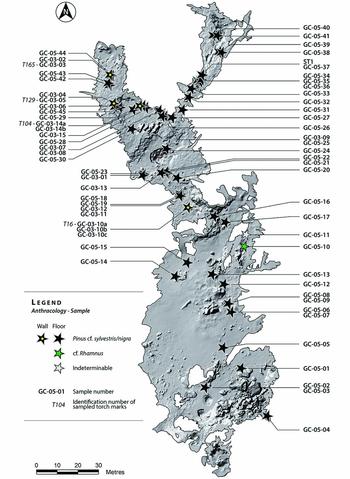
Particular attention has been paid to diversifying the sample locations and contexts so that they can be taken to be representative of the two main periods of occupation (Aurignacian and Gravettian). This sampling has been undertaken in 11 sectors (Figure 1 & Table 1), including Aurignacian hearths (the Candle Gallery and the Megaloceros Gallery); Gravettian torch marks (Gallery of the Crosshatching, the Candle Gallery and the Skull Chamber); cave floor charcoal from undated accumulations outside identified features (Gallery of the Crosshatching, the Megaloceros Gallery, the Brunel Chamber, Chamber of the Bear Hollows, the Red Panels Gallery, the Candle Gallery, the Skull Chamber, the End Chamber and the Hillaire Chamber); and undated fragments found directly below black drawings (Skull Chamber, Hillaire Chamber: Panel of the Reindeer, Megaloceros Gallery).
Map of the Chauvet-Pont d'Arc Cave indicating charcoal sample locations.

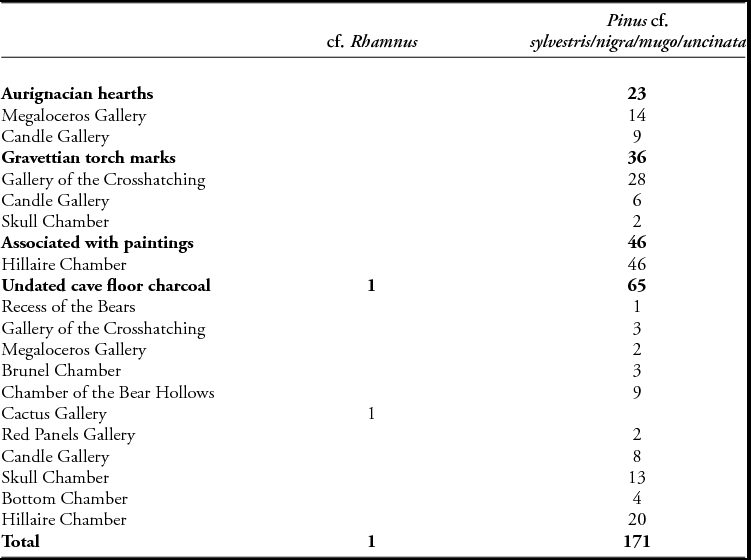
Location and identification of the charcoal fragments by contexts.

With the exception of one sample (sample GE-1 from the entrance area), which was retrieved using fine sieving in the laboratory, the samples were collected manually, using tweezers. This unconventional sampling method, imposed by the limited accessibility of various parts of the site, and which involves selective, non-exhaustive collection, is a response to the constraints imposed by the exceptional nature of the cave (i.e. a UNESCO World Heritage Site). This brings into question the representativeness of the samples. The work of Chabal (Reference Chabal1997) clearly shows that manual collection, which favours the selection of large, easily seen fragments, may introduce a statistical bias. Nevertheless, random collection from different contexts, targeting small fragments and large fragments in equal measure, limits any potential bias. Taxonomic identification was carried out using reflected-light optical microscopy along the three anatomical planes of the wood, and by comparison with modern carbonised wood samples. The fragments, measuring between 2 and 20mm in size, are well preserved with the exception of the charcoal residues from torch marks; in this case, the anatomical structure of the charcoal has been greatly altered.
Results
A total of 171 charcoal fragments have been identified: 23 from hearths, 36 from torch marks, 46 from the cave floor at the foot of panels of black paintings (from which they probably originate), and 66 from isolated charcoal specimens or from concentrations occurring outside identified features (Table 1).
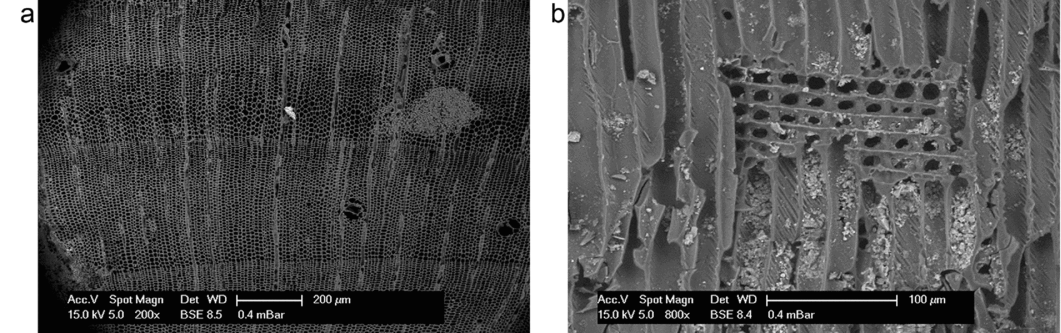
Only two taxa have been identified within the corpus of samples, comprising one species of the Sylvestres subsection of the genus Pinus (Pinus sylvestris (Scots pine)/Pinus nigra (black pine) subsp. salzmannii/Pinus mugo (dwarf pine)/Pinus uncinata (mountain pine) (the various species of pine have not been differentiated with certitude on the basis of anatomical criteria), which represents 170 of 171 fragments identified (Figure 2); and a single fragment of the genus Rhamnus (buckthorn), which came from the Cactus Gallery. With the exception of this isolated fragment, the composition of the assemblage shows no distinction between either the two main episodes of occupation of the cave, or between the various deposition contexts (hearths, torch smoke stains, paintings, scattered deposits). Thus, the almost single-taxon composition of the assemblage, originating from deposits that are distinct and which probably span a long period, raises several questions. The taphonomic hypothesis of a differential representation of taxa after combustion has been experimentally refuted (Théry-Parisot & Chabal Reference Théry-Parisot and Chabal2010). Does it reflect, however, an ecological reality (a landscape dominated by pine) with opportunistic collection of the most abundant wood, or a selective collection of pine (both of which must have been transcultural behaviours)? These hypotheses will be discussed in terms of the environmental context, the specificity of the site and, more broadly, with regard to the management of wood resources by Palaeolithic societies.
Pinus sylvestris type (Pinus sylvestris/nigra/mugo/uncinata): a) transverse section; b) radial section.

Discussion
The palaeoenvironmental context
As anthracology first and foremost reflects the immediate environment at a site scale, pine was probably the predominant available local resource, which is perfectly coherent with the climatic context of the period. Regional palaeoecological data, however, refute the hypothesis of a single-taxon landscape, a refutation confirmed by the presence of Rhamnus in a sample from the Red Panels Gallery. The results of 14C dating emphasise two principal and distinct occupation phases within the cave (Quiles et al. Reference Quiles, Valladas, Bocherens, Delqué-Količ, Kaltnecker, van der Plicht, Delannoy, Feruglio, Fritz, Monney, Philippe, Tosello, Clottes and Geneste2016), the first being Aurignacian (37000–33500 BP) followed by a Gravettian phase (31000–28000 BP). These phases coincide with a period of instability corresponding to a succession of climatic oscillations at the interface between isotopic stages 3 (more temperate) and 2 (colder). During the long glacial episodes of the Quaternary, climatic conditions limited the presence of woody taxa to certain areas known as ‘refuges’, where conditions were favourable to their survival. These ‘hotspots’ enjoyed a warmer and more humid climate than neighbouring areas (Petit et al. Reference Petit, Aguinagalde, de Beaulieu, Bittkau, Brewer, Cheddadi, Ennos, Fineschi, Grivet, Lascoux, Mohanty, Müller-Starck, Demesure-Musch, Palmé, Martín, Rendell and Vendramin2003; Médail & Diadema Reference Médail and Diadema2009). In this generally cold context, characterised by open landscapes with few trees, pine is the principal taxon (a heliophilic taxon with an affinity for mountainous environments). Cold-tolerant shrubs (birch, willow, juniper and buckthorn) also benefit from the favourable conditions in these refuge areas (Delhon & Thiébault Reference Delhon and Thiébault2005; Médail & Diadema Reference Médail and Diadema2009; Harrison & Sánchez-Goñi Reference Harrison and Sánchez Goñi2010; Desprat et al. Reference Desprat, Díaz Fernández, Coulon, Ezzat, Pessarossi‐Langlois, Gil, Morales-Molino and Sánchez Goñi2015). Thus, even though pine is the main woody taxon available in the vicinity of the site during the different episodes of occupation, the presence of other taxa should not be discounted. The determinist hypothesis of default exploitation of the main taxon available in the immediate environment is probably too simplistic. It is possible to envisage a cultural hypothesis that relates to the specificity of Palaeolithic occupation.
Wood management in the socio-cultural context of Chauvet-Pont d'Arc
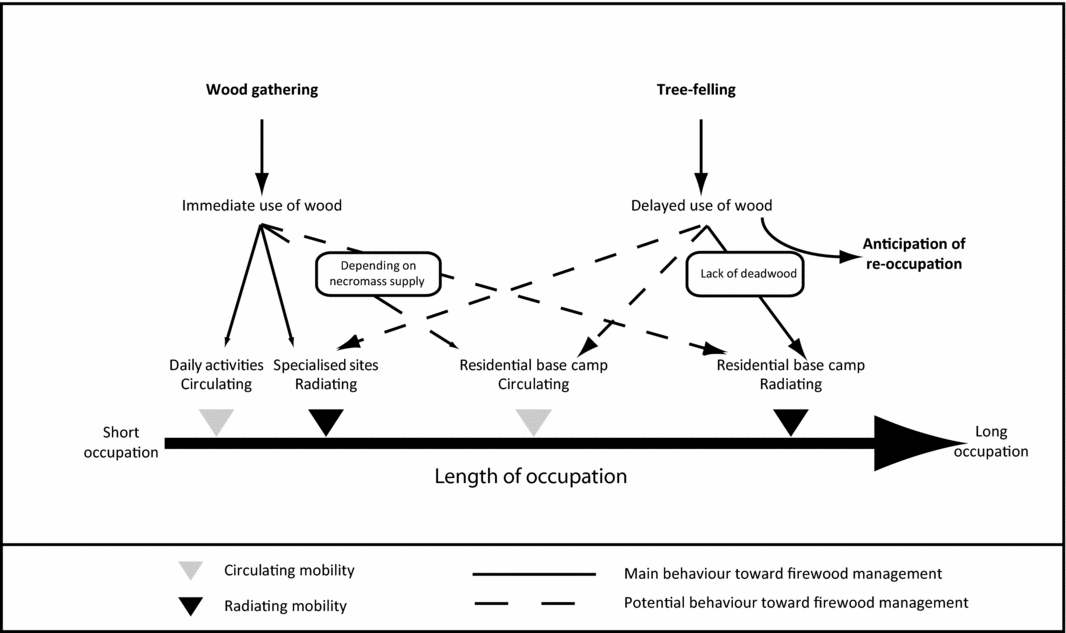
The management of wood resources would have imposed a constraint on Palaeolithic ways of life, which are characterised by significant mobility, seasonal occupation of sites and a relatively limited tool kit. These would undoubtedly have had an impact on firewood acquisition (Théry-Parisot et al. Reference Théry-Parisot, Henry and Chrzavzez2016) (Figure 3). Prehistoric hunter-gatherer mobility patterns are often discussed in terms of a spectrum ranging between ‘circulating’ and ‘radiating’ mobility conditioning the length of the occupations, from very brief to multi-seasonal residential base-camps. The management of firewood exists within the restrictive framework of these mobility patterns: deadwood (including driftwood), already dry and easy to gather, optimally ensures the supply during brief periods of occupation. Depending on the available biomass, it could have been either a main resource or an additional resource in residential camps. In contrast, selective tree-felling, where wood is cut and dried over several months, is more suited to long-term occupation. This strategy could have been partly used, however, to provide fuel during short-term occupations, when the necromass was not sufficiently abundant or was inaccessible (covered by snow, for instance): this would imply a degree of forward planning and re-occupation of the same camp site.
Theoretical model for firewood management by Palaeolithic societies.

The preferential collection of deadwood has been demonstrated on many Palaeolithic sites through the identification of anatomical wood decay features, still perceptible after burning (Allué et al. Reference Allué, Euba and Solé2009; Henry & Théry-Parisot Reference Henry and Théry-Parisot2014; Vidal Matutano et al. Reference Vidal-Matutano, Henry and Théry-Parisot2017). As the wood is already dry and accessible on the ground, this practice dispenses with the need for tree-felling, which, although technically possible, would have required a subsequent storage phase of at least two years. This assumption is based on the fact that, with the exception of certain specialised activities (e.g. smoking or thermal treatment of certain raw materials), firewood generally needs to be dry for burning. The use of immediately available deadwood is an effective alternative to wood storage, provided that the resource is abundant and dry enough to meet all of the energy needs of the group. At Chauvet-Pont d'Arc, the high degree of natural branch shedding of pine means that it would have provided an important, immediately usable stock of deadwood. This would have been ideally suited to occasional occupation of the site, provided that this occupation took place outside of the snow season, when fallen deadwood would not have been easily accessible. The fact that fuel management at Chauvet-Pont d'Arc was probably based on the deliberate selection of a specific physiological, phenological and morphological state of wood is reflected in the virtually exclusive selection of the taxon that dominates the necromass, i.e. pine.
Wood selection?
Nonetheless, the hypothesis of deliberate selection of pine cannot be avoided. Beyond symbolic aspects, other motivations involving combustion and/or physical properties of pine could have motivated the preferential use of this taxon. As we are discussing firewood, however, the question of preference is always a difficult issue. If the combustion properties of a particular taxon were purely dependent on their physical and chemical properties, then it would be possible to combine information regarding the form of the combustion contexts and their vegetal contents in order to identify the function of the fires. Apart from rare exceptions, however, the taxonomic composition of a hearth rarely allows its function to be determined for two main reasons: the combustion properties do not depend, or depend little, on taxa, and the selection criteria may be based on preferences or beliefs that are completely outside the scope of the anthracologist.
The notion of ‘species’ is a ‘recent’ (1758) development, based on Linnaean classification, which is anachronistic for prehistoric societies who probably classified wood more on the basis of functional, rather than botanical, criteria. Ethnographic examples show that the selection of taxa is governed by parameters that are traditionally set by each group, according to criteria that are almost as varied as the communities themselves (e.g. Levi-Strauss Reference Levi-Strauss1962). They also show that, within these communities, the selection of firewood is not always based on objective combustion criteria and combustion properties, even though it is these properties that are proposed by the communities themselves to justify the selection. Selection can also be based on criteria relating to form, physiological and phenological states that determine the properties of the wood to the same extent as the taxa themselves. Combustion properties (e.g. calorific value, flammability, persistence and height of flames, duration of calcination) depend on a number of parameters, among which morphology (size and diameter) and physiological and phenological state (dead or living, dry or green, sound or altered) play a determining role. The state of the wood, its dimensions and its availability are all criteria that may influence the collection of wood, although this cannot be proven. Finally, the notion of a good fuel is not directly transposable to prehistoric societies, whose use of fire was much more diverse than that of most modern westernised societies. For each cultural group, there is a palette of fuels adapted to the diversity of fire-associated activities. In the case of Chauvet-Pont d'Arc, the selection of pine for its objective properties might reflect the suitability of this taxon for the attested uses, i.e. at the very least for lighting (combustion properties) and as a raw material for creating charcoal paintings (physical properties).
Lighting and drawing with pine wood at Chauvet-Pont d'Arc
Lighting was primarily provided by torches, which are evidenced during Gravettian frequentation of the cave: the use of torches has been identified thanks to the presence of almost 250 black stains, attributed to the reviving of torches, or to simple contact of the torch flame with the cave wall. The role of the Aurignacian hearths, only one of which is intact—the others having been disturbed by animal or human activity, or buried under superficial deposits that mask them (Brodard et al. Reference Brodard, Guibert, Ferrier, Debard, Kervazo and Geneste2014; Ferrier et al. Reference Ferrier, Debard, Kervazo, Brodard, Guibert, Baffier, Feruglio, Gély, Geneste and Maksud2014)—cannot be accurately established. They may have served successively, or simultaneously, to produce charcoal for domestic activities, and for providing light (Geneste Reference Geneste2005b). Even though the primary purpose of the fires may not have been the provision of light, they obviously did serve that end. The radiative properties of fire clearly provide light, the intensity of which is proportional to the height, thickness, persistence and temperature of the flames. While morphological, physical and chemical characteristics determine the performance of wood in terms of radiation, the level of humidity remains a key factor. Only wood that is perfectly dry guarantees homogeneous and persistent combustion of the flammable gases. Specific gravity and extractable content are also important factors (Boulet et al. Reference Boulet, Parent, Collin, Acem, Porterie, Clerc, Consalvi and Kaiss2009). As they combine characteristics of i) high flammability due to the presence of resins comprised of terpene hydrocarbons with a high calorific value; and ii) harmonious combustion of flammable gases due to their specific gravity (around 0.5), the burning of small-calibre pine branches could easily provide a comfortable heat level and lasting light within an enclosed space.
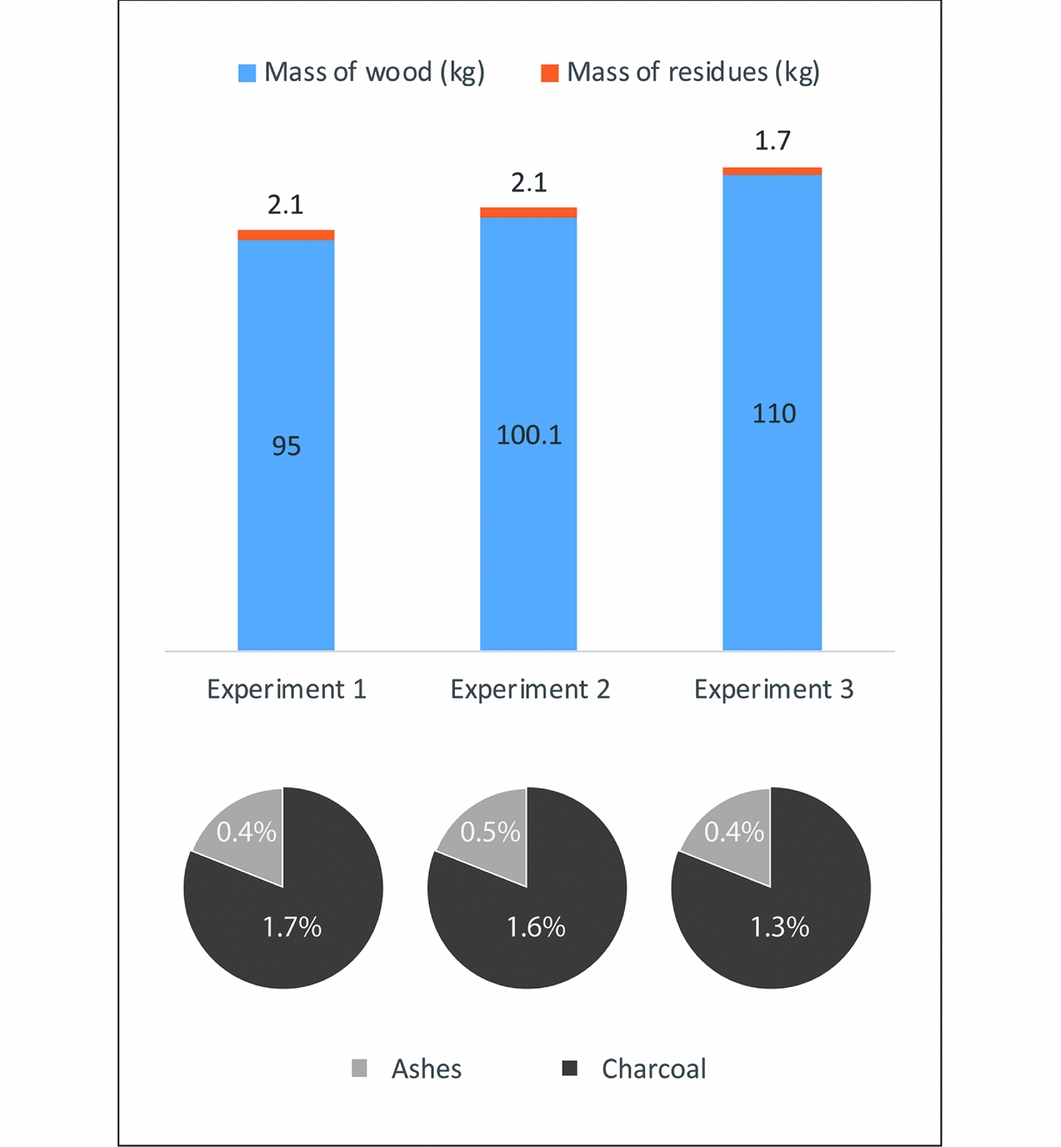
It is probable that at least some of the charcoal intended for the black paintings was produced in fire pits within the cave. This would explain the occurrence of the same taxon in the fire pits and in the charcoal scattered at the foot of the painted cave walls (from which the fragments may have originated). The creation of the black paintings supposes the production of a significant quantity of wood charcoal of a size and technical quality (e.g. rigidity and plasticity) suitable for the creation of images. The balance between the quantity and quality of wood charcoal produced by the burning of pine is currently being studied. Experimental burning carried out under laboratory conditions and new results obtained in cave contexts have shown respectively that wood charcoal represents 1.3–1.7 per cent of the mass of wood burned (Théry-Parisot & Chabal Reference Théry-Parisot and Chabal2010; Ithem program- ANR-10-LABX-52) (Figure 4).
Residual mass of charcoal after burning. Results of three burning experiments that reproduce cave contexts (Ithem program—ANR-10-LABX-52). Using branches with diameters ranging between 20 and 50mm, the experiments involved burning 95, 100.1 and 110kg of seasoned wood respectively. Systematically weighed after burning, the mass of charcoal produced represents 1.3–1.7 per cent of the mass of wood burnt. Similar results were obtained under laboratory conditions.

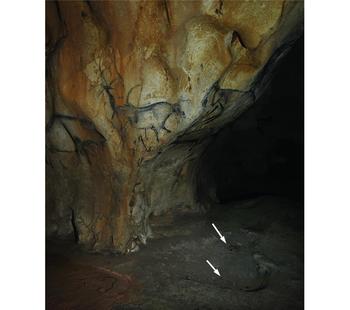
Given the extent of the painted surfaces, we can assume that a significant quantity of charcoal was produced for this purpose. As wood charcoal is a friable material that wears down with use, a significant quantity of wood, with dimensions large enough to produce easily gripped pieces of charcoal, was probably burned solely for the production of painting material. This is evidenced, for example, by the abundance of charcoal found directly at the foot of the Alcove of the Felines in the Hillaire Chamber (Figure 5).
Charcoal fragments on the cave floor, at the foot of the right-hand wall of the Alcove of Felines in the Hillaire Chamber (photograph: C. Fritz/MCC).

Issues relating to the processes used to manufacture charcoal for painting, and the technical characteristics of such charcoal, are part of a more general consideration of pigments used in prehistory (Fritz et al. Reference Fritz, Tosello and Conkey2015). Current techniques in the commercial manufacture of drawing charcoal are based on the process of anaerobic pyrolysis. The Chauvet-Pont d'Arc replicas were, however, executed using charcoal produced under classic oxygenated conditions (G. Tosello pers. comm.). The mechanical characteristics of the charcoal itself depend on carbonisation processes that are consistent with open burning, with average burning temperatures of close to 400°C, and with significant variations in temperature within the same fire pit (up to 800°C). These variations depend on the structure of the fire pit, the quantity and moisture content of the wood used, and the arrangement of the wood batches (Théry-Parisot & Chabal Reference Théry-Parisot and Chabal2010; Théry-Parisot et al. Reference Théry-Parisot, Chabal, Ntinou, Bouby, Carré, Théry-Parisot, Chabal and Costamagno2010). In addition to the production process, the quality of the wood itself necessarily influences its suitability for use as drawing charcoal. The harder the wood, the finer the line produced. Inversely, a soft wood produces a broader line. The key role played by density in the mechanical and physical properties of wood is well established (Bergman et al. Reference Bergman, Cai, Carll, Clausen, Dietenberger, Falk, Frihart, Glass, Hunt, Ibach, Kretschmann, Rammen, Ross and Star2010). Moreover, we know that carbonisation preserves the density ratio between taxa (Chrzavzez et al. Reference Chrzavzez, Théry-Parisot, Fiorucci, Terral and Thibaut2014). The resistance of the charcoal to crushing, which defines the rigidity criterion, is not, however, solely a function of taxon. It also depends on the thermal treatment itself (oxygenation, temperatures and temperature ramp) and on the quality of the wood (moisture content, physiological state and calibre) (Korkut et al. Reference Korkut, Akgül and Dündar2008; Ascough et al. Reference Ascough, Bird, Francis, Thornton, Midwood, Scott and Apperley2011). Variability in firing temperatures results from the heterogeneity of the thermal fluxes within the open fire, as has been mentioned previously. In addition, measurements of resistance to crushing, undertaken under laboratory conditions, have shown that the loss of rigidity of wood charcoal—i.e. loss of its physical properties—can reach up to 50 per cent when the wood is altered (Théry-Parisot & Chabal Reference Théry-Parisot and Chabal2010). Thus, a material that is perfectly suited for use as a pigment can be readily obtained by selecting a wood of average density, such as pine, in different phenological and physiological states, ranging from healthy wood to wood that has been degraded by biological organisms naturally present in the necromass.
Conclusions
This study of wood charcoal fragments from Chauvet-Pont d'Arc has focused on the two main episodes of occupation of the cave and on different contexts, from the Aurignacian hearths to the Gravettian torch marks. The sample also includes undated charcoal fragments scattered over the cave floor or at the foot of groups of black charcoal paintings. With the exception of a single Rhamnus fragment from the Red Panels Gallery, all of the fragments identified are of Scots pine/black pine. Pine is a pioneer taxon with an affinity for mountainous environments and survived in refuges during the coldest periods of the last ice age. As such, it attests, first and foremost, to the harsh climatic conditions that prevailed during the various occupations of the cave, without providing a distinction between them. While difficult to discuss in terms of symbolic significance, the collection of pine seems to have been transcultural and governed more by the convergence of elements favouring its use, than by an environmental constraint (as other taxa were also present in the immediate vicinity of the cave). For highly mobile societies, pine presents a number of characteristics that may provide motives for its selection: the significant natural shedding of branches, which provides a readily available supply of deadwood; its combustion properties, which rendered it suitable for the illumination of the cave; and its mechanical properties, which, as shown at Chauvet-Pont d'Arc, rendered it ideal for producing drawing charcoal and pigment for the smudging and blending techniques used in cave paintings.
Acknowledgements
We wish to thank the Chauvet-Pont d'Arc research team for their impressive work and their substantial involvement in this project. The topographical and locational database used to create the maps was kindly made available by Elisa Boche, Yanik Le Guillou, Fréderic Maksud and Perazio Engineering. This project was funded by the Ministère de la Culture et de la Communication in the framework of the Chauvet-Pont d'Arc Archaeological Research Programme and the Programme National de Recherche sur la Connaissance et la Conservation des Matériaux du Patrimoine Culturel 2012. This work was also supported financially by the labex LaScArrBx (label of excellence in Archaeological Sciences Bordeaux) through the general programme supported by the ANR (Agence Nationale de la Recherche) ANR-10-LABX-52.