


Introduction
Self-help is the term used to describe client-administered therapeutic interventions, and may also be referred to as self-care, self-management or health technology (Richards et al. Reference Richards, Lovell and McEvoy2003). The majority of self-help methods are grounded theoretically in Cognitive Behaviour Therapy (CBT), and hence can also be referred to as CBT-based or CBT self-help. Self-help interventions can be accessed either with little or no contact with a therapist (unsupported/non-guided self-help) or in parallel with individual sessions with a clinician (supported/guided self-help) (Williams, Reference Williams2001). Self-help formats include written (books or manuals), audio and video materials, computer- and internet-based materials, and psycho-educational groups. They can also be offered through a variety of settings – post, telephone, bookshop or library, traditional media, or the internet (Papworth, Reference Papworth2006).
In the UK, the National Institute for Health and Care Excellence (NICE) advocates accessible, timely, educative and community-sustainable mental health interventions. NICE has recommended CBT self-help (individual guided and computerized), as well as structured group physical activity and psycho-educational groups as primary interventions for mild-to-moderate generalized anxiety disorder, depression and obsessive-compulsive disorder (NICE, 2005, 2008, 2009, 2011 a,b). A number of reviews, meta-analyses, and studies have provided strong evidence for both the efficacy and effectiveness of CBT self-help materials in the treatment of anxiety, depression and other mental disorders (Gould & Clum, Reference Gould and Clum1993; Marrs, Reference Marrs1995; Cuijpers, Reference Cuijpers1997; Bower et al. Reference Bower, Richards and Lovell2001; Whitfield et al. Reference Whitfield, Williams and Shapiro2001; Gellatly et al. Reference Gellatly, Bower, Hennessy, Richards, Gilbody and Lovell2007; Waller & Gilbody, Reference Waller and Gilbody2009). However, in spite of the empirical evidence and guidelines mandated by NICE, it is known that self-help materials are not used routinely in clinical practice (Richards et al. Reference Richards, Lovell and McEvoy2003). Two separate studies have reported that many accredited UK CBT practitioners use self-help materials only as an adjunct to individual therapy, and further, that fewer than 40% of participants have received specific self-help training (Keeley et al. Reference Keeley, Williams and Shapiro2002; MacLeod et al. Reference MacLeod, Martinez and Williams2009). Whitfield & Williams (Reference Whitfield and Williams2004) and Richards et al. (Reference Richards, Lovell and McEvoy2003) have also suggested that a lack of appropriate training is a significant barrier to routine use of self-help materials in clinical practice.
The Layard Report (LSE, 2006) has highlighted that timely access to psychotherapy has been impeded by a critical shortage of suitably trained and experienced mental health practitioners, resulting in lengthy treatment waiting-lists and times. The UK's Department of Health commissioned the Improving Access to Psychological Therapies (IAPT) service model that same year. IAPT services are organized on the ‘stepped-care’ principle, in which ‘the least intensive intervention that is appropriate for a person is typically provided first, and people can step up or down the pathway according to changing needs and in response to treatment’ (NICE, 2011 b). In practical terms, this means that step 1 is reserved for recognition/assessment/active monitoring in GP services, with ‘low-intensity’ interventions delivered at step 2 to treat mild/moderate disorders, and ‘high-intensity’ input provided at steps 3 and 4 for moderate to severe presentations.
Under the IAPT programme ‘low-intensity’ therapists [also known as trainee psychological well-being practitioners (PWPs)] have been recruited to full-time, funded training posts in the NHS, to provide standardized step 2 interventions focused on the routine use of CBT self-help materials for the treatment of anxiety and depression. To meet this aim, IAPT's training curriculum for PWPs provides mandatory training in the use of ‘CBT-based’ self-help materials (Department of Health, 2008 a,b). The curriculum is organized across four core modules, with module 2 focused on ‘evidence-based low-intensity treatment for common mental health disorders’. On completion of module 2, trainees’ core competence in self-help methods is assessed, based on their ability to demonstrate effective knowledge and application of the interventions in clinical practice. A number of researchers have examined the contribution of psychological frameworks in the evaluation of health professionals’ clinical behaviour (e.g. Watson & Myers, Reference Watson and Myers2001; Michie et al. Reference Michie, Johnston, Abraham, Lawton, Parker and Walker2005; Eccles et al. Reference Eccles, Hrisos, Francis, Kaner, Dickinson, Beyer and Johnston2006; Foy et al. Reference Foy, Bamford, Francis, Johnston, Lecouturier, Eccles, Steen and Grimshaw2007; Godin et al. Reference Godin, Belanger-Gravel, Eccles and Grimshaw2008; Hrisos et al. Reference Hrisos, Eccles, Francis, Bosch, Dijkstra, Johnston, Grol, Kanner and Steen2009). Walker et al. (Reference Walker, Grimshaw, Johnston, Pitts, Steen and Eccles2003) have suggested the use of ‘motivational theories’, which are built on the assumption that motivation, often operationalized as strength of intention to carry out a behaviour, can predict actual behaviour. Armitage & Conner (Reference Armitage and Conner2001) have also provided evidence of a direct link between intention and actual behaviour. Social cognition models (SCMs) are one type of motivational theory. SCMs tend to be predicated on combinations of cognitive characteristics such as knowledge, attitudes, the influence of normative opinions, among others, and how these factors are associated with intentions and behaviours. One specific SCM, the Theory of Planned Behaviour (TPB; Ajzen, Reference Ajzen, Kuhl and Beckmann1985, Reference Ajzen1991), has been proposed to offer value in predicting health professionals’ implementation of clinical guidelines.
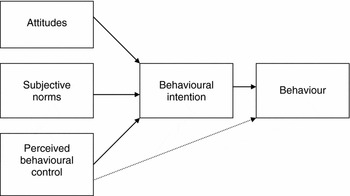
Ajzen (Reference Ajzen1991) postulates that the most proximal determinant of a target behaviour is an individual's motivation, i.e. intention to perform that behaviour, and grants that those with the strongest intention are likely to exert the greatest effort in achieving their behavioural goals. Further, intention is itself determined by three ‘conceptually independent’ predictor variables: attitudes, subjective norms (SN), and perceived behavioural control (PBC). TPB holds that the more positive the attitude towards a behaviour, the stronger the SN, the higher the PBC, and the stronger will be the intention to perform that behaviour (Orbell & Sheeran, Reference Orbell and Sheeran2000). Therefore, when applied to the use of self-help materials, TPB would hypothesize that practitioners’ use of self-help materials (the behaviour) would be dependent on their intention to implement that behaviour. Further, intention to use self-help materials can also be predicted by their ‘beliefs about self-help and its associated consequences (attitudes), beliefs about what important others think of self-help (SN), and beliefs about how much control they have in their use of self-help materials (PBC)’ (Audin et al. Reference Audin, Bekker, Barkham and Foster2003, p. 90).
Ajzen (Reference Ajzen1991) also proposes that while the attitudinal and SN components are assumed to influence intention directly, PBC also functions as an important moderator of the intention–behaviour relationship (see Baron & Kenny, Reference Baron and Kenny1986, for a comprehensive explanation of the mediator–moderator effect). This means that when people are accurate in their estimation of control, PBC can have an indirect influence on behaviour through intention, as well as a direct effect on actual behaviour (the latter assertion is illustrated by the dotted line in Fig. 1). Additionally, Ajzen (Reference Ajzen1991) asserts that intention encapsulates the motivational factors that influence behaviour, while PBC takes into account non-motivational variables such as resources and barriers. Further, Ajzen (Reference Ajzen1991) also acknowledges that there are instances where TPB's predictive ability is enhanced by the inclusion of other factors. Consequently, past behaviour has emerged as a sometimes significant predictor of both intention and actual behaviour (Conner & Armitage, Reference Conner and Armitage1998; Ouellette & Wood, Reference Ouellette and Wood1998; Sutton, Reference Sutton1998; Rhodes & Courneya, Reference Rhodes and Courneya2003). Additionally, other researchers have found demographic variables can also exert some influence on behaviour (Evans & Norman, Reference Evans and Norman1998; Hahm et al. Reference Hahm, Choi, Park, Kwak, Lee and Hwang2008).
Schematic of the theory of planned behaviour (Ajzen, Reference Ajzen1991, p. 182).

The utility of TPB in predicting both intention and behaviour has been supported by research assessing many health behaviours (Ajzen & Madden, Reference Ajzen and Madden1986; Conner & Sparks, Reference Conner and Sparks1996; Godin & Kok, Reference Godin and Kok1996; Armitage & Conner, Reference Armitage and Conner2001). Additionally, some researchers have applied TPB to health professionals’ behaviours, including following clinical guidelines (Watson & Myers, Reference Watson and Myers2001; Audin et al. Reference Audin, Bekker, Barkham and Foster2003; Puffer & Rashidian, Reference Puffer and Rashidian2004; Foy et al. Reference Foy, Bamford, Francis, Johnston, Lecouturier, Eccles, Steen and Grimshaw2007; Godin et al. Reference Godin, Belanger-Gravel, Eccles and Grimshaw2008; Archambault et al. Reference Archambault, Legare, Lavoie, Gagnon, Lapointe, St-Jacques, Poitras, Aubin, Croteau and Pham-Dinh2010).
Prior to the advent of the IAPT programme, Audin et al. (Reference Audin, Bekker, Barkham and Foster2003) used TPB to evaluate the use of self-help materials by mental health professionals in UK primary-care services. They found that perceived control most strongly predicted intention to use the materials, followed in order by SN and attitudes, accounting for 49% of the variance in intention. Most respondents (85%) reported using self-help materials mainly as an adjunct to individual therapy. Only 14% of the 364 clinicians surveyed had received specific self-help training. The researchers suggested that training would have a positive impact on professionals’ views and actual use of materials. However, Audin et al.’s (Reference Audin, Bekker, Barkham and Foster2003) study was constrained by the lack of a standardized method in producing the TPB measures.
The aim of the present study was to assess the utility of the three main constructs of TPB with trainee PWPs on their use of self-help materials. Because other TPB studies have reported that prior behaviour predicts future behaviour, the present study also examined whether the addition of past self-help use (PSHU) and self-help training would enhance the ability of the model to predict trainees’ intention to routinely use the materials. The influence of socio-demographic factors on intention was also assessed. Finally, as there was a possibility that some important variables might be missed, a further aim was to gather a small amount of qualitative data on trainee PWPs’ experiences of factors affecting their use of self-help materials.
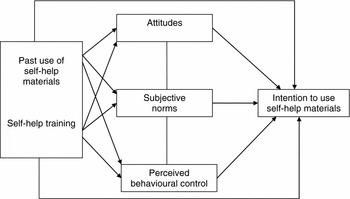
The study aimed to test the following specific hypotheses (depicted schematically in Fig. 2):
-
(1) PSHU will directly predict attitude, SN and PBC.
-
(2) PSHU will directly predict intention to use them.
-
(3) Attitude, SN, and PBC will directly predict intention to use self-help materials.
-
(4) Self-help training will directly predict intention to use self-help materials.
-
(5) Attitude, SN, and PBC will mediate the relationship between PSHU and intention to use materials.
-
(6) Attitude, SN, and PBC will mediate the relationship between self-help training and intention to use self-help materials.
-
(7) The overall and extended TPB model will explain a statistically significant amount of variance in intention to use self-help materials.
Path diagram of the model to be tested.

Additionally, the study sought to answer the following research question: What, additional factors, if any, will participants cite as affecting their use of self-help materials?
Method
Design
With TPB as a conceptual framework, we conducted a cross-sectional, web-based questionnaire survey. Following the procedures recommended by Ajzen (Reference Ajzen2002) and operationalized by Francis et al. (Reference Francis, Eccles, Johnston, Walker, Grimshaw, Foy, Kaner, Smith and Bonetti2004), we used a two-stage design: (1) we elicited TPB beliefs to develop, pilot-test and retest a questionnaire; and (2) we administered the main questionnaire to trainee PWPs across the country.
Stage 1: construction and piloting of TPB measures
Participants and measures in stage 1
A convenience sample of trainee PWPs was recruited from an IAPT training institution in Southeast England (N = 55), where the lead researcher was studying at the same time. An information pack was emailed to the IAPT lead course administrator, who forwarded this to the cohort. In accordance with Francis et al.’s (Reference Francis, Eccles, Johnston, Walker, Grimshaw, Foy, Kaner, Smith and Bonetti2004) recommendations, trainee PWPs were asked to consent to share their salient beliefs about using self-help materials (the elicitation questions were embedded in the email). Seven (13%) trainee PWPs eventually emailed their responses directly to the lead researcher. This sample size for the elicitation stage is comparable with other studies (e.g. Puffer & Rashidian, Reference Puffer and Rashidian2004).
Questionnaire development
The responses elicited were content analysed and grouped into behavioural, normative and control belief categories. The lead researcher and a volunteer qualified PWP carried out the analysis independently, with high concordance on the categories (Cohen's kappa = 0.90). We converted the themes into statements assessing behavioural, normative and control beliefs and their corresponding outcome evaluations, motivation to comply, and control factors, using 7-point Likert-type scales. Francis et al. (Reference Francis, Eccles, Johnston, Walker, Grimshaw, Foy, Kaner, Smith and Bonetti2004) refer to the elicitation exercise as producing ‘indirect’ measures. This process resulted in 18 indirect attitude, 12 indirect SN, and seven indirect PBC questionnaire items, respectively.
Francis et al. (Reference Francis, Eccles, Johnston, Walker, Grimshaw, Foy, Kaner, Smith and Bonetti2004) recommend not only eliciting respondents’ indirect attitude, SN and PBC, but also ascertaining them directly using standard items with the relevant behaviour substituted. The two should be positively correlated. As recommended by Francis et al. (Reference Francis, Eccles, Johnston, Walker, Grimshaw, Foy, Kaner, Smith and Bonetti2004), direct attitude was assessed from four pairs of semantic descriptors (e.g. ‘harmful/beneficial’) applied to the statement stem ‘routinely using CBT self-help material with all clients in step 2 services is . . .’. Direct SN was assessed with three items about the views of people deemed significant to trainee PWPs’ clinical practice, for example: ‘most people who are important to me think that . . .’. Direct PBC was assessed with four items, for example: ‘I am confident that I could routinely use CBT self-help materials with all my clients in step 2 services’.
Based on the elicitation stage, four items were included to assess perceived barriers as a predictor of intention: (1) organizational resource issues (administrative support, photocopying, and cost of materials); (2) client-related issues (lack of motivation, literacy, diversity, individual expectations); (3) work environment issues; and (4) personal issues (boredom, hitting a career ceiling, feeling undervalued). These were measured on a 7-point scale from 1 = extremely unlikely to 7 = extremely likely. Responses on the four items were averaged to obtain a score for perceived barriers.
The mean scores from three items were used to measure trainee PWPs’ generalized intention, and from two items to assess the addition of past behavior. Self-help training was assessed by the single item ‘have you had your IAPT module 2 training yet?’ (where 1 = yes, 2 = no). Participants reported the types of materials previously used or being used from a list in which they could select any that applied. Five items were included to ascertain demographic characteristics of age, gender, ethnicity, professional background and UK training region.
We emailed the 110-item first draft survey questionnaire to the seven elicitation trainee PWPs, and the second and third authors and volunteer qualified PWPs also reviewed it, in the formats suggested by Archambault et al. (Reference Archambault, Legare, Lavoie, Gagnon, Lapointe, St-Jacques, Poitras, Aubin, Croteau and Pham-Dinh2010) and Francis et al. (Reference Francis, Eccles, Johnston, Walker, Grimshaw, Foy, Kaner, Smith and Bonetti2004). We made minor revisions and retained all 110 items.
Piloting
We opened an online account with a web-based survey-hosting company, and uploaded the questionnaire pack. The seven trainee PWPs who participated at the elicitation phase again reviewed the documents online, and amendments were made based on their feedback. To pilot-test the survey online, we sent another email with an embedded weblink to the cohort via their lead course administrator (but excluding the pilot seven PWPs). An option was activated within the weblink to track respondents by their IP/email address, to facilitate later anonymous retesting of the questionnaire. Ten trainees eventually returned a completed questionnaire. At that point, all had received their IAPT module 2 training, and reported using mainly written self-help materials.
Only the intention measure achieved an acceptable Cronbach's alpha score (α = 0.89). However, Pallant (Reference Pallant2007) suggests that a small number of scale items can result in low Cronbach's alpha scores that may not reflect the true reliability of the scale. Briggs & Cheek (Reference Briggs and Cheek1986) suggest examining the mean inter-item correlations, and accepting as reliable mean values between 0.2 and 0.4. Consequently, all questionnaire items were retained at this point in the study.
Retesting the questionnaire
The 10 pilot trainee PWPs completed the questionnaire a second time, 4 weeks after the first. Test–retest analysis yielded: indirect attitude (r = 0.682, p<0.05), indirect SN (r = 0.858, p<0.001), and indirect PBC (r = 0.503, n.s.). Again, due to the small sample, the indirect measures were retained and their correlations later reassessed using the final dataset.
Stage 2
Participants
The research population was PWPs in training (approximate N = 500Footnote † ) between September 2010 and August 2011. We disseminated a pack (with information, consent, and ‘thank you’ forms) and weblink for the final questionnaire via IAPT regional leads across the UK. Ultimately, 112 trainee PWPs accessed the website, with 94 fully completing a questionnaire and accompanying online consent form, giving a 19% overall response rate.
With 94 participants, at 80% power this sample size was sufficient to detect just above a medium effect (R 2 = 0.15–0.20, explaining 15–20% of the variance in intention) if it was present (Cohen, Reference Cohen1988).
Measures and procedure
There were nine predictor variables: indirect attitude, indirect SN, indirect PBC, direct attitude, direct SN, direct PBC, past behaviour, perceived barriers, and training module. The outcome variable was intention to use self-help materials routinely in step 2 services. Demographic factors were trainee PWPs’ age, ethnicity, gender, professional background, IAPT training region, and type of self-help materials used. Data was collected over 5 months in the 2010/2011 academic year, during which we sent three reminder emails via course administrators. Prior to its execution, the study received ethical approval from the Research Governance Department at the host University.
Data analysis
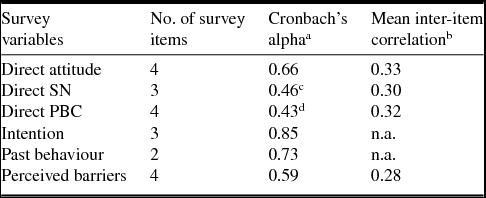
Internal reliability analyses were repeated for the direct, intention, past behaviour and perceived barriers measures using the full dataset (Table 1). All the composite measures were subsequently retained for statistical analyses.
Internal consistency reliabilities for the direct Theory of Planned Behaviour measures, intention, past behaviour, and perceived barriers (n = 94)

SN, Subjective norms; PBC, perceived behavioural control; n.a., not applicable.
a Francis et al. (Reference Francis, Eccles, Johnston, Walker, Grimshaw, Foy, Kaner, Smith and Bonetti2004) recommends 0.6 as an acceptable level for reliability.
c Cronbach's alpha when weakest questionnaire item is deleted.
d Cronbach's alpha when weakest two questionnaire items are deleted.
b Means between 0.2 and 0.4 indicate acceptable internal consistency reliabilities based on convention outlined by Briggs & Cheek (Reference Briggs and Cheek1986).
A square transformation of the data normalized the intention distribution. We examined residuals during regression analyses to test whether the statistical assumptions had been met (Tabachnick & Fidell, Reference Tabachnick and Fidell2001). Professional background was recoded into the dichotomous variable ‘psychologist vs. other profession’, and ethnicity was recoded into ‘white/white other vs. non-white’. There was no issue with multicollinearity, as none of the correlations between predictor variables exceeded 0.9 (Tabachnick & Fidell, Reference Tabachnick and Fidell2001).
We used Baron & Kenny's (Reference Baron and Kenny1986) mediation approach to assess the hypothesized relationships among the predictor, mediator, and outcome variables via multiple linear regression with statistical significance set at p = 0.05, one-tailed. This involved looking at four pathways: (i) between the predictor variable and the hypothesized mediator (path a); (ii) between the mediator and the outcome variable (path b); (iii) path between the predictor and outcome variables (path c); and (iv) the path between the predictor and the outcome variable when the mediator is controlled (path c'). Mediation is indicated when (a) the predictor accounts for significant variance in the mediator, (b) the predictor accounts for significant variance in the outcome variable, and (c) the predictor accounts for a smaller amount of variance in the outcome variable with the mediator in the equation (Baron and Kenny, Reference Baron and Kenny1986).
Qualitative analysis
We performed content analysis on the qualitative responses to the free-response items. The lead researcher and a volunteer assistant psychologist carried out the procedure independently and then resolved disagreements.
Results
Participant characteristics
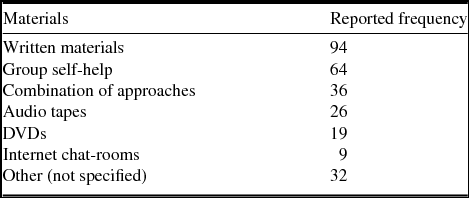
There were 86 (91.5%) female trainee PWPs and eight (8.5%) males. The majority of trainee PWPs were aged 20–34 years (74, 78.7%), and within these, 41 (43.6%) were aged 25–29 years. A further five (5%) were aged 35–39 years, and 15 (16%) were aged ≥40 years. The predominant self-reported ethnic background was White British (65, 69%), followed by Other White (13, 13%). While 70 (74.5%) trainee PWPs were psychology graduates, 17 (18.1%) were from a range of other careers. Twenty-three (24.5%) were in the Southwest, 21 (22.3%) in the Northwest, 23 (24.5%) in London, and 12 (12.8%) in the West Midlands. No responses were received from the East Midlands, and other regions were represented by fewer than five participants each. Finally, 80 (85.1%) trainee PWPs had already received their IAPT training in using self-help materials. Table 2 presents type of materials that trainee PWPs had used in their practice.
Type of self-help materials used or being used by psychological well-being practitioners (n = 94)

Descriptive statistics and correlation analyses
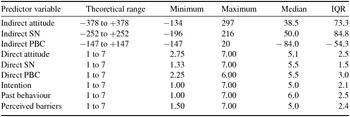
Descriptive statistics are presented in Table 3.
Median, interquartile, and range scores for the direct, indirect, intention, past behaviour, and perceived barriers measures (n = 94)

IQR, Interquartile range; SN, subjective norms; PBC, perceived behavioural control.
On the indirect measures, positive scores indicate favourable attitudes, subjective norms for using self-help materials, and perceived control, while negative scores indicate unfavourable attitudes, norms against using materials, and lack of perceived control.
All other measures range from 1 (against using materials) to 7 (in favour of using materials).
As expected the direct and indirect attitude scores were significantly and positively correlated (r = 0.422, p<0.01), as were the direct and indirect SN scores (r = 0.518, p<0.01). However, the direct and indirect PBC scores were not (r = -0.007). Direct attitude was significantly associated with direct SN (r = 0.506, p<0.01), and direct PBC (r = 0.638, p<0.01). Direct SN was significantly correlated with direct PBC (r = 0.422, p<0.01). Consequently, we decided to use only direct measures of attitude, SN and PBC to test the study's hypotheses.
Only 14.1% of trainee PWPs had not received their IAPT self-help training at the point of participating in the survey. Consequently, we removed self-help training from any further analyses, meaning we could not test hypotheses 4 and 6.
Perceived barriers were significantly correlated with indirect PBC in the expected direction but were not significantly related to any of the other measures, or to the dependent variable. As a result, perceived barriers were also removed from the model testing analyses.
There were no significant correlations between intention and any of the demographic variables. Consequently, we omitted all demographic variables from the main analyses.
Testing the hypotheses
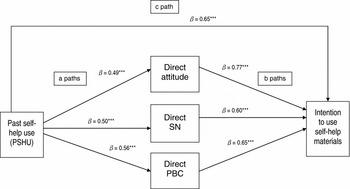
Figure 3 shows the amended model following mediation analyses. The constructs were tested using the recommended three steps (Table 4), and are reported here in a format adapted from the study by Caperchione et al. (Reference Caperchione, Duncan, Mummery, Steele and Schofield2008).
Mediation pathways from the survey results. ***p<0.001, β = standardized beta coefficients. SN, Subjective norms; PBC, perceived behavioural control.

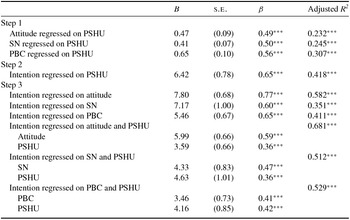
Tests of mediation between attitude, SN, PBC and PSHU on intention to use self-help materials (n = 94)

PSHU, Past self-help use; SN, subjective norms; PBC, perceived behavioural control.
B, Unstandardized coefficient; s.e., standard error; β, standardized beta coefficient.
*** p<0.001
In step 1, attitude, SN, and PBC were regressed individually on PSHU, which significantly predicted each of the three variables (Table 4). PSHU accounted for 23% of the variance in attitude (F 1,92 = 29.04, p<0.001), 25% in SN (F 1,92 = 31.20, p<0.001), and 31% in PBC (F 1,92 = 42.24, p<0.001). Hypothesis 1 was therefore upheld.
In step 2, intention was regressed on PSHU, which was a significant predictor of intention to use the materials, accounting for 42% of the relevant variance (F 1,92 = 67.92, p<0.001). This result upheld hypothesis 2. In step 3, intention was then regressed individually on attitude, SN and PBC. In line with hypothesis 3, all three variables were significant predictors of intention to use self-help materials, with attitude accounting for 58% (F 1,92 = 130.72, p<0.001), SN for 35% (F 1,92 = 51.20, p<0.001), and PBC for 41% (F 1,92 = 65.82, p<0.001) of the variance.
When intention was regressed on attitude and PSHU, the latter two variables were both significant predictors of intention, accounting for 68% of the total variance (F 2,91 = 100.09, p<0.001). Attitude was the most significant predictor of intention (β = 0.59, p<0.001), while PSHU was also a significant predictor of intention (β = 0.36, p<0.001). Given that PSHU's β in step 3 was less than its value in step 2 (β = 0.65, p<0.001), but was still a significant independent predictor of intention, this indicated that attitude was a partial mediator of the relationship between intention and PSHU.
When intention was regressed on SN and PSHU, both were significant predictors of intention with β weights of 0.47 and 0.36, explaining, respectively, 51% of the total variance in the model (F 2,91 = 49.75, p<0.001). Because PSHU was less in step 3 (β = 0.36, p<0.001) than in step 2 (β = 0.65, p<0.001), SN was only a partial mediator of the relationship between PSHU and intention.
When intention was regressed on PBC and PSHU, both significantly predicted intention, explaining 53% of the variance in the model (F 2,91 = 53.27, p<0.001). However, PSHU was marginally a more significant predictor of intention than PBC (β weights of 0.41 and 0.42, respectively). PSHU was less in step 3 (β = 0.42, p<0.001) than in step 2 (β = 0.65, p<0.001), which suggests that PBC was a partial mediator of the relationship between PSHU and intention. The foregoing three significant indirect partial mediation effects partly supported the prediction made in hypothesis 5.
We also carried out a regression analysis to assess the overall model, and specifically the amount of variance in intention to use self-help materials. The full model explained 70% of the variance in intention (adjusted R 2 = 0.704) (F 4,89 = 56.22, p<0.001). Attitude (β = 0.468, p<0.001) emerged as the most significant predictor, followed in descending order by PSHU (β = 0.264, p<0.01) and SN (β = 0.176, p<0.05). However, PBC was not a significant predictor of intention (β = 0.125, p = 0.117). Consequently, hypothesis 7 was only partially supported.
During the mediation analyses, diagnostics were reassessed to check whether the statistical assumptions that underlie regression analyses were met. The results indicated appropriate distributions of data for all variables in the final model, and that the assumptions for normality and multicollinearity had been achieved.
Qualitative analysis
The most frequently identified organizational constraints were difficulties in reproducing materials and accessing online resources. Trainee PWPs also reported a lack of translated materials, lack of physical resources, inadequate supervision, and the referral of clients not appropriate for step 2 services.
In relation to clients, trainee PWPs cited lack of understanding of services or their role, clients’ lack of motivation to use the materials, and difficulties for those with physical or intellectual difficulties or a language barrier. Difficulties in the work environment included chain of command constraints like poor communication between workers at different levels, and the size of trainee PWPs’ caseloads. Personal issues included feeling devalued, lack of opportunities for personal development, problems with the amount of supervision, and a lack of variety in materials available.
With regard to the open-ended question assessing self-help training prior to joining the IAPT programme (n = 18), seven (39%) had ‘studied some of it at university’, seven (39%) knew about the method from in-service training, while four (22%) reported learning from other sources (e.g. while running a group).
When invited to comment on CBT self-help materials within the IAPT model, 43 PWPs provided feedback. Their evaluations were grouped into strengths, opportunities for improvements, and general observations. Trainee PWPs felt that clients generally found self-help useful, and that the materials complemented other interventions. However, they were concerned that the materials could be simplistic, which some clients might perceive as patronizing, that materials were not suitable for all clients (‘one size does not fit all’), and that they were not standardized. Additionally, trainee PWPs reiterated their earlier observation about the lack of provision for a diverse population of clients.
Discussion
As hypothesized, TPB's main constructs significantly predicted trainee PWPs’ intention to use self-help materials routinely. More favourable attitudes towards self-help materials, valuing the opinions of referent others, and feeling in control over using the materials predicted intention to use them. Attitude most strongly predicted intention, followed in order by PBC and SN, results slightly different from the findings of Audin et al. (Reference Audin, Bekker, Barkham and Foster2003). This suggested that trainee PWPs might hold greater ‘instrumental’ beliefs that use of the materials mainly leads to positive outcomes, as well as reporting more positive ‘experiential’ beliefs about how they feel about using the materials (Francis et al. Reference Francis, Eccles, Johnston, Walker, Grimshaw, Foy, Kaner, Smith and Bonetti2004; p. 13). Additionally, the finding that SN was the least significant of the three main predictors of intention was consistent with results from studies on other types of behaviour (Godin & Kok, Reference Godin and Kok1996). Attitude, SN and PBC were found to mediate the relationship between past behaviour and intention when tested on their own.
As hypothesized, past use emerged as both a direct and indirect predictor of intention. In the overall test of the model, past use was the second most significant predictor of intention after attitude, suggesting that trainee PWPs with past self-help experience had greater intention to continue using them. However, the strength of association between past use and intention supported the criticism that the main constructs of TPB may not be sufficient to predict intention (Conner, Reference Conner1993; Eagly & Chaiken, Reference Eagly and Chaiken1993; Sutton, Reference Sutton1994, Reference Sutton1998; Rhodes & Courneya, Reference Rhodes and Courneya2003).
Because almost all participants had already received mandatory training in self-help materials, it was not possible to examine whether such training vs. its absence predicted intention. Additionally, none of the socio-demographic factors were associated with intention. However, it was possible that these findings were influenced by participant homogeneity in terms of age, gender, ethnicity, and professional background, reducing statistical power to detect effects related to these variables if present.
The full model explained 70% of the variance in intention, clearly supporting the utility of TPB in predicting trainee PWPs’ intention to use self-help materials routinely. This figure is considerably higher than in previous TPB studies (Godin & Kok, Reference Godin and Kok1996; Foy et al. Reference Foy, Bamford, Francis, Johnston, Lecouturier, Eccles, Steen and Grimshaw2007). The findings suggest the importance of positive beliefs about the materials, experience of past use, and the influence of normative referents such as clients, accrediting organizations, managers, and local commissioners.
Contrary to theoretical prediction and previous investigations (e.g. Godin & Kok, Reference Godin and Kok1996; Watson & Myers, Reference Watson and Myers2001; Puffer & Rashidian, Reference Puffer and Rashidian2004), PBC did not predict trainee PWPs’ intention to use the materials when the full model was tested. This suggested that while PBC may be relevant, it might be less important than attitude or SN. However, it is possible that this result was due to shared variance when all TPB variables were in the regression, reducing the likelihood that each variable would appear as a significant predictor.
Watson & Myers (Reference Watson and Myers2001) observed that when the PBC measure was operationalized with a small number of items (two in the present study), this limited the predictive power of the variable in regression analyses. However, an alternative explanation may be offered. Francis et al. (Reference Francis, Eccles, Johnston, Walker, Grimshaw, Foy, Kaner, Smith and Bonetti2004) recommend operationalizing the direct PBC measure such that the composite measure comprises both a self-efficacy and a controllability component. However, the controllability component was assessed by items we deleted to improve the internal reliability of the scale. Thus, PBC was assessed only by its self-efficacy component, and consequently, the direct measure of PBC did not capture directly the influence of external control factors.
Self-efficacy is a key construct from Bandura's (Reference Bandura1977) social learning theory, defined as individuals’ belief that they are capable of performing a behaviour. Ajzen (Reference Ajzen1988, Reference Ajzen1991) acknowledged the overlap between self-efficacy and PBC, supported by the inclusion of a self-efficacy rather than a PBC measure in a study by De Vries et al. (Reference De Vries, Dijkstra and Kuhlman1988). However, Manstead & van Eekelen (Reference Manstead and van Eekelen1998) and Terry & Leary (Reference Terry and Leary1995) have provided evidence in support of theoretical separation of the two constructs. To add to the uncertainty, Sparks et al. (Reference Sparks, Guthrie and Shepherd1997) argued that a distinction between the two was not necessary because the recommended measure generally assessed parts of both constructs. Nonetheless, the studies by Manstead & van Eekelen (Reference Manstead and van Eekelen1998) and Terry & Leary (Reference Terry and Leary1995) demonstrated a strong, independent relationship between self-efficacy and intention after controlling for the effects of PBC. While the present study did not undertake a direct analysis between self-efficacy and intention controlling for PBC, it is worthy of note that our PBC measure, assessed only by self-efficacy, was significantly and positively correlated with intention (r = 0.646, p<0.01). However, PBC was also strongly correlated with past behaviour, meaning that shared variance made it a weaker predictor alongside other predictors.
Interestingly, trainee PWPs’ qualitative reports did not reflect positive self-efficacy. This may reflect their status as students on a course, where their performance was being constantly assessed. Additionally, those who supplied qualitative data were a subsample, and may have felt the need to give socially desirable responses rather than mention personal lack of confidence. Finally, it may be that because using the materials is such an integral part of the trainee PWP's role, it would not occur to them that they have much control. This may then affect their stated future intention rather more than if they were post-qualification and working in a context where they felt more capable and had greater flexibility.
The study had several methodological limitations. First, although the analyses were sufficiently powered with 94 participants for the final four predictors, the response rate of 19% meant that the results may not represent the views of the majority of PWPs in training. The sample of participants was also relatively demographically homogeneous, which may not be representative of the population of trainee PWPs. Second, the cross-sectional survey design precludes any conclusions about causality. Third, there were aforementioned issues relating to the validity and reliability of the scales developed in the study, for example, the impact of small numbers of items in some subscales. Fourth, we could not eliminate the influence of social desirability effects from the survey, and it was possible that trainee PWPs responded particularly favourably about their attitudes, normative referents and intention. Those effects might also be stronger for PWPs because they are in training, where they are judged on their performance, even though the survey was anonymous and unconnected with IAPT commissioners or courses. However, this was the first attempt to study this phenomenon using a standardized method of devising scales to assess TPB constructs, and future studies should address these issues where possible.
The findings supported the utility of TPB's three main constructs in predicting trainee PWPs’ intention to use self-help materials, thus adding to the body of research on the model. However, the median score for intention of 5.0 suggests that there may be room for selecting trainee PWPs’ beliefs for intervention, possibly focusing on their attitude, as this was the most significant predictor. This may be especially pertinent as the barriers identified by trainee PWPs may be less amenable to change.
The study extends the protocol outlined by Ajzen (Reference Ajzen2002) and Francis et al. (Reference Francis, Eccles, Johnston, Walker, Grimshaw, Foy, Kaner, Smith and Bonetti2004) by replicating the methodology as a web-based questionnaire survey. There is also a case for examining the prevalence of practical constraints highlighted by trainee PWPs, such as high caseloads, inadequate supervision, and materials not matching clients’ needs. Although these problems may be limited to those who responded, if they reflect the wider population of trainee PWPs, they risk seriously undermining IAPT's goals for the routine use of self-help materials in step 2 services.
While the present study set out to assess intention to use self-help materials, TPB goes beyond intention to actual behaviour. Consequently, additional research could extend the methodology to prospective, longitudinal investigations of trainee PWPs’ actual use of self-help materials, with a view to elucidating the cognitive factors involved in their decision-making and actions. The inclusion of behaviour is particularly cogent given that a major assumption underlying TPB is that intention is the most proximal determinant of behaviour. However, detractors of the model have observed that it depends heavily on the use of correlational data, less on assessing causal relationships between intention and behaviour, and that generally intention only accounts for a modest 20–40% of the variance in behaviour (Randall & Wolff, Reference Randall and Wolff1994; Godin & Kok, Reference Godin and Kok1996; Armitage & Conner, Reference Armitage and Conner2001). Orbell & Sheeran (Reference Orbell and Sheeran1998) have argued that the weak intention–behaviour relationship may be due largely to individuals having good intentions but failing to act on them. More recently, Webb & Sheeran (Reference Webb and Sheeran2006), in a meta-analysis, which assessed both intentional and behavioural changes, have reported that ‘a medium-to-large sized change in intention engenders only a small-to-medium change in behaviour’ (p. 262). They conclude the influence of intention on behaviour is quite limited, and recommend that future behavioural change interventions focus not only on improving intention but also on ‘promoting intention stability and implementation intention formation’ (p. 293).
It would be interesting to assess whether the addition of Gollwitzer's implementation intentions (Gollwitzer, Reference Gollwitzer1993, Reference Gollwitzer1999; Gollwitzer & Brandstatter, Reference Gollwitzer and Brandstatter1997) would maximize trainee PWPs’ actual use of self-help materials. Implementation intentions are proposed to be simultaneously motivationally driven and goal-directed, and involve a goal cost-benefit analysis, which results in the formation of a goal intention to perform a behaviour (or not). Oettingen et al. (Reference Oettingen, Honig and Gollwitzer2000) have proposed that implementation intentions are powerful self-regulatory tools which can overcome barriers to initiating action, such as when individuals are tired, engrossed in some other activity, lost in thought, etc., thus missing opportunities to act. The addition of implementation intentions may have practical implications for routine use of self-help materials standardized across all IAPT services, given that trainee PWPs identified a lack of standardization as a barrier to their use. By way of an example, both trainee and post-qualified PWPs could be assigned randomly to groups with and without implementation intentions, before analysing their use of standardized self-help materials in line with NICE guidelines.
Additionally, Clark (Reference Clark2011) has reviewed outcomes from the initial implementation stage of the IAPT programme, concluding that it has surpassed expectations (see also Glover et al. Reference Glover, Webb and Evison2010; Gyani et al. Reference Gyani, Shafran, Layard and Clark2011). Since then, the UK government has extended the IAPT programme to 2015, with the injection of a further £400 million of funding, which will include the recruitment and training of another 2400 high-intensity and low-intensity PWPs. Consequently, there will be continued impetus for the programme's outcomes to be assessed and its progress validated. Further, it is likely that ongoing opportunities for trainees to use CBT self-help materials with clients will continue to enhance their attitudes towards doing so, foster their sense of it being an accepted practice, and enhance perceived control of using the materials.
Finally, greater heterogeneity in sampling in future studies might also improve generalizability of the findings. It would also be interesting to disentangle the relative contribution of both PBC and self-efficacy in applying TPB to the use of self-help materials, and whether a better operationalized PBC construct might indicate a direct influence on actual use without the mediating influence of intention. The contribution of the indirect measures of the framework's variables could also be re-examined after improvements in their construction and psychometric properties, perhaps with a larger and more diverse elicitation sample, and using face-to-face elicitation.
Conclusions
There is curently only a small body of research evaluating mental health professionals’ use of NICE-recommended clinical interventions, and still fewer studies which underpin investigations with a theoretical framework. Consequently, this theoretically driven study is novel in examining the psycho-social predictors that may influence the intention of one specific group, i.e. IAPT trainee PWPs, to use CBT self-help materials in step 2 mental health services. The results suggest that the main constructs of TPB had utility in predicting trainee PWPs’ intention to routinely use the materials, although the measure of PBC seemed less useful in this sample, possibly due to sharing variance with other variables. The study also supports the addition of past behaviour in extending the predictive applicability of TPB, over and above the mediating influence of attitude, SN, and PBC. Future research could extend the methodology beyond a cross-sectional design to assess the impact of the variables investigated on actual self-help use by trainee PWPs.
Summary of main points of the study
-
• The study confirmed that three main constructs of the Theory of Planned Behaviour (TPB), i.e. more favourable attitudes towards materials, valuing the opinions of referent others (SN), and feeling in control over using the materials (PBC), predicted IAPT trainee PWPs’ intention to use self-help materials in their clinical practice.
-
• Attitude most strongly predicted intention to use self-help materials, followed in order by PBC and SN.
-
• As hypothesized, PSHU materials emerged as both a direct and indirect predictor of intention to use, behind attitude as the second most significant predictor. This suggested that PWPs with past self-help experience has greater intention to continue using them.
-
• The study's meditational model explained 70% of the variance in intention, which supports the utility of TPB in predicting trainee PWPs’ intention to use self-help materials routinely in their clinical practice.
-
• Currently there is a small body of research evaluating mental health practitioners’ use of NICE-recommended clinical interventions, and still fewer studies which underpin investigations with a theoretical framework. Consequently, this theoretically driven study is novel in examining the psycho-social predictors that may influence the intention of one specific group, i.e. IAPT trainee PWPs, to use CBT-based self-help materials in step 2 mental health services in the UK.
Ethical standards
All participants who accessed the survey online had to read an information document, verify their understanding, and give their consent electronically. Prior to its execution, the study received ethical approval from the Research Governance Department at Canterbury Christ Church University.
Acknowledgements
This study was undertaken as the research thesis requirement, in partial fulfilment of the first author's Doctorate in Clinical Psychology (Canterbury Christ Church University, 2008–2011).
Declaration of Interest
None.
-
• Whether and to what extent trainee PWPs’ intention to use routinely CBT self-help materials in their clinical practice will be determined by their attitude, how the use of materials are assessed by others, and how much control practitioners feel they have to use the materials.
-
• Whether training in the use of self-help materials relates directly to trainee PWPs’ intention to use them.
-
• In line with previous studies, will prior experience of using self-help materials exert significant influence on trainee PWPs’ intention to use materials as a routine part of their clinical practice?
-
• Can a social cognitive model, such as the theory of planned behaviour, predict trainee PWPs’ intention to use CBT self-help materials as a core component of their clinical practice?



Comments
No Comments have been published for this article.