Introduction
A substantial proportion of the general population experiences psychotic symptoms (PS), including both people with mental health disorders and healthy populations (Linscott & van Os, Reference Linscott and van Os2013). When not reaching the threshold for clinical disorders, the self-reported delusional or hallucinatory symptoms are referred to as psychotic experiences (PEs). The prevalence of lifetime PEs is estimated to be 7.2% of the general population (Linscott & van Os, Reference Linscott and van Os2013; van Os, Linscott, Myin-Germeys, Delespaul, & Krabbendam, Reference van Os, Linscott, Myin-Germeys, Delespaul and Krabbendam2009), though this can widely vary depending on the country (Nuevo et al., Reference Nuevo, Chatterji, Verdes, Naidoo, Arango and Ayuso-Mateos2010). For nearly 70% of individuals, however, these symptoms are only transient and do not reach the level of severity that would constitute clinical psychosis (Linscott & van Os, Reference Linscott and van Os2013). Nevertheless, their presence determines a high-risk state of psychotic transition estimated at about 30% within 2 years (Dominguez, Wichers, Lieb, Wittchen, & van Os, Reference Dominguez, Wichers, Lieb, Wittchen and van Os2011; Fusar-Poli et al., Reference Fusar-Poli, Bonoldi, Yung, Borgwardt, Kempton, Valmaggia and McGuire2012). While PEs emerge on the least severe end of the psychosis continuum, they have become a public health concern because they are still associated with higher rates of psychiatric disorders (McGrath et al., Reference McGrath, Saha, Al-Hamzawi, Andrade, Benjet, Bromet and Kessler2016), suicidal behaviors (Honings, Drukker, Groen, & van Os, Reference Honings, Drukker, Groen and van Os2016) and disabilities (Navarro-Mateu et al., Reference Navarro-Mateu, Alonso, Lim, Saha, Aguilar-Gaxiola and Al-Hamzawi2017), poorer physical health conditions (Oh, Waldman, Stickley, DeVylder, & Koyanagi, Reference Oh, Waldman, Stickley, DeVylder and Koyanagi2019; Scott et al., Reference Scott, Saha, Lim, Aguilar-Gaxiola, Al-Hamzawi, Alonso and McGrath2018) and treatment-seeking behaviors (Bhavsar et al., Reference Bhavsar, Maccabe, Hatch, Hotopf, Boydell and McGuire2017; Murphy, Shevlin, Houston, & Adamson, Reference Murphy, Shevlin, Houston and Adamson2012), and higher mortality (Sharifi et al., Reference Sharifi, Eaton, Wu, Roth, Burchett and Mojtabai2015).
Recent meta-analyses identified a two-fold increased risk for PS and PEs (Leaune et al., Reference Leaune, Dealberto, Luck, Grot, Zeroug-Vial, Poulet and Brunelin2019; Tortelli et al., Reference Tortelli, Nakamura, Suprani, Schürhoff, Van der Waerden, Szöke and Pignon2018) and a two- to three-fold increased risk for psychotic disorders (Radua et al., Reference Radua, Ramellaamellame, Ioannidis, Reichenberg, Phiphopthatsanee, Amir and Fusar-Poli2018) among ethnic minorities when compared with the majority groups, with significant variations in the level of risk between and within ethnic minority groups. These variations may be related to differential exposures to socio-environmental risk factors (Morgan, Charalambides, Hutchinson, & Murray, Reference Morgan, Charalambides, Hutchinson and Murray2010; Veling, Reference Veling2013). Epidemiological findings highlight the social determinants of health, examining the role of discrimination, social exclusion, and social defeat in the etiopathogenesis of psychosis (Kirkbride et al., Reference Kirkbride, Boydell, Ploubidis, Morgan, Dazzan, McKenzie and Jones2008; Morgan et al., Reference Morgan, Kirkbride, Hutchinson, Craig, Morgan, Dazzan and Fearon2008; Oh, Reference Oh2016; Selten, van der Ven, Rutten, & Cantor-Graae, Reference Selten, van der Ven, Rutten and Cantor-Graae2013; Stilo et al., Reference Stilo, Gayer-Anderson, Beards, Hubbard, Onyejiaka, Keraite and Morgan2017). The socio-developmental model developed by Morgan et al. (Reference Morgan, Charalambides, Hutchinson and Murray2010) emphasizes the complexity of interactions between several risk factors (genetic, individual, and environmental) and the importance of considering the type and quality of these interactions. According to this model, social risk factors (such as racial or ethnic discrimination) may contribute to the accumulation of adverse experiences over the life course, impacting early neuro-developmental processes, increasing exposure to harmful chronic stress, which ultimately increases vulnerability to PS/PEs (Monroe, Reference Monroe2008; Radua et al., Reference Radua, Ramellaamellame, Ioannidis, Reichenberg, Phiphopthatsanee, Amir and Fusar-Poli2018). Repeated exposure to social adversity can link to PS/PEs through the generation of cognitive biases and affective states that predispose one to develop symptoms. Discriminatory experiences have been proposed as a putative factor for the development of PS/PEs in ethnic minorities, as they are more prevalent in these populations compared to the general population. They may, for example, link to delusional symptoms through increased sensitivity to rejection, threat anticipation, anxiety, and a tendency to jump to conclusions (Morgan et al., Reference Morgan, Charalambides, Hutchinson and Murray2010).
Discrimination is the unfair and prejudicial treatment of a person or a category of people on the basis of some identity marker (e.g. sex, disability, religion) (Dovidio, Hewstone, Glick, & Esses, Reference Dovidio, Hewstone, Glick and Esses2010). A common form of discrimination is motivated by hostility toward people on the basis of their ethnicity and/or race which are related but distinct concepts, with the race being a social construct to categorize people based on physical characteristics (such as skin color), while ethnicity being a term to refer to the shared culture (such as language, customs) and identity based on common heritage, ancestry, or nationality. Racial and ethnic discrimination are prevalent across countries (Lee, Perez, Boykin, & Mendoza-Denton, Reference Lee, Perez, Boykin and Mendoza-Denton2019) and major social stressors due to their tendency to foster self-depreciation, low self-esteem, emotional stress, and loss of control (Carter, Reference Carter2007; de Freitas et al., Reference de Freitas, Fernandes-Jesus, Ferreira, Coimbra, Teixeira, de Moura and Fontaine2018; Ruggiero & Taylor, Reference Ruggiero and Taylor1995). Discrimination also operates at multiple levels to impact health by promoting an unequal distribution of salutary resources (e.g. political authority, access to healthcare and education)(Gee, Reference Gee2002; Harrell et al., Reference Harrell, Burford, Cage, Nelson, Shearon, Thompson and Green2011; Tajfel & Turner, Reference Tajfel, Turner, Hogg and Abrams2001) and limits the possibilities of upward mobility and social ascension (Carter, Reference Carter2007; McEwen, Reference McEwen2012), which potentially proliferates even more stress. Indeed, several meta-analyses have reported that populations exposed to various types of discrimination have lower overall health status and a higher risk of developing mental disorders (e.g. depression, anxiety disorders, suicidal behaviors, psychosis) (de Freitas et al., Reference de Freitas, Fernandes-Jesus, Ferreira, Coimbra, Teixeira, de Moura and Fontaine2018; Pascoe & Richman, Reference Pascoe and Richman2009). It is thus imperative to examine how perceived ethnic discrimination (PED) serves as a putative risk factor for PS/PEs and may help explain the increased prevalence of PS/PEs among individuals from ethnic minority groups (Missinne & Bracke, Reference Missinne and Bracke2012). While the literature has demonstrated the significant association between ethnic minority position and PS/PEs, as well as the association between discrimination and poor health status, to our knowledge, scholars have yet to summarize existing literature in a meta-analysis to show the associations between PED and PS/PEs. In a recent systematic review on the association between discrimination and psychosis, Pearce, Rafiq, Simpson, and Varese (Reference Pearce, Rafiq, Simpson and Varese2019) demonstrated the association between discrimination and PS. However, their review did not focus on PED but included several discriminatory experiences (sexual orientation, gender, social class…). Moreover, they concluded by expressing the need to perform a meta-analysis on the association between discrimination and PS. In a recent meta-analysis, Leaune et al. (Reference Leaune, Dealberto, Luck, Grot, Zeroug-Vial, Poulet and Brunelin2019) reported higher odds for hallucinatory symptoms compared to delusional symptoms in ethnic minorities. The impact of PED on the types of PS/PEs would thus be interesting to evaluate. Prior studies have identified socio-environmental and psychological factors – such as ethnic identity, ethnic density or social support – that can potentially buffer the detrimental effects of PED on health (Straiton, Aambø, & Johansen, Reference Straiton, Aambø and Johansen2019; Yip, Wang, Mootoo, & Mirpuri, Reference Yip, Wang, Mootoo and Mirpuri2019). However, no systematic review has evaluated their role in moderating the associations between PED and PS/PEs. Further, some psychological factors, such as sensitivity to rejection, have been discussed in existing studies and may mediate the association by promoting negative cognitive schemas and by increasing the liability to the deleterious effects of PED.
Aims of the study
The aim of our study was to systematically review the literature and to conduct a meta-analysis to examine the association between PED and PS/PEs among ethnic minority groups. We hypothesized that PED would contribute to an increased risk for PS and PEs in ethnic minority groups. A secondary objective was to investigate (a) which types of PS/PEs (i.e. hallucinatory symptoms or delusional symptoms) are especially associated with PED, and (b) whether ethnicity moderates the impact of PED on PS/PEs across minority groups. We also aimed to explore the role of other putative moderators (ethnic density, ethnic identity, social support) or mediators (sensitivity to rejection) with respect to the association between PED and PS/PEs.
Method
Systematic research
The review protocol was based on the Preferred Reporting Items for Systematic Reviews and Meta-Analyses (PRISMA) (Liberati et al., Reference Liberati, Altman, Tetzlaff, Mulrow, Gotzsche, Ioannidis and Moher2009) and was registered on PROSPERO (registration number: CRD 42019118523), in January 2019. The search was conducted on the following databases: Medline, Web of Science and PsycINFO, using the following search terms, grouped into three categories as follows: (a) population: (migration OR migrant OR ethnic* OR general population); (b) exposure: (discrimin* OR racis* OR social exclusion OR ‘social defeat’); (c) outcome: (psychotic OR psychosis OR hallucination OR delusion OR paranoia OR schizo* OR UHR). To ensure the exhaustivity of the search and the relevance of the algorithm, a pilot electronic research was performed in December 2018. To be exhaustive, the electronic search was supplemented with a manual search using the reference lists of relevant publications.
Inclusion criteria
Inclusion criteria were (a) articles published in peer-review journals in the English language; (b) articles published between January 1960 and 31 January 2019; (c) articles using a validated psychometric scale to assess the presence of PS and/or PEs; (d) articles assessing perceived discrimination in one or several ethnic minorities. No age restriction was applied to the population.
Based on methodologies of previous meta-analyses that assessed PS (Honings et al., Reference Honings, Drukker, Groen and van Os2016; Kaymaz et al., Reference Kaymaz, Drukker, Lieb, Wittchen, Werbeloff, Weiser and van Os2012; Leaune et al., Reference Leaune, Dealberto, Luck, Grot, Zeroug-Vial, Poulet and Brunelin2019), were retained studies that assessed the report of PS under the following terms: ‘psychotic symptoms’, ‘psychotic experiences’, ‘psychotic-like experiences’, ‘delusional experiences’, ‘hallucinatory experiences’, ‘hallucination-like experiences’, ‘paranoia’ or ‘delusion-like experiences’. The outcome was defined as PEs when people with a psychotic disorder were excluded from the analyses in the included articles. Ethnicity was defined as an identity and group identification, based on social and cultural commonalities (Morgan et al., Reference Morgan, Dazzan, Morgan, Jones, Harrison, Leff and Fearon2006; Schofield et al., Reference Schofield, Das-Munshi, Bécares, Morgan, Bhavsar, Hotopf and Hatch2016).
Selection process
Two authors (OB and EL) performed the electronic search between January and March 2019. The studies identified through the databases were then subjected to three selection filters, depending on the titles, abstracts, and comprehensive full-text reading of each selected paper thereafter. The authors compared their results at each stage. When discrepancies arose, the choice to include or exclude an article was discussed with other co-authors.
Data analysis
Two authors (OB and EL) assessed the quality of included studies according to the STROBE statement (Strengthening the Reporting of Observational Studies in Epidemiology) (von Elm et al., Reference von Elm, Altman, Egger, Pocock, Gotzsche and Vandenbroucke2007). The level of quality was as follows: very good quality (26–32); good quality (20–26); average quality (14–20); and poor quality (<14).
Systematic review
A systematic review was carried out which involved separately and independently extracting quantitative data by two authors (OB and EL) for each of the following outcomes: (a) the association between PED and PS/PEs; (b) the role of ethnicity, and (c) the role of factors mediating or moderating the association between PED and PS/PEs. The extracted data were then grouped and the evidence were summarized for each outcome. All discrepancies were discussed, and the consensus was reached between all authors on the final summary.
To assess the role of associated socio-environmental factors (e.g. ethnic identity, ethnic density, and social support) on the association between PED and PS/PEs, we examined the evidence on their mediating effects (i.e. explaining some portion of the association) or moderating effects (i.e. affecting the strength of the association).
Meta-analysis
Studies that presented odd ratios (ORs) for the primary outcome (e.g. ORs assessing the association between PED and PS/PEs) were included in the meta-analysis. The data were analyzed using Comprehensive Meta-analysis software (version 2 of Borenstein). Pooled ORs were calculated using a random-effect model in order to consider between-study variability and provide a more realistic estimation of the summary ORs (Cooper, Hedges, & Valentine, Reference Cooper, Hedges and Valentine2009). For each study, ORs were converted into the log OR. The weighted sum of the log OR was measured and then reconverted into OR. When available, the meta-analysis was performed with an adjusted OR (adjusted for age, gender, and individual socio-economic position).
Heterogeneity between studies was quantified with the Q statistic and the I 2. The Q statistic determines whether the observed variations in OR were caused by a between-study true difference and not by the within-study sampling error. A significant Q-value reflects a true variation of OR between studies. I 2 is the proportion of inconsistency between studies' results attributable to heterogeneity. I 2 values of 25, 50, and 75%, respectively, reflect a small, moderate, or high degree of heterogeneity (Higgins, Thompson, Deeks, & Altman, Reference Higgins, Thompson, Deeks and Altman2003).
A p value >0.05 threshold was used to assess statistical significance.
A first subgroups analysis was performed to examine the effect of PED on the different types of PS/PEs, e.g. on hallucinatory and delusional symptoms. Pooled ORs were computed for each subgroup.
A second subgroups analysis was performed to determine if there was a significant effect of ethnicity on the association between PED and PS/PEs. Pooled ORs were separately computed according to different ethnic groups and compared using the Q statistic. The between-subgroup Q statistic was calculated with a random-effect model. A significant Q statistic reflects significantly different ORs between subgroups. The included studies allowed us to undertake this subgroup analysis only in the UK on five main ethnic groups, who were identified as Bangladeshi, Indian, Black Caribbean, Irish, and Pakistani.
Publication bias
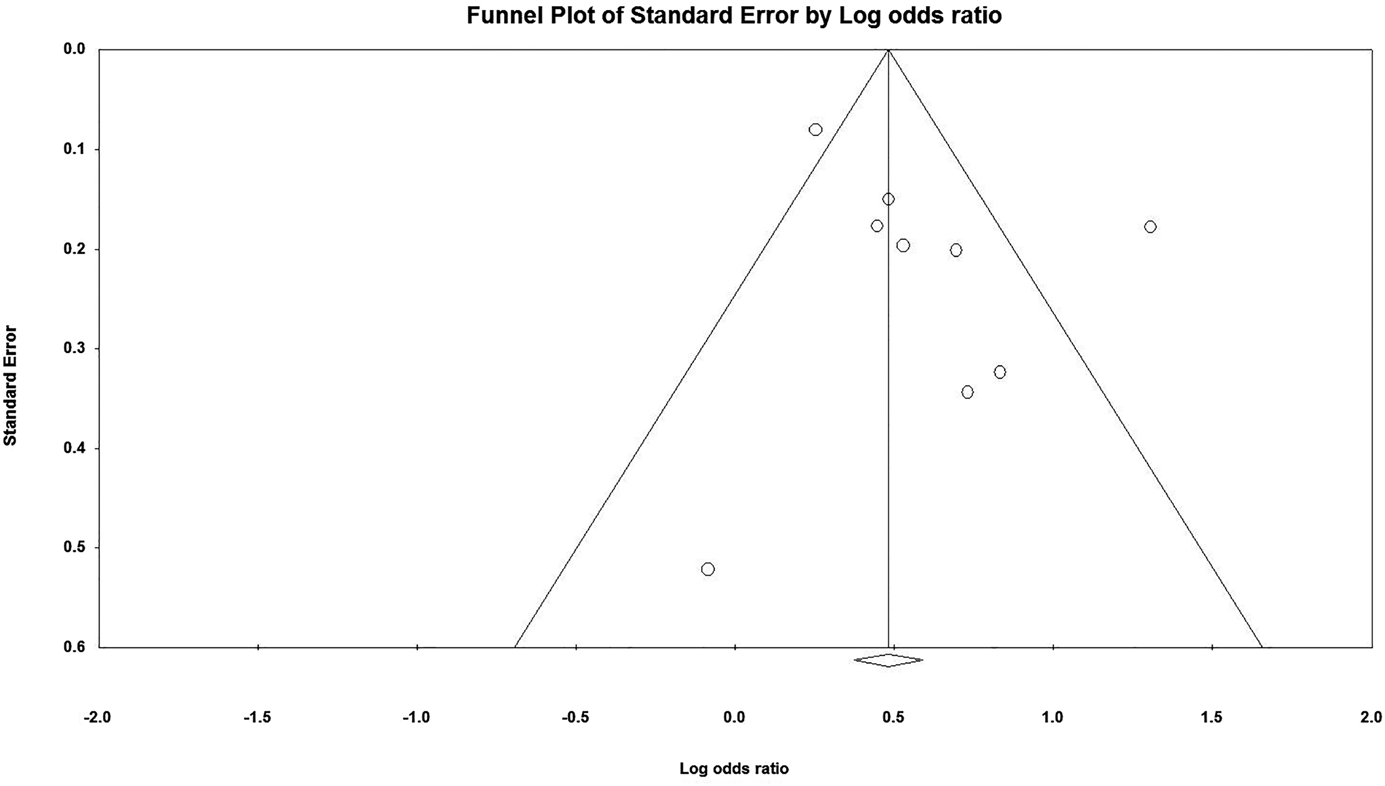
Publication bias was assessed by visual inspection of a funnel plot of the standard error by the log OR and by Egger's regression intercept (Egger, Davey Smith, Schneider, & Minder, Reference Egger, Davey Smith, Schneider and Minder1997). In the absence of bias, the plot should resemble a symmetrical inverted funnel. An asymmetric funnel indicates a systematic relationship between reported effects and study size.
Results
Included studies
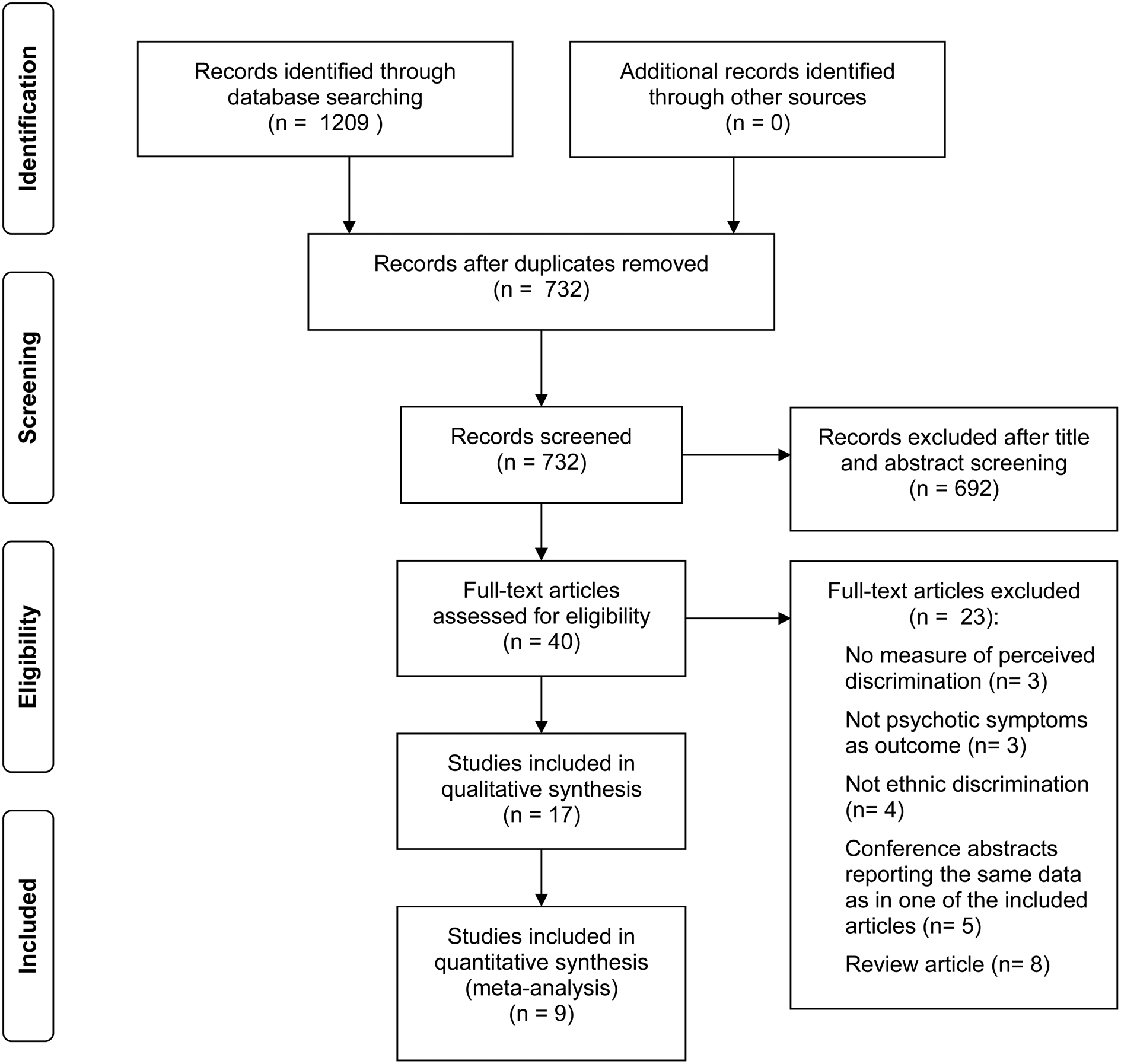
Using the research protocol, 1209 articles were retrieved from the databases. After removal of duplicates and the application of selection filters, 17 articles met the inclusion criteria (Fig. 1).
Flow chart diagram of study selection according to the PRISMA guidelines.

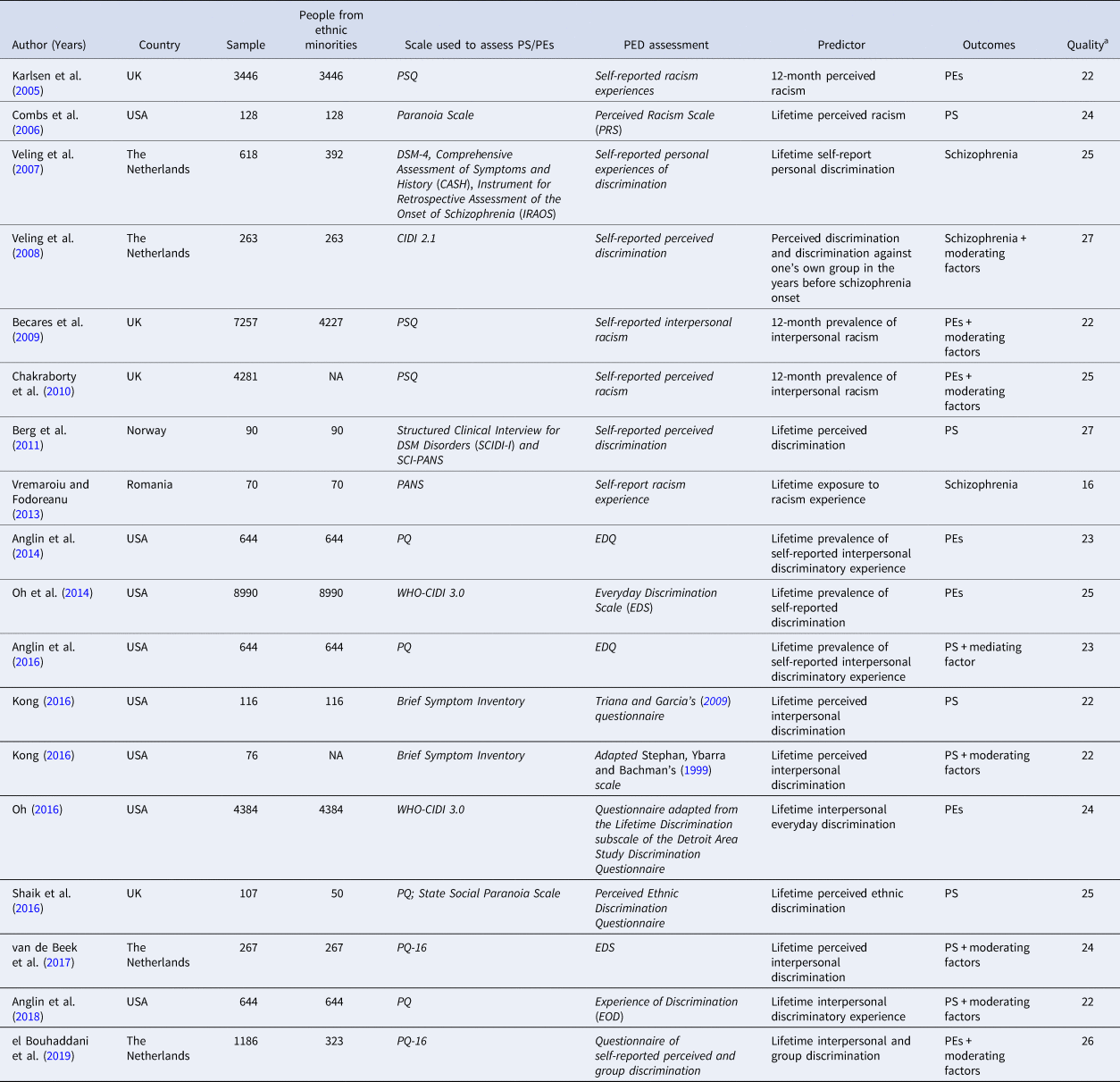
The scores at the STROBE checklist ranged between 16 and 27 (mean score = 23.55, s.d. = 2.45), highlighting the good quality of the included articles. The studies included a total of 33 211 people. The age of the participants ranged between 13 and 74. The ethnic groups studied were heterogeneous and mainly from low- and middle-income countries of the southern hemisphere. Data were collected in a total of five countries (USA, Netherland, UK, Romania, and Norway). All studies were cross-sectional, with samples ranging from 70 to 8990 people. Publication dates ranged from 2005 to 2019, with half published in the last 5 years. Seven studies assessed the presence of PEs (Anglin, Lighty, Greenspoon, & Ellman, Reference Anglin, Lighty, Greenspoon and Ellman2014; Becares, Nazroo, & Stafford, Reference Becares, Nazroo and Stafford2009; Chakraborty, McKenzie, Hajat, & Stansfeld, Reference Chakraborty, McKenzie, Hajat and Stansfeld2010; el Bouhaddani, van Domburgh, Schaefer, Doreleijers, & Veling, Reference el Bouhaddani, van Domburgh, Schaefer, Doreleijers and Veling2019; Karlsen, Nazroo, McKenzie, Bhui, & Weich, Reference Karlsen, Nazroo, McKenzie, Bhui and Weich2005; Oh, Yang, Anglin, & DeVylder, Reference Oh, Yang, Anglin and DeVylder2014, Reference Oh, Cogburn, Anglin, Lukens and DeVylder2016). Three main scales were studied to assess the prevalence of PS or PEs, the Prodromal Questionnaire (PQ) (n = 6), the Psychosis Screening Questionnaire (PSQ) (n = 3), and the Composite International Diagnostic Interview (CIDI) (n = 3). A total of 9 scales was used to assess PED. The characteristics of the included studies are displayed in Table 1.
Characteristics of studies included in the systematic review

PS, psychotic symptoms; PEs, psychotic experiences; PSQ, Psychosis Screening Questionnaire, CIDI, Composite International Diagnostic Interview; PANS, Positive and Negative Syndrome Scale; PQ, Prodromal Questionnaire.
a Quality of studies was assessed with the 32-items STROBE statement, a score of 1 (presence) or 0 (absence) was coded for each item (total score on 32).
Association between PED and PS/PEs
Of the 17 included articles, 15 studies reported a significant correlation between PED and PS/PEs. Two studies (Oh et al., Reference Oh, Yang, Anglin and DeVylder2014; Veling et al., Reference Veling, Selten, Susser, Laan, Mackenbach and Hoek2007) reported a dose-response association between PED and PS/PEs, with higher levels of PED being associated with higher ORs for PS/PEs.
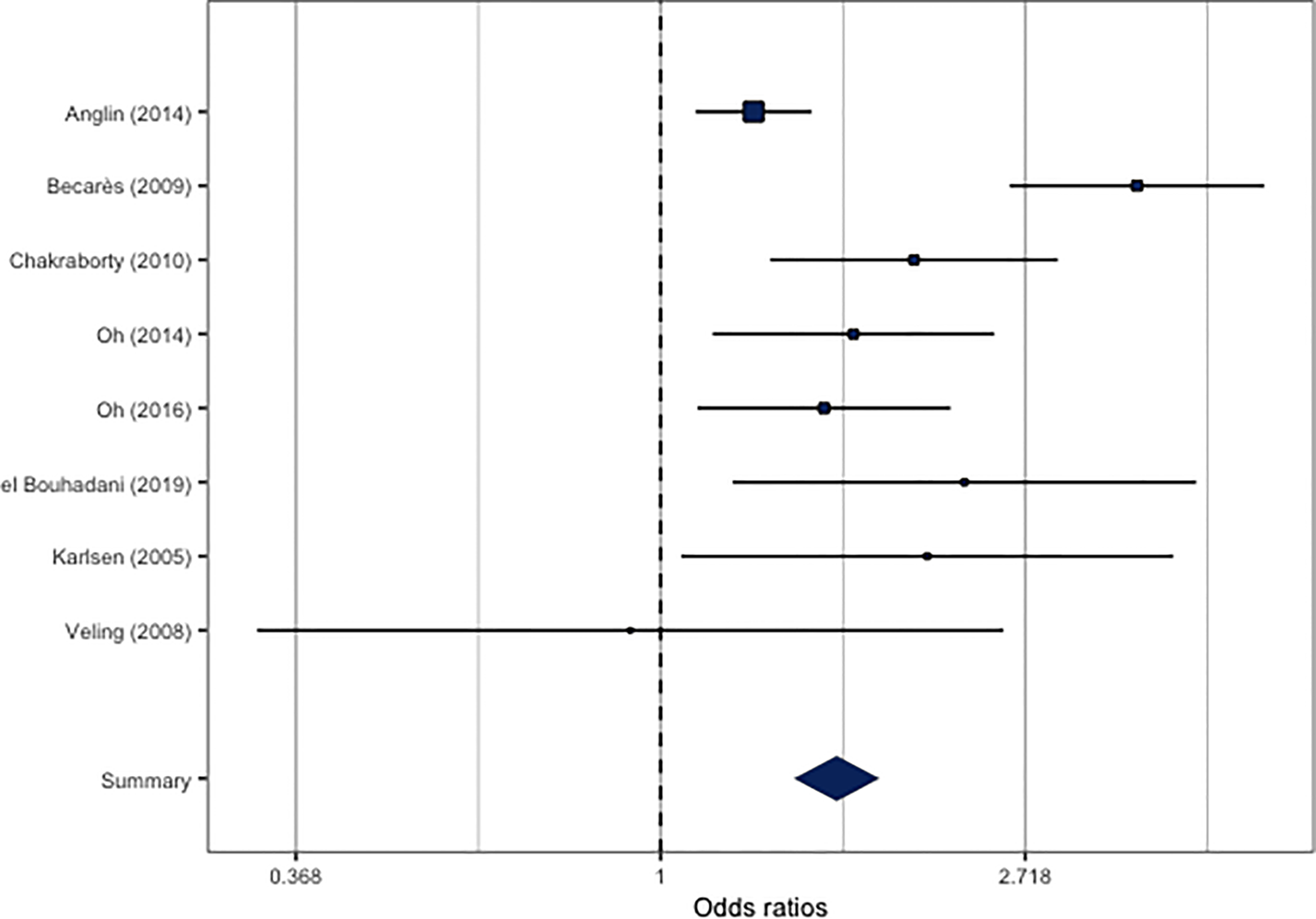
Nine studies were included in the meta-analysis (Anglin et al., Reference Anglin, Lighty, Greenspoon and Ellman2014; Becares et al., Reference Becares, Nazroo and Stafford2009; Chakraborty et al., Reference Chakraborty, McKenzie, Hajat and Stansfeld2010; el Bouhaddani et al., Reference el Bouhaddani, van Domburgh, Schaefer, Doreleijers and Veling2019; Karlsen et al., Reference Karlsen, Nazroo, McKenzie, Bhui and Weich2005; Oh et al., Reference Oh, Yang, Anglin and DeVylder2014, Reference Oh, Cogburn, Anglin, Lukens and DeVylder2016; Veling et al., Reference Veling, Selten, Susser, Laan, Mackenbach and Hoek2007; Reference Veling, Hoek and Mackenbach2008). A significant positive correlation was found between PED and PS [OR 1.82, 95% confidence interval (CI) 1.41–2.36](Fig. 2). The result remained significant after adjustment for socio-demographic factors (n = 5; OR 1.77, 95% CI 1.26–2.49). When considering PEs, the pooled OR was slightly higher (n = 7; OR 1.94, 95% CI 1.42–2.67). The heterogeneity between studies was high (I 2 = 79.08; Q(7) = 33.47; p < 0.0001).
Pooled meta-analytic odds ratios for the association between PED and PS.

The type of discriminatory event influenced the association in two studies, with a more pronounced effect for racial harassment (Karlsen et al., Reference Karlsen, Nazroo, McKenzie, Bhui and Weich2005), police discrimination, and denied loan or promotion (Oh, Cogburn, Anglin, Lukens, & DeVylder, Reference Oh, Cogburn, Anglin, Lukens and DeVylder2016).
PED and types of PS/PEs
Three studies (el Bouhaddani et al., Reference el Bouhaddani, van Domburgh, Schaefer, Doreleijers and Veling2019; Oh et al., Reference Oh, Yang, Anglin and DeVylder2014, Reference Oh, Cogburn, Anglin, Lukens and DeVylder2016) reported a significant association between PED and both hallucinatory symptoms and delusional symptoms. The association was found to be strongest for delusional symptoms (OR 2.53, 95% CI 1.60–4.01) than for hallucinatory symptoms (OR 1.65, 95% CI 1.29–2.14). The heterogeneity between studies was low for delusional symptoms (I 2 = 0; Q(2) = 0.66; p = 0.72) and hallucinatory symptoms (I 2 = 0; Q(2) = 1.08; p = 0.58).
Ethnicity
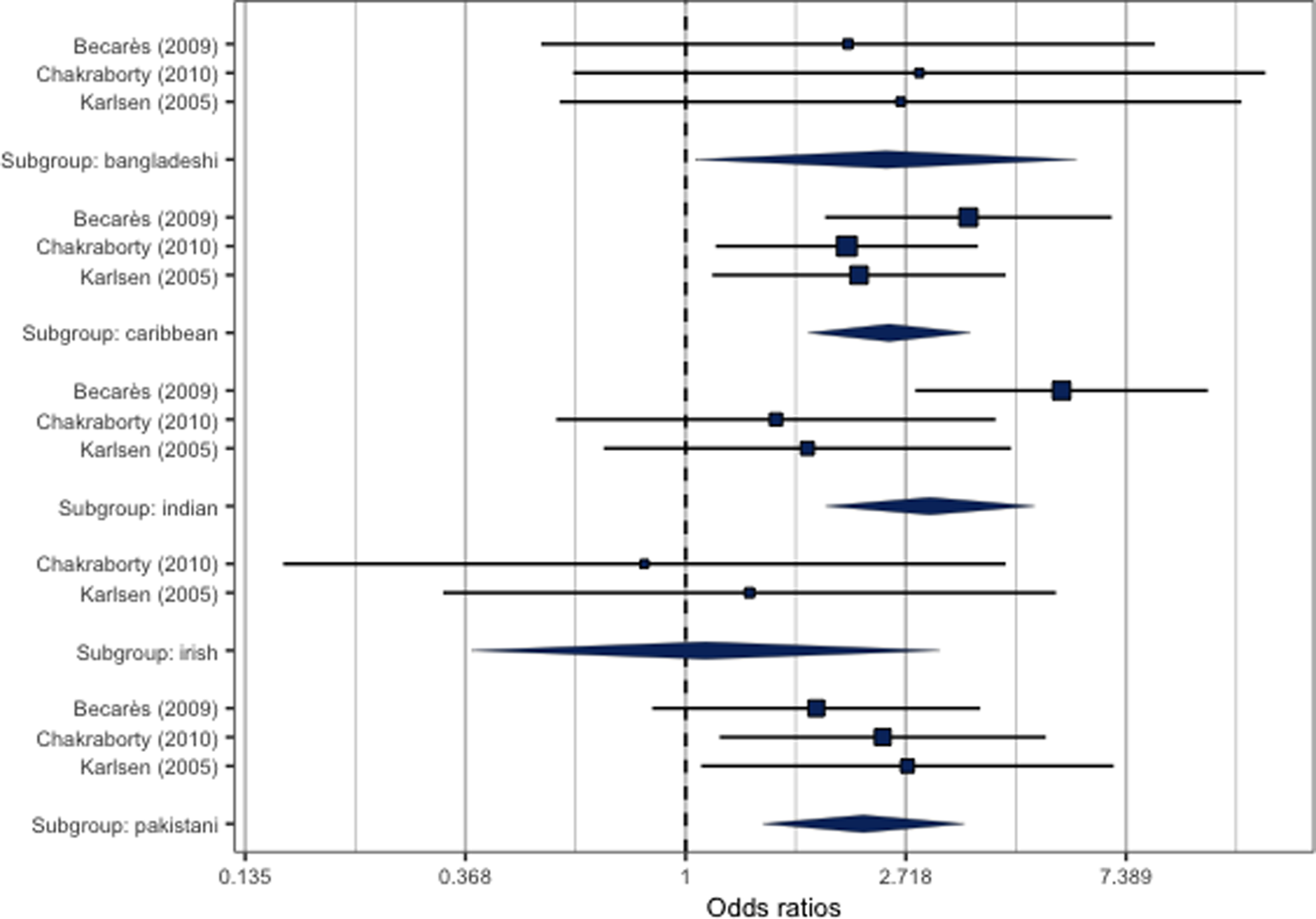
Three studies provided results in OR based on ethnicity for the association between PED and PS/PEs (Anglin, Lui, Espinosa, Tikhonov, & Ellman, Reference Anglin, Lui, Espinosa, Tikhonov and Ellman2009; Chakraborty et al., Reference Chakraborty, McKenzie, Hajat and Stansfeld2010; Karlsen et al., Reference Karlsen, Nazroo, McKenzie, Bhui and Weich2005) covering 5 ethnic groups living in the UK (e.g. Bangladeshi, Black Caribbean, Indian, Irish and Pakistani). The association between PED and PS/PEs was found to be significant for all ethnic groups, except Irish (see Fig. 3). Between subgroups, analysis showed no significant variation between ethnic groups (Q = 2.22; df(Q) = 4; p = 0.695). The heterogeneity between studies was low (I 2 = 0; Q(13) = 12.09; p = 0.52).
Forest plot of pooled odds ratios for different ethnic sub-groups.

Putative mediators and moderators
Eight articles assessed the role of socio-environmental or psychological factors with respect to the association between PED and PS/PEs (Anglin, Greenspoon, Lighty, & Ellman, Reference Anglin, Greenspoon, Lighty and Ellman2016, Reference Anglin, Lui, Espinosa, Tikhonov and Ellman2018; Becares et al., Reference Becares, Nazroo and Stafford2009; Chakraborty et al., Reference Chakraborty, McKenzie, Hajat and Stansfeld2010; el Bouhaddani et al., Reference el Bouhaddani, van Domburgh, Schaefer, Doreleijers and Veling2019; Kong, Reference Kong2016; van de Beek, van der Krieke, Schoevers, & Veling, Reference van de Beek, van der Krieke, Schoevers and Veling2017; Veling, Hoek, & Mackenbach, Reference Veling, Hoek and Mackenbach2008). Five moderators were evaluated: ethnic identity (n = 3), ethnic density (n = 2), social support (n = 2), and collective self-esteem (n = 1); one mediator was examined: sensitivity to race-based rejection (n = 1). Anglin et al. (Reference Anglin, Lui, Espinosa, Tikhonov and Ellman2018) found that the development of a strong ethnic identity significantly buffered the association between PED and PS (b = −0.45, s.e. = 0.20, p < 0.05), whereas Veling et al. (Reference Veling, Hoek and Mackenbach2008) and el Bouhaddani et al. (Reference el Bouhaddani, van Domburgh, Schaefer, Doreleijers and Veling2019) found no buffering effect. Living in an environment of high ethnic density was not shown to have a significant moderating effect on the association between PED and PS in two studies (Becares et al., Reference Becares, Nazroo and Stafford2009; Veling et al., Reference Veling, Hoek and Mackenbach2008). Two studies that evaluated the effect of social support on the association showed contrasting results; van de Beek et al. (Reference van de Beek, van der Krieke, Schoevers and Veling2017) found a significant moderating effect (R 2 change 0.021, p = 0.013) while Chakraborty et al. (Reference Chakraborty, McKenzie, Hajat and Stansfeld2010) did not. Kong (Reference Kong2016) found a significant moderating effect of collective self-esteem to buffer the association (β = −0.26; p < 0.001; 95% CI −0.38 to −0.14). Anglin et al. (Reference Anglin, Greenspoon, Lighty and Ellman2016) did not find evidence that sensitivity to race-based rejection was a moderator but did find evidence that it partially (though only slightly) mediated the effect of PED on PS (bias-corrected CI 0.0119–0.0466).
Publication bias
Visual inspection of the funnel plot of the standard error by the log OR showed symmetry. Egger's regression was not significant (r = 1.82; p = 0.23), and the fail-safe N was n =180. This does not suggest the presence of publication bias regarding the association between PED and PS/PEs in ethnic minority groups (Fig. 4).
Funnel plot assessing publication bias for the association between PED and PS.

Discussion
Summary of results
Our systematic review and meta-analysis aimed to assess the association between PED and PS/PEs. First, we found a significant association between PED and both PS and PEs, which may partly explain the greater risk for PS and PEs previously observed in people from ethnic minorities. This effect was found to be significant for both delusional and hallucinatory symptoms, with the strongest association for delusional symptoms. Second, we found that the association was similar across ethnic groups and did not depend on the ethnic origin of individuals. Finally, only weak evidence supported the moderating effect of ethnic identity, social support, and collective self-esteem to buffer the association between PED and PS/PEs. One study reported the indirect and partial mediating effect of sensitivity to race-based rejection. The results on secondary outcomes must be interpreted with caution as they were based on a small number of studies.
Strength and limitations
We performed the first meta-analysis on the association between PED and PS/PEs in ethnic minority groups. Our results are consistent with the literature and rely on a systematic quantitative synthesis of data extracted from good quality articles. Our review and meta-analysis add important evidence to the literature on PS/PEs, discrimination, and the experience of ethnic minorities in high-income countries.
However, our review and meta-analysis have several potential limitations. First, a small number of studies was included in this meta-analysis, and these studies were conducted in a limited number of countries, mainly high-income countries. Our results notably prevent us from making any conclusion regarding the association between PED and PS/PEs in low- or middle-income countries. The number of included studies was particularly low for our secondary results so that these results must be interpreted with caution. For example, while we found no strong evidence for ethnic density as a moderator, we arrived at this conclusion using data from only three available studies. Another example is that the subgroup analyses were mainly drawn from three UK studies including only five specific ethnic minorities. Thus, more research is needed to examine PED and PS/PEs among racial and ethnic minorities across various contexts. Second, the heterogeneity among the included studies was high in terms of definition and assessment of outcomes and predictors. The assessment of PS/PEs was conducted using different scales and most often by self-questionnaires, which are known to have a potentially significant number of false positives (Lee et al., Reference Lee, Chan, Chang, Lee, Hui and Chen2016). However, all included studies used validated measures to assess PS/PEs; the WHO CIDI specifically has been used widely across multiple countries (McGrath et al., Reference McGrath, Saha, Al-Hamzawi, Alonso, Bromet, Bruffaerts and Kessler2015). Third, the assessment of discrimination by several self-questionnaires may also be subject to social desirability bias. The phenomena of discrimination-discrepancy may, for example, result in an underestimation of individual discrimination and an overestimation of discrimination against the group (Taylor, Wright, Moghaddam, & Lalonde, Reference Taylor, Wright, Moghaddam and Lalonde1990). Finally, the validity of the concept of ethnicity should be discussed in the included studies. In a large number of studies, ethnicity was assessed through the place of birth of the individual or his/her/their parents and did not measure one's sense of belonging or connectedness to a given culture.
Interpretation of results
Our results are consistent with the previous literature on the association between discrimination and PS (Pearce et al., Reference Pearce, Rafiq, Simpson and Varese2019). Janssen et al. (Reference Janssen, Hanssen, Bak, Bijl, de Graaf, Vollebergh and van Os2003) performed the first longitudinal study that showed a significant association between perceived discrimination and the occurrence of delusional ideation. Recently, Fonseca de Freitas et al. (Reference de Freitas, Fernandes-Jesus, Ferreira, Coimbra, Teixeira, de Moura and Fontaine2018) performed a large meta-analysis on psychological correlates of PED in Europe and found a significant association between PED and symptoms of psychosis (r = 0.21 95% CI 0.08–0.33, p = 0.002), based on four European studies. In comparison, our meta-analysis examined a broader range of studies performed in both Europe and the USA, ensuring the greater generalizability of our results. However, most of the studies included in our review were case-control studies. This methodological design is known to suffer from threats to validity and has been associated with recall bias. In particular, cross-sectional design decreases the ability to make a causal inference and only allows us to ascertain correlation, without defining the direction of the effect. Notably, people with PS/PEs may be more prone to report recent discrimination events due to their attributional style (Becares et al., Reference Becares, Nazroo and Stafford2009; Chakraborty et al., Reference Chakraborty, McKenzie, Hajat and Stansfeld2010; Karlsen et al., Reference Karlsen, Nazroo, McKenzie, Bhui and Weich2005; Veling et al., Reference Veling, Hoek and Mackenbach2008). However, this should mainly be evident for delusion, and less so far for hallucinations.
Our results raise the question of the putative mechanisms involved in the association between PED and PS/PEs. As previously proposed by Pascoe and Richman (Reference Pascoe and Richman2009), discrimination may increase the risk for PS/PEs through three pathways: (1) an indirect social determinant of health; (2) a direct non-specific effect as a chronic social stressor; and (3) a direct specific effect by impairment of social cognition. First, discrimination may result in a limitation of access to healthcare, life-promoting resources, and education (Carter & Forsyth, Reference Carter and Forsyth2010; Gee, Spencer, Chen, & Takeuchi, Reference Gee, Spencer, Chen and Takeuchi2007; Liu, Meeuwesen, van Wesel, & Ingleby, Reference Liu, Meeuwesen, van Wesel and Ingleby2015). This may result in increased exposure to other specific risk factors during the early stages of development (prenatal and first month of life) such as infections, nutritional and immuno-related risk factors, but also later in life such as childhood adversity, social adversity in adulthood, and behavioral risk factors, such as cannabis use (McKnight et al., Reference McKnight, Shumway, Masson, Pouget, Jordan, Des Jarlais and Perlman2017). Secondly, as a social stressor, PED may directly cause significant emotional stress, and chronic exposure to stressors could lead to alterations of the hypothalamic-pituitary-adrenal axis (Akdeniz, Tost, & Meyer-Lindenberg, Reference Akdeniz, Tost and Meyer-Lindenberg2014; Berger & Sarnyai, Reference Berger and Sarnyai2015; Kudielka, Schommer, Hellhammer, & Kirschbaum, Reference Kudielka, Schommer, Hellhammer and Kirschbaum2004), resulting in increased cortisol and dopamine secretion in stressful situations (Pruessner, Champagne, Meaney, & Dagher, Reference Pruessner, Champagne, Meaney and Dagher2004). PED could also lead to functional and structural changes in the central nervous system (Clark, Miller, & Hegde, Reference Clark, Miller and Hegde2018). Finally, PED may have specific direct effects by promoting the development of impairment in social cognition in exposed individuals. Discrimination has been shown to promote the adoption of a paranoid external attributional style (Janssen et al., Reference Janssen, Hanssen, Bak, Bijl, de Graaf, Vollebergh and van Os2003), which could eventually predispose the individual to PS/PEs (Bentall, Kinderman, & Kaney, Reference Bentall, Kinderman and Kaney1994; Kinderman & Bentall, Reference Kinderman and Bentall1996; Sharpley, Hutchinson, Murray, & McKenzie, Reference Sharpley, Hutchinson, Murray and McKenzie2001) by promoting the development of ‘high aberrant salience’ (Kapur, Reference Kapur2003). Discriminatory treatment could also foster a sense of social failure and more particularly low self-esteem (Crocker & Major, Reference Crocker and Major1989; Saleem et al., Reference Saleem, Stowkowy, Cadenhead, Cannon, Cornblatt, McGlashan and Addington2014) and thus lead to a low self-concept clarity (Campbell, Reference Campbell1990), which is in part due to internalized stigma (Mathur, Bhola, Khanam, & Thirthalli, Reference Mathur, Bhola, Khanam and Thirthalli2014). These specific disturbances in social cognition may lead to the development of PS/PEs (Moller & Husby, Reference Moller and Husby2000). Moreover, we found that the association between PED and PS/PEs was strongest for delusional symptoms than for hallucinatory symptoms. According to the cognitive model of psychosis developed by Garety, Kuipers, Fowler, Freeman, and Bebbington (Reference Garety, Kuipers, Fowler, Freeman and Bebbington2001), exposure to PED may promote the development of negative cognitive schemas, especially a paranoid attributional style. This may explain why delusional symptoms would be more strongly associated with PED and is consistent with a study showing that social deprivation predicts paranoia but not hallucinations (Wickham, Taylor, Shevlin, & Bentall, Reference Wickham, Taylor, Shevlin and Bentall2014).
When measuring the effect of PED on the occurrence of PS/PEs, we found no significant differences in the association across the different ethnic groups. At the same time, meta-analyses have found significant differences in the level of risk for PS/PEs across several ethnic minority groups (Leaune et al., Reference Leaune, Dealberto, Luck, Grot, Zeroug-Vial, Poulet and Brunelin2019; Tortelli et al., Reference Tortelli, Nakamura, Suprani, Schürhoff, Van der Waerden, Szöke and Pignon2018). As reported in the studies of Janssen et al. (Reference Janssen, Hanssen, Bak, Bijl, de Graaf, Vollebergh and van Os2003) and Oh et al. (Reference Oh, Yang, Anglin and DeVylder2014), this result may be attributable in part to a ‘dose-response’ effect in the association between discrimination and PS/PEs. In the Netherlands, for example, Veling et al. (Reference Veling, Selten, Susser, Laan, Mackenbach and Hoek2007) found that the ethnic groups that experience the most discrimination showed the highest risk for PS. It is important to note that ethnic groups are not equally exposed to discrimination in terms of frequency and intensity, and so it is conceivable that minorities that experience the most discrimination have the highest risk for PS/PEs (e.g. African Caribbean and African Americans) (Bourque, van der Ven, & Malla, Reference Bourque, van der Ven and Malla2011; Cantor-Graae & Selten, Reference Cantor-Graae and Selten2005). Further research is needed to better explore this phenomenon as only three studies analyzed the role of ethnicity in our meta-analysis.
Furthermore, we found weak evidence that the association between PED and PS/PEs was moderated and mediated by socio-environmental and psychological factors. Notably, Anglin et al. (Reference Anglin, Lui, Espinosa, Tikhonov and Ellman2018) found that having a strong ethnic identity may diminish the association between PED and PS/PEs. Ethnic identity may play a crucial role in facilitating the processes of affiliation and social identification among individuals (el Bouhaddani et al., Reference el Bouhaddani, van Domburgh, Schaefer, Doreleijers and Veling2019), thereby enhancing adaptation to acculturative stress, and limiting the development of a paranoid attribution style (Ruggiero & Taylor, Reference Ruggiero and Taylor1995). Having a strong ethnic identity would also promote access to a meaningful and efficient social network for better access to healthcare and education. Finally, according to the socio-developmental model developed by Morgan et al. (Reference Morgan, Charalambides, Hutchinson and Murray2010), people exposed to discriminatory experiences may develop an emotional state of hypervigilance and hypersensitivity in reaction to the threat, increasing perceived social stress during a new event (Anglin et al., Reference Anglin, Greenspoon, Lighty and Ellman2016; Carter, Reference Carter2007). The mediating role of sensitivity to race-based rejection reported by Anglin et al. (Reference Anglin, Greenspoon, Lighty and Ellman2016) is consistent with this hypothesis, as sensitivity to race-based rejection is defined as the extent to which individuals perceive and anticipate threats of rejection due to their race. Discriminatory experiences are prevalent and frequent among Black Americans (English et al., Reference English, Lambert, Tynes, Bowleg, Zea and Howard2020; Lee et al., Reference Lee, Perez, Boykin and Mendoza-Denton2019), and these experiences are associated with increased sensitivity to rejection, potentially resulting in excessive mistrust and altered perception of reality (Anglin et al., Reference Anglin, Greenspoon, Lighty and Ellman2016; Sue, Capodilupo, & Holder, Reference Sue, Capodilupo and Holder2008). In terms of the buffering effect of ethnic density (Bosqui, Hoy, & Shannon, Reference Bosqui, Hoy and Shannon2014), we found no significant effect of high ethnic density as a buffer of the association between PED and PS/PEs (Becares et al., Reference Becares, Nazroo and Stafford2009; Veling et al., Reference Veling, Hoek and Mackenbach2008), though this may be due to a lack of power. Living in a high ethnic density area, in theory, should buffer the impact of ethnic discrimination, and individuals residing in these areas should have greater access to ethnicity-based social support and could have a stronger sense of ethnic identity. However, we also found conflicting results regarding the moderating effect of social support, with one Dutch study (van de Beek et al., Reference van de Beek, van der Krieke, Schoevers and Veling2017) reporting a buffering effect while a study performed in the UK (Chakraborty et al., Reference Chakraborty, McKenzie, Hajat and Stansfeld2010) did not. It has been hypothesized that social support would provide a sense of gratification and a sense of affiliation, while also granting access to instrumental support (Chakraborty et al., Reference Chakraborty, McKenzie, Hajat and Stansfeld2010). Kong (Reference Kong2016) for example showed that collective self-esteem buffers the detrimental effects of PED. This result suggests that the sense of social affiliation and belonging may help mitigate the deleterious impact of PED. Interestingly, el Bouhaddani et al. (Reference el Bouhaddani, van Domburgh, Schaefer, Doreleijers and Veling2019) reported that two acculturation styles (e.g. marginalization or assimilation) were associated with an increased risk of reporting PEs in adolescents from ethnic minorities. This is also consistent with previous studies that showed adaptive acculturation is associated with greater quality of life, global and psychological health (Berry, Reference Berry and Berman1990; Berry & Sabatier, Reference Berry and Sabatier2010; Weisman de Mamani et al., Reference Weisman de Mamani, Weintraub, Maura, Martinez de Andino, Brown and Gurak2017), and resilience (Berry, Reference Berry2005). At the same time, it has been shown that individuals experiencing greater discrimination tend to reject both the dominant culture and their own cultural heritage (Schwartz, Unger, Zamboanga, & Szapocznik, Reference Schwartz, Unger, Zamboanga and Szapocznik2010). We can thus hypothesize that PED may promote the adoption of an acculturation style unfavorable to mental health, such as marginalization and assimilation. Moreover, marginalization and assimilation may both hamper the feelings of affiliation and belongingness and thus limit the buffering effects on the association between PED and PS/PEs of moderating factors such as ethnic identity or collective self-esteem.
The risk for misdiagnosis or overestimation of clinical psychosis diagnoses in ethnic minorities has been widely documented (Reeves et al., Reference Reeves, Hudson, Fletcher, Sauer, Stewart and Howard2003; Zandi et al., Reference Zandi, Havenaar, Limburg-Okken, van Es, Sidali, Kadri and Kahn2008, Reference Zandi, Havenaar, Smits, Limburg-Okken, van Es, Cahn and van den Brink2010, Reference Zandi, Havenaar, Laan, Kahn and van den Brink2011). According to our results, some psychological reactions to discrimination may partly explain this misdiagnosis risk. Indeed, according to the ‘rejection-identification’ model, the paranoid attribution style may correspond to an operational adaptation strategy against discrimination (Bentall et al., Reference Bentall, Kinderman and Kaney1994; Branscombe, Schmitt, & Harvey, Reference Branscombe, Schmitt and Harvey1999). This suggests that discrimination may increase the occurrence of PEs which may be wrongly interpreted as clinical psychosis by clinicians and may be at the origin of an overestimation of psychosis in ethnic minorities (Oh et al., Reference Oh, Yang, Anglin and DeVylder2014). Indeed, some have argued that psychiatry's history of over-diagnosing Black Americans with psychosis has been a form of institutional racism (Metzl, Reference Metzl2009). However, as recently pointed out by Morgan, Knowles, and Hutchinson (Reference Morgan, Knowles and Hutchinson2019), misdiagnosis is not a satisfying hypothesis to explain the high rates of psychotic disorders reported for decades in ethnic minorities and migrants. Moreover, PS/PEs are also indicative of wider later mental health problems, and several included studies reported that discrimination was significantly associated with an increased prevalence of depression, anxiety disorders, substance use disorder, and post-traumatic stress disorder (Anglin et al., Reference Anglin, Greenspoon, Lighty and Ellman2016; Combs et al., Reference Combs, Penn, Cassisi, Michael, Wood, Wanner and Adams2006; van de Beek et al., Reference van de Beek, van der Krieke, Schoevers and Veling2017; Veling et al., Reference Veling, Hoek and Mackenbach2008). According to our results, it remains unclear if PED is a risk factor along the whole psychotic continuum, or only for subclinical psychosis.
Conclusion
Our results support the hypothesis that ethnic discrimination may partly explain the higher prevalence of PS/PEs in ethnic minority groups. These findings underline the importance of considering socio-environmental risk factors, such as discrimination, in the etiopathogenesis of PS. Further studies are needed to better elucidate the association between ethnic discrimination and PS/PEs. Notably, longitudinal studies should explore the association between PED and PS/PEs across ethnic groups and elucidate the role of associated socio-environmental and psychological factors such as ethnic identity, ethnic density, and social support to moderate the association. The mechanisms involved in the association also need to be further explored.