For Moshe Elhanati, genuine historian and friend
Introduction
In the oceans of cinematic time and movement, in the whirl of contingent detail and the expressivity of bodies and gestures captured by the movie camera – does history risk drowning in sensory response, in ritualistic absorption, in pleasure, or in shock? Yet there are also ways in which the cinema as a medium, as an experience, and indeed as an art – beyond quantifiable information and even beyond its historiographical power to analyse, hypothesise, and narrate – can contribute to a special knowledge of history. While history lends itself primarily to expository and narrative forms, one recognises, as well, the intricate relations and connotations, affective resonances and inescapable ambiguities of historical experience and memory, personal or communal. These are perhaps best articulated through the cinema’s figural-poetic devices, which speak to the senses and to the imagination. I weave here the notion of the ‘poetic’ with the cinema’s appeal to the imagination. It is also bound up with the affective resonance of images, and is achieved particularly well through the expressivity of bodies in movement, and through the experience of temporality in the present tense of film viewing. It would encompass all those compositional elements, the forms and figures of articulation, which forge our perception and comprehension of bodies on film. These are not mere ‘decorative’ or sentimental functions effecting shallow empathy; rather, they mould and intensify perception and consciousness by figural operations which are, ultimately, inseparable from thought, and yet afford access to experiences and materials – corporeal, psychic, imaginative, social – that the dispassionate analysis of documents will not always accommodate. Imagination, empathy, knowledge are confluent in the cinema’s poetics of history that I seek to approach in these pages.
Marc Ferro understood very well how, across both documentary and fiction, the cinema can be seen to constitute a ‘museum of objects and gestures, of attitudes and social behaviour’:
If it is true that the not-said and the imaginary have as much historical value as History, then the cinema, and especially the fictional film, open a royal way to psycho-socio-historical zones never reached by the analysis of ‘documents’. (1988, 82–83)
Given the cinema’s inherent hybridity, its foraging of other arts and disciplines – infinitely expanded in its descendent digital media practices – such knowledge, I suggest, is not so much medium-specific as it is irreducible. The powers of the moving image are not equivalent to, nor can they replace disciplinary forms of research and historical thought, but the cinema’s own ways of knowing might be superadded to them. In the process it might expose the permeability of disciplinary and media boundaries, and might render historical consciousness itself more deeply reflexive.Footnote 1
The forms and qualities of such knowledge cannot be defined along the contours of a single national cinema. To think through the medium (and its own history) seriously, one must look to other arts and media, and one must also consider works that have pushed the boundaries and advanced most radically the very consciousness of cinema. At the same time this essay, within its modest scope, will hope to channel discussion to the concerns of Italy’s cinema and its history, and in that way to re-orient us back to the particular and the concrete. I will interlace a handful of cases that speak productively to each other so as to open up those ‘psycho-socio-historical zones’ of which Ferro speaks: zones in which the cinematic imagination delivers us to questions of experience, image, and representation, but which also unfolds as thought – at once more expansive, and sharpened. It is surely not by chance that several of my cases revolve around the Second World War as historical nexus – for it was, across nations, the mega-event that threw into crisis the very idea of representation. This crisis – for which the notion of psychic trauma on a grand scale is justly assigned – encompassed, firstly, history’s representational predicament in confronting an unprecedented scope and complexity of phenomena that have altered indelibly the consciousness of Enlightenment culture. Secondly, it cast doubt upon the possibilities and aspirations of aesthetic expression thereafter, as epitomised in Adorno’s questioning of ‘poetry after Auschwitz’ (1967). Thirdly, it challenged the very status of the image, particularly the technological image, as medium and as historical agent.
In its most deliberate expressive acts of transforming the various past tenses of narrative history into the spectator’s experience in the always-unfolding present, the moving image might be said to interfere with historiography’s retrospective, synthetic, discursive functions, to destabilise legibility and loosen the critical and conceptual grip of writing (history’s ‘proper medium’). Furthermore the cinema, it is often observed, does not like to generalise: it is best disposed towards the particular and the concrete. Its variability on every front and the inherent ‘impurity,’ even promiscuity, of the medium can be seen to invest historical perception with material-sensory concreteness, with vitality and urgency.Footnote 2 This is due, in part, to the cinema’s capacity to register so much: by chance or no, the camera captures momentous events but it also traces, indiscriminately, innumerable contingencies, it overwhelms us with detail. Which among these might emerge, at different times, as meaningful – since history continually evolves and altered perspectives emerge? And it is not only what the camera finds in the world, in all its fullness, its movement and change, intended, unintended, minor or major, but also the cinema’s own acts that must be considered: framing, lighting, movement, editorial gestures and a wealth of effects claim our attention even as, in some of the most compelling cases, they are not directly and exhaustibly legible – but neither are they just tools that can be disposed of when the work of history is ‘done’. Just so, the host of details, movements, relations, expressive junctures cannot be simply said to ‘represent’, to empty themselves out, and then be discarded. They might recede to the background, might be suppressed (even repressed) in certain viewings, and might await subsequent viewings, await a future moment in which different qualities become salient and altered meanings are possible – since the past itself mutates with time. This is not to dispose of evidence or relativise history altogether. But reality, as Carlo Ginzburg emphasises, is not transparent to discourse (1989). On the contrary, one must acknowledge the particularity and, at times, the opacity of concrete traces and even contingent perceptions, and not dissolve them in generalising discourse (Ginzburg Reference Ginzburg1989). Possibly it is the cinema that, above all other media, compels us to recognise the particularity and the power of sensory detail, the persistent weight of historical evidence and, at the same time, the mutability of meanings.
To cite the most celebrated example: historiography approaches those few seconds of Abraham Zapruder’s 8mm colour footage of John F. Kennedy’s assassination to parse its significant inscriptions out of all the surrounding ‘noise’. Yet the opacities and obstructions, every miniature speck of any shape and colour at every plane of the image, and vis-à-vis the camera’s own framing and movements, the reflections of light, the blurring of contours, scratches on the film stock – none of these will ever be put to rest in these few seconds of film. Nothing in this footage is transparent: it is at once overdetermined and insufficient. The ways in which it has been subsequently contemplated not only ‘scientifically’, but also across the arts and humanities, makes it abundantly clear how the yoking and shifting balance of the pertinent and the contingent branches off towards numerous zones which are not only juridical and historiographic but also symbolic, imaginative, and poetic. Suffice it to cite Pier Paolo Pasolini’s reflection on this same piece of film as an emblematic juncture of cinematic temporalities: the effect of presentness in the long take (the more common English term for ‘sequence shot’), and its conversion into narrative past by editing. Pasolini characteristically takes the discussion to its limits, lifting the particular (albeit spectacularly violent) death captured in the shot, and universalising it to suggest a correlation with the editorial cut (1988). Mortality and montage are metaphorically joined as meaning-making operations: ‘It is only thanks to death that our life serves us to express ourselves’ (Pasolini Reference Pasolini1988, 237). The cumulative mythopoetic charge of this tiny piece of film has far surpassed sheer sensationalism or sentimentality: it has become inextricable from the event of Kennedy’s assassination. Its expressive, affective, and symbolic dimensions feed into our grasp of the event, prompting a sense of participation in history. All join to inflect and shape our ways of knowing the historical event which is, of course, never ‘pure’, but rather begins to emerge here like a living entity: complex, irreducible, eloquent but never transparent, evolving with and enfolding time. The cinematic imagination of history is thus bound up with the sensory address of materials, their affective charge and expressive power, their human features, which prompt our attention and response, for they reflect, at the same time, our own countenance. This is the inclusive sense of history – and the consciousness of one’s own historicity – to which the cinema gives rise.
Eisenstein’s lesson
More radically than Ferro’s idea of the cinema as a ‘museum of gestures’, Giorgio Agamben proposes that the medium is basically constituted by gestures more than by images, and that it thereby breaks with the mythical fixity of the image, liberating and dynamising historical memory (1993). The cinema’s affinity with gesture, Agamben maintains, belongs to the sphere of action, which thereby also informs the ethical and political import of the medium (1993, 138–139). But it suffices to look just a bit further back in film history and theory for ways to bypass such image-gesture opposition: for Sergei Eisenstein – a prime filmmaker of history – a strong image is never a hermetic, static structure, particularly when it confronts the historical event. Eisenstein’s work in all its aspects can sustain an idea of the image that encompasses the poetics and the politics of gesture within the very fabric of motion pictures. His understanding of montage quickly exceeded the strict definition of ‘assertive editing’ and was projected as a generative principle across all dimensions of cinematic practice. Eisenstein sees montage as operative at each and every level of the image: in the dynamic interplay of elements within and between all compositional planes of the mise-en-scène, activated by the expressive impact of bodies in space, by framing, by sound-image relations, and so forth (Eisenstein and Leyda, Reference Eisenstein and Leyda1949). His later thought suggests even more emphatically the ways in which a strong ‘montage-image’ bursts its own limits, traversing the senses and breaking, as well, the opposition between the sensual (implying sensory and emotive) and the intellectual.
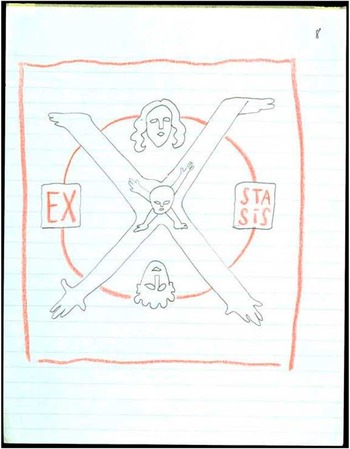
The value that Eisenstein invests in the yoking of the sensual/corporeal, the intellectual, and the political in the montage-image cannot be over-emphasised. I heard the great Eisenstein scholar, Yuri Tsivian, drive this point home in no uncertain terms (and in the Soviet master’s spirit) by stating that Eisensteinian montage is, basically, ‘fucking’.Footnote 3 A bit less obscene but just as vivid, is Tsivian’s account of the montage-image in Ivan the Terrible (1944). One would classify this film, generically, as a historical-costume drama, but Tsivian adopts a horror, or alien-sci-fi scenario to describe Eisenstein’s binding of expressive gesture and image in a dynamic ‘back-and-forth interaction between the eccentric body of the actor and the eccentric body of the film…. The character “explodes” to expand…. The montage-image … “planted” inside the hero’s physical body transcends it in order to be reproduced’ (2002, 51). The montage-image traverses here the differentiation between self and non-self, internal and external, the familiar and the alien. It is transformative and generative; it releases the fecund powers of art and of sex, but also the corporeal powers of horror – since bodies, possessed by the film’s own body, are felt to expand, to burst or split so as to engender new life (Figure 1). This idea already germinates in Eisenstein’s early notion of the montage of attractions, promoting an agitational cinema that would invade the spectator’s consciousness and body at once, and would thus move the masses to action. One might trace a genealogy from this to his later concepts of ‘pathos’ and ‘ecstasy’ as operative powers of the image (Eisenstein Reference Eisenstein1988). In the presence of the ‘ecstatic’ work of art the spectator is transported – beyond the individual, beyond the image, beyond the movie theatre. While his films, his writings and drawings convey the intensely sensory and affective dimensions of spectatorship, Eisenstein understands such cinematic appeal as simultaneously a conduit for recognition and knowledge – insofar as these intellectual and political dimensions, too, involve the subject’s exceeding its own limits, its own self-identity.
Ex-stasis (Sergei Eisenstein, 1931; Courtesy of Russian State Archive of Literature and Art)

I will retain from Eisenstein, as from Tsivian’s inspired gloss, firstly, an idea of the human body as privileged model: the film is itself grasped as a sort of body, a living organism whose corporeal–circulatory, muscular, neurological, sensual, emotional-empathetic, intellectual and political dimensions are synergistically intertwined. Secondly, I will retain Eisenstein’s principle of the montage-image as one that – by definition, though not only by editorial strategies – pushes and traverses its own boundaries. The cinema (at every level: the shot, the sequence, the film as a whole in all its aspects) does not simply ‘illustrate’ or symbolically ‘represent’ but rather – when the productive and generative forces of the montage-image kick in – it will break the limits of narrative synthesis or the rationalising grip of historiographic analysis. Yet this break is itself construed as a channel for thought. A quintessential instance of this in Eisenstein’s own cinema – wherein body, rhythm, movement, framing, editing, scale, and affect are inextricable from historical perception – is the celebrated bridge sequence in October (1929).
It dramatises an episode in the early stages of violent revolutionary conflict in St. Petersburg: the crisis ensuing from the assault of government forces upon demonstrating workers, and the raising of the bridges meant to cut off the proletarian district. Tactile connotations and sensory expressivity – of bodies in the image, and of the image-in-montage – are a conduit to historical understanding. Annette Michelson’s superb account of the sequence elucidates how cinematic strategies of digression, interruption, repetition, and the amplification of detail – that is, the sequence’s poetic devices and its imaginative appeal – become inseparable from its rigorous historical work (1973, 34–35). In the staccato cluster of shots just preceding the actual opening of the bridge we see a girl who has just been killed – we are spared a grand dying act on her part – lying prone at the join of the two halves of the bridgespan. She no longer moves, but rather is moved, a lifeless object rendered expressive by the work of framing, angle, scale, and editing, by slow motion, repetition, and temporal stutter. It is when that grand mechanical movement of the bridge is launched that Eisenstein suddenly focuses on her hair: long and silky, it continues to move and to be moved, as if more organic at this point than the body itself whose lifelessness is underscored by contrast (Figures 2 and 3).
October Sergei Eisenstein, (1929) – frame enlargements (Courtesy of FSUE Mosfilm Cinema Concern)

We, too, caress it with our eyes, its soft texture and subtle movement extended even as tension builds up in the repeated shots of the hair almost-slipping, interrupted by the sharp edit and recurring yet again on the metal and concrete hard edges and geometry of the opening parts of the bridge. The inexorable mechanical movement of the bridge itself clashes with the interruption of the editorial cuts and the scattering of temporal reprises – time folding back even as it advances – all of which effect an enormous sense of tension. We ourselves are on edge as the horse and carriage suspended across the opening section of the bridge then carry these intensities further: the horse’s slipping body, tail, and mane rhyme with the girl’s hair and then, as she slips from view, they extend and amplify the tension, which thus seems to ricochet and to rise with the movement of the bridge, across elements and spaces at every scale, materials of every consistency, and all the bodies caught therein. As Michelson suggests, the fragmentation and imbrication of physical detail join with the effect of temporal recursion to split open the event and project it onto the greater, almost cosmic, horizon of Revolution (1973, 34–35). Corporeal detail and the grand event are joined through the play of scale, encouraging our perception to leap and expand from level to level, lacing the elements through our senses, in the present tense of film viewing, and delivering them in this way to our understanding and our judgment. Revolution is transported here from perception to intellect, but its appeal to our senses and our feelings does not subside in this process, for the corporeal thrill, indeed the pleasure that sustains our fascination is part and parcel of our attention – our way of knowing the event.
What does it mean, then, that a momentous historical event is expressed by the movement of a woman’s hair? The pathos of her hair and body, as of the horse’s carcass and tail, is experiential and performative before it is symbolic: we sense it with our own bodies. The particular corporeal detail transports us in a dazzling set of rhymes, enjambments, displacements, and synecdochal shifts, from the sensory through the figural-poetic relations that join the operations of thought itself. This means that the historical event cannot be altogether abstracted from the implication of even a single human body or part thereof, like a mane of hair. The part and the whole are equated, and our response to this dynamic latches us, as spectators, to the greater history on the level of experience.
Image and imagination; event and contingency
‘In order to know, we must imagine for ourselves’: Georges Didi-Huberman’s dictum suggests that – adjoining the labour of analysing, elucidating and integrating documents – a level of empathy must inform historical knowledge (2008, 3). Textual-historiographic methods are insufficient when it comes to confronting images: one must beware of illusions of transparency and of the restrictive fixity of captions – these must not stifle the work of the image. Indeed an image is only truly an image when it is activated by the imagination, for it is the imagination, Didi-Huberman considers, that can integrate the image as a form of knowledge (2008, 3). In Eisenstein’s footsteps, he associates this dynamic with the productive, generative operations of the montage-image. His most radical example – one that occupies an entire book – is of the four clandestine snapshots taken by an anonymous member of the Sonderkommando by the gas chambers of crematorium V of Auschwitz. Didi-Huberman is very critical of subsequent reproductions and discussions of these images that attempt to ignore or ‘correct’, one way or another, the slanted framing, the blackness on the borders of the photographs, their fuzziness, and so forth – namely those historiographic uses that dispose of what cannot be strictly and unambiguously ‘read’ (2008, 112–120). These clandestine images from the very site of extermination, tilted and blurry in various degrees, are indeed routinely cropped, cleaned and otherwise adjusted, even touched-up so as to be ‘corrected’ in most of their book reproductions and museum displays.Footnote 4 Yet the slanted black areas on their borders, the obscure blurs and opacities where the image does not seem legible, are themselves visual marks that, Didi-Huberman demonstrates, register something important: they convey something of both the circumstances and the experience of their making – enframed, most likely, from within the gas chamber, in great haste, and under mortal danger. In these obscure zones of illegibility the phenomenological specificity of the photographic image is most salient, erupting with the force of an event: the physical presence of the photographer, the terror, the movement, the urgent gesture, the photographic act. Legibility recedes but the viewer’s imagination responds to these opaque, marginal, crude traces that the historian risks sublimating when applying here the same sort of ‘reading’ geared to textual analysis of written documents. Yet the marginal, contingent trace can, in fact, itself be read – Ginzburg would say – as a form of evidence. Legibility and sensory experience, transparency and opacity, representation, reflection, and imagination would seem to interfere with each other, but they are all at work in a given piece of evidence. What we note here with regards to images may be compared with scraps of verbal-descriptive testimony that convey visual and sound impressions, with areas where the writing hesitates, or where (as Freud instructed) mistakes and slips erupt. This is where both memory and imagination emerge as vital components of the evidentiary material, informing different facets of knowledge, and deepening the historical inquiry in the process.
An anecdote in Alessandro Portelli’s introduction to the original edition of L’ordine è già stato eseguito (The Order Has Been Carried Out) offers a quintessential example of the insight that can be afforded by such marginalia in the terrain of oral history (1999). Portelli interviewed hundreds of people with some connection – even if tenuous or generationally removed – to the event of the Nazi-Fascist massacre of 335 men in immediate ten-fold retaliation for a partisan attack on German military police during the occupation of Rome. It took place on 24 March 1944 at the Fosse Ardeatine – the site of an old quarry just south of the city – that was then dynamited to block access to the victims’ corpses. This horrific nadir of the occupation traumatised the city and in fact succeeded in crushing the Roman Resistance. In the introduction to the Italian edition, Portelli tells of a student whom he had invited for an interview on this subject at his office at the university. The student told him:
I arrived a bit in advance, and I hadn’t had lunch. So I thought I would go to the bar downstairs. I looked and saw that all they had were sandwiches with prosciutto and mozzarella. At any other time I would have had these without a problem. But now that I had to do the interview, I couldn’t have them. (1999, 15)Footnote 5
Self-conscious in preparing to talk with Portelli about his family, he could not eat the prosciutto: the Jewish family tradition with its commandment of dietary law seems to have caught up with him on that particular afternoon, on his way to the interview. It was as if a sort of ripple in time now reached and touched this fellow: a personal consciousness of the history of his people subtly inflected what he was there to tell, and the scene of its telling. Oral sources, therefore, says Portelli, are always acts: they make something happen. They are never anonymous but always individual acts and singular gestures. Not Memory and Story/History, then, but the act of remembering and the act of telling, in the here-and-now and the face-to-face of oral history.
Gertrud Koch’s discussion of Claude Lanzmann’s Shoah (1985) similarly emphasises the effects of presentness modulating the film’s historiographic project. What might first appear as mnemonic tricks motivating Lanzmann’s insistence – in both his ways of questioning and in camera and editorial style – on concrete physical detail, seemingly trivial gestures, repetitions, hesitations, and a range of personal idiosyncrasies are, Koch suggests, ‘an attempt to grasp the somatic impact of the traumatic shock, which eludes all communicative expression of memory as a conscious process’ (1991, 131–132).Footnote 6 A historical ethic is synonymous here with a cinematic aesthetic that refuses to subjugate memory to conventional narrative expectations, and that grasps physical experience as preceding – and indeed surviving and inflecting – the symbolising and synthesising functions of language, memory’s primary carrier. Not reference and representation, then, Koch observes, but expression and transformation, worked through the motions of a continued experience in the cinematic present, itself underscored by the use of long takes and the film’s massive duration. Such warping of past and present, none of which can be known separately, throws into sharp relief the cinema’s particular conversation with history.
Likewise the act of telling, in Portelli’s view, is not discarded as a used tool or empty vessel once it has yielded its ‘content’, but is deliberately subsumed as a medium whose properties, circumstances, and contingencies are irreducible. Oral history appeals to the continued experience, the affective connotations and imagination of individuals and of communities: it unfolds and resonates in the present tense, taking up a concrete space and time. Indeed time itself here is not an abstract measuring device or a container for chronicles that have a beginning and an end. Didi-Huberman would say: in such historical expression time is anachronic, for the event is textured, rippled, layered, unfolded and re-folded with time, its gestural and expressive values are not sifted out in the interest of coherence and reference but afford new links as they press upon the present tense of the telling. And in response, the present itself reverberates, gestures, and reaches out as if to touch the past. History is in this way personalised and incorporated, incarnated; it lives through its bodies and voices. For the body too is a medium: it is transformed in and it transforms history.
The exhibiting of the wounds
After the Second World War, one must learn to look again, not to avert one’s gaze but confront what Elaine Scarry calls the inarticulate, ‘fragmentary language of pain’ (1985, 6). What war makes ‘first of all visible…is the extreme literalness with which the nation inscribes itself in the body’ (Scarry Reference Scarry1985, 112), for war takes ‘for its own interior content the interior content of the wounded and open human body’ (81). The massacre of the Fosse Ardeatine – which Portelli shows to be still so deeply inscribed in the popular consciousness of Rome – was also one of the first horrific events in the civilian scene of the war in Europe to receive the cinema’s concentrated attention. Giorni di gloria premiered in the First International Festival for Cinematographic, Dramatic and Musical Arts at the Teatro Quirino of Rome, just a few days following Roberto Rossellini’s Roma città aperta in 1945 – of which it is, in many respects, a documentary counterpart. It was a joint effort, collectively signed by some of the most significant names in the post-war film-historical pantheon – Luchino Visconti, Giuseppe de Santis, and others – while the project’s driving force was, in fact, the great film editor, Mario Serandrei, who meticulously orchestrated the ensemble out of hybrid materials: reportage of diverse sources, visual and verbal testimony, direct address, re-enactment and some overtly staged sequences.
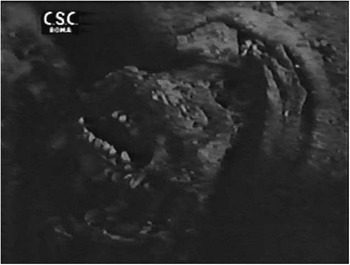
The central part of Giorni di gloria is devoted to the various aspects and aftermath of the Fosse Ardeatine massacre, presenting some of the most gruesome footage seen in Italy at the time. The permeability of cinematic practice in this era, which gave rise to neorealism, is perhaps underscored by the fact that, reportedly, it was only Marcello Pagliero, who played the tortured Resistance leader in Roma città aperta, who could bring himself to go down in person to the Ardeatine quarries with a movie camera and film the unearthing of the decaying corpses. As is almost always the case, the sight of actual corpses in a moving image yields an imaginary surplus, and even more so when the lifeless body is moved about: we noted the sensory impact of bodies, as crushed, dead weight, deliberately staged in Eisenstein’s feature film of the Revolution. The unearthing of actual corpses as documented in Giorni di gloria taps into a deeper and uncanny corporeal empathy in the spectator: confronting this vision of the body’s protective shell ripped open, partly decomposed, then gathered and shifted about, one oscillates between visceral repulsion and visual fascination. Only gradually does one begin to recognise human shapes emerging from the rubble. Boundaries themselves are torn, material elements manifestly interpenetrate in a horrific confusion of organic tissue, membrane, mud, crumbling rock and twisted metal (Figure 4).
Giorni di gloria (Mario Serandrei et al., 1945) – frame enlargement (© VIGGO Srl)

Out of this appalling shapeless mess a crushed corpse is lifted out and arranged on a stretcher. Rapt, one discerns details with reluctance: the body is carefully separated from the rubble, the hands (or what remains of them) are untied, shifted the process of identification begins. A viewer cannot help but respond to the evident fragility of these disintegrating corpses, intuitively juxtaposing them with the integrity of the living, conscious, active individuals on camera (those doing the work), or with that implied, presiding human agency behind the camera or, quite simply, with oneself. There’s nothing like a camera to draw affinities between figure and ground, between inanimate and animate things, the living and the dead; this capacity is parsed differently between the still and the moving image. Contemporary films that documented the encounter with the atrocities of war in the 1940s – Sidney Bernstein’s F3080/Memory of the Camps (1945), Sam Fuller’s 1945 footage of Falkenau, George Stevens’s colour home movies of his advance with the Allied forces from Normandy eastward across Europe – all dwelled, more or less consciously, on just such collapse of boundaries between the mass of human corpses and the surrounding ruin. These films’ recognition of this predicament directly informs their study of the war and its aftermath. Their traumatic material interferes with legibility, effecting a sense of presentness: the horror is firstly sensory and then also symbolic. It is the continued presence of the dead in the ruinous world of the living as, itself, a form of historical recognition: the historicity of the present.
The sense of a life surviving in the image – particularly in film projection, with its potential for repetition, rewinding, or simply re-viewing – appeals to our imagination, therefore, also as a sort of incarnation or resurrection of the dead. This idea is distressingly vivid in Visconti’s contribution to Giorni di gloria where, following his dramatic orchestration of camera positions in the trial of the chiefs of the Fascist police in Rome – some of whom were directly involved in implementing the Ardeatine massacre – is the shocking footage devoted to their executions. One after the other they arrive: Pietro Caruso, Federico Scarpato, Pietro Koch. We see each one escorted to a chair to be shot in the back by a firing squad. Even in Visconti and Serandrei’s carefully calibrated intercutting of viewing positions, in long shots and extreme-long shots, the sight of the sudden blow to the head is appalling. The salient indexicality of this footage is only partly countered by Visconti’s theatricalised formal distancing. Compounding all this is the embedded potentiality of cinematic repeatability, carried by the technological moving image medium itself, and bringing to a whole new level what is already so ghastly in these shots on the level of denotation. It is a paradigmatic instance of what André Bazin took to be the cinema’s ontological obscenity of ‘death every afternoon’, concomitant with mechanical reproducibility: the repeatability of the absolutely unique instance of an individual’s death (2003, 27–31).
Stefano Ciammaroni reads these violent images in the context of the still-fresh horrors of the German occupation, the agonising liberation process, including the acts of retribution: all were highly spectacularised on all sides of the conflict, for they were geared to instil fear, to serve as warning and, in the sequence with which we are concerned, to make justice manifest (2011: 49–125). Even as cinematic form might strive to purge violence, or to turn its visual-ritual powers to didactic and moral purpose, and even as it is always understood that justice has to be seen so as to be done, the effects of such limit-images – shocking, fascinating, contaminating, repugnant, numbing – remain equivocal. How do they enter the work of history? Does the historian adopt the sang-froid of the forensic pathologist, parse the elements, separating the scientific/academic from the human experience, or does one channel spectatorial response – one’s own body, one’s imagination, one’s revulsion – into the always-evolving consciousness of history? Interviewed about his work on Giorni di gloria, his commitment to authentic materials and to shooting on location, Visconti articulated an idea that the artistic imprint might ‘render more evident the value of these difficult events as crude testimony’ (Musumeci Reference Musumeci1998, 44).Footnote 7 That ‘crude testimony’ might not speak for itself, or that what it says must be held together in the historiographic construct is clear enough, but Visconti’s suggestion that the power of testimony also inhabits the artistic gesture seems perplexing at first. The traumatic images of Giorni di gloria can, in fact, be said to challenge repeatedly the lucidity of historical discourse, although Serandrei’s effort to contain them in didactic expository and editorial form is almost too palpable – interlacing as he does the trial and execution scenes with shots of the Fosse Ardeatine corpses, of the widows’ agony and their plea for justice. But one might now read Visconti’s comment also in dialogue with the question of poetry after Auschwitz, and as consistent with Jacques Rancière’s position that only art can begin to approach the horror – Rancière’s prime reference being the horror that was Auschwitz (2014). Rancière maintains that only art can envision absence, can invoke that which defeats comprehension: ‘art alone … makes the inhuman perceptible, felt’ (2014, 49–50). For its appeal to the imagination, art generally and the image (still or moving) in particular tread the gap between perception and thought. Visconti might indeed be saying that the deliberate gesture of art – its poetic, aesthetic mediation – becomes necessary at a time when unspeakable horrors pressed against both the juridical and historiographic tradition, against the devices of narrative and the command of language, and against representational coherence as such. Art can step in when events – violence, death, loss and devastation on a vast scale – throw into doubt one’s ability to comprehend, to know what one sees.
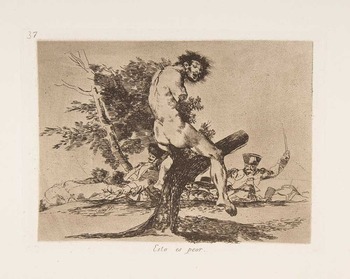
The disasters of war – which Francisco de Goya’s prints series so unflinchingly portray, binding the power of ‘crude testimony’ with the power of imagination so as to convey what is, in a sense, unimaginable and unspeakable – shatter the most basic sense of being contained and protected within one’s skin, being sheltered and housed in one’s body, and in the world (Figure 5). Such ‘limit images’ as those with which we have been concerned, confront the assaulted and broken human body – still living or dead, it is not always certain. How to meet such loss of physical integrity on the one hand, and of subjective agency on the other? And how to join the elements again, how to survive with traumatic loss, how to look at bodies that manifest it so glaringly, how does the world re-form itself again around it in the wake of war? These questions are at the heart of William Wyler’s Best Years of Our Lives (1946). One of Wyler’s emblematic trio of war-veteran protagonists is a non-actor: Harold Russell, who had lost both arms but feels fortunate to have kept his elbows. Having mastered the use of hooks (as his prostheses are called in the film), Russell more or less re-enacts himself, neorealist fashion, in the role of Homer Parish. His body, atrociously marked by war, begs for recognition – this is not the digital age, when an amputee in a fiction film would be perceived quite differently. Here it is not just the movie camera’s recording of such a body and narrativising of its predicament that strike us, but the way in which Wyler’s filmmaking rehearses an elaborate series of lessons in looking and acknowledging – being in the presence of – such loss. Wyler’s didactic technique accommodates itself, as the film unfolds, to this body’s physical, social, psychological and ethical predicament: considerations of shot duration, framing, and shot size respond to the body’s physical reality – for it is just in this way that its historicity is singled out.
Francisco de Goya, The Disasters of War, plate 37: ‘This is worse’ (ca. 1810-1820; © Public Domain; Source: The Metropolitan Museum, New York)

Early in the film Wyler stages a striking scene of looking: as sweeping aerial views of the American Midwest stretch below, the camera seems crammed in the narrow space at the nose of an airplane carrying the returning soldiers-protagonists home. Russell lights matches for their cigarettes: one, two, ‘anyone superstitious?’ – he teases them for the third and, despite their protests, discards the match and lights a fresh one. We hold our breath: we watch, and we watch the two soldiers watching Russell’s precise gestures, the control and special effort required to light a match with these hooks. This little act, so casual in other movies, exudes a remarkable intensity. The tension is palpable, almost as if we were watching some risky acrobatic performance live, on stage. Then, the sense of relief and admiration when the action is accomplished. Having been teased in the process, one becomes acutely aware of one’s act of looking. The condition of the unique body is delivered to perception and to understanding by an act of cinema, which thus articulates Wyler’s reflection on the shift from war to post-war quotidian life.
The body’s challenge to our look is staged in variations several times over in the film. In an early moment of crisis the character says as much:
They keep staring at these hooks, or else they keep staring away from ’em… Take Pop, for instance. He was cleaning his pipe, like I’ve seen him do a million times. All of a sudden he got conscious that he had hands and I didn’t, and he... he stopped cleaning his pipe and he tried to hide his hands, like he was guilty or something.
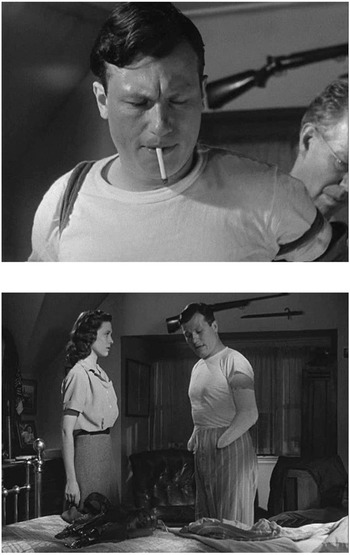
Looking at these hooks, not only the man’s father but we too partake in this guilt as an almost corporeal sensation. The film is intent on teaching us, however, that we stand to learn something from looking straight at this body – confronting head-on the consequences of war. Two separate bedtime scenes reveal, progressively, what is involved in the man’s preparation for the night. Wyler’s nuanced juxtaposition of ways of looking is remarkable, and fully assumed by camera work and editing. (Figures 6 and 7) In the first sequence Homer is helped by his father through the process of undressing and removing the hooks: shots are enframed and edited in such a way that the camera’s ‘discretion’ is all too obvious – just as contemporary mainstream films still manoeuvre around frontal male nudity. My comparison is not gratuitous: it should convey the fastidious reluctance to confront the reality of a body – a reality that the given social environment and its representational conventions had rather plaster over, since the range of responses such a body elicits are hard to predict or control exactly, and since there is no end to war. Its sublimation (by framing, editing, etc.) might seem reassuring, but it deepens a historical rift.
One recognises only in retrospect, from the viewpoint of the second bedtime scene, just how deliberately Wyler implemented such self-imposed censorship the first time so as to re-tune our senses and our consciousness the second time around. In a poignant little prologue to the scene Wyler treats us to a brief retrospective exhibition (as it were), on the bedroom wall, of still photographs of the actor/character prior to his loss. Over his shoulder, we dwell on one image in particular: he holds a football perched in one hand and extends the other before him, towards the camera. In the undressing for bed segment that follows, Homer demonstrates to his fiancée – who, he fears, only stays with him out of pity or guilt – what is involved in living, and in going to bed with a man with such prostheses, and what is his situation when they are removed. The double-entendre is more than just implicit in this confrontation with the disabled body – for the question of sex and potency is as present as it can be in a Hollywood movie. By juxtaposition with the first bedtime scene, in the second one the framing recedes: neither the filmic frame nor editorial cuts now intrude upon our view. The medium-long (so-called American) shot of the man and woman face-to-face, the bed separating them from us, stages the body’s deliberate self-presentation in a quasi-theatrical, even ceremonial fashion. It is indeed a solemn occasion.
Best Years of Our Lives (William Wyler, 1946) – frame enlargement

One is tempted to read as an almost deliberate pun Wyler’s insistence on the integrity of the space and of the shot here vis-à-vis the body’s loss of common integrity. Andrew Sarris’s labelling of this man the ‘one-shot amputee’ seems crude, but it drives home something of the grating appearance of such a body in such a shot in a Hollywood movie (1980, 1088).Footnote 8 In place of cutting it up into little pieces by editing, which is routine practice, the use of duration and framing reinforces corporeal evidence, exhibiting the body with careful deliberation to the spectator, appealing at once to the senses and to reflection – since the comparison with the earlier scene is called for. The consciousness now invested in the look – the camera’s, our own – sustains Wyler’s opening to history in just the ways I wish to convey in this essay.Footnote 9
Such didactic braiding of perception and reflection as we see here is not strictly about ‘guarantees of verisimilitude’ but, as André Bazin understood early on, about crystallising ‘a means of expression’ adequate to ‘a realistic subject’. Bazin’s discussion of form and phenomenology is not divorced from history. The ‘realistic subject’ guiding the object lesson is in this case the wounded body, whose historicity is enunciated not only through the plot and the specificity of place and time, but through Wyler’s moulding of the shot: blocking, framing and, most importantly, duration. Bazin considers that in a long take such as this, ‘the eye proceeds through successive investigations: in scanning the space in which an event takes place, it introduces a kind of additional temporalisation to that event, which itself is occurring in time’ (1997, 1–22). This is no naïve affirmation of one-to-one correlation between cinematic and ‘real’ time, nor about passive realist complicity but, it seems to me, about the possibilities of active spectatorship – conscious of the act of looking, summoned to explore and to apply itself to the world. We are not asked to believe that what we have before us is non-fiction – it is, rather, and by convention, very much a melodramatic-realist fiction film, just as neorealism was at that time – but we must acknowledge that it is nevertheless properly historical, and that it achieves its historicity not just by thematic reference but, more profoundly, by the presence of an actual body delivered to our present tense of film-viewing. The temporality of perception and consciousness becomes salient: facing this non-actor’s body – revealed to us in stages and as if re-configured by the resources of the medium itself – we are asked to reflect more deliberately on our own time and our lived history. In other words, our sense of the present becomes salient by the crafted space-time of filmic duration, and by the temporal-historical weight of the Event in its broadest dimensions: war, violence, trauma, irrecoverable loss. Wyler’s crafting of the bedtime sequences by juxtaposition, and as an experience of process and emergence in the filmic long take, prompts our evolving attention and our dawning recognition. This is the historical and it is the ethical charge of the film.
The almost statuesque eminence of Russell’s body – how it occupies space, masters our attention, orients our thought – acquires an almost monumental charge in Best Years of Our Lives. The film’s appeal to the senses, the sentiments, and the imagination is inseparable from its historical demand. Even as what we witness is not the spectacular orchestration of Eisenstein’s opening bridge – this is no earth-shaking Revolution, but the familiarity of the American Midwest – the meanings and consequences of war manifestly cut through the veneer of Hollywood melodrama, and speak through this one body. There is no need, and no space, for grand death scenes: Russell’s body, with and without the hooks, needs no amplification.
Historical symptoms in the corporeal imagination
Across different films in the post-war Italian tradition, corporeal modes of address and the heightened presentness of the moving image are maneuvered as probing devices that often join with historical reflection. Among the most prominent auteurs one might consider Visconti’s melodramatic artifice, whereby the expressivity of gestures and the use of music – while not themselves ‘realistic’ – nevertheless manifest the sharp inscription of social relations and historical conflict. Or consider in Pier Paolo Pasolini’s work the reciprocity between the striking assertion of bodies – each one distinct, indeed idiosyncratic – and their anthropological, socio-economic, historical symptoms. Even Sergio Leone’s ritual confrontations can be seen to carve grand, slow (yet patently violent) historical movements – the inexorable, tragic thrust of modernity – across faces and landscapes that speak through the Western’s mythological transpositions. In recent cinema one moment stands out, in particular, which startlingly delivers a sense of anachronic temporality through corporeal expression grasped as historical symptom – at once national and personal. Marco Bellocchio’s Vincere (2009) exceeds, in this one sequence, its own over-plotting of psychological and political intricacies, and conveys ways in which such expression, like a contagious disease, overtakes referential and temporal boundaries, possessing the actor’s body and, through it, our own.
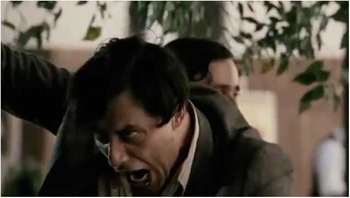
It is conventional practice that the actor – playing the role of the young Mussolini in the film’s first part will also play the grown-up son as the narrative shifts from the former to the latter. The conceit is particularly effective – indeed it bursts upon the scene as an overwhelming recognition – when the son attends the father’s speech and then goes on to mimic him. Archival footage of Mussolini’s rally in Taranto (7 September 1934), exalting the navy to traverse the Mediterranean and open the path to an African empire, is synthetically intercut with the contemporary colour fiction film of the son and his fellow students as if attending to the speech, yet isolated in a sort of non-space manifestly distinct from the crowds glimpsed in the newsreel. And as disparate categories of film, spaces, and temporalities collide, we are startled to witness a scene of possession that ignites the ensemble. The impact of Fascist demagogy does not only electrify the 1930s crowd, but seems to traverse the decades and break the boundaries between actuality and fiction. Not only the character but the actor, Filippo Timi, himself seems inspired, almost swept away by his own hyperbolic mimicry: as if it is not he who controls the act, but rather the object of his imitation, the Duce, who – like a still-potent ghost from the past – invades the contemporary actor’s body that we have before us. The speech’s perpetuation of a Roman-colonial fantasy – the invasion of the spaces, cultures, bodies and minds of others – is, somehow, of a piece with this scene of possession. Yet it is not a sort of parody, or caricature, that holds its object at arm’s length. A sense of physical intoxication, ritual and danger breaks through the artifice of the sequence. Timi maniacally glares, snorts and puffs like a beast, reiterating words and intonations with increasing emphasis (Figure 8).
Vincere (Marco Bellocchio, 2009) – frame enlargement (Courtesy of Wildside)

Certainly Mussolini was himself a spectacular actor, but the mimicry here takes the act to the extreme, as the entire body seems to swell with the speech, then to bend as if deflated, spent. And as Timi is possessed, so are we – through our own fascination with this incredible happening. It is once we admit this fascination that we also recognise how we cannot claim to be above it all, as if we see things for what they really are, as if we would have certainly resisted, as if we would not be seduced by power. Can we hold the shameful past securely lodged under the self-righteous illusion of our control, or our superiority-after-the-fact, thinking that history is in our pocket? This scene tells us that history cannot always be held at arm’s length. In this expressive condensation of a montage-image, this ‘back and forth interaction between the eccentric body of the actor and the eccentric body of the film’ (Tsivian Reference Tsivian2002, 51), the separation of past and present, of self and other – even when that other really is repelling to us – breaks down. The sequence compels us to sense here what we would not dare imagine for ourselves: that Mussolini is in all of us, that the universe of Fascist oppression and violence is not separate from our own, that history cannot be securely filed in the cabinets of our minds, but is alive in our actions, and in our bodies – yet always in need of the vigilant movements of consciousness. We must also concede, finally, that a proper and critical historiography must step in where the draw of the sensory and imaginative tide risks flooding those very channels that it had opened. But the channels must remain open.
This must be why Portelli does not hesitate to mention William Faulkner’s example as model for historical knowledge. He might be thinking about the famous passage from Absalom Absalom (1936), where Faulkner’s shifts of tenses articulate, poetically, the workings of the historical imagination that I have been parsing in this essay. As I understand it, he is not strictly concerned with a recursive conception of history, but with the continuity and confluence of events and experiences that no dispassionate disciplinary study will sever. The passage calls for a fluid perception that, ultimately, implicates each and every one of us as history’s estuaries – or offspring:
Maybe nothing ever happens once and is finished. Maybe happen is never once but like ripples maybe on water after the pebble sinks, the ripples moving on, spreading, the pool attached by a narrow umbilical water-cord to the next pool which the first pool feeds, has fed, did feed, let this second pool contain a different temperature of water, a different molecularity of having seen, felt, remembered, reflect in a different tone the infinite unchanging sky, it doesn’t matter: that pebble’s watery echo whose fall it did not even see moves across its surface too at the original ripple-space, to the old ineradicable rhythm thinking Yes, we are both Father. (Faulkner Reference Faulkner1972, 261–262).
Acknowledgments
This essay develops a keynote lecture for the international conference ‘Cinema and History’ held at Roma III University, November 2015. I am grateful to Sarah Patricia Hill, Giacomo Lichtner, Daniel Morgan and Alan O’Leary for such excellent feedback. Seminars surrounding these issues at the University of Chicago, and ongoing conversation with my students, particularly Matt Hubbell, Sabrina Negri, and Jordan Schonig, have enriched my thinking in these pages.
Notes on contributor
Noa Steimatsky’s scholarship braids questions of film theory and aesthetics with historical research on post-war cinema. She was the recipient of the Fulbright Award, the Getty Research Grant, the NEH Rome Prize, and has recently won the ACLS Fellowship. She was faculty member at Yale and at the University of Chicago, and has been most recently teaching at the University of California, Berkeley. Her 2008 book Italian Locations: Reinhabiting the Past in Postwar Cinema was published by the University of Minnesota Press. Her new book, The Face on Film (2017) was published by Oxford University Press. Her groundbreaking project on the displaced persons camp at Cinecittà inspired a documentary film on the topic, and is being expanded into a book.