Introduction
Worldwide, there is a rise in the incidence of metabolic syndrome and it is affecting all age groups.Reference Armitage, Khan, Taylor, Nathanielsz and Poston 1 , Reference Ebbeling, Pawlak and Ludwig 2 Poor dietary choices and adoption of sedentary lifestyles have been linked to this phenomenon. There is abundant evidence from epidemiological studies linking events in the early perinatal period to adult metabolic diseases – a phenomenon called ‘neonatal metabolic programming’.Reference Gluckman and Hanson 3 – Reference Osmond, Barker, Winter, Fall and Simmonds 5 This concept was first mooted by Hales and BarkerReference Hales and Barker 6 when they proposed the ‘thrifty phenotype’ hypothesis suggesting that the fetus develops adaptations to survive in an unfavourable environment in utero. These adaptations would later help the individual to survive similar situations postpartum. The perinatal period represents a critical window of developmental plasticity. Recent research has shown that it is possible to manipulate the perinatal environment using pharmacological, nutritional or other stressor interventions causing epigenetic changes which may have long-lasting effects that influence metabolic health in later life.Reference Moura and Passos 7 The consumption of a high-calorie diet by mothers during pregnancy and/or the early neonatal period has been shown to predispose the offspring to the development of obesity in adulthood.Reference Rooney and Ozanne 8 , Reference Alfaradhi and Ozanne 9 The lactation period in rats and similar altricial species is an important window for epigenetic modifications, because it is characterized by rapid development and maturation of organ systems.Reference Armitage, Taylor and Poston 10 The gut microbiota plays a critical role in nutrient digestion, absorption and energy distribution.Reference Scarpellini, Campanale and Leone 11 Nutritional pertubations during this period when the gut microbiota is being established alter the microbiota and subsequently affect the metabolism of the individual.Reference Scarpellini, Campanale and Leone 11 Similarly, in altricial neonates consumption of high-calorie diets can also predispose them to metabolic dysfunction later in life.Reference Schmidt, Fritz and Schölch 12 , Reference Khan, Dekou and Douglas 13 The early life experiences do not always end up in negative outcomes. For example, oral administration of leptin to suckling male rats was shown to prevent the development of obesity in later life as a positive outcome on metabolic health.Reference Pico, Oliver and Sanchez 14 The neonatal period is thus a potential target for prophylatic interventions causing epigenetic changes with long-lasting effects.
The global epidemic of obesity has been partly attributed to the consumption of high-fructose diets.Reference Kelishadi, Mansourian and Heidari-Beni 15 Fructose feeding in rats causes increased body mass and reduced glucose tolerance.Reference Angelova and Boyadjiev 16 The magnitude of effect is, however, dependent on the sex and stage of maturity of the rats at which fructose is introduced.Reference Abdulla, Sattar and Johns 17 Younger animals tend to have some protective mechanisms against fructose-induced metabolic syndrome.Reference de Moura, Ribeiro, de Oliveira, Stevanato and de Mello 18 Female rats appear to be protected by their sex hormones from manifesting metabolic dysfunction associated with a high-fructose diet.Reference Busserolles, Mazur, Gueux, Rock and Rayssiguier 19 , Reference Galipeau, Verma and McNeill 20 However, Korićanac et al.Reference Korićanac, Đorđević and Žakula 21 showed that female rats were only less susceptible to blood pressure and insulin action but developed decreased glycaemia, hypertriglyceridaemia and increased visceral adiposity following a high-fructose diet. The male rats on the other hand, were more susceptible to blood pressure effects and insulin sensitivity.Reference Korićanac, Đorđević and Žakula 21 Fructose suppresses leptin synthesis thereby inhibiting satiety and increasing caloric intake and hence weight gain.Reference Teff, Elliott and Tschöp 22
Hibiscus sabdariffa (HS) is a plant of the Malvaceae familyReference Mahadevan, Shivali and Kamboj 23 that is consumed by all age groups for recreational and medicinal purposes. Its calyces are boiled and processed into a local drink known as ‘sobo’ in NigeriaReference Mojiminiyi, Audu and Etuk 24 and ‘agua de Jamaica’ in Mexico.Reference Alarcon-Aguilar, Zamilpa and Perez-Garcia 25 HS calyces are used to treat cardiac ailments and induce diuresis.Reference Da-Costa-Rocha, Bonnlaender and Sievers 26 , Reference Patel 27 In North Africa, the calyces are used as a remedy for cough, sore throats and genital problems.Reference Da-Costa-Rocha, Bonnlaender and Sievers 26 , Reference Patel 27 HS calyces have been shown to have anti-obesity,Reference Alarcon-Aguilar, Zamilpa and Perez-Garcia 25 , Reference Kim, So and Youn 28 , Reference Carvajal-Zarrabal, Hayward-Jones and Orta-Flores 29 anti-hypertensive,Reference Onyenekwe, Ajani, Ameh and Gamaliel 30 , Reference Mojiminiyi, Dikko and Muhammad 31 hypoglycaemic,Reference Peng, Chyau and Chan 32 , Reference Adisakwattana, Ruengsamran, Kampa and Sompong 33 hypocholesterolaemicReference Lin, Lin and Chen 34 , Reference Gurrola-Daiz, Garcia-Lopez and Sanchez Enriquez 35 and anti-cancer effects.Reference Tseng, Hsu and Lo 36 The safety profile of HS extracts has been studied extensively and it is generally safe to drink without adverse effects to health.Reference Onyenekwe, Ajani, Ameh and Gamaliel 30 , Reference Gaya, Mohammad, Suleiman, Maje and Adekunle 37 , Reference Ndu, Nworu, Ehiemere, Ndukwe and Ochiogu 38 The doses of HS used in this present study (50 and 500 mg/kg) were within the range used by other researchers in metabolic studies without recording adverse effects on health.Reference Onyenekwe, Ajani, Ameh and Gamaliel 30 , Reference Gaya, Mohammad, Suleiman, Maje and Adekunle 37 , Reference Ndu, Nworu, Ehiemere, Ndukwe and Ochiogu 38
Despite HS aqueous calyx extracts being shown to have therapeutic effects in metabolic conditions; they have not been used in neonates especially in altricial species like rats where the neonatal period is characterized by developmental plasticity, and is thus a good target for epigenetic modifications for the prevention of those conditions. In this present study, we aimed to investigate whether HS aqueous calyx extracts administered to neonates during lactation would affect the response of the rats to a fructose-rich diet later in life.
Materials and methods
The protocols used in this study were as approved by the Animal Ethics Screening Committee of the University of the Witwatersrand, Johannesburg (Certificate reference number: AESC/2013/46/05).
Plant source, identification and extraction
Dried HS calyces were purchased at the Central market in Sokoto, North Western Nigeria (coordinates: 13°05'N 05°15'E). They were identified by Halilu E. Mshelia of the Department of Pharmacognosy and Ethnopharmacy, Faculty of Pharmaceutical Sciences, Usmanu Danfodiyo University, Sokoto and a voucher specimen was deposited at the herbarium (PCG/UDUS/Malv/0001). The calyces were then exported to the University of the Witwatersrand, Johannesburg in the Republic of South Africa, where the animal studies were carried out.
The dried calyces were ground to a fine powder using a blender (Waring®, USA); 210 g of the calyx powder were extracted in 1400 ml of distilled water (DW) at 95°C for 2 h.Reference Lin, Lin and Chen 34 The extracted solution was then filtered through Whatman 1 filter paper. The filtrate was concentrated using a rotor evaporator (Labocon (Pty) Ltd, Krugersdorp, South Africa) and dried in an oven (Salvis®; Salvis Lab, Schweiz, Switzerland) at 40°C.Reference Dangarembizi, Erlwanger and Chivandi 39 The dry extracts powder was collected and stored in dark, tightly sealed glass vials at 4°C for future use.Reference Lin, Lin and Chen 34 , Reference Ali, Mousa and El-Mougy 40
Study design
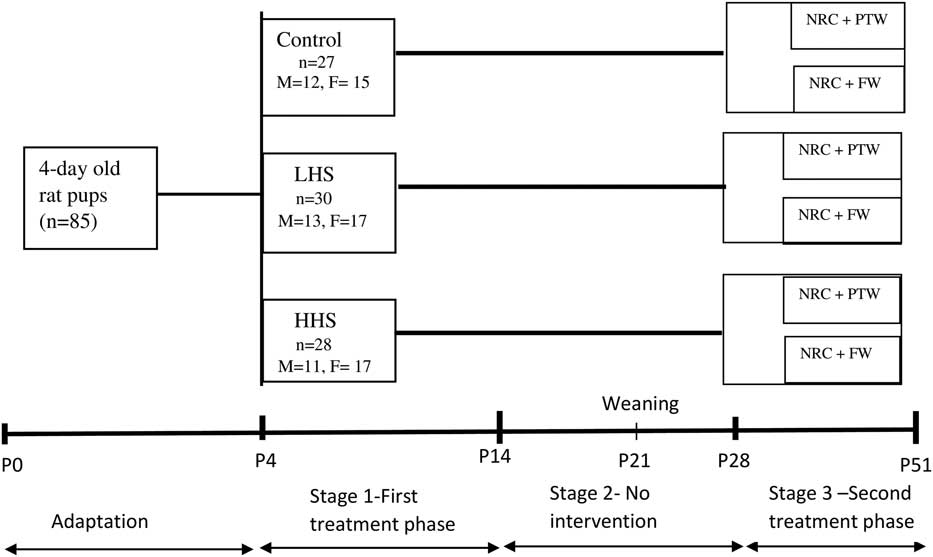
A total of 85 4-day-old Sprague Dawley pups from nine dams that were sourced from the Central Animal Services, University of the Witwatersrand, were used in this study which was conducted in three stages. A schematic diagram of the study is shown in Fig. 1. In the first stage, the pups were randomly assigned to three treatment groups using a split-litter pattern.
Schematic diagram of the study design. NRC, normal rat chow; PTW, plain tap water; FW, fructose water w/v; LHS, low-dose Hibiscus sabdariffa (HS); HHS, high-dose HS; P, postpartum day.

The first group, the control group (n=27, 12males, 15 females) received 10 ml/kg of DW. The second group (n=30, 13 males, 17 females) received 50 mg/kg of aqueous HS calyx extracts, whereas the third group (n=28, 11males, 17 females) received 500 mg/kg of aqueous HS calyx extract. All the treatments in this phase were administered via orogastric gavage for 9 consecutive days till postnatal day (PND) 14, which marked the beginning of the second stage. The interventions in the first stage were stopped on PND 14 to eliminate the effects of exploratory feeding by the pups when their eyes become opened. During the second stage of the study, the pups continued to nurse with their dams till PND 21 when they were weaned. The dams were returned to stock and the pups were then housed individually in perspex cages lined with wood shavings. The ambient temperature was maintained at 26±2°C with adequate ventilation and 12-h light cycle (lights on at 0700–1900 h).
In the third stage of the study, the pups in each of the three treatment groups were further sub-divided into two groups; one that continued on tap water (TW) as their drinking water and another that received fructose solution (20% w/v) only as their drinking fluid throughout the rest of the duration of the study. The groups were as follows:
-
I. DW+TW=10 ml/kg of DW in the first stage and TW in the second and third stages.
-
II. DW+fructose water (FW)=10 ml/kg of DW in the first stage, TW in the second stage and 20% fructose (w/v) in their drinking water in the third stage.
-
III. Low-dose HS (LHS)+TW=50 mg/kg HS aqueous calyx extract in the first stage and TW in the second and third stages.
-
IV. LHS+FW=50 mg/kg HS aqueous calyx extract in the first stage, TW in the second stage and 20% fructose (w/v) in their drinking water in the third stage.
-
V. High-dose HS (HHS)+TW=500 mg/kg of HS aqueous calyx extract in the first stage and TW in the second and third stages.
-
VI. HHS+FW=500 mg/kg of HS aqueous calyx extract in the first stage, TW in the second stage and 20% fructose (w/v) in the third stage.
In the first stage, the pups were weighed daily to ensure uniform dosing and to monitor growth performance, whereas in the second and third stages, the rats were weighed twice weekly.
Oral glucose tolerance test (OGTT)
On PND 49, the rats were subjected to an OGTT as described by Chaturvedi et al.Reference Chaturvedi, George, Milinganyo and Tripathi 41 The rats were fasted overnight and then on the morning of the test, they were placed in perpex restrainers. Fasting blood glucose concentrations were determined before the rats were administered with 2 g/kg of a 50% glucose solution via oral gavage. Serial blood glucose concentrations were then determined at 15, 30, 60 and 120 min post-gavage using a calibrated glucometer.
Terminal procedures
The rats were euthanased 48 h after the OGTT by intra-peritoneal injection of sodium pentobarbitone (150 mg/kg, Euthapent; Kyron laboratories South Africa). Blood was collected by cardiac puncture and then transferred into heparinized tubes. The blood samples were centrifuged at 4000 g at 4°C in a SorvallRT 6000B centrifuge (Du pont, USA) for 15 min following which the plasma was collected and stored at −20°C until the clinical biochemical parameters were assayed.
The liver was removed, weighed and then stored in a freezer (Haier Biomedical, China) at −20°C for future determination of hepatic lipids and glycogen content. The abdominal visceral fat pad was also removed and weighed.
Determination of long bone parameters
The right hind limbs of the carcasses were carefully removed and the femur and tibia were cleaned of all flesh with a scalpel blade and a pair of scissors. The de-fleshed bones were then dried in an oven (Salvis®) at 50°C for 7 days until their dry mass was constant. Thereafter the bone lengths were measured as an indicator of linear growth. The bone mass was measured to calculate bone density.
Determination of surrogate markers of health
The stored plasma samples were used to determine the concentration of alanine transaminase (ALT) and alkaline phosphatase (ALP) as surrogate markers of health using a calibrated colorimetric chemistry analyser (IDEXX Vet Test, the Netherlands). Plasma triglyceride concentrations were determined using a calibrated TG-meter (Accutrend® Plus; Roche, Mannheim, Germany).
Determination of plasma insulin concentration and computation of homoeostatic model of insulin resistance (HOMA-IR)
Plasma insulin concentration was determined using a commercial sandwich enzyme-linked immunosorbent assay kit (DRG® Rat Insulin, High range, USA) and the HOMA IR was computed using the formula provided by Matthews et al.Reference Matthews, Hosker and Rudenski 42
Determination of hepatic metabolic substrates storage
Hepatic storage of lipids was determined by solvent extraction as described by Bligh and Dyer,Reference Bligh and Dyer 43 whereas hepatic glycogen stores were measured indirectly by acid hydrolysis to glucose as described by Passonneau and Lauderdale.Reference Passonneau and Lauderdale 44
Statistical analyses
All data from the study was expressed as mean ± standard deviation. Data were analysed using GraphPad Prism version 5 (Graph-pad Software Inc., San Diego, CA, USA). The level of significance was set at P⩽0.05. Sex-based differences in all the measured parameters across the treatment groups were analysed using a two-way analysis of variance (ANOVA). This was followed by a Bonferroni post-hoc test. The total area under the glucose concentration curve for the OGTT of the respective treatment groups was determined using the trapezoidal method and analysed by a one-way ANOVA.
Results
Growth performance
Body mass changes
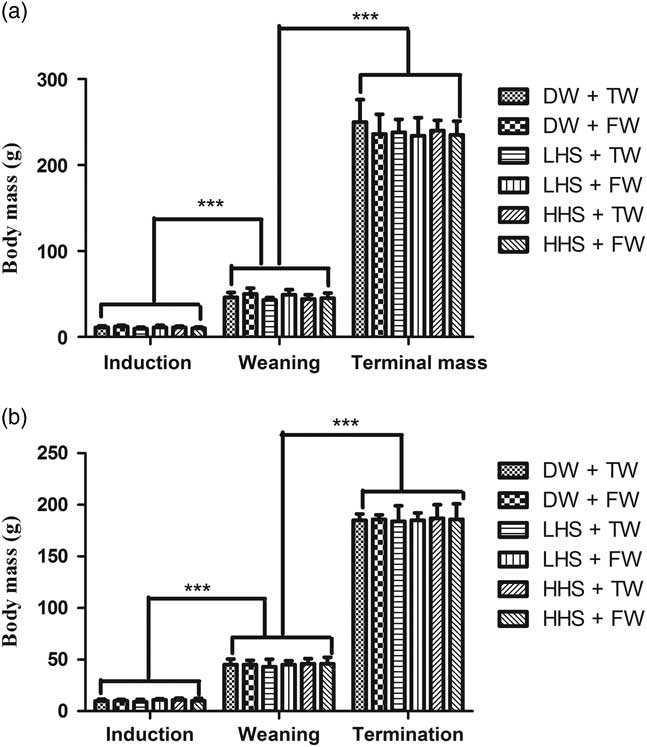
The growth performance of male and female Sprague Dawley rats is presented in Fig. 2a and 2b.
(a) Effects of fructose administration on the growth pattern of male experimental rats across the treatment groups. DW+TW, 10 ml/kg distilled water + tap water in the growing period (n=6); DW+FW, 10 ml/kg distilled water +20% fructose (w/v) in the drinking water (n=6); LHS+TW, 50mg/kg Hibiscus sabdariffa (HS) extract + tap water (n=6); LHS+FW, 50 mg/kg HS extract +20% fructose (w/v) in the drinking water (n=7); HHS+TW, 500 mg/kg HS + tap water (n=6); HHS+FW, 500 mg/kg HS extract +20% fructose (w/v) in the drinking water (n=5). (b) Effects of fructose administration on the growth pattern of female experimental rats across the treatment groups. DW+TW, 10 ml/kg distilled water + tap water in the growing period (n=8); DW+FW, 10 ml/kg distilled water +20% fructose (w/v) in the drinking water (n=7); LHS+TW, 50mg/kg Hibiscus sabdariffa (HS) extract + tap water (n=9); LHS+FW, 50 mg/kg HS extract +20% fructose (w/v) in the drinking water (n=8); HHS+TW, 500 mg/kg HS + tap water (n=8); HHS+FW, 500 mg/kg HS extract +20% fructose (w/v) in the drinking water (n=9). Data expressed as mean±SD. ***P<0.001. DW, distilled water; TW, tap water; FW, fructose water w/v; LHS, low-dose HS; HHS, high-dose HS.
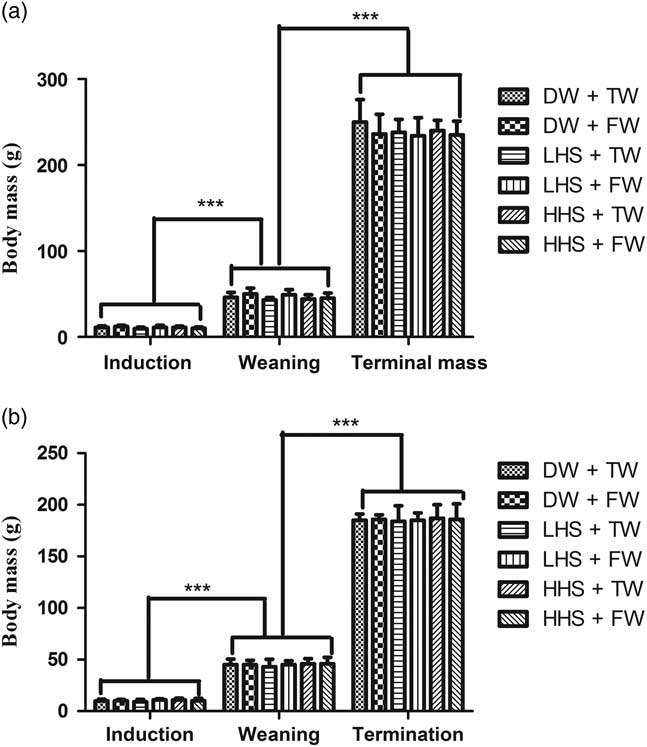
Both the male and female rats in all the treatment groups gained body mass significantly (P<0.001, ANOVA) over the three stages of the study. However, there was no significant difference (P>0.05, ANOVA) in the body masses of the rats in the different treatment groups at each stage (induction, weaning and termination).
Linear growth
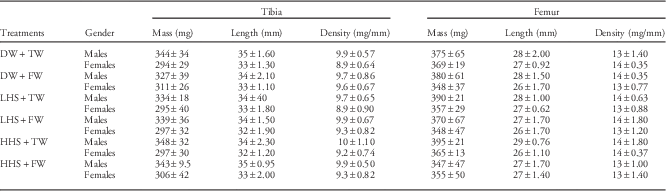
Table 1 shows the effect of fructose administration on the masses, lengths and densities of tibiae and femora of male and female Sprague Dawley rats. The masses, lengths and densities of both the tibiae and femora were similar in the male rats across the treatment groups. Similarly, the masses, lengths and densities of the tibiae and femora were not different in the female rats across the treatment groups. The male rats in all the treatment groups tended to have heavier and longer tibiae than the corresponding females in the groups, though not statistically significant.
Effect of fructose administration on the masses, lengths and densities of tibiae and femora of male and female rats

DW, distilled water; TW, tap water; FW, fructose water w/v; LHS, low-dose Hibiscus sabdariffa (HS); HHS, high-dose HS; DW + TW=10 ml/kg distilled water + tap water; DW+FW=10 ml/kg distilled water +20% fructose (w/v) as the drinking water; LHS+TW=50 mg/kg HS extract + tap water; LHS+FW=50 mg/kg HS extract +20% fructose (w/v) in the drinking water; HHS+TW=500 mg/kg HS + tap water; HHS+FW=500 mg/kg HS extract +20% fructose (w/v) in the drinking water. Data expressed as mean±SD.
There were no statistically significant differences (P>0.05) observed across the treatment groups in both sexes.
Glucose tolerance
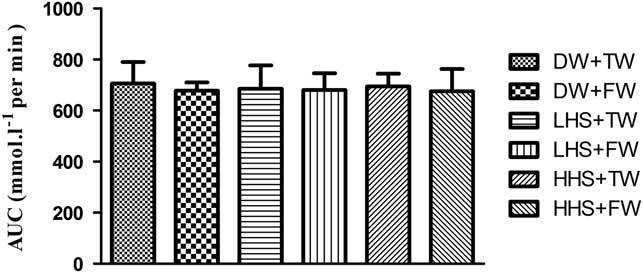
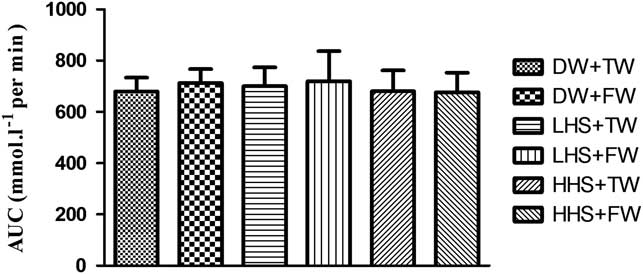
The total area under the curve of the OGTT were not significantly different (P>0.05, ANOVA) across the treatment groups in both male and female rats (Figs 3 and 4).
Effects of fructose administration on the total area under the curve (AUC) of the oral glucose tolerance tests in male rats. There were no statistically significant differences across the treatment groups. DW+TW, 10 ml/kg distilled water + tap water in the growing period (n=6); DW+FW, 10 ml/kg distilled water +20% fructose (w/v) in the drinking water (n=6); LHS+TW, 50mg/kg Hibiscus sabdariffa (HS) extract + tap water (n=6); LHS+FW, 50 mg/kg HS extract +20% fructose (w/v) in the drinking water (n=7); HHS+TW, 500 mg/kg HS + tap water (n=6); HHS+FW, 500 mg/kg HS extract +20% fructose (w/v) in the drinking water (n=5). Data expressed as mean±SD. DW, distilled water; TW, tap water; FW, fructose water w/v; LHS, low-dose HS; HHS, high-dose HS.

Effects of fructose administration on the total area under the curve (AUC) of the oral glucose tolerance tests in female rats. There were no statistically significant differences across the treatment groups. DW+TW, 10 ml/kg distilled water + tap water in the growing period (n=8); DW+FW, 10 ml/kg distilled water +20% fructose (w/v) in the drinking water (n=7); LHS+TW, 50mg/kg Hibiscus sabdariffa (HS) extract + tap water (n=9); LHS+FW, 50 mg/kg HS extract +20% fructose (w/v) in the drinking water (n=8); HHS+TW, 500 mg/kg HS + tap water (n=8); HHS+FW, 500 mg/kg HS extract +20% fructose (w/v) in the drinking water (n=9). Data expressed as mean±SD. DW, distilled water; TW, tap water; FW, fructose water w/v; LHS, low-dose HS; HHS, high-dose HS.

Effects of fructose administration on circulating metabolic substrates, insulin and HOMA-IR
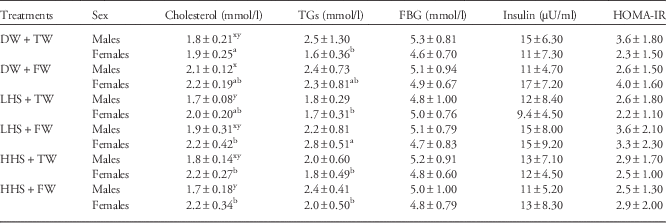
Table 2 shows the effect of fructose administration on circulating metabolic substrates, insulin and HOMA-IR of male and female Sprague Dawley rats. There were no treatment, sex or interaction effects (P>0.05, ANOVA) in the fasting blood glucose concentration of the rats (Table 2). Although there were no sex or interaction effects, there was a treatment effect in the plasma concentration of triglycerides of the female rats, where those that received LHS and fructose later in life had significantly higher plasma triglycerides than their counterparts (P⩽0.05, ANOVA) in the other treatment groups except for those that received fructose only. There were no treatment, sex or interaction effects (P>0.05) in the plasma concentration of insulin, as well as the HOMA-IR across the treatment groups (Table 2). However, there was no interaction (P=0.2547) but there was sex (P=0.001) and treatment (P=0.0197) effects in the plasma concentration of cholesterol. The plasma concentration of cholesterol in the female rats that had DW as neonates and TW later was significantly lower (P<0.05) than that of their counterparts that had HHS with or without fructose, and those that had LHS and TW in later life. The plasma concentration of cholesterol in the male rats that only received fructose in later life was significantly higher (P<0.05, ANOVA) than that of their counterparts that received either LHS only or the HHS with fructose.
Effect of fructose administration on metabolic substrates, insulin and HOMA-IR of male and female Sprague Dawley rats

DW, distilled water; TW, tap water; FW, fructose water w/v; LHS, low-dose Hibiscus sabdariffa (HS); HHS, high-dose HS; TGs, triglycerides; FBG, fasting blood glucose; HOMA-IR, homoeostatic model of insulin resistance; DW+TW, 10 ml/kg distilled water + tap water; DW+FW, 10 ml/kg distilled water +20% fructose (w/v) in the drinking water; LHS+TW=50 mg/kg HS extract + tap water; LHS+FW, 50 mg/kg HS extract +20% fructose (w/v) in the drinking water; HHS+TW, 500 mg/kg HS+ tap water; HHS+FW, 500 mg/kg HS extract +20% fructose (w/v) in the drinking water. Data expressed as mean±SD.
xyMeans with different superscripts in male rats are significantly different (P⩽0.05).
abMeans with different superscripts in female rats are significantly different (P⩽0.05).
Effect of fructose administration on liver metabolic substrates storage and enzymes in male and female Sprague Dawley rats
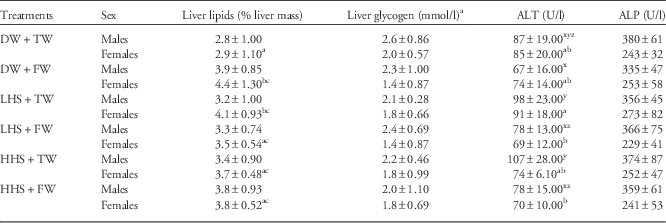
Table 3 shows the liver lipid and glycogen content as well as plasma concentration of ALP and ALT in male and female rats. There was no interaction (P=0.7908) and sex (P=0.0878) effects in the liver lipid content of the rats but there was a treatment effect (P=0.0083) (Table 3). The female rats that were administered with fructose only had significantly higher (P⩽ 0.05, ANOVA) liver lipids than their counterparts that had no treatment at all and those that were administered with LHS neonatally (Table 3). There was no interaction (P=0.6960) and no treatment (P=0.6960) effects, but there was a sex effect (P=0.0015) in the liver glycogen content of the rats across the treatment groups, with the male rats tending to have higher concentrations than the females. The concentration of ALT in the male rats that had high dose of HS only was significantly higher (P⩽0.05, ANOVA) than their male counterparts that received HS and fructose (Table 3). Similarly, there was no interaction (P=0.6828) and treatment (P=0.9004) effects in the plasma concentration of ALP but there was a sex effect (P<0.0001) with males tending to have higher concentrations (Table 3).
Effect of fructose administration on liver metabolic substrates storage and enzymes in male and female Sprague Dawley rats

DW, distilled water; TW, tap water; FW, fructose water w/v; LHS, low-dose Hibiscus sabdariffa (HS); HHS, high-dose HS; ALT, alanine transaminase; ALP, alkaline phosphatase; DW+TW, 10 ml/kg distilled water + tap water; DW+FW, 10 ml/kg distilled water +20% fructose (w/v) in the drinking water; LHS+TW, 50 mg/kg HS extract + tap water; LHS+FW, 50 mg/kg HS extract +20% fructose (w/v) in the drinking water; HHS+TW, 500 mg/kg HS + tap water; HHS+FW, 500 mg/kg HS extract +20% fructose (w/v) in the drinking water. Data expressed as means ±SD.
xyzMeans with different superscripts in male rats are significantly different (P⩽0.05).
abcMeans with different superscripts in female rats are significantly different (P⩽0.05).
a Glycogen expressed as glucose equivalents.
Effect of fructose administration on the absolute (g) and relative (body mass (%BM)) masses of the liver and visceral fat pad in male and female Sprague Dawley rats
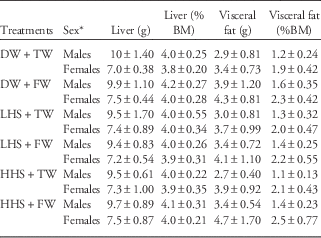
There was no interaction (P=0.8187) or treatment (P=0.8969) effects on the masses of the liver. However, the male rats had significantly heavier (P<0.0001) (absolute) liver (Table 4) when compared with the corresponding females in all the treatment groups. There was no interaction and treatment effects (P>0.05) but there were sex effects in both the absolute (P=0.0005) and relative (P<0.0001) visceral fat pad masses across the treatment groups (Table 4).
Effect of fructose administration on the absolute (g) and relative (%BM) masses of the liver and visceral fat pad in male and female Sprague Dawley rats

DW, distilled water; TW, tap water; FW, fructose water w/v; LHS, low-dose Hibiscus sabdariffa (HS); HHS, high-dose HS; DW+TW, 10 ml/kg distilled water + tap water; DW+FW, 10 ml/kg distilled water +20% fructose (w/v) in the drinking water; LHS+TW, 50 mg/kg HS extract + tap water; LHS+FW, 50 mg/kg HS extract +20% fructose (w/v) in the drinking water; HHS+TW, 500 mg/kg HS + tap water; HHS+FW, 500 mg/kg HS extract +20% fructose (w/v) in the drinking water. Data expressed as mean ± SD.
No significant difference (P>0.05) was observed with the treatments.
*Significant sex effects were observed. Males had heavier absolute liver masses (P<0.0001) compared with the females, but no differences (P>0.05) were noted in the relative liver masses. However, females had significantly heavier absolute (P=0.0005) and relative (P<0.0001) visceral fat masses compared with the males
Discussion
This study aimed to determine whether the administration of an aqueous calyx extract of HS to neonates during a period of developmental plasticity would influence the subsequent response of male and female Sprague Dawley rats to a high-fructose diet in adolescence. In this study, although the female rats generally had greater visceral fat pad mass than the male rats on matched diets, the treatments did not have any impact on visceral obesity. In previous studies, HS aqueous extracts were shown to increase body mass index and delay onset of puberty in female rats when consumed in the post-weaning period,Reference Iyare and Adegoke 45 and in growing pups whose dams were fed with HS extracts during lactation.Reference Iyare and Nwagha 46 Even though the authors also speculated that HS may predispose the female rats to the development of obesity, they did not quantify the visceral fat of the animals. Visceral obesity is a high-risk factor for the development of hypertension and diabetes mellitus.Reference Miettinen 47
The lipid profiles showed some interesting findings. The female rats generally had higher plasma concentration of cholesterol than their male counterparts. It is also notable that the female rats that received HS as neonates with or without fructose in their drinking water in adolescence had higher fasting plasma cholesterol than those that had no treatment. In the male rats, neonatal intake of HS prevented the hypercholesterolaemia induced by dietary fructose.
Dietary fructose increased plasma triglycerides in the female rats. However, the neonatal high dose of HS prevented the fructose-induced hypertriglyceridaemia. The mechanisms by which the neonatal intake of HS which seems to have beneficially programmed the female rats against the negative effects of fructose on triglycerides concentration requires further investigation.
When further considering the lipid profile of the rats, of concern was the hypercholesterolaemia in the female rats which was exacerbated by the neonatal intake of HS. Hypercholesterolaemia is associated with a high risk for cardiovascular diseases.Reference Miettinen 47 Thus, there is a need to weigh the positive effects of the HS on triglycerides v. the negative impact on cholesterol. Previous studies had suggested that female rats were protected by their sex hormones against the development of some effects of high-fructose feeding such as blood pressure changes and insulin action,Reference Busserolles, Mazur, Gueux, Rock and Rayssiguier 19 , Reference Galipeau, Verma and McNeill 20 but more susceptible to biochemical changes including hypertriglyceridaemia and visceral adiposity than their male counterparts.Reference Korićanac, Đorđević and Žakula 21
When a high-fructose diet is consumed, most of the fructose is taken up by the liver where it serves as a substrate for hepatic de novo lipogenesis, causing lipid overload and insulin resistance.Reference Stanhope and Havel 48
In this study, fructose administration increased hepatic lipids in the female rats as it did in the female rats administered a low dose of HS in the neonatal stage. No differences in hepatic lipid content were noted in their male counterparts. The high dose of HS extract administered to the female rats as neonates may have provided some form of protection against the accumulation of lipids in their livers.
A high-fructose diet also causes an increase in hepatic glycogen stores due to increased conversion of fructose to glycogen via gluconeogenesis.Reference Conlee, Lawler and Ross 49 , Reference Koo, Wallig and Chung 50 However, there was no significant difference in hepatic glycogen content across all the treatment groups when compared with the control group. This similarity in hepatic glycogen content could be because the animals were fasted overnight before their termination and sample collection.
Sex differences in rates of growth of rats usually begin to manifest between PND 25–33 in favour of the males where they are usually preceded by an increase in testosterone levels.Reference Eden 51 , Reference Gabriel, Roncancio and Ruiz 52 This could explain why the males in all the experimental groups in this study gained more body mass than their corresponding female counterparts.
Body mass is usually affected by several factors such as hydration status and filling of the gastrointestinal tract,Reference Ellis, Hollands and Allen 53 , Reference MacCracken and Stebbings 54 and may therefore not be the best indicator of growth performance. The lengths of the long bones are better markers of growth as they correlate with growth hormone secretion in a dose-dependent manner.Reference Baum, Biller and Finkelstein 55 , Reference Eshet, Maor and Ari 56 In this study, there was no significant difference in the lengths, masses and densities of the tibiae and femora across the different groups of the same sex. The male rats tended to have longer and heavier tibiae when compared with their corresponding females. This might also be related to the testosterone spurt normally associated with this phase of growth in the rats.
Fructose consumption by rats is known to produce features of metabolic dysfunction including impaired glucose tolerance and insulin resistance.Reference Angelova and Boyadjiev 16 , Reference Tobey, Mondon, Zavaroni and Reaven 57 These parameters can be assessed by undertaking a glucose tolerance test, measurement of insulin and computation of the HOMA-IR. In this study, there was no significant difference in the fasting blood glucose, area under the curve for the glucose tolerance test, insulin concentration and the computed HOMA-IR across the treatment groups. Fructose intake is known to cause reduced glucose tolerance and increased body mass gain,Reference Angelova and Boyadjiev 16 hyperinsulinaemia and insulin resistance in rats.Reference Nakagawa, Hu and Zharikov 58 Fructose feeding for 10 weeks in adolescent rats (150–200 g) had previously been shown to produce hyperinsulinaemia, hypertriglyceridaemia and hyperuricaemia.Reference Michalopoulos 59 The findings in this study are at variance with those of Motoyama,Reference Sawchenko and Mark 60 who reported that fructose in feed (20%, w/v) for 2 weeks in adult rats produced insulin resistance. The age of the rats at termination (51 days) and the mode of fructose administration could have been factors responsible for the variance. Indeed, high-fructose intake has been shown to be more effective in inducing metabolic syndrome in adults than in young rats.Reference de Moura, Ribeiro, de Oliveira, Stevanato and de Mello 18 In addition, fructose in the feed rather than in drinking water is also a more effective means of producing metabolic syndromeReference de Moura, Ribeiro, de Oliveira, Stevanato and de Mello 18 probably because the rats would eat more food (and hence more fructose) than when drinking it in water. Unfortunately, even though the rats drank the fructose solution, we were unable to take record of their actual fluid (fructose) intake in this study.
The liver is a key organ in the body performing numerous homeostatic functions.Reference Sallie, Michael Tredger and Williams 61 These functions include maintaining circulating metabolic substrates, detoxification, hormone inactivation and storage functions among many others.Reference Sallie, Michael Tredger and Williams 61 – Reference Thapa and Walia 64 High-fructose consumption can cause disturbances in carbohydrate and lipid metabolism, consequently affecting the homeostatic functions of the liver.Reference Thulin, Rafter and Stockling 65 Conventional drugs and plant extracts are partly metabolized in the liver and can also alter the functions of the liver. Measurement of surrogate markers of liver function is therefore quite important. The plasma concentration of ALT and ALP were used as surrogate markers of liver health in this study.
ALT is present within the cytosol of the hepatocytes and its elevation in the plasma is specifically indicative of damage to the hepatocytes.Reference Rajesh, Rajkapoor, Kumar and Raju 66 – Reference de Castro, Dos Santos and Silva 68 ALP on the other hand arises from multiple sources and elevation of its levels could be because of liver damage, osteoblastic, placental, intestinal or tumour sources.Reference Pratt and Kaplan 67 , Reference West 69 It is therefore not very specific to the liver. A high-fructose diet has been shown to cause non-alcoholic liver diseases in rats and this has been associated with an increase in the levels of ALT. 70 However, in the current study, fructose did not result in elevated ALT. On the contrary, the rats given HS neonatally had significantly higher ALT concentrations than the other rats. This was an unexpected finding as previous reports using HS (at even higher doses than used in the current study) reported that it was non-toxic.Reference Onyenekwe, Ajani, Ameh and Gamaliel 30 , Reference Gaya, Mohammad, Suleiman, Maje and Adekunle 37 , Reference Ndu, Nworu, Ehiemere, Ndukwe and Ochiogu 38 Histological assessment of the liver for pathology may have provided greater insight. Sex differences were found in the plasma ALP concentrations. As the male rats in all the treatment groups had a significantly higher body mass, the sex differences observed in plasma ALP levels might be from the increased osteoblastic activity associated with growth.
Conclusion
Findings from this study showed some sex differences in response to the fructose and HS treatments. The female rats that were administered with HS aqueous calyx extract as neonates were protected against fructose-induced hypertriglyceridaemia. Unfortunately, the early administration of HS resulted in the development of dyslipidaemia (hypercholesterolaemia) with or without a secondary fructose insult. In males, the early administration of HS prevented the development of fructose-induced hypercholesterolaemia. The rat is an altricial species wherein the developmental processes that occur during PND 1–10 are equivalent to the third trimester of pregnancy.Reference Motoyama, Pinto and Lira 71 The long-term implications of these findings if applicable to humans could have an impact on the fight against obesity and its complications.
Acknowledgements
The authors thank the entire staff of the Central Animal Services Unit, University of the Witwatersrand, Johannesburg for their assistance in the general care and welfare of the animals. The authors also recognize the assistance rendered by Monica Gomez, Adelaide Masemola, Busisani Lembede, Rachael Dangarembizi, Nomagugu Ndlovu and Nyasha Mukonowenzou during the conduct of OGTT, termination and assay of hepatic metabolic substrates.
Financial Support
The authors wish to acknowledge the Faculty of Health Sciences Research Committee of the University of the Witwatersrand, Johannesburg (KGI, Grant Number: 00140185211015121105PHSL014RM) and the National Research Foundation of South Africa (KHE, Grant Number: IFR2011040300007) for funding the research. Usmanu Danfodiyo University, Sokoto, Nigeria is also appreciated for granting a study fellowship to the first author.
Conflicts of Interest
None.
Ethical Standards
The authors assert that all procedures contributing to this work comply with the ethical standards of the relevant national guidelines on the care and use of laboratory animals (Sprague Dawley rats) and have been approved by the institutional committee [Animal Ethics Screening Committee of the University of the Witwatersrand, Johannesburg, Republic of South Africa (AESC/2013/46/05)].