




No CrossRef data available.
Article contents
Outcomes for patients with an aortopulmonary window, and the impact of associated cardiovascular lesions
Published online by Cambridge University Press: 21 January 2005
Abstract
An aortopulmonary window is a communication between the ascending aorta and pulmonary trunk in the presence of two separate arterial valves, and is often complicated by other associated defects. We sought to determine management and related outcomes in patients with this malformation.
We identified those patients presenting between 1969 and 1999 from the databases held in our Departments of Cardiology, Pathology and Cardiovascular Surgery. We obtained data relating to issues concerning demography, clinical findings, imaging, management and outcome.
The median age at presentation for the 42 patients identified, of whom 23 were female, was 62 days, with a range from birth to 6 years. Associated cardiac defects were present in 34 patients, including interruption of the aortic arch in 6 patients. The correct diagnosis was initially missed in 13 patients. Of the patients, six died without surgical repair, and 1 patient was lost-to-follow-up. Repair was performed in 35 patients, subsequent to repair of other defects in 4, in association with repair of other defects in 17, of whom 3 died, and as an isolated procedure in 14 patients, one of the latter being treated by transcatheter closure. Overall, there were 9 deaths, all in patients with complex associated defects, except 1 patient with a missed aortopulmonary window after repair of aortic coarctation. Kaplan-Meier estimates of survival were 81% at 3 months until 11.5 years, and 69% up to 21 years. Only the presence of interrupted aortic arch was independently associated with increased time-related mortality, the hazard ratio being 5.87 (p = 0.009).
The outcome for an isolated lesion is excellent. Mortality occurs mainly before repair, mostly with complex associated lesions, particularly interruption of the aortic arch.
Keywords
Information
- Type
- Original Article
- Information
- Copyright
- © 2004 Cambridge University Press
Aortopulmonary window is a communication between the ascending aorta and the pulmonary trunk in the presence of 2 separate arterial valves,1 and is distinct from the common arterial trunk, which has a single arterial valve.2–4 Such windows can occur in isolation, but more frequently in association with other cardiac defects.2, 5–8 Clinical impact depends on the size of the window, and on the presence of associated cardiac defects. The risk factors and outcomes related to aortopulmonary window are suboptimally defined. Studies addressing outcome have not assessed the impact of associated lesions.5, 6, 9 We sought to review the management and outcomes of a large series of patients with an aortopulmonary window seen in a single institution, and to determine trends and factors impacting on mortality and morbidity.
Materials and methods
All patients known to have an aortopulmonary window were identified from the Cardiology Database at Hospital for Sick Children, Toronto, and data was obtained regarding demographics, associated lesions, presentation, management and follow-up. Diagnoses were verified by review of echocardiograms, cardiac catheterisation data and angiography, operative notes, and autopsy reports. If current follow-up data was not available in the medical record, the responsible or referring cardiologist was contacted, and the information was obtained. The study was approved by the Institutional Research Ethics Board.
Data analysis
Data are described as frequencies, medians with ranges, and means with standard deviations. Where there is missing data, numbers of the available values are given in parentheses. Trends in the occurrence of associated lesions, management, and outcomes were sought by dividing the patients into three groups according to the date of birth, specifically from 1970 through 1979, 1980 through 1989, and 1990 through 1999. Mantel Haentzel chi-square tests and Kruskal-Wallis analysis of variance were used to determine significant trends. Kaplan-Meier estimate of time-related survival from birth was determined, and associated factors were explored in Cox’s proportionate hazard modelling. All analyses were performed using SAS statistical software Version 7 (SAS Institute, Inc., Cary, NC, USA).
Results
Characteristics of patients
We identified a total of 42 patients with a diagnosis of aortopulmonary window. There were 23 females and 19 males, with a median birth weight, derived from data available in 37 patients, of 3.10 kg, with a range from 1.88 to 4.7 kg. All were 35 weeks or more gestation at birth. The median age at presentation was 62 days, with a range from birth to 6.2 years. Clinical features at presentation included tachypnea in 88%, murmur in 78%, failure to thrive in 47%, bounding pulses in 33%, cyanosis in 29%, and shock in 25%, with 13% of patients having no symptoms or signs.
The initial diagnosis was established by echocardiography in 15 (36%) patients, cardiac catheterisation in 9 (21%), a combination of echocardiography and cardiac catheterisation in 16 (38%) patients, and at autopsy in 2 patients (5%), with more recent patients being diagnosed with echocardiography alone. Echocardiograms were performed in a total of 30 patients, including the 7 patients who were studied by M-mode echocardiography only before 1981. From 1981 to 1989, cross-sectional echocardiography correctly diagnosed the window in 6 of 9 patients studied. The diagnosis was missed in 3 patients, with an erroneous diagnosis of patent arterial duct in 1 patient, and a coronary-cameral fistula in another. Echocardiography correctly diagnosed the window in all patients seen from 1990 onwards.
The diagnosis was missed initially for 13 patients, most of them early in the study. Of these, 3 patients had surgery for other anomalies before the diagnosis of aortopulmonary window was made upon further investigation for persistent congestive heart failure.
Anatomy of aortopulmonary window
The size of the defect, judged from data in 32 patients, ranged from 2 to 30 mm, with a median diameter of 10 mm. Small fistulous defects were seen in 2 patients (5%). There were 5 defects that involved the origin of the pulmonary arteries, including one with associated aortic valvar atresia, one with subaortic stenosis, and one with anomalous origin of the right pulmonary artery from the ascending aorta.
Associated cardiac lesions
Associated cardiovascular lesions are described in Table 1. The window occurred in isolation in 8 patients. A further 3 patients had an aortopulmonary window in association with hemodynamically unimportant lesions. These included a persistent left superior caval vein cava connecting to the coronary sinus in 2 patients, one of whom also had a right aortic arch, with the remaining patient having an aberrant right subclavian artery.
Table 1. Spectrum of associated cardiovascular anomalies.

Non-cardiac abnormalities
Non-cardiac anomalies were present in 15 patients (36%), and included musculoskeletal anomalies (arthrogryposis in 2, scoliosis in 2, and 1 patient each with cervical spine fusion, torticollis, congenital dislocation of hip); anomalies of the central nervous system (microcephaly in 2, and 1 patient each with trigonocephaly, Dandy Walker variant, syringomyelia of the cervical cord); renal anomalies (1 patient each with crossed renal ectopia, bilateral hydronephrosis, double ureter); pulmonary anomalies (1 patient each with double right main bronchus, main stem bronchial stenosis, tracheal stenosis), anomalies of the hands and feet (bilateral simian crease in 2 patients, polydactyly/syndactyly in 1); and gastrointestinal anomalies (anal stenosis in 1), with 1 patient having VACTERL association. None of the patients had morphologic features of DiGeorge syndrome. Chromosomal analysis was performed in 4 patients, all of which were normal.
Management and outcomes
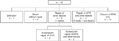
Initial medical management, assessed in 40 patients, included an infusion of prostaglandin in 6 patients (15%), dopamine infusion in 4 (10%), digoxin therapy in 20 (50%), and diuretics in 26 patients (65%). Surgical management and outcomes are shown in Figure 1.

Figure 1. Management and outcomes for 42 patients with an aortopulmonary window. APW: aortopulmonary window.
Deaths before aortopulmonary window repair
A total of 6 patients (14%) died before intervention for aortopulmonary window, including 1 patient who had initial repair of other lesions, and 5 with no procedures. Complex associated lesions producing critical obstruction of the left heart were present in 5 of the 6 patients. Left-sided obstruction was present at multiple levels in 1 patient, specifically pulmonary venous stenosis, mitral valvar stenosis, tunnel-like obstruction in the subaortic region with a ventricular septal defect, and pulmonary valvar stenosis. Other patients each had an interrupted aortic arch between the left common carotid and left subclavian artery, interrupted aortic arch at the isthmus with aortic origin of the right pulmonary artery, aortic atresia with an obstructed origin of the left coronary artery, and aortic coarctation with a patent arterial duct. Superior–inferior ventricular relation with a dilated right ventricle and aneurysmal pulmonary arteries in the setting of multiple non-cardiac anomalies were present in the remaining patient who died.
Interventions
Of the 36 survivors, 35 patients had repair of aortopulmonary window, with loss of follow-up of 1 patient before a reparative intervention. The median age at closure of the window, assessed in 34 patients, was 103 days, with a range from 2 days to 19.3 years, with a median weight assessed in 32 of 6.0 kg, and a range from 2.0 to 20.6 kg. Repair was surgical in 34 patients, and 1 patient had transcatheter closure. The duration of cardiopulmonary bypass time, with data available from 27 patients, ranged from 13 to 181 min, with a median of 55 min. The surgical approach, as judged from data from 33 patients, was by a median sternotomy in 30 patients (90%), and a thoracotomy in 3 patients (10%). The approach to closure, with data available from 30 patients, was transpulmonary in 13 patients (43%), transaortic in 7 (24%), and by direct incision on the anterior aspect of aortopulmonary window in 10 patients (33%). The surgical technique, described in 34 patients, included ligation or division of the aortopulmonary window in 6 (18%), closure with a pulmonary arterial patch in 1 patient, closure with a Dacron patch in 17 (50%), with a Gortex patch in 4 (12%), with an autologous pericardial patch in 4 (12%), with a Teflon patch in 1 (3%), using an aortic flap in 1 (3%), and with a so-called Weslovski patch in the other patient (3%).
Multistage repair of aortopulmonary window and associated lesions
Multistage repair was performed in 4 patients with associated lesions, with an initial palliation or repair of other associated cardiac lesions followed by later repair of aortopulmonary window. This occurred in 3 patients because the aortopulmonary window was initially missed. The initial intervention consisted of banding of the pulmonary trunk in 1 patient, repair of aortic coarctation in 2, and augmentation of the aortic arch in 1 patient. All 4 patients were alive at last follow-up.
Single stage repair of aortopulmonary window and associated lesions
Associated lesions were addressed surgically at the time of repair of the aortopulmonary window in 19 patients. These included closure of an atrial septal defect in 5 patients, ligation of a patent arterial in 5, repair of interrupted aortic arch in 4, closure of ventricular septal defect in 4, pulmonary arterioplasty in 2, and 1 patient each with coarctation repair, resection of a subaortic ridge, relocation of the right pulmonary artery from the aorta to the pulmonary trunk, translocation of an anomalous right coronary artery from the pulmonary trunk to the aorta, debanding, and repair of tetralogy of Fallot with connection of left pulmonary artery originating from the distal end of the arterial duct to the pulmonary trunk. A patient with a large aortopulmonary window and no associated lesions who had a delayed presentation at 6 years of age and pulmonary vascular disease underwent bilateral lung transplantation with concomitant repair of the aortopulmonary window.
Outcomes after repair
There were 2 early deaths. One patient who died intraoperatively had an accidental tear at the site of the aortopulmonary window with uncontrollable bleeding, while the other patient died 2 h after repair from pulmonary hypertension and pulmonary haemorrhage. Both patients had complex associated lesions, which had been addressed concomitant with repair of aortopulmonary window.
Post-operative complications occurred in 22 of 32 (67%) hospital survivors after surgical repair. These included atelectasis in 13 patients, pulmonary hypertensive crises in 5, renal failure in 3, arterial hypertension in 3, cardiac arrest in 2, sepsis in 2, vocal cord paralysis in 2, seizures in 2, and 1 patient each with junctional ectopic tachycardia, heart block requiring temporary pacing, pneumothorax, pneumonia, intraventricular haemorrhage, hemothorax, hepatic dysfunction and necrotising enterocolitis. Intravenous inotropic support was required for more than 3 days in 6 patients, and mechanical ventilation for more than 2 days in 10 patients. At the time of discharge from hospital, 21 patients (66%) were receiving anti-congestive medications.
Status during follow-up
Of the 32 patients who survived until discharge from hospital, 4 patients were subsequently lost-to-follow-up. The remaining 28 survivors were followed to a median of 5.9 years, with a range from 3 months to 17.6 years. There was 1 late death, occurring at reoperation for stenosis of a grafted aortic arch graft in a patient with persistent pulmonary hypertension 10 years after a concomitant repair of interrupted aortic arch and aortopulmonary window. Reinterventions were performed in 8 additional patients. These included repair of aortic recoarctation with concomitant surgical pulmonary arterioplasty in 3 patients, and 1 patient each having transcatheter coil occlusion of a persistent leak after transcatheter device treatment of an isolated aortopulmonary window, surgical resection of progressive subaortic stenosis, surgical revision of the repair, surgical pulmonary arterioplasty for pulmonary arterial stenosis with suture closure of a residual leak across the aortopulmonary window, and balloon pulmonary angioplasty for relief of pulmonary arterial stenosis.
All patients who had repair of isolated aortopulmonary window were well clinically at latest follow-up. Neurodevelopmental abnormalities were noted in 6 patients, all who had an aortopulmonary window in association with complex cardiac lesions, with language delay in 3, motor delay in 1, hydrocephalus in 1, and seizure disorder and cerebral palsy in 1 patient. Pulmonary hypertension, defined as pulmonary arterial pressure more than half of the systemic arterial pressure, was present in 3 patients. All 3 patients had an aortopulmonary window with associated complex cardiac lesions, and had residual defects.
Trends over time
Patients were grouped into cohorts based on the date of birth, with 12 patients having been born from 1970 through 1979, 11 from 1980 through 1989, and 19 in the last period from 1990 through 1999. Trends for these cohorts are noted in Table 2.
Table 2. Trends in characteristics, management and outcomes by consecutive birth cohorts.

Factors associated with survival
There were 9 deaths in total. Kaplan-Meier estimates of overall survival from birth are shown in Figure 2. Survival estimates were 81% at 3 months of age until 11.5 years, when 1 late death occurred, with survival falling to 69% up to 21 years of age. Anatomic and presentation factors were sought that may be associated with time-related survival in Cox’s proportionate hazard modelling. Shock (p = 0.02) and cyanosis (p = 0.01) at the time of presentation, need for prostaglandin prior to repair (p = 0.04), superior–inferior ventricular relationship (p = 0.004), aortic origin of right pulmonary artery (p = 0.04), interrupted aortic arch at the isthmus (p = 0.05), interrupted aortic arch between the left common carotid and left subclavian artery (p = 0.02), and aortic isthmal hypoplasia (p = 0.03) were found to be significant risk factors for mortality in univariate analyses. The presence of any interruption of the aortic arch, with a hazard ratio of 5.87 (95% confidence interval 1.56–22.0; p = 0.009) was identified as an independent risk factor for mortality. No other factor was independently associated with survival. There was no significant improvement in time-related risk of death over the duration of the study.

Figure 2. Kaplan-Meier estimates of time-related survival from birth for 42 patients with an aortopulmonary window. Solid line represents Kaplan-Meier estimates with dashed lines enclosing the 95% confidence interval. Numbers above X-axis represent number of patients at risk.
Discussion
Aortopulmonary window is a rare lesion, with several studies reporting a prevalence amongst patients with congenital cardiac disease of 0.1–0.2%.2, 10, 11
Natural history
An aortopulmonary window presents the physiology of a left-to-right shunt. Small defects with little shunting may not manifest clinically, and may not be detected without careful imaging. Patients with large windows develop symptoms related to excessive flow of blood to the lungs coincident with the normal fall in pulmonary vascular resistance after birth. Windows do not close spontaneously, nor show diminution of size with time and growth. Prevention of pulmonary vascular obstructive disease is the primary indication for closure.7, 12–14 Pulmonary vascular disease develops with the same rapidity as it does in patients with unrestrictive ventricular septal defect.15–17 Pinto et al.16 described Eisenmenger physiology in one-third of patients in whom the diagnosis was made after 15 years of age.
Impact and spectrum of associated lesions
The presence of associated cardiovascular lesions modifies the acuity of clinical presentation as well as the natural history, particularly if there is associated critical obstruction of the left heart. Our series of 42 patients reflects the entire spectrum of presentation and natural history attributable to an aortopulmonary window, including cardiovascular collapse in the newborn, congestive heart failure in the infant, and pulmonary vascular obstructive disease in a late presenting 6-year-old patient.
The incidence of reported associated lesions varies between 47 and 77%.2, 5–8 The most common associated lesion is interruption of the aortic arch at the isthmus, with occasional occurrence of interruption between the left common carotid and left subclavian arteries.18 Other types of left-sided obstruction have also been reported.2, 8, 18–20 Other commonly reported associated lesions include aortic origin of the right pulmonary artery, tetralogy of Fallot, anomalous origin of the right coronary artery from the pulmonary trunk, and a right aortic arch. Ventricular septal defect, bicuspid aortic valve, tetralogy of Fallot with pulmonary atresia, discordant ventriculoarterial connections, double aortic arch, and tricuspid atresia have also been described.
The clinical impact of the associated lesions may dominate the contribution of the aortopulmonary window. All 9 deaths in our series occurred in patients with severe associated lesions, including 4 of the 6 patients with interruption of the aortic arch. The presence of severe associated lesions may also mask the presence of the window. Of the 4 patients in our series with aortic coarctation, 3 had an initial surgical repair of aortic coarctation with the diagnosis of aortopulmonary window made postoperatively, contributing to the death of 1 patient.
Diagnosis
Although in the past diagnosis has been aided by cardiac catheterisation, currently echocardiography with Doppler and color flow mapping is the primary mode of diagnosis.15, 21–26 Echocardiographic demonstration of the window can be difficult as artefactual dropout of vessel wall is commonly seen in the planes that demonstrate an aortopulmonary window.21 Careful assessment is necessary, particularly in the presence of associated lesions.
Repair
Since the first operative closure by ligation of an aortopulmonary window,27 the technique of surgical repair has evolved.6 Currently a transaortic approach is favoured by many operators over a transpulmonary approach, using either single or double patches, influenced by a higher prevalence of reintervention for pulmonary arterial stenosis with the transpulmonary approach.5, 9 A variety of materials and suture techniques have been used for closure by different operators without a clear influence on outcomes.1, 6, 17, 28–34 Windows have been repaired without the use of cardiopulmonary bypass.35 Suitable lesions have also been addressed by transcatheter closure.36–39
Outcomes
Several small studies have addressed the outcomes of surgical intervention. McElhinney et al.5 studied the outcomes for 24 infants <6 months of age. Half of their patients had complex associated lesions. Although there were no deaths or reintervention for the 12 patients with an isolated aortopulmonary window, 4 early and 1 late death occurred in the 12 patients with complex associated lesions. Most of the survivors with complex lesions required reintervention for recurrence of obstruction within the aortic arch. In contrast, Tkebuchava et al.6 reported survival estimates of 90% at 1 year and up to 10 years for 13 patients, 11 of who underwent surgical repair. There was one early and no late death, with 2 patients having reinterventions. The additional surgical repair of major associated lesions in 10 of the 11 patients did not impact on outcomes. Hew et al.9 reported on 38 patients with aortopulmonary window who underwent repair at a median age of 5 weeks. Associated lesions were present in two-thirds of the patients, including interruption of the aortic arch in 7 patients, tetralogy of Fallot in 7, a functionally univentricular heart in 3, coarctation of the aorta in 3, and an anomalous origin of the coronary artery in 1 patient. Survival estimates were 88% at 10 years, with freedom from reintervention of 70% at 10 years. By multivariable analysis, transpulmonary approach to closure of the defect and the presence of complex associated lesions were associated with a greater likelihood of reintervention. In the absence of major associated lesions, surgical mortality was predominantly due to preexisting pulmonary vascular disease. As in our series, reintervention is likely to be related either to associated lesions, such as left heart obstruction or stenosis of the right or left pulmonary arteries, and less likely to a residual window.5, 6, 9 Erez et al.40 reported on 13 patients who underwent repair of aortopulmonary window, 11 of whom had associated cardiac lesions. There was one postoperative death, no reoperations or late deaths, and 2 patients required interventional catheterisation procedures.
Management and outcome trends
Over the years, concurrent to improved cardiovascular surgical techniques, there has been a trend towards single stage repair of associated lesions and aortopulmonary window.5, 12, 28–30 While the long-term survival after repair of aortopulmonary window with or without association lesions appears good, there remains an ongoing risk of death before repair can be undertaken in those patients with associated lesions. In our series, 6 of 42 patients (14%) died before surgical intervention could be undertaken. While there was only one death prior to repair in the most recent decade, the trend did not reach statistical significance. It is not yet known whether fetal recognition of aortopulmonary window and its associated lesions will further reduce this risk.41, 42 We show a trend toward better overall survival, which did not achieve statistical significance.
Conclusion
The outcomes following repair of an aortopulmonary window are excellent when the lesion occurs in isolation and is diagnosed early on in life. Mortality in current times for this lesion stems from the high prevalence of complex associated lesions, particularly critical obstruction within the left heart, and death can occur before repair can be performed. Patients with complex associated lesions are at greatest risk of both early and late death. There is a suggestion, however, that overall survival may be improving concomitant with a trend towards single stage repair for complex lesions. Reintervention is sometimes indicated for stenoses in both the pulmonary arteries and the aorta, as well as related to the specific associated lesion.
References
Jacobs JP, Quintessenza JA, Gaynor JW, Burke RP, Mavroudis C. Congenital Heart Surgery Nomenclature and Database Project: aortopulmonary window. Ann Thorac Surg 2000; 69: S44–S49.Google Scholar
Kutsche LM, Van Mierop LH. Anatomy and pathogenesis of aorticopulmonary septal defect. Am J Cardiol 1987; 59: 443–447.Google Scholar
Kirby ML, Gale TF, Stewart DE. Neural crest cells contribute to normal aorticopulmonary septation. Science 1983; 220: 1059–1061.Google Scholar
Besson III WT, Kirby ML, Van Mierop LH, Teaubeaut II JR. Effects of the size of lesions of the cardiac neural crest at various embryonic ages on incidence and type of cardiac defects. Circulation 1986; 73: 360–364.Google Scholar
McElhinney DB, Reddy VM, Tworetzky W, Silverman NH, Hanley FL. Early and late results after repair of aortopulmonary septal defect and associated anomalies in infants <6 months of age. Am J Cardiol 1998; 81: 195–201.Google Scholar
Tkebuchava T, von Segesser LK, Vogt PR, et al. Congenital aortopulmonary window: diagnosis, surgical technique and long-term results. Eur J Cardiothorac Surg 1997; 11: 293–297.Google Scholar
van Son JA, Puga FJ, Danielson GK, et al. Aortopulmonary window: factors associated with early and late success after surgical treatment. Mayo Clin Proc 1993; 68: 128–133.Google Scholar
Ho YS, Gerlis LM, Anderson C. The morphology of aortopulmonary windows with regard to their classification and morphogenesis. Cardiol Young 1994; 4: 146–155.Google Scholar
Hew CC, Bacha EA, Zurakowski D, del Nido Jr PJ, Jonas RA. Optimal surgical approach for repair of aortopulmonary window. Cardiol Young 2001; 11: 385–390.Google Scholar
Talner CN. Report of the New England Regional Infant Cardiac Program by Donald C. Fyler, MD. Pediatrics 1980; 65 (Suppl): 375–461. Pediatrics 1998; 102: 258–259.Google Scholar
Samanek M, Voriskova M. Congenital heart disease among 815,569 children born between 1980 and 1990 and their 15-year survival: a prospective Bohemia survival study. Pediatr Cardiol 1999; 20: 411–417.Google Scholar
Bertolini A, Dalmonte P, Bava GL, Moretti R, Cervo G, Marasini M. Aortopulmonary septal defects: a review of the literature and report of ten cases. J Cardiovasc Surg (Torino) 1994; 35: 207–213.Google Scholar
Blieden LC, Moller JH. Aorticopulmonary septal defect: an experience with 17 patients. Br Heart J 1974; 36: 630–635.Google Scholar
Tiraboschi R, Salomone G, Crupi G, et al. Aortopulmonary window in the first year of life: report on 11 surgical cases. Ann Thorac Surg 1988; 46: 438–441.Google Scholar
Doty DB, Richardson JV, Falkovsky GE, Gordonova MI, Burakovsky VI. Aortopulmonary septal defect: hemodynamics, angiography, and operation. Ann Thorac Surg 1981; 32: 244–250.Google Scholar
Pinto RJ. Profile of aortopulmonary window in India – a study of 20 cases. Cardiol Young 1994; 4: 142–145.Google Scholar
Prasad TR, Valiathan MS, Shyamakrishnan KG, Venkitachalam CG. Surgical management of aortopulmonary septal defect. Ann Thorac Surg 1989; 47: 877–879.Google Scholar
Braunlin E, Peoples WM, Freedom RM, Fyler DC, Goldblatt A, Edwards JE. Interruption of the aortic arch with aorticopulmonary septal defect: an anatomic review. Pediatr Cardiol 1982; 3: 329–335.Google Scholar
Boonstra PW, Talsma M, Ebels T. Interruption of the aortic arch, distal aortopulmonary window, arterial duct and aortic origin of the right pulmonary artery in a neonate: report of a case successfully repaired in a one-stage operation. Int J Cardiol 1992; 34: 108–110.Google Scholar
Redington AN, Rigby ML, Ho SY, Gunthard J, Anderson RH. Aortic atresia with aortopulmonary window and interruption of the aortic arch. Pediatr Cardiol 1991; 12: 49–51.Google Scholar
Balaji S, Burch M, Sullivan ID. Accuracy of cross-sectional echocardiography in diagnosis of aortopulmonary window. Am J Cardiol 1991; 67: 650–653.Google Scholar
Smallhorn JF, Anderson RH, Macartney FJ. Two dimensional echocardiographic assessment of communications between ascending aorta and pulmonary trunk or individual pulmonary arteries. Br Heart J 1982; 47: 563–572.Google Scholar
Horimi H, Hasegawa T, Shiraishi H, Endo H, Yanagisawa M. Detection of aortopulmonary window with ventricular septal defect by Doppler color flow imaging. Chest 1992; 101: 280–281.Google Scholar
Alva-Espinosa C, Jimenez-Arteaga S, Diaz-Diaz E, et al. Diagnosis of Berry syndrome in an infant by two-dimensional and color Doppler echocardiography. Pediatr Cardiol 1995; 16: 42–44.Google Scholar
Rice MJ, Seward JB, Hagler DJ, Mair DD, Tajik AJ. Visualization of aortopulmonary window by two-dimensional echocardiography. Mayo Clin Proc 1982; 57: 482–487.Google Scholar
Satomi G, Nakamura K, Imai Y, Takao A. Two-dimensional echocardiographic diagnosis of aortopulmonary window. Br Heart J 1980; 43: 351–356.Google Scholar
Di Bella I, Gladstone DJ. Surgical management of aortopulmonary window. Ann Thorac Surg 1998; 65: 768–770.Google Scholar
Hammon Jr JW, Merrill WH, Prager RL, Graham Jr TP, Bender Jr HW. Repair of interrupted aortic arch and associated malformations in infancy: indications for complete or partial repair. Ann Thorac Surg 1986; 42: 17–21.Google Scholar
Hata H, Shiono M, Sezai Y, Sumitomo N, Otsuka M, Harada K. One-stage repair of interrupted aortic arch and aortopulmonary window. Ann Thorac Surg 1998; 65: 829–831.Google Scholar
Kawata H, Kishimoto H, Ueno T, Nakajima T, Inamura N, Nakada T. Repair of aortopulmonary window in an infant with extremely low birth weight. Ann Thorac Surg 1996; 62: 1843–1845.Google Scholar
Kitagawa T, Katoh I, Taki H, et al. New operative method for distal aortopulmonary septal defect. Ann Thorac Surg 1991; 51: 680–682.Google Scholar
Matsuki O, Yagihara T, Yamamoto F, Nishigaki K, Uemura H, Kawashima Y. New surgical technique for total-defect aortopulmonary window. Ann Thorac Surg 1992; 54: 991–992.Google Scholar
Messmer BJ. Pulmonary artery flap for closure of aortopulmonary window. Ann Thorac Surg 1994; 57: 498–501.Google Scholar
Schmid FX, Hake U, Iversen S, Schranz D, Oelert H. Surgical closure of aorto-pulmonary window without cardiopulmonary bypass. Pediatr Cardiol 1989; 10: 166–169.Google Scholar
Stamato T, Benson LN, Smallhorn JF, Freedom RM. Transcatheter closure of an aortopulmonary window with a modified double umbrella occluder system. Cathet Cardiovasc Diagn 1995; 35: 165–167.Google Scholar
Tulloh RM, Rigby ML. Transcatheter umbrella closure of aorto-pulmonary window. Heart 1997; 77: 479–480.Google Scholar
Naik GD, Chandra VS, Shenoy A, et al. Transcatheter closure of aortopulmonary window using Amplatzer device. Catheter Cardiovasc Interv 2003; 59: 402–405.Google Scholar
Atiq M, Rashid N, Kazmi KA, Qureshi SA. Closure of aortopulmonary window with amplatzer duct occluder device. Pediatr Cardiol 2003; 24: 298–299.Google Scholar
Erez E, Dagan O, Georghiou GP, Gelber O, Vidne BA, Birk E. Surgical management of aortopulmonary window and associated lesions. Ann Thorac Surg 2004; 77: 484–487.Google Scholar
Collinet P, Chatelet-Cheront C, Houze de l’Aulnoit D, Rey C. Prenatal diagnosis of an aortopulmonary window by fetal echocardiography. Fetal Diagn Ther 2002; 17: 302–307.Google Scholar
Valsangiacomo ER, Smallhorn JF. Images in cardiovascular medicine. Prenatal diagnosis of aortopulmonary window by fetal echocardiography. Circulation 2002; 105: E192.Google Scholar
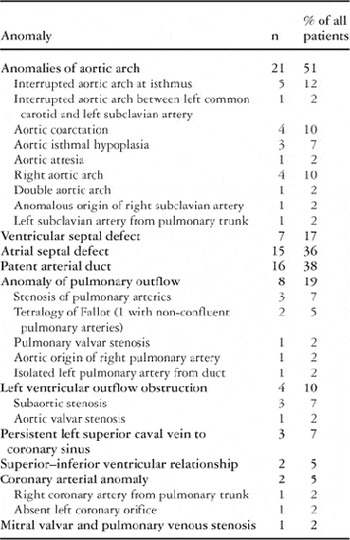
Table 1.
Management and outcomes for 42 patients with an aortopulmonary window. APW: aortopulmonary window.
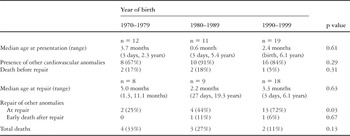
Table 2.

Kaplan-Meier estimates of time-related survival from birth for 42 patients with an aortopulmonary window. Solid line represents Kaplan-Meier estimates with dashed lines enclosing the 95% confidence interval. Numbers above X-axis represent number of patients at risk.
 You have
Access
- 52
- Cited by