


1. Introduction
Throughout the annals of human history, tuberculosis (TB) has emerged as one of the most catastrophic diseases. Known since ancient times and characterised by its high mortality rate and rapid spread, it has found fertile breeding ground especially in urban and industrialised contexts. Earlier, the disease was known as “phthisis” or “consumption”, precisely because, in its advanced stage, the patient appeared “consumed” by the disease (Mackenbach, Reference Mackenbach2020).
Tuberculosis is an infectious disease caused by the Mycobacterium tuberculosis, discovered by Robert Koch in 1882 (Koch, Reference Koch1882). Historically, tuberculosis has affected all civilisations. Traces of Mycobacterium tuberculosis have been found in Egyptian mummies dating back thousands of years (Nerlich et al., Reference Nerlich, Haas, Zink, Szeimies and Hagedorn1997).
The disease primarily affects the lungs, but can also spread to other organs, so that there are two main forms: pulmonary (PTB) and extra-pulmonary. The first, more common and contagious form, is transmitted mainly through droplets in the air containing the bacillus, which may then be inhaled by other individuals (Long and Schwartzman, Reference Long and Schwartzman2014; WHO, 2020). Extra-pulmonary tuberculosis can affect the lymph nodes, kidneys, bones, central nervous system, and other organs. Although it can be severe, it is generally not contagious, except in specific cases such as, for example, laryngeal tuberculosis or certain medical procedures that can spread the bacteria (Long and Schwartzman, Reference Long and Schwartzman2014). Transmission may also occur through urine (in cases of renal tuberculosis) or pus from bone lesions. Consequently, in the absence of concurrent pulmonary involvement, extra-pulmonary forms are generally not considered contagious (Long and Schwartzman, Reference Long and Schwartzman2014).
The development and progression of tuberculosis infection are influenced by several factors related to both the microorganism and the host. Microbial factors include bacterial load and virulence, while host factors encompass individual susceptibility and, notably, the efficiency of cell-mediated immunity (Havlir and Barnes, Reference Havlir and Barnes1999). Individuals with compromised immune systems—such as those with HIV or other immunosuppressive conditions, children, the elderly, and those living in poverty or under chronic stress—are at a higher risk of developing active tuberculosis (Lawn and Zumla, Reference Lawn and Zumla2011; Simper et al., Reference Simper, Perez, Schlesinger and Azad2022). The pathogenesis of tuberculosis results from the interaction between bacterial virulence and host resistance, which are distinct yet interdependent variables (Cooper, Reference Cooper2009).
The impact of tuberculosis is not only determined by biological and immunological factors but is also strongly influenced by environmental and socio-economic conditions. Indeed, transmission is facilitated by frequent and prolonged contact with infected people who release large numbers of tubercle bacilli in enclosed, crowded and poorly ventilated spaces (Nardell, Reference Nardell2016). As a result, the household and the workplace are the most important places for the transmission of pulmonary tuberculosis, especially in cases of overcrowding, poor air circulation and inadequate hygiene.
In particular, the industrial context has played a crucial role in shaping the historical patterns of the disease. Areas with high industrial activity often presented working and living conditions that significantly increased the risk of infection. Exposure to dust and pollutants, overcrowding in factories, and precarious housing for workers created an environment conducive to tuberculosis transmission.
These factors help explain the trends observed in tuberculosis incidence before and at the beginning of the 20th century. Although historical data from earlier periods are fragmented and primarily limited to a few major cities, some general patterns can be identified with some degree of certainty. In many industrialised countries, tuberculosis—particularly in its pulmonary form—became a leading cause of death during phases of rapid urbanisation, fuelled by overcrowding, poor housing conditions, and malnutrition (Mackenbach, Reference Mackenbach2020; Caldwell, Reference Caldwell, Caldwell, Caldwell, Caldwell, McDonald and Schindlmayr2006). Indeed, the disease spread rapidly in expanding cities, where overcrowding and unsanitary living and working conditions facilitated transmission (Dormandy, Reference Dormandy1999). Furthermore, malnutrition, compounded by other risk factors such as environmental pollution and lack of sunlight, favoured the spread of tuberculosis, especially in the poorer social classes in urban areas (Aparicio et al., Reference Aparicio, Capurro and Castillo-Chavez2002; Grundy, Reference Grundy2005; Rieder, Reference Rieder1999; Shimao, Reference Shimao2003; Hanashima and Tomobe, Reference Hanashima and Tomobe2012; Houpt and Cagigal, Reference Houpt and Cagigal2023).
However, the timing and intensity of this association varied significantly across contexts. In Great Britain, for example, mortality from tuberculosis peaked in the mid-18th century, while in Japan the peak occurred only at the beginning of the 20th century (Lönnroth et al., Reference Lönnroth, Jaramillo, Williams, Dye and Raviglione2009). In Argentina, the delayed process of industrialisation, combined with large-scale immigration and precarious urban living conditions, triggered a sustained rise in tuberculosis mortality between the late 19th and early 20th centuries (Suby, Reference Suby2021).
The connection between pulmonary tuberculosis and industrialisation underscores the importance of considering historical socio-economic determinants when analysing the spread of the disease. Overcrowded and poorly ventilated workplaces, combined with precarious housing and malnutrition, created conditions that fueled pulmonary tuberculosis transmission, particularly among the working class.
During the 19th and early 20th centuries, tuberculosis, known as “the white plague”, due to the paleness of its victims, was a leading cause of death in North America and Europe (Daniel, Reference Daniel2006; Dormandy, Reference Dormandy1999). Around a quarter of Europe’s adult population died of tuberculosis in that period (Daniel, Reference Daniel2006). In cities such as London, Paris, The Hague and Stockholm, the respiratory form accounted for between 10 and 25 percent of all deaths; since mortality was higher among young adults, the demographic, economic and social consequences were enormous (Mackenbach, Reference Mackenbach2020). In Europe, mortality reached its peak in the 19th century, during the early Industrial Revolution, when cities expanded rapidly, and sanitary conditions were often poor (McKeown, Reference McKeown1976). Mortality decreased in the first half of the 20th century thanks to improved living and health conditions, public health campaigns, herd immunity—resulting from the natural selection of a genetically more resistant population—and the use of antibiotics such as streptomycin, introduced in 1944 (McKeown, Reference McKeown1976; Livi-Bacci, Reference Livi-Bacci1997). During the years of the World Wars resurgences occurred.
In Italy, where industrialisation occurred later and less extensively than in early-industrialised European countries such as Great Britain, France, and Belgium, the epidemic curve began to rise only in the late nineteenth century (Tognotti, Reference Tognotti2012). In Stockholm and England, the highest mortality rates were reached around 1840–50 (Finland and Prussia) around 1870–1880, while in Bavaria in the following decade (L’Eltore et al., Reference L’Eltore, Ceino, Marchianò, L’Eltore, Ceino and Marchianò1956). In Norway and Japan, however, industrialisation occurred later, as did the increase in the incidence of tuberculosis (Tremblay, Reference Tremblay2007). In France, however, recent studies show that tuberculosis was already widespread in some urban centres long before the onset of industrialisation, which calls into question the conventional wisdom linking the rise in tuberculosis to industrialisation (Dutour et al., Reference Dutour, Colombo and Coqueugniot2021). Nonetheless, these findings are based on analyses conducted in a few large urban centres, with potential biases in historical and osteological data, and without fully accounting for possible confounding variables.
With regard to Italy, no detailed and sufficiently reliable statistical series are available on the causes of death before 1887. Until 1886, these statistics were limited to provincial and district capitals. Only from 1887 were they extended to cover the whole country. However, it is believed that tuberculosis reached its peak mortality within the first twenty years after political Unification, notably between 1870 and 1882. In fact, by the end of the 1880s, Italy had passed the peak of the epidemic cycle. Only for the pulmonary form—closely linked to the industrialisation process—did mortality rates remain stable until the 1920s (Saporiti, Reference Saporiti1984). As in other European countries, poor hygiene and health conditions, overcrowding, malnutrition and hard work in factories were among the factors that contributed most to the spread of the disease, especially in the North of the country.
In the case of Italy, the link between industrialisation and mortality from tuberculosis, highlighted several times by historians, has never been examined in a quantitative perspective. Yet, given the high incidence of the disease, the topic is relevant for historical epidemiology studies. Furthermore, Italy, characterized by its delayed and geographically uneven industrialization, serves as a particularly valuable case study for understanding the specific impact of industrial development on the history of tuberculosis. This study analyses the geographical distribution of mortality from pulmonary tuberculosis in the Italian provinces (NUTS 3) in the period 1891–1951, focusing on the role of industrialisation and urbanisation in the spread of the disease. In this study, we focus our analysis on pulmonary tuberculosis (PTB) mortality due to its epidemiological relevance as the only contagious form of the disease and its strong link to socio-economic conditions. Italy is particularly interesting not only because, as mentioned, it has been little investigated, but also because of the decline in mortality from pulmonary tuberculosis occurred only after 1924, with a significant delay compared to the European countries that were pioneers of modern industrialisation.
Using historical and cause-of-death data, we examine the relationship between levels of provincial industrialisation and mortality from respiratory tuberculosis. The results show how, until 1931, industrialisation rates were strong correlated with the incidence of PTB mortality. Given the territorial differences in industrialisation, the Northern provinces were most affected by the disease.
The work is structured into five sections. Section 2 presents data and sources; Section 3 examines the geographic distribution of tuberculosis; Section 4 analyses the link between mortality from pulmonary tuberculosis and levels of industrialisation and urbanisation; Section 5 presents several robustness checks. Section 6 contains a discussion of the results.
2. Source and data
The data on deaths from tuberculosis in the Italian provinces are taken from the volumes of the “Statistics of the Causes of Death” (MAIC, 1894–1953). From 1881 to 1886, the data concern only the provincial and district capital municipalities; from 1887 onwards, they have covered all Italian municipalities. With the Royal Decree of December 22, 1888, it became mandatory for doctors to report the cause of death for each death (previously this requirement was optional). The data present some limitations, mainly due to the fact that the medical examiner often did not know the true cause of death, so he either declared that the cause was “unknown” or tried to deduce it from questioning the relatives who, for obvious reasons, tended to hide the tuberculous infection (Ravicini, Reference Ravicini1936). Not infrequently the doctors, to please relatives who did not want it known that a family member was tuberculotic, reported the disease not by its real name, but as chronic bronchitis or pneumonia (Bizzozero, Reference Bizzozero1899). For these and other reasons, the toll of tuberculosis in Italy during those years is almost certainly underestimated (Bizzozero, Reference Bizzozero1899).
We then used population and industrial workforce data from population censuses that have taken place every decade since 1861, except 1891 and 1941.Footnote 1 In 1891 the census was not held. Our data, both for population and industrial labour force, were interpolated using the 1881 and 1901 censuses. To obtain data for the intercensal years, we interpolated the shares of the provincial population/labour force with respect to the Italy = 1 index in each census year. From the quotas thus obtained we determined the provincial population/labour force on the basis of the national population calculated annually by Italian National Institute of Statistics (Istat).Footnote 2
It is worth noting that the census data relates to the wider secondary sector and are based on self-response information. This means that they may include individuals who are not formally employed, such as job seekers or informal workers, and that they do not distinguish between employment in large factories and small-scale craft production or domestic activities. Indeed, in the early censuses—up to 1901—unemployment was not systematically recorded, and different types of workers were often grouped under broad occupational titles, without distinguishing between wage earners, self-employed artisans or family labourers (Alberti, Reference Alberti2012). Moreover, the industrial sector defined in the censuses included not only factory workers, but also small producers and artisans, especially in areas where manual labour was widespread. Pescarolo (Reference Pescarolo2019) for example, shows that in 1911, the population census significantly overestimated the number of women employed in the clothing sector compared to official industrial statistics, reflecting thus the inclusion of home-based and informal labour not captured by industrial surveys. These problems have been identified in various studies comparing population and industry census data.Footnote 3 Given these limitations, the census variable used in this study should be interpreted as an approximation rather than a precise measure of industrialisation. Nevertheless, it remains a valid and informative indicator for the purposes of this analysis. To assess its validity, we also perform a robustness check using a more refined industrialisation index, developed by Ciccarelli and Fenoaltea (Reference Ciccarelli and Fenoaltea2013), where available.
The data refers to Italy’s borders of the time, so the number of provinces increases over time, from 69 in the period 1871–1921, to 89 in 1931, up to 92 provinces in 1951. The increase in the number of provinces is due both to the changes in the Italian borders after the First World War and to the later division of some provinces.
3. The geographic distribution of tuberculosis in Italy, 1887-1955
3.1. The national trend
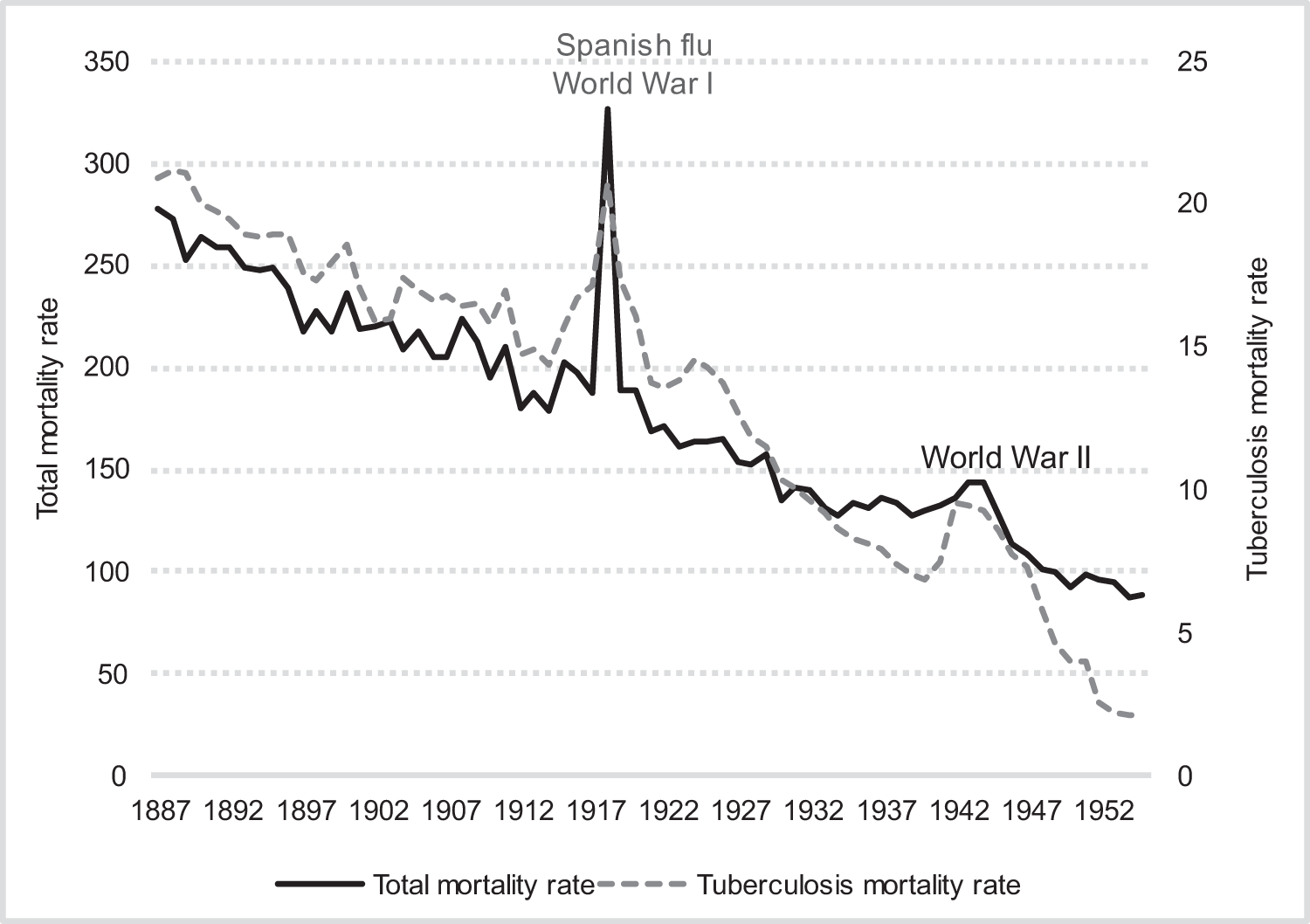
Figure 1 shows the trend in the overall mortality rate and the TB mortality rate from 1887 to 1955. In 1891, among a population of 30 million inhabitants, approximately 800,000 deaths were recorded, with a mortality rate of approximately 260 deaths per 10,000 inhabitants. Mortality decreased until the eve of the First World War, with 188 deaths per 10,000 inhabitants, thanks to the reduction in deaths from infectious diseases, especially exanthematous diseases. As Melacrinis and Rota (Reference Fiore Melacrinis and Rota2025) show, this decline was closely related to the Crispi-Pagliani reform (1887–88), which strengthened the central health governance and introduced non-pharmaceutical measures such as sanitary surveillance, compulsory quarantine and inspections in unhealthy neighbourhoods. The centrepiece of the reform was the Directorate General of Health, which was supported by provincial and municipal health officials. The authors estimate that the mortality rate for targeted infectious diseases fell by 8.5% compared to non-targeted diseases within five years of implementation (Fiore Melacrinis and Rota, Reference Fiore Melacrinis and Rota2025).
Total and tuberculosis mortality rate in Italy, 1887–1955 (per 10,000 inhabitants)

However, the persistence of pulmonary tuberculosis in the North and gastro-intestinal diseases in the South, slowed down the process of health transition and the evolution towards a modern nosological framework (Tognotti, Reference Tognotti2012).
In 1918, mainly due to the Spanish flu pandemic which caused between 540,000 and 600,000 victims (Mortara, Reference Mortara1925), the mortality rate reached a peak of 330 deaths per 10,000 inhabitants. However, mortality declined sharply over the next three years, halving to 169 deaths per 10,000 inhabitants by 1921. In 1922, the year of the March on Rome, mortality rose again, exceeding 172 deaths per 10,000 inhabitants.
During the Fascist period, overall mortality showed a tendency to decline, albeit not significantly, before stabilizing after the 1929 crisis and continuing up to the eve of the Second World War, settling at around 133 deaths per 10,000 inhabitants. This trend appears to indicate a limited improvement in sanitary and living conditions during that period, in line with an economic and social context marked by increasing inequalities and precariousness.Footnote 4
Living conditions worsened as food consumption declined in real terms from 1924, except for meat (Dogliani, Reference Dogliani2014). In fact, per capita calorie availability fell throughout the 1930s, reversing a trend of improvement since 1861 (Vecchi, Reference Vecchi2017). By 1938, malnutrition affected 33% of the population, up from 20% in 1922 (Vecchi, Reference Vecchi2017). This decline began in 1927 with the Quota 90 policy, which revalued the lira, raised prices, and reduced purchasing power (Vecchi, Reference Vecchi2017).
The health consequences were significant. Infant and child mortality was “almost double” that of the most advanced European countries (Dogliani, Reference Dogliani2014) and continued to rise throughout the 1930s (Atella et al., Reference Atella, Francisci, Vecchi and Vecchi2017). The decline in living conditions also affected physical development, as evidenced by the shorter stature of conscripts born in the 1920s and 1930s compared to previous generations (Vecchi, Reference Vecchi2017). Furthermore, the Human Development Index (HDI) highlights the 1930s as the decade in which longevity contributed least to its growth, with over half of the variation driven by the slow GDP increase (Vecchi, Reference Vecchi2017).
With the outbreak of World War II, mortality increased again, reaching 144 deaths per 10,000 inhabitants in 1944. World War II had a devastating impact on nutritional conditions in Italy, leading to a drop in daily caloric intake to 1,733 calories in 1945 (Daniele and Ghezzi, Reference Daniele and Ghezzi2019) and an increase in undernourishment affecting between 45% and 65% of the population (Vecchi, Reference Vecchi2011). Moreover, the conflict disrupted the long-term growth trend in average height, causing a significant reduction for conscripts born in 1945, particularly in the northern regions most affected by military operations (Daniele and Ghezzi, Reference Daniele and Ghezzi2019).
After the war, significant improvements in health care contributed to the steady decline in mortality rates. The global sanitary revolution, which began in the 19th century and continued into the 20th century, greatly improved hygiene and public health conditions through the construction of aqueducts, sewer systems and water purification plants (Gallardo‐Albarrán, Reference Gallardo‐Albarrán2024). Access to clean water and the safe disposal of urban waste reduced the incidence of intestinal diseases, improved nutrition and strengthened immune defenses, which had an indirect effect on certain infectious diseases, including tuberculosis. In urban areas, these measures led to a reduction in child mortality of between 10 and 30 %, with the effects being particularly pronounced in the more industrialized cities (Gallardo‐Albarrán, Reference Gallardo‐Albarrán2024).
Urbanization and industrialization also contributed to the expansion of public healthcare and more structured measures against tuberculosis, such as the establishment of dispensaries and sanatoriums, followed by the introduction of vaccination and antibiotics. However, access to these innovations was not uniform: while industrialized cities adopted new healthcare infrastructures more quickly to protect the workforce and support economic development, rural areas, particularly in southern Italy, experienced significant delays, perpetuating disparities in the fight against the disease (Gallardo‐Albarrán, Reference Gallardo‐Albarrán2024).
These improvements, together with socioeconomic development, led to the reduction of the mortality rate to approximately 88 deaths per 10,000 inhabitants in 1955.
The same trend is observed for tuberculosis itself. Between 1887 and 1955, the number of deaths from tuberculosis decreased significantly (by more than 80%), from approximately 61,000 to less than 11,000. In 1887, this disease was responsible for a total of about 62,000 deaths (out of 829,000), half of which were attributable to the pulmonary form, with an average of 82 deaths per day, with a loss of human lives among the younger and more productive classes which represented a daily massacre (“ecatombe quotidianaFootnote 5”) (Tognotti, Reference Tognotti2012).
In 1891, the death rate from TB was 20 deaths per 10,000 population, compared to 6 for typhoid fever, malaria, and measles, and 4.5 for diphtheria. During the period 1887–1892, in England there were approximately 23 deaths from tuberculosis per 10,000 inhabitants: 25 in Scotland, 27 in Ireland, about 30 in the German Empire and Prussia, and 40 in France (MAIC, 1894). At the beginning of the new century, 1906–1910, TB mortality had fallen everywhere: 25 deaths per 10,000 inhabitants in Ireland, 22 in France, 20 in Scotland, 18 in Spain and Germany, and 16 in England (L’Eltore, Reference L’Eltore1947).
Mortality from tuberculosis in Italy was lower than in other European countries also thanks to the mild climate, which allowed life outdoors for much of the year, and to the predominance of the agricultural population less affected by the disease because they worked outdoors and often in solitude (Bizzozero, Reference Bizzozero1899; L’Eltore, Reference L’Eltore1947).
The epidemiological trend of tuberculosis mortality was influenced not only by factors directly related to the disease, but also by historical events and changes in the health care system that altered the course of the disease.
The Spanish flu epidemic and the two World Wars were among the anomalous factors contributing to the increase in tuberculosis mortality.
The harsh conditions of the first conflict, combined with malnutrition, overcrowding, and a shortage of medical personnel, who had been drafted to the front, indeed favoured the spread of the disease among both the military and the civilian populations (Detti, Reference Detti1984). In particular, the army became an ideal environment for contagion, with estimates suggesting that over 100,000 soldiers contracted tuberculosis during the war, further spreading it upon returning home (Detti, Reference Detti1984).
Between 1915 and 1918, tuberculosis mortality increased drastically, peaking in 1918 with just under 75,000 deaths, further aggravated by the Spanish flu epidemic.
In view of the health crisis, the state took the first legal measures against tuberculosis between 1917 and 1920, focusing on prophylaxis and the construction of health facilities. However, due to a lack of national coordination and adequate investment, their effectiveness was limited. In the post-war period, the foundations were laid for a more structured approach, which was later used by the fascist regime for propaganda purposes (Detti, Reference Detti1984).
During fascism, the strategy against tuberculosis was based on the isolation of the sick, often through the construction of extremely expensive sanatoriums, without investing in prevention or in addressing the social determinants of the disease, such as malnutrition and precarious housing conditions (Giorgi and Pavan, Reference Giorgi and Pavan2021). Between 1929 and 1940, about five billion lire were invested in the construction of sanatoriums, but the health system remained ineffective and characterised by strong inequalities between northern and southern Italy, where the lack of facilities exacerbated the problem (Preti, Reference Preti1984).
The reduction in TB mortality during the period 1925–1940 was due more to the general improvement in hygienic and sanitary conditions than to the effectiveness of fascist policies (Detti, Reference Detti1984).
Indeed, before the outbreak of the Second World War, Italy had already entered the endemic phase of the epidemiological cycle of tuberculosis; it had reached what the hygienist and epidemiologist Adolf Gottstein called the “critical point”, beyond which further progress depended on improvements in general living conditions and control measures as well as on the adoption of all available therapeutic options (L’Eltore, Reference L’Eltore1947).
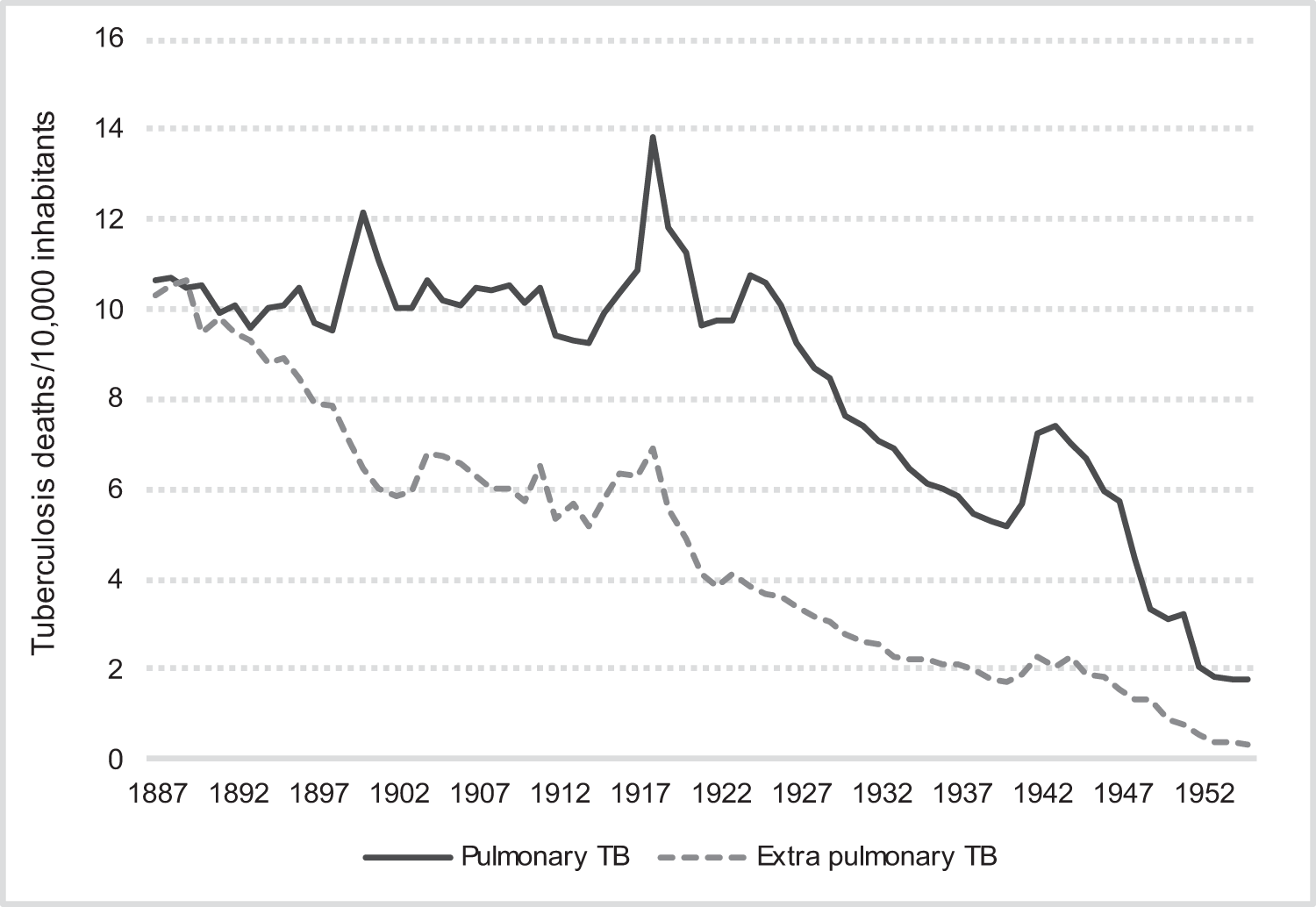
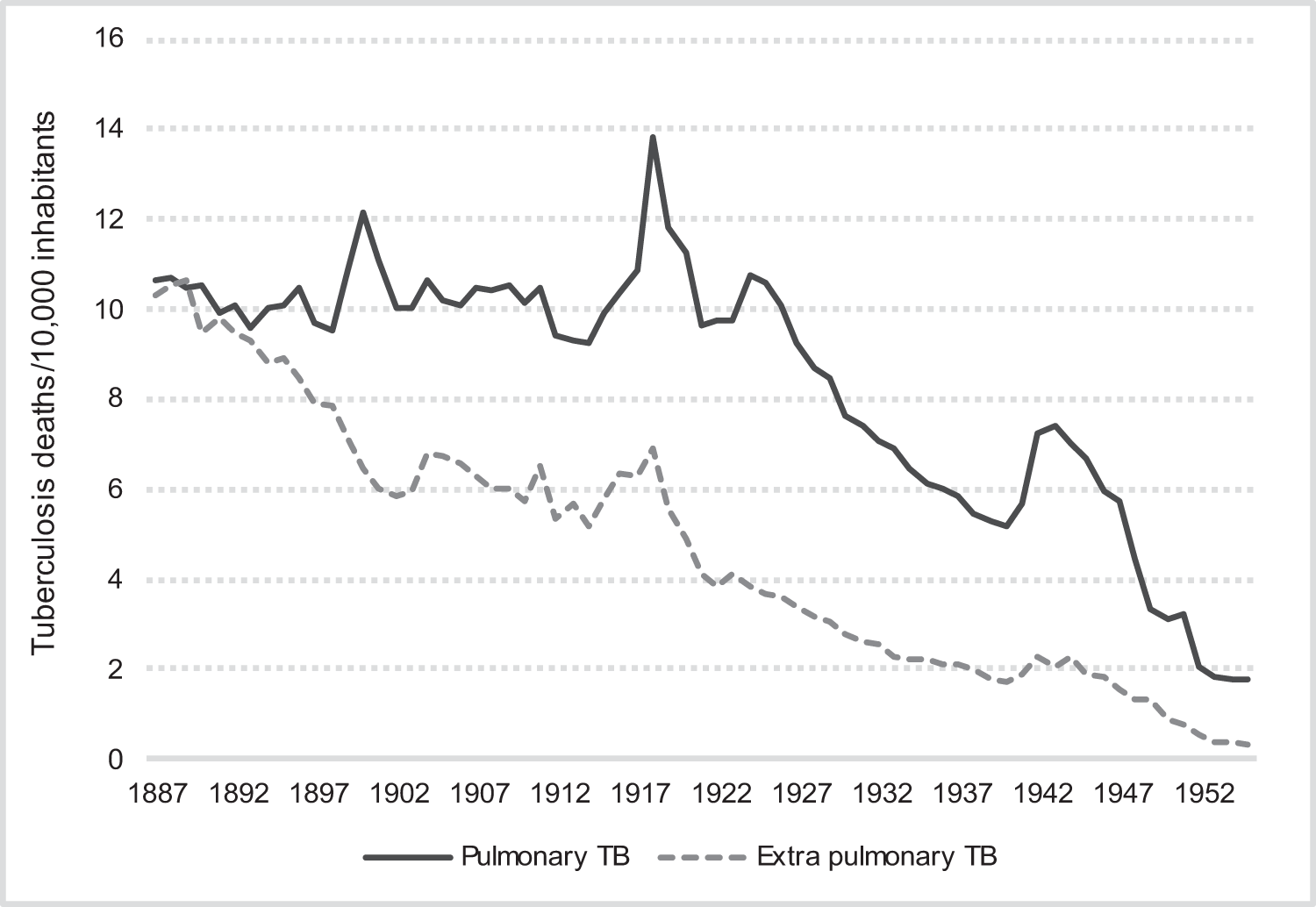
Figure 2 shows the trend in mortality in Italy from tuberculosis, in the pulmonary and extra-pulmonary forms, from 1887 to 1955. At the end of the 1880s, Italy had passed the acute phase of the cycle. The decrease in scrofula and the intestinal form largely contributed to the reduction in mortality from TB, already highlighted by Sormani (Tognotti, Reference Tognotti2012). In fact, only the mortality rates for the pulmonary form—closely linked to the industrialisation process—remained stable until the 1920s (Saporiti, Reference Saporiti1984). The delay in the start of modern industrialisation therefore slowed down the process of “complete tuberculisation”, a phase in which mortality reaches the lowest levels without the intervention of particularly efficient anti-tuberculosis equipment and instruments (L’Eltore, Reference L’Eltore1947).
Tuberculosis mortality rate in Italy, 1887–1955
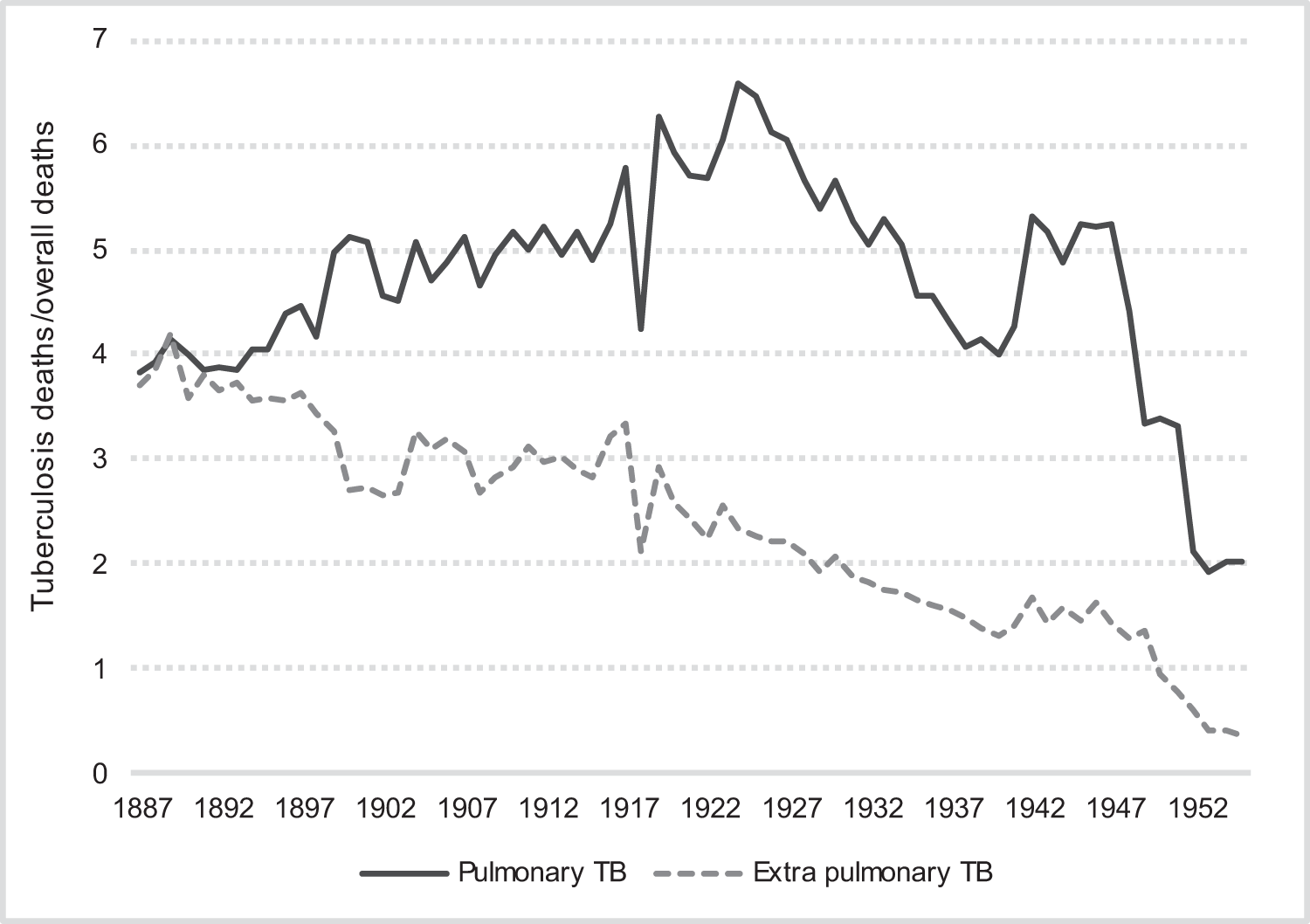
The incidence of pulmonary tuberculosis on overall mortality increased from 3.8 per 100 in 1891 to 6.6 in 1924, while that of other forms halved in the same period (Figure 3). Between 1887 and the First World War, the period in which the process of modern industrialisation began in Italy, there was a massive migration from the countryside to the cities. During this period, improvements in living conditions and advances in sanitation were partially offset by the expansion of industry and transportation infrastructure which, by reducing the isolation of many municipalities, facilitated the spread of the disease into areas of the country previously not affected. The Italian railway network rose from 12,102 kilometres in 1886 to 17,375 kilometres in 1912. Furthermore, the number of travellers increased from 64 million in 1906 to 94 million in 1914 (L’Eltore, Reference L’Eltore1947).
Tuberculosis mortality as a percentage of total deaths in Italy, 1887–1955
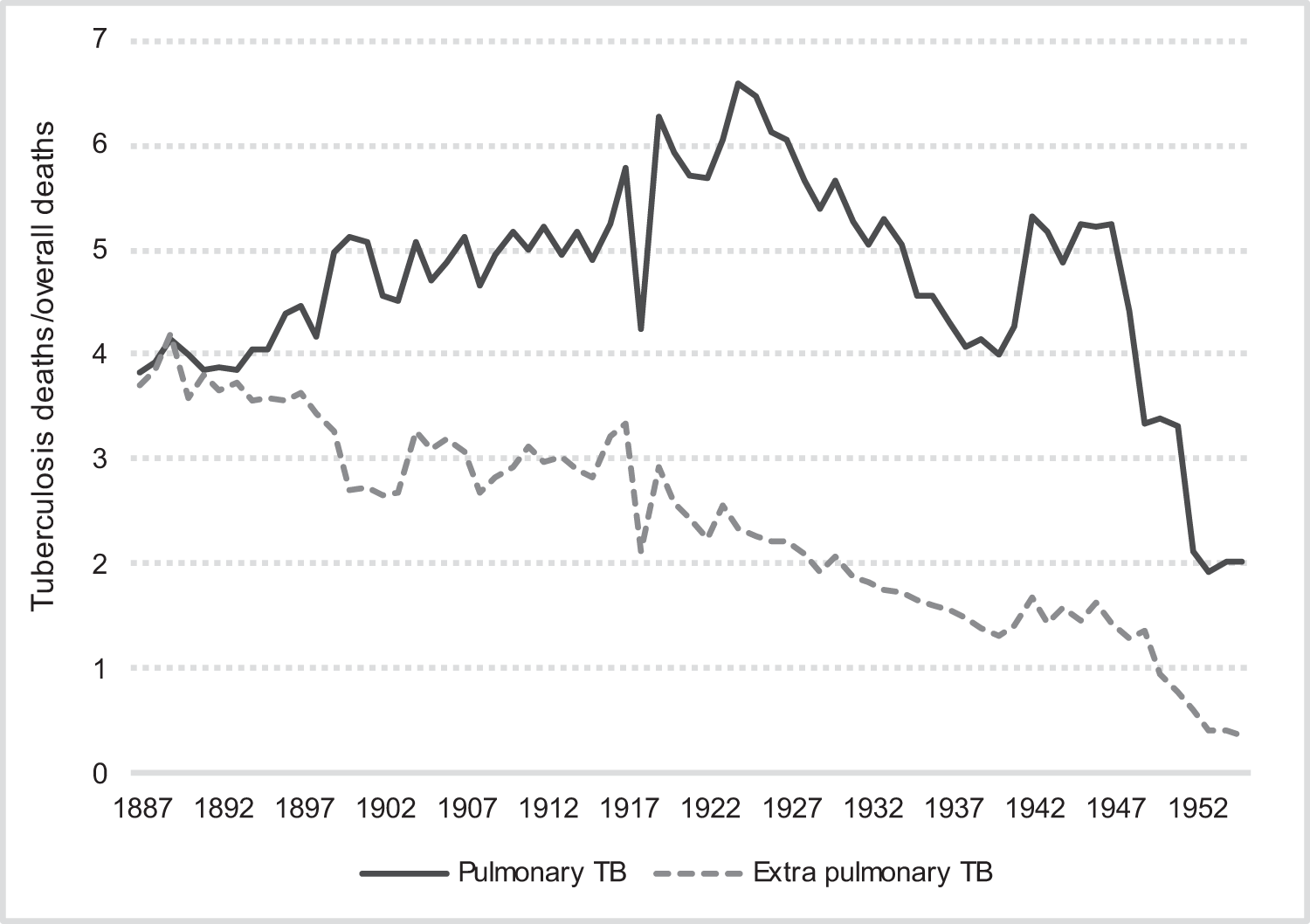
After 1924, excluding the years of the Second World War, a clear decline was observed. With the endemic phase already underway, improvements in living conditions and public health were primarily due to the distributional effects of economic growth, while other factors, such as urban regeneration and social labour protection policies, had more modest and uneven effects.
3.2. The macro-regional differences
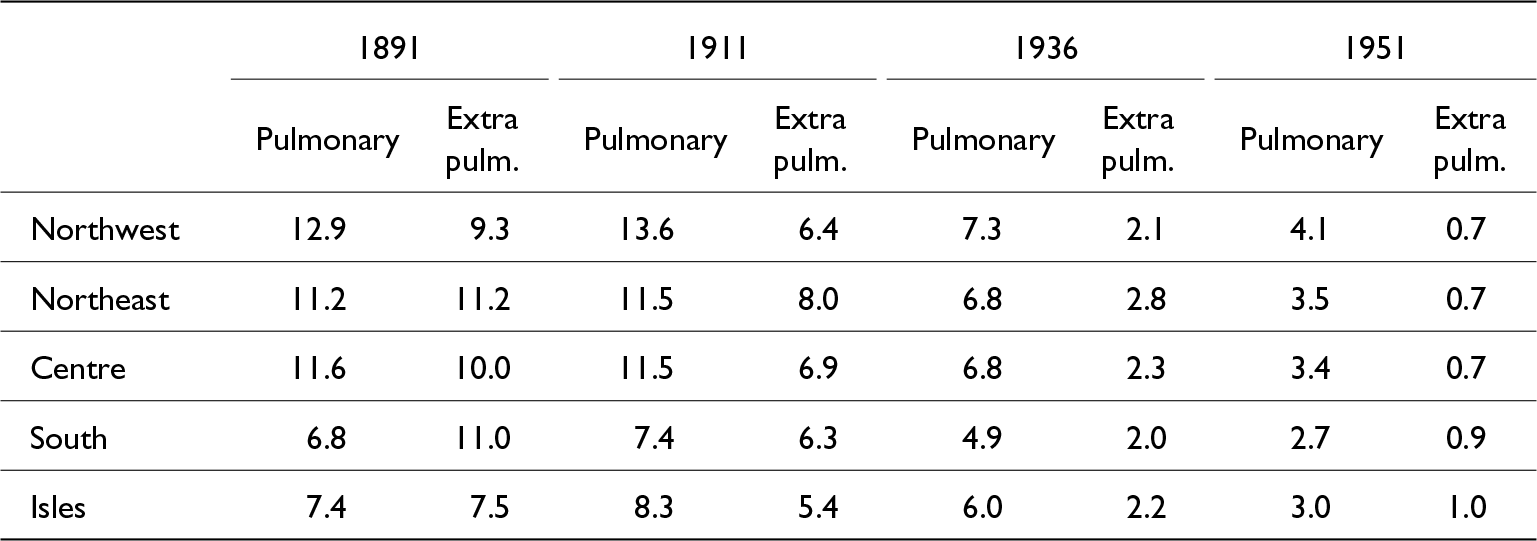
Depending on the organic localisation of the disease, tuberculosis has had a variable incidence in the different macro-areas of the Italian peninsula. Table 1 shows mortality rates for pulmonary and extra-pulmonary tuberculosis in selected census years. In the period under review, it was observed that mortality rates for the pulmonary form had significant geographical variability, with higher levels in the Northern regions, intermediate in the central regions and lower in the Southern regions.

In 1891, the mortality rate from pulmonary tuberculosis was approximately 13 deaths per 10,000 inhabitants in the North-West, 11.2 in the North-East, 11.6 in the Centre, 6.8 in the South, and 7.4 in the Islands. This distribution is consistent with that of industry which, at the time, had a relative concentration in the North-Western regions, where the “Industrial Triangle”—formed by Turin, Milan, and Genoa—was consolidating (Romeo, Reference Romeo1972; Fenoaltea, Reference Fenoaltea2001, Reference Fenoaltea2006).
In 1911 the PTB mortality rate reached almost 14 deaths per 10,000 inhabitants in the North-Western regions, while in the South it was 7.4 and 8.3 in the Islands. However, it remained almost unchanged in North-Eastern and Central Italy. In the period 1911–1936 mortality fell in all macro areas of the country. The decline was more significant in the regions of the North-West (−46%), slightly more contained in those of the North-East and Central (−41%) and smaller in those of the South (−28%). In 1951 the quotients were halved everywhere and the differences between areas remained very limited.
With regard to the extra-pulmonary group, which includes all the other forms of tuberculosis, slight differences are observed between the macro-areas. At the beginning of the period under review, mortality was highest in the South and North-East. Lower values were recorded in the North-West and especially in the Islands. In 1911 there was already a clear reduction throughout the country, while in 1936 tuberculosis mortality was almost identical in the various macro areas: approximately 2.5 per 10,000 inhabitants in the North, 2.3 in the Centre and 2.1 in the South. In 1951 the quotients were less than 1 in the North and Centre (0.7) and equal to 1 in the South.
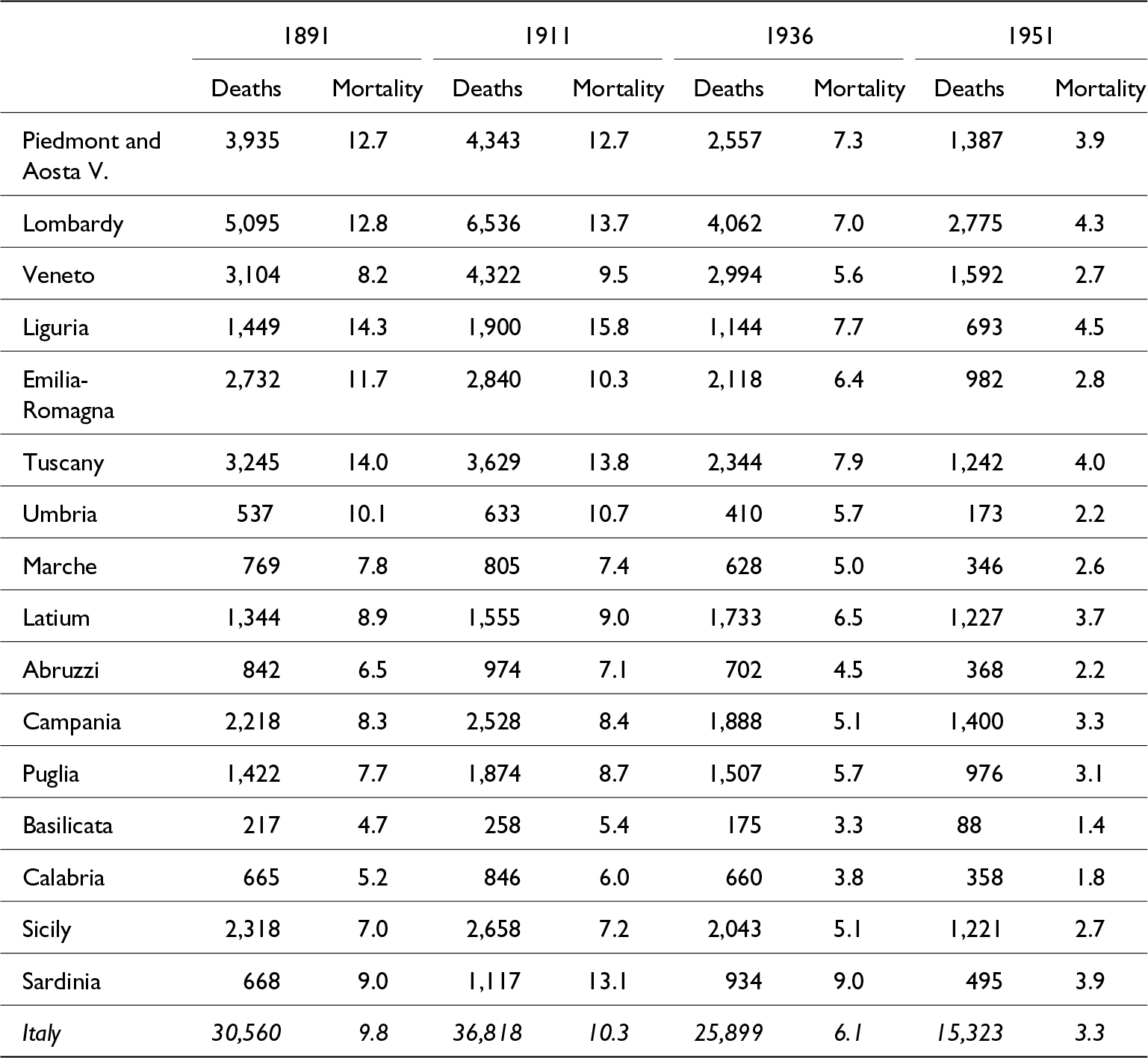
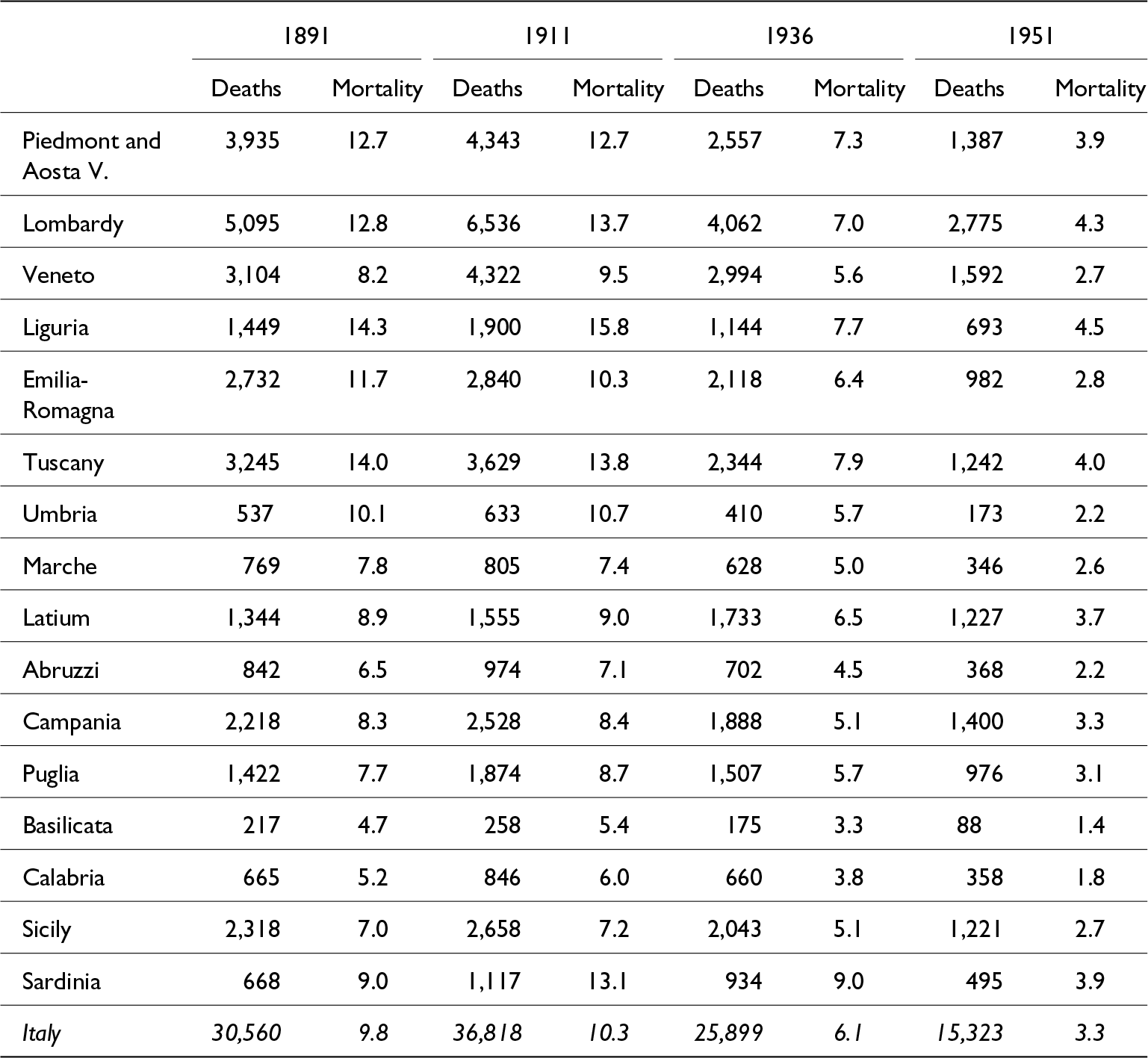
The regional distribution of deaths from pulmonary tuberculosis is shown in Table 2, which also reports the mortality rates (per 10,000 inhabitants) in the census years 1891, 1911, 1936 and 1951. In 1891, half of the deaths from pulmonary tuberculosis were concentrated in the Northern regions. Liguria, Tuscany, Lombardy and Piedmont had particularly high mortality rates, ranging between 12.71 and 14.29 deaths per 10,000 inhabitants. On the contrary, the lowest values were recorded in the Southern regions, with Basilicata and Calabria among the least affected. In 1911, around 20,000 people died of pulmonary tuberculosis in the North alone. Except for Sardinia,Footnote 6 which recorded a significant increase in mortality compared to 1891, the most affected regions remained unchanged. Between 1914 and 1923, pulmonary tuberculosis mortality increased significantly in almost all Italian regions, with the highest rates in Veneto and Sardinia, where the hardships of war and the imprisonment of soldiers exacerbated the situation (Mortara, Reference Mortara1925). A significant increase was also recorded in Umbria, Marche and Lombardy, while Tuscany and Sicily recorded slight decreases (Mortara, Reference Mortara1925). Since 1936, a general decline in PTB mortality has been observed throughout the country. Mortality rates decreased significantly in all regions, reaching much lower values in 1951, ranging between 1.41 deaths per 10,000 inhabitants in Basilicata and 4.46 in Liguria.
3.3. Provincial differences
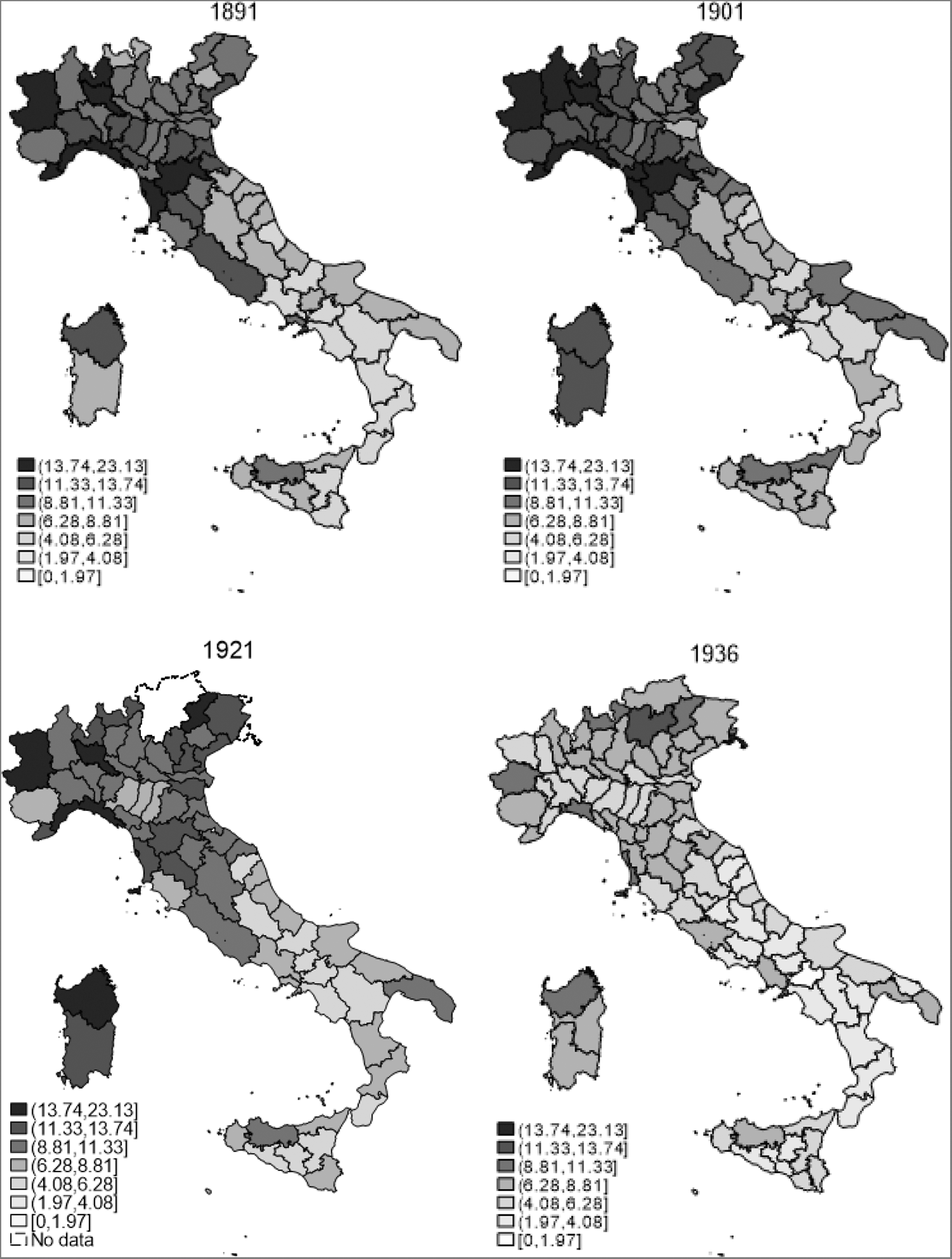
Figure 4 illustrates pulmonary tuberculosis deaths relative to the total population (x 10,000), in different census years for Italian provinces. Modern industrialisation in Italy began towards the end of the 19th century and in 1911 it was already geographically unbalanced. About half of those employed in the industrial sector were concentrated in the “Industrial Triangle” (Zamagni, Reference Zamagni1978). There was also a disparity in the structure and production capacities between the North and the South (Daniele and Samà, Reference Daniele, Samà and Daniele2024). Only 10% of firms in the South used motive power, compared to 19% in the central regions and 29% in the Northern ones (SVIMEZ, 1961). This initial phase marked a period of profound economic and social change, characterized by the expansion of manufacturing industries, the rapid increase of the urban population, and the spread of pulmonary tuberculosis.
Pulmonary tuberculosis mortality rate in Italian provinces in 1891, 1901, 1921, 1936.

In 1891, the geographical distribution of PTB was already clear: in the Lombard, Piedmont and Ligurian provinces there were approximately 14–17 deaths from pulmonary tuberculosis per 10,000 inhabitants; in the other Northern regions the quotient stood at lower values (10–12). In the South, the rate was even lower (4–8), except for the provinces of Sassari (12.5), Naples and Palermo (around 10). A distribution very similar to that of the industrialisation. However, there were exceptions. In Emilia-Romagna, for example, the province of Parma recorded a high PTB mortality rate despite having one of the lowest shares of industrial workers in the region, second only to Reggio Emilia. A similar pattern was observed in Tuscany, where Livorno exhibited an exceptionally high mortality rate despite a low level of industrialization. This anomaly can be explained both by the fact that, as early as the late 18th century, Livorno was considered a health tourism destination for tuberculosis patients (Starke, Reference Starke1800), following the recommendations of physicians of the time, and by the subsequent establishment of numerous sanatoriums and nursing homes that welcomed patients from all over Italy and even from abroad (L’Eltore, Reference L’Eltore1947). Conversely, in Piedmont, the province of Novara—despite being highly industrialized due to its location between the provinces of Turin and Milan—showed a relatively low PTB mortality rate compared to other industrialized areas, suggesting that additional local factors may have mitigated the incidence of the disease.
In 1901, the incidence of PTB had also increased in the North-East, while in the Centre and South the rates were even lower. In the first decade of the twentieth century, the increase in income linked to industrial development was accompanied by urban redevelopment policies and regulations for social protection and female and child labour (Tognotti, Reference Tognotti2012). As a result, a significant reduction in pulmonary tuberculosis mortality occurred. In 1921, despite the temporary increase in rates during the war period, strong and significant general reductions were recorded. Mortality rates were even comparatively higher in the provinces of the “Industrial Triangle”, in the province of Sassari and in those of Livorno and Belluno, due to the presence of numerous sanatoriums and nursing homes (L’Eltore, Reference L’Eltore1947).
By 1936, mortality from pulmonary tuberculosis in Italy no longer showed a clear geographical difference. Some Northern provinces, such as Gorizia, Trieste, Trento,Footnote 7 Belluno, Turin and Livorno, were still particularly affected, with mortality rates between 10 and 14 per 10,000 inhabitants; others, however, recorded rates not very different from those of Central and Southern Italy. At the same time, some Southern provinces, such as Sassari, Cagliari, Taranto, Lecce and Palermo, also had significant mortality rates, that is between 7.5 and 11 per 10,000 inhabitants. The increase in healthcare equipment, the improvement of living conditions linked to rapid economic development, urbanisation and the entry into the endemic phase of the disease had now severed the link between PTB, industry and urbanisation.
4. Industrialisation and tuberculosis mortality
In the following sections, we will analyse the relationship between the incidence of pulmonary tuberculosis and some of the risk factors already mentioned, such as population density, urbanisation and industrialisation. This analysis will allow us to better understand how the dynamics of these factors influenced the epidemiology of pulmonary tuberculosis during the period examined.
4.1. Population density and urbanisation
The analysis of territorial variations in tuberculosis mortality requires some considerations on the physical and social context, in particular the conditions that influence exposure to the disease. The physical environment—including climatic and orographic factors—and the social environment—such as population distribution, housing and sanitary conditions—are decisive (Collari, Reference Collari1934). However, controlling for all these factors is not a simple task due to the scarcity of data available over such a long period of time.
Tubercle bacilli are mainly transmitted via the respiratory tract; other transmission routes, such as the skin and placenta, are not frequent, and have no epidemiological significance (Bagnato, Reference Bagnato2015). This makes population density and the degree of urbanisation determining factors for the incidence of infection. At the end of the 19th century and the beginning of the 20th, with the increase in populationFootnote 8 and rapid urbanisation, the risks of contracting tuberculosis increased significantly.Footnote 9 If this hypothesis is correct, we would expect higher PTB mortality rates in more densely populated and urbanized provinces. To analyse this relationship, we used indices that measure the density and degree of urbanisation of the population (Table 3).
Correlation between pulmonary tuberculosis mortality, urbanisation and population density (1891–1951)

Source: author’s elaboration on MAIC (1894 1903;1913; 1925; 1935; 1953) - Cause of Death Statistics.
Note: For 1891, the data referring to the census actually refer to the interpolation of demographic data.
The density, given by the ratio between the present population and the provincial surface area. Urbanisation, on the other hand, represents the share of people living in cities with more than 20,000 inhabitants out of the total provincial population. For both variables, the resulting values were normalised to the national level.
Both variables show a positive correlation with pulmonary tuberculosis mortality, which was strongest at the beginning of the period analysed (Table 3). Overcrowding and poor sanitary conditions in the industrial cities of northern Italy favoured the spread of tuberculosis. Unlike in England or Germany, however, urbanisation in Italy remained rather limited and many industrial activities were located outside major cities—a sign of late and incomplete industrialisation. In the larger urban centres, the problem was exacerbated by the promiscuity of housing and intense social interaction.
The density distribution is more influenced by the presence of an outlier. This is represented by the province of Naples, characterized by an extremely high population density, approximately eight times higher than average. At provincial level, population density is of limited value and could be replaced by the degree of urbanization, which is a more appropriate indicator as it measures the proportion of the population living in urban areas in relation to the total population. In addition, given its greater correlation, it was preferred to use the urbanisation rate as a control variable in the following estimates.Footnote 10
However, it is difficult to conclude that these were determining factors. It is, in fact, necessary to consider other factors that may have contributed to the spatial variation in mortality from pulmonary tuberculosis. The industrial context is particularly relevant. Areas with high industrial activity may have working and environmental conditions that increase the risk of contracting tuberculosis, such as exposure to dust and pollutants,Footnote 11 promiscuity in the workplace, and the often-precarious living conditions of workers.
Therefore, to better understand the distribution of pulmonary tuberculosis mortality, it is essential to delve deeper into the impact of the Italian industrialisation process.
4.2. The effect of industrialisation
Tuberculosis is considered the archetypal disease of the industrialisation process (Vögele, Reference Vögele2000). In fact, already in 1934 Collari underlined that “industry goes hand in hand with tuberculosis” and “the rise of factories, even in the smallest towns, ineluctably coincides with a rapid increase in mortality from tuberculosis” (Collari, Reference Collari1934). The link between industrialisation and tuberculosis had already been documented in numerous studies conducted mainly by doctors, hygienists and statisticians for various countries: for England by Engels (Reference Engels1845) and Tatham (Reference Tatham1907), in France by Durozoy (Reference Durozoy2018) and Prost and Faure (Reference Prost and Faure1949), for Germany by Fischer (Reference Fischer1921), for the United States by Hoffman (Reference Hoffman1909), while for Italy by Zubiani (Reference Zubiani1898) and Collari (Reference Collari1934). These studies highlight how industrialisation, through the creation of densely populated and often unhealthy environments, has had a significant impact on the spread of tuberculosis. Hoffman and Tatham, in fact, underlined the poor health conditions of the printers, who were annually decimated especially by tuberculosis (MAIC, 1911).
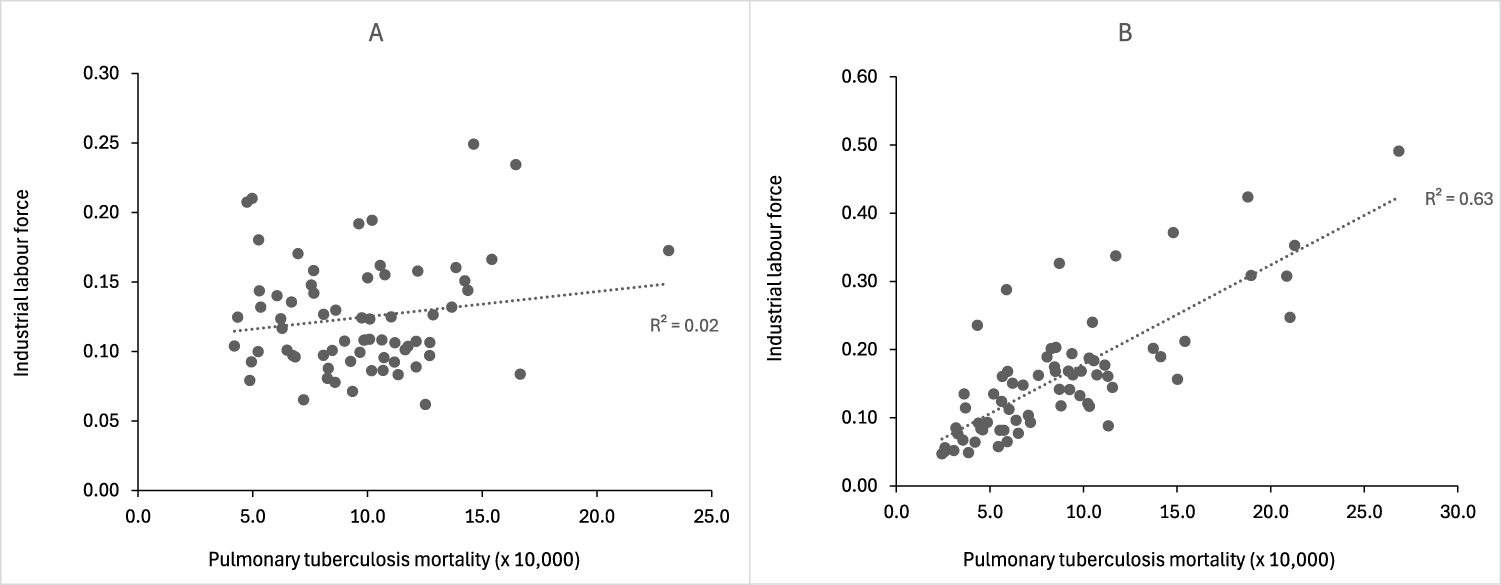
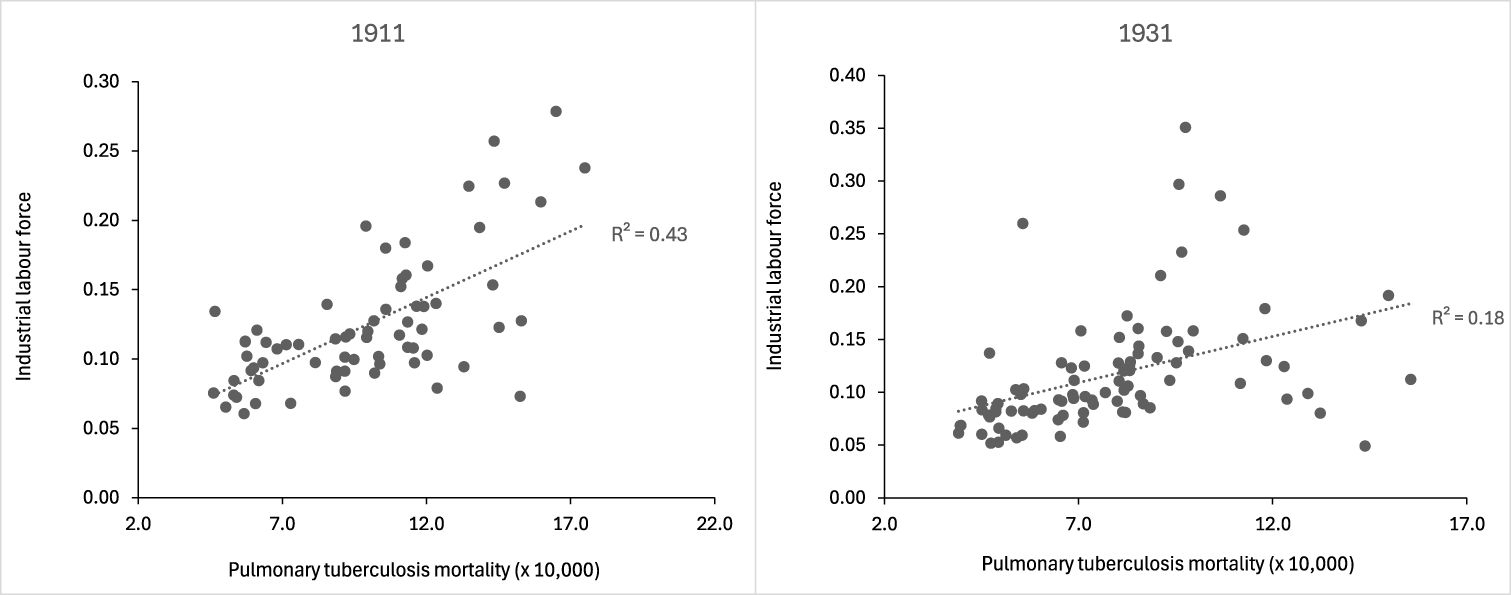
The relationship between industrialisation and mortality from pulmonary tuberculosis is shown in Figures 5 and 6. The level of industrialisation is measured as the share of the workforce in the industrial sector out of the total provincial population present.
Industrialisation and pulmonary tuberculosis mortality in Italian provinces in 1891, (A) male and female—(B) only male.

Industrialisation and pulmonary tuberculosis mortality in Italian provinces in 1911 and 1931.

In 1891, no significant correlation exists between pulmonary tuberculosis mortality and the percentage of the industrial workforce (Figures 5A). The weak correlation observed can be attributed to the widespread putting-out system in southern Italy, where many women worked from home. In fact, until the end of the 19th century, employment rates in industry in southern Italy were very high, as many women worked at home, especially in the textile sectorFootnote 12 (Ciccarelli and Missiaia, Reference Ciccarelli and Missiaia2013; Daniele and Malanima, Reference Daniele and Malanima2017; Mancini, Reference Mancini2018). Consequently, they were less likely to be infected as they were less exposed to the crowded workplaces with poor lighting and inadequate air circulation. For this reason, we repeated the analysis considering exclusively the data on employment and the male population. For males, the scatterplot shows a clear positive relationship between the percentage of the workforce in industry and pulmonary tuberculosis mortality (Figure 5B). The value of R2 = 0.63 indicates a strong correlation. Provinces with a greater number of industrial workers were associated with higher mortality from respiratory tuberculosis. Tuberculosis mortality increased regularly from agricultural to industrial provinces, with the exception of SardiniaFootnote 13 (L’Eltore, Reference L’Eltore1947).
In 1911, the relationship was still positive and strong (R2 = 0.43). The percentage of the workforce in industry still represented a primary factor in the spread of PTB. In 1931, the data show greater dispersion than in previous years. The relationship is less obvious; only 18% of the variance in PTB mortality can be explained by the share of industrial workers. Already by 1931, industrialisation had become a less dominant factor in determining mortality from pulmonary tuberculosis in the Italian provinces.
4.3. Regression analysis
In order to test the relationship between pulmonary tuberculosis mortality and industrialisation for Italian provinces in the period 1891–1951, we estimated different specifications of the following basic equation:
 \begin{equation}PT{B_{i,t}} = \alpha + \beta {\text{ }}IN{D_{i,t}} + {\text{ }}\delta {X_{i,t}} + {\varepsilon _{i,t}}\end{equation}
where the dependent variable  $PT{B_{i,t}}$ is mortality from pulmonary tuberculosis,
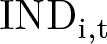 $IN{D_{i,t}}$ is the share of the workforce employed in industry—Industrial labour force (ILF)—on the population
 $\left( {IN{D_{i,t}} = \frac{{IL{F_{i,t}}}}{{{P_{i,t}}}}} \right)$, and
 $X{{\text{ }}_{i,t}}$ is a set of control variables: total mortality rate, urbanisation index and latitude were included in the analyses as control variables. Total mortality rate is calculated by relating the total number of deaths, regardless of cause, to the population of the respective province and serves as an indicator of the general health status of the population. Urbanisation for each province is given by the share of inhabitants of cities with more than 20,000 inhabitants out of the total provincial population; the results were indexed with respect to the national average data. While the population distribution between North and South has remained relatively stable over the last century, the urban population has shown notable change (A’Hearn and Venables, Reference A’Hearn, Venables and Toniolo2013). Since 1901, the urban population has increased far more in the North than in the South (Daniele et al., Reference Daniele, Malanima and Ostuni2018). Finally, the control variables include latitude, which allows us to control the provincial geographical differences along the North-South gradient, in particular the different climaticFootnote 14 and territorial conditions that can favour the evolution of the disease. Furthermore, there are several socioeconomic factors that show a North-South gradient, related to latitude including GDP per inhabitant and literacy rates (Felice, Reference Felice2005, Reference Felice2013; Daniele and Malanima, Reference Daniele and Malanima2011; Daniele et al., Reference Daniele, Malanima and Ostuni2018).
Equation (1) was estimated both by cross-section OLS and by a panel data estimator. Since the influence of the variables included in the model could vary over time, we proceed initially by performing cross-section estimates for each census year. This allows us to analyse how the effect of the variables considered changes over different years, providing a more detailed understanding of the temporal dynamics of the data.
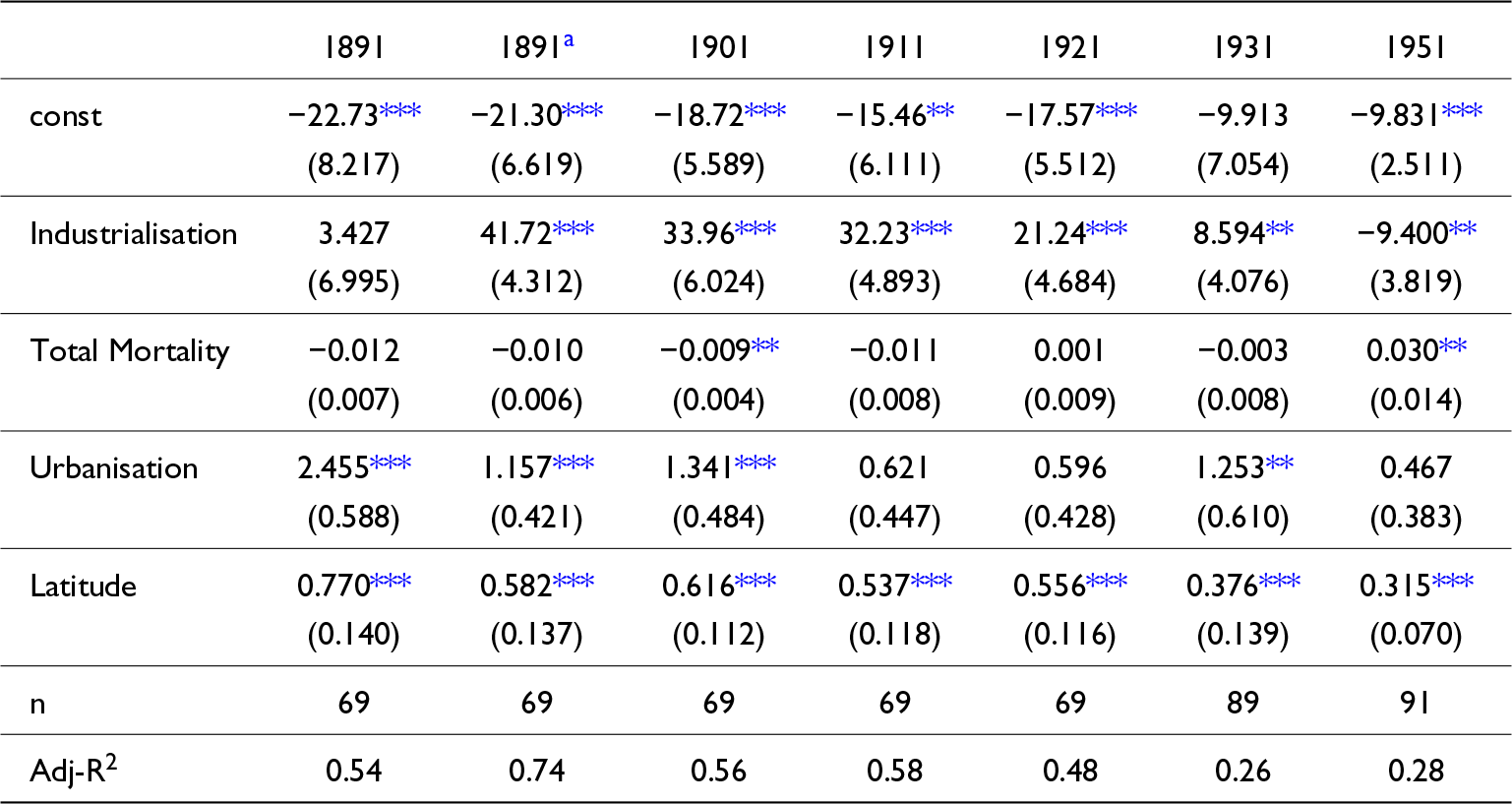
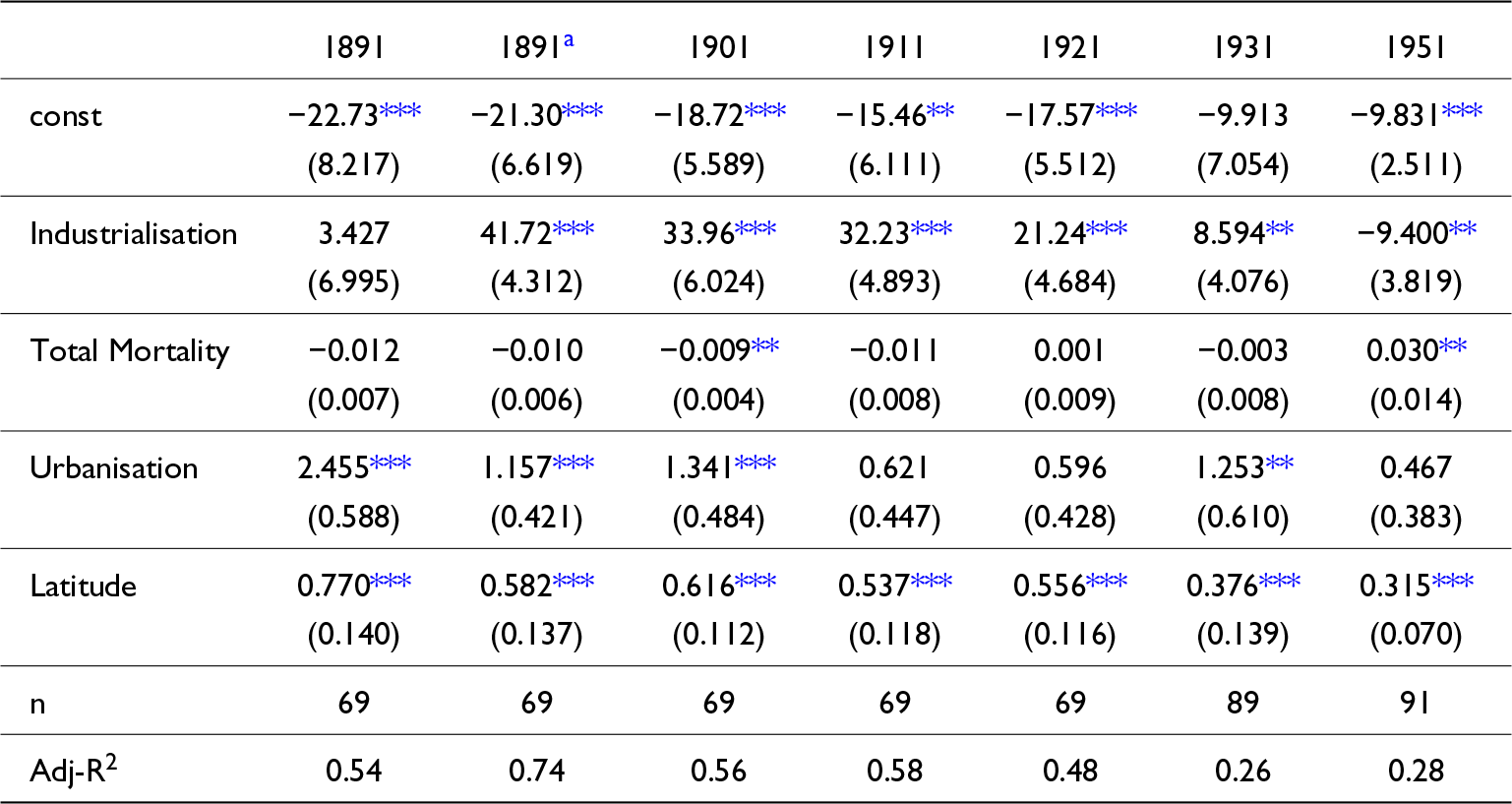
The results of equation (1) are reported in Table 4. Industrialisation rates are significantly and positively related to PTB mortality rates, in the years we deal with. Overall, the specification has a high explanatory power, at least in the years 1891–1921, while in the subsequent years it diminishes. This decline suggests that other factors—such as improving living and health conditions, public health policies, changes in the organization of work and the onset of the endemic phase—may have mitigated these effects. In 1951, the coefficient is however negative and statistically significant.Footnote 15
Pulmonary tuberculosis and industrialisation, (1891–1951)—OLS
Notes: Heteroscedasticity–robust standard errors, HC1; standard errors in parentheses; 1891
a employment data refer only to males; * indicates significance at the 10% level; ** indicates significance at the 5% level; *** indicates significance at the 1% level.
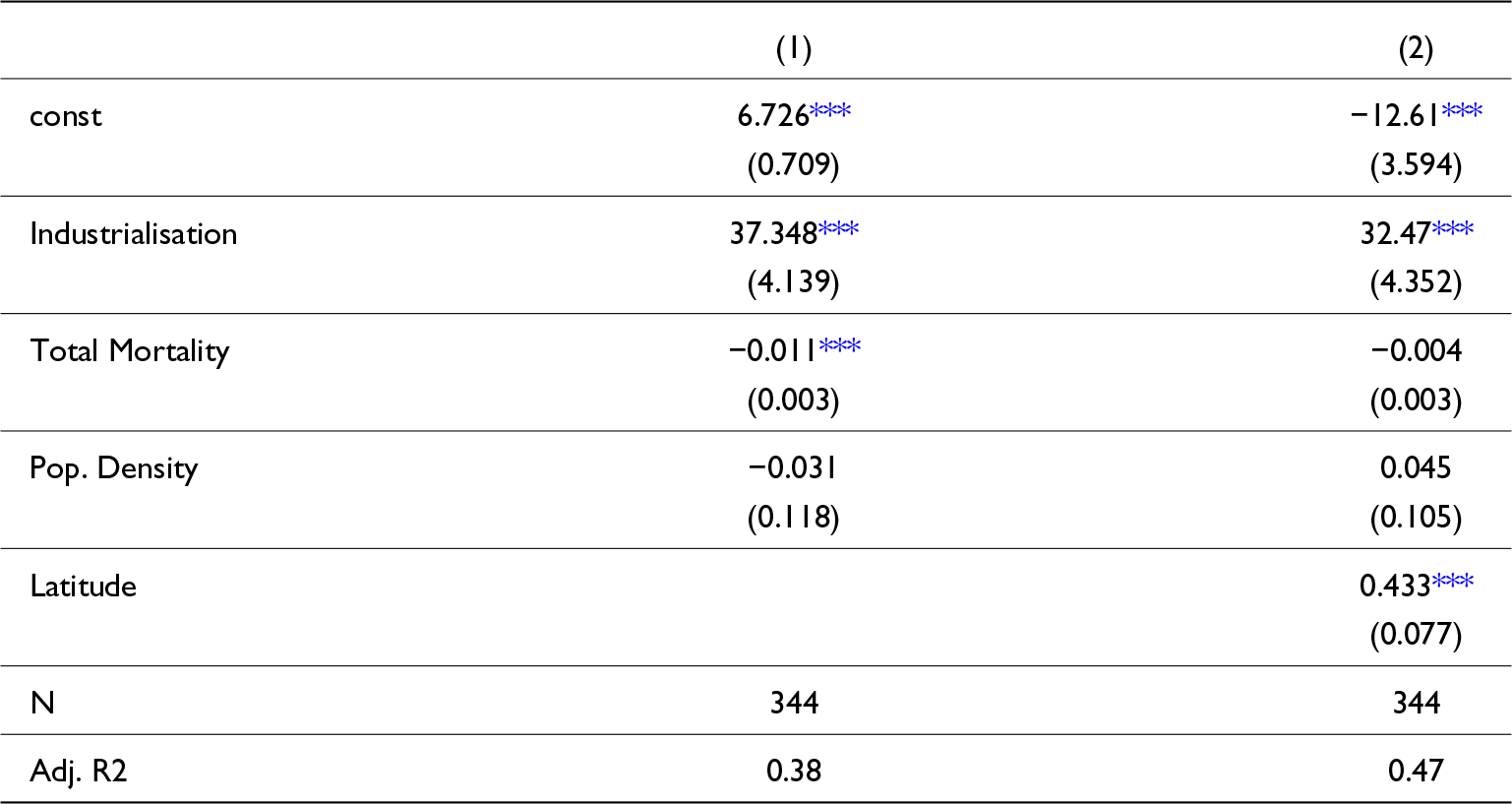
Total mortality rate is slightly significant only in 1901 and 1951, but with low coefficients and opposite signs. In 1951, the provinces with the worst health conditions were also those with the highest pulmonary tuberculosis mortality rates, highlighting a correlation, albeit weak, between overall health status and the impact of PTB.
Urbanisation shows a positive and significant influence on pulmonary tuberculosis mortality in some years (1891, 1901 and 1931). However, in 1951, the effect of urbanisation is no longer significant; in line with the overall progress recorded in Italy in living conditions and in the epidemiological framework. Latitude is positively and significantly correlated with mortality, indicating how climate and, probably, other related socioeconomic variables have had an influence on the spread of the disease.
It has already been said that the spread of pulmonary tuberculosis may have been influenced by multiple factors, including poor sanitary conditions, inadequate living and working environments, overcrowding, malnutritionFootnote 16 and the intense pace of factories. These elements contributed to weakening the population, favouring an increase in the mortality rate. The availability of variables at the provincial level is, however, scarce and limited to a few single census years. Previous results may, therefore, suffer from omitted variable bias. To overcome this problem, controlling for unobserved heterogeneity, we estimated a panel model for the period 1891–1931. We analyse this narrow time frame to focus on the years in which a positive relationship was observed between industrialisation and mortality from pulmonary tuberculosis.
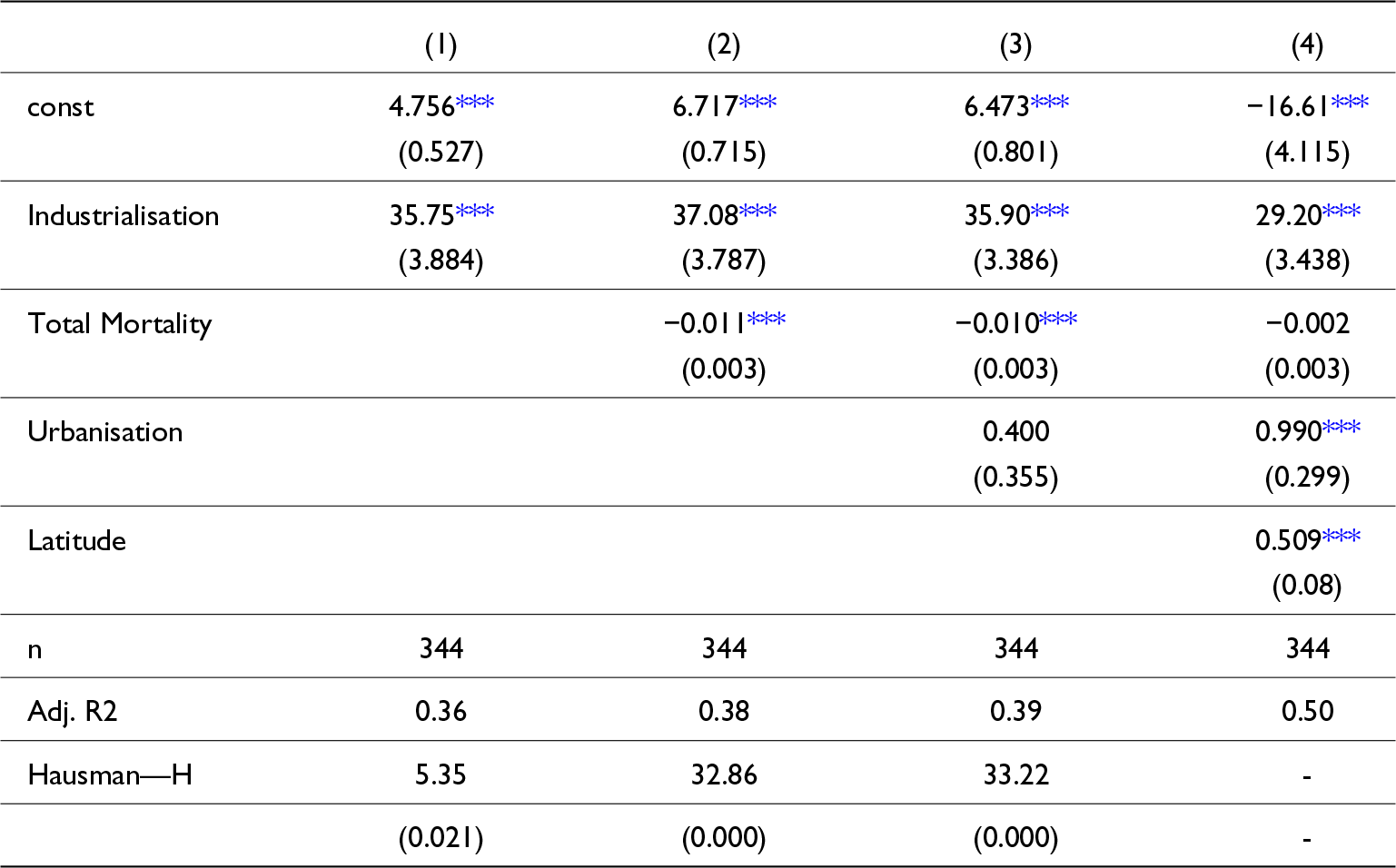
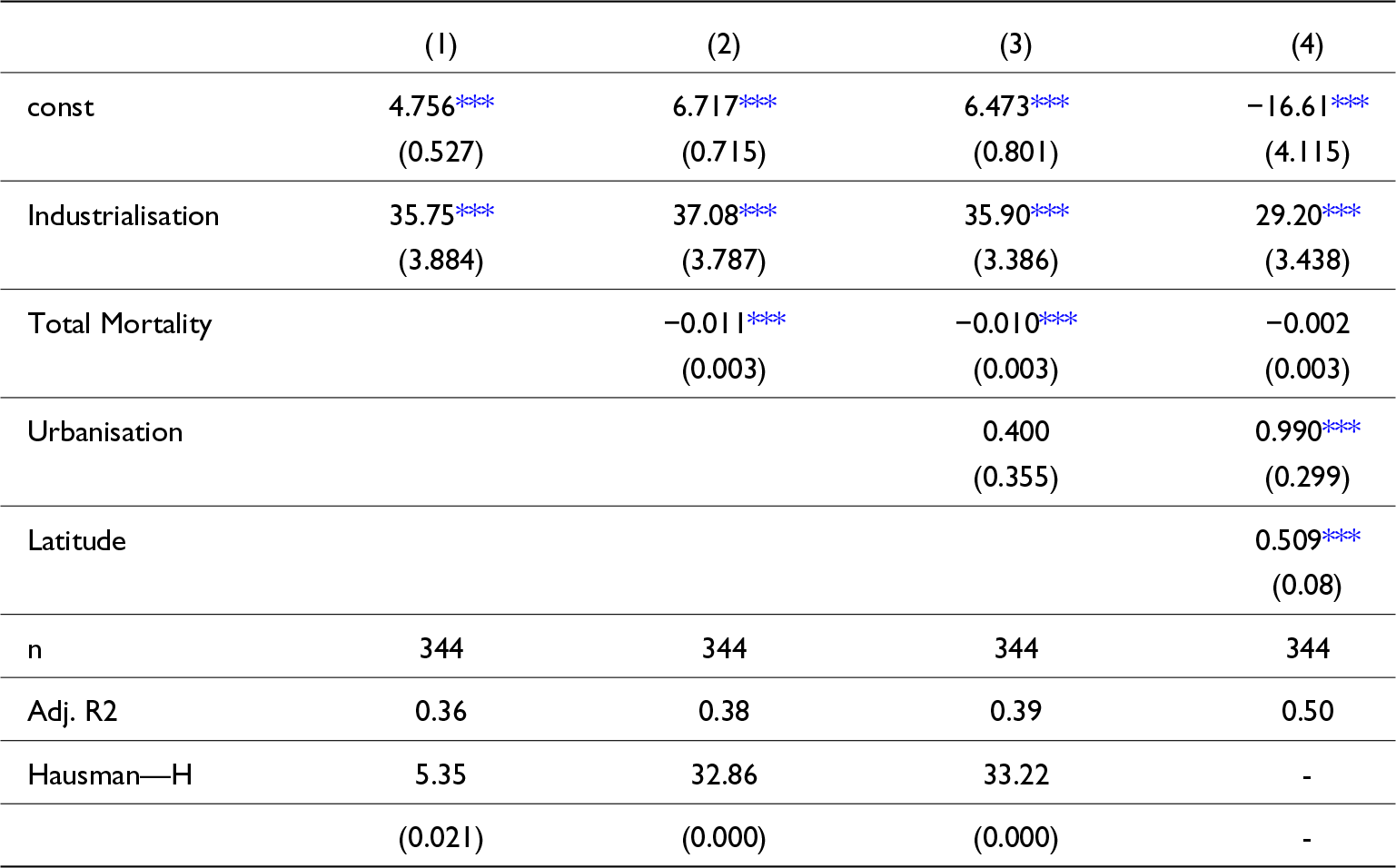
Table 5 presents the results of the pooled OLS estimates. Column 1 reports estimates without controls. The coefficient is significant at the 1% level. Industrial employment can explain 36% of the provincial variation in mortality from pulmonary tuberculosis. In columns 2, 3 and 4, the control variables are added from time to time. Total mortality rate shows a negative and significant correlation with tuberculosis mortality. The provinces with the highest pulmonary tuberculosis mortality rates were also those where the population’s health conditions were better. However, this effect disappears when controlling for latitude. Urbanisation is significantly related to PTB mortality only when controlling for the north-south gradient. In column 3, in fact, both the coefficient of latitude and that of urbanisation are positive and statistically significant. Exactly half of the provincial variation in pulmonary tuberculosis mortality is explained by the variables included in this specification. The action exerted by urbanisation cannot be evaluated in isolation, but rather in close conjunction with other geographical, economic, social and health factors captured by the latitude, which intervene both by aggravating the possibility of contagion and by conditioning the course of the disease. Table 5 also reports the Hausman test for the first two specifications. The test indicates that the fixed effects estimator (FE) is adequate for our data.
Pulmonary tuberculosis and industrialisation, (1891–1931)—Pooled OLS
Notes: Heteroscedasticity–robust standard errors, HC1; standard errors in parentheses;
* indicates significance at the 10% level; ** indicates significance at the 5% level; *** indicates significance at the 1% level.
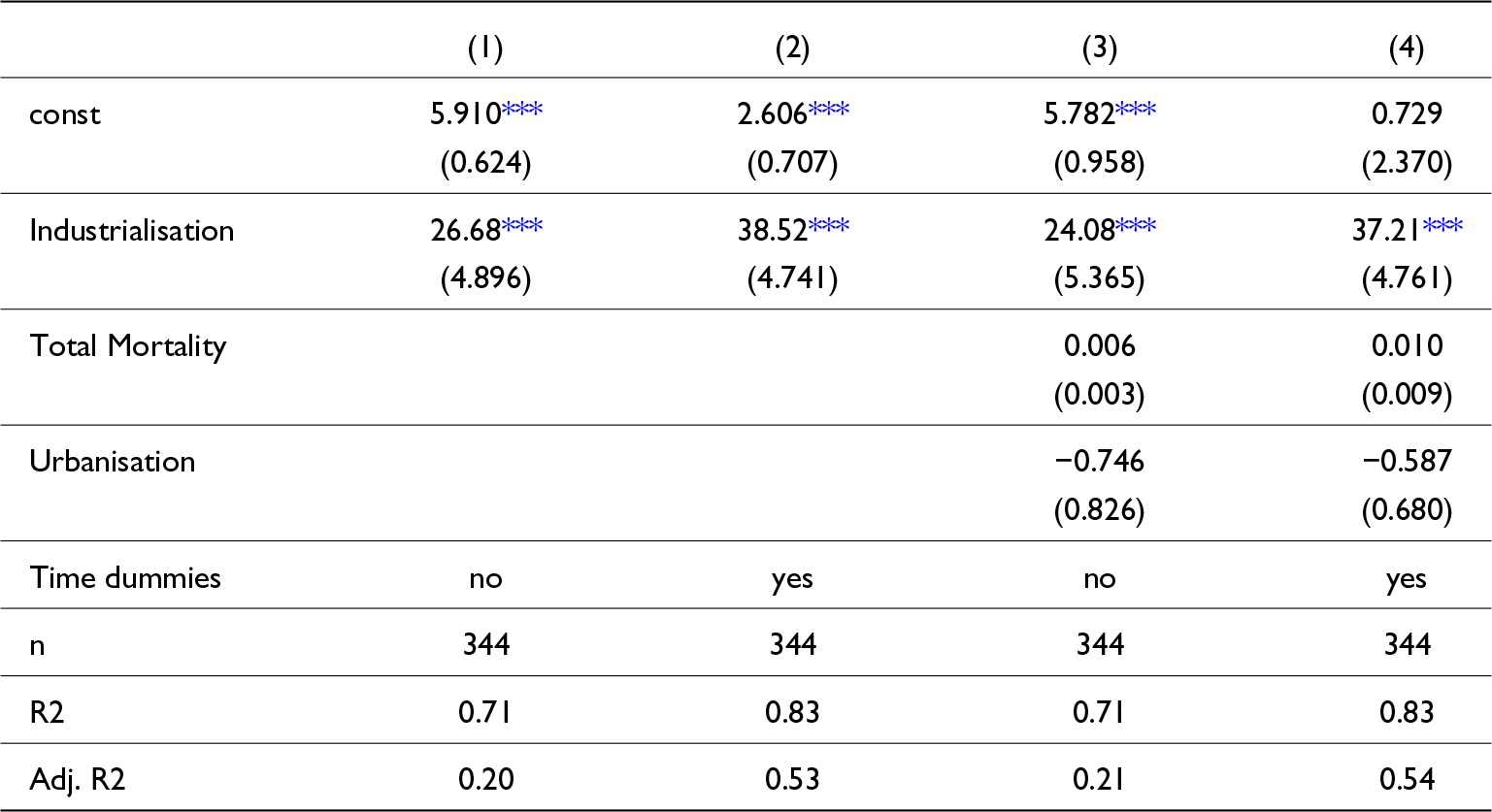
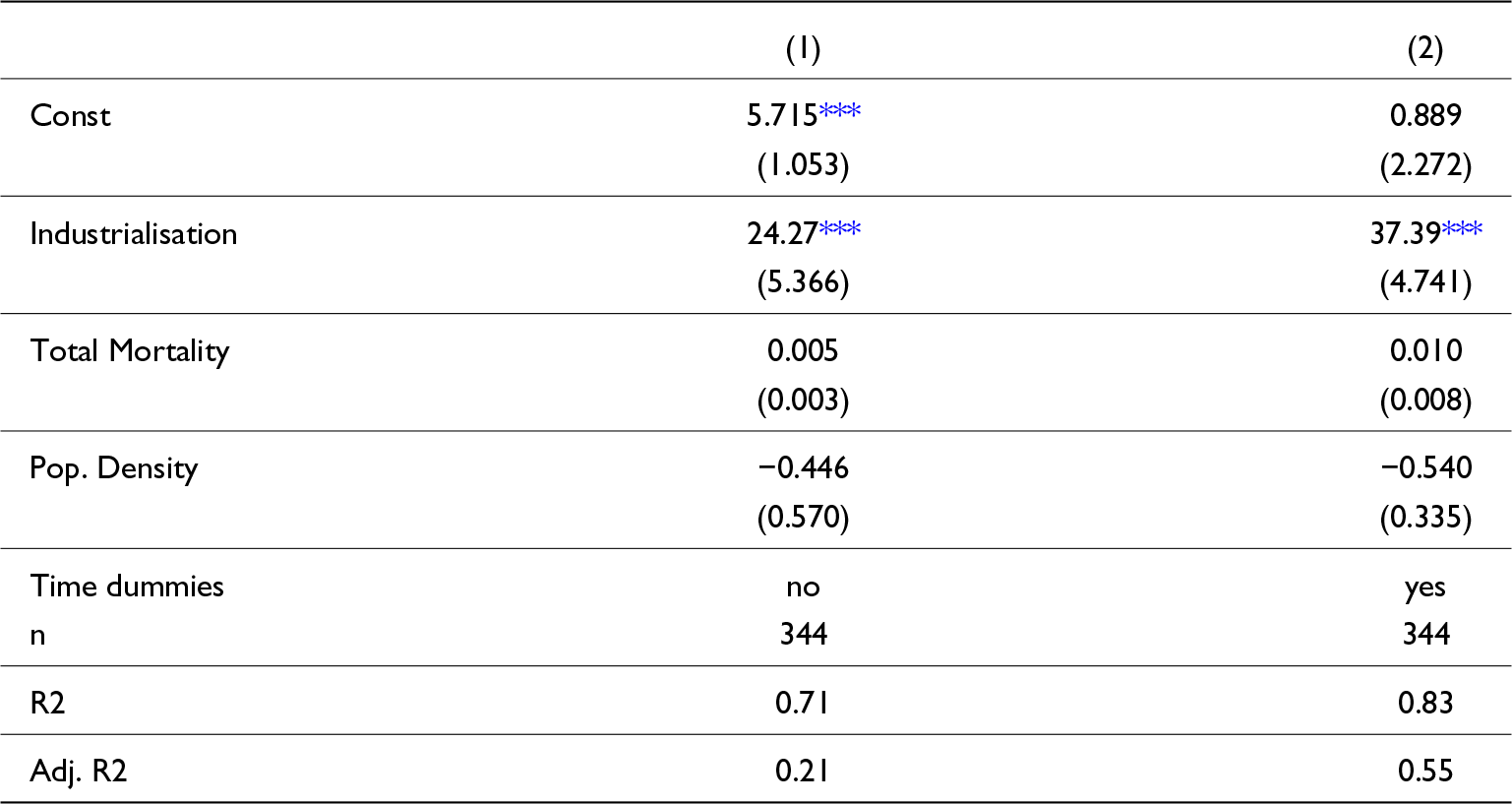
The results of the panel estimates are shown in Table 6. Our variable of interest is positively and statistically correlated with mortality from pulmonary tuberculosis in all specifications, further confirming the results obtained in the previous estimates. The level of industrialisation represents a crucial factor closely related to mortality from pulmonary tuberculosis in the period examined. The results obtained are consistent with the first historical investigations on the geographical distribution of the disease. These investigations have individually examined the relationships between tuberculosis mortality and various socioeconomic and environmental factors, providing insight into the historical dynamics and variables that have contributed to the spread of the disease.Footnote 17
Pulmonary tuberculosis and industrialisation, (1891–1931)—Fixed-effects
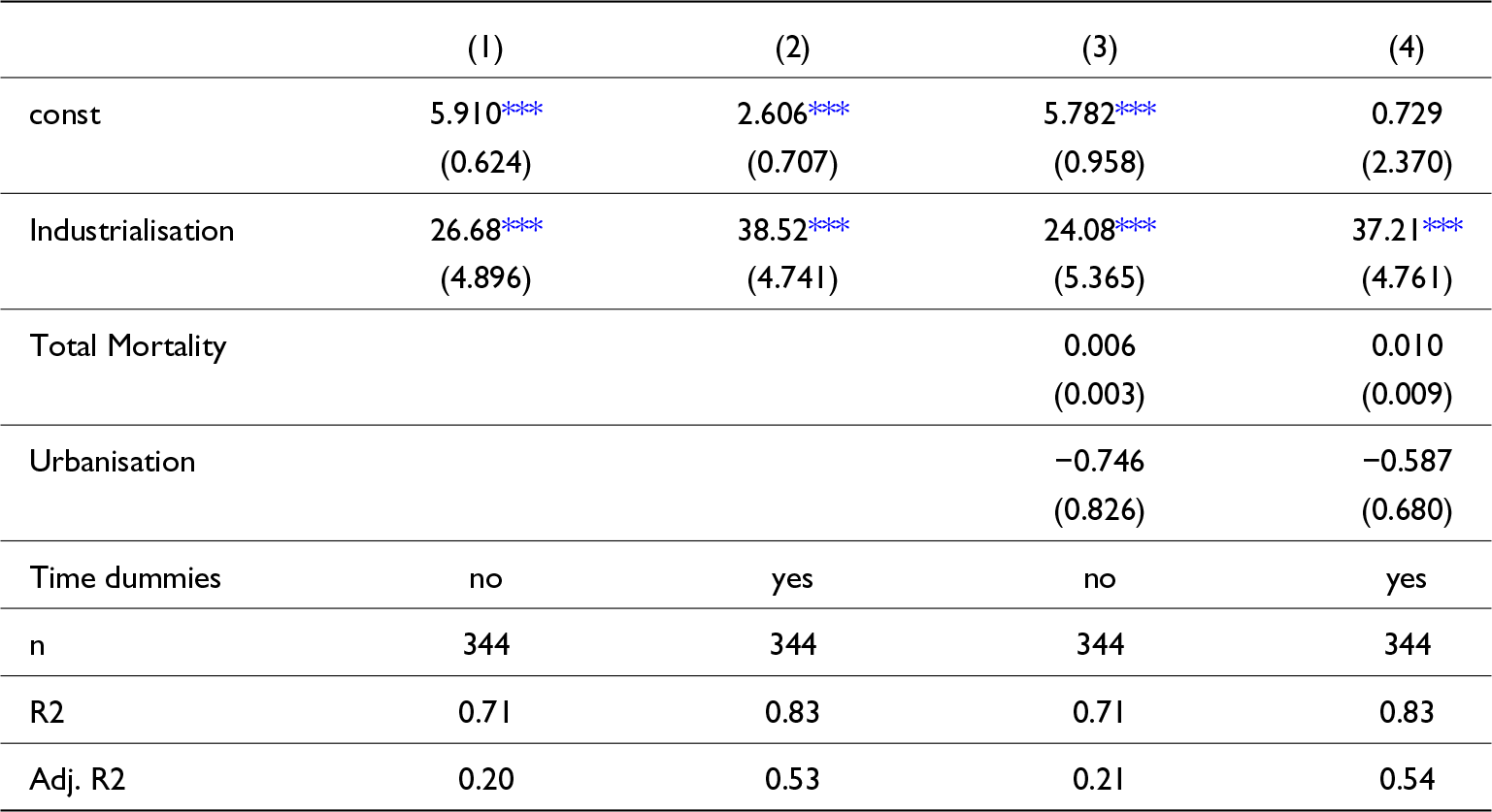
Notes: Heteroscedasticity–robust standard errors, HC1; standard errors in parentheses;
* indicates significance at the 10% level; ** indicates significance at the 5% level; *** indicates significance at the 1% level.
Overall, the results suggest that industrialization played a key role in shaping the provincial differences in pulmonary tuberculosis mortality rates in Italy between the late 19th and early decades of the 20th century. Working long hours in unhealthy environments, such as manufacturing industries characterized by poor ventilation, high humidity, and dust accumulation, combined with strenuous shifts, malnutrition, and crowded living quarters, weakened workers’ immune defences and facilitated the spread of the disease. Over time, thanks to socioeconomic development and the improvement of epidemiological conditions, mortality from PTB has reduced in the more industrialised provinces.
5. Robustness checks
In this section, we conduct a series of additional robustness checks for the years in which supplementary provincial variables are available, specifically for the census years 1901 and 1911, when the relationship between industry and pulmonary tuberculosis mortality is particularly strong.
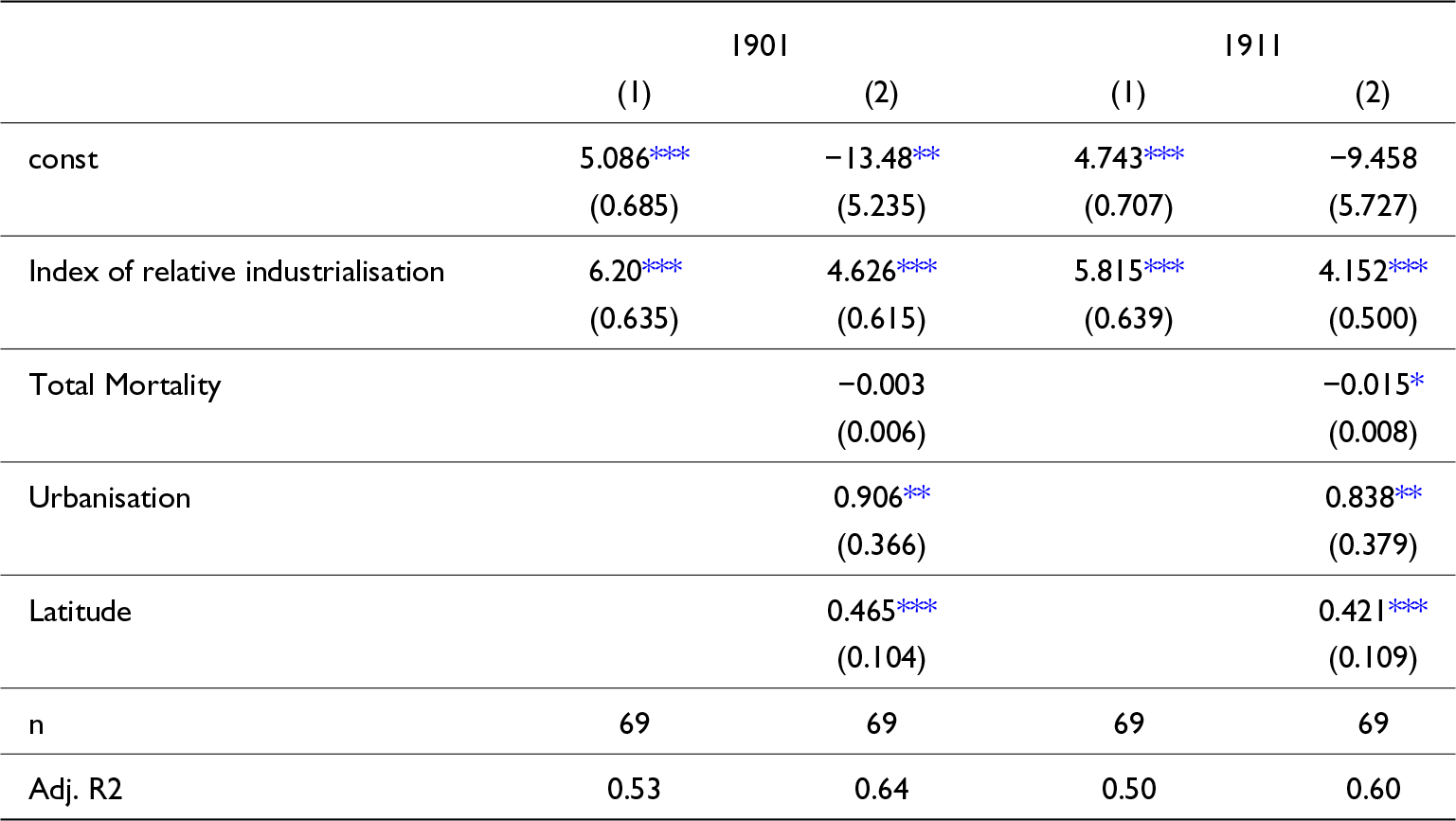
In a first specification, we use the provincial indices of relative industrialization calculated by Ciccarelli and Fenoaltea (Reference Ciccarelli and Fenoaltea2013) as the main explanatory variable instead of the share of industrial workers. The results are presented in Table 7.
Pulmonary tuberculosis and indices of relative industrialisation, (1901–1911)—OLS
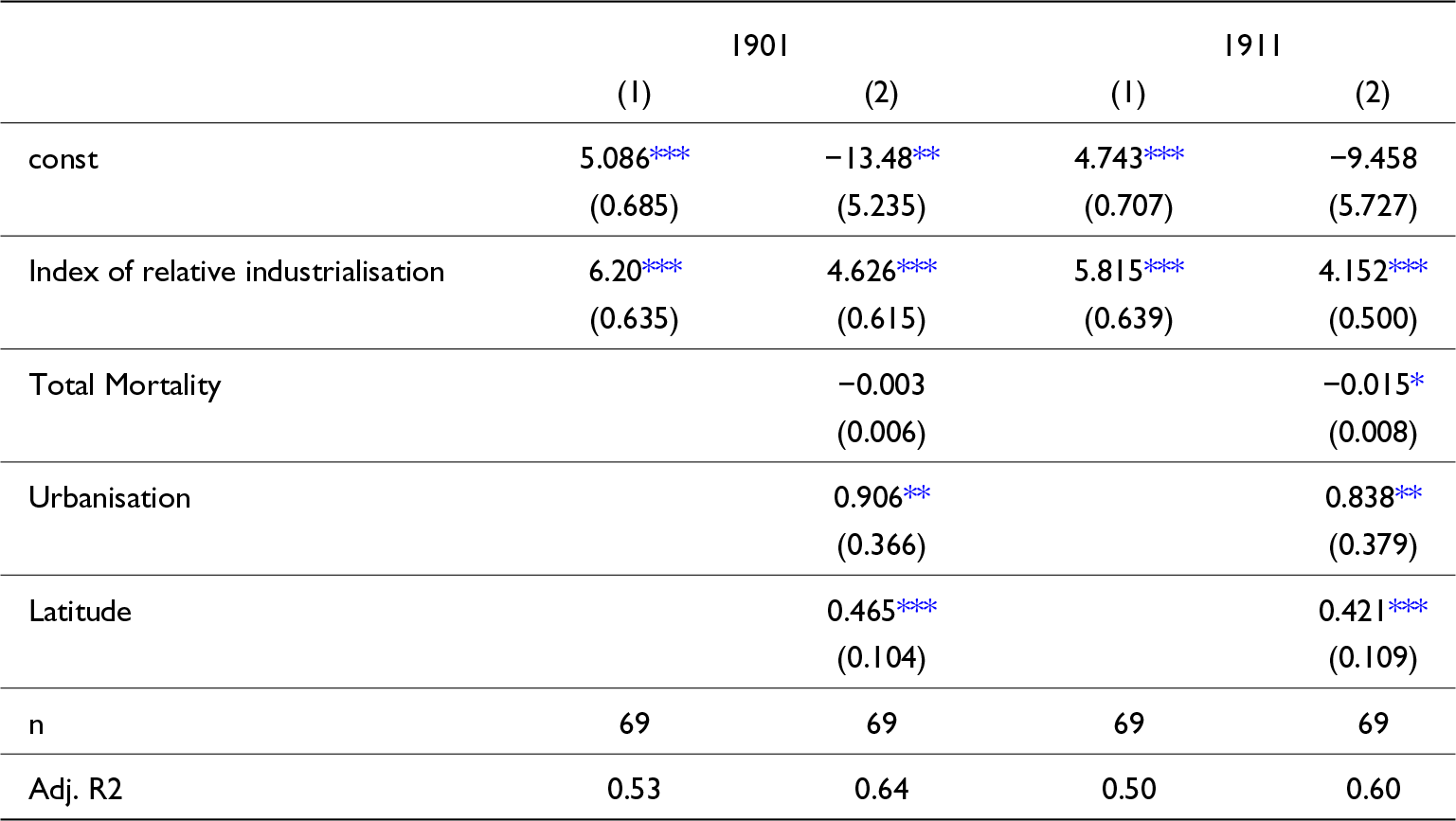
Notes: Heteroscedasticity–robust standard errors, HC1; standard errors in parentheses;
* indicates significance at the 10% level; ** indicates significance at the 5% level; *** indicates significance at the 1% level.
The results demonstrate that, when using a specific provincial industrialization index, the relationship between pulmonary tuberculosis mortality and industrialization is particularly strong. Comparing these new estimates with the results previously presented in Table 4, we observe an improvement in the model’s goodness of fit to the data. Specifically, the R2 increases in both census years considered, from 0.56 to 0.64 and from 0.58 to 0.60. The main explanatory variable consistently shows a positive coefficient that remains statistically significant at the 1% level. However, the coefficient’s absolute value is lower than previously observed due to differences in the scale of measurement.
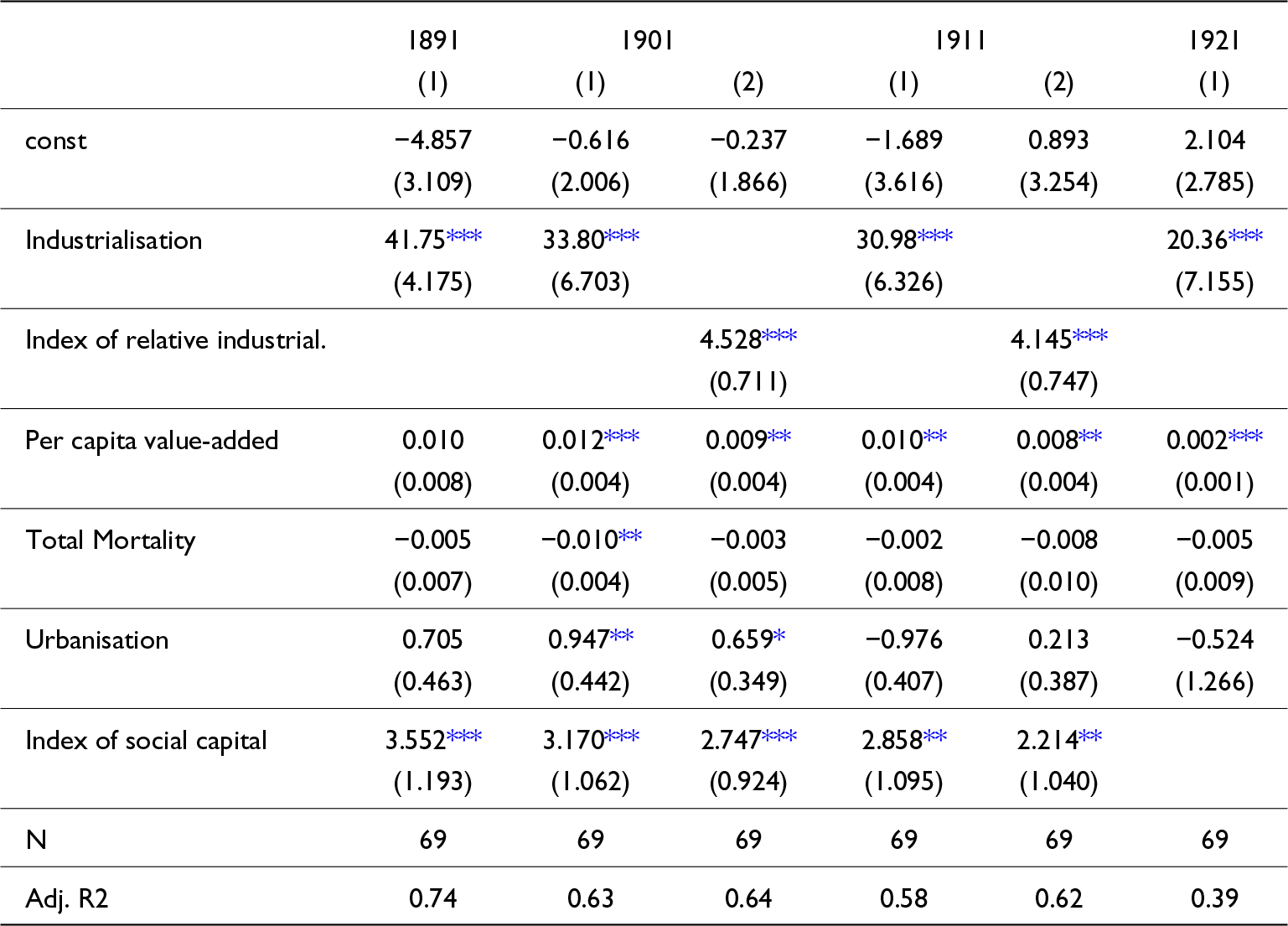
We also perform an additional robustness check by incorporating, as additional control variables, per capita value added and a social capital index, the latter taken from Cappelli (Reference Cappelli2017). For value added, data for the years 1901 and 1911 are drawn from Chiaiese (Reference Chiaiese2024), while figures for 1891 and 1921 are taken from the “Istituto Guglielmo Tagliacarne”. The figure for 1891 was derived by interpolating the values for 1881 and 1901. These variables allow us to account for potential differences in economic development and provincial social contexts, which may independently affect the observed health outcomes. In this specification, we excluded the latitude variable, as it already captures much of the North-South geographic gradient reflected in the newly introduced variables. Indeed, as previously highlighted, latitude incorporates a significant portion of the provincial territorial variability, which is not only linked to specific climatic conditions but also, and most importantly, to socio-economic factors such as income or per capita value added, as well as education and social capital levels.
The results of this analysis are presented in Table 8. Even after including these additional controls, our main explanatory variable continues to show a positive coefficient, remaining statistically significant at the 1% level. This further strengthens the robustness of our findings, clearly reaffirming the central role of industrialization in shaping pulmonary tuberculosis mortality across Italian provinces.
Pulmonary tuberculosis and industrialisation with other control variables, (1901–1911)—OLS
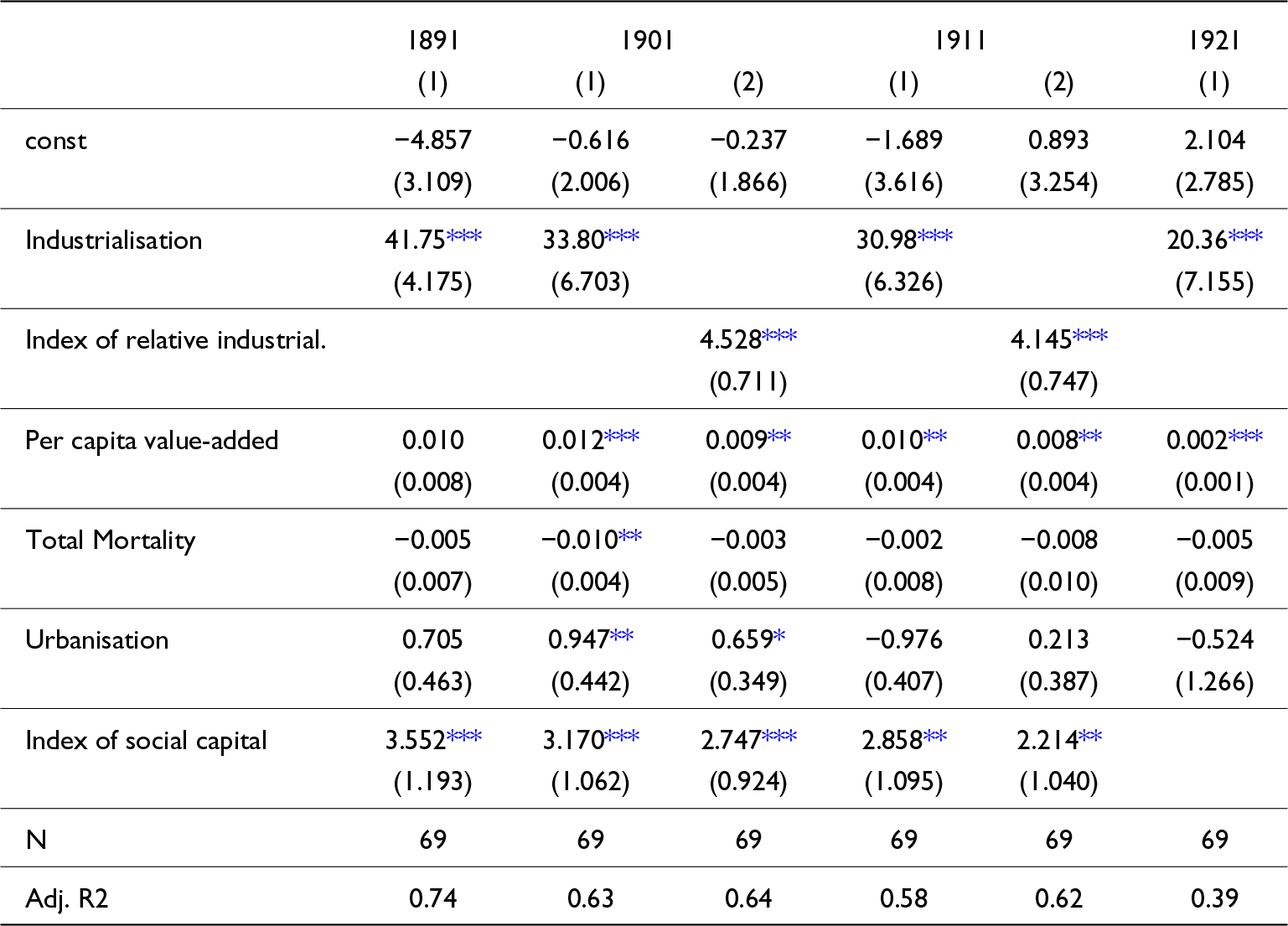
Notes: Heteroscedasticity–robust standard errors, HC1; standard errors in parentheses;
* indicates significance at the 10% level; ** indicates significance at the 5% level; *** indicates significance at the 1% level.
In conclusion, the robustness checks provide strong support for our main findings. Across various measurement approaches and controlling for different variables, industrialization consistently emerges as the key factor explaining provincial differences in pulmonary tuberculosis mortality. The consistency of these results across multiple specifications reinforces our argument that Italy’s industrial development significantly influenced health outcomes related to this disease.
6. Conclusive remarks
This work examined the geographical distribution of mortality from pulmonary tuberculosis in the Italian provinces (NUTS 3) in the period 1887–1955, in relation to the processes of industrialisation and urbanisation.
The relationship between tuberculosis, urban density, and factory work was first observed in England in the late 18th century and later became evident in other European countries and the United States. In the working-class and popular neighbourhoods, the high urban mortality was mainly due to tuberculosis and typhus, the two diseases that Friedrich Engels indicated in 1845 as the main health consequences of industrialisation.Footnote 18 The connection between cities and factories was therefore recognized as the main factor in tuberculosis and continued to be so for a long time. In 1884, Bordier particularly emphasized “emigration from the countryside, the expansion of industry and the difficulties of working-class life in the large cities”.Footnote 19 Scholars of the time linked the spread of tuberculosis above all to population density, overcrowding, lack of light and ventilation in factories and homes in working-class neighbourhoods, poor nutrition and exhausting working hours. The vast literature of the late nineteenth and early twentieth centuries therefore underlined the decisive role of the “diabolical dark workshops”.Footnote 20 In fact, with the establishment of the factory system, pulmonary tuberculosis became a real occupational disease, especially for some categories of workers most exposed to inhaling dust.
Although highlighted numerous times by historians, the relationship between PTB and industrialisation has never been examined from a quantitative perspective in the Italian case. This work constitutes a first attempt at analysis. The results clearly indicate that, in the period 1891–1931—a phase in which there was a significant acceleration of Italy’s industrialisation process—the more industrialised northern provinces recorded significantly higher mortality rates from pulmonary tuberculosis.
Subsequently, with economic and health improvements, with a more efficient organisation of work and following some legislative provisions,Footnote 21 mortality decreased considerably, especially in industrialised areas. The coefficient relating to industrialisation is always positive and statistically significant in all specifications up to 1931. The panel estimates confirm this result.
The general mortality rate, which is often used as an indicator of the state of health of the population, shows no direct correlation with tuberculosis mortality. On the contrary, in the period 1891–1931, the relationship appears to be negative, suggesting that in provinces with a lower general mortality rate, tuberculosis deaths were higher on average.
Urbanisation showed significant effects on pulmonary tuberculosis mortality only in some years (1891, 1901, 1931), while this effect was no longer relevant in 1951, reflecting the improvements in urban infrastructure and health conditions in large cities, such as housing redevelopment, the expansion of sewage systems and better access to medical services.Footnote 22 Urbanization facilitated the expansion of public health, though unevenly: industrialized cities quickly adopted new health infrastructures to protect the workforce and support economic growth, while rural areas experienced significant delays in accessing these innovations (Gallardo‐Albarrán, Reference Gallardo‐Albarrán2024).
Latitude was a consistently significant variable, suggesting that climatic and environmental conditions, along with unobserved socioeconomic factors captured by latitude, significantly influenced the spread of PTB.
In Italy, a country that was a latecomer to industrialisation, mortality from pulmonary tuberculosis followed a trend similar to that found in other countries that had first experienced the process of modern industrialisation. Comparative studies in Britain, Germany, Japan and Norway, show that industrial areas initially underwent higher mortality rates, followed by a reduction due to health and infrastructure improvements. In summary, in Italy, just as in other nations, the start of modern industrialisation, in its first phase, with the rhythms and working conditions imposed on workers and due to the correlated situation of the most industrialised cities, favoured the diffusion of PTB. These findings are broadly consistent with the “benevolent” interpretation of Italian industrialisation proposed by Toniolo (Reference Toniolo2003) and Vecchi (Reference Vecchi2017), which emphasises long-term improvements in well-being despite limited structural transformation. In some areas, PTB mortality initially rose and then remained high until the 1920s, suggesting that the early benefits of industrial growth were not sufficient to offset associated health risks. However, the more rapid decline observed thereafter—particularly in the most industrialised areas—indicates that rising living standards and improved public health infrastructure ultimately contributed to the sharp reduction and near eradication of the disease.
Moreover, although other factors such as population density, climatic conditions, and socio-economic variables may have contributed to mortality, robustness checks further confirm that the central role of industrialization remains indisputable in explaining pulmonary tuberculosis mortality. The limited availability of data consistent over time at the provincial level does not allow us to verify the effect of further variables, such as the housing conditions and well-being of the populations, potentially capable of influencing the results. However, the results of this work confirm how death from tuberculosis was one of the “human costs” of economic development during the nineteenth century.
Acknowledgments
The author would like to thank Vittorio Daniele for his helpful suggestions on an earlier draft of this article, as well as the two anonymous referees for their valuable comments
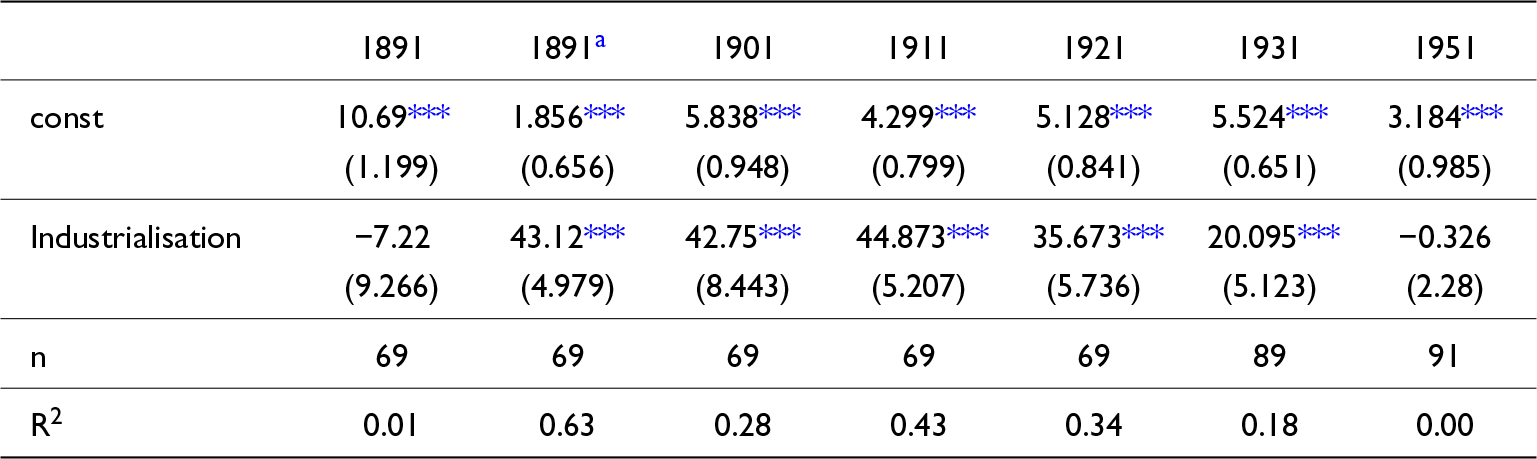
Appendix
Pulmonary tuberculosis and industrialisation, (1891–1951)—OLS, without controls
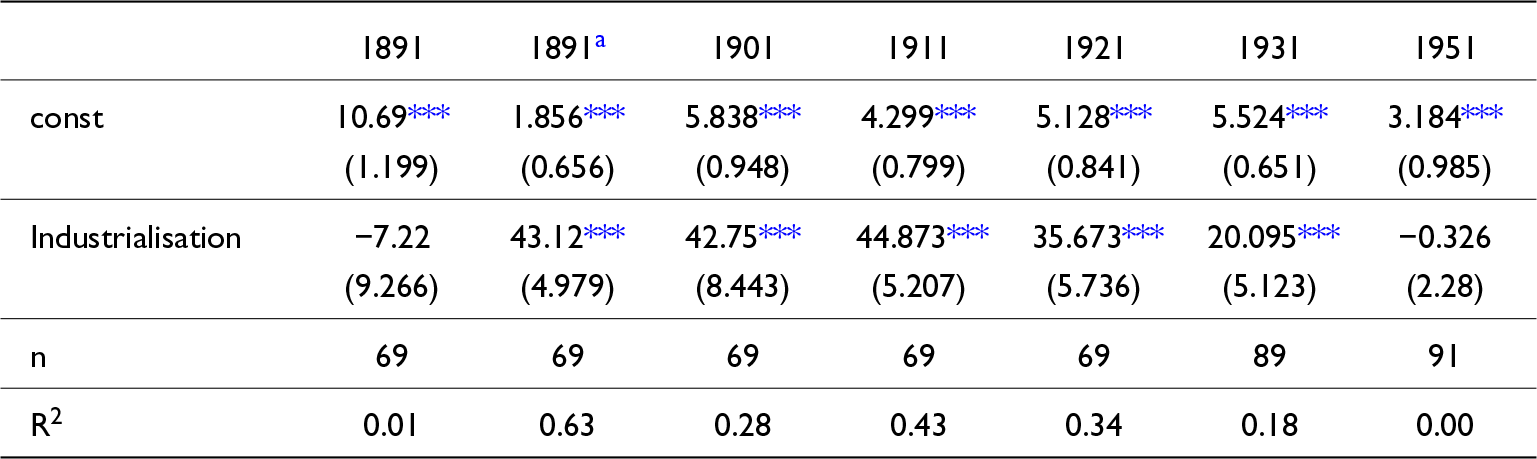
Notes: Heteroscedasticity–robust standard errors, HC1; standard errors in parentheses; 1891
a refers only to males; * indicates significance at the 10% level; ** indicates significance at the 5% level; *** indicates significance at the 1% level.
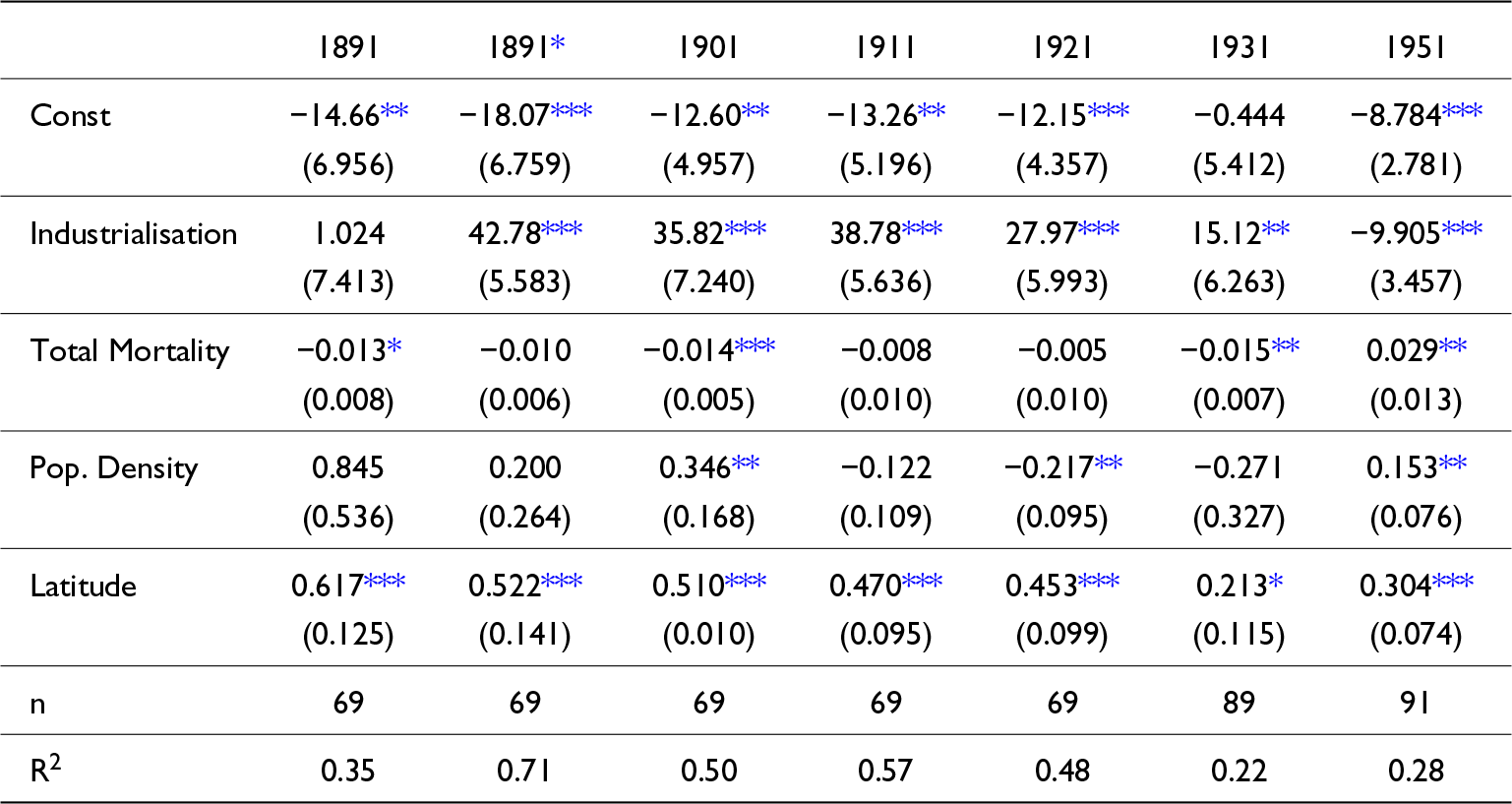
Pulmonary tuberculosis and industrialisation, (1891–1951)—OLS, with population density

Notes: Heteroscedasticity–robust standard errors, HC1; standard errors in parentheses; 1891* refers only to males;
* indicates significance at the 10% level; ** indicates significance at the 5% level; *** indicates significance at the 1% level.
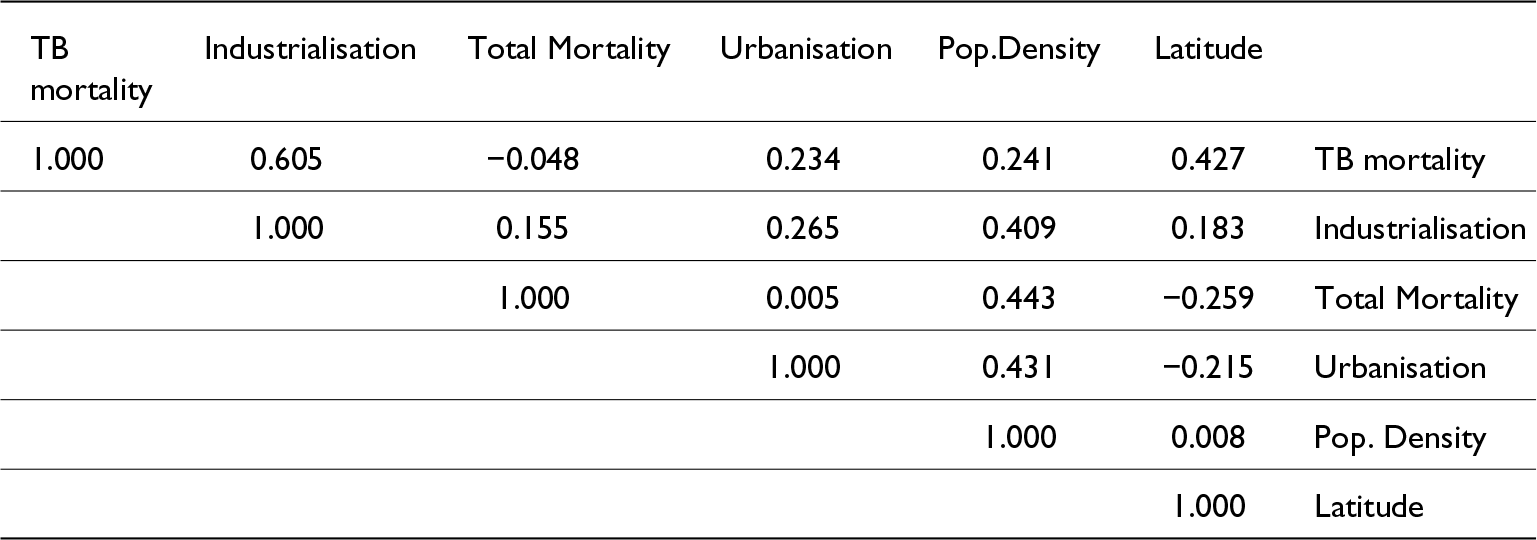
Correlation matrix (1891–1931)

5% critical value (for two tails) = 0.1056 for n = 344
Pulmonary tuberculosis and industrialisation. (1891–1931)—Pooled OLS, with population density

Notes: Heteroscedasticity–robust standard errors. HC1; standard errors in parentheses;
* indicates significance at the 10% level; ** indicates significance at the 5% level; *** indicates significance at the 1% level.
Pulmonary tuberculosis and industrialisation. (1891–1931)—Fixed-effects, with population density
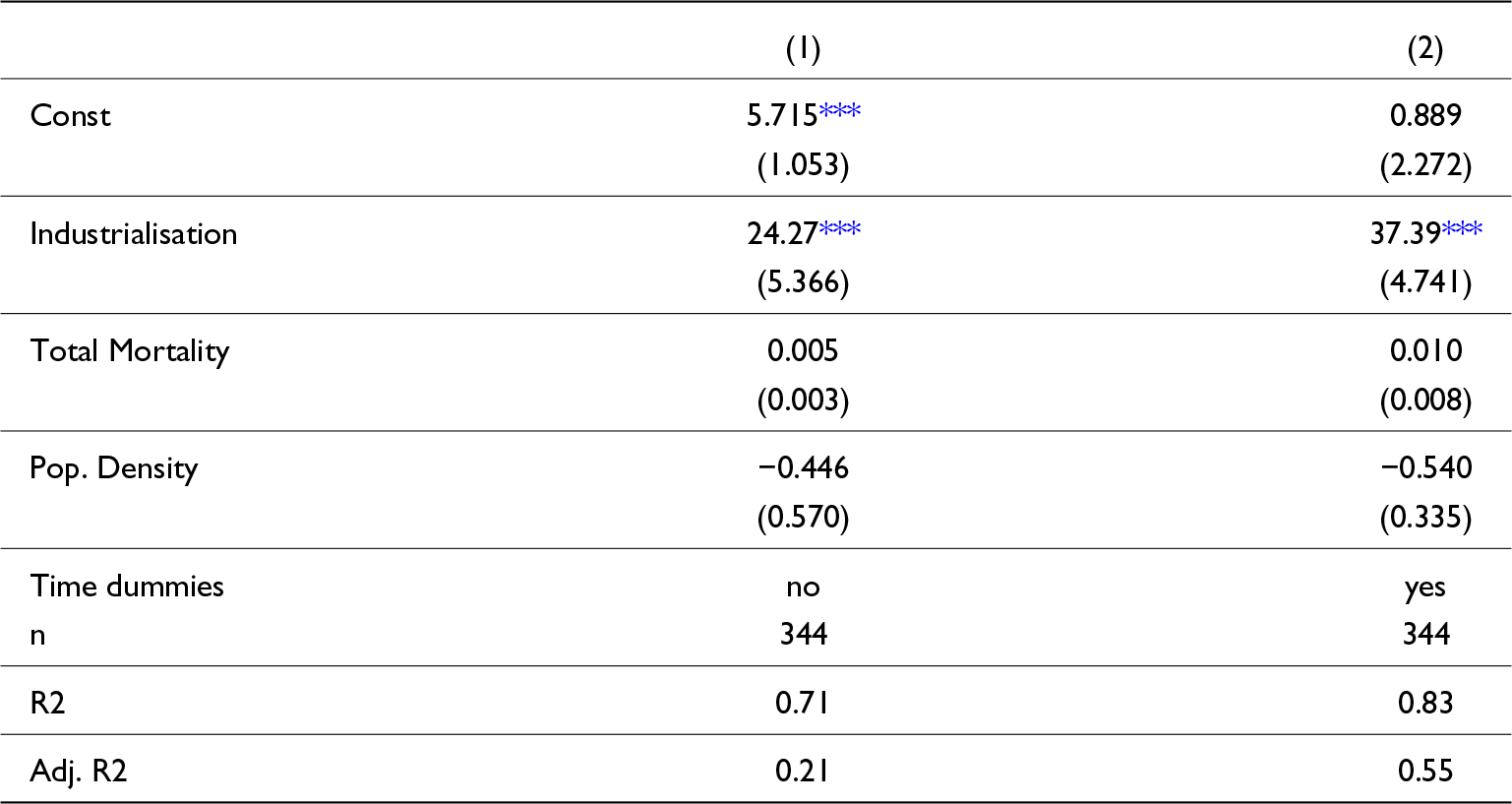
Notes: Heteroscedasticity–robust standard errors. HC1; standard errors in parentheses;
* indicates significance at the 10% level; ** indicates significance at the 5% level; *** indicates significance at the 1% level.