Introduction
Owing to its extensive area of occurrence, the Cerrado biogeographical domain is characterised by a high diversity of vegetation types, especially in areas of contact with the surrounding domains, such as the Amazon, the Atlantic Forest, the Caatinga and the Pantanal (Ministério do Meio Ambiente, 2006). Furthermore, the Cerrado domain is considered a global biodiversity hotspot due to its rich biodiversity and the intense anthropogenic pressure that is drastically decreasing its original area (Myers et al., Reference Myers, Mittermeier, Mittermeier, Fonseca and Kent2000). Its flora is characterised by a wide regional variation in species composition (Ratter et al., Reference Ratter, Bridgewater and Ribeiro2003, Reference Ratter, Bridgewater, Ribeiro, Fonsêca-Filho, Rodrigues da Silva, Milliken, Pullan, Pott, Oliveira-Filho, Durigan and Pennington2011) and high species richness, estimated by Fernandes et al. (Reference Fernandes, Aguiar, dos Anjos, Bustamante, Collevatti, Dianese, Diniz, Ferreira, Ferreira, Ferreira, Françoso, Langeani, Machado, Marimon, Marimon, Neves, Pedroni, Salmona, Sanchez, Scariot, Silva, Silveira, de Vasconcelos, Colli, Peixoto, Luz and de Brito2016) at 13,140 vascular plant species.
Maranhão State has a total area of 331,937 km2, of which 65% is occupied by cerrado vegetation (Sano et al., Reference Sano, Rosa, Brito and Ferreira2008), with the cerradão (forested savanna) as the main physiognomy (Eiten, Reference Eiten1994). The cerrados of Maranhão represent the northernmost distribution of this biome in Brazil, and their extensive distribution across the state places them in contact with Amazon rain forest, restinga and caatinga (IBGE, 1984; Sano et al., Reference Sano, Rosa, Brito, Ferreira and Bezerra2009). The cerradão of Maranhão is physiognomically distinct from the cerradão of central Brazil and São Paulo State, because it is more open or savanna-like, whereas cerradão in the latter two areas is more closed or forested (Eiten, Reference Eiten1994). Floristically, species common in the Cerrado of central Brazil are replaced by other species belonging to the same genus in Maranhão. Examples include the substitution of Caryocar brasiliense Cambess. with C. coriaceum Wittm. and Dimorphandra mollis Benth. with D. gardneriana Tul. (Eiten, Reference Eiten1994).
In Maranhão, the Cerrado domain is the domain most affected by vegetation cover loss, which is mainly driven by plantation of large soybean fields and, more recently, Eucalyptus. Between 2002 and 2008, cerrado areas in the state of Maranhão had the highest deforestation rate of any Brazilian state, resulting in the loss of approximately 49,000 km2 (equivalent to c.15%) of the cerrado (Ministério do Meio Ambiente, 2009).
The few surveys of cerrado vegetation conducted in Maranhão to date have yet to produce a volume of floristic data comparable to that available for the cerrados of central Brazil, which have been intensively studied for much longer (e.g. Figueiredo & Andrade, Reference Figueiredo, Andrade and Barreto2007; Medeiros et al., Reference Medeiros, Walter and Silva2008; Silva et al., Reference Silva, Figueiredo and Andrade2008; Conceição & Castro, Reference Conceição and Castro2009; Neres & Conceição, Reference Neres and Conceição2010). Furthermore, they are localised studies with different methodologies, leading to biased results and gaps in survey areas (Hortal et al., Reference Hortal, Lobo and Jiménez-Valverde2007). High degradation rates and incomplete knowledge of biodiversity make it difficult to establish conservation strategies (Oliveira et al., Reference Oliveira, Paglia, Brescovit, de Carvalho, Silva, Rezende, Leite, Batista, Barbosa, Stehmann, Ascher, de Vasconcelos, De Marco, Löwenberg-Neto, Dias, Ferro and Santos2016), which are fundamental to the maintenance of cerrado.
Here we describe a study, based on standardised surveys, of the woody species of the cerrado flora throughout 12 areas across Maranhão, and we evaluate floristic relationships with other cerrado areas in Brazil.
Materials and Methods
Study area
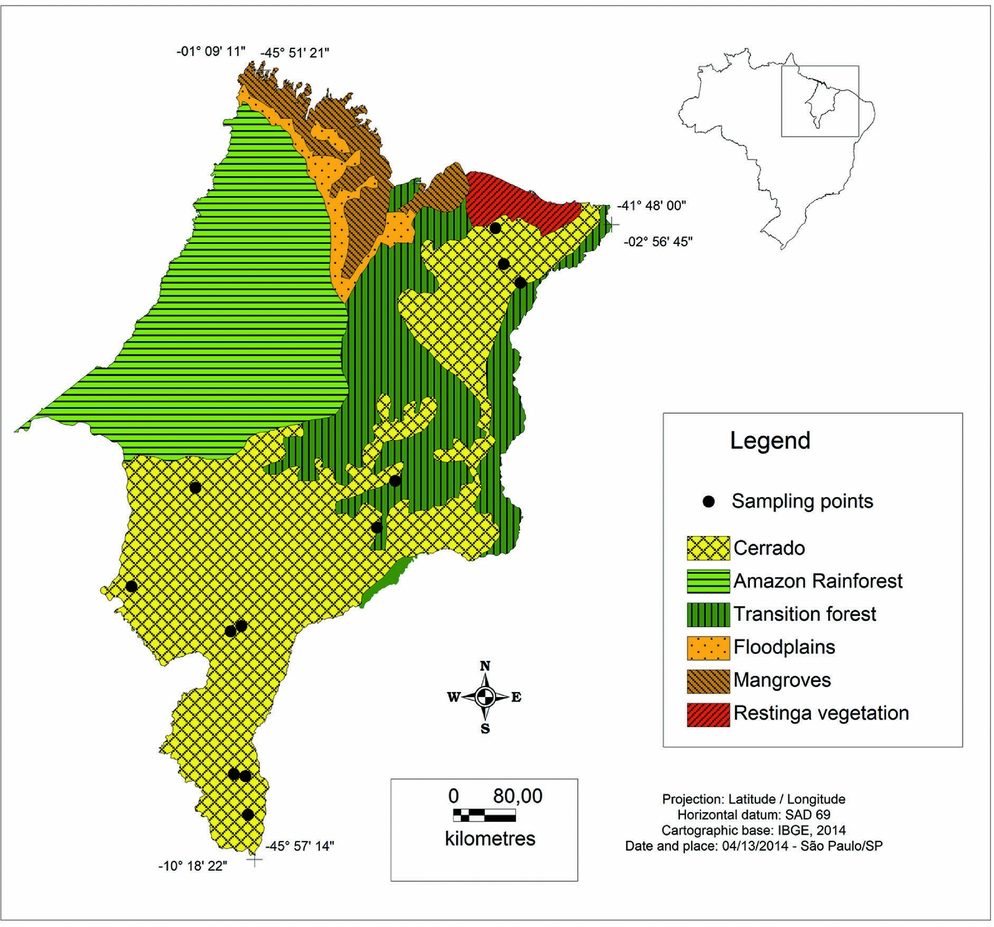
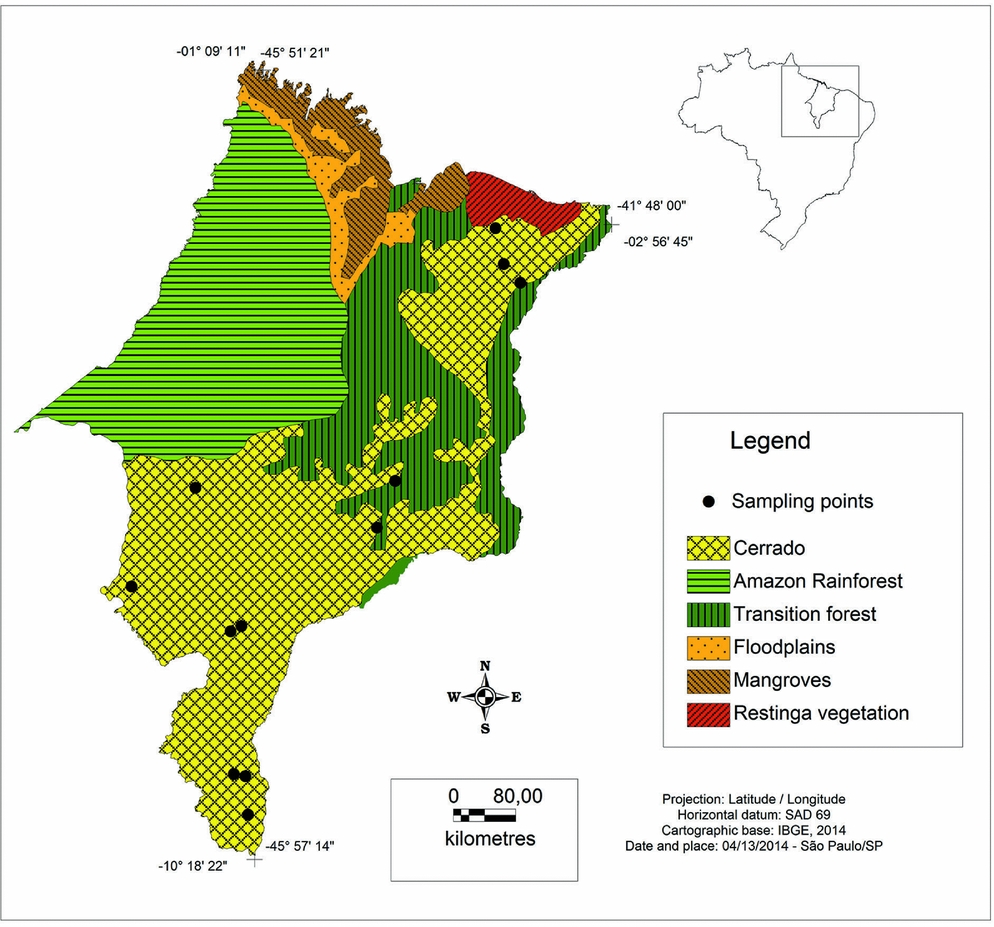
Maranhão State is located in an area of transition between three Brazilian macroregions, namely the North, Northeast and Central-West regions, and has climatic and phytogeographical characteristics typical of all of these. Maranhão is located between latitudes 01°09′11″ and 10°18′22″S and longitudes 41°48′00″ and 45°51′21″W, and has an area of 331,937 km2 (IMESC, 2008; IBGE, 2014) (Fig. 1).
Map of Maranhão State. The cerrado biome areas sampled are highlighted.
The climate in Maranhão is transitional between the humid climate of the Amazon and the semiarid climate of the Northeast. The Maranhão climate varies from humid B2 (northern region) to humid B1 (northwestern region) and from subhumid C2 (central and northeastern regions) to dry subhumid C1 (southern to southeastern regions of the state). Mean temperature varies between 22 and 27°C, and annual rainfall ranges from 800 to 2800 mm (Thornthwaite, Reference Thornthwaite1948; IMESC, 2008).
The relief is characterised by a plain that extends from the coast to the centre of the state, where it becomes narrower and, in the south-central region, is found alongside the branches of the Brazilian Central Plateau. Overall, the relief is characterised by a large plateau, with the altitude increasing from north to south. The mean elevation varies between 200 and 800 m in southern Maranhão and between 200 and 400 m in the central region, whereas it drops to sea level in the North and Northeast (Feitosa, Reference Feitosa2006).
The vegetation cover consists mainly of Amazon forest in the western part of the state and on floodplains, with mangroves and restinga on the coast. The cerrado covers the entire southern region up to the Northeast, with cerradão being the dominant physiognomy (IMESC, 2008) (see Fig. 1).
Survey and data analysis
Collections were made between 2010 and 2013 in 12 cerradão areas, using the multiple-plot method (Mueller-Dombois & Ellenberg, Reference Mueller-Dombois and Ellenberg1974). Four 10 m by 20 m (200 m2) plots were set up at each locality, systematically distributed 200 m apart, totalling a sampled area of 0.960 ha (see Fig. 1). All individuals with perimeter at ground level ≥ 9 cm were sampled. Additionally, random collections of fertile shrubs and trees occurring in the sampled areas were made.
Botanical identification was achieved by reference to specialised literature, comparison with herbarium collections and digital images, and examination by specialists. Exsiccates were deposited in the herbarium of the Botanical Institute, São Paulo (SP), with duplicates in the herbarium of the Federal University of Maranhão (MAR). Taxonomic classification was based on the Angiosperm Phylogeny Group system (Angiosperm Phylogeny Group, 2009).
Based on their distribution ranges, species were classified as Neotropical (occurring in both Brazil and other South and Central American or Caribbean countries), South American (occurring in two or more South American countries), Brazilian (endemic to Brazil, occurring in two or more regions) or regional (endemic to northeastern Brazil). Distribution data were obtained from the List of Species of the Brazilian Flora (Lista de Espécies da Flora do Brasil) (Flora do Brasil, 2020 under construction), the Virtual Herbarium of Brazilian Flora and Fungi (Herbário Virtual da Flora e Fungos do Brasil) of the National Science and Technology Institute (Institutos Nacionais de Ciência e Tecnologia) (INCT, no date) and Tropicos (Missouri Botanical Garden, no date).
Species names used in the data matrix were reviewed and updated to avoid the use of non-accepted names and synonyms. This was based on the Tropicos database (Missouri Botanical Garden, no date) and the List of Species of the Brazilian Flora (Flora do Brasil, under construction). Only Maranhão species unreferenced in either database were considered as new occurrences.
Analysis of the floristic data was characterised by two distinct approaches: first, an evaluation of the floristic position of the Maranhão vegetation relative to other cerrado areas in Brazil; and second, an analysis of the floristic regions throughout the cerrado in Maranhão.
Data analysis was based on a binary data matrix with presence or absence data for species sampled in our survey and those recorded by Ratter et al. (Reference Ratter, Bridgewater, Ribeiro, Fonsêca-Filho, Rodrigues da Silva, Milliken, Pullan, Pott, Oliveira-Filho, Durigan and Pennington2011) for 367 cerrado areas in Brazil (Royal Botanic Garden Edinburgh, no date).
Sites with fewer than 10 species occurences (n = 47) were removed to avoid the intrinsic noise that species-poor sites or incomplete sampling usually adds (Pennington et al., Reference Pennington, Banda-R, Delgado-Salinas, Dexter, Linares-Palomino and Oliveira-Filho2016). The resulting matrix consisted of 886 species and 332 sites.
Analyses were run in the R Statistical Environment, version 3.2.1, using the Vegan package (Oksanen et al., Reference Oksanen, Blanchet, Friendly, Kindt, Legendre, McGlinn, Minchin, O'Hara, Simpson, Solymos, Stevens, Szoecs and Wagner2017) and the Recluster package (Dapporto et al., Reference Dapporto, Ramazzotti, Fattorini, Talavera, Vila and Dennis2013). Floristic relationships were analysed with cluster analysis and the unweighted pair-group method with arithmetic mean (UPGMA), with distances calculated using the Simpson dissimilarity index. This index is less affected by variation in species richness than other measures (Baselga, Reference Baselga2010), and our data set varied from 10 to 212 species per site. The index (β sim) calculates the distance between pairs of sites: β sim = 1 – J/[J + min (A, B)], where A and B are the numbers of species unique to each site, and J is the number of species common to both sites (Pennington et al., Reference Pennington, Banda-R, Delgado-Salinas, Dexter, Linares-Palomino and Oliveira-Filho2016).
Hierarchical clusters convert dissimilarity matrices into bifurcated dendrograms and provide a useful tool to facilitate regionalisation of communities. Bifurcations also occur when an area shows intermediate dissimilarities between others, as expected when different sources contribute elements to matrix (Dapporto et al., Reference Dapporto, Ramazzotti, Fattorini, Talavera, Vila and Dennis2013). Furthermore, the Simpson index enhances the frequency of tied cell values (equal similarity for two or more areas) and zero values. When tied values occur in distance matrices, several solutions are possible at each bifurcation step of hierarchical clustering. As a consequence, the number of different output trees is related to the number of tied values produced, causing the resulting tree and bootstrap support values to be affected by the order of areas (rows) in the original database. Cluster analysis perfomed by the Recluster package generates 10,000 trees by resampling the order of sites in the original dissimilarity matrix to construct a 50% consensus tree. The resulting tree is unaffected by original row order (Dapportto et al., Reference Dapporto, Ramazzotti, Fattorini, Talavera, Vila and Dennis2013).
To investigate relationships between the floristic groups identified by the overall cluster analysis, the species lists for each group at 30% dissimilarity were pooled into a single list and new cluster analyses on a species × floristic group matrix were performed successively.
Owing to the high heterogeneity of the cerrado samples, the unity of each floristic region was interpreted based on the number and geographical location of the sites and according to bootstrap analysis (≥ 50% node support).
Cluster analysis was performed for both 34 Maranhão cerrado sites and for all 332 Brazilian cerrado sites. The geographical locations of sampled sites were mapped using the QGIS 2.16.1 software (QGIS Development Team, 2018) and Google Earth Pro (Pereira et al., Reference Pereira, Guimarães and Oliveira2018).
Results
The floristic richness recorded in the 12 sampled areas was 150 species, distributed across 43 families and 105 genera (Table 1). The nine most species-rich families were Fabaceae (29 species); Bignoniaceae and Malpighiaceae (10 species each); Annonaceae, Erythroxylaceae, Myrtaceae and Vochysiaceae (6 species each); and Malvaceae and Salicaceae (5 species each). Together, species in these families comprised 55% of the species sampled.
List of species from the 12 cerrado localities in Maranhão State sampled in the present study, with their respective areas of occurrence and vouchers

*Species not listed in the Ratter et al. (Reference Ratter, Bridgewater, Ribeiro, Fonsêca-Filho, Rodrigues da Silva, Milliken, Pullan, Pott, Oliveira-Filho, Durigan and Pennington2011) survey.
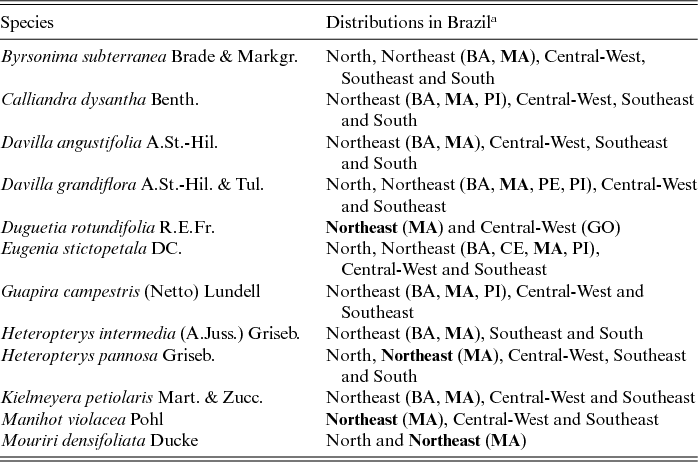
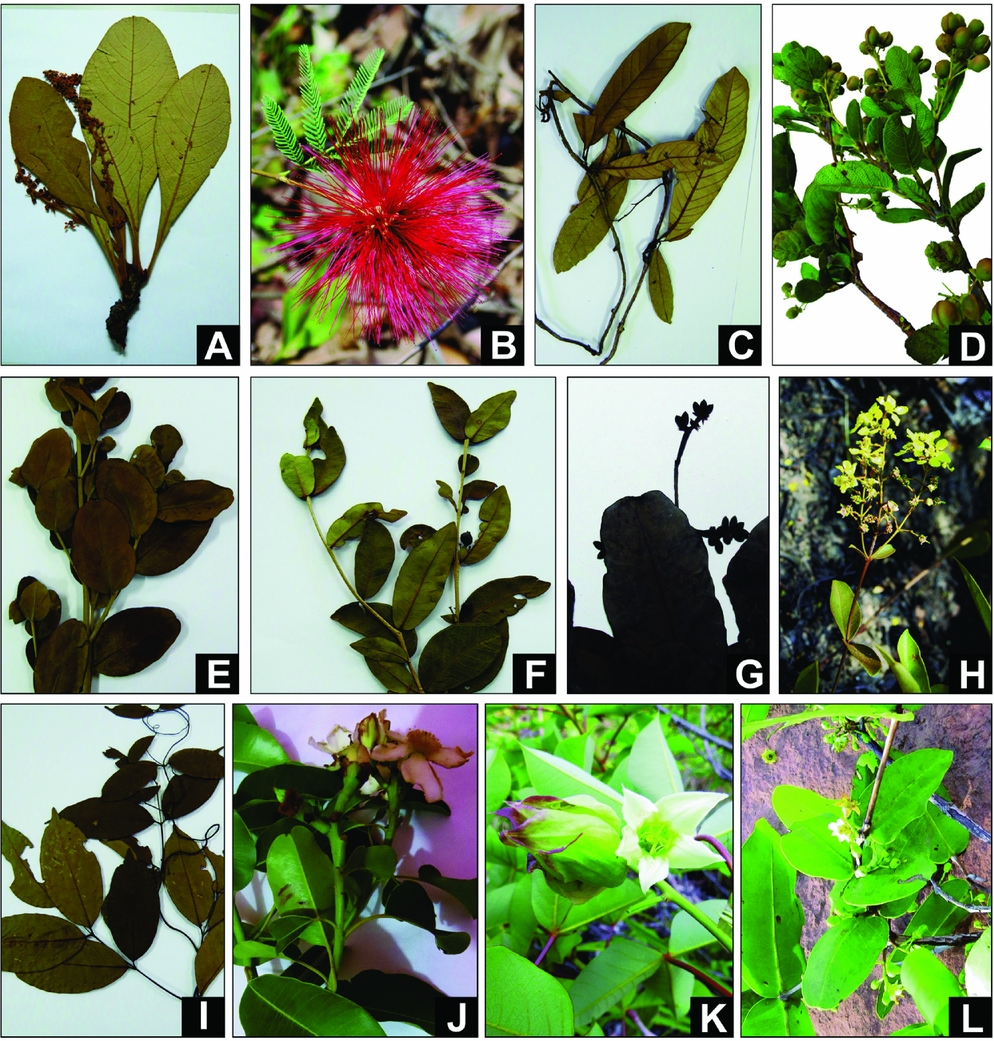
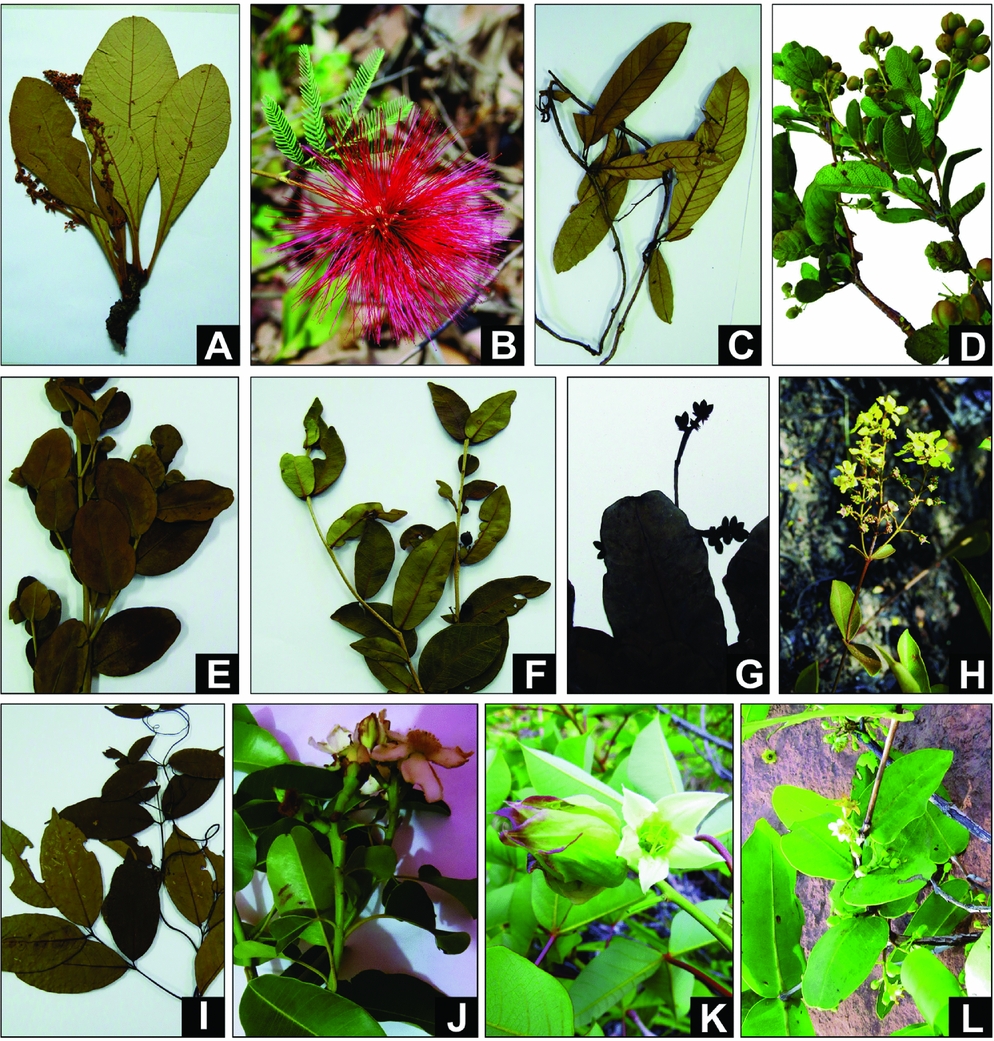
A total of 12 new occurrences were recorded for Maranhão (Table 2 and Fig. 2). Among the new records were Duguetia rotundifolia R.E.Fr. (Fig. 2E), recorded for the first time since the type specimen was collected in Goiás state, and Heteropterys pannosa Griseb. (Fig. 2H), Manihot violacea Pohl (Fig. 2K) and Mouriri densifoliata Ducke (Fig. 2L), new occurrences in the Northeast region.
New species occurrences for the cerrado of Maranhão and its distributions in Brazil

BA, Bahia; CE, Ceará; GO, Goiás; MA, Maranhão; PE, Pernambuco; PI, Piauí.
a New occurrences for Maranhão and the Northeast are in bold.
New species occurrences for Maranhão State. A, Byrsonima subterranea Brade & Markgr.; B, Calliandra dysantha Benth.; C, Davilla angustifolia A.St.-Hil.; D, Davilla grandiflora A.St.-Hil. & Tul.; E, Duguetia rotundifolia R.E.Fr.; F, Eugenia stictopetala DC.; G, Guapira campestris (Netto) Lundell; H, Heteropterys pannosa Griseb.; I, Heteropterys intermedia (A.Juss.) Griseb.; J, Kielmeyera petiolaris Mart. & Zucc.; K, Manihot violacea Pohl; L, Mouriri densifoliata Ducke. (Photographs: H. G. Silva-Moraes.)
Most species sampled in this study have wide geographical distributions (75%). A total of 23 species are Neotropical, 87 occur in two or more South American countries, 29 are endemic to two or more Brazilian regions and 5 are endemic to the Northeast.
A total of 886 species in the data matrix were used for the analysis of floristic similarity. Of these, 50 were identified exclusively in this study (not recorded in the original data matrix).
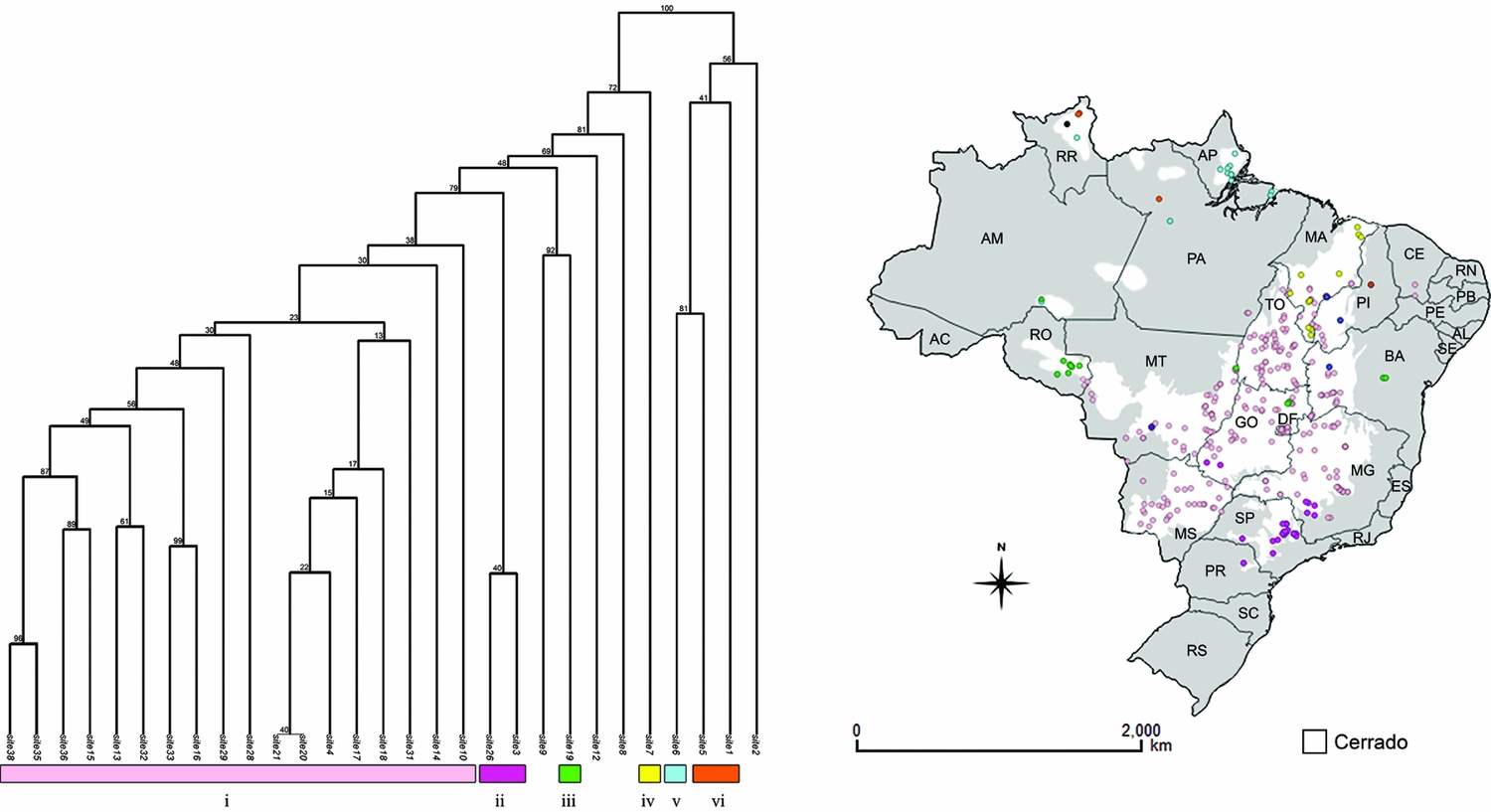
The resulting consensus tree from the database of the 332 cerrado vegetation sites indicates the occurrence of six floristic regions (Fig. 3). The first floristic region (i) covers the so-called ‘cerrado core’ or central region of the cerrado; it comprises samples located in the states of Mato Grosso do Sul, Mato Grosso, the central part of Rondônia, Goiás, Distrito Federal, Minas Gerais, the west-central part of Bahia, Tocantins, the south of Piauí, Ceará, southern Pará and southern Maranhão. The second floristic region (ii) comprises the cerrado of São Paulo, Paraná, southern Minas Gerais and the southwestern part of Goiás. The third floristic region (iii) comprises the central-southern part of Rondônia and one unexpected area in the southeast of Maranhão. The fourth floristic region (iv) is where the main divergence of the cerrado floristic regions proposed by Ratter et al. (Reference Ratter, Bridgewater, Ribeiro, Fonsêca-Filho, Rodrigues da Silva, Milliken, Pullan, Pott, Oliveira-Filho, Durigan and Pennington2011) occurs, with the inclusion of low-altitude cerrado samples from the centre and northeast of Maranhão as well as samples from the highest altitudes in the southern part of the state. The last two floristic regions cover the disjunct Amazonian cerrados: the fifth (v) includes samples from northern Pará, Amazonas and Amapá and the central region of Roraima; and the sixth (vi) comprises samples from northern Pará and northern Roraima (in addition to isolated samples from Amazonas).
Floristic similarity obtained from consensus tree (unweighted pair-group method with arithmetic mean) using the Simpson similarity index from the database of 332 Brazilian cerrado vegetation sites. Bootstrap values are provided on each node. The first floristic region (i) covers the central region of the cerrado: Bahia (BA), Ceará (CE), Distrito Federal (DF), Goiás (GO), Maranhão (MA), Minas Gerais (MG), Mato Grosso do Sul (MS), Mato Grosso (MT), Pará (PA), Piauí (PI), Rondônia (RO) and Tocantins (TO). The second region (ii) corresponds to GO, MG, Parána (PR) and São Paulo (SP). The third region (iii) corresponds to RO and one unexpected area in the southeast of MA. The fourth region (iv) represents the low-lying cerrado together with that of the highest altitudes in MA. The final floristic regions (v and vi) cover the disjunct Amazonian cerrados: the fifth region (v), PA, Amazonas (AM), Amapá (AP) and the central region of RO; and the sixth region (vi), northern PA and northern RO (in addition to isolated samples from Amazonas).
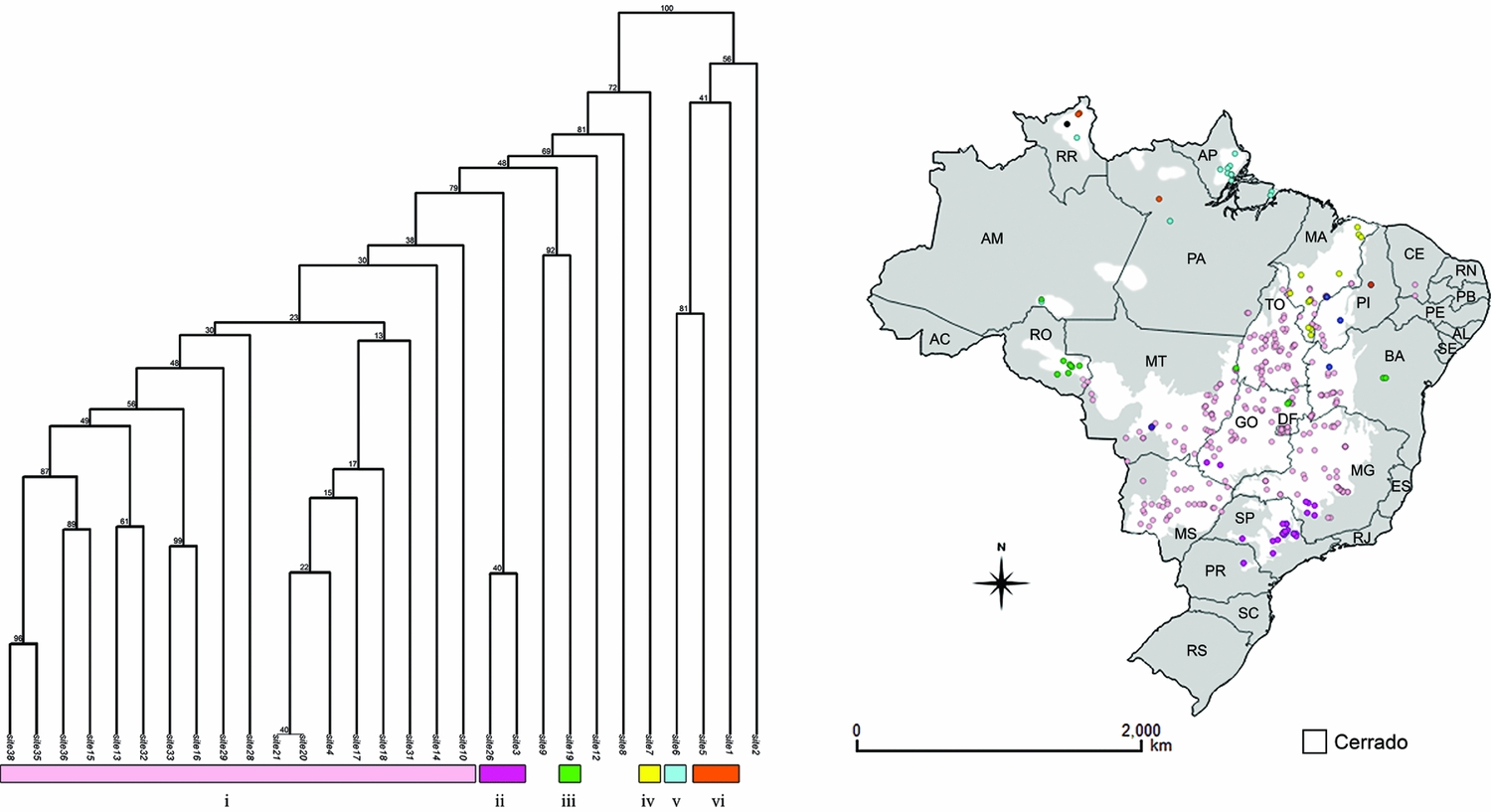
According to the analysis of similarity, the cerrado vegetation of the southern region of Maranhão is floristically more similar to the cerrado of Central-West Brazil, whereas the northeastern, central and southernmost areas of cerrado in Maranhão form an isolated group that is distinct from the other formations (see Fig. 3).
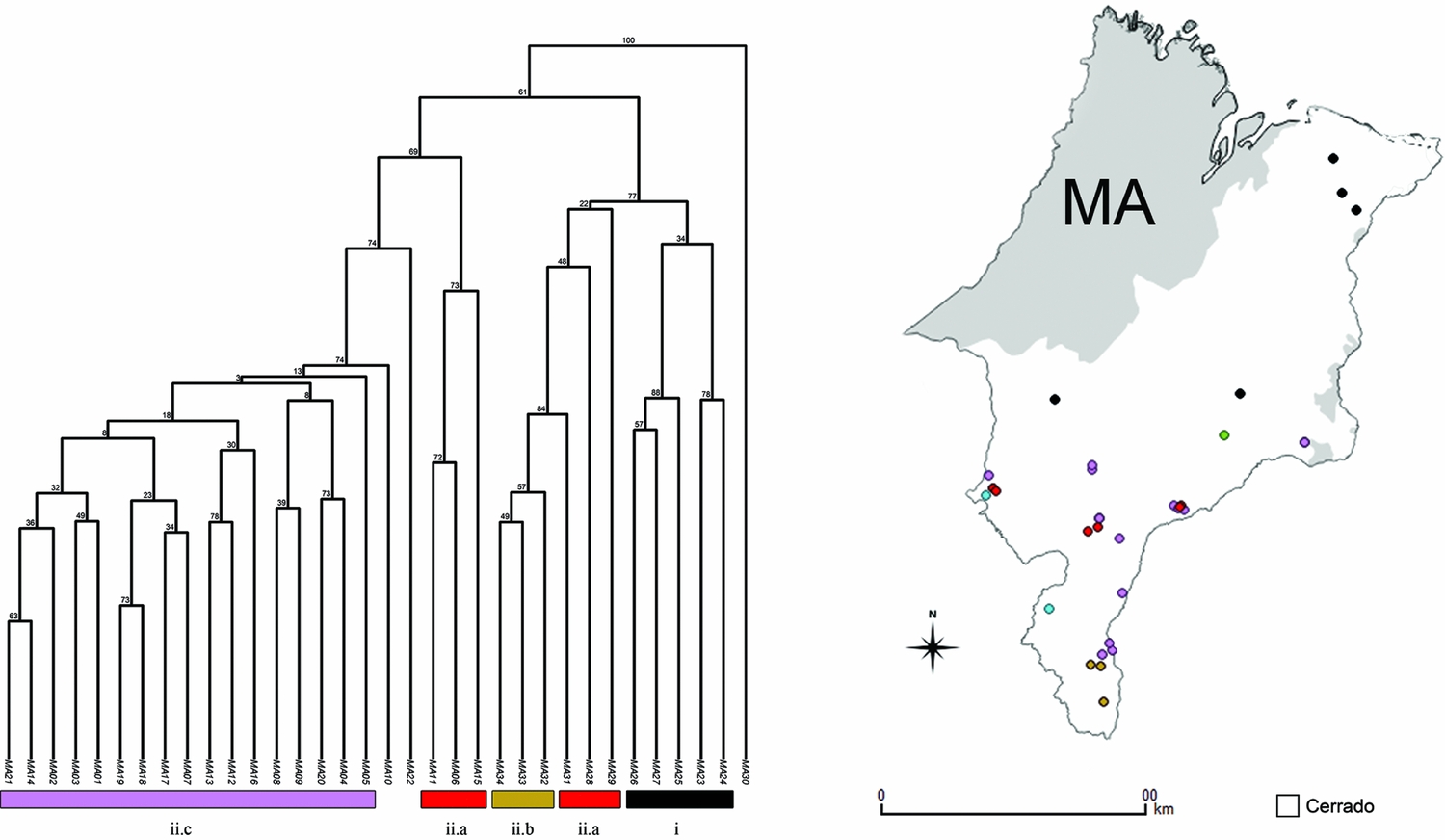
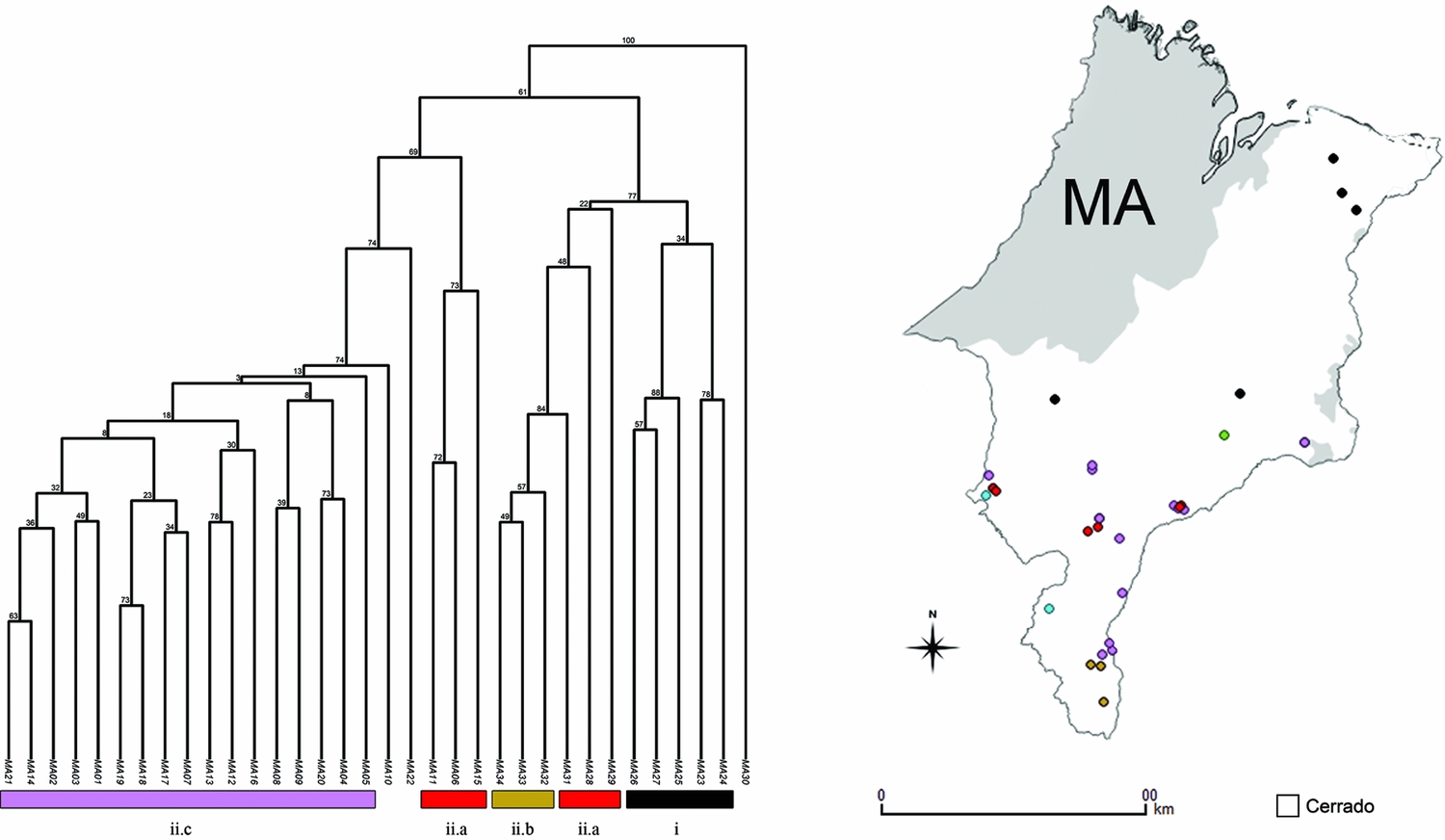
Cluster analysis of the 34 Maranhão cerrado sites showed two floristic regions at different altitudes (Fig. 4): i) the low-altitude cerrados of the northeastern and central regions of the state (between 70 and 270 m in altitude), and ii) cerrados of higher altitudes in the southern region. In the southern region, three subgroups were defined: ii.a) the cerrado of the southern part of the state occurring at the highest altitudes (> 500 m); ii.b) cerrado vegetation of medium altitudes, occurring between 300 and 450 m, with two disjunct formations; and ii.c) cerrado vegetation occurring at various altitudes ranging from 260 to 500 m (see Fig. 4).
Floristic similarity obtained from consensus tree (unweighted pair-group method with arithmetic mean) using the Simpson similarity index with the 34 Maranhão cerrado sites. Bootstrap values are provided on nodes. (i) The low-altitude cerrados of the northeastern and central regions of the state (70–270 m). (ii) The cerrado of higher altitudes in the southern region, with three subgroups: (ii.a) cerrado vegetation of medium altitudes (300–450 m), with two disjunct formations, namely, (ii.b) the highest altitude (> 500 m) cerrado of the southern part of the state, and (ii.c) cerrado vegetation occurring at varied altitudes (260–500 m).
Discussion
The species richness identified in this study (150 species) is high compared with other studies conducted in cerrados with similar sample sizes (i.e. 1 ha). For example, 82 species were recorded in Mato Grosso by Costa et al. (Reference Costa, Cunha and Costa2010); 92 species in Minas Gerais by Otoni et al. (Reference Otoni, Pereira, Oliveira, Machado, Farnezi and Mota2013); and 70 and 81 species in Maranhão by Silva et al. (Reference Silva, Figueiredo and Andrade2008) and Conceição & Castro (Reference Conceição and Castro2009), respectively.
However, different inclusion criteria were used in those studies, making comparisons of species richness more difficult. The wide distribution of sample points throughout Maranhão, as in this study, is most likely the main driver of the high diversity detected. Even when compared with broader studies, such as that of Solórzano et al. (Reference Solórzano, Pinto, Felfili and Ray2012), in which 308 species were recorded in six cerradão areas of 1 ha each distributed over six states in the marginal and core areas of the Cerrado biome, the number of species identified in our survey is still quite impressive.
Fabaceae was the most species-rich family, confirming previous findings in other Brazilian cerrado areas (Costa et al., Reference Costa, Cunha and Costa2010; Camilotti et al., Reference Camilotti, Pagotto and Araujo2011; Bueno et al., Reference Bueno, Neves, Oliveira-Filho, Lehn and Ratter2013). Fabaceae and Malpighiaceae have wide distributions in the cerrado, ranging from grasslands to forest formations (Batalha & Mantovani, Reference Batalha and Mantovani2001; Medeiros et al., Reference Medeiros, Walter and Silva2008). Byrsonima and Erythroxylum, both with six species each, were among the most common genera occurring in cerrados in Minas Gerais in the survey by Otoni et al. (Reference Otoni, Pereira, Oliveira, Machado, Farnezi and Mota2013). Furthermore, according to the surveys by Ratter et al. (Reference Ratter, Bridgewater and Ribeiro2003), Byrsonima is one of the most representative genera for the cerrado.
From a total of 12 species recorded for the first time in Maranhão, only Byrsonima subterranea Brade & Markgr. was identified in the northeast of the state. The other species were recorded in the central and southern regions, where other studies on the Cerrado have been conducted by Eiten (Reference Eiten1994), Figueiredo & Andrade (Reference Figueiredo, Andrade and Barreto2007) and Ratter et al. (Reference Ratter, Bridgewater and Ribeiro2003). The records of new occurrences in well-studied areas confirms our expectation that local diversity is not well evaluated and that new records for the cerrado flora in Maranhão may be found in the future.
The consensus tree resulting from the cluster analysis (UPGMA) of the 332 sites sampled for the Brazilian cerrado is very similar to the result obtained by Ratter et al. (Reference Ratter, Bridgewater, Ribeiro, Fonsêca-Filho, Rodrigues da Silva, Milliken, Pullan, Pott, Oliveira-Filho, Durigan and Pennington2011), with the main divergence being in the fourth floristic region, which includes the vegetation of low altitudes in the northeastern and central regions of Maranhão as well as samples of the highest altitude cerrados in the southern part of the state, creating an isolated floristic group. These cerrado areas had not previously been surveyed and include 50 new species additions to the cerrado database of Ratter et al. (Reference Ratter, Bridgewater, Ribeiro, Fonsêca-Filho, Rodrigues da Silva, Milliken, Pullan, Pott, Oliveira-Filho, Durigan and Pennington2011).
Although the original data matrix contained 22 samples of cerrado in Maranhão, which is fairly extensive, these sampled areas were all concentrated in the southern cerrado formations, very close to each other and with little representation of the floristic diversity of cerrado (see Fig. 4). The cerrado in Maranhão occurs at increasing altitudes, ranging from 40 m in the northeastern region to 800 m in the southern region (Feitosa, Reference Feitosa2006), and our 12 sampled areas were selected to represent vegetation in the main altitude classes throughout the state. Spatially biased sampling (‘Wallacean Shortfall’; Hortal et al., Reference Hortal, Bello, Diniz-Filho, Lewinsohn, Lobo and Ladle2015) strongly affects estimates of species richness, composition and endemism and is one of the main causes of shortfall in biodiversity (Oliveira et al., Reference Oliveira, Paglia, Brescovit, de Carvalho, Silva, Rezende, Leite, Batista, Barbosa, Stehmann, Ascher, de Vasconcelos, De Marco, Löwenberg-Neto, Dias, Ferro and Santos2016).
Some differences that were observed in comparison with the floristic groups established by Ratter et al. (Reference Ratter, Bridgewater, Ribeiro, Fonsêca-Filho, Rodrigues da Silva, Milliken, Pullan, Pott, Oliveira-Filho, Durigan and Pennington2011) can probably be explained by the use of different methodologies and the criteria used for site and species selection, as well as the species new to Maranhão that were added to the database. Furthermore, our comparison between cerrado areas does not represent a biogeographical approach to the cerrado of Brazil, but rather an overview of the floristic position of the cerrado of Maranhão relative to other cerrado areas.
Conclusions
• The cerrado in Maranhão occurs in very diversified environments, with great variations in altitude that are indicators of this environmental heterogeneity, resulting in characteristic floristic groups at different altitudes.
• This floristic variation in the cerrado of Maranhão is reflected in comparisons with other cerrado areas in the country, with the mid-altitude cerrados of the southern region presenting a greater similarity with the cerrado of central Brazil (the ‘core area’ of cerrado), whereas the cerrados from other altitudes form an isolated group.
• Biodiversity assessments need to consider the existing environmental variation and the consequent heterogeneity of these cerrado formations, ensuring that there is no spatial bias.
• Finally, the authors support the initiative of Ratter et al. (Reference Ratter, Bridgewater and Ribeiro2003) to make the database of the cerrado of Brazil widely available, without which the present work would have been limited. Data from Maranhão will be made available after the planned publications have been completed, and we encourage other authors to use this database as a basis for their studies, and/or to make their data available after publication to provide further comparable and representative information.
Acknowledgements
We would like to thank the following researchers for identifying species of the stated families: Anacardiaceae, C. Silva-Luz (SPF); Annonaceae, R. Mello-Silva (SPF); Bignoniaceae, L. Lohmann (SPF); Lecythidaceae, S. Mori (NY); Malpighiaceae, M. C. H. Mamede and A. Francener (SP); Malvaceae, Cátia Takeuchi and Vitor Martins (SP); Myrtaceae, M. Sobral (HUFSJ); Olacaceae, L. Rossi (SP); Sapotaceae, E. B. Almeida (MAR); and Burseraceae, Rutaceae and Simaroubaceae, J.R. Pirani (SPF).
We thank Dr Eduardo Pereira Cabral Gomes and an anonymous reviewer for suggestions and comments on the manuscript, and especially Dr Danilo Neves for suggestions and help with the R package. Fundação de Amparo a Pesquisa do Maranhão (FAPEMA) and Coordenação de Aperfeiçoamento de Pessoal de Nível Superior-Programa Nacional de Desenvolvimento da Botânica (CAPES-PNADB) are thanked for financial support for the development of the study and the first author's doctoral fellowship.