I'll start by being an obnoxious analytic philosopher and saying that whether or not naturalism is true depends on what you mean by ‘naturalism’. I'm sorry, but that's the way it is. So let me distinguish various doctrines that have been labelled ‘naturalism’, and then we can get around to the real fun, which is arguing about which, if any, are true. So, here are four versions of naturalism that I want to distinguish:
I. Anti-supernaturalism: There are no supernatural entities or phenomena.
II. Scientistic Naturalism: Science is the arbiter of all truth and all knowledge.
III. Continuity Naturalism: Human knowledge is continuous – that is, anything and everything that can be known by human beings is confirmationally interconnected.
IV. Ethical Naturalism: Normative facts can be explained in terms of non-normative facts.
(Spoiler alert: I will endorse III, and express considerable sympathy for IV.)
Thesis I, to which I have given the unlovely name ‘Anti-supernaturalism’, comes up most often in philosophical disputes about religion, where theists and atheists are arguing about such matters as the existence of God or the possibility of life after (physical) death. There's nothing wrong with defining ‘naturalism’ this way, but it's not very informative. We can all cite examples of things that are held to be supernatural: God, immortal souls, miracles, prophesy, karma. But the question that needs to be answered is: what do these things have in common that distinguishes them from natural entities and processes? Before you say something like ‘they're unobservable’ or ‘they're immaterial’, or ‘they're unscientific’, take a look at a good popular exposition of contemporary physics,Footnote 1 and tell me how the collapse of the wave function is different from karma. Physics has gotten weird, man.
What would be nice is a positive characterization of ‘nature’ that would make clear not only what is part of nature and what is ‘above’ or ‘beyond’ nature, but also why. Consider such allegedly real phenomena as telepathy and communication with the dead. Although some people will immediately classify such things as supernatural, there is a long and robust tradition of enthusiasts trying to demonstrate scientifically that such phenomena exist.Footnote 2 No luck there, but if the science had worked out, that would be a pretty good indicator of naturalness.
In fact, I do not believe in God or souls or miracles, nor do I believe in telepathy. But it's important to understand why. I do not deny the existence of any of these things because they are ‘supernatural’ – I can't say that because, as I explained, I don't have any substantive definition of ‘nature’ that would entail that certain kinds of things are not or cannot be part of nature. Rather, I say that (a) there is no good argument and no good evidence for the existence of such things, and (b) that it is very difficult to see how the existence of such things could be squared with our knowledge of the other things in nature that we do know about. This rationale makes arguments about the existence of, for example, God or immaterial souls no different from arguments about the historical reality of King Arthur or the existence of life on other planets. From my point of view, that's exactly how things should work out. I insist that if enough evidence, or good enough arguments, could be offered in favour of the existence of any of these things, then I would accept their existence.
Now you might think from what I've said above that I believe there to be a close connection between what's natural and what science shows to be the case. I do think there's a connection, as I'll explain below. But I don't think that science delimits the natural. And that brings me to formulation II:
Scientistic Naturalism: Science is the arbiter of all truth and all knowledge.Footnote 3
This is, in my view, a very tendentious way to characterize naturalism, because the thesis that science is the arbiter of reality and knowledge is wildly implausible. Indeed, although there may be a few philosophers who self-identify as naturalists in this sense, this definition is used mainly by critics of naturalism in order to discredit naturalism. Philosopher Lynne Rudder Baker, from whom I've borrowed this wording, is a case in point. Since very few self-described naturalists are interested in defending Scientistic Naturalism, arguments against that doctrine are often attacking a straw person.
Scientistic Naturalism is not a part of any scientific theory; rather, it is an expression of a certain attitude towards science, one that goes far beyond mere respect. I have great respect for science, but I acknowledge, as one should, that science is a human endeavour, and as such, is limited in ways that reflect human limitations. Our sense organs are fallible, and our computational power and memory are limited. But the big limitation is the in-principle limitation of our being material beings, whose presence in the universe is both temporally and geographically bounded. It's not that we can't theorize about regions of space-time we do not inhabit, and it's not even that we cannot have good evidence for theories that extend beyond our corporeal presence. The problem is that, given that we are eventually going to fall into the sun (if we don't self-annihilate first), there's no reason to think that we will manage, during our short universal tenure, to discover everything that there is to know about it. For that reason alone, I want to resist any delimitation of what's real or what's true by what we can discover about what's real and what's true.
A second reason why I reject Scientistic Naturalism is that I don't think it is science's job to say everything that there is to say about the world. There are plenty of facts that are of no interest to science whatsoever – for example, that there is an orange barn in Leverett, Massachusetts – and rightly so. I'm not saying that there couldn't be scientific interest in such facts – only that there probably isn't, and that if there isn't, they still count as facts.
But my final objection to Scientistic Naturalism is that science cannot say everything that there is to say, even if it tried. Each of the sciences has a specialized vocabulary all its own, and the terms in these proprietary vocabularies are not suitable for expressing ordinary, everyday truths. Consider physics. Physics is distinguished in being the most general of the sciences; that is, while the laws of biology are only required to cover the behaviour of living things, the laws of physics are supposed to hold for absolutely everything in the universe. But while it follows from the generality of physics that nothing can violate the laws of physics, it doesn't follow that the laws of physics tell us everything that happens. The microparticles that are studied in fundamental physics organize themselves in a variety of ways, giving rise to a variety of kinds of things with a variety of properties. But physics itself cannot describe these higher-level things and properties in a way that makes clear all of their similarities and differences.
Think of it this way: suppose you were plopped onto a foreign sea coast and told to make a map of its contours (you're on a reality TV show!), but you are only allowed to use compass directions and measurements in feet and inches (it's an American TV show!). So you begin walking, and write down a record for every move you make, like this: ‘seven feet, five inches due south from start’; and ‘one foot, 12 inches south-southeast from second point’. If you continue in this way, carefully recording your moves, you will have an accurate, and in some sense complete, description of the line of the coast. Now suppose that you are plucked off the coast by helicopter, and flown over the land you have just mapped. Now that you are looking at the coast from high above and relatively far away, you can see something that wasn't at all apparent when you were down on the ground: its shape. You can see that it looks like a kind of hook – it's Cape Cod! Now of course the recordings you made determined that the path you followed had the shape of a hook, but neither the vantage point you had nor the ‘vocabulary’ to which you were earlier limited allowed you to see that. The similarity in shape between the coast and that of a fishhook is perfectly real – but it can only be apprehended from a certain point of view.
Analogously, physics can neither recognize nor describe all of the properties of things and events that emerge at higher levels of organization. Physics can register that one thing weighs more than the other, but not that one of the things is a television set and the other is a dog.
That's physics – but what if we take a more expansive view of ‘science’ (as I think we ought to, anyway), so as to include chemistry, biology and the other higher-level sciences? Could we save Scientistic Naturalism that way? We can do a little better than if we limit ourselves to physics. At each level of complexity there's a different science that covers things of that sort: physics looks at atoms and sub-atomic particles,Footnote 4 chemistry at molecules, and biology at cells and organisms. So more sciences, more vocabulary. Furthermore, some sciences group things in the world according to their formal or functional properties, not according to their size or the kind of stuff they are made of. Economics, for example, presumes that there are regularities among systems of monetary exchange whatever material stuff the money is made of. Psychology, in my view, is more like economics than biology – it applies to us in virtue of the functional organization of our brain, rather than its biological composition.
This point leads me to a confusion that is rampant among some theological critics of ‘naturalism’, like William Lane Craig and Paul Copan,Footnote 5 and one that I'm anxious to correct. The confusion I have in mind occurs in what I call ‘nothing-but’ arguments. Here's a representative statement from Craig:
Naturalists are typically materialists or physicalists, who regard man [sic] as a purely animal organism. But if man has no immaterial aspect to his being . . . then we're not qualitatively different from other animal species. On a materialistic anthropology there's no reason to think that human beings are objectively more valuable than rats. When a terrorist bomb rips through a market in Baghdad, all that happens is a rearrangement of the molecules that used to be a little girl.Footnote 6
Craig here assumes that ‘naturalism’ has to be committed to materialism, and it doesn't; I'll speak to that point shortly. The problem I want to highlight here is this: it's one thing to say that everything is ultimately made of the same kind of stuff – quarks, maybe – and quite another to say that everything is nothing but quarks. Scientistic Naturalism, for all its flaws, does not have to say that quarks are the only things that exist, because science doesn't say that only quarks exist. Science can and does acknowledge – happily – that there are lots of interesting differences among things that quarks are made out of. It all depends on how the quarks are put together. As followers of the Great British Bakeoff know, getting the ingredients right is just the first step – the challenge comes in combining them correctly. You don't want pie crust if you're aiming for croissant.
We've been considering the possibility that with an expansive view of science, we can save Scientistic Naturalism. But we cannot. Even considering science in this expansive way, there will still be facts that are inexpressible in scientific language — not because they are spooky or otherwise inexplicable, but because they are particular (John Wilkes Booth assassinated Abraham Lincoln) or banal (most Leverett residents are right-handed) or both (remember that orange barn?). Naturalism, as I want to understand it, should leave plenty of room for both the particular and the banal.
It's common in philosophical discussions of naturalism to distinguish two aspects of naturalism: the ontological (concerned with what there is and what is true) and the epistemological (concerned with knowledge). Scientistic Naturalism as defined above has this dual aspect: ‘science is the arbiter of all truth and all knowledge’. The ‘all truth’ part is the ontological aspect – it concerns what entities, properties, and facts there are – and the ‘all knowledge’ part is the epistemological aspect – it concerns what things we can know and how we can know about them. I have one more thing to say about the ontological aspect, and then I want to focus on the epistemological.
Materialism is an ontological doctrine which says that all concrete objects (as opposed to abstract objects, like numbers) are made of the same kind of stuff. In particular, materialists disagree with dualists – philosophers who hold that our minds are identical with or constituted by an entirely different sort of substance from the stuff that our bodies are made of. Materialists will say that the mind is or is constituted by the brain; dualists will say that the mind is wholly separate from the brain (even if it occupies the same space as the brain.Footnote 7
Many theist philosophers, especially those who subscribe to one of the Abrahamic religions, are dualists.Footnote 8 They believe that there are immaterial beings (e.g. God and angels), and they often believe that human persons are essentially immaterial souls that are merely associated with human bodies during part of their existence.Footnote 9 Some of these theist philosophers, as I've noted, assume that if one is a naturalist, one must be a materialist; but this is not the case. Naturalism, whether in its anti-supernaturalist form, its scientistic form, or the methodological form I'll describe below, does not require one to deny the existence of mental substance. David Chalmers and Joseph Levine are prominent dualists, but they are both naturalists insofar as they deny the existence of supernatural entities and consider consciousness and conscious states to be part of the natural world.Footnote 10
At the same time, however, it is important to realize that being a materialist does not imply denying the existence of the mind, or of mental states. On the materialist view I endorse, mentality is a functional property that human nervous systems have, but that other physical entities, like Martians or computers, might conceivably have as well. Psychology, like economics and geology, is a science that categorizes things according to functional similarity.
Continuity Naturalism
Some philosophers who would reject the ontological part of Scientistic Naturalism nonetheless accept the epistemological part – that is, they believe that the procedures and norms that characterize science are really the only reliable way of coming to know things. On this view, the things that we ordinarily take ourselves to know – like our names, or the location of orange barns – stand in need of vindication by science before we can claim to have knowledge of them. Proponents of this view will also say that when conflicts arise between the issuances of common sense or everyday experience and scientific findings, the conflicts must always be decided in favour of the science.
But I am not in this camp. Even if we restrict the scientism to the epistemological aspect of naturalism, the result is too scientistic for me. There are a number of problems. In the first place, it is hard to say exactly what the methods and practices of science are. Many philosophers have tried to codify or systematize ‘scientific method’, but none have been successful. One big reason is the difficulty of explaining scientific creativity – how do people come up with scientific hypotheses to begin with? Another is that even when there are ‘rules’ – like the rules that test for ‘statistical significance’ in the analysis of experimental results – there can be disagreements about whether the rules are good ones.Footnote 11
A second reason is that when we look at scientists’ actual practice, we see that they do not follow what gets taught in school as ‘scientific method’ – rather, they are relying to a significant extent on intuitive judgements about holistic matters, like which theory is simpler, or which one is more plausible. There just may be no ‘method’ in the sense of rules that we can just plug the data into in order to get theories. (Boosters of ‘Big Data’ take note!)
A third and overwhelmingly important reason for rejecting Scientistic Naturalism is that science is just not the only way we come to know things. Bear in mind that human beings managed – and continue to manage – to know a lot of stuff without doing science. In the everyday world we rely on sense experience, but in an unscientific way: we don't form and test hypotheses about what we see, we generally just see things and form beliefs on that basis. We also rely on pretty rich bodies of innate knowledge – about the structure of language, about fundamental features of the physical aspects of the world, and about the minds of others. We also rely on ‘intuitions’ – fundamental assumptions like ‘the future will resemble the past’. If we didn't believe this – what's called ‘the Principle of Induction’ – we would have no rational basis for using past evidence to predict the future, and science would be impossible. Yet any attempt to support this principle with evidence would be circular.
What all this shows is that there is continuity between science and our everyday ways of finding things out. Science, everyday experience, and common sense must answer to each other. Science can certainly give us reason to question some traditional epistemic practices, such as reading omens. But conversely, when ordinary, pre-scientific modes of learning do work, science has to explain how they work. Vision science provides an excellent example: vision scientists, using physiology and computational psychology, can tell us in great detail how our visual system takes patterns of retinal stimulation and constructs a 3-D representation of the world. They can tell us, moreover, exactly when our visual system can be expected to get things right, and when it will predictably get things wrong.
In sum: evidential connections between scientific findings and the deliverances of common sense flow in both directions. Hence I endorse:
Continuity Naturalism: Anything and everything that can be known by human beings is confirmationally interconnected.
Sense experience is our link to the external world; much of what we think of as evidence, whether for or against a given proposition, comes to us through our senses. But sense experience is not the only basis for believing or disbelieving a proposition. We also tend to square things with what we already believe, and that includes our beliefs about what things are likely to be true. The more confident we are about a given proposition, the more evidence it will take to change our minds about it. Similarly, the more unlikely we take a proposition to be, the more evidence it will take to get us to believe it. There are some propositions we are so sure of that it's hard to imagine evidence or arguments that could get us to reject them. But Continuity Naturalism says that, because of the interconnections of support among our beliefs, any belief at all is subject to revision in light of some sort of evidence or argument.
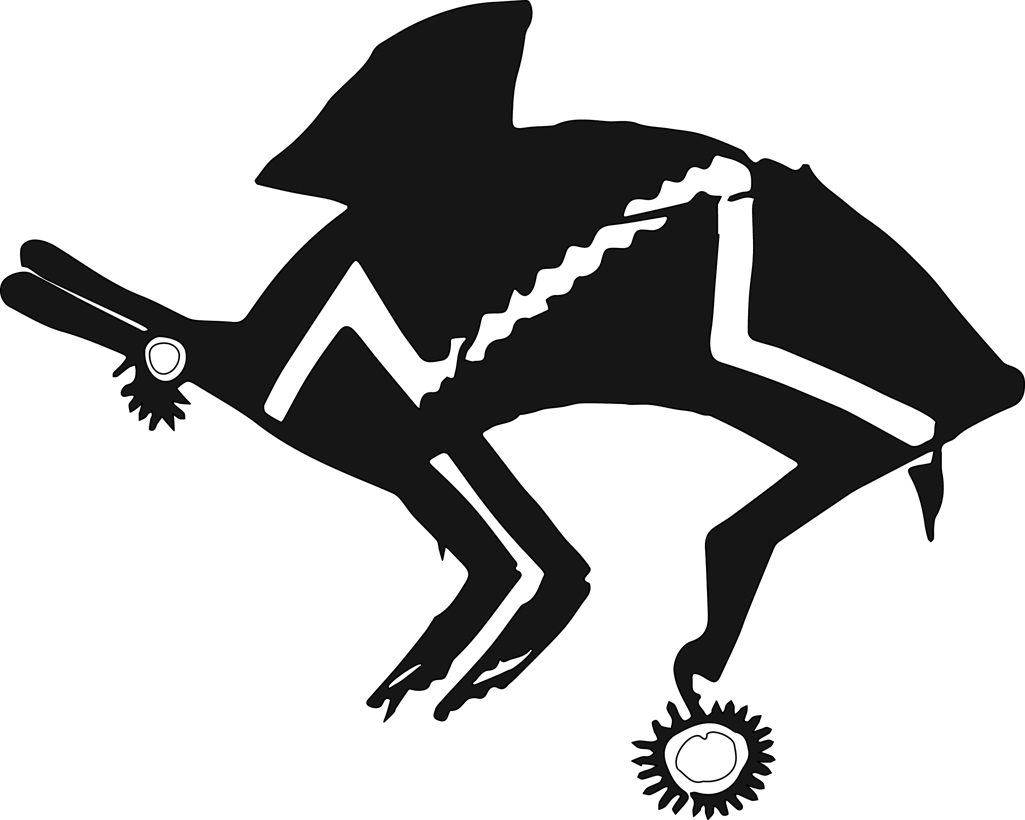
Some of these connections are matters of logic – it cannot be true both that all swans are white and that there are black swans in Australia. But most of the propositions that constitute our ‘theories’ of the world are connected through confirmational or evidential relations. Some evidential relations are direct and obvious, for example, learning that the cat is inside by seeing her on the bed. Others require inference and specialized information, for example, learning that a liquid is an acid by seeing it turn blue litmus paper red. Many others are quite indirect and unexpected: my favourite example of this is a case in which the unearthing of a piece of Mimbres pottery – an eleventh-century ‘rabbit-pot’ – confirmed the occurrence of a celestial event recorded by a Chinese astrologer in 1054 (see Figure 1).Footnote 12
Photograph of an eleventh-century Mimbres ‘rabbit-pot' that apparently depicts the supernova that created the Crab Nebula in 1054. Image reprinted with permission of the Frederick R. Weisman Art Museum at the University of Minnesota.

Where does this leave religious belief? Many people believe many things because of what they have been brought up to believe. That fact in itself does not, according to Continuity Naturalism, count for or against those beliefs. But considered in relation to what else we know, psychologically, historically, cosmologically, philosophically, most religious beliefs do not pass muster. And that's why I don't believe in God.
Ethical Naturalism
It is one of my common-sense beliefs that it is wrong to enslave human beings. I can hardly think of anything, in any domain, that is more obvious. But according to Continuity Naturalism, can I defend this claim?
Honestly, I have to say that I don't know. That slavery is wrong is a normative claim, a claim about what ought to be true, rather than a claim about what is true. I see no way to define normative claims in terms of descriptive claims.
But here are a couple of things that I do know. First, ethics is not the only domain of knowledge that is normative. Rationality is normative – it tells you what you ought to think, given what you do think, and what you ought to think, given the evidence you have about the way the world is. Continuity Naturalism says that if striving to be rational helps us learn things that are true, there must be something right about the prescriptions of rationality. That gives us a mandate for finding a naturalistic account of the normative.
The second thing is that, however difficult it is to integrate the normative with the descriptive, an appeal to God doesn't help. That God commanded something is a descriptive fact – explaining why such a descriptive fact binds us normatively is the same problem as that which confronts the naturalist.