Acute rheumatic fever is a non-suppurative inflammatory disease that develops 1–4 weeks after acute pharyngeal infection of group A beta-haemolytic streptococcus and affects the heart, joints, central nervous system, skin, and subcutaneous tissues. Acute rheumatic fever and its chronic sequelae of rheumatic valve disease have an impact on 15.6–19.6 million children, adolescents, and adults worldwide. Every year, approximately 500,000 new cases of acute rheumatic fever and 300,000 new patients with rheumatic heart disease appear, and 233,000 people die due to acute rheumatic fever or rheumatic heart disease.Reference Carapetis, McDonald and Wilson1 Although living conditions, nutrition, access to health care, and the use of penicillin have significantly changed the epidemiology of acute rheumatic fever and rheumatic heart disease, it continues to be a critical health issue in developing and underdeveloped countries. Since it is a crucial preventable public health concern, acute rheumatic fever should be recognised early, appropriate treatment should be administered, and recurrences should be prevented.
Primary prophylaxis is used to prevent the first rheumatic attack, and secondary prophylaxis is used to prevent recurrences in those with acute rheumatic fever. The drugs used continuously in secondary prophylaxis prevent the colonisation and infection of group A beta-haemolytic streptococcus in the upper respiratory tract and protect the patient with acute rheumatic fever from recurrences. The secondary prophylaxis using intramuscular benzathine penicillin G treatment forms the basis for preventing acute rheumatic fever and rheumatic heart disease. The World Health Organization recommends a benzathine penicillin G every 3–4 weeks, considering conditions such as age, time since the last acute rheumatic fever attack, presence of rheumatic heart disease, and high-risk groups.2
More successful outcomes were reported in those given prophylaxis every 3 weeks compared to 4 weeks; therefore, the treatment of every 3 weeks is favoured in the high-risk group.Reference Lue, Wu, Wang, Wu and Wu3
Since acute rheumatic fever in children has significant physical, mental, emotional, economic, and social impacts on both patients and their families, pharmacological treatment, nutritional support, and psychosocial support should be provided additionally.Reference Cassidy, Petty, Laxer and Lindsley4 The treatment regimens of these patients are long and continuous, causing treatment adherence to be vital in managing the disease.
Meta-analyses reported that children with chronic physical diseases are more vulnerable to psychosocial problems in childhood and adolescence.Reference Pinquart and Shen5-Reference Pinquart and Shen7 When there are psychiatric symptoms accompanying the chronic disease, treatment adherence is impaired, which may lead to adverse outcomes related to the course of the disease.Reference Mackner and Crandall8,Reference Kongkaew, Jampachaisri, Chaturongkul and Scholfield9 Adverse events occurring within or outside the family may cause temporary or permanent impairments in family functioning. It has also been revealed that problems in family functioning are associated with treatment adherence.Reference Psihogios, Fellmeth, Schwartz and Barakat10
Although the reasons for non-adherence to acute rheumatic fever treatment and psychosocial reasons are frequently emphasised in the studies, detailed explanations about which factors are related are very few. In applying penicillin treatment for secondary prophylaxis of acute rheumatic fever, it is essential to evaluate various factors such as patient, disease, treatment, health system-health providers, social-economic factors. The present study aimed to investigate the outcomes of psychiatric symptoms and family functions on treatment adherence in children, in addition to sociodemographic characteristics and clinical factors related to the disease.
Materials and Methods
The research was performed in Celal Bayar University Faculty of Medicine, Department of Pediatric Cardiology. The research sample consisted of 43 children diagnosed with rheumatic heart disease who were admitted during the study. Children with rheumatic heart disease disease were previously diagnosed patients and came to routine control visits. The responsible research assistant informed the children and their families about the study, and consent was obtained from the families.
The diagnosis of acute rheumatic fever was made according to the former Jones criteriaReference Dajani, Ayoub and Bierman11 until 2015 and according to the Jones criteria revised by the American Heart Academy after 2015.Reference Gewitz, Baltimore and Tani12 Per revised 2015 American Heart Academy Jones criteria, the presence of two major or one major and two minor criteria together with the findings of a previous group A beta-haemolytic streptococcus infection was considered sufficient for the diagnosis. However, these criteria were not sought in Sydenham’s chorea and recurrent carditis cases. Swelling, warmth, redness, tenderness, and limitation of the movement were defined as the typical signs of arthritis inflammation. Involvement of more than one joint was defined as polyarthritis (migratory), and single-joint involvement was defined as monoarthritis. Arthralgia is a pain in one or more joints, and it was defined as a condition without redness, swelling, and temperature increase. The diagnosis and severity of carditis (mild, moderate, severe) was based on physical examination, cardiac auscultation, telecardiography, and echocardiography findings. The presence of mitral and aortic insufficiency without cardiomegaly or heart failure was evaluated as mild carditis. Patients with moderate valve lesion causing cardiomegaly on telecardiography or enlarged cardiac chambers on echocardiography were considered as moderate carditis. Patients with severe cardiomegaly and/or heart failure findings resulting from a severe valve lesion or a previous history of cardiac surgery due to rheumatic heart disease were considered severe carditis.13
Sydenham’s chorea was diagnosed with the presence of movement disorders such as rapid and uncontrolled facial, neck, arm, and leg movements, with the support of a Pediatric Neurology specialist.
Treatment adherence was considered as
-
1. Regular adherent when the Benzathine penicillin administration was missed less than once a year,
-
2. Partially adherent when the Benzathine penicillin administration was missed two-three times per year,
-
3. Non-adherent when the Benzathine penicillin administration was missed four times or more in a year.Reference Kevat, Reeves, Ruben and Gunnarsson14
Data acquisition tools
Sociodemographic data form
The form developed by the researchers included questions evaluating the personal characteristics of patients such as age, gender, education level of parents, employment status of parents, coupledom of parents, sibling status, place of origin (province–district–village)
Information about the disease
Clinical features such as disease type (acute rheumatic fever arthritis, acute rheumatic fever carditis (mild, moderate, severe), disease duration, age at diagnosis, medical treatments, history of operation, accompanying clinical findings, comorbidities, recurrence status) were obtained from the patient files.
Scales
Strengths and Difficulties Questionnaire
It is a scale developed to screen emotional and behavioural problems in children. It contains 25 questions, some of which question positive and some negative behavioural characteristics. It consists of five subscales: Attention Deficit and Hyperactivity, Conduct Problems, Emotional Problems, Peer Problems, and Social Behaviours. Each subdomain can be evaluated within itself, and a separate score can be obtained for each, as well as the "Total Difficulty Score" can be calculated with the sum of the first four titles.Reference Goodman15 Its Turkish validity and reliability have been studied.Reference Güvenir, Özbek, Baykara, Arkar, Şentürk and İncekaş16
Family assessment device
Family assessment device is a measurement tool that determines which subjects the family can or cannot fulfil its functions. The scale was developed by EpsteinReference Epstein, Bolwin and Bishop17 and was translated into Turkish by Bulut (1990)Reference Bulut18 through validity and reliability studies. Family assessment device scores range from one (healthy) to four (unhealthy). Family assessment device consists of seven subscales. These consist of 60 questions, one of which focuses on general functions, which addresses each problem area in family functions one by one. These subscales are problem-solving, communication, roles, emotional responsiveness, paying attention, behaviour control, and general functions.
Analysis of data
SPSS 15 statistics package programme was used. Continuous variables were presented as mean and standard deviation values, and categorical variables as numbers and percentages. Chi-square test for categorical data and Mann–Whitney U-test for numerical data compared the variables of patients with and without treatment adherence. A p-value of <0.05 was considered statistically significant.
Results
The study included 43 children with rheumatic heart disease diagnosed with a mean age of 16.2 ± 2.83 years and their mothers. 21 (48.8%) patients were female, and 22 (51.2%) were male. While 36 (83.7%) of the patients had attended school, 7 (16.3%) had not. Thirty-six (83.7%) of the patients were not employed, and 7 (16.3%) had a job.
Considering the education levels of the mothers, 31 (72.1%) were primary school, 10 (23.3%) were high school, 2 (4.7%) were higher education graduates. When the education level of the fathers was examined, 33 (76.7%) were primary school graduates, 7 (16.2%) were high school graduates, and 3 (6.9%) were higher education graduates. According to the monthly income level of families, 17 (39.5%) people were below the income-expenditure, 22 (51.2%) people whose income was equal to their expenses, and 4 (9.3%) people whose income was above the expenditure. While 36 (83.7%) of the patients lived in the city/district, 7 (16.2%) lived in the village.
When the clinical characteristics of the patients were evaluated, the mean diagnosis time (mean ± SD) of the patients was 5.58 ± 2.56 years. There were 40 (93.0%) people who did not have a comorbid disease. However, 3 (7%) of them had comorbidities, being hyperthyroidism, myasthenia graves, and psoriasis for each one.
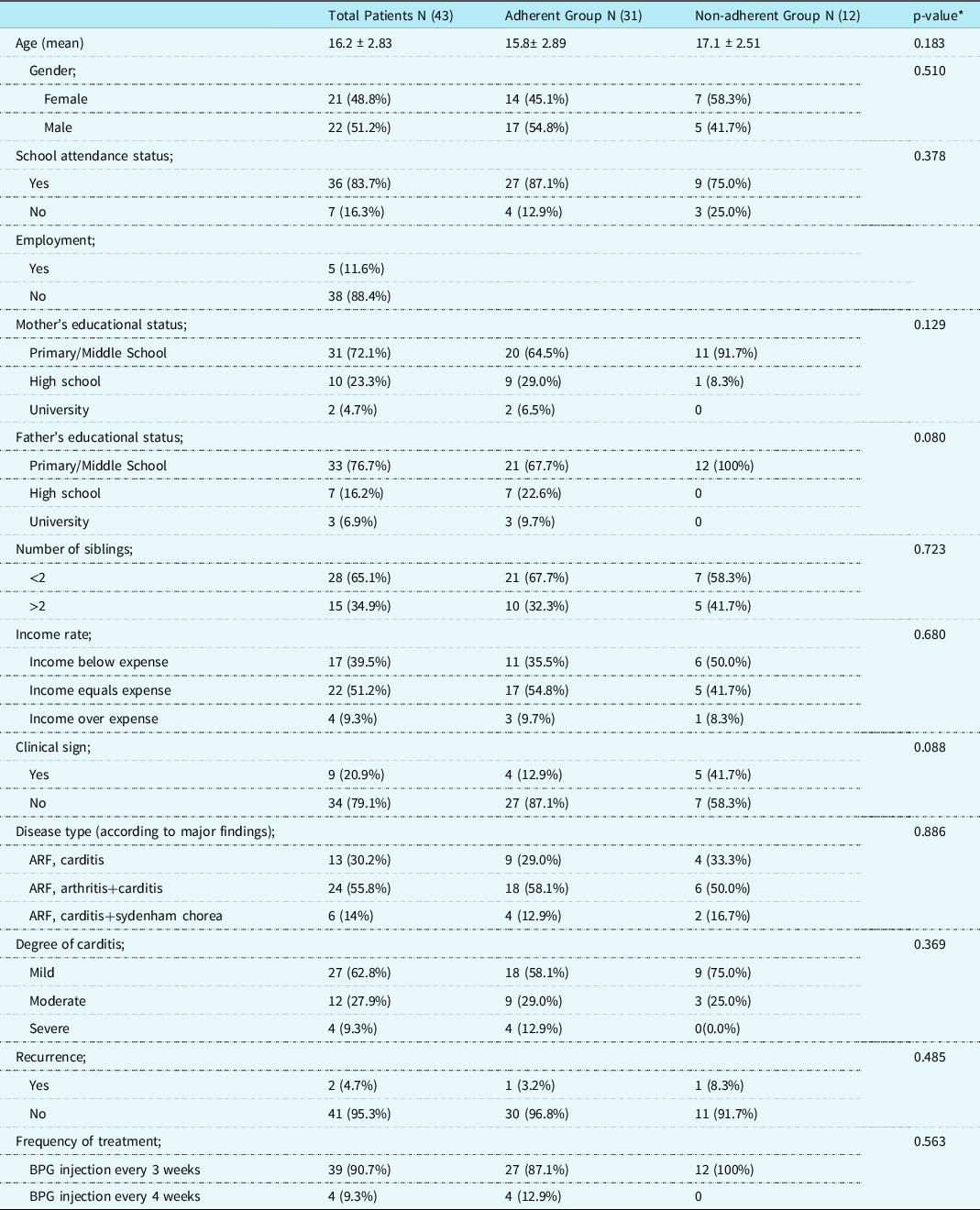
While there were 34 (79.1%) patients with clinical findings (such as chest pain, palpitations, and fatigue), 9 (20.9%) patients were asymptomatic. Diseases were in three groups according to major findings. There were only 13 (30.2%) patients with acute rheumatic fever carditis, 24 (55.8%) patients with acute rheumatic fever carditis and Sydenham chorea, and 6 (14%) patients with acute rheumatic fever carditis. There were 27 (62.8%) patients with mild carditis, 12 (27.9%) patients with moderate carditis, and 4 (9.3%) patients with severe carditis. Thirty-nine (90.6%) patients had secondary prophylaxis every three weeks and 4 (9.3%) patients every four weeks. While there were 2 (4.7%) patients with recurrence, there was no recurrence in 41 (95.3%) patients (Table 1).
The relationship of patients’ sociodemographic and clinical characteristics with treatment adherence
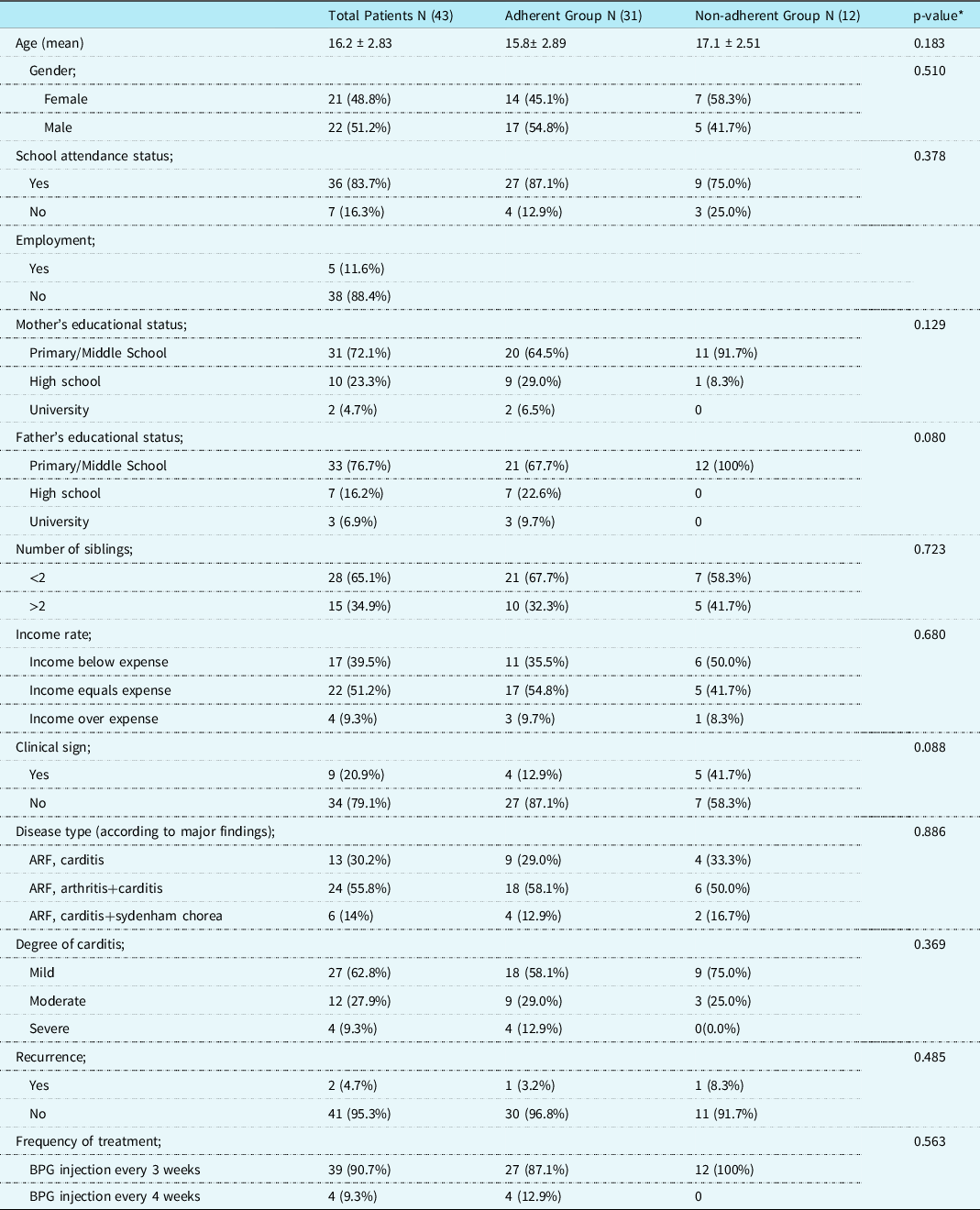
* Chi-Square Test, BPG: Benzathine Penicillin G.
Considering the adherence to treatment in our patients, 31 (72%) patients were adherent to secondary prophylaxis regularly, 7 (6.9%) patients were partially adherent, and 5 (11.6%) patients were non-adherent.
When the relationship between the sociodemographic and clinical characteristics with treatment adherence was evaluated, the patients were divided into adherent (Group 1) and non-adherent (Group 2) groups. There was no statistical difference between Groups 1 and 2 regarding age and gender (p = 0.183, p = 0.399, respectively). There was no statistical difference between the groups in terms of living in rural areas and cities as well. When the educational status of the parents was examined, no statistical difference was determined between the groups in terms of adherence to treatment (p = 0.129, p = 0.080) (Table 1). When acute rheumatic fever carditis, acute rheumatic fever arthritis+carditis coexistence, acute rheumatic fever carditis + Sydenham chorea coexistence were grouped, no statistical difference was observed (p = 0.971). The presence of mild, moderate, or severe carditis and the presence of recurrence did not have a statistically significant effect on treatment adherence (p = 0.541, p = 0.485, respectively) (Table 1).
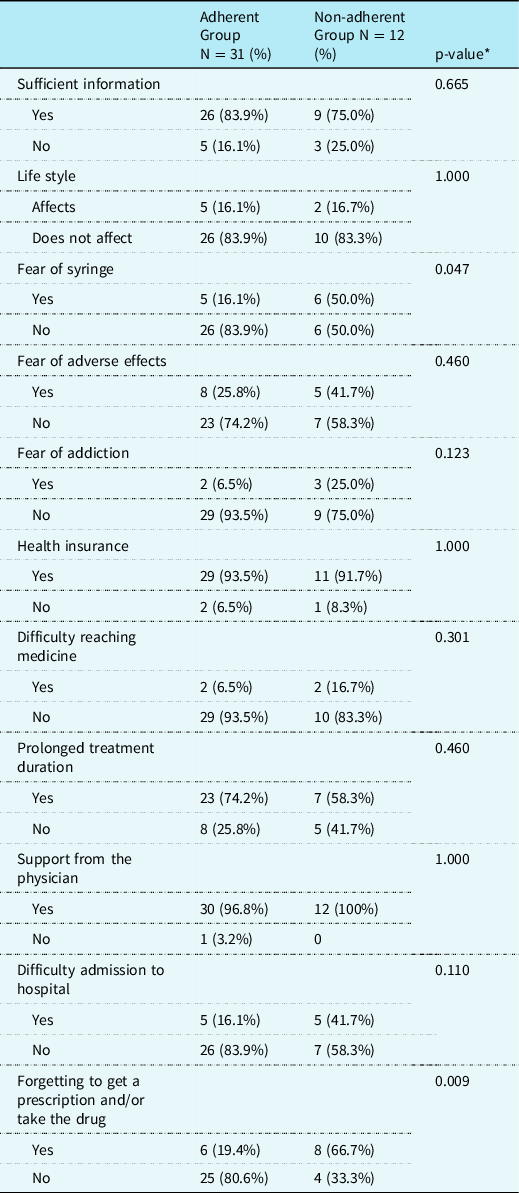
There was no statistically significant effect on treatment adherence whether the patients received enough information, their lifestyle, fear of developing adverse effects, fear of addiction, lack of health insurance, difficulties in reaching the drug/hospital, whether the treatment was long-term, and whether they received adequate support from the physician (p = 0.665, p = 1.00, p = 0.460, p = 0.123, p = 1.00, p = 0.301, p = 0.460, p = 0.22, p = 0.110, respectively). However, the effect of fear of syringes on treatment adherence was determined statistically (p = 0.047). Forgetting to get a prescription and/or take the drug when the time comes was statistically higher in the non-adherent group (p = 0.009) (Table 2).
The effect of the patient, treatment, health system-health providers, social-economic factors on treatment adherence
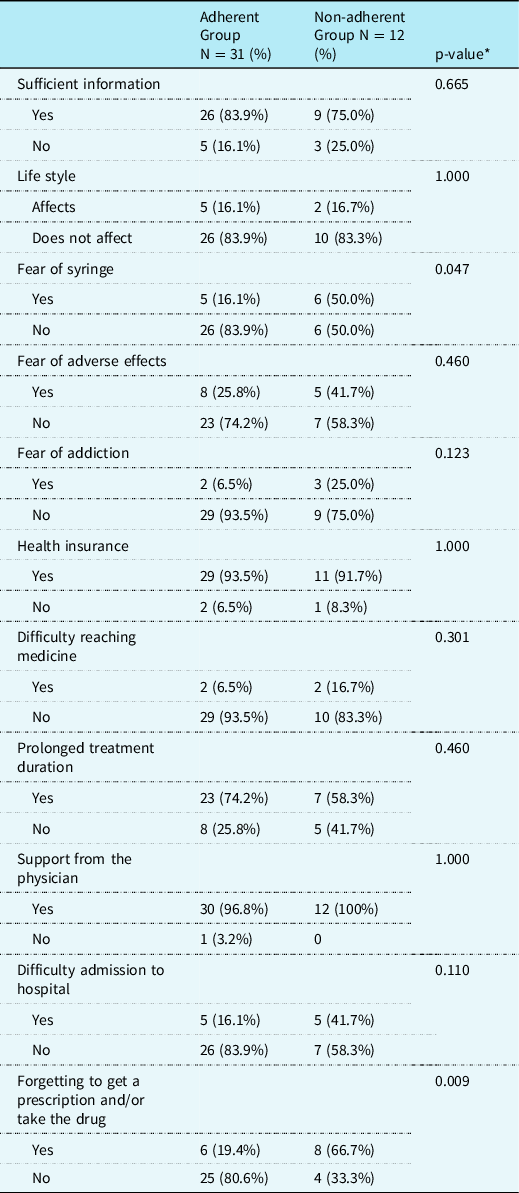
* Chi-Square Test.
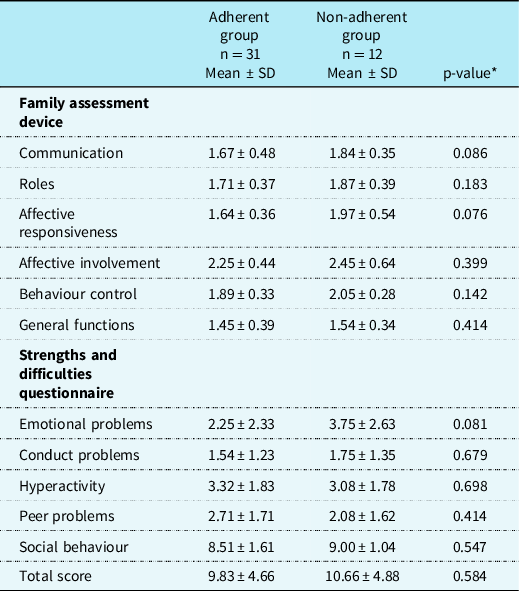
When the relationship between both the total score and subscale scores (problem-solving, communication, roles, emotional responsiveness, attention, behaviour control, and general functions in the family) of the Family assessment device, and the total score and subscale scores (attention deficit hyperactivity, behavioural problems, emotional problems, peer problems, and social behaviours) of the Strengths and Difficulties Questionnaire and treatment adherence were evaluated, no statistical difference was found between the groups (Table 3).
The relationship between scale scores and treatment adherence
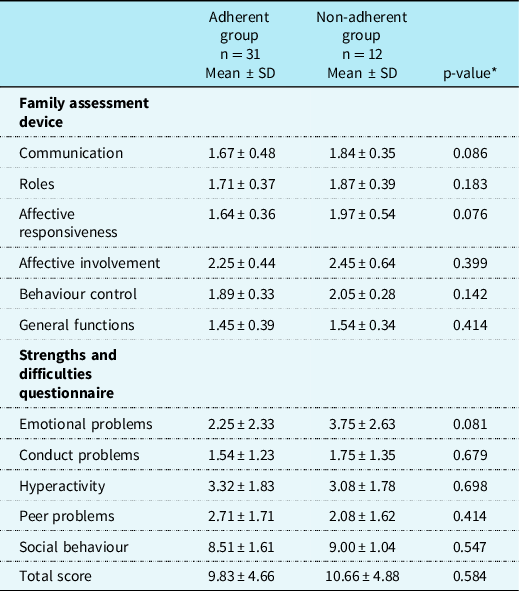
* Mann–Whitney U-test.
Discussion
Despite the use of echocardiographic diagnosis for the diagnosis of acute rheumatic fever and screening for early detection of rheumatic heart disease, progress in the development of group A streptococcal vaccines, and efforts to improve the quality of life of people with rheumatic heart disease, poor living conditions continue to be a critical health problem in poor countries that have problems in accessing nutrition and health care. Secondary prophylaxis has been the most effective treatment in preventing rheumatic heart disease, the most important cause of morbidity and mortality in acute rheumatic fever. Acute rheumatic fever can recur due to repeated group A beta-haemolytic streptococcus infections, and each relapse can worsen rheumatic heart disease. Therefore, the priority in disease management is to prevent recurrences of acute rheumatic fever by using long-term penicillin. However, it is vital to look at the rates of adherence to secondary prophylaxis for acute rheumatic fever and rheumatic heart disease and to understand the factors that prevent treatment adherence correctly in managing the disease.
Inadequate adherence to prophylaxis has been described as predisposing to develop the recurrent disease.Reference Mota, Meira, Graciano, Graciano and Araujo19-Reference Spinetto, Lennon and Horsburgh21 In a study by Camara et al., treatment non-adherence was an independent risk factor for recurrence risk.Reference Camara, Santos, Alves-Silva and Latado22 In a study from Brazil in 2010, non-adherence to penicillin was strongly associated with recurrent acute rheumatic fever.Reference Pelajo, Lopez-Benitez, Torres and de Oliveira20 In our study, the rate of complete adherence to treatment was very low (72%). Treatment non-adherence was 28%, and we found the recurrence risk to be 8.3% in this group. For a disease with high morbidity and mortality, 100% complete adherence is vital. In a systematic review evaluating the adherence in secondary prophylaxis in patients with acute rheumatic fever and rheumatic heart disease, treatment adherence rates were found in wide ranges.Reference Kevat, Reeves, Ruben and Gunnarsson14
Some patient demographic and clinical factors also have an uncertain relationship with secondary prophylaxis adherence. Eissa et al. revealed that service delivery was better for women than men.Reference Eissa, Lee, Binns, Garstone and McDonald23 However, Stewart et al. found that men and women were equally likely to receive monthly benzathine penicillin G.Reference Stewart, McDonald and Currie24 There was no difference in treatment adherence in terms of age and gender in our study. Rurality and limited access to health services were associated with low treatment adherence.Reference Kevat, Reeves, Ruben and Gunnarsson14 Basilli et al. indicated that low adherence to treatment was more common in children in semi-urban-rural areas.Reference Bassili, Zaher, Zaki, Abdel-Fattah and Tognoni25 Mincham et al. determined that remote localisation that would cause limited access to health services and the absence of an effective reminder system for injections negatively affected adherence.Reference Mincham, Toussaint, Mak and Plant26 In two Indian studies, it was observed that the lack of local health services and long distance affect treatment adherence negatively.Reference Kumar, Raizada, Aggarwal and Ganguly27,Reference Kumar, Thakur, Aggarwal and Ganguly28 While these studies revealed that rural and long distances might be compelling factors for secondary prophylaxis due to less access to health services, we did not detect an adverse effect of more rural-semi-urban and long distance on treatment adherence in our study. The retrospective study of Gasse et al., including multivariate logistic regression analysis, concluded that a household of ≥6 individuals was protective against poor adherence. It is hypothesised that this may be due to older siblings in the household helping to seek health care.Reference Gasse, Baroux, Rouchon, Meunier, Fremicourt and D’Ortenzio29 However, we did not find the effect of living in a crowded household and low socio-economic environment on treatment adherence in our study.
Basilli et al. found that non-adherence was more common in children whose families were not satisfied with the health services provided.Reference Bassili, Zaher, Zaki, Abdel-Fattah and Tognoni25 Mincham et al.Reference Mincham, Toussaint, Mak and Plant26 and Harrington et al.Reference Harrington, Thomas, Currie and Bulkanhawuy30 demonstrated that negative patient-staff interaction, limited trust in treatment, lack of sense of belonging to health care affect treatment adherence in Austria. Harrington et al. showed that the availability of appropriately trained, socially, and culturally competent personnel was a factor associated with higher adherence.Reference Harrington, Thomas, Currie and Bulkanhawuy30 Also, Harrington et al. found that a suitable environment for injections, the willingness of staff to treat patients at home, and the presence of reminder systems encourage uptake.Reference Harrington, Thomas, Currie and Bulkanhawuy30 When we questioned the factors related to the health system and health providers, such as whether s/he has received sufficient information about the disease, whether s/he has received the necessary support for the continuity of treatment by a doctor, whether s/he has difficulties in applying to the hospital or doctor for treatment, we did not detect any negative effects on treatment adherence. Bassili et al. identified that non-adherence was more common in patients whose parents had only moderate to poor knowledge of the disease.Reference Bassili, Zaher, Zaki, Abdel-Fattah and Tognoni25 Robertson et al. reported no relationship between disease knowledge and disease knowledge and adherence.Reference Robertson, Volmink and Mayosi31 Conflicting results have also been reported regarding the relationship between the education level of patients’ parents and adherence to secondary prophylaxis. Bassili et al.Reference Bassili, Zaher, Zaki, Abdel-Fattah and Tognoni25 found that non-adherence was more common in children whose parents had lower education and occupation, whereas Kumar et al. did not find a relationship between parents’ education level with adherence to secondary prophylaxis.Reference Kumar, Thakur, Aggarwal and Ganguly28 The present study could not indicate a relationship between parental education level and employment with adherence to secondary prophylaxis.
Gasse et al.Reference Gasse, Baroux, Rouchon, Meunier, Fremicourt and D’Ortenzio29 reported that adequate health care coverage was protective against poor adherence, but Bassili et al. defined non-adherence more commonly in children with health insurance than those without.Reference Bassili, Zaher, Zaki, Abdel-Fattah and Tognoni25
Eissa et al. also revealed that adherence was higher in patients with moderate or severe disease than patients with mild disease.Reference Eissa, Lee, Binns, Garstone and McDonald23 Similarly, Gasse et al.Reference Gasse, Baroux, Rouchon, Meunier, Fremicourt and D’Ortenzio29 found that a history of symptomatic acute rheumatic fever was protective against poor adherence, but in the study of Stewart et al., patients with more severe disease were less likely to receive monthly benzathine penicillin G.Reference Stewart, McDonald and Currie24
When we grouped them as acute rheumatic fever carditis, acute rheumatic fever arthritis + carditis coexistence, acute rheumatic fever carditis + Sydenham chorea coexistence, and the presence of mild, moderate, severe carditis and the presence of recurrence, we did not find a statistical effect on treatment adherence.
Intramuscular benzathine penicillin G injections can be painful, and the pain, fear, and distress associated with the first injection can affect a person’s expectations of future injections. Fear/dislike of injections, believing that injections are no longer necessary because they are healthy, were found to be factors associated with non-adherence.Reference Kumar, Raizada, Aggarwal and Ganguly27 Our study observed that fear/dislike of injections negatively affected treatment adherence. Providing comprehensive pain management for those experiencing pain will increase adherence to secondary prophylaxis. Protocols for non-pharmacological strategiesReference Leroy, Costa, Emmanouil, van Beukering and Franck32 such as distraction techniques for all, analgesia if the pain is present,33 and sedation procedures for people with uncontrollable pain or needle phobia.Reference Hartling, Milne and Foisy34
In our study, when the relationship between psychiatric symptoms and family functions in children in addition to sociodemographic and clinical factors was examined, we did not find any negative effects of the Family assessment device and the Strengths and Difficulties Questionnaire on treatment adherence. It is stated that when there are psychiatric symptoms accompanying the chronic disease, treatment adherence is impaired, which may lead to negative consequences related to the course of the disease.Reference Mackner and Crandall8,Reference Kongkaew, Jampachaisri, Chaturongkul and Scholfield9 In a study of individuals aged 12–24 with chronic diseases, a significant negative relationship was determined between internalising scores (anxiety and depression symptoms) and adherence to treatment in the 19–24 age group, while no relationship was found with treatment adherence in the 12–18 age group.Reference Rosina, Crisp and Steinbeck35 A review stated no difference in family functionality in children with chronic diseases compared to the families of healthy children. In the same review, it was emphasised that family functionality is affected by many factors such as the developmental period and age of the child, factors related to the disease, from whom the information related to family functionality was obtained, whether there is another sick child in the family. Since there is no methodological consistency in the studies, this condition may affect the results.Reference McClellan and Cohen36
In our sample group, factors such as most of the patients had mild degrees of carditis and therefore did not cause an important clinical finding, few people needed daily treatment, most of their daily activities were not affected might not have caused problems in family functionality and psychological symptoms. Accordingly, they might not be an effective factor in treatment adherence.
For better adherence to treatment, understanding the factors associated with adherence, together with physicians, nurses, community health workers, and patients’ awareness of these factors, especially the situations that affect their motivation, may help overcome the obstacles to taking secondary prophylaxis. Providing an effective active recall system involving primary care workers, training on the disease and its management, and a comprehensive pain management programme can improve the process, especially for cases where secondary prophylaxis is missed. It should also be noted that these interventions can only be realised with sufficient and continuous financial support and personnel resources. However, the development of effective vaccination against group A beta-haemolytic streptococcus can help reduce both the risk of initial infection and the risk of recurrence.
Acknowledgements
None.
Author contributions
Fatos Alkan: Study concept, study design, resource, material getting, data collection, literature search, writing
Ecem Yigit: Study concept, resource
Sermin Yalın Sapmaz: Supervision, critical reviews
Senol Coskun: Study design, data analysis and interpretation
Financial support
The study has received no financial support.
Conflicts of interest
The submission is with the full knowledge and approval of the listed authors. None of the authors have any disclosures or conflicts of interest to report.